Gas Interconnection Poland - Lithuania (GIPL) Backbone of Regional Market Development - Paweł Sęk GAZ-SYSTEM S.A.
←
→
Page content transcription
If your browser does not render page correctly, please read the page content below
Gas Interconnection
Poland – Lithuania (GIPL)
Backbone of Regional
Market Development

Paweł Sęk
GAZ-SYSTEM S.A.
Key facts of about GAZ-SYSTEM S.A.
Gas Transmission Operator GAZ-SYSTEM S.A. – an
energy company engaged in the distribution of
gaseous fuels that is responsible for network
operation in the gas system, the duties of which are
specified in the Energy Law, designated as an
Operator by virtue of a decision of the President of
ERO.
0,2
GAZ-SYSTEM’s responsibilities as Transmission
System Operator include:
5,5*
Coordinated and effective operation of the
network while ensuring the required gas quality and
supply reliability,
1,5 Provide gas-market participants with equal access
to the transmission network,
Maintain, repair and develop transmission facilities,
with due respect to the natural environment,
Provide each transmission, storage and distribution
system operator, and the LNG system, with sufficient
information to ensure transport and storage of
natural gas as appropriate for safe and efficient
operation of the combined systems,
Provide the system users with the information
*total capacity of the entry points Wysokoje and Drozdowicze necessary to obtain effective access to the system,
are 7 bln m3
the system, that connects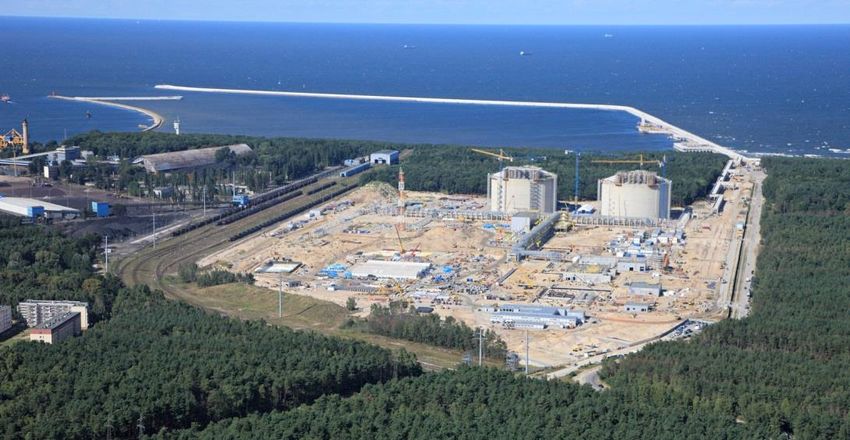
GAZ-SYSTEM S.A. in numbers

                                                             2,299
                                                                     Number of employees

                                                                     persons

                                                            10,033
                                                                     Length of transmission network

                                                                     km

                           400                                16.3
                                       Net sales revenues            Volume of gas transported

                                       EUR million                   bcm/a

                           320                                887
                                       Operating costs               Number of gas stations

                                       EUR million

                         74.6                                  15
                                       Net profit                    Number of compressor stations

                                       EUR million

                         1.66                                  58
                                       Total assets                  Number of nodes

                                       EUR billion

Financial results at the end of 2012

                                                                 the system, that connects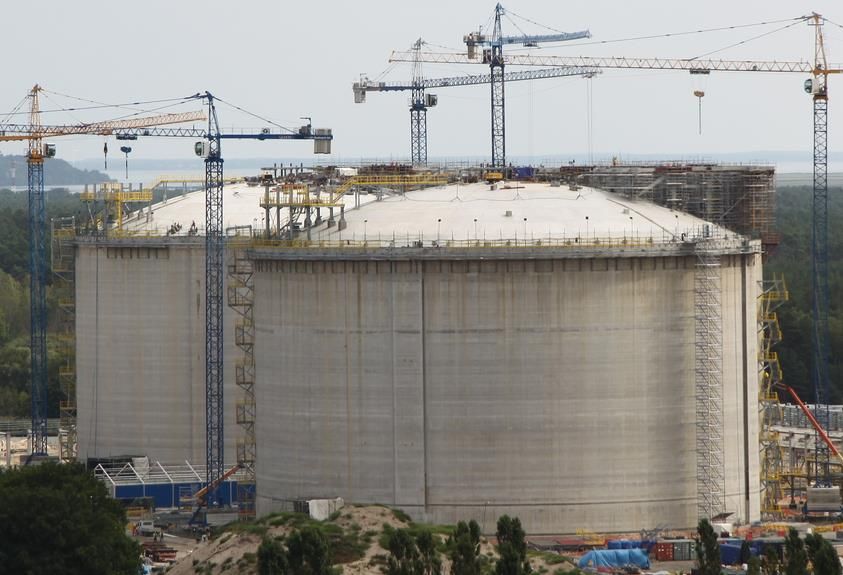
Development of transmission system in Poland until 2023

                                                                              Baltic Pipe /
                                                                               North Sea                              PL-LT
       Linking the CEE and Baltic regions
                                                                       LNG
2022
       Expansion of LNG terminal in Świnoujście

2021   PL-LT interconnection
       Further development of the transmission system
2020   Development of new UGS capacitites and commercial
       development of shale gas business area

2019                                                                  Yamal
       Creating the N-S corridor in the CEE region
2018
       PL-CZ interconnection in Hat

2017   PL-SK interconnection
       Development of internal network to ensure high level of
2016   supply reliability and improved interoperability between the
       CEE systems

2015                                                                  PL-DE
       Connecting the gas market in Poland
2014
       LNG terminal in Świnoujście

2013   Enhancement of the internal grid - more than 1,000 km of
       new pipelines
                                                                                     PL-CZ
2012   PL-CZ interconnection in Cieszyn
       Upgrade of PL-DE interconnection in Lasów
2011   Physical reverse flow on the Yamal pipeline                                            PL-CZ
                                                                                                         PL-SK
2010

                                                                                                                 Shale gas

                                                                                                      the system, that connects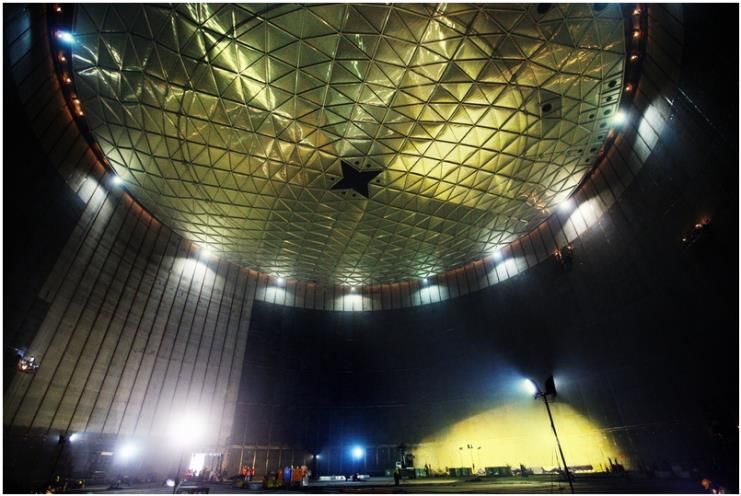
Terminal
                LNG       LNGin Poland
                     Terminal

Regasification Capacity
5,0 bcm/a (570 000 cm/h) – 2014
7,5 bcm/a (856 000 cm/h) or more – possible enhancement

LNG Offloading
Facility designated to receive Carriers from 120 000 to 216
000cm (Q-flex vessels)
Carriers characteristics - draught: 12,5m, length: 315m

Truck Loading
Two loading bays with capacity of 95 000 t/a

                                                                                       Storage
                                                                                       Two storage tanks with capacity of
                                                                                       160 000 cm each.
                                                                                       Possibility for construction of third
                                                                                       additional storage tank (space
                                                                                       reserved)

                                                                                       Pipeline
                                                                                       Pressure 8,4 MPa;
                                                                                       Temperature: 1°C.

                                                              Costs
                                                              LNG Terminal construction cost estimated at approx. 700 mEUR
                                                              (including EPC contract valued at 550 M EUR)
                                                              Project has EU financial support via EEPR

                                                                                       the system, that connects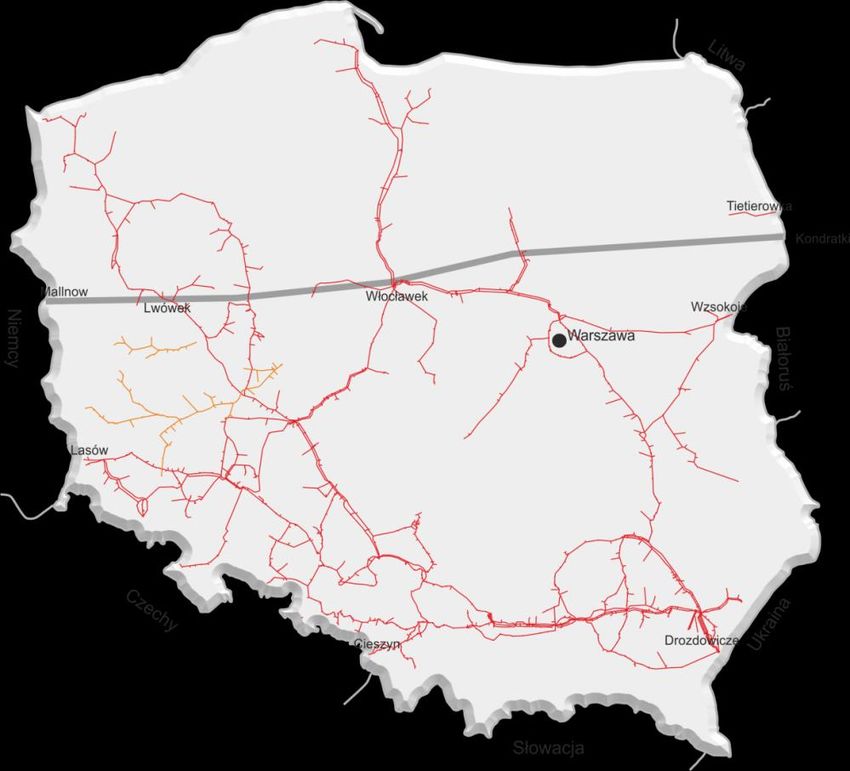
The Concept of North-South Gas Corridor in CEE
The N-S corridor in the CEE region
Series of pipeline projects and interconnections at various stage of
development coordinated to provide regional integration of physical
infrastructure
Key role of the Polish transmission system in the region
                                                                                         LNG
Connecting the Baltic Sea region with the CEE countries
Setting the stage for the new supply potential
Crucial for delivering EU Infrastructure Policy goals

Infrastructure leverage                                                                                                         BEMIP

Relatively low costs of new infrastructure provide leverage for
lower commodity prices for end-users                                                                                             CEE
New investments facilitate new possibilities for the market
Creating attractive supply-mix for the region                                                                                   SGC

Enhancing economic competitiveness of the region’s
economies

Creating Supply potential

                        NORTH
                       LNG/NCS
                       Shale gas

                                                                                                                                  LNG
        WEST                                                                             LNG
      European                          EAST
     spot market                       RU gas

                        SOUTH
                         LNG
                         SGC
                                                                       Existing infrastructure

                                                                       Planned infrastructure/under construction

                                                                                                           the system, that connects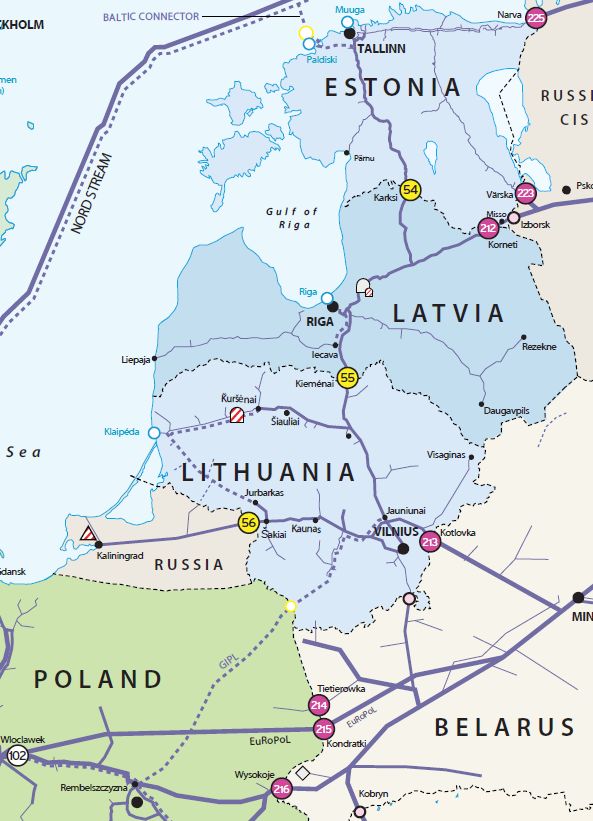
Poland – Lithuania Gas Interconnection (GIPL)

   Gas interconnection Poland – Lithuania (2018/2019)

The main goal of the project is to construct the Gas Interconnection
Poland - Lithuania (GIPL) as a regional solution for the Baltic States (and
possibly Finland) in context of gas market development and security of
gas supplies.

The project is planned to be implemented in two stages:

Stage I – pipeline linking Rembelszczyzna (Poland) with Jauniunai
(Lithuania) with transmission capacity of 2,3 bcm/y and MOP of 8.4 MPa
on the Polish side and 5.4 MPa on the Lithuanian side.                                             EAST:
                                                                                                   PL-LT
Stage II – potential expansion of transmission capacity to 4,5 bcm/y by
adding two compression stations and gas node.

The Gas interconnection Poland - Lithuania (GIPL) is aimed at the
integration of the isolated gas markets of the Baltic States (and Finland if
BalticConnector is constructed) into EU gas grid, by introducing the
alternative gas supply route to the Baltic States. This interconnection will
diversify the gas supply sources, increase the security of supply and serve
for the enhancement of competition in the gas market of the Baltic
States.

Reverse flow capacity is also envisaged depending on the market
interest:
PL-LT directon
Stages I-II: approx.1 bcm/year

                                                                               the system, that connects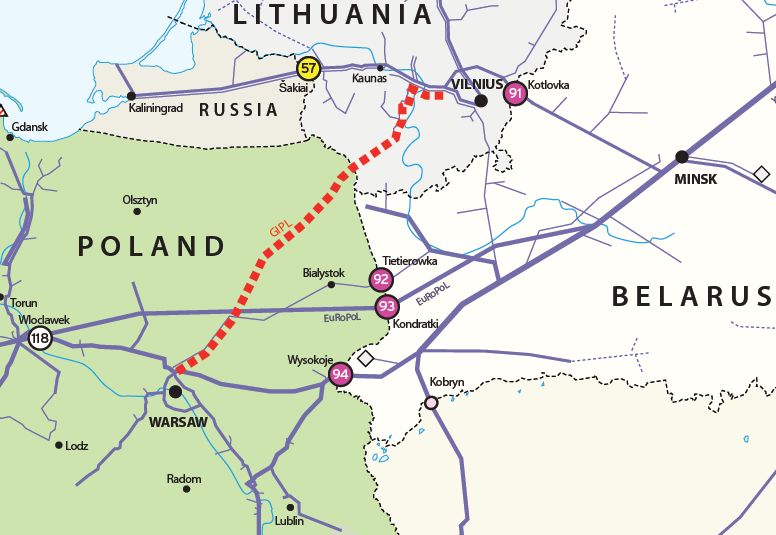
GIPL has status of the EU Projects of Common Interest
On 14 October 2013, the European Commission has adopted a list of 248 key energy infrastructure
projects. These projects have been selected by twelve regional groups established by the new
guidelines for trans-European energy infrastructure (TEN-E).
Carrying the status of "projects of common interest" (PCI) they will benefit from faster and more efficient
permit granting procedures and improved regulatory treatment.
They may also have access to financial support from the Connecting Europe Facility (CEF), under which
a €5.85 billion budget has been allocated to trans-European energy infrastructure for the period 2014-22
The PCI status were granted for the number of GAZ-SYSTEM’s projects:
Gas interconnections North-South in East-Central Europe and Southeastern Europe:
Western route of the North-South corridor in Poland and the interconnector Poland - Czech
Republic;
Eastern route of the North-South corridor in Poland and the interconnector Poland - Slovakia
Action Plan for Interconnection of Baltic Energy Market for gas (BEMIP):
Interconnection Poland - Lithuania;
Baltic Pipe;
Expansion of an LNG terminal in Świnoujście;
Expansion of the entry points of the Yamal pipeline in Lwówek and Wloclawek.
the system, that connectsPoland – Lithuania Gas Interconnection (GIPL)
The project is carried out by the national transmission system operators – the Polish and Lithuanian:
PL - Operator Gazociągów Przesyłowych GAZ-SYSTEM S.A.,
LT - AB Amber Grid,
The project requires also close cooperation with the national regulatory authorities:
Polish Urząd Regulacji Energetyki (URE)
Lithuanian Valstybinė kainų ir energetikos kontrolės komisija
Latvian Public Utilities Commission
Estonian Competition Authority
Route:
Pipeline Rembelszczyzna – Jauniunai
Diameter – DN 700
Length: 534 km
PL: 357 km - LT: 177 km
CAPEX
• On a side of GAZ-SYSTEM: 422 mEUR
• On a side of AB AMBERGRID: 136 mEUR
• Total: 558 mEUR
the system, that connectsWhat should be done in order to implement GIPL project?
2013 2014 2015 2016 2017 2018
1 Contractual obligations
Concluding the bilateral Cooperation
Agreement between the Project Promoters
2 Preparatory works
5 Project realisation
Route study, EIA, basic and detailed
engineering, building permission -> need to be Technical Design of the Project
obtained before FID date 4 FID
Launching the necessary tendering
PCI Status -> to facilitate permitting and to be procedures, including the purchase
eligible for EU funding, if necessary of pipes and valves, as well as
construction
3 Securing sources of financing Construction
Consultation on project structuring with NRAs in
line with TENE Regulation (CBCA, incentives,
guaranteed capacity bookings)
Application for funding from EU - CEF by Project
Promoters
Coordinated Market Screening/Open Season
procedure in countries affected by PCI project
Final confirmation of commercial interest in short
and long term capacity bookings
the system that connectsSocio-economic benefits of the Project for the Baltics
Access to the EU gas market
Lithuania, Latvia, Estonia are not connected to the
internal EU gas system forming an isolated energy
market. Poland on the other hand will have sufficient
interconnection capacities with the EU market by the
time GIPL can be put into operation.
Securing access to the EU gas market can lead to the
formation of effective competition mechanisms, that
would improve the efficiency of business performance
by ensuring adequate levels of wholesale gas prices.
Security of gas supply
The Baltic States are at the moment undiversified in terms
of gas supply routes and are completely dependent on
a sole supplier of natural gas, namely Russia.
Interconnection with the EU gas market could
significantly improve the security of gas supply for these
EU Member States.
the system, that connectsGas Interconnection PL-LT
Benefit solution for the entire Baltic Region
Full integration of the Baltic states into the EU
gas market, which cannot be achieved by
implementation LNG Terminal only
Access to the number of gas supply
opportunities offered by developed Western
European gas markets via Poland
Access to the global LNG market for the Baltic
states via LNG Terminal in Świnoujście
Security of gas supply
Diversification of gas supply sources
and routes
Enhancement of competition
Price convergence with the Western
Gas Market
Better utilization of existing Win-Win solution for the whole
infrastructure assets (e.g. underground Baltic Region
gas storages in Latvia)
the system, that connectsThank you for your attention pawel.sek@gaz-system.pl
You can also read


