GC Initial Zr-FS Technical Manual/Technische Arbeitsanleitung Manuel Technique/Manuale tecnico
←
→
Page content transcription
If your browser does not render page correctly, please read the page content below
Zr
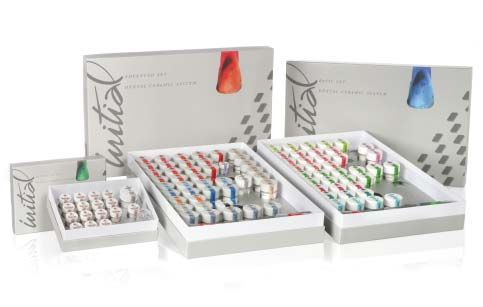
                   BASIC SET     ADVANCED SET   IN VIVO / IN SITU SET

                      Technical Manual/Technische Arbeitsanleitung
                                Manuel Technique/Manuale tecnico

                                      GC Initial Zr-FS

REVISED MAY 2008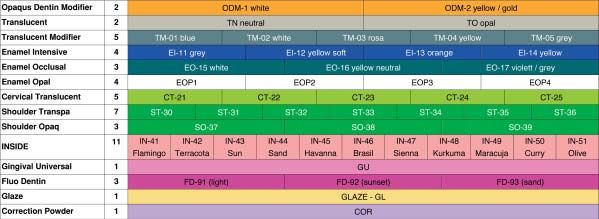
True-to-nature …
  Naturidentisch …

Proche du naturel …
 Estetica naturale …

By means of a simple standardized build up technique, lifelike aesthetics can be reproduced …
   Mit einer einfachen, standardisierten Schichttechnik können naturidentische Anforderungen erfüllt werden …
Quelle que soit la technique de montage, une remarquable esthétique peut être reproduite …
  Grazie ad una semplice tecnica di stratificazione standardizzata, è possibile riprodurre un'estetica naturale …
1   2

3   4

GB
                                     D
Zr
               Technical Manual
     Technische Arbeitsanleitung

                  GC Initial Zr-FS
Table of Contents
Inhaltsverzeichnis
Page
Colour chart / Farbtabelle 5
Standardized build up procedure / Standardisierte Schichttechnik
Anterior bridge / Frontzahnbrücke 6 – 10
Firing instructions / Brennanleitung 11 & 21
Multi-chromatic build up procedure / Polychrome Schichttechnik
Anterior bridge / Frontzahnbrücke 12 – 20
GC Initial – Colour combination charts / GC Initial – Farbzuordnungstabellen 22 – 24
Physical properties & Shelf Life / Physikalische Eigenschaften & Haltbarkeitsdauer 25
Firing charts for various furnaces / Brenntabellen für diverse Ofentypen 26 – 27
Photoshooting: Michael Brüsch - M.B. Dentaltechnik GmbH, Düsseldorf / GermanyColour Chart
Farbtabelle
Zr
Vita® is a registered trademark of VITA Zahnfabrik H. Rauter GmbH & Co. KG, Bad Säckingen, Germany.
Vita® ist ein eingetragenes Warenzeichen der VITA Zahnfabrik H. Rauter GmbH & Co. KG, Bad Säckingen, Deutschland.
5Standardized build up procedure
Standardisierte Schichttechnik
The Zirconium dioxide framework.
GC Initial Zr-FS can be used as veneering ceramics for all zirconium frame -
materials (Semi- or full sintered, HIP = Hot Isostatic Postcompaction).
Das vorbereitete Zirkondioxid Gerüst.
GC Initial Zr-FS kann als Verblendkeramik für alle Zirkondioxidgerüste
(Grün, durchgesintert, HIP) verwendet werden.
GC Initial Zr-FS Frame Modifier (FM) is applied on the framework.
Das Gerüst mit aufgetragenem GC Initial Zr-FS Frame Modifier (FM).
Opaqus Dentin Modifier (ODM-1 white) is used for a uniform light
transmission in the basal pontic area.
Opaqus Dentin Modifier (ODM-1 weiss) wird für die gleichmäßige
Lichtbrechung im basalen Bereich des Brückengliedes aufgetragen.
6Standardized build up procedure
Standardisierte Schichttechnik
INside (IN) material of the chosen colour is applied on the cervical as well
as on the approximal part (see colour combination charts).
Die INside (IN) Massen werden in der gewünschten Halsmassenfarbe
in zervikalen und approximalen Bereichen aufgetragen
(s. Farbzuordnungstabelle).
Fluo Dentin (FD-91 – FD-93) is applied in the incisal area for optimal light
transmission, as well as thinly over the entire labial surface. (see colour
combination chart).
Zur optimalen Abdeckung der Basisstruktur werden die Hochfluoreszenz
Dentinmassen (FD-91 – FD-93) auf die inzisalen Kantenbereiche des
Gerüstes aufgetragen und labial dünn auslaufend modelliert.
(s. Farbzuordnungstabelle).
Dentin material in its correct shade is applied.
Die Dentinschichtung wird in der gewünschten Farbe durchgeführt.
7Standardized build up procedure
Standardisierte Schichttechnik
The complete Dentin layering in the desired inner structure.
Die komplette Dentinkernschichtung in der gewünschten anatomischen
Form.
Application of a thin layer of Clear Fluorescence (CL-F) over the entire
Dentin layering (max. 0,2mm).
Eine dünne Schicht Clear Fluorescence (CL-F) wird über den ganzen
Dentinkörper geschichtet (max. 0,2 mm).
8Standardized build up procedure
Standardisierte Schichttechnik
Enamel (E) or Enamel Opal (EOP) is applied on top of the Clear
Fluorescence (CL-F) layer up to the final shape.
Enamel (E) oder Enamel Opal (EOP) Massen werden in der endgültigen
anatomischen Form auf die Clear Fluorescence (CL-F) Schichtung
aufgetragen.
Final labial build up.
Die komplette labiale Schichtung.
Palatinal view of the labial build up of Fluo Dentin (FD), Dentin (D) and
Enamel (E/EOP).
Von palatinal ist die labiale Schichtung der Fluo Dentin (FD), Dentin (D)
und Schneidemassen (E/EOP) deutlich sichtbar.
9Standardized build up procedure
Standardisierte Schichttechnik
The palatinal surface of the restoration is covered with the high chroma
INside (IN) material (see colour combination chart).
Die Palatinalfläche wird mit sehr hochchromatischen INside-Massen (IN)
ausgefüllt (s. Farbzuordnungstabelle).
The marginal ridges are lined with the same Dentin mixture.
Die palatinalen Randleisten werden mit der gleichen Dentinmasse
geschichtet.
Final oral build up with the same Enamel mixture that has been used
on the labial side.
Die endgültige palatinale Schichtung erfolgt mit den für die labiale Fläche
verwendeten Schneidemassen.
10Firing Instructions
Brennanleitung
Preheating Drying time Raise of temp. Final temp. Holding time
temp. Vacuum Appearance
Trocknungs- Temperatur- End-
Start- Vakuum Haltezeit Erscheinungsbild
Zeit Anstieg Temperatur
Temperatur
Shoulder Firing 450°C 4 min 45°C/min Yes/Ja 830°C 1 min Shining
1. und 2. Shulterbrand Glänzend
FM-Firing 450°C 4 min 55°C/min Yes/Ja 800°C 1 min Slightly shining
FM-Brand Leicht glänzend
1st Dentin Firing 450°C 6 min 45°C/min Yes/Ja 810°C 1 min Slightly shining
Dentinbrand Leicht glänzend
2nd Dentin Firing 450°C 6 min 45°C/min Yes/Ja 800°C 1 min Slightly shining
Korrekturbrand Leicht glänzend
Glaze Firing 480°C 2 min 45°C/min --- 820°C --- Shining
Glanzbrand Glänzend
Glaze firing with glaze powder 480°C 2 min 45°C/min --- 790°C 1 min Shining
Glanzbrand mit Glasur Glänzend
Correction Powder Firing 450°C 4 min 45°C/min Yes/Ja 690°C 1 min Shining
Korrekturmasse-Brand Glänzend
11Multi-chromatic build up procedure
Polychrome Schichttechnik
The Zirconium dioxide framework.
GC Initial Zr-FS can be used as veneering ceramics for all zirconium frame
materials (Semi- or, full sintered, HIP = Hot Isostatic Postcompaction).
Das vorbereitete Zirkondioxid Gerüst.
GC Initial Zr-FS kann als Verblendkeramik für alle Zirkondioxidgerüste
(Grün, durchgesintert, HIP) verwendet werden.
GC Initial Zr-FS Frame Modifier (FM) is applied on the framework.
Das Gerüst mit aufgetragenem GC Initial Zr-FS Frame Modifier (FM).
Opaqus Dentin Modifier (ODM-1 white) is used for a uniform light
transmission in the basal pontic area.
Opaqus Dentin Modifier (ODM-1 weiss) wird für die gleichmäßige
Lichtbrechung im basalen Bereich des Brückengliedes aufgetragen.
12Multi-chromatic build up procedure
Polychrome Schichttechnik
INiside (IN) of the chosen colour is applied on the cervical as well as
on the approximal part (see colour combination chart).
Die INside (IN) Massen werden in der gewünschten Halsmassenfarbe
in zervikalen und approximalen Bereichen aufgetragen
(s. Farbzuordnungstabelle).
Fluo Dentin (FD-91 – FD-93) is applied in the incisal area for optimal
light transmission and thinly over the entire labial surface (see colour
combination chart).
Zur optimalen Abdeckung der Basisstruktur werden die Hochfluoreszenz
Dentinmassen (FD-91 – FD-93) auf die inzisalen Kantenbereiche des
Gerüstes aufgetragen und labial dünn auslaufend modelliert.
(s. Farbzuordnungstabelle)
A thin layer of INside (IN) Primary Dentin covers the entire labial frame
surface (see colour combination chart).
Die zur Zahnfarbe gehörende INside (IN) Primär Dentinmasse
wird dünn auslaufend über die gesamte labiale Fläche aufgetragen
(s. Farbzuordnungstabelle).
13Multi-chromatic build up procedure
Polychrome Schichttechnik
Standard Dentin powder is mixed with 10% of INside powder (see colour
combination chart) and very thinly applied (about 50% of the usual Dentin
layering thickness).
Die Standard Dentinmassen werden durch eine 10% Beimischung der
zugehörigen INside Massen (s. Farbzuordnungstabelle) farblich sehr
hochchromatisch eingestellt und anschließend aufgetragen.
(Die Schichtstärke des hochchromatischen Dentins beträgt hier jedoch
nur 50% der normalen Dentinschichtung).
Dentin is applied in its final form. This way of working allows
a true-to-nature build up procedure of the Transpa / Enamel layering.
Diese Vorgehensweise erlaubt einen nahezu naturidentischen
Aufbau der Transpa- / Schneideschichtung.
Die Schichtung des Dentinkörpers bis zur endgültigen Form.
The build up of an incisal shield with Enamel (E/EOP) and / or Transpa (T)
mixtures.
Der Aufbau eines Inzisalschildes mit Schneide- (E/EOP) und / oder
Transpamasse (T).
14Multi-chromatic build up procedure
Polychrome Schichttechnik
By means of a „cut-back“, the incisal part is reduced up to the internal Fluo
Dentin layering.
Labial wird ein „cut-back“ bis auf die Fluo Dentinschicht vorgenommen.
The reduced area is reconstructed with Fluo Dentin (FD-91) in the desired
Mamelon structure. This is a very important point for colour synchronization
of different base structures placed next to each another.
Die reduzierte Fläche wird mit Fluo Dentin (FD-91) durch die gewünschte
Mamelonstruktur überschichtet. Dies ist ein sehr wichtiger Bestandteil
bei der farblichen Gleichschaltung unterschiedlicher, nebeneinander
liegender Gerüstmaterialen.
Displaying the colour intensity of the Mamelon structure is realized with
INside colours or INvivo stains (see colour combination chart).
Die Einstellung des Chromas der Mamelonstruktur wird mit INside
Massen oder mit INvivo Malfarben realisiert. (s. Farbzuordnungstabelle)
15Multi-chromatic build up procedure
Polychrome Schichttechnik
This base is now covered with Clear Fluorescence (CL-F), the layer is
0,2 mm in depth and is a copy of human dentition.
Diese Basisschichtung wird nun mit einer dünnen Schicht (0,2mm)
Clear Fluorescence (CL-F) überzogen und kopiert so den Aufbau eines
natürlichen Zahnes.
The Enamel / Transpa layering, where special incisal and transparent mix-
tures are alternatively placed next to another (e.g. E58, TO, EOP2, CL-F).
Bei der Schneide Wechselschichtung werden unterschiedlich transluzente
Schneide- und Transpamassen nebeneinander gelegt (z.B. E58, TO, EOP2,
CL-F).
The final contouring is made out of a mixture of Enamel Opalescence (EOP)
and standard Enamel (E). Depending on the age of the patient, the
translucent level of the Enamel layer can be modified with TN, TO & CL-F.
To create the milky white incisal contour, EO-15 should be used.
Die endgültige Formgebung erfolgt immer durch eine Mischung aus glei-
chen Teilen von Opal- (EOP) und Standardschneiden (E). Abhängig vom
Alter des Patienten wird die Transluzenz der Schneideschichtung durch
Zugabe von TN, TO & CL-F gesteuert. Für die nachbildung des inzisalen
Saumes stellt die Masse EO-15 eine einfache und effektive Hilfe dar.
16Multi-chromatic build up procedure
Polychrome Schichttechnik
Palatinal view of the labial build-up of Fluo Dentin (FD), Dentin (D) and
Enamel (E / EOP).
Von palatinal ist die Schichtung der Fluo Dentin (FD), Dentin (D) und
Schneidemassen deutlich sichtbar (E / EOP).
The palatinal surface of the restoration is covered with a high chroma
INside colour (see colour combination chart).
Die palatinale Schichtung erfolgt mit einer deutlich stärker farbgesättigten
Schicht aus dem INside-Massensortiment. (s. Farbzuordnungstabelle)
The oral marginal ridges are lined with standard Dentin material.
Die palatinale Randleistenstruktur erfolgt durch eine Standarddentin
Schichtung.
17Multi-chromatic build up procedure
Polychrome Schichttechnik
Final oral build up with the same Enamel mixture that has been used on
the labial side.
Die endgültige palatinale Schichtung erfolgt mit den für die labiale Fläche
verwendeten Schneidemassen.
Final functional contouring of the oral side is done with Enamel Occlusal
(EO-15).
Die abschließende funktionelle Formgebung der oralen Struktur erfolgt
mit Enamel Occlusal (EO-15).
The restoration is fixed following the firing parameters of the 1st Dentin
firing (see firing instructions). The fired ceramic surface shows a slight gloss.
Die fertiggeschichtete Restauration wird mit den Brennparametern
für den 1. Dentinbrand gebrannt (s. Brennanleitung). Die gebrannte
Keramikoberfläche weist einen leichten Glanz auf.
18Multi-chromatic build up procedure
Polychrome Schichttechnik
Labial view after the first Dentin firing.
The very low shrinkage makes the following correction firing more easy.
Die labiale Ansicht nach dem 1. Dentinbrand.
Die sehr geringe Schrumpfung erleichtet den folgenden Korrekturbrand.
The proximal areas are supplemented with the same material used for
the Dentin / Enamel layering. The restoration is finally adjusted using
Enamel Transparent materials. Cervical Translucent (CT) can be used as
an alternative for the Dentin / Enamel layering.
Die approximalen Bereiche werden mit den gleichen Massen wie bei
der Dentin- / Schneideschichtung aufgefüllt und die Restauration
mit Schneide- und Transpamassen komplettiert. Die Masse Cervical
Translucent (CT) kann als Alternative für die Dentin- / Schneidekorrektur-
schichtung verwendet werden.
The completed “GC Initial” restoration after glazing. Application of
individualized characterizations with INvivo / INsitu is possible.
Die fertige “GC Initial” Restauration nach dem Glanzbrand.
Die individuelle Charakterisierung erfolgt mit INvivo / INsitu Malfarben.
19Multi-chromatic build up procedure
Polychrome Schichttechnik
The same layering procedure of the anterior build up systematic can be
used for posterior restorations.
Die gleiche systematische Vorgehensweise in der Schichttechnik kann
natürlich auch auf die Modellation im Seitenzahnbereich übertragen
werden.
Basal view of the posterior bridge.
Note the Opaqus Dentin Modifier (ODM-1) under the pontics for a uniform
light transmission between crown and pontic.
Die Seitenzahnbrücke in der Ansicht von basal.
Die Schichtung von Opaqus Dentin Modifier (ODM-1) im basalen
Bereich sorgt für die gleichmäßige Lichtbrechung bei Kronen und
Brückengliedern.
The Final posterior bridge construction realized with GC Initial Zr-FS.
Die fertige Schichtung mit GC Initial Zr-FS.
20Firing Instructions
Brennanleitung
Nature is the ultimate, GC Initial an equal partner.
Die Natur ist das Vorbild, GC Initial ein gleichwertiger Partner.
Preheating Drying time Raise of temp. Final temp. Holding time
temp. Vacuum Appearance
Trocknungs- Temperatur- End-
Start- Vakuum Haltezeit Erscheinungsbild
Zeit Anstieg Temperatur
Temperatur
Shoulder Firing 450°C 4 min 45°C/min Yes/Ja 830°C 1 min Shining
1. und 2. Shulterbrand Glänzend
FM-Firing 450°C 4 min 55°C/min Yes/Ja 800°C 1 min Slightly shining
FM-Brand Leicht glänzend
1st Dentin Firing 450°C 6 min 45°C/min Yes/Ja 810°C 1 min Slightly shining
Dentinbrand Leicht glänzend
2nd Dentin Firing 450°C 6 min 45°C/min Yes/Ja 800°C 1 min Slightly shining
Korrekturbrand Leicht glänzend
Glaze Firing 480°C 2 min 45°C/min --- 820°C --- Shining
Glanzbrand Glänzend
Glaze firing with glaze powder 480°C 2 min 45°C/min --- 790°C 1 min Shining
Glanzbrand mit Glasur Glänzend
Correction Powder Firing 450°C 4 min 45°C/min Yes/Ja 690°C 1 min Shining
Korrekturmasse-Brand Glänzend
21GC Initial – Colour Combination Chart
GC Initial – Farbzuordnungstabelle
GC Initial INside – Field of application and reference chart
GC Initial INside – Einsatzgebiete und Empfehlungstabelle
■ Primary Dentin / High Chromatic Dentin Colours ■ Mamelon / Incisal colours
Primärdentin / Chromadentin Farben Mamelon / Inzisal Farben
Shade Group Shades “INside” reference Shade Group Shades “INside” reference
Farbgruppe Farben “INside” Referenz Farbgruppe Farben “INside” Referenz
A-shades A1, A2 IN-44 Sand Light tooth shades A1, A2, A3 – B1, B2 IN-44 Sand
A-Farben A3 IN-44 Sand Helle Zahnfarben C1, C2 – D2 IN-41 Flamingo
IN-42 Terracotta IN-43 Sun
A3.5, A4 IN-45 Havanna IN-44 Sand
IN-46 Brasil IN-51 Olive
B-shades B1, B2 IN-43 Sun Warm tooth shades A3.5, A4 – B3, B4 IN-42 Terracotta
B-Farben B3 IN-43 Sun Warme Zahnfarben C3, C4 – D3, D4 IN-45 Havanna
IN-47 Sienna IN-47 Sienna
B4 IN-48 Kurkuma IN-50 Curry
IN-50 Curry IN-51 Olive
C-shades C1, C2 IN-51 Olive
C-Farben C3, C4 IN-51 Olive
IN-45 Havanna
D-shades D2, D3, D4 IN-44 Sand
D-Farben IN-51 Olive
22GC Initial – Colour Combination Chart
GC Initial – Farbzuordnungstabelle
GC Initial INside – High Fluorescence Dentin –
Field of application and reference chart Field of application and reference chart
GC Initial INside – Hochfluoreszenzdentine –
Einsatzgebiete und Empfehlungstabelle Einsatzgebiete und Empfehlungstabelle
■ Approximal / Cervical / Oral colours ■ FD-91
Approximal / Cervical / Oral Farben
■ As a base for very bright shades
■ Als Basis für sehr helle Zahnfarben
Shade Group Shades “INside” reference
■ As a base for “bleached colours”
Farbgruppe Farben “INside” Referenz
■ Als Basis für “bleached Farben”
A-shades A1, A2, A3 IN-42 Terracotta
■ Vitapan Classical A1 / B1 / C1 / D2
A-Farben IN-44 Sand
A3.5, A4 IN-42 Terracotta ■ Vitapan Classical A1 / B1 / C1 / D2
IN-45 Havanna
IN-46 Brasil ■ FD-92
IN-49 Maracuja
B-shades B1, B2 IN-43 Sun
■ As a base for standard B-shades
B-Farben IN-47 Sienna ■ Als Basis für Standard B-Zahnfarben
B3, B4 IN-47 Sienna
IN-48 Kurkuma ■ FD-93
IN-50 Curry
C-shades C1, C2 IN-51 Olive ■ As a base for standard A-shades
C-Farben C3, C4 IN-51 Olive ■ Als Basis für Standard A-Zahnfarben
IN-45 Havanna
D-shades D2, D3, D4 IN-44 Sand ■ For standard C and D colours - FD-93 mixed with IN-51
D-Farben IN-51 Olive ■ Für Standard C- und D-Farben - FD-93 gemischt mit IN-51
23GC Initial – Colour Combination Chart
GC Initial – Farbzuordnungstabelle
GC Initial Shoulder Porcelain – Reference chart
GC Initial Schultermassen – Empfehlungstabelle
Shades Reference The Shoulder Opaques can be used as a first basic layering at the border frame /
Farben Referenz tooth shoulder. The percentages used in this list can vary depending on the thick-
ness of the total ceramic shoulder.
A1 ST-31 BASIC RULE: The thinner the total ceramic shoulder, the more high chroma shoul-
A2 ST-31 + ST-36 (90% / 10%) der powders should be used. Furthermore, all shoulder powders can be mixed
A3 ST-31 + ST-36 (80% / 20%) with the INside powders to intensify or to individualize the shoulder shades until a
A3,5 ST-31 + ST-36 (50% / 50%) maximum of 20% INside powders of this total mixture.
A4 ST-36
In this case the final temperature of shoulder firing should be reduced by 10°C to
20°C, depending on the amount of INside powders mixed with the shoulder porce-
B1 ST-30 + ST-32 (50% / 50%)
lain.
B2 ST-30 + ST-32 (20% / 80%)
B3 ST-32
B4 ST-32 + ST-33 (50% / 50%) Die Schulteropakmassen können als Primärauftrag im Übergangsbereich Gerüst /
Zahnstumpf (Schulter) unterlegt werden. Die Prozentangaben sind abhängig von
C1 ST-30 + ST-35 (50% / 50%) der Stärke der zu brennenden Keramikschulter.
C2 ST-30 + ST-35 (30% / 70%) FAUSTREGEL: Je dünner eine Keramikschulter gestaltet werden muß, desto höher
C3 ST-30 + ST-35 (20% / 80%) sollte die Beimengung von stärker chromatisierten Schultermassen sein.
C4 ST-35 Alle Schulterkeramikmassen können darüber hinaus zur farblichen
Individualisierung bzw. Intensivierung mit den INside-Massen gemischt werden, bis
D2 ST-31 + ST-35 (70% / 30%)
ein Maximum von 20% INside-Massen von dieser totalen Mischung.
D3 ST-31 + ST-35 (50% / 50%)
Die Brentemperatur der ST-Keramikmassen sollte in diesem Fall um 10°C – 20°C
abgesengt werden. (je nach beigefügter Menge der INside-Massen).
24Physical Properties & Shelf Life
Physikalische Eigenschaften & Haltbarkeitsdauer
PROPERTIES / EIGENSCHAFTEN MEASURE / MAßEINHEIT VALUE / WERT NORM / NORM
1st Dentin Firing / 1. Dentinbrand °C 810
CTE / WAK (25-500°C) Firings / Brände 2 4
10 xK
-6 -1
9,4 9,4
Glass Transforming temperature /
°C 550
Glastransformationspunkt -
Solubility / Löslichkeit µg/cm 2
12 Max. 100
Density / Dichte g/cm 2
2,43 -
Flexural Strength / Biegefestigkeit MPa 90 Min. 50
Average Particle Size mµ / Mittlere Korngröße mµ D 50% 21,5 -
Bonding Strength / Haftverbund MPa - Min. 25
Ceramic Type / Keramiksorte N=Nature S -
S=Synthetic Glass
PRODUCT DESCRIPTION / PRODUKT SHELF LIFE / HALTBARKEIT
GC Initial Zr-FS Powders indefinite / unbegrenzt
GC Initial Modelling Liquids & Shoulder Liquids 4 years / 4 Jahre
GC Initial INvivo / INsitu Glaze Liquids 4 years / 4 Jahre
GC Initial INvivo / INsitu Stain Powders indefinite / unbegrenzt
25Firing charts for various furnaces
Brenntabellen für diverse Ofentypen
KLEMA FIRE / KLEMA PRESS
Frame Modifier 1st & 2nd 1st Dentin 2nd Dentin Glaze Glaze firing Correction
Schoulder Firing Firing Firing Firing glaze powder Powder
Gerüst Modifier 1. & 2. 1. Dentin- 2. Dentin- Glanz- Glanzbrand Korrektur-
Schulterbrand brand brand brand Glasur masse
Low Temp. / Bereitschaftst. °C 450 450 450 450 480 480 450
Up Time / Verschlusszeit min 4 4 6 6 2 2 4
Preaheat Time / Trockenzeit min 1 1 1 1 1 1 1
Heat Rate / Anstiegsgeschw. °C / min 55 45 45 45 45 45 45
Vacuum Start / Vakuumstart °C 450 450 450 450 450
Vacuum End / Vakuumende °C 800 830 810 800 690
Vacuum Delay / Vakuumverzög. min
Vacuum Level / Vakuumgrenze mmHg 730 730 730 730 730
High Temperature /
Brenntemperatur °C 800 830 810 800 820 790 690
Temperature Delay / Verzögerung min 1 1 1 1 1 1
Final Temperature / Endtemperatur °C
Final Delay / Endverzögerung min
Cooling Time / Kühlphase min
26Firing charts for various furnaces
Brenntabellen für diverse Ofentypen
AUSTROMAT M
VAC °C
➞
START ➞ END ➞ (V)
➞
➞
➞
LEVEL min.
1st and 2nd Shoulder Firing
1. und 2. Schulterbrand 450 2 2 1 9 45 830 1 0 0 0
Frame Modifier
Gerüst Modifier 450 2 2 1 9 55 800 1 0 0 0
1st Dentin Firing
1. Dentinbrand 450 3 3 1 9 45 810 1 0 0 0
2nd Dentin Firing
2. Dentinbrand 450 3 3 1 9 45 800 1 0 0 0
Glaze Firing
Glanzbrand 480 0 2 1 0 45 820 0 0 0 0
Glaze firing glaze powder
Glanzbrand Glasur 480 0 2 1 0 45 790 1 0 0 0
Correction Powder Firing
Korrekturmasse-Brand 450 2 2 1 9 45 690 1 0 0 0
AUSTROMAT 3001
1st and 2nd Shoulder Firing
1. und 2. Schulterbrand C450 T120 T120.L9 V9 T60 T045.C830 V0 T60 C0 L0 T2 C450
Frame Modifier
Gerüst Modifier C450 T120 T120.L9 V9 T60 T045.C800 V0 T60 C0 L0 T2 C450
1st Dentin Firing
1. Dentinbrand C450 T180 T180.L9 V9 T60 T045.C810 V0 T60 C0 L0 T2 C450
2nd Dentin Firing
2. Dentinbrand C450 T180 T180.L9 V9 T60 T045.C800 V0 T60 C0 L0 T2 C450
Glaze Firing
Glanzbrand C480 T120.L9 T60 T045.C820 C0 L0 T2 C450
Glaze firing glaze powder
Glanzbrand Glasur C480 T120.L9 T60 T045.C790 T60 C0 L0 T2 C450
Correction Powder Firing
Korrekturmasse-Brand C450 T120 T120.L9 V9 T60 T045.C690 V0 T60 C0 L0 T2 C450
We wish to strongly emphasise that all tests with these furnaces were in-house studies only and no long-term tests were performed.
Therefore we would appreciate your understanding that this info might only be taken as a guidance.
Wir möchten Sie darauf hinweisen, dass alle Tests mit diesen Öfen auf hausinternen Studien beruhen und dass keine Langzeitstudien
durchgeführt wurden. Bitte nehmen Sie zur Kenntnis, dass diese Information nur als Richtlinie verwendet werden kann. 2728
Zr
     Manuel Technique

                           F
      Manuale tecnico

                           I
        GC Initial Zr-FS
Table des matières
Indice
Page
Tableau des teintes / Tabella di combinazione delle masse 5
Procédure classique de montage / Procedura di stratificazione standard
Dent antérieure / Ponte anteriore 6 – 10
Cuisson / Istruzioni per la cottura 11 & 21
Procédure de montage multi chromatique / Procedura di stratificazione policromatica
2 dents antérieures / Ponte anteriore 12 – 20
GC Initial – Tableau de combinaison des teintes /
GC Initial - Schemi delle combinazioni cromatiche 22 – 24
Propriétés physiques & Péremption / Proprietà fisiche & Scadenza 25
Tableau de cuisson selon différents fours à céramiques / Grafici per la cottura nei diversi forni 26 – 27
Photoshooting: Michael Brüsch - M.B. Dentaltechnik GmbH, Düsseldorf / Allemagne / GermaniaTableau des teintes
Tabelle di combinazione delle masse
Zr
Vita® est une marque déposée de VITA Zahnfabrik H. Rauter GmbH & Co. KG, Bad Säckingen, Allemagne.
Vita® è un marchio registrato di VITA Zahnfabrik H. Rauter GmbH & Co. KG, Bad Säckingen, Germania.
5Procédure classique de montage
Procedura di stratificazione standardizzata
Armature en dioxide de zirconium.
GC Initial Zr-FS peut être utilisé pour toutes les structures céramiques à base
de zircon (Semi ou entièrement fritté, HIP = Hot Isostatic Postcompaction).
Struttura in diossido di zirconio.
GC Initial Zr-FS può essere utilizzata come ceramica per veneer per tutti
i materiali per strutture in zirconio (semisinterizzate o completamente
sinterizzate, HIP = Hot Isostatic Postcompaction, post-compattazione
isostatica a caldo).
Appliquer GC Initial Zr-FS Frame Modifier (FM) sur l’armature.
Sulla struttura viene applicato un sottile strato di GC Initial Zr-FS Frame
Modifier (FM).
Opaqus Dentin Modifier (ODM1-white) est utilisé au niveau du pontic pour
permettre une répartition uniforme de la lumière.
Opaqus Dentin Modifier (ODM1-bianco) viene utilizzato per ottenere
una trasmissione uniforme della luce nell'area basale del ponte.
6Procédure classique de montage
Procedura di stratificazione standardizzata
Le matériau INside (IN) est appliqué aussi bien sur les zones cervicales que
proximales (voir tableau de combinaison des teintes).
Inside (IN) del colore prescelto viene applicato sulla parte cervicale e
prossimale della struttura. (Consultare gli schemi delle combinazioni
cromatiche).
La Dentine Fluo (FD-91 – FD-93) est appliquée sur la zone incisale pour
une transmission optimale de la lumière, et également sur toute la surface
vestibulaire (voir tableau de combinaison des teintes).
Fluo Dentin (FD-91 – FD-93) viene applicato nell'area incisale per
ottenere una trasmissione ideale della luce. Ne viene anche applicato
uno strato sottile sull'intera superficie labiale. (Consultare lo schema
delle combinazioni cromatiche).
Puis appliquer la Dentine choisie.
Viene applicato il materiale Dentin della tinta adatta.
7Procédure classique de montage
Procedura di stratificazione standardizzata
Mise en forme de la couche interne de Dentine.
Stratificazione completa di Dentin nella struttura interna desiderata.
Une fine couche de Clear Fluorescence (CL-F) est appliquée sur toute la
surface de la Dentine. Cette couche de 0,2 mm d'épaisseur reproduit la
dent naturelle.
Applicazione di un sottile strato di Clear Fluorescence (CL-F) sull'intera
stratificazione di Dentin (max 0,2 mm).
8Procédure classique de montage
Procedura di stratificazione standardizzata
Enamel (E) ou Enamel Opal (EOP) est appliqué sur la couche de Clear
Fluorescence (CL-F) pour terminer la forme anatomique.
Viene applicato Enamel (E) o Enamel Opal (EOP) sopra lo strato di Clear
Fluorescence (CL-F) fino ad ottenere la forma finale.
Montage vestibulaire terminé.
Stratificazione finale sul versante labiale.
Vue palatine du montage vestibulaire de Fluo Dentin (FD), Dentin (D) et
Enamel (E/EOP).
Vista palatale della stratificazione labiale di Fluo Dentin (FD), Dentin (D)
e Enamel (E/EOP).
9Procédure classique de montage
Procedura di stratificazione standardizzata
La surface palatine de la restauration est recouverte d’un matériau à haut
degré de saturation, l’INside (IN) (voir tableau de combinaison des teintes).
La superficie palatale del restauro viene coperta con il materiale INside
(IN) ad elevato croma. (Consultare lo schema delle combinazioni cro-
matiche).
Les crêtes marginales sont marquées avec le même mélange de Dentine
que celui utilisé sur la face vestibulaire.
I bordi marginali vengono rivestiti con la stessa miscela di Dentin.
Le montage final se fait avec le même mélange de Enamel que celui utilisé
sur la face vestibulaire.
Stratificazione palatale finale con la stessa miscela di Enamel utilizzata sul
versante labiale.
10Tableau de cuisson
Istruzioni per la cottura
Temp. de Temps de Elévation en Température Temps de
préchauffage séchage degrés/min. Vide finale maintien Apparence
Temp. di Tempo di Incremento Vuoto Temperatura Tempo di Aspetto
preriscaldo asciugatura di temp. finale mantenimento
Cuisson de l’Epaulement 450°C 4 min 45°C/min Oui/Si 830°C 1 min Brillante
Cottura spalla Lucido
Cuisson FM 450°C 4 min 55°C/min Oui/Si 800°C 1 min Légèrement brillante
Cottura FM Leggermente lucido
1ère Cuisson de Dentine 450°C 6 min 45°C/min Oui/Si 810°C 1 min Légèrement brillante
Prima cottura Dentina Leggermente lucido
2nd Cuisson de Dentine 450°C 6 min 45°C/min Oui/Si 800°C 1 min Légèrement brillante
Seconda cottura Dentina Leggermente lucido
Cuisson glaçage 480°C 2 min 45°C/min --- 820°C --- Brillante
Cottura di autolucentezza Lucido
Cuisson de glaçage avec glaze / Cottura 480°C 2 min 45°C/min --- 790°C 1 min Brillante
di lucidatura con polvere di glasura Lucido
Cuisson de la masse de correction 450°C 4 min 45°C/min Oui/Si 690°C 1 min Brillante
Cottura polvere di correzione Lucido
11Procédure de montage multi chromatique
Procedura di stratificazione policromatica
Armature en dioxide de zirconium.
GC Initial Zr-FS peut être utilisé pour toutes les facettes céramiques à base
de zircon (Semi ou entièrement fritté, HIP = Hot Isostatic Postcompaction).
Struttura in diossido di zirconio.
GC Initial Zr-FS può essere utilizzata come ceramica per veneer per tutti
i materiali per strutture in zirconio (semisinterizzate o completamente
sinterizzate, HIP = Hot Isostatic Postcompaction, post-compattazione
isostatica a caldo)
Appliquer GC Initial Zr-FS Frame Modifier (FM) sur l’armature.
Sulla struttura viene applicato un sottile strato di GC Initial Zr-FS Frame
Modifier (FM).
Opaqus Dentin Modifier (ODM1-white) est utilisé au niveau de la base du
pontic pour permettre une répartition uniforme de la lumière.
Opaqus Dentin Modifier (ODM1-bianco) viene utilizzato per ottenere
una trasmissione uniforme della luce nell'area basale del ponte..
12Procédure de montage multi chromatique
Procedura di stratificazione policromatica
Le matériau INside (IN) choisi est appliqué aussi bien sur les zones
cervicales que proximales (voir tableau de combinaison des teintes).
Inside (IN) del colore prescelto viene applicato sulla parte cervicale e
prossimale della struttura. (Consultare gli schemi delle combinazioni
cromatiche).
La Dentine Fluo (FD-91 – FD-93) est appliquée sur la zone incisale pour
une transmission optimale de la lumière, et également sur toute la surface
vestibulaire (voir tableau de combinaison des teintes).
Fluo Dentin (FD-91 – FD-93) viene applicato nell'area incisale per
ottenere una trasmissione ideale della luce. Ne viene anche applicato
uno strato sottile sull'intera superficie labiale. (Consultare lo schema
delle combinazioni cromatiche).
Une fine couche de INside (IN) Primary Dentin recouvre entièrement
la surface vestibulaire (voir tableau de combinaison des teintes).
Un sottile strato di INside (IN) Primary Dentin copre l'intera super-
ficie della struttura labiale. (Consultare lo schema delle combinazioni
cromatiche).
13Procédure de montage multi chromatique
Procedura di stratificazione policromatica
La poudre Dentine Standard est mélangée avec 10% de poudre INside (voir
tableau de combinaison des teintes) et appliquée très finement (épaisseur
d’environ 50% d’une couche usuelle de Dentine).
La polvere Standard Dentin viene miscelata con un 10% di polvere
INside (consultare lo schema delle combinazioni cromatiche) e ne viene
applicato uno strato sottile (circa il 50% del normale spessore per la
stratificazione di Dentin).
Cette façon de travailler permet une procédure de montage de la couche
Transpa / Enamel proche du naturel. La Dentine est appliquée dans sa
forme finale.
Dentin viene applicato nella forma finale. Questo metodo di lavoro
permette di realizzare una procedura di stratificazione di Transpa /
Enamel dall'effetto naturale.
Montage du bord incisal avec un mélange d’Enamel (E/EOP) et / ou de
Transpa (T).
Stratificazione di uno schermo incisale con miscele Enamel (E/EOP)
e/o Transpa (T).
14Procédure de montage multi chromatique
Procedura di stratificazione policromatica
Au moyen d’une découpe, la partie incisale est réduite au niveau de la
couche interne de Fluo Dentin.
Tramite un "Cut - Back“, la parte incisale viene ridotta fino alla
stratificazione interna di Fluo-Dentin.
La zone réduite est reconstruite avec du Fluo Dentin (FD-91) à l’emplace-
ment des Mamelons. Il s’agit là d’un point très important pour la synchroni-
sation des différentes structures de base placées les unes après les autres.
L'area ridotta viene ricostruita con Fluo Dentin (FD-91) nella struttura
Mamelon desiderata. Questo è un passaggio estremamente importante
per la sincronizzazione cromatica delle diverse strutture di base tra loro
adiacenti.
Le niveau d’intensité de la couleur de la structure Mamelon est défini par
les couleurs ou teintes INside / INvivo (voir tableau de combinaison des
teintes).
Il livello dell'intensità cromatica della struttura del mammellone viene
definito dai colori INside o dalle tinte INvivo. (Consultare lo schema
delle combinazioni cromatiche).
15Procédure de montage multi chromatique
Procedura di stratificazione policromatica
Pour reproduire la dent naturelle cette base est alors recouverte d'une
couche de 0,2 mm d'épaisseur de Clear Fluorescence (CL-F).
Ora questa base viene coperta con Clear Fluorescence (CL-F). Lo strato
ha una profondità di 0,2 mm ed è una riproduzione della dentizione
umana.
Enamel / Transpa, spécial incisal et transparent, ces mélanges sont alterna-
tivement placés les uns contre les autres (ex : E58, TO, EOP2, CL-F).
Stratificazione Enamel / Transpa, dove le speciali miscele incisali e
trasparenti vengono alternativamente poste l'una accanto all'altra (ad
esempio E58, TO, EOP2, CL-F).
Le contourage final est un mélange de Enamel Opalescence (EOP) et
Enamel standard (E). Le niveau de translucidité de la couche d’émail peut
être modifié, en fonction de l’âge du patient avec, TN, TO et CL-F. Pour
créer un aspect blanc laiteux au niveau incisal, l’EO-15 peut être utilisé.
La definizione finale del contorno viene realizzata con una miscela di
Enamel Opalescence (EOP) e di Enamel (E) standard. A seconda dell'età
del paziente, è possibile modificare la traslucenza dello strato di Enamel
utilizzando TN, TO & CL-F. Per creare il contorno incisale bianco latte si
consiglia di utilizzare EO-15.
16Procédure de montage multi chromatique
Procedura di stratificazione policromatica
Vue palatine du montage vestibulaire en Fluo Dentin (FD), Dentin (D) et
Enamel (E / EOP).
Vista palatale della stratificazione sul versante labiale di Fluo Dentin (FD),
Dentin (D) e Enamel (E / EOP).
La surface palatine de la restauration est recouverte d’un matériau à haut
degré de saturation, l’INside (IN) (voir tableau de combinaison des teintes).
La superficie palatale del restauro viene coperta con un colore INside ad
elevato croma. (Consultare lo schema delle combinazioni cromatiche).
Les crêtes marginales sont soulignées avec le matériau standard Dentin.
I bordi marginali palatali vengono rivestiti con un materiale Dentin standard.
17Procédure de montage multi chromatique
Procedura di stratificazione policromatica
Le montage final est réalisé avec le même mélange que celui qui a été
utilisé sur la face vestibulaire.
Stratificazione palatale finale con la stessa miscela Enamel utilizzata sul
versante labiale.
Le contourage fonctionnel final est réalisé avec Enamel Occusal (EO-15).
Definizione finale dei contorni funzionali palatali realizzati con Enamel
Occlusal (EO-15).
La restauration est cuite selon les paramètres de 1ère cuisson de la Dentine
(voir instructions de cuisson). La surface de la céramique cuite est légère-
ment brillante.
Il restauro viene fissato osservando i parametri per la prima cottura della
dentina (Consultare le istruzioni per la cottura). La superficie della ceram-
ica cotta appare leggermente lucida.
18Procédure de montage multi chromatique
Procedura di stratificazione policromatica
Vue vestibulaire après 1ère cuisson de la Dentine.
La très faible rétraction rend les corrections beaucoup plus faciles.
Vista labiale dopo la prima cottura di Dentin.
Grazie alla bassissima contrazione, la successiva cottura per la correzione
è molto semplice.
Les surfaces proximales sont complétées avec le même matériau que celui
utilisé pour la couche Dentin / Enamel. La restauration est finalement ajus-
tée avec les matériaux Enamel Transparent. Cervical Translucent (CT) peut
être utilisé comme alternative à la couche Dentin / Enamel.
Le aree prossimali vengono integrate con lo stesso materiale utilizzato
per la stratificazione di Dentin / Enamel. Infine, il restauro viene rifinito
utilizzando i materiali Enamel Transparent. In alternativa, si può utilizzare
Cervical Translucent (CT) per la stratificazione di Dentin / Enamel.
L’application de caractérisations individuelles avec les teintes INvivo / INsitu
est possible. Restauration “GC Initial” après le glaçage.
Restauro finale realizzato con “GC Initial” dopo la glasura. E' possibile
applicare caratterizzazioni individualizzate con colori INvivo / INsitu.
19Procédure de montage multi chromatique
Procedura di stratificazione policromatica
La même procédure de montage par couche peut être utilisée pour
les restaurations postérieures.
La stessa procedura per la stratificazione della parte anteriore può essere
utilizzata per i restauri posteriori.
Intrados d’un bridge postérieur.
Appliquer l’Opaqus Dentin Modifier (ODM-1) sous le pontic pour une
transmission uniforme de lumière à travers la couronne et le pontic.
Vista basale del ponte posteriore.
Si noti l'applicazione di Opaqus Dentin Modifier (ODM-1) sotto il ponte
per ottenere una trasmissione uniforme della luce tra la corona e il
ponte.
Bridge postérieur terminé réalisé en GC Initial Zr-FS.
Costruzione finale del ponte posteriore realizzato con GC Initial Zr-FS.
20Tableau de cuisson
Schema per la cottura
La Nature est le summum, GC Initial est un partenaire à sa hauteur.
Temp. de Temps de Elévation en Température Temps de
préchauffage séchage degrés/min. Vide finale maintien Apparence
Temp. di Tempo di Incremento Vuoto Temperatura Tempo di Aspetto
preriscaldo asciugatura di temp. finale mantenimento
Cuisson de l’Epaulement 450°C 4 min 45°C/min Oui/Si 830°C 1 min Brillante
Cottura spalla Lucido
Cuisson FM 450°C 4 min 55°C/min Oui/Si 800°C 1 min Légèrement brillante
Cottura FM Leggermente lucido
1ère Cuisson de Dentine 450°C 6 min 45°C/min Oui/Si 810°C 1 min Légèrement brillante
Prima cottura Dentina Leggermente lucido
2nd Cuisson de Dentine 450°C 6 min 45°C/min Oui/Si 800°C 1 min Légèrement brillante
Seconda cottura Dentina Leggermente lucido
Cuisson glaçage 480°C 2 min 45°C/min --- 820°C --- Brillante
Cottura di autolucentezza Lucido
Cuisson de glaçage avec glaze / Cottura 480°C 2 min 45°C/min --- 790°C 1 min Brillante
di lucidatura con polvere di glasura Lucido
Cuisson de la masse de correction 450°C 4 min 45°C/min Oui/Si 690°C 1 min Brillante
Cottura polvere di correzione Lucido
21GC Initial – Tableau de combinaison des teintes
GC Initial – Schema delle combinazioni cromatiche
GC Initial INside – Champ d’application et références
GC Initial INside – Campo di applicazione e schema di riferimento
■ Dentine / Dentine à haut degré de saturation ■ Mamelon / Couleurs incisales
Dentina Primaria / Colori dentinali altamente Colori per mammelloni / incisali
cromatici
Groupe de teintes Teintes Références “INside” Groupe de teintes Teintes Références “INside”
Gruppo cromatico Colori Riferimento “INside” Gruppo cromatico Colori Riferimento “INside”
Teintes A A1, A2 IN-44 Sand Teintes lumineuses A1, A2, A3 – B1, B2 IN-44 Sand
Colori A A3 IN-44 Sand Colori chiari C1, C2 – D2 IN-41 Flamingo
IN-42 Terracotta IN-43 Sun
A3.5, A4 IN-45 Havanna IN-44 Sand
IN-46 Brasil IN-51 Olive
Teintes B B1, B2 IN-43 Sun Teintes sombres A3.5, A4 – B3, B4 IN-42 Terracotta
Colori B B3 IN-43 Sun Colori caldi C3, C4 – D3, D4 IN-45 Havanna
IN-47 Sienna IN-47 Sienna
B4 IN-48 Kurkuma IN-50 Curry
IN-50 Curry IN-51 Olive
Teintes C C1, C2 IN-51 Olive
Colori C C3, C4 IN-51 Olive
IN-45 Havanna
Teintes D D2, D3, D4 IN-44 Sand
Colori D IN-51 Olive
22GC Initial – Tableau de combinaison des teintes
GC Initial – Schemi delle combinazioni
cromatiche
GC Initial INside – Dentine à haut degré de fluorescence –
Champ d’application et références Champ d’application et références
GC Initial INside – Campo di
applicazione e schema di riferimento
Dentina ad elevata fluorescenza – Campo di
applicazione e schema di riferimento
■ Proximale / Cervicale / Vestibulaire et linguale ■ FD-91
Colori per aree prossimali/cervicali/vestibolare e linguale
■ Comme base pour des teintes très brillantes
■ Come base per colori molto brillanti
Groupe de teintes Teintes Références
tekst“INside”
E ■ Comme base pour des teintes “blanches”
Gruppo cromatico Colori Riferimento “INside”
■ Come base per “colori biancastri”
tekst D
Teintes A A1, A2, A3 IN-42 Terracotta
■ Vitapan Classique A1 / B1 / C1 / D2
Colori A IN-44 Sand
A3.5, A4 IN-42 Terracotta ■ Vitapan Classical A1 / B1 / C1 / D2
IN-45 Havanna
IN-46 Brasil ■ FD-92
IN-49 Maracuja
Teintes B B1, B2 IN-43 Sun
■ Comme base pour des teintes Standard-B
Colori B IN-47 Sienna ■ Come base per i colori B standard
B3, B4 IN-47 Sienna
IN-48 Kurkuma
tekst E
■ FD-93
IN-50 Curry
Teintes C C1, C2 IN-51 Olive ■ Comme base pour des teintes Standard-A
tekst D ■ Come base per i colori A standard
Colori C C3, C4 IN-51 Olive
IN-45 Havanna
Teintes D D2, D3, D4 IN-44 Sand ■ Pour couleurs Standard C et D / FD-93 mélangé avec IN-51
Colori D IN-51 Olive ■ Per i colori C e D standard / FD-93 miscelato con IN-51
23GC Initial – Tableau de combinaison des teintes
GC Initial – Schemi delle combinazioni
cromatiche
GC Initial céramique d’épaulement (Shoulder porcelain) –
Tableaux des références
GC Initial Ceramica per spalle – Tabella Referenze
Teintes Références Les masses d'épaulement Opaques peuvent être utilisées comme première couche
Tinte Referenze au bord de la structure de base / de l'épaulement de la dent. Les pourcentages utili-
sés dans cette liste peuvent varier en fonction de l’épaisseur totale de l’épaulement
A1 ST-31 céramique.
A2 ST-31 + ST-36 (90% / 10%) BASE: Plus l’épaulement total est fin, plus il est préférable d’utiliser une poudre
A3 ST-31 + ST-36 (80% / 20%) d’épaulement au chroma élevé. Par ailleurs, toutes les poudres d’épaulement peuvent
A3,5 ST-31 + ST-36 (50% / 50%)
être mélangées avec les poudres INside pour intensifier ou individualiser les teintes
A4 ST-36
d’épaulement avec un maximum de 20% de poudres INside dans le mélange total.
Dans ce cas, la température finale de cuisson de l’épaulement doit être réduite
B1 ST-30 + ST-32 (50% / 50%)
B2 ST-30 + ST-32 (20% / 80%)
de 10°C à 20°C, en fonction de la quantité de poudre INside mélangée avec la
B3 ST-32 céramique d’épaulement.
B4 ST-32 + ST-33 (50% / 50%)
Gli Opachi per spalla possono essere usati come primo strato di base al bordo
C1 ST-30 + ST-35 (50% / 50%) strutura / spalla del dente.
C2 ST-30 + ST-35 (30% / 70%) Le percentuali indicate in questa lista possono variare a seconda dello spessore totale
C3 ST-30 + ST-35 (20% / 80%) della ceramica per spalla.
C4 ST-35 Regola di base : più sottile è lo strato totale della spalla più devono essere usate
masse spalla ad alto croma, inoltre, tutte le polveri delle masse spalle possono essere
D2 ST-31 + ST-35 (70% / 30%)
miscelate con le polveri INside, per intensificare o individualizzare le tinte spalle,
D3 ST-31 + ST-35 (50% / 50%)
fino a una percentuale massima del 20 % di INside nella miscela complessiva.
In questo caso la temperatura finale di cottura delle spalle deve essere ridotta da 10°
a 20° a seconda della quantità di polvere INside miscelata con la ceramica per spalla.
24Propriétés physiques et Péremption
Proprietà fisiche & Scadenza
PROPRIETES / PROPRIETA' MESURE / UNITA' DI MISURA VALEUR / VALORE NORME /NORMA
1ère Cuisson de Dentine / Prima cottura Dentin °C 810
CET / CTE (25-500°C) Cuisson / Cotture 2 4
10 xK
-6 -1
9,4 9,4
Température de transformation du verre /
°C 550
Temperatura di trasformazione del vetro -
Solubilité / Solubilità µg/cm 2
12 Max. 100
Densité / Densità g/cm 2
2,43 -
Résistance à la flexion / Resistenza a flessione MPa 90 Min. 50
Taille moyenne des particules mµ /
Dimensione media delle particelle mµ D 50% 21,5 -
Force d’adhésion / Forza di legame MPa - Min. 25
Type de céramique / Tipo di ceramica N=Naturelle / Natura S -
S=Synthétique / Vetro sintetico
DESCRIPTION DU PRODUIT / DESCRIZIONE PRODOTTI PEREMPTION / SCADENZA
Poudres GC Initial Zr-FS / GC Initial Zr-FS Polveri non périssable / MAI
GC Initial Modelling Liquids & Shoulder Liquids 4 ans / 4 anni
GC Initial INvivo / INsitu Glaze Liquids 4 ans / 4 anni
GC Initial INvivo / INsitu Stain Powders non périssable / MAI
25Tableau de cuisson selon différents fours à céramiques
Grafici per la cottura nei diversi forni
KLEMA FIRE / KLEMA PRESS
Frame Modifier 1ère/2nd Cuisson 1ère Cuisson 2nd Cuisson Glaçage Glaçage Cuisson de
de l’épaulement Dentine Dentine avec Glaze la masse de
Frame Modifier 1° e 2° Cottura 1° Cottura 2° Cottura Cottura di Cottura di correction
Spalla Dentina Dentina autolucentezza lucidatura con Massa di
polvere di glasura correzione
Temp. de préchauffage / Temp. partenza °C 450 450 450 450 480 480 450
Temps de séchage / Asciugatura min 4 4 6 6 2 2 4
Temps de préchauffage / Preriscaldo min 1 1 1 1 1 1 1
Vitesse montée / Salita °C / min 55 45 45 45 45 45 45
Départ du vide / Inizio vuoto °C 450 450 450 450 450
Fin du vide / Fine vuoto °C 800 830 810 800 690
Maintien du vide / Staz. in vuoto min
Niveau de vide / Livello vuoto mmHg 730 730 730 730 730
Température haute / Temperatura finale °C 800 830 810 800 820 790 690
Temps de maintien de la T.H. /
Tempo staz. finale min 1 1 1 1 1 1
Température Finale/ Temperatura finale °C
Temps de maintien de la T.F. /
Tempo stazionamento min
Temps de refroidissement /
Tempo raffreddamento min
26Tableau de cuisson selon différents fours à céramiques
Grafici per la cottura nei diversi forni
AUSTROMAT M
VAC °C
DEPART FIN
➞
➞ NIVEAU ➞ (V)
➞
➞
➞
INIZIO LIVELLO min. FINE
1ère et 2nd Cuisson d'Epaulement
Prima e Seconda cottura Spalla 450 2 2 1 9 45 830 1 0 0 0
Frame Modifier
Frame Modifier 450 2 2 1 9 55 800 1 0 0 0
1ère Cuisson de Dentine
Prima cottura Dentina 450 3 3 1 9 45 810 1 0 0 0
2nd Cuisson de Dentine
Seconda cottura Dentina 450 3 3 1 9 45 800 1 0 0 0
Cuisson de glaçage
Cottura di autolucentezza 480 0 2 1 0 45 820 0 0 0 0
Cuisson de glaçage avec glaze
Cottura di lucidatura con polvere di glasura 480 0 2 1 0 45 790 1 0 0 0
Cuisson de la masse de correction
Cottura polvere di correzione 450 2 2 1 9 45 690 1 0 0 0
AUSTROMAT 3001
1ère et 2nd Cuisson d'Epaulement
Prima e seconda cottura Spalla C450 T120 T120.L9 V9 T60 T045.C830 V0 T60 C0 L0 T2 C450
Frame Modifier
Frame Modifier C450 T120 T120.L9 V9 T60 T045.C800 V0 T60 C0 L0 T2 C450
1ère Cuisson de Dentine
Prima cottura Dentina C450 T180 T180.L9 V9 T60 T045.C810 V0 T60 C0 L0 T2 C450
2nd Cuisson de Dentine
Seconda cottura Dentina C450 T180 T180.L9 V9 T60 T045.C800 V0 T60 C0 L0 T2 C450
Cuisson de glaçage
Cottura di autolucentezza C480 T120.L9 T60 T045.C820 C0 L0 T2 C450
Cuisson de glaçage avec glaze
Cottura di lucidatura con polvere di glasura C480 T120.L9 T60 T045.C790 T60 C0 L0 T2 C450
Cuisson de la masse de correction
Cottura polvere di correzione C450 T120 T120.L9 V9 T60 T045.C690 V0 T60 C0 L0 T2 C450
Nous attirons votre attention sur le fait que ces tests ont été effectués individuellement et qu'aucune étude à long terme n'a été
réalisée. Merci de bien vouloir utiliser ces données comme simple guide.
Teniamo a sottolineare che tutti gli studi condotti su questi forni sono stati effettuati solo internamente e non sono stati eseguiti
test a lungo termine. Pertanto vi preghiamo di tener presente che questi dati sono a solo scopo di riferimento. 2728
http://www.gcinitial.gceurope.com/

GC EUROPE N.V.                    GC FRANCE s.a.s.                        GC NORDIC AB
Head Office                       9 bis, Avenue du Bouton d’Or – BP 166   Finnish Branch
Interleuvenlaan 13                F - 94384 Bonneuil sur Marne Cedex      Vanha Hommaksentie 11B
B - 3001 Leuven                   Tel.      +33.1.49.80.37.91             FIN - 02430 Masala
Tel.      +32.16.39.80.50         Fax.      +33.1.49.80.37.90             Tel. & Fax. +358.9.221.82.59
Fax.      +32.16.40.02.14         info@france.gceurope.com                info@finland.gceurope.com
info@gceurope.com                 www.france.gceurope.com                 www.finland.gceurope.com
www.gceurope.com
                                  GC EUROPE N.V.                          GC NORDIC AB
GC AMERICA INC.                   Iberic Branch                           Danish Branch
3737 West 127th Street            Edificio Codesa 2                       Tværdiget 22
USA - Alsip, ILL. 60803           Playa de las Americas, 2, 1°, Of. 4     DK - 2730 Herlev
Tel.      +1.708.597.0900         ES - 28230 Las Rozas, Madrid            Tel. +45 44 53 53 82
Fax.      +1.708.3771.5103        Tel.      +34.916.364.340               Fax. +45 44 53 53 87
sales@gcamerica.com               Fax.      +34.916.364.341               info@denmark.gceurope.com
www.gcamerica.com                 info@spain.gceurope.com                 www.denmark.gceurope.com
                                  www.spain.gceurope.com
GC GERMANY GmbH                                                           GC NORDIC AB
Paul-Gerhardt-Allee 50            GC AUSTRIA GmbH                         Kungsporten 4 A
D - 81245 München                 Tallak 124                              S - 427 50 Billdal
Tel.     +49.89.89.66.74.0        A - 8103 Rein bei Graz                  Tel.      +46 31 939553
Fax.     +49.89.89.66.74.29       Tel.       +43.3124.54020               Fax.      +46 31 914246
info@germany.gceurope.com         Fax.       +43.3124.54020.40            info@nordic.gceurope.com
www.germany.gceurope.com          info@austria.gceurope.com               www.nordic.gceurope.com
                                  www.austria.gceurope.com
GC ITALIA S.r.l.                                                          GC EUROPE N.V.
Via Calabria 1                    GC BENELUX B.V.                         Swiss Office
I - 20098 San Giuliano Milanese   Edisonbaan 12                           Wilerstrasse 3
Tel.      +39.02.98.28.20.68      NL - 3439 MN Nieuwegein                 CH - 9545 Wängi
Fax.      +39.02.98.28.21.00      Tel.     +31.30.630.85.00               Tel.      +41.52.366.46.46
info@italy.gceurope.com           Fax.     +31.30.605.59.86               Fax.      +41.52.366.46.26
www.italy.gceurope.com            info@benelux.gceurope.com               info@switzerland.gceurope.com
                                  www.benelux.gceurope.com                www.switzerland.gceurope.com
GC UNITED KINGDOM Ltd.
22-23, Coopers Court              GC EUROPE N.V.

                                                                                                          z L MA Zr GB/DE & FR/IT 7 34 05/08
Newport Pagnell                   East European Office
                                  ^

UK - Bucks. MK16 8JS              Cazmanska 8
Tel.     +44.1908.218.999         HR - 10000 Zagreb
Fax.     +44.1908.218.900         Tel.      +385.1.46.78.474
info@uk.gceurope.com              Fax.      +385.1.46.78.473
www.uk.gceurope.com               info@eeo.gceurope.com
                                  www.eeo.gceurope.com

                                                                                                                                               T1301
You can also read


