Geisinger Enterprise Pharmacy - 2020-2021 Year in Review
←
→
Page content transcription
If your browser does not render page correctly, please read the page content below
Geisinger
Enterprise
Pharmacy
2020–2021 Year in Review
Mission
To work collaboratively with healthcare professionals
across Geisinger and the community it serves, to provide
safe, cost-effective, evidence-based medication therapy
management, striving to enhance the lives and health of
our patients, system and region

Vision
• To be the premier steward for all medication-related needs across Geisinger.
• To be recognized as a national model for medication management, pharmacy
  management and leading innovative and evidence-based programs of care
  delivery, research and education.
Contents

Message from vice president of Enterprise Pharmacy and chief pharmacy officer..... 2
Enterprise Pharmacy............................................................................................................................. 3
Acute Programs....................................................................................................................................... 9
Planning, Strategy and Analysis...................................................................................................... 16
Operations and Compliance............................................................................................................ 21
Ambulatory Programs........................................................................................................................ 26
Contracting and Procurement........................................................................................................ 43
Knowledge Management.................................................................................................................. 47
Managed Care....................................................................................................................................... 54
Center for Pharmacy Innovation and Outcomes..................................................................... 56
Pharmacy Innovation Alliance........................................................................................................ 66
Publications, presentations and posters..................................................................................... 68
Certifications and advanced degrees........................................................................................... 77
Awards and recognitions................................................................................................................... 81
Pharmacy leadership.......................................................................................................................... 82
About Geisinger.................................................................................................................................... 84

Message from the vice president
                              of Enterprise Pharmacy and chief
                              pharmacy officer
                              Enterprise Pharmacy has endured one of its most challenging years. A global
                              pandemic flooding our hospitals, work from home, new medication protocols —
                              and thankfully, a vaccine providing hope that life as we once knew it will soon
                              return. As chief pharmacy officer, I am proud of how our team has been able
                              to adapt to the daily changing landscape of healthcare and work cohesively to
continue to provide the best care to our patients and communities. I welcome you to peruse our 2020–2021
annual report, which highlights some of the incredible work and commitment of the Geisinger Enterprise
Pharmacy team.

While navigating the challenges of COVID-19, Enterprise Pharmacy stayed true to our mission and continued
to implement new programs which support high-quality, safe, compliant and effective care. Specialty
Pharmacy continues rapid growth and is now dual-accredited by URAC and the Accreditation Commission
for Health Care (ACHC). The system medication Prior Authorization services have been centralized in
pharmacy, and we’ve continued investing in staffing resources and technology solutions. Staffing was
expanded based on the needs of our key pillars, which include acute, ambulatory, retail, mail-order, specialty,
infusion, operations, business intelligence and managed care. COVID-19 introduced pharmacist-managed
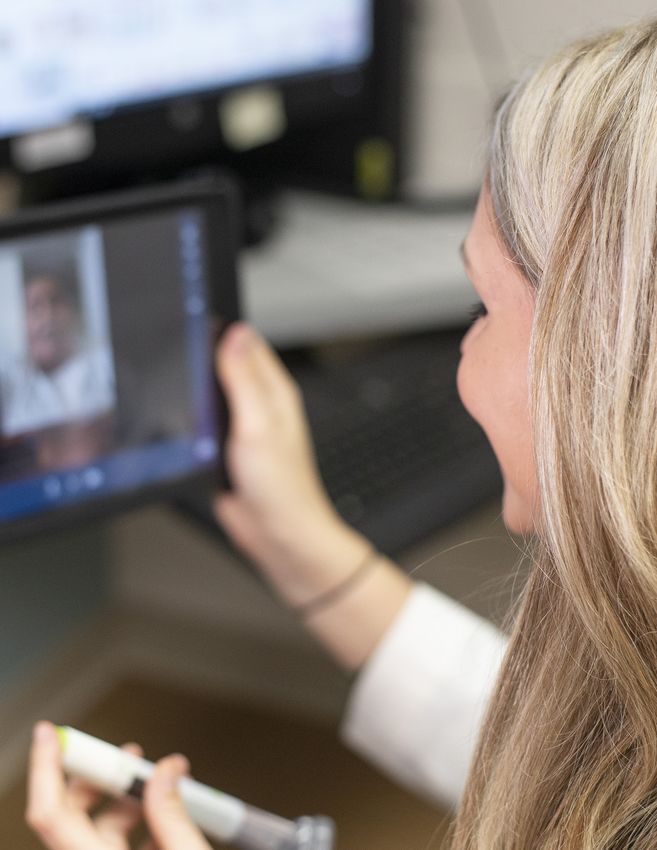
telehealth programs as an option for our patients to keep them safe while continuing to treat their chronic
disease.

Our dedication to teaching has allowed us to expand our pharmacy residency offerings from three to eight
programs. The “Meds to Beds” discharge medication program has been recognized as a vital tool to promote
medication adherence and decrease medication-related readmissions. It’s also had a positive impact on
patient satisfaction.

In the face of a state and national emergency, Enterprise Pharmacy made swift adjustments to make sure
patients received the seamless and high-quality care they deserve. These adjustments often occurred daily,
and while attempting to create new ways to provide effective patient care. These efforts directly support
our mission and vision for pharmacy services at Geisinger and wouldn’t have been possible without the
dedication and commitment of our Geisinger Pharmacy leadership team. I’d like to thank each member of our
staff for their commitment to the pharmacy profession and the care of Geisinger patients and communities

Michael A. Evans, RPh, MBA, FASHP
Chief Pharmacy Officer
Geisinger

2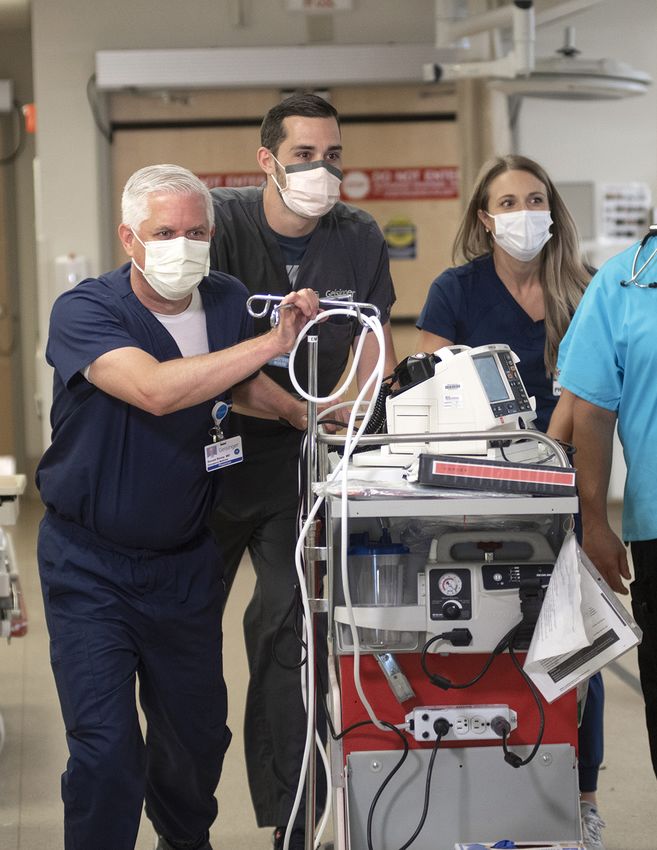
In 2020–2021, Enterprise
Enterprise Pharmacy                                                  Pharmacy consists of the
                                                                     nine pillars listed below:
Despite the dynamic challenges of the COVID-19 pandemic, the
entire Enterprise Pharmacy team adapted while continuing to          Acute Programs, overseeing pharmacy
work collaboratively and carry out the mission of our department.    clinical operations in Geisinger’s seven
Enterprise Pharmacy staff continues to grow, approaching 1,000       different acute care facilities.
employees over the last year.
As in years past, our pillar system continues to evolve to support   Planning, Strategy and Analysis,
the ever-growing needs of Enterprise Pharmacy. In July 2021, we      directing Enterprise Pharmacy’s future
welcomed a new pillar, the Pharmacy Innovation Alliance.             using clinical and business analytics
                                                                     to develop strategies for expanding
                                                                     pharmacy care services.

Operations and Compliance, overseeing medication safety, corporate compliance, accreditations and 340B
for Enterprise Pharmacy.

Ambulatory Programs, managing the medication therapy and disease management programs. In the last
fiscal year, the outpatient distribution systems in retail pharmacy, specialty pharmacy and home infusion
were brought under the pillar of Ambulatory Programs.

Contracting and Procurement, directing the management of medication resources for the healthcare
system.

Knowledge Management, coordinating the education and professional development needs of Enterprise
Pharmacy, providers and patients.

Managed Care, managing the medication and pharmacy-related needs of Geisinger Health Plan.

Center for Pharmacy Innovation and Outcomes, innovating and optimizing pharmacy and medication-
related services through applying the scientific method.

Pharmacy Innovation Alliance, composed of contemporary and progressive health system participants who
have the capabilities to innovate in the integrated delivery network pharmacy enterprise value market space.

                                                                                                            3
Enterprise
Pharmacy Pillars

Acute                          Planning, Strategy           Operations &                 Ambulatory
Programs                       & Analysis                   Compliance                   Programs

• Medication optimization     • Innovation                 • Medication safety         • Specialty care
• Multidisciplinary team      • Project management        • Corporate compliance      • Primary care chronic
  rounds                                                                                   disease management
                               • CarePaths                 • Policies and procedures
• Emergency bedside                                                                     • Pharmacy call center
                               • Population health         • 340B
  response                                                                               • Retail
                               • EP program analysis and
• Antimicrobial stewardship     evaluation                                              • Mail-order
• Anticoagulation             • Automation/ technology                                 • Specialty
  management
                               • Data informatics                                       • Home infusion
• Pharmacokinetics
                                                                                         • Pharmaceutical patient
• Medication reconciliation                                                               assistance
• Specialty services                                                                    • Geisinger at Home
   (e.g., Hem/Onc, Peds)
• IV infusion
• O R

                      Pharmacy Care Coordination & Enterprise EHR

44
Contracting &               Knowledge                    Managed                      Center for Pharmacy
Procurement                 Management                   Care                         Innovation & Outcomes

• IDN contracting          • Pharmacy residencies      • Drug benefit              • Investigational drug services
                                                           management
• IDN Procurement          • Student coordination                                   • Pharmacy research support
                                                         • Design management
• IDN formulary            • Staff training                                         • Pharmacy outcome studies
                                                           utilization
                              programs                                                • Demonstrating effectiveness of
                                                         • Medication
                            •C
                              ompetency                                                pharmacy programs
                                                           adherence
                             development                                              • Research grants
                                                         • Treat-to-target HEDIS
                            • Patient education
                                                           metrics                    • Translating research into practice
                              materials/ programs
                            • Collaborative practice

Not a building; not a pharmacy: A complete system clinical pharmacy resource responsible for Medication Therapy
Disease Management systemwide. We are matrixed throughout the system as a distributed pharmacy and pharmacist
network and maintain the patient at the center of all we do.

                                                                                                                              5
6
7

8
Acute
Programs
The Acute Programs pillar provides services to seven hospitals, two ambulatory surgery
centers and 14 ambulatory infusion centers, which manage all hematology/oncology infusion
services. Within the Acute Programs pillar resides the hematology/oncology ambulatory
medication therapy disease management (MTDM) program, a clinical service to monitor and
maintain close follow-up with those receiving oral chemotherapy.

Our nationally recognized, long-standing, progressive pharmacy practice model features
clinical pharmacists practicing decentralized care embedded on patient care units with both
clinical and operational responsibilities. Our pharmacists practice autonomous medication
therapy management under a collaborative practice agreement with our inpatient physician
partners — and they work in general practice as well as across myriad specialty areas.
Technology, automation and our skilled pharmacy technician staff enable and sustain our
current practice model.

                                                                                              9
Geisinger Acute Pharmacy
Pandemic perseverance, expansion, innovation
2020 was a year like no other in acute care as the COVID pandemic hospital volumes increased across our
service area, peaking in December 2020. We were met with staffing challenges as all of our hospitals’ volumes
exceeded capacity, coupled with significant pharmacy technician shortages, increased medication therapy
needs and a changing COVID treatment strategy from an inpatient and ambulatory perspective.
Pandemic perseverance
• Coordinated system standardized team approach
• Clinical treatment guidelines and operational procedure development and implementation
• Centralized drug procurement, informatics and predictive models
• Vaccine strategic partner
Services expansion = Many pharmacy construction projects
• Hard at work designing and overseeing several inpatient/ambulatory infusion center projects with
particular attention to our clean room areas.
• New facilities
• Geisinger Medical Center Muncy Healthplex – opening winter 2022
•2 0 inpatient beds, ED, ambulatory hematology/oncology infusion center, ambulatory
surgery center, outpatient clinics
• Inpatient/infusion center pharmacy with non-hazardous and hazardous clean rooms
• Geisinger CenterPoint Healthplex – opening spring 2022
•A mbulatory surgery center and outpatient clinics
• OR pharmacy with non-hazardous and hazardous clean room spaces
• Geisinger/Acadia Behavioral Health Hospital Moosic – opening fall 2022
• I npatient behavioral health facility
• Inpatient pharmacy but no clean room space
• Expansion at existing facilities
• Henry Cancer Center at Geisinger Wyoming Valley – opening spring 2022
• Inpatient oncology unit, expansion of hematology/oncology ambulatory infusion
• Inpatient/infusion center pharmacy with non-hazardous and hazardous clean rooms
10Innovation = Technology advancements
• Initiation of Epic image capture integration into dispense prep and check
• Installation of foot-pedal-operated HD cameras and computer workstations
•E
pic discharge prescription verification launch
• Antimicrobial stewardship navigator integrated in Epic for documentation of pharmacist ASP clinical
activities
• Antimicrobial stewardship dashboard moved into production
• See screenshots below and on page 12
1112
Geisinger COVID vaccine initiative – Enterprise Pharmacy’s role is key to success
    • Multidisciplinary team created to plan and rapidly operationalize system vaccine strategy
    • Enterprise Pharmacy had a core role in overall vaccine strategy throughout the planning,
      implementation and ongoing operations with ever-changing direction throughout the pandemic
    • System vaccine strategy summary
         • Objectives:
               • Rapidly deploy regional geographic approach for vaccine availability
               •S  afely complete many vaccine administrations in short time period
               • Leverage technology for ease of access, medication safety and reporting
               • Ensure equity and access to our patients, communities and employees
               • Restrict the spread of COVID-19 in our communities, decrease disease burden and strain on
                 hospitals and work toward an end to the pandemic
         • First phase: Healthcare workers strategy
               • Employee-focused effort for onset of vaccine availability throughout all hospital campuses to
                 target approved population
               • Total vaccine doses given through first 2 weeks (end of CY2020) = 8,500
         •S  econd phase: Patient-facing strategy
               • Establish regional hub locations as community vaccine clinics, strategically placed in our
                 geographic service area
                     • Two on site at Geisinger Lewistown Hospital and Geisinger Jersey Shore Hospital
                           • Inpatient pharmacy clean rooms for dose preparation
                     • Two off-site locations, Geisinger CenterPoint in Pittston and Geisinger Hughes Center
                       South in Danville
                           • Office buildings converted to patient clinic areas in only one week
                                • Pharmacy prep areas established with workstations and laminar flow hoods for
                                  vaccine dose preparation
               • Mobile strategy: Take vaccine to patients
                     • Geisinger at Home
                           • Homebound, high-risk and elderly patient population
                     •L  IFE Geisinger
                           • Day programs for elderly adults located regionally
                     • Off-campus vaccine events
         • Total vaccine doses administered through June 2021 = 349,000
         •S  ystem pharmacy involvement
               • Managing entire system vaccine inventory
               • Preparation and dispensing all vaccine doses
               • Vaccine clinic planning
                     • System vaccine supply procurement and coordination
                     • Appointment schedule planning
                     •P  harmacy staffing
                     • Ancillary supply procurement coordination
               •P  harmacist and pharmacy student vaccinators

                                                                                                              13
Hematology/Oncology Pharmacy Services
The Hematology/Oncology Pharmacy Team collaborates across numerous Enterprise
Pharmacy pillars to promote fluid patient care for a “one Geisinger” approach. This
starts with formulary management and coordination with our health plan and
proceeds to medication acquisition, clinical evaluation and monitoring, patient
education and access, culminating in medication preparation as well as administration.
This health system-based Hem/Onc Pharmacy approach ensures each cancer patient
has contact with quality pharmacy services throughout their treatment process at
Geisinger.
• Hem/Onc Pharmacy Services provides infusion pharmacy support at 11 sites
across central and northeastern Pennsylvania. Pharmacists and technicians are
deeply embedded in the various clinical and operational aspects of medication
management and distribution of more than 90,000 medication dispenses
annually
• Supporting externally supplied specialty medications at all locations
• Program development for education of patients, nurse, and physicians
• Compliance with USP and USP requirements
• Monitoring of patients impacted by site of care
• 90,000+ medications dispensed for patient care
Hem/Onc Pharmacy Services also supports four inpatient sites across the system
at Geisinger Lewistown Hospital, Geisinger Medical Center (GMC), Geisinger
Community Medical Center and Geisinger Wyoming Valley Medical Center. At
the GMC location, our satellite hem/onc pharmacy services support the following
inpatient services:
• Inpatient medical oncology rounding consult service
• I npatient hematology/stem cell transplant rounding service
• I npatient pediatric hematology/oncology rounding service
•A
mbulatory pediatric hematology/oncology ambulatory clinic
• 1,100 referrals to pharmacists
•2 5,000 patient encounters
Finally, our team supports a robust telepharmacy oral chemotherapy clinic, acting
as physician extenders and patient care advocates. With 21st-century medicine,
providing safe and efficient patient care relies heavily upon optimizing the electronic
medical record. Our responsibilities include:
• Development, review and implementation of medication order builds
• Chemotherapy treatment protocols build
• Clinical decision support pathway incorporation
Hematology/Oncology Pharmacy Services leads the hematology oncology P&T
subcommittee to consider the effectiveness, safety, financial and operational
implications of incorporating such therapies at our institute.
1415
Planning, Strategy
and Analysis
The Planning, Strategy and Analysis pillar fosters clinical and business transformation,
digital enablement, and growth and expansion planning. The pillar drives both the
financial margin and quality improvement through a portfolio of projects that deliver
top- and bottom-line growth across all distribution channels. Due diligence, planning
and implementation of medication center digital and predictive technologies drive
operational improvements and clinical outcomes to reduce the total cost of care. The
pillar is highly involved in the pharmacy expansion strategies to ensure organizational
support, effective management and investment return.

16
One                                       Medicare

                                          Commercial

Geisinger                                 Medicaid

                                                                                     6

financial                                                             2
                                                                          4                   5

analysis
                                                                                 1       3

                                                                  8                                     9

                                                                                     7
•M
  apping the financial mechanics of
 bringing a low-cost specialty therapy
 to market and its impact on the
 health plan, pharmacy and hospital
 entities/clinic (e.g., high live EQRx
 commercialization summary)
•G
  eisinger pharmacy is partnering
 with biopharmaceutical startup
                                                     Prescriber       Pharmacy               Payer          340B
 EQRx to bring fast follower high-cost
 drug therapies to market at lower
                                              A      GCE              GCE Pharm              GHP
 costs                                    1
•G
  eisinger is uniquely positioned            B      GCE              GCE Pharm (340B)       GHP            340B
 to assess the financial impact of
                                              A      GCE              GCE Pharm              External
 lower cost therapies across the care     2
 continuum, from the health plan to           B      GCE              GCE Pharm (340B)       External       340B
 specialty pharmacy and the patient
                                          3          GCE              Contract (340B)        GHP            340B
• I nitial oral oncolytic analysis
  indicates, on average, Geisinger        4          GCE              Contract (340B)        External       340B
  would save $69,000 per patient per
  year across all patients and members,   5          GCE              Non-contract           GHP
  with the following breakdown:           6          GCE              Non-contract           External
    •G
      eisinger Pharmacy:
     ($33,000), loss in revenue           7          External         GCE Pharm              GHP
    •G
      eisinger Health Plan:                         External         GCE Pharm              External
                                          8
     $102,000, reduced cost
     of care                                  A      External         External 340B          GHP            340B
                                          9
    •E
      conomic analysis framework
                                              B      External         External Non-340B GHP
     (figure right)

                                                                                                                   17
Geisinger Transformation Highlights
• $270 million in margin impact over 4 years across a portfolio of 20+ projects, including:
•S
pecialty Carepaths – Across specialty disease areas (multiple sclerosis, IBD/Crohn’s
disease, rheumatoid arthritis and diabetes), Geisinger Pharmacy has aligned clinical
best practice prescribing with Geisinger Health Plan formulary and pharmacist co-
management to drive lower costs of care, clinical quality metrics and prescription
capture by Geisinger Pharmacy. Estimated value creation is $2.7 million annually.
•P
harmacy Benefits Management (PBM) migration – Geisinger Health Plan migrated
PBMs from MedImpact to PerformRx to drive efficiencies and transparency around
rebates, network rates and administration fees. The “in-sourcing” of Geisinger Health
Plan medication spend volume to Geisinger Pharmacy enables Geisinger to extract
additional value from PBMs. Estimated value creation is $26.4 million annually.
•S
trategic wholesaler relationship – Leveraging the purchasing power and unique
pharmacy operations of the Pharmacy Innovation Alliance (PIA), as a group the PIA
has aggregated over $1.2 billion in annual medication spend across three partners.
Geisinger estimated value creation is $18.7 million annually.
•C
entral Medication Hub – Geisinger’s Central Medication Hub has been live for one
year and currently covers ~70% of departments requiring prior authorization and
patient assistance support across by pharmacy and medical benefit medications. The
Central Medication Hub offers an “easy button” to all providers prescribing high-cost
medications for Geisinger patients. It integrates prior authorization, patient assistance
options, scheduling, patient management and site-of-care optimization to optimize
time to therapy, site of therapy and revenue capture. Geisinger estimated value
creation is $4.6 million annually.
18Central Med Hub Overview
Consolidate three separate operations — Specialty Pre-certification Team (formerly known as MyVisit),
Objective Patient Reimbursement and Patient Assistance, and Specialty Pharmacy — into a centralized team and
process known as the Central Medication Hub, overseen by Enterprise Pharmacy.
Functions
Carepath conformance Managing medication Proactive Ordering & delivery of
and alignment prior authorization determination of medications, including
benefits & patient external pharmacy
assistance
Benefits Standardize processes Reduce administrative Decrease delays in Optimize patient
burden on clinic staff patient care affordability
Geisinger–AmerisourceBergen Home Infusion
enablement solution
Geisinger has 30+ years of experience in Home Infusion, serving ~2,000 patients per month.
Given our expertise and financial performance, we’re partnering with AmerisourceBergen’s
Provider Solutions to provide both startup and optimization home infusion services for large
integrated delivery networks across their customer base.
19Value of Geisinger distribution channels
and blending the lines between them
Geisinger’s Medication Therapy Disease Management (MTDM) program serves as the “front door” for Geisinger providers
and patients and the nexus between Geisinger Pharmacy’s distribution channels to optimize site of care or delivery channel
for patients. This integrative approach has driven Geisinger’s distribution channels to ~$525 million in CY21 revenue with a
17% growth rate.
MTDM integration scope
Medicine Integrated pharmacy services Value creation
Specialty
Footprint Pre-treatment
assessment
Clinical
• Caregap closure (lab
monitoring, vaccinations)
• Cardiology
• Disease-specific markers
•D
ermatology Population Pre-cert (i.e., CDAI, A1c)
health coordination
• Endocrinology • Patient satisfaction
• Gastroenterology
• Hepatology Financial
• R x capture (retail, mail,
• Infectious Diseases
specialty & home infusion)
• Neurology • 340b qualification
Refill management & Clinical
•P
ulmonology • ED & hospital utilization
coverage reauthorization co-management
• Rheumatology
•T
ransplant Operational
• Access
• Administrative burden
(pre-cert & refill
management)
• Provider satisfaction
•R
etail (Clinic and Hospital) Pharmacy – Growth driven •S
pecialty – Specialty integration into both embedded specialty
by Meds2Beds and Specialty Pharmacy satellites at MTDM program and the Central Med Hub has optimized
hospital retail locations. CY21 revenues of ~$100 site of care, increased patient assistance, reduced clinical
million with 41% annual growth rate. administration burden, and driven specialty Rx capture. CY21
•M
ail-Order – Digital pharmacy model enabled by revenues of ~$274 million with 6% growth rate.
clinic-based mail-order enrollment with 2 to 3 delivery •H
ome Infusion – Combining Geisinger Health Plan Site of
times drive growth across community medicine, 65 Care, Third-Party Payer Site of Care strategies, integration of
Forward and specialty clinic capture. CY21 revenues MTDM pharmacists and central med hub into home infusion
of ~$105 million with 24% growth rate. service offerings have driven significant growth. CY21
revenues of ~$40 million with 33% growth rate.
20Operations and
Compliance
The Operations and Compliance pillar spans a wide array of topics and locations
within Enterprise Pharmacy. They are responsible for oversight of several systemwide
pharmacy initiatives and play an important role in all pharmacy locations to assist
sites in regulatory readiness and expansion of accreditation at a number of locations.
The pillar maintains and oversees pharmacy operations, corporate compliance,
medication safety and controlled substance diversion prevention.
21Pharmacy Compliance
• 23 active compliance audits
• 340B program:
• The 340B Program provides an opportunity for eligible Geisinger entities to purchase
medications at or below a calculated ceiling price based on usage of those medications by
qualified outpatients prescribed by eligible providers.
• Four major areas of concern are:
• Only eligible patients are receiving 340B medications
• Geisinger eligible entities are not receiving duplicate discounts when Pennsylvania
Department of Public Assistance is also receiving a manufacturer rebate
• Outpatient Areas for Disproportionate Share Hospitals utilizing the 340B medication
ceiling price and subject to the GPO Prohibition are not ordering medications on
Geisinger’s Group Purchasing Contracts
• 340B purchased medications are not being diverted to ineligible patients
• Maximization of reimbursement – Dispense as written (DAW) code
• The purpose of this activity is to ensure that actionable items discovered through
auditing of DAW code submissions are addressed to ensure maximum reimbursement
is obtained
• This audit is completed internally for prescriptions processed weekly. 100% of
prescriptions processed are reviewed to determine the following: Proper DAW code
was selected for brand dispensed prescriptions
•P
rocurement – Monitors the financial impact of medication shortages/backorders as well as
utilization of 503B vendors
• Each quarter, the number of vendors and drugs purchased through a 503B vendor
or due to backorders are reviewed and a report is generated to identify the scope of
medications purchased and potential impact on the system both from a patient care
and financial aspect
• 503B impact – CY20 ~$3 million
• Backorder impact – CY20 ~$7.9 million
• Opioid prescribing in primary care
•M onitors physician prescribing compliance for opioids
• The number of patients that are prescribed greater than 50 morphine equivalents
per day (MED).
• The number of providers that exceed 5% of their total panel patient that are
prescribed opioids in their respective region.
• E-prescribing – % compliance of total providers
• Highlights impact of Medication Disease State Management pharmacists on
prescribing patterns.
22Automation
• I mplemented automated dispensing cabinet (ADC) scan on restock technology at all Geisinger locations to
improve safety when restocking. This included over 400 cabinets.
• Implemented standardized approach to the management of emergency medications in all the ADCs.
• I mplemented Multi-Specialty Clinic medication management program through a new medication
management model using ADCs.
• Implemented new access control procedures to streamline new access requests.
• Installed XT controlled substance managers at five hospitals.
•D
uring the pandemic, implemented an ADC medication management program utilizing ADCs at several
external pandemic treatment tents across the heath system.
• I mplemented an ADC medication management program in a cardiac specialty area through the integration
of Epic and Omnicell to ensure patients’ medications are managed appropriately as well as billed correctly.
2324
Controlled Substance
Management/Diversion Prevention
•A
  pproximately 80 Drug Diversion Investigation Team activations across the system
 for 2020.
• I mplementation of notification program to monitor dispenses from an automated
  dispensing cabinet without timely documentation of administration.
•N
  ew software being implemented to provide diversion analytics to reduce and/or
 eliminate drug diversion, automation of manual processes.
•S
  upports best practice for patient safety, pain management and needless risk of
 transmission of infections.
•C
  ollaborates with other service lines regarding controlled substances on audits,
 investigations and education.
•M
  onitoring of physicians regarding controlled substance prescriptions for reprints/
 duplicates.
•M
  edication takeback program at all Geisinger Pharmacy locations as well as
 community partners to provide method for patients to dispose of unwanted/
 unnecessary controlled substances and other medications.

340B Program
• Savings generated FY20 – ~$180 million
• Growth of over 10% from previous year
• Program breakdown by the numbers:
    • 5 covered entities
         • Geisinger Medical Center (GMC)
         • Geisinger Wyoming Valley Medical Center (GWV)
         • Geisinger Community Medical Center (GCMC)
         • Geisinger Lewistown Hospital (GLH)
• Geisinger Jersey Shore Hospital (GJSH)
    • 169 covered entity associated clinic sites
         • GMC – 103		          • GCMC – 12
         • GWV – 54
    • 116 contract pharmacies
         • GMC – 38		         • GCMC – 34
         • GWV – 38		         •G  LH – 6
•P
  rogram helps to support providing care and education for underserved
 patient populations. Other initiatives supported through this program include
 community-based clinical services, comprehensive women’s and children’s services,
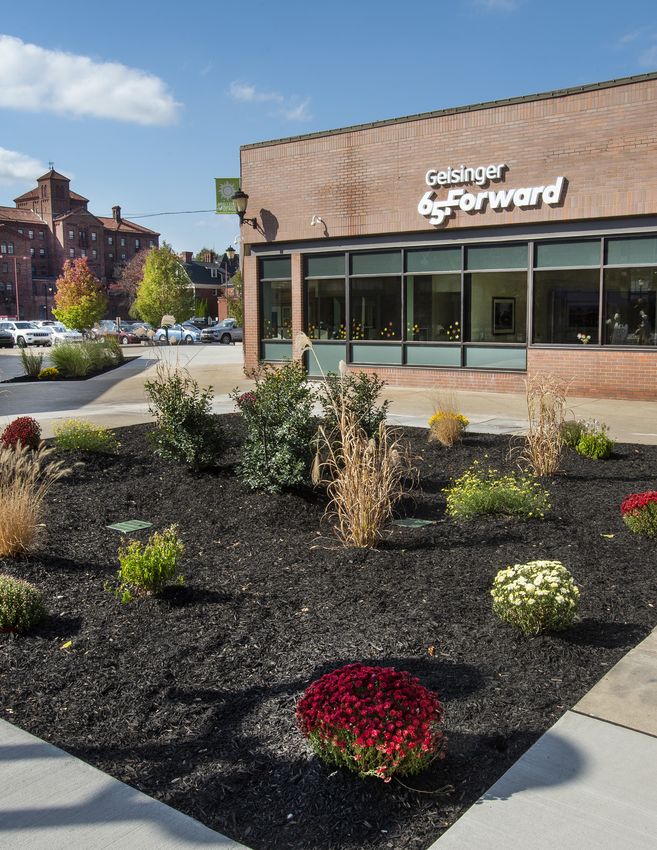
 Free2BMom program, Fresh Food Farmacy and Geisinger 65 Forward health
 centers, specializing in providing care and activities for the 65 and older population.

                                                                                           25
Ambulatory Programs The Ambulatory Programs pillar underwent great change, bringing several programs together to form Geisinger Pharmacy LLC. Included in this new entity are Geisinger Mail-Order Pharmacy, Geisinger Specialty Pharmacy, Geisinger Home Infusion Services, 10 regional Geisinger Retail Pharmacy locations and the Central Medication Hub. Not included in the transition, but still closely aligned, are the Geisinger entity- owned pharmacies at GMC, GWV and GCMC; Telepharmacy; and Medication Therapy Disease Management (MTDM) Programs. This move would be the proverbial jumping-off point for a strategic and innovative growth plan aggressively carrying Geisinger Pharmacy into the future, while setting pace for others to follow. 26
Geisinger Ambulatory Pharmacy:
Setting the stage for aggressive growth in 2021–2022
Enterprise Pharmacy’s Ambulatory Programs underwent great change, bringing several programs together
to form Geisinger Pharmacy LLC. Included in this new entity are Geisinger Mail-Order Pharmacy, Geisinger
Specialty Pharmacy, Geisinger Home Infusion Services, 10 regional Geisinger Retail Pharmacy locations and
the Central Medication Hub. Not included in the transition, but still closely aligned, are the Geisinger entity-
owned pharmacies at GMC, GWV and GCMC; Telepharmacy; and Medication Therapy Disease Management
(MTDM) Programs. This move would be the proverbial jumping-off point for a strategic and innovative growth
plan aggressively carrying Geisinger Pharmacy into the future, while setting pace for others to follow. Several
of the initiatives are listed below:
Northeast Pharmacy Hub
   • Geisinger Pharmacy has plans to open a new pharmacy operations center in Northeast PA in early
     2022. This site will become the new home and base of operations for the Geisinger Specialty Pharmacy,
     the Central Medication Hub, Telepharmacy, and a new satellite of Geisinger Home Infusion Services. It
     will also house administrative and hotel office space, a conference room and Geisinger Home Infusion
     Services’ first on-site infusion suite, with the ability to serve upwards of eight patients a day.
Epic Willow Ambulatory
    • Starting in fall 2022, all Geisinger Retail Pharmacy locations, Geisinger Mail-Order Pharmacy and
      Geisinger Specialty Pharmacy will transition to the Epic Willow Ambulatory software platform. This
      move will bring these pharmacy pillars in line with the Epic operating system used throughout the
      Geisinger Clinical Enterprise, and in doing so, will realize several clinical, operational and financial
      benefits.
Retail Pharmacy
    • 2021 saw new Retail Pharmacy locations open (or get ready to open) at Geisinger Community Medical
       Center, Lock Haven, Mifflintown and the Muncy healthplex.
    • In 2022–23, plans are underway to open sites at Geisinger’s Henry Cancer Center, Geisinger Wyoming
       Valley Medical Office Building, Reedsville and Buckhorn.
    • All told, Geisinger Pharmacy will almost double its retail pharmacy site offerings over the course of the
       next two to three years.
Mail-Order Pharmacy
    • Geisinger Mail-Order Pharmacy plans to open a centralized adherence packaging solution by the end of
      2021 (or early 2022). It will be housed in the current pharmacy footprint and will not only serve our LIFE
      Geisinger and 65 Forward populations, but will also be offered systemwide to interested patients.
    • Along the same timeline, Geisinger Pharmacy is planning to operationalize a Retail/Mail Order OTC
      (over-the-counter) medication home delivery/distribution process for our Geisinger Health Plan
      members.
    • In addition, over the next two to three years, Mail-Order will be undergoing a large-scale production
      line expansion that will more than double its current capacity and establish the foundation for a larger
      growth strategy moving forward.
Home Infusion Services
    • I n current state, Geisinger Home Infusion Services (GHIS) provides care to patients in 46 counties across
      the state out of a single site — Danville, Pa., in our Central Region. However, by mid-2022, GHIS will have
      accredited satellites in both the Northeast and Western regions. This will not only expand the operating
      reach to additional outlying areas but will also allow for more efficient and timely service in these regions.
    • I n addition, GHIS will open its first Home Infusion Suite within the NE Pharmacy Hub in early 2022.

                                                                                                                 27
Geisinger Specialty Pharmacy (GSP)/Central Medication Hub (CMH)
• As noted above, Geisinger Specialty Pharmacy and the CMH will find new
homes in 2022 at the NE Pharmacy Hub. This move will provide both programs
room to expand services and leave additional space for growth as the business
model continues to evolve and new external partnerships are formed.
• To help fuel future growth and take advantage of the service offerings and
patient financial assistance provided at the Specialty Pharmacy, GSP has
plans to roll out a systemwide Fertility Medication Program and an expanded
Enhanced Diabetes Medication Distribution Program.
• The CMH currently manages ~70% of the system’s medication prior
authorizations with expansion plans to manage close to 100% by the
end of 2022.
Medication Therapy Disease Management/Telepharmacy
• Geisinger’s MTDM Program, already one of the largest ambulatory clinical
pharmacy programs in the nation, will continue to grow in the coming
years, adding clinical pharmacists to new 65 Forward sites and embedding
a behavioral health pharmacist within primary care. They will continue to
expand further into the Specialty Pharmacy space, most notably Dermatology,
Pulmonology, Transplant and Endocrinology.
• Additionally, Geisinger’s MTDM leadership is in the process of developing a
plan for a modified MTDM practice model that can be offered externally to
non-Geisinger providers, other health systems and interested payors.
• In late 2021, GHP, MTDM and Telepharmacy will collaborate on an internal
MTM Part D program. It will initially be housed out of Telepharmacy, with
planned expansion in the coming years to both our MTDM and retail pharmacy
sites.
• In May of 2020, Telepharmacy began to expand its medication management
program to include select Specialty platforms, Gastroenterology, Neurology
and Rheumatology. Currently, the MTDM/Telepharmacy team manages
>6,400 medication renewal requests per month in addition to >78,000 CMSL
requests monthly (see table). Scaling the Specialty management program
will occur by the end of CY 2022 by adding pulmonology, endocrinology and
dermatology.
• 2021 will also see Telepharmacy expanding its clinical services programs. UTI
management and Transition of Care programs will be expanded to additional
campuses across the system. Efforts to reduce UTI-related ED utilization with
our current pilot program at GWV and GSWB will be offered to GMC and
GLH in Q3 of this year (see visual). Additionally, our TOC pilot with GWV and
GMC will be expanding to GLH by the end of 2021. This collaboration with our
acute pharmacy team provides a “bridge in care” for patients as they transition
from hospital to home, providing valuable medication education, medication
reconciliation and therapy optimization services.
As you can see, the Geisinger Ambulatory Pharmacy Program is undergoing an
exciting transformation — we’re creating the Geisinger Ambulatory Pharmacy
Program of tomorrow.
2829
30
31
Geisinger Mail-Order Pharmacy
Utilization of Geisinger Mail-Order pharmacy has been a key driver in bringing care and service to the
consumer during a year when the convenience of being provided care at home — and leveraging technology
to do so — provided the most value to the patient. Persistent surges in prescription growth rate throughout
2020–2021 inspired our commitment to develop solutions that would meet the demands of the patient and
work to provide innovative ways to expand upon access to prescription services and ease of use through our
web portal.
•O
  ur Mail-Order is currently composed of 42            •2
                                                          020–2021 was not without its challenges for our
 employees. Our team of eight pharmacists and            team to navigate and avoid significant impact to
 34 technicians cover call center and prescription       patient care:
 fulfillment operations. They have filled over             • Wholesaler change (October 2020)
 620,000 orders from July 2020 to June 2021,               • U.S. Postal Service conversion to UPS as
 with a peak volume of 58,261 in May 2021. Our               primary courier (December 2020)
 production line expanded operations to provide            • Geisinger Health Plan PBM Change (January
 additional line coverage three days a week                  2021)
 starting in May 2021, and ship 14,000 orders to        •T
                                                          he future of Geisinger Mail-Order pharmacy
 patients weekly on average.                             includes:
•A
  dding a retail pharmacy on the GCMC campus              • Continued production line expansion, both
 and at the Lock Haven clinic in 2021 has                     with respect to staffing and automation,
 expanded our geographical footprint to reach                 allowing for two full-time shifts, five days a
 new customers and speak to the benefits of using             week, and the potential in the coming year to
 mail-order for future fills.                                 more than double current capacity
•E
  mbedding mail-order enrollment satellites at            • Additional growth of our retail network and
 select regional retail and 65 Forward locations              enrollment satellites to assist in onsite Mail-
 has also expanded our ability to reach new                   Order registration
 patients and simplify the enrollment experience           • Continued partnership with the Telepharmacy
 for those patients when they’re on site, bypassing           call center and MTDM teams for routine and
 the need to use the call center to start using mail-         as-needed remote support
 order services.                                           • Adherence packaging options for patients
                                                           • Med refill synchronization with auto-refill
•C
  ross-training a large volume of Telepharmacy,              enrollment
 MTDM and retail pharmacy staff in mail-order              • Enhanced web portal patient experience,
 operations allowed for the development of a                  including online enrollment
 highly qualified remote support team, as well as          • Pursuit of URAC accreditation in 2022
 on an-site production line team that could quickly        • Pursuit of additional payor contracts and
 be called into action at any time.                           external customers

32
Continued evolution of Geisinger Mail-Order Pharmacy
by the numbers
Prescriptions filled FY20–FY21
Prescriptions Filled 2020-21
70,000
58,261
60,000 54,407 52,327 56,785 55,436 52,347 55,721
50,634 49,454 49,757
46,869 47,748
50,000 44,824
40,000
30,000
20,000
10,000
0
Jun Jul Aug Sep Oct Nov Dec Jan Feb Mar Apr May Jun
Prescriptions filled FYOY
FY19 FY20 FY21 BrY FY21
70,000
60,000
50,000
40,000
30,000
20,000
10,000
0
Jul Aug Sep Oct Nov Dec Jan Feb Mar Apr May Jun
FY19 32,491 34,259 30,096 35,860 35,092 30,867 36,882 32,323 33,872 37,498 36,898 34,186
FY20 39,992 36,188 35,079 41,095 33,856 38,538 46,162 41,045 42,351 50,197 46,971 46,869
FY21 BrY 50,634 49,454 47,748 44,824 49,757 54,407
FY21 52,327 56,785 55,436 52,347 58,261 55,721
33Rheumatology collaboration: Defining high-value
pharmacy integration in specialty care
The Medication Therapy Disease Management (MTDM) program has been historically defined by a
large footprint across the Geisinger primary care landscape. However, recent strategic integration
of MTDM into medicine specialties across the clinical enterprise has positioned the program for a
new era of value creation, and the collaboration achieved with rheumatology over the past two years
serves as a clear blueprint for future success.
MTDM pharmacists were embedded in the two largest rheumatology practices, Geisinger Medical
Center and Baltimore Drive Wilkes-Barre, in the fall of 2019. In addition to the traditional clinical
scope of ambulatory pharmacy practice, a strategic effort has been made to blur the lines between
the rheumatology MTDM pharmacists and other key platforms in Enterprise Pharmacy, such as
the Central Medication Hub (CMH), Geisinger Specialty Pharmacy (GSP), Geisinger Home Infusion
Services (GHIS), and Telepharmacy.
Seamless integration of clinical and distribution pharmacy processes throughout the medication
life cycle has been impactful across clinical, operational and financial domains, with key value levers
highlighted below:
Value-concordance assessment
• Treatment initiation requests funnel from rheumatology providers to embedded MTDM
pharmacists, creating an “easy button” for prescribing. Clinical assessment ensures cost-
effective prescribing, site of care coordination to GHIS when appropriate, and pre-treatment
care gap closure in preparation for submission to CMH for insurance authorization.
Pre-cert coordination
• MTDM submits request for pre-certification to CMH on behalf of prescribing provider and
serves as the point of contact for CMH if clarification or therapeutic interchange is required
during the insurance authorization process. CMH integration with GSP and MTDM provides
copay transparency and facilitates financial assistance to optimize affordability for high-dollar
medications.
C
linical co-management
• Upon insurance approval, MTDM completes medication education visits facilitating Rx
capture followed by longitudinal clinical co-management, which drives quality and safety and
creates provider access. MTDM clinical documentation fulfills ACHC and URAC assessment
requirements, creating GSP resource efficiencies.
Refill management & insurance re-authorization
• MTDM and Telepharmacy collaboratively manage all rheumatology refills to facilitate clinical
monitoring, create provider access and ensure 340B alignment; insurance re-authorizations
are processed proactively via CMH, GSP and GHIS to eliminate delays in patient care, while
reducing administrative burden for the prescribing clinic.
Population monitoring
•E nhanced data analytics facilitate monitoring of value-concordant prescribing, medication
adherence, care gap closure and patients lost to follow-up. Integrated processes across
MTDM and GSP ensure timely interventions to prevent complications from non-adherence in
patients on high-dollar therapy.
34Program impact to date
• $778,000 recaptured non-Medicaid 340B qualification (CY20)
• $366,000 recaptured Medicaid 340B qualification (CY20)
•1
3% increase in Rx first fills at GSP compared to 8% increase
across all system prescribers (Q4 CY20 vs. Q4 CY19)
•1
25 high-risk biologic patients identified as lost to follow-up
and re-engaged (CY20)
• 13,966 refills managed by MTDM and Telepharmacy (CY20)
• 2,039 clinical visits completed (CY20)
•1
,234 pre-cert coordinated in collaboration with CMH
(August–December ’20)
3536
Medication Therapy Disease Management
at 65 Forward – Transforming primary care
Geisinger’s 65 Forward health centers have been popping up throughout the Geisinger
footprint since 2019 and this is not going to slow down anytime soon, with several
new sites planned to open within the next two years (see visual). This program offers a
unique and innovative primary care approach for Geisinger Gold members age 65 and
older, who require more support for complex medical conditions, chronic disease, social
isolation and disability. Patients receive more personalized care from 60-minute provider
appointments and healthcare services such as imaging, lab, wellness coordinators and
mental health services all under one roof, meaning less travel for the patient. Social and
educational activities such as chair yoga, ceramics and group games are offered, along
with state-of-the-art fitness equipment and exercise classes that promote socialization,
improving mental health. The implementation of this model has led to improved disease
management outcomes, reduced hospital admissions and significant cost reductions. The
smaller provider panels of only 450 patients enable same-day visits and lead to higher
patient and provider experience satisfaction along with increased quality of care.
•P
  resently, MTDM pharmacists are embedded at five sites: Kingston, Scranton,
 Shamokin Dam, Hazleton and Wilkes-Barre.
•B
  y the end of 2021 there will be four new 65 Forward sites supported by MTDM:
 Milton, Shamokin, State College and Buckhorn/Bloomsburg.
•T
  he MTDM clinical pharmacists at these locations are responsible for supporting the
 65 Forward providers and patients in a slightly higher-touch model of care than our
 traditional MTDM practices
• The 65 Forward clinical pharmacists are responsible for providing the following:
        •M
          edication and chronic disease management for patients with anticoagulation
         disorder, diabetes, hypertension, hypercholesterolemia, COPD/asthma, heart
         failure and smoking cessation.
        • Vaccine administration
        •C
          are gap closures such as labs, preventive testing and evidence-based
         medication treatment
        •M
          edication reconciliation and comprehensive medication review (CMR) for all
         new patients and all hospital discharge patients
        •M
          ail-order enrollment for this patient population, which is exclusively GHP-
         insured
		              •P
                  IN pads have been installed at the 65 Forward sites to enable site of
                 care mail-order enrollment for patients
        • Drug information specialist for patients and providers

                                                                                             37
Geisinger 65 Forward current and future sites
Milton Kingston
Scranton
Bloomsburg
Pittston
Jersey Shore
Wilkes-Barre
Hazleton
State College
Tamaqua
Reedsville
Shamokin Dam Pottsville
Shamokin
Current Future
1. Kingston – October 2019 8. State College – September 2021
2. Scranton – November 2019 9. Bloomsburg – January 2022
3. Shamokin Dam – October 2020 10. Reedsville – CY 2022
4. Wilkes-Barre – October 2020 11. Pottsville – CY 2022
5. Hazleton – November 2020 12. Tamaqua – CY 2022
6. Milton – May 2021 13. Pittston – CY 2023
7. Shamokin – August 2021 14. Jersey Shore – CY 2024
38Pharmacy mail-order capture is nearly double the rate in
65 Forward centers compared to traditional primary care
65 Forward Mail Order Capture Comparison
40%
35%
30%
25%
20%
15%
10%
5%
0%
2020 Q2 2020 Q3 2020 Q4 2021 Q1
65 Forward CMSL
65 Forward Mail Order Capture Comparison
50% 40%
35%
40%
30%
30% 25%
20%
20% 15%
10%
10%
5%
0% 0%
2020 Q2 2020 Q3 2020 Q4 2021 Q1
Kingston Scranton Shamokin Dam WB
Hazelton 65 Forward CMSL
3965 Forward outperforming
quality measure benchmarks
Quality & disease management
Measures 65 Forward Benchmark
A1C >9 (poor control) 7.4% + 14%
Blood pressure control (65 Forward value optimization – Vaccination care
gap closure via MTDM vaccination programs
Patient engagement Shingrix care gap identified during pre-visit planning;
patient engaged during visit by MTDM pharmacist
Rx order MTDM orders Rx via local Geisinger retail pharmacy
and completes benefits investigation
Administration MTDM pharmacist, upon receiving consent from
patient, administers vaccine
Payment Geisinger retail pharmacy invoices patient any copay due
Restock Geisinger pharmacy replenishes vaccine stock at
65 Forward site weekly
4142
Contracting and
Procurement
The Contracting & Procurement pillar includes formulary, pharmacy procurement/inventory
management and pharmaceutical contracting.

Formulary
The role of the Formulary team is to work with our clinician partners to evaluate pharmaceutical
products using an evidence-based approach to identify which products provide the best outcomes
to our patients. Once identified, the team works with pharmaceutical vendors to negotiate the best
possible price for these products.

Pharmacy Procurement/Inventory Management
The Procurement team works hand in hand with the formulary team and communicates daily with
the acute care hospitals and ambulatory clinics to be sure pharmaceutical products are readily
available for patients.

Pharmaceutical Contracting
The Contracting team evaluates potential contract opportunities with vendors that result in
partnerships with pharmaceutical companies. The team consists of members from across the
Pharmacy enterprise, inclusive of Geisinger and Geisinger Health Plan. These partnerships lead
to cost savings opportunities.

                                                                                                     43
Central Inventory Update
•C
entralizing pharmacy inventory for the six acute care hospitals and the ambulatory clinics allows for
full visibility across the enterprise while reducing costs, ensuring medication availability and streamlining
resource allocation and workflow.
• Several benefits to having a centralized inventory:
•D
ecrease the number of wholesaler emergency orders to address acute needs at one or more of the
institutions
•R
educe emergency delivery fees, which have had a financial impact on the organization of $300 per
month or $3,600 annually
•E
liminate the manual process for review of FDA-recalled medications and allow for more streamlined
operational plan for retrieval of recalled medications
• Decrease the amount of expired inventory at each location
• Maintain ideal PAR levels at acute care sites while optimizing the distribution process
• Become a single ordering platform for the Pharmacy Procurement Team
• Provide one tool to place orders, split for 340B and template maintenance
• Eliminate manual reporting and pulling of data for direct purchases
• Incorporate wholesaler and direct purchases
•C
reate an interface for the retail pharmacies, needed to adequately document, monitor and track
purchases and inventory combining centralized and direct delivery
•C
reate a standard electronic purchase order process for the retail pharmacies, thereby improving the
A/P process
• Facilitate regulatory requirements for DSCSA
44Oncology biosimilar conversions for bevacizumab,
rituximab and trastuzumab
•H
istorically, generic medications have been a significant source of cost savings for both health systems and
patients alike.
•R
ecently, a number of biosimilar medications (the equivalent of a generic for a biologic medication) were
approved by the FDA and presented opportunity for significant cost savings while maintaining the same
clinical efficacy.
• I n October 2020, the Geisinger System Formulary transitioned to three such biosimilars: Zirabev®
(bevacizumab-bvzr), Ruxience® (rituximab-pvvr) and Ontruzant® (trastuzumab-dttb).
•S
ince then, transitioning to these biosimilar medications has resulted in the following savings for the
Geisinger Clinical Enterprise:
• Zirabev (bevacizumab-bvzr): $1.2 million
• Ruxience (rituximab-pvvr): $943,000
• Ontruzant (trastuzumab-dttb): $990,000
•T
he conversion process included excellent teamwork across multiple areas within Pharmacy, including
the Formulary/Procurement team, the Hem/Onc Pharmacy Team and the Central Med Hub Team, and
resulted in implementation of a process that we can mirror moving forward for future biosimilar adoptions.
Adoption of various 503B compounded products to help
reduce high batching workload and mitigate waste
•O
ver the past 12 months, a number of outsourced, ready-to-use products have been added to system
formulary.
• These ready-to-use products are not commercially available, but can be obtained from our 503B
Outsourcing Pharmacy Partners.
• A sampling of the outsourced products brought onto system formulary over the past year include:
• Epinephrine 5 mg/250 mL NSS Premix Bag
• Phenylephrine 40 mg/250 mL NSS Premix Bag
• Fentanyl 2,000 mcg/100 mL NSS Premix Bag
• Ketamine 1,000 mg/100 mL NSS Premix Bag
• Methacholine Ready to Use Kit
• Hydromorphone 50 mg/50 mL CADD Cassette
• Adoption of these products offers several advantages:
• It frees up valuable time for our IV Area teams, allowing them to focus on more complicated sterile
compounding needs that cannot be outsourced.
• Since the 503B premade products have significantly better beyond use dating compared to internally
compounded products, it significantly reduces waste due to product expiration.
• It mitigates the impact of medication shortages, since most 503Bs produce their ready-to-use
products from active pharmaceutical ingredients as opposed to using commercially available product.
45You can also read


