GENDER EQUALITY EMPOWERMENT - OF WOMEN 2020 2023
←
→
Page content transcription
If your browser does not render page correctly, please read the page content below
STRATEGY FOR
       GENDER
       EQUALITY
           AND THE
       EMPOWERMENT
       OF WOMEN

2020
2023

STRATEGY FOR GENDER
    EQUALITY AND THE
EMPOWERMENT OF WOMEN
       2020–2023

        Vienna, 2019
© UNIDO 2019. All rights reserved.

This document has been produced without formal United Nations editing. The designations employed and the presentation of the
material in this document do not imply the expression of any opinion whatsoever on the part of the Secretariat of the United
Nations Industrial Development Organization (UNIDO) concerning the legal status of any country, territory, city or area or of its
authorities, or concerning the delimitation of its frontiers or boundaries, or its economic system or degree of development.
Designations such as “developed”, “industrialized” or “developing” are intended for statistical convenience and do not necessarily
express a judgement about the stage reached by a particular country or area in the development process. Mention of firm names or
commercial products does not constitute an endorsement by UNIDO.

All photos © UNIDO, unless otherwise stated.

Publishing production: English, Publishing and Library Section, United Nations Office at Vienna.
CONTENTS

   Foreword                                                                          v
   Introduction                                                                     vi

   THE UNIDO THEORY OF CHANGE FOR GENDER EQUALITY
   AND EMPOWERMENT OF WOMEN                                                          1

   UN-SWAP 2.0 AND UNIDO STRATEGIC OBJECTIVES                                        5
   Strategic objective 1:
       Strengthen UNIDO strategic planning and programmatic activities to improve
       delivery of global results on gender equality and the empowerment of women    8
   Strategic objective 2:
       Strengthen UNIDO institutional capacity and effectiveness to enhance
       the delivery of results on gender equality and the empowerment of women      11

   THE UNIDO UN-SWAP 2.0 PERFORMANCE AREA TARGETS                                   17

   ANNEX                                                                            19
   Key performance indicators                                                       19

                                           iii
This publication is in line with GC.18/15
 “Strategy for Gender Equality and the
Empowerment of Women, 2020–2023”
  presented to Member States at the
   eighteenth session of the General
       Conference in Abu Dhabi,
          3–7 November 2019

                       iv
FOREWORD

Under the 2030 Agenda for Sustainable Development we have pledged to attain gender equality and
the empowerment of all women and girls by 2030. It is the vision of UNIDO that women and men
equally lead, participate in, and benefit from inclusive and sustainable industrial development.

The Organization fully recognizes that gender equality and the empowerment of women lie at the
heart of our mandate. We are committed to addressing gender inequalities in industry and to
harnessing women’s full potential as leaders and economic agents of change, thereby transforming
economies and generating inclusive growth.

To guide our advancement in this important area of work over the coming four years, I am honoured
to present the UNIDO Strategy for Gender Equality and the Empowerment of Women, 2020-2023. This
Strategy provides a framework for UNIDO programmatic work and organizational practices that
will accelerate progress in delivering on our gender equality commitments.

The Strategy was developed through an inclusive and consultative process covering all UNIDO per-
sonnel, including senior management and field offices, and also benefited from substantial input
from UN Women and Member States’ representatives. It is aligned with the second generation of the
United Nations System-wide Action Plan on Gender Equality and the Empowerment of Women
(UN-SWAP 2.0) and commits UNIDO to exceeding the requirements of 15 of its 17 performance
indicators by 2023.

I am proud to support this ambitious goal and want to stress that achieving it will require the
commitment of all personnel, across all levels. Only by combining the promotion of gender parity
and an enabling, inclusive working environment with gender-responsive strategic planning and
programmatic activities can we improve our delivery of global results on gender equality. Guided by
the Strategy, I count on all UNIDO personnel to take ownership of our principles and values
expressed therein and to show the leadership necessary to make our vision a reality.

                                                                                          LI Yong
                                                                        Director General, UNIDO

                                                v
INTRODUCTION

         As stated in the UNIDO Policy on Gender Equality and the Empowerment of Women (2019)
         (DGB/2019/16), gender equality and the empowerment of women are fundamental to the UNIDO
         mandate of inclusive and sustainable industrial development (ISID) and to the achievement of the
         Sustainable Development Goals (SDGs). The interlinkages between gender and industry are also
         recognized in Goal 9 and the Lima Declaration on ISID, which both emphasize the role industry can
         play in promoting decent employment, opportunities for social inclusion and gender equality, and
         the empowerment of women.1

       UNIDO abides by the fundamental principle of non-discrimination on the basis of sex, as established
       in the United Nations founding Charter of 19452 and the 1948 Universal Declaration on Human
       Rights3 and as reconfirmed through inter alia the Convention on the Elimination of All Forms of
       Discrimination against Women of 1979,4 the 1995 Beijing Declaration and Platform for Action5 and the
                                                   2030 Agenda6 commitments relating to gender equality
Gender equality and the empowerment of             and the empowerment of women and girls.
women are fundamental to the UNIDO
mandate of inclusive and sustainable                      The UNIDO vision, as laid down in the 2019 Policy on
industrial development (ISID) and to the                  Gender Equality and the Empowerment of Women
achievement of the Sustainable                            (DGB/2019/16), is that women and men equally lead,
Development Goals (SDGs).                                 participate in, and benefit from inclusive and sustainable
                                                          industrial development. Towards this vision, UNIDO
         follows a comprehensive approach to gender equality and the empowerment of women, recognizing
         the interests, needs and priorities of both women and men and the intersecting diversity of different
         groups. The Strategy for Gender Equality and the Empowerment of Women (2020–2023), requested
         by UNIDO Member States at the seventeenth session of the General Conference in 2017 (GC.17/
         Res.3), will help achieve this vision by taking forward the previous strategy (GC.16/8) and guiding the
         work of UNIDO on gender equality for the coming four years.

         The objectives of this Strategy are aligned with the Chief Executive Board for Coordination’s (CEB)
         System-wide Policy on Gender Equality and the Empowerment of Women (CEB/2006/2),7 the
         System-wide Action Plan for Implementation of the United Nations CEB Policy on Gender Equality
         and the Empowerment of Women (CEB/2013)8 and the United Nations System-wide Action Plan
         on Gender Equality and the Empowerment of Women (UN-SWAP 2.0).9 Looking forward, UNIDO

            1
             For the purpose of this Policy and Strategy, “women and men” also refers to girls and boys where relevant.
            2
             www.un.org/en/charter-united-nations/.
           3
             www.un.org/en/universal-declaration-human-rights/
           4
             www.un.org/womenwatch/daw/cedaw/text/econvention.htm.
           5
             www.un.org/womenwatch/daw/beijing/pdf/BDPfA%20E.pdf.
           6
             https://sustainabledevelopment.un.org/post2015/transformingourworld.
           7
             www.unsceb.org/CEBPublicFiles/press/UN_system_wide_P_S_CEB_Statement_2006_0.pdf.
           8
             www.unsceb.org/CEBPublicFiles/High-Level%20Committee%20on%20Programmes/Public%20Document/SWAP.pdf.
           9
             http://www.unwomen.org/-/media/headquarters/attachments/sections/how%20we%20work/unsystemcoordination/
         un-swap/un-swap-2-framework-and-technical-guidance-en.pdf?la=en&vs=1406.

                                                               vi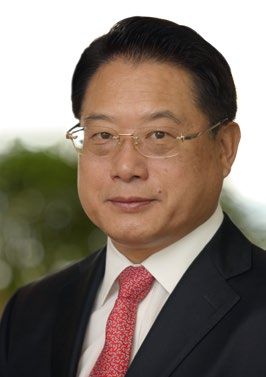
also recognizes the importance of the United Nations Development System (UNDS) reform at the
field and United Nations Country Team (UNCT) level for the achievement of gender results and its
expected contributions to the United Nations Sustainable Development Cooperation Framework
(UNSDCF).
This Strategy builds on the Organization’s to-date achievements on gender equality and the
empowerment of women. It draws on organizational learning to date, including the findings and
recommendations from the 2018 Mid-Term Review of the Implementation of the UNIDO Policy
(2015) and Strategy (2016–2019) on Gender Equality and the Empowerment of Women,10 and the
UNIDO Gender Parity Action Plan (2018–2023). It is the result of an inclusive consultative process
involving personnel11 from headquarters and the field, the Gender Focal Point network, the Gender
Mainstreaming Steering Board and UNIDO Member States. It provides an overarching and forward-
looking framework that sets institutional standards and defines commitments for gender-responsive,
inclusive and sustainable industrial development results. It is also aligned with the updated medium-
term programme framework (MTPF) of UNIDO for the period 2018–2021 (IDB.45/8-PBC.33/8)
and the updated integrated results and performance framework (IRPF) (PBC.35/CRP.11).
This Strategy will enable UNIDO to:
↘↘ Systematically plan, steer, deliver and report more effectively on progress towards its gender
equality commitments at the global, regional, national and organizational levels, and in
the context of the 2030 Agenda, specifically for the achievement of Goal 9: “Build resilient
infrastructure, promote inclusive and sustainable industrialization and foster innovation”
and Goal 5: “Achieve gender equality and empower all women and girls”
↘↘ Excel within the framework of the updated United Nations System-wide Action Plan on
Gender Equality and the Empowerment of Women (UN-SWAP 2.0) for the implementa-
tion of CEB Policy on Gender Equality and Empowerment of Women, as well as the United
Nations System-wide Strategy on Gender Parity12
↘↘ Ensure that the overall priority areas of UNIDO set out in the MTPF, namely “Creating
shared prosperity”, “Advancing economic competitiveness”, “Safeguarding the environment”
and “Strengthening knowledge and institutions”, are implemented in a gender-responsive
manner leading to gender equality results
10
www.unido.org/sites/default/files/files/2019-01/Mid-Term_Review_of_UNIDO_Policy_and_Strategy_on_
Gender_Equality_and_the_Empowerment_of_Women.pdf.
11
For the entirety of this Strategy, unless otherwise stated, “personnel” refers to all serving personnel, irrespective of
position or contractual relationship with UNIDO, including staff members, consultants and other holders of Individual
Service Agreements, and interns.
12
www.un.org/gender/sites/www.un.org.gender/files/gender_parity_strategy_october_2017.pdf.
vii
© Istock/ AfricaImages
The UNIDO theory of change
for gender equality and
empowerment of women
To contribute to high-level results on the Sustainable Development Goals and to achieve the UNIDO
vision in which women and men equally lead, participate in, and benefit from ISID, the following
theory of change (figure I) for UNIDO work on gender equality and the empowerment of women
was developed. It draws on the 2019 theory of change for the United Nations system-wide contribu-
tions to gender-responsive implementation of the SDGs13 and, in line with the UNIDO mandate,
targets four of the eight change areas contained in the United Nations system-wide theory of change,
namely:

↘↘ Women are economically empowered, have income security and decent work.

↘↘ Women lead, participate in and are represented equally within gender-responsive gover-
   nance systems.

↘↘ Knowledge is generated, managed and transferred to enhance the integration of gender
   equality and women and girls’ empowerment across the SDGs.

↘↘ Internal United Nations system changes enable gender equality and the empowerment of
   women and girls.

   13
      The theory of change was developed by a working group of 14 United Nations agencies, including UNIDO. The United
Nations system-wide theory of change posits that if the SDGs are to be achieved in a gender-responsive manner and if the
goal of gender equality and the empowerment of women by 2030 is to be achieved, two high-level outcomes must be
achieved: gender-balanced power relations and an enabling environment for gender equality and the empowerment of
women and girls. Eight system-wide results areas are cascaded down from these high-level outcomes. www.unwomen.
org/-/media/headquarters/attachments/sections/how%20we%20work/unsystemcoordination/un-swap/un-swap-2-
theory-of-change-for-system-wide-gender-related-results.pdf?la=en&vs=2948.

                                                           1
2 STRATEGY FOR GENDER EQUALITY AND THE EMPOWERMENT OF WOMEN 2020-2023
The vision of UNIDO is one in which women
and men equally lead, participate in, and
benefit from inclusive and sustainable
industrial development.
In addition, UNIDO also strives to deliver four additional mandate-specific outcomes, namely:
↘↘ Women have the skills and ability to access higher-skilled positions and productive assets.
↘↘ Women access and use technological innovations and services, and participate in higher
value-added value chains, including export markets.
↘↘ Intermediary institutions deliver and implement gender-responsive services and policies
targeted towards increasing women’s engagement/participation.
↘↘ Sectoral policies, strategies and reforms include gender equality objectives based on gender
analyses.
To contribute to the achievement of these global results, the UNIDO theory of change for gender
equality and the empowerment of women highlights the outputs under the UNIDO sphere of influ-
ence that can contribute to the achievement of higher-level outcomes. These outputs will be expanded
on in this Strategy and will be further detailed through annual departmental implementation plans.FIGURE I. THE UNIDO THEORY OF CHANGE FOR GENDER EQUALITY AND EMPOWERMENT OF WOMEN
ASSUMPTIONS
Impact UNIDO’S VISION: WOMEN AND MEN EQUALLY LEAD, PARTICIPATE IN AND BENEFIT FROM INCLUSIVE AND SUSTAINABLE INDUSTRIAL DEVELOPMENT (ISID)
Higher level Women are economically empowered, have income security and decent work International cooperation
outcomes and global partnerships
Women lead, participate in and are represented equally within gender-responsive governance systems forged
Women have the skills Internal United Nations
Intermediary institutions deliver Knowledge is generated,
and ability to access system changes to enable Political commitment
and implement gender-responsive managed and transferred to
higher-skilled positions gender equality and the assured
services and policies targeted enhance integration of GEEW
and productive assets empowerment
towards increasing women’s across the SDGs
of women and girls
engagement/ participation
Private sector engaged
Women access and use
technological innovations, Sectoral policies, strategies
participate in higher Enabling environment
and reforms include gender
value-added value chains, provided
Immediate equality objectives based
and intermediary including export markets on gender analysis
outcomes
Data and knowledge collected, shared and published
Women/women-owned
enterprises trained/ Policymakers are trained and provided with skills to use sex-disaggregated
equipped with technical industrial statistics to inform delivery and monitoring of services and policies DRIVERS:
skills/access to networks Enabling environment
and awareness of UNIDO staff trained, capacitated and provided with tools
within the Organization
available funds/services/
technologies/expertise Intermediate institutions aware/trained/capacitated to deliver Internal gender
gender-responsive services and to monitor champions
External gender
Capacity-building for women’s Sex-disaggregated data champions
professional associations collection, gender analysis and
and networks diagnostic to determine capacity
Targeted technical gaps and needs
assistance and training for Capacity-building for intermediate
Outputs women institutions, including financial UNIDO publications and training material developed
institutions, statistics offices on gender-industrialization nexus
and business support services Senior management,
staff and counterpart
Inter-agency collaboration
Awareness/capacity-building for policy-makers and gender focal points commitment ensured
STRATEGY FOR GENDER EQUALITY AND THE EMPOWERMENT OF WOMEN 2020-2023
and coordination on GEEW
in partner ministries and agencies
Sufficient resources
Inputs Funding, staff time, technical expertise
3
allocated
GENDER EQUALITY AND EMPOWERMENT OF WOMEN – UNIDO THEORY OF CHANGEUN-SWAP 2.0 and UNIDO
strategic objectives
To guide the forthcoming contributions of UNIDO to gender equality and the empowerment of
women, this Strategy is aligned with the second generation of the United Nations System-wide
Action Plan on Gender Equality and the Empowerment of Women (UN-SWAP 2.0).14 UN-SWAP
2.0 provides an up-to-date accountability framework with six commonly agreed performance areas
and seventeen performance indicators for the United Nations system to reach its goals and measure
progress systematically. It covers both external changes in terms of delivering gender equality results,
as well as internal changes in terms of organizational gender mainstreaming.
Under the first generation of UN-SWAP, UNIDO made significant advancements on issues related
to gender equality and the empowerment of women. Not only was UNIDO awarded the certificate
of achievement for “most significant progress” between 2012 and 2017, it was also rated “best
amongst UN technical entities” at the end of the reporting period in 2017. With the release of
UN-SWAP 2.0 in 2018, many of the indicators were strengthened. UNIDO reporting results contin-
ued to be positive, exceeding seven of seventeen indicators and meeting an additional six. These
results can be seen in figure II.
Under the first generation of UN-SWAP,
UNIDO made significant advancements on
issues related to gender equality and the
empowerment of women.
14
UN-SWAP 2.0 technical guide: www.unwomen.org/-/media/headquarters/attachments/sections/how%20we%20
work/unsystemcoordination/un-swap/un-swap-2-framework-and-technical-guidance-en.pdf?la=en&vs=1406.
56 STRATEGY FOR GENDER EQUALITY AND THE EMPOWERMENT OF WOMEN 2020-2023
In line with the above, UNIDO commits to:
↘↘ Prioritize attention to areas where additional emphasis is required to meet or exceed
UN-SWAP 2.0 performance indicators (as indicated by “meets” or “approaches” status in
figure II)
↘↘ Maintain its strong performance where it is currently meeting or exceeding UN-SWAP 2.0
performance indicators
FIGURE II. THE UNIDO 2018 UN-SWAP 2.0 RESULTS
UNIDO
2018
UN-SWAP 2.0
RESULTS
Exceeds requirements
Meets requirements
Approaches requirementsSTRATEGY FOR GENDER EQUALITY AND THE EMPOWERMENT OF WOMEN 2020-2023 7
Of the seventeen performance indicators covered by UN-SWAP 2.0, this Strategy focuses on the
performance indicators that require concerted attention for them to be met or exceeded. These
priority action areas fall under two strategic objectives (Box 1).
BOX 1. UNIDO STRATEGIC OBJECTIVES, PRIORITY ACTION AREAS AND RELEVANT UN-SWAP 2.0
PERFORMANCE INDICATORS
THE UNIDO VISION:
Women and men equally lead, participate in, and benefit
from inclusive and sustainable industrial development (ISID).
STRATEGIC OBJECTIVE 1: Strengthen UNIDO strategic planning and
programmatic activities to improve delivery of global results on gender
equality and the empowerment of women.
▸▸ PRIORITY ACTION AREA 1: Gender-responsive strategic planning to achieve
gender-related SDG results (UN-SWAP performance indicator 1)
▸▸ PRIORITY ACTION AREA 2: Gender-responsive programming and delivery of
gender-related SDG results (UN-SWAP performance indicator 3)
STRATEGIC OBJECTIVE 2: Strengthen UNIDO institutional capacity and
effectiveness to enhance the delivery of results on gender equality and the
empowerment of women.
▸▸ PRIORITY ACTION AREA 3: Gender-responsive leadership (UN-SWAP
performance indicator 7)
▸▸ PRIORITY ACTION AREA 4: Supportive and effective gender architecture
(UN-SWAP performance indicator 11)
▸▸ PRIORITY ACTION AREA 5: Equal representation of women (UN-SWAP
performance indicator 12)
▸▸ PRIORITY ACTION AREA 6: Gender-responsive financial resource tracking
and allocation (UN-SWAP performance indicators 9 and 10)
▸▸ PRIORITY ACTION AREA 7: Gender-responsive evaluation and audit
(UN-SWAP performance indicators 4 and 5)
▸▸ PRIORITY ACTION AREA 8: Inter-agency coherence for gender equality and
the empowerment of women (UN-SWAP performance indicator 17)
The annual departmental implementation plans will cover all UN-SWAP performance indicators to
ensure that UNIDO maintains its achievements in all the areas, including the remaining indicators
that have not been prioritized under this Strategy.
The full list of UN-SWAP performance areas and UNIDO targets are presented in section IV, table 1.8 STRATEGY FOR GENDER EQUALITY AND THE EMPOWERMENT OF WOMEN 2020-2023
STRATEGIC OBJECTIVE 1:
STRENGTHEN UNIDO STRATEGIC PLANNING AND
PROGRAMMATIC ACTIVITIES TO IMPROVE DELIVERY
OF GLOBAL RESULTS ON GENDER EQUALITY
AND THE EMPOWERMENT OF WOMEN
Priority action area 1: Gender-responsive strategic planning
to achieve gender-related SDG results
The Sustainable Development Goals guide the international community’s work towards a better
future for all, ensuring that no one is left behind. While all SDGs, including Goal 9 on industry, inno-
vation and infrastructure, are interlinked and mutually reinforcing, Goal 5 specifically enshrines the
commitment to advancing gender equality. To make the achievement of all SDGs and specifically
Goal 5 a reality, strategic planning needs to be gender-responsive by setting indicators to measure
progress and commit to reaching transformative results on gender equality in programming. UNIDO
commits to moving from meeting the requirements laid down in UN-SWAP 2.0 to exceeding the
requirements by 2023, specifically through the following actions:
↘↘ UNIDO will finalize and implement the updated IRPF to ensure that it contains both
organizational and programmatic indicators on gender equality and the empowerment of
women to measure contributions to SDG targets.
↘↘ UNIDO will include at least one transformative result on gender equality and the empow-
erment of women in its upcoming MTPF and in its programme and budgets.
↘↘ UNIDO will continue to enhance the systematic use of sex-disaggregated data and the
inclusion of gender-related results in its regular reporting to Member States.
To make the achievement of all SDGs and
specifically Goal 5 a reality, strategic
planning needs to be gender-responsive.
Priority action area 2: Gender-responsive programming and delivery of
SDG results
The 2018 Mid-Term Review of the Implementation of the UNIDO Policy (2015) and Strategy
(2016–2019) on Gender Equality and the Empowerment of Women highlighted the significant
increase in the reported quality of gender mainstreaming in the design of its technical cooperation
activities and the successful implementation of organizational and programmatic requirements onSTRATEGY FOR GENDER EQUALITY AND THE EMPOWERMENT OF WOMEN 2020-2023 9
gender equality and the empowerment of women. This reflects an increasing capacity of project
teams to integrate gender considerations throughout the design and implementation of technical
assistance. Partnerships with other entities that encourage considerations on gender equality and the
empowerment of women have further reinforced this.
While appreciative of the ongoing improvements in the institutional capacity for gender main-
streaming, the mid-term review also found that there needs to be additional emphasis on pro-
gramme/project outputs with gender as a central focus, i.e. targeted actions for gender equality and
the empowerment of women.
Within its industrial development mandate, UNIDO is committed to ensuring a gender perspective
in all of its projects and programmes, as well as implementing gender-related targeted interventions.
Such programmatic activities should challenge the discrimination faced by women and girls around
the world and facilitate the transformation of social norms and power relations, especially in terms of
their participation in formal manufacturing sectors. Given the UNIDO thematic areas of work, it is
also imperative that programmatic activities support women’s meaningful involvement in environ-
mental conservation and climate action.
To foster industrial development that works for everyone with an aim to operationalize the principle
of leaving no one behind and to achieve transformative results on gender, UNIDO commits to
exceeding requirements on gender-responsive programming by 2023, in line with its theory of
change and specifically through the following actions:
↘↘ UNIDO will conduct training workshops for personnel on gender-responsive design,
implementation and monitoring of projects, including gender analysis, formulation of rele-
vant gender equality goals, activities and indicators, as well as the collection and analysis of
sex-disaggregated data.
↘↘ UNIDO will advise and coach project designers to ensure that projects and programmes
consider other interacting forms of discrimination and respond to women and men’s dif-
ferent and intersecting needs, taking into account age, disability, gender identities, race,
ethnicity, language, religion, education, economic status, social norms, etc.
↘↘ UNIDO will develop practical project design and monitoring tools for gender equality-related
results, including thematic briefs and surveys for different types of beneficiaries.
↘↘ UNIDO will increase the quantity and quality of targeted technical assistance to women
across value chains, working in cooperation with public and strategic private sector partners.
↘↘ UNIDO will work on developing joint programmes that create synergies between SDG 5
and other ISID-relevant SDGs and contribute to the formulation of new gender-responsive
UNSDCFs (former UNDAFs) as part of UNDS reform and accountabilities under the
UNCT SWAP framework.15
15
https://undg.org/wp-content/uploads/2018/06/UNCT-SWAP_Gender-report_Web.pdf.10 STRATEGY FOR GENDER EQUALITY AND THE EMPOWERMENT OF WOMEN 2020-2023
UNIDO is committed to ensuring
a gender perspective in all of its
projects and programmes, as well
as implementing gender-related
targeted interventions.
↘↘ UNIDO will develop and/or replicate regional/national gender and industrial development
training programmes for policymakers.
↘↘ UNIDO will develop and maintain a roster of female role-models/speakers and gender experts
for different areas of UNIDO technical assistance and seek arrangements for department-level
dedicated gender expertise, where relevant.
Strategic objective 1 and its two priority action areas will guide UNIDO in strengthening its efforts
to deliver programmatic results on gender equality and the empowerment of women through its
technical assistance activities. It will allow UNIDO to strengthen its global development results of
empowering women and men to equally lead, participate in, and benefit from inclusive and sustain-
able industrial development. For this to happen, UNIDO has to ensure that it has the institutional
capacity to enhance its delivery of results on gender equality and the empowerment of women.
Strategic objective 2 and its six priority action areas are dedicated to this endeavour.STRATEGY FOR GENDER EQUALITY AND THE EMPOWERMENT OF WOMEN 2020-2023 11
STRATEGIC OBJECTIVE 2:
STRENGTHEN UNIDO INSTITUTIONAL CAPACITY AND
EFFECTIVENESS TO ENHANCE THE DELIVERY OF RESULTS ON
GENDER EQUALITY AND THE EMPOWERMENT OF WOMEN
Priority action area 3: Gender-responsive leadership
UNIDO leadership, the Strategic Planning and Coordination Division and the Office for Gender
Equality and the Empowerment of Women will continue to support senior managers to take visible
steps to internally and publicly champion gender equality and the empowerment of women. Through
the support of gender-responsive leadership, UNIDO will be able to deliver its organizational
mandate in a gender-responsive manner and personnel will benefit from a gender-equal workplace.
To this end, UNIDO will move from “meeting” to “exceeding” the UN-SWAP 2.0 requirements
by 2023 through the following actions:
↘↘ Senior managers will proactively promote progress on UN-SWAP 2.0 performance indica-
tors, and set specific programmatic objectives and managerial targets for any given year in
support of the implementation plans to operationalize this Strategy, outlining clear roles and
responsibilities at the highest levels.
↘↘ Senior managers will be held accountable for promoting gender
Through the support of gender-
equality and the empowerment of women across their departments by
responsive leadership, UNIDO will
cascading gender equality and the empowerment of women priorities
be able to deliver its organizational
within UNIDO through the staff performance management (SPM)
mandate in a gender-responsive
system. The revised SPM system will incorporate gender-responsive
manner and personnel will benefit
goals and performance indicators at the Director level so that these
from a gender-equal workplace.
elements can be cascaded down into the work plans of all staff
members and gender responsiveness-related behavioural indicators are
strengthened in the 360 degree feedback system.
↘↘ Senior managers will ensure gender parity within panels organized by departments and
divisions under their leadership and will take corrective actions as necessary.
↘↘ The Department for Human Resources Management will provide support to enhance
gender-responsive leadership skills as part of its managerial and leadership development
training programmes.
↘↘ The Director General will continue to internally and publicly champion gender equality and
the empowerment of women, and recognize the outstanding services of personnel through
the Gender Equality Mobilization “GEM” Award.12 STRATEGY FOR GENDER EQUALITY AND THE EMPOWERMENT OF WOMEN 2020-2023
Priority action area 4: Supportive and effective gender architecture
Across the United Nations system, not having senior staff appointed to gender-related tasks, such as
Gender Focal Point networks, has been noted as an impediment to progress on gender equality and
empowerment of women. Appointing more senior level Gender Focal Points and adequately
resourcing the Gender Office demonstrates that gender equality and empowerment of women is an
important issue, which the Organization takes seriously and is dedicated to improving on. In line
with this, UNIDO commits to move from “approaches” to “meets” gender architecture requirements
by 2023 through the following actions:
↘↘ Within the currently existing resources of the Organization, the Director General will seek
to ensure that the Office for Gender Equality and the Empowerment of Women is ade-
quately resourced in line with organizational needs and that the Gender Coordinator role is
staffed in accordance with the UN-SWAP 2.0 criteria.
↘↘ UNIDO will continue to build on existing good practices with its Gender Focal Point
network, updating their existing terms of reference and ensuring that 20 per cent of their
working time is dedicated to gender focal point functions.
↘↘ The Office for Gender Equality and the Empowerment of Women and the Department of
Programmes, Partnerships and Field Integration will provide focused support to UNIDO
Gender Focal Points in the field and promote the work of UNIDO on gender equality
and the empowerment of women at UNCT level by encouraging field office participation
in national-level coordination mechanisms, including providing substantive inputs to
UNSDCFs.
Priority action area 5: Equal representation of women
Recognizing that diversity and gender balance are central to organizational performance and effec-
tiveness, taking measures to promote gender parity is a key priority for UNIDO.16 In line with this,
UNIDO commits to moving from “approaches” to “meets” UN-SWAP 2.0 requirements on equal
representation by 2023, by staying on track with the planned milestones under the UNIDO Gender
Parity Action Plan (2018–2023) on both recruitment and enabling environment actions,
including:
On recruitment and placement:
↘↘ Given the rates of recruitment and attrition, UNIDO will strive towards improving gender
parity, especially at the P4 and higher levels to achieve the Secretary-General’s system-wide
parity goal by 2028.
↘↘ Managers responsible for making appointments to field offices will work to improve parity
for national staff (NOs) on fixed-term appointments.
16
UNIDO has reached the equal representation of women for General Service staff and at the P2 level and has shown a
slow but consistent trend towards gender parity at the P4 and P5 levels.STRATEGY FOR GENDER EQUALITY AND THE EMPOWERMENT OF WOMEN 2020-2023 13
↘↘ The Department of Human Resources Management, in collaboration with the Office for
Gender Equality and Empowerment of Women, will closely monitor and report on staffing
statistics to senior management, and will identify and work to remove inherent biases in
recruitment and other human resource management policies and processes.
↘↘ The Director General will hold Managing Directors accountable for improving gender
parity, including by implementing specific supportive measures and taking corrective
action when required, within their Directorates.
On an enabling organizational environment:
↘↘ Senior management, including Managing Directors, Directors and Division Chiefs, will
show strong leadership and ensure that all personnel work to promote diversity and inclu-
sion by fostering a safe, discrimination-free and supportive workplace, in which all employ-
ees are given an equal opportunity to advance their careers and balance their personal and
professional commitments. Specific areas of focus will include eliminating harassment and
bias, rolling out the adoption of flexible working arrangements, and mentoring and career
development.
↘↘ UNIDO will continue to ensure United Nations ethics-related legal arrangements, including
mandatory personnel training on the UNIDO Code of Ethical Conduct, and the implemen-
tation of the Director General’s Bulletin on the prohibition, prevention and resolution of
harassment, including sexual harassment, discrimination and abuse of authority (UNIDO/
DGB/2019/12).
↘↘ The Department of Human Resources Management, the Office for Gender Equality and
Empowerment of Women, and the Staff Council will coordinate the implementation of
actions relating to ensuring an enabling environment for gender parity and gender equality
in the workplace, as laid down in the Enabling Environment Guidelines for the United Nations
System17 and the UNIDO Gender Parity Action Plan (2018–2023),18 including implementa-
tion of flexible working arrangements.
↘↘ UNIDO will develop an internal mechanism to track and evaluate: (a) implementation and
accessibility of measures taken to promote an enabling environment and assess whether per-
sonnel are able to benefit from these measures without fear of discrimination or prejudice;
and (b) the extent to which measures are successful in enabling a working environment and
institutional culture that is free of discrimination, sexual harassment and abuse of power.
17
www.unwomen.org/-/media/headquarters/attachments/sections/library/publications/2019/gender-parity-
enabling-environment-guidelines-en.pdf?la=en&vs=1535.
18
This includes actions relating to eliminating harassment and bias, increasing the numbers of women in leadership roles
and augmenting flexible working arrangements in line with good practice.14 STRATEGY FOR GENDER EQUALITY AND THE EMPOWERMENT OF WOMEN 2020-2023
Priority action area 6: Gender-responsive financial resource tracking and
allocation
By ensuring that gender equality is incorporated into budgetary decisions through a gender marker
system, UNIDO underscores the importance of allocating and tracking financial resources in a
gender-responsive manner. To evaluate and track expenditures and the degree to which they address
gender equality and empowerment of women, UNIDO systematically assesses projects from a
gender perspective and assigns gender markers through the UNIDO Gender Compliance and
Marker Form (last updated in April 2019), based on the OECD-DAC Gender Equality Marker.
Funding the institutional improvements envisaged in this Strategy requires a combination of three
funding modalities: (a) a dedicated regular budget to fund core functions by the Office for Gender
Equality and Empowerment of Women; (b) funding to cover core functions of Gender Focal Points
from their respective departments; and (c) additional extrabudgetary funding, to be mobilized for
specific activities and projects to implement this Strategy. During the Strategy period, UNIDO will
move from “meeting” to “exceeding” the UN-SWAP 2.0 requirements on financial tracking and
allocation, specifically through the following actions:
↘↘ UNIDO will ensure that by 2023, 45 per cent of newly-approved projects per year are
significantly contributing to gender equality and the empowerment of women as per the
assigned gender marker (2A and 2B).
↘↘ The Information and Technology Services Division will provide additional tools and statis-
tics to monitor the share of projects and financial resources per assigned gender marker, and
share reports from the gender marker analysis.
↘↘ UNIDO will continue to use existing financial resources to staff the position of Gender
Coordinator, whose tasks were given a specific programme component in the programme
and budgets 2018–2019.
↘↘ Senior management will review and approve biennial strategy work programmes, including
funding allocations, for the implementation of this Strategy and the Gender Parity Action
Plan.
Priority action area 7: Gender-responsive evaluation and audit
Gender-responsive oversight activities, such as evaluation and audit functions, provide much-
needed quality assurance and accountability for the Organization’s gender equality and women’s
empowerment results. UNIDO commits to “exceeding” the UN-SWAP 2.0 requirements by 2023,
specifically through the following actions:
↘↘ The Office of Evaluation and Internal Oversight will ensure continued improvement in
integrating gender and human rights-based approaches throughout the evaluation cycle,
particularly in terms of mainstreaming gender in findings, lessons learned and recommen-
dations in evaluation reports.STRATEGY FOR GENDER EQUALITY AND THE EMPOWERMENT OF WOMEN 2020-2023 15 ↘↘ The Office of Evaluation and Internal Oversight will require specific experience/knowl- edge on gender integration issues in the profiles of the evaluation team members where appropriate. ↘↘ The Office of Evaluation and Internal Oversight will ensure that an independent evaluation of the UNIDO Strategy for Gender Equality and the Empowerment of Women (2016– 2019) is conducted during 2020. ↘↘ The Office of Evaluation and Internal Oversight will ensure that gender equality and the empowerment of women is effectively considered during the annual risk assessment and audit work planning process. Priority action area 8: Inter-agency coherence for gender equality and the empowerment of women Inter-agency collaboration on the topic of gender equality allows organizations to share expertise, knowledge, advocacy efforts and good practices, thus increasing efficiency and optimizing the use of scarce resources. To continue capitalizing on the opportunity that UN-SWAP provides for engaging in such collaborative partnerships, UNIDO commits to moving from “meeting” to “exceeding” the UN-SWAP 2.0 requirements on coherence by 2023, particularly through the following actions: ↘↘ UNIDO will explore and build partnerships to promote gender equality, women’s empow- erment and inclusive and sustainable industrial development with a wide range of stake- holders active in UNIDO thematic priorities. The promotion activities envisaged include the joint organization and hosting of relevant events. ↘↘ UNIDO will participate in relevant inter-agency coordination mechanisms including the Inter-Agency Network on Women and Gender Equality (IANWGE), the UN-SWAP Inter-Agency Network and peer learning exchanges, the Vienna Chapter of the International Gender Champions, the Global Environment Facility (GEF) Gender Partnership, and other relevant United Nations thematic and donor networks.
The UNIDO UN-SWAP 2.0
performance area targets
Table 1 below highlights the UNIDO 2023 performance targets and priority action areas (PAA) per
UN-SWAP 2.0 performance indicators. These are in line with UNIDO ambitions and organizational
commitments.19

This will be operationalized through the biannual strategy work programmes and the annual depart-
mental implementation plans. It is also important to note that “exceeding requirements” is not a final
state. To maintain exceeding status, continued implementation of relevant actions and fulfilment of
performance requirements are necessary.

TABLE 1.     STRATEGY TARGETS PER UN-SWAP 2.0 PERFORMANCE AREA
                   Strategic performance area UN-SWAP 2.0                                    2023 target
 1.          Strategic planning gender-related SDG results (PAA 1)                   Exceeds requirements
 2.          Reporting on gender-related SDG results                                 Exceeds requirements
 3.          Programmatic gender-related SDG results (PAA 2)                         Exceeds requirements
 4.          Evaluation (PAA 7)                                                      Exceeds requirements
 5.          Audit (PAA 7)                                                           Exceeds requirements
 6.          Policy                                                                  Exceeds requirements
 7.          Leadership (PAA 3)                                                      Exceeds requirements
 8.          Gender-responsive performance management                                Exceeds requirements
 9.          Financial resource tracking (PAA 6)                                     Exceeds requirements
 10          Financial resource allocation (PAA 6)                                   Exceeds requirements
 11.         Gender architecture (PAA 4)                                             Meets requirements
 12.         Equal representation of women (PAA 5)                                   Meets requirements
 13.         Organizational culture                                                  Exceeds requirements
 14.         Capacity assessment                                                     Exceeds requirements
 15.         Capacity development                                                    Exceeds requirements
 16.         Knowledge and communication                                             Exceeds requirements
 17.         Coherence (PAA 8)                                                       Exceeds requirements

   19
      For detailed indicators for each performance area, please refer to the UN-SWAP 2.0 technical guide www.unwomen.
org/-/media/headquarters/attachments/sections/how%20we%20work/unsystemcoordination/un-swap/un-swap-2-
framework-and-technical-guidance-en.pdf?la=en&vs=1406.

                                                         17
Annex
KEY PERFORMANCE INDICATORS 20
Impact level
SDG 5.5, 5A, 5B, 5C on the empowerment of women and SDG 9.2.2 on manufacturing employ-
ment as a proportion of total employment (sex-disaggregated) indicators.
Higher outcomes
↘↘ Women are economically empowered, have income security and decent work
IRPF 2.1 (to be sex-disaggregated): Number of actors reporting economic gains (additional
income, savings, productivity gains) as a result of UNIDO intervention.
↘↘ Women lead, participate in and are represented equally within gender-responsive
governance systems
IRPF 2.13 b (to be added): Number of women managers and entrepreneurs reporting that they
are enabled to lead (to be included – needs perception survey of beneficiaries).
Intermediary outcomes
↘↘ Women access higher skilled positions and productive assets
IRPF 2.7 (to be sex-disaggregated): Number of firms reporting improved access to produc-
tive assets (electricity generation capacity, intermediate goods, etc.) as a result of UNIDO
intervention.
20
These indicators are based on those outlined in PBC.35/CRP.11 and as such are preliminary and subject to further
validation and fine-tuning.
1920 STRATEGY FOR GENDER EQUALITY AND THE EMPOWERMENT OF WOMEN 2020-2023
↘↘ Women access and use technological innovations, get access to higher value-
added value chains including export markets
IRPF 2.2 (to be sex-disaggregated): Number and rate of firms reporting technology upgrade
and innovation as a result of UNIDO interventions.
IRPF 2.3 (to be sex-disaggregated): Number and rate of firms reporting an increase in exports
as a result of UNIDO intervention.
↘↘ Sectoral policies, strategies and reforms include gender equality objectives
based on gender analysis
IRPF 2.22 (gender-responsiveness marker): Number of new/updated policies adopted by
policymakers as a result of UNIDO interventions.
↘↘ Intermediary institutions deliver and implement gender-responsive services
and policies targeted towards increasing women’s engagement/participation
IRPF 2.36 (gender-responsiveness marker): Number of intermediary institutions/service
providers replicating UNIDO-supported practices.
IRPF 2.30 (to be sex-disaggregated): Number of new bankable proposals financed by banks as
a result of UNIDO interventions.
↘↘ Knowledge managed and transferred to enhance integration of gender equality
and the empowerment of women across the SDGs
IRPF 2.37h (to be sex-disaggregated): Number of actors gaining awareness/knowledge/
skills as a result of UNIDO interventions.
↘↘ Internal United Nations system changes enable gender equality and the
empowerment of women and girls
IRPF 3.23: Compliance with UN-SWAP and UNCT GEEW Scorecard.
Immediate outcomes
↘↘ Women/women-owned enterprises trained/equipped with technical skills/
access to networks and awareness of available funds/services/technologies/
expertise
IRPF 2.38 (to be sex-disaggregated): Number of firms/entrepreneurs/individuals reached by
UNIDO interventions.
IRPF 2.42 (to be sex-disaggregated): Percentage of actors (beneficiaries/stakeholders) satisfied
with UNIDO interventions.STRATEGY FOR GENDER EQUALITY AND THE EMPOWERMENT OF WOMEN 2020-2023 21
↘↘ Policymakers are trained and provided with skills to use sex-disaggregated
industrial statistics to inform delivery and monitoring of services and policies
IRPF 2.40 (gender-responsiveness marker): Number of governments/policymakers reached
by UNIDO interventions.
↘↘ Intermediate institutions aware/trained/capacitated to deliver gender-responsive
services and to monitor
IRPF 2.39 (gender-responsiveness marker): Number of intermediary institutions/service
providers reached by UNIDO interventions.
↘↘ Data and knowledge collected, shared and published
IRPF 3.6 (gender-responsiveness marker): Number of analytical and statistical publications
produced [research working papers, statistical briefs, etc.].
↘↘ UNIDO staff trained, capacitated and provided with tools
IRPF 4.8c: Percentage of personnel completing UNIDO training programmes in a given year.
Disaggregation by purpose of trainings: Mandatory “I know gender” course or equivalent.V.19-07791
Vienna International Centre, P.O. Box 300, 1400 Vienna, Austria
Telephone: (+43-1) 26026-0 Email: unido@unido.org
Internet: www.unido.orgYou can also read


