Road Safety Plan 2015 2020 - Dún Laoghaire-Rathdown County Council Transportation and Water Services Department - Dún Laoghaire-Rathdown
←
→
Page content transcription
If your browser does not render page correctly, please read the page content below
Dún Laoghaire-Rathdown County Council
Transportation and Water Services Department

       Road Safety Plan 2015 – 2020

Working together to reduce casualty numbers

                                 October 2015
Contents

                                                                           1 | Dún Laoghaire - Rathdown County Council Transportation and Water Services Department Road Safety Plan 2015 – 2020
Foreword                                                              2

1. Introduction                                                        3

2. Profile of Dún - Laoghaire Rathdown                                4
  2.1 Road Network                                                     4
  2.2 Travel Patterns and Licensed Vehicles                            4
  2.3 Collision and Casualty Trends 2008 to 2012                       4
  2.4 Casualty Trends Road Users 2008 to 2012                          5
  2.5 Collision comparison with other City and County Council areas   6

3. National Road Safety Strategy 2013-2020                             7
  3.1 Review of 1997 to 2012 National Road Safety Strategies           7
  3.2 Collision Contributory Factors                                   7
  3.3 National Road Safety Strategy 2013 to 2020                       7
  3.4 Safe Systems Approach                                            8

4. Role of the Working Group and key Stakeholders                     9
  4.1 Road Safety Working Together Group                              9
  4.2 Key Stakeholders                                                9

5. DLR Road Safety Plan 2015 - 2020                                   12
  5.1 Aims and Objectives of the Road Safety Plan 2015-2020           12
  5.2 Scope of the Plan                                               12
  5.3 Road Safety Plan Targets                                        12

6. Critical Success Factors and Action Planning                       14
  6.1 The four E’s of Road Safety                                     14
  6.2 Education Measures                                              14
  6.3 Engineering Measures                                            17
  6.4 Enforcement Measures                                            19
  6.5 Road Safety Plan Evaluation                                     20

7. Summary                                                            21

Appendix A Acronyms:                                                  22
Foreword
2 | Dún Laoghaire - Rathdown County Council Transportation and Water Services Department Road Safety Plan 2015 – 2020
Dún Laoghaire – Rathdown County Council is committed to reducing the number of
road collisions in the County. Although there have been improvements in the road
environment and infrastructure for pedestrians, cyclists and vehicle users, an increase
in the number of road safety campaigns and initiatives and improvements in traffic
enforcement, there are certainly no grounds for complacency as each year, lives are
still being lost in road collisions in the County with many people injured. Death and
injury on our roads ruin lives and cause irreparable damage to those involved.
No one can deny the extraordinary human cost of road collisions. One collision is one too many. With increasing
population numbers and increasing number of road users, the task for Dún Laoghaire-Rathdown County Council is to
continue to play a part in reducing the number of road collisions in conjunction with other agencies and to focus on
reducing the severity of injuries for those who survive a serious collision. This in turn will help contribute to the national
road safety targets set out in the Road Safety Authority Road Safety Strategy 2013 to 2020.
This Dún Laoghaire-Rathdown County Council Road Safety Plan 2015 to 2020 will focus on the reduction in road collisions
through Education, Enforcement, Engineering and ongoing Evaluation. Actions and targets are set to allow progress to
be reviewed over the lifetime of the plan. Implementation of this plan will require a co-ordinated approach between
Elected Members and Management in Dún Laoghaire-Rathdown County Council and external agencies such as An Garda
Síochána, the Fire Service, the Road Safety Authority, the National Transport Authority and Transport Infrastructure
Ireland. The Plan also seeks to encourage every member of the community to play their part in reducing road collisions by
taking responsibility for their own behaviour as road users.
I welcome this second Road Safety Plan and I am confident that this County Council, with the support of the various
agencies and the public can continue to make the County a safer place to live and work over the next five years.
____________________ ____________________
Cllr Barry Saul Cllr Gerry Horkan
An Cathaoirleach Chair Transportation and County Wide Movement SPC1. Introduction
3 | Dún Laoghaire - Rathdown County Council Transportation and Water Services Department Road Safety Plan 2015 – 2020
Local Authorities have an important role in promoting road safety in addition to their
statutory obligations under roads and traffic legislation. Continuing the work in the
previous Dún Laoghaire-Rathdown County Council Road Safety Plan 2010-2015, this
new Road Safety Plan, covering the period 2015 to 2020, offers a strategic direction
for road safety in Dún Laoghaire-Rathdown County Council in terms of Engineering,
Enforcement, Education and Evaluation and in line with the National Road Safety
Strategy.
Ireland’s fourth Road Safety Strategy 2013-2020, launched in March 2013, seeks to build on the progress and
understanding provided by the first three strategies, with the objective of improving safety on Irish roads. The Strategy
– ‘Closing the Gap’ - will run until 2020 and aims to make Ireland one of the safest countries in terms of road deaths in
the EU. The new Strategy sets a specific target for 2020 to reduce the number of road deaths to 124 a year (from 162 in
2012) and serious injuries to 330 per year (from 485 in 2012). It will also focus on new measures to reduce the number
and severity of serious injuries arising from road collisions. Among the key challenges to be addressed to help achieve
the targets, as identified as part of the public consultation for the Strategy, are meeting design needs for vulnerable road
users and reducing incidents of drug driving and use of mobile phones while driving.
In line with the National Strategy, the Dún Laoghaire-Rathdown County Council Road Safety Plan 2015 to 2020 is
designed to ensure a co-ordinated, collaborative and consistent approach to improving road safety for all road users.
Although the casualty rates per population resulting from road collisions in the County are lower than other main urban
centres, the number of casualties must be reduced further while recognising the population is expected to grow in the
coming years. Also, the economy is changing and road users are changing their travel choices with more people walking
and cycling and more people driving longer distances. Delivery of safety improvements need to reflect these changing
times and balance the needs of all road users.
This Road Safety Plan strategy will focus on the implementation of actions under the four E’s of Road Safety:
Education, Engineering, Enforcement and Evaluation. Its implementation will be dependent on the co-operation of the
principal agencies charged with responsibility for road safety with each road user helping to play a part in reducing
casualty numbers. As part of the plan, a Road Safety Working Together Group will be set up to oversee and steer the
implementation of the Road Safety Plan 2015 to 2020.2. Profile of Dún - Laoghaire Rathdown
4 | Dún Laoghaire - Rathdown County Council Transportation and Water Services Department Road Safety Plan 2015 – 2020
Dún Laoghaire-Rathdown County is located on the east coast of Ireland between
the outer suburbs of Dublin City and the Dublin / Wicklow Mountains and covers
the suburban areas of Dundrum, Glencullen, Stillorgan, Blackrock Dún Laoghaire and
Ballybrack. The population of the County according to the 2011 census is 206,261 (48%
male, 52% female), a 6% increase over the 2006 census.
2.1 Road Network
The road network in the County has been significantly upgraded in the past 10 years with improved facilities for
pedestrians, cyclists and those with reduced mobility. The approximate road length of 700km in the County broken down
as follows:
• Local and Residential Estate Roads – 550km
• National & Regional Roads – 125km
• Motorway – 25km
2.2 Travel Patterns and Licensed Vehicles
Analysis of Census 2011 travel mode share data for trips to work, school and college show that 54% of trips are by car
(including passengers), 5% by bike, 15% by walking and 23% by bus, Luas or Dart. In terms of commuting patterns, Census
2011 data shows that the majority of 39,000 workers commuting into the County originated from the surrounding
Greater Dublin Area Local Authorities of Dublin City (19%), South Dublin (12%), Wicklow (11%) and Fingal (5%). About
30,000 of the workers are resident in the County.
The number of licensed vehicles registered in Dublin has reduced slightly in recent years. In 2013, data in the Irish Bulletin
of Vehicle and Driver statistics showed there were 596,418 licensed vehicles registered in Dublin City and County with
622,300 registered in 2008, a 4% reduction. Nationally, the corresponding reduction was 1%.
2.3 Collision and Casualty Trends 2008 to 2012
Tables 2.1 and 2.2 provide an overview of reported collision and casualty number trends in the County over the period
2008 to 2012. This data was obtained from the annual Road Safety Authority publication Road Collision Facts and
compiled by An Garda Síochána at the scene of a collision. In a collision, there may be more than one casualty. For
example, in a pedestrian collision, there may be an injury to both the car driver and the pedestrian (i.e. two casualties in
one road collision).Table 2.1 Collision Trends in DLR County Council Area 2008 to 2012
5 | Dún Laoghaire - Rathdown County Council Transportation and Water Services Department Road Safety Plan 2015 – 2020
Year 2008 2009 2010 2011 2012 average
Fatal 1 1 4 1 1 2
Serious 10 13 8 6 9 9
Minor 212 225 166 165 186 191
Total 223 239 178 172 196 202
Table 2.2 Casualty Trends in DLR County Council Area 2008 to 2012
Year 2008 2009 2010 2011 2012 average
Fatal 1 1 4 1 1 2
Serious 11 14 8 7 12 10
Minor 263 294 219 211 243 246
Total 275 309 228 219 256 258
From Table 2.1 and 2.2, we see that the number of injury collisions and casualties reduced between 2009 and 2011.
However there was a 14% increase in collisions between 2011 and 2012. Given that the level of under reporting of
collisions is unknown year on year, it is difficult to compare annual collision trends. This may indicate that the actual
level of collisions may even be higher in the County resulting in very significant human suffering at many levels to many
families and also at a high cost to society.
2.4 Casualty Trends Road Users 2008 to 2012
Tables 2.3 and Table 2.4 show the overall fatal and injury casualty trends for various road users categories over the period
2008 to 2012.
Table 2.3 Fatal Casualties in DLR County Council Area 2008 to 2012
Casualties 2008 2009 2010 2011 2012 average
Pedestrians 1 1 2 1 1 1
Pedal Cycle Users 0 0 0 0 0 0
Motor Cycle Users 0 0 1 0 0 0
Car Users 0 0 1 0 0 0
PSV Users 0 0 0 0 0 0
Goods Veh. Users 0 0 0 0 0 0
Other/Unknown 0 0 0 0 0 0
Total 1 1 4 1 1 2Table 2.4 Injury Casualties in DLR County Council Area 2008 to 2012
6 | Dún Laoghaire - Rathdown County Council Transportation and Water Services Department Road Safety Plan 2015 – 2020
Casualties 2008 2009 2010 2011 2012 average
Pedestrians 51 50 24 33 40 40
Pedal Cycle Users 25 31 37 28 54 35
Motor Cycle Users 26 35 17 18 10 21
Car Users 154 181 140 129 144 150
PSV Users 4 5 1 0 1 2
Goods Veh. Users 7 4 4 5 1 4
Other/Unknown 7 2 5 5 5 5
Total 274 308 228 218 255 256
From Tables 2.3 and 2.4, we see that 59% of those killed and injured were in a car and 38% of collisions involve vulnerable
road users (pedestrians, pedal cyclists and motor cyclists).
2.5 Collision comparison with other
City and County Council areas
Comparing the rate of collisions per population between Local Authorities provides a useful indicator on how Dún
Laoghaire-Rathdown County are performing at a national level. Using population data from the 2011 Census and collision
data from 2011, a casualty rate comparison is made with the main City and County Councils in Table 2.5.
The casualty rate per 1000 population of 1.1 is lower than most of the City and County Councils in Table 2.5 and lower
than the casualty rate in the Dublin Region and nationally. The rate for 2011 is the same as 2006 due to a slight increase
in collisions numbers in 2011. However, the casualty numbers are still high in the County with an increase in casualty
numbers in 2012 due mainly to an increase in collisions involving pedestrians and cyclists.
Table 2.5 Casualty Rates in City and County Councils 2006 & 2011
2011 Local Authority Population Total Casualty Rate per Casualty Rate per
Casualties 1000 Population 1000 Population
2011 2011 2006
1 Fingal County 273,991 155 0.6 0.9
2 Dún Laoghaire- 206,261 219 1.1 1.1
Rathdown County
3 South Dublin 265,205 295 1.1 1.3
County
4 Galway City 75,529 110 1.5 1.4
5 Waterford City 46,732 79 1.7 0.5
6 Dublin City 527,612 921 1.8 1.9
7 Cork City 119,230 244 2.1 1.9
8 Limerick City 57,106 172 2.0 2.8
Dublin Region 1,273,069 1590 1.3 1.9
National 4,588,252 7417 1.6 2.0
Source: Road Collision Facts 2006 & 2011, Central Statistics Office 2006 & 2011 (www.cso.ie)3. National Road Safety
7 | Dún Laoghaire - Rathdown County Council Transportation and Water Services Department Road Safety Plan 2015 – 2020
Strategy 2013-2020
3.1 Review of 1997 to 2012 National
Road Safety Strategies
Significant progress has already been achieved since Ireland first began to pursue a
strategic approach to road safety in 1998 with road death numbers reduced by about
two thirds over the period 1997 to 2012. This is partly due to significant improvement
in compliance by road users in respect of the main collision causation factors such as
seatbelt wearing, speeding and alcohol related offences. The reduction in fatalities
has also been achieved through a number of robust actions under the headings of
education, engineering, and enforcement, as well as significant legislative changes
relating to alcohol and drug testing, penalty points, increased fines and vehicle testing.
3.2 Collision Contributory Factors
The contributory factors to road collisions are many and varied. When combined, as they do in nearly every collision,
they create a very complex picture of what actually happened. An assessment of contributory factors listed by An Garda
Síochána on collision report forms between 2007 and 2011 showed the following:
• Driver error accounted for 87% of all contributory factors identified in fatal collisions; pedestrian error accounted for
8%, road factors accounted for 2%, environment factors accounted for 1% and vehicle factors accounted for 1%.
• The highest number of fatalities occurred in early evening rush hours, i.e. between 6:00pm and 7:00pm.
• 333 people were killed in 301 fatal collisions between 9:00pm and 3:00am, the hours most strongly associated with
drinking and driving; this period accounted for 26% of fatal collisions and 27% of fatalities.
Road collision statistics also show the following:
• Single vehicle collisions accounted for 38% of all fatal collisions and 25% of all injury collisions.
• Head on collisions accounted for 19% of fatal collisions and 12% of injury collisions.
• Collisions involving pedestrians accounted for 22% of all fatal collisions and 17% of all injury collisions.
This analysis of road collision statistics shows that despite the gains made, there is a need for a continuing focus on
vulnerable road users and on the traditional causal factors of alcohol consumption and speeding.
3.3 National Road Safety Strategy 2013 to 2020
Ireland’s fourth Road Safety Strategy 2013 to 2020, called ‘Closing the Gap’, builds on the progress and understanding
provided by the first three strategies (1998–2002), (2004–2006) and (2007–2012) with the objective of sustainably
improving safety on Irish roads and adopts a longer term view than previous strategies. This will bring Ireland into linewith the timing of the European Union’s own Road Safety Strategy. This longer term view makes it all the more essential
8 | Dún Laoghaire - Rathdown County Council Transportation and Water Services Department Road Safety Plan 2015 – 2020
to engage in a continuing process of review and adaptation of measures through the lifetime of the Strategy. In this
context, provision is made for a mid-term review of the Strategy in 2016.
The new Road Safety Strategy 2013 – 2020 builds on existing road safety interventions, but reframes the way in which
road safety is viewed and managed in the community. It addresses all elements of the road transport system in an
integrated way with the aim of ensuring collision energy levels are below what would cause fatal or serious injury. It
requires acceptance of shared overall responsibilities and accountability between system designers and road users and it
stimulates the development of innovative interventions and new partnerships necessary to achieve ambitious long term
road safety targets. All of the 144 actions contained in the new Strategy are intended to make the roads safer. The basic
assumption in this Strategy is that the objectives can be achieved, without fundamentally changing our mobility system,
and within the budgets set aside for the purpose.
3.4 Safe Systems Approach
A key element of the new Strategy is that Ireland is now looking to move towards a ‘Safe Systems’ approach to road
safety. The Safe System philosophy takes a wider perspective of road accidents, recognising that human beings are
fallible, that their errors must be anticipated and the risk of serious consequences from these errors minimised. The
responsibility for reducing fatalities and serious injuries is therefore not solely placed on the road users but shared with
all those involved in road safety e.g. vehicle producers and infrastructure managers. The basis ethical assumption is that
it is not acceptable to pay a price in deaths for the mobility the society needs.
The Safe Systems approach to road safety is built on several key principles:
• Human Behaviour – no matter how well we are trained and educated about responsible road use, people make
mistakes and the road transport system needs to accommodate this;
• Human Frailty – the finite capacity of the human body to withstand physical force before a serious injury or fatality
can be expected is a core system design consideration.
• Forgiving Systems – roads that we travel on, vehicles we travel in, speeds we travel at and the attitudes of road users
to each other, needs to be more forgiving of human error.
In addition, the Safe Systems approach has three core components:
• Safe roads and roadsides - a transport system designed to make a collision survivable through a combination of
design and maintenance of roads and roadsides.
• Safe vehicles - the design of vehicles and their safety equipment to include protective systems including electronic
stability control, air cushions, etc.
• Safe speeds – the speed limit should reflect the road safety risk to the road users.
Through a combination of the core components, the Safe Systems approach aims to design and build a transport system
that will protect road users and reduce the number of deaths and serious injuries.4. Role of the Working Group
9 | Dún Laoghaire - Rathdown County Council Transportation and Water Services Department Road Safety Plan 2015 – 2020
and key Stakeholders
4.1 Road Safety Working Together Group
Good road safety involves many different partners and stakeholders working together
to reduce casualties. In the National Road Safety Strategy, the Road Safety Authority
recognises that the ambitious road safety targets will only be met through the
cooperation of all agencies involved in road safety and the shared responsibilities
by all road users. To achieve this, a Road Safety Working Together Group is to be
established in each Local Authority area to co-ordinate multi-agency road safety policy
and to implement at a local level.
Dún Laoghaire-Rathdown County Council currently works closely with members of An Garda Síochána on traffic and
road safety issues. As part of the Road Safety Plan 2015 to 2020, it is proposed to expand this Working Group to include
Elected Members, the Dublin Fire Service, the Health Services Executive, Transport Infrastructure Ireland (formerly the
National Roads Authority), the Road Safety Authority and other representative organisations such as the Dublin Cycling
Campaign.
The main aims of the Road Safety Working Together Group are as follows:
1. To oversee the implementation of the Road Safety Plan.
2. To discuss road safety priorities and communicate good practice.
3. To enhance the knowledge of all those on the Working Group.
4. To endeavour to seek funding for road safety initiatives.
5. To recommend and provide input into Council transportation and road safety polices.
6. To foster links with other organisations that may have a role to play in Road Safety.
7. To review and report on progress in the Road Safety Plan over the 5 -years.
Terms of reference will be developed by the Working Group during Year 1 of the plan with the key individuals identified
from each stakeholder. Sub-groups may also be set up over the period of the plan, as determined by the main Working
Group, to cover specific road safety issues, e.g. Cycle Safety forum.
4.2 Key Stakeholders
The following sections provide a description of the key stakeholders on the Road Safety Working Together Group that
will be responsible for overseeing the implementation of the 5-year plan.
Dún Laoghaire-Rathdown County Council
Dún Laoghaire-Rathdown County Council is responsible for the construction and maintenance of public roads in the
County. This involves ensuring safety is a key consideration in the planning, design, construction and maintenance ofroads to provide a safe and efficient road network. The Council also has an important role in road safety education in
10 | Dún Laoghaire - Rathdown County Council Transportation and Water Services Department Road Safety Plan 2015 – 2020
schools and among the general population in terms of creating awareness and addressing road safety issues.
As part of the Dún Laoghaire-Rathdown Corporate Plan 2015 to 2019, under Theme 2, ‘Driving quality of life for all’, a goal
is set as follows;
‘To improve the road network (including pedestrian and cycle networks) in the County for the safe and efficient
movement of all road users in a sustainable manner’.
This is to be achieved by implementing the following objectives that all impact on road safety.
• CG.10.1 - To deliver the Transportation projects identified in the Council’s Capital programme
• CG.10.2 - To deliver a five year Road Safety Plan.
• CG.10.3 - To provide and maintain a quality road, footpath and cycle network in the County
• CG.10.4 - To identify opportunities to improve pedestrian and cycle facilities
Transport Infrastructure Ireland
Transport Infrastructure Ireland (TII), formerly the National Roads Authority, was established in September 2015 through
a merger of the National Roads Authority and the Railway Procurement Agency under the Roads Act 2015. The TII’s
primary function is to provide an integrated approach to the future development and operation of the national roads
network and light rail infrastructure throughout Ireland. TII brings together two organisations to provide high quality
transport infrastructure and services, delivering a better quality of life and supporting economic growth. TII endeavours
to provide a safer network of national roads is by focusing on the development of new road schemes and carting out
Engineering works to mitigate safety problems on existing national roads.
Road Safety Authority
The aim of the Road Safety Authority (RSA) is to save lives and prevent injuries by reducing the number and severity of
collisions on the road. Working to Save Lives is the stated goal adopted by the Board of the RSA. The functions for which
the RSA is responsible are set out in the legislation. The RSA is organised into three directorates as follows:
• Driver Testing and Licensing.
• Road Safety, Research and Driver Education.
• Vehicle Standards and Enforcement.
Health Service Executive
The Health Service Executive (HSE) is responsible for providing health and personal social services for everyone living
in the Republic of Ireland. The HSE recognises that it has a key role to play in Road Safety as Road Traffic Collisions are a
significant social problem resulting in death, injury and long term disability which impacts the health system as well as
society as a whole. The Irish Health Service deals with the many health related outcomes of road crashes and collisions
from the Ambulance Service, A&E Services, hospital services, rehabilitation, longer term and community care. The health
service deals with the trauma, tragedy and results of crashes and collisions on our roads on a daily basis.
An Garda Síochána
The mission of An Garda Síochána in its Corporate Strategy 2013-2015 is “to achieve the highest attainable level of
personal protection, community commitment and state security”. This includes a number of strategic goals in the area of
Road Safety in an attempt to significantly reduce the incidence of fatal and serious injuries and improve road safety. Dún
Laoghaire-Rathdown and An Garda Síochána work closely together on many road safety campaigns and initiatives in the
County.Dublin Fire Service
11 | Dún Laoghaire - Rathdown County Council Transportation and Water Services Department Road Safety Plan 2015 – 2020
The purpose of the Fire Service is to respond quickly and efficiently to fires and other emergencies, including road traffic
incidents, throughout the County. This response consists of a pre-determined turnout of appliances and equipment
based on the nature, magnitude and severity of the incident. Dún Laoghaire-Rathdown works closely with the stations
in the Kill ’o’ the Grange and Rathfarnham on f ire safety Awareness, Community Events, National Schools Project and
Community Awareness Programmes which are held in conjunction with other agencies.5. DLR Road Safety Plan 2015 - 2020
12 | Dún Laoghaire - Rathdown County Council Transportation and Water Services Department Road Safety Plan 2015 – 2020
5.1 Aims and Objectives of the
Road Safety Plan 2015-2020
The Dún Laoghaire-Rathdown County Council Road Safety Plan covers the period
2015 to 2020 and in line with the previous Road Safety Plan 2010 to 2015 and offers
a strategic direction for road safety in Dún Laoghaire-Rathdown County Council at a
local level in terms of Engineering, Enforcement, Education and ongoing Evaluation.
The principal aims of the Road Safety Plan are as follows:
• To develop an action plan to improve safety for all road users in the County and to set up a Road Safety Working
Together Working Group to steer the implementation of the Plan,
• To highlight the scale of the deaths and injuries that are occurring at present on the County Council’s road network,
• To provide a focus on road safety and to ensure that road safety underpins all transportation policy measures in the
County Council,
• To develop new initiatives to focus on specific vulnerable road user groups,
• To play a role in meeting national road safety targets set out in the National Road Safety Strategy 2013 to 2020.
The main objective in the Road Safety Plan is to reduce the number of collisions and casualties on the roads of Dún
Laoghaire-Rathdown County Council in line with National targets and to provide focus on making roads in the County a
safer place for all road users.
5.2 Scope of the Plan
The strategy to be adopted in the Road Safety Plan focuses on Engineering, Education Enforcement measures and
ongoing Evaluation. Actions are set to be achieved over the period of the Plan. Specific targets are also outlined relating
to the Plan objective of casualty reduction.
5.3 Road Safety Plan Targets
Setting a quantified road safety target can contribute to an improved road safety performance provided a realistic
safety programme is developed to help achieve the target (European Transport Safety Council, 2003). The Government
has set ambitious targets that reflect the principles of the new Safe Systems approach and contribute to the overall aim
of reducing deaths and serious injuries on Irish roads. This in turn will help close the gap between Ireland and the best
performing countries in the area of road safety.
Ireland had approximately 41 fatalities per million population in 2011. The Strategy requires a reduction of the number of
fatalities on Irish roads to 25 per million population or less by 2020. This means reducing deaths from 186 in 2011 to 124 or
fewer by 2020.
In addition to continuing to reduce fatalities, a number of actions will be taken within the Strategy to reduce the number
of serious injuries. With a target of 124 fatalities by 2020, a realistic target for serious injuries should be in the regionof 330 by 2020 or 61 per million population. Reduced fatalities and serious injuries will realise benefits for public health
13 | Dún Laoghaire - Rathdown County Council Transportation and Water Services Department Road Safety Plan 2015 – 2020
policy objectives, as well as reduced demands on the emergency services.
The population of Dún Laoghaire-Rathdown County Council area was 206,261 in 2011. The CSO Population and Migration
Estimates suggests growth rate of 0.9% per annum for Dublin, which would give an estimate of approximately 223,000
persons in the County by 2020.
Applying the population of Dún Laoghaire-Rathdown County Council to this target would equate to a target of not
greater than 6 fatalities by 2020 and 14 serious injuries by 2020.
Table 5.1 Road Safety Plan 2015 – 2020 Targets
Targets 2012 Target 2020
Fatalities 1 or less 6 or less
Serious Injury 12 or less 14 or less6. Critical Success Factors
14 | Dún Laoghaire - Rathdown County Council Transportation and Water Services Department Road Safety Plan 2015 – 2020
and Action Planning
6.1 The four E’s of Road Safety
The key challenges facing road safety in Ireland were outlined in the National Road
Safety Strategy following extensive public consultation. Arising from these challenges,
the new Road Safety Strategy is based on four key areas of intervention:
• Education – measures relating to awareness raising, formal education and training to ensure that all road users have
the appropriate attitudes, knowledge and skills to ensure safe road behaviour and to reduce the chance of committing
errors,
• Engineering – measures relating to the design of roads and vehicles, the operation of the road system and the
integration of land use and road planning to promote safe and forgiving spaces to ensure that Irish roads and the
vehicles that use them maximise road user safety,
• Enforcement – measures for the prevention, policing and mitigation of the effect of collisions to ensure that road
users behave in a safe manner and where collisions occur, that the impact on casualties is minimised.
• Evaluation – monitoring of progress in conjunction with key stakeholders incorporating a review of Strategy targets
and actions.
Focusing on these four areas has worked well over the period of previous national road safety strategies and facilitates
the identification of intervention measures and the agencies responsible for carrying them out. The measures under
these headings are informed by the challenges identified in the Strategy and are underpinned by a programme of
research, monitoring and evaluation.
The following section outlines the strategy being adopted by Dún Laoghaire-Rathdown County Council to help achieve
the targets set in Chapter 5, and the actions to be carried out as part of the Council Road Safety Plan 2015 to 2020 under
the 4 E’s. These are in line with actions outlined in the National Road Safety Strategy that are partly or fully in the remit
of with the Local Authorities.
6.2 Education Measures
The aim of education and training in Road Safety is to educate road users in the proper and safe use of roads in order
to change user attitudes and behaviour and to stimulate an awareness of the need for improvement in road safety.
International and Irish research has consistently identified human behaviour and human error as the main contributory
factor in all collisions with environmental and road factors accounting for about 3%.
Dún Laoghaire-Rathdown County Council has been active in developing and promoting road safety in schools and to the
wider community for many years through Road Safety education awareness and training. The education of young road
users is considered to be important in establishing positive road safety attitudes and behaviour. Exposure to road traffic
education and training skills at this early age can increase awareness in the safe use of the road environment. Parents
and teachers have a role to play in ensuring that young people stay safe while on the journey to and from school. The
Council also works with Active Retirement groups in promoting road safety awareness.
Table 6.1 outlines the actions and timelines as abstracted from Chapter 9 of the National Road Strategy (by number)
relating to Education that are in the remit of Local Authorities.Table 6.1 National Road Safety Strategy –
15 | Dún Laoghaire - Rathdown County Council Transportation and Water Services Department Road Safety Plan 2015 – 2020
Local Authority Education Actions
No. Action Lead Agency/ Completion Date Support Dept/
Department Agency*
1 Integrate public education /awareness RSA Annually AGS
campaigns with the policing plans of An
Garda Síochána (AGS).
5 Conduct an education/ awareness RSA Q3 2013 LA/DES/Bus Eireann
campaign on the use of seatbelts on
school bus transport.
18 Organise an annual Irish Road Safety RSA Annually AGS/LA
Week with a series of local and national
coordinated events aimed at raising
awareness of road safety.
22 Implement a regional structure led by a RSA Q1 2014 LA/CCMA
Road Safety Officer to lead the delivery
of road safety education awareness
programmes at a local level in each LA
area.
26 Develop a standardised guide to reducing RSA Q4 2014 AGS/LA/
road safety school gate risks and
DES
implement nationally
31 Develop a standardised road safety RSA Q3 2014 LA/DES
cycling training proficiency programme
for children and seek to make this
programme available to as many schools
as possible.
43 Establish a Road Safety Working Together CCMA Q4 2013 RSA/AGS/
Group in each Local Authority area to co-
HSE/TII
ordinate multi-agency road safety policy
and implementation at a local level.
* See Appendix A for Acronyms
Table 6.2 outlines a list of actions under Education that the Council intends carrying out as part of its 5-year Road Safety
Plan while working closely with key stakeholders:Table 6.2 DLR Road Safety Plan – Educations Actions 2015 to 2020
16 | Dún Laoghaire - Rathdown County Council Transportation and Water Services Department Road Safety Plan 2015 – 2020
No. Action Completion Date Support Agency*
i Road Safety Awareness
Work closely with the Road Safety Authority, An Garda 4no. Annually AGS
Síochána and Emergency Services on all Road Safety Awareness
campaigns. E.g. Halloween Safety Campaign.
ii Road Safety in Schools
Work closely with parents and teachers in schools to deliver 1 per year RSA
effective road safety education awareness and training;
1500 pupils per year DTTaS
• Assist schools with developing a Travel Plan and setting up a
School Walking Buse as per Council Guidelines to encourage ongoing DES
safe walking and cycling to school.
• Deliver cycle skills training to primary schools
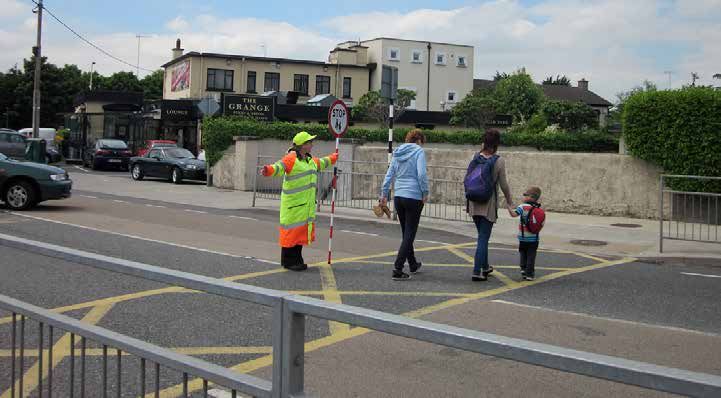
• The continued provision of the school warden service
(currently 70no).
iii Vulnerable Road Users
In conjunction with the RSA, work closely with high risk 5no annually RSA
vulnerable road user groups such as children and the elderly on
road safety awareness and education campaigns and good road
safety practices i.e. Active Retirement talks, school talks.
iv Sustainable Travel
Encourage schools and parents to develop and promote road Ongoing An Taisce Green
safety and active travel modes (walking and cycling) through Schools
sustainable travel plans while working with the Green Schools
Programme and other strategies that encourage responsible NTA
safe travel.
v AXA Road Show
Hold the AXA road show annually for Secondary School Annually AXA
students. This aim of the road show is to highlight the dangers
of irresponsible and reckless driving to Senior Cycle Students, AGS
many of whom may already be driving. The hard hitting road
safety message was delivered through drama and aimed to
change attitudes and the mindset of those attending.
vi National Bike Week
Hold an annual series of events during Bike Week including a Annually DTTaS
schools art competition and a cycling event along a Council
Cycle Route to help promote safe cycling.
vii Inappropriate Parking
Elimination of illegal/inappropriate parking near schools or Ongoing
other locations though enforcement and education campaigns.
viii Cycle Standard Training
Assist the DTTaS with developing the national road safety Ongoing DTTaS
cycling training standard – attend regular meetings.
* See Appendix A for Acronyms6.3 Engineering Measures
17 | Dún Laoghaire - Rathdown County Council Transportation and Water Services Department Road Safety Plan 2015 – 2020
Research has shown that the vast majority of road collisions can be directly or indirectly attributed to inappropriate road
user behaviour/performance. In the National Road Safety Strategy it is noted that on average, driver error accounted for
87% of all contributory factors identified in fatal collisions; pedestrian error accounted for 8%, road factors accounted
for 2%, environment factors accounted for 1% and vehicle factors accounted for 1%. From this we can see that in a
small proportion of fatal collisions, the road environment is a contributing factor. Engineering measures offer the most
effective way of reducing collisions in the short to medium term by creating an environment that encourage safe
behaviour by all users and by identifying and treating high collision locations with appropriate engineering measures.
Table 6.3 outlines the actions and timelines as abstracted from Chapter 9 of the National Road Strategy (by number)
relating to Engineering that are in the remit of Local Authorities.
Table 6.3 National Road Safety Strategy – Local
Authority Engineering Actions
No. Action Lead Agency/ Completion Date Support Dept /
Department Agency*
52 Extend measures in the EU Road TII Q4 2016 LA
Infrastructure Safety Management
Directive 2008/96/EC relating to
road safety inspection and traffic
management, which currently apply to
the Ten-T routes, to the entire national
road network by 2016.
53 Carry out 150 minor realignment TII Q4 2020 LA
schemes on the national road network by
2020.
54 Implement safety schemes at high risk LAs Annually DTTaS
locations on regional and local roads.
58 Each Local Authority to publish/renew LSs/CCMA Annually DTTaS
their prioritised plan on road building
construction and maintenance on an
annual basis.
65 Reduce the number of access points TII Q1 CCMA/LA
outside speed limit areas on national
roads by 5% by 2020.
* See Appendix A for Acronyms
Table 6.4 outlines a list of actions under engineering that the Council intends carrying out as part of its 5-year Road
Safety Plan under Engineering while working closely with key stakeholders.Table 6.4 DLR Road Safety Plan – Engineering Actions 2015 to 2020
18 | Dún Laoghaire - Rathdown County Council Transportation and Water Services Department Road Safety Plan 2015 – 2020
No. Action Completion Date Support Agency*
i Speed Limit Reviews
Carry out a review of speed limits in Residential Areas to End 2015 DTTaS
facilitate the introduction of 30km/h streets and zones at
TII
appropriate locations.
Carry out a Speed Limit Review in accordance with Department April 2017
of Transport, Tourism and Sport Guidelines by April 2017.
ii Prioritisation of High Collisions Locations
Carry out a ranking of high collision locations in the County Ranking by end 2015 TII
to develop a County wide priority list. In carrying out effective
Remedial measures
engineering solutions, particular focus will be made on
at 5 locations year
vulnerable road users.
iii ITS – Traffic Signals
1. Use of Traffic Signal optimisation on key routes to reduce routes annually DTTaS
speeding, maximise speed limit compliance and improve
TII
the cycle time for pedestrians and cyclists at main junctions
where deemed appropriate. NTA
2. Introduction of Variable Messaging Signage on key routes to End 2016
deliver road safety messages.
3. Examine use of pedestrian countdown timers and other
Ongoing
technologies to improve junction efficiency at key crossing
points.
iv Cycle Network Implementation
Development and upgrade of cycle routes on the County Cycle Annual Programme NTA
network in accordance with the National Cycle Design Manual
and the Design Manual for Urban Road and Streets.
v Improve Pedestrian facilities
Upgrading of existing and provision of new pedestrian facilities Annual Programme NTA
throughout the County at appropriate locations, catering for the
TII
needs of all vulnerable road users including mobility impaired
and disabled persons. This shall include the implementation of
school safety zones at appropriate locations.
vi Road Safety Audit/Road User Audit
Implementation of the Road Safety Audit / Road User Audit Ongoing on major DTTaS
process for major new road and traffic schemes, including QBC’s, schemes
NTA
and as part of the development management process for larger
development.
vii Planning Process
Incorporating road safety and sustainable travel into new ongoing
developments as part of the development management process
in accordance with national policy documents (e.g. Cycle
Design Manual and Design Manual for Roads and Streets) and
minimize access to national roads as per TII Policy.
* See Appendix A for Acronyms6.4 Enforcement Measures
19 | Dún Laoghaire - Rathdown County Council Transportation and Water Services Department Road Safety Plan 2015 – 2020
The primary responsibility for enforcement of road traffic legislation rests with An Garda Síochána and the high visibility
enforcement, in recent years, focusing on speeding, drink driving, seat belt wearing, vehicle roadworthiness and driver
regulations appear to have been effective in raising awareness and changing attitudes. Dún Laoghaire-Rathdown County
Council will continue to work closely with the Gardaí in dealing with road safety and traffic issues in the County.
Table 6.5 outlines the actions and timelines as abstracted from Chapter 9 of the National Road Strategy (by number)
relating to Enforcement that are in the remit of Local Authorities;
Table 6.5 National Road Safety Strategy Local
Authority Enforcement Actions
No. Action Lead Agency/ Completion Date Support Dept /
Department Agency*
90 Publish the Speed Limit Review report DDTAS Q4 2014 TII/LA/RSA/LGMA/
and implement its recommendations. AGS
91 Legislate for, subject to legal advice, DTTaS Q2 2014 AGS/TII/ LA
and implement the use of average
speed cameras at appropriate locations
including the Dublin Port Tunnel and at
road works.
96 Develop guidelines for organisations RSA Q4 2013 AGS/CCMA/ LA
and strengthen the permitting system
to ensure that all aspects of road safety
are considered when organising public
events on Irish roads.
127 Produce estimates of road safety related RSA Annually AGS/LA/ TII/ DTTaS
expenditure to inform the Annual Road
Safety Strategy Report.
141 Report on the implementation of a target DECLG/ National Q1 2013 LA/AGS/ HSE
emergency response time for the life Directorate for NATIONAL
threatening emergency calls in line with Fire & Emergency
the National Policy Document ‘Keeping Management
Communities Safe-A Framework for Fire
Safety in Ireland’
* See Appendix A for Acronyms
Table 6.6 outlines a list of actions under Enforcement that the Council intends carrying out as part of its 5-year Road
Safety Plan while working closely with key stakeholders:Table 6.6 DLR Road Safety Plan – Enforcement Actions 2015 to 2020
20 | Dún Laoghaire - Rathdown County Council Transportation and Water Services Department Road Safety Plan 2015 – 2020
No. Action Completion Date Support Agency*
i Fatal Collision Inspection Annually AGS
Jointly inspect each fatal collision location with a member
of An Garda Síochána as soon as practicable after a fatal
collision occurrence and bring reports on major collision
occurrences to the Working Group.
ii School Education Annually AGS
A co-ordinated approach is to be adopted between the
Dún Laoghaire-Rathdown County Council Road Safety
Unit and Community Policing in delivering education
programmes to school children.
iii Ongoing Co-operation Regular meetings AGS
Explore areas of co-operation with the Gardaí in the area
of road safety engineering and education through regular
meetings.
• Identify locations for speed vans
• Event Planning
• Road Works
• Ongoing traffic and road safety issues
iv Speed Limit Reviews (see also under Education)
Carry out a review of speed limits in Residential Areas to End 2015 DTTaS
facilitate the introduction of 30km/h streets and zones at
appropriate locations.
Carry out a Speed Limit Review in accordance with April 2017
Department of Transport, Tourism and Sport Guidelines by
April 2017.
6.5 Road Safety Plan Evaluation
The effectiveness of a particular service refers to the extent it achieves its objectives. It is vital that the progress of Road
Safety Plan is reviewed annually to establish to assess if it is effective in meeting the objectives and carrying out its
actions. As part of the Road Safety Plan, to help ensure a reduction in collisions and casualties in the County, a report will
be carried out annually to monitor the implementation of the plan and will be presented to the elected members at the
Transportation and County Wide Movement Strategic Policy Committee.7. Summary
21 | Dún Laoghaire - Rathdown County Council Transportation and Water Services Department Road Safety Plan 2015 – 2020
The various road safety interventions and targets as set out in previous National Road
Safety Strategies coupled with an ever strengthening road safety culture have resulted
in a successful period in road safety for Ireland with deaths and injuries decreasing at
a rate that is comparable with other best performing countries in the European Union.
There has been significant improvement in compliance by road users in respect of the
main collision causation factors such as seatbelt wearing, inappropriate speeding and
alcohol related offences. However, despite an overall reduction in road deaths, there
is continuing need to focus on collisions involving vulnerable road-users and other
causal factors where there are low levels of compliance and this will be a major focus
of the Government Road Safety Strategy 2013—2020.
Dún Laoghaire-Rathdown County Council has adopted a strategy for road safety based on what is known as the four ‘E’s,
Education, Enforcement, Engineering and Evaluation. This requires a co-ordinated approach between Dún Laoghaire-
Rathdown County Council and other stakeholders to provide focus on collision and casualty reduction in the County and
this will be achieved by setting up a Road Safety Working Together Group. In line with National Strategy, the Council will
focus on the principles of the Safe Systems approach in the implementation of the plan.
An annual review of the Road Safety Plan will be presented to the Transportation and County Wide Movement Strategic
Policy Committee in Dún Laoghaire-Rathdown County Council. This will assess what has been done over the period of
the plan to help achieve the fatal and injury casualty targets. The continued focus on road safety in the County, as part of
this road safety plan and as part of transportation policy, will contribute further to collision and casualty reduction over
the next 5 years.Appendix A Acronyms:
22 | Dún Laoghaire - Rathdown County Council Transportation and Water Services Department Road Safety Plan 2015 – 2020
AGS An Garda Síochána
CCMA County & City Manager’s Association
DES Department of Education and Skills
DTTaS Department of Transport, Tourism & Sport
TII Transport Infrastructure Ireland (formerly National Roads Authority
HSE National HSE National Ambulance Service
LA Local Authorities
LGMA Local Government Management Association
NTA National Transport Authority
RSA Road Safety AuthorityYou can also read


