Generating Sustainable Livelihoods and Leadership for Peace in South Sudan: Lessons from the Ground - Africa Portal
←
→
Page content transcription
If your browser does not render page correctly, please read the page content below
Generating Sustainable Livelihoods and
2                    Leadership for Peace in South Sudan:
                     Lessons from the Ground
PROJ ECT B R I E F

                     Place of Publication: Cape Town, South Africa
                     Date of Publication: January 2019
                     Authors: Paul Mulindwa, PhD Student, University of Johannesburg / Senior Project Officer, Centre
                     for Conflict Resolution (CCR), and Bradley Petersen, Former Senior Administration Officer, CCR,
                     Cape Town, South Africa.
                     Editors: Prof. Chris Landsberg, University of Johannesburg and Jason Cook, Independent Editor.

                     Supported by the Addressing Root Causes (ARC) Fund of the Netherlands Ministry of Foreign Affairs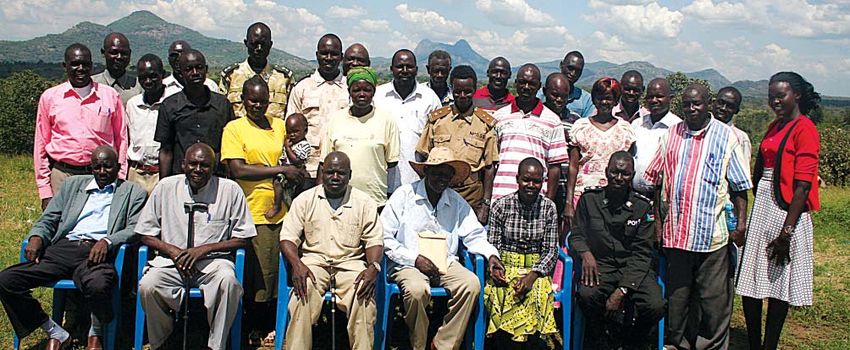
Generating Sustainable Livelihoods and Leadership for Peace in South Sudan: Lessons from the Ground
                                                                                                                                                     2

                                                                                                                                                     PROJ ECT B R I E F
Introduction

The Centre for Conflict Resolution (CCR), Cape Town, South Africa, is a member of a consortium of
three organisations – including the Agency for Cooperation and Research in Development (ACORD) and
DanChurchAid (DCA) – that is currently implementing a five-year project (September 2016–August 2021
on “Generating Sustainable Livelihoods and Leadership for Peace in South Sudan”. The project is funded
by the government of the Netherlands’ Addressing Root Causes (ARC) Fund and aims to address the
political and socio-economic root causes of South Sudan’s armed conflict and instability. The project runs
in five South Sudanese states: Torit,1 Jonglei, Jubek, Kapoeta, and Terekeka.

South Sudan has been subject to a series of long-term armed conflicts that have
significantly affected peace, stability, and development. As part of Sudan, the                                 The conflict has
region was disproportionally impacted by two long civil wars between 1956 and                             had a devastating
2005. Following secession from Sudan in July 2011, unresolved political disputes                          impact on the socio-
within the country’s ruling party, the Sudan People’s Liberation Movement                                 economic well-being of
(SPLM), and particularly between President Salva Kiir and his vice president,                             South Sudanese
Riek Machar, led to an outbreak of civil war in December 2013. The conflict                               citizens and about six
started in the capital, Juba, quickly spread to other parts of the country including                      million people currently
Jonglei, Upper Nile, and Unity states. In August 2015, the Intergovernmental                              require urgent
Authority on Development (IGAD) mediated the Agreement on the Resolution                                  humanitarian
of the Conflict in South Sudan (ARCSS). 2 However, implementation of the                                  assistance, including
ARCSS was stalled by a renewed outbreak of violence between government                                    food aid and health
and opposition forces in Juba in July 2016. About 50,000 civilians were killed                            care.
in the civil war, about 1.74 million people 3 were internally displaced, while
another 2.47 million refugees fled to neighbouring countries. The conflict has
had a devastating impact on the socio-economic well-being of South Sudanese
citizens and about six million people currently require urgent humanitarian
assistance, including food aid and health care. 4

Following the signing of the new peace agreement (on outstanding issues
on governance and security arrangements) in Khartoum on 6 August 2018,
between President Kiir and opposition leaders, including Riek Machar, in
which Machar was reinstated as vice president, parties to this agreement have          HUMANITARIAN AID WORKERS PROVIDING
                                                                                       RELIEF IN SOUTH SUDAN.
refocused on forming a government of national unity. It is hoped that the
                                                                                       Image source – All Net Africa
August 2018 agreement will re-energise the national dialogue and inclusive             Photo – ICRC

consultations that started in 2017, aimed at facilitating political reforms in view    http://www.allnetafrica.com/2018/06/20/
                                                                                       eu-announces-e68-million-humanitarian-aid-
of ensuring security and greater stability. One of the immediate results of this       sudan-south-sudan/

agreement was cessation of hostilities, and reduction of violent clashes in areas
such as Unity and Upper Nile states where fighting had persisted, while humanitarian organisations’ access to
several areas also improved tremendously. Despite numerous previous peace agreements that have attempted to
bring an end to the conflict, further violent conflicts have reoccurred during their implementation. The challenge
is in the hands of all stakeholders, particularly the parties that signed the agreement, to ensure that the agreement
is effectively implemented.

1   Following a State Council resolution of February 2018, the name of Imatong state was changed to Torit.
2   United Nations Mission in South Sudan (UNMISS), Agreement on the Resolution of the Conflict in the Republic of South Sudan, 17 August 2015,
    https://unmiss.unmissions.org/sites/default/files/final_proposed_compromise_agreement_for_south_sudan_conflict.pdf.
3   United Nations Office for the Coordination of Humanitarian Affairs (UNOCHA), Humanitarian Bulletin: South Sudan, 16 July 2018, https://reliefweb.
    int/sites/reliefweb.int/files/resources/20180716_OCHA_SouthSudan_Humanitarian_Bulletin%236.pdf.
4   UNOCHA, Humanitarian Bulletin: South Sudan, 30 September 2018,
    https://reliefweb.int/report/south-sudan/south-sudan-humanitarian-bulletin-issue-9-30-september-2018.
                                                                                                                                                            1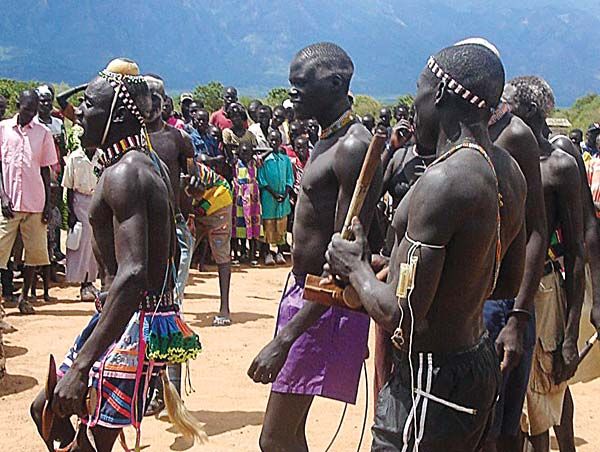
2
PROJ ECT B R I E F

                                                               Generating Sustainable Livelihoods and Leadership for Peace in South Sudan: Lessons from the Ground

                     In the context of South Sudan, as may be the case with other conflict and fragile communities, 5 the nexus – in terms
                     of causal relationship – between conflict and livelihoods is outstanding. 6 The common denominator of the current
                     conflict in South Sudan is loss of livelihood resulting from prolonged poverty and lack of alternatives to meet basic
                     human needs. It is hypothesised that enhanced local conflict management skills, combined with resilience from
                     improved livelihoods – all of which are seen to be fundamental to building trust both between and among local
                     communities – will create a pathway through which the root causes of what has proven to be repeated cycles of
                     both conflict and economic shocks in South Sudan can be addressed. Thus this programme is constructed upon a
                     “theory of change” that emphasises the building of resource resilience and strengthening inter-communal conflict
                     management mechanisms as a means of leading to three interrelated long-term outcomes: resilient livelihoods
                     and food security; social cohesion; and peaceful conflict resolution.

                                                                                                                     The common denominator
                                                                                                                of the current conflict in South
                                                                                                                Sudan is loss of livelihood
                                                                                                                resulting from prolonged poverty
                                                                                                                and lack of alternatives to meet
                                                                                                                basic human needs.
                                                                                                                A YOUNG BOY TRAILS BEHIND HIS FATHER AND BROTHER AS THEY
                                                                                                                WALK THROUGH A "PROTECTION OF CIVILIANS" SITE ESTABLISHED
                                                                                                                AT THE UNITED NATIONS IN JUBA, SOUTH SUDAN, IN
                                                                                                                DECEMBER 2014.

                                                                                                                Image source - Oxfam
                                                                                                                Photo – Mackenzie Knowles Coursin / Oxfam
                                                                                                                https://politicsofpoverty.oxfamamerica.org/2014/12/one-year-
                                                                                                                later-is-the-south-sudan-crisis-unique-in-humanitarian-history/

                     This policy brief is the second in a series of five briefs (to be published by the end of the programme) that seek
                     to disseminate lessons learned from the project as well as to share the challenges faced by local communities
                     in their respective peacebuilding initiatives. The policy brief is based on direct input from beneficiaries,
                     experience gained from eight CCR capacity-building training workshops; and 61 activities undertaken by the
                     DCA between April 2018 and December 2018 in Bor, in Jonglei state; Ikwoto, in Torit state; Lobonok, Jubek
                     state; Kapoeta East, Kapoeta state; and Magwi, Torit state.

                     1. Nature and Causes of Conflict in Bor, Ikwoto, Kapoeta, Magwi,
                        and Lobonok
                     The conflicts in the project areas are mainly socio-economic. Inter- and intra-communal conflicts remain
                     common in Bor, Ikwoto, Kapoeta, Magwi, and Lobonok. Socio-economic activity in these regions is characterised
                     by subsistence agriculture and cattle-herding. Pastoralism is one of the primary sources of livelihood, wealth, and
                     status in areas such as Bor, Kapoeta, and Terekeka, and is often a source of inter-communal conflict, particularly in
                     the form of cattle-raiding. Conflicts over related issues such as water and grazing land for cattle also occur. Cattle-
                     raiding is primarily conducted by young men who suffer from lack of education, skills development, and alternative
                     opportunities for earning a living. There is also lack of sufficient formal structures for the inclusion of youth in peace
                     processes. While there are youth structures and organisations (both formal and informal, especially at community

                     5   D. Maxwell, D. Mazurana, M. Wagner, and R. Slater, Livelihoods, Conflict, and Recovery: Findings from the Secure Livelihoods Research Consortium
                         (London: Secure Livelihoods Research Consortium, 2017).
                     6   L. Ohlsson, Livelihood Conflicts: Linking Poverty and Environment as Causes of Conflict (Stockholm: Swedish International Development
                         Cooperation Agency, 2000).

2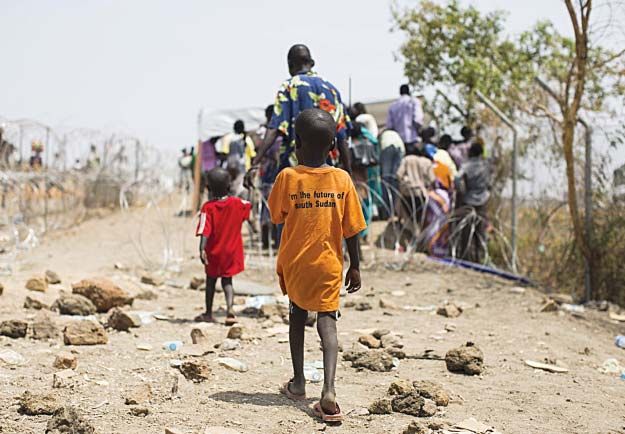
Generating Sustainable Livelihoods and Leadership for Peace in South Sudan: Lessons from the Ground
                                                                                                                                                          2

                                                                                                                                                          PROJ ECT B R I E F
levels), many are politicised or organised along ethnic lines, limiting their potential to help build peace. Ms Atong
Mayol Juuk, peacemaker and a social support counsellor in Bor, who attended CCR’s September 2018 workshop in
Bor, noted that “youth are the engine of most of the crimes and violent conflict in this community. They are used by
anybody – politicians, elders, traditional leaders – to gain their ends. Any peacebuilding programme in South Sudan
that does not deeply put youth at the centre will not be successful in the long run”. In addition to cattle-raiding, young
men engage in criminal activity such as armed robbery and looting of people’s property. The violent conflicts in
Ikwoto, Magwi, and Lobonok in 2016 and 2017 were mainly conducted by youth under the command of their elders.

In view of empowering youth in the project areas, the DCA conducted an advocacy initiative session to address the
issues of cross-border cattle-raiding between the Toposa and Turkana tribes in Kapoeta. This was a cross-border
dialogue between the Turkana of Kenya and the Toposa of South Sudan, which took place on 28th July 2018 at
Nadapal, at Kenya and South Sudan Border. The event was attended by about 240 people and focused strongly
on youths’ participation, but also included chiefs, elders, local government officials, and youth representatives, to
facilitate constructive interactions between all the main actors of peacebuilding in this area. Furthermore, the
DCA supported youth by registering two youth Savings and Credit Cooperative Organisations (SACCOs) with the
state government in Jonglei. These two cooperatives graduated from various Village Savings and Loan Associations
(VSLAs), which have been mentoring them in the activities of microfinance initiatives. These initiatives are aimed
at providing skills and knowledge to youth to enable them to start up self-reliance and income-generating activities
that can sustain their households and basic needs, including food security, health, and education.

Cattle-Raiding
By contrast, violence associated with cattle-raiding (including cattle-induced
conflicts) is endemic across project sites in South Sudan and was rated                                 Pastoralism is one of
the leading threat to peace in Bor and Kapoeta by project beneficiaries.                          the primary sources of
Traditionally, property in general and cattle in particular are believed to be                    livelihood, wealth, and
God-given gifts to the pastoralist communities. Cattle-raiding is therefore                       status in areas such as
often considered a God-given right, with the raiders believing themselves                         Bor, Kapoeta, and
to be retrieving property belonging to their community. In doing so, the                          Terekeka, and is often a
young men who participate in the raids earn themselves immense esteem                             source of inter-communal
and admiration from their communities, as well as the ability to earn                             conflict, particularly in the
a living. This includes the necessary wealth to pay the bride-price owed                          form of cattle-raiding.
to the father of a prospective wife. Cattle-raiding is therefore an integral
part of the social and economic lives of pastoralist community members.
However, violent attacks on civilians are often reported during cattle raids.
Other cattle-related conflicts also were reported by project beneficiaries.
In Lobonok, there were a number of clashes between local farmers and
cattle-keepers who arrived in Lobonok from other areas; for example, in
2016, due to disputes, pastoralists sought revenge in Morsak and Sindiru,
where homes were burned and people were killed. Conflict also breaks
out over resources such as water and grazing. 7 There are a number of
                                                                                                  A MUNDARI NATIVES OF TEREKEKA BOY STANDS NEXT
factors that encourage young men to take part in raids; however, the social                       TO HIS CATTLE NEAR JUBA, SOUTH SUDAN IN 2018.

esteem linked to successful raiding provides a prime motive to participate,                       Image source – Eye Radio
while the social isolation and occasional public shaming faced by youth                           http://www.eyeradio.org/terekeka-death-toll-rises-17/

who choose not to raid act as a form of peer pressure.

7   Catherine Huser, “Conflict and Gender Study – South Sudan: Addressing Root Causes Programme”, January 2018, p. 18. Available at http://www.
    acordinternational.org/silo/files/conflict-and-gender-study--south-sudan.pdf.

                                                                                                                                                             3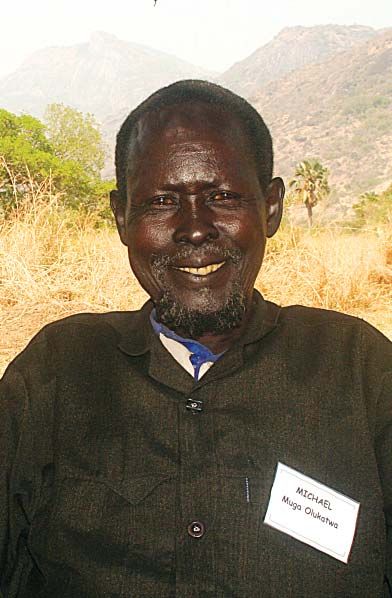
2
PROJ ECT B R I E F

                                                        Generating Sustainable Livelihoods and Leadership for Peace in South Sudan: Lessons from the Ground

                                                                                                            The high rate of communal
                                                                                                      conflicts is related to the
                                                                                                      commercialisation of cattle-
                                                                                                      raiding, a behaviour that is
                                                                                                      encouraged by leaders, including
                                                                                                      politicians, as well as to a sense
                                                                                                      of impunity for the raiders and
                                                                                                      for those who back them and
                                                                                                      supply them with guns.
                                                                                                      A MUNDARI MAN GUARDS HIS PRECIOUS ANKOLEWATUSI HERD
                                                                                                      WITH A RIFLE.

                                                                                                      Image source - CNN
                                                                                                      Photo – Tariq Zaidi
                                                                                                      https://edition.cnn.com/2016/04/22/africa/mundari-tribe-cattle-
                                                                                                      photography/index.html

                     Inter-communal fighting and cattle-raiding have caused more displacement than any other factor. This was
                     reported in Bor, Ikwoto, Kapoeta, and Lobonok. Project beneficiaries in Kapoeta noted that the high rate of
                     communal conflicts is related to the commercialisation of cattle-raiding, a behaviour that is encouraged by some
                     leaders, including politicians, as well as to a sense of impunity for the raiders and for those who back them and
                     supply them with guns.

                     Since cattle-raiding and related conflicts can directly or indirectly benefit the larger community, the activity is
                     commonly supported by some local community leaders. Although the raiders are typically young men, women
                     also encourage raiding through composing songs to praise the bravery of the raiders and prepare food for the
                     men and youth who plan to conduct a raid. In Kapoeta, for instance, a woman at the CCR workshop in April
                     2018 noted that some women in her community hold the responsibility of cleaning and oiling the guns (using
                     cow-ghee) to keep them in good condition. Although local political leaders and women often encourage cattle-
                     raiding, these actors – as well as local religious leaders – can also exert positive influence to resolve cattle-related
                     conflicts in a non-violent manner. In April 2018, the head chief of Chorokol payam, in Kidepo Valley County, used
                     the knowledge he gained from the CCR workshop to successfully mediate a conflict that arose after a raid had
                     taken place in order to get cows for paying a dowry debt. Furthermore, women – who are often the custodians
                     of small arms for their husbands – also have the ability to de-escalate potential conflicts by withholding weapons
                     from men and discouraging raiding instead of glorifying it through praise songs. Local religious leaders also have
                     direct access to the youth, who often attend church activities in large numbers. These leaders have the ability to
                     engage the youth in dialogue and peacebuilding efforts.

                     As one participant noted in CCR’s April 2018 workshop in Kapoeta East, there is a conflict between human rights,
                     including property rights, and the perceived but erroneous right to raid cattle. Many community members in Bor,
                     Lobonok, and Kapoeta are ill-informed about human rights, particularly on property rights, and there is thus a need
                     to disseminate information about human rights and to emphasise respect for the rights of others, including others’
                     property rights. As cattle-raiding is a key source of income for raiders and their communities in Ikwoto and Kapoeta,
                     there is also a need to provide alternative economic opportunities, particularly for the youth. A key component of
                     the ARC project is therefore to encourage nascent food production capacities in local communities by assisting
                     beneficiaries in generating income from agriculture as well as petty trade activities. As of June 2018, the DCA has
                     provided assistance to 16,471 direct beneficiaries, including the provision of agricultural training, irrigation support,
                     seeds, animals, and tools to 9,186 male and 7,285 female beneficiaries in Kapoeta and Jonglei states. Furthermore,
                     the DCA has continued to establish VSLA groups in these regions, providing assistance to a total of 778 people
                     (314 men and 464 women) since the initiation of the project. Training on life skills, entrepreneurship, business
                     management, and resource management has also been provided to multiple actors in the target communities,
                     including farmers, peace committees, community leaders, women, youth, trade unions, and beekeepers.

4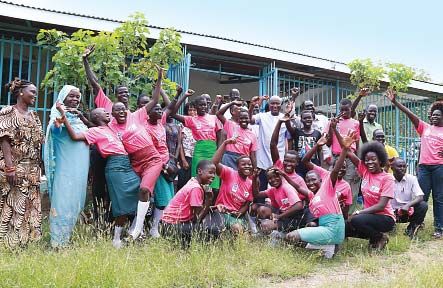
Generating Sustainable Livelihoods and Leadership for Peace in South Sudan: Lessons from the Ground
                                                                                                                                                       2

                                                                                                                                                       PROJ ECT B R I E F
Insecurity
South Sudan’s civil war has led to the spread and normalisation of violence as well as a breakdown of law and
order in many communities. Criminal activity has consequently become a common contributor to insecurity. 8
Armed robberies, car-hijacking, domestic and sexual violence, looting, and destruction of property often occur with
impunity and are exacerbated by drug and alcohol abuse as well as the proliferation of small arms and light weapons
among civilians. In many communities there is a lack of access to, and trust in, policing and justice structures. Violent
criminal attacks not only impact on the quality of life and economic activities of South Sudanese citizens, but also
negatively affect humanitarian efforts to assist communities. 9 The insecurity in South Sudan calls for concerted
efforts to deconstruct perceptions that guns necessarily enhance security. Civilians need to be educated on how
to use guns responsibly, and then government, once communities have been disarmed, needs to safeguard the
security of those communities.

                                                                     South Sudan’s civil war has led to the
                                                                spread and normalisation of violence as well as
                                                                a breakdown of law and order in many
                                                                communities.
                                                                SOLDIERS OF THE SUDAN PEOPLE’S LIBERATION ARMY PREPARE TO HEAD INTO THE NORTH OF
                                                                SOUTH SUDAN IN OCTOBER 2016.

                                                                Image source - The Washington Post
                                                                Photo – Charles Atiki Lomodong/AFP/Getty Images
                                                                https://www.washingtonpost.com/world/africa/a-new-report-estimates-more-than-380000-
                                                                people-have-died-in-south-sudans-civil-war/2018/09/25/e41fcb84-c0e7-11e8-9f4f-a1b7a-
                                                                f255aa5_story.html?utm_term=.6681f93c8b75

Similar to cattle-raiding, the occurrence of violent crime can often be linked to the lack of economic opportunities
for the youth. 10 In addition to the lack of education, skills, and economic opportunity, there is also the need to
build greater social cohesion among the youth. Research indicates that media, music, and sports (such as football
and wrestling) can be used to strengthen inter-communal peace and stability through promoting inter-communal
activities, shared feelings of history and belonging, as well as trust and tolerance. 11 One participant in the April 2018
workshop in Kapoeta East commented that more inter-communal activities, such as sports for peace, are needed
to bring the youth together, expose them to new ideas (including human rights and conflict management), while
also promoting social cohesion and respect for others, including those who are different.

In addition to communal peacebuilding efforts among the youth, project beneficiaries have also raised the issue
of inter-communal efforts to address high levels of impunity among criminals. Citizens often lack the necessary
platforms to engage on issues of crime and security and often rely on customary courts to address disputes. However,
the civil conflict and consequent widespread displacement of people have put these structures under acute pressure,
often resulting in their breakdown. 12 Communities require transparent and equitable local justice structures that
will provide citizens with accountability and redress. According to a participant at the June 2018 workshop in Ikwoto,
local chiefs are not always willing or able to deal effectively with known criminals in the community. Instead alleged

8    Katie Smith, Building a Constituency for Peace in South Sudan: Search for Common Ground, November 2017, p. 12, https://www.sfcg.org/
     wp-content/uploads/2017/08/Building-a-Constituency-for-Peace-in-South-Sudan.pdf.
9    A. Stoddard, A. Harmer, and M. Czwarno, “Aid Worker Security Report: Figures at a Glance – 2018 Humanitarian Outcomes”, https://www.
     humanitarianoutcomes.org/publications/figures-glance-2018.
10   United Nations Development Programme (UNDP), South Sudan/Community Security and Arms Control Project, “Jonglei Community
     Consultations on Conflict and Food Security”, 2017. Available at https://erc.undp.org/evaluation/documents/download/10648
11   Smith, Building a Constituency for Peace in South Sudan, p. 16.
12   Smith, Building a Constituency for Peace in South Sudan 7, p. 13.

                                                                                                                                                          5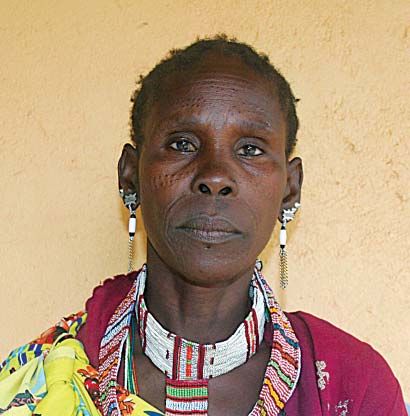
2
PROJ ECT B R I E F

                                                               Generating Sustainable Livelihoods and Leadership for Peace in South Sudan: Lessons from the Ground

                     criminals being arrested, perpetrators are simply forced from the village
                     and subsequently commit crimes and cause conflicts elsewhere. However,                                 There is a need for
                     in Lobonok, chiefs and community leaders have reported that they are                              community leaders,
                     managing community policing systems, viewed as an alternative to the                              including chiefs and other
                     national police. There is a need for community leaders, including chiefs                          stakeholders, to work with
                     and other stakeholders, to work together within a human rights framework                          the South Sudan National
                     to identify the root causes of conflicts, monitor and mediate disputes, and,                      Police Service to arrest
                     if necessary, work with the South Sudan National Police Service to arrest                         suspected criminals.
                     suspected criminals. The need for such inter-communal conflict resolution
                     and security efforts is likely to intensify if the present peace agreement holds.

                     In building a culture of peace in South Sudan, the consortium seeks to en-
                     gage a number of influential stakeholders, including local authorities and
                     chiefs, youth councils, women, peace committees, religious and opinion
                     leaders, to continue functioning as peacebuilders in their respective com-
                     munities. These actors are able to use and share their knowledge of human
                     rights and conflict management skills to mobilise their communities, build
                     trust, resolve disputes, and implement communal initiatives for peace and
                                                                                                                       SOUTH SUDAN POLICE IN A PARADE IN JULY 2015.
                     development. Community-level engagement can contribute to entrench-
                     ing a culture of tolerance and social cohesion, and, ultimately, lasting peace                    Image source – Ngokland
                                                                                                                       http://www.ngokland.com/south-sudan-police-to-
                     and stability in South Sudan.                                                                     intensity-security-ahead-of-independence/

                     2. Conflict Contributing Factors

                     Cultural Norms and Practices
                     UN’s Declaration of Human Rights specifies that both men and women are equal and entitled to rights and
                     freedoms without any distinction. However, in South Sudan, the roots of patriarchy run deep and this is clearly
                     evident in gender dynamics, customs, and norms and practices in society that tend to discriminate and marginalise
                     women. In South Sudan, many communities continue to limit and locate the role of women within the household,
                     for example in cleaning, collecting water and wood, and rearing children, while men are widely regarded as
                     heads of the household. During project implementation, gender dynamics that marginalise women are visible
                     through participant interactions and highlight potential areas for deconstructing entrenched patriarchal beliefs. For
                     instance, at one CCR workshop, during meals men always served themselves first while women (including those
                     with children) stood aside and waited, on some occasions the men left very little food for the women. As such, in
                     Ikwoto, facilitators recommended to participants that women should serve themselves first at all the meals. Initially,
                     male participants were hesitant to wait their turn; however, they eventually embraced this recommendation.
                     Interestingly enough, women used this opportunity to serve enough food for themselves and left enough for the
                     men. In Lobonok, though, the same recommendation was not widely accepted by male participants, and evidently
                     a conflict was created. While the consortium targets key authorities and leadership within the community, in
                     Lobonok it is not simply non-leaders who are reinforcing patriarchal norms, but the leaders themselves. Given that
                     the ARC project seeks to promote equality and to deconstruct ideas, beliefs, norms, and practices that perpetuate
                     violent behaviour, it is central for participants to internalise and practise new forms of behaviour that are in line with
                     equality, justice, and respect for human rights. 13

                     13   Huser, “Conflict and Gender Study – South Sudan”, p. vi.

6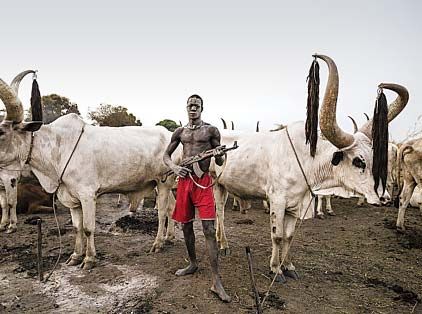
Generating Sustainable Livelihoods and Leadership for Peace in South Sudan: Lessons from the Ground
                                                                                                                                                2

                                                                                                                                                PROJ ECT B R I E F
While women are given opportunities to attend and participate in CCR training workshops, their level of participation
during training is still low. Generally they remain quiet, leaving men to dominate. In light of this training, facilitators
use innovative means to promote equal participation among participants, including giving female participants
preference in raising questions during workshops, putting them in separate groups and appointing women to lead
the groups, and introducing a role-play during meals wherein men serve food to women. There are also role-play
sessions that illustrate gender dynamics and harmful forms of masculinity, in an attempt to help participants re-
imagine and learn new forms of behaviour.

In Kapoeta East, for the Toposa, women do not have a voice among men; even though they have ideas, they are
excluded from peacebuilding processes, which remain the preserve of men. Furthermore, though women have
critical domestic roles and, more often work harder than men – women build homes, cultivate crops, and prepare
milk while men protect cattle – women have limited influence and power in decision-making. Some participants
argue that women may shy away from additional responsibilities such as negotiation because these are viewed
as tasks performed by men. In Ikwoto, men can prevent women from attending workshops during the cultivation
season, limiting their exposure to new ideas and ways to empower themselves. In Lobonok, it appears that women
prefer to work in the family, and do not have time to engage in community affairs. 14 These gender norms burden
women with intensive labour responsibilities, justify their exclusion from leadership roles, rationalise violence against
them, and support their inferiority within society – all norms that many women have themselves internalised. 15 At
the CCR workshop in Lobonok in April 2018, a woman leader shared her experience of working with fellow women.
She noted that through mobilisation, women are able to start small businesses; for example, selling bread and tea in
trading centres to earn a living, and thus able to pay school fees for their children and also purchase basic necessities
for the home (such as soap and cleaning agents). In light of this, the DCA has trained 16 groups of 535 participants, of
which 228 are women, in counties of Kapoeta South, Budi, and Bor South; and have provided them with seeds such
as maize and sorghum, and also tools such as hand hoes; this is key for livelihoods and improved food security. Due
to prolonged violent conflicts in project locations, gender dynamics are slowly changing. Many families are displaced
and women, having lost their men, have assumed responsibilities of heading their families; this increases the need
and urgency not only for women to be economically empowered and trained on conflict management, business,
and entrepreneurial skills, but also for society to change gender attitudes and stereotypes because of such realities.

3. Communication in Conflict Management
In South Sudan, culture and identity are evident in appearance, behaviour, and rituals, while serving a non-verbal
purpose as well. Cultural rituals such as the removing of teeth (for example among the Didinga) and marking the
body are rites of passage associated with being a “warrior”. Boundaries and borders between communities are
marked by rivers, big trees, and mountains, and signify identity and belonging. However, due to political influence
and manipulation, boundaries have been redrawn, creating confusion and fuelling border disputes between ethnic
groups – for instance the Gemeza dispute between Dinka Bor and Mundari communities, and the Mangala county
border dispute between Mundari people of Terekeka state and the Bari of Jubek state. Furthermore, as pastoralists
search for grazing land and water, cattle cross boundaries, which results in conflict. Although cultural symbols and
rituals promote social cohesion, they can also drive insecurity and conflict. In these communities, for instance,, there
are clear signs and behaviours that communicate conflict, for example people carrying sticks and guns, people
going missing, youth begin organising themselves in groups that are not sanctioned by elders; composition of songs
to motivate youth join such groupings, and restriction of movement during states of emergency. Though physical
fighting is a visible manifestation of conflict, conflict is not always visible and rather may be latent.

14   Huser, “Conflict and Gender Study – South Sudan”, p. 65.
15   Care International, Inequality and Injustice: The Deteriorating Situation for Women and Girls in South Sudan’s War: A Progressive Gender
     Analysis, 2013–2016, December 2016, p. 6, https://reliefweb.int/sites/reliefweb.int/files/resources/CARE_Inequality-and-injustice_
     South-Sudan-progressive-gender-analysis_Dec-2016.pdf

                                                                                                                                                    7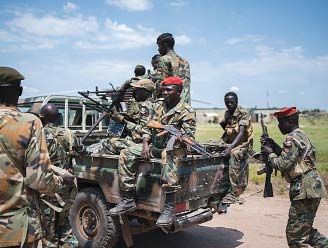
2
PROJ ECT B R I E F

                                                              Generating Sustainable Livelihoods and Leadership for Peace in South Sudan: Lessons from the Ground

                     Language and communication can also be a source of conflict. South Sudan has a number of ethnic groups, with 80
                     different languages, and in Kapoeta East it was noted that Arabic is associated with boastfulness and accompanied by
                     an aggressive tone. In Arabic the word for “sorry” sounds aggressive, and discussion in Arabic often sounds aggressive
                     regardless of whether there is a conflict. Language invokes imagery that often perpetuates violence. Armed youth
                     in Chukudum expressed that violence is part of life and expected – “this is our culture; my father did it like this so I
                     should do the same” – a perception that removes individual agency and normalises conflict and violence. 16

                                                                                                                  In all project locations,
                                                                                                             music, singing, and dance mark a
                                                                                                             significant event, either to
                                                                                                             celebrate a good harvest, to
                                                                                                             celebrate the coming together of
                                                                                                             different groups, or to
                                                                                                             commemorate the passing of a
                                                                                                             loved one.
                                                                                                             SUDAN RESIDENTS OF KAPOETA, EASTERN EQUATORIA,
                                                                                                             DO A TRADITIONAL PEACE DANCE AT A RALLY WHERE A
                                                                                                             COMPREHENSIVE PEACE AGREEMENT TEXT WAS DISTRIBUTED
                                                                                                             IN 2006.

                                                                                                             Image source - Wikipedia For Schools
                                                                                                             http://elibrary.edu.np/modules/wikipedia_for_schools/im-
                                                                                                             ages/3170/317016.jpg.htm

                     4. Youth and Governance
                     In South Sudan, the youth are a unique category since they are both “victims and drivers of violent conflict and
                     social instability”. 17 There is a general tendency in South Sudan for youth to solve conflict through violence, coupled
                     with an inability to be open to alternative options and a lack of internal unity and social cohesion, which make the
                     situation even more challenging. For the youth, where they are not exposed to education or any form of training,
                     their accessibility to new ideas and thinking is severely limited, while leaving negative practices and behaviour
                     unchanged. Despite the importance of education, in Ikwoto, as is generally the case in South Sudan, there is a
                     shortage of teachers, coupled with issues of salaries not being paid and an over-reliance on volunteer teachers,
                     which have far-reaching implications for development. In Biira, schools are viewed as food centres, as opposed
                     to educational institutions, because of “feed the child” education emphasising that food is given to children only
                     at school. There is a lack of youth programmes, recreational activities for youth, as well as formal structures to
                     congregate in, such as youth centres. 18 One participant at CCR training in Ikwoto in June 2018 noted that focus
                     should be given to youth to sensitise them through all available means and link them to different youth platforms
                     to learn from and share with youth in different communities. Positive activities such as football, wrestling, and dance
                     festivals that facilitate cooperation, team-work, tolerance, and understanding among youth should be encouraged.

                     A payam administrator in Lobonok emphasised that the youth can be mobilised for positive or negative ends,
                     and that this influence cannot be underestimated. The proliferation of small arms in the hands of the youth is
                     disrupting traditional authorities and conflict resolution structures. In Ikwoto, the youth even threaten community

                     16   Huser, “Conflict and Gender Study – South Sudan”, p. 36.
                     17   United Nations, United Nations Cooperation Framework for the Republic of South Sudan, 2019–2020, http://www.undp.org/content/dam/
                          undp/library/corporate/Executive%20Board/2018/Second-regular-session/DPDCPSSD3_UNCF%20South%20Sudan.docx.
                     18   United Nations Children’s Fund (UNICEF), Youth Lead Baseline Assessment: Eastern Equatoria, Upper Nile & Jonglei States, 2012, pp. 21–22,
                          www.youthpolicy.org/national/South_Sudan_2012_Youth_Report_Study.pdf.

8
Generating Sustainable Livelihoods and Leadership for Peace in South Sudan: Lessons from the Ground
2
PROJ ECT B R I E F
leaders, including chiefs, and disregard their decisions especially regarding peace enforcement, and may refuse to
compensate victims after they have committed a crime and are found guilty by the local court.
While community structures and peacebuilding initiatives have been applauded for contributing to peace in most of
the communities in the project locations, there remains the observable challenge that community peace processes
take time to finalise while youth prefer more immediate action. In some instances, chiefs have encouraged youth to
raid and to seek revenge. In Kapoeta, for instance, it was noted that Turkana of Kenya raided Toposa cows; the chief
(whose name was withheld by workshop participants for fear of reprisals) called a meeting and asked youth present
what they would eat now that their cows had been taken. This angered the youth and encouraged them to follow
the raiders in search of their cattle. It is thus important that chiefs work with the youth to help them understand
such challenges. However, what complicates matters is that youth in the village lack a platform to convey their
challenges. As a first step, the youth need to receive capacity-building training on mediation and negotiation,
so that they can appreciate these procedures, specifically those youth in the kraals. Furthermore, youth need to
be integrated within community structures for resolving disputes, or involved in peace initiatives, by allocating
responsibilities to them within the community other than taking care of cattle and doing house chores.
Customary practices inform how communal crimes or violations are addressed; however, matters related to human
abuse and murder are more complicated. A kraal leader in Kapoeta South reported that there are two forms of
punishments: first, if one steals cows, then the guilty party should return twice the number of cows stolen; second
and alternatively, the offender must slaughter a goat or a bull for the community to consume; other than these
two forms of punishment, the offender is disciplined by beating. However, domestic violence is more complicated.
For example, in 2016 a woman reported to the police that her husband had beat her, but the police dismissed her,
advising that this was a family dispute. Women at the CCR training in Ikwoto observed that many chiefs in their
communities lack basic skills and capacity to manage domestic violence, particularly when the woman is the victim.
There is a lack of youth
programmes, recreational
activities for youth, as well as
formal structures to congregate
in, such as youth centres.
THE GOGIRLS ICT INITIATIVE AWARDED SIX STUDENTS WITH
SCHOOL FEES FOR ONE YEAR AS PRIZES FOR THEIR PARTICIPATION
IN A YEARLONG MENTORSHIP PROGRAMME FOR THE SCHOOL
CHILDREN ON BASIC COMPUTER AND PROGRAMMING SKILLS, IN
JUBA, SOUTH SUDAN, IN NOVEMBER 2017.
Image source - UNDP
http://www.ss.undp.org/content/south_sudan/en/home/press-
center/articles/2017/11/13/youth-innovation-challenge-winners-
mentor-next-generation-of-tech-savvy-girls-in-south-sudan.html
5. Peace Committees – Peacemakers and Peacebuilders
As noted earlier, the ARC project seeks to enhance and support existing community peacebuilding initiatives.
As such, the consortium is targeting existing peace committees in project areas, since it is more effective to work
within existing structures than to establish new ones, which requires ownership and buy-in from the community.
In all project locations, peace committees share common functions and responsibilities of peacemaking and
peacebuilding. Based on past situations, they work with local governing structures to find solutions to challenges
of the past. These committees are by no means replacing communal structures, such as traditional, religious,
and government institutions; rather they are inter-linked and complement each other in peacemaking and
92
PROJ ECT B R I E F
Generating Sustainable Livelihoods and Leadership for Peace in South Sudan: Lessons from the Ground
peacebuilding work. The contributions of peace committees to peacemaking and peacebuilding in the project
locations are measured by three approaches utilised to ensure peace, social cohesion, and mutual trust:
- Violence prevention or reduction:
Peace committees have a demonstrated capacity to reduce levels of violence. For instance, in Bor, participants at a
CCR workshop noted that during a 2017–2018 conflict over ownership of grazing land and the naming of a village
– one group wanted the name Panweel retained while another group sought to have it renamed Anuet – peace
committees were effective as early warning points of contact, allowing peace actors, local leaders, and security agents
to intervene in a timely way and take collective steps towards prevention. These committees are facilitated by the
work of the DCA under this project, together with its local partner, Church and Development, based in Bor, Jonglei.
- Dialogue:
Peace committees mainly use dialogue sessions to facilitate dispute resolution and consensus-building as the
central approach to peacemaking and peacebuilding. In Kapoeta South, for instance, seven community leaders in
Katiko payam, who were trained by CCR in July 2017, noted that after the training, they started a peace committee
that has been successful in promoting dialogue and thus deepening mutual understanding between Topotha and
Didinga or Buya, in relation to cattle-raiding and highway attacks. Based on the experience of peace committees
in Kapoeta South, Kapoeta East, Bor, and Ikwoto, it is advisable for peace committees to specialise in a single
aspect of peacemaking and peacebuilding, for instance dialogue, mediation, or sensitisation. This is because the
more a peace committee tends to generalise rather than specialise, the less effective it becomes in making a deep
contribution in the community.
- Problem-solving and community-building:
Peace committees have been very helpful in solving communal problems and in helping rebuild communities after
destructive violent conflicts. For instance, in Ikwoto, Lobonok, and Bor, following the 2016 Juba conflict that quickly
spread to these areas, peace committees were among the main community structures that helped people remain
together as well as sensitising them about peace. Following the Panweel land conflict in Bor, peace committees
restored a sense of communal dialogue and mutual respect. Meanwhile in Magwi County, particularly in Owinyikibul
and Agoro payams, peace committees have been instrumental in peacebuilding because each dispute or problem
resolved contributes to building social cohesion, mutual trust, and confidence among communities. The success
of peace committees is based on the realisation of the project’s theory of change that if beneficiaries can come
together to discuss, share, and learn from each other’s challenges, and develop best practices for peaceful conflict
resolution, then cooperation within and between local communities will be enhanced, since these groups will be
able to identify and understand shared interests and goals. This in turn will enhance confidence-building, social
cohesion, and prevention of violence within and between communities.
Despite good work being done on the project sites by members of peace committees, there are some challenges
that hinder their effectiveness. For instance, in Kapoeta East it was noted that there is a high turnover of peace
committee members. The main reason put forward is lack of a spirit of volunteerism – people want to be paid or
financially facilitated to work on their communal peace. Some participants at a workshop in Kapoeta East in April
2018 noted that while the work of a peace committee is voluntary, people involved need to be facilitated to travel
to communities, and in this case they need to utilise their own funds, or pool resources. The same sentiment was
expressed by peace committee members in Bor, Ikwoto, Kapoeta, and Magwi. Inadequate funds to facilitate their
work remains a huge problem for peace committees, for transport and fuel from the village to the boma, as well
as for meals. In Kapoeta generally, peace committees need to supply community leaders and elders with tobacco
and water when conducting community visits and meetings. In Kapoeta East and in Ikwoto, there is a perception
that peace committee members receive salaries or financial incentives when engaging the community. Seen from
this point of view, conducting meetings and sensitising the community are motivated by monetary gain – this is
10Generating Sustainable Livelihoods and Leadership for Peace in South Sudan: Lessons from the Ground
2
PROJ ECT B R I E F
the assumption of members of the community. To manage these challenges, peace committee members are
encouraged to inform the community about their roles, responsibilities, and constraints; otherwise their work will
be hampered. An obsession with money becomes a hindrance to the spirit of volunteerism, and a deterrent for
others to join the peace committee.
Like other peacebuilding initiatives, peace committees also experience challenges resulting from political and social
instabilities, which have negative implications for their work. In Ikwoto in 2016, a split of Ikwoto County into three
counties – Ikwoto, Kidepo Valley, and Geria – affected the structure of the peace committee, since they all belonged
to one county, Ikwoto. This affected the morale of members, many of whom left peace committees. In Lobonok
the concept of a peace committee is different from the common idea of what a peace committee it. Lobonok
has village groups, which have broader roles including social and economic welfare (especially during times of
bereavement). These later are turned into structures to manage peace if there is a conflict that necessitates them.
Thus, when asking Lobonok people, they tend to say that they do not have “peace committees”; the reason for this
is because there are “no communal problems” and “Lobonok people are peaceful”. 19 A more detailed argument is
that the chief is considered to be a role model, and chiefs and elders from different bomas work together to solve
conflicts. However, in Lobonok conflicts are mainly inter-communal – there are issues of child abductions by the
Murle community, and competition for grazing lands with Dinka cattle-keepers. Such situations require leadership
to bring the community together to establish a peace committee that will, alongside existing structures, sensitise
the community and engage government on communal conflict dynamics. The good news is that at successive CCR
training in Lobonok in October 2018, participants now appreciated the importance of the peace committee and
committed to start three such committees, in Morsak, Yapa, and Wurduk.
The ARC project continues to support existing structures, particularly peace committees that are already
established and working in their respective communities, as well as strengthening fledgling peace committees to
ensure that they become better able to effectively deliver their roles of peacemaking and peacebuilding in their
communities. CCR interacted with some participants from the already existing peace committees to understand
their experience with these committees. Notable here Include:
Maria Lotelei Naki
Maria is a women’s mobiliser in Machi payam’s
peace committee, Kapoeta South. Lotelei has
been involved in peace committee work since
2014. Among her roles, she shares information
with women; mobilises women for meetings; and
acts as a peacemaker by intervening in conflicts
in the village or between her community and
others. She has a reputation in the community of
being brave and strong, unafraid to speak up and
discuss pressing issues, and has been chosen as the
mouthpiece of the community because she can
manage issues. Kapoeta South faces a number of
19 Comments made by participants at CCR’s capacity-building workshop in Lobonok, South Sudan, 10–13 April 2018.
112
PROJ ECT B R I E F
Generating Sustainable Livelihoods and Leadership for Peace in South Sudan: Lessons from the Ground
challenges, such as early and forced marriage, gender-based violence, assault, and cattle-raiding, and
Lotelei specifically talks to cattle-raiders and chiefs – male-dominated institutions. For her, “being a
women mobiliser is challenging since culturally you cannot speak out against men”. Lotelei emphasises
that peace begins at home and it is not possible to speak about peace to the community if you cannot
implement peace in your own home. Within Machi Payam’s peace committee and also during peace
conferences, she promotes peace by arguing strongly against revenge and cattle-raiding, which cause
the death of innocent people, namely women and children.
Micheal Muga Olukatwa
For Micheal Muga Olukatwa, chief of Chorokol
payam in Kidepo County, South Sudan, resolving
conflicts had always been a nightmare before training:
I was lucky enough to have been identified and
selected to attend a capacity-building workshop
for local leaders, civil society activists, and local
government authorities on Conflict Management,
Human Rights, and Gender from 15–18 January 2017
organised by MADA and facilitated by [the] Centre
for Conflict Resolution (CCR). After the training, I
tasked myself to share dialogue and mediation skills
with my boma chiefs, which has improved on how
we manage and resolve conflict in Chorokol payam.
Usually, resolving communal conflicts had not
been easy, because we had limited skills on how
to effectively approach somebody who is already
aggressive and prepared to revenge, and this
basically meant that we were unable to perform our
duties of ensuring social cohesion and ensure peaceful co-existence within our community; as such we
were always referred to as “being weak and un-productive chiefs”.
Upon return from the CCR training, I have shared skills and knowledge about mediation in conflict
resolution to other chiefs. Following this training, I started a peace initiative to resolve community conflict.
I was energised when four other boma chiefs and I managed to peacefully resolve a conflict involving
two bomas Labalu and Mak in Chorokol payam. Labalu boma raided four kraals of cattle (of about 230
animals) from Mak boma. Learning that Mak was planning for a destructive revenge, together with my
team whom I have been coaching and mentoring on mediation skills, we approached the community
that raided the cattle to find out what happened and how best this situation could have been avoided.
We found out that the raid was conducted as response to a pending dowry debt, which was about 10
goats. However, we managed to recover the three kraals which were innocent from the dowry debt and
12Generating Sustainable Livelihoods and Leadership for Peace in South Sudan: Lessons from the Ground
2
PROJ ECT B R I E F
zeroed to one kraal [in] which we also managed to ask Ohisa the man who was expected to have settled
the dowry debt to resolve the problem for peaceful stay. Ohisa accepted to let 10 goats and one cow be
removed from the raided Kraal and the rest handed over to him. The process was done in consent and
a reconciliatory ceremony was done and everybody returned to their respective places while happy and
jubilating success in conflict managed and contained. It was later noted that many people from both
communities had started fleeing their respective communities, taking refuge in Uganda and neighbouring
communities in fear of revenge attacks, which would have turned them into refugees. After settling this
conflict, there was no longer fleeing and those that had left their communities returned home.
Once again, thanks to CCR for the conflict management skills and knowledge given to me. I am now
able to manage conflicts in my communities; now the neighbouring boma chiefs are getting interested
in approaches we use; if it was not for the CCR training I attended in Ikotos, we would still be failing on
how to settle the warring community members.
Micheal Muga Olukatwa, chief of Chorokol payam in Kidepo County
Policy Recommendations
The following recommendations emerged from ARC project activities implemented by the consortium
members (CCR, ACORD, and DCA) between September 2016 and November 2018 in South Sudan:
1. Strengthen the role of traditional authorities and community leaders to take charge of community security and
identify unfamiliar faces within the community. Criminals evade the law by seeking refuge in neighbouring
locations. In order to address this challenge, leaders need to be vigilant, and probe persons of interest while
utilising a human rights–based approach. Leaders should also work closely with the police.
2. Conduct experience-sharing and learning sessions for peace committees. There should be inter–peace
committee dialogues and engagements, especially to address challenges facing these structures as well as
to empower, guide, and assist newly formed peace committees. Project beneficiaries have encouraged the
consortium to continue to establish functional peace committees, since they are the first institutions to respond
to communal conflicts and disputes.
3. Facilitate inter-communal dialogue and exchanges. In most of the project sites, common issues include
distrust, stereotypes, and prejudice. These can be addressed by putting in place initiatives, such as exchanges,
that encourage continuous dialogue and engagement between peace actors from different (conflicting)
communities. It is particularly important that conflict actors as well as marginalised groups, such as women, are
involved in such initiatives.
4. Create space for youth to engage in peacebuilding processes. Many youth feel excluded from community
peacebuilding processes and from making meaningful contributions. It is crucial that all actors, including local
government structures and authorities, as well as community leaders, make sustained commitments to rebuild
the young people’s trust and confidence in peacebuilding initiatives. There are also additional challenges facing
women and girls, in gaining access to public spaces in relation to peacebuilding, that need to be addressed.
132
PROJ ECT B R I E F
Generating Sustainable Livelihoods and Leadership for Peace in South Sudan: Lessons from the Ground
5. The consortium should produce a short illustrated booklet for trained participants on key steps in mediation,
negotiation, and conflict management. In addition, media should be used to broadcast key components of
peacebuilding initiatives on a weekly basis, by both consortium members and partners (where possible) and
beneficiaries, to share with others what they have learned from project interventions, with particular focus on
youth and women.
MAGWI COUNTY LEADERS AND OTHER COMMUNITY LEADERS WHO ATTENDED A CCR FOURDAYS CAPACITYBUILDING TRAINING IN MANAGING CONFLICT IN MAGWI,
SOUTH SUDAN IN NOVEMBER 2019.
14Generating Sustainable Livelihoods and Leadership for Peace in South Sudan: Lessons from the Ground
2
PROJ ECT B R I E F
The Centre for Conflict Resolution (CCR), Cape Town, South Africa, is implementing a five-year
project (September 2016–August 2021 on “Generating Sustainable Livelihoods and Leadership
for Peace in South Sudan” as part of a consortium of three organisations, also including the Agency
for Cooperation and Research in Development (ACORD) and DanChurchAid (DCA). The long-term
goal of the project is to address the political and socio-economic root causes of armed conflict and
instability in South Sudan. The project is funded by the Addressing Root Causes (ARC) Fund of the
government of the Netherlands.
CENTRE FOR CONFLICT RESOLUTION
2 DIXTON ROAD, OBSERVATORY 7925, CAPE TOWN, SOUTH AFRICA n TEL: +27 21 689 1005 n FAX: +27 21 689 1003
E-MAIL: mailbox@ccr.org.za n WEBSITE: www.ccr.org.za n FACEBOOK: CCRCapeTown n TWITTER: CCR_Africa
15You can also read


