GETTING TO TRANSIT ORIENTED COMMUNITIES - Experiences in Canada - NET
←
→
Page content transcription
If your browser does not render page correctly, please read the page content below
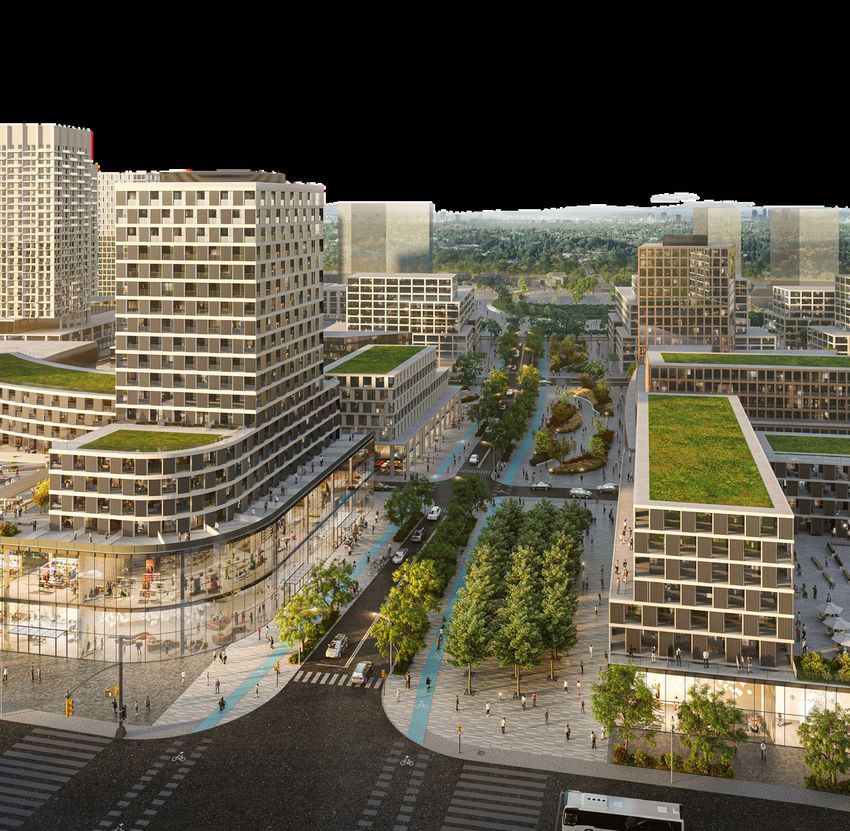
GETTING TO
TRANSIT ORIENTED
COMMUNITIES
Experiences in Canada
TRANSIT ORIENTED DEVELOPMENT                                                                           PAGE 02

GETTING TO
TRANSIT ORIENTED COMMUNITIES
The Greater Toronto Region is the fastest growing metropolitan region in Canada and the US with
128,000 more people living in the region over the course of 2019. As with many cities across North
America this growth puts strain on housing supply and local infrastructure. A greater emphasis on the
connection between infrastructure and land use within Ontario through the development of Transit
Oriented Communities provides an opportunity boost housing supply, reduce regional congestion, boost
economic development, and reduce environmental impact.

Ontario has committed C$62 billion of investment in transit including dramatically expanding service on
the regional rail system, new and expanded subways, new and expanded light rail, and enhanced bus
services. With this historic investment being made transit infrastructure, there is an opportunity to
leverage the value being created into transforming communities and providing a lasting benefit to all.

These investments involve federal, provincial, and municipal funding. Each level of government also
plays different interconnected roles around planning, approvals, subsequent development around transit
development, and public service provision. The picture becomes more complex with the local transit
agencies, companies delivering infrastructure, real estate developers, landowners, local residents,
transit agencies, community groups, and other stakeholders all having different priorities and
perspectives on value. These competing perspectives can erode the overall value that should derive from
these investments.

There is no singular precedent for the development of TOC in Ontario that can be reviewed as being
truly integrated and transformative. While there are many good examples of transit adjacent or oriented
development, we are yet to see an example that has been a catalyst for community level transformation.
Integrating transit infrastructure with the community is a challenge in the following key areas:
   Value creation, value capture and who benefits
   Time of delivery to success
   Matching the vision with the expectation

The Urban Land Institute Toronto and the Future of Infrastructure Group worked together to organize
four workshops based on three station developments in the Toronto region, and one transit system
development in Montreal. A mix of expertise examined the challenges and learnings to provide
recommendations on unlocking the potential of Transit Oriented Communities. This report provides a
summary of the insights gathered.

BARRIERS                                                        LEARNINGS
Organizational and responsibility                                   Starting from a clear, shared vision
fragmentation                                                       across stakeholders
Established, inflexible processes                                   Clear governance, expedited processes,
Lack of dedicated personnel and resources                           and dedicated resources
Different mindsets between infrastructure                           Integrating the station into the
and development                                                     community through design and land use
Accepted concept of fair value capture                              Policies that enable prioritization of
Technical challenges and physical barriers                          pedestrians and transit
Integration of stations with other transit                          Building in adaptability to processes by
and the community                                                   focusing on vision and outcomes
Availability and provision of public services                       A fair and consistent mechanism to
Land ownership and multiple owners                                  capture value from transit and
Role of cars and relationship with transit                          infrastructure investment
and development                                                     Building a mixed-use community where
Competing priorities                                                people can live, work, and play that
                                                                    becomes a destination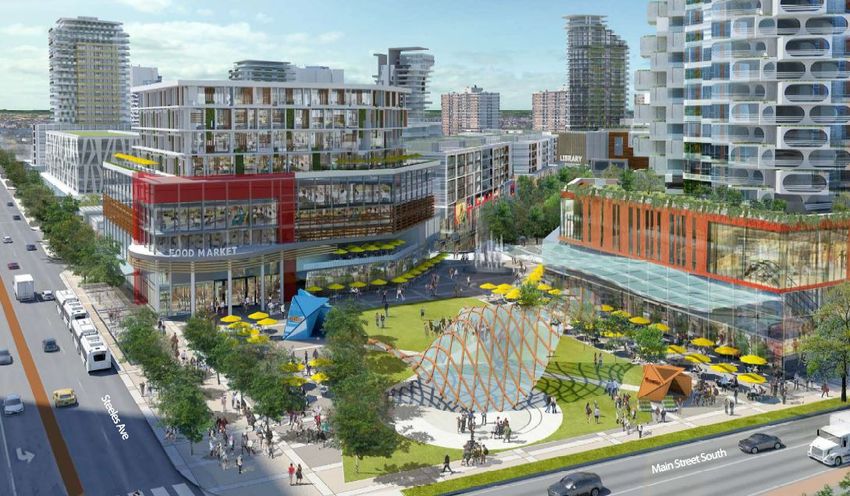
PAGE 03

CONTENTS

SUMMARY                                                        2

SITUATION & OPPORTUNITY                                        5
                                                                     ABOUT THE URBAN LAND
CASE STUDIES                                                   7     INSTITUTE TORONTO
                                                                     Our mission is to shape the future of the built
                                                                     environment for transformative impact in
BARRIERS                                                     10      communities worldwide. We provide our members
                                                                     with independent forums for discussion and debate
                                                                     about city building issues and best practices. ULI
KEY LEARNINGS                                                 11     Toronto carries forth that mission, while helping
                                                                     to shape a sustainable and thriving future for the
                                                                     Toronto Region. We are supported by over 2500
SCIENCE CENTRE TORONTO                                        12
                                                                     public and private sector members.

UNIONVILLE MARKHAM                                            16

UPTOWN BRAMPTON                                              20

REM MONTREAL                                                 24
                                                                     ABOUT THE FUTURE OF
                                                                     INFRASTRUCTURE GROUP
                                                                     The Future of Infrastructure Group brings together
                                                                     industry leaders in the sector to provide a positive,
                                                                     and coherent voice to help governments across
                                                                     Canada deliver the best value from infrastructure
                                                                     investments. To make the most out of Canada’s
                                                                     planned investments, this group discusses and
                                                                     shares their expertise on best approaches to
                                                                     prioritizing, planning, purchasing, constructing,
                                                                     maintaining, and operating infrastructure.

                                                                     2022

                                                                     With thanks to working group leads:
                                                                     Rowan Mills, Colliers Project Leaders
                                                                     Yvonne Yeung, City of Brampton
The Future of Infrastructure Group (FIG) and the Urban Land
                                                                     Ken Greenberg, Greenberg Consultants
Institute Toronto (ULI) brought together leading experts from the    Matti Siemiatycki, University of Toronto
developer and infrastructure communities, and the public sector to   Cary Mignault, Infrastructure Ontario
host workshops around four transit projects to develop               Richard Joy, ULI Toronto
recommendations for building successful transit oriented             Alexandra Rybak, ULI Toronto
communities.                                                         Jess Neilson, Future of Infrastructure Group
                                                                     John Allen, Future of Infrastructure Group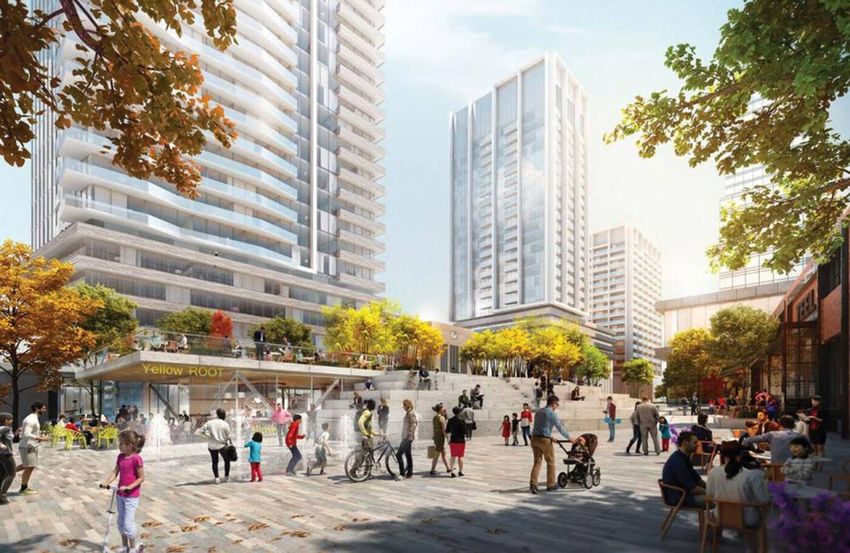
With thanks to the ULI Curtis Infrastructure Initiative for supporting this work. The ULI Curtis Infrastructure
Initiative aims to build a movement to promote infrastructure solutions that are equitable and resilient and that
enhance long-term community value. By creating new global and strategic partnerships, providing technical assistance,
building capacity at the local level, and acting as a feedback loop to promote the most innovative and effective best
practices, the Curtis Infrastructure Initiative supports ULI’s mission to positively shape the future of the built
environment for transformative impact in communities worldwide. A thoughtful approach to infrastructure planning
and implementation addresses the pressing needs of today and improves diverse communities for the long term.

WORKSHOPS
ULI Toronto and the Future of Infrastructure Group held four workshops as a basis of this report. Thank you to the
City of Brampton, the City of Markham, the City of Toronto, CDPQ Infra, Infrastructure Ontario, and Metrolinx for
participating in this program.

MEMBER COMPANIES
TRANSIT ORIENTED DEVELOPMENT                                                                   PAGE 05

SITUATION & OPPORTUNITY
GROWING POPULATION,
UNPRECEDENTED TRANSIT INVESTMENT
The Greater Toronto and Hamilton Area lays claim to
being the fastest growing metropolitan region in
Canada and the US. In 2019, the Toronto region grew
by 128,000 people, with Dallas Fort Worth Arlington
the next at 117,000 people. The population across the
region is expected to grow by over one third to 9. 5
million people by 2046.                                    Transit Oriented Communities (TOC) are
                                                           higher density, mixed-use development
There are consequences to this growth. House prices        that is connected, next to, or within a
in the city have risen by 128% in the last 10 years,       short walk of transit stations and transit
and Toronto saw house prices rise 18.3% from               stops. This type of development is
September 2020 to September 2021 alone. Housing            designed to increase transit ridership and
affordability became a maj or issue across the
                                                           reduce traffic congestion, increase
country in the 2021 federal election. Research from
                                                           housing supply and jobs with access to
the Toronto Region Board of Trade also found that a
                                                           transit, catalyze complete communities
lack of affordable housing for the workforce is
                                                           based on good planning principles, and
costing the region $7. 98 billion per year.
                                                           provide positive value capture for the
                                                           government to maximize transit
Transit Investment                                         investment while reducing taxpayer
There has been a shift in mindset in governments           burden.
across Canada recognizing that investment in                                                [Metrolinx]
infrastructure is an investment in future prosperity.
The province has committed C$145 billion over the
next 10 years including new hospitals and care
homes, funding for schools and colleges, highway
expansion and maintenance, broadband, and C$61.6           Benefits of Transit Oriented Communities:
billion for public transit. The maj ority of this             increasing transit ridership and
investment is being managed through Metrolinx                 reducing traffic congestion
(regional transit agency that operates GO Transit)            increasing housing supply (including
and Infrastructure Ontario (the provincial                    affordable housing) and jobs
infrastructure procurement agency).                           catalyzing complete communities based
                                                              on good planning principles
This transit investment aims to double the share of
                                                              offsetting the cost of station
travel by transit in the region, tripling rapid transit,
                                                              construction which would save taxpayers’
and quadrupling the regional rail service.
                                                              money
Investments include:
                                                              stimulating the economy through major
   Four subway proj ects, including a new line and
                                                              projects for years after COVID-19
   three extensions
                                                                               [Government of Ontario]
   New light rail, and construction underway on
   three light rail proj ects in the region and bus
   rapid transit lines
   GO Rail Expansion providing two-way, all-day
   service every 15 minutes across the network

These investments have the potential to transform
the region, unlock more accessible and affordable
housing, and connect people with j ob opportunities.
It also helps to reduce traffic congestion and meet
climate goals by moving people out of cars and onto
transit and active travels modes.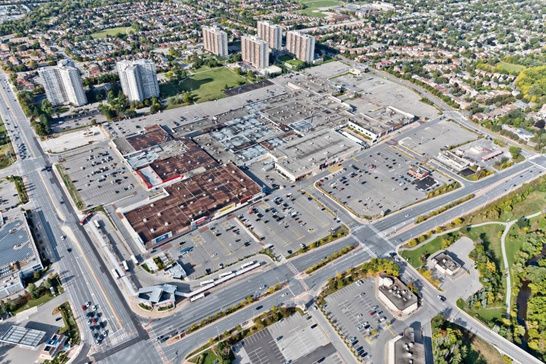
TRANSIT ORIENTED DEVELOPMENT                                                                                                                                  PAGE 06

Transit Oriented Communities
With huge outlays on transit investment the Ontario                                    Metrolinx and Infrastructure Ontario are leading the
government looked at other jurisdictions to identify                                   way together with municipal and private sector
how they could tap into the value created to fund                                      partners in implementing the plan across a wide
part of the investment. With two early                                                 portfolio of station sites. This involves providing a
announcements around station developments that                                         way forward in the following areas:
would be totally funded by the private sector, the                                        P l a n n i n g: I n a p l a c e w h e r e r a i l i n f r a s t r u c t u r e
government released a plan they labelled Transit                                          meets the urban fabric, challenges are present in
Oriented Communities where they would collaborate                                         how best to connect and enhance the public
with municipalities and the private sector to deliver                                     realm and the transit user experience, and how to
more development around transit.                                                          use the planning process to streamline approval
                                                                                          processes.
The provincial government initially introduced the                                        F i n a n c i a l: W i t h i n f r a s t r u c t u r e a n d r e a l e s t a t e
Building Transit Faster Act in February 2020 to help                                      taking markedly different approaches to
streamline the delivery of their priority subway                                          financing, governments provide clarity and
projects. In July 2020 the government passed the                                          certainty how infrastructure will be financed, and
T r a n s i t - O r i e n t e d C o m m u n i t i e s A c t. T h i s a c t g i v e s      the role developers could play.
the government the ability to designate land as                                           D e v e l o p m e n t a n d C o n s t r u c t i o n: P r o v i d i n g
transit-oriented community land. The legislation                                          certainty to balance the requirements of the
gives the government greater powers and a faster                                          station and enable flexibility and innovation to
process around land expropriation around the                                              deliver vibrant surrounding developments.
priority subway projects. Finally, the Ontario                                            C o m m e r c i a l: D e v e l o p i n g a c o m m o n g o v e r n a n c e
Rebuilding and Recovery Act passed in December                                            structure that tackles risk allocation, manages
2020 expanded the Transit Oriented Communities                                            interfaces, and enables swift decision-making to
act beyond priority subway projects to other transit                                      the benefit of the ultimate station and community
projects including GO Expansion and light rail                                            development.
projects.
                                                                                       There are experiences across each site selected that
                                                                                       provides a basis to build an approach to better
                                                                                       integrate housing, workspace, public services, and
                                                                                       entertainment into transit development. These
                                                                                       experiences are examined below.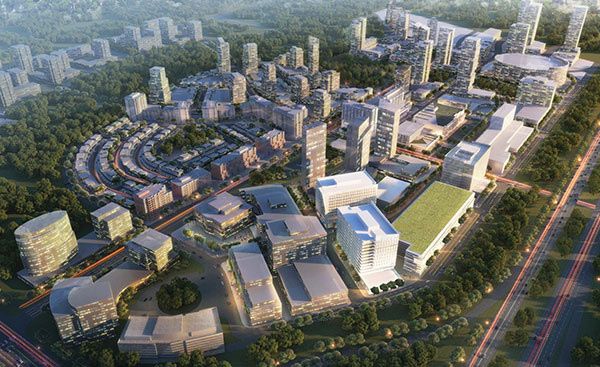
PAGE 07

CASE STUDIES
Municipalities across the Greater Toronto Area are leveraging transit investments to help transform
their communities, often making it part of their long-term vision. The examples selected provide a
mixture of stations with established urban communities and suburban communities which are
becoming denser. Another workshop studied the changes underway across Montréal as part of a new
light rail network.

 TORONTO
 SCIENCE CENTRE (DON MILLS)
                                                  1
 STATION
 Transit: Eglinton Crosstown
 Description: Urban light rail
 Former use: Celestica office site and parking

 Opening in 2022 in an established city it is a
 site that will be a future transit hub and will
 transition from being an office and car park
 into a mixed-use community.

 MARKHAM
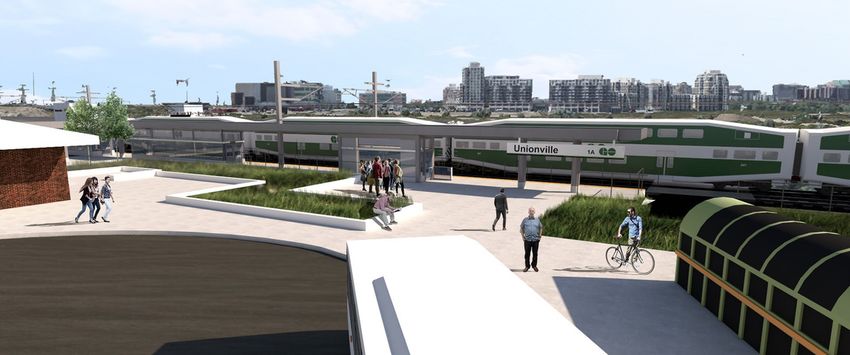
 MARKHAM CENTRE UNIONVILLE
                                                2
 STATION
 Transit: GO Stouffville Line
 Description: Suburban heavy rail
 Former use: Parking, low rise development

 A new all-day rail service provides the
 opportunity for Markham to become a
 destination in its own right by encouraging
 jobs and residents to the area.

 BRAMPTON
 UPTOWN HURONTARIO-STEELES                      3
 Transit: Hurontario light rail
 Description: Suburban light rail
 Former use: Shoppers World mall and parking

 A new light rail in a suburban area is
 providing a catalyst to densify the area, with
 a new community hub and private
 development building a vibrant, welcoming
 community.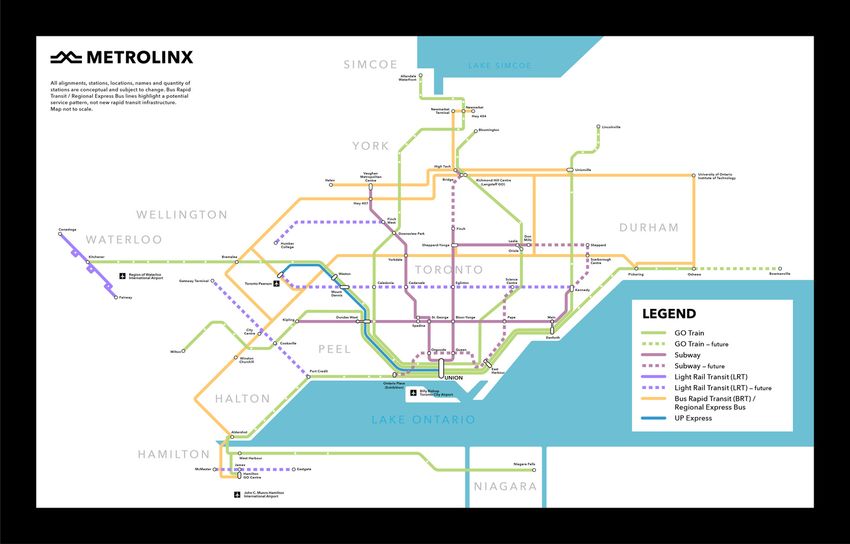
PAGE 08

                                                  2

                                             1
              3

    TORONTO                                      MARKHAM
1   SCIENCE CENTRE (DON MILLS)
    STATION                              2       MARKHAM CENTRE UNIONVILLE
                                                 STATION

                    3     BRAMPTON
                          UPTOWN HURONTARIO-STEELES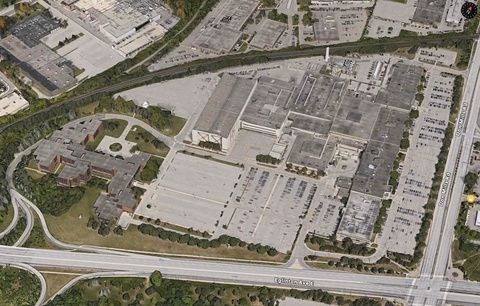
PAGE 09

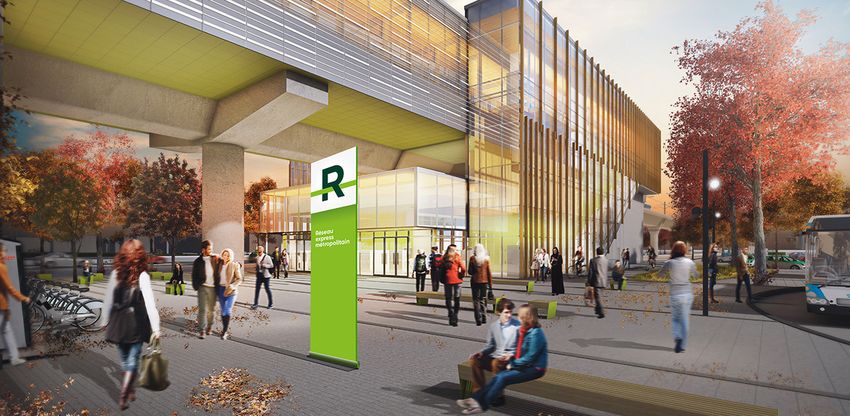
                                   Transit: REM
                                   Description: Urban rail

                                   The first phase of the REM, which crosses the
                                   Champlain Bridge, is slated to open by the
                                   end of 2021. Construction of the REM de l'Est
                                   should begin in 2023. The REM promises to
                                   boost the economy, reduce congestion and
                                   provide a transportation option to residents
                                   of sectors that otherwise lack fast, reliable
                                   public transit.
    MONTREAL
4   RÉSEAU EXPRESS MÉTROPOLITAIN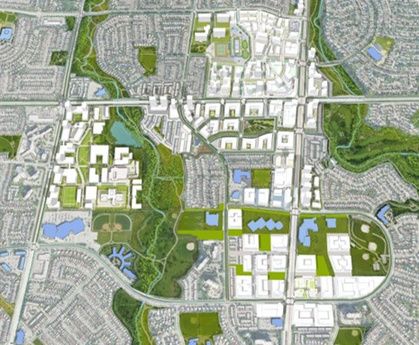
PAGE 10

BARRIERS
Although there is broad support for the concept of transit-oriented communities across different levels of
government, there are many barriers that if not addressed, will prevent these stations from reaching their
potential. Every station site also has unique characteristics including site dimensions and constraints, land
ownership, existing land use, local infrastructure capacity and public services. Depending on the site there is
typically a combination of barriers that can prevent a site reaching its potential. These include:

   Organizational fragmentation – different levels of government have different roles and priorities in funding,
   planning, approving, and delivering local infrastructure, delivering services, and enabling development.

   Established processes – processes have been in place for many years with different and often conflicting
   timelines, and can often restrict new ways of thinking such as enabling mixed use development and more
   walkable communities.

   Dedicated resources – securing necessary permissions and permits is hindered by a lack of dedicated
   personnel and limited resources, particularly at the municipal level which can draw out approvals and cause
   delays.

   Different mindsets – infrastructure is delivered against a long, fixed timeline with a high level of risk aversion
   to any changes that could cause delays, development is often more iterative and once approved can move
   very quickly.

   Fair value – with governments investing billions of dollars in infrastructure that will raise property prices
   around stations, governments are looking at ways to capture value to help offset the costs of the investment
   they are making.

   Technical challenges – transit lines can present large physical barriers that can divide communities, new
   stations also need to incorporate other transit modes, and buildings on and around stations need to be
   considered.

   Integration of stations – stations have not been integrated into communities with people passing through
   stations quickly to reach another destination usually switching transport modes between rail and car. This
   gap usually occurs at the points where the station meets land owned by other organizations.

   Provision of services – new development in an area can put pressure on existing utilities, schools, and social
   services, especially where a site is transiting between an existing land-use to welcome residents for the first
   time.

   Land ownership – land around stations is owned by many different parties from both the public and private
   sector, as well as established residents. It can also be restricted in size, multiple owners, or by transit
   operations.

   Role of cars – suburban communities and rail stations are designed with cars in mind, requirements on
   parking and street design and considerations around the future of electric and autonomous vehicles factors
   into future planning.

   Competing priorities – within communities different levels of government, transit agencies, businesses, and
   residents have different perspectives and priorities that can create friction, cause delays, and prevent sites
   from meeting their potential.
PAGE 11

KEY LEARNINGS
For transit stations to reach their potential there needs to be a focus on getting the fundamentals right across all sites and the
wider Transit Oriented Community program in Ontario, and across North America. Looking across the four sites, the group
drew out the following key learnings:

1
      Shared vision to deliver effectively – With municipal and provincial governments, regulators, transit agencies,
      developers, and the local community, each organization has its own priorities and timelines. One way to accommodate
      this challenge is how Montréal’s REM engaged with the local community and set up a multidisciplinary panel of experts to
      provide an overall vision around the design, built form and urban integration of the light rail line through the City. The
      shared vision should centre around the individual experience of the person using the transit, living or working in the area,
      and aim to maximize the investment made in the transit stations being delivered. It also provides an opportunity to build
      a unique identity as Brampton focused its vision around being a gateway to immigration and Markham looked create a
      station that presented a sense of arrival and integration with its natural environment with the Rouge River passing
      through the area. This also provides a platform for decision-makers to come together to determine how physical
      challenges can be addressed.

2
      Clear governance and dedicated resources – Many organizations want to input and clear governance helps provide a
      window and an ongoing coordination point, while providing clarity on the decision-making process and responsibilities.
      We have seen the REM project in Montréal having a clear structure with the province and the organization delivering the
      infrastructure being accountable for decision-making, but with regular coordination with the City of Montréal and the
      local transit agency. The City of Toronto has committed to developing a robust secondary plan for the Eglinton corridor
      which provided guidance on building density and street design to help accelerate approvals for construction and permits.
      With multiple permits being needed and a delay posing risks on knock on effects on construction cities should build in
      dedicated resources to support with necessary approvals.

      Integration of station into the community - Brampton also pioneered a living plan where all developers could see how

3
      the area around the station was developing to build a more coordinated experience. Infrastructure Ontario developed
      design guidelines to help integrate the station into the surrounding community and encourage people to visit and stay at
      stations rather than just pass through. As part of its station design, Markham is looking at incorporating a civic square as
      part of an international design competition. Ultimately, integrated sites will benefit all by enabling more people to get on
      transit more easily, and building complete communities where people want to live, work, and spend their time.

      Transitioning to pedestrians – For suburban locations, cities have been planned around the car with stations surrounded

4
      by surface parking. Brampton is developing its streets around human-centred design which prioritizes the safety and
      convenience of pedestrians. Requirements across the Toronto region also need to be updated around minimum parking
      requirements in new buildings to encourage people to take transit and walk, and to change engineering specifications for
      regional roads. Stations also need to integrate with the local community to make it safe for people to walk or cycle. To
      spur more ridership and revitalize the city, Melbourne introduced a 10-minute bus loop around the city as a micro transit
      solution that helped to alleviate first/last mile challenges.

      Building in adaptability – Developers are often unwilling to take on risk on relying for infrastructure to be delivered on
      time. There are workarounds by building adjacent to transit stations, on Eglinton the development at the Ontario Science

5
      Centre was built to be easily connected to the station with knock-out panels that can be easily removed once the station
      becomes operational. A prescriptive approach to construction on-site risks project elements being built and then ripped
      up for surrounding developments. Boston enabled minor descoping of work so that developers could take on finishing
      roads or sidewalks for example where it made sense for their timelines and did not impact the delivery of the transit.

      Capturing value – A new transit line provides an uplift in land value but at a significant cost to taxpayers. Montréal
      introduced a $10 levy per square metre in developments located within a kilometre of a station as a mechanism to

6
      recapture some of that value. Developers have generally found to be supportive of paying this cost as it provides better
      services around approvals and delivers enhanced local public services and secures the project, however governments
      need to be realistic about how many costs can be offset by capturing land value. Station construction on a subway line
      can cost up to $500 million per location, so it is unrealistic for a developer to cover that total cost. New York has an
      agreed list of local amenities it is looking to add to provide fairness and greater certainty to developers looking to add
      density. In areas welcoming residents for the first time there are costs involved in building new roads, pavements, water
      and sewage, as well as childcare, schools and parks.

      Building community – A mix of uses that encourages people to live, work and play underpins most successful transit-
      oriented communities. Brampton ensured that the streetscape around the transit station is vibrant year-round and at all
      times of days by using lighting, street layout, parks, local programming, and enabling dynamic street level experiences

7
      with retail, small local businesses, and entertainment. The city also made a community hub that provides social services,
      education, and recreation, the heart of development to provide a focal point for the community which is moving away
      from single use, car centric design into a more dense, mixed use community.
PAGE 12
TORONTO
SCIENCE CENTRE STATION
Eglinton Crosstown is one of the first major new transit projects coming into operation in the
Toronto region, providing a 19km light rail connection through the midtown as part of a
transformational program of investment. The Celestica site provided an opportunity to
transform an old commercial site with a large parking lot into a community with 5,000 homes,
offices and community facilities.
The Celestica site in Toronto is located at the The community will be connected through
j unction of Eglinton Avenue and Don Mills Road in pedestrianized areas, bike paths, parks, and plenty of
midtown Toronto. The 60-acre site was opened in open spaces. The station will connect residents to
1967 as home to IBM’ s Canadian Headquarters, before public transit through the Eglinton light rail, a future
being taken on by Celestica. The new development subway line, and bus lines.
will preserve the former IBM building at the base of
three towers, as part of a wider mixed-use
community that will link to the Science Centre
Key Organizations Involved:
station on the Eglinton LRT line and connected via
Government of Canada - funder
an underground tunnel funded by the developer.
Province of Ontario - funder
Metrolinx – project owner and regional transit
The overall development will comprise of eight
authority
condominium buildings and 30 townhomes that will
Infrastructure Ontario – procurement and delivery
provide 5000 homes. It will also include 300,000
City of Toronto – planning, approvals, and funding
square feet of combined office space (including a
of infrastructure
new office for Celestica), restaurants, cafes;
childcare and long-term care beds; over five acres of
TTC – municipal transit operator
park space and playgrounds; and a community centre Crosslinx – design and construction joint venture
with hockey rinks, a basketball court and a gym. for light rail
Developers – real estate development around
stationPAGE 13
Eglinton Crosstown is a 19 km light rail line that cuts east-west
across midtown Toronto on a dedicated right of way. The LRT will
open as Line 5 Eglinton and run along Eglinton Avenue from
Mount Dennis to Kennedy Station, with 25 stations connecting
with existing transit lines including the TTC subway at Yonge and
Cedarvale, three heavy rail GO stations, and 54 bus routes. The
$8.4 billion project is due to be completed in 2022 and will cut
journey times along the corridor by up to 60 percent.
Size: 19km, with 10km underground.
Co s t : $ 8 . 4 b i l l i o n
Number of stations: 25
Contract Type: Design Build Finance Maintain
Estimated Completion: 2022
Eglinton Connects Plan
The City of Toronto engaged intensively with the local community along Eglinton hosting around 60 public
meetings and getting input from over 5,000 people over two years. The result was the Eglinton Connects Plan
that was released in 2014 to develop visions of place along the route and around stations. The plan’s 21
recommendations put emphasis on using the investment in the light rail to develop complete streets. It
encouraged a mix of transport uses, provided guidance for public realm and the streetscape, and addressed
zoning by-laws to support mid-rise development to increase previous height limits to encourage intensification
near transit.
The plan specifically sought to integrate Crosstown stations with new development and intensification around
six focus areas and two mobility hubs. It included amendments to the official plan and zoning bylaws to support
mid-rise buildings in the area, and the development of secondary plans for the Don Mills area where the
Celestica site is located. For focus areas like Don Mills, guiding principles and planning objectives were
developed, along with illustrations of possible planning approaches to support growth, and to address interface
and urban design through the site plan review for the Celestica site.PAGE 14 CHALLENGES & LEARNINGS As one of the first major transit projects constructed in Canada’s biggest city for many years, the experiences around planning and delivering transit-oriented development provides many lessons to help guide a future approach. 1. Infrastructure and Developer Timelines: Learnings: A shared vision is required early on, and it The infrastructure and real estate development should focus on outcomes built around pedestrian, sectors work on different timelines, with different passenger, and community experience. The City spent a processes, and different business models. The lot of time and effort consulting with the community Eglinton Crosstown contract was awarded in along the route to provide guidance to developers and November 2015 and expected to enter operation in help expedite planning approvals in future. A robust 2022. Design of the infrastructure was already secondary plan for the area, provided a framework for mostly complete and construction was underway by development when the market was ready. On a the time many developers looked to build around practical level the developer built in flexibility by stations, including at the Science Centre Station constructing the foundation with a hole and knock-out which serves the Celestica site. While it provides panels to connect into a tunnel once the station greater certainty for developers that the infrastructure was completed to reduce risk around construction of the transit line is moving ahead, as timelines slipping. Plans should also consider the well as clarity on the final shape of the future, looking at overbuilding infrastructure like infrastructure. The timing gap also creates issues. It station boxes to allow for expansion, or using meant that the infrastructure and the surrounding temporary facilities that can be easily replaced as a development were built separately. Much of the site develops to better serve future needs. infrastructure design was also locked in, which made it difficult to introduce any design changes that could benefit the development and the surrounding community, but that could potentially impact delivery schedules of the infrastructure. 2. Infrastructure-Community Interface: Learnings: Contracts need to be structured to enable Many of the main pressure points around variations and minor de-scoping of work that is construction came at the interface between the ultimately better quality and delivers greater public infrastructure and the surrounding development. benefit. This enables the developer to complete minor The Eglinton Connects plan laid out standards for work at a later date that matches development public realm and streetscape, but the challenge was timelines and does not impact infrastructure figuring out who paid for what and how to resolve construction delivery schedules. Boston Transit Agency day-to-day interface issues. This was exacerbated if took this approach and de-scoped minor work to allow requests came from sources with no budgetary developers to complete it and negotiated costs for responsibility, but with a vested interest to see a services. As touched on below there also needs to be an well-integrated outcome. Requests that lead to efficient and formal process to deal with small changes change orders to infrastructure could add costs and of scope. Infrastructure Ontario has also looked to risk delays, were often rejected. Discrepancies in tackle the gap between infrastructure and development timelines are important. As infrastructure for future projects through the introduction of specific approaches completion, the developer would still design guidelines. need to undertake work that could involve digging up sidewalks and roads. These issues were dealt with on an ad-hoc basis which was time consuming and caused delays. For the Celestica site the developer built adjacent to the station with an underground tunnel to the station, which they paid for, that could be connected when work was complete. For truly integrated stations there will be many more interface points that need a more robust approach.
PAGE 15

3. Coordination Process:                                 Learnings: Navigating day-to-day issues saw a lot of
Along Crosstown and at the Celestica site                time wasted which if addressed through more formal
coordination, involving multiple stakeholders and        coordination, clearer governance structure, and single
different levels of government and impacting             government counterparty could benefit everyone.
multiple parties, was ad-hoc. Getting sign off on        Boston for example had a dedicated team which
decisions was extremely difficult and time               included a city representative. A dedicated, and
consuming, with the process around variations            resourced group staffed by people with knowledge
taking six months to two years in some cases. An         across the infrastructure commercial terms, city
illustrative example was the steps required to reach     approval processes, utility coordination, and
a resolution around work on the property line            development side would have helped to address
between the infrastructure and the development that      challenges constantly and avoid disruption of deferring
could potentially impact groundwater. This started       work. A small variations panel involving a
with a meeting attended by a large number of people      representation of all key project stakeholders meeting
and multiple lawyers. Part of the problem related to     monthly to discuss variations and share design
the different priorities and knowledge of each           drawings early would also help reduce any process
stakeholders’ contractual, commercial, and legal         friction and maintain better communications. Stronger
responsibilities. The contractual process around         governance across city departments would also reduce
delivering a $9 billion transit line relies on hitting   overall effort, coordinate and accelerate work and
project milestones, developers rely on greater           improve overall outcomes. Having a project champion
flexibility and ability to adapt. As no party had        from within the city, with the authority to take
overarching visibility or knowledge to resolve these     decisions quickly has also proved beneficial on other
issues quickly and efficiently it created delays and     projects.
shared frustration.

4. Shared Vision:                                        Learnings: A joint panel established early on would
The siloed approach saw each group focusing on           develop a shared vision and support better
their specific role and missing broader opportunities    communication and balance of interests on a site to
that could benefit all. A shared vision can be the       achieve maximum public benefit. A design review panel
basis for outcome-based specifications for               could potentially be made up of the transit agency, the
infrastructure delivery and planning, and can            procurement agency, developers, architects, planners,
provide greater flexibility to innovate and adapt to     engineers, and city representatives to support cross
challenges arising. For Eglinton much of the             communication and coordination with a single plan
infrastructure was built separately from the             approach. It would also allow all parties to have a
surrounding development. As a result stations along      better understanding of change request impacts on the
Eglinton, such as the Science Centre Station, were       developers.
not as well integrated into the community as they
could have been, with the only direct connection
being the tunnel paid for by the developer. A bus
station located to the north of the site was not
integrated within the site. The redevelopment of
Celestica brings residents into an area for the first
time and that came with further considerations on
the public infrastructure and amenities needed to
support the local community like schools and
childcare. With many stakeholders involved there is
a risk competing demands erode the overall value.
More dialogue between the province, city, private
sector could have helped build a better
understanding of the issues and develop a clear
shared idea of the overall vision, and shape design to
avoid the need for major variations during
construction.
PAGE 16

MARKHAM
MARKHAM CENTRE UNIONVILLE STATION
GO Expansion will see the Toronto region’s commuter rail network transformed by a major
infrastructure investment. Unionville Station is one of many stations set to benefit from an
upgrade is service that will see trains run all day, two-way service, every 15 minutes. This will
become the centerpiece for the re-imagined Markham Centre that offers a unique opportunity to
transform an underdeveloped suburban area to a new urban downtown core for Markham.

The Unionville site in Markham is located north of      communities linked by parks and open spaces. The
Toronto in the Regional Municipality of York.           station itself will be the focal point and a gateway to
Markham is the fourth largest municipality in the       the city and form part of Markham’s identity and play
Greater Toronto Area (GTA) with a population of         a central role in the transition of Markham from a
328,940 residents and growing. The station is set to    suburban to urban centre.
become the heart of Markham with a vibrant,
walkable, mixed-use urban core. Markham Centre          Key Organizations Involved:
has a population of 25,000 and hosts 17,000 jobs. It       Government of Canada - funder
will provide homes to 110,000 people and support           Province of Ontario - funder
82,000 jobs with around 800 people and jobs per            Metrolinx – project owner, regional transit
hectare around the station area.                           authority
                                                           Infrastructure Ontario – procurement and delivery
The area around the Unionville GO Station is largely       City of Markham– planning, approvals, and funder
undeveloped which creates an opportunity to shape          Region of York - planning authority
the future of the city centre with 700 acres of            York Region Transit/Viva - municipal transit
development land, 300 acres of greenways and parks,        operator
and local transit in operation or planned. Land            TBC – privajoint venture for GO Expansion
around the station is owned by Metrolinx, the City of      Developers – real estate development around the
Markham, three main developers, and a YMCA. The            station (Remington, Metropia and OnePiece)
city plans for a series of 15-minute walkable
PAGE 17
GO Expansion is led by Metrolinx, the provincial transit
agency for the Greater Toronto region. The GO rail network
is made up of seven rail lines and 460 kilometres of track
and connects into 17 municipal transit systems. Currently,
the GO system provides over 1,500 weekly trips with the
goal of providing 6,000 by 2041. The Stouffville Line has
already seen an increase in service from 50 weekly trips to
170, with the line providing over 800 by 2025. This will see
a rise in annual passenger trips from 4.1 million today to
around 12 million. The station will link the GO train with a
VIVA bus rapid transit line that connects York Region, and
an expansion to the 407 transitway that will provide a rapid
bus connection across the northern Toronto region.
Size: 49 km
Cost: $2.5 billion
Number of stations: 16
Contract type: Design Build Operate Maintain
Estimated Completion: 2025
Secondary Plan for Mar kham Centre
The City of Markham is renewing their Secondary Plan in light of new opportunities, development trends and
evolving community needs since the original plan was developed in the 1990s. The secondary plan will shape
development over 20-30 years and was initiated in 2019 in anticipation of growing development pressures, and
the expanded transit. The Vision and Guiding principles are the foundation for the work with the secondary
plan due to be published by 2022.
The Vision for the area is to produce a quality downtown Markham to be the heart of the city, be vibrant,
intensive and mixed-use urban core. It also aims to create a unique sense of identity where people come to live,
work, and enjoy recreation. The city also established guiding principles to help shape the plan development
process:
Create a place that is the heart of Markham
Support a diverse and prosperous economy
Support arts, culture and recreation
Create an efficient and safe transportation system
Create a good public realm
Foster diverse built form
Build neighbourhoods with access to all the things needed for daily life
Realize the full potential of the Rouge River Valley as an environmental placemaking feature
Champion sustainability and environmental performance
Plan for inclusive and diverse neighbourhoods
Transition from suburban to urbanPAGE 18
CHALLENGES & LEARNINGS
With service levels ramping up on a heavy rail corridor, Unionville provides a site with an
opportunity to become a destination in itself. This transition from a suburban rail station used
by commuters to a community hub where people live, work and enjoy themselves requires a
different way of thinking and approaching challenges.
1. Suburban to Urban Shift: Learnings: Updating parking standards through
Unionville Station is currently surrounded by almost building residential towers with fewer parking spaces
800 parking spaces with plans from 2016 originally than units, and updating engineering standards for
pointing to an expansion to 1,600 parking spaces to road and transforming parking lots into community
serve commuters. The notion that this station will be hubs could help to ensure developments and
a park and drive has changed. The car still dominates communities are designed with pedestrians and
thinking with legacy requirements around road width walkability in mind. To help increase density and
and minimum parking requirements for residential revitalize its downtown, Melbourne, Australia
developments that favour the car, despite the City of introduced a ten-minute bus loop to encourage people
Markham’s official plan from 2014 envisaging a onto transit.
transition from a car-dependent community to one
where more people walk, cycle, and use transit.
Unionville will become the core of the city and
unlock a series of 15-minute walkable communities
across a largely suburban place. The vision for
Markham would be for a cluster of smaller local
areas serving as local neighbourhoods connected by
the greenway and transit.
2. Physical Barriers to Development: Learnings: Markham is studying options to overcome
The Stouffville Line serving Unionville station runs the physical barrier to examine under/over passes, rail
through the centre of the proposed development decks or bridges looking at examples from Tokyo,
area presenting a large physical barrier at Enterprise Munich, Chicago, and Toronto. City building and
Boulevard and other junctions across the city. The engineering need to be considered in tandem to ensure
current approved 407 Transitway alignment which that decisions made now have a long lasting, positive
would provide a rapid bus connection across the impact on the community. The route of the 407
north of the Greater Toronto Area would also run Transitway will also have a long-lasting impact that
almost directly beside the station and the Viva bus could divide the community. There are precedents of
rapid transit line is located to the North. There are building the city to connect these transit lines without
clear benefits in integrating these transit lines, but having to locate them all the same site and can act as
this needs to be assessed against how much it would the connective tissue of the city. This will require a
limit developers' abilities to build around the station focused group, bringing together decision-makers to
and significantly impact the pedestrianization of the determine the best technical solution and how it could
surrounding area. The Rouge River also runs be delivered. Rather than act as a barrier the Rouge
alongside the station. River forms a connection through Markham. The
Greenway provides an immense amenity for recreation
and connects neighbourhoods and parks.PAGE 19
3. Creating a Unique Identity: Learnings: The city is exploring the possibility of
The Unionville GO Station needs to become a focal hosting an international design competition,
point and gateway to Markham Centre. Markham has potentially incorporating the civic square to Markham
looked at stations around the world, particularly in is looking to build out the area around the station with
Europe for inspiration on how stations have been a new performing arts centre, a central library and
successful in acting as a gateway and the interaction new civic centre. The Rouge River and use of the
between the station and the public spaces greenways and parks connecting the city can provide a
surrounding it to create a unique urban space and unique amenity to attract development, connect into
move away from surface parking. The station needs the transit system, and stand out from other cities. The
to be design-oriented and provide a sense of identify role of arts, culture and recreation, as well as emphasis
and arrival for visitors and residents. The hope on public realm is carved out within Markham’s
would be that Unionville becomes the cultural heart guiding principles as a way of developing a unique
of Markham and connects to the new civic square identity. The city is also engaging with the local
that creates a sense of arrival and attracts people community to ask what type of programming they
into the community. would like to see in the new Markham Centre and what
services should be available around the station.
4. Focus on Mixed Use: Learnings: Community building needs to be a focus,
With the delivery of two-way, all day rail service the with a vibrant station and downtown that attracts
challenge for Markham is to break away from the people to visit, live and work in the community. The
mindset that the city should remain a residential hub city has laid out a vision for 15-minute
where residents travel into Toronto for work. neighbourhoods, but there also needs to be a change in
Developers have expressed a greater interest mindset that focuses on people travelling to and from
towards residential use reflecting this mindset of the station, to ensure that Markham is prioritized as a
Markham as a commuter town. There is great destination. Fruitvale, California relied on input from
potential to increase the amount of density and the community with a steering group established to
intensity in Markham Centre. The original Markham help determine how space was developed to be inviting,
Centre Plan projected 25,000 people and 17,000 jobs, it also boosted the economic prospects of visual
then 2020 Growth Strategy projected 41,000 people minorities. The vision and guiding principles
and 39,000 jobs, whereas the current development established by Markham also emphasizes diversity of
concept estimated this could support 110,000 people economic activities, built form, and neighbourhoods.
and 82,000 jobs. The city has put emphasis on
attracting offices and retail to balance people and
jobs which represents a change from the past which
focused on one or the other.PAGE 20
BRAMPTON
UPTOWN HURONTARIO-STEELES
The City of Brampton is undergoing a period of rapid growth that is three times the rate of the
provincial average, adding roughly 20,000 new residents a year. With the arrival of the 18km
Hurontario light rail in 2024, it will provide a focal point for development around the Uptown
Hurontario-Steeles station to become the Uptown Core where over 100,000 people can live,
work, and play.
Brampton has a population of 692,000 and is growing The community will be built around human-centered
by around 20,000 people per year. The city is one of roads, eliminating car-dependency, integrating green
the most diverse in Canada with 73% of the spaces, and connecting surrounding neighborhoods to
population coming from visible minorities. 52% of the core with safe walking and cycling infrastructure.
the population are immigrants to Canada, with 39% Brampton is looking to support smart growth and
of those immigrants aged 25-44. The Brampton innovative partnerships to create a vibrant, well-
Uptown Hurontario Steeles site aims to create a 20- connected and modern city.
minute walkable neighbourhood that appeals to the
young, diverse population of the city. Key Organizations Involved:
Government of Canada – funder
As with many suburban centres developed between Province of Ontario - funder
the sixties and eighties the urban design is car- Infrastructure Ontario – procurement and delivery
oriented. The vision sees the convergence of 13 Metrolinx – project owner, regional transit
million square feet of public private investments authority
delivering 12,000 new housing units, and 100,000 City of Brampton– planning, approvals, and funder
people living and working in the neighbourhood. The Region of Peel – stakeholder, planning
site will transform the former Shoppers World mall Brampton Transit- municipal transit provider
and parking lot into a mixed-use neighbourhood. Mobilinx – design, construction, financing,
There are seven further developments planned, a operating and maintaining joint venture for LRT
post-secondary campus, and a community hub Developers – real estate development around
including a school, health and social services, a day station
care, a library, recreation and technology facilities.PAGE 21
The Hurontario LRT announced in October 2019 will
link the Region of Peel as it experiences rapid
population growth and urbanization. The 18km line
with 19 stops starts in Mississauga at Port Credit GO
Station, ending in Brampton at the Brampton Gateway
Terminal. The LRT Hurontario line will connect
commuters with GO Transit on the Milton and
Lakeshore West Lines, the Mississauga Transitway, and
local transit providers through connections with
Brampton Transit, ZUM and MiWay. The line will also
have its own dedicated right-of-way lane to ease
traffic and congestion on the major roadway it will
operate on. The $4.6 billion project is set to be in
service by fall 2024.
Size: 18km of LRT
Cost: $4.6 billion
Number of stops: 19
Contract Type: Design Build Finance Operate
Maintain
Estimated Completion: 2024
Brampton 2040 Vision
The goal for the 2040 Vision is to re-imagine a future Brampton that grows not only in population size, but
diversity across people, jobs and opportunities by 2040. The vision rests upon seven aspirational values to help
drive its future planning. The new Brampton Core is the focal point of the vision surrounding Uptown to
become the corporate “hotspot and tourist destination”. Brampton expects by 2040 to add over 136,000
dwelling units, 385,000 residents and over 185,000 jobs.
Ho s t s u s t a i n a b l e u r b a n p l a c e s w i t h a n i n t e r c o n n e c t e d g r e e n p a r k n e t w o r k .
A vibrant centre with quality jobs, rich activities and integrated living.
Have characterful and complete neighbourhoods.
Have safe, integrated transportation choices and new modes that contribute to civic sustainability that
emphasize and encourage walking, cycling and transit.
Be a place that drives social responsibility, respectfulness and justice.
Have healthy citizens that can easily enjoy physical and mental wellness, fitness and sports.
Provide a place for artistic expression and production.
The Hurontario-Main Corridor Secondary Plan outlines objectives and criteria including promoting complete
streets and attractive places, mixed use neighbourhoods, and transit-oriented growth. Land use is also geared
towards higher urban density and a move away from car-oriented and single use development.PAGE 22
CHALLENGES & LEARNINGS
As one of the fastest growing and most diverse cities in Canada, Brampton is going through a
major transition from a car-dependent suburban community into a vibrant urban centre focused
around the development of the Hurontario light rail line.
1. Coordination Between Multiple Developments: Learnings: Creating a framework agreement of
With eight potential developments, a post-secondary principles is key with so many decision makers
institution, community hub, as well as a consortium involved. It is useful to clearly define values which are
delivering the Hurontario light rail against a tight reflected on when having to make difficult or
deadline there are silos to overcome. There is 13 unpopular decisions. These values include defining
million square feet of private high-density private what is important to the community and using it as the
development underway. framework to frame and decide on trade-offs. This
allows decision-makers to be bold, flexible and
courageous. Brampton is pioneering a living ground
plan, working with eight different developers to look at
changes to right of way on the main street, transit
infrastructure and the bus terminal with the
understanding that the plan will keep evolving. It has
given the group the ability to see outside their siloes
and improve their individual plans. The tool provides
an understanding of what each group needs in order to
be successful at the precinct and street corner scale
with development happening simultaneously.
2. Moving from Car Dependency: Learnings: Brampton is focused on improving safety
With a goal of delivering a 20-minute walkable with a human-centred roads design approach. This
neighbourhood is seen as a way to promote better moves beyond a pure emphasis on meeting safety
health, social cohesion, and reduce pollution. The compliance criteria that can erode over time. Human
area remains highly car dependent as a legacy of centred-design prioritizes safety and comfort of
development from the 1960s to 1980s. The Region of pedestrians. Measures include reducing crossing
Peel adopted Vision Zero to reduce collisions by distances, creating a connecting to transportation
10%, but the junction of Hurontario-Steeles which is hubs, prioritizing pedestrian movement and promoting
the focus of the development has seen collisions accessibility, and building in pedestrian friendly
increase by 40% over 2 years from 2016 to 2018. crossing features such as lead pedestrian intervals at
Safety is a major concern as people choose to take crossings. The walkability of communities also
public transit, walk or cycle. The definition of a promotes health and benefits a wide range of residents
Regional Road presents a barrier to building a more with mobility issues, including older Canadians no
pedestrian-friendly environment. 40% of the longer able to drive. In the long term 41% of jobs will be
population in Uptown are seniors, children or youth, in local, walkable neighbourhoods and cities with
many of whom cannot drive, along with the growing employment, jobs, education, public services and
student population. leisure will be well positioned for the future.PAGE 23
3. Building Vibrant Communities: Learnings: The Precinct Plan provides design direction
Brampton is typical of the municipalities around the to bind together the different developments, with the
Toronto region that have developed through urban community hub as the “beating heart”. The precinct is
sprawl with single family homes in car dependent designed to be safe for pedestrians and cyclists through
communities. People travel by car and traffic day and night, and through Canada’s extremes of
congestion which costs the region $6 billion per year weather across the seasons. This includes use of lights,
and has a negative impact on quality of life. Sprawl street furniture, parks, all season patios, designs fort
adds costs to public services like waste collection, safe winter movement, and promoting year-round
road maintenance, and utilities. With 50% of Peel activities. Brampton is promoting integration with
Region residents living within 300 metres of a high- transit terminals, street level retail, and community
volume traffic road there are health considerations infrastructure, as well as leveraging its urban
from pollution. As with most transitions there needs greenways and public spaces. Enhancing pedestrian
to be a compelling reason for people to take public and cycling connections between transit hubs,
transit over driving, this starts with design and community spaces, leisure, and open spaces is achieved
making communities walkable and vibrant. The city through fine grained, compact street networks and
is focused on promoting local employment, unobstructed pedestrian access to key facilities.
neighbourhood services, programs, and quality Buildings are designed to have public facing uses at
public spaces. street level, providing spaces for small locally owned
businesses, offer a mix of uses, and create an attractive
sense of place around the transit station to encourage
people to ride.
4. Promoting Social Equity: Learnings: Affordability must be managed proactively
Affordability is a major issue across the Toronto to enable people with broad incomes to live and stay as
region, with rapid growth this issue will only grow. well as retain existing residents. Kalasatama, Finland
With transit coming in, this generates a lot of value has stipulated that a percentage (25%), of housing
so affordable housing must be included as well as developments be geared towards social and affordable
access to healthcare, and other social resources. housing to create diverse, mixed-income communities.
With 52% of Brampton’s population being immigrants Based on international best practices the early delivery
there is a pressing need to make facilities available of community services is critical to transforming a
for first generation residents of Canada and to community. The Community Hub provides a focal point
provide a common ground for education, social, providing a social connection, health and educational
cultural and health needs. Brampton is an services, and technology. This community-oriented
immigration gateway, where people can come and focus increases value for future development and can
comfortably settle in Canada. This is made easier play a role in distinguishing Brampton and enhancing
through accessible public transit, public services, the city’s brand.
shops, housing, education, and jobs.You can also read


