Global Health Supply Chain Resiliency: Preparedness, Response, and Recovery - Global Health ...
←
→
Page content transcription
If your browser does not render page correctly, please read the page content below
13th Global Health Supply Virtual Chain Summit
                                 November 17-19, 2020

                                        Conference theme
               Global Health Supply Chain Resiliency:
               Preparedness, Response, and Recovery
    Sub-topics: Supply Chain Design, Technology, Workforce, Partnerships, and Governance

COVID-19 has brought to light the fragility of global supply chains and challenges health systems
have faced to address the new health needs arising from COVID-19 while continuing to address
traditional health care needs. Clearly, resiliency of supply chains and health systems is essential.
Exploring the elements of resilient health supply chains will be the focus of GHSCS 2020.
Resiliency can be achieved through supply chain design, appropriate use of technology,
leveraging partnerships and establishing proper governance systems but all these depend on a
deep understanding of the challenges faced by the workforce who will be called upon to execute
on the resilience strategy and fill in the inevitable gaps. GHSCS 2020 will explore these issues
through a combination of keynotes, panel discussions, and contributed talks.

                                    Guide to Detailed Agenda
                Page 1          Agenda at a glance including keynote speakers
                Page 2-5        Plenary Panels 1-3
                Page 6-11       Contributed Talks (Tracks 1-12)
                                Prize Competition presentations in Track 1 & 5
                Page 12         Abstract # to track mapping table
                Page 13-14      Bios of keynote speakers
                Page 16         GHSCS 2020 Program Committee
                Page 17         GHSCS 2020 Sponsors

   @ghsc_summit; #globalhealth; #supplychain; #GHSCS2020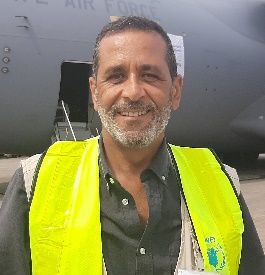
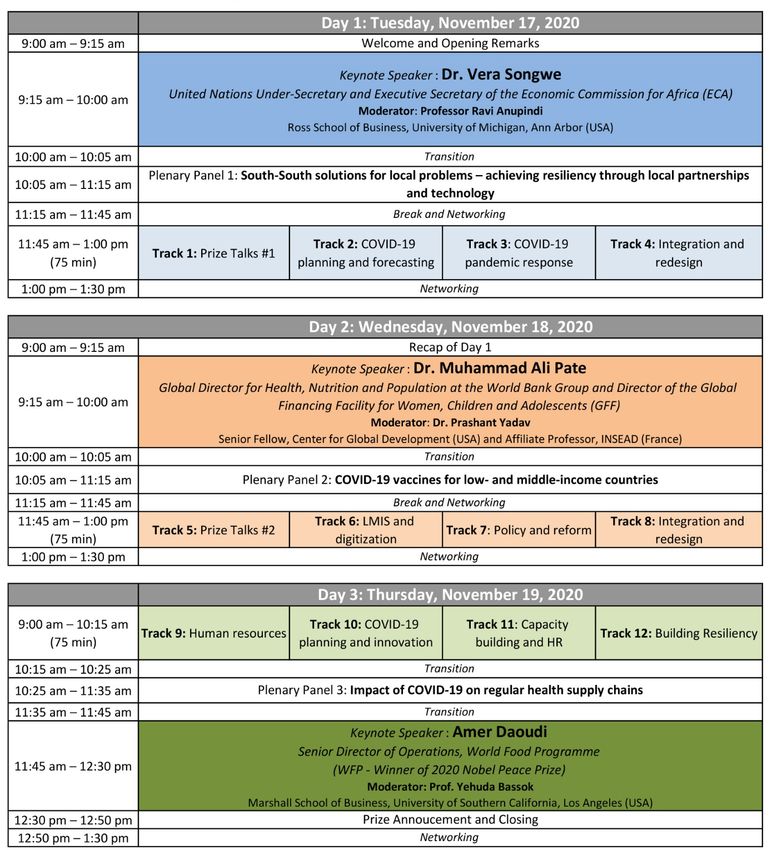
Agenda at a Glance*

*
    All times above are in US Eastern Time Zone
                                                    CET/WAT
                            GMT/EAT                                   SAST              IST
      US East Coast                               (Switzerland,
                            UK, Ghana)                            (South Africa)      (India)
                                                     Nigeria)
        9am-1pm               2-6pm                  3-7pm           4-8pm         7:30-11:30pm

       @ghsc_summit; #globalhealth; #supplychain; #GHSCS2020                                      1
Plenary Panels

PANEL 1: South-South solutions for local problems – Achieving SC resiliency through local
partnerships and technology

Day 1: Nov 17, 2020, 10:05 am – 11:15 am (US Eastern)

                                           CET/WAT
                       GMT/EAT                                  SAST                 IST
   US East Coast                         (Switzerland,
                       UK, Ghana)                           (South Africa)         (India)
                                            Nigeria)
 10:05-11:15am        3:05-4:15pm        4:05-5:15pm        5:05-6:15pm         8:35-9:45pm

Throughout 2020, the world economy has been reeling from the COVID-19 pandemic and most
governments have had no choice but to lock down social and economic activity – a decision
that came at the cost to the global economy, including supply chains. Due to the effect of the
COVID-19 pandemic, global output is estimated to contract by at least 3 per cent. This
contraction is estimated to be much larger in the Global South. While developed countries are
providing trillions of dollars in relief, support and bailouts, developing countries are more
constrained on fiscal, monetary and external payments fronts, making it difficult for many of
them to respond to the multiple shocks triggered by the crisis. In addition, least developed
countries are the most exposed to COVID-19 because of their higher capacity constraints in
providing even the basic health facilities. General government health expenditure in low- and
middle-income countries amounts to only 3 per cent of GDP and in the group of least
developed countries (LDCs) just 1 per cent, against 10 per cent in high-income countries. In light
of these challenges, what are the best strategies to build resilient systems across LDCs? One
possible solution that has been advocated for is fostering South-South cooperation among
countries. South-South cooperation has been touted as an effective approach to build
resilience, involving the exchange of technology, knowledge or skills among low-income or
middle-income countries. South-South collaboration is attractive because countries are able to
share best practices with countries at the same developmental level, ameliorating perceptions
of interventions being imposed on them. In this panel we bring together experts from the
donor community, implementing partners, the pharmaceutical industry and community
stakeholders to discuss how countries in the South could best foster sustainable relationships
to build resilient and efficient supply chains. The panelists were carefully selected based on
their involvement with supply chain assistance/interventions that are predominantly targeted
for the South

Moderator: Dr. Lloyd Matowe, CEO of Pharmaceutical Systems Africa, Technical Assistance
Director at PICMA Africa Limited, and Chair of the People that Deliver Initiative

   @ghsc_summit; #globalhealth; #supplychain; #GHSCS2020                                        2
Panel 1 Panelists:
   • Marasi Mwencha. Head of Supply Chain, the Global Fund
   • Clinton Dsouza. General Manager, PICMA Africa Limited
   • Marlon Banda. President, Pharmaceutical Society of Zambia
   • Robert Kimbui. Senior Manager, GPH Supply chain, Africa operations, Johnson &
       Johnson Middle Middle East FZ-LLC
   • Sharmila Raj, Deputy Division Chief at the USAID

   @ghsc_summit; #globalhealth; #supplychain; #GHSCS2020                             3
PANEL 2: COVID-19 vaccines for low- and middle-income countries

Day 2: Nov 18, 2020, 10:05 am – 11:15 am (US Eastern)

                                           CET/WAT
                       GMT/EAT                                  SAST                 IST
   US East Coast                         (Switzerland,
                       UK, Ghana)                           (South Africa)         (India)
                                            Nigeria)
 10:05-11:15am        3:05-4:15pm        4:05-5:15pm        5:05-6:15pm        8:35-9:45pm

The COVID-19 pandemic is estimated to result in a global US$12T economic loss for 2020-2021.
One of the health tools expected to aid the world to resume some normalcy and stem
continued economic loss and loss of life are vaccines against the disease. Recent history
provides examples however where against diseases with a global burden, some countries,
particularly low income countries, were not able to take advantage of such health tools to the
same extent as more developed countries. The infectious nature of COVID-19, and the events
surrounding its global spread within the early months of 2020, underscore the need however
for such recent history to not be repeated in the case of COVID-19 vaccines. This panel will look
at the challenges and efforts underway and still needed for large-scale availability of COVID-19
vaccines for low and middle income countries from the perspectives of R&D, financing, policy
and supply chain.

Moderator: Dr. Noel Watson – OpsMend (USA)

Panelists:
   • Dr. Skhumbuzo G. Ngozwana, Chief Executive Officer, Kiara Health (Pty) Ltd.
   • Dr. Jean Lee, Senior Economist, The World Bank
   • Dr. N. Julian Maggini, Chief Medical Officer, Vaxinz & Technology Transfer Manager at
       Universidad Austral, Argentina
   • Dr. Nicaise Ndembi, Director, Laboratory Research, University of Maryland-Institute of
       Human Virology

   @ghsc_summit; #globalhealth; #supplychain; #GHSCS2020                                        4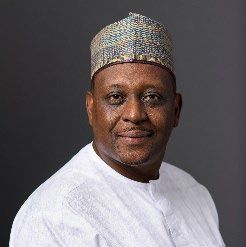
PANEL 3: Impact of COVID-19 on regular health supply chains

Day 3: Nov 19, 2020, 10:25 am – 11:35 am (US Eastern)

                                             CET/WAT
                        GMT/EAT                                   SAST                  IST
   US East Coast                           (Switzerland,
                        UK, Ghana)                            (South Africa)          (India)
                                              Nigeria)
 10:25-11:35am         3:25-4:35pm        4:25-5:35pm         5:25-6:35pm         8:55-10:05pm

The pandemic has had a devastating impact on countries across the world significantly affecting
people’s ability to come to the workplace to do tasks that could not be done remotely,
disrupting domestic and international transport links, restricted availability of supplies of health
commodities, spikes in demand for COVID-19 related commodities in the health systems, etc.

This panel will look at the challenges, efforts underway, and lessons learned in assessing and
responding to the impact of COVID-19 on the performance of regular health supply chains. The
distinguished panelists will bring in perspectives of public and private sectors across Africa and
India.

Moderator: Professor Ravi Anupindi, Ross School of Business, University of Michigan, Ann
Arbor (USA)

Panelists:
   • Deo Kimera, Country Director, USAID GHSC-PSM Ghana, Chemonics
   • Ms. Celsa Muzayire Gaju, Chief Operation Officer, Rwanda Medical Supply Ltd
   • Abraham Akore, CEO, Pyramid Pharma (Tanzania)
   • Amit Backliwal, CEO, Pharma Rack (India)

   @ghsc_summit; #globalhealth; #supplychain; #GHSCS2020                                          5
Contributed Sessions Schedule

                                                    Conference Day 1: November 17, 2020
11:45 am – 1:00 pm EST (US East Coast) | 4:45 pm – 6:00 pm GMT/EAT (UK, Ghana) | 5:45 pm – 7:00 pm CET/WAT (Switzerland, Nigeria) |6:45
                                    pm – 8:00 pm SAST (South Africa) | 10:15 pm – 11:30 pm IST (India)
                                                                   Tracks 1-4
                     [1.1] Covid Action Fund for Africa        [1.2] Optimizing supply chain
                                                               management for efficiency using the
                     Madeleine Ballard1, Emily
                                                               commodity order management system
                     Bancroft2,Tapiwa Mukwashi2,*, Andrew
                     MacCalla3, Gabrielle Fitzgerald4, Mila    Abubakar Mohammed1,*, Anthony
Track 1              Nepomnyashchiy5,*                         Abu1, Enitan Okediji1, Jonah Dienye1,
Prize Talks #1       1Community                                Kelechi Enweruzo-Amaefule1, Kemi
                                  Health Impact Coalition,
                     2VillageReach, 3Direct                    Ayanda1, Kola Falayajo1
                                           Relief, 4Pandemic
                     Action Network, Community Health
                                     5                         1USAIDGlobal Health Supply Chain
                     Acceleration Partnership                  Program-Procurement and Supply
                                                               Management (GHSC-PSM)
                     [2.1] Building robust Storage capacity    [2.2] Customizing WHO Quantification    [2.3] Supply chain preparedness and
                     for vaccine’s last mile delivery (11)     approach to the Tanzanian context       response through approach redesign
Track 2                                                        (55)                                    and partnership in Angola – GHSC-PSM
                     Anoop Khandelwal1,*, Laximikant Palo2,
COVID-19:                                                                                              COVID-19 pandemic experience (4)
                     Soumyakant Dwivedy3                       Nabila Hemed1,*, Emily Magurno1
Planning and                                                                                           Ladi Stephen1,*, Roberto Gomez1, Jane
                     1KspireSolutions LLP, 2People to People   1GHSC-TA-TZ
Forecasting                                                                                            Souza1, Manuel Masamba1
                     Health Foundation, 3Becton Dickinson
                                                                                                       1GHSC-PSM   Angola

  @ghsc_summit; #globalhealth; #supplychain; #GHSCS2020                                                                                        6
Contributed Sessions Schedule

                     [3.1] Philippines: reconfiguration of     [3.2] National Integrated Specimen        [3.3] Lessons learned from
                     the supply chain to balance equity and    Referral Network (NiSRN) in Nigeria:      implementing an emergency supply
                     emergency response during the             responding to the impact of COVID-19      chain strategy during a pandemic in
                     COVID-19 pandemic (6)                     challenges (35)                           Tanzania (21)
                     Hasibul Haque1, Armando Enriquez1,*,      Theophilus Faruna1,*, Kehinde Otto1,      Michael Kishiwa1,*, Emily Magurno1
 Track 3             Gashaw Shiferaw1, Ma. Carolina Taiño2,    Nelson Ekeh1, Ameh Sunday Ameh1,          1GHSC-TA-TZ
 COVID-19:           Ariel Valencia2, John Paul Casihan2,      Kayode Martins1, Chinenyenwa Agbo1
 Pandemic            Andualem Oumer1, Gloria Twesigye1,
 Response            Andre Zagorski1, John David
                                                               1GHSC-PSM     Nigeria
                     Pulongbarit1
                     1USAID  Medicines, Technologies, and
                     Pharmaceutical Services, 2Department
                     of Health Procurement and Supply
                     Chain Management Team
                     [4.1] Supply chain integration –         [4.2] Technology, partnerships and      [4.3] Redesigning immunization
                     strengthening national ownership in      governance that enable agility and      supply chains: results from three
                     Malawi (51)                              coordination for resilient global       country analyses (13)
 Track 4                                                      health supply chains (40)
                     Caroline Healey1,*                                                               Wendy Prosser1, Olamide Folorunso2
 Integration and                                              Ishmael Muchemenyi1,*, Charles
                     1Chemonics                                                                       1JSI, 2UNICEF
 Redesign                                                     Davenport1
                                                              1Partnership
                                                                       for Supply Chain
                                                              Management
*Presenting author

   @ghsc_summit; #globalhealth; #supplychain; #GHSCS2020                                                                                       7
Contributed Sessions Schedule
Conference Day 2: November 18, 2020
11:45 am – 1:00 pm EST (US East Coast) | 4:45 pm – 6:00 pm GMT/EAT (UK, Ghana) | 5:45 pm – 7:00 pm CET/WAT (Switzerland, Nigeria) |6:45
pm – 8:00 pm SAST (South Africa) | 10:15 pm – 11:30 pm IST (India)
Tracks 5-8
[5.1] Adaptation of a private-sector [5.2] Adapting routine supply chain
call center model for availability & supportive supervision to improve
visibility health care worker capacity and
supply chain management
John Stanton1, Sara Haider2,*
performance in the era of COVID-19
1GlobalHealth Supply Chain Program-
Track 5 Willie Siduna1,*, Timothy Rosche1, Denis
Procurement and Supply Management
Prize Talks #2 Okidi Ladwar1, Sifundo Zwane2, Duncan
(GHSC-PSM)
Kochelani1
1GlobalHealth Supply Chain Program-
Procurement and Supply Management
(GHSC-PSM), 2Eswatini Ministry of
Health
[6.1] Beyond Essential Systems - [6.2] cStock for supply chain [6.3] Supply chain analytics in Ivory
Tupaia reproductive health module responsiveness and resilience in ASAL Coast (33)
(15) counties in Kenya (44) Luis Anjos1,*, Marie Adou*2, Sara
Track 6 Erin Nunan1*, Kahlinda Mahoney1 Sadik Abdikarim1* Valino1, Nils van Wassenhove1, Silvia
LMIS and Rossi Tafuri1
1Beyond Essential Systems 1inSupply Health Limited
Digitization
1UnitedNations World Food
Programme, 2Ministry of Health Ivory
Coast
@ghsc_summit; #globalhealth; #supplychain; #GHSCS2020 8Contributed Sessions Schedule
[7.1] Laying the foundation – [7.2] Indonesia goes mobile to manage [7.3] Every1Mobile Naijacare (20)
importance of governance tools to family planning commodities (25) Adam Brain1,*, Jocelyn Williams1
underpin a medicine master data Omar Balsara1,*, Barbara Lamphere1, 1Every1Mobile
system (32) Baakal Tesfaye1
Track 7 Khadija Jamaloodien1, Janine 1JSI Research & Training Institute, Inc.
Policy and Reform Jugathpal1, Shereen Govender1,*,
Stirling Underwood2, Amanda Brewer2
1South African National Department of
Health, 2USAID Global Health Supply
Chain - TA
[8.1] The process of strengthening [8.2] Strengthening the health supply [8.3] Data analytics and application
Fleet Management in the Tanzanian chain with drone logistics (3) for logistics and supply chain
Medical Store Department (36) management in Zambia’s public
Eric Peck1,*, Lewis Hill1,*, Sabrina
health supply chain (12)
Paul Dettmer1, Riaz Lohdi1,*, Ravail1, India Birrell1
Track 8 Silvia Rossi Tafuri1,*, Darwin Chimenge1,*, Christoper
1Swoop Aero Pty Ltd
Integration and Jean Francois Milhaud1 Mpundu2, Ilitongo Sondashi3, Kieran
Redesign Batty1, Simon Cole1, Andrew Inglis4
1UnitedNations World Food
Programme 1GHSC-PSM Zambia, 2Chongwe
District Health Office, 3Medical Stores
Limited, 4GHSC-PSM
*Presenting author
@ghsc_summit; #globalhealth; #supplychain; #GHSCS2020 9Contributed Sessions Schedule
Conference Day 3: November 19, 2020
9:00 am – 10:15 am EST (US East Coast) | 2:00 pm – 3:15 pm GMT/EAT (UK, Ghana) | 3:00 pm – 5:15 pm CET/WAT (Switzerland, Nigeria) | 4:00
pm – 5:15 pm SAST (South Africa) |5:00 pm – 6:15 pm IST (India)
Tracks 9-12
[9.1] Benin’s Young Logisticians [9.2] Building data use capacity of [9.3] Developmental evaluation (DE) in
Professional Program: implicating the health workers using virtual learning practice: how DE has helped measure
next generation of supply chain packages for a more responsive and health worker motivation in nomadic
professionals in strengthening resilient supply chain during COVID-19 and semi-nomadic populations in
pharmaceutical supply chain at health (41) Kenya, and contributed to adaptable
Track 9 zone level in Benin (52) community based distribution
Human Resources Zoya Mohamed1,*
programming (42)
Jean-Pierre Sallet1,* 1inSupply Health Limited
1USAID Danielson Kennedy Onyango1,*, Ann-
GHSC-TA Francophone Task
Marie Yongho2,*, Yasmin Chandani1
Order Project, Chemonics
1inSupply Health Limited, 2JSI
[10.1] Looking deep into the crystal [10.2] Maintaining visibility of the [10.3] Using blockchain to monitor &
ball. The Covid-19 demand planning availability of personal protective trace medical supply-chains (30)
story for the South African Public equipment during the Covid-19 Jonathon Martynski1,*, Amy O'Reilly1,
Health Medicine Supply Chain (43) pandemic (38)
Track 10 Julian Neale1, Tim Grimble1,*, Sandeep
COVID-19: Khadija Jamaloodien1,*, Kolobe Claudio Mendes1,*, Rob Botha1, Stuart Shamasunder1,*, Ibrahim Shehata1,*
Planning and Khomo1, Shereen Govender1, Ruth Douthwaite1, Stuart Murray1 1Palladium International
Innovation Lancaster1, David Crewe-Brown2 1USAID Global Health Supply Chain - TA
1South African National Department of
Health, 2USAID Global Health Supply
Chain - TA
@ghsc_summit; #globalhealth; #supplychain; #GHSCS2020 10Contributed Sessions Schedule
[11.1] Capacity building of primary [11.2] How might secondment [11.3] Partnering with private sector to
health care service providers as a first programs successfully alleviate deliver medical products and personal
building block towards strengthening constraints in Sub-Saharan Africa? (46) protective equipment to the last mile
health supply chain: analyzing the during the Covid-19 pandemic in
Emma Mihevc1,*, Alexandra
Track 11 effectiveness of partnership for Mozambique (47)
Calderaro1,*, Dominique Zwinkels2,
Capacity Building sustainable supply chain processes Alexis Strader2, Bridget McHenry3, Jo Emily Lawrence1, Lucilo Williams1,*,
and Human (10) Tierens1 Baltazar Chilundo1, Craig Usswald1,
Resources Soumyakant Dwivedy1,* Ruth Bechtel1, Aida Coelho1, Frederico
1Johnson & Johnson, 2People that
1Becton Alberto Couana2, Lucille Bonaventure
Dickinson Deliver, 3USAID Bureau for Global
Health 1VillageReach, 2Ministryof Health
Central Medical Store, Mozambique
[12.1] Human resource [Panel 12.2] Innovating for malaria supply chain resilience in a time of crisis
transformation for building a (54)
resilient supply chain organisation: PANELISTS: Ntagara Ngabo Donatien1*, Japhet Chiwaula2*, Kaluba Mataka3*,
exploring common best practices in MODERATOR: Maeve Magner4
Track 12 the African health supply chain (23)
1Director of Monitoring & Evaluation-Rwanda Biomedical Centre,
Building Resiliency Pamela Steele1, Andrey Levitskiy1,
2PrincipalBio-statistician-Zambia GRZ-MOH National Malaria Elimination
Joanna Nayler1, Lakshmy Centre, Zenysis International Project Manager-Zambia,
3
Subramanian1 4Global Supply Chain Expert
1Pamela Steele Associates Ltd
*Presenting author
@ghsc_summit; #globalhealth; #supplychain; #GHSCS2020 11Contributed Sessions Schedule
Abstract to Track Mapping Color-coding Legend
Abstract # Track # Day 1 (Nov. 17), Tracks 1-4
3 8.2 Day 2 (Nov. 18), Tracks 5-8
4 2.3 Day 3 (Nov. 19), Tracks 9-12
6 3.1
10 11.1
11 2.1
12 8.3
13 4.3
15 6.1
20 7.3
21 3.3
23 12.1
25 7.2
30 10.3
32 7.1
33 6.3
35 3.2
36 8.1
38 10.2
40 4.2
41 9.2
42 9.3
43 10.1
44 6.2
46 11.2
47 11.3
51 4.1
52 9.1
54 12.2
55 2.2
Prize Talk 1.1
Prize Talk 1.2
Prize Talk 5.1
Prize Talk 5.2
@ghsc_summit; #globalhealth; #supplychain; #GHSCS2020 12Contributed Sessions Schedule
Keynote Speakers
Dr. Vera Songwe is the Under-Secretary-General of the United Nations and
Executive Secretary of the Economic Commission for Africa (ECA)
Upon her appointment, she became the first woman to lead the institution
in its 60-year history. As Executive Secretary, Songwe’s reforms have
focused on “ideas for a prosperous Africa”, and have brought to the fore
critical issues of macroeconomic stability, development finance, private
sector growth, poverty and inequality, the digital transformation, trade and competitiveness.
Recently listed as one of Africa’s 50 most powerful women by Forbes, named as one of the ‘100
Most Influential Africans’ by Jeune Afrique in 2019, ‘100 Most Influential Africans’ by New
African Magazine in 2017, and one of the ‘25 Africans to watch’ by the FT in 2015, Songwe is
acknowledged for her long-standing track record of providing policy advice and her wealth of
experience in delivering development results for Africa. She has written extensively on
development and economic issues including on debt, infrastructure development, fiscal and
governance issues. She is well published and contributes to the development debate across a
broad spectrum of platforms including in the Financial Times.
Prior to ECA, she held a number of senior leadership roles with the International Finance
Corporation (IFC) and World Bank.
Dr. Muhammad Ali Pate is the Global Director, Health, Nutrition and
Population (HNP) Global Practice of the World Bank and the Director of
Global Financing Facility for Women, Children and Adolescents (GFF), based
in Washington DC. Dr. Pate was until recently the Chief Executive Officer of
Big Win Philanthropy, based in the UK, and prior to that held several senior
positions, including that of Minister of State for Health in the Federal
Republic of Nigeria. He was previously in the World Bank Group where he joined as a Young
Professional in 2000 and worked on health issues in several regions including Africa and the
East Asia and Pacific.
Dr. Pate is an MD trained in both Internal Medicine and Infectious Diseases, with an MBA from
Duke University. Prior to this he studied at the University College London. He also has a Masters
in Health System Management from the London School of Hygiene & Tropical Medicine, UK.
@ghsc_summit; #globalhealth; #supplychain; #GHSCS2020 13Senior Director of Operations, Amer Daoudi, was appointed by WFP’s
Executive Director as the Corporate Response Director (CRD) for COVID–19.
In this capacity, he is responsible for operational management and ensuring
first-line support to the Regional Directors, including mobilizing support
from across the organization as needed. He is also responsible for managing
relationships with external partners working on the COVID-19 response,
including governments, other UN agencies and the private sector.
Amer Daoudi assumed his duties as Senior Director of Operations at the World Food
Programme in January 2018. In this role, where he oversees the Logistics/Supply Chain and
Emergency Preparedness and Response divisions, Mr. Daoudi is drawing on 30 years of
experience in leading and managing complex humanitarian operations.
Most recently, Mr. Daoudi served as the Regional Humanitarian Coordinator for the Yemen
Crisis, in charge of coordinating and facilitating the delivery of humanitarian supplies into
Yemen, overseeing operations from Djibouti, Riyadh, Amman, and Sana’a. Prior to that, Mr.
Daoudi served as the Director of Operations Support for the UN Mission for Ebola Emergency
Response, the first mission of its kind. He coordinated the enabling activities of the response in
West Africa beginning with the design of a comprehensive operations framework for the Ebola
response.
Mr. Daoudi’s prior 20 years of service with WFP includes highly effective leadership and
management positions; he was Regional Director in Sudan from 2009-2012, WFP’s largest
operation at the time, covering Sudan and South Sudan, and Director of Logistics and
Procurement in HQ, among others. He was also instrumental in positioning WFP as the lead of
the Global Logistics Cluster, and led the WFP response to some of the most complex
emergencies such as Afghanistan, Iraq and Lebanon.
Prior to joining WFP, Mr. Daoudi spent a decade in private sector shipping. Mr. Daoudi, a
Jordanian national, holds an MBA from Georgetown University.
@ghsc_summit; #globalhealth; #supplychain; #GHSCS2020 14GHSCS Organizing Committee
Program Co-Chairs
• Professor Yehuda Bassok, University of
Southern California, Los Angeles (USA)
• Professor Ravi Anupindi, University of
Michigan, Ann Arbor, MI (USA)
Program Committee
• Professor Sriram Dasu, University of Southern
California, Los Angeles, CA (USA)
• Professor Jérémie Gallien, London Business
School, London (UK)
• Liuichi Hara, Head of Global CSR Program &
Partnerships, Takeda Pharmaceuticals (Japan)
• Steven Harsono, Head of Public Health, Asia
Pacific, IQVIA (Singapore)
• Professor Ananth Iyer, Purdue University, West
Lafayette, IN (USA)
• Dr. Lloyd Matowe, Pharmaceutical Systems
Africa (Liberia, Nigeria, & Zambia)
• Dr. Thidiane Ndoye, Task Order Director,
Population and Reproductive Health, GHSC-
PSM, Chemonics (USA)
• Ms Azuka Okeke, Regional Director, Africa
Resource Centre for Supply Chain (Nigeria)
• Dr. Noel Watson, OpsMend (USA)
• Dr. Prashant Yadav, Senior Fellow, Center for
Global Development (USA) and Affiliate
Professor, INSEAD (France)
Program Support
• Anton L.V. Avanceña, PhD Candidate, School of
Public Health, University of Michigan, Ann Arbor
• Susan Booth, Faculty Support Coordinator at
Stephen M. Ross School of Business, University
of Michigan, Ann Arbor
@ghsc_summit; #globalhealth; #supplychain; #GHSCS2020 16Sponsors We sincerely appreciate generous sponsorship from the following: Gold Sponsor Bronze Sponsor Contributors @ghsc_summit; #globalhealth; #supplychain; #GHSCS2020 17
You can also read


