Global Student Flows Kadi Taylor Ethan Fogarty - Trade & Investment Queensland
←
→
Page content transcription
If your browser does not render page correctly, please read the page content below

Global Student Flows
        Kadi Taylor            Ethan Fogarty
Head - Strategic Engagement   Senior Consultant
 and Government Relations       Nous Group
           Navitas
Global Student Flows
EGI Grant Project | 26 June 2019
We would like to thank our funders and data collaborators for supporting the
project to date

                                               The following global agencies have provided us
                                               support to date:
                                               • Department of Education, Australia
This project has been facilitated by the       • Statistics Canada
Australian Government through the              • Higher Education Authority, Ireland
Department of Education and Training.
                                               • Higher Education Statistics Agency, UK
The Enabling Growth and Innovation grant       • German Centre for Higher Education
supports the National Strategy for               Research and Science Studies
International Education 2025, through $3       • Council on Higher Education, South Africa
million year to deliver big picture projects
                                               • Campus France
that develop Australia’s role as a global
leader in education, training and research.
The project is being delivered through a collaboration between Navitas, Nous
Group and Austrade

   Navitas is a world leader in     Nous Group is an award-       Austrade is the Australian
   developing and providing           winning management             Government’s trade,
    educational services and        consulting firm with over     investment and education
     learning solutions with         350 people across eight         promotion agency. It
      locations throughout         locations in Australia and         supports Australian
    Australia, North America,     the UK. Nous is an expert in   education providers market
    Europe, Africa and Asia.          higher education and          intelligence, in-market
                                     international education.      support and thought and
                                                                       policy leadership.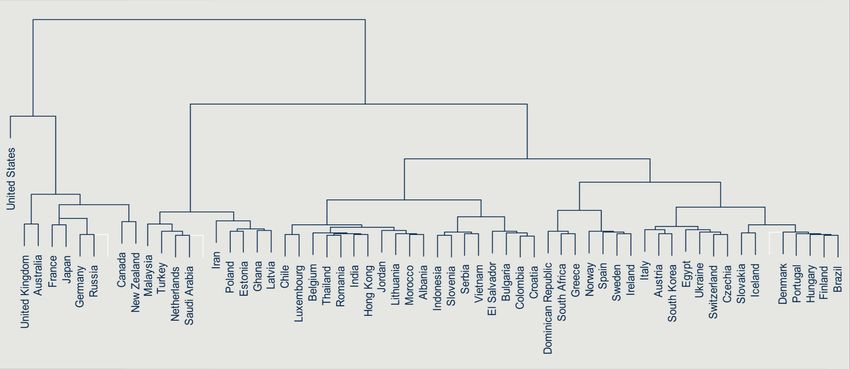
The project builds on existing work and research in this area

Key existing resources that we have built upon include:

                                 UNESCO                         PROJECT ATLAS

                                 Which collects and             A global research
                                 reports global flows of        initiative that collects
                                 international students         and disseminates
                                 between countries              comparable student
                                                                mobility data for
                                                                participating countries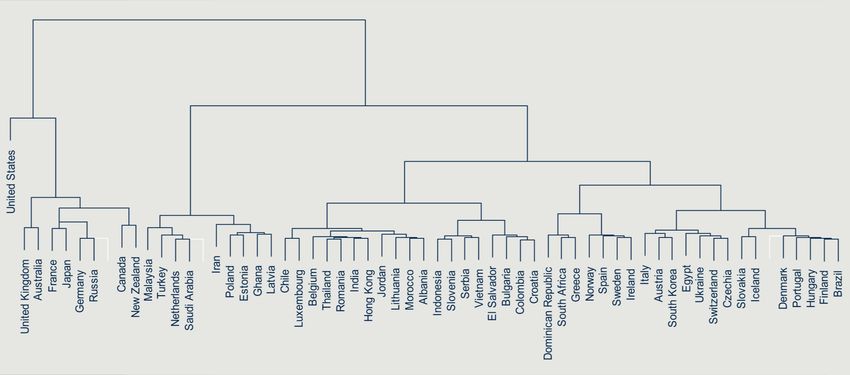
What were the objectives for this project?

Our Australian Government EGI grant project has three objectives:

        To develop a tool to        To understand macro              To identify drivers of
        integrate significant        trends in the global            trends in key source
     international education      higher education market,           country/destination
        data to understand        painting a clear picture of       country relationships.
      country specific trends         student mobility in
       and reconcile/seek to           higher education
    explain any discrepancies
           across sources

               1                              2                               3
Data availability and consistency has been a barrier for the project

The initial focus of the project was on engagement with global data agencies to access data, which provided
a number of responses

         THE DATA IS           THE DATA IS AVAILABLE           THE DATA IS                THE DATA IS NOT
     AVAILABLE AND CAN            AND CAN WE CAN             AVAILABLE, BUT              AVAILABLE OR NOT
       BE PURCHASED            SUPPORT YOU WITH A          CANNOT BE SHARED              COLLECTED IN THAT
         BY ANYONE              TAILORED REQUESTED        FOR PRIVACY REASONS                 FORMAT

This has made bottom up matching as was initially planned by the project not possible.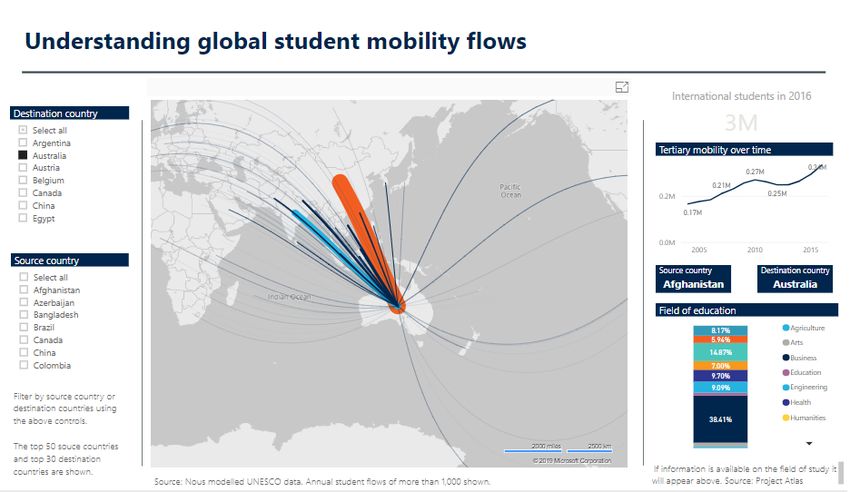
Consistency of student or enrolment data also varied significantly across key
destination countries

               GRANULARITY                CURRENCY                  RESOLUTION
What we
                   More detailed         Providing more             Clarification of
were trying
                  information on      recent data reducing           discrepancies
to improve…
              students than current         the lag in              across key data
                 to country flows.       understanding                    sets.
                                             trends.

               Information on the     Up to date data is not       Inconsistencies and
What we        variables listed are    possible. Not all key    discrepancies across data
were able        not consistency      destination countries    sets occur due to different
to do…           available for all     have internal access       definitions. These are
               (major) destination    to information within        being identified and
                    countries.              12 months.            recorded through the
                                                                  course of the project.

                                                                                             8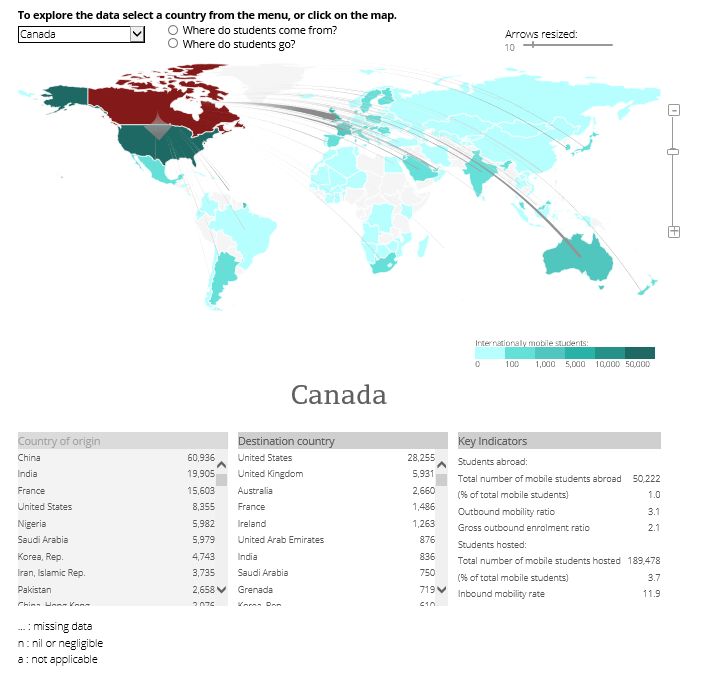
Inconsistent data means that we had to take a different approach to integration

        LAYER 1                                 LAYER 2                                               LAYER 3
                                  Publically available student numbers                    Country specific data sources
   Macro student mobility
 flows in tertiary education           By field                 By level                High level                   Detailed level

 What is available?              What is available?                               What is available?
 Information on source country   Includes further information by level of study   Macro student mobility flows in tertiary education
 and destination country over    (PG or UG) OR field of study                     Data source
 time (2004 to 2016)                                                              Country specific reported data sources, including:
                                 Data source
 Data source                                                                      UK (HESA); Australia (MIP/HEIMS); US (Open
                                 Project Atlas country reported data
 UNESCO Global Student                                                            Doors, publicly available); Ireland (HEA provided
 Mobility data                   Data type                                        data); Germany (DAAD provided data); South
                                 Higher Ed student numbers                        Africa (HEIMS provided data)
 Data type
                                 Various integrated sources                       Data Type
 Tertiary Ed student numbers
 Various integrated sources                                                       Visa reported data
                                  64,000 of these are             52% are         (some enrolment reported data has been used if required)
     There were 112,300           studying Business             studying at         These students are highly concentrated at
  Chinese students studying          (minor reported
                                                                 UG level           Go8 universities in Melbourne & Sydney.
    in Australian in 2016          difference – 114,000)

                                                                                                                                             9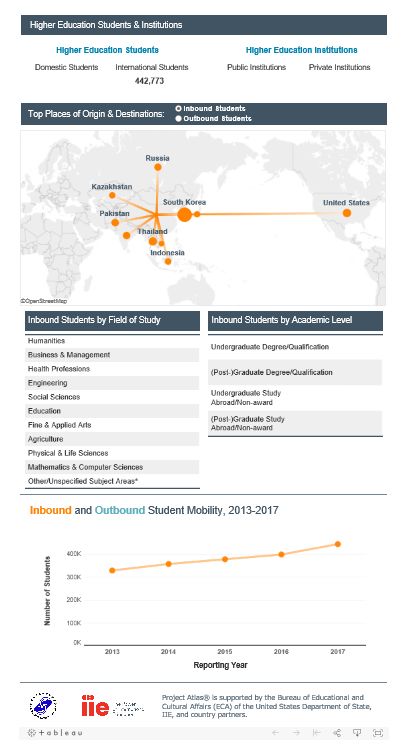
Initial integration has addressed gaps that exist in UNESCOs reported global flows

                        Total number of students studying overseas, 2003 to 2016

5,500,000
                                                                                          Nous modelled data
5,000,000                                                                                 UNESCO total reported

4,500,000                                                                                                           This represented
                                                                                          UNESCO country-to-
                                                                                          Country reported data     a gap of around
4,000,000
                                                                                                                     12% based on
3,500,000                                                                                                          non-reported data
3,000,000

2,500,000

2,000,000

1,500,000
            2004 to 2010                           2011 to 2013         2013 to 2016                              Source: UNESCO Tertiary student
1,000,000   Long term growth                       Short term modest    Strong recovery                           mobility. Note: China (as a
            +6.7% CAGR                             +0.1% CAGR           +10.0% CAGR                               destination country) reported
 500,000    +5.7% CAGR                             +3.4% CAGR           +7.8% CAGR                                figures were included in the
                                                                                                                  UNESCO reported data, but
                                                                                                                  information was not presented on
       0
                                                                                                                  the relevant source countries.
        2004 2005 2006 2007 2008 2009 2010 2011 2012 2013 2014 2015 2016

                                                                                                                                                     10
Differences also exist across the OECD and UNESCO data based on definitional
differences
• Foreign students: do not have
citizenship of the country in
which they studied (e.g.
studying on working visa)
• International students:
moved to another country for
the purpose of study. (i.e.
student visa)
For example UNESCO reports a
total of 2.8 million international
students in 2005, while OECD
reports 3.0 million students in
2005.
Space between
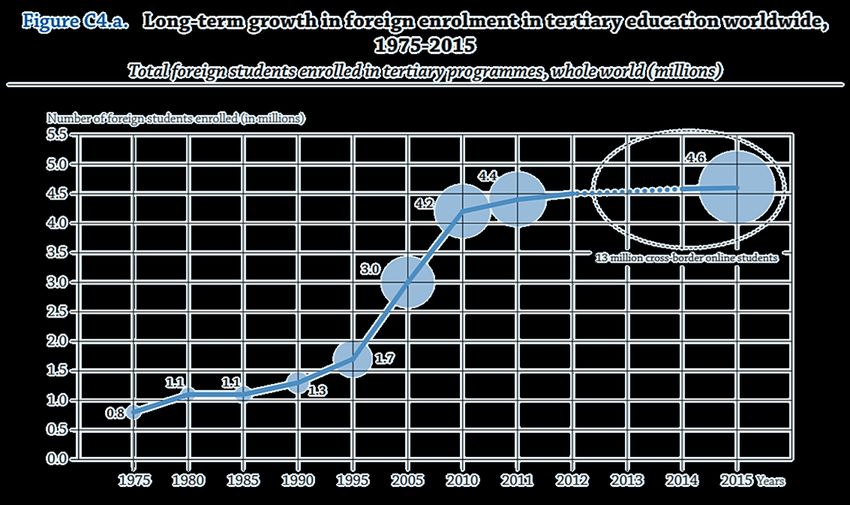
two dots Source: 1 OECD charts a slowing of
represent international mobility growth, ICEF Monitor
5 years (2017) http://monitor.icef.com/2017/09/oecd-
charts-slowing-international-mobility-growth/
(Nous addition)Following initial analysis principles were used to inform selection of three ‘deep
dive’ case studies
Four principles were utilised… …to determine three case study topics.
RELEVANCE Understanding the maturity of destination
countries and the drivers for emerging
destinations
NOVEL
Understanding global product preferences for
key source countries and the impact on global
mobility
TIMELY
Understanding the impact of country-specific
ANALYTICAL FOCUS policy responses on student mobility
12Understanding the maturity of destination countries and the drivers for emerging destinations
The first case study focuses on emerging destination countries in the international
education system

  What we already know                           What is the focus of the research
  There are a number of emerging                 Identifying which destination countries are
  destinations in the global international       emerging
  education system.
                                                 Understanding the drivers behind recent
  Some of these emerging destinations (such      growth trends in key emerging countries
  as China, Malaysia, Russia and Canada) are
                                                 Determining the implications for Australia
  growing at a faster rate than most
  established destinations (US, UK and
  Australia).

                                                                                               14
While the sector typically considers major destination countries based on size, we
adopted a novel three-dimension maturity assessment to classify countries
We ran a cluster analysis on three factors related …to provide a more holistic view of different
to destination countries… ‘clusters’ of destination countries globally.
High
Volume – how many students studied
there in 2016
Growth
Growth – increase in student numbers
from 2011 to 2016 Low
Low
‘Pulling Power’ which accounts for the
nature of where students come from High
'Pulling Power''Pulling Power' provides an assessment of the destination country based on their
student profile
The international students that USA attracts … … are more diverse than the international students
Russia attracts.
310K (32%)
136K (14%)
60K (6%) 77K (29%)
22K (9%) 20K (8%)
China India South Korea Kazakhstan Ukraine Uzbekistan
out of a total of 971K students. out of a total of 244K students.
Case study | China to USA Case study | Ukraine to Russia
‘Pulling Power’ – 92 (High) 'Pulling Power' – 22 (Low)
1. Geographic distance – 11,647 km 1. Geographic distance – 4,666 km
2. Cultural distance – (39%* across six dimensions) 2. Cultural distance – (9% across six dimensions)
This makes USA an ‘high Pulling Power’ destination This makes Russia a ‘low Pulling Power’ destination
country country
16The clusters analysis groups together the countries that are ‘most similar’
Destination country cluster analysis* based on volume, growth (3 year CAGR) and ‘pulling power’
40 40
Height (indicates how different or distinct two clusters are)
30 30
20 20
10 10
0 0
Singapore
Singapore
Singapore
China
China
China
UAE
UAE
UAE
Major destination countries Promising Other destinations
17Six clusters of destination countries are identified, three of which we have
classified as emerging
A. Major destination countries B. Fast growing destination countries
United States Malaysia
1. Established destination
United Kingdom 5. ‘Promising’ emerging Netherlands
countries
Australia destination countries Turkey
Saudi Arabia
UAE
2. Mature destination countries France
Japan
C. Junior destination countries
3. ‘Next wave’ emerging Canada
destination countries New Zealand 6. All other destination countries – which attract less
students, have lower ‘pulling power’ and/or are
experiencing lower growth.
Germany
4. ‘Latent’ emerging destination
Russia
countries
China
18Emerging destination countries are driven by different categories of source
countries
The influx students are
Global top ten source countries driven by ‘close’ source
‘Close’ source countries countries Kazakhstan
Growth is driven by (+21K), Ukraine (+10K)
Other
students from China and Uzbekistan (+9K).
(+11K) and India (+4K).
Major source countries 244k
include Bangladesh (34K) 226k 21k
and Nigeria (15K) in 2016. 213k
20k
16k
189k
164k 172k
105k 153k 175k 193k
124k 88k 93k
111k
100k
39k
29k 35k 12k
12k 12k
32k 38k 42k
64k 67k 72k
38k 39k 42k 45k 32k 29k
2014 2015 2016 2014 2015 2016 2014 2015 2016
Malaysia Canada Russia
‘Promising’ emerging destination country ‘Next Wave’ emerging destination country ‘Latent’ emerging destination country
19Australia will increasingly be competing with both established and select emerging
destination countries for share of students studying overseas
In the global market, emerging destination countries Focusing on Australia’s top three source countries (China,
within the top ten have increased its share of all India and Malaysia), emerging and established destination
international students countries have increased similarly
Global top ten destination countries’ share of international students (2011–2016) China, India and Malaysia’s top ten destination countries’ share of international
students (2011–2016)
60.8% 60.6% 87.0% 87.4%
USA
US
Established
(35% to 34%)
UK Established
France 13.5% (58% to 61%)
Australia Australia
Japan 6.6% 6.6% UK 14.1%
Germany Mature Japan
Russia (11% to 8%) France
Mature
Canada Canada (14% to 9%)
China Emerging New Zealand Emerging
Italy (15% to 18%) Germany (10% to 12%)
Other
Malaysia Russia (5% to 6%)
2011 2016 2011 2016
20But, largely the big declines that Australia has experienced in recent years has
been due to established rather than new emerging competitors
Net change in share of students from other destination country, Australia and other destination country groups, 2011 to 2016
‘Next Wave’ ‘Promising’ Established
Australia ‘Latent’ emerging Mature
emerging emerging (US and UK)
6 Indonesia -3.2% +0.8% -0.2% -0.7% +5.4% +0.8%
8 Hong Kong -10.1% +0.6% 0.0% +0.2% +7.9% +0.0%
9 Singapore -10.9% +0.6% 0.0% +0.1% +7.3% -0.1%
14 Bangladesh -6.0% -2.6% -0.5% +50.6% -15.1% -5.9%
15 Saudi Arabia -6.9% -0.6% 0.0% -1.1% +0.7% +0.1%
Negative Positive
Legend (1): relative relative Legend (2): Negative Positive Legend (3): Negative / Positive 21
growth growthUnderstanding global product preferences for key source countries and the impact on global mobility
The second case study focuses on global product preferences of key source
countries

  What we already know                            What is the focus of the research
  Product is a key driver in the decision         Identifying key global students segments
  making of students on where and what to         and classifying based on key drivers of
  study.                                          choice.
  There is a relatively strong understanding of   Understanding product preferences for key
  trends in product preferences in the            source countries
  Australian context, but there is not a strong
  understanding of how these trends align
  with broader global product preferences

                                                                                              23
Initial analysis identified key global student segments and how
it has changed over time
Countries in Asia
serve as a source
2014 2017
of outbound
China studying Business China studying Business
students
China studying Engineering China studying Engineering
China studying ‘other’ India studying Engineering China and India
India studying Engineering India studying Mathematics and Computer science are dominant
China studying Mathematics and Computer science China studying Mathematics and Computer science markets across all
China studying Social Sciences China studying Sciences fields of study
India studying Mathematics and computer sciences China studying Social Sciences
China studying Sciences China studying ‘other’
Top key global
China studying Humanities India studying Business
student segments
China studying Arts China studying Arts
are largely
India studying Business China studying Humanities
Business or
South Korea studying Business Vietnam studying Business
Engineering
Vietnam studying Business Kazakhstan studying Engineering
South Korea studying ‘other’ Kazakhstan studying Business
India studying Sciences India studying Health professionsProduct preferences differ across the top five global source countries
CHINA INDIA SOUTH KOREA GERMANY NIGERIA
Total: 834,122 Total: 288,634 Total: 99,800 Total: 95,200 Total: 93,431
Remaining
fields of study 6%
5%
Health 1%
2%
Sciences 9% 4% 13%
Humanities 7% 30% 4% 6%
1%
Math and 10% 26%
15% 12%
comp. science
Engineering 17% 9%
10%
31% 7% 26%
4%
13% 7%
Business 32%
18% 16% 21% 20%
Business is the dominant Sciences and Business are Nigeria has a relatively
Indian outbound students The South Korean market
preference for popular preferences for high proportion of
are distributed evenly is fairly evenly distributed –
international students from German outbound Engineering and Business
across three fields of study but Business is the largest.
China, students. and Health students.
25The preference of Chinese students studying in Australia does not reflect global
trends for Chinese students studying overseas
Over a half of Chinese students in Australia study
Business, whereas this is balanced for other destinations Business is the dominant preference for international
Global students from China (32%), but other fields are
Chinese students by field of study, China global estimate and product significant – Engineering (17%) and Maths and
Australian inbound students, 2017 preferences Computer Science (10%).
Arts
6% 5%
Social sciences 6%
8%
Health 2% 4%
3% Business is declining as a share of the global total
Sciences
9% 7% Global trends Chinese students (37% to 32% from 2014 to 2017), with
Humanities 7%
12%
increases in other fields.
Math and 10%
comp. science
Engineering 17%
53% In contrast – over 50% of Chinese student study in
Alignment to Australia (2017). This may represent strength of
Business 32% Australia’s Australian Business program or comparative
trends weakness in other fields (particularly in STEM).
All Chinese outbound Chinese students in Australia
students (estimate)
26Indian product preference for study in Australia, differ from Indian preferences
elsewhere
IT product preferences in Australia reflect global student
preferences, but Business concentration is distinct for Australia Indian outbound students are distributed
Global evenly across a wide number of fields of study
product – with around 30% in Engineering and
Indian students by field of study, India global estimate and Australian inbound preferences
students, 2017 Maths/Computer Science and 18% in Business.
Health 6%
6%
professions Two largest fields have grown as a share –
26% Global trends Engineering and Maths/IT – while Business
Math and
30% flattened (18.5% to 17.5%).
comp. science
12%
Engineering 31% Indian students in Australia study in a more
45% Alignment to concentrated set of fields – 45% in Business.
Australia’s While Computer Science is in line with global
Business 18% trends splits, Engineering is comparably under
enrolled – only 12% of all students.
All Indian outbound Indian students in Australia
students (estimate)
27There are differences in the quality or reputation of the higher education
institutions students from these countries study at
A larger proportion of outbound students from mature source countries attend higher quality institutions compared to
outbound students from newly developed source countries
Proportion of students in the UK and Australia studying at a Top 500 Institution, 2017
Business Engineering
China 69% China 91%
Mature source
countries South Korea 66% South Korea 92%
India 73% India 68%
Saudi Arabia 53% Saudi Arabia 65%
Newly developed
source countries
Vietnam 52% Nigeria 50%
28Ten key groups emerge through the clustering based on where the segment cohort
have similar characteristics
Three key decision dimension:
A. STUDY LEVEL B. INSTITUTION C. DESTINATION
Orientation to PG-level Strong emphasis on high Attracted to major country Selection of student
Cluster group further study quality institutions or city destinations segments
1. Pursuers China – Business, India – most fields
2. Academics China – Education
3. Learners China – most other fields
4. High-performers South Korea – Sciences and Social Sciences
5. Researchers South Korea – Business
6. Global-adventurers Vietnam – Business
7. City-explorers South Korea - Arts
8. Neighbours Nigeria – Engineering, Kazakhstan
9. Reputation-seekers China – Humanities
10.Destination-seekers Turkmenistan/Belarus – Business
Key Very Somewhat Not
29
important important importantDemonstration of global student flow tool
30You can also read


