Global WarminG: Financing - Summary of Findings - Rainforest Action Network
←
→
Page content transcription
If your browser does not render page correctly, please read the page content below

Financing
Global Warming:
Canadian Banks and Fossil Fuels

Summary of Findings
Financing Global Warming: Canadian Banks and Fossil Fuels

Financing Global Warming:
Canadian Banks and Fossil Fuels
Summary of Findings

                 “Climate change is the greatest and widest-ranging market failure ever seen.”
                           —Sir Nicholas Stern, former chief economist of the World Bank.1

                 T
                             he investments made today by Canadian banks will
                             shape Canada’s carbon footprint for decades to come.
                             The enormous financial commitments made by
                 Canada’s five biggest banks—RBC, TD Bank, Scotiabank, CIBC
                 and BMO—to fossil fuel production, namely oil, gas and coal
                 operations, inextricably links them to the fueling of global
                 climate change. Banks are the lifeblood of the fossil fuel industry.

www.ran.org                               1                    www.climatefriendlybanking.org
Financing Global Warming: Canadian Banks and Fossil Fuels

While banks often track and report the carbon emissions            Report Methodology
associated with running their offices and staff travels,
such “operational emissions” are dwarfed by the volume             Our research set out to answer the following questions:
of climate-changing emissions that result from the proj-
                                                                     • How much funding do Canadian banks provide
ects they finance, so-called “financed emissions.”
                                                                       for the dirty fossil fuel production (i.e., coal, oil,
This Summary of Findings,“Financing Global Warming:                    gas, and tar sands) that is driving global warming?
Canadian Banks and Fossil Fuels,” is based on detailed
                                                                     • What are the total carbon emissions that result
research by Profundo Economic Research of Canadian
                                                                       from each bank’s financing of fossil fuel
bank fossil fuel financing. It is the first report to ana-
                                                                       production?
lyze and quantify the greenhouse gas emissions of seven
leading Canadian banks—the aforementioned banks as                   • What is the carbon footprint of an individual
well as Desjardins and Vancity—based on their financ-                  checking account held at any of these banks?
ing of fossil fuels. In addition, this Summary makes
recommendations for what banks, bank customers,                      • How much funding do Canadian banks provide
regulators and civil society can do to help reduce the                 for clean, renewable energy alternatives?
climate impacts of banking.
                                                                   We looked at Canada’s five biggest banks4:
For Canada’s largest banks, operational emissions rep-
resent less than one percent of their total contributions            • RBC
to climate change. Though these operational emis-                    • TD Bank
sions are not trivial—Canadian banks reported more
than 500,000 tonnes of operational CO2 emissions in                  • Scotiabank
the last year2—more than 99 percent of their overall                 • CIBC
climate footprint comes from the fossil fuel produc-                 • BMO
tion they finance. The five biggest banks stand out for
their extensive funding of oil, gas, and coal operations.          In addition, we analyzed Canada’s largest cooperative
In contrast, Desjardins and Vancity, like other credit             financial group and credit union, respectively:
unions, tend to focus on local community investing
and small business finance.                                          • Desjardins
                                                                     • British Columbia-based Vancity
Polls increasingly show that Canadians are seriously
concerned about the climate and their personal abil-               Where the Summary references either “checking” or
ity to reduce energy use.3 The carbon footprint of a               “savings” accounts, this is meant to include all depos-
bank has an indirect impact on the carbon footprint                its held by the bank on behalf of a specific person or
of each banking customer. This Summary will show                   institution. Money in deposit accounts can in principle
that customers of Canada’s top five, high-carbon banks             be used to finance all assets the bank has on its balance
can significantly reduce their own carbon footprints by            sheet. Therefore, for the savings and checking account
switching their savings, checking and/or CD accounts               carbon calculator, bank financing data is limited to
to a competing, low-carbon bank.                                   bank funding provided through direct loans and direct
                                                                   investments in bonds and equity to fossil fuel produc-
Every dollar banks invest in fossil fuels is a dollar better
                                                                   tion corporations. Fossil fuel production investment
spent on clean energy and energy efficiency alternatives.
                                                                   banking activities and use of assets under manage-
With more than $3.6 trillion in assets, the financ-
                                                                   ment are not reported in the balance sheet and are
ing decisions of Canada’s top banks greatly impacts
                                                                   not financed by money deposited on savings accounts.
Canada’s $1.3 trillion economy and the trajectory of
                                                                   Therefore, they were excluded from the carbon
the country’s future greenhouse gas emissions. The
                                                                   accounting for the purposes of this calculator.
resistance of banks to address the climate impacts of
their financing jeopardizes the climate, the economy,              The carbon intensity of deposit accounts were calculat-
and public health. Wide scientific consensus over the              ed based on research by Profundo, a Dutch economic
gravity of the climate crisis and the urgency with which           research consultancy firm, of each banks portfolio of
we must act means business-as-usual is no longer a                 direct loans to public corporations that are engaged
viable option.

www.ran.org                                                    2                         www.climatefriendlybanking.org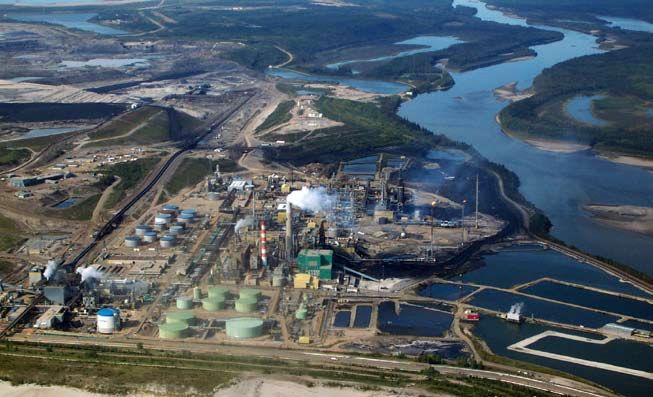
Financing Global Warming: Canadian Banks and Fossil Fuels

                                            in fossil fuel extraction of coal, oil and/or natural gas,
                                            as well as direct investments in either shares or debt           What is a carbon
                                            instruments by the banks of their own assets.                    footprint?
                                            Identification of the oil, gas, coal and tar sands clients       A carbon footprint is a widely used measure of
                                            of the banks was undertaken to the extent possible               the carbon dioxide emitted by a human activity
                                            using a variety of public and proprietary data sources.          over the lifecycle of a product or service.
                                            Detailed documentation of each banks’ identified cli-            It is a flexible concept that can be applied
                                            ents in fossil fuel production can be found in the full          to individuals, businesses, governments or
                                            report at www.climatefriendlybanking.org/bankreport.             populations. A small relative footprint indicates a
                                                                                                             lighter impact on the climate.

                                                                                                             In the case of banks, the carbon footprint is the
                                                                                                             total lifecycle carbon emitted from fossil fuels
                                                                                                             whose extraction is directly financed by the
                                                                                                             bank, allocated in proportion to the percentage
                                                                                                             of overall financing to that company the bank
                                                                                                             provided. This measure allows valid comparison
                                                                                                             of the “carbon intensity” of different banks
                                                                                                             irrespective of their size.

                                                                                                             The carbon footprints of checking accounts
                                                                                                             held at seven different Canadian banks can be
                                                                                                             compared at www.climatefriendlybanking.org.
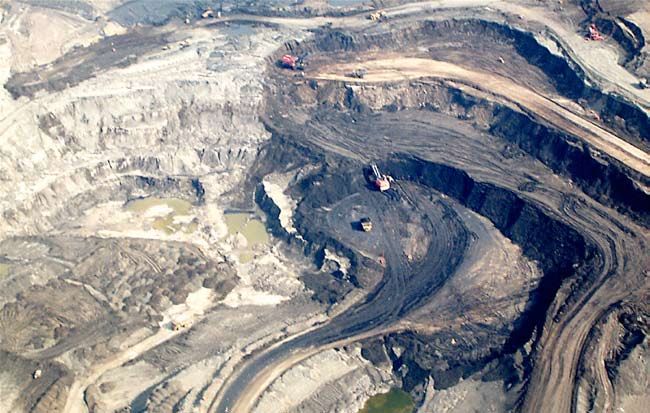
Photo: Chris Evans, The Pembina Institute

                                            www.ran.org                                                  3                      www.climatefriendlybanking.org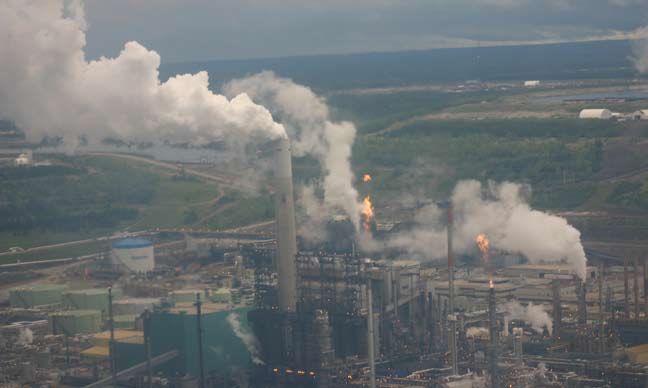
Financing Global Warming: Canadian Banks and Fossil Fuels

Photo: Brant Olson, Rainforest Action Network

                                                Financed Emissions and The Big
                                                Five Canadian Banks
                                                                 ““[The financial services sector’s] greatest opportunity to reduce the advance of
                                                                 global warming is through its investment and lending portfolios.”
                                                                                                         —Carbon Disclosure Project, 20085.

                                                                 C      anada’s five largest banks provide significant amounts of
                                                                        funding for fossil fuel production.

                                                www.ran.org                                4                     www.climatefriendlybanking.org
Financing Global Warming: Canadian Banks and Fossil Fuels

In 2007, RBC, TD, Scotiabank, CIBC and BMO pro-                   A substantial portion of bank loans, investments and
vided:                                                            other financing is going to fund the world’s largest
                                                                  and dirtiest fossil fuel development project: the mas-
  • More than $55 billion in direct corporate loans               sive expansion of tar sands oil production in Alberta.
    and investments in securities for coal, gas and oil           Canada’s five biggest banks have provided direct corpo-
    production;                                                   rate loans and underwriting to 23 major tar sands com-
                                                                  panies. With additional tar sands expansion projects
  • An additional $100 billion of bank financing                  seeking an unprecedented $110 billion in new capital
    through the provision of investment banking ser-              through 2011—more than double the amount of capi-
    vices and the allocation of assets placed under their         tal invested in tar sands projects during the previous
    management to the fossil fuel sector.                         ten years7—analysts believe that investment in tar sands
By any measuring stick, this is a significant pool                infrastructure now surpasses that of manufacturing
of financing for fossil fuel production. By contrast,             across all of Canada.8
Canada’s 2007–08 defense budget totaled less than $17             These huge capital flows to transform Alberta into
billion.                                                          America’s gas tank are distorting Canada’s economy
The financed carbon emissions from Canada’s five                  and the global climate.
largest banks based on their funding of fossil fuels are          When bank funding goes to dirty energy projects like
equally significant, totaling 625 million tonnes of CO2           tar sands expansion or new coal-fired power plants, it
per year. To put this in context, Canada’s greenhouse             locks in a polluting infrastructure that will cast a long
gas emissions from ALL energy use across the coun-                carbon shadow over the country for decades to come.
try—including all power plants, industry and manufac-             If all currently proposed tar sands projects proceed
turing, transportation, homes and offices—totaled 583             as planned, tar sands production will more than qua-
million tonnes of CO2 in 2006.6                                   druple in the next 12 years, further increasing carbon
                                                                  emissions.9

                      Financing of oil, gas and coal by Canadian Banks

                  60,000

                  50,000
                                                                                                             assets under
                                                                                                             mgmnt
                  40,000
    C$ millions

                                                                                                             investment
                                                                                                             banking
                  30,000
                                                                                                             bank direct
                                                                                                             investments
                  20,000

                                                                                                             loans
                  10,000

                       0
                           RBC   TD Bank   Scotiabank      BMO          CIBC     Desjardins   Vancity
                                                          Financial

www.ran.org                                                   5                         www.climatefriendlybanking.org
Financing Global Warming: Canadian Banks and Fossil Fuels
CO2 emissions from financed fossil fuels
250
200 assets under
management
million tonnes CO2
investment
150 banking
bank direct
investments
100 loans
50
0
RBC TD Bank Scotiabank BMO CIBC Desjardins Vancity
Financial
Bank
Tar sands gone wild
The tar sands, a sticky mixture of bitumen and • Approved tar sands leases can draw up to
sand, lie beneath 140,000 km2 of pristine boreal 2.3 billion barrels of water per year from the
forest in northern Alberta and Saskatchewan, an Athabasca River;
area larger than the provinces of New Brunswick, • Tar sands projects are deforesting,
Nova Scotia and Prince Edward Island combined. fragmenting and degrading intact boreal
These deposits establish Canada’s proven oil forests, with negative impacts on caribou and
reserves at 179 billion barrels, second only to other sensitive species;
those of Saudi Arabia.
• Tar sands extraction is energy-intensive and
The Alberta tar sands project is one of the largest consumes natural gas in volumes nearly equal
oil development efforts in the world. Extracting to that used by all Canadian households;
this unconventional oil comes with a huge • Tar sands extraction releases three times
environmental price tag. as much carbon emissions per barrel as
• Globally significant wetland ecosystems, conventional oil production;
which provide habitat for migrating waterfowl Analysts project investments in excess of $100
such as the endangered whooping crane, are billion to nearly triple tar sands production from
threatened; 1.3 million to more than 3 million barrels per day
• Three barrels of water are required to produce by 2020. At this pace, greenhouse gas emissions
each barrel of tar sands oil; from tar sands production would double by
• 90–95 percent of all water used is ultimately 2012, completely negating Canada’s reduction
too toxic to be returned to rivers and must be targets for greenhouse gas emissions under the
stored in huge, long-lived, toxic tailing ponds Kyoto Protocol and locking in high emissions for
as big as 50km2 in size; decades to come.
• Tailings ponds are acutely toxic to aquatic life
and birds;
www.ran.org 6 www.climatefriendlybanking.orgFinancing Global Warming: Canadian Banks and Fossil Fuels
Financed Emissions and Desjardins provided $233 million in direct corporate
loans and investments to fossil fuel producers, a much
Desjardins and Vancity smaller absolute amount and a much smaller propor-
In both absolute and size-adjusted terms, both tion of its total assets than the big five Canadian banks.
Desjardins and Vancity provided little to no direct
Vancity stands out as the only Canadian bank profiled
financing for fossil fuel producers in 2007.
in this study that provided no corporate loans or direct
investments to fossil fuel producers.
First Nations on the frontlines.
Members of the Mikisew Cree and Athabasca the community of hunting, trapping and other
Chipewyan First Nations live in the small town of subsistence and traditional cultural activities.
Fort Chipewyan, on the banks of Lake Athabasca
about 200 kilometers downstream from the tar Chiefs representing Treaties 6,7 and 8 passed
sands mines. The community’s doctor recently a unanimous resolution in February 2008 to
raised concerns over high incidents of a rare and support calls for no new oil sands approvals until
deadly bile duct cancer that has developed within First Nations approve comprehensive watershed
the community. Normally affecting only one in a management and resource development plans for
population of 100,000, five cases had developed the region.
within the small community of just 1,200. Elevated
“The cumulative impacts of oil sands development
rates of thyroid dysfunction and immune system
has all but destroyed the traditional livelihood of
problems are also being found.1[2] Beyond health
First Nations in northern Athabasca watershed.”
impacts, elders in the community also complain that
—Chief Alan Adam, Athabasca Chipewyan First
mercury contamination from the mines have robbed
Nation
Photo: Chris Evans, The Pembina Institute
www.ran.org 7 www.climatefriendlybanking.orgFinancing Global Warming: Canadian Banks and Fossil Fuels
Coal, King of the climate killers
“Coal, specifically prompt phase-out of coal with its impending takeover of Fording Canadian
emissions, is the one critical element in Coal Trust, will be Canada’s largest hard coal
solution of the global warming problem, in producer.
preservation of a planet resembling the one
on which civilization developed.”1 Canadian bank financing of destructive coal mining
—Dr. James Hanson extends overseas as well, including BMO’s direct
financing of widely reviled mountaintop removal
Each year, Canada mines more than 66 million coal mining in Appalachia.3
tonnes of coal, of which approximately 60
percent is burned in Canada and 40 percent is Coal finance, dollar for dollar, has a
exported.2 This includes coal from the largest disproportionately huge impact on the carbon
open-pit steelmaking coal mines in the Northern footprint of banks. Because of the cost structure
Hemisphere, helping make Canada the second- of coal mining companies, the carbon intensity of
largest exporter of this hard coal, trailing only each dollar of Canadian bank financing for coal
Australia. is 21 times higher than that of oil and gas. This is
because mining companies generally invest only in
The coal mined in just three days in Canada is mining production, whereas oil and gas companies
enough to fill up the Toronto Skydome. also invest in tankers, pipelines and refineries,
thus diluting the carbon intensity as investments
When burned, the coal mined each year in Canada are spread across production, transport and
releases 183 million tonnes of CO2, constituting distribution.
the equivalent of nearly a third of Canada’s total
fossil fuel emissions. Every million dollars the top five banks use to
directly finance coal mining results in 40,200
Canada’s top five banks finance large, dedicated tonnes of CO2 emissions on average from the
coal mining corporations responsible for most of extraction and subsequent burning of the coal. The
the 66 million tonnes of coal mined in Canada, simplest thing banks can do to immediately reduce
including Sherritt International, Canada’s main their carbon footprint is to eliminate coal financing.
thermal coal producer, and Teck Cominco, which, 3. To learn more about mountain top removal coal mining
1. Dr. James Hanson, NASA Goddard Institute for Space in Appalachia, see: http://ilovemountains.org/ Our research
Studies, September 10, 2008. http://www.columbia.edu/~jeh1/ uncovered BMO financing to Arch Coal and to Alpha Natural
mailings/20080910_Kingsnorth.pdf Resources, both large coal companies with significant MTR
2. http://www.nrcan.gc.ca/ms/cmy/content/2006/22.pdf operations
Photo: Chris Evans, The Pembina Institute
www.ran.org 8 www.climatefriendlybanking.orgFinancing Global Warming: Canadian Banks and Fossil Fuels
Quick bank facts
Royal Bank of Canada
Bank rank in Canada: #1 (by assets)
Direct fossil fuels funding: $15.9 billion
Direct renewable energy funding: $1.7 billion
Total bank fossil fuel financing: $50.5 billion
CO2 emissions from total financed fossil fuels: 198 million tonnes
Total financed CO2 as % of Canada’s total energy emissions: 34%
Checking/savings account carbon footprint per $10,000: 1,120 kg CO2
Scotiabank
Bank rank in Canada: #3 (by assets)
Direct fossil fuels funding: $12 billion
Direct renewable energy funding: $1.5 billion
Total bank fossil fuel financing: $19.8 billion
CO2 emissions from total financed fossil fuels: 87 million tonnes
Total financed CO2 as % of Canada’s total energy emissions: 15%
Checking/savings account carbon footprint per $10,000: 1,430 kg CO2
TD Bank
Bank rank in Canada: #2 (by assets)
Direct fossil fuels funding: $7.9 billion
Direct renewable energy funding: $0.8 billion
Total bank fossil fuel financing: $27.7 billion
CO2 emissions from total financed fossil fuels: 124 million tonnes
Total financed CO2 as % of Canada’s total energy emissions: 21%
Checking/savings account carbon footprint per $10,000: 970 kg CO2
CIBC
Bank rank: #5 (by assets)
Direct fossil fuels funding: $9.2 billion
Direct renewable energy funding: $2.1 billion
Total bank fossil fuel financing: $27.4 billion
CO2 emissions from total financed fossil fuels: 101 million tonnes
Total financed CO2 as % of Canada’s total energy emissions: 17%
Checking/savings account carbon footprint per $10,000: 1,160 kg CO2
www.ran.org 9 www.climatefriendlybanking.orgFinancing Global Warming: Canadian Banks and Fossil Fuels
Quick bank facts, continued
BMO
Bank rank in Canada: #4 (by assets)
Direct fossil fuels funding: $10.2 billion
Direct renewable energy funding: $0.7 billion
Total bank fossil fuel financing: $30.3 billion
CO2 emissions from total financed fossil fuels: 97 million tonnes
Total financed CO2 as % of Canada’s total energy emissions: 17%
Checking/savings account carbon footprint per $10,000: 1,070 kg CO2
Desjardins
Bank rank: #1 cooperative
financial group
Direct fossil fuels funding: $0.23 billion
Direct renewable energy funding: $0.01 billion
Total bank fossil fuel financing: $5.1 billion
CO2 emissions from total financed fossil fuels: 15 million tonnes
Total financed CO2 as % of Canada’s total energy emissions: 3%
Checking/savings account carbon footprint per $10,000: 40 kg CO2
Vancity/Citizens Bank of Canada
Bank rank: #1 credit union
Direct fossil fuels funding: $0
Direct renewable energy funding: $0
Total bank fossil fuel financing: $0.2 billion
CO2 emissions from total financed fossil fuels: 0.5 million tonnes
Total financed CO2 as % of Canada’s total energy emissions: less than 0.1%
Checking/savings account carbon footprint per $10,000: less than 1 kg CO2
www.ran.org 10 www.climatefriendlybanking.orgFinancing Global Warming: Canadian Banks and Fossil Fuels
Photo: Chris Evans, The Pembina Institute
Financed Emissions and
Individual Bank Customers:
Calculating the Carbon Footprint of a Bank Account
A
n individual’s choice of bank can have a large impact
on her personal carbon footprint. Banks leverage
every dollar deposited into $10–15 dollars of new
lending. Deposit accounts held in any of the top five high-
carbon banks have carbon footprints ranging from 970 to
1,430 kg larger per $10,000 than a deposit account held in
Vancity, the lowest-carbon bank, and 25 to 38 times larger
than Desjardins, the second-lowest-carbon bank.
11Financing Global Warming: Canadian Banks and Fossil Fuels
Carbon footprint of checking and savings accounts
1,600
1,400
Kg CO2/year per C$10,000
1,200
1,000
800
600
400
200
-
RBC TD Bank Scotiabank BMO CIBC Desjardins Vancity
Financial
Moving $10,000 from Scotiabank, the highest-carbon Financing For Clean Energy Lags
footprint bank, to Vancity, the low- carbon bank lead-
er, avoids an amount of financed CO2 (1,430 kg CO2) Tackling climate change requires ending our addic-
comparable to10: tion to fossil fuels by shifting capital to new, renewable
energy infrastructure and energy efficiency measures,
• not driving a small car for five months; which can meet energy needs and create jobs while de-
carbonizing the economy.
• replacing an average car with one that gets 33 per-
cent better gas mileage; A study by the David Suzuki Foundation11 found
that investments in renewable energy—wind, solar,
• eliminating seven two-hour airplane flights per low impact hydro, biomass and geothermal—could in
year. Ontario alone:
The five high-carbon banks are (in order of CO2 inten- • Create 25,000 jobs in the renewable energy sector
sity): Scotiabank, CIBC, RBC, BMO and TD Bank. by 2010 and 77,000 jobs by 2020.
Based on the results of this report’s findings, Rainforest • Install more than 12,000 megawatts of renewable
Action Network has created a free Canadian bank car- energy capacity by 2020—enough electricity to
bon calculator to calculate the carbon footprint of a phase out Ontario’s coal plants.
personal checking and savings account. The calculator
is available at www.climatefriendlybanking.org. • Produce nearly $14 billion in economic benefits by
installing 8,000 megawatts of wind energy alone.
Using this online tool, customers of any of the seven
Canadian banks that we evaluated can calculate the car- • Use renewable energy to replace natural gas and
bon emissions associated with their savings and check- electricity currently used for heating and cooling
ing account deposits and, if they are in a high-carbon homes, offices and industries in Ontario.
footprint bank, consider the CO2 savings from switch-
ing their accounts to a low-carbon leader. • Create a culture of conservation to help reduce
demand for electricity in the first place, and save
consumers money.
www.ran.org 12 www.climatefriendlybanking.orgFinancing Global Warming: Canadian Banks and Fossil Fuels
All of the banks we studied, with the exception of clean renewables. In 2007, Canadian banks (excluding
Vancity, have lagged behind in investing in energy effi- Vancity) raised nearly 14 times more financing for fos-
ciency and renewable energy; fossil fuels still grab a far sil fuels than for renewable energy.
larger amount of bank financing than investments in
Financing of oil, gas & coal vs. renewables
$40,000
$35,000
$30,000
oil, gas
& coal
C$millions
$25,000
renewables
$20,000
$15,000
$10,000
$5,000
$-
RBC TD Bank Scotiabank BMO CIBC Desjardins Vancity
Financial
Boreal Forest and the Vicious Cycle of
Climate Change
Adapted from http://www.borealbirds.org/industry.shtml
The deforestation of Canada’s boreal forest temperatures rise, peatlands and forest stands
due to tar sands oil production, mining, and are projected to dry, which releases carbon and
industrial forestry imperils the massive tonnage makes them more vulnerable to wildfires, wherein
of carbon stored in the vegetation and soils. The additional carbon would be released into the
release of this carbon into the atmosphere as a atmosphere. , Healthy forests that retain their
product of human development could have dire natural complexity and diversity (e.g., in age
consequences—accelerating climate change, which and habitat structure) generally have greater
in turn accelerates the degradation of the Boreal. stability and resilience to withstand disturbances
associated with climate change.
Substantial areas of surface are impacted by
seismic lines required for exploration, access Large scale forest protection is thus a key
roads, pipelines, well sites, and power corridors. component to slowing and reversing the effects of
The clearing associated with oil production climate change, regionally and globally.
and exploration also releases carbon into the
atmosphere.
1. Schindler, D.W. A dim future for boreal waters and
Human disturbance in the Boreal is triggering a
landscapes. Bioscience, 48 (3): 157–165. (1998)
vicious cycle of warming. For example, as global
www.ran.org 13 www.climatefriendlybanking.orgFinancing Global Warming: Canadian Banks and Fossil Fuels
Conclusion
“What we do in the next two to three years will determine our future. This is the defining moment.”
—Rajendra Pachauri, Chairman of the UN’s International Panel on Climate Change.
Canada’s top banks provided more than $155 billion Deposit accounts including checking, savings and CD’s
in total corporate financing for fossil fuel extraction in are an important source of capital for banks. For every
Canada and internationally in 2007. The 625 million dollar deposited, banks are able to leverage $10–15 in
tonnes of carbon dioxide emissions from the extrac- new loans. Customers can significantly reduce their
tion and burning of these fossil fuels results in a carbon own carbon footprint by switching their savings, check-
footprint for RBC, TD, Scotiabank, BMO and CIBC ing and/or CD accounts from a high-carbon bank to
that isgreater than Canada’s total energy use emissions. a low-carbon bank. For example, $10,000 in deposit
accounts switched from Scotiabank to the low-carbon
By contrast, Desjardins and VanCity, two significant leader bank, VanCity, would reduce an individual’s
banks based on the credit union model, have very low carbon footprint by1.4 tonnes of CO2 per year, the
carbon footprints. equivalent of taking a car off the road for five months.
By investing in carbon-intensive, long-lived infrastruc- Not unlike the 2007–08 global financial crisis spawned
ture such as the tar sands, bank financing is locking by the banking sector, major banks are financing a
Canada into higher carbon emission trajectories for growth in greenhouse gas emissions that could lead to a
decades to come. At the same time, scientists are clearly catastrophic climate crisis that will negatively impact us
and urgently warning us that if we are to prevent cata- all. Action must be taken quickly to ensure that banks
strophic climate change, we must shift investments are held accountable for the climate impacts of their
to clean energy and energy efficiency pathways, de- financing, and to redirect their financial resources to
carbonize the economy, and quickly phase out fossil build out a low-carbon, climate-friendly future.
fuels. This new trajectory would create hundreds of
thousands of green jobs, improve energy security, and For more information or to see the full report, please
save consumers money. visit www.climatefriendlybanking.org
Canada and climate change
Growth in greenhouse emissions from the expansion of gasoline-powered cars, trucks and motorcycles
of Canada’s tar sands sector is derailing Canadian emitted 90 million tonnes.1
capacity to meet its international climate obligations.
So, while Canada has committed to reduce its Canada’s forests and the communities that depend
greenhouse gas emissions six percent below 1990 on them are particularly vulnerable to the impacts
levels by 2012, investments in tar sands expansion of climate change. Canada’s vast forests, which
are quickly moving Canada in the opposite direction. serve as massive carbon “sinks,” are becoming
Canada’s emissions from all sources are currently increasingly unstable due to the warming climate
nearly 30 percent above this target. and industrial impacts. As a result, forests are
burning more often and releasing more carbon
Extraction of tar sands emits 3–5 times more back into the atmosphere. These trends are
greenhouse gases than conventional oil, and expected to dramatically worsen unless Canada
overall emissions from the sector are expected to and other developed countries move quickly to halt
triple from 2006 to 2020 to more than 100 million greenhouse emissions growth and start reducing
tonnes of CO2 equivalent per year as the sector total emissions with a reduction target of at least
expands. By comparison, total emissions from all 80–90 percent by 2050.
energy use in Canada in 2006 was 583 million 1. http://www.ec.gc.ca/pdb/ghg/inventory_report/2006/som-
tonnes of CO2, of which the entire Canadian fleet sum_eng.pdf
www.ran.org 14 www.climatefriendlybanking.orgFinancing Global Warming: Canadian Banks and Fossil Fuels
Recommendations
To banks: • Cut up your high-carbon
• Adopt a comprehensive climate policy to reduce bank cards and mail them
financed emissions and address climate change to your bank, explaining
covering all business lines; your climate concerns;
• Set meaningful carbon reduction targets for • If you are a consumer of
energy sector and other top greenhouse gas- bank-managed mutual
intensive sector lending and investment port- funds, ask your bank to
folios; provide you with carbon
footprint assessments of
Photo: Corbis Images
• Stop funding the further expansion of tar sands their various funds. Ask
and coal infrastructure; your financial advisor for
help in identifying mutual
• Lend public support to calls from a broad range funds that have relatively
of stakeholders for a provincial government low carbon footprints and/
moratorium on new tar sands licenses, tenures or mutual funds that spe-
and expansion; cialize in clean technology cut your carbon debt
holdings;
• Ensure that all financing addresses and respects
Aboriginal title and treaty rights, including free, • Make use of bank climate products such as green
prior and informed consent; mortgages and energy efficiency loans.
• Prioritize lending for energy efficiency and
clean, renewable energy;
To governments:
• Report annually on the carbon footprint of • Establish a binding and uniform legal framework
bank financing. for banks to report on the CO2 emissions that
result from their loans and investments;
To bank customers: • Establish a reporting point for socially unaccept-
able transactions where NGOs and affected stake-
• Calculate the carbon footprint of your deposit holders could file complaints on what they see as
account(s) at www.climatefriendlybanking.org; unacceptable transactions for Canadian registered
banks.
• Talk to your branch manager and/or write a
letter to your bank asking what they are doing
to implement the above recommendations to
banks; To civil society:
• Start talking to your organization’s bank about
• Switch your savings and/or checking accounts integrating climate concerns into its banking and
from a high-carbon bank to a low-carbon, investment practices.
climate-friendly bank;
• Encourage others to switch to a climate-friendly
bank;
www.ran.org 15 www.climatefriendlybanking.orgFinancing Global Warming: Canadian Banks and Fossil Fuels
Endnotes
1 http://www.occ.gov.uk/activities/stern.htm 6 http://www.ec.gc.ca/pdb/ghg/inventory_report/2006/tab_eng.
cfm
2 Operational emissions were compiled from each bank’s 2007
annual CSR reports and/or submission to the Carbon Disclosure 7 http://www.albertacanada.com/documents/AIS-EC_oilSandsUp-
Project, www.cdproject.net, or website (in the case of TD www. date_1207.pdf
td.com/corporateresponsibility/pdf/TD_GHG_Feb5_08.pdf) and
totaled 593,215 tonnes CO2 for all seven banks. 8 http://www.cbc.ca/technology/story/2008/04/22/tech-canada-
greenhouse.html Stat Canada report on file. www.statcan.ca
3 http://www.cbc.ca/canada/story/2007/09/23/environ- Human Activity and the Environment: Annual Statistics. 2007
ment-poll.html Accessed on October 31, 2008. 2008. Statistics Canada, Environment Accounts and Statistics
Division, System of National Accounts.
4 http://list.canadianbusiness.com/rankings/investor500/2008/q1/
9 http://www.strategywest.com/downloads/StratWest_Outlook.
Default.aspx?sp2=1&d1=d&sc1=4 Accessed on August 25,
pdf
2008. These banks are among Canada’s most profit-
able corporations ranked by total profits. . RBC is ranked 10 Calculations based on information provided at: http://www.
as the most profitable corporation in Canada. TD Bank, onelesstonne.ca/sourcescalcs.pdf
Scotiabank and CIBC are ranked 5th, 6th and 7th respec-
tively, and BMO is ranked 15th. 11 http://www.davidsuzuki.org/files/Climate/Ontario/Smart_
Generation_full_report.pdf
5 http://www.cdproject.net/download.asp?file=CDP6_
Global_500_Report.pdf
Photo: MorgueFile
www.ran.org 16 www.climatefriendlybanking.orgFinancing Global Warming: Canadian Banks and Fossil Fuels
Acknowledgments
The Financing Global Warming: Canadian Banks and Fossil Fuels report was written
by Bill Barclay, Rainforest Action Network’s Global Finance Campaigner. Research
was provided by Jan Willem van Gelder, Christophe Scheire, Hassel Kroes and Sarah
Denie, Profundo Economic Research.
Many thanks for the contributions from Gillian McEachern of Forest Ethics; Nicole
Rycroft of Market Initiatives; and Lafcadio Cortesi, Nell Greenberg, Brant Olson,
and Rebecca Tarbotton of Rainforest Action Network.
Appreciation for review and comments on the research data from staff at the
Canadian Boreal Initiative, Vancity, Desjardins, RBC, TD Bank, Scotiabank, CIBC,
and BMO.
© November 2008
About Us:
RAINFOREST ACTION NETWORK
Rainforest Action Network (RAN) is made up of 43 staff members in San Francisco,
CA and in Tokyo, Japan, plus thousands of volunteer scientists, teachers, parents,
students and other concerned citizens around the world.
Dubbed “some of the most savvy environmental agitators in the business” by the
Wall Street Journal, RAN uses hard-hitting markets campaigns to align the policies
of multinational corporations with widespread public support for environmental
protection. Our corporate campaigns seek to push companies to balance profits with
principles, to show that it is possible to do well by doing good.
Contact Information:
Rainforest Action Network:
221 Pine Street, 5th Floor
San Francisco, CA 94104 USA
415-398-4404 phone
415 398-2732 fax
http://www.ran.org/
www.ran.org 17 www.climatefriendlybanking.orgYou can also read


