Governors' Top Education Priorities in 2019 State of the State Addresses - MAR 2019
←
→
Page content transcription
If your browser does not render page correctly, please read the page content below
MAR   2019

   Governors’ Top Education
   Priorities in 2019 State of
   the State Addresses

    Sarah Pompelia and Heidi Macdonald

                                                                        1
www.nga.org | | @EdCommission
www.ecs.org      @NatlGovsAssoc          www.nga.org   |   @NatlGovsAssoc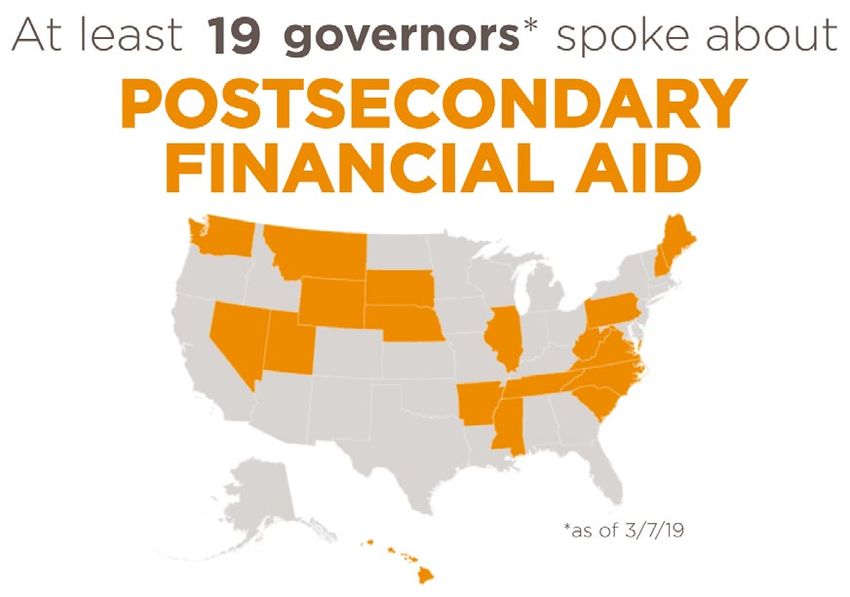
C    hange swept throughout the country
         with the 2018 elections, bringing 20 new
    governors into office. Whether returning or
                                                                  "The most important investments
    starting their first term, governors are taking the           we make as public servants will
    opportunity in their State of the State addresses             impact … [the state] long after we
    to highlight achievements and outline plans for
                                                                  have completed our time in office.
    the future. To date, every governor who has given
    an address has mentioned an accomplishment                    Foremost among them is ensuring
    or a proposal related to education. Nearly all                that our kids, students and workers
    governors have indicated the importance of
                                                                  have a world-class education.”
    education to their state’s success, and the ideas
    they proposed underscore that sentiment. As
                                                                                         Gov. Steve Bullock
    Idaho Gov. Brad Little pointed out in his address,                                            MONTANA
    “Education policy requires long-term planning
    and commitment.”

    Each year, Education Commission of the States tracks, analyzes and identifies trends in education
    policy accomplishments and proposals featured in governors’ State of the State addresses. To date, 48
    governors have delivered their 2019 addresses, and these are the top six education priorities mentioned:

          At least 36 governors spoke about school finance, addressing specific financial needs as
          well as larger changes to funding schools.

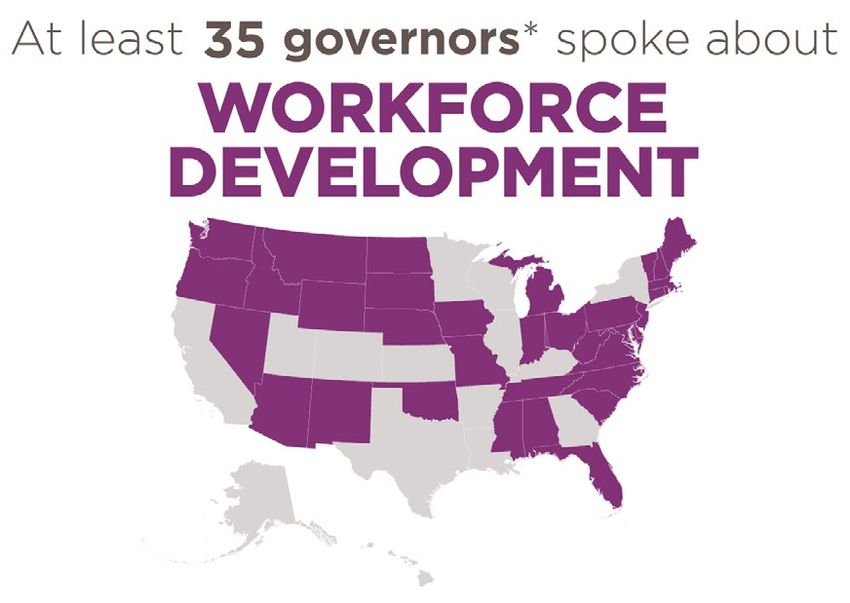
          At least 35 governors highlighted accomplishments and plans related to meeting economic
          needs in their states through workforce development.

          Governors dedicated attention to the importance of teaching quality, with at least 26
          speaking about issues related to the profession.

          Governors in at least 24 states addressed the needs of their youngest students through
          early learning initiatives.

          At least 19 governors proposed postsecondary financial aid policies to address the need for
          more affordable higher education.

          At least 18 governors highlighted the importance of school safety.

      Click here for complete summaries of education policy priorities outlined in each governor’s State
      of the State address.

2
                                                                                        www.ecs.org     |   @EdCommission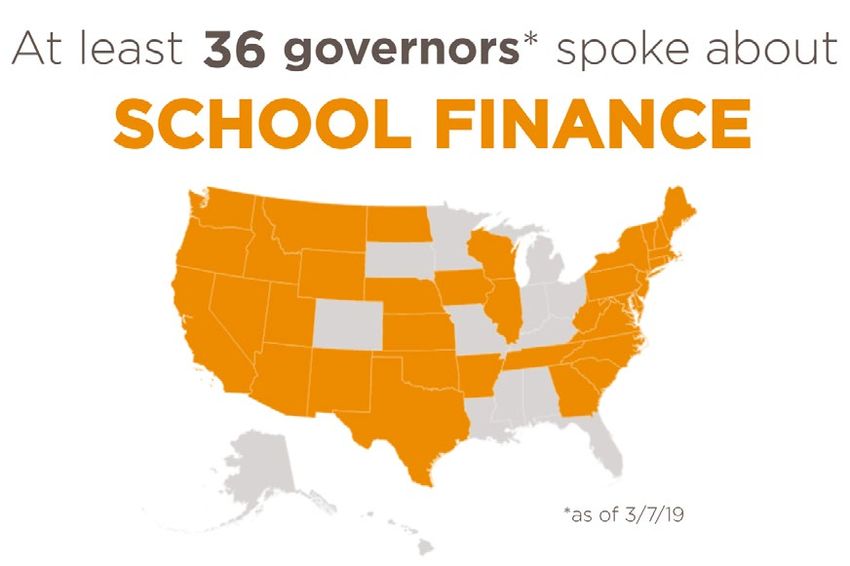
"The investment we make in our kids today

       School Finance                                             will yield dividends for generations."
                                                                                                            Gov. Tony Evers
                                                                                                                 W I S CONSI N

       Consistent with years past, the majority of governors
       — at least 36 this year — mentioned school finance
       in their State of the State addresses. While some
       mentioned overall increases to per-pupil spending
       or proposals to make changes to the state funding
       formula, others spoke to dollar amounts they allocated
       to specific initiatives — including special education,
       facilities upgrades, after-school enrichment, pre-K
       expansion and teacher salaries. At least nine
       governors directly made a connection between
                                                                                                                   *as of 3/15/19
       finance and equity, seeking to ensure that
       districts and schools with the most need get a larger
       share of resources.

       Highlights

        Gov. Gavin Newsom      Proposed an investment of more than $80 billion in public education, including $576 million
        CALIFORNIA             for special education.

        Gov. Laura Kelly
                               Highlighted a proposal to fully fund public schools in the upcoming years.
        KANSAS

        Gov. Larry Hogan       Asked lawmakers to pass the Building Opportunity Fund to help finance upgrades and
        MARYLAND               repairs to school buildings.

                               Proposed opportunities for underperforming school districts to invest jointly with the
        Gov. Charlie Baker
                               department of education in proven best practices like acceleration academies, professional
        MASSACHUSETTS
                               development, after-school enrichment and leadership development programs.

        Gov. Doug Burgum       Proposed investing an additional $25 million in the school construction revolving loan fund
        NORTH DAKOTA           by leveraging more funds to drive a total of $535 million in construction.

        Gov. Gina Raimondo
                               Announced an additional $30 million in school funding.
        RHODE ISLAND

                               Interested in learning more about funding for at-risk students? This report
                               analyzes how states fund at-risk students and how much additional money
                               at-risk students receive from states.

                                                                                                                                    3
www.nga.org   |   @NatlGovsAssoc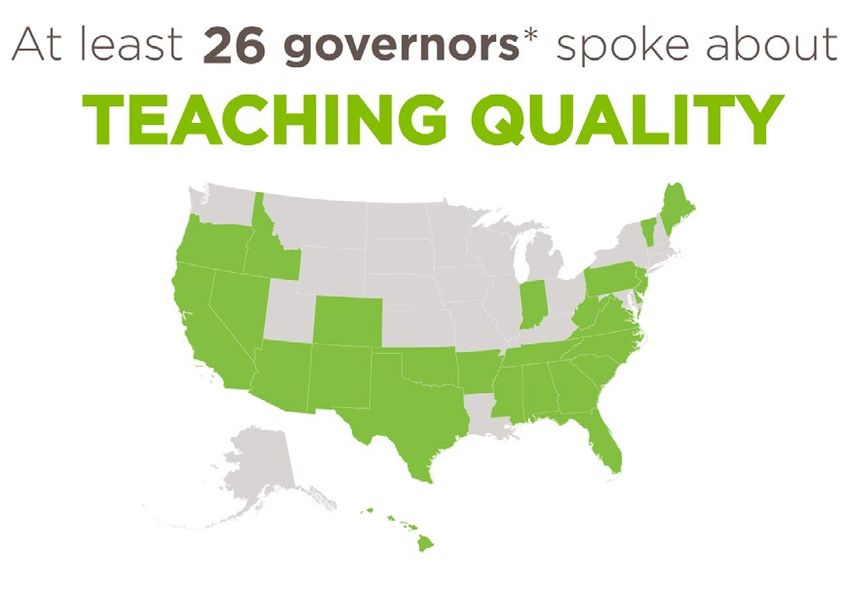
"The workforce is continually impacted by

    Workforce                                     innovation and globalization. And we need an

    Development                                   education system that adapts to those changes."
                                                                                                   Gov. Kim Reynolds
                                                                                                                          I OWA

    Workforce development has remained a top priority
    for governors in 2019. This year’s analysis combines
    K-12 career and technical education programs and
    postsecondary or retraining proposals, and at least 35
    governors spoke about such initiatives in their State of
    the State addresses. They spoke to both current and
    future workforce demands and how education can
    prepare students to contribute to state economies,
    align talent with needs and keep students in the state
    after graduation. Specific initiatives mentioned include
    apprenticeships; industry-credentialing; employer-                                                          *as of 3/15/19
    driven education and retraining; and programs focused
    on such groups as veterans, middle-schoolers
    and adults in rural areas.

    Highlights

    Gov. Doug Ducey     Proposed building and expanding skilled-trade programs through budget recommendations
    ARIZONA             and aligning programs with future job demands.

    Gov. Ned Lamont     Emphasized the importance of aligning education with the workforce by increasing access to
    CONNECTICUT         vocational-technical schools and apprenticeships.

    Gov. Janet Mills    Proposed a budget that increases funding for career and technical high schools so residents
    MAINE               can compete for skilled jobs.

    Gov. Mike Parson    Proposed the creation of the Fast Track program and $22 million in funding to provide
    MISSOURI            advanced training in high-demand industries through state postsecondary institutions.

                        Promised to sign any legislation that breaks down silos between common education,
    Gov. Kevin Stitt
                        career and technical education and higher education to better align these experiences with
    OKLAHOMA
                        tomorrow’s workforce needs.

    Gov. Jay Inslee     Proposed a budget that will provide 100,000 students the opportunity to participate in paid
    WASHINGTON          internships and apprenticeships over the next 10 years.

                             Interested in learning more about the approaches states are taking with
                             their workforce development systems? Read more in this report, which
                             draws on interviews in four states.

4
                                                                                                   www.ecs.org        |   @EdCommission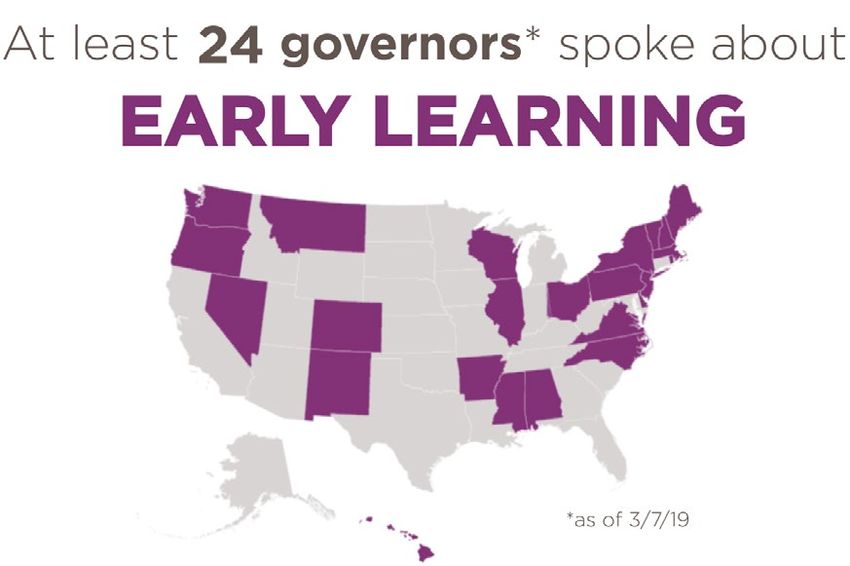
"We agree that we need to attract, train and

       Teaching Quality                                  retain the best teachers in the country."
                                                                                                    Gov. Kate Brown
                                                                                                               OREGON

       Teaching quality remains at the forefront of governors’
       education concerns. This year, at least 26 governors
       referenced it in their State of the State addresses.
       The majority spoke about teacher compensation and
       diversified pay, including increased base salaries, to
       remain competitive regionally and nationally. Some
       also proposed pay raises across the board and others
       only for designated teachers. Additionally, governors
       prioritized recruitment and retention strategies,
       including expanding and providing increased funding
                                                                                                                    *as of 3/15/19
       for teacher academies, scholarships for teachers who
       intend to stay in the state to teach and student loan
       repayment for teachers in high-need schools or rural areas.

       Highlights

        Gov. Asa Hutchinson      Proposed a $60 million state budget allocation to raise teacher base pay by $4,000 over the
        ARKANSAS                 next four years.

        Gov. John Carney         Proposed a budget that will more than double the funding for student loan repayment for
        DELAWARE                 teachers in high-need schools and noted that the program plans to reach 700 teachers.

                                 Announced the creation of the Next Level Teacher Pay Commission to identify resources that
        Gov. Eric Holcomb
                                 can be made available to make sure teacher compensation is competitive with neighboring
        INDIANA
                                 Midwestern states.

        Gov. Tom Wolf
                                 Proposed to raise the pay floor for teachers to $45,000 a year.
        PENNSYLVANIA

        Gov. Greg Abbott         Proposed incentives to place effective teachers in schools where they are needed most and
        TEXAS                    the creation of a pathway that would allow effective teachers to earn a six-figure salary.

        Gov. Jim Justice         Urged lawmakers to raise salaries for teachers in math, science, foreign language and
        WEST VIRGINIA            special education.

                           IInterested in learning more about policies pertaining to targeted teacher recruitment? See
                           this report, which captures legislation in six areas related to attracting teachers to high-need
                           schools and subjects.

                                                                                                                                     5
www.nga.org   |   @NatlGovsAssoc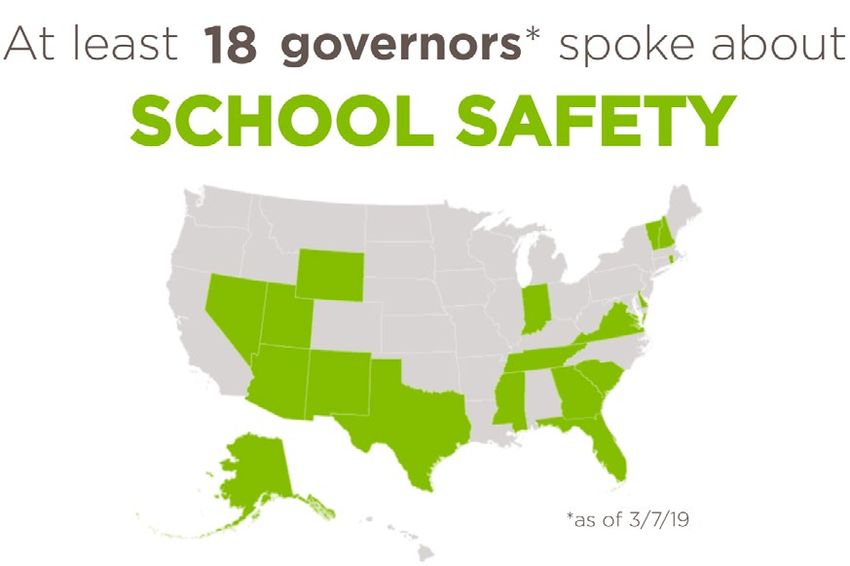
"We all realize that children learn early and retain
    Early Learning                                   those lessons and skills throughout their lives."
                                                                                                            Gov. Phil Bryant
                                                                                                                  M I SS I SSI PPI
    Recognizing that the early learning years are
    some of the most crucial in a child’s development
    socially, emotionally and academically, governors
    continue to prioritize early learning opportunities.
    This year, at least 24 governors spoke about early
    childhood education in their State of the State
    addresses. Specific issues include increasing overall
    early learning funding, expanding or creating
    free pre-K or pilot programs, and increasing
    programmatic quality. Additionally, governors
    mentioned holistic approaches that connect parents
    of students in publicly funded, early childhood                                                                *as of 3/15/19

    education programs with services in education,
    workforce training and health care; and creating
    statewide referral systems to connect families with
    early learning services.

    Highlights

                             Proposed providing every community with free, full-day kindergarten by fall 2019 and expanding
    Gov. Jared Polis
                             free pre-K to 8,000 more children, with the goal of offering full-day pre-K to every child in the state
    COLORADO
                             in the future.

    Gov. David Ige           Proposed creating a universal, high-quality pre-K system with the goal of creating more than 300
    HAWAII                   public pre-K classrooms.

    Gov. Janet Mills
                             Proposed a budget that would make pre-K programs available to all 4-year-olds.
    MAINE

                             Proposed a budget that will create a state director of early childhood education. The new position
    Gov. Chris Sununu        will coordinate and streamline early childhood services; bridge the divide between the departments
    NEW HAMPSHIRE            of education and health and human services; and help to ensure investments in children are data-
                             driven, coordinated and efficient.

    Gov. Michelle
                             Proposed universal pre-K for every child and a budget to expand statewide pre-K enrollment to 80
    Lujan Grisham
                             percent within the next five years by investing $60 million in new pre-K classroom slots this year.
    NEW MEXICO

    Gov. Andrew Cuomo
                             Proposed a budget expanding pre-K for 3- and 4-year-olds.
    NEW YORK

                       Interested in how states approach early childhood governance? This report examines
                       the different structures and strategies states are currently using.

6
                                                                                                        www.ecs.org      |   @EdCommission
"If you’re willing to put your newly acquired skills to work
       Postsecondary                              here in our Commonwealth, the least we can do is help you
       Financial Aid                              avoid carrying around a crushing burden of student debt."
                                                                                                                  Gov. Tom Wolf
                                                                                                                 P E N N SY LVANI A

       As states face the rising costs of higher education,
       many governors have proposed postsecondary
       financial aid initiatives as a way of making a degree
       or a credential more affordable. At least 19 governors
       mentioned postsecondary financial aid in their State of
       the State addresses this year. Their proposals include
       increasing scholarship funds, targeting financial
       aid to specific student populations, partnering
       with university foundations to increase need-based
       financial aid and expanding the number of programs
                                                                                                               *as of 3/15/19
       for which state financial aid may be used.

       Highlights

        Gov. Steve Bullock     Proposed a budget that will provide $5 million for need-based aid, which would be matched
        MONTANA                by university foundations.

        Gov. Pete Ricketts     Recommended the creation of the Nebraska Talent Scholarships program and 2,100 new
        NEBRASKA               scholarships for students to attend postsecondary programs.

        Gov. Steve Sisolak     Proposed increasing funding for scholarship programs to provide more opportunities for
        NEVADA                 students to earn degrees and credentials.

        Gov. Henry McMaster    Proposed a budget that triples new lottery funding for workforce scholarships and grants to
        SOUTH CAROLINA         help students at state technical colleges.

        Gov. Kristi Noem       Announced support for legislation to make home-schooled children eligible for the South
        SOUTH DAKOTA           Dakota Opportunity Scholarship.

        Gov. Mark Gordon       Announced support for additional funding for scholarships to attract in-state students to
        WYOMING                the University of Wyoming.

                                   Interested in learning more about financial aid redesign? This resource
                                   outlines principles for state leaders to focus on in their reform efforts.

                                                                                                                                      7
www.nga.org   |   @NatlGovsAssoc
"Whatever else happens in the classroom, the safety

    School Safety                                of our children and teachers is paramount for my
                                                 administration and for all of our elected leaders."
                                                                                                             Gov. Bill Lee
                                                                                                               TE N N ESSEE

    This year, at least 18 governors mentioned school
    safety in their State of the State addresses. Their
    proposals include investing in school facility
    upgrades that specifically target school safety
    improvements and launching a “See Something,
    Say Something” public service. Governors also
    mentioned implementing recommendations from
    state school safety task forces, which include
    enhancing student support services in schools,
    providing more funding for safety equipment
                                                                                                                  *as of 3/15/19
    and requiring active shooter training and threat
    assessments. Additionally, governors mentioned
    enhanced training for school resource officers.

    Highlights

    Gov. Brian Kemp        Included $69 million in one-time funding for school security grants so that school boards,
    GEORGIA                administrators, teachers, parents and students may determine school security priorities.

    Gov. Phil Bryant       Requested the passage of the Mississippi School Safety Act to protect students and
    MISSISSIPPI            teachers.

    Gov. Steve Sisolak     Announced an allocation of a portion of the recreational marijuana tax revenue to prevent
    NEVADA                 violence in schools.

    Gov. Gary Herbert      Proposed investing over $100 million in school facility upgrades, allocating two-thirds of
    UTAH                   that investment specifically for school safety improvements.

                           Proposed using budget adjustments to fund $1.5 million in safety improvements,
    Gov. Phil Scott        suggested capital investments to ensure more schools are E911-compliant and announced
    VERMONT                the launch of a “See Something, Say Something” public service campaign with the
                           Vermont National Education Association.

    Gov. Ralph Northam     Proposed that all school resource officers receive training approved by the Virginia
    VIRGINIA               Department of Criminal Justice Services.

            Interested in learning more about school safety? This 50-State Comparison provides a
                  comprehensive review of school safety policies in state statute and regulation.

8
                                                                                                     www.ecs.org        |   @EdCommission
Emerging Trends
       While many issues highlighted in this resource come up in governors’ addresses year after year, there
       are a few new topics emerging that did not land in the top six. These are the emerging trends of 2019:

                  Closely related to financial aid, postsecondary affordability appeared in at least 17 addresses
                  where governors noted the high cost of higher education and efforts to mitigate it.

                  At least 16 governors mentioned school health initiatives in their addresses, with many
                  recognizing a need for mental health supports in schools.

                  At least 15 governors spoke about high school issues, including Advanced Placement, dropout
                  prevention, college readiness, early college, dual enrollment and graduation requirements.

                  Technology appeared in at least 12 addresses this year, with a focus on ensuring broadband
                  access to all schools.

                  At least 12 governors mentioned rural education issues, specifically technology, teacher
                  shortages and higher education or workforce opportunities in rural areas in their states.

                                                                                                                    9
www.nga.org   |    @NatlGovsAssoc
Authors

         Sarah Pompelia

                            As a policy researcher, Sarah works on a range of education policy issues from early
                            learning to workforce development. Sarah comes to Education Commission of the
                            States with experience as a middle and elementary school teacher. She earned a
                            bachelor’s degree at Northwestern University’s School of Education and Social Policy
                            and has two master's degrees in social work and public policy from the University of
                            Denver. Contact Sarah at spompelia@ecs.org or 303.299.3612.

         Heidi Macdonald

                            As a policy researcher, Heidi focuses on education policy issues ranging from early
                            learning through workforce development. Prior to joining Education Commission of
                            the States, Heidi worked with the New Mexico Legislative Education Study Committee,
                            New Mexico Indian Affairs Department and American Indian Law Center. When Heidi is
                            not researching education policy, she can be found running or exploring the Colorado
                            mountains with her family. Contact Heidi at hmacdonald@ecs.org or 303.299.3634.

         ACKNOWLEDGMENTS
         The authors thank Alyssa Evans, Tom Keily, Zeke Perez Jr. and Erin Whinnery — all of Education
         Commission of the States — for their contributions to this resource.

         About NGA
                                   Founded in 1908, the National Governors Association is the voice of the nation’s
                                   governors and one of the most respected public policy organizations in the
                                   country. The association’s members are the governors of the 55 states, territories
                                   and commonwealths. Members come to the association from across the political
                                   spectrum, but NGA itself is boldly nonpartisan.

© 2019 by Education Commission of the States. All rights reserved. Education Commission of the States encourages its readers to share our
information with others. To request permission to reprint or excerpt our material, please contact us at 303.299.3609 or email askinner@ecs.org.

Education Commission of the States                |   700 Broadway Suite 810 Denver, CO 80203
You can also read


