GRAPES POME FRUIT STONE FRUIT CITRUS TREE NUTS OLIVES - TECHNICAL MANUAL 2018
←
→
Page content transcription
If your browser does not render page correctly, please read the page content below
GRAPES
      POME FRUIT
      STONE FRUIT
         CITRUS
       TREE NUTS
         OLIVES

                                      ®

  H   E   R   B   I   C   I   D   E

TECHNICAL MANUAL 2018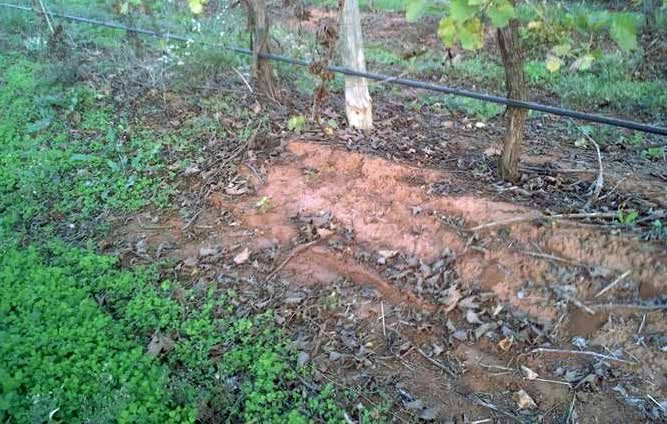
Chateau® Herbicide is an exciting new development in weed control in orchards and
vineyards. Growers now have an economic option for controlling hard to kill weeds
without the need for repeated spraying operations during the growing season.
•	The active ingredient in Chateau is 500 g/kg
   flumioxazin.
•	Flumioxazin is a Group G herbicide with contact
   foliar and soil residual activity.
•	Flumioxazin is a PPO inhibitor – involved in synthesis
   of chlorophyll.
•	Germinating seedlings pick up flumioxazin as they
   grow through the treated zone. As soon as they
   reach the soil surface flumioxazin reacts with sunlight
   and causes disruption of cell membranes and death
   of the plant.

Commercial results

      3 months after treatment with Chateau,                          11 months after treatment with Chateau,
                vines in Tasmania                                            vines in South Australia

Chateau Herbicide is a proven pre-emergence
residual herbicide
• Broad spectrum: Controls key broadleaf and grass weeds,
   including fleabane, mallow, Feathertop Rhodes grass and annual ryegrass.
• Long lasting: Controls weeds for 4-8 months. Can be applied up to 2 times per year.
•	Stays in place: Remains in place until rainfall or irrigation releases its activity. Stays where you put it;
   won’t leach or volatilize.
• Proven performance: Many years of use in Europe and US in vines and tree crops.
   Providing residual weed control with no detrimental effects on long term vine or tree health.
• No residues: When used as directed no residues are generated in fruit, or nuts.
• Soil types: Works well on a range of soil types, from sand to clay.
• Convenient: Chateau comes pre-packaged in a ½ hectare water soluble bag.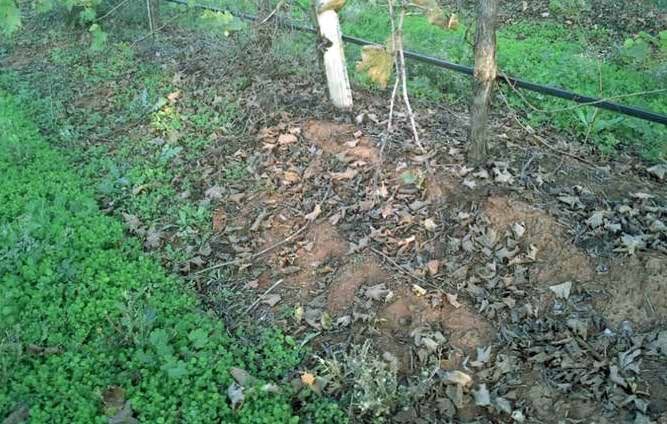
Chateau Technical Brochure

Results in the field – Vines
In a field trial located near Swan Hill
                                                                        50
in Victoria, Chateau treatments were
assessed at 12 weeks, 16 weeks and
1 year after application.                                               40

                                                   No. plants per sqm
Chateau in wine grapes:                                                 30
Swan Hill VIC H13-013
Applied 19th May;                                                       20
Assessed 9th October
All treatments had glyphosate at                                        10
450 g ai/ha added
                                                                         0
   Untreated               Chateau 630 g/ha                                  Fleabane      Barrel             Milk             Crassula
                                                                                           medic             thistle
   Pendimethalin 7 L/ha    Oryzalin 4.5 L (225 g ai)
                                                                                                    Weeds

                     Untreated:                                                     Treated with Chateau 630 g + Glyph 1 L:
               12 weeks after treatment                                                    12 weeks after treatment

Chateau in wine grapes: Swan Hill VIC H13-013
Applied May 2013; Pictures taken May 2014

  Pendimethalin                                                                 Oryzalin

                 Treated with Chateau                                                        Treated with Chateau
               12 months after treatment                                                   12 months after treatment

                                                                                                                                           ®

                                                                                                    H   E   R   B      I   C   I   D   E
Results in the field – Orchards
                        40                                                         Chateau for broadleaf weed control
                                                                                   in apples:
                                                                                   Shepparton VIC H14-020
                        30
                                                                                   Applied 2nd July 2014;
No. weeds per 0.5 sqm

                                                                                   Assessed 20th November 2014
                        20
                                                                                     Pigweed              Milk thistle
                                                                                     SF mallow            Shepherds purse
                        10                                                           Hairy willow herb

                         0
                             Untreated   Glyph   Chateau 700 g Pendimethalin 7 L
                                          2L      + Glyph 2 L     + Glyph 2 L
                                            Treatment

                        80                                                         Chateau for grass weed control
                                                                                   in apples:
                                                                                   Shepparton VIC H14-020
                        60
                                                                                   Applied 2nd July 2014;
No. weeds per 0.5 sqm

                                                                                   Assessed 20th November 2014
                        40
                                                                                     Barnyard grass
                                                                                     Rye grass
                        20                                                           Summer grass

                         0
                             Untreated   Glyph   Chateau 700 g Pendimethalin 7 L
                                          2L      + Glyph 2 L     + Glyph 2 L
                                            Treatment

                        80                                                         Chateau for weed control in peaches:
                                                                                   Tatura VIC H14-021
                                                                                   Applied 28th July 2014;
                        60
                                                                                   Assessed 12th September 2014
No. weeds per 0.5 sqm

                                                                                     Hog weed             Prarie grass
                        40
                                                                                     Milk thistle         Prickly lettuce

                        20

                         0                                                                                   Untreated
                             Untreated   Glyph   Chateau 700 g Pendimethalin 7 L
                                          2L      + Glyph 2 L     + Glyph 2 L
                                            Treatment

                                                                                                      Treated with
                                                                                                    Chateau + Glyph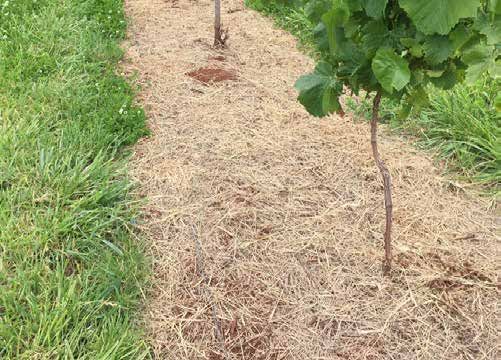
Chateau Technical Brochure

                        30                                                            Chateau for weed control
                                                                                      in macadamia:
                                                                                      Farnsfield QLD H16-001
                                                                                      Applied 31st March 2016;
                        20
No. weeds per 0.5 sqm

                                                                                      Assessed 2nd July 2016

                                                                                         Rhodes grass
                                                    100%                                 Blue top
                        10
                                                  controlled
                                                                                         Sow thistle
                                                                                         Carrot weed
                         0
                                Untreated      Chateau 700 g      Glufosinate
                                              + Glufosinate 3 L       3L
                                                  Treatment

                        3 months after treatment in macadamias                  8 months after treatment in almonds
                               in Queensland H16-001                                    in Victoria H14-016

                                Treated with Chateau                                   Treated with Chateau

                                      Untreated                                                Untreated

                                                                                                                                   ®

                                                                                           H    E      R   B   I   C   I   D   E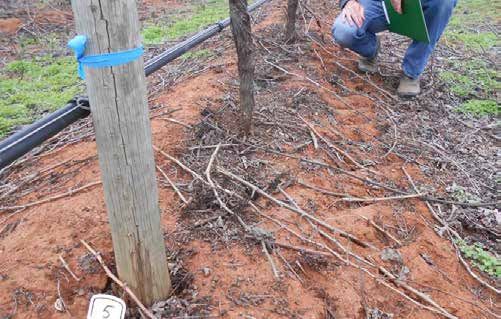
Crop safety
 When applied as per label directions, Chateau has been proven to be safe
 to both young (>1 year old) and established vines and trees.

 SAFETY TO YOUNG VINES AND TREES

 Recommendation is not to apply to vines or trees established in the
 vineyard/orchard for less than 1 year and do not apply on green bark.

 Observations from trial at Piangil, Northwest Victoria, 2014:
 •	Vines were 8 months old (since planting) Bordeaux vines.
 •	Chateau at 700 g/ha applied with glyphosate to rough bark and green bark.
 •	No phyto observed from either direct or soil uptake (bud burst numbers assessed).

 SAFETY TO ESTABLISHED VINES                                                                                                                                     Measurement’s taken to check
 Chateau in Sauvignon Blanc grapes: Swan Hill VIC H13-013                                                                                                        crop safety included:
 No long term effect on vine health                                                                                                                              •	Visual assessments of crop health.
                                         100                                                                      Untreated                                      •	Visual assessments of leaves and
Bunches per 2 m row or bunch mean mass

                                                                                                                  Chateau 630 g/ha                                  fruit for marking / damage.
                                          80
                                                                                                                  Chateau 770 g/ha                               •	Measurement of plant
                                          60
                                                                                                                                                                    height / growth.
                                          40                                                                                                                     • Measurement of root mass.
                                          20                                                                                                                     • Early season fruit / nut counts.

                                           0                                                                                                                     • Final crop yield.
                                                  Bunches / 2 m row                Bunch mass (g)

                                                                      Bunch

 SAFETY TO YOUNG ALMONDS                                                                             SAFETY TO ALMONDS
 Chateau in young almonds: Wemen VIC H15-007                                                         Chateau in almonds: Kenley VIC H14-016
 1 year old trees; 2 applications in May and July;                                                   4 year old trees; Applied in May and July + November;
 Assessed January; No effect on tree growth                                                          Harvest assessment; No effect on yield

                                          60                                                                                                  0.11
                                                                                                    Kg almonds per sqcm trunk cross section
Increase in tree height (cm)

                                          40                                                                                                  0.10

                                          20                                                                                                  0.09

                                           0                                                                                                  0.08
                                                                 Height increase                                                                                            Yield

                                               Untreated                                                                                             Untreated
                                               C
                                                hateau 700 g + Glyph 1.5 L x 2 applications                                                         Chateau 700 g May application
                                               Glyph 1.5 L                                                                                           Chateau 700 g July + November application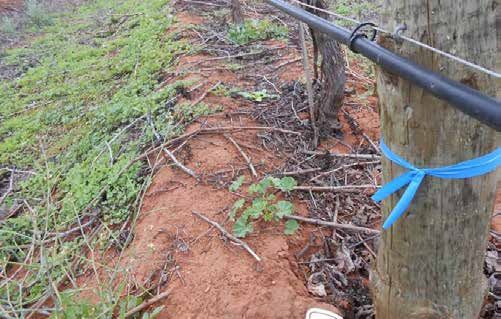
Chateau Technical Brochure

SAFETY TO FRUIT AND NUT CROPS
                                                            Chateau in the soil
Similar crop safety work has been carried out in
pome fruit, stone fruit, macadamia, olives, citrus, etc.    In addition to being safe to the crop, Chateau
No negative effects noted when compared to                  poses no threat to soil health:
untreated controls.                                         • Chateau does not move or leach.
                                                            • Chateau has no negative effect on earth worms.
                                                            •	Chateau has no negative effects on soil
                                                               microorganisms.

Best practice application to avoid crop damage
when using Chateau herbicide
CROP SAFETY                                                 DUSTY SITUATIONS

Chateau has excellent crop safety when used as              The other way Chateau can come into contact with
directed. The only way Chateau can cause damage to          crops is through soil treated with Chateau being blown
the crop is direct contact with roots, foliage or fruit.    onto fruit and foliage. Under the right conditions this
If Chateau is applied in accordance with the label          dust can cause spotting. Applying Chateau at the
directions this will not occur.                             correct time in the correct conditions will ensure this
                                                            does not occur.

CORRECT TIMING AND SPRAYER SET UP
                                                            PLANTING INTO CHATEAU TREATED GROUND
Chateau is not volatile, so the most likely way for
contact to occur is overspray or spray drift. This can be   Chateau will not move through the soil to contact crop
avoided by correct timing of application and correct        roots, even in the case of feeder roots near the surface
sprayer set up. It is important to remember that            in light soils that maybe concentrated near irrigation
equipment that has been previously set up, calibrated       drippers. However, contact could be made when
and used for applying other herbicides under trees and      planting new trees/vines into an area previously treated
vines may be allowing spray to drift onto foliage or        with Chateau. If replanting trees with 12 months of an
fruit. As damage from spray drift may be hard to pick       application the top 3 cm of soil from a 0.5 m radius
up visually, depending on the herbicide used                around the tree/vine must removed before the hole
(e.g. glyphosate). Whereas Chateau drift may be visible     is dug, and special care taken to ensure none of the
as spotting.                                                surface soil ends up in the hole or contacting the
                                                            new tree.

                                                            To ensure correct application of Chateau please
                                                            make note of the RESTRAINTS and refer to the
                                                            label for more information.

                                                                                                                     ®

                                                                                H   E   R   B   I   C    I   D   E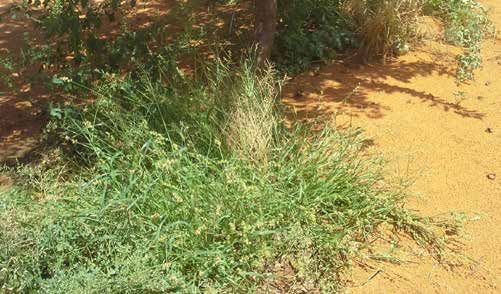
Getting the best out of Chateau Herbicide
•	Application should be during the main rainfall period       •	If sweeping pruning material from under the vines or
   and before heavy weed growth. This will vary by                trees, do this before applying Chateau.
   region, from post-harvest in autumn for southern            •	Don’t apply over the top of mulch. If mulch is to be
   regions, to early spring before bud burst in more              applied, Chateau should be applied first.
   central areas, to post harvest in the summer rainfall
                                                               •	Large weeds need to be knocked down before
   areas of the north.
                                                                  Chateau application as they may prevent Chateau
•	Wait until significant soil wetting rain has occurred and      reaching the soil.
   more rain (at least 15 mm) is likely within a week,
                                                               •	Apply with about 250 L water/Ha in an even band.
   or the soil can be irrigated with sprinklers.
                                                               •	Don’t apply in high pH water (pH >7) or allow the spray
•	Avoid heavy trash on the ground.
                                                                  mix to stand overnight.
•	Avoid soil disturbance as this will disrupt the Chateau
                                                               •	Tankmix with a knockdown if small weeds are
   treated zone.
                                                                  present – Ensure rate of knockdown is sufficient to kill
                                                                  existing weeds.

Prior to applying Chateau Herbicide it is important to assess the ground conditions under your trees or vines.

The area under the crop here is            Here there are some small green          In a situation like this where you
quite clear of green weeds and             weeds coming through and also            have a large number of broadleaf
also free of trash such as prunings        some light trash. In this situation      and grass weeds coming through
and is the ideal situation for             you can mix a knockdown                  already, you should burn them
applying Chateau.                          herbicide with Chateau.                  down with a knockdown herbicide
                                           The knockdown will take out the          first before applying Chateau.
                                           green weeds and the Chateau              This will allow the Chateau to
                                           will get through the light trash to      reach the soil, rather than being
                                           deliver residual control.                blocked by the green weeds.

Don’t apply Chateau over excessive weed growth or trash.

Too much weed growth. Needs                Too much organic matter                  Right conditions for Chateau
to be controlled with a knock down         covering the soil.                       application. Minimal weed
and allowed to rot down.                                                            growth / organic matter to stop the
                                                                                    Chateau reaching the soil surface.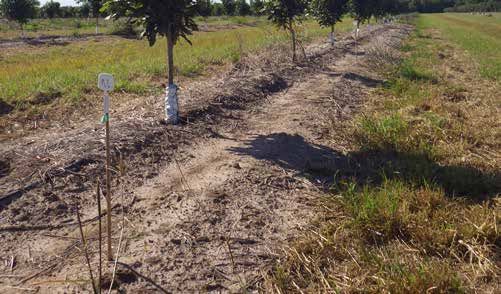
Chateau Technical Brochure

Compatibility
Chateau Herbicide is compatible with:
• Glyphosate 450
• Roundup® Max Herbicide by Monsanto
•	Nufarm Weedmaster® DST® or Nufarm Weedmaster Argo® Dual Salt Technology Herbicide
• Spray.Seed® 250 Herbicide
• Gramoxone® Herbicide
•	Hasten™, Kwickin and Banjo® at 0.5 - 1 L/100 L and with Uptake™ at 0.5 L/100 L
•	Glufosinate

Directions for use
    CROP                                                                RATE
                            WEED CONTROLLED                                                CRITICAL COMMENTS
 SITUATION                                                          g/sprayed ha
                        Annual ryegrass (Lolium rigidum),                               CHATEAU Herbicide needs at least
                      Barnyard grass (Echinochloa colona),                            15 mm of irrigation or rain to activate,
                    Blackberry nightshade (Solanum nigrum),                          and therefore should be applied during
                       Bluetop (Ageratum houstonianum),                            the main rainfall period. Apply to bare soil
                       Capeweed (Arctotheca calendula),                              using a directed spray at the base of the
                            Crassula (Crassula colorata),                                       vines or tree crops.
                     Creeping speedwell (Veronica persica),                            When large weeds are present use a
 Grapevines
                            Crowsfoot (Eleusine indica),                            knockdown herbicide at the full rate and
 Pome fruit
                  Dwarf nettle or stinging nettle (Urtica urens),                  ensure trash is minimal before application
 Stone fruit
                         Fat Hen (Chenopodium album),                                        of CHATEAU Herbicide.
 Citrus fruit
                    Feathertop Rhodes grass (Chloris virgata),                      CHATEAU Herbicide can be applied with
  Tree nuts
                          Fleabane (Conyza bonariensis),                            a knockdown herbicide over small weeds
    Olives
                 Green summer grass (Brachiaria subquadripara),      560 - 700                      (
DIRECTIONS FOR USE (Continued)

RESTRAINTS
DO NOT apply by air.                    DO NOT operate machinery such           DO NOT replant dead trees or vines
                                        as mowers and sprayers that may         within 12 months of an application
DO NOT apply for residual weed          blow treated dust onto leaves and       unless the top 3 cm of soil from a
control until the start of the main     fruitlets until at least 15 mm of       0.5m radius around the tree/vine
rain season when significant soil       sprinkler or microjet irrigation has    to be replaced is removed before
wetting rain has occurred and           been applied to the entire sprayed      the hole is dug. Then ensure when
more rain (at least 15 mm) is likely    area or 15 mm of rain has fallen.       planting not to get any of this
within one week, or the soil can                                                surface soil into the hole or up
be irrigated within one week with       DO NOT mow the treated area             against the newly planted tree/
sprinklers or microjets that cover      between application and final           vine.
the entire sprayed area. Dripper        harvest unless the operator can
irrigation will not give adequate       ensure that any dust from mowing        DO NOT apply in high pH water
incorporation.                          will not drift on to foliage and        (pH >7) or allow the spray mix to
                                        fruit. Raising the mower height will    stand overnight.
DO NOT apply in areas prone to          reduce this risk.
strong winds or to powdery soils                                                DO NOT disturb treated soil surface
or soils that are susceptible to wind   DO NOT apply to farm roads or           after application.
displacement unless sprinkler or        tracks where vehicle traffic may
microjet irrigation can be applied      result in treated dust settling on to   DO NOT treat weeds under poor
immediately after application to        foliage and fruit.                      growing or dormant conditions
cover the entire sprayed area.                                                  (such as occur in drought,
                                        DO NOT apply to grapes, fruit           waterlogging, disease, insect
DO NOT apply to apples, pears and       or nut trees established in the         damage or following frosts) as
stone fruit in the period between       vineyard/orchard for less than          reduced control may result. Weeds
bud break/green tip and final           1 year.                                 should be actively growing at time
harvest. Only apply to dormant                                                  of treatment.
trees.                                  DO NOT apply on bark that is still
                                        green.                                  DO NOT apply by misting machines.
DO NOT apply to grapes, citrus
and olives in the period between        DO NOT use in vineyards or              DO NOT apply more than 2
flowering and final harvest.            orchards where the fruiting buds        applications of 700 g in one year.
                                        are below 40 cm above the soil.
DO NOT apply to grapes, citrus,                                                 APVMA COMPLIANCE
olives and nut trees during the         DO NOT apply to grapes that are         INSTRUCTIONS FOR MANDATORY
period after bud break, unless          not trellised or staked unless they     COARSE OR LARGER DROPLET SIZE
using shielded application              are free standing.                      CATEGORIES
equipment and applicator can
                                        DO NOT apply for residual control if    DO NOT apply with spray droplets
ensure spray drift will not come in
                                        a large population of big weeds is      smaller than a COARSE spray
contact with crop fruit or foliage.
                                        present or large amounts of trash –     droplet size category according to
Shielded applications during this
                                        as these may prevent the chemical       ‘APVMA Compliance Instructions
time period should not be made
                                        reaching the soil. Application over     for Mandatory COARSE or Larger
with glyphosate or products
                                        light trash should be followed by       Droplet Size Categories’ located
containing glyphosate.
                                        at least 15 mm of rain or sprinkler/    under GENERAL INSTRUCTIONS
DO NOT apply unless trees and           microjet irrigation over the entire     section of the label.
vines have low branches removed         sprayed area within 12 hours to
to prevent contact with the spray.      ensure good incorporation.
Chateau Technical Brochure
Recommendations for removal of Chateau residues
from spray equipment
Equipment with Chateau residue remaining in the system may result in crop injury to the
subsequently treated crop.
Spray equipment, including mixing vessels and nurse tanks, must be cleaned following Chateau application.
After Chateau is applied, the following steps must be used to clean the spray equipment:
1 2
ompletely drain the spray tank, rinse
C the spray tank with clean water
Fill
the sprayer thoroughly, including the and flush all hoses, booms, screens
inside and outside of the tank and all and nozzles.
in-line screens.
3
T op off tank, add 1 litre of 3% To enhance removal of Chateau from the spray
household ammonia for every 100 litres system, add a tank cleaner such as All Clear™ DS or
of water, circulate through sprayer for Kleenup™ Granular in place of ammonia. Follow the
five minutes, and then flush all hoses, instructions on the product label for these products.
booms, screens and nozzles for a All-Clear DS has very clear and detailed instructions
minimum of 15 minutes. If diaphragms on how to achieve effective decontamination. They
are being used on the spray boom, can be viewed on the AgNova website here:
loosen diaphragms before flushing the http://www.agnova.com.au/content/custom/
spray system, allowing cleaning solution products/downloads/All-Clearflowchart-AgNote.pdf
to spray through the open diaphragm. If
spray lines have any end caps, they must
4
be loosened before flushing the system,
allowing cleaning solution to spray Drain tank completely.
through the loosened caps.
5 6
dd enough clean water to the spray
A emove all nozzles and screens and rinse
R
tank to allow all hoses, booms, screens them in clean water.
and nozzles to be flushed for 2 minutes.
®
H E R B I C I D E®
H E R B I C I D E
QUICK REFERENCE GUIDE
Use Residual weed control in vineyards and orchards.
Packaging Box containing 6 x 350 g water soluble sachets.
Rate 560-700 g per sprayed hectare.
250 L/ha.
Water rate USE ONLY nozzles that the nozzles’ manufacturer has rated to deliver a COARSE,
a VERY COARSE or an EXTREMELY COARSE droplet size category.
Compatible with Glyphosate 450, Roundup Max Herbicide by Monsanto,
Nufarm Weedmaster DST or Nufarm Weedmaster Argo Dual Salt Technology Herbicide,
Compatibility
Spray.Seed 250 Herbicide,Gramoxone Herbicide, Hasten, Kwickin™ and Banjo at
0.5-1 L/100 L and with Uptake at 0.5 L/100 L.
Apples, pears, stonefruit: Before greentip/budburst or after final harvest.
Application timing
Grapes, citrus and olives: Before flowering or after final harvest.
Rainfall or irrigation Requires 15 mm of rain or sprinkler irrigation within a week of application.
Do not apply to significant weed or trash cover as this will prevent the product from
Existing weed cover reaching the soil. Heavy weed cover should be controlled with a knockdown herbicide
and allowed to rot down, before applying Chateau.
If spray droplets containing CHATEAU are allowed to drift onto fruit or leaves, or dust
Crop safety
from treated soil is blown on to fruit or leaves, they may cause spotting damage.
• Avoid soil disturbance as this will disrupt the Chateau treated zone.
• Large weeds need to be knocked down before Chateau application as they may stop
Chateau reaching the soil.
• Tankmix with a knockdown if small weeds are present – Ensure rate of knockdown is
Keys to getting the best from sufficient to kill existing weeds.
Chateau • Don’t apply over the top of mulch. If mulch is to be applied, Chateau should be
applied first.
• Don’t apply in high pH water (pH >7) or allow the spray mix to stand overnight.
• Don’t allow soil treated with Chateau to be blown onto fruit and foliage from
mowing or other operations in the vineyard/orchard.
For further information on Sumitomo Chemical products, please contact:
Patrick Press (QLD) 0417 085 160
Andrew Franklin (FNQ) 0408 063 371
Phil Glover (N NSW) 0418 668 586
Charles McClintock (S NSW) 0429 004 290
Barry Kerr (VIC & TAS) 0418 681 891
Imre Toth (WA) 0429 105 381 Scan here to see more
Frank Galluccio (W VIC & Riverina) 0418 502 466 information about
Fiona Hill (SA) 0438 864 498 Chateau Herbicide
OR our Sydney office: (02) 8752 9000
www.sumitomo-chem.com.au
Chateau is a registered trademark of Sumitomo Chemical Australia. ABN 21 081 096 255
Roundup is registered trademark of Monsanto Technology LLC.
Weedmaster, DST, Argo and Banjo are registered trademarks of Nufarm Australia Limited. Level 5, 51 Rawson Street
Hasten is a trademark of ICS, a member of VICTORIAN CHEMICALS GROUP Australia.
Gramoxone and Spray.seed are registered trademarks of a Syngenta Group Company. EPPING NSW 2121
Uptake is a trademark of The Dow Chemical Company (“Dow”) or an affiliated company of Dow.
Kleenup Granular is a trademark of SST Australia. TEL: (02) 8752 9000
All Clear is a trademark of AgNova Technologies.
Kwickin is the trademark of Gullf Ag Pty Ltd. FAX: (02) 8752 9099You can also read


