Flexcoat Friction-free Running - Your Partner for Sealing Technology
←
→
Page content transcription
If your browser does not render page correctly, please read the page content below
Flexcoat™
Friction-free Running

                   Your Partner for Sealing Technology
Flexcoat™ – Friction-free Running

    Optimized solutions for individual requirements

    30 years of coating expertise                                             Three Levels of working
    Trelleborg Sealing Solutions offers a wide range of surface treatments.   Providing the optimum solution for individual requirements, surface
    Their primary function is to improve the friction characteristics of      treatments from Trelleborg Sealing Solutions are the ideal choice;
    elastomer seals within production processes or their application. By      whether it is simply to improve handling, facilitate assembly or
    doing this, assembly forces are reduced, seals are prevented from         enhance overall performance.
    sticking together and permanent friction reduction is provided without
    the use of lubricants. In addition, the treatments contribute to the      Simple and economical handling aids meet requirements, such as
    efficiency of the total production process, with UV-indicators and        easy separation of parts while more advanced coatings and surface
    colors that aid quality checks and avoid mix-up of similar components     treatments are for specific applications. Micro-thin high-performance
    during storage or assembly.                                               coatings and surface modification provide the ultimate choice,
                                                                              maximizing friction characteristics during assembly and in dynamic
    Combining 30 years of experience in coating of elastomer seals with       applications.
    research studies and the latest technologies, our surface treatments
    are tailored to individual manufacturing requirements and the             With our three levels of surface treatment technology – handling aids,
    properties of the sealing materials. Taking into account the need to      assembly professionals and application professionals – Trelleborg
    make manufacturing processes as green as possible, we support our         Sealing Solutions can offer individual solutions for a wide range of
    customers with environmentally friendly products.                         critical applications.

                                                                              The Application Professionals combine their advanced
                                                                              benefits with those of the Assembly Professionals, while all
                                                                              surface treatments perform well as Handling Aids.

                                                                                            The Application Professionals
    Improved capabilities, through technical innovations                                             dry surface finishes
    Easy component assembly, low breakaway forces and longer service                               for permanent reduction
    life cannot, in most cases, be achieved through the development of                                of friction and wear
    elastomer materials alone. Properties of the sealing elements, in
    particular their surface finish, need to be optimized to broaden their
    application range. This requirement is being driven by manufacturers’
                                                                                             The Assembly Professionals
    need to save time, for safe and secure assembly, cleanliness and the
    shift of manual processes to automation.                                                       dry coating solutions
                                                                                                 for automated assembly
                                                                                               and reduced assembly forces

                                                                                                       Handling Aids
                                                                                             low-cost powders, waxes and oils
                                                                                                  for ease of separation
                                                                                                   and simple handling

2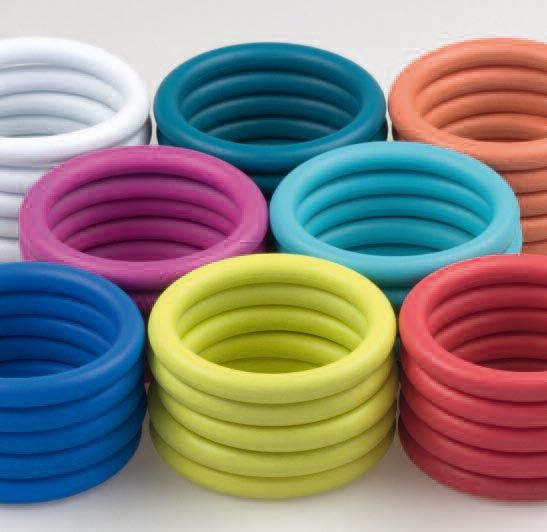
From the original seal to the coated solution

The Process flow                                                           Series production and sampling
Depending on the coating or surface treatment, the seals will pass         For the automated coating process a minimum quantity is required,
through different production steps. For Handling Aids these include        dependent on the seal’s size and material.
control, packaging and labeling.
                                                                           Small quantities of seals up to 100 pieces can be coated manually for
To ensure a high quality result, the micro-thin coatings of the Assembly   samples. This excludes Flexcoat™ LF color and CF color. However to
and Application Professionals are applied in a numerically controlled      get a reliable comparison, it is recommended to test samples from an
process. This has two additional cleaning stages followed by plasma        automated near-series production coating process.
activation, which guarantees a firm and permanent surface bond for
the elastic coating.

Diagram shows the process flow for Handling Aids, Assembly Professionals and Application Professionals:

                                             Pre-cleaning I                   Pre-cleaning II                          Plasma treatment

          Seal
                                                                                                   Seperation
                                                                                                                        Assembly and
                                             Handling aids                       Control
                                                                                                                   Application Professionals
                                                                                                   if necessary

                                                                           Packaging / labelling                              Delivery

Diagram of the coating process for Assembly Professionals and Application Professionals

                                                                                                                  Coating
                               Cleaning                                                                         substance /
                                agent                         Plasma                                            process gas

 1. Untreated              2. Pre-cleaning              3. Plasma            4. Clean and                  5. Coating /                  6. Coated /
    Seal                                                   activation           wettable                      treatment                     treated seal

                                                                                                                                                           3
Flexcoat™ – Friction-free Running
The Application Professionals
Micro-thin high-performance coatings and surface modification provide the ultimate choice, maximizing friction characteristics during assembly
and in dynamic applications.
Flexcoat™ PF Flexcoat™ SF
– Friction reduction polysiloxane – – High-performance friction reduction –
For the first time, this coating provides engineers with a true alternative SF coating is characterized by its outstanding level of resistance to
to oil lubrication. Black pigment dots ensure that with non-black seal wear and excellent friction properties in dynamic applications.
materials, the transparent coating can easily be seen. In addition our
proven UV-indicator allows detection of the coating during the Flexcoat™ DF
production process.
– Surface modification –
In this process, the surface of the elastomer seals is modified in the
Flexcoat™ LF transparent micrometer range. There is only a very slight effect on the physical
– Dynamic friction reduction – properties of the elastomer.
The primary aim of using LF coating is to reduce friction in dynamic
applications while assembly forces are significantly reduced. With the Application examples
use of the transparent LF coating, the color of the sealing material is
• Automated assembly
preserved.
• Reduction of assembly forces particularly where there are frequent
assembly and dismantling operations
Flexcoat™ LF color • Seals in plug-fit or quick-release couplings
With the same performance characteristics as the transparent version, • Seals in valves
colored LF coatings allow differentiation of similar seals, preventing • Seals in push buttons
mix-up during the production process. Colors available: yellow, orange, • Seals in dynamic applications at low speeds and with short stroke
red, blue, white, brown and green. lengths.
es
2
lin
1
)
ge
ss
ce
e
uid
ls
ran
e
rfa
kn
na
fes on
/g
(su
ure
hic
ce
sio
Pro icati
n
als
ran
rat
t
s
tio
es
ng
v
pe
a
tec
rdn
pro
pl
ati
r
pe
e
lo
m
Typ
Ap
Co
De
Co
Ha
Ap
Ap
Te
Flexcoat™ transparent, UV-indicator, no substances requiring
coating, 2 – 10 µm -45 °C to +175 °C up to
with black reference declaration according to dry
PF Polysiloxane
pigments samples
78.74 – 393.1 µin -49 °F to +347 °F
VDA 232-100
+4 IRHD
Flexcoat™ no substances requiring
coating, 2 – 10 µm -40 °C to +150 °C up to
transparent UV-indicator declaration according to dry
LF transparent PTFE 78.74 – 393.1 µin -40 °F to +302 °F
VDA 232-100
+4 IRHD
yellow,
Flexcoat™ no substances requiring
coating, orange, red, 2 – 10 µm -40 °C to +150 °C up to
UV-indicator declaration according to dry
LF color 4 PTFE blue, white, 78.74 – 393.1 µin -40 °F to +302 °F
VDA 232-100
+4 IRHD
brown, green
Flexcoat™ no substances requiring
coating, 2 – 10 µm -40 °C to +150 °C up to
black UV-indicator declaration according to dry
SF PTFE 78.74 – 393.1 µin -40 °F to +302 °F
VDA 232-100
+4 IRHD
Flexcoat™ chemical reference up to
— — like NBR KTW possible dry
DF modification samples +4 IRHD
1 Important: The coating thickness is not quoted as a capability criterion but is 3 Dependent on the part and the material, has to be requested specially
for guidance only, deviations are possible depending on part geometry 4 Available for special materials from Maltese production only
2 Only valid for coating layer
4 Please note the disclaimer on page 11
Advantages
• Prevent parts sticking together during packaging or handling
• Improve the automatic supply or separation of seals
• Simplify the assembly and dismantling of seals, in manual or
automated assembly
• Reduce insertion forces
• Optimize the dynamic use of elastomer seals
• Decrease the tendency of elastomer seals to stick to mating
surfaces even after extended periods of rest
• Reduce “stick-slip” effect
• Increase wear resistance of elastomer seals in dynamic
applications
Benefits
• Save time and enhance safety and security of assembly
• Cleaner process reduces associated time and cost for maintenance
• Ensure shorter process-flow times
• Increase opportunities for the use of simple and cost-effective elastomer seals
• Extend service life due to better wear properties and increased assembly safety
• Improve safety and security of elastomer seals used in valves, as they are less
likely to seize up
/
ly force
gs
t) use
es
n
din
ly
tio
3
se ion
as ly /
mb
typ
ce
ts
oa
t li amic
lity
rea
ara
ics
er t
mb
se
ec
b
oti
cl
ial
ua
-on sem
s
na
ep
ip f
mi
ist
ea ins
eff
no
ge
ith dyn
tn
mi
ter
-fre in
eq
/s
tio
ter
ly
s
na
on r as
nta
an
La lable
sti ctio
ma
rep ed
ta
l
ou
ca
-sl
c
a
dy
rt
ly
c
ara
r
va
sie
du
du
ne
se
pli
ck
pp
po
ce
bs
ai
w
Ad
Ch
Ba
Re
Re
Ge
Ap
Su
Im
Ea
(w
Av
Lo
all types of elastomers,
computer-controlled,
except
secure process,
Silicones / Fluorosilicones
contains Silicone yes I+A • • • • • •
water-based
(depending on formulation)
all types of elastomers,
computer-controlled,
PU, except
secure process,
Silicones / Fluorosilicones
— yes I+A • • • • • •
water-based
(depending on formulation)
all types of elastomers,
computer-controlled, friction values may
except
secure process,
Silicones / Fluorosilicones
differ from no A • • • • • •
water-based LF transparent
(depending on formulation)
all types of elastomers,
computer-controlled,
except
secure process,
Silicones / Fluorosilicones
— yes I+A • • • • • •
water-based
(depending on formulation)
environmentally -
friendly process
only NBR (black) no coating layer yes I+A • • • • • •
I = Industrial applications • = fully capable
A = Automotive applications, high volume • == partly capable
– not applicable
5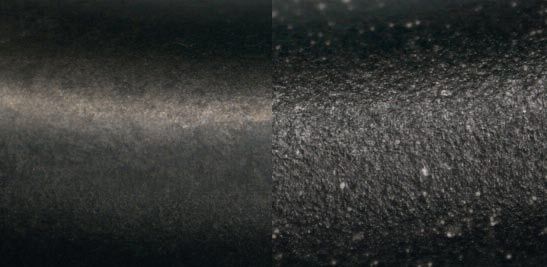
Flexcoat™ – Friction-free Running
The Assembly Professionals
The Assembly Professionals are suited to both manual and automated assembly, ensuring friction-free running of assembly processes.
Flexcoat™ FF Flexcoat™ MF
– FDA assembly aid – – For easier assembly –
Flexcoat™ FF is a coating that has been specifically developed for Flexcoat™ MF is the alternative to lubrication, guaranteeing safety and
hygienic processing environments. As required for food and beverage security within automated assembly processes. Its dry surface
processing, it is FDA compliant. In addition, it complies to the German improves handling without contaminating the system.
Lebensmittel- und Bedarfsgegenständegesetzes (LMBG) §5 para. 1,
§31 para. 1 and to the standards of the Umweltbundesamtes (UBA) Flexcoat™ AMF
(German Federal Environmental Agency (FEA)) for organic coatings
– Automotive assembly aid –
used in potable water valid for the area D2 (seals).
Flexcoat™ AMF is a semi-permanent coating that eases assembly
primarily in automotive applications. It is modified dependent on
Flexcoat™ CF color materials.
– Colored assembly aid –
Flexcoat™ CF is a dry coating which is used to reduce assembly and Application examples
plug-in forces. Available in pink and turquoise it is ideal for segregation
• Manual and automated assembly
of similar seals in production processes.
• Once-only and repeated assembly processes
• Reduction of assembly and plug-in forces
MaxWax®
MaxWax® is a waxy coating which can be used as a substitute for
lubricants to ease assembly. Its use is dependent on the material.
es
2
n
1
eli
)
ge
ss
ce
uid
ls
an
ne
rfa
na
er
/g
ck
su
fes y
ce
sio
tur
thi
s(
Pro mbl
on
ls
n
era
ara
es
va
ng
cti
se
rdn
pro
ati
mp
lor
pe
te
e
Typ
As
Co
De
Co
Ha
Ap
Ap
Te
FDA compliant, conform
Flexcoat™ coating, transparent reference 2 – 10 µm -40 °C to +150 °C to LMBG, §5 para. 1 and up to
dry
FF PTFE (milky) samples 78.74 – 393.1 µin -40 °F to +302 °F §31 para. 1 and to the +4 IRHD
standards of UBA
Flexcoat™ coating, pink, reference 2 – 10 µm -30 °C to +140 °C up to
— dry
CF color PTFE turquoise samples 78.74 – 393.1 µin -22 °F to +284 °F +4 IRHD
like the
reference -40 °C to +150 °C dry,
MaxWax®5 wax transparent
samples
n/a
-40 °F to +302 °F
— base
waxy
material
Flexcoat™ up to no substances requiring
coating, 2 – 10 µm up to
transparent UV-indicator +175 °C declaration according to dry
MF PTFE 78.74 – 393.1 µin
+347 °F VDA 232-100
+4 IRHD
Flexcoat™ no substances requiring
coating, 2 – 10 µm -40 °C to +150 °C up to
transparent UV-indicator declaration according to dry
AMF 5 PTFE 78.74 – 393.1 µin -40 °F to +302 °F
VDA 232-100
+4 IRHD
1 Important: The coating thickness is not quoted as a capability criterion but is 3 Dependent on the part and the material, has to be requested specially
for guidance only, deviations are possible depending on part geometry 4 Available for special materials from Maltese production only
2 Only valid for coating layer 5 Available for special materials from Swedish production only
6 Please note the disclaimer on page 11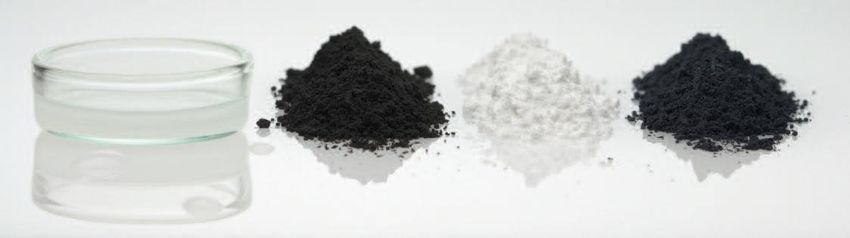
Advantages
• Prevent parts sticking together during packaging or handling
• Improve the automatic supply or separation of seals
• Simplify the assembly and dismantling of seals, in manual or
automated assembly
• Reduce insertion forces
Benefits
• Save time and increase safety and security in assembly
• Cleaner process reduces associated time and cost for maintenance
• Ensure shorter process-flow times
• Extend service life due to enhanced assembly safety
• Improve friction properties
• Improve safety and security of elastomer seals used in valves, as
they are less likely to seize up
/
ly force
gs
t) use
es
n
din
ly
tio
3
se ion
as ly /
mb
typ
ce
ts
oa
t li amic
lity
rea
ara
ics
er t
mb
se
ec
b
ti
cl
ial
ua
-on sem
s
na
no
ep
ip f
mi
ist
ea ins
eff
no
ge
ith dyn
mi
ter
-fre in
eq
/s
tio
nt
ter
ly
s
na
on r as
nta
La lable
sti ctio
ma
rep ed
ta
r ta
l
ou
ca
-sl
c
a
dy
ly
c
ara
r
va
sie
du
du
ne
se
pli
ck
pp
po
ce
bs
ai
w
Ad
Ch
Ba
Re
Re
Ge
Ap
Su
Im
Ea
(w
Av
Lo
computer-controlled,
all types of elastomers
secure process,
(depending on formulation)
— yes I+A • • • • • –
water-based
all types of elastomers,
computer-controlled,
except contains
secure process,
Silicones / Fluorosilicones Polysiloxane
no I+A • • • • • –
water-based
(depending on formulation)
mixture of paraffins
contains non
and synthetic all types of elastomers
migrating Silicone
no I+A • • • – • –
waxes
all types of elastomers,
computer-controlled, not permanent,
except
secure process,
Silicones / Fluorosilicones
storage not yes I+A • • – – – –
water-based recommended
(depending on formulation)
all types of elastomers,
computer-controlled,
except
secure process,
Silicones / Fluorosilicones
— no A • • – – – –
water-based
(depending on formulation)
I = Industrial applications • = fully capable
A = Automotive applications, high volume • == partly capable
– not applicable
7
Flexcoat™ – Friction-free Running
The Handling Aids
The simple and economical handling aids facilitate basic requirements, such as easy separation of parts along with other assembly processes
like feeding and insertion.
Talcum powder coating Graphite powder coating
Applied to the seal as a loose powder coating the talcum prevents Graphite powder forms a dry lubricating film and is primarily used to
parts sticking together during packaging and simplifies handling. ease separation and assembly of parts.
MoS2 powder coating Elastolub 013
A dry lubricating film, MoS2 is applied by tumbling onto the seal Elastolub 013 is a silicone fluid-based lubricant. The substance is
surface. It is primarily used for separation of elastomer seals. applied to seals in a drum and adheres very well to the elastomer
Long-term friction reduction can be achieved by deposition of surface. Forming a thin lubricating film it has a tendency to make
slide-promoting substances in the hollows of mating surfaces. seals stick together slightly so is not recommended for automated
assembly.
Application examples
• To prevent parts sticking together
• Manual seal assembly
• Automated seal assembly
es
2
n
1
eli
)
ge
ss
ce
ids
uid
an
ne
rfa
er
/g
ck
gA
su
ce
tur
thi
s(
on
ls
n
lin
era
ara
es
va
ng
cti
nd
rdn
pro
ati
mp
lor
pe
te
e
Typ
Ha
Co
De
Co
Ha
Ap
Ap
Te
Talcum powder reference like base like base dry,
white n/a —
powder coating coating samples material material powder
MoS2 powder reference like base like base dry,
anthracite n/a —
powder coating coating samples material material powder
Graphite powder reference like base like base dry,
grey / silvery n/a —
powder coating coating samples material material powder
lubrication reference like base like base
Elastolub 013 based on oil
transparent
samples
n/a
material
—
material
oily
1 Important: The coating thickness is not quoted as a capability criterion but is 3 Dependent on the part and the material, has to be requested specially
for guidance only, deviations are possible depending on part geometry
2 Only valid for coating layer
8 Please note the disclaimer on page 11
Benefits
• Provide time savings in assembly
Advantages • Ensure shorter process-flow times
• Cost-effective solutions with good performance
• Prevent parts sticking together during packaging or handling
• Facilitate the separation of seals
• Improve the gliding properties of seals during manual assembly
operations
• Rapid availability due to their simple production process
/
ly force
gs
t) use
es
n
din
ly
tio
3
se ion
as ly /
mb
typ
e
ts
oa
t li amic
lity
rea
ara
tic
ics
er t
mb
se
ec
b
cl
ial
ua
-on sem
es
na
no
ep
ip f
mi
ist
ea ins
eff
no
ith dyn
mi
ter
-fre in
eq
g
/s
tio
nt
ter
ly
s
na
on r as
nta
La lable
sti ctio
ma
rep ed
ta
r ta
l
ou
ca
-sl
rac
a
dy
ly
c
r
va
sie
du
du
ne
se
pli
ck
pp
po
ce
bs
ai
w
a
Ad
Ch
Ba
Re
Re
Ge
Ap
Su
Im
Ea
(w
Av
Lo
contamination
— all types of elastomers possible due to no I+A • • – – – –
wear
contamination
possible due to wear,
— all types of elastomers absorption of MoS2 no I+A • • • • • –
through base
material possible
contamination
— all types of elastomers possible due to no I+A • • • – – –
wear
contains Silicone,
parts tend to stick,
Silicone oil with all types of elastomers, not for automated
solid lubricants except Silicones assembly, absorption
no I+A • • • – – –
through base
material possible
I = Industrial applications • = fully capable
A = Automotive applications, high volume • == partly capable
– not applicable
9Flexcoat™ – Friction-free Running
Technical Information
Differentiation and detection options
Several options are available to provide evidence of coating or to
differentiate between seals that appear to be almost identical.
The UV-indicator
Most of the Assembly and Application Professionals provide a
UV-indicator.
This will be highlighted under ultraviolet lamps, the shade and
brilliancy varying from white to violet, dependent on the coating
and on seal material. This can be used for 100 percent detection
of coating.
It is recommended to only use lamps with long wave ultraviolet light
as this provides the best brilliancy and protects eyesight.
Colored coated O-Rings
Cleanliness and residue analysis
Modern sealing technology involves washing, Labs-free cleaning and
Uncoated and coated seal under UV-light residue analysis. With coated seals several important issues have to
be considered.
Colored coatings Washing
The primary function of any coating is to improve the friction Washing of seals after coating is not usually recommended as
characteristics of an elastomer seal. In addition, colored coatings depending on the washing method and agent, the coating can be
enable effective differentiation of seals and 100 percent detection in damaged. However, in some cases washing is possible.
production and assembly process.
Residue analysis
Color-coding allows segregation of seals that appear to be similar To determine residue on the seal surface we recommend the use of
during assembling or storage. This prevents mix-ups, which can lead to wdk (the trade association of the German rubber industries) guideline
leakage or seal failure. In addition, lighter colors can be more easily number 2111. For coated seals only the sputtering method is
detected in a black or dark assembly during end of line quality checks. applicable. Using an ultrasonic bath may damage the coating.
Flexcoat™ CF color is available in pink and turquoise. Flexcoat™ LF for Labs-free cleaning for automotive lacquering applications
dynamic applications is available in yellow, orange, red, blue, white, Substances such as processing aids, softeners or similar ingredients
brown and green. Detailed information regarding the coatings can be within seals can potentially contaminate sensitive automotive
found on pages 4 to 7. lacquering process. Acting similarly to silicone oils, they can cause
‘dimples’ on the lacquer surface which are not allowed.
10A high-tech ‘Labs-free’ cleaning regime is used to remove these Standard analyses
substances from within or on the surface of the seal as specific by Various standard analyses, always done under the same conditions,
the Volkswagen test specification ‘Colors and Lacquers’ PV 3.10.7. allow the comparison of different methods of friction reduction.
If seals have been cleaned using the ‘Labs-free’ method, once Assembly force tests
packaging has been opened, any unused seals remaining within it The following graph shows the necessary plug-in forces for the
should be discardeed. For information on suitable packaging, please multiple assembly of O-Rings in a standard application. Tests have
contact your local Trelleborg Sealing Solutions Marketing Company. been run comparing uncoated O-Rings to coated ones with silicone
oil treated parts used as piston seals. The O-Ring size was
Almost all coatings or treatments from the Assembly and Application 20.29 × 2.62 mm / 0.8 × 0.1 inches combined with a compression
Professionals can be delivered in Labs-free quality. Please find further of approximately 20 %.
information in the tables on pages four to seven.
Local marketing companies at your service
To identify the optimum seal for your application, contact your local
marketing company. To locate this see the back cover of this brochure
or go to www.tss.trelleborg.com.
Tests and analyses
O-Ring assembly
Test results exist on the friction properties of seals with and without NBR with PA66 counterpart
surface treatments. Various movement types are simulated, forces 300
measured and surfaces microscopically inspected. These results can
only be used as a general guide.
250
Due to the interaction of parameters influencing friction, customers
should preferably undertake their own tests within their specific 200
Assembly force [N]
application. Alternatively the seals should be tested within
components that make up the final assembly.
150
Surface analyses
In general coatings improve the friction coefficient of elastomer seals. 100
A major contribution to this improvement is the change in surface
structure caused by coating.
50
The microscopic examination of the surface of coated and uncoated
seals shows significant differences in the structure. In most cases the 0
NBR LF SF FF PF Siliconized
coated seal will have a rougher texture. untreated
Average 1. insertion Average 2. insertion Average 3. insertion
Assembly forces of O-Rings
Disclaimer:
The given application limits for temperature are maximum values
determined in laboratory conditions. In application, due to inappropriate
interaction media the temperature resistance of a coating may be influenced
negatively. The application temperature has to be adopted accordingly.
Furthermore in all cases, reduction in friction is dependent on the
application parameters. This should be tested in conjunction with the
surface treatment before specification.
Surface of an uncoated seal (left) and of a seal coated with Flexcoat™ SF (right)
11Contact your local marketing company for further information:
Europe Telephone Americas Telephone
AUSTRIA - Vienna +43 (0) 1 406 47 33 AMERICAS - REGIONAL +1 260 749 9631
(ALBANIA, BOSNIA AND HERZEGOVINA,
BRAZIL - São Paulo +55 11 3372 4500
MACEDONIA, SERBIA AND MONTENEGRO, SLOVENIA)
CANADA - Etobicoke, ON +1 416 213 9444
© 2008 Trelleborg Group. At time of publication the information contained in this literature is believed to be correct and accurate.
BELGIUM - Dion-Valmont +32 (0) 10 22 57 50 MEXICO - Mexico City +52 55 57 19 50 05
(LUXEMBOURG)
USA, East - Conshohocken, PA +1 610 828 3209
BULGARIA - Sofia +359 (0)2 969 95 99 USA, Great Lakes - Fort Wayne, IN +1 260 482 4050
(ROMANIA)
USA, Midwest - Lombard, IL +1 630 268 9915
CROATIA - Zagreb +385 (0) 1 24 56 387
USA, Mountain - Broomfield, CO +1 303 469 1357
CZECH REPUBLIC - Rakovnik +420 313 529 111
(SLOVAKIA) USA, Northern California - Fresno, CA +1 559 449 6070
DENMARK - Hillerød +45 48 22 80 80 USA, Northwest - Portland, OR +1 503 595 6565
FINLAND - Vantaa +358 (0) 207 12 13 50 USA, South - N. Charleston, SC +1 843 747 7656
(ESTONIA, LATVIA)
USA, Southwest - Houston, TX +1 713 461 3495
FRANCE - Maisons-Laffitte +33 (0) 1 30 86 56 00 USA, West - Torrance, CA +1 310 371 1025
GERMANY - Stuttgart +49 (0) 711 7864 0
GREECE +41 (0) 21 631 41 11 Asia Pacific Telephone
HUNGARY - Budaörs +36 (06) 23 50 21 21
ITALY - Livorno +39 0586 22 6111 ASIA PACIFIC REGIONAL +65 6 577 1778
THE NETHERLANDS - Barendrecht +31 (0) 10 29 22 111 CHINA - Hong Kong +852 2366 9165
NORWAY - Oslo +47 22 64 60 80 CHINA - Shanghai +86 (0) 21 6145 1830
POLAND - Warsaw +48 (0) 22 863 30 11 INDIA - Bangalore +91 (0) 80 2245 5157
(LITHUANIA, UKRAINE, BELARUS)
JAPAN - Tokyo +81 (0) 3 5633 8008
RUSSIA - Moscow +7 495 982 39 21 KOREA - Anyang +82 (0) 31 386 3283
SPAIN - Madrid +34 (0) 91 71057 30 MALAYSIA - Kuala Lumpur +60 (0) 3 9059 6388
(PORTUGAL)
TAIWAN - Taichung +886 4 2382 8886
SWEDEN - Jönköping +46 (0) 36 34 15 00 THAILAND - Bangkok +66 (0) 2732-2861
SWITZERLAND - Crissier +41 (0) 21 631 41 11 SINGAPORE
TURKEY +41 (0) 21 631 41 11 and all other countries in Asia +65 6 577 1778
UNITED KINGDOM - Solihull +44 (0) 121 744 1221
(EIRE)
AFRICA REGIONAL +41 (0) 21 631 41 11
MIDDLE EAST REGIONAL +41 (0) 21 631 41 11
www.tss.trelleborg.com
99GBOQBROQE0608You can also read


