PACIFIC GAS & ELECTRIC COMPANY (PG&E) TOPOCK COMPRESSOR STATION ENVIRONMENTAL CLEANUP UPDATE
←
→
Page content transcription
If your browser does not render page correctly, please read the page content below
CLEANUP PROGRAM                                                                                               FEBRUARY 2021

Department of Toxic Substances Control - Our mission is to protect the people, communities and environment of California from
harmful chemicals by cleaning up contaminated sites, enforcing hazardous waste laws, and compelling the development of safer products.

PACIFIC GAS & ELECTRIC COMPANY (PG&E) TOPOCK
COMPRESSOR STATION ENVIRONMENTAL CLEANUP UPDATE
The California Department of Toxic Substances Control               NTH IRZ. The interim measure system must be turned off to
(DTSC) is the lead state agency overseeing the soil and             avoid interference with the remedy.
groundwater investigation and cleanup at the Pacific Gas &
Electric Company (PG&E) Topock Compressor Station and               Start-up activities will include addition of ethanol into
adjacent land, collectively known as the Topock Site. The           the NTH injection wells to establish the reactive zone,
Topock Site is located in Bernardino County, California. This       conducting water level measurements, balancing the
Community Update provides the latest information about              chemistry in the groundwater, and adjusting the amount
the environmental investigation and cleanup activities at           of ethanol used as needed to ensure the best possible
the Topock Site.                                                    treatment conditions. It is typical to see a greater need
                                                                    for troubleshooting and system adjustments at the initial
FINAL GROUNDWATER REMEDY CONSTRUCTION,                              start-up phase since the subsurface conditions will change
STARTUP AND INITIAL OPERATION UPDATE:                               rapidly during this phase of operation.
DTSC and the U.S. Department of the Interior (DOI) selected
                                                                    PG&E plans to start up the NTH IRZ in the fall of 2021 and
“In-Situ Treatment with Freshwater Flushing” as the final
                                                                    monitor initial operation for approximately 24 months.
groundwater remedy for the Topock Site in 2011. The
                                                                    After this two-year period, additional components of the
concept of the remedy is to install a network of injection
                                                                    final remedy will be constructed (Phase 2). The timeline
and extraction wells along the National Trails Highway
                                                                    on the following page shows the sequence of the various
(NTH) approximately 600 feet west of the Colorado
                                                                    project phases. DTSC and DOI will conduct the first “5-year
River; this network of wells is called the In-situ Reactive
                                                                    review” in mid-2023 to assess the remedy performance and
Zone (IRZ). Ethanol will be added into the contaminated
                                                                    its degree of success in protecting human health and the
groundwater to stimulate the growth of naturally occurring,
                                                                    environment.
harmless and helpful bacteria. The bacteria will temporarily
alter the geochemical conditions in the groundwater and             DTSC and DOI staff will continue to provide oversight of
help convert hexavalent chromium (Cr(VI)) to non-soluble            the remedy, as well as providing regular updates to the
trivalent chromium. The area where the geochemical                  Consultative Work Group (CWG). PG&E also publishes
adjustment will occur is called the “reactive zone.” Several        monthly construction status reports which can be found at
injection wells located around the Cr(VI) groundwater               the project website at:
plume will pump freshwater into the groundwater aquifer to
push the contaminated water toward the reactive zone.               https://dtsc-topock.com/documents/cleanup-
                                                                    implementation/groundwater/construction-documents/
PG&E began construction of the final groundwater remedy             monthly-progress-reports
on October 2, 2018. A PG&E Public Information Office,
located at the northwest corner of Park Moabi Road and                    CONTENTS OF THIS COMMUNITY UPDATE
the NTH, was created to provide project information to
anyone interested, and to be accessible to answer questions           PAGE 1: Final Groundwater Remedy Construction,
on the status of the construction. Phase 1 of the remedy                      Startup, and Initial Operation Update
construction is substantially complete. It consists of the
                                                                      PAGE 2: Soil Investigation Report, Risk Evaluation, and
NTH IRZ and its supporting components, over 74,000
                                                                              Corrective Action
linear feet of conveyance pipes, 41,000 feet of electrical
conduits, 75 monitoring wells (for measuring water levels             PAGE 2: Soil Engineering Evaluation and Cost Analysis
and quality), and 22 remediation wells (for injection and/or          PAGE 2: Site Background and History
extraction). The installed components are being integrated            PAGE 3: Glossary of Terms
and tested to make sure they function properly. After
testing is complete, PG&E will inform DTSC and DOI. With              PAGE 4: Where to Find Project Information
DTSC and DOI agreement, PG&E will turn off the interim                PAGE 4: Whom to Contact at DTSC for More Information
measure system, which began in 2005, and turn on the
                                                                                                                                    5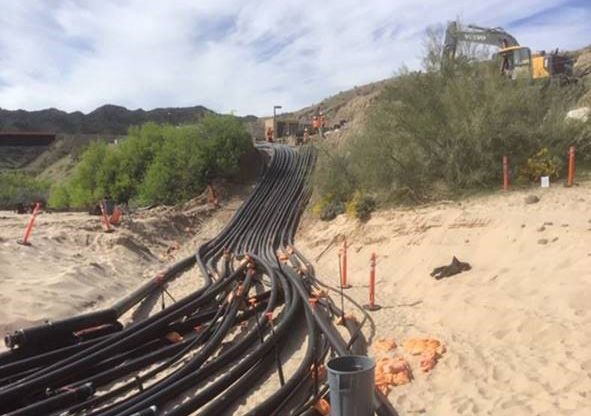
DEPARTMENT OF TOXIC SUBSTANCES CONTROL

                SOIL INVESTIGATION REPORT, RISK EVALUATION,                                                                     draft RFI/RI Report for soil was published in December
                AND CORRECTIVE ACTION:                                                                                          2019. PG&E is preparing a revised draft report based on
                Soil sampling related to soil investigation at the Topock                                                       comments received. Currently, a revised RFI/RI report is
                Site was conducted between December 2015 and March                                                              anticipated in May 2021. Subsequent to approval of the
                2016, January through March 2017, and the later part                                                            final RFI/RI Report, a Corrective Measure Study (CMS) for
                of April 2017. After the soil sampling activities, PG&E                                                         soil will be prepared to evaluate and select clean-up actions
                prepared a risk assessment by following the approved                                                            for the soil if found necessary.
                2008 Soil Risk Assessment Work Plan, its addenda in
                2009 and 2015, as well as additional direction from DTSC                                                        SOIL ENGINEERING EVALUATION
                provided in November 2017. The risk assessment provides                                                         AND COST ANALYSIS:
                a conservative estimate of potential human health threats                                                       Based on results of the soil investigation and the approved
                and ecological risks from chemicals detected in soil. The                                                       Soil Risk Assessment Report, DOI is evaluating a potential
                results of the risk assessment will be used by DTSC in the                                                      non-time critical removal action in areas with soil
                decisions on the need for soil cleanup.                                                                         contamination on federal lands and/or with potential to
                The final Soil Risk Assessment Report was approved by                                                           impact federal lands. A draft Soil Engineering Evaluation/
                DTSC and DOI in May 2020. The report concludes that                                                             Cost Analysis (EE/CA) to address contaminated soil on
                there is minimal unacceptable risk to human health and                                                          federal lands adjacent to the Topock Compressor Station
                wildlife exposed to contaminated soil at the site. However,                                                     was released for a 60-day public review and comment
                there are isolated areas with some potentially elevated                                                         period from June 3 to August 5, 2020. Recognizing the
                risks to campers, hikers, off-highway vehicle (OHV) riders,                                                     importance of the environmental investigations and
                and to desert shrews if there is prolonged exposure to the                                                      cleanup activities at the Topock Site to Tribal Nations who
                contaminated soil. DTSC will make a risk management                                                             have cultural ties to the surrounding land and the Colorado
                decision in consideration of the risk assessment for                                                            River, the U.S. Bureau of Land Management is conducting
                potential cleanup actions.                                                                                      consultation with Tribes on the Soil EE/CA. DOI received
                                                                                                                                comments on the EE/CA from Tribes, DTSC, and the
                Soil investigation results and the conclusions of the Soil                                                      Metropolitan Water District of Southern California in August
                Risk Assessment Report will be documented in the Soil                                                           2020. DOI prepared and sent responses to the commenters
                Resource Conservation and Recovery Act (RCRA) Facility                                                          in November/ December 2020. At this time, comment
                Investigation/Remedial Investigation (RFI/ RI) Report. A                                                        resolution is anticipated during the first quarter of 2021.

      2019                        2020                           2021                             2022                                2023                         2024                2025                            2026
        Q3          Q4   Q1      Q2      Q3      Q4         Q1   Q2     Q3     Q4       Q1      Q2       Q3       Q4       Q1       Q2        Q3      Q4     Q1   Q2   Q3   Q4   Q1   Q2      Q3    Q4       Q1      Q2       Q3

                                                                             Construction, Start-up, and Initial Operation
                                                                                (in phases, target completion for all systems – September 2025)

                    Phase 1-Construction of NTH IRZ
                      and Supporting Components                                                                                                                                                       Operations &
                          (See detailed project schedule)                                                                                                                                          Maintenance (O&M)
                                                                                                                                                                                                   (see O&M Manual for details)

                                                      End of Heavy       End of
                                                      Construction      System
                                                                      Integration/                                                        5       Agencies
                                                      Late May 2021    Functional                                                                 5-year
                                                                      Testing Late                                                                Review
                                                                       Sept 2021

                                                                                Start-up of NTH IRZ and Initial Operation
                                                                                                                                                          Phase 2:
                                                                                                                                                       Construction of
                                                                              Turn off IM                                                             Remaining System
                                                                                                                                                                               Start-up of
                                                                                                                                                                            Remaining System

                                                                                Regulatory and Mitigation Measures Compliance

                                                        On-going Consultative Work Group/Tribal Communication and Tribal Consultation

             LAC
                GROUNDWATER REMEDY CONSTRUCTION, START-UP, AND INITIAL OPERATIONS AND MAINTENANCE TIMELINE
PPS0630201601

                2
GLOSSARY OF TERMS:
Consultative Work Group (CWG): A group consisting of stakeholders,
Tribal Nations, and multiple state and federal agencies that have an
interest in the cleanup of the site. The CWG meets regularly to discuss
project status, actions and decisions.
Corrective Measure Study (CMS): A study conducted by the facility
owner/operator to identify and evaluate remedy alternatives (i.e., cleanup
options) to address contaminant releases at a site.
Department of the Interior (DOI): The United States department charged
with conservation and development of natural resources. The DOI uses
sound science to manage and sustain America’s lands, water, wildlife, and
energy resources, honors our nation’s responsibilities to tribal nations, and
advocates for America’s island communities.
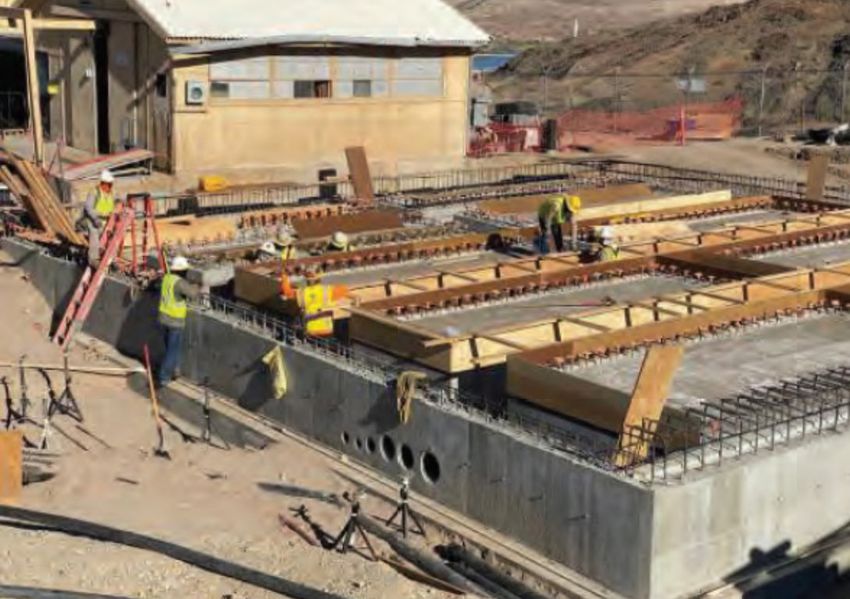
INSTALLATION OF PIPING AND CONDUITS IN Department of Toxic Substances Control (DTSC): The state department
THE FLOODPLAIN TO THE MW-20 BENCH within the California Environmental Protection Agency in charge of the
regulation of hazardous waste from generation to final disposal. DTSC
oversees the investigation and cleanup of hazardous waste sites.
SITE BACKGROUND AND HISTORY:
The Topock Compressor Station is located in eastern San Groundwater: Water beneath the Earth’s surface (aquifers) that flows
through soil and rock openings.
Bernardino County, about 12 miles southeast of the city of
Needles, California, south of Interstate 40, and one-half mile Groundwater Plume: A body of contaminated groundwater. The
west of the Colorado River. movement of a groundwater plume can be influenced by such factors as
local groundwater flow patterns, the character of the aquifer in which the
In 1951, the Station began compressing natural gas groundwater is contained, and the density of contaminants, as well as by
for transportation through pipelines to PG&E’s service operation of groundwater extraction and injection systems such as the one
area in central and northern California. As natural gas being constructed for the final groundwater remedy at the Topock Site.
is compressed, its temperature increases and must be Hexavalent Chromium (CrVI): Cr(VI) is a form of chromium, a metal
cooled. From 1951 to 1985, PG&E added chromium to the naturally found in rocks, soil, and the tissue of plants and animals.
water used in the cooling towers and other equipment to Hexavalent chromium can be found naturally at low concentrations,
prevent equipment corrosion. From 1951 to 1964, cooling but it is also used in industrial products and processes and is a known
tower wastewater containing Cr(VI) was discharged into a carcinogen.
natural wash adjacent to the Station. In addition, historical In-Situ Reactive Zone (IRZ): An interconnected series of injection and
operations at the Station have also resulted in contamination extraction wells installed along NTH to target and remediate Cr(VI)-
of soils located both outside and inside the fence line. Over impacted groundwater.
time, the Cr(VI) seeped into the groundwater and created In-Situ Treatment: Technology that treats contaminants in place within
a groundwater plume that extends from below the Station the soil or in groundwater. It typically involves injection of a material
towards the Colorado River. Based on results from periodic such as air, gases, chemical or biological reagents, or solid material
testing of the river water, the Cr(VI) contamination is not (e.g., molasses or lactose) to chemically alter the contaminant or to
impacting the quality of the river water. encourage bacteria in the soil to aid in the treatment.
Interim Measure: Short-term cleanup actions to protect public health
INSTALLATION OF A TANK FARM INSIDE THE and the environment while long-term solutions are being developed.
COMPRESSOR STATION TO MANAGE WASTEWATER
FROM THE GROUNDWATER REMEDY National Trails Highway (NTH): Also known as Route 66, more than
250 miles of the NTH are in the County of San Bernardino.
Remediation: Actions taken to remove or contain a toxic release or spill
of hazardous substances at a site.
Resource Conservation and Recovery Act (RCRA) Facility Investigation/
Remedial Investigation (RFI/RI): An RFI/RI is an investigation that occurs
in the corrective action process following a Facility Assessment under
RCRA and/or a Site Inspection under the Comprehensive Environmental
Response, Compensation, and Liability Act (CERCLA). It is an in-depth
study designed to gather data needed to determine the nature and extent
of risks posed by uncontrolled hazardous waste sites and for evaluating
the need for remediation.
Risk Assessment: A study prepared to assess health and environmental
risks due to potential exposure to hazardous substances.
Trivalent Chromium: A trace element that is naturally present in many
foods and available as a dietary supplement.
3WHERE TO FIND PROJECT INFORMATION
Soil Investigation reports, Final Design Report, Environmental Impact Reports, Soil Risk
Assessment, fact sheets/Community Updates, and other project documents can be found
online and at the Information Repositories listed below. Scan for additional
information on DTSC
Online: www.dtsc-topock.com/documents or sites through our
www.envirostor.dtsc.ca.gov/public/profile_report.asp?global_id=80001836 EnviroStor database.
PROJECT REPOSITORIES: Lake Havasu City Library
1770 North McCulloch Boulevard
Needles Branch Library Lake Havasu, Arizona 86403
1111 Bailey Avenue Phone: (928) 453-0718
Needles, California 92362 Hours of Operation:
Phone: (760) 326-9255 Monday & Wednesday: 9am – 6pm
Hours of Operation: Tuesday & Thursday: 9am – 8pm
Monday-Wednesday: 11am-7pm Friday & Saturday: 9am – 5pm
Thursday: 10am-6pm Sunday: Closed
Friday & Sunday: Closed
Saturday: 9:00am-5:00pm NOTE: Information Repository hours may be modified due
to COVID-19 restrictions.
Golden Shores/Topock Shores Library
13136 South Golden Shores Parkway
Topock, Arizona 86436 DTSC INFORMATION CONTACTS:
Phone: (928) 768-2235 Aaron Yue, Project Manager
Hours of Operation: Department of Toxic Substances Control
Monday, Friday & Sunday: Closed 5796 Corporate Avenue
Tuesday, Thursday & Saturday: 9am-1pm Cypress, California 90630-4732
Wednesday: 2pm-5pm Email: Aaron.Yue@dtsc.ca.gov
Phone: (714) 484-5439
Chemehuevi Indian Reservation
Environmental Protection Office Tim Chauvel, Public Participation Specialist
2000 Chemehuevi Trail Department of Toxic Substances Control
Havasu Lake, California 92363 5796 Corporate Avenue
Phone: (760) 858-1140 Cypress, California 90630-4732
Hours of Operation: Email: Tim.Chauvel@dtsc.ca.gov
Monday – Friday: 7:30am – 4pm Phone: (714) 484-5487
Saturday & Sunday: Closed
Colorado River Indian Tribe Library MEDIA INQUIRIES:
26600 Mohave Road Russ Edmondson, Public Information Officer
Parker, Arizona 85344 Department of Toxic Substances Control
Phone: (928) 669-1332 PO Box 806
Hours of Operation: Sacramento, California 95812-0806
Monday-Friday: 8am–5pm Email: Russ.Edmondson@dtsc.ca.gov
Saturday: 9am-1pm Phone: (916) 323-3372
Sunday: Closed
Department of Toxic Substance Control ALTERNATE FORMAT:
5796 Corporate Avenue Documents made available to the public by DTSC may
Cypress, California 90630 be made available in an alternative format (Braille, large
Phone: (714) 484-5337 format print, etc.) or in another language as appropriate,
Hours of Operation: in accordance with state and federal law. Please contact
Monday-Friday: 9am-noon & 1pm-4pm Tim Chauvel, DTSC Public Participation Specialist, for
*Please contact Julie Johnson for an appointment assistance with alternative formats.
4 DEPARTMENT OF TOXIC SUBSTANCES CONTROLYou can also read


