Guide on EU Fin ncing nd Funding Instruments for DSO projects - Eurelectric
←
→
Page content transcription
If your browser does not render page correctly, please read the page content below

Guide on EU Financing
and Funding Instruments
for DSO projects
Eurelectric represents the interests of the electricity industry in Europe. Our work covers all major issues affecting our sector. Our
members represent the electricity industry in over 30 European countries.

We cover the entire industry from electricity generation and markets to distribution networks and customer issues. We also have
affiliates active on several other continents and business associates from a wide variety of sectors with a direct interest in the
electricity industry.

We stand for
The vision of the European power sector is to enable and sustain:
-    A vibrant competitive European economy, reliably powered by clean, carbon-neutral energy
-    A smart, energy efficient and truly sustainable society for all citizens of Europe

We are committed to lead a cost-effective energy transition by:

investing in clean power generation and transition-enabling solutions, to reduce emissions and actively pursue efforts to become
carbon-neutral well before mid-century, taking into account different starting points and commercial availability of key transition
technologies;

transforming the energy system to make it more responsive, resilient and efficient. This includes increased use of renewable
energy, digitalisation, demand side response and reinforcement of grids so they can function as platforms and enablers for
customers, cities and communities;

accelerating the energy transition in other economic sectors by offering competitive electricity as a transformation tool for
transport, heating and industry;

embedding sustainability in all parts of our value chain and take measures to support the transformation of existing assets towards
a zero carbon society;

innovating to discover the cutting-edge business models and develop the breakthrough technologies that are indispensable to
allow our industry to lead this transition.

                                                Dépôt légal: D/2020/12.105/61

                                                                                                                         Contact:
 WG Business Models & Network Customers                                 Pierre BRAUN, Advisor Distribution & Market Facilitation –
                                                                                                          pbraun@eurelectric.org
                                                                        Christian GRUBER, Intern Distribution & Market Facilitation
                                                                           Hugo SANCHO, Intern Distribution & Market Facilitation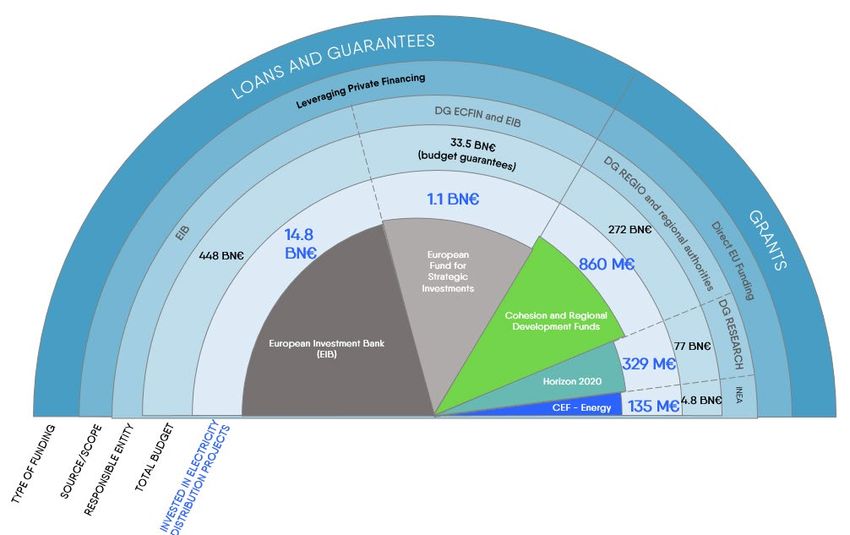
Table of contents
1.     Connecting Europe Facility ................................................................................................................... 6
           What is the Connecting Europe Facility? ...................................................................................... 6
           Overview of the current CEF Energy (2014-2020) ..................................................................... 6
           Outlook on the future CEF Energy (2021-2027) .......................................................................... 9
2.     Cohesion and Regional Funds ............................................................................................................ 12
           What are the Cohesion Fund and the European Regional Development Fund? .............. 12
           Overview of the current Cohesion/Regional Funds (2014/2020) ........................................ 12
           Outlook on the future Cohesion and ERDF Funds (2021-2027) ............................................ 16
3.     European Fund for Strategic Investments / InvestEU ................................................................... 18
           What is the European Fund for Strategic Investment (EFSI)? .................................................. 18
           Overview of the current EFSI (2015/2020)................................................................................... 18
           EFSI will be replaced by InvestEU in 2021-2027: what does it change? ........................... 20
4.     European Investment Bank .................................................................................................................. 22
           What is the EIB doing?...................................................................................................................... 22
           Overview of the previous EIB energy lending (since 2013) ................................................... 22
           How will it evolve with the new energy lending policy (2019)? ............................................. 24
5.     Framework Programmes: Horizon 2020 & Horizon Europe ........................................................ 26
           What is Horizon 2020? ...................................................................................................................... 26
           Overview of Horizon 2020 (since 2014) ....................................................................................... 27
           Outlook on the future: the European Green Deal call and Horizon Europe ..................... 30
ANNEX 1: Trans-European Network – Energy (TEN-E) .......................................................................... 33
           What is TEN-E and the PCIs? .......................................................................................................... 33
           Statistics on smart grid PCI ............................................................................................................. 33
           What are the benefits of being a PCI? ......................................................................................... 34
           How to label a DSO project as PCI? ............................................................................................ 34
ANNEX 2: CEF-Energy selection process – the Commission and the Innovation and Networks
Executive Agency ........................................................................................................................................... 35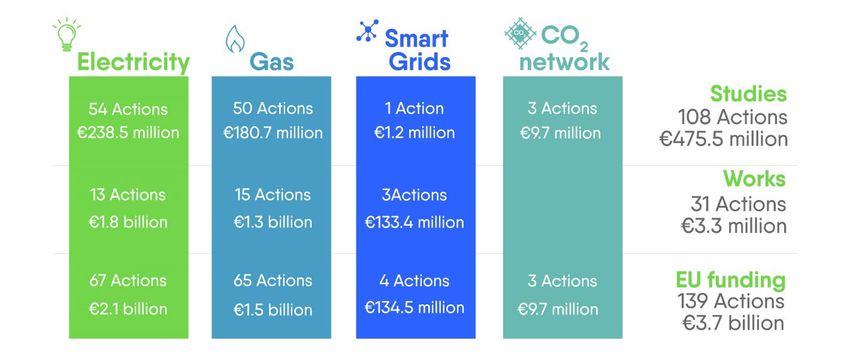
Introduction – Purposes of the guide
Distribution System Operators (DSOs) will face in the coming decade significant amounts of
investment to cope with the energy transition, connect electric vehicles and integrate renewables.
EU funding can be seen as a potential tool that would decrease the cost of capital for distribution
companies to further trigger investments in projects and alleviate the potential increase of tariffs
resulting from enhanced investments. It may also bring needed funding in some countries where
return on capital is not remunerative enough to attract new investments and speed up the
realization of investments where regulatory and financing gaps exist. EU funding could also serve
as catalysts to attract further funding from the private sector and other national public sectors
stakeholders (public investment banks etc.). Many funds exist today under different forms but
analysis is lacking whether funds are adequately used by DSOs and whether they are sufficient.

The EU power sector is now entering a new infrastructure investment cycle with the aim to reach
climate neutrality, before 2050. Decisions taken in energy infrastructure investment in the next
years will impact the shape of the future energy system for the next two decade. In parallel, the EU
institutions are discussing on renewed spending priorities and tools to accelerate the transition to
climate neutrality. European financing and funding instruments (Cohesion and regional funds,
Connecting Europe Facility, InvestEU, Horizon Europe) are currently under revision as part of the
negotiations on the next European budget for 2021-2027. The EIB has also revised its energy
lending policy in November 2019 to increase its climate ambition and strengthen support to
infrastructures projects. Under the EU Green Deal, the Commission announced in January a
Sustainable Investment Plan, aiming at mobilizing 1 trillion of public and private investment
capacities toward climate-related projects. A revision of the Trans-European Energy Network
Regulation is also underway to align the identification of priority infrastructures projects with the
transformation of the energy system.

It is therefore a crucial moment to analyze the state of play of European DSO funding and identify
the gaps compared to the investments needed for the next decade to achieve the
decarbonisation of the power sector and the economy via electrification. Political
recommendations could be drawn in order to achieve the full transformation potential of EU funds
and prioritize spending to boost the modernization and deployment of grid infrastructure.

This guide aims first to inform Eurelectric members on the EU available funding for their projects,
to identify the type of financing tools and the conditions of eligibility (grants, loans or guarantees).
The objective is also to raise awareness on the need for better funding of smart distribution grids
to achieve the transition towards a net-zero economy.

                                                   2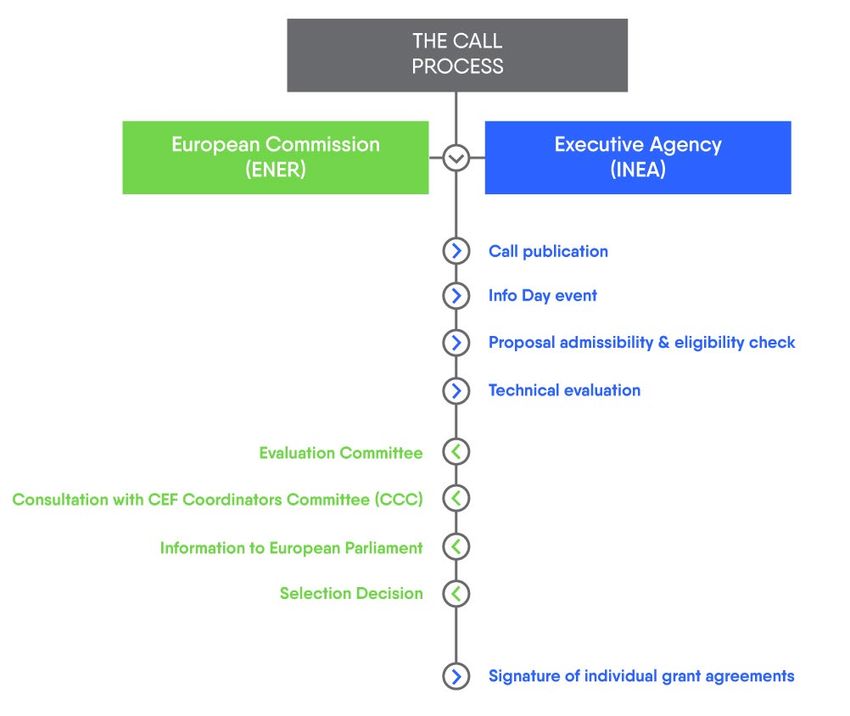
Summary of accessible instruments for distribution grid projects
                Connecting Europe Facility provides grants to develop trans-European networks for transport,
                energy and digital and finance non-viable projects that provide positive externalities.
                CEF-Energy is mainly financing electricity and gas interconnections. Current criteria for smart
Connecting      grids are very restrictive and funding levels are low: SG projects were granted 135 M€ in 2014-
 Europe         2019, 4% of CEF-Energy budget (3.7 B€).
  Facility      Examples of projects: studies/ works to build reactive power control, MV interconnections.
                Rules on the selection criteria are expected to be revised within the upcoming revision of the
                TEN-E Regulation announced for end of 2020.
                Cohesion and Regional Funds provide grants to close the economic and social gaps between
                member states and between regions. Total budget for 2014-2020 is 262 B€. Funding for
  Cohesion      energy production and networks represent less than 4% of the budget, and distribution grids
                were granted 860 M€ (0.3% of the total budget 2014-2020).
and Regional
   Funds        Examples of projects : smart meters, transformers, substations, line upgrades.
                Allocations to energy sector expected to increase in 2021-2027, following the increased
                climate ambition (32% of minimal climate-related investments for Cohesion Funds).
                The European Fund for Strategic Investments is a guarantee system to attract private
                investments in activities where the costs or risks are too high. It is usually financing large-
                scale projects, including for the distribution grid. Energy is an important sector for EFSI (21%
  European
                of its guarantees). Electricity distribution networks were granted 1.1 Bn€ of guarantees, 2.3%
   Fund for     of the total guarantees, but it is lower than gas networks funding (2.1 B€).
  Strategic
Investments / Examples of projects : modernization and extension of networks, roll-out of smart meters,
              renewables integration in grid.
   InvestEU
                InvestEU will replace EFSI in 2021-2027, with an increased budget and therefore more
                opportunities for distribution grids.
                The European Investment Bank provides loans to finance large-scale projects, typically more
                than 25 M€. The EIB is a good instrument for lending to DSOs: 14.8 Bn€ (3.3% of total EIB loans)
                went to distribution grids since 2012, more than for transmission grids or gas networks.
  European
 Investment     Examples of projects : refurbish and extend MV and LV networks, EV charging infrastructure,
    Bank        automation and tele-control.
                The transformation of the EIB into a “Climate Bank”, with the end of fossil funding and 50% of
                climate-related loans, would give more possibilities for loans in distribution grid projects.
                Horizon 2020 provided grants to finance research and innovation projects, mostly at
                demonstrator level. DSOs are the first recipient of funding among the energy network sector.
Horizon 2020    DSO received 327 M€ (61%) of grants from Horizon 2020 since 2014. H2020 is a good
                instrument to discover new technologies needed for the new challenges faced by DSOs
 / Horizon
                (renewable integration, flexibility, EV charging optimization).
  Europe
                Horizon Europe (which will replace Horizon 2020) will have the same climate spending target
                (35%) as H2020.

                                                      3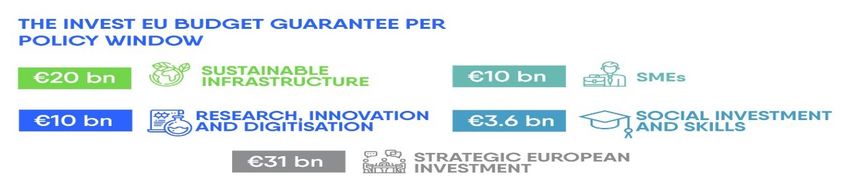
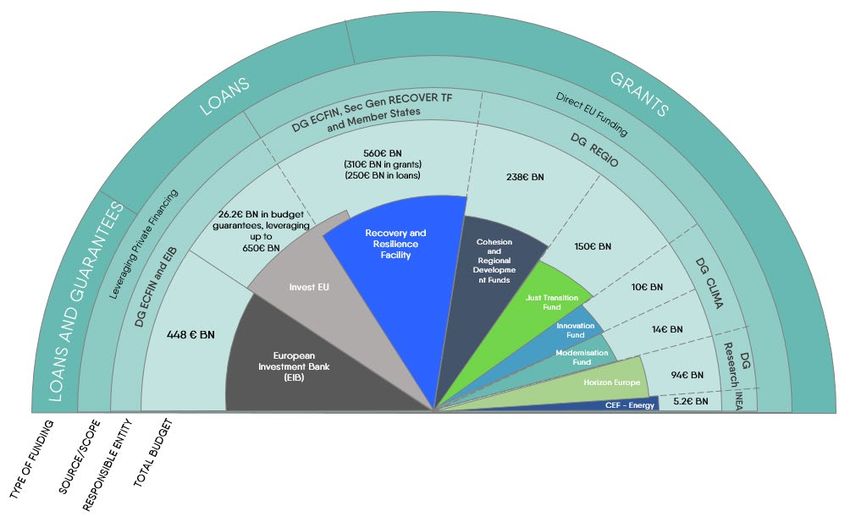
Past/current sources of funding for electricity distribution projects

    Future sources of funding for electricity distribution projects

                                  4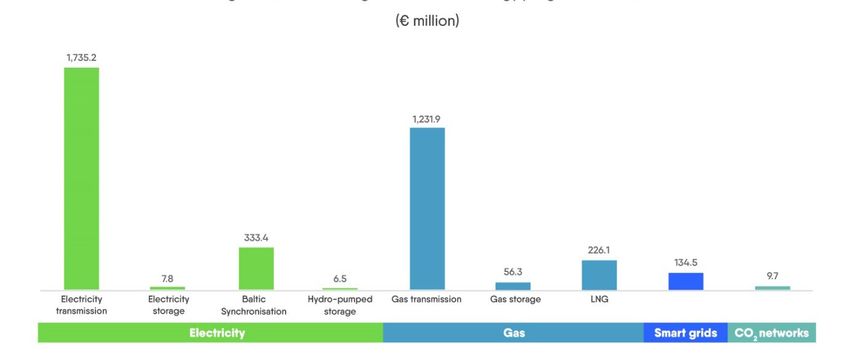
EU Funding for energy infrastructures projects
                                                     (2015-2020)
         100%
                      135M€

                                       860M€            1.1Bn€
          80%                                                              14.8Bn€                             Electricity
                                                                                                               Distribution
                                                                                           329M€
          60%
                                                                                                               Electricity
                                                                                                               Transmission
          40%

                                                                                                               Gas Networks
          20%

              0%
                          CEF-E        CF/ERDF           EFSI                 EIB        Horizon 2020

       Share of distribution grid funding per                                       Share of energy networks funding per
                     instrument                                                                  instrument
100%                                                                100%

80%                                                                 80%

60%                                                                 60%

                                                                               100%

40%                                                                 40%

20%                                                                 20%
                                                                                                        7.3%          8.5%
       4.2%                  2.3%      3.3%                                                1.1%                               0,5%
                   0.3%                          0.7%
 0%                                                                  0%
       CEF-E CF/ERDF          EFSI       EIB   Horizon                        CEF-E      CF/ERDF        EFSI          EIB    Horizon
                                                2020                                                                          2020
                    Electricity Distribution                               Energy networks (gas and electricity trans. and distrib.)

                                                                5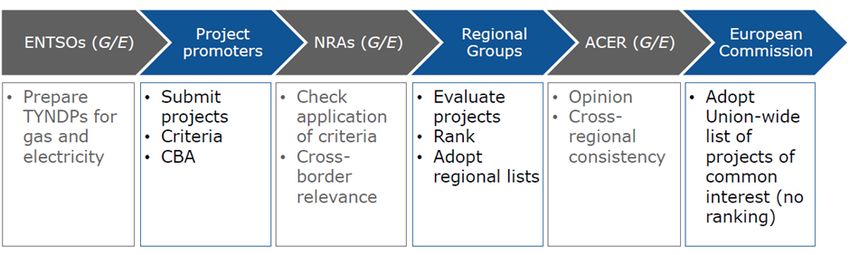
1.         Connecting Europe Facility
    Connecting Europe Facility provides grants to develop trans-European networks for transport,
    energy and digital and finance non-viable projects that provide positive externalities. In the
    energy field, CEF-Energy is mainly financing electricity and gas interconnections. Smart grid
    projects can also apply but the criteria are very restrictive for the moment and the funding is
    still low: SG projects were granted 135 M€ in 2014-2019, 4% of CEF-Energy budget (3.7 B€).
    Type of projects financed: studies or works to build smart grids (devices for reactive power
    control, MV interconnections)

           What is the Connecting Europe Facility?

Connecting Europe Facility (CEF) is one of the main EU funding instruments for infrastructure. It
grants funds to develop trans-European networks in the fields of transport, energy and
digital. CEF was established in 2014 and is in place until the end of 2020 1.

In the energy sector CEF-Energy aims at funding infrastructure projects that support
interoperability of EU transmission infrastructure, boost the internal energy market and
competition, enhance security of supply of the EU and boost integration of renewables and smart
grids.

It supports the development of key infrastructure projects which are defined by the Trans-
European Networks – Energy (TEN-E) Regulation (See Annex 1).

       •   Budget is allocated annually through annual call for proposals. Actions and objectives
           for the year are defined by the Commission in an annual work programme2.
       •   The Innovation and Networks Executive Agency (INEA) publishes the call and do the
           eligibility check and the technical evaluation of the projects. The Commission evaluates
           the projects and makes the selection, and finally grants are managed by the INEA (See the
           process in Annex 2).
       •   On March 18 2020, the Commission has launched the 2020 CEF Energy call for proposals,
           with a budget of 980 M€.

           Overview of the current CEF Energy (2014-2020)

What type of project can be financed? Eligibility criteria
CEF Energy is engineered to finance projects having positive externalities (such as security of
supply, innovation and solidarity) but lacking of commercial viability.

Since 2014, CEF-Energy has funded:
    • Electricity transmission networks (for example, electric interconnection between Nouvelle
       Aquitaine (FR) and the Basque country (ES), 580 M€, expected in 2024) , the Baltic states
       synchronization and storage
    • Gas networks (gas interconnection Poland-Lithuania, 265 M€, expected in 2021)

1
    See Regulation No 1316/2013 establishing the Connecting Europe Facility.
2
    See Commission implementing decision No C(2020) 1544 as regards CEF 2020 Work programme and the annex.

                                                        6
• CO2 networks
• Smart grids
Key criteria are the complementarity and EU added value: only energy projects that are not
commercially viable and would therefore not be implemented despite the fact that they provide
important socio-economic benefits at macro-regional level.
Eligible energy projects are defined by the TEN-E Regulation 3: only smart grid projects granted
with the PCI label (see eligibility criteria to be a smart grid PCI in Annex 1) can further benefit from:
• Grants for studies (preparatory mapping, feasibility, evaluation and testing studies, site
reconnaissance etc.)
• Grants for works (purchase, supply, deployment of software, systems, construction,
installation services etc. if the following conditions are fulfilled as well:
o The project generates significant positive externalities (security of supply,
solidarity or innovation)
o Lack of commercial viability, according to the business plan or other assessments
made by investors or the national regulatory authority.
CEF provides also financial instruments – blending instruments combining grants, loans and
guarantees in cooperation with the EIB (loans) and the European Fund for Strategic Investment. It
provides for instance Debt Instrument or Equity Instrument where private finance is lacking. See
more here.
How to apply?
• Information on the CEF Energy 2020 call
• General information
Examples of smart grids projects funded by CEF-Energy
SINCRO.GRID (2016 – 2022):
• Between Slovenia and Croatia: two TSOs and two DSOs (SODO and HED ODS)
• It received 40.5 M€ from the CEF
• Work featuring compensation devices for reactive power control, two 5 MW batteries
close to substations for electricity storage, a dynamic thermal rating system and a
virtual cross-border control center.
Smart Border Initiative (2018 – 2020):
• Between France and Germany: two DSOs (Enedis and energis)
• It received 1.2 M€ from the CEF
• Study on a MV interconnector between FR and DE, development of a smart grid with
a plan for electric vehicles charging infrastructure and flexibility services
implementation.
3
See Regulation No 347/2013 on guidelines for trans-European energy infrastructures, Article 14.
7ACON - Smart Grids (2018 – 2024):
• Between Czechia and Slovakia: DSOs (E.ON Distribuce and Západoslovenská
Distribučná)
• It received 91.2 M€ from the CEF
• Work to modernize and build MV interconnections, improve existing distribution grid
and implement smart grid communication technologies such as GPRS (LTE) and BPL.
How did the current CEF benefit to distribution grids?
Between 2014 and May 2020, only 3 smart grid projects have benefited from CEF-Energy
funding. It funded 1 study and 3 works, compared to 65 gas actions and 67 electricity
transmission actions.
Smart grid projects were granted 134.5 M€, i.e. 3.6 % of the CEF-Energy budget (3.7 B€ until
May 2020 on a total budget for 2014-2020 of 4.8 B€).
CEF-Energy funding (2014 - May 2020)
8Repartition of CEF-Energy funding by technology (2014 - May 2020)
Source: European Commission
Smart grids have received 10 times less funds from the Connecting Europe Facility - Energy
than gas networks or than electricity transmission networks.
CEF-Energy is underfinancing electricity distribution grids mainly due
to restrictive eligibility criteria (as defined by TEN-E Regulation).
Outlook on the future CEF Energy (2021-2027)
In March 2019, the Council and the Parliament reached a provisional agreement on the revision of
the CEF instrument 4. This revision will enter into force after an agreement is reached on the 2021-
2027 budget.
• CEF Energy will continue to support the developments of PCIs
• Cross-border renewable energy projects5 are now eligible
• The new CEF will seek to increase synergies between CEF Energy, CEF transport and CEF
Digital (by creating specific cross-sectoral work programmes. For instance, a part of
the CEF Transport funding (67% of the next CEF funding according to the
Commission) will be available for synergies.
4
See Proposal for a Regulation No 2018/0228 establishing the new Connecting Europe Facility.
5
The criteria for cross-border renewable energy projects are defined in the Proposal No 2018/0228, Annex IV.
9CEF funding per sector (2021-2027)
CEF-
Digital
1.8 B€
CEF-Energy
5.2 B€ CEF-
Transport
11.4 B€
Source: Multiannual Financial Framework proposal, November 2020, European Commission
One could expect that priority will be given to following areas:
• Smart energy grids and Electricity transmission facilitating the integration of electro
mobility
• Energy storage
• Joint use of facilities for compressed natural gas (CNG), liquefied natural gas
(LNG) for energy purposes and for the use of alternative fuels in mobility
• Connected and autonomous mobility
Potential budgetary projections
The overall CEF Energy budget will depend on the result of the negotiations, here are the positions
of the European institutions:
2014-2020 2021-2027 6
CEF Energy budget (change
4.8 B€ 5.2 B€ (+8%)
vs 2014-2020)
Conservative
scenario (4.2%
220 M€
of the budget as
Projections
in 2014-2020)
for Smart 200 M€
Ambitious
grids
scenario (25% of
1.3 B€
the budget for
smart grids)
6
According to the Multiannual Financial Framework Budget Agreement of the European Council (July 2020)
10Source: Eurelectric projections
• As regards smart grids, the eligible projects are defined by the TEN-E Regulation.
Therefore, if the TEN-E Regulation is not be revised to focus on electricity PCIs and
specifically on distribution networks, the CEF budget increase may not benefit to
distribution grids. This is why the TEN-E regulation should be revised accordingly.
• Eurelectric has recently published recommendations for the new TEN-E and is working
toward new eligibility criteria to enhance access for distribution grids. The revision
process will take at least one year and the impact on CEF will not be noticeable before
two years.
• The European Commission is expected to publish a proposal for the revision of the TEN-E
Regulation by the end of 2020.
112. Cohesion and Regional Funds
Cohesion and Regional Funds provide grants to close the economic and social gaps between
member states and between regions. Total budget for 2014-2020 is 262 B€.
Funding for energy production and networks represent less than 4% of the budget, and
distribution grids were granted 860 M€ (0.3% of the total budget 2014-2020).
Type of projects financed: smart meters, transformers, substations, line upgrades.
However, it is an important source of financing and it should increase in 2021-2027, following the
increased climate ambition (32% of climate-related investments).
What are the Cohesion Fund and the European Regional Development Fund?
The European Regional Development Fund (ERDF) aims at strengthening economic and social
cohesion in the European Union by correcting imbalances between its regions. The 2014-2020
budget is 199 B€.
The Cohesion Fund (CF) is financing projects to reduce economic and social disparities and to
promote sustainable development in less developed Member States (member states with a gross
national income per inhabitant < 90% are eligible). It has a special focus on environment and
transports. The budget for 2014-2020 is 63 B€.
Both funds are financing projects in the energy sector, including distribution grid projects.
• Most of this funding is grants but the projects can also have access to financial products
(loans, guarantees, equity).
• Funding are directly managed by member states. They build partnerships (for every region
or on specific themes) with the competent regional and local authorities (public authorities,
economic and social partners and civil society) to manage regional programmes.
Distribution grid projects are usually funded via Competitiveness, Enterprises,
Environment or Infrastructure Programmes.
Applications to ERDF and CF are assessed by managing authorities (usually regional councils or
ministries). The project application must meet the selection criteria and investment priorities set
out in the regional programme. The procedure is established by the relevant managing authorities.
Cohesion and Development Fund represent an important share of the total EU budget (24 %) and
an important potential source of funding for DSOs. 860 M€ were granted to 50 distribution grid
projects between 2014 and 2019.
Overview of the current Cohesion/Regional Funds (2014/2020)
What type of project can be funded by the Cohesion/Regional Funds? Eligibility
criteria
1. The regulation provides general investment priorities for CF and ERDF: both aim at shifting
towards a low-carbon economy7, with two priorities as regards DSOs: “developing and
7
See Regulation No 1303/2013 laying down common provisions for the cohesion policy.
12implementing smart distribution systems that operate at LV and MV levels” and “promoting
the distribution of energy derived from renewable sources” 8.
ERDF has an additional priority: “improving energy efficiency and security of supply through
the development of smart energy distribution systems”.
There is no minimum amount for projects.
2. The selection criteria of each thematic or regional Programme are set by the Member States
and the Commission in Partnership Agreements. Each project that applies to the Programme
funding should fulfill specific ex ante conditionalities, set in the partnership agreement and
aligned with the Union strategy.
3. After the funding, the success of distribution grid projects is monitored by two indicators:
• Additional energy users connected to smart grids (The ERDF/CF energy guidance gives
the same definition of smart grids as the TEN-E Regulation (See Annex 1. iv))
• Annual decrease of GHG
How to apply?
• Apply to regional policy funding by the European Commission
• Guidance on smart grids investments
Examples of DSO projects funded by the Cohesion/Regional Funds
Under the Infrastructure and Environment programme in Poland, Energa received 38 M€ for smart
distribution systems in the period 2014-2020 to reconstruct the distribution network to Smart Grid
standards by installing intelligent metering and network, in various Polish regions such as
Kuyavian-Pomeranian and Łódź Voivodeship. The whole national Programme aims at connecting
3.3 M additional users to smart grids.
Under the Enterprises and competitiveness programme in Italy, e-distribuzione received 138 M€
in 2019 for the implementation of smart grids in the less developed Italian regions. It has
financed 35 projects (upgrading of MV lines with better conductor, replacing the transformers in
substations, installation of transformers) in Sicily, Campania, Basilicata and Calabria.
8
See Regulation No 1301/2013 on the ERDF, Art. 5 and Regulation No 1300/2013 on the CF, Art. 4.
13How did it benefit to distribution grids?
CF and ERDF funded 860 M€ in 50 distribution grid projects between 2014 and 2019.
Share of Distribution Grid funding on Cohesion/Regional Funds
(2014 - End 2019)
CF and ERDF funds: 262 B€ Distribution
860 M€ 17%
9%
12%
Energy production 5% 10%
and networks:
9.6 B€, 3.7%
12%
19%
17%
Solar Biomass
Other RES Wind
Elec. storage and transmission Distribution grid
Co-generation & district heating Natural gas
Source: Eurelectric, retrieved from EU public data (cohesion data portal)
DSO grid investment represent:
• 0.3% of the total CF & ERDF funding
• 9% of the total “Energy production and networks” funding
• Less than Gas (10%) and Electricity Transmission Networks (12%)
Cohesion/Regional funding of energy production and networks is marginal
(3.7% of total available funding).
Even in mechanisms supposed to be more tailored made for small infrastructure
projects, funding in distribution networks represents a small share (0.3% of
total available funding).
14Geographical breakdown of Cohesion/Regional Funds
Repartition of Cohesion/Regional Funds in the EU (2014-2019)
Source: Eurelectric, retrieved from EU public data (cohesion data portal)
The geographical breakdown shows that the allocation of funds in energy and distribution tends
to be balanced between old and new Member States.
Climate-related investments in Cohesion/Regional Funds
Climate action is one of the pillars of European investments. For the period 2014-2020, the EU set
a goal of 20% of the total budget dedicated to climate-related investments. The target
hasn’t been reached, with 18.8% of the whole budget dedicated to climate.
The Cohesion and Regional Funds achieved better results, with 21% of climate-related
investments (55 B€). Among these climate-related investments, electricity distribution grids
represent a small share (2%, 860 M€).
15Repartition of climate investments in Cohesion/Regional Funds
Smart grids
Other
2%
Research 3%
4%
Nature, water and air
protection
6%
Low-carbon transport
Climate adaptation 31%
11%
Renewable energy
12%
Energy efficiency
31%
Source: Eurelectric, retrieved from EU public data (cohesion data portal)
The EU has failed to achieve its goal of 20% of climate-related investments
in the 2014-2020 budget (only 18.8%) but Cohesion/Regional Funds
performed well (21%)
In the next budget, the Cohesion/Regional Funds will be crucial to achieve
higher ambition in line with the Green Deal
Outlook on the future Cohesion and ERDF Funds (2021-2027)
• For the next long-term EU budget 2021-2027, the Commission proposes to modernize
Cohesion and Regional Development Policies with the addition of new allocation criteria
(i.e. climate change, youth unemployment) and the simplification of measures. 9
• 65% to 85% of ERDF and Cohesion Fund resources will be allocated to the objectives
‘Smarter Europe’ and ‘Greener Europe’ respectively.
• In May 2018, the Council and the Parliament reached a provisional agreement on the
revision of the common provisions for the cohesion policy 10 and the regulation on ERDF
and CF 11. The Council and the Parliament reached a prosivional agreement on the
definitive figures on November 10th.
9
See 80 simplification measures in cohesion policy 2021-27 for more informations
10
See Proposal for a Regulation No 2018/0196 laying down common provisions for the cohesion policy.
11
See Proposal for a Regulation No 2018/0197 on the ERDF and the CF.
16• The future regulation set detailed indicators to monitor the progress of the new ERDF/CF
(Annex I and II). In addition to the number of users connected to a smart grid and the
decrease of GHG, a new indicator will be added, the roll-out of smart grid projects.
Budgetary projections
The table below shows the positions of the European institutions and projections for distribution
grids based on three scenarios:
2014-2020 2021 -2027 12
CF/ERDF Total budget (change vs
272 B€ 245 B€ (-10%)
2014-2020)
Conservative scenario
(smart grids = 0.32% of 784 M€
the budget)
Same increase as
Projections climate-related
for Smart funding scenario (smart 860 M€ 1.23 B€
grids grids = 0.5% of the
budget)
Ambitious scenario
(smart grids = 1% of the 2.45 B€
budget)
Source: Eurelectric projections
According to the Multiannual Financial Framework Budget Agreement of the European Council (July
12
2020)
173. European Fund for Strategic Investments / InvestEU
The European Fund for Strategic Investments is a guarantee system to attract private investments
in activities where the costs or risks are too high. It is usually financing large-scale projects,
including for the distribution grid.
Energy is an important sector for EFSI (21% of its guarantees). Electricity networks were granted
1.5 B€ of guarantees, 3% of the total guarantees, but it is lower than gas networks funding (2.1 B€).
Type of projects financed: modernization and extension of networks, roll-out of smart meters,
renewables integration in grid.
InvestEU will replace EFSI in 2021-2027, with more opportunities for distribution grids.
What is the European Fund for Strategic Investment (EFSI)?
The EFSI is a guarantee system to support investments in strategic sectors and SMEs. The Fund
is managed by the European Investment Bank (EIB), but is separated from its other activities.
The objective is to leverage public guarantee to attract private investment in activities where the
costs or risk are too high. The enhanced risk-bearing capacity that the EFSI provides to the EIB
allows the EIB to invest in projects with a higher risk profile than usual. EIB investment (loans,
guarantees) with the backing of the EFSI guarantee is expected to attract private investment.
The EFSI has two components:
• The Infrastructure and Innovation window managed by the EIB (transport, energy and
ICT). It represents 80% of the EFSI financing and 40% of the window should contribute
to climate action (10.7 B€ of guarantees). It is close to reach it with 36% by the end of
2018.
• The SME Window implemented by the European Investment Fund (EIF).
In 2021-2027, EFSI will be replaced by InvestEU (See below in sub-section 3.iv).
How does it work in practice?
In 2017, the Polish DSO Energa wanted to modernize and expand its distribution grid. It applied for
an EIB financing and reached an agreement with them: Energa issued a 250 M€ bond bought by
the EIB and guaranteed by the EFSI: here, the EFSI allows the EIB to buy a higher-risk bond.
The EU guarantee can also support investment from national promotional banks or institutions.
Overview of the current EFSI (2015/2020)
What type of project can be funded by EFSI?
In the Infrastructure and Innovation window (IIW), the relevant priority for distribution grids is the
“development and modernisation of energy infrastructure (in particular interconnections, smart
grids at distribution level, energy storage and synchronisation of network” 13.
13
See Regulation No 2015/1017 on the EFSI, Art. 9. 2. (b) (iii), (no more precision on the eligible technologies).
18The project should also meet the following criteria:
• It should be economically and technically viable
• It should be consistent with EU policies (sustainable growth, job creation, cohesion)
• It should provide additionality 14: it means that the EFSI operations should address market
failures or sub-optimal investment situations and that these operations could not have
been carried out with the help of EIB and EU financial instruments other than EFSI
• It should undergo the standard EIB due diligence process.
There are no geographical or sectoral quotas. Following the EIB lending rules, there is a
minimum amount of 7.5 M€ for a project to have access to EFSI financing.
How to apply?
• How does a project get EFSI financing?
Examples of DSO projects funded by EFSI
Most guarantees have benefitted to big projects on traditional distribution grid assets (renewal
and extension the network) and in the rollout of electricity smart meters:
The Distribution Network Investment Programme led by Ellevio (Sweden) obtained 250 M€ of
guarantee to increase the capacity and renew the network, continue to weather-proof the
rural network and prepare it to receive more distributed renewable energy.
Tauron Distribution (Poland) has benefited from 190 M€ (and 174 M€ in a 2nd phase) of
guarantees to modernize and extend the distribution network in southern Poland (approx.
4500 km of new lines).
Calvin Capital obtained 53 M€ of guarantee from EFSI for the rollout of electricity and gas
smart meters in the United Kingdom with the Calvin SmartMeter Programme.
How did it benefit to distribution grids?
• Energy production and networks is a significant part of EFSI guarantees: 10.1 B€ of
guarantees were allocated to this objective, 21% of EFSI total guarantees (49.1 B€)
• Between 2015 and 2019, EFSI provided 1.1 B€ of guarantees to electricity distribution
networks (11% of all energy production and network guarantees)
• Electricity networks represent only 3% of EFSI investments, lower than oil and gas
infrastructure (2.1 B€). This demonstrates a disproportionate financing of gas and the
need for a rebalancing in favor of electricity networks.
14
The additionality is defined in Regulation No 2015/1017, Article 5.
19Share of Electricity Networks funding on EFSI
(2015 - 2019)
EFSI guarantees: 49.1 B€
21% Distrib.
Grid
11%
4%
Energy:
10.1 B€, 21%
14%
50%
Electricity generation Oil and gas transmission and distribution
Power transmission and distribution Power transmission
Other
Source: Eurelectric, retrieved from European Commission and EIB data.
EFSI has provided 44% more guarantees to gas networks than electricity
transmission and distribution networks
EFSI will be replaced by InvestEU in 2021-2027: what does it change?
InvestEU brings together the European Funds for Strategic Investments and 13 other EU financial
instruments. It is, like EFSI, a guarantee system to mobilize private investment in 4 key areas
including Sustainable infrastructure.
After multiple rounds of negotiations over the long-term EU budget and the establishment of
different funds (i.e. NextGenerationEU, Resilience and Recovery Facility) to face the economic
crisis following the COVID-19, the InvestEU budget has significantly been restricted compared
to initial proposals from the European Commission and Parliament. In December 2020 15, the
European Commission proposed a 26.2 B€ budgetary guarantee, complemented by multiple
partner national promotional banks. This new instrument will have five windows: 1) Sustainable
Infrastructure (9.9 B€), 2) SMEs (6.6 B€), 3) Research and Innovation (6.9 B€), 4) Social Investment
and skills (2.8 B€) and introduce a new Strategic European Facility to invest in resilient value
chains.
15
European Commission - Press release (8 December 2020)
20Source: European Commission, based on the Commission’s budget proposition for 2021-2027.
The Sustainable infrastructure area would be required to have 60% of climate-related
financing 16, higher than the 2014-2020 target of 40% for the Infrastructure and Innovation
window (IIW) and the effective 36%, achieved by the end of 2018. The common target for
InvestEU is 30% of climate-related financing.
Relevant eligible area for distribution grids is the “development, smartening and
modernisation of sustainable energy infrastructure in particular, but not only transmission and
distribution level, storage technologies, electricity interconnection between Member States and
smart grids)” 17, a formulation similar to the previous investment area under EFSI.
EFSI (2015-2020) InvestEU (2021-2027)
Total budget 33.5 B€ 26.2 B€ (-21%)
For distribution grids (actual
guarantees and projections 1.1 B€ 870 M€
based on a budget cut of -21%)
Source: Eurelectric projections
Investments in energy networks should be rebalanced in favor of
electricity networks in InvestEU to be in line with the European Green
Deal
16
See Proposal for a Regulation No 2020/0108 establishing the InvestEU Programme, Art. 7.6.
17
See Proposal for a Regulation No 2020/0108 establishing the InvestEU Programme, Annex II, 1. (c).
214. European Investment Bank
The European Investment Bank provides loans to finance large-scale projects, typically more than
25 M€.
The EIB is a good instrument for lending to DSOs: 3.3% of EIB loans (14.8 B€) went to distribution
grids since 2012, more than for transmission grids or gas networks.
Type of projects financed: refurbish and extend MV and LV networks, EV charging infrastructure,
automation and tele-control.
The transformation of the EIB into a “Climate Bank”, with the end of fossil funding and 50% of
climate-related loans, will give more possibilities to get loans for distribution infrastructure and in
particular for investments to develop smart distribution networks.
What is the EIB doing?
The European Investment Bank (EIB) provides loans and financial instruments (equity,
guarantees) to finance very different type of projects (energy, transport, agriculture, health,
education, etc.). Among these sectors, energy infrastructure represents an important part of EIB
financing.
Overview of the previous EIB energy lending (since 2013)
What type of project was eligible to EIB financing?
• In 2013, the EIB released its energy lending criteria, and electricity distribution grids were
already an important area for their funding: “Electricity distribution deserves greater
attention. The high potential of distribution grids in ensuring and managing the security of
supply and reaching the 2020 targets is often underestimated.”
• EIB has prioritized its financial support to distribution investment programmes,
including roll-outs of smart meters and, more comprehensively, smart grid
demonstration projects.
• EIB loans typically covers up to 50% of a project’s total cost. These loans typically start at
25 M€ and in certain cases the EIB will consider lower amounts.
The project should also meet the following criteria:
• Compliance with the Bank’s Guide to Procurement and Environmental and Social Standards
• Consistency with EU policies (sustainable growth, job creation, cohesion)
Examples of DSO projects funded by the EIB
The EIB has mostly funded traditional distribution grid assets and smart meters, but it is willing to
invest more in new technologies such as smart grids and integration of renewables or electric
vehicles.
The energy utility CEZ (Czech Republic) has received 330 M€ in 2019 to improve its distribution
network (reinforce MV and LV networks, install automation and tele-control systems, 4160 km
of new lines and refurbishment of 2475 km of lines.
22Eesti Energia (Estonia) has obtained loans of 175 M€ in 2019 to extend and refurbish distribution
networks, invest in public lighting and charging stations for electric vehicles.
EAC (Cyprus) received 200 M€ in 2010 of loans to reinforce and extend its transmission and
distribution network.
How did it benefit to distribution grids?
• Since 2012 the EIB has signed 38 B€ of contracts to invest in electricity and gas
infrastructures in the EU, which is a relatively small part of the EIB loans (8% of the total
budget 448 B€).
• 14.8 B€ went to electricity distribution grids (39%), more than electricity transmission
networks and gas networks.
• In comparison with electricity grids, gas networks are less financed by the EIB than other
instruments but it still represents one third of the loans.
Share of Distribution grids funding by EIB (2012 - 2019)
EIB loans: 448 B€
31% 30%
Energy
networks
38 B€, 8%
Electricity
Distribution 39%
Electricity Distribution Gas networks Electricity Transmission
Source: EIB, 24/02/2020.
The EIB is a good instrument for lending to DSOs
The increase of its climate action will give more
possibilities to get loans for smart distribution networks
23Geographical breakdown of EIB loans for distribution grids
Repartition of EIB loans for distribution grids in the EU since 2012
4.000
3.500
3.000
2.500
2.000
1.500
1.000
500
0
AT BE BG CY CZ DE DK EE ES FI FR GR HR HU IE IT LT LU LV MT NL PL PT RO SE SI SK UK
Source: EIB, 24/02/2020.
The EIB loans for distribution grids were mostly granted in four countries (Spain, Italy, Poland and
the United Kingdom). Conversely, some EU countries haven’t use EIB loans for distribution grids
since 2012.
How will it evolve with the new energy lending policy (2019)?
The new energy lending policy released in November 2019 doesn’t change the application
process for EIB lending but increase its climate ambition. The EIB aims to become a “climate
bank” with a goal of 50% of climate action financing in 2025, compared to 30% in 2019.
This increasing climate action will benefit to electricity network projects and distribution grids.
In its new energy policy, the EIB plan to stop all the fossil fuel funding by 2021, excepted for
low-carbon gases. This new lending policy is leading the climate action and should be enforced
to achieve 50% of EIB’s investments related to climate in 2025.
2012-2019 2020-2027
Total lending by the EIB (actual and projection) 448 B€ 448 B€ 18
For distribution grids (actual and projection of a
14.8 B€ 24.7 B€
same increase as the climate ambition 19, +67%)
Source: Eurelectric projections
18
As the total lending depends on the demand of loans, we make the assumption that the total lending is the same in
2020-2027 that in 2012-2019.
19
Climate action will represent 50% in 2025 compared to 30% in 2019, a 67% increase if the total lending for grids
remains the same.
24As a response to the expected increase in electrification of Europe, the EIB is prioritizing
electricity network infrastructure and especially investments to help develop smart grids, and has
enlarged the scope of technologies that could be financed, allowing higher funding of
distribution grids:
• The Bank will give high priority to projects that will enable the integration of renewables
and infrastructure that will be needed to support the development of electromobility and
of decentralised flexibility sources connected to distribution networks.
• The Bank will support the development of energy communities and microgrids, enabling
investment in new types of energy infrastructure, including in small isolated systems. This
may include, in particular, projects increasing the degree of automation, digitalization and
“smartness” of power systems.
• Flexibility (battery storage, increased electrification, demand response)
• The Bank will support the Projects of Common Interests for electricity transmission,
storage and smart grids.
• The Bank will continue to support rehabilitation, grid extension, automation and tele-
control.
Contact
• Applying for a loan, EIB
255. Framework Programmes: Horizon 2020 & Horizon Europe
Since 2014, DSOs received 61% (327€ M) of Horizon 2020’s energy networks grants,
establishing them as one of biggest recipients of the energy sector.
Horizon 2020 successfully supported DSOs, providing them with funding and open access
platforms facilitating the research and development of new disruptive technologies
necessary to tackle challenges faced by the sector (e.g. renewable integration, network
flexibility, EV charging optimization).
Horizon Europe, the successor of Horizon 2020 will provide additional funding opportunities for
DSOs. 35% of total budget will be dedicated to climate related innovation and 15BN will be
allocated to the cluster (climate, energy and mobility)
What is Horizon 2020?
Horizon 2020 offers funding for research and innovation activities through multi-annual calls
for proposals set in the Work Programme. For the preparation of Work Programmes, the
European Commission involves 19 Advisory Groups (including Energy) involving industry, research
and civil society representatives. the latest Work Programme (2018-2020) disposes of a budget
of 30 BN€, with 83 M€ for energy projects.
Horizon 2020 is based upon three main research areas, also known as "pillars":
• Excellent Science (budget of 24 BN€) focuses on basic scientific research and funds
energy projects through the Future and Emerging Technologies (FET) program
• Industrial Leadership (budget of 14 BN€) focuses on enabling technologies and
innovations for SMEs. Closely followed by the Executive Agency for Small and Medium
Enterprises (EASME) and by DG GROW, the Leadership in Enabling and Industrial
Technology (LEIT) Work Programme offers DSOs a valuable research framework (e.g. for
smart homes and grids)
• Societal Challenges (budget of 29 BN€) funds potential solutions to social and
economic problems. The third Societal Challenge “Secure, Clean and Efficient
Energy” has a 5.9 BN€ budget (equivalent to 7.8% of the total Horizon 2020
budget) to tackle various issues concerning electricity distribution such as smart
cities and energy efficiency
Horizon 2020 is characterized by a wide coverage of projects throughout different stages of
the innovation process, from pre-commercial development to uptake. The table below
compares this feature with other current and future European funding mechanisms for innovative
energy and electricity distribution projects.
26EU PROGRAMMES FUNDING DISTRIBUTION NETWORKS IN DIFFERENT STAGES
OF THE INNOVATION PROCESS
Uptake/ Market
Pre-commercial Demonstration/ First-
readiness / Roll out Timeline
development (R&D) of-a-kind
of technology
HORIZON 2020
European Fund for Strategic Investments
InnovFin Energy Demo Projects (EIB)
ESIF (ERDF, ESF, CF..) EXISTING TOOLS
CEF Energy
HORIZON EUROPE
InvestEU
Innovation Fund
FUTURE TOOLS
Modernisation Fund
Overview of Horizon 2020 (since 2014)
What type of project are eligible to H2020 financing?
Horizon 2020 provides grants through open and competitive calls for proposals. Any legal entity
from the EU and associated countries is eligible for funding, provided that following minimum
conditions are met:
• applicants must represent at least 3 legal entities
• all participanting entities must be independent of each other.
Subsequently, DSOs must comply with two evaluation criteria, enforced by an independent panel
of experts:
• Financial capacity, in line with the Financial Regulation (No 966/2012) and the Horizon
2020 Rules for Participation (No 1290/2013).
• Operational capacity, in line with Horizon 2020 Rules for Participation (No 1290/2013).
After approval, all participating projects are classified into three types of actions:
271. Research and innovation actions (RIA). From 2014 to 2020, 33,3% of energy network
projects in the EU have been RIAs and the funding rate amounts to 100% of eligible costs.
2. Innovation actions (IA) focus on closer-to-the-market activities producing new or
improved products or services (e.g. prototyping, testing, demonstrating, piloting,
scaling-up etc.). From 2014 to 2020, 63,7% of energy network projects in the EU-28 have
been IAs and the funding rate amounts to 70% of eligible costs (except for non-profit
legal entities, where a rate of 100% applies).
3. Coordination and support actions (CSA) cover the coordination and networking of
research and innovation projects, programs and policies. From 2014 to 2020, 3% of
energy network projects in the EU-28 have been CSAs and the funding rate amounts to
100% of eligible costs.
Examples of DSO projects funded by Horizon 2020
Most of H2020 funding for distribution grids was allocated to the development of new
technologies, smart grids and flexibility projects.
Until 2019, DSOs in several EU countries (Enedis, E.ON, CEZ distribuce…) received 17 M€ for the
IA InterFlex. The project developed new solutions supporting local network flexibility systems
(demand response, gird automation etc.), preparing the distribution grid to new uses (e-
mobility) while expanding renewable energy sources integration.
The consortium Storage4Grid (featuring Italian DSO Edyna) received 3.6 M€ since 2016 for the
RIA developing smart metering, storage coordination and cooperative EV charging systems.
The IA Coordinet (Vattenfall, Iberdrola DE, E.ON, HEDNO..) received 15 M€ to build large-scale
demonstrations of innovative grid services through demand response, storage and small-scale
(RES) generation. The project involves DSO, TSO and consumers.
How did it benefit to distribution grids?
Since 2014, Horizon 2020 has granted 539 M€ to energy (electricity and gas) network
projects, which amounts to 1.1% of the 49 BN€ contributions made by Horizon 2020 in the
EU-28.
28Share of Distribution grids funding by Horizon 2020 (since 2014)
EU-28 Horizon 2020 grants: 49 BN€
35%
Energy
networks 5%
539 M€, 1.1%
Electricity
Distribution 61%
Electricity distribution Electricity transmission Gas (incl. H2) networks
Within energy distribution, most of H2020 funding (61%) went to electricity
distribution, testifying the innovative potential of DSOs.
However, only 1.1% of H2020 funding has been allocated to energy
networks. Considering the imminent challenges faced by DSOs and
interested parties (e.g. renewables integration), this figure should increase in
the upcoming Framework Program Horizon Europe in order to be able to
achieve secure, clean and efficient energy targets.
Source: European Commission.
29Geographical breakdown of H2020 grants for distribution grids
Repartition of Horizon 2020 funding in the EU- (2014-2020)
18%
16%
14%
12%
10%
8%
6%
4%
2%
0%
AT BE BG HR CY CZ DK EE FI FR DE GR HU IE IT LV LT LU MT NL PL PT RO SK SI ES SE UK
Electricity distribution All H2020
Source: Eurelectric, retrieved from EU public data (Horizon 2020 dashboard, June 2020).
The repartition between electricity distribution related projects over Horizon 2020 funding is
fairly balanced throughout Europe. Yet in some Western European countries (notably Germany,
France, the United Kingdom and the Netherlands) electricity distribution related projects tend to
be financed less through Horizon 2020 compared to some Southern European countries (such as
Spain, Greece and Portugal), where significantly higher shares of Horizon 2020 funding has been
allocated to research and development in the electricity grid.
Outlook on the future: the European Green Deal call and Horizon Europe
The European Green Deal call (September 2020)
Following the publication of the European Green Deal strategy, the European Commission
launched a citizen consultation to design the European Green Deal call. The call is worth close
to 1BN€ and selected projects are expected to start in Autumn 2021, covering 11 areas with
topics cutting across and integrating different disciplines and sectors. For DSOs, the most
relevant will be:
Call area 1: Increasing climate ambition: cross-sectoral challenges
• Topic 2: Towards climate-neutral and socially innovative cities (text)
• Topic 3: Climate-resilient innovation packages for EU regions (text)
Call area 2: Clean, affordable and secure energy
• Topic 1: Demonstration of innovative critical technologies to enable future large-scale
deployment of offshore renewable energy technologies (with the possibility to address also
hydrogen applications) (text)
Call area 4: Energy and resource-efficient buildings
• Topic: Building and renovating in an energy and resource efficient way (text)
30Call area 5: Sustainable and smart mobility
• Topic: Green airports and ports as hubs for sustainable and smart mobility (text)
What is new with Horizon Europe? (starting 2021)
Horizon 2020 (2014-2020) Horizon Europe (2021-2027)
Total budget 77 B€ 84.9B€ (+10%)
For distribution grids
329 M€ 594 M€
(conservative projection)
1. Open Science
1. Excellent Science 2. Global Challenges and
2. Industrial Leadership Industrial Competitiveness
Pillars 3. Societal Challenges 3. Open Innovation
4. Widening and strengthening
the European Research
Area
• Adaptation to climate
Mission areas relevant to • Research & Innovation change, including societal
DSOs • Climate change & energy transformation
• Fighting poverty • Climate-neutral and smart
cities
Horizon Europe will enter into force in 2021 and have a target of 35% for funding to climate
change related projects (equivalent to at least 29.7 B€). It will include new approaches to
partnerships (co-programming, co-funding, institutionalized) along with regular calls for
proposals and R&I missions.
Energy proposals and activities will be bundled together into the “Climate, energy and mobility”
cluster encompassed in the second pillar (Global challenges and Industrial competitiveness),
with a proposed overall funding of 15€BN. Horizon Europe is set to become highly valuable for
DSOs looking to develop synergies with other sectors (telecoms and ICT industry). The main
changes introduced by of Horizon Europe are:
• Renewed implementation strategy - greater transparency and further simplification 20
• Increased synergies with other EU programmes (e.g. InvestEU, ERDF and CEF Energy) –
sequential and accumulative funding will be available to Horizon Europe projects
• Increased budget flexibility - Article 9.3 of the Commission proposal allows for shifts of
up to 10% within and across pillars
• A new entity - the European Innovation Council (EIC) will allocate 70% (i.e. around 7 B € )
of the budget to the support of research and innovation projects from SMEs.
• Following funding instruments will be available (through the EIC):
20
https://ec.europa.eu/info/sites/info/files/research_and_innovation/strategy_on_research_and_innovation/docum
ents/ec_rtd_implementation-strategy_he.pdf
31You can also read


