Facts & Figures Edition 2020 - EOn
←
→
Page content transcription
If your browser does not render page correctly, please read the page content below

Facts & Figures
Edition 2020
Content

  1       E.ON Group            2-8

  2       Energy Networks      9 - 45
  3       Customer Solutions   46 - 61
  4       Non-Core             62 - 73
  5       Financials           74 - 78

                                         2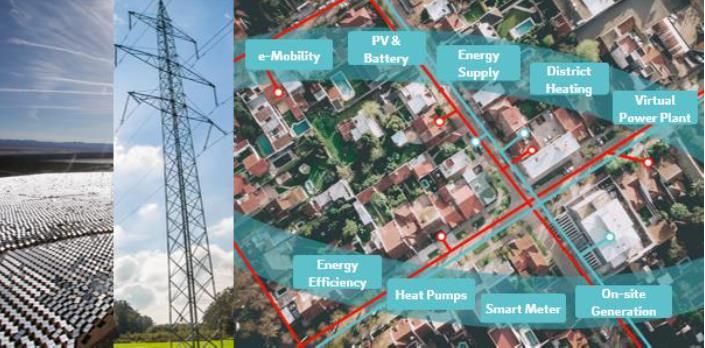
E.ON at a glance
                                                       Core EBIT1 20192

Group EBIT1,2                                              Our divisions
€ bn

4.1                                      Energy Networks                 Customer
                                                                    Customer        Solutions
                                                                             Solutions

Adj. Net Income1,2
€ bn

1.6                                        €3.6bn                              €0.5bn
1. Adjusted for non operating effects.
2. Pro forma.
                                                                                                3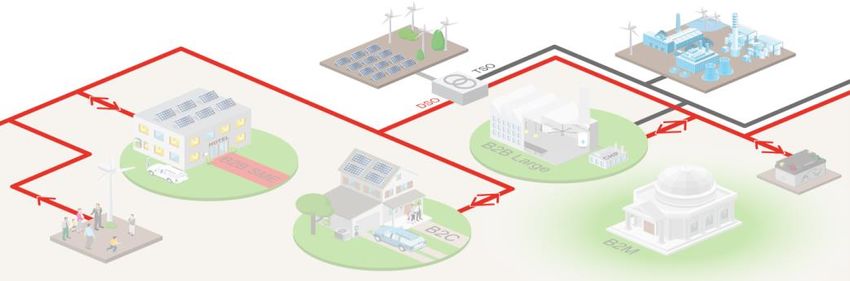
E.ON is divided into two main businesses1

                                                                                                          Corporate
          Energy Networks                                       Customer Solutions                                       Non-Core
                                                                                                          Functions
                   Germany                                                 Benelux4                                    PreussenElektra
                    Sweden                                                 Germany                                    Turkey Generation6
              CEE2 & Turkey3                                                    UK
                                                                             Other5

                                                                        Core businesses                                 Non-core business
1.   Segmentation from 2020 onwards.
2.   Central and Eastern Europe, including Czech Republic, Hungary, Poland, Romania, Slovakia, Croatia.
3.   Networks business (Enerjisa Enerji).                                                                                                   4
4.   Belgium, The Netherlands and Luxemburg.
5.   Including Czech Republic, Hungary, Italy, Poland, Romania, Sweden, Slovakia, Slovenia and Croatia.
6.   Generation business (Enerjisa Üretim).
E.ON’s two core businesses

Energy Networks                                                                                           Customer Solutions
 ~€33bn Regulated Asset Base1                                                                            ~51m4 customers across Europe
                   Germany €21.9bn                                                                                     Germany 13.8m
                   Sweden €3.8bn                                                                                       UK 9.6m
                   CEE² & Turkey3 €7.6bn                                                                               Other EU 16.9m5

 ~74 GW Renewables capacity connected                                                                    ~30% of adj. EBIT6 from decentral
       to E.ON networks                                                                                       energy infrastructure
                                                                                                                       Resilience from long-term customer relations
                                                                                                                       built on satisfaction and trust
 ~3.0m Smart Meters rolled out in
       our grid areas                                                                                    Market leading position with 4x Top 1
                  In total more than 17m Smart Meters to be                                                    and 6x Top 3 positions
                  rolled out until 2032

1. Regulated Asset Base (RAB) is the value of all distribution assets determined by the regulator. In   4. Including Turkey.
general, RABs from different regulatory regimes are not directly comparable due to significant          5. Other including Benelux, Sweden, Romania, Hungary, Czech Republic, Poland, Slovakia, Italy,
methodical differences. These include for example different regulatory asset lifetimes, asset           Slovenia and Croatia.                                                                          5
valuation methods or treatment of customer contributions for network connections.                       6. Adjusted for non operating effects.
2. 100% view for Slovakia.
3. 100% view for Turkey.
E.ON’s Board of Management
Dr. Johannes Teyssen        Dr. Marc Spieker           Dr.-Ing. Leonhard Birnbaum   Dr. Thomas König            Dr. Karsten Wildberger
Chief Executive Officer     Chief Financial Officer    Chief Operating Officer      Chief Operating Officer –   Chief Operating Officer –
                            • Finance                  Integration                  Networks                    Commercial
• Strategy & Innovation     • Investor Relations       • innogy integration         • Energy Networks           • Customer Solutions
• Human Resources           • Mergers & Acquisitions   • Consulting                 • Procurement               • Decentralized Generation
• Communications &             and Participation       • PreussenElektra            • Turkey                    • Energy Management
  Political Affairs            Management                                                                       • Marketing
• Legal & Compliance        • Risk, Accounting &                                                                • Digital Technology
• Corporate Audit              Controlling
• Sustainability & HSE      • Tax
• Culture and Performance   • S4 Transformation

                                                                                                                                    6
E.ON Supervisory Board
Shareholder representatives
                                             Klaus Fröhlich                                 Dr. Rolf Martin Schmitz
                                             Born 1960, German                              Born 1957, German
                                             Member since 2018                              Member since 2019
                                             Expert in brand and product strategies and     Extensive management and strategy
                                             digitization; particular focus on e-mobility   expertise paired with technical knowledge

                                             Ulrich Grillo                                  Dr. Karen de Segundo
                                             Born 1959, German                              Born 1946, Dutch
                                             Member since 2019                              Member since 2008
                                             Excellent network in German industry as        In-depth knowledge of energy market and
                                             well as management and strategy                regulated industries experience
                                             expertise
Dr. Karl-Ludwig Kley
Chairman of the Supervisory Board            Carolina Dybeck Happe                          Deborah Wilkens
Born 1951, German                            Born 1972, Swedish                             Born 1971, United States of America
Member since 2016                            Member since 2016                              Member since 2019
                                             Profound experience in finance and digital     Proven capital market expert specialized in
Extensive leadership and supervisory board
                                             transformation of products and services        the energy sector
experience

               Erich Clementi                Andreas Schmitz                                Ewald Woste
               Deputy Chairman               Born 1960, German                              Born 1960, German
               Born 1958, Italian            Member since 2016                              Member since 2016
               Member since 2016             Particular expertise in financial analysis     Extensive expertise in the energy sector,
               Expert in digital             and capital markets                            ESG expert
               transformation and strategy

                                                                                                                                        7
E.ON Supervisory Board
Employee representatives
                                                      Eugen Gheorghe Luha                        Christoph Schmitz
                                                      Born 1957, Romanian                        Born 1965, German
                                                      Member since 2012                          Member since 2020
                                                      Profound expertise in the gas business     Expert in press and public relations

                                                      Szilvia Pinczésné Márton                   Fred Schulz
                                                      Born 1969, Hungarian                       Born 1962, German
                                                      Member since 2018                          Member since 2014
                                                      In-depth knowledge of the network          Experience in grid operations and HR
                                                      business and co-determination matters      management

Andreas Scheidt                                       Stefan May                                 Elisabeth Wallbaum
Deputy Chairman of the Supervisory Board              Born 1970, German                          Born 1975, German
Born 1964, German                                     Member since 2019                          Member since 2016
Member since 2015                                     Technical expertise as well as extensive   Expertise in Energy generation and IT-
In-depth knowledge of the energy business             knowledge in co-determination              based process control

               Monika Krebber                         René Pöhls                                 Albert Zettl
               Born 1962, German                      Born 1970, German                          Born 1966, German
               Member since 2019                      Member since 2019                          Member since 2016
               Profound knowledge of business         Expert in network operation, HR and        Background in the fields of grid
               administration and supervisory board   experience in co-determination             management, grid distribution
               experience

                                                                                                                                          8
Content

  1               E.ON Group           92--47
                                            8

  2               Energy Networks      9 - 45

      • Germany                        16 - 23
      • Sweden                         24 - 26

      • CEE & Turkey                   27 - 45
  3               Customer Solutions   46 - 61

  4               Non-Core             62 - 73

  5               Financials           74 - 78

                                                 9
Energy Networks at a glance
What we do
Within Energy Networks we provide the infrastructure for
the new energy world. We manage our grids from high to
low voltage in a smart way, to promote a growing
connection of renewable capacity.
Power and gas distribution is predominantly a regulated
business in our countries of operation.
We have a strong network presence in power and gas in
our core markets.
About 39.400 employees work in Energy Networks.
2019 1,2 Germany Sweden Hungary Czech Republic Poland Romania Slovakia 3 Turkey 3 Total 4
Wheeling volumes power (TWh) 238 36 36 14 8 6 10 46 394
Wheeling volumes gas (TWh) 173 n/a 15 3 - 26 - - 217
Grid length power ('000km) 705 138 130 66 18 82 39 232 1,409
Grid length gas ('000km) 103 n/a 18 5 - 23 - - 149
5
RAB power & gas (€ bn) 21.9 3.8 2.5 1.8 0.7 0.8 0.6 1.3 33.2
1. Preliminary figures.
2. Excluding Croatia as the nature of the business is not fully comparable.
3. Slovakia and Turkey are not consolidated in E.ON financial statements (here: 100% view). 10
4. Small differences in reported total figures may occur due to rounding.
5. RAB Sweden, Poland, Slovakia and Turkey only includes power.Energy Networks — Geographies
Regulated Asset Base (RAB)
€ bn
Total RAB
33.2
1
Sweden Germany CEE2 &Turkey3
3.8 21.9 7.6
Power RAB Gas RAB
1. Differences may occur due to rounding. 11
2. Central Eastern Europe including: Czech Republic, Hungary, Poland, Romania, Slovakia.
3. 100% view for Slovakia and Turkey.Energy Networks — Overview
Regulated Asset Base 20191 Grid length (‘000 km)2
Sweden Germany ∑ Grid length: 1,409
€3.8bn €21.9bn ∑ Grid length: 149
705
566
~€33.2bn2 46
CEE & 103 138
Turkey Germany Sweden CEE & Turkey
€7.6bn
EBIT3 20194 Market share5 (%)
~87% of
Sweden group
€0.5bn core
38
~€3.6bn2 20 25 19 22
CEE &
Turkey Germany Power and gas Germany Sweden CEE & Turkey6
€0.6bn €2.4bn Power only
Power Gas
1. 100% view for Slovakia and Turkey.
2. Differences may occur due to rounding.
3. Adjusted for non operating effects. Turkey and Slovakia included as an at-equity participation (i.e. with net income result).
4. Pro forma.
12
5. Market share determined by grid length.
6. Weighted average by grid length.Energy Networks — Financial overview
20191
€m Germany Sweden CEE/Turkey2 Total
3
Adjusted EBITDA 3,717 692 950 5,359
3
Adjusted EBIT 2,438 539 605 3,582
Investments (cash-effective) 2,254 313 582 3,149
4
Regulatory D&A 1,028 268 689 1,985
1. Pro forma.
2. Turkey and Slovakia included as an at-equity participation (i.e. with net income result).
3. Adjusted for non operating effects. 13
4. Turkey and Slovakia 100% view.Energy Networks — Earnings components
1 Germany Sweden 2
2019 CEE
Total EBITDA (€ bn) 3.7 0.7 0.8
Components of total EBITDA ( %)
Grid business 77 99 97
thereof regulatory depreciation 28 39 52
Other incl. additional business 15 1 3
Income from participations 8 0 0
Germany Sweden 2
20191 CEE
Total EBIT (€ bn) 2.4 0.5 0.5
Components of total EBIT ( %)
Grid business 77 99 95
Other incl. additional business 10 1 5
Income from participations 13 0 0
1. Pro forma.
2. CEE figures include Czech, Hungary, Romania and Poland.
14Energy Networks — Upcoming regulatory periods
Sweden 2020 - 2023
Hungary 2021 - 2024
Poland 2021 - 2025
Turkey 2021 - 2025
Czech Republic 2021 - 20251
Slovakia 2022 – 20261
Power
Romania 2024- 2028
Germany 2024 - 2028
2020 2021 2022 2023 2024 2025 2026 2027 2028
Hungary 2021 - 2024
Czech Republic 2021 - 20251
Germany 2023 - 2027
Romania 2024 - 2028
Gas
1. Length of upcoming regulatory period still under discussion.
15Content
1 E.ON Group 92--47
8
2 Energy Networks 9 - 45
• Germany 16 - 23
• Sweden 24 - 26
• CEE & Turkey 27 - 45
3 Customer Solutions 46 - 61
4 Non-Core 62 - 73
5 Financials 74 - 78
16Energy Networks Germany — Business overview
Germany 2018 2019 2018 2019
Grid length Grid conduct
Power ('000km)1 697 705 Wheeling volumes power (TWh)2 245 238
Market share (%) 38 38 Wheeling volumes gas (TWh) 172 173
1 3
Gas ('000km) 102 103 RAB power & gas (€ bn) 21.3 21.9
Market share (%) 20 20
Major shareholdings
Avacon AG 61.5%
Bayernwerk AG 100%
E.DIS AG 67.0%
envia Mitteldeutsche Energie AG 58.6% + 1 share
HanseWerk AG 66.5%
innogy Westenergie GmbH 100%
Lechwerke AG 89.1%
Süwag Energie AG 77.6%
VSE AG 50% + 1 share
1. Preliminary figures.
2. Wheeling Volumes include High Voltage (110kV).
3. Pro forma RAB not applicable for current regulatory period in power and gas; applicable RAB for current regulatory period is RAB of 2015 (gas): €4.5bn / 2016 (power): €16.7bn. 17Energy Networks Germany — Concessions business
Good track record in the past Existing concessions
• The German networks business holds more than 9,000
concessions
Non-concession- Concession-
• The German networks business is based on long-term concessions based RAB1 based RAB
granted by municipalities in the network area ~1/3 ~2/3
• Maximum period of concession contract is 20 years
30% 35% 30%
Expiring concessions
in % of revenue cap
5%
15 years
years years
TODAY 2039
1. Includes for example 110 kV grid and meters.
2. Includes currently open concessions.
18Energy Networks Germany —
Regulatory environment power & gas
Process steps of regulatory system1
Basics Method: Revenue cap (incentive regulation)
Regulatory period: 5 years - power: 3rd reg. period: 2019-2023, gas: 3rd regulatory period: 2018-2022
Cost audit
+ every 5 years Cost audit and benchmarking (for Opex/capital costs) once per regulatory period
benchmarking
Total costs of historic base year (three years prior to start year of new regulatory period, e.g. 2016 for 3rd
regulatory period power / 2021 for 4th regulatory period power) basis for benchmarking & revenue cap
Annual annual adjustment Annual adjustment of revenue cap by
revenue cap Consumer Price Index (CPI)
General efficiency factor for power of 0.9%; general efficiency factor for gas 0.49%
Individual efficiency factors based on benchmarking result
Adjustment of capital annual adjustment Annual adjustment of RAB for investments (growth/replacement) and regulatory depreciation (“true up”)
costs leads to annual adaptation of capital costs
Network tariff Based on revenue cap, estimated energy consumption and revenue differences (too high/ low) from prior
annual adjustment years
1. Please note, that the information provided is a simplified version of the German regulatory framework. 19Energy Networks Germany —
Regulatory schedule
Power distribution1 - illustration Commentary
2nd regulatory period 3rd regulatory period
Allowed capital costs increase due
Reduction of allowed regulatory
interest rates in 3rd period
to higher investments above 3rd regulatory period:
depreciation
• Opex of base year 2016 are basis for allowed revenues from 2019
onwards1
Capital costs
Capital costs
• Annual adjustment of RAB for investments (growth/replacement)
and regulatory depreciation (“true up”) leads to annual adaptation
of capital costs
• Capital costs of base year 2016 for investments from 2007 to
Opex
Opex
2016 are kept constant in the 3rd regulatory period as interim
solution due to change of regulatory system
2011 2012 2013 2014 2015 2016 2017 2018 2019 2020 2021 2022 2023
Revenue cap (individual efficiency = 100%)
Actual Opex Opex allowance
Capital cost allowance
Actual capital costs
Additional capital costs for new investments
20
1. For gas the base year for the third regulatory period is 2015. The third regulatory period started in 2018.Germany — Building blocks of allowed revenues
Schematic illustration for 2019 (power & gas)
~€21.2bn
Gas1
(New) ~€1.1bn
Gas ~€3.4bn
(Old)
Totex indexed to
thereof
CPI and subject to
~ €4.0bn power
general and individual
Power ~€10.2bn efficieny targets
~ €0.7bn gas ~€9.5bn
(New)
thereof
~€4.7bn ~ €8.3bn power
Power ~€6.5bn 40% Cap ~€3.0bn Opex ~ €1.2bn gas
(Old)
~€1.7bn Capital Costs
~3% for equity in excess of
Return on excessive equity
New assets: Historic costs
capital costs (gas), quality
Old assets: Current costs;
(based on actual costs of
Adjustment of revenues
(related to actual capital
(grid expansion (power),
Depreciation allowance
Total allowed cost base
(charges of higher grid
Regulated equity base
Regulated asset base1
levels, pensions, etc…)
(related to regulatory
(netting of actual vs.
Trade tax allowance
structure, minimum
Pass-through items
New assets: 6.91%
Lagged recoveries
Old assets: 5,12%
allowed revenues)
historic base year)
Allowed revenues
Return on equity3
capital structure,
bonus/penalty…)
maximum 40%)
Operating costs
Debt base2
allowance
(Totex)
60%)
40%
1. Old assets are those capitalized before January 1, 2006. New assets are those capitalized after January 1,2006. Old assets are indexed up to 40% with asset-specific indices to
determine the current costs. Relevant asset base for calculation of allowed return in 2019 is 2016 for power and 2015 for gas.
2. Debt base consists of non-interest and interest bearing capital. 21
3. Return on equity rate is post trade tax and pre corporate tax.Energy Networks Germany —
Determination of regulatory returns
Regulatory returns in German power networks 2nd regulatory period 3rd regulatory period4
1 1 1 1
Equity return New assets Old assets Total New assets Old assets Total
Asset share 32% 68% 100% 53% 47% 100%
Base rate 3.80% 2.24% 2.49% 1.04%
Market premium 4.55% 4.55% 3.80% 3.80%
Beta 0.38 0.38 0.40 0.40
Levered Beta 0.79 0.79 0.83 0.83
Equity return after tax 7.40% 5.84% 5.64% 4.19%
Equity return pre tax 10.49% 8.27% 8.00% 5.94%
Equity return pre corporate tax 9.05% 7.14% 6.91% 5.13%
Cost of debt (for equity above 40%)
pre tax 3.98% 2.72%
post tax 2.81% 1.92%
WACC2
pre tax 6.58% 5.70% 5.98% 4.83% 4.01% 4.45%
post tax 4.64% 4.02% 4.22% 3.41% 2.83% 3.14%
Tax rate 29.53% 29.53%
Corporate tax 15.83% 15.83%
Trade tax 13.70% 13.70%
3
Financing structure
Equity 40% 40%
Debt 60% 60%
1. Old assets are those capitalized before January 1, 2006. New assets are those capitalized after January 1, 2006. Old assets are indexed up to 40% with asset-specific indices to determine
the current costs.
2. Weighted average cost of capital. The German regulator does not use a WACC-approach. The pro-forma WACC can be used to compare German regulatory returns internationally 22
In Germany, the regulator determines an allowed return on equity (RoE). This RoE is applied to the regulated equity base (RAB + current assets - debt base).
3. Interest free liabilities (such as construction grants) not considered.
4. E.ON DSO filed an appeal against BNetzA decision.Energy Networks Germany —
Results from participations 2019
Company Contribution to E.ON result 20191 (€m)
Energy Networks
At equity consolidation 219
RheinEnergie AG 34
Dortmunder Energie- und Wasserversorgung GmbH 15
Städtische Werke Magdeburg GmbH & Co. KG 12
GASAG AG 11
Rhein-Main-Donau GmbH 10
REWAG Regensburger Energie- und Wasserversorgung AG & Co. KG 8
AVU Aktiengesellschaft für Versorgungs-Unternehmen 8
Other 121
At cost consolidation 85
SERVICE plus GmbH 7
Other 78
1. Pro forma.
23Content
1 E.ON Group 92--47
8
2 Energy Networks 9 - 45
• Germany 16 - 23
• Sweden 24 - 26
• CEE & Turkey 27 - 45
3 Customer Solutions 46 - 61
4 Non-Core 62 - 73
5 Financials 74 - 78
24Energy Networks Sweden — Business overview
Sweden1 2018 2019 2018 2019
Grid length Grid conduct
Power ('000km) 138 138 Wheeling volumes power (TWh) 37 36
Market share (%) 25 25 Wheeling volumes gas (TWh) - -
Gas ('000km) - - RAB power & gas (€bn) 2 3.7 3.8
Market share (%) - -
Major shareholdings
E.ON Energidistribution AB 100%
1. Disposal of gas grid in 2018; preliminary figures for 2019.
2. RAB figures converted at a SEK/EUR rate of 10.26 (2018) and 10.59 (2019); RAB value for 2018 only shows Power RAB.
25Energy Networks Sweden —
Regulatory environment power
Overview Key Cost factors
Basics • Regulatory return (WACC) on RAB (pre-tax, real): 2.16%3
• Method: Revenue cap • RAB set once a period by the regulator based on standard prices applied to
• Regulatory period: 2020-2023 recognized historic assets; annual adjustment based on inflation, planned
• Next regulatory period: 2024-2027 assets, minus disposals and depreciation
• Photo year for Opex allowance: Four year average • Depreciation period for power lines, cables is ~50 years, stations is ~40
• Inflation adjustment: Opex years and ~10 years for meters and IT-systems
Cap formula1 Opex
• Revenue cap = • Historical average costs 2014-2017 indexed to 2018
(Controllable costs x (PI - efficiency factor)) + non-controllable costs + • Opex annually adjusted for inflation (PI)
(age adjusted value (number of recognized assets and planned assets x • Inflation factor (PI) is the customer price index
regulatory standard prices)) x WACC + depreciation2 +/- quality • Efficiency factor: 1% p. a.
adjustment • Non-controllable costs are pass-through costs reflected in the revenue
cap
Other important factors
• Quality adjustment considers outages above 3 minutes and below 12 hours and incentives for grid losses
• Most RES4 connections are cash neutral
1. The cap formula is an E.ON internal interpretation of the national regulatory framework.
2. Average regulatory depreciation (2019-2021): ~€ 239 m p. a.
3. WACC for prior regulatory period 2016-2019: 5.85%. 26
4. Renewables.Content
1 E.ON Group 92--47
8
2 Energy Networks 9 - 45
• Germany 16 - 23
• Sweden 24 - 26
• CEE & Turkey 27 - 45
3 Customer Solutions 46 - 61
4 Non-Core 62 - 73
5 Financials 74 - 78
27Energy Networks Czech Republic — Business overview
1
Czech Republic 2018 2019 2018 2019
Grid length Grid conduct
Power ('000km) 66 66 Wheeling volumes power (TWh) 14 14
Market share (%) 28 28 Wheeling volumes gas (TWh) 3 3
2
Gas ('000km) 5 5 RAB power and gas (€ bn) 1.7 1.8
Market share (%) 6 6
Major shareholdings
E.ON Distribuce, a.s. 100%
Local Energies, a.s. 100%
1. Preliminary figures for 2019.
2. RAB figures converted at a CZK/EUR rate of 25.65 (2018) and 25.67 (2019).
28Energy Networks Czech Republic —
Regulatory environment power
Overview Key cost factors
Basics Capex
• Method: Revenue cap • Regulatory return (WACC) on RAB (pre-tax, nominal): 7.95%
• Regulatory period: 2016-2020 • Depreciation period for power lines is 40 years
• Next regulatory period1: 2021-2025 • Annual adjustments of RAB for depreciation and planned investments (no
• Photo year for Opex allowance2: Three year average (based on past time lag)
practice; the laws do not provide an explicit mechanism)
• Inflation adjustment: Opex
Cap formula3 Opex
• Revenue cap = • Historical average costs 2012-2013
(Controllable costs + non-controllable costs)4 x (PI - efficiency factor) + • Opex annually adjusted for inflation (PI)
(RAB x WACC) + depreciation5 + Quality bonus/ malus + Market factor • Inflation factor (PI) for Opex is 70% business service price index + 30%
(CPI+1%)
• General efficiency factor: 1.0% annually
• Individual efficiency factor: 0% for the current regulatory period
Other important factors
• 80% of customer contributions to investment costs deducted from allowed revenues with 20 year time distribution
1. Not legally set, anticipated based on past experience.
2. Proposal for the next regulatory period.
3. The cap formula is an E.ON internal interpretation of the national regulatory framework. 29
4. Regulator doesn't distinguish between controllable and noncontrollable costs.
5. Average regulatory depreciation (2019-2021) for power and gas: ~ €137m p. a.Energy Networks Czech Republic —
Regulatory environment gas
Overview Key cost factors
Basics Capex
• Method: Revenue cap • Regulatory return (WACC) on RAB (pre-tax, nominal): 7.94%
• Regulatory period: 2016-2020 • Depreciation period for gas pipes is 40 years
• Next regulatory period1 : 2021-2025 • Annual adjustments of RAB for depreciation and planned investments (no
• Photo year for Opex allowance2: Three year average (based on past time lag)
practice; the laws do not provide an explicit mechanism)
• Inflation adjustment: Opex
Cap formula3 Opex
• Revenue cap = • Historical average costs 2012-2013
(Controllable costs + non-controllable costs)4 x (PI - efficiency factor) + • Opex annually adjusted for inflation (PI)
(RAB x WACC) + depreciation5 + Market factor • Inflation factor (PI) for Opex is 70% business service price index + 30%
(CPI+1%)
• General efficiency factor: 1.0% annually
• Individual efficiency factor: 0% for the current regulatory period
Other important factors
• 80% of customer contributions to investment costs deducted from allowed revenues with 20 year time distribution
1. Not legally set, anticipated based on past experience.
2. Proposal for the next regulatory period.
3. The cap formula is an E.ON internal interpretation of the national regulatory framework. 30
4. Regulator doesn't distinguish between controllable and noncontrollable costs.
5. Average regulatory depreciation (2019-2021) for power and gas: ~ €137m p. a.Energy Networks Hungary — Business overview
1
Hungary 2018 2019 2018 2019
Grid length Grid conduct
Power ('000km) 129 130 Wheeling volumes power (TWh) 36 36
Market share (%) 79 79 Wheeling volumes gas (TWh) 15 15
2
Gas ('000km) 18 18 RAB power and gas (€ bn) 2.5 2.5
Market share (%) 23 23
Major shareholdings
E.ON Dél-dunántúli Áramhálózati Zrt. 100%
E.ON Észak-dunántúli Áramhálózati Zrt. 100%
E.ON Tiszántúli Áramhálózati Zrt. 100%
E.ON Dél-dunántúli Gázhálózati Zrt. 99.96%
E.ON Közép-dunántúli Gázhálózati Zrt. 99.84%
ELMŰ Nyrt. 98.94%
ÉMÁSZ Nyrt. 97.05%
1. Preliminary figures for 2019.
2. RAB figures converted at a HUF/EUR rate of 318.89 (2018) and 325.30 (2019).
31Energy Networks Hungary — Restructuring overview
Before Transaction After Transaction
DSO
ÉMÁSZ
ELMŰ
E.ON ETI
DSO & USP1
E.ON
innogy
MVM Group
USP
32
1. Universal Service Provider.Energy Networks Hungary —
Regulatory environment power
Overview Key cost factors
Basics Capex
• Method: Price cap1 • Regulatory return (WACC) on RAB (pre-tax, real): 4.69%
• Regulatory period: 2017-2020 • Annual adjustments of RAB for inflation and depreciation
• Next regulatory period: 2021-2024 • Smart grid investments get a 1.1 return multiplier
• Photo year for Opex allowance: The year two years prior to the start year • Depreciation period for power lines is 37 years
of the new regulatory period
• Inflation adjustment: Opex; RAB
Cap formula2 Opex
• Price cap3 = • Historical costs 2015
(Allowed controllable costs + non-controllable costs + (RAB x WACC) + • Opex annually adjusted for inflation (CPI) and required efficiency (X)
depreciation4 ± quality bonus/malus ± investment bonus/malus ) /
forecasted volume5
Other important factors
• Quality factor for unplanned SAIDI6, SAIFI6 and an outage rate min. level defined. Sanctions possible if non-compliant in 3-years average
• Additional revenues granted for RES integration and connection of economy boosting investments (i.e. connection of industry parks)
• Public utility tax (125 HUF/meter) and “Robin Hood tax” (31% of tax base) not recognized in network tariffs
1. Price-cap-like system; modified with actual quantity acceptance with two year time lag.
2. The cap formula is an E.ON internal interpretation of the national regulatory framework.
3. Accepted tolerance +/-2%.
4. Average regulatory depreciation (2019-2021) for power and gas: ~ € 196m p. a.
33
5. Actual volumes from year N-2 is used as forecast.
6. System Average Interruption Duration Index, System Average Interruption Frequency Index.Energy Networks Hungary —
Regulatory environment gas
Overview Key cost factors
Basics Capex
• Method: Price cap • Regulatory return (WACC) on RAB (pre-tax, real): 4.62%
• Regulatory period: 2017-20201 • Annual adjustments of RAB for inflation and depreciation
• Next regulatory period: 2021-20241 • Depreciation period for gas pipes is 40 years
• Photo year for Opex allowance: The year two years prior to the start year
of the new regulatory period
• Inflation adjustment: Opex; RAB
Cap formula2 Opex
• Price cap = • Historical costs 2015
(Allowed controllable costs + non-controllable costs + (RAB x WACC) + • Opex annually adjusted for inflation (CPI), additional yearly cost
depreciation3) / forecasted volume4 adjustment
Other important factors
• Public utility tax (125 HUF/meter of grid) and “Robin Hood tax” (31% of tax base) not recognized as eligible costs in the network tariffs
1. Gas-year starts 1st of October.
2. The cap formula is an E.ON internal interpretation of the national regulatory framework.
3. Average regulatory depreciation (2019-2021) for power and gas: ~ €196m p. a. 34
4. Actual volumes from year N-2 is used as forecast.Energy Networks Poland — Business overview
1
Poland 2018 2019 2018 2019
Grid length Grid conduct
Power ('000km) 17 18 Wheeling volumes power (TWh) 8 8
Market share (%) 2 2 Wheeling volumes gas (TWh) - -
2
Gas ('000km) - - RAB power and gas (€ bn) 0.7 0.7
Market share (%) - -
Major shareholdings
innogy Stoen Operator Sp. z o.o. 100%
1. Preliminary figures for 2019.
2. RAB figures converted at a PLN/EUR rate of 4.26 (2018) and 4.3 (2019).
35Energy Networks Poland —
Regulatory environment power
Overview Key cost factors
Basics Capex
• Method: Price cap • Risk free rate and WACC set yearly (pre-tax, nominal ): 6.015% for 2019
• Regulatory period: 2016-2020 • Annual adjustment of RAB for inflation and depreciation and investments
• Next regulatory period: 2021-2025 of prior year minus non-refundable resources
• Photo year for Opex allowance: Seven years average • Depreciation period for power lines, cables and stations is 40 years,
• Inflation adjustment: Opex 1 year for meters and 5 years for IT-systems
Cap formula1 Opex
• Price cap = • Historical average costs 2008-2014 indexed to 2015
[Controllable costs x (1+RPI - efficiency factor) + non-controllable costs2 • Opex annually adjusted for inflation (RPI with N-2)
+ (RAB x WACC x Q x WR) + depreciation3 + grid losses] / (forecasted • Efficiency factor set by Regulator for regulatory period: 1.49%
volumes)
Other important factors
• Q - Quality regulation for SAIDI, SAIFI and connection time (set for 2018 – 2025)
• WR - regulatory factor used by the Regulator (min-value: 0.9 x return on RAB, max-value: 1.1 x return on RAB)
1. The cap formula is an E.ON internal interpretation of the national regulatory framework.
2. Including TSO costs, non DSO & TSO costs (RES, CHP, transition, capacity fees) and taxes.
3. Average regulatory depreciation (2019-2021): ~ €82m p. a. 36Energy Networks Romania — Business overview
1
Romania 2018 2019 2018 2019
Grid length Grid conduct
Power ('000km) 81 82 Wheeling volumes power (TWh) 6 6
Market share (%) 17 17 Wheeling volumes gas (TWh) 27 26
Gas ('000km) 22 23 RAB power and gas (€ bn) 2 0.8 0.8
Market share (%) 44 45
Major shareholdings
Delgaz Grid SA 56.5%
1. Preliminary figures for 2019.
2. RAB figures converted at a RON/EUR rate of 4.65 (2018) and 4.75 (2019).
37Energy Networks Romania —
Regulatory environment power
Overview Key cost factors
Basics Capex
• Method: Price cap tariffs basket with actual volume acceptance (1 year • Regulatory return (WACC) on RAB (pre-tax, real): 6.9%4
time lag)1 • Adjustments of RAB for inflation (CPI), depreciation and planned
• Regulatory period: 2019-2023 investments (no time lag) ex-ante of regulatory period and ex-post with
• Next regulatory period: 2024-2028 actual investments
• Photo year for Opex allowance: Previous period of the new regulatory • Obligation to achieve a 95% of grid investments included in the annual
period with regulatory benchmark investment plan approved by regulator
• Inflation adjustment: Opex; RAB • Depreciation period for power lines is 30 to 40 years
Cap formula2 Opex
• Price cap = • Historical costs and annual correction of allowed costs
• [(Operation costs & Maintenance) x (1 - efficiency factor) + Personnel + • Opex annually adjusted for inflation (CPI)
HS&E costs + Grid Losses costs + Non-controllable costs + (RAB x • Obligation to achieve 90% on maintenance plan
WACC) + depreciation3 – revenue from reactive energy]/ forecasted • General efficiency factor: max 2 % p. a.
volume • Opex outperformance: 40% of gained efficiency is kept by DSO, but no
more than 5% of EBIT
Other important factors
• Efficiency factor does not apply to personnel expenses and HS&E costs
• Automatic compensations for violated quality standards towards customers
• From 2018 onwards no recognition of “Natural monopoly tax” in network tariffs
1. Tariff cap increase at max. 7% on average tariffs and max 10% on each voltage level (based on current tariffs methodology for 4th Regulatory Period 2019-2023).
2. The cap formula is an E.ON internal interpretation of the national regulatory framework. 38
3. Average regulatory depreciation (2019-2021) for power and gas: ~ €62 m p. a.
4. 5.66% Jan-Mar 2019; 6.9% as of April 2019; valid by end of April 2020; it is expected to receive a new WACC from Regulator.Energy Networks Romania —
Regulatory environment gas
Overview Key cost factors
Basics Capex
• Method: Revenue cap1 • Regulatory return (WACC) on RAB (pre-tax, real): 6.9%5
• Regulatory period: 2019-20232 • Adjustments of RAB for inflation (CPI), depreciation and planned
• Next regulatory period: 2024-20282 investments (no time lag) ex-ante of regulatory period and ex-post with
• Photo year for Opex allowance: The year prior to the start year of the new actual investments
regulatory period • Depreciation period for gas pipes is 30 to 40 years
• Inflation adjustment: Opex; RAB
Cap formula3 Opex
• Revenue cap = • Historical costs 20186 and annual correction of allowed costs
[(Operations + Maintenance costs) x (1+CPI - efficiency requirements) + • Opex annually adjusted for inflation (CPI)
(Personnel + HS&E costs) x (1+CPI) + Grid Losses + non-controllable • General efficiency factor: max 1% p. a.
costs + (RAB x WACC) + depreciation4 ] • Opex outperformance: 40% of gained efficiency is kept by DSO
Other important factors
• Efficiency factor does not apply to personnel expenses and HS&E costs
• Automatic compensations for violated quality standards towards customers
• From 2018 onwards no recognition of “Natural monopoly tax” in network tariffs
1. Regulatory revenue will be adjusted based on the difference between approved and actual volumes distribution revenues from prior year (a net effect of both volumes and tariffs).
2. Gas-year starts 1st of July.
3. The cap formula is an E.ON internal interpretation of the national regulatory framework. 39
4. Average regulatory depreciation (2019-2021) for power and gas: ~ €62m p. a.
5. 5.66% Jan-Mar 2019; 6.9% as of Apr 2019; valid by end of April 2020; it is expected to receive a new WACC from Regulator.
6. Incl. benchmarking and additional substantiated costs.Energy Networks Slovakia — Business overview
1
Slovakia 2018 2019 2018 2019
Grid length Grid conduct
Power ('000km) 38 39 Wheeling volumes power (TWh) 10 10
Market share (%) 49 49 Wheeling volumes gas (TWh) - -
Gas ('000km) - - RAB power and gas (€ bn) 0.6 0.6
Market share (%) - -
Major shareholdings
Západoslovenská distribucná a.s. 49%
1. Preliminary figures for 2019.
40Energy Networks Slovakia —
Regulatory environment power
Overview Key cost factors
Basics Capex
• Method: Price cap • Regulatory return (WACC pretax, nominal) on RAB: set annually; 6.04%
• Regulatory period: 2017-2021 for 2019
• Next regulatory period1: 2022-2026 • RAB: Depreciated asset base based on external value appraisal of assets,
• Photo year for Opex allowance: 2010 investments and depreciation prepared by Slovakian regulator
• Inflation adjustment: Opex • Depreciation period for power lines is 30 (LV) to 35 years (MV, HV)
Cap formula2 Opex
• Price cap per voltage level3 = • Historical costs 2010
(Opex allowance x (1 + core inflation - efficiency factor) + (RAB 2010 YE • Opex annually adjusted for inflation
x WACC) + depreciation (from RAB 2010 YE + from planned Capex for • Inflation factor for Opex is core inflation, however escalation index (1+
next year)4 - revenues from connections & recovery of illegal core inflation - efficiency) cannot be below 1.0
consumption & exceeding reserved capacity ± correction on depreciation • Efficiency factor (applied to Opex): 3.5% p. a.
(from planned vs. actual Capex)) / forecasted volume
Other important factors
• Automatic compensations for violated quality standards towards customers
1. Length of upcoming regulatory period still under discussion.
2. The cap formula is an E.ON internal interpretation of the national regulatory framework.
3. Price caps for high voltage (110 kV), medium voltage (22 kV) and low voltage (0.4 kV).
41
4. Average regulatory depreciation (2019-2021): ~€92m p. a.Energy Networks Turkey — Overview
Enerjisa Enerji (networks & retail):
Free float
#1 Distribution network operator by grid length
#1 Energy supplier by customer number 40% 40%
20%
Istanbul
232,000 km 9.9m retail
2.3
Ankara
networks customers
Adana
Network presence 42Energy Networks Turkey — Financial overview
Enerjisa Enerji (networks & retail) 1 2018 2019
Revenues (TRL m) 18,347 19,453
2
EBITDA + capex reimbursement (TRL m) 4,864 4,427
Net Income (TRL m) 748 1,034
E.ON share of 50% in Jan 18 & 40% since Feb 18 (€ m) 3 57 64
Acquisition related depreciation charges (run rate) -5 -5
FX hedges and other 0 0
4
Equity result (€ m) 52 60
1. 100% Enerjisa view.
2. Capex reimbursements refer to cash effective amortization of the regulatory asset base, but due to the application of IFRIC 12 (accounting for concessions) not recognized as income under
IFRS. To facilitate the comparability of Enerjisa’s earnings across the sector, of which the peers may recognize regulatory amortization as income, the non-IFRS KPI “Operational Earnings”
defined as EBITDA plus Capex reimbursements is applied. Includes one-offs. 43
3. Quarter end FX spot rates applied. Enerjisa Enerji ownership before IPO (Feb-2018) 50%.
4. Differences may occur due to rounding.Energy Networks Turkey — Networks and Retail
Networks 2018 2019 Retail 2018 2019
Power grid length ('000km) 1 227 232 Power sales (TWh) 41.1 36.1
Market share (%) 1 20 20
Market share (%) 1 17 15
Wheeling Power (TWh) 46 46
# of customers 9.6 9.9
RAB (€ bn)2 1.1 1.3
Market share (%) 1 23 22
RAB (TRL bn) 6.9 8.4
1. Latest available data as of end of 2019.
2. RAB figure converted at a TRL/EUR rate of 6.0 (2018, end of period) and 6.7 (2019, end of period).
44Energy Networks Turkey —
Regulatory environment networks & retail
Networks Regulatory incentive framework
Regulatory - WACC (Pre-tax real, local currency) 3rd regulatory period: 2016-2020 Opex outperformance
Return on RAB (RAB 2019: TRL 8.4bn) Theft & loss allowance
outperformance
13.6%
Retail Partially liberalized energy market
Evolution of market liberalization - eligibility threshold (MWh p.a.) Above a certain consumption threshold, customers can chose their own
25.0
energy supplier (eligible customers)
Below the consumption threshold, customers are bound by regulated
tariffs (non-eligible customers)
Eligibility limit for regulated tariff consistently reduced.
Continued liberalization expected, opening up new market and profit pools.
5.0 4.5 4.0 Source: EMRA1
3.6 2.4 2.0
1,6 1,4 Last resort tariff further reduced for industrials with consumption from
2012 2013 2014 2015 2016 2017 2018 2019 2020 >10GWh to >7GWh in 2020
Eligible Non-eligible
1. Energy Market Regulatory Authority (Turkey).
45Content
1 E.ON Group 2-8
2 Energy Networks 9 - 45
3 Customer Solutions 46 - 61
4 Non-Core 62 - 73
5 Financials 74 - 78
46Customer Solutions — Business overview
What we do
Customer Solutions includes energy sales, energy infrastructure and
solutions for industrial customers and cities, as well as growth businesses
such as Future Energy Home and e-Mobility
The product offering ranges from power and gas sales to district and local
area heating solutions, on-site generation, virtual power plants, energy
efficiency, smart metering, e-Mobility, home heating, energy management,
PV + battery etc.
The business addresses the needs of three main customer groups: B2C,
industrial customers, as well as cities, quarters and real estate developers3
32,400 employees work in Customer Solutions
2019 Germany UK Benelux Italy Sweden Poland Czech Rep. Hungary Romania Slovakia1 Croatia2 Slovenia2 Turkey4 Total
# of customers (m) 14.2 9.6 4.3 0.9 0.8 1.0 1.2 4.7 3.2 1.0 0.2 0.04 9.9 51
Power sales (TWh) 213.1 75.7 19.4 9.9 13.3 5.6 16.4 26.5 5.5 6.0 1.1 0.2 36.1 428.8
Gas sales (TWh) 163.5 106.7 71.1 11.4 5.0 0.8 9.5 9.5 25.3 3.0 1.0 0.01 n/a 406.8
1. Consolidated on a 49% basis in adjusted EBIT/Net Income of E.ON Financial Statements. Figures shown here: 100% view.
2. Customer Solution Business; consolidated within Energy Networks of E.ON Financial statements.
3. City energy solutions addresses the business to municipalities, cities and districts.
47
4. 100% view.Customer Solutions — at a glance
Leveraging customer solutions beyond energy sales E.ON’s market position in Energy retail2
Energy Retail:
• 51m1 customers in 15 countries
Top 3
• Market leading position with 4x
Top 1 and 6x Top 3 positions
Top 2
Top 1
Top 3
Top 1
• Decentral Energy Infrastructure3 Top 2
with growing contribution Top 5
Top 1
• City Energy Solutions (CES) with Top 1
market share of 10% in Sweden
and 8% in Germany4
Top 6
Top 2 Top 3
Top 10
1. Incl. Turkey and Denmark. 48
2. Reflects positioning on both power and gas market for UK, DE, NL, BE, IT, RO; only power market for SWE, CZ, PL, HU, SVK, HR, SLO.
3. Including B2B Solutions and City Energy Solutions.
4. Market share based on volumes sold. The market share for Germany is projected based on the E.ON figure.Customer Solutions — Financial overview
tbd
1
2019
€ bn Germany UK Benelux Other3,4 Total
2
Adjusted EBITDA 646 -10 192 296 1,124
Adjusted EBIT2 484 -180 125 97 526
Investments (cash-effective) 226 211 90 481 1,008
1. Pro forma.
2. Adjusted for non operating effects.
3. Other including Sweden, Romania, Hungary, Czech Republic, Poland, Italy. 49
4. Customer Solution Business of Slovenia and Croatia is consolidated within Energy Networks of E.ON Financial statements.Customer Solutions — Financial overview
Adjusted EBIT1 2019² by customer segment Adjusted EBIT1 2019² by country
€ bn € bn
5%
0.5
~30%
Other 0.1
Benelux 0.1
0.5
~70%
Germany 0.5
Energy retail3 UK -0.2
Decentral energy infrastructure
1. Adjusted for non operating earnings; slight differences may occur due to rounding.
2. Pro forma.
3. Including New Solutions (Future Energy Home and e-Mobility). 50Energy retail — Germany & UK
Germany 2018 2019 UK 2018 2019
Power sales (TWh) 1 218.8 213.1 Power sales (TWh) 1 70.8 75.7
# of E.ON customers - power (m) 11.7 11.9 # of E.ON customers - power (m) 6.5 5.9
2 2
# of customers total market - power (m) 46.1 46.1 # of customers total market - power (m) 29.8 30.0
Market share (%) 25 26 Market share (%) 22 20
Gas sales (TWh) 3 127.8 163.5 Gas sales (TWh) 83.2 106.7
# of E.ON customers - gas (m) 2.1 2.3 # of E.ON customers - gas (m) 4.2 3.7
# of customers total market - gas (m)2 12.3 12.4 # of customers total market - gas (m)2 24.0 24.1
Market share (%) 17 18 Market share (%) 17 16
Our brands in the market: Our brands in the market:
1. Combined view including E.ON and innogy for both 2018 and 2019. 1. Combined view including E.ON and innogy for both 2018 and 2019.
2. According to report from Bundesnetzagentur "Monitoringbericht 2018" and 2. Source: Cornwall Energy - Residential accounts & small B2B meters from 31.10.2018 &
"Monitoringbericht 2019“. 31.10.2019. 51
3. Combined view including E.ON and innogy for both 2018 and 2019. Increase of 7 TWh Gas
in 2019 by back sale deals.Energy retail — Benelux & Italy
1
Benelux 2018 2019 Italy 2018 2019
Power sales (TWh) 14.4 19.4 Power sales (TWh) 8.3 9.9
# of E.ON customers - power (m) 2.3 2.3 # of E.ON customers - power (m) 0.3 0.4
# of customers total market - power (m) 9.3 9.3 # of customers total market - power (m) 15.3 17.0
Market share (%) 24 25 Market share (%) 2 2
Gas sales (TWh) 52.7 71.1 Gas sales (TWh) 11.3 11.4
# of E.ON customers - gas (m) 1.9 2.0 # of E.ON customers - gas (m) 0.5 0.5
# of customers total market - gas (m) 7.7 7.6 # of customers total market - gas (m) 21.2 21.6
Market share (%) 25 26 Market share (%) 2 2
Our brands in the market: Our brands in the market:
1. Customer Solution Businesses of The Netherlands and Belgium.
52Energy retail — Sweden & Poland
Sweden 2018 2019 Poland 2018 2019
Power sales (TWh) 15.8 13.3 Power sales (TWh) 5.4 5.6
# of E.ON customers - power (m) 0.8 0.8 1
# of E.ON customers - power (m) 1.0 1.0
1
# of customers total market - power (m) 5.4 5.4 # of customers total market - power (m)
2
17.6 17.6
Market share (%) 15 14 Market share (%) 5 5
Gas sales (TWh) 6.3 5.0 Gas sales (TWh) 1.0 0.8
# of E.ON customers - gas (m) 0.01 0.01 # of E.ON customers - gas (m) 0.0 0.0
# of customers total market - gas (m)1 0.04 0.03 # of customers total market - gas (m)
2
7.0 7.0
Market share (%) 35 28 Market share (%) 0.01 0.01
Our brands in the market: Our brands in the market:
1. Latest available estimate by Swedish official statistics, Statistiska Central Byrån. 1. Customer base for innogy includes segment B2B Solutions.
2. Reflects most recent figure as per 2018.
53Energy retail — Czech Republic & Hungary
1
Czech Republic 2018 2019 Hungary 2018 2019
Power sales (TWh) 14.0 16.4 Power sales (TWh) 26.8 26.5
1 2
# of E.ON customers - power (m) 1.0 1.0 # of E.ON customers - power (m) 4.7 4.7
2 3
# of customers total market - power (m) 6.0 6.0 # of customers total market - power (m) 5.6 5.6
4
Market share (%) 1 17 17 Market share (%) 83 83
Gas sales (TWh) 9.4 9.5 Gas sales (TWh) 9.0 9.5
# of E.ON customers - gas (m) 1 0.2 0.2 # of E.ON customers - gas (m) 2 0.02 0.02
# of customers total market - gas (m)2 2.8 2.8 # of customers total market - gas (m)3 3.5 3.5
Market share (%) 8 8 Market share (%) 0.0 0.5
Our brands in the market: Our brands in the market:
Link to restructuring Hungary
1. In 2018 all customer segments are included. 1. Combined view including E.ON and innogy for both 2018 and 2019.
2. Reflects most recent figure as per Q3 2019. 2. Customer base for innogy includes segment B2B Large .
3. Actual data for B2C segment (2018-2019) based on Hungarian Central Statistical 54
Office data.
4. Market share overstated as innogy customer base contains SME and B2B Solutions.Energy retail — Romania & Slovakia
Romania 2018 2019 Slovakia 2018 2019
Power sales (TWh) 5.6 5.5 Power sales (TWh) 6.0 6.0
1 1
# of E.ON customers - power (m) 1.4 1.4 # of E.ON customers - power (m) 0.9 0.9
2 2
# of customers total market - power (m) 9.0 9.1 # of customers total market - power (m) 2.5 2.6
3
Market share (%) 15 16 Market share (%) 37 36
Gas sales (TWh) 26.9 25.3 Gas sales (TWh) 2.7 3.0
# of E.ON customers - gas (m) 1 1.7 1.8 # of E.ON customers - gas (m) 1 0.1 0.1
2 2
# of customers total market - gas (m) 3.9 3.9 # of customers total market - gas (m) 1.5 1.5
3
Market share (%) 45 45 Market share (%) 5 5
Our brands in the market: Our brands in the market:
1. Data for 2018 has been restated. 1. Retail/SME customer definition includes active metering points since 2018.
2. Available data as per June 2019. 2. Market data on number of metering points from latest DSO annual reports.
3. Data for 2018 has been restated. Market data as per June 2019. 55Energy retail — Croatia & Slovenia
1 1
Croatia 2018 2019 Slovenia 2018 2019
Power sales (TWh) 0.9 1.1 Power sales (TWh) 0.2 0.2
# of E.ON customers - power (m) 0.2 0.2 # of E.ON customers - power (m) 0.03 0.04
# of customers total market - power (m) 2.0 2.0 # of customers total market - power (m) 5.0 5.0
Market share (%) 8 8 Market share (%) 1 1
Gas sales (TWh) 0.7 1.0 Gas sales (TWh) 0.01 0.01
# of E.ON customers - gas (m) 0.04 0.04 # of E.ON customers - gas (m) 0.001 0.001
# of customers total market - gas (m) 3.0 3.0 # of customers total market - gas (m) n/a n/a
Market share (%) 1 1 Market share (%) n/a n/a
Our brands in the market: Our brands in the market:
1. Customer Solution Business of Croatia. 1. Customer Solution Business of Slovenia.
56Decentral Energy Infrastructure — City Energy Solutions
• Large-scale city heating & cooling solutions (e.g. in • Typical duration 20-40 years
Malmö, Stockholm, Hamburg) • Typical TCV1 €0.1–1.0bn
City Supply • Growth opportunities through new connections to
established district heating networks and new grids
(e.g. Stockholm Högbytorp)
• Sustainable city districts with integrated heating & • Typical duration 20-40 years
cooling solutions based on maximum of renewables
City Quarter (e.g. Kronsberg, Hannover; Kidbrooke Village, London)
• Typical TCV1 €10-100m
Solutions • Growth opportunities through new-build and retrofit
of large areas or districts in cities
• Decentralized, sustainable local energy solutions • Typical duration 10-20 years
(office buildings – e.g. Passauer Str., Berlin, shopping
Single Site malls or hospitals)
• Typical TCV1 €1-20m
Solutions • Growth opportunities through new-build and retrofit
of large single sites in cities
1. Total Contract Value. 57Decentral Energy Infrastructure — B2B Solutions
Onsite Generation and Supply
• Offering of solutions for generating Power, Heat (LTHW, steam) and Cooling under different
Energy commercial models like PPA, leasing or DB(O)
Generation • Typical underlying technologies: CHP, boilers, Organic Rankine Circle (ORC), Solar PV, Ground
Sourced Heat Pumps, Absorption and Compressor Chillers
Solutions • Investigation of technologies without commercial maturity in B2B yet like Wind Turbines,
Pyrolysis or Solvent Recovery
Manage energy consumption – Faster and better decisions with effective Digital Solutions & Value
Added services
Energy • Optimization of energy and manufacturing processes with AI through partnership with Sight
Management Machine for digital value-added services
• Cost reduction via digital platform, e.g. by data-based steering of energy consumption
Solutions • Remote optimization to enable energy savings and asset reliability
• Lighting, HVAC, BEMS, Battery & Electrical as stand-alone or integrated solutions
Designing and delivering integrated energy solutions
Energy • Running an energy audit to identify savings potential
Consulting • Optimizing of energy usage by designing a detailed action plan based on the insights with
individual integrated energy solutions
58New Growth Businesses — Future Energy Home
Market leading position in residential PV in Europe
Over 30.000 new residential solar systems sold in 2019
PV & Storage Growth above market across countries
Increased installation capacities through acquisitions
E.ON SolarCloud user base significantly increased in Germany and Czech
Market leading position in several European markets
Over 1.1m active service contracts and over 80.000 units sold
Home Growth above market across countries
Heating Continuous portfolio development including launch of E.ON Branded Boiler in
Italy, re-design of service and maintenance offerings
Improved the customer experience with >50 bottom-up NPS scores
Launch of a secure, smart and efficient home energy management solution to
E.ON Home help customers increase comfort at home and save energy
Available in Germany, UK, Italy and Sweden
59New Growth Businesses — E.ON e-Mobility
Business with strong growth above market level despite the early
market stage
Lighthouse project with BMW in Germany to install and operate >4k
charging points, offer green power and charging solutions at home,
e-Mobility working sites of BMW and on the road
Solutions Continuous portfolio development of corporate fleet solutions with
partner ALD, as well as charging at home offerings
Co-operations with other OEMs, such as VW to develop mobile
quick-chargers and Nissan to develop vehicle-to-grid solutions
>9,000 active public charge points across Europe
Infrastructure Infrastructure in 11 European countries, market leading in Germany
and Denmark
60Decentral Energy Infrastructure in figures
Heat networks as part of City Energy Solutions 2018 2019 B2B Solutions 2018 2019
1
Germany On-site Generation (incl. industrial generation) (MW) 1,318 1,258
2
Heat sales (TWh)1 3.2 6.6 Thereof Germany 701 594
Market share (%) 2
5 8 Thereof UK 474 488
# of connected households (k)
1
140 324 Thereof Italy 87 98
2
Sweden Thereof Belgium 50 50
Heat sales (TWh)
3
5.1 5.0 Thereof Russia 6 6
Market share (%)
2
8 9 Energy Efficiency (# sites connected) 3 8,783 8,821
# of connected households (k) 370 370 Thereof Germany 232 182
UK Thereof UK 8,448 8,534
Thereof France 103 105
Heat sales (TWh)4 0.8 0.6
Market share (%) 15 21 Flexibility (MW) 463 833
Thereof Germany 230 600
# of connected households (k) 24 32
Thereof UK 233 233
Total
Heat sales (TWh) 9.1 12.2
# of connected households (k) 534 726
1. Value for 2019 including the innogy heating business. 1. Includes Czech Republic.
2. Market share based on volumes sold. The market share for Germany is projected based on the 2. Incl. partially owned sites.
E.ON figure. 3. Definition for connected sites standardized across all markets. 61
3. Value for 2018 restated.
4. Value for 2019 affected by site closures in IG.Content
1 E.ON Group 2-8
2 Energy Networks 9 - 45
3 Customer Solutions 46 - 61
4 Non-Core 62 - 73
• PreussenElektra 63 - 68
• Turkey Generation 69 - 73
5 Financials 74 - 78
62Content
1 E.ON Group 2-8
2 Energy Networks 9 - 45
3 Customer Solutions 46 - 61
4 Non-Core 62 - 73
• PreussenElektra 63 - 68
• Turkey Generation 69 - 73
5 Financials 74 - 78
63PreussenElektra — Business Overview
What we do: Active and operated by PreussenElektra
Shut down
PreussenElektra covers our nuclear generation activities in Decommissioning
Brunsbüttel
Germany Headquarters PreussenElektra Stade
Brokdorf
The German nuclear exit, which was decided in 2011, will Unterweser Krümmel
result in the closure of our nuclear fleet by 2022
1,900 people work at PreussenElektra Hannover
Grohnde
Würgassen
German nuclear power plants active/in operation
Total Total Pro rata Accounting Grafenrheinfeld
E.ON share Pro rata Accounting Start up Closure
Power plant capacity production production production
% MW MW year of plant
MW TWh TWh1 TWh2
Isar 2 1,410 75.0 1,058 1,058 11 9 9 1988 2022
Brokdorf 1,410 80.0 1,128 1,410 10 8 10 1986 2021 Isar 1/2
Grohnde 1,360 83.3 1,133 1,360 10 8 10 1985 2021
Total 4,180 3,319 3,828 31 27 30
1. Totals include production from Gundremmingen C and Emsland before they were transferred to RWE as part of transaction.
2. Totals include production from Gundremmingen C before it was transferred to RWE as part of transaction.
64PreussenElektra — Decommissioning
(Process overview)
Decommissioning of a nuclear power plant1
Shut down phases
30-40 years 1-3 years 4 years 10-15 years 2 years
Service operation and dismantling
Post operation and Service operation and dismantling
Power production (Fuel on site) Site cleaning and
decommissioning
(Operation) landscaping
preparation
Defueling (Removal of spent fuel) Material processing and disposal
Final shut down Decommissioning license Final release of spent fuel Nuclear decommissioning completed „Green field“
approval (Release to „brown field“)
1. Generic view, site specific differences likely.
65PreussenElektra — Financial Highlights
Financials Nuclear power sales (TWh) 2018 2019
Owned generation (accounting view) 31.2 30.1
€m 2018 2019
Purchases 8.1 2.5
Revenues 1,370 1,174 thereof jointly owned power plants (E.ON has minority interest) 1.4 0.9
1
Adjusted EBITDA 556 543 thereof third parties (long term contracts) 6.7 1.6
1 Total power procurement 39.3 32.6
Adjusted EBIT 399 292
Station use, line loss -0.1 -0.1
Investments (cash-effective) 2 15 148 Power sales 39.2 32.5
1. Adjusted for non operating effects.
2. Pro forma.
66PreussenElektra — Decommissioning (site overview)
German nuclear power plants shut down
Capacity E.ON share Shut down Start of Current Progress of
MW % year decommissioning phase decommissioning
E.ON as operator
Würgassen 670 100 1995 1997 Decommissioning
Stade 640 67 2003 2005 Decommissioning
Isar 1 878 100 2011 2017 Decommissioning
Grafenrheinfeld 1,275 100 2015 2018 Decommissioning
Unterweser 1,345 100 2011 2018 Decommissioning
E.ON as minority shareholder
Brunsbüttel 771 33 2011 2018 Decommissioning
Krümmel 1,364 50 2011 2020 Shut down
Shut down (first step in decommissioning process) Decommissioning in final phase 67You can also read


