GYMPIE REGION WILD DOG CONTROL PLAN - Gympie Regional Council 2014
←
→
Page content transcription
If your browser does not render page correctly, please read the page content below
GYMPIE REGION
WILD DOG CONTROL PLAN

    Gympie Regional Council 2014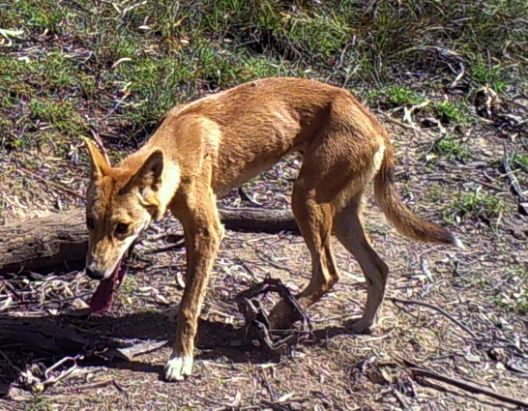
Contents:

Gympie Region Wild Dog Control Plan – purpose and outline                    3

What is a wild dog?                                                          4

Attitudes to wild dogs                                                       5

Gympie Regional Council area – a breakdown                                   7

Wild dogs and dingoes – behavioural considerations                          11

Wild dog control and associated pest strategies                             16

Techniques for wild dog control                                             18

Wild dog action workshops                                                   24

Communication and coordination                                              26

Key actions to be delivered                                                 27

Definitions                                                                 29

References                                                                  30

ISMP009                                    Page 2 of 32                          08/08/14
                          Gympie Regional Council – Wild Dog Control Plan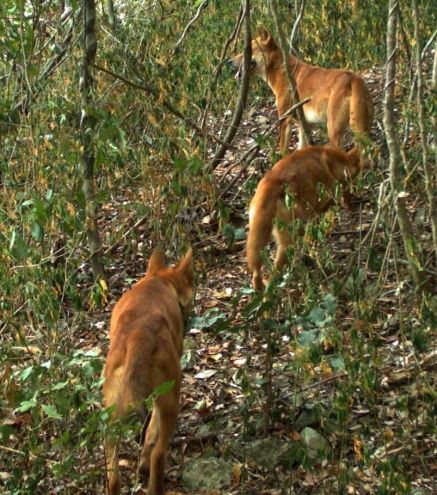
Gympie Region Wild Dog Control Plan – purpose and outline

All wild dogs in Queensland are declared Class 2 pest animals under the Land Protection (Pest
and Stock Route Management) Act 2002. All landholders, including government agencies
responsible for State lands, are required to take reasonable steps to control wild dogs (and
other declared pests) on their land.

The Gympie Region Wild Dog Control Plan has been developed by Gympie Regional Council
(GRC) to assist landholders to coordinate and concentrate community efforts in wild dog
control.

The vision for this plan is:

          To minimise the impact of wild dogs on the economic and social activities of rural and
          urban communities, and the natural environment within Gympie Region.

The purpose of the plan is to establish three priorities in wild dog control for Gympie
Regional Council (GRC), the Gympie region community, and affected regional industries.
These priorities are to:

•         reduce wild dog attacks on livestock and other wild dog threats;

•         promote stakeholder leadership of wild dog control activities; and

•         continuously improve how wild dogs are managed in the Gympie region by data
          collection and analysis, and through innovation in the implementation of wild dog
          control programs.

The plan encourages stakeholders to work together using a combination of strategies
including regulated poison baiting, trapping, shooting, exclusion fencing, good animal
husbandry, surveillance and aversion for a ‘nil tenure’ approach to wild dog control.
Stakeholders will be encouraged to “think regionally, act locally” in implementing programs.
Reporting wild dog attacks and stock losses, and participating in coordinated community wild
dog control programs will assist the Gympie region to achieve stakeholder aims in wild dog
control.

This plan begins by summarising attitudes to wild dogs and the typical social, economic and
environmental impacts that wild dogs have in the four GRC districts which have been
identified as relevant for the plan’s purposes. The plan then summarises some of the
behavioural differences between wild dogs and dingoes and the implications that

ISMP009                                         Page 3 of 32                              08/08/14
                               Gympie Regional Council – Wild Dog Control Plan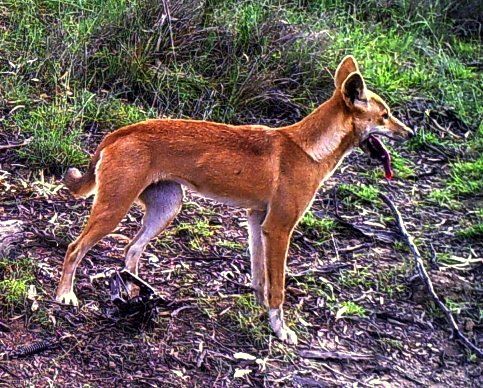
behavioural differences may have for wild dog control. Wild dog and other pest control
strategies are summarised as part of an integrated feral pest control approach.

The plan concludes with strategies for forming wild dog action stakeholder groups,
communication and coordination processes, and key actions to be delivered by the wild dog
control program.

What is a wild dog?

Wild dogs are found in most parts of Australia, sometimes in large numbers and at other
times as isolated individuals. In many places where significant numbers of wild dogs are
found in close proximity to settled areas or where they come into contact with domestic
animals, wild dogs present a problem. However, there is not necessarily agreement as to
what constitutes a wild dog and, if there are wild dogs, whether or how they should be
controlled.

The term ‘wild dog’ can have a number of meanings. The Invasive Animals Cooperative
Research Centre (CRC) uses ‘wild dog’ to refer collectively to pure dingoes, feral domestic
dogs, and hybrids between the two. In other words, all free-roaming canids are labelled as
wild dogs and are to be managed as such (Invasive Animals CRC, 2012).

A major issue for some groups is the unique
identity of the Australian dingo and its status as
a native animal. However, in the more settled
areas of the Australian mainland, most dingoes
carry some domestic dog genes even though
they may not show obvious hybrid
characteristics (Corbett, 2001: 7; Invasive
Animals CRC, 2012). Animals locally referred to
as dingoes in the Gympie region could be
expected to carry a significant proportion of
domestic dog genes and their control therefore          Image P Jesser

should not be an issue for supporters of the               While they may not show obvious
dingo. At the other end of the spectrum, there             hybrid characteristics, most
are also free-roaming dogs which may cause                 Australian wild dogs carry a mixture
                                                           of dingo and domestic dog genes.
similar damage to wild dogs. For this reason,
such animals may be classed as wild dogs and

ISMP009                                     Page 4 of 32                                   08/08/14
                           Gympie Regional Council – Wild Dog Control Plan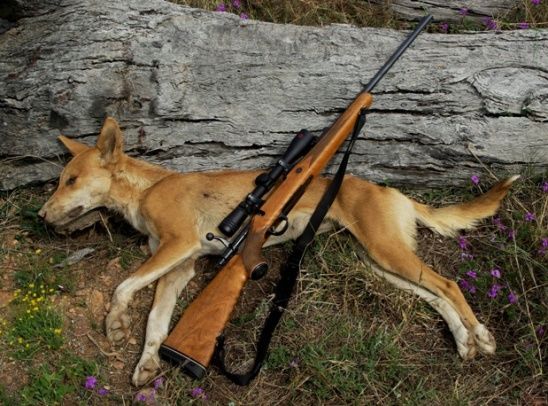
be subjected to the same range of controls.

While the Invasive Animals CRC uses the term ‘wild dog’ to include dingoes, the likely
absence of pure dingoes in the Gympie region removes this complication from local
consideration in wild dog control. In this plan, the term ‘wild dog’ is assumed to include:

   •      feral dogs;
   •      feral dog/dingo hybrids; and
   •      free-roaming dogs which cause the same or similar damage as feral dogs.

This definition is similar to that applied in other States in wild dog control strategies (see, for
example, NSW Department of Environment and Heritage 2012 and VIC Department of
Environment and Primary Industries 2013).

Attitudes to wild dogs

Wild dogs can have a number of impacts including:

   •      economic impacts through attacks on livestock and the spread of disease;
   •      social impacts through threats to human safety (including disease risk), attacks on
          pets and domestic animals, and reduction of the pleasures of peri-urban living; and
   •      environmental impacts through predation on native species.

Media reports of wild dog activity and damage in the Gympie region highlight the level of
community concern. The following is a summary of reports and observations from recent
years.

Wild dog attacks on livestock are reported frequently in both the rural and mainstream
media. Concerns have been expressed in the Gympie region and adjoining council areas
(Gympie Times 5 August 2009; Sunshine Coast Daily 24 April 2012, 31 May 2012, 5 March
2013). The main threat is to smaller livestock such as sheep and goats (Gympie Times 4
September 2010, 28 October 2011; Sunshine Coast Daily 16 February 2005, 27 March 2009,
11 May 2013). Calves are also attacked and killed (Gympie Times 24 November 2007;
Sunshine Coast Daily 14 July 2009, 30 August 2011) although larger animals may be attacked
where wild dogs exist in significant numbers (Corbett 2012: 116-120). There are concerns
that increasing hybridisation with domestic kelpie and blue heeler dog breeds will instil
‘cattle sense’ in wild dogs and lead to more attacks on larger livestock (Sunshine Coast Daily,
19 September 2013).

ISMP009                                       Page 5 of 32                                 08/08/14
                             Gympie Regional Council – Wild Dog Control Plan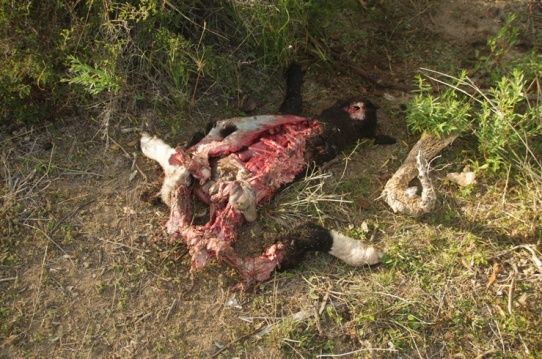
Wild dogs will also attack and kill indiscriminately (Gympie Times 4 September 2010, 28
October 2011; Sunshine Coast Daily 5 March 2013). This behaviour has been linked to
younger dogs learning to hunt and to heightened states of excitement in breeding season
behaviour (Corbett 2012: 154). Heightened levels of excitement during the breeding season
may increase danger to humans and livestock (Gympie Times 7 April 2012). Wild dogs spread
diseases, including hydatid, which can be transferred to both humans and livestock
(Department of Employment, Economic Development and Innovation 2010: 4; Gympie Times
17 July 2009, 5 June 2012).

Wild dogs can pose a significant threat to human safety. In Southeast Queensland there has
been at least one fatality and a number of attacks by wild dogs on people in recent years
(Gympie Times 20 March 2010; Sunshine Coast Daily 23 March 2009, 24 May 2011, 1 April
2012; Sydney Morning Herald 2 May 2001). The increasing presence of wild dogs in areas
close to human habitation and the possibility of such attacks places constraints on peri-
urban living because of the threat to pets as well as to children and other people who lack
the means to defend themselves (Gympie Times 5 June 2009, 26 November 2011; Sunshine
Coast Daily 24 February 2005, 21 January 2007, 26 September 2007, 24 March 2009, 14 July
2010, 7 September 2010). The Fraser Island dingoes have attracted particular attention. On
the one hand they have been responsible for one fatality and a number of attacks; on the
other, many people claim they are worthy of protection because they believe them to be
‘pure’ dingoes (Gympie Times 19 September 2008, 20 March 2010; Sunshine Coast Daily 8
September 2008, 1 April 2012).

Wild dogs also have significant impacts on native species. In Southeast Queensland, wild
dogs are placing pressure on vulnerable koala populations (Sunshine Coast Daily 9 August
2010, 28 August 2012, 9 February 2014, 10 February 2014) and have been linked to
reductions in other species such as bandicoots (Sunshine Coast Daily 12 September 2004).
While there have been suggestions that this damage is balanced by wild dog predation on
foxes and feral cats, studies have shown that they may have little or no impact (Gympie
Times, 25 July 2013, citing Fleming et. al, 2012).

However, as indicated earlier, not all members of the community view wild dogs in the same
way. Those whose livelihoods and lifestyles are most at risk – those who suffer stock losses or
whose physical safety is threatened – will want wild dogs to be subject to stringent controls.
Those who suffer little or no impacts may not be as concerned about the issue. Many of
those who show less concern are likely to live in major town areas which are rarely
penetrated by wild dogs. Concern about baiting programs and the possible baiting of pets

ISMP009                                     Page 6 of 32                               08/08/14
                           Gympie Regional Council – Wild Dog Control Plan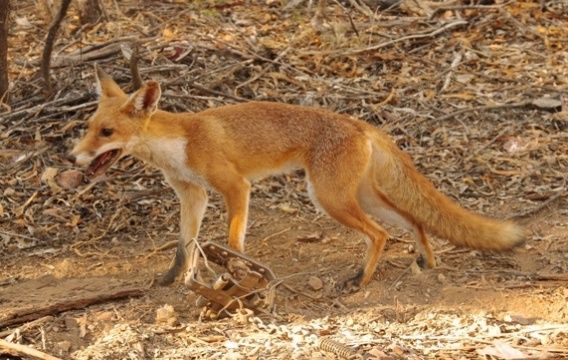
must also be taken into account (Sunshine Coast Daily 14 October 2011, 9 July 2013, 26
September 2013). There are also those who are strong supporters of and advocates for
protection of the dingo. Even though most, if not all, wild dogs in the Gympie region carry
significant domestic dog genes, many of those who favour protection for the dingo will
prefer the term ‘dingo’ to ‘wild dog’ if an animal has colouring similar to a dingo. While
colouring has been shown to be a poor predictor of dingo genetic purity (Purcell 2010: 38-
39), this group may oppose any form of control except perhaps where particular problem
animals can be identified and targeted.

Differing attitudes towards wild dogs may need to be taken into account in tailoring wild
dog control strategies in different areas.

Gympie Regional Council area – a breakdown

For convenience, the Gympie region can be divided into four sub-regions with different
demographic and economic characteristics which are likely to influence attitudes to wild
dogs.

The Gympie region covers an area of 6898 km2 ranging from coastal areas through to a large
and diverse rural hinterland. The region is centred on the relatively densely populated,
medium-sized city of Gympie. Gympie is situated on the Mary River which runs from south to
north through the region. The river valley supports intensive farming and cropping activities,
smaller communities and lifestyle blocks. To the east and west of the Mary River valley are
less densely populated rangelands comprising farming, grazing, forestry and National Park
areas.

At 30 June 2012, the Gympie region had a population of 47,548. The region has experienced
an average annual population growth rate of 1.6 per cent.

Based on topography and historical land use, the Gympie region can be divided into four
sub-regions differing in area, size of population and economic profile:

   •      Gympie City is the main centre providing regional health and community services,
          education, sport and recreation, and higher order retail and commercial facilities. It
          has a population of around 19,300. The city has a sizeable and well performing
          manufacturing base.

ISMP009                                       Page 7 of 32                                 08/08/14
                             Gympie Regional Council – Wild Dog Control Plan
Most of the Gympie region’s population growth is being experienced in Gympie City
          and its immediate surrounds. Some of the population growth reflects a lifestyle
          switch to more rural settings and this is reflected in a growing peri-urban population.
          The Gympie region is also a net exporter of labour with 0.89 jobs for every resident
          worker.

                                                      Although it is not unknown for wild dogs to
                                                      scavenge in densely populated city areas, such
                                                      intrusions are usually isolated and the
                                                      presence of the animals may pass unnoticed.
                                                      Wild dogs are more likely to be a problem in
                                                      peri-urban areas where small and vulnerable
                                                      livestock and domestic pets are commonly
                                                      encountered and impacted.
              Image P Jesser

            Wild dog bite marks on the inside
            leg of a lamb. The lamb was one           Unfortunately, where peri-urban living is
            of two attacked on the same               associated with out-of-region employment,
            night. Both suffered severe bites         there may be conflicting attitudes to wild dog
            around the back legs and died of
                                                      problems and it can be difficult to coordinate
            shock. No part of either lamb was
            eaten. The attacks occurred less          control efforts. A further consideration is that
            than 100 metres from an                   the smaller blocks of land in peri-urban areas
            occupied house.                           limit the type of control that can feasibly be
                                                      implemented.

   •      The Eastern/Coastal sub-region to the east of Gympie City encompasses significant
          tracts of plantation forests, grazing country, wetlands (including some RAMSAR
          wetland areas) and National Parks. It includes the communities of Cooloola Cove, Tin
          Can Bay and Rainbow Beach, as well as a number of smaller villages. The population
          of the Eastern/Coastal sub-region is around 10,800.

          The major industries in the coastal area are tourism, forestry and commercial fishing.
          But there are also beef cattle grazing properties and more concentrated farming
          activities including crayfish, macadamia and mango farms. Beef producers will be
          concerned about calf losses due to wild dogs, but macadamia farms may be less
          concerned because they believe that wild dogs may help to suppress the feral pigs
          and rats that are responsible for significant crop losses.

ISMP009                                         Page 8 of 32                                    08/08/14
                               Gympie Regional Council – Wild Dog Control Plan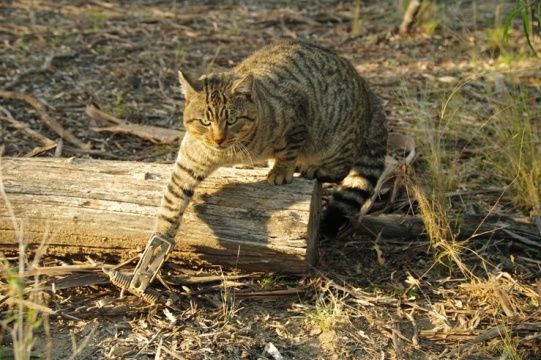
The Eastern/Coastal sub-region adjoins the more closely settled Noosa region to the
          southeast and the Fraser Coast region in the northeast. The Fraser Coast region
          includes the World Heritage listed Fraser Island.

   •      The Mary Valley sub-region lies in the southwest part of the Gympie region, taking
          in the Mary River and significant tracts of National Park and State Forests (including
          plantation forests). The main communities in the Mary Valley are Imbil and Kandanga,
          plus some smaller villages. The population of the Mary Valley sub-region is around
          6,900.

                                                    The main industries in this sub-region are
                                                    agriculture, beef, forestry and associated
                                                    timber processing, and tourism. The
                                                    agricultural enterprises include some dairying,
                                                    horse industries, macadamia and mango
                                                    plantations, and enterprises running small
                                                    numbers of goats or sheep, or engaged in
                                                    other cropping activities.
          Image P Jesser

           Young goat mauled on the hind            The Mary Valley sub-region joins the Sunshine
           quarters by wild dogs. If treated        Coast region to the south. The Sunshine Coast
           in time, some animals may survive        region has similar wild dog problems to the
           such attacks. However, once
                                                    Mary Valley sub-region. Wild dogs can have a
           scarred in this way the animal has
           very little commercial value.            devastating impact on smaller holdings
                                                    running sheep and animals of similar size. The
                                                    wild dog damage to koala populations and
                                                    other vulnerable native species in coastal
                                                    forests extends to areas within the Gympie
                                                    region.

   •      The Goomeri/Kilkivan sub-region covers that part of the Gympie region extending
          to the west, north-west and north of Gympie City. This is the largest of the sub-
          regions in area. The main townships are Goomeri and Kilkivan with a number of
          smaller villages. The population of the Goomeri/Kilkivan sub-region is around 11,200.

          Goomeri/Kilkivan is primarily good quality agricultural land. The sub-region supports
          significant dairy, beef and horse industries as well as some cropping and a range of

ISMP009                                       Page 9 of 32                                  08/08/14
                             Gympie Regional Council – Wild Dog Control Plan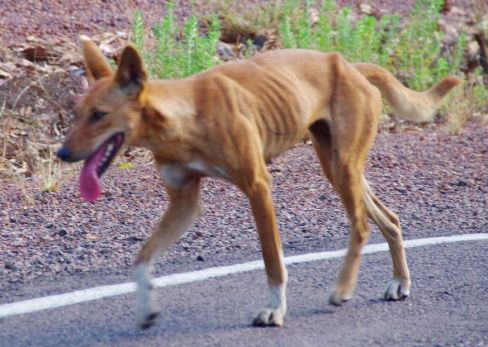
smaller agribusiness ventures. Beef producers in particular are concerned about calf
          losses due to wild dogs.
                                                        Damage to the hinds legs of a race horse
                                                        attacked by wild dogs. Two racehorses were
                                                        attacked in a small holding yard about 100
                                                        metres from an occupied house. The horses
                                                        tore out a strainer post in their efforts to
                                                        escape. Noise made by the occupier’s dogs
                                                        (which were chained) covered the noise of the
                                                        attack.
                                                        The horse shown suffered severe cuts to its legs
                                                        and bites on the rump. It was treated and
                                                        recovered physically, but was terrified of dogs
                                                        and never recovered psychologically from the
                                                        trauma of the attack.
                Image P Jesser

          The Goomeri/Kilkivan sub-region adjoins the Somerset, South Burnett and North
          Burnett regions. All these regions have similar wild dog issues to the
          Goomeri/Kilkivan sub-region in the areas where they adjoin.

          Wild dogs are active to a greater or lesser extent across the area covered by the
          Gympie region, but wild dog impacts are not necessarily a direct reflection of the
          extent of wild dog activity. Perceptions of the wild dog problem are largely
          determined by demographics. The threat and the possible solution may be viewed
          quite differently in closely settled areas than it is in rangeland or forestry areas. Those
          with a strong attachment to the protection of native animals (or all animals) are likely
          to oppose the implementation of some types of control. With those differences
          comes the reality that the available options for wild dog control are also quite
          different between closely settled areas and rangeland or forestry areas.

          Wild dog control therefore requires an approach based on the sub-regional
          differences within the Gympie region. Based on these differences, for practical
          purposes the Gympie region could be divided into three broad areas with different
          emphases and strategies for wild dog control. These are the:

   •      Goomeri/Kilkivan sub-region and adjacent sparsely settled areas which should favour
          traditional wild dog control strategies
   •      eastern/coastal subregion which may require greater integration of wild dog control
          strategies with control of other pests such as feral pigs; and

ISMP009                                          Page 10 of 32                                             08/08/14
                                 Gympie Regional Council – Wild Dog Control Plan
• closely settled parts of the Mary Valley subregion and peri-urban areas of Gympie
City (and nearby localities) which will present the greatest challenges in wild dog
control because of the restrictions on control techniques.
Wild dogs and dingoes – behavioural considerations
All dogs and dingoes are originally descended from the wolf (Canis lupus). Most authorities
now classify the dingo as Canis lupus dingo, a sub-species of wolf closely related to the Arabian
wolf (Canis lupus arabs) and the pale-footed wolf of India (Canis lupus pallipes) (Corbett 2001:
9-10; Van Dyck and Strahan 2008:737-9). The domestic dog (Canis lupus familiaris) is
sometimes regarded a separate species (referred to as Canis familiaris) because thousands of
years of in-breeding have led to major changes in its physiology. However, the domestic dog
and dingo may still freely inter-breed and produce fertile offspring. Because of this, most
Australian wild dogs are dingo/domestic dog to some degree.
Dingoes appear to have evolved from their parent wolf stock some 6,000-10,000 years ago.
Genetic tests place their point of origin somewhere in South or Southeast Asia, where they
are still widespread. They are also found in New Guinea, Madagascar, parts of Central Africa
and the eastern United Stated (the “Carolina dog”) (Corbett 2001: 14-18). This distribution
reflects the fact that dingoes have been associated with human movements across the
continents for thousands of years. Dingoes are believed to have been first brought to
Australia by early settlers about 4,000 years ago. There was probably not one single
introduction. Continuing genetic input could have come through the Torres Strait islands or
animals accompanying fishermen visiting northern Australia from Southeast Asia up to
historical times. The indiginous people did not use dingoes as hunting dogs and they were
probably not used for hunting by the original people who brought them to Australia. Rather,
it is believed that they were brought to Australia as a resource.
ISMP009 Page 11 of 32 08/08/14
Gympie Regional Council – Wild Dog Control PlanFigure 1 shows the distribution of pure dingoes and dingo-dog hybrids in Australia. The map
shows a high proportion of domestic dog genes present in wild dog populations in closely
settled areas along the east coast. Genetic purity in the Gympie region is low.
FIGURE 1: The distribution of pure
dingoes and dingo-dog hybrids in
Australia
Source: Invasive Animals CRC, Wild Dog Fact Sheet, WDFS6, 2012]
True dingoes display many wolf characteristics. Some of these can only be determined from
skull measurements (Corbett 2001: 189-90). But there are behavioural characteristics which
are much more easily observed (see Corbett 2001).
Importantly, dingoes in the wild retain a pack structure
with dominant male and female animals. True dingoes –
like wolves – have a distinct breeding season with females
coming into oestrus only once a year. In a dingo pack,
only the dominant female will generally have pups. If
subordinate females manage to breed, the dominant
female will usually kill the subordinate female’s pups.
Other females in the pack will help to raise the dominant
female’s pups. If a pack consists of more than a single pair,
this can result in high survival rates among the dominant
Image GRC
female’s pups.
Wild dogs may maintain a
similar pack structure to
Unlike dingoes, domestic dogs have a more loose pack
dingoes. The pack structure
increases success in hunting structure and no particular breeding season. In domestic
and increases the survival rate dogs, first oestrus can commence at any time and
of pups. thereafter generally occurs twice a year at six month
intervals. Individual females will maintain their breeding
pattern throughout their lives.
ISMP009 Page 12 of 32 08/08/14
Gympie Regional Council – Wild Dog Control PlanThere is some evidence that in more settled areas where wild dogs carry a high proportion of
domestic dog genes, wild dogs may breed twice a year and certainly will breed outside the
normal dingo breeding season. If there is no distinct pack structure among these animals,
individual females may lack pack support, but there will also be more females raising pups.
There are also important differences between dingoes and domestic dogs in the
development of pups.
Dingo pups mature quickly and develop a fear response very early in life. This fear response
appears to have a genetic base rather than being determined solely by experience. It is
similar to the fear response of wolf pups, which are not susceptible to being tamed even if
introduced to humans in the first few weeks after birth. For the same reasons, pure bred
dingoes do not make suitable pets.
Domestic dogs mature more slowly and develop different behavioural tendencies.
Importantly, dogs with domestic origins, but which are born in the wild, may not show a
strong fear response when coming into contact with humans. In the United States, wolf/dog
hybrids kept as pets have been responsible for a number of deaths and are generally
considered too dangerous to handle. Taking this into account, the high proportion of
dingo/domestic dog hybrids in Australia suggests that wild dogs have the potential to
present serious risks to both people and livestock if they come close to human habitation.
The observed changes in breeding behaviour and growth in numbers of wild dogs in the
Gympie region point to increasing hybridisation. It has sometimes been suggested that a
tendency towards typical dingo colouration in hybrids indicates regression towards the true
dingo type. But the original pure dingo existed in a very different environment to that in
which dingo/dog hybrids are found today. Natural selection may cause dingo/dog hybrids to
evolve more suited to their current environment. This can result in dogs retaining their
dingo appearance, but the animals may display quite different physiological and behavioural
tendencies.
ISMP009 Page 13 of 32 08/08/14
Gympie Regional Council – Wild Dog Control PlanTable 1 summarises aspects of dingo and feral domestic dog behaviour.
Table 1
Aspects of dingo and feral domestic dog behaviour
Dingo behaviour Feral domestic dog behaviour Implications for wild dog
control
Maintain a pack structure with Pack structure is a loose Removal of dominant animals
dominant male and female association of animals may have a greater tendency
animals to fracture packs and increase
the number of breeding pairs
Distinct breeding season No distinct breeding season Distinct breeding season
(April/May) creates opportunities to focus
control strategies
Females come into oestrus once Females usually come into oestrus More frequent breeding
a year twice a year lessens opportunities to focus
control strategies
Only dominant female will have Any female may breed Increased number of breeding
pups (or will kill subordinate females may lead to greater
females’ pups) population increase
Subordinate females help to Females usually raise pups alone Females raising pups alone
raise the dominant female’s may be more susceptible to
pups baiting
Pups mature quickly Pups mature more slowly Increased period of
dependence increases
opportunities to target females
Pups achieve independence Pups achieve independence at any Distinct independence season
usually around November- time depending on when they creates opportunities to focus
January were born control strategies
Pups develop early fear Pups slower to develop fear Slower development of fear
response response response creates greater
window of opportunity for
control strategies
Animals show greater fear of Animals show less fear of humans Less fear of humans may
humans and avoid human and may pose a greater threat to increase opportunities for
contact humans control
These differences in behaviour present challenges for wild dog control. The greater the
proportion of domestic dog genes or feral domestic dogs in the wild dog population, the
faster they are likely to breed and numbers increase. It is possible that they may also display
less fear of humans. This trend may be reflected in the increasing threat to people in peri-
urban areas.
ISMP009 Page 14 of 32 08/08/14
Gympie Regional Council – Wild Dog Control PlanAs wild dog breeding patterns become less
predictable, it becomes more difficult to tailor
control activities for maximum effect at times such
as breeding season or when pups are being weaned.
This needs to be taken into account when
developing control programs.
Image P Jesser
There is also a body of opinion which holds that wild
Increasing domestic dog genes in dogs are more indiscriminate killers than pure
their makeup may lead to wild dingoes. Wild dogs – whether pure dingoes or
dogs showing less fear of humans. hybrids – are opportunistic feeders that will
Such animals may appear
frequently around human
generally scavenge or prey upon whatever is
habitation and even use busy roads available. This does not mean that some individual
as part of their movement wild dogs will not display preferences in hunting
corridors.
wild game or killing domestic stock. But the best
survival strategy for any wild dog is to scavenge or
kill whatever is easiest.
Unfortunately, where killing is too easy – as with small or defenceless domestic stock – killing
may become an end in itself with little or no part of the animal consumed. But with
uncontrolled domestic dogs which may occasionally be used for hunting, it is certainly the
case that these animals will sometimes engage in killing for the sake of killing and can be a
major problem in peri-urban areas. This indiscriminate killing can have significant impacts on
native wildlife such as bandicoots and koalas.
As with changes to breeding patterns, wild and
other uncontrolled dogs that become
indiscriminate killers of livestock or wildlife are
more difficult to target because it is difficult to
predict where they will be active next. In
addition, they are often active in, or operate
from, areas such as State Forests or National
Image P Jesser
Parks where the ability to apply controls may be
A Dorper/Merino cross lamb killed and restricted.
eaten by wild dogs. More lambs were
killed on the same night but were not
eaten.
ISMP009 Page 15 of 32 08/08/14
Gympie Regional Council – Wild Dog Control PlanWild dog control and associated pest strategies
Foxes and feral cats are significant pests in the Gympie region (Gympie Times 28 May 2009,
17 May 2012, 11 May 2013, 4 October 2013; Sunshine Coast Daily 18 June 2006). While they
may not be present in large numbers in all areas, they are often encountered in areas close
to habitation where food supplies are easy to obtain. This includes council rubbish tips and
domestic sources of waste or pet food.
Some believe wild dogs suppress foxes and feral cats by competing for food and even
preying on them. Research has shown that, while some may be killed by wild dogs, these
competitors are not noticeably reduced in number by the presence of dingoes (Fleming et al.
2012). However, for a “best practice” outcome in feral animal control, strategies should target
these pests together with wild dogs to mitigate the effects of any emerging imbalance in
feral predator species.
Image P Jesser Image P Jesser
A “best practice” outcome in feral animal control should target feral cats and
foxes as well as wild dogs. Feral cats and foxes can also be caught in traps set
for wild dogs.
Wild dogs prey on feral deer and to a lesser extent feral pigs, and this can affect attitudes to
wild dog control.
Feral pigs are a major pest in macadamia production (Gympie Times 6 October 2010, 24
November 2010, 28 November 2012a, 11 October 2012). Feral pigs also cause other damage
to livestock and agricultural crops (Gympie Times 7 December 2012b; Sunshine Coast Daily
17 February 2010).
ISMP009 Page 16 of 32 08/08/14
Gympie Regional Council – Wild Dog Control PlanFeral pigs are a major agricultural pest. They
damage crops and can kill small and
defenceless livestock.
Image GRC
Macadamia farmers may be less committed to wild dog control as they believe wild dogs
may assist in controlling feral pigs. But wild dog control programs are less likely to achieve
“best practice” objectives unless they are teamed with feral pig control in areas where feral
pigs are a problem.
Foxes are highly susceptible to wild dog control programs (particularly 1080 baiting)
however they can also hinder wild dog control programs by taking and caching numerous
baits intended for wild dogs. Foxes generally have smaller territories that are overlapped by
wild dogs’ territories and foxes cover their territories more often than wild dogs cover their
larger territories. Best practice suggests that two baiting runs, only a few weeks apart can
assist in removing many foxes (with the first baiting run) from an area. This increases the
chances that wild dogs will find the baits from the second baiting run.
Feral deer also cause damage to agricultural crops and the environment. When present in
large numbers they can be a significant pest. However, some landholders also derive
significant income from feral deer through the sale of hunting access. These landholders may
support wild dog control because of the impact that wild dogs have on deer. They may be
less inclined to engage in feral deer control when they have an economic interest in the
continuing presence of deer, but “best practice” outcomes in wild dog control should include
feral deer control in areas where feral deer populations may reach pest proportions.
Feral deer can be a significant agricultural and
environmental pest. Wild dogs can have some
impact on feral deer populations. “Best
practice” outcomes in wild dog control will
require feral deer control to be implemented
as part of an integrated pest control program.
Image GRC
ISMP009 Page 17 of 32 08/08/14
Gympie Regional Council – Wild Dog Control PlanSub-regional differences summarised earlier suggest the integration of different
combinations of feral pest control strategies for different sub-regions to obtain “best
practice” outcomes not just in wild dog control, but with other feral pests.
Techniques for wild dog control
The most common strategies for wild dog control are poison baiting, trapping, shooting,
exclusion fencing, good animal husbandry and aversion (DEEDI 2011; DNRM 2002).
Surveillance can be added to these strategies as an intelligence gathering process which
increases effectiveness in the implementation of some strategies.
Each of the strategies has its advantages and disadvantages. Each also has some limitations
in the areas where it can be implemented.
Table 2 sets out the advantages and disadvantages for each of the strategies. A range of
regulatory requirements directly and indirectly affects some control strategies.
For poison baiting, a landholder is required to notify landholders (in accordance with
regulations) within a two kilometre radius that baits will be laid during a specified period.
This becomes increasingly difficult as the average size of landholdings in an area decreases.
Failure to notify has resulted in prosecution (Gympie Times 22 September 2007). Baiting is an
emotive issue with many individuals and groups regularly voicing their objections to baiting
campaigns (Sunshine Coast Daily 14 October 2011, 9 July 2013, 26 September 2013).
Trapping is also an emotive issue which can attract media attention if trapped animals are in
public view. There is an increased likelihood of this occurring in closely settled areas. More
problematic is the matter of euthanising trapped wild dogs or other feral animals. Unless
specialised services are available to euthanase the animal by other means, shooting is the
usual means of elimination.
ISMP009 Page 18 of 32 08/08/14
Gympie Regional Council – Wild Dog Control PlanImage P Jesser Image P Jesser
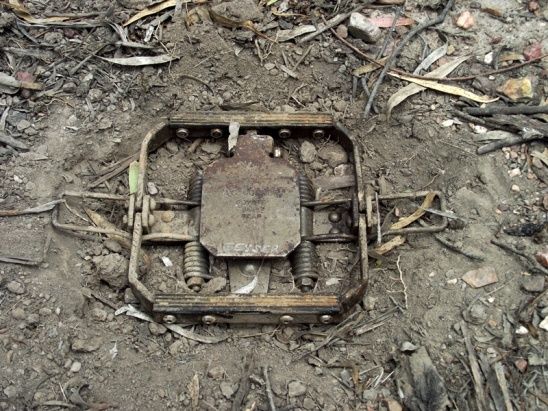
Trapping can be an effective wild dog control strategy. Traps should be checked at
least once a day and any trapped animal humanely euthanased.
The use of firearms is restricted to those licensed to possess and use them. There are also
restrictions on the use of firearms in closely settled areas. This means that dealing with
trapped animals in closely settled areas is likely to place some responsibility on council
officers to deal with the captured animal (Gympie Times 5 June 2009; Sunshine Coast Daily 15
July 2009, 27 January 2010). Some local governments do perform this function. However, at
this time, GRC does not provide this level of service.
Nevertheless, trapping may be an appropriate wild dog control strategy in more sparsely
settled areas. To this end, trapping education is generally provided with other information on
pest control days (see, for example, Gympie Times 26 September 2013).
ISMP009 Page 19 of 32 08/08/14
Gympie Regional Council – Wild Dog Control Plan20
Table 2
Wild dog control strategies – advantages and disadvantages
Strategy Remarks Advantages Disadvantages
Poison baiting Widely used strategy which • Cover wide areas quickly and • Less useful in closely settled areas because of
(1080) is considered “best practice” comparatively economically requirement to inform landholders within 2 km
pest management, but can • Targets foxes as well as wild dogs radius
be controversial due to • Can also reduce feral cat numbers • Cannot usually be undertaken within 5 km of
some misinformation that is • Poison (1080) breaks down relatively townships
still circulating regarding quickly in the environment • Opposition to 1080 use and baiting generally
1080. • Non-target species mostly not • Difficult to accurately measure success
susceptible to 1080 poisoning
Trapping Requires some expertise • A catch is a ‘known’ kill • More restricted in closely settled areas because
and commitment; trapping • Non-target species can be released if captured animals must be destroyed, generally
schools may build expertise caught requiring the use of a firearm
(Gympie Times 26 • Requires considerable time commitment to check
September 2013) traps daily
Shooting Requires licensed shooters • An animal which is shot is a ‘known’ • Time-consuming and labour intensive
kill • Expertise is required for ‘howling’ or using predator
• Non-target species are not at risk calls to attract wild dogs
• Requires good marksmanship if wild dogs are to be
eradicated and not just ‘educated’
• Generally not suitable in closely settled areas
ISMP009 Page 20 of 32 08/08/14
Gympie Regional Council – Wild Dog Control Plan21
Table 2 (continued ….)
Wild dog control strategies – advantages and disadvantages
Exclusion fencing Effective if fences are • Very effective in suitable terrain • Expensive
maintained • Can be used to exclude a range of • If not maintained soon becomes ineffective
pests
• Effectiveness increased if used in
conjunction with electric wire
Good animal Requires a combination of • Can protect young animals if stock • Requires effective stock management (breeding
husbandry strategies, usually including moved behind exclusion fencing at times, etc)
exclusion fencing calving or lambing time • Can be expensive to set up if exclusion fencing or
• May be expensive to establish, but shedding needs to be constructed
economical to maintain the system
Aversion Use of guard animals such • Can be effective if guard animals are • Guard dogs should be de-sexed
as dogs, donkeys or alpacas well managed • Not suited to large area management over
numerous properties
Surveillance Monitoring activity (e.g. • Can be used to target specific animals • Time involved in swapping memory cards and
dog tracks and other sign) • Can give an indication of relative batteries
and use of remote cameras. numbers of various species (if used • Time involved in viewing many thousands of
correctly) photos
• Time involved in collating information from
cameras and disseminating it across the region to
all relevant stakeholders
ISMP009 Page 21 of 32 08/08/14
Gympie Regional Council – Wild Dog Control Plan22
Shooting is usually a more opportunistic means of wild dog control. While animals may be
called up by ‘howling’ or using predator calls, calling wild dogs up requires considerable
expertise. Good marksmanship is also required to ensure the animal is humanely eliminated
and not just ‘educated’. Young dogs seeking new territories are also more vulnerable, being
inexperienced and on the move in unfamiliar territory. There are recreational hunting groups
which have developed these skills in members and require members to maintain high
standards of marksmanship. These organisations can offer services to landholders.
Shooting is an opportunistic means of wild
dog control. But hunters with the ability to
’howl‘ wild dogs up or use predator calls
effectively can make shooting a useful
addition to wild dog control strategies.
Image P Jesser
Exclusion fencing can be effective but the expense of such fencing is an issue for many
landholders. The expense is not just the initial cost of erecting the fence, but the ongoing
maintenance cost. In areas where only one side of the fence is cleared and maintained as a
cleared edge, falling timber can damage a fence and enable wild dogs to cross. Exclusion
fencing therefore requires a commitment by landholders on both sides of the fence to
maintain firebreaks and deal with fallen timber. This can be an issue where a landholder
adjoins State-owned land.
Good animal husbandry requires exclusion fencing and/or protective shedding for stock. If
exclusion fencing can be used to enclose smaller areas where stock can calve or lamb in
safety, this can be a more economical option than boundary fencing. Effective stock
management to control calving or lambing times is required to make this strategy effective.
Opponents of wild dog control will often point to animal husbandry practices as the
preferred option for dealing with the problem. But this strategy is more a means of
managing or minimising stock losses than complete prevention.
Aversion animals are suitable in some situations and as an adjunct to good animal
husbandry practices. Guard dogs must be de-sexed to prevent cross-breeding with wild
ISMP009 Page 22 of 32 08/08/14
Gympie Regional Council – Wild Dog Control Plan23
dogs. Donkeys have been useful in some situations, but the temperament of the individual
donkey is the key issue. Not all donkeys are natural dog killers. Alpacas have also been useful
in some areas. As with donkeys, it is the temperament of the animal which is critical. There
are documented accounts of wild dogs killing alpacas. In one case this appears to have
occurred after the alpacas had been shorn and lost its protective wool.
Surveillance is a necessary tool for “best practice” wild dog control. Checking for fresh tracks
and scats should be a routine part of a wild dog control program. In recent years, the
declining cost of remote motion sensor cameras has added a new dimension to surveillance.
A camera positioned on a well used movement corridor can be used in some cases to
identify individual wild dogs and to confirm whether a particular animal has been eliminated.
Image P Jesser
Image P Jesser
Surveillance requires active monitoring for tracks and scats to identify wild
dog movements and territories. Remote motion sensor cameras enable the
landholder to keep watch 24 hours a day. Above right is a motion sensor
camera image of a wild dog taken at night (infra-red exposure). Remote
cameras identified the pattern of this animal’s movements, leading to its
eventual elimination.
Surveillance can also be integrated on a regional scale if landholders input observations in to
the Feral Scan website which is partnered by the Australian Bureau of Agricultural and
Resouce Economics and Sciences and the Invasive Animals CRC (Cooperative Research
Centre). The site (http://www.feralscan.org.au/) maps feral pest data for a major pest species.
Mapping is currently available for rabbits, wild dogs, foxes, feral pigs, mynas, cane toads,
camels, feral goats, mice and starlings. Mapping for feral deer and feral fish is under
development.
Wild dog mapping can be accessed at http://www.feralscan.org.au/wilddogscan/default.aspx
ISMP009 Page 23 of 32 08/08/14
Gympie Regional Council – Wild Dog Control Plan24
The Feral Scan site is potentially one of the most useful tools for landholders working
together to map feral pest sightings and activity, and develop pest strategies on both a local
and regional scale.
None of the wild dog control strategies outlined here are viable solutions to the wild dog
problem if used in isolation. The object of wild dog control is to implement, as far as
possible, a ‘nil tenure’ approach to wild dog control.
The strategies used in combination can be used to achieve ‘nil tenure’. Baiting must be
employed at all times, particularly when wild dogs are most vulnerable: for example, when
pups are being weaned. All control measures can be used to disrupt pack structures and
territorial integrity. Wild dogs which are forced to move because of trapping or hunting
pressure, or to find new mates, become more vulnerable because they often have to move
and hunt in unfamiliar territory. Exclusion fencing and good animal husbandry are effectively
the screens from behind which eradication strategies can be implemented.
When other pest control strategies (such as feral pig and feral deer control) are implemented
in the same area, the removal of a possible food source can disrupt normal hunting patterns
and add to the lack of security for wild dogs.
Further Information regarding Fluoroacetate (1080) and how it works can be located on
Biosecurity Queensland website
http://www.daff.qld.gov.au/__data/assets/pdf_file/0004/71680/IPA-Wild-Dog-Fact-Sheet-
1080.pdf
Wild dog action workshops
Council has played, and continues to play an integral part in the Gympie region community’s
wild dog control effort through providing 1080 baiting services and foot-hold trap loans, as
well as providing advice to affected landholders helping to identify the best control options
available. Council has regular contact with wild dog affected landholders. Identified through
this sharing of information is the need for more specific and targeted information
dissemination and greater landholder involvement, particularly when it comes to achieving
‘landscape’ wild dog control. It has also come to council’s attention that, at times,
misinformation and lack of correct (or the most appropriate) wild dog control options has
led to some landholders either not participating or attempting to control wild dogs using
outdated or inefficient methods.
ISMP009 Page 24 of 32 08/08/14
Gympie Regional Council – Wild Dog Control Plan25
Whilst it is widely recognised and understood that landholders have the responsibility for
declared pest management on their land, it is also recognised that the correct techniques
and methods should be utilised in order to achieve effective control. Council aims to provide
information and skills to landholders to enable them to select and execute the most effective
control options available to them.
Council’s ‘Weeds and Pest Advisory Committee’ has assisted with the formulation of this
plan, and provided input as to how council can achieve best results in assisting landholders
to control wild dogs. To achieve this, council has developed a strategy to facilitate ‘Wild Dog
Workshops’ across the region. Funding to run these ‘Wild Dog Workshops’ has been
sourced through a State Government funding arrangement, which is additional funding
specifically for the purpose of running the proposed workshops. The workshops are a ‘Pilot
Program’ and council will gauge the interest and success of the workshops when considering
more activities in future. These workshops have been tailored to achieve:
• better rates of Wild Dog control participation by landholders (1080 and other control
options)
• more coordination of control efforts regionally and with contiguous regions
• best practice control efforts with a science-based approach to implementation and
monitoring
• a better informed stakeholder community
• more ownership of project outcomes by stakeholders
• a long-term flow-on effect of setting up programs.
The sub-regional breakup of the Gympie region, and the social and economic differences
within those regions, suggests that workshops to further develop wild dog control syndicates
should be held with stakeholders in three areas:
• Tansey Community Hall (to service the Goomeri/Kilkivan sub-region)
• Kandanga RSL Hall (to service the Mary Valley sub-region and peri-urban areas of
Gympie City)
• Wolvi Community Hall (to service the Eastern/Coastal sub-region).
Workshops should accommodate about 100 attendees and cover:
• the ‘nil tenure’ approach to wild dog control (all strategies to be discussed)
• baiting advice and demonstrations
• trapping techniques and demonstrations
ISMP009 Page 25 of 32 08/08/14
Gympie Regional Council – Wild Dog Control Plan26
• contacts for assistance with trapping and/or shooting wild dogs
• council advice and support for dealing with declared pests in closely settled (peri-
urban) areas
• exclusion fencing displays and advice
• associated pest strategies (particularly feral pig control)
• landholders should be encouraged to utilise good trappers
• provision of free wild dog traps for workshop attendees. It is anticipated that council
will provide one free dog trap for every registered and eligible attendee (over 18
years of age) at the end of each workshop. There will be a maximum number of traps
per workshop and preference will be given to Gympie regional landholders. Other
considerations may apply to eligibility to receive a free trap
• building on existing syndicates, syndicates be formed from volunteers and based on
geographical location (such as catchments).
This plan and the proposed workshops are consistent with council’s Pest Management Plan
and its operational objectives. Council’s current Pest Management Plan can be found at:
www.gympie.qld.gov.au/weeds-and-declared-plants-control
Communication and coordination
The Paroo Model of Wild Dog Control (Southwest Regional Economic Development
Association 2011) demonstrates the success that can be achieved through community
ownership of wild dog control. This model can be found at:
http://www.google.com.au/url?q=http://www.feral.org.au/wp-
content/uploads/2012/04/ParooModel_WildDogControl.pdf&sa=U&ei=RfPWU5KpFs3g8AXZ
zIDYCQ&ved=0CBsQFjAB&usg=AFQjCNHQFtFotLL56wLzLZpOo7H8fg739w
The Gympie Region Wild Dog Control Plan is similarly premised on landholders and land
managers communicating and working together to achieve effective control. In other words
“think regionally, act locally” on wild dog control.
To achieve this end, council will encourage landholders and land managers to form wild dog
control syndicates to coordinate wild dog and other vertebrate pest control strategies in
ISMP009 Page 26 of 32 08/08/14
Gympie Regional Council – Wild Dog Control Plan27
their areas. The areas covered by syndicates should be identified within the council’s pest
mapping system.
Syndicate coordinators should be identified with the role of encouraging participation in wild
dog control and communicating with GRC baiting operators as necessary to facilitate baiting
programs.
Syndicate coordinators and council baiting operators will facilitate meetings of landholders
and other interested parties twice a year (just prior to each baiting program) to review
current wild dog control activities and consider plans for the forthcoming control period.
Council baiting operators will convey to the Lands Protection Manager any issues arising
from wild dog syndicate meetings which should be noted or may require a response from
Council. Council’s Weeds and Pests Advisory Committee will also be consulted through this
process.
Working with council, syndicate coordinators will encourage wide community participation in
wild dog control and champion the ‘nil tenure’ approach to wild dog control in the Gympie
region.
Key actions to be delivered
Key actions to be delivered in the first twelve months of the control program should include:
• continued development of a flexible and responsive wild dog management among
landholders and other key stakeholders, implemented through the syndicates and
with the support of council where appropriate (particularly in peri-urban
environments)
• monitor changes in syndicate baiting practices and other pest control programs to
identify successful strategies
• increase access to commercial ‘manufactured’ 1080 baits for landholders
• simplify the notification system for use of 1080 products for wild dog (and feral pig)
management. Council can assist through provision of contact details of landholders
within the notification area/s so the syndicate coordinators can streamline their
process
ISMP009 Page 27 of 32 08/08/14
Gympie Regional Council – Wild Dog Control Plan28
• request the State Government to implement baiting in remote areas
• work with all stakeholders to promote local approaches to wild dog management
• continue to develop local syndicates for wild dog control
• implement processes for distributing relevant wild dog information to syndicates
(through the syndicate coordinator)
• consider new ways to enhance wild dog control, including publicising the latest
relevant research to landholders.
These key actions will be monitored and reviewed on an ongoing basis as these new
initiatives develop over time.
ISMP009 Page 28 of 32 08/08/14
Gympie Regional Council – Wild Dog Control Plan29
Definitions
CRC Cooperative Research Centre
GRC Gympie Regional Council
nil tenure An approach where a range of control measures are applied across all tenures
by all stakeholders at a ‘landscape’ (rather than a ‘property’) level in a
cooperative and coordinated manner. This approach focuses on mapping and
information gathered from landholders to identify areas of wild dog habitat,
movement corridors, historical and recent stock loss and current control.
Replacing boundaries on the map following the information collection
process clearly identifies the responsibilities of each stakeholder with regard
to wild dog management in the area. (DEEDI 2011).
Ramsar Indicates land protected under the Convention on Wetlands of International
Importance (the Ramsar Convention) which was signed in Ramsar, Iran on
2 February 1971
wild dog In this plan, the term ‘wild dog’ is assumed to include:
• feral dogs;
• feral dog/dingo hybrids; and
• free-roaming dogs which cause similar damage to feral dogs.
ISMP009 Page 29 of 32 08/08/14
Gympie Regional Council – Wild Dog Control Plan30
References:
Corbett, L. 2001. The Dingo in Australia and Asia. J.B. Books: Marleston, S.A.
DEEDI (Department of Employment, Economic Development and Innovation). 2010. Wild Dog
Management Strategy: Consultation Draft. Queensland Government.
DEEDI (Department of Employment, Economic Development and Innovation). 2011.Wild Dog
Management Strategy 2011-2016.
DNRM (Department of Natural Resources and Mines). 2002 Wild dogs/dingo – Canis
familiaris/Canis familiaris (dingo). Queensland Wild Dog Management Strategy
September 2002.
Fleming, P., Allen B, Ballard, G. and Allen, L. November 2012. “Wild dog ecology, impacts and
management in northern Australian cattle enterprises: a review with recommendations
for RD&E investments”. Meat & Livestock Australia: North Sydney.
Invasive Animals CRC. 2012. PestSmart Factsheet: Distribution of pure dingoes and dingo-dog
hybrids in Australia, WDFS6.
Invasive Animals CRC. 2011. PestSmart: Working plan to manage wild dogs, Green Book, 2nd
Edition.
NSW Department of Environment and Heritage. 2012. Wild Dog Management 2010-11. Office
of Environment and Heritage: Sydney.
Purcell, B. 2010. Dingo. CSIRO: Collingwood, VIC.
Southwest Regional Economic Development Association. 2011. The Paroo Model of Wild Dog
Control. South West RED.
Van Dyck, S. and Strahan, R. 2008. Mammals of Australia, 3rd edition. CSIRO and Australian
Museum.
VIC Department of Environment and Primary Industries. 2013. Action Plan for Managing W ild
Dogs in Victoria 2014 – 2019. State of Victoria.
ISMP009 Page 30 of 32 08/08/14
Gympie Regional Council – Wild Dog Control Plan31
Newspaper Articles:
Gympie Times
22 September 2007 “Dog baiting catches man a fine”
24 November 2007 “New calf survives vicious attack”
19 September 2008 “Be dingo aware on Fraser Island”
28 May 2009 “Fox kills pet”
5 June 2009 “Dingo evades hunter’s noose”
17 July 2009 “Wild dog season’s dangers”
5 August 2009 “Wild dog woes”
20 March 2010 “What’s wrong with Fraser dingoes?”
4 September 2010 “Dingoes butcher prized sheep”
6 October 2010 “Pigs drive macadamia farmer nuts”
24 November 2010 “Feral pigs drive farmers nuts”
28 October 2011 “Wild dogs run amok”
26 November 2011 “Family pet attacked by wild dogs”
7 April 2012 “Mating season for dingoes”
17 May 2012 “Feral cats on Fraser Island”
5 June 2012 “Dog bug a threat to cattle”
28 November 2012 “Growing feral pig problem drives Gympie farmer nuts”
7 December 2012 “Wild pigs devour breeder calf at Gympie High School”
7 December 2012 “Feral pigs too close to home”
11 May 2013 “Big, vicious feral cat attacks budgie man”
22 May 2013 “GPS tracks roaming wild dogs”
25 July 2013 “Feral cat, goanna numbers not affected by dingo cull: report”
26 September 2013 “Burnett landholders arm themselves to fight wild dogs”
4 October 2013 “Feral cats are still a problem: Cr Julie Walker”
11 October 2013 “’Explosion’ of feral pigs targeting our nuts”
ISMP009 Page 31 of 32 08/08/14
Gympie Regional Council – Wild Dog Control PlanYou can also read


