Healthcare holistic - British Holistic Medical Association
←
→
Page content transcription
If your browser does not render page correctly, please read the page content below
Volume 16    Issue 1   Spring 2019

JOURNAL OF

holistic
healthcare
Re-imagining healthcare
                              • The nature–human
                                connection
                              • Gaian psychology
                              • Reclaiming nature-based
                                practice
                              • Goethian science
                              • Super-resilience
                              • Ecotherapy for young
                                people
                              • Health and wellbeing
                                through nature
                              • Your world in words
                              • The fractal effect
                              • Nurturing wellbeing
                              • Illuminations of nature
                              • Poetry
                                – Fiona Hamilton
                                – Peter Owen-Jones
                                – Larry Butler

       Nature connections
Your
Invitation
Weleda Gardens
Open Day

Sunday 14 July
2019
11am - 4pm
The Field, Hassock Lane, Heanor,
Derbyshire, DE75 7JH
                                                                                                            A610
                                                                                                                                IKEA
                                                                          Langley Mill Station
                                                        A608

                                                                       Shipley
                                                                                                                                       A6096

                                                                 eld
                                                              Fi                   A6
                                                                                      00
                                                          e                             7H
                                                        Th                                 ean
                                                                                                 or R
                                                                                                     oad           Ilkeston

                                                                                                 Wele
                                                                                                      da
                                                                                                           Ald
                                                                       We are                                 i         Tesco

                                                                                                                                A60
                                                                        here                                                           07

A rare opportunity to visit our private gardens and
ZLOGĭRZHUPHDGRZWRJHWDQLQVLJKWLQWRWKHSODQWV
WKDWDUHDWWKHKHDUWRIRXUSURGXFWV&RPHDORQJ                          3URĬWVJRWRVXSSRUWWKHZRUN
                                                                            RI'HUE\VKLUH:LOGOLIH7UXVW
DQGOHDUQDOODERXW'HUE\VKLUH:LOGOLIH7UXVWWRR
                                                                            DQGORFDOLQLWLDWLYHV
Tickets - Single £5, Family £10
For tickets go to:                                                                               Derbyshire
www.weleda.co.uk/page/openday                                                                    Wildlife Trust
Contents
JOURNAL OF

holistic
healthcare
ISSN 1743-9493                              Editorial . . . . . . . . . . . . . . . . . . . . . . . . . . . . . . . . . . . . . . . . . . . . . . . . . . . . . . . . . . . . . . . . . . . 2
                                            The nature–human connection and health . . . . . . . . . . . . . . . . . . . . . . . . 3
Published by                                Alex Laird
British Holistic Medical Association
                                            Gaian psychology in practice . . . . . . . . . . . . . . . . . . . . . . . . . . . . . . . . . . . . . . . . . 7
West Barn, Chewton Keynsham
                                            An outcome study of groupwork to address concerns about the world
BRISTOL BS31 2SR
                                            Chris Johnstone
journal@bhma.org
www.bhma.org                                Reclaiming nature-based practice for the modern world . . . . . . 11
                                            From green care to soulcentric rites of passage
Reg. Charity No. 289459                     Roger Duncan
                                            Managing mental health with nature . . . . . . . . . . . . . . . . . . . . . . . . . . . . . . 15
Editor-in-chief                             Paul Brook
David Peters
                                            The Earth Says (after Hokasai Says) . . . . . . . . . . . . . . . . . . . . . . . . . . . . . . . 18
petersd@westminster.ac.uk
                                            Larry Butler
Editorial Board                             Learning super-resilience from nature . . . . . . . . . . . . . . . . . . . . . . . . . . . . 20
Dr William House (Chair)                    Systemic responses to systemic overload
Dr Mari Kovandzic                           Alan Heeks
Professor David Peters                      Ecotherapy: the benefits for young people . . . . . . . . . . . . . . . . . . . . . . . 24
Dr Thuli Whitehouse                         Jess Bayley
Dr Antonia Wrigley
                                            Nurturing wellbeing through nature . . . . . . . . . . . . . . . . . . . . . . . . . . . . . . 29
                                            Melanie Vincent
Production editor
Edwina Rowling                              Health and wellbeing in nature . . . . . . . . . . . . . . . . . . . . . . . . . . . . . . . . . . . . . 34
edwina.rowling@gmail.com                    Ewan Hamnett & Gareth Morgan
                                            Illuminations of nature . . . . . . . . . . . . . . . . . . . . . . . . . . . . . . . . . . . . . . . . . . . . . . 38
Advertising                                 Fiona Hamilton
The journal of holistic healthcare has a
                                            Welcome inspiration – the vitality of natural inclusion
strong online circulation both nationally   in human wellness . . . . . . . . . . . . . . . . . . . . . . . . . . . . . . . . . . . . . . . . . . . . . . . . . . . . 40
and internationally with thousands of
                                            Alan Rayner
page views every month. The journal is
available in hard copy and online.          Poetry . . . . . . . . . . . . . . . . . . . . . . . . . . . . . . . . . . . . . . . . . . . . . . . . . . . . . . . . . . . . . . . . . . . 46
To advertise email                          Peter Owen-Jones
Edwina.rowling@gmail.com                    Your world in words: connecting to oneself and nature . . . . . . . 48
                                            Gazelle Buchholtz & Ann Hodson
Products and services offered by
advertisers in these pages are not          Fractals: the hidden beauty and potential therapeutic
necessarily endorsed by the BHMA.           effect of the natural world . . . . . . . . . . . . . . . . . . . . . . . . . . . . . . . . . . . . . . . . . . . 52
                                            Lucy Loveday
Design                                      Researching the potential therapeutic action of
www.karenhobden.com                         medicinal plants using a post-reductionist method. . . . . . . . . . . . . 54
                                            Michael Evans
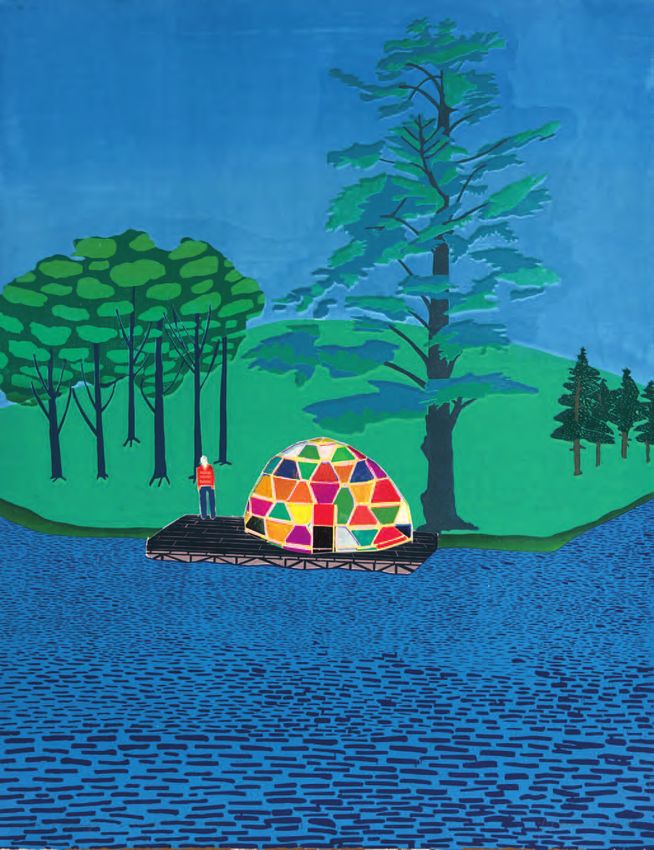
Cover illustration
                                            William House . . . . . . . . . . . . . . . . . . . . . . . . . . . . . . . . . . . . . . . . . . . . . . . . . . . . . . . . . . . 60
The Crossing 2018 (in homage to
Alex Hartley’s Dropper), edition variable   Reviews. . . . . . . . . . . . . . . . . . . . . . . . . . . . . . . . . . . . . . . . . . . . . . . . . . . . . . . . . . . . . . . . . . . 61
reduction woodcut, 155 x 121cm
© Tom Hammick courtesy of Hammick
Editions Ltd/Bridgeman Images

Printing                                    Unless otherwise stated, material is copyright BHMA and reproduction for educational,
Spinnaker Print Ltd                         non-profit purposes is welcomed. However we do ask that you credit the journal. With this
                                            exception no part of this publication may be reproduced in any form or by any other means –
                                            graphically, electronically, or mechanically, including photocopying, recording, taping or information
                                            storage and retrieval systems – without the prior written permission from the British Holistic
                                            Medical Association.
                                                 Every effort is made to ensure the accuracy of material published in the Journal of
Volume 16 ● Issue 1                         Holistic Healthcare. However, the publishers will not be liable for any inaccuracies. The
Spring 2019                                 views expressed by contributors are not necessarily those of the editor or publisher.              1
Editorial                                                                                                                   David Peters
                                                                                                                            Editor-in-Chief

Humankind is hard-wired for                                     should be full of gratitude and respect for these gifts,
                                                                but paradoxically industrialisation, while raising billions
nature connection                                               of people out of poverty (and therefore good for
In the 1970s Roger Ulrich found that patients whose             human wellbeing), has achieved this at an environmental
hospital window looked out on green space needed                cost that’s more than our planet can afford. In its ever-
shorter post-op recovery times: they were less anxious          increasing hunger for food, energy, water, wood and
and took fewer painkillers. Since then, studies abound          ores, our species is plundering Earth and making it a
exploring how nature-connectedness reduces stress,              dumping ground for waste. Humankind has ushered
anxiety and depression and boosts self-esteem. Summers          in the Anthropocene age whose feverish global
and Vivian (2018) review this research. To pick only a          industrial-consumer culture is overheating the planet
few studies: people dealing with a life-threat often have       and unravelling the web of life.
difficulty concentrating, but women with breast cancer               If our biophilic connection with all of life can boost
who walked in a park, watched birds, or tended flowers,         mental health and healing, we ought not to be surprised
achieved better focus after surgery; having sight of nature     if, on the other hand, nature deprivation were harmful.
improved self-discipline in inner city girls; children living   Joanna Macy proposes that because of our biophilic
in rural areas were less stressed by adversity than urban       interdependence, the life-world’s suffering is mirrored
children; viewing natural scenes reduced college                in the human unconscious. Our young people, whose
examination stress; nurses taking breaks outside in natural     mental wellbeing is on the decline, may be the canaries
settings returned to work more refreshed, relaxed, and          in the coalmine. If so, their recent rebellion could be the
energised.                                                      start of a healthy push back, for depression thrives on
     Researchers confirm what common sense tells us:            learned helplessness. And though denial is an under-
getting outdoors does good things for mental wellbeing –        standable defence against unbearable feelings, let’s hope
in one survey almost everyone asked to remember a               youth’s immune response to ecocide is contagious;
positive childhood experience came up with a moment             otherwise, overwhelmed by the enormity of what we are
outside (Dr William Bird, personal communication). But          witnessing, the older generation will be too numbed and
more remarkable is its impact on the body. People forest        paralysed to rebel for life.
bathing in Japan and South Korea have decreased levels of            The changes in human attitudes and behaviours being
the stress hormone cortisol, lower pulse rate and blood         demanded by the ecological crisis require a compassionate
pressure, and heart rate variability that indicates rest and    shift in our relationship to the other than human world.
recovery (Song et al, 2016). Even when adjusted for other       For we are wired to protect what we love. If that is too
health inequalities, people with good access to urban           much to expect of a species so caught up in flight or fight,
green spaces have better physical health outcomes:              then at least a utilitarian approach still has merit. For we
reduced cardiovascular morbidity and mortality, obesity         protect what we value, especially if it pays us back many
and risk of type 2 diabetes, and improved pregnancy             times over. Nature connection is good for us, and if
outcomes (WHO, 2016).                                           allowed to, Gaia will continue to clean our air and water,
     For five million or so years our human form and            regulate climate, and co-create sustainable food and
physiology evolved close to wild nature. In the embodied        shelter. It would be disastrous to take for granted these
operating system that runs our physiology, ‘memories’ of        incalculably valuable natural services, and ignore the
this evolutionary past, encoded in our DNA, run in the          ancient bonds that tie us into the other than human world.
background. When we make a nature connection this                    In this bumper issue of JHH we explore communion
ecological self triggers cellular messages of belonging and     with the natural world and its impact on body, mind and
safety. We are not well-adapted to the unrelenting              spirit. The images and poetry woven through this issue
confined urban/industrial environment. It is not our            celebrate the art as well as the science of nature
ecological niche, so when thrust into the artificial space      connectedness.
and pace of modern life we run too hot. Nature
connectedness reboots us out of this low-level stressed         References
state and back to our evolutionary default mode. In short,      Song C, Ikei H, Miyazaki Y (2016) Physiological effects of nature
we human beings seek connection with nature and other           therapy: a review of the research in Japan. Int J Environ Res Public
                                                                Health. 13 (8), 781.
forms of life because it calms us down.
                                                                Summers JK, Vivian DN (2018) Ecotherapy – a forgotten ecosystem
     The biologist Edward O Wilson calls this innate urge       service: a review. Front Psychol. 3 (9), 1389.
biophilia, and the physiology of biophilia might explain        WHO (2016) Urban green spaces and health. Copenhagen: WHO
why nature-connectedness can enhance healing. We                Regional Office for Europe.

 2                                                                                  © Journal of holistic healthcare ● Volume 16 Issue 1 Spring 2019
ON BEING NATU R A L

The nature–human
connection and health
Alex Laird                                                         Wondering at the perfection of an autumn morning as a child on the shores of Loch
Medical herbalist                                                  Lomond, I had an epiphany – nature was saying something about how to live. This
                                                                   eventually led to my move from television to aromatherapy, working with HIV drug users
                                                                   and hospital staff, then to herbal medicine and founding the charity Living Medicine.
                                                                   Nature, through its extraordinary design within and outside us, is for me the ultimate
                                                                   teacher. In my practice, I love learning about and teaching about how life and our bodies
                                                                   thrive through foods, plants, people and the rest of nature. Exchange between all
                                                                   cultures is central to Living Medicine’s self-care courses for patients and public. It’s the
                                                                   impetus behind our vision to create Britain’s first global medicinal garden as a centre of
                                                                   excellence, co-created with the public and linked to medicinal gardens worldwide.

   Humans are nature. We
   inhabit a rhythmic web of life.                                     Nature is not a place to visit.             has developed since shares many of
                                                                       It is home.                                 the same genes necessary for basic
   We are one of at least 10                                           Gary Snyder (1990)                          cellular function, such as for replicating
   million, possibly even a trillion                               Humankind is a young and not-yet
                                                                                                                   DNA, controlling the cell cycle and
   species on Earth. From her                                                                                      helping cells divide, and other genes
                                                                   wise species who left home and lost
                                                                                                                   that control the basic metabolism of all
   megafauna to her vast                                           its way. Our love story with nature is
                                                                                                                   plants and animals. It is not surprising
                                                                   going through a very rough patch.
   microbial diversity, modern                                                                                     to learn that consequently humans
                                                                   As the industrial society wreaks
   humans have schemed to                                                                                          share some 75% of their genes with
                                                                   destruction on itself and other species
                                                                                                                   the pumpkin.
   re-engineer and exploit the                                     through over-consumption, waste and
                                                                                                                        So nature embraces all life within
                                                                   global warming, we may wonder what
   natural world for short-term                                                                                    our vastly biodiverse system. This
                                                                   went wrong and how we might fix it.
   gain. Yet there is no functional                                                                                common urge for life is reflected in
                                                                   Our hubris may be taking us down, yet
                                                                                                                   the form and function of all organisms,
   separation between                                              the rest of nature will probably prevail
                                                                                                                   which have themselves been shaped
                                                                   long after we were gone. Yet surely, if
   humankind and the rest of                                                                                       through evolution by the co-creative
                                                                   nature can survive, we can learn to do
   life. Nature designed and                                                                                       and co-operative relationships
                                                                   so too. As health practitioners, how
                                                                                                                   between organisms and their ever-
   assembled us, so good health                                    can we share our knowledge of how
                                                                                                                   changing environment. This symbiosis,
                                                                   life functions to help us recover a
   requires us to remember this                                                                                    as first proposed by biologist Lynn
                                                                   healthy relationship with nature?
   intimacy, pay attention to how                                                                                  Margulis (1967), is recognised as
                                                                                                                   driving evolution onward.
   our body and mind naturally                                     We are nature
   function, and co-operate with                                   Our shared natural history started              Our human-nature
   this evolved wisdom.                                            some four billion years ago, with the           connection; biophilia
                                                                   formation of a persistent, tiny single-
                                                                   celled organism. It’s thought that all          These shared genetic codes may
                                                                   life evolved from this last universal           explain in part why our connection to
                                                                   common ancestor, or LUCA. Billions of           nature is in a sense instinctual and
                                                                   years ago, bacteria and viruses shared          why it feels so fundamental. We may
                                                                   genetic information which transferred           feel awe, wonder and love for the
                                                                   to animals and eventually became part           exterior natural world, as Stephen
                                                                   of our human genome (Crisp et al,               Harrod Buhner suggests, ‘because the
                                                                   2015). Every individual life-form that          experience of nature and other life

© Journal of holistic healthcare ● Volume 16 Issue 1 Spring 2019                                                                                            3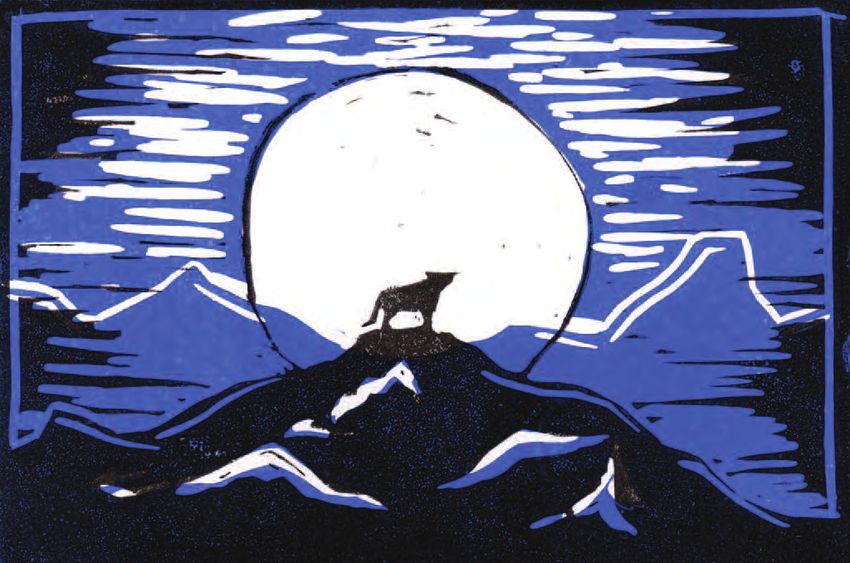
ON BEING NATURAL
The nature–human connection and health

forms is so deeply interwoven into our emergence as a           sitting quietly and opening up to our senses will quicken
species… human beings possess a genetic predisposition          our appreciation of life.
for wild nature and for other life forms - though it must,
through specific experiences, be activated’ (Margulis, 1967).
                                                                Circadian rhythms
                                                                Cell chemistry functions in lockstep with Earth’s day-night
Living in natural harmony                                       cycle, because life evolved over billions of years in
     Nature, time and patience are                              constant relation to the planet’s rhythms of dark and light.
     the three great physicians.                                Daylight prompts the morning surge of cortisol that wakes
     Chinese proverb                                            us up; melatonin production builds as light fades and
                                                                moves us into sleepiness. Growth hormone secretion
This activation is where herbalists, and indeed anyone
                                                                helps repair us while we sleep. Electric light has artificially
with a deep feeling for nature, can have a role in
                                                                lengthened our day, but mild permanent jetlag is the
reconnecting us to the life within and beyond us. For
                                                                consequence of ignoring the bodyclocks embedded in
herbalists, our medicines are the plants themselves and
                                                                every cell of the body. Returning to the planetary rhythm
an understanding of how natural systems function and
                                                                of eight-hours sleep, eating and exercising by daylight and
interrelate. We use plants directly as natural medicine, but
                                                                fasting overnight matches our true biological tempo, so
they can also act powerfully on our imagination to awaken
                                                                buffering us against stress and building our ability to adapt
us and our patients to ‘biophilia’. Edward O Wilson coined
                                                                to adversity.
this term to name humans’ innate feeling for and caring
about living forms (Wilson, 1984). Biophilia can extend
our empathy to encompass the natural environment, all of
life, ourselves and other humans.
     ‘Love the world as your own self;
      then you can truly care for all things’.
                                                                ❛     We use plants directly as natural
                                                                      medicine, but they can also act                                   ❛
     Lao Tzu, Tao Te Ching (6th century BC)
                                                                      powerfully on our imagination
                                                                Real food is medicine
Diversity and symbiosis
                                                                Much more than mere fuel, what and how we eat can
The human body contains communities of viruses,                 nourish us on all levels, body–mind and spirit. Feeding
bacteria and fungi that probably outnumber our own cells.       connects us instantly to our bodies; eating together binds
In our gut, trillions of these co-evolved microbial ‘old        us to other people. Food has taste, texture, shape, colour
friends’ digest fibre, pigments and food particles that our     and sound, as well as nutrients. It can link us to where and
own juices cannot deal with. In return, they produce            how it was grown. But an impoverished way of eating
protective acids and manage potentially harmful viruses         cannot do this. Fast industrial food can be cheap but the
and bacteria within the gut’s ecosystem. On the surface         true price of poor quality, fast-grown, diluted and phyto-
of the body, microbial species adapted to our skin help         nutrient-poor food will eventually be paid in ill-health.
maintain its immune barrier by turning sweat, skin cells            It’s increasingly recognised that there is no single ideal
and sebum into protective acids. Our health depends on          diet. We are beginning to discover there is a basis for
our interdependence with other life forms, a living             individual needs, and this is thanks in part to a better
network inside and out. It also rests on social and             understanding of the role of genomic differences and the
environmental health – for if they are impaired, so will        ecology and distribution of gut and soil microbes. But
our health be, albeit indirectly or in the long term.           there are some key principles to what and how we should
                                                                eat, and at their heart lie nature’s favouring of complexity
Reducing stress load and                                        and diversity. My own approach builds on what food
supporting function                                             activist Michael Pollan laid down with his 64 rules,
                                                                summarised as: ‘Eat food. Not much. Mostly plants.’
These approaches are fundamental to improving health.               My own approach to dietary advice is:
Ill-health often results from not listening to internal
                                                                • mostly plants, with their fibre and phytonutrient-rich
warning signs such as poor sleep, pain, depression and
                                                                  edible skin, pith and seeds
fatigue. So how best are we to allow our evolutionary
nature to flourish? We evolved in groups so loneliness and      • not too much and mostly during the day
isolation, and disconnection from self and others, can          • many colours, the darker the better
contribute to a sense of dis-ease. Excessive stimulation and    • some raw
busyness has to be counter-balanced by slowing down so          • from a variety of plant families
we can recover. To practise being in the here and now will      • a new vegetable or fruit regularly
more closely mirror nature’s timescale: we know from the        • something wild every day (for concentrated
evidence on mindfulness that this is a healing state. Simply      phytonutrients).

 4                                                                               © Journal of holistic healthcare ● Volume 16 Issue 1 Spring 2019
ON BEING NATURAL
                                                                                        The nature–human connection and health

Food provenance matters                                            knowing that difficulty can strengthen us physically and
                                                                   mentally can change our attitude and behaviour towards
What did that animal eat and how was it bred and raised?           what we tend to avoid.
In what soil and surroundings was that plant grown? Albeit
transformed, we are eating what that animal ate or the soil
in which that plant grew. Highly-marbled meat is usually           Our state of health is not
due to ‘finishing’ or fattening the cow with an unnatural          permanent
diet of corn, grain and/or soya bean, high in inflammatory
                                                                   Health involves a dynamic adaptation to a constantly
omega 6 fatty acids, rather than anti-inflammatory omega
                                                                   changing environment. We are complex creatures and we
3s from pasture-fed animals. Science has shown that
                                                                   can adapt and grow. When faced with a challenge we may
animals have emotions and can suffer much as humans
                                                                   discover unknown coping capacity and inner resources.
do. An animal slaughtered so we can eat it should die with
                                                                   Rather than resisting an unfamiliar reality, how can we
as little stress as possible, having been respected in life,
                                                                   experience the now as a moment full of possibilities, a
herding with its fellows, and eating a natural diet of mixed
                                                                   feeling of not being fixed in an illness or misery? By
pasture.
                                                                   holding this acceptance our current state is eligible to
                                                                   change. One theory about the healing power of nature
Rediscovering complex food tastes                                  connectedness is that it diffuses our over-focused
                                                                   attention and widens our sense of self.
Having evolved to savour nutrient complexity and to
protect us from toxins, our taste and smell can detect at
least 100,000 flavours. We are hardwired for a variety of          Finding our way back home to
tastes, but we have been seduced by salty and sugary               nature as teacher and lover
foods to narrow our taste preferences. A food that feels
deeply satisfying is likely to be waking up many taste             Long-lived healthy communities do exist. The world’s blue
receptors. For example the complex flavour of a wild-              zones – regions of the world where people live much
grown plant like watercress tells us that it’s full of             longer than average – (Buettner, 2005) share several key
phytonutrients and vitamins, minerals and soil organisms           characteristics: regular physical activities like gardening or
from a mineral-rich river bed, stimulated to make the kind         household tasks; a sense of life’s purpose; a plant-based
of defence chemicals that act as plant medicines (such as          diet including legumes; strong family and social cohesion
immune-stimulating bitters). A fast-grown plant molly-             especially for the elderly; moderate alcohol intake;
coddled in hydroponics and fed a chemical fertiliser mix           reduced stress; and the expression of spirituality or
won’t have had the chance to do this. We can literally taste       religion. Genetic or other factors must also play a role in
the difference. The fats, proteins and carbohydrates of a          their good health, but what is obvious is that these
slow-fermented ham from a pig who ate a wild and                   communities’ all live simple, slower and rhythmical lives
complex diet get broken down further by microbes                   that involve connection, give and take.
specific to each atmosphere from cave to attic, into
hundreds of tasty amino acids, fatty acids and sugars              Summary
(IQWiG, 2011).
                                                                   One way home to our natural selves is through our deep
                                                                   and real relationship with the natural world. We humans
Gather, grow, prepare, share and                                   co-evolved the other-than human world whose diversity
eat food together                                                  and rhythms encourage us to be more patient with life’s
                                                                   processes. Nature is calling us to tackle the profound
Ritual and celebration often revolve around food. The
                                                                   ecological and social challenges of the extraordinary time
body’s digestion system works best when we slow down.
                                                                   in which we are living. Since humans are the planet’s
And as we slow down we feel more open and
                                                                   organs of awareness and conscience we must not ignore
communicative; our thinking brains work better too.
                                                                   the symptoms of planetary illness. Global warming and
When we rest and digest we also like to tend and befriend;
                                                                   species loss should prompt us to join together to heal
with access to others, their ideas and skills we find solutions
                                                                   ourselves and the other-than human world.
together (Hari et al, 2015). Loneliness is as damaging to
our health as smoking and obesity and shortens our life.               The anchor of my purest thoughts, the nurse,
                                                                       The guide, the guardian of my heart, and soul,
                                                                       Of all my moral being…
Some stress can build resilience                                        A motion and a spirit, that impels
A little stress is a good thing. Hormesis is an adaptive               All thinking things, all objects of all thought,
response to a moderate stressor that stimulates response               And rolls through all things.
and so builds resilience. As our muscle and bone build on              William Wordsworth
sensing a load, so a plant threatened by a predator or
pathogen makes its own defence chemicals. Merely

© Journal of holistic healthcare ● Volume 16 Issue 1 Spring 2019                                                               5
ON BEING NATURAL
The nature–human connection and health

Nature in its beauty and economy models a sacred
reciprocity. If we observe closely and patiently how it
works, and appreciate the hidden, long-term consequences
of our actions, our natural wisdom will guide us home to a
healthier balance with each other and the Earth.

References
Buettner D (2005) The secrets of longevity. National Geographic,
November.
Buhner SH (2002) The lost language of plants: the ecological
importance of plant medicine to life on Earth. Hartford, VT: Chelsea
Green Publishing.
Crisp A, Boschetti C, Perry M, Tunnacliffe A, Micklem G (2015)
Expression of multiple horizontally acquired genes is a hallmark of
both vertebrate and invertebrate genomes. Genome Biology 16(50).
Hari R, Henriksson L, Malinen S, Parkkonen L (2015) Centrality of
Social Interaction in Human Brain Function. Neuron 7(88): 181–93.
IQWiG (2011) How does our sense of taste work? Institute for Quality
and Efficiency in Health Care. Available at: www.ncbi.nlm.nih.gov/
books/NBK279408 (accessed 3 February 2019).
Margulis L (1967) On the origin of mitosing cells.J Theor Biol. 14 (3):
255–274.
Wilson EO (1984) Biophilia. Cambridge, MA: Harvard University Press.

                                                                          Linocut, Winter, Theo Peters https://theopeters.co.uk

  Being-with the Forest
      Tuesday 23 July • 11am–6pm                                                    Laughton (near Lewes, East Sussex)

     An eco-poetics day for healthcare practitioners and students
     Vegetarian lunch provided • Maximum 12 participants
     This event for healthcare practitioners and medical students will use VERT
     Institute’s practice of art-making and writing to explore embodied experience
     of the relationships between inside and outside, nature and culture, microcosm
     and macrocosm.
                                                         Vert Institute operates from our house and studio on the edge of
                                                        Vert Wood near the village of Laughton in East Sussex. The aim of
                                                            the Institute is to offer unusual and stimulating art and writing
                                                       events and workshops based on the creative ideas and experience
                                                                  of Kay Syrad and world-renowned land artist Chris Drury.

                      See www.kaysyrad.co.uk/vert-institute.php and http://chrisdrury.co.uk
                             Doctors £100 Students £50 (some bursaries available)
                       Contact: petersd@westminster.ac.uk (use subject line forest event)
                          Proceeds to Enthum Foundation www.enthumfoundation.org

 6                                                                                              © Journal of holistic healthcare ● Volume 16 Issue 1 Spring 2019
EDUCAT I O N

Gaian psychology in
practice
An outcome study of groupwork to address
concerns about the world
Chris Johnstone                                                    I’ve run workshops designed to help people respond to their concerns for the world
Resilience specialist, CollegeOfWellbeing.com                      with courage, creativity and compassion for more than 30 years. I’ve worked closely with
                                                                   US author and activist Joanna Macy in this work, and in Active Hope, the book we wrote
                                                                   together (2012), we describe the transformative journey the workshops guide people
                                                                   through. The approach we use draws strongly on systems thinking. A central idea is that
                                                                   systems act through their parts – whether a family or team acting through its members,
                                                                   or the planetary system of Gaia acting through us. I’ve found this idea to be enormously
                                                                   empowering.

                                                                   At the time, 2014 was the warmest             able to acknowledge and express such
   When we connect with nature,                                    year on record. Then 2015 was hotter,         feelings about the world within a
   we may also connect with the                                    and 2016 saw higher temperatures              supportive setting was found to be
   pain of a living system in                                      still. Alongside these years, 2017 and        liberating, especially when people
                                                                   2018 were also among the five                 experienced their concerns as shared
   trauma. The range and depth                                     hottest since records began                   by others. Some of the hopelessness
   of uncomfortable feelings                                       (https://en.wikipedia.org/ wiki/              shifted, leaving participants more
   brought up can sometimes be                                     Instrumental_temperature_record).             energised and empowered. As these
                                                                   The heating trend on planet Earth             workshops aim to help participants
   overwhelming, particularly as                                   has seen each decade over the last            strengthen their sense of connection
   we live at a time of a human-                                   half-century warmer than the one              with the larger whole of life on Earth,
   induced dying-back of the                                       before, with record-breaking heat-            as well as with their capacity to make a
                                                                   waves, wildfires, floods and droughts         difference and a community of mutual
   natural world. This article                                     appearing much as climate scientists          support, the approach is known as
   introduces a form of                                            told us years ago they would. With            The Work That Reconnects. It has
   groupwork known as The Work                                     the disturbing changes happening to           spread throughout the world, and
                                                                   our world climate system, and the             hundreds of thousands of people have
   That Reconnects. Applying a                                     weather-related disasters linked to           taken part.
   Gaian approach to psychology,                                   these, it is no surprise that terms like          The approach was first developed
   it leads to a different way of                                  ‘climate anxiety’ are increasingly used       by Joanna Macy, an activist and teacher
                                                                   (www.resilience.org/ stories/2018-09-         of world religions in the US. Her
   thinking about pain for the                                     21/psychologists-explain-our-climate-         doctoral thesis had explored the
   world and our power to make a                                   change-anxiety).                              parallels between systems thinking
   difference. I also report on an                                      More than 40 years ago, a form of        and Buddhism. This background
                                                                   groupwork developed that provided a           helped her build a framework for the
   outcome study with follow-up                                    forum for sharing concerns about              workshops that integrated systems
   questionnaires a year after                                     global issues. Then, as now, many             thinking perspectives from science
   workshops based on this                                         people felt overwhelmed when facing           (like Gaia Theory) with spiritual
                                                                   problems experienced as too huge to           practices and psychological insights. At
   approach.                                                       address in a meaningful way. Yet being        the core of The Work That Reconnects

© Journal of holistic healthcare ● Volume 16 Issue 1 Spring 2019                                                                                        7
EDUCATION
Gaian psychology in practice: An outcome study of groupwork to address concerns about the world

is a reshaping of psychology based on applying a Gaian                   An essential step in the workshops is to offer a
understanding of who and what we are. In this, the way              different way of understanding the distress we may
we deal with our feelings about world events is seen as             experience about disturbing events in the world. There is
one of the keys to finding our power to make a difference.          a shift in the meaning we give pain for the world when we
                                                                    value it as evidence that we are connected to a bigger life
                                                                    than just our own. With this view, we can recognise the
Gaian psychology and pain for                                       life-preserving function of uncomfortable emotions as
the world                                                           signals that can alert and energise our response to danger.
Gaia Theory proposes that the living Earth functions as a                Building on this understanding, the workshops offer
self-regulating whole. In a striking parallel to the way our        structured processes and a supportive environment for
bodies control the temperature of our blood, the                    people to hear themselves give voice to their anguish and
temperature of the atmosphere appears to have remained              concerns. Research has shown that having opportunities
relatively stable over the last three-and-a-half billion years,     to talk through feelings of distress about traumatic events
in spite of an estimated 30% increase in the energy                 can improve health outcomes (Pennebaker and Beall,
coming from the sun over this period (Lovelock, 1979).              1986). Yet even though distress about traumatic world
Atmospheric oxygen levels and the salinity of the oceans            events is common, these feelings often remain as an
also appear to have remained remarkably stable for many             unspoken unsettledness within us. To give room for their
millions of years, with evidence growing that these have            expression, participants are invited to talk in pairs or
been actively regulated by life itself. Rather than viewing         groups, completing sentences that start with phrases like,
our planet as a dead lump of rock that we and other                 ‘When I consider the condition of our world, I think
species happen to live on, Gaia Theory suggests that Earth          things are getting...’ and ‘Feelings that come up when I
is better viewed as a self-regulating living entity that we         think about this include…’
are part of.                                                             Pain for the world, an umbrella term for the variety of
     The importance of Gaia Theory psychologically is it            ways we experience distress about upsetting world events,
challenges the view that we are just separate individuals.          is only one side of the coin. The other side is the depth of
It becomes possible to think of ourselves as similar to cells       our caring and desire to play our part in a constructive
within a larger organism, or as members of a planet-sized           response. Within Gaian psychology, the interconnectedness
community of the whole of life on Earth. Emotional                  that links these also points to a systems-based under-
reactions to threat, loss and injury elsewhere on the               standing of our power to make a difference. Of central
planet are seen as expressions of this wider and deeper             importance here are the concepts of synergy and
‘ecological self ’. Making room for these feelings becomes          emergence.
a way of experiencing and deepening our connectedness
with life.                                                          Finding our power to make a
     If someone in our family dies, feelings of grief are
regarded as normal and healthy. The pain of loss, though
                                                                    difference
uncomfortable, is a product of our relationship with, and            If you look at a newspaper picture through a magnifying
belonging to, the larger system of our family. Likewise, if         glass, you might only see a collection of tiny dots. It is the
a relative has been attacked, we might feel angry, sad,             way these dots act together – in synergy – that leads to the
alarmed or concerned. These ‘family feelings’ motivate              emergence of the picture. In a similar way, a whole person
people to act for the wellbeing of the family system they           is so much more than just a collection of cells. Moving up
belong to. The family is a self-regulating entity that acts         a level, a well-functioning team can achieve things that
and feels through its members.                                      might seem impossible for less connected individuals.
     Some indigenous tribal cultures have a relationship of         The whole is more than the sum of the parts because the
closeness to nature where other species are regarded as             synergy of parts working together allows for the
close relatives. Although that depth of connection has to           emergence of new abilities.
a large extent been lost in modern industrialised societies,             Just as newspaper pictures happen through dots, so
it has not gone completely. When people are given an                stories happen through people. When we look up close at
opportunity to give voice to their feelings for the world, it       individuals going about their daily lives, it is difficult to
allows the expression of that part of their being that still        fully appreciate the power – for better or worse – of the
feels connected. That brings the world closer, deepening            larger stories happening through them. We are living at a
our relationship with it.                                           time of a mass extinction event caused by human activity.
     When we feel strongly about something, our emotions            In this story, which we can call ‘The Great Unravelling’,
provide a source of energy that we can tap into. But if we          our species is threatened too.
avoid looking at world problems because the feelings they                Gaian psychology involves a shift in identification,
arouse are too painful, we block the motivating signal that         where we see ourselves not just as individuals, but also as
might rouse us to respond. That can lead to apathy and              part of a living planet that seeks to heal itself. Systems act
disengagement within a culture psychologically alienated            through their parts, and just us healing in an individual
from the larger community of life on Earth.                         involves the actions of that person’s cells, so the larger

 8                                                                                   © Journal of holistic healthcare ● Volume 16 Issue 1 Spring 2019
EDUCATION
Gaian psychology in practice: An outcome study of groupwork to address concerns about the world
story of our world healing itself could involve us and This small-scale study was carried out more to satisfy
happen through us. Stories of recovery from life- personal curiosity than academic rigour. To get a more
threatening conditions have turning points where the comprehensive view of outcomes, a much larger sample
balance shifts towards recovery. What would a ‘Great size would be needed. However, it does support the view
Turning’ story of the recovery of our world look like if it that these workshops can offer an empowering experience
were to happen in and through our lives? Important that deepens participants’ feeling of connection with the
elements might include the noticing of problems, world. A small proportion – in this case about a quarter of
experiencing the alarm call of emotional distress, and then those replying – found the workshop to be an important
seeking to play a role that made a difference. The work- turning point that very deeply changed their lives.
shops aim to strengthen people’s capacity to find and
play their role, and the final part focuses on supporting Personally healing
participants to explore what their role might be. A striking finding of the questionnaire was the high
proportion of people who found the workshop to be
The outcome study personally healing. More than 90% of replies rated this
area as ‘moderately’ or more, and more than 75% marked
There are times I’ve felt powerfully connected to this the responses of either ‘quite a lot’ or ‘very deeply’. This
sense of life acting through me. These workshops have made it the most highly rated positive outcome of the
strengthened that experience, in ways that have been workshop. Several participants wrote in their comments
life-changing. Over 25 years ago, I wondered whether that the workshop had been healing in helping promote
other participants had felt this too, and what difference a sense of integration with a wider picture, one person
these workshops made. To find out, I decided to carry out writing: ‘I remember an uncommon and wonderful sense
a follow-up study (Johnstone, 2002). that I did (do) have a place in the world’.
I sent questionnaires to all participants of residential Other factors described as healing were the experience
workshops I had run between December 1992 and of not being alone in feeling distress for the world and
November 1993. I sent them a year after each event, so having this distress validated as an appropriate emotional
that I could get an idea of longer-term outcomes. I asked response to world problems. One participant, listing what
people to rate their responses to a series of questions on she had found beneficial, wrote: ‘permission to feel, to
a five-point scale that included the following options: not grieve, to hate, to rage, to cry – validation that I am not
at all, slightly, moderately, quite a lot, very deeply. I also “odd” but responding to an unhealthy situation in a
asked for additional comments. The questions I asked healthy way’.
were:
• Did the workshop give you an opportunity to express Are they safe?
your feelings about the state of the world? I added the question about harmful effects because
• Did the workshop help you strengthen or deepen your sometimes people fear that opening to feelings about
sense of connection with the Earth/life on Earth? world problems might be harmful. I wanted to check
• Was your experience of the workshop in any way whether there was any evidence of this. More than 80%
personally healing or beneficial for you? replied ‘not at all’, nearly 10% put ‘slightly’, 3% (one
• Was your experience of the workshop in any way person) marked ‘moderately’, 3% ‘quite a lot’ and 3%
harmful or damaging to you? marked the response ‘very deeply’. Every one of these
people also marked that they had found the workshop as
• Did your experience of the workshop help strengthen
much or more personally healing. No one mentioned
the feeling that you can make a difference to the state
feeling depressed or traumatised by their feelings about
of the world?
the world. The negative effects people identified fell into
• Overall, has your experience of the workshop in any way two categories: personal issues brought up by the work-
changed your life? shop, and factors to do with being in a group.
I received 31 replies from 40 questionnaires sent. The one person who had marked ‘very deeply’
Everyone replied that the workshop had provided the harmful also replied that she had found it ‘very deeply’
opportunity to express their feelings about the world, and personally healing. In her additional comments she said
more than 70% said that this had been ‘quite a lot’ or ‘very the workshop had brought up a lot of previously
deeply’. More than 90% replied that the workshop had unexpressed personal grief, and that afterwards she had
helped strengthen both their sense of connection with the gone into therapy and been able to move forward with
world and their feeling that they could make a difference this. She had also left the workshop early, and so missed
within it. For over half the respondents to both these the integrating potential of exercises used towards the end
questions, this had been either ‘quite a lot’ or ‘very of the workshop. Other people had also commented on
deeply’. More than 80% replied that the experience of the personal grief issues being brought to the surface, and
workshop had changed their life, and for this, more than they had identified this as a factor in the workshops that
25% had marked the response ‘very deeply’. was personally healing.
© Journal of holistic healthcare ● Volume 16 Issue 1 Spring 2019 9EDUCATION
Gaian psychology in practice: An outcome study of groupwork to address concerns about the world
One person commented that they had felt rejected
in the group. They also replied that they had found the
workshop a moving experience that was personally
healing. Other studies have also identified that people
feeling rejected by others is a potential adverse effect of
intensive groups (Lieberman, Yalom and Miles, 1973).
Groups can sometimes painfully recreate earlier difficult DISCOVERY Through Art & Science
23rd Sept 2019 to 13th Dec 2019
life experiences, and as this type of workshop is not a
personal therapy group, some of these issues may get
missed. However, the solidarity of facing a common threat WITH DR PHILIP KILNER, VIJA DOCHERTY
together can help lift people above their personal issues, & GUEST TEACHERS
while also breaking down some of the barriers that lead to The Discovery Programme, developed from the
exclusion. One participant listed the positive effects of the Relational Arts Programme of 2018, is an immersive
workshop as including, ‘Increased affection for, under- twelve-week course exploring the natural world,
humanity, creativity and purpose through:
standing and tolerance to other humans, replacing the
rejection and hatred and blame I had fomerly felt’. • Goethe’s perception-based approach to scientific
enquiry
Returning to the question of safety, these findings • Creative, nature-based arts and crafts
suggest that rather than it being harmful to open our • Studies and dialogue on human development,
feelings about world problems, when this is done in a wellbeing and livelihood in relation to our society
supportive setting it can be a deeply healing. and environment.
An assessment of safety also needs to include the The Discovery Programme provides participants with
question ‘is it safe not to do this?’ While these workshops the opportunity to step out of their daily life into a
space of observing, insightful imagining and creative
are only one of many possible ways of responding to the collaboration. Through more open perceiving,
feelings brought up by global issues, a danger of not students are invited to deepen their creative skills
listening to our emotional reactions to world events is we and explore their sense of purpose.
might miss an alarm call alerting us to danger. If this inspires your interest and curiosity please visit
www.emerson.org.uk/discovery-programme or
T: 01342 822238 or E: registrar@emerson.org.uk
Choosing what happens through us
Thanks to photos from astronauts, we are among the first
generations of humans ever to have seen images of the
Earth from the outside: in a way that makes it easier for
us to think of it as a whole. The branch of psychology
becoming known as Gaian Psychology invites us to see
ourselves as part of our world, of Gaia, rather than
separate from it. The workshops introduced here apply
this new psychology to one of the major challenges of the
21st century – how to face and respond to the problems
of our world with courage, creativity and compassion. The
results of the study suggest that these workshops not only
strengthen our belief that we can make a difference, they
are experienced as personally healing. In supporting our
capacity to take part in the Great Turning, they help us
find our power to shape the flow, and choose the
narrative, of the story that happens through us.
References
Johnstone C (2002)’Reconnecting With Our World,’ in Chesner A and
Hahn H (eds) Creative advances in groupwork. London: Jessica
Kingsley Publishers.
Lieberman M, Yalom I and Miles M (1973) Encounter groups: first
facts. New York, NY: Basic Books.
Lovelock J (1979) Gaia – a new look at life on Earth. Oxford: Oxford
University Press.
Macy J, Johnstone C (2012) Active hope. Novato, CA: New World Library.
Pennebaker JW, Beall SK (1986) Confronting a traumatic event: toward
an understanding of inhibition and disease. Journal of Abnormal
Psychology 95(3): 274–281.
10 © Journal of holistic healthcare ● Volume 16 Issue 1 Spring 2019EDUCAT I O N
Reclaiming nature-
based practice for
the modern world
From green care to soulcentric rites of passage
Roger Duncan I work in the NHS and in private practice with individuals, families and organisations.
Systemic family therapist I was one of the pioneer tutors of Ruskin Mill Education Trust and had a leadership role
in its senior management. I have been involved in the development of outdoor, therapeutic
education programmes for adolescents in both woodland and wilderness settings. My
intention is to find ways to bring experiential encounters with the imaginal into
mainstream education and therapeutic practice.
In Michael Pollan’s new book How to destructive, cultural trajectory. He
change your mind; the new science concludes, after his own psychedelic
of Psychedelics (2018) Pollan tracks experiences and close study of the
Rites of passage of various the history of psychedelics and their research, that these substances can act
kinds have been used by use in three stages. The first wave he as powerful agents for bringing about
identifies as the indigenous cultural necessary social and cultural change in
indigenous cultures for
use of psychedelic plant medicines what Jaded Diamond (2012) calls
millennia to expand and alter such as peyote cactus in shamanic western, educated, industrialised, rich,
perception and ground rituals and initiatory rites of passage. democratic (WEIRD) cultures .
His second wave begins when in the
indigenous culture within the
1950s, LSD and other psychedelics
deep ecology of the land. This were synthesised and used in clinically
Reconnecting with
article is a call for action in effective treatments, by some our own indigenous
our time of profound social psychiatrists. Once discovered by the nature-based rites of
‘counter-culture’, their media notoriety passage
and ecological disturbance, grew, culminating with the 1967
‘summer of love’ and the subsequent Rites of passage of various forms have
for practitioners to create
ban in the United States and else- been used by indigenous cultures
nature-based interventions for millennia to expand and alter
where that halted psychedelics
appropriate to mainstream research internationally. Pollan’s third perception, and they appeared to
wave is the current resurgence in ground indigenous culture within the
educational and therapeutic
research and the application of deep ecology of the land. In many of
settings. It is an invitation for these cultures these traditional
psychedelic drugs such as psilocybin
nature-based practitioners to and MDMA, in effective treatment nature-based practices have been lost,
programmes for resistant forms of actively suppressed by the church as
come together and work
PTSD, substance addictions and ‘witchcraft’, or latterly dismissed as
towards a common language superstition by WEIRD scientific
depression. Pollan describes the
linking the ideas of deep potential of these plant medicines to modernists. Britain, like almost every
facilitate rites of passage out of our European country, no longer has an
ecology and systemic
current ego-driven, environmentally intact lineage to the indigenous
psychotherapy. wisdom whose rites of passage were
© Journal of holistic healthcare ● Volume 16 Issue 1 Spring 2019 11EDUCATION
Reclaiming nature-based practice for the modern world
once an essential part of adolescents’ psychosocial curiosity about different ways of knowing and, together
integration. with reflective practice, it can open up a creative liminal
WEIRD culture’s relationship with indigenous non- space of uncertainly and not knowing. Systemic thinking
drug induced rites of passage mirrors Michael Pollen’s is especially valuable in psychotherapy when a complex
interpretation of the psychedelic drug experience. During problem gets stuck or trapped by unhelpful and self-
the first wave, intact rites of passage that flourished within limiting worldviews. It can also be helpful to distinguish
European, Native American and African indigenous two kinds of nature-based work: a more first order type of
cultures gave access to a deep eco-systemic awareness of practice, ‘green care’, can bring about a direct calming and
nature, that provided cultural integrity. containing experience of nature; another, which we might
The second wave was the renewed interest in the rites describe as ‘nature-based rites of passage work’ is more a
of passage work within WEIRD culture during the 1970s second order type of work with potential to bring about a
initiated by, among others, Louis Mahdi and founders of more systemic change.
The School of Lost Borders Steven Foster and Meredith
Little (Mahdi et al, 1987). A third wave of interest is now
growing, in parallel with declining adolescent mental
Green care
health, in the field of ecotherapy and research into the There is now clear evidence for the beneficial effects of
therapeutic benefits of time spent in nature. This wave is exposure to nature and green environments, and the
concerned with creating contemporary nature-based rites resulting feeling of wellbeing this can produce. In nature
of passage as a source of social and psycho-spiritual the autonomic nervous system responds by calming
inspiration: a process that Bill Plotkin calls ‘soulcentric down, reducing psychophysiological stress in a number
initiation’ (Plotkin, 2008). of ways (Bird, 2007). In previous generations access to
nature and its benefits were common experiences for
children. However, in WEIRD cultures this has become
Two ways of seeing the world increasingly rare. Too often, both at home and work, we
A common theme running through old myths and are kept apart from nature, and exposed to high levels of
fairytales is the idea that there is a different and mysterious psychological stress with consequent autonomic nervous
magical fairy world into which the bold who venture system over stimulation (Van der Kolk, 2015).
seldom return. These worlds are usually depicted as The social and psychological benefits of spending time
running parallel to the world of men and women, but the in nature are now widely recognised, and some recent
passage between the worlds is guarded by a gatekeeper or policy developments aim to make effective use of green
secret initiation. In one such English story, an old woman care to improve mental health. Highlighting the rapid
is able to see into the fairy world after inadvertently decline in young people’s psychological wellbeing and
rubbing a magic ointment in one eye; she is able to see deteriorating adolescent mental health in schools, a 2018
into the world of mortals with one eye and into the fairy Department for Environment, Food and Rural Affairs
world through the other. Report (2018, DEFRA) proposed a 25-year government
Just as in the magic ointment story, systemic family plan for how they might be improved, which included
therapy makes a distinction between first order linear social prescribing of green care interventions such a
thinking and second order systemic thinking. This implies running, walking and cycling. Communal activities in
two different, but connected, ways of encountering the forest schools, environmental conservation work, commu-
world. We are all familiar with the kind of linear cause and nity gardening projects, and care farming provide effective
effect style of thinking that underpins the Newtonian opportunities for people to work together in a meaningful
world of mechanical causality, the WEIRD worldview and ways (Natural England, 2016).
western education. This way of thinking has enabled Recently, there has been criticism of a mindset within
technologies that can land astronauts on the moon and ecopsychology practice that treats the natural world as
identify, order and categorise the plants and animals that though it were just a commodity to be objectified and
make up the complex natural world. Nevertheless, it exploited for the sole benefit of human healthcare. For
seems something subtle and important gets left out if we despite the benefits of green care activities for individual
approach the world only through linear thinking. and social wellbeing, first order green care fails to
According to depth psychologists such as Carl Jung and challenge fundamental western beliefs that drive
James Hillman, first order thinking or directed thinking environmental degradation, and western industrial
is the root of the western world’s alienation from both lifestyles whose potentially catastrophic impact on natural
the natural world, and from the deeper and instinctual ecosystems was the focus of dire warnings in the 2018
presence of our own soul. Intergovernmental Panel on Climate Change (IPCC)
Systemic thinking and systemic psychotherapy grew report. For many ecopsychologists, these unchallenged
out of a growing recognition of the limitations of linear narratives – inherent in WEIRD culture – are at the root of
thinking in biology and the medical model of psychiatry. both environmental degradation and the present decline
Systemic thinking has helped describe a more complex in mental health and wellbeing (Glendenning, 1994).
picture of nature and mental health. It has encouraged Jones and Seagal (2018) note the consequences of
12 © Journal of holistic healthcare ● Volume 16 Issue 1 Spring 2019EDUCATION
Reclaiming nature-based practice for the modern world
suppressing ancient indigenous ways of experiencing the could bring about second order systemic changes of the
other-than human world. The oncoming eco-cidal crisis is kind that Bill Plotkin calls soul initiation. These experiences
the dark, hidden legacy of having lost the precious supported adolescents in leaving behind their feelings of
felt-sense of nature as alive and intelligent. Viewed from a uncertain identity, and moving towards cultural well-
first order perspective, changing this deeply embedded springs of young adult inspiration (see Figure 1).
objectifying worldview of nature will be difficult indeed. What are we to make of these practices in our time?
But perhaps a second order, systemic perspective can help From a mental health perspective we could see them as
us recognise the complex entangled dynamics that play ecopsychological interventions; perhaps even as screening
out between mental health and the natural ecosystems on tools for determining what kind of support each adoles-
which all life and wellbeing ultimately depend. cent might need for transitioning into adulthood. Through
the lens of systemic thinking, a rite of passage becomes a
facilitated phase change process, bringing about a funda-
Soulcentric rites of passage mental shift in a person’s sense of self and world. To a
In many traditional non-WEIRD cultures, where rites of neuroscientist, a change in the ‘default mode mechanism’
passage were crucial for achieving maturity, uninitiated of our neocortex (a mechanism Pollan identified in his
adults would have been seen as under-developed humans, study of mind-changing drug experiences) might explain
potentially destructive to themselves and everything how rites of passage disrupt old assumptions and enable
around them, including nature. In these cultures, because new ways of thinking and doing.
children and adolescents would already have experienced Perhaps most importantly, rites of passage can reveal a
prolonged and direct contact with nature, rites of passage richer and more relationally complex inter-weaving of
Figure 1: The eight soulcentric/ecocentric stages of human development
© Journal of holistic healthcare ● Volume 16 Issue 1 Spring 2019 13You can also read


