HEALTHCARE INSURANCE PROVIDERS - July 21, 2021 Daniel S. Savrin Ryan M. Kantor Molly R. Maidman
←
→
Page content transcription
If your browser does not render page correctly, please read the page content below

ANTITRUST DEVELOPMENTS FOR
HEALTHCARE INSURANCE
PROVIDERS
July 21, 2021

Daniel S. Savrin
Ryan M. Kantor
Molly R. Maidman

© 2021 Morgan, Lewis & Bockius LLP
Overview of Topics

An Overview of Antitrust Law

FTC and DOJ Enforcement in the Healthcare Insurance Space

The Competitive Health Insurance Reform Act (CHIRA)

Updates on Private Antitrust Litigation in the Healthcare Insurance Space

No-Poach Litigation and Enforcement

                                                                            2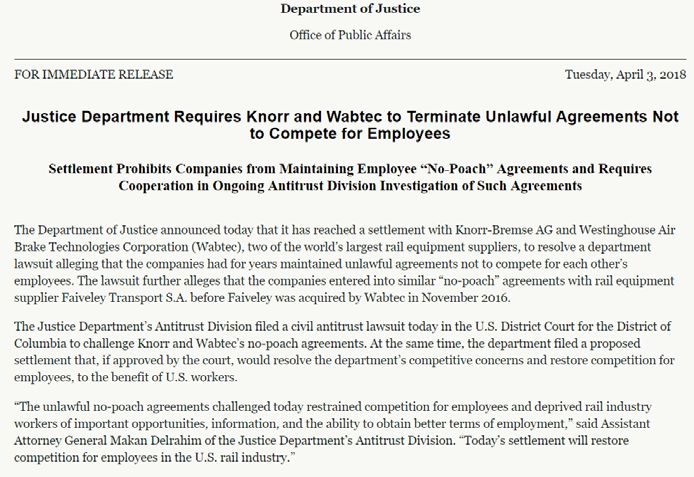
An Overview of
Antitrust Law
General Principles

• Antitrust law is concerned with the protection of the com petitive process .

• What general types of conduct are prohibited?
  – Contracts, combinations, and conspiracies “in restraint of trade or commerce”
  – Monopolization, attempted monopolization, conspiracy to monopolize

• The antitrust laws are enforced by the FTC, the DOJ, state attorneys general, and private parties.

• Corporate defendants may face civil penalties, treble damages, legal fees, business
  disruption, and prohibitions or conduct restraints with respect to future practices.

• Corporate and individual defendants may face fines and jail time in certain circumstances.

                                                                                                       4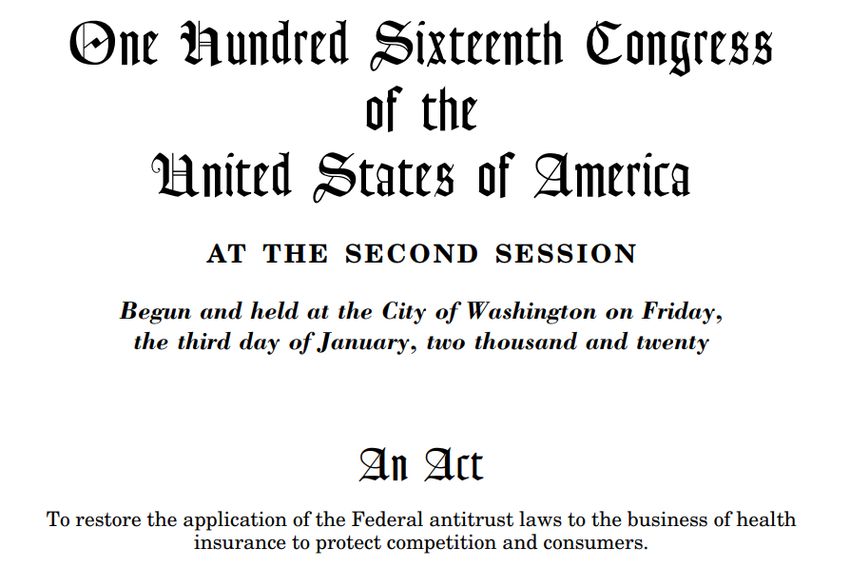
What Constitutes Prohibited Conduct?

• The antitrust laws prohibit agreements (written, oral, or otherwise) between
  market participants “in restraint of trade.”
• Examples include price fixing, bid rigging, market allocation, and market
  foreclosure.
• Monopolization refers to actions by a dominant company to prevent or
  exclude competition.
• The possession of monopoly power—alone—is not illegal. But a monopolist
  cannot use (or attempt to use) its monopoly power to exclude competitors.
  – Monopolization is assessed with reference to a “relevant market”

                                                                                 5
How Do Courts Assess Antitrust Cases?

                  Per Se Illegality v. Rule of Reason

                                               Price fixing, bid rigging, market
     Per Se Illegal                            allocation, output restriction

                                               Anticompetitive effects outweigh
     Unreasonable                              procompetitive benefits

                                               Procompetitive benefits outweigh
     Reasonable                                anticompetitive effects

                                                                                   6
Enforcement Trends
in the Health
Insurance Space
Executive Order on Promoting Competition in the
 American Economy
• Order focuses on four areas of the healthcare industry where a lack of competition
  is causing increased prices and reduced access to quality care:
    –   Health insurance
    –   Hospital consolidation
    –   Prescription drugs
    –   Hearing aids
• Two premises of the Executive Order are that: (1) consolidation in the health
  insurance industry has limited choices for consumers; and (2) selecting a plan is
  difficult because plans offered on exchanges are complicated to understand.
• The President has directed HHS to standardize plan options in the National Health
  Insurance Marketplace.
Executive Order 14036
• “[T]o ensure that Americans can choose health insurance plans that meet their
needs and compare plan offerings, [the Secretary of Health and Human Services
shall] implement standardized options in the national Health Insurance
Marketplace and any other appropriate mechanisms to improve competition and
consumer choice[.]”
• “The Secretary of Health and Human Services shall: . . . (ii) support existing
price transparency initiatives for hospitals, other providers, and insurers along
with any new price transparency initiatives or changes made necessary by the
No Surprises Act (Public Law 115-260, 134 Stat. 2758) or other statutes[.]”
Exec. Order No. 14036, 86 Fed. Reg. 36987, 36997 (Jul. 14, 2021).
9Trends in Enforcement
• Biden appointees
– Lina Kahn, Chair of the FTC
– Jonathan Kanter, AAG of DOJ Antitrust (nominee)
– Xavier Becerra, Secretary of Health and Human Services
– Tim Wu, White House National Economic Counsel
• Legislative efforts to address health care antitrust concerns
– Competition and Antitrust Law Enforcement Act
– Trust Busting for the Twenty-First Century Act: A Plan to Bust Up Anti-Competitive Big
Businesses
10Government Enforcement Actions
• DOJ and FTC are likely to pursue more enforcement actions against health
insurers and those in the healthcare industry.
– FTC began conducting a study in January 2021 that is examining how different types of
consolidation impacted the health care industry by looking at data provided by six major
insurance companies.
• Potentially more scrutiny related to health care deals at the state level.
– States’ Attorneys General are focusing on enforcement in the health care industry.
– More investigation of transactions and collaborations.
11DOJ Health Insurer Merger Enforcement
• Aggressive against horizontal consolidation
– Blocked Anthem’s proposed acquisition of Cigna and Aetna’s proposed
acquisition of Humana
• Allowed recent vertical consolidation
– CVS acquired Aetna (with limited divestitures due to horizontal competition
in PDP plans)
– Cigna acquired Express Scripts
12The Competitive Health Insurance Reform Act (CHIRA)
The Competitive
Health Insurance
Reform Act (CHIRA)
• H.R. 1418 – An act to restore the
application of the federal antitrust laws to
the business of insurance to protect
competition and consumers.
• Signed into law on January 13, 2021.
• The legislative history reveals that Congress
was concerned that McCarran-Ferguson had
created a “loophole” that allowed the health
insurance industry to operate without
substantive exposure to federal antitrust
liability. CHIRA was promoted as a way to
increase competition in health insurance
markets and to lower healthcare costs.
14Elimination of the Antitrust Exemption for the
“Business of Health Insurance”
• 15 U.S.C. § 1013(c)(1) – “Nothing contained in this Act shall modify, impair, or
supersede the operation of any of the antitrust laws with respect to the business of
health insurance (including the business of dental insurance and limited-scope dental
benefits).”
– The “business of health insurance” is defined to exclude (i) “the business of life insurance
(including annuities)” and (ii) “the business of property or casualty insurance.”
• Section 13(c)(1) shall not apply with respect to making a contract, or engaging in a
combination or conspiracy:
– (A) to collect, compile, or disseminate historical loss data;
– (B) to determine a loss development factor applicable to historical loss data;
– (C) to perform actuarial services if such contract, combination, or conspiracy does not involve
a restraint of trade;
– (D) to develop or disseminate a standard insurance policy form . . . if such contract,
combination, or conspiracy is not to adhere . . . or require adherence to such standard form.
15Incorporation of FTC Act Section 5
• CHIRA expressly incorporates Section 5 of the Federal Trade Commission Act
(“FTC Act”) and makes it applicable to the business of health insurance “without
regard to whether such business is carried on for profit.”
– Compare FTC Act Section 4, which limits application of the FTC Act to for-profit
enterprises.
• FTC Act Section 5 gives the FTC broad power to challenge:
– “unfair methods of competition”
– “unfair or deceptive acts or practices”
• FTC enforcement may be undertaken via investigation, internal administrative
proceeding, or federal litigation (in certain circumstances). The FTC may also
conduct industry studies without express investigative or enforcement purpose
under FTC Act Section 6(b).
16Implications for Insurers
• CHIRA eliminates defenses that, in practical effect, made it difficult to sue health insurance providers under the
federal antitrust laws.
Available Available
Defense Pre-CHIRA? Post-CHIRA?
The challenged practice is part of the “business of YES NO
insurance”
The challenged practice is regulated by state law YES NO
The target insurer operates on a not-for-profit basis YES NO
• McCarran-Ferguson provided substantial disincentives to private and governmental plaintiffs; many of the
disincentives have now been eliminated:
– The need to prove that the challenged conduct was not part of the “business of insurance”
– The absence of an applicable state regulatory regime
– Operation as a not-for-profit enterprise
17CHIRA – Looking Ahead
• While the implications of CHIRA will continue to become more apparent, we should
anticipate:
– Increased federal antitrust regulatory scrutiny
– A DOJ Antitrust Division press release following the passage of CHIRA stated that CHIRA
will “assist the Antitrust Division in its mission to enforce the antitrust laws by narrowing
[McCarran-Ferguson’s] defense and clarifying that, except for certain activities that improve
health insurance services for consumers, the conduct of health insurers is subject to the
federal antitrust laws.”
– We may also see increased FTC investigatory activity under FTC Act Section 6(b),
administrative proceedings under FTC Act Section 5, and federal court litigation under FTC
Act Section 13(b).
– Increased potential for private civil antitrust litigation, including by providers and insureds
– Private antitrust plaintiffs (and their attorneys) have significant incentives to pursue
litigation because of the availability of treble damages.
18Private Antitrust Litigation in the Health Insurance Space
I n re Blue Cross Blue Shield Antitrust Litigation

• In Re: Blue Cross Blue Shield Antitrust Litigation (MDL No. 2406) (N.D. Ala. No.
  2:13-CV-20000).
• Class action antitrust lawsuit in the Northern District of Alabama brought against
  the Blue Cross Blue Shield Association and its 35 member companies.
• Plaintiffs alleged that BCBS violated antitrust laws by entering into agreements
  that limited competition among Blue Plans, which reduced provider
  reimbursements and elevated health insurance premiums.
• Settlement reached with some Defendants in October 2020. Parties agreed to:
  – make changes to their business practices that increase competition in the health
    insurance market; and
  – allow qualified national self-funded accounts to request second bids for coverage from
    member plans of their choice.

                                                                                             20
I n re Blue Cross Blue Shield Antitrust Litigation
• Litigation still proceeding for the remaining Defendants.
• Recently the Court decided to re-consider the standard of review for Plaintiffs’
Sherman Act and group boycott claims.
– Initially court used a rule of reason standard.
• Blue Cross Blue Shield Defendants argued that Plaintiffs’ Section 1 claims should
still be evaluated under the rule of reason standard, rather than the per se
standard of review.
• Currently, the court is reviewing summary judgment motions filed by both sides.
21California ex rel. Becerra v. Sutter Health
• California ex rel. Xavier Becerra v. Sutter Health (Cal. Super. Ct. No. 18-565398).
• In 2018, the CA Attorney General and numerous private plaintiffs filed a lawsuit
against Sutter Health.
• Claim: Sutter Health violated California’s state antitrust statute by:
– Using “all-or-nothing” contracting, anti-steering, and anti-price transparency provisions.
– Requiring that health plans that offer any Sutter Health provider must also offer every
other Sutter Health provider (system-wide contracting).
– Prohibited health plans from offering incentives to use lower-cost or higher-quality
facilities.
– Restricted disclosure of its prices.
22California ex rel. Becerra v. Sutter Health
• December 2019 – Sutter Health agreed to pay $575 million to settle the antitrust
claims brought by the California AG, unions, and employees.
• Under the settlement agreement Sutter Health is:
– Prohibited from engaging in the “all or nothing” agreements that required insurers to
include all of Sutter Health’s facilities, if they wanted to include any of the facilities.
– Required to limit the amount it charges patients for out-of-network services.
• March 2021 – Judge granted preliminary approval of the settlement agreement.
23Sibide v. Sutter Health
• Sibide v. Sutter Health (N.D. Cal. No. 12-cv-04854).
• Case was brought by plaintiffs who purchased commercial health insurance from plans
that contracted with Sutter Health.
• Main issue: whether Sutter Health violated the Sherman Act and California’s antitrust
statute by requiring that insurance providers include all Sutter Health hospitals in their
networks if they wanted to include any of the networks, thereby causing patients to pay
higher premiums, particularly in markets where Sutter Health faced competition.
• March 2021 - Sutter moved for summary judgment
– Summary judgment granted:
– On claims related to conduct between 2008 and 2010.
– On monopolization and attempted monopolization claims.
– Summary judgment denied:
– On claims related to market power.
• Case set for trial in October 2021.
24No-Poach Litigation and Enforcement
Overview – Recent Developments in Private No-Poach Litigation

• Antitrust Guidance for Human Resource Professionals jointly
  issued by the Department of Justice and the Federal Trade
  Commission in October 2016
    – “An agreement among competing employers to limit or fix the
      terms of employment for potential hires may violate the
      antitrust laws if the agreement constrains individual firm
      decisionmaking with regard to wages, salaries, or benefits;
      terms of employment; or even job opportunities.”

•   The Guidance contemplates both government enforcement and private civil litigation:

     “[I]f an employee or another private party were injured by an illegal agreement among
     potential employers, that party could bring a civil lawsuit for treble damages (i.e., three
     times the damages the party actually suffered).”

                                                                                                   26
Criminalizing Wage-Fixing & No-Poach Agreements
● DOJ and FTC Joint Announcement
– DOJ for the first time will criminally investigate and prosecute employers,
including individual employees, who enter into certain “naked” wage-fixing and no-
poach agreements
• Per se unlawful
− Naked wage-fixing
Agreement “about employee salary or other terms of compensation, either at a
specific level or within a range”
− No-poach agreements
Agreement “to refuse to solicit or hire [an]other company’s employees”
27DOJ Civil Enforcement Action
• U.S. v. Knorr-Bremse et al.: lawsuit against “two of the
world’s largest rail equipment suppliers”
• Consent Judgment Terms
– German private company and US company, both with US – Seven-year term
subsidiaries – Appoint antitrust compliance
– “No-poach” agreements with each other and a third rail officer
equipment supplier based in France
– Annual compliance certification
– Per se unlawful horizontal market allocation agreements
by CEO or CFO and General
Counsel
– DOJ may “inspect and copy”
records and obtain interviews
– Notice to all US employees,
recruiting agencies, rail industry
– Ongoing cooperation with DOJ
28Private No-Poach Litigation Predated the HR Guidance
• In re: High-Tech Employee Antitrust Litigation (N.D. Cal. No. 11-CV-2509-LHK)
– Filed May 2011
– Class claims brought by current and former employees against: Adobe Systems, Apple, Google,
Intel, Intuit, Lucasfilm, and Pixar.
– Plaintiffs allege: “Defendants’ senior executives entered into an interconnected web of express
agreements to eliminate competition among them for skilled labor. This conspiracy included:
(1) agreements not to recruit each other’s employees; (2) agreements to notify each other
when making an offer to another’s employee; and (3) agreements that, when offering a
position to another company’s employee, neither company would counteroffer above the initial
offer.”
– Settled in September 2015 for $415 million.
• Another example: Cason-Merenda v. VHS of Michigan, Inc. (E.D. Mich. No. 06-CV-15061)
– class action brought by nurses alleging that Detroit-area hospitals entered into no-
poach agreements; settled for $90 million in 2016 after ten years of litigation.
29Key Takeaways from Recent Litigation
• Private civil lawsuits stemming from no-poach agreements have affected a
variety of industries and sectors: fast food, higher education, and
technology. The trend is not industry-specific and similar lawsuits are likely to
affect other industries as well, including health insurance.
• Claims may be brought under both federal and state competition laws.
• Fundamental questions remain whether courts will deem no-poach agreements
illegal per se in the context of private, civil lawsuits.
• Interesting questions also remain regarding class certification and the extent to
which courts will certify broad classes of employees, as opposed to more narrow
classes of particular types of employees. In Duke University, for example, the
court approved a narrower class than the class for which the plaintiff sought
certification, reasoning that faculty and non-faculty employees were not similarly
situated and that their claims would involve divergent proof.
30Daniel Savrin
Daniel is a nationally-recognized litigator at the trial and appellate
levels with a broad practice representing clients in high-stakes
class actions, government enforcement actions, and other
commercial litigation with a focus on antitrust, consumer
protection, and civil and criminal government investigation
matters. Daniel has appeared before federal and state courts in
more than 30 states, and is listed in leading peer review guides,
including being ranked as Band 1 for Antitrust by Chambers USA
Boston where he is described as a “highly regarded practitioner noted for
+1.617.951.8674
daniel.savrin@morganlewis.com
his abilities across civil and criminal antitrust investigations and
enforcement proceedings” and as “an expert in consumer
protection matters”.
31Ryan Kantor
Ryan Kantor’s practice focuses on federal and state government
antitrust investigations, antitrust litigation, and counseling on
antitrust and competition issues. He represents clients before the
US Federal Trade Commission, US Department of Justice (DOJ),
state attorneys general offices, and in federal and state courts.
Ryan previously served as assistant chief of the Healthcare and
Consumer Products section in the DOJ’s Antitrust Division.
Washington, DC
+1.202.739.5343
ryan.kantor@morganlewis.com
32Molly Maidman
Molly Maidman focuses her practice on antitrust investigations,
antitrust litigation, and compliance counseling. Prior to joining
Morgan Lewis, Molly worked as an associate at a global law firm.
Boston
+1.617.341.7996
molly.maidman@morganlewis.com
33Morgan Lewis – Antitrust Accolades and Credentials
Law360 Tier 1, 15 partners Recognized in 6 Recommended,
Competition Antitrust Law recognized by jurisdictions The Legal 500 US
Practice Group and Litigation- Chambers, by Global for Antitrust:
of the Year Antitrust all publications Competition Civil
US News/Best Review Litigation/Class
Lawyers – Actions Defense;
Best Firms Cartel; and Merger
Control
(2017 - 2020) (2018 - 2021) (2021) (2021) (2021)© 2021 Morgan, Lewis & Bockius LLP
© 2021 Morgan Lewis Stamford LLC
© 2021 Morgan, Lewis & Bockius UK LLP
Morgan, Lewis & Bockius UK LLP is a limited liability partnership registered in England and Wales under number OC378797 and is
a law firm authorised and regulated by the Solicitors Regulation Authority. The SRA authorisation number is 615176.
Our Beijing and Shanghai offices operate as representative offices of Morgan, Lewis & Bockius LLP. In Hong Kong, Morgan, Lewis & Bockius is a separate Hong Kong general partnership registered
with The Law Society of Hong Kong. Morgan Lewis Stamford LLC is a Singapore law corporation affiliated with Morgan, Lewis & Bockius LLP.
This material is provided for your convenience and does not constitute legal advice or create an attorney-client relationship. Prior results do not guarantee similar outcomes. Attorney Advertising.
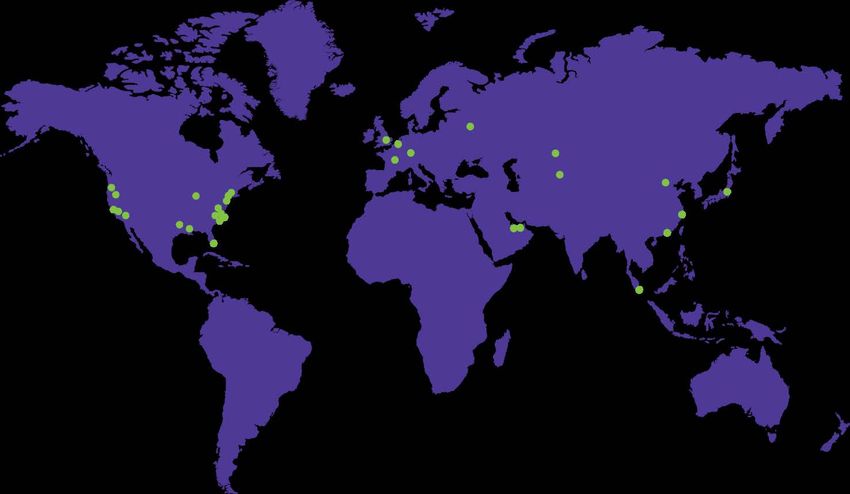
35Our Global Reach
Africa Latin America
Asia Pacific Middle East
Europe North America
Our Locations
Abu Dhabi Philadelphia
Almaty Pittsburgh
Beijing* Princeton
Boston San Francisco
Brussels Shanghai*
Century City Silicon Valley
Chicago Singapore*
Dallas Tokyo
Dubai Washington, DC
Frankfurt Wilmington
Hartford
Hong Kong*
Houston
London
Los Angeles
Miami
Moscow
New York
Nur-Sultan Our Beijing and Shanghai offices operate as representative offices of Morgan, Lewis & Bockius LLP. In Hong Kong, Morgan, Lewis & Bockius is a separate
Hong Kong general partnership registered with The Law Society of Hong Kong. Morgan Lewis Stamford LLC is a Singapore law corporation affiliated with
Orange County Morgan, Lewis & Bockius LLP.
ParisYou can also read


