Hepburn Shire Local Transport Benchmarking Study - Local Transport Benchmarking Study
←
→
Page content transcription
If your browser does not render page correctly, please read the page content below
Local Transport Benchmarking Study
Hepburn Shire Local Transport
Benchmarking Study
The Centre for Building Better Community
and RecPeople
for
Hepburn Shire Council, Regional Development Victoria and Department of Transport
DRAFT
OCTOBER 2019
1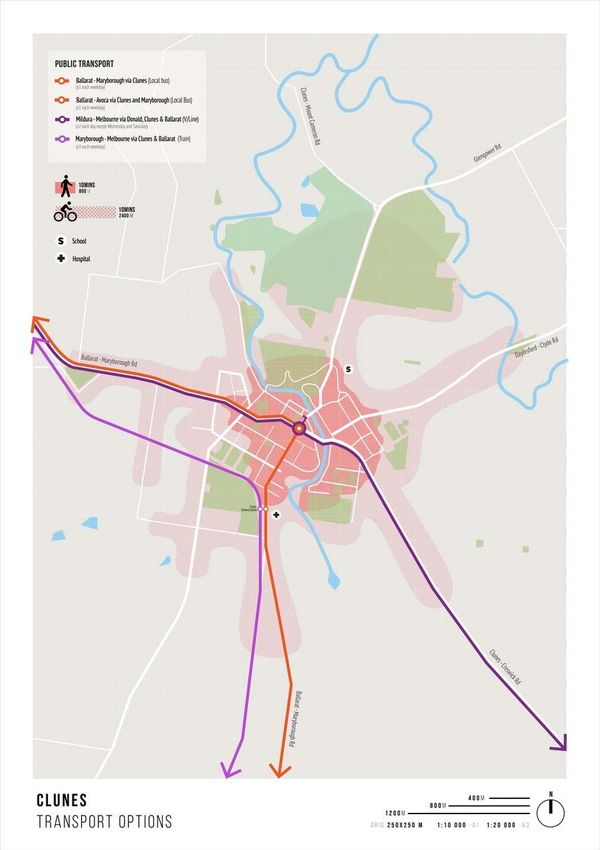
Local Transport Benchmarking Study
ACKNOWLEDGEMENTS
Hepburn Shire Council respectfully acknowledges the Jaara people, of which members and Elders
of the Dja Dja Wurrung community and their forebears have been custodians for many centuries.
On this land, the Jaara people have performed age old ceremonies of celebration, initiation and
renewal. We acknowledge their living culture and their unique roles in the life of this region.
This study was informed through consultation with many individuals, residents, organisations,
schools, transport providers, community groups, businesses and experts. We thank you for
donating your time to provide feedback and your aspirations for transport in Hepburn Shire.
The authors, Centre for Building Better Community and RecPeople, particularly acknowledge the
assistance of staff from Hepburn Shire Council, Regional Development Victoria and Department of
Transport. Without your guidance and support, the strength of the study and its findings would not
have been possible.
“Local transport meets a need in rural communities that exists between public
and private transport. These community-led solutions can be critical for the
health and wellbeing of a community.”
Cr. Don Henderson, Mayor, Hepburn Shire Council
Hepburn Shire Council would like to gratefully acknowledge the funding support from Regional
Development Victoria http://www.rdv.vic.gov.au and the Victorian State Government.
Report Structure
This report follows a simple structure so that the reader can track progress through the study phases:
PART A:
Introduction
PART B:
Study Inputs
and Activities
+ PART C:
Study
Outcomes
= PART D:
Conclusion
PART E:
Appendices
What was the What did we What are the Has the study
study purpose? do? key study been effective?
What methods What did we findings?
were used? find?
2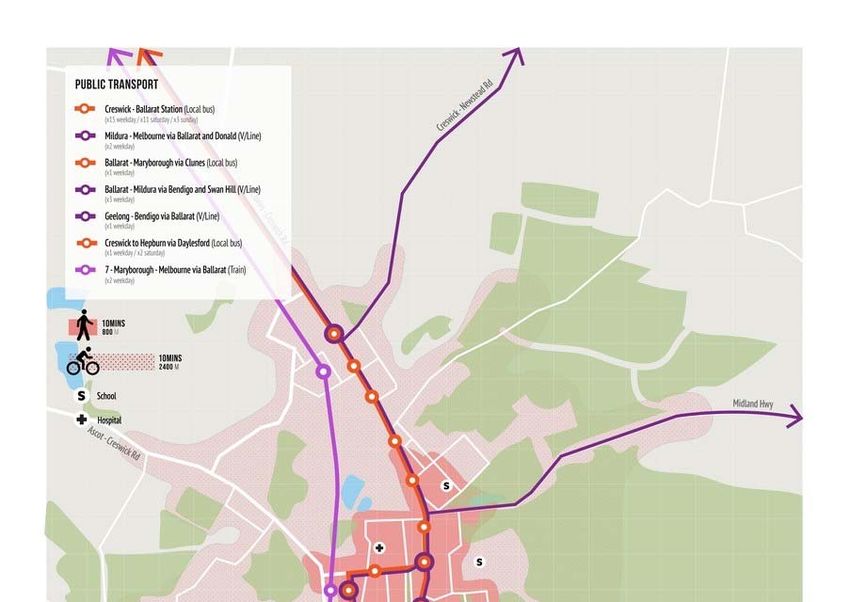
Local Transport Benchmarking Study
EXECUTIVE SUMMARY
The Local Transport Benchmarking Study reports on the current benchmark of local transport
services and the issues, gaps and opportunities in Hepburn Shire. The report will be for
consideration of the Department of Transport in line with the Regional Network Development
Plan. The study was commissioned by Hepburn Shire Council, funded by Regional Development
Victoria and supported by Department of Transport and the local community.
The Centre for Building Better Community completed the work, contracted through RecPeople.
The Centre brought particular expertise to the table in the form of The Flourishing FrameworkTM, a
tool for ensuring the study relates directly to the wellbeing of individuals and community -
grounding transport issues in the realities of everyday lived experience.
This study was conducted via more than 150 engagements and thousands of pieces of data using
interview, survey and workshop research methods. Statistical data and relevant documents were
also reviewed. Local transport is the focus of the study, but public transport and walking/cycling
needs also became evident. It should be noted that respondents have a realistic view of transport
in regional settings and are aware of the challenges in providing and improving local, public and
active transport options. Nonetheless, there is appreciation for when changes are made and
recognition of the improved social, economic and environmental dividends of good transport as
well as the over-arching health and wellbeing impacts transport may have for a community.
A key study output is the listing of 15 local transport services currently operating in Hepburn Shire
including an understanding of patronage, purpose, costs, management and community
awareness. Many of these local transport services are operated by community organisations as an
“add-on” to their core community service obligations.
Conversations were held with sectors such as health, transport operators, education, businesses,
social services and Council departments, along with participating residents. These all served to
underline recurring themes from work over the last two years such as the Trentham Local Transport
Forum (2018), Department of Transport’s Regional Network Development Plan (2018) and the
Hepburn Shire Economic Development Strategy (2017). The bright ideas and valuable insights of
the Hepburn Shire community have served as the foundation of this study.
The emergent study themes listed below are both technical and personal and the research found a
continuum of responses, from negative to positive:
1. Service Frequency: When a service runs such as timetabling, periods and days of
service or its potential flexibility.
2. Network Coverage: Where a service runs such as specific locations, the geographic
spread of services, or need for new routes.
3. User Groups: People have expressed views representative of identifiable parts of
the community such as the aged, children, residents or businesses.
4. User Experience: People react differently to their local and public transport
experiences and have various motivations and barriers to use it.
3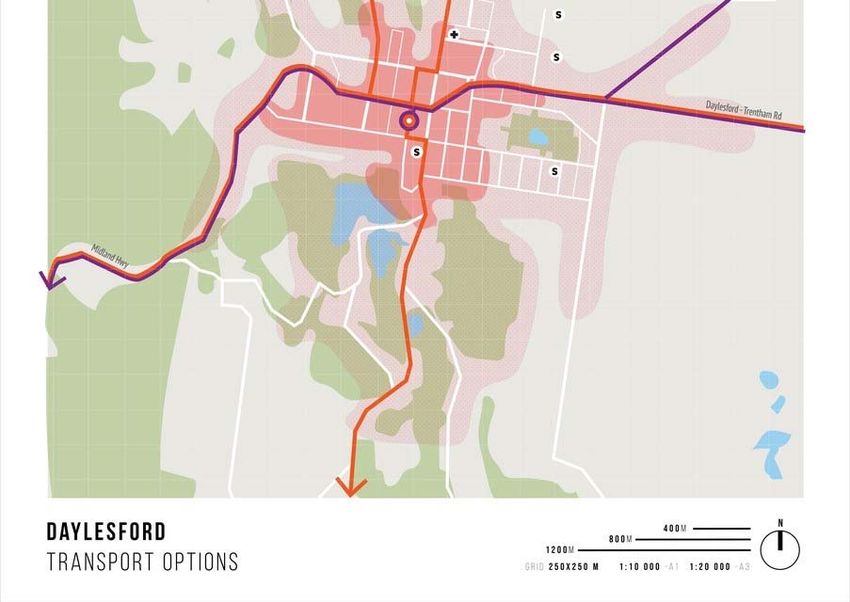
Local Transport Benchmarking Study
5. User Knowledge: People have various understandings of the transport system, such
as its issues, how it works or why changes are made.
The study has identified eleven key findings, all of which include aspects of all five themes and
relate to local, public and active transport assets and infrastructure. The study seeks to provide a
deep understanding of local transport successes and gaps in Hepburn Shire. The key findings of
the study identify opportunities that relevant stakeholders in this sector may use to inform future
local transport projects, which in turn could lead to greater levels of flourishing for individuals and
the Hepburn Shire community.
The study yielded eleven key findings, with five relaing to local transport, two relating to transport
advocacy and three relating to general mobility. In summary:
LOCAL TRANSPORT – KEY FINDINGS
1. There is a need in the nighttime economy for people to have transport options to help
them get home safely from entertainment, events, restaurants etc. beyond the existing
courtesy bus services. This is particularly prevalent between Daylesford, Hepburn and
Hepburn Springs.
2. Existing community buses currently have significant “down-time” and a user-base limited
to eligibility for a certain service or program. These transport assets have significant
potential that could be unlocked to service a larger proportion of the community. A model
to share existing local transport assets across Hepburn Shire could open services to more
people, resources and destinations.
3. Clunes and Glenlyon do not have a community bus. There is a need to connect people in
these communities with public transport services and other transport services.
4. Young people in Hepburn Shire may experience isolation without transport options to
increase social connection and participation; including attending after-school activities,
social events and getting home after working late. A community bus exists to support social
outings for older people but not one focused on the needs of young people.
5. Communication and education about what local transport is, what is available and how the
local community can develop, support and use these services is an opportunity. Social
media is listed in the report as “extremely important” for informing casual transport users.
In addition to social media, supporting promotional materials that can be agile and
updated over time to accommodate service changes could be developed.
TRANSPORT ADVOCACY – KEY FINDINGS
6. Further communication about school zoning and the DET School Bus Program Policy that
guide the service provision of school bus services from Ballan and Creswick to Daylesford
College is required. Development of a local transport solution could support students to
attend Daylesford College from these locations in addition to the School Bus Program.
7. Support for the following Department of Transport (DoT) service improvements;
7a. MYKI machines on board buses
7b. Implementation of accessible vehicles for all abilities
4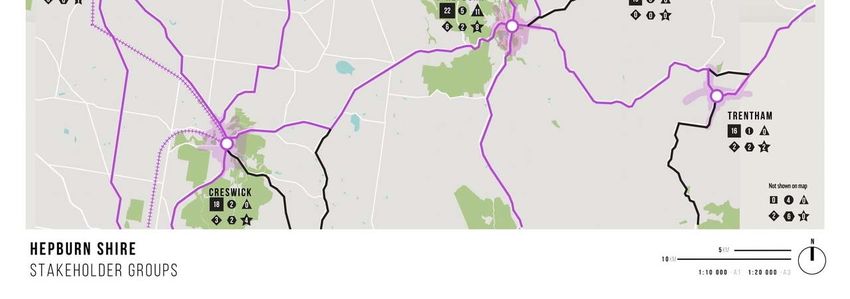
Local Transport Benchmarking Study
Further support to fast-track improvements for the following services;
7c. Daylesford Trentham Woodend
7d. Daylesford Ballan
8. Support for Department of Transport (DoT) improvements to the scheduling of bus services
along the following routes:
8a. Ballarat Daylesford: more daytime and evening services
8b. Ballan Daylesford: more services that meet trains
8c. Creswick Daylesford: more peak and daytime services
GENERAL MOBILITY – KEY FINDINGS
9. There is an opportunity to develop and trial easy to understand maps of the
comprehensive transport networks in Creswick and Daylesford to promote awareness of
transport options, including active transport, local transport, and public transport. As per
Key Finding 5, this could include developing supporting promotional materials that can be
agile and updated over time to accommodate service changes.
10. Opportunities for safe cycling infrastructure improvements, filling gaps in the network, and
investigating promotional programs for E-bikes as a legitimate transport option exist
throughout Hepburn Shire.
11. Programs and capital improvements that deliver walking for transport in towns, promote
the use of pedestrian networks and encourage walking are an opportunity, in particular;
11a. Walking connections to Clunes and Creswick railway stations from township areas
11b. Walking connections between township areas and major bus stops in all locations
11c. Improved pedestrian amenity between Hepburn and Daylesford.
Storytelling of how local Hepburn Shire communities are impacted both positively and negatively
by transport options and use of these stories to advocate for service improvements and to inform
development of local transport projects, could be used in tandem with all Key Findings.
Overall, the messages arising from the research are clear - the quality of transport options has a
large impact on community and individual wellbeing. It serves as an encouragement to all
stakeholders that even small transport improvements can make a difference in people’s lives.
5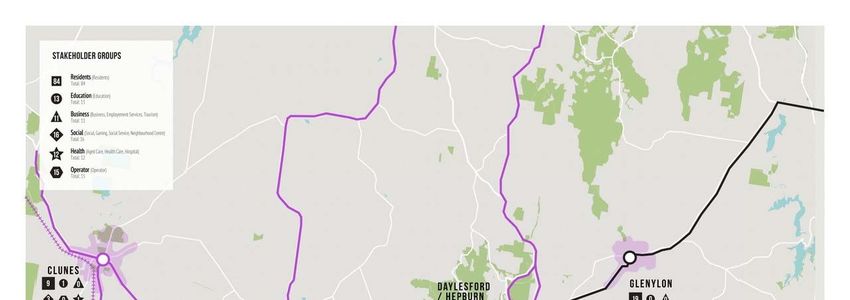
Local Transport Benchmarking Study
CONTENTS:
Page Contents
7 PART A -
Introduction - What was the study purpose? What methods were used?
7 A1 - Transport for Personal and Community Flourishing
8 A2 - Purpose of the Study
9 A3 - Method of the Study and Summary of Overall Reach
11 A4 - Definitions of Local and Public Transport
11 A5 - Links to Other Documents
13 PART B -
Study Inputs and Activities - What did we do? What did we find?
13 B1 - Application of the Flourishing Framework to Transport
14 B2 - Previous Work
15 B3 - Demographic and Transport Data
18 B4 - Existing Public Transport Services
24 B5 - Key Themes Arising from Workshops, Survey and Interviews
B5.1 - Service Frequency
B5.2 - Network Coverage
B5.3 - User Groups
B5.4 - User Experiences
B5.5 - User Knowledge
27 B6 - Key Findings
B6.1 - Local Transport
B6.2 - Public Transport
B6.3 - General Mobility
29 B7 - Key Output - Table of All Local Transport Assets and Services
31 PART C -
Study Outcomes - What are the Key Findings?
C1 - Local Transport – Key Findings
C2 – Transport Advocacy – Key Findings
C3 - General Mobility – Key Findings
33 PART D - Conclusion - Has the study been effective?
34 PART E - Appendices
36 E1- Summary of Interview Outputs
E1.1 - Interview Opening
E1.2 - Interview Responses
40 E2 - Summary of Workshop Outputs
E2.1 - Creswick
E2.2 - Daylesford
E2.3 - Trentham
E2.4 - Glenlyon
47 E3 - Summary of Survey Outputs
53 E4 - Social Media Outputs
57 E5 - Reference Documents
6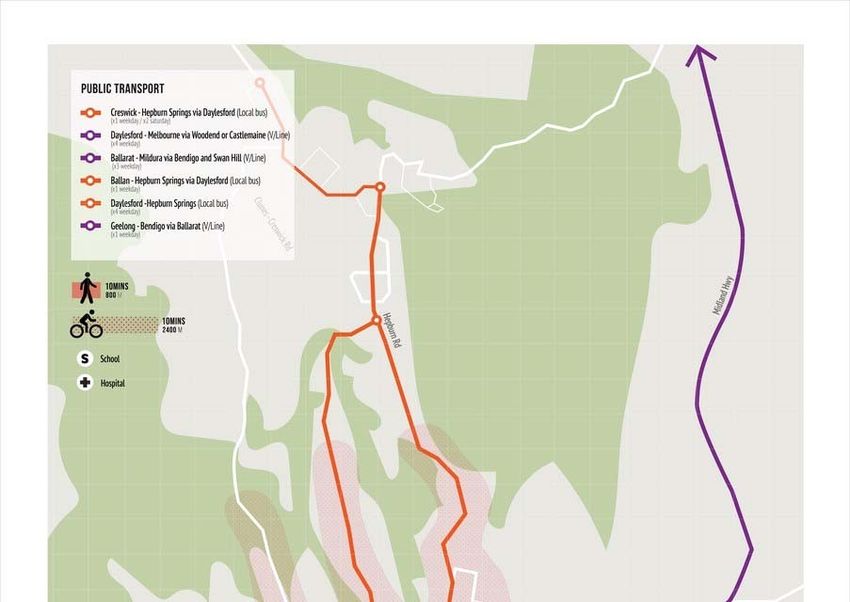
Local Transport Benchmarking Study
PART A - INTRODUCTION
“Growing up in the country, I knew I’d have to buy a car, so that’s what I did.”
(workshop participant)
“Between Daylesford and Hepburn Springs there is a shuttle service that runs about 4
times per day. The service is rarely used, either by locals or visitors. There are no
dedicated signs, or timetables for it that I'm aware of. The service is not promoted.”
(from online survey)
“We have a network of help - if people need it, they get it.
This goes for getting around too.”
(workshop participant)
“No bus on Wednesday - what’s that about?”
(social media)
“I’ll stop driving when I’m much older.
If I can’t get to town, I won’t eat - simple as that.”
(workshop participant)
“We are a strong fund-raising community.
If we start fund-raising now for our own bus, by the time we’re all old and need it, we
just might have enough money to get one!”
(workshop participant)
A1 - Transport for Personal and Community Flourishing
How people get around is both a deeply personal matter and a serious community concern. The
authors of this report from the Centre for Building Better Community, have applied proprietary
knowledge in the form of The Flourishing FrameworkTM. This sets out to deal with the personal and
communal issues of transport in ways that go beyond mere sustainability or resilience, but
anticipate a virtuous cycle of ongoing flourishing. The six elements of the framework are:
Having basic needs met
The opportunity to live a purposeful life
A sense of belonging to place and to others
The ability to contribute
The opportunity for sorrow and celebration
A growing connection to meaning or spirituality
These elements are set out in detail in The Flourishing Framework and its Application to Transport
(see page 14).
7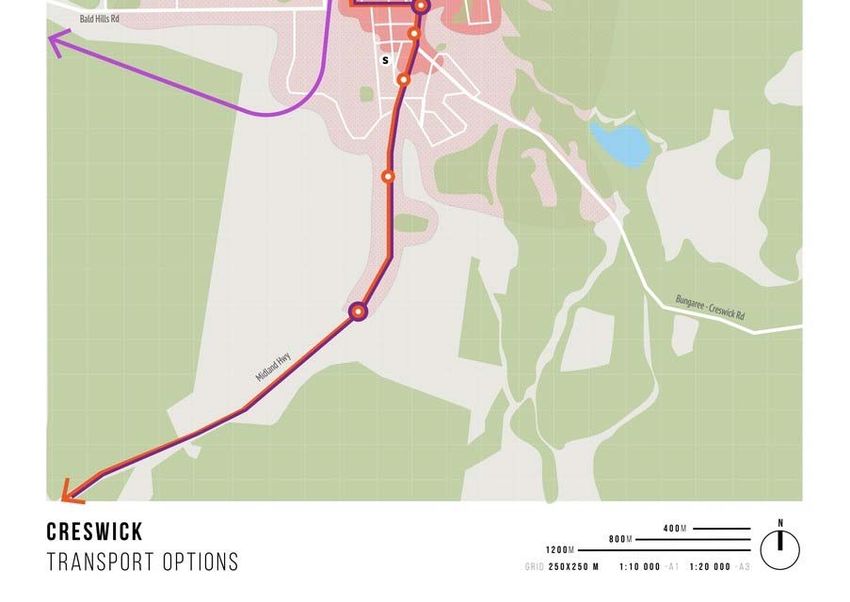
Local Transport Benchmarking Study
A2 - Purpose of the Study
This study builds on previous work regarding transport issues in the Shire. In early 2018, a Local
Transport Forum was held in Trentham with a follow up survey to the community. Key issues were
identified and the work led to on the ground improvements in transport for Trentham.
Following on from this, this benchmarking study has as its purpose; “to prepare a report that
documents the findings of the local transport benchmarking study for consideration by
Department of Transport (DoT) in line with the Regional Network Development Plan.”
Council received funding from Regional Development Victoria (RDV) for the purposes of
undertaking this wider stakeholder engagement on local transport with a view to reporting on the:
1. Existing local transport assets;
2. Numbers and types of people currently using the services;
3. Purpose and main destinations of each service;
4. Times of travel of users;
5. Costs of travel to users;
6. Management and funding of each service;
7. Potential for local transport assets to be made more widely available;
8. Informal and community run transport services;
9. Taxi and bus operators in the Shire and their scope of services;
10. Public transport and VLine services;
11. Promotion of services; and
12. Customer access of information on services.
This study will present the above 12 elements through high quality and credible transport research
and data, including gaps and opportunities and other matters that come to light. It should be
noted that private car use and issues to do with the road network are not within the scope of this
study, except where they impact local and public transport.
Various community engagement processes have been used so that the hearts and minds of
participants are more actively engaged in the issues and the potential solutions. This approach,
(being; the ability to contribute), is part of the Flourishing Framework outlined above and has
enabled the community to identify themselves as agents of change in response to the data
collected.
In addition, the study has delivered further outputs, as follows:
• Combined spatial mapping of transport routes;
• Key Findings relating to local transport within the Shire;
• Key Findings relating to transport advocacy and general mobility.
8
Local Transport Benchmarking Study
A3 - Method of the Study
The study began with a review of existing data and background documents. This helped establish
key issues and context for the research phase. Three key data collection methods were used to
establish the benchmarking of transport:
Research Method 1 - Background data and document review
• Application of the Flourishing Framework to transport issues
• Review of 17 reference documents
• Compilation and review of relevant Hepburn Shire transport statistics
• Compilation and review of existing Hepburn Shire public transport services
Research Method 2 - Face to face and telephone stakeholder interviews
• 53 interviewees over April to June 2019, many representing groups or organisations
• Average of 20-minute interview length depending on relevance of questions
• 7 key questions on local transport, 5 on public transport and general information
gathering
• Major cohorts were education, health services and social services
Research Method 3 - Online Survey
• Hosted by “OurSay” for six weeks over May to June, 2019
• 19 questions mirroring stakeholder interview questions plus continuum scales on
transport perceptions
• Promoted via Council’s social media, hard-copy flyers and direct stakeholder emails
• 76 responses with 29 respondents requesting to be kept informed of study outcomes
Research Method 4 - Community Workshops
• Workshops in Creswick, Daylesford, Trentham and Glenlyon
• 6.30pm for 7pm start, finishing at 9pm, RSVP not required
• 32 attendees with most hearing about workshops through Facebook
• Agenda moved through what we know, what are the gaps, what can we do phases
• Please note that the Clunes Community Workshop did not have any attendees, but
feedback from this community was captured via the online survey and stakeholder
interviews
The large amount of data coming out of these activities can be found in summary Appendices E1,
E2 and E3. The raw data was distilled and synthesised into key themes and findings in Part B, which
has led to the Key Findings contained in Part C. Note that the raw research data, verbatim records
and personal information is held securely by Hepburn Shire Council.
9
Local Transport Benchmarking Study
Summary of Overall Study Reach
The following map presents the spatial spread and concentration of the Study across Hepburn
Shire. It combines all online survey, stakeholder interview and community workshop participants,
and their location.
In total, 151 people were individually engaged through the project, providing highly detailed
information on the study elements. This represents approximately 1 in 40 households, and weekly
stakeholder contact with over 7,000 people.
While transport is a personal matter and people are sometimes unwilling to reveal their transport
preferences and travel behaviour, the authors are of the view that the study has had a successful
reach to provide a thorough benchmark through the depth of the interview, survey and workshop
methods.
10 Local Transport Benchmarking Study
A4 - Definitions of Local Transport and Public Transport
Previous experience has shown that community members do not differentiate between local and
public transport in the same way as transport specialists. For the community, mobility is the key
issue, rather than the mode of transport. Therefore, for the purposes of this study, the authors
conveyed the following definitions to study participants:
Local Transport:
• is provided by the community, business or government at low or no cost
• may be on-demand and may not have set routes
• meets the needs of the community where traditional public transport cannot be provided
• is not public transport (e.g. V/Line coaches or trains or PTV local buses)
Public Transport:
• is provided by the government and formal public transport operators
• runs to a published schedule along set routes
• meets the needs of the wider region, often running hundreds of kilometers
• is not local transport
Despite these definitions, survey participants regularly mis-identified types of transport. For
example, 41% of survey respondents discussed public transport when the survey specifically
defined and requested information on local transport (see Appendix E3). This was less true for
workshop and interview participants where the authors were present and able to correct any
assumptions or misinformation.
It is the author’s view that the ongoing low awareness of this defining issue in the community
serves as a reminder that community members have an agile understanding of transport as a
service - the mode is less important as people willingly transfer between various modes in order to
get from A to B.
A5 - Links to Other Documents
Hepburn Shire Council Plan 2017-2021
It is considered that four out of five Council Strategic Objectives are relevant to this study:
• Quality Community Infrastructure
• 1.12 - Deliver walking and cycling priority projects, including asset renewal work and expansion
of footpaths and multi-use trails
• Active and Engaged Communities
• 3.4 - Continue to provide community grants to support community projects, events and
initiatives
• 4.3 - Implement Hepburn Shire Disability Access and Inclusion Plan actions
• 4.5 - Implement revised inspection programs for footpaths and street obstructions in town
centers.
• 5.1 - Develop plans and seek funding to construct priority projects from the Recreation Master
Plans and Walking and Cycling Strategy and develop new Master Plans to guide future
investment.
11 Local Transport Benchmarking Study
• Sustainable Environment
• 8.1 - Implement Towards Zero Emissions Roadmap Action Plan including renewable energy
generation and reducing Council’s consumption (relevant to active transport choices)
• Vibrant Economy
• 10.1 Implement the Economic Development Strategy Action Plan (see directly below)
Economic Development Strategy 2016-21 - Transport and Movement - “Fertile Ground”
“Public transport options across the Shire are lacking in terms of service availability and regularity.
An analysis of current service provision and service needs will inform a business case that can be
used annually for advocacy to relevant state bodies.”
Two tasks related to this action are enabled by this study:
“Current service analysis: Collate all relevant public transport service details and organise in a way
so that the information is easily accessible”, and, “Gap analysis of current PT service provision:
Examine current service provision against need and identify key gaps in service provision.”
Hepburn Shire Council Youth Strategy – 2016-2021
“Improved transport, with an emphasis on improved services to and from Ballarat and at times that
would enable inter-town employment after school and on weekends.”
“Be mindful of the transport issues that young people face in Hepburn Shire.”
Regional Development Network Plan (RDNP) (2018)
The State Government’s Regional Network Development Plan identifies local transport as a vital
component of achieving an integrated transport network for Victoria’s cities and regions. Hepburn
Shire has a variety of public transport and local transport options as alternatives to private
transport (the car). In relation to local transport the RDNP cites that it will “support the trial of
innovative and more flexible transport services and make better use of existing assets and
infrastructure.”
Whist public transport serves some parts of Hepburn Shire adequately, it can never fully cater for
every individual transport need in this regional setting. Local transport has emerged as a critical
component of the wider transport system to help minimise risk of exclusion and to fully meet the
needs of regional and rural communities.
“Local transport connects people to local places and services in their own communities.
It can include neighbourhood buses, community transport, taxis and hire cars.
Local transport is a key part of an integrated transport network.
Across regional Victoria, people want local transport that is appropriate to their area and that is
planned and delivered in partnership with communities.”
- Regional Network Development Plan (2018) Department of Transport (DoT)
12 Local Transport Benchmarking Study
PART B - Study Inputs and Activities - What did we do? What did we find?
The report outlines in sections B1 to B4 the information, ideas and data available at the
commencement of the study. The Flourishing FrameworkTM was brought to the table by the report
author, Centre for Building Better Community. Earlier transport work had been completed by
Department of Transport and Hepburn Shire Council. Various transport and demographic data are
also useful, along with the currently available local and public transport service information.
The study’s activities are outlined in sections B5 to B6 being stakeholder interviews, community
workshops and an online survey. Full appendices of these activities are available. Unsolicited social
media, while not critical to the study, is also summarised. Together, all these provide a sound
benchmark of the actual transport offer, as well as community understanding of local and public
transport in Hepburn Shire. Finally, in B7 all the local transport service findings are described in
terms of the study’s required 12 elements.
B1 - Application of the Flourishing Framework
The Flourishing Framework deals with the personal and communal issues of transport in ways that
go beyond mere sustainability or resilience and anticipate a virtuous cycle of ongoing flourishing.
The six elements of the framework relate to transport in the following ways:
Flourishing
Implications for Transport
Framework Example Application in Hepburn Shire
in Hepburn Shire
Element
People require access to critical life needs The most accessible forms of transport like
Having basic such as food, health services, bill payment, walking and cycling are not practical for the
legal support, housing support and crisis care. distances required in regional areas. Motorised
needs met
In Hepburn Shire, environmental sustainability transport is essential for many of those living
is also recognised as important in fostering outside the major towns, and this transport
access to basic needs. should be sustainable.
All forms of employment (volunteer, salaried,
The opportunity part-time, trades etc) are key expressions of People may be forced to consider and take only
to live a purpose for individuals and the community. It those jobs they can access if transport is
also enables personal economic leverage. The inefficient. In a Hepburn Shire context, this
purposeful life Shire has good proximity to major could limit the potential for purpose through
employment centres, so commutes should not meaningful employment.
be arduous.
A sense of Social gathering places, special events and It is difficult for a person to feel included and
belonging to unique festivals are well patronised in the belong to a place and to others if they are
Shire. By coming together in these ways, the isolated. It is important to be able to get out
place and to
community develops a sense of belonging to and meet friends and make new connections, as
others place and to others. The Shire is well known well as see the countryside and other towns in
for its inclusive communities. the Shire.
Community groups, cause based groups, A household’s time can be taken up with
faith-based organisations, sporting clubs and travelling between these often discretionary
The ability to social and service clubs provide opportunity activities. If some of these journeys aren’t reliant
contribute for people and households to contribute on multiple trips in the household car, then
beyond their own circle. This builds social more time can be spent doing the activities.
capital and a commitment to strength in This also reduces stress when household
diversity. members have competing schedules.
13 Local Transport Benchmarking Study
Hepburn Shire has a vibrant arts, culture and
active sporting life. The arts reflect society The Shire’s major towns offer gathering places
The opportunity back on itself; sometimes positive and for cultural expression of the arts and
for sorrow and sometimes challenging. Enthusiasm for showcasing sporting prowess. These towns must
celebration organised team sport and active recreation is be well connected to public transport so that
present. Community celebration and sorrow there aren’t barriers to participation in these
can focus around a local team’s success or important activities.
failures or an event or exhibition of note.
Hepburn Shire has a growing population and
A growing Transport allows a person or group to take in
visitor economy - people attracted by the kind
connection to the detail of the landscape and towns they
of lifestyle that is possible in a beautiful and
travel through. Engaging with one another
meaning or spacious setting. This enables the possibility,
about the Shire on a meaningful level, is more
spirituality even for those who have no choice about
likely to support deeper connections, both for
where to live, that the reasons for being here
residents and tourists.
can carry deeper meaning.
The Flourishing Framework provides an aspirational perspective on the importance of transport in
the Hepburn Shire. This is true for individuals and the connectivity of the whole community and
region. Good local and public transport is more than an amenity - it is an essential service. When
done well it increases the possibility for people and the community as a whole to flourish.
These implications for transport in Hepburn Shire have been considered throughout the study and
are consistently referenced in the research, analysis, and recommendations. The Flourishing
Framework is expressed clearly through the potential study impacts (see Appendix E5).
B2 - Previous Work
The Trentham Local Transport Forum was held in February 2018 in partnership with Hepburn Shire
Council and Department of Transport. The forum established that there was a need to better
understand transport service gaps and opportunities within the municipality. An online survey was
available for two months between June and August 2018 and received over 120 responses from
community members and transport operators within Hepburn Shire. Pleasingly, the survey
informed improvements in public transport services in Trentham by Department of Transport.
These improvements were;
increased bus services between Trentham and Daylesford
improved connectivity from Trentham to trains at Woodend and Kyneton
The key findings of the Trentham Local Transport Forum (2018) and online survey relevant to this
study are:
• A desire from the community for improved connections to services, jobs and opportunities in
Ballarat, and to rail services available at Ballan for commuting to Melbourne.
• Around 60% of residents surveyed reported that they used public transport at least once a
month, and 3% of residents surveyed reported use of local transport services at least once a
month.
14 Local Transport Benchmarking Study
• The most common reasons for using public transport included shopping/errands (25%);
attending leisure activities (22%), accessing full or part time employment (21%); and attending
medical appointments (20%).
• The need to develop a better understanding of the existing assets (such as buses or volunteer
driver services) in the region so opportunities can be identified to maximise these assets for the
wider community.
• The responding organisations did not identify any existing arrangements in place that share
assets with other groups. Two of the organisations identified the potential for services and fleets
to be organised in such a way that optimises assets (which could be regular times where they are
not being used).
• Low awareness within the community of existing available local transport.
• 29% of respondents reported an awareness of any local transport services
• Some residents also mentioned a desire for small, local transport options to get around
larger towns (such as between Daylesford and Hepburn Springs), and between towns (such
as Creswick and Daylesford)
• Across the wider sample there appeared to be a general misunderstanding of what the
function of local transport is (and how its role is different to public transport).
B3 - Demographics and Transport Data
Key current statistics relevant to the study are summarised below. Unless noted, all data is drawn
from Australian Bureau of Statistics, 2016 Census - General Community Profile for Hepburn Shire.
Population # % Car Ownership # %
Total resident Total number of
13,269 100 6,029 100
population households
Households with no
Clunes ~1,700 13 232 3.8
motor vehicle
Creswick ~3,100 23 1 motor vehicle 1,897 31.5
Daylesford and 2 or more motor
~3,500 26 3,900 64.7
Hepburn vehicles
Average number of Based on VISTA 2013
results for regional
Glenlyon ~400 3 trips / household / day 7 centres - 8 is the
Melbourne average
People under driving
Trentham ~1,100 8 2,815 21.2
age (18)
All other areas ~3,500 27 People over 75* 1,496 11.3
Population with People requiring
permanent ~2,500 19 assistance with core 900 6.8
impairment needs (stated only)
15 Local Transport Benchmarking Study
Household Example $ % $ Note
70.2% of the Cost of weekly public Based on 5-day return
Median weekly journeys from Clunes
996 Victorian transport ticket to 26 to Ballarat with
household income
average Ballarat student concession
Based on RACV
Average weekly Victorian averages for
15.5% renting
Median weekly rent 235 running cost of a 209 age, size, and
households kilometres, not
motor vehicle including depreciation
Based on a two-
35.9% Average weekly cash person, one car
Median weekly mortgage available after household paying the
300 $481 median of rent and
mortgage paying housing and transport
mortgage, with one
households costs Ballarat student
Journey to Work # % (4,739 JTW on Census Day) # %
People walking only 266 5.6 People driving only 4,122 87.0
People using public
People cycling only 11 0.2 133 2.8
transport in any way
Overall Travel Regional Melbourne Regional Melbourne
(VISTA 2013) Centres Comparison Centres Comparison
Average trip distance 9.5km 8.9km Average trip time 17mins 23mins
Average distance
31.0km 26.0km Average travel per day 54mins 66mins
travelled per weekday
Average distance to 50th percentile (half of
3.0km 4.0km 3.0km 4.2km
primary school trips are less than)
* 75 is the age at which fitness to drive must be self-determined and three-year license renewal applies
There are several issues, challenges and opportunities to note from these statistics:
1. Approximately 64% of the Hepburn Shire population (in the four major towns of Daylesford,
Creswick, Clunes and Trentham) could access daily needs on foot. These towns all have 10-15
minute walkable catchments that encompass the town limits (see mapping on pages 19 to 23).
2. Conversely, 36% of the Shire (around 4,500 people) live outside the four major towns and so
are reliant on motorised transport for daily needs.
3. Over a third of households (35.3%) may have limited transport options during the day as they
are either without a car, or the one car is used for work travel or other purposes. (Note that
32.4% of households are single person but the data does not allow cross comparison.)
4. Around a third of the population are likely to have extremely limited mobility unless driven or
accessing local and public transport. This is due to these people being too young to drive,
uncomfortable driving, or living with a need for assistance.
5. The hypothetical example of an average household of two people, with average incomes and
average housing and transport expenses, indicates vulnerability to poverty. In the example,
16 Local Transport Benchmarking Study
approximately 24% of income is spent on transport and 28% on housing. This leaves perhaps
$481/week for all other living expenses. What this points out is that people may have limited
flexibility in work, education, health, housing and social participation. If there is misalignment
between any of these critical factors (e.g. income drops or expenses go up), then crisis
situations could eventuate.
6. Remarkably low numbers of people cycling to work (11 out of 4,739). This may be a census day
irregularity but also points to potential cultural and infrastructure barriers to cycling for
transport. By comparison, approximately 7% of journeys to work are via walking or cycling in
regional Victoria, versus 5.8% in Hepburn Shire.
7. Of the 4,122 journeys to work via car only, 206 (4.3%) were as a passenger. Given most cars
have 2 or more seats, it would appear there is significant spare capacity for increased car
pooling where origin and destination are compatible. To put this another way, in the morning
peak, for every 24 cars with one person in them, the 25th car has 2 people.
8. Public transport use for any part of the journey to work is low. This invites further interrogation
for the different towns, their level of service, customer demand and direction of travel.
9. While VISTA* travel survey data is not available for Hepburn Shire or its major towns, it is likely
to be consistent with the increased car use data of regional areas. Overall travel in regional
centers (the study used Ballarat, Bendigo, Shepparton and La Trobe) is more efficient than in
metropolitan Melbourne (i.e. going further in less time due to the increased use and
convenience of the car).
10. 50% of trips in regional areas are less than 3km, versus 4.2km in Melbourne. For towns in
Hepburn Shire, this may indicate a more significant proportion of trips suited to active
transport, being walking (less than 1km) and cycling (less than 3km). Further research needs to
be done to determine behavioural and infrastructure barriers to walking and cycling in
Hepburn Shire. The results of the Clunes Walkability Plan (currently being developed) will
provide critical information in this regard.
The earlier Trentham Local Transport Forum and the above demographic data helped inform the
study activities and the design of the online survey, stakeholder interviews and community
workshops.
*VISTA - Victorian Integrated Survey of Travel and Activity
17 Local Transport Benchmarking Study
B4 - Existing Public Transport Services
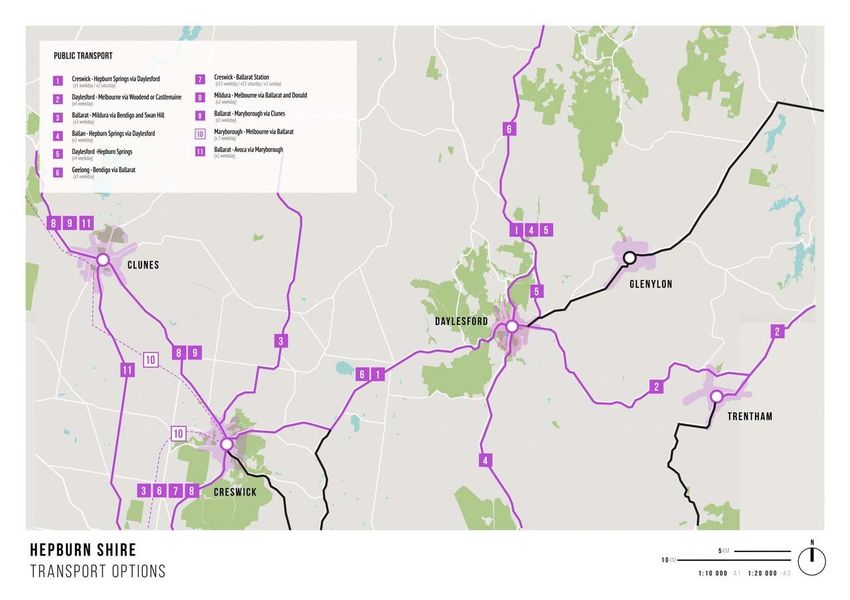
The existing public transport services are described through the following maps. The maps were
also used in large format as the basis for workshop activities (see Appendix E2). Importantly, the
maps included reasonable walking and cycling ranges for each town based on best practice.
‘Best practice’ relates to an average speed 10-minute walk of 800m and an average speed 10-
minute cycle of 2.4km, where 10 minutes is considered the threshold of convenience over the
private car.
Shire Wide Public Transport Services
Items of Note:
• 5 services a weekday connect the eastern and western parts of the Shire (1, 6)
• 28 services a weekday run from western parts of the Shire to Ballarat (3, 4, 6, 7, 8, 9, 10, 11)
• 5 services a weekday connect eastern parts of the Shire to Melbourne trains (2, 4)
18 Local Transport Benchmarking Study
Clunes Public Transport Services
Items of Note:
• Most of the town is within reasonable walking distance of the main street
• The train station is on the threshold of being too far to walk from the main street
• 7 services each weekday to Ballarat
19 Local Transport Benchmarking Study
Creswick Public Transport Services
Items of Note:
• 24 services a weekday to Ballarat
• 2 services a weekday to Daylesford
• Most of the town’s built-up area is within walking distance of the main street
20 Local Transport Benchmarking Study
Daylesford and Hepburn Services
Items of Note:
• 6 services a weekday between Daylesford and Hepburn, which is also a ~45min walk
• 5 services west a weekday to Ballarat and 5 services east a weekday to Melbourne trains
• A large portion of Daylesford’s built up area is within 10 minutes walk of the main street
21 Local Transport Benchmarking Study
Glenlyon Public Transport Services
Items of Note:
• A large portion of the town can be accessed within 10 minutes on foot
• Glenlyon has no public transport services (School Bus services not shown)
22 Local Transport Benchmarking Study
Trentham Public Transport Services
Items of Note:
• 4 services a weekday to Daylesford and Melbourne train connections
• Most of the town is accessible within 10 mins on foot
• The proximity and “bypass” nature of the Daylesford-Woodend Road to the north (C317) makes
possible innovative approaches foe the managing of visitor traffic
23 Local Transport Benchmarking Study
B5 - ISSUES ARISING FROM RESEARCH:
COMMUNITY WORKSHOPS, ONLINE SURVEY AND STAKEHOLDER INTERVIEWS
The raw data coming out of the research activities is detailed and complex. This section of the
report brings order and clarity to the data without losing its integrity. A clear picture of the local
and public transport issues and gaps in Hepburn Shire can be seen by grouping, organising and
summarising transport themes according to people’s personal and community experience. This
allows the issues to be more clearly communicated.
The consolidation of all findings and issues from the community workshops, online survey and
stakeholder interviews, without repetition, is expressed under the following five themes arranged
for local transport and public transport. Where a finding is not specific to either, or it has to do with
other forms of transport, then it is categorised under general mobility.
THEME 1
Service Frequency: When a service runs such as timetabling, periods and days of service or its
potential flexibility.
THEME 2
Network Coverage: Where a service runs such as specific locations, the geographic spread of
services, or need for new routes.
THEME 3
User Groups: People have expressed views representative of identifiable parts of the
community such as the aged, children or businesses.
THEME 4
User Experience: People react differently to their local and public transport experiences and
have various motivations and barriers for using it or not using it.
THEME 5
User Knowledge: People have various understandings of the transport system, such as its
issues, how it works or why changes are made.
B5.1 - Service Frequency
Local Transport Public Transport General Mobility
Heavy reliance on volunteer drivers Weekday peak bus timetables need Weekday mobility needs are slightly
who must not use their own cars. revisiting. higher than weekend mobility needs.
As needed and on demand, with Poor day time frequency to Ballarat for Getting to appointments on time in
bookings for peak periods. work/services. Ballarat is critical for some social
services.
Some community buses can be hired Poor frequency of buses that meet After hours transport across the Shire
on the weekend for casual use. trains at Ballan. is poor.
Community buses are well used Creswick to Ballarat is excellent at 15 Sense that the growing Shire
throughout weekdays. buses/day. population is not being served.
B5.1 - Service Frequency
Recognition that ride share services Existing Hepburn-Daylesford bus Ability to make spontaneous
offer a solution to improve frequency service is at the wrong times. decisions with higher frequencies.
(e.g. on demand)
The need for an interlinked network of
buses with co-ordinated timetables.
24 Local Transport Benchmarking Study
B5.2 - Network Coverage
Local Transport Public Transport General Mobility
Clunes and Glenlyon do not have East-west connections are lacking, Limited options to get between
community buses. e.g. Daylesford-Creswick. and around larger towns.
Electric cars and autonomous Trains are very useful for family visits E-bikes offer potential given hilly
vehicles bring new opportunity. from far away. topography.
Connecting people to public Daylesford to Creswick bus does not Finding space for a bike network
transport services. meet Creswick to Ballarat bus. that is off road.
Some licensed premises provide Direct Daylesford to Melbourne Connecting towns with high
courtesy buses. connections, including airport, are quality pedestrian and cycling
lacking. infrastructure (e.g. Daylesford-
Hepburn.)
Buses seem larger than they need to Clunes is not well served by any
be. Consider smaller buses. transport services.
Need for access to arts, culture and Glenlyon has no formal local
music in Melbourne. transport and no public transport
apart from the one school bus
route.
Ballan to Daylesford College
school route is at capacity. School
transport zones don’t seem
common sense.
B5.3 - User Groups
Local Transport Public Transport General Mobility
Patient transport to medical Commuter numbers are growing. Children have difficulty accessing
appointments within the Shire or after school activities.
Ballarat.
Social outings for the aged, all Most buses do not accommodate all Food and beverage business
abilities and young. abilities, despite assurances that they patrons have difficulty getting
do. home.
Life needs outings for the aged Taxis are used by the dependent and Young people working late have
and dependent. are often booked far in advance. difficulty getting home.
Importance of social media for Elderly people would be more Weekend visitors have difficulty
casual transport users. independent if more services getting around. Tourists need
provided. choice to know they won’t get
stuck.
People who want to drink alcohol Allowing bicycles on buses. Young people and university
and don’t want to drive. students have long distances to
travel so can end up moving out of
the Shire.
Vulnerability during fire season.
25 Local Transport Benchmarking Study
Recognition that valued elders are
lost from the community when
they no longer drive.
B5.4 - User Experiences
Local Transport Public Transport General Mobility
1 in 30 residents use local Most residents use public transport Difficulty accessing services, jobs
transport once a month. once a month. and opportunities.
Approximately 250 people are Used for shopping, leisure and Recognition of the potential for
provided with local transport each accessing employment. isolation where transport is
week. limited. Increased anxiety and
depression.
Cost is generally free or a gold Low public transport patronage (e.g. Recognition of the high cost of
coin donation. Hepburn-Daylesford bus.) private transport.
Risks in unregulated ridesharing. Staff are locals, which improves Car dependent culture
service. exacerbates barriers to using
alternative transport.
Sharing of resources is difficult due Costs are considered reasonable by Clunes and Creswick Stations are a
to insurance, risk and legal issues. most users except for taxis. long walk from the main street
Lack of myki machines on Vline buses Special education programs in
is very frustrating. Ballarat cannot be accessed by
schools.
Level of distrust of the PTV journey Good transport allows access to
planner - seems to send people on new experiences and new
long and inefficient journeys. opportunities.
Bus stops are generally in very poor Fears of walking and cycling on
condition and lacking shelter. narrow roads/shoulders/paths.
Nervousness that advertised services 40+ children getting dropped 5km
sometimes don't show up. outside Creswick after school.
Lack of wi-fi on buses and trains.
B5.5 - User Knowledge
Local Transport Public Transport General Mobility
Generally known only to those Strong appreciation when Low rates of cycling and walking
cohorts that receive “free” improvements are made to public despite reasonable distances
services. transport. within towns and investment in
new paths.
General misunderstanding of what Users have limited knowledge of the Recognition that transport is a
local transport is. full range of services on offer. community service.
Willingness to assist people with Users are not aware of the difference Recognition of the challenges of
disabilities in advocacy for local between service providers and rural/regional transport.
transport. government.
26 Local Transport Benchmarking Study
Willingness to be activist with Recognition that public transport Recognition of the need for
regards to improving local is often a poor second choice to more sustainable forms of
transport. the car. transport.
Woodend Bus service is considered Promotion of transport services
excellent. more widely in the community.
Internet is used more than paper to Few stakeholders promote
access timetables. transport services.
Recognition that being mostly off the Recognition of the environmental,
train line has led to tourism character. health and wellbeing benefits of
local, active and public transport.
Some people would value lessons on General awareness that
how to use the public transport improvements to transport require
system, reading timetables, planning a sound business case and
journeys etc evidence.
B6 - KEY STUDY FINDINGS
An analysis of the issues outlined in the previous section leads to the key findings below:
B6.1 - Local Transport Summary Findings
Strengths
• Volunteer driver programs, courtesy buses and community buses perform a critical transport
function in the community for people who cannot drive, or choose not to drive.
• Approximately 250 people are provided with safe transport each week which allows them to
participate in social outings, get to medical appointments, access services and experience other
parts of the region.
• The flexible on-demand nature of local transport cannot be matched by public transport and its
economical nature means that cost is not a barrier to use.
• Local transport is very well known within those cohorts who use it. These people are also its
greatest advocates.
Challenges
• Many local transport assets are only used for relatively short periods of the week as risk, legal,
and insurance costs prevent sharing of the asset with other groups in need.
• Local transport services generally have requirements in order for someone to qualify to access
the service.
• Parts of Hepburn Shire are without a dedicated community bus service (e.g. Clunes and
Glenlyon)
• Volunteer driver programs are time intensive to run and need a constant stream of new drivers.
Opportunities
• Utilisation of existing local transport assets could be increased.
• Ride share services, electric cars and emerging autonomous vehicle technology could be
combined to provide a new and more sustainable layer of local transport between volunteer
drivers and taxis.
• Raising awareness of the effectiveness of local transport in the community and in so doing,
increase the pool of resources.
27 Local Transport Benchmarking Study
B6.2 - Public Transport Summary Findings
Strengths
• The community has a strong sense of ownership regarding the quality of public transport and are
realistic about what is possible in a rural context dominated by car transport.
• As Daylesford and parts east, such as Trentham, experience growth, public transport is growing
in popularity as a method for commuters to get to and from Melbourne.
• Some parts of the Shire are perceived as well served by bus and train, such as Creswick.
• Community realises that Daylesford is geographically located “in the middle” which pulls
transport demand in multiple directions and makes good service provision difficult.
• High levels of awareness and thanks when changes and improvements are made to the system.
• More than half the population use public transport once a month.
Challenges
• Frequency of services is inadequate between weekday peaks, after hours and on weekends.
• Timing of peak services is not convenient for commuters.
• All abilities buses are not being provided.
• The limited number of taxis, which are relied on by some people.
• Current low levels of patronage and barriers to new patronage such as the ticketing system,
journey planning and bus stop quality.
Opportunities
• Some routes seem to be operated by large buses for the number of patrons. Consider providing
smaller, cheaper and more efficient buses on these routes.
• Allowing bicycles on buses could increase patronage and sustainable modes of travel.
• An apparent community appetite to transition to public transport and a willingness to learn how
to make the most of it.
B6.3 - General Mobility Summary Findings
Strengths
• Community recognition of the health, economic, environmental and wellbeing benefits of local,
active and public transport in comparison to car travel.
• Transport demand seems to be spread evenly across the days of the week and hours of the day.
• Closely settled towns provide the basis for efficient and effective active transport journeys and
walking/cycling infrastructure.
• Community realism about the challenges of rural/regional transport and that getting
improvements requires concerted effort.
Challenges
• After hours transport options are extremely limited leading to heavy reliance on family and
friends and inefficient use of resources (e.g. double trips for pick-up and drop-off).
• Getting to Ballarat efficiently and on-time is critical for many people to access social services and
mandatory appointments.
• Some towns, such as Clunes and Glenlyon have very few transport options.
• Car dependent culture places behavioural barriers in the way of choosing alternative transport.
28 Local Transport Benchmarking Study
• The school bus system seems to come up against barriers to improvement or change as directed
by school zones and the School Bus Program Policy and Procedures, in which the general public
appear require further communication and information. There is also a perceived slow rate of the
School Bus System adapting to new needs.
Opportunities
• The emergence of E-bikes is an opportunity to capitalise on the visitor economy and new
investment in cycling infrastructure.
• The growing population of people who are comfortable with non-car based transport.
• Building on the outcomes of the Clunes Walkability Plan.
• Evidence that many people are simply not aware of transport options, and that when awareness
is raised, behaviour can change.
• Weekend peaks in traffic generated through the visitor economy opens the possibility of radical
traffic management methods that also prioritise walking and cycling (i.e. Closing off Trentham’s
main street, providing parking on the perimeter of town, people walk in to town or bypass using
existing main road alternative.)
B7 - TABLE OF ALL LOCAL TRANSPORT ASSETS AND SERVICES
A key purpose of the study was to report on all local transport assets and services operating in the
Shire of Hepburn. The 15 known services have been listed below and reported on in the following
table. The total passenger capacity of these services is at least 200 persons. Given the reach of the
study, the authors consider it unlikely that there are any local transport assets that have not been
uncovered.
Community Run Buses
1. Hepburn Health Service Bus - Creswick
2. Hepburn Health Service Bus - Daylesford
3. Seniors Day Care Bus - Daylesford
4. Seniors Day Care Bus – Creswick
Business Run Buses
5. Pig & Whistle Courtesy Bus - Trentham area
6. Radio Springs Hotel Courtesy Bus – Lyonville/Trentham/Daylesford area
7. Clunes Pub Courtesy Bus - Clunes and Creswick area
Other Buses
8. Melbourne Airport Service
Volunteer Car Services
9. Hepburn Health Service - Volunteer Driver Service
10. Glenlyon “Bus” - Volunteer Driver Service
Business Run Car Services
11. Zipz Rideshare Service - Trentham and Surrounds
12. Bendigo Airport Service
13. Daylesford Taxis
14. Creswick Taxi
29 Local Transport Benchmarking Study
Informal Car Services
15. Daylesford Grapevine Facebook Group and other Community Facebook pages/groups -
Shire wide
Additional Transport (not Local)
Daylesford College School Bus
ALL LOCAL TRANSPORT ASSETS AND SERVICES
A. B. C. D. E. Numbers F. G. H. Could asset J. Number K.
Service Purpose Destination / Times of and types of Costs of Management be made more of assets / Community
Name Area / Based travel of users people using travel to and funding widely available total awareness
the service users capacity
Community Run Buses
Hepburn Social Based in Weekday ~70 people a Free or Hepburn Creswick bus 4 / 44 Well
Health outings / life Creswick, business week gold coin Health can be hired in known
Service needs / Daylesford hours Service / the within age
1 buses medical and Public community. cohorts
appointmen Trentham funding
ts
Seniors Pick-up and Based in Weekday ~100 people Free Hepburn Very limited 2 / 22 Well
Day Care drop-off / Daylesford business a week. Shire due to known
2 bus Social and hours Seniors and Council/ insurance within age
outings Creswick people with Public and ability
disabilities funding cohort
Business Run Buses
Licensed Taking Clunes, Friday and ~50 people a Free (or Privately Limited due to 3 / 33 Well
premises’ people Trentham, Saturday week. with a owned and insurance and known by
3 courtesy home to Daylesford nights. Business dinner run needed during regular
buses support safe Sunday after. patrons only. booking) the day patrons
travel home
Other Buses
Daylesford For class Daylesford School days NA NA Daylesford Yes - but extra 1 / 57 NA
College excursions area and as daytime only College / insurance cost
4 Bus and school far as Ballan Operational
runs Budget
Melbourne Taking Based in Serves 148 weekly $46 from Privately No Unknown High
Airport people to Ballarat, morning services Creswick owned and
5 Service airport departs peak mostly one way operated
Creswick
Volunteer Car Services
Glenlyon Daily needs Based in Available Unknown Free Community Maybe - petrol 1/4 Well
“Bus” / medical Glenlyon - anytime managed / costs known in
Volunteer appointmen trips to within reason Private becoming Glenlyon
6 Driver ts Daylesford, funding prohibitive
Service Woodend/K
yneton
30You can also read


