Moreland Play Strategy 2016-2020 - (formerly Moreland Playground Strategy) - Moreland City Council
←
→
Page content transcription
If your browser does not render page correctly, please read the page content below
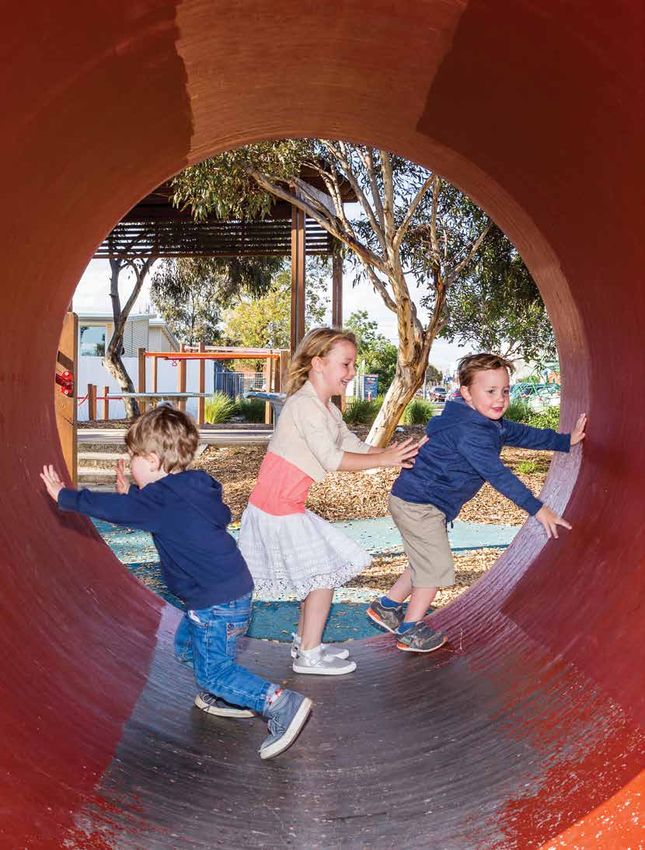
Moreland Play Strategy
            2016-2020
   (formerly Moreland Playground Strategy)
Acknowledgments
Project Manager: Open Space Design and Development Unit,
Moreland City Council
Contributions by Moreland City Councillor Rob Thompson, Council’s
Open Space Maintenance Unit, other Council officers and members
of the Time Limited Advisory Committee are gratefully acknowledged.
Moreland City Council acknowledges the traditional owners of the
land, the Kulin Nation, of which the local indigenous people are the
Wurundjeri. Council is committed to building a trusting, collaborative
and supportive relationship with indigenous groups, and to
respecting identified Aboriginal sacred sites and special places.

Clifton Park, Brunswick
MAYOR’S FOREWORD
Play is vitally important for children’s healthy development.
Public play spaces provide children with         Moreland City Council is committed to
valuable activities and experiences that are     providing a diverse range of play spaces which
often not available in their home, and which     are presentable, challenging and cater to
contribute to their personal development         children of all abilities and ages, and we are
through physical and mental stimulation and      already making great strides when it comes
social interaction.                              to interactive and engaging design.
Through play, children’s understanding of        An example of this is Kirkdale Park in Brunswick
their world expands and their development        East, which features a bird-hide, timber
is accelerated as the quantity and quality       tee pee, water pump and rock ponds. The
of play opportunities increase.                  space was inspired by the nearby Merri Creek
                                                 and invites the community into the natural
A local play space can provide a no cost,
                                                 bushland environment.
easily accessible and stimulating family
entertainment opportunity. They contribute to    This strategy marks a shift in the way we
the development of social connections in our     design our play spaces by acknowledging the
community; groups of families and friends with   importance of encouraging a connection to
children will often choose a play space with     nature and natural play.
picnic facilities for weekend gatherings, and
                                                 Play spaces are an integral part of our
children, parents and carers often make new
                                                 commitment to good quality parks and other
friendships at their local play space.
                                                 public open space in Moreland. This strategy
Providing spaces which encourage physical        will guide future urban planning and open
activity and social interaction is vital in      space decisions, ensuring the needs of children
addressing some of the physical and mental       and young people are considered when
health challenges we face today.                 changes are made to our urban environment.
                                                 This strategy will see our parks improve
                                                 in future, with more opportunities for our
                                                 community – and especially our young
                                                 people – to enjoy the outdoors, develop
                                                 social connections and stay active.

                                                 Cr Samantha Ratnam
                                                 Mayor of Moreland (2015-2016)

MORELAND PLAY STRATEGY 2016-2020                                                                    1
GLOSSARY
Some definitions of key terms used in this document.

 Amenities             Features that make a play space more pleasant place to be such as
                       seats, tables, shade, water, barbecues and toilets.
 Capital expenditure   Spending on capital works (see below)
 Capital works         Works (usually building and engineering) that create a Council asset, as
                       opposed to maintenance, repairs and other regular Council operations.
                       This term is often used when discussing Council’s budget.
 Children              Children aged 0 – 11 (Refer Appendix B – Age Activities)
 Hierarchy of          Small local play spaces
 play spaces
                       These are very small play spaces (pocket parks) that are generally within
                       a 5-minute walk of the homes of the residents they aim to cater for. They
                       generally focus on either natural play or play opportunities for younger
                       children.
                       Local play spaces
                       These play spaces are generally within a 10-minute walk of the homes
                       of the residents they aim to cater for. They will generally include play
                       equipment and opportunities for younger and older children.
                       District play spaces
                       These play spaces attract visitors from other suburbs because of the
                       extensive variety of amenities and play elements for younger and older
                       children. They are generally within a 30-minute drive of most households.
 MCC                   Moreland City Council
 Natural play          These are often found along our linear creeks and creek corridor and
 spaces                generally provide opportunities for play and activities in the natural
                       environment. Also referred to as nature-based play.
 Open spaces           All parks, gardens, reserves and other land accessible to the public and
                       managed by Council or other public authorities.
 Play                  Play is a means by which we explore our environment, world, role and
                       relationships.
 Play equipment        Play structures such as swings, slides and climbing frames.
 Play space            A space that includes a range of play opportunities for younger and older
                       children e.g. areas to run around, natural play elements, play equipment.
 Playground            An area that contains play equipment for children e.g. swings and slides.
 Structured play       Any spontaneous activity that is undertaken for fun but which has some
                       conditions or rules e.g. tiggy.

 Unstructured play     Any spontaneous activity that is undertaken for fun and has no specific
                       rules e.g. climbing, jumping.
 Young people          Children aged 12-18.

2                                                                           MORELAND CITY COUNCIL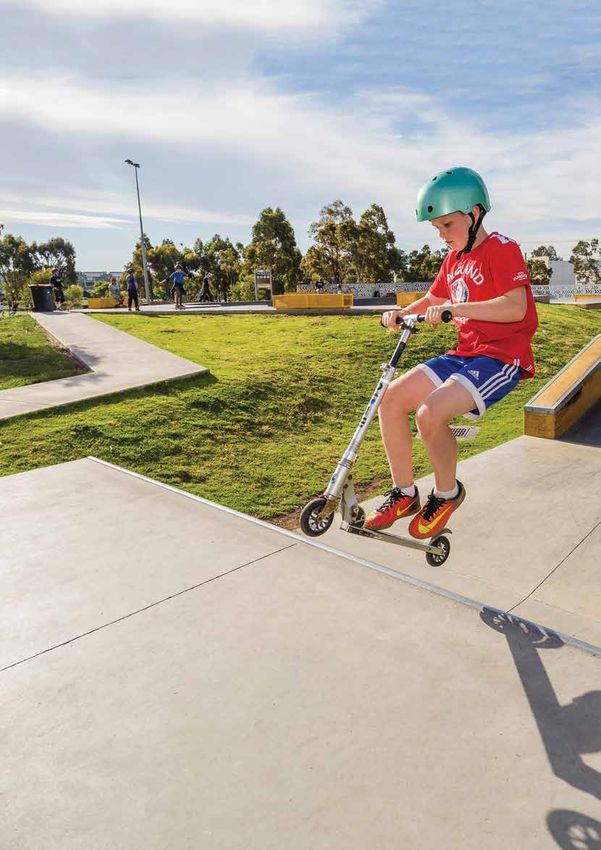
CONTENTS
Glossary                                                            2

Part 1: Overview                                                    4
Introduction                                                        4

Part 2: Context                                                     8
Background                                                          8
Policy context                                                     10
Open space park and play space community surveys                    15
Key factors to be considered in relation to play space provision    17

Part 3: Actions                                                    20
Diversity of Play Experience                                       20
Accessibility                                                      23
Maintenance                                                        24
Sustainable Play Space Design                                      26
Amenities                                                          27
Safety                                                             29
Play Space Location                                                30
Play Space Proximity                                               32
Play Spaces in Principal Activity Centres                          34
Play Space Removals                                                35

Part 4: Next Steps                                                 36
The Current Situation                                              36
The Future                                                         40
Action Plan                                                        47

Appendix A                                                         53
Playground Addresses                                               53

Appendix B                                                         61
Age Activities                                                      61

MORELAND PLAY STRATEGY 2016-2020                                    3
Part 1: Overview
INTRODUCTION

                   Wylie Reserve, Brunswick West

4                   MORELAND CITY COUNCIL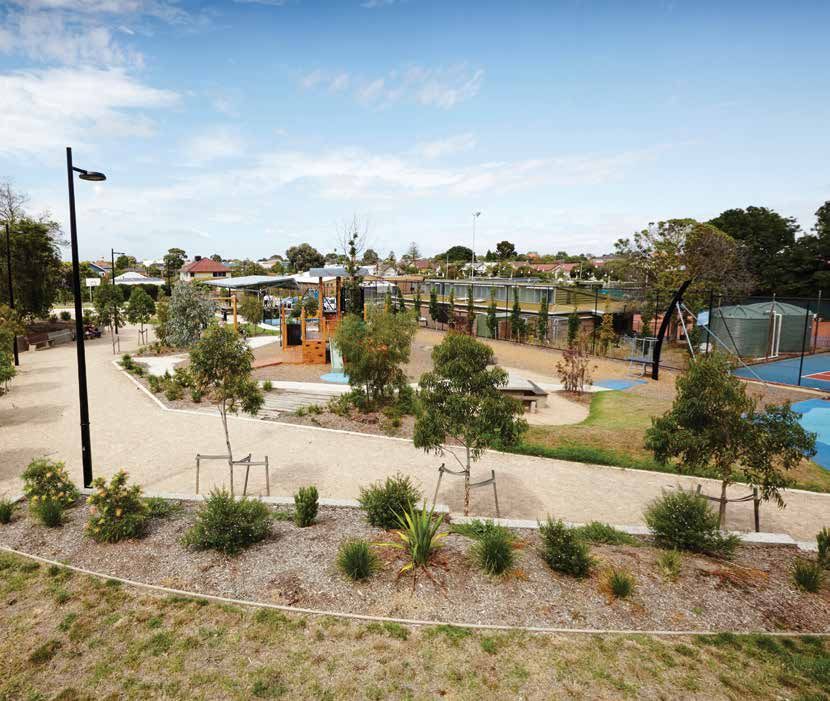
Purpose of the                                     Play Space Vision
Play Strategy                                      Moreland City Council is committed to
                                                   providing a diverse range of accessible,
Moreland City Council                              presentable, challenging and maintained play
recognises the importance                          spaces, combining sustainable natural and
                                                   man-made elements, for all ages and abilities.
of play spaces in supporting                       This strategy is closely aligned with the
children’s healthy                                 Moreland 2025 Community Vision which
development.                                       outlines the community’s priorities for a healthy,
                                                   connected, accessible and attractive place to
This strategy is based on an analysis of           work, live and play.
the municipality’s existing play spaces and        Council aims to offer accessible, quality and
will guide Council in the management and           diverse play spaces:
maintenance of existing spaces, as well as
identifying priorities for design, development     •   Accessible: Ensure all Moreland residents
and funding allocation for new play space              and visitors can safely walk no more
developments. The Moreland Play Strategy               than 500m from home to a local play
aims to find a balance between the                     space. Areas which do not meet this aim
maintenance and management of play                     should be prioritised for the creation of
spaces and childrens’ needs for exciting and           new play spaces, with an emphasis on
interesting places to play throughout the              areas of disadvantage and low levels of
municipality.                                          outdoor exercise.

The term ‘play space’ refers to not only           •   Quality: Offer a range of connected play
traditional playgrounds, skate and BMX                 experiences involving structured and natural
facilities and fitness equipment but also              elements in an attractive and landscaped
includes other informal sporting facilities            setting that is well designed, maintained
such as multi-courts and passive open                  and meets the relevant best practice and
space areas and creek corridors. Many of               safety guidelines. Moreland’s play spaces
the spaces that provide play opportunities             should aim to attract and encourage more
across Moreland are managed for a range of             frequent use to promote social interaction
purposes and not specifically play, such as the        and increase the community’s sense of
environmentally sustainable management of              ownership of the space.
our river and creek corridors. The provision and   •   Diverse: Moreland’s play spaces should
management of these spaces is discussed                cater for a range of ages, abilities and
in more detail in Moreland’s Open Space                activities involving structured and natural
Strategy (2012).                                       play spaces that specifically encourage
The Moreland Play Strategy focuses on play             children to develop and explore a variety
spaces in Council-owned and managed public             of challenges.
open space, such as parks, reserves, sports        The Moreland Play Strategy will also act as a
fields and public gathering spaces in shopping     guide for future urban planning and design
areas. It does not deal with play spaces in        decisions to ensure the needs of children and
other Council facilities – such as maternal        young people are considered when changes
and child health centres, childcare centres,       are made to the urban environment.
kindergartens or neighbourhood houses –
nor within state/private school grounds or
privately-run childcare and play facilities.

MORELAND PLAY STRATEGY 2016-2020                                                                     5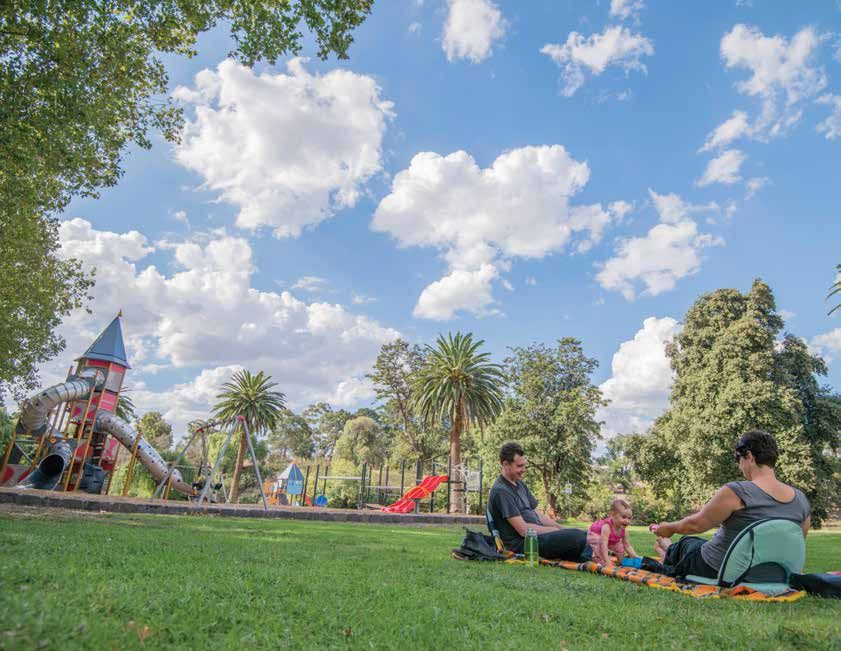
Harmony Park, Coburg

The Role of Play Spaces
Research confirms that the early years, from conception
to age six, are the most important time in a person’s life in
terms of brain development and influencing later learning,
behaviour and health.
The main way children learn at this stage is     Parents of young children often have limited
through play. Research shows that limited time   financial resources and limited ability to get
spent outdoors, which results in a combination   around easily. A quality local play space
of reduced opportunities for physically active   can provide a no cost, easily accessible and
play and diminished contact with nature, is      stimulating family entertainment opportunity.
having a detrimental impact on our children’s
                                                 Play spaces can also foster social connections
development, health and wellbeing.
                                                 in a community as an informal setting for
Public play spaces provide experiences that      casual meetings between children, parents
aren’t available to children in their homes,     or other carers. Groups of families or friends
particularly those whose homes do not have       with children will often choose a play space
much outdoor space. These experiences            that has barbeque facilities for weekend
contribute to their personal development         gatherings. Older children may use the
through physical and mental stimulation and      play space as a meeting point. Providing
social interaction. Through play, children’s     spaces which encourage physical activity
understanding of their world expands. Their      and social interaction is vital in addressing
development is accelerated as the quantity       some contemporary physical and mental
and quality of play opportunities increases.     health challenges.

6                                                                       MORELAND CITY COUNCIL
Current Trends in Play Space Management
The future management of Moreland’s play spaces will be
influenced by a number of emerging trends. These include
the following:
•   Greater realisation of how children learn      •   A growing trend of grandparents caring
    life skills through play and hence the vital       for children while their parents or regular
    importance of quality outdoor play spaces.         carers are at work or otherwise occupied.
                                                       It has been found that grandparents make
•   A move for play spaces and play experience
                                                       use of public play spaces due to less active
    to provide opportunities for children to
                                                       play facilities or space at home. We don’t
    re-engage with the natural environment
                                                       stop playing because we get old. We get
    through nature play, with less traditional,
                                                       old because we stop playing. – George
    equipment-based play space designs.
                                                       Bernard Shaw. The design of play spaces
•   A trend towards more natural and dynamic           should provide opportunities for carers and
    play environments and away from modular            grandparents to both observe and interact
    play equipment, which has resulted in the          with children.
    use of the term ‘play space’ rather than
                                                   •   Greater emphasis on whole-of-park design,
    ‘playground’.
                                                       which provides more accessible pathways to
•   Heightened awareness of the need to                play spaces and a greater awareness and
    provide equal access to play to children and       appreciation of environmental sustainability.
    carers with special needs.
                                                   •   Increased realisation that more use of
•   Recognition that play spaces should                public open space and the resulting passive
    provide for cognitive, creative and                surveillance of play spaces and parks can
    cooperative development as well as                 mitigate vandalism and improve safety and
    physical development.                              perceptions of safety.
•   Benefit-risk assessment rather than risk       •   Rising play space maintenance and
    management driving play space equipment            risk management costs in response to
    and design.                                        a propensity in Australian to litigate for
•   Smaller homes which are closer together,           damages resulting from injuries occurring in
    with smaller gardens to play in, and more          play areas.
    densely populated suburbs.                     •   Public concern about the growing number
•   Increased street traffic and greater               of children with obesity in Australia, drawing
    child safety concerns, resulting in adults         attention to the positive role play spaces
    monitoring children’s movements more.              have in our community for providing active
                                                       play opportunities for children.
•   Recognition of the importance of the early
    years (0-6 years) in intellectual and social   •   Growing awareness in the community of
    development, placing greater emphasis              the hazards associated with sun exposure
    on services and facilities that enhance this       - often the worst skin damage occurs
    development.                                       in childhood so there is an increased
                                                       expectation that shade will be provided
                                                       in play areas.

MORELAND PLAY STRATEGY 2016-2020                                                                      7
Part 2: Context
BACKGROUND

Gilmour Park, Coburg

8                      MORELAND CITY COUNCIL
Play Space Program
While Council’s Play Strategy                     While the 5 Year Park and Play Program
                                                  provides a useful framework to guide the
2008-2018 is in place until                       sustainable maintenance of existing play
2018, the implementation                          spaces, the Moreland Play Strategy aims to
                                                  take a more strategic view of the existing play
program states a full review                      opportunities across Moreland and make
should occur every five years.                    recommendations to improve their accessibility
                                                  and quality.
In 2014, Council developed a 5 Year Park and
                                                  The full review commenced in 2015 with the
Play Program which identified all existing
                                                  appointment of the Time Limited Advisory
play spaces and developed a hierarchy for
                                                  Committee chaired by Cr Rob Thompson.
categorising them (see Glossary).
                                                  Nominations were sought from each ward for
The program involved an audit of the              up to two representatives who attend two
condition of existing play equipment and          meetings in early 2015 covering topics such as:
recommendations for removal, relocation and
                                                  •   Policy context
upgrade, based on a five-year capital works
program. A twice-yearly play space audit system   •   Diversity of play experience, including
has been established to monitor compliance            intergenerational play and accessibility
with Australian playground safety standards and   •   Sustainable playground design
to inform decisions about repair and renewal.
                                                  •   Hierarchy and locations
At the same time, Moreland City Council
requires the maintenance, design and              •   Criteria for maintenance, renewals and new
construction of play spaces – as with all             playgrounds, in accordance with Council
Council assets – to be planned, resourced             budget planning.
and funded sustainably using established
principles and procedures. Council endeavours
to increase the recurrent capital expenditure
program for play spaces, including upgrades
and new facilities to enhance accessibility and
provide diversity in play opportunities for the
community. Moreland’s Playground Program
sits within the Capital Works Program with
funding of $1.31m over five years or $262,000
per annum. In 2015-16 an additional one-
off budget of $500,000 was allocated for
playground and landscape improvements to
increase access and use.

MORELAND PLAY STRATEGY 2016-2020                                                                 9
POLICY CONTEXT
Moreland City Council has both a 5 Year Park and Play Program
and a Playground Maintenance and Assessment Program.
The Moreland Play Strategy provides the guiding document
for these programs.
The strategy is informed by regular The MOSS makes specific recommendations in
assessments of Moreland’s play spaces relation to the development of the Moreland
together with a review of the relevant literature Play Strategy which include:
and community consultation. In addition, the
• Ensure every household has safe and
Moreland Play Strategy is reviewed to track
convenient access to parkland for passive
progress and ensure it remains informed by
recreation, quiet contemplation, sport
industry best practice, with the outcomes of
and access to nature.
this process adopted in an updated strategy.
A recent comprehensive assessment was • Provide and protect quality open space
undertaken in Moreland of every play space that provides a range of experiences
and the availability of play spaces within each and accessible recreation opportunities,
suburb. The Moreland Play Strategy aims to natural and cultural heritage features,
bring all this information together in a strategic and high quality park facilities and
format to provide a direction for future play landscape settings.
space improvements and developments. • Increase the recurrent capital expenditure
The Moreland Play Strategy sits within the program for play spaces, including
broader policy context of the Moreland upgrades and new facilities to meet current
Open Space Strategy (MOSS) 2012-2022. safety standards, enhance accessibility and
Key priorities in the MOSS include providing provide diversity in play opportunities.
quality, accessible open space within • Spaces should not for instance be provided
safe walking distance of all residents, and solely for one age group (such as for a
diversifying recreation and open space small play equipment area), but should
opportunities for children and youth. accommodate facilities for a range of age
groups, and encourage increased social
and recreational interaction. For example
through the provision of seating adjoining
Charles Mutton Reserve, Fawkner play spaces.
• Designate play spaces/parks throughout
the municipality for the provision of
additional natural shade and implement.
10 MORELAND CITY COUNCILAt the same time, the MOSS identified a The Moreland Play Strategy 2008-2018 also
range of unmet needs for children’s play identified the need for improved maintenance
areas including: and amenity of parks and open space, such
as more trees, shade, seating, lighting, drink
• Variable quality, with little diversity
fountains, public art and play equipment for
available across the municipality.
older children and young people, as well as
• Small play areas close to home, and more youth events and festivals.
spaces where informal ball games
are allowed were important.
• Play areas for older children are
perceived to be lacking.
• Social / family recreation open space
should cater for a range of ages.
Coburg Lake Reserve, Coburg North
MORELAND PLAY STRATEGY 2016-2020 11Other related Strategies
The Moreland Play Strategy has a direct relationship with other
key Council policies and strategies, particularly those associated
with public health and social wellbeing, access and equity, early
childhood development and municipal asset management.
A summary of key recommendations from Children who were involved in the consultation
these strategies which relate to play space process for the Moreland Early Years
development are provided below. Strategy 2016-2020 told us what was most
important to them. This included: having
The Moreland 2025 Community Plan includes
places to play, swim and play sport; nature
broad themes the community identified as
and having access to natural environments;
important for making the area a great place
and a clean environment with no rubbish
to live, work and visit. Key themes of relevance
or pollution. It was also suggested that
to the Moreland Play Strategy include a desire
Moreland’s planners continue to consider the
for a healthy, active, connected and safe
possibilities for internal and external spaces
community with accessible, well-maintained
that are engaging for children and families
and sustainable spaces.
in and around new residential developments.
As part of strategic directions for early years
infrastructure planning in the municipality
Kirkdale Park, Brunswick East Council will also invest in integrated early years
facilities and new service models.
The Early Years Survey conducted as part of
the strategy found that residents would like
to see improvements in Moreland parks. The
improvements sought would clearly boost
enjoyment of these community assets for
families and children. They include:
• Recreation facilities such as play equipment,
skate parks, and walking tracks;
• General amenities such as seats, BBQs and
water fountains;
• More green spaces including parks, gardens,
trees, plants;
• More shelter and natural shade, and
• More toilets.
12 MORELAND CITY COUNCILThe Moreland Municipal Public Health and The Moreland Bicycle Strategy 2011-21 aims
Wellbeing Plan 2013-2017 called for the design to encourage more people to take advantage
and maintenance of high-quality infrastructure of the health and sustainability benefits
(including play spaces) that meets the needs of cycling, mostly through the provision of
of all age groups and is safe, promotes bicycle infrastructure. New on-road and off-
physical activity and is sustainable for future street paths that extend the bicycle network
requirements. It also recommends: enhancing further north and into the City of Hume are
opportunities for sport and active recreation; a particular priority, as is improving existing
programs that promote physical activity for bike paths so people have places to ride that
priority groups; and, continuing with projects feel safe, comfortable, attractive and easy
that attract young people to public spaces. to navigate. The bicycle strategy also guides
community activities to make riding a bike
The Moreland Access and Inclusion Policy
more appealing.
(2010-2014) highlights the need for good
planning and design to ensure that the In addition, the strategy guides Council’s
physical and natural environment – including collaboration with other transport authorities
parks and play space – are accessible to make it easier for people to combine cycling
to all people. The policy is supported by with taking public transport, and guides
annual action plans for projects to remove proposed changes to planning regulations so
barriers, promote participation and increase new housing developments will all have good
opportunities for the whole community. cycling facilities.
The Sport and Physical Activity Strategy The Moreland Asset Management Strategy
2014-2018 highlights the need to provide aims to ensure Council’s assets provide for
quality recreational and play spaces that the community, to an agreed quality, in a
cater to a wider range of age groups and sustainable manner, for present and future
activities in Moreland. While it focuses on generations. Councils are required by law
organised and active sport rather than passive to develop comprehensive management
recreation, it called for the provision of adult systems for the full range of assets they have
exercise equipment near existing playgrounds. responsibility for. Moreland is in the process
of including its parks and playgrounds within
The Moreland Human Rights and Inclusion
the Council Asset Management System. The
Policy will strengthen and consolidate
Moreland Play Strategy introduces a hierarchy
Council’s current social policies under one
of play spaces to guide the planning and
overarching policy which is associated with
prioritisation of their maintenance, renewal and
various international, national and state-wide
construction. This remains a priority for Council,
human rights policies and laws.
but is also a work in progress.
The Moreland Pedestrian Strategy 2010-19
emphasises the importance of safe and
easy access to parks and other public open
spaces with facilities such as playgrounds,
drinking fountains and benches. Ease of
access strongly influences the extent to which
people will be willing to walk, and whether a
neighbourhood is considered safe.
MORELAND PLAY STRATEGY 2016-2020 13Other Influences
UNICEF’s Child Friendly Cities Initiative identifies the steps for
local government to implement the UN Convention on the Rights
of the Child and promote the highest quality of life for all citizens.
The Child Friendly Cities Initiative arose The federal Disability Discrimination Act
in response to the challenges of rapid (1992) provides protection for everyone in
transformation and urbanisation, and the Australia against discrimination based on
growing responsibilities of municipalities disability. Under the act, Council is required to
and local communities as a result of the ensure access to play spaces and associated
decentralisation of government responsibility. amenities such as toilets, seats, tables and
pathways address the right of all people,
Key elements that relate to Moreland’s Play
regardless of age or ability. Of particular
Strategy include the right of every young citizen to:
relevance to the Moreland Play Strategy is
• Influence decisions about their city; the act’s determination to ensure, as far as
• Express their opinion on the city they want; practicable, that a person with disabilities has
the same access to facilities, programs and
• Participate in family, community and social life; environments as the rest of the community.
• Drink safe water and have access to The Urban Design Protocol aims to create
proper sanitation; productive, sustainable and liveable places
• Be protected from exploitation, violence through leadership and the integration of
and abuse; design excellence. Urban design for play
spaces should be:
• Walk safely in the streets on their own;
• Enhancing, connected, diverse and enduring
• Meet friends and play;
• Comfortable, vibrant, safe and walkable
• Have green spaces for plants and animals;
• Live in an unpolluted environment;
• Participate in cultural and social events; and
• Be an equal citizen of their city with access
to every service, regardless of ethnic origin,
religion, income, gender or disability.
Balfe Park, Brunswick East
14 MORELAND CITY COUNCILCoburg Lake Reserve, Coburg North
OPEN SPACE, PARK
AND PLAY SPACE
COMMUNITY SURVEYS
Moreland participates in the annual Integrated Open Space
Services Survey (IOSS), which is conducted independently.
The surveys gather residents’ views of their local parks,
including play spaces. The results rank Moreland against
other participating Councils across Victoria.
Since 2012, Moreland has ranked in the top Graph 1: 1 IOSS Play Space Facilities
five of 17 councils in terms of community & Maintenance Standards
satisfaction. The surveys regularly find play
spaces and playgrounds are the main 10
attraction for the community to visit Moreland’s ■ 2008 ■ 2009 ■ 2010 ■ 2011 ■ 2012 ■ 2013 ■ 2014
open spaces, with the majority of visitors
8
walking to a local park. Most respondents
have called for the provision of additional
playgrounds with toilets, BBQs, seats, tables 6
and shelters in Moreland’s parks.
Data indicates a marginal drop in satisfaction
4
with play spaces and maintenance standards
between 2012 to 2014 after a steady increase
during the preceding three years. In 2015, 8.4 out 2
of 10 was achieved – the highest to date. The
results are still relatively high, which may reflect
the play space upgrade and renewal program 0
that has occurred over the past five years. Moreland Region
MORELAND PLAY STRATEGY 2016-2020 15Harmony Park, Coburg
The Oxygen Project Phase 2 Report and In 2013 Moreland City Council conducted an
Action Plan 2015-2018 included a 2014 survey Early Years Survey which asked over 1,000
of Moreland youth which identified a strong families with young children in the municipality
interest in new play spaces, including skate about their awareness and use of children’s
parks. 448 Moreland youth were surveyed, 87 services in Moreland, and their satisfaction
per cent of whom were aged between 12 and 17. with those services. The results showed a
strong interest in play spaces, with satisfaction
The results showed Moreland youth were
results above the regional average. The 2014
specifically interested in the following:
satisfaction results were down on results for
• Outdoor trampolines, ropes courses and 2011-2013, but above the long term average.
play equipment. Specific feedback from respondents included
• Digital plug and play technology with calls for:
speakers and projectors. • Consultation with children through active
• The free provision of Wi-Fi in public spaces. networks.
• Toilets and water fountains in public spaces. • Natural play.
• More trees, plants and beautification across • Better promotion of Moreland play spaces.
the municipality. • Consulting culturally and linguistically
• Legal graffiti walls in appropriate places diverse communities.
(shopping strips). • Access for all.
• More seating and shelter in spaces where
young people gather.
• Outdoor gym equipment and more sports
grounds.
• New and improved lighting in spaces where
young people gather.
• More artwork, colour and performance
spaces / stages for events and activity.
16 MORELAND CITY COUNCILKEY FACTORS TO BE
CONSIDERED IN RELATION
TO PLAY SPACE PROVISION
Population trends It is important that the community remain
mindful of changing population dynamics in
- young children planning, decision-making, Council resource
allocation and dealing with customer requests
in Moreland for play space maintenance and upgrades.
Moreland’s demographic trends
indicate future growth in the
Play space locations
young and middle age groups across Moreland
across the whole municipality, Council currently maintains
with Brunswick, Coburg and 127 playgrounds, sets of
Glenroy having the largest outdoor exercise equipment
number of young people. and skate parks, 19 of which
These suburbs are expected to remain home have been added since 2008.
to the largest numbers of 0-14 year olds
through to 2036 with Brunswick and Brunswick The map of play space locations (and
East to have the greatest proportional growth addresses), by hierarchy, can be found in
in young people over the next few decades. Appendix A.
While demographic data alone cannot be The following map (page 18) indicates that
used for planning play spaces and their the location of parks and play spaces is fairly
locations, it can point towards population evenly distributed across the municipality with
growth areas and offers useful information the exception of some gaps (refer to page 32 –
for comparing play space opportunities Play Space Proximity).
within those locations. For example, between
2015 and 2031 the number of under-15 year
olds in Moreland is expected to grow by 28
per cent from 27,000 to 35,000. During this Kirkdale Park, Brunswick East
period, the highest growth is expected to
occur in Brunswick East (by 78 per cent or 1,110),
Brunswick (by 40 per cent or 1,119) and Coburg
(by 28 per cent or 1,121). In contrast, by 2031
the smallest proportion of Moreland’s young
people is predicted to be in Gowanbrae (488
equivalent to 1.4 per cent), Hadfield (1,441
equivalent to 4.1 per cent) and Oak Park
(1258 or 3.6 per cent).
MORELAND PLAY STRATEGY 2016-2020 17Playspace locations across Moreland
MERRI
CREEK
D
ING R
ERN R
WEST
Fawkner
JUKES RD
HILTON ST
SYDN
MAJOR RD
PASC
Hadfield
E
GLENROY RD
Y RD
EAST ST
OE VA
Gowanbrae LYNCH RD
CARDINAL RD
LE RD
Glenroy LORNE ST
PASCOE ST BOUNDARY ROAD
Coburg North
NORTHUMBERLAND RD
RD
Oak Park
DS
LAN
SUSSEX ST
NEW
CUMBERLAND RD
BAKERS RD
Pascoe Vale
GAFFNEY ST
MURRAY RD
Playspace Hierarchy BELL ST
District
Pascoe Vale South
Local Coburg
REYNARD ST
NICHOLSON ST
Small Local
Exercise Equipment
WOODLANDS AVE
Skate Park
SYDNEY RD
MORELAND RD
Open Space – Playground Parks
Brunswick
MELVILLE ROAD
West
CITYLINK
BLYTH ST
ALBERT ST
DAWSON ST GLENLYON RD
UNION ST Brunswick
BRUNSWICK RD
N
LYGON ST
0 1 Princes Hill
Kilometres MELBOURNE
Carlton North
Parkville
18 MORELAND CITY COUNCILMoreland play space hierarchy
District play spaces Small local play spaces
These are large ‘access for all’ facilities (formerly called local)
designed to cater for a wide range of people These are smaller sites and primarily targeted
from the area along with a capacity to draw at children aged 3-7 years. Council generally
a tourist element from the surrounding districts. buys the play equipment from commercial
Generally district play spaces are custom- suppliers (as opposed to district play spaces
designed for a site and have the capacity which are generally custom-designed). Local
to provide a wide variety of play. play spaces are generally located in small
In 2008, an all-abilities district play space pocket parks. Council needs to explore
was developed at Harmony Park in Coburg. opportunities for diversifying the variety of
Bush Reserve, also in Coburg, was opened offerings these spaces provide including a
in mid-2015 and includes a Liberty Swing better mix of structured and natural play
for children and adults in wheelchairs. options.
Further sites should be investigated for two Small local play spaces are most important for
new district ‘access for all’ facilities to cater creating neighbourhood networks amongst
for the broader community. parents and children and are often positioned
so that older children can access them on their
Local play spaces (formally own, fostering their independence.
called local significant) The majority of play spaces in Moreland are
These sites are generally large and should defined as local play spaces.
cater for both junior and older users. Council
generally buys the play equipment from Other Play Spaces in Moreland
commercial suppliers (as opposed to district
There are other public primary school play
play spaces which are generally custom-
spaces in Moreland, some of which allow
designed). Junior areas provide activities
community use outside of school hours.
at lower heights and senior areas provide
activities at a range of heights including agility
and climbing structures.
Local play spaces are either located in a
commercial or community hub or in a site of
high amenity that draw users from a wider
area than local play spaces and attract
family and social groups on weekends.
Significant local play spaces often contain
more amenities (such as toilets and barbeques)
to facilitate these gatherings.
Some small local play spaces (see next
section for definition) should strategically
be developed into local play spaces to
provide an equitable distribution across the
municipality in locations where they will be well
used (refer to page 32 – Play Space Proximity
for more information and a map of play
spaces and playground walkability gaps.)
Tree planting at a local play area
MORELAND PLAY STRATEGY 2016-2020 19Part 3: Actions DIVERSITY OF PLAY Harmony Park, Coburg 20 MORELAND CITY COUNCIL
Play theory identifies four broad categories of play behaviour.
These apply across all ages, but the way they are interpreted
by each age group varies.
Physically active play involves gross motor         Children’s play activities, their interests and
activities i.e. using the large muscle groups,      their abilities change dramatically as they
and skills such as co-ordination and                develop. Play areas need to cater for this
balance (swinging, climbing, sliding, hanging,      range of interests and to facilitate the gradual
agility activities).                                development of skills.
Cognitive play involves the development of the      More diverse play spaces tend to be purpose
intellect through games of strategy, exploration    designed and constructed. New play
and observation. Play space features which          space developments provide the greatest
prompt cognitive play include nature play           opportunity for diversifying play equipment
areas for exploration and the observation of        and play spaces for children and young
living things, structures such as tic tac toe and   people within Moreland. However there is
spaces suitable for games such as marbles.          scope to greatly increase the diversity of play
                                                    opportunities within existing parks through
Creative play involves manipulating the
                                                    considered landscape design adjacent
environment through playing with natural
                                                    to play equipment.
materials (sand, water, leaves, soil, and mulch),
creating ‘fairy gardens’, making music or
interacting with sculptures.
                                                           Objectives
Social/dramatic play includes role-play,
imaginative play and group activities. Play         • To increase the diversity of play experiences
space features which prompt social/dramatic           available from individual play spaces.
play include ‘shops’ and cubbies, steering
wheels and boats. A double swing can provide        • To increase the diversity of play experience
opportunities for children to swing and talk.         in each suburb.
Hammocks and seesaws can provide for                • To increase the range of age groups that
cooperative activity.                                 the play spaces cater for.
Historically, many play spaces have focused         • To create new play spaces which encourage
on the provision of equipment for physically          greater diversity of play behaviour through
active play and neglected to foster the other         designs where landscape features and play
types of play, but there is now recognition           equipment complement one another.
of the importance of providing greater
                                                    • Recognise the need for appropriate
diversity. Play areas need to prompt different
                                                      play space locations in relation to other
types of movement and manipulation, have
                                                      recreational activities e.g. proximity of
differing degrees of openness of space and
                                                      playgrounds to bike paths and half courts.
scale, and provide a diverse range of natural
and sensory elements.

MORELAND PLAY STRATEGY 2016-2020                                                                   21
Actions 3. When equipment is upgraded in play
spaces or new equipment provided, aim
to achieve a balance between the four
1. Encourage diversity of play experience by categories of play behaviour (see above).
creating informal play spaces through the
landscaping around play spaces e.g. areas 4. Vary play equipment, materials,
where children can play with rocks, leaves, construction techniques and landscape
twigs and other natural elements. elements from park to park.
2. Provide greater play opportunities for 5. Offer both structured and natural options
older children and young people as well to suit a variety of age groups and abilities
as adult involvement. within each play setting in accordance
with relevant Australian Standards.
Clifton Park, Brunswick
22 MORELAND CITY COUNCILACCESSIBILITY
Ideally, play spaces, parks and other open space should be
accessible to everyone in the community regardless of their
abilities and age.
Many of Moreland’s play spaces are difficult
for people in wheelchairs to access and do Actions
not provide appropriate play equipment for
children with disabilities. Few play spaces 1. Improve path networks at existing parks
provide seating for carers or grandparents. to enable safe access to play equipment
and toilet facilities or other amenities
Some of Moreland’s play spaces are located (where they exist).
in sporting reserves where they are designed
around the assumption that users will drive to 2. Improve pedestrian access to play spaces
the site, therefore making them more difficult by providing pedestrian pathways through
to access for pedestrians. Some of these play reserves and entry points to link play
spaces have had gym equipment installed in spaces into the residential neighbourhood.
recent years to diversify activity options. 3. Include minimum disability access
A lack of readily available information about requirements compliant with Australian
Moreland’s play space locations and facilities Standards in the redevelopment or
also reduces their accessibility to new residents. creation of new play spaces in parks that
have been classified as either district parks
or local parks.
Objectives 4. Consider accessibility and play
opportunities for children of varying
• To improve the accessibility of play spaces, abilities in the design of new play spaces.
where possible, for all users.
5. Develop new play spaces with regard
• To improve pedestrian access to play spaces. to the principles contained in the
• To provide more play opportunities for draft Moreland Human Rights and
children with disabilities. Inclusion Policy.
• To increase community awareness of 6. Provide information about play spaces
the play spaces and facilities available to residents through local child and
in their district. maternal health centres, playgroups,
schools, kindergartens and libraries, using
• To provide a range of accessible spaces a variety of means of communication
of different functions and experiences and in a variety of languages.
across Moreland.
MORELAND PLAY STRATEGY 2016-2020 23MAINTENANCE
In 2014 and 2015 Council undertook a Playgrounds and
Infrastructure Maintenance Service Review which assessed the
current demands on play spaces against levels of service and
resourcing constraints.
The review identified a number of significant In addition to external audits, Council conducts
issues, including an increasing gap between monthly inspections of all playgrounds in
play space demands and resourcing; a Moreland parks.
growing number of non-compliant playgrounds
and equipment; and a maintenance regime
that is largely reactive. Objectives
Moreland’s play spaces are currently inspected
by a qualified independent play space safety • To maintain Moreland’s play spaces so that
auditor, two times per year, to ensure they they comply with safety standards and are
comply with current standards as prescribed clean and attractive.
by Standards Australia. Council staff use the
reports from these inspections to plan their
maintenance work. The frequency of the Actions
audit is being reviewed.
1. Continue to conduct frequent inspections
Following each audit, all repairs and and prompt repairs of damaged equipment.
modifications are ranked according to the
degree of risk they pose in line with Australian 2. Ensure the discrepancy between
Standards. Any defect ranked as a high priority maintenance capacity and requirements
is attended to immediately. The remainder are addressed and maintenance staff are
are put into the maintenance schedule consulted in the design and development
or referred directly to the capital works of new play spaces.
program. Play spaces or individual pieces of 3. Develop new play spaces in accordance
equipment requiring replacement or renewal with industry best practice and relevant
are listed on Council’s five-year capital works Australian Standards.
upgrade program.
Clifton Park, Brunswick
24 MORELAND CITY COUNCILBush Reserve, Coburg
Maintenance service timeframes
Description Timeframe
Maintenance – urgent safety issue Same day
Maintenance – high priority Within two days
Non-compliant with Australia Standard 4685 Operational Projects Budget allocation – annually
Maintenance – general Within budget limitations
Softfall ground covering Annually
Graffiti General – within two weeks of request received
If offensive – removal same day as request received
Australian Standards – non compliance issue Dependent on seriousness and public safety
Recommendation – Council staff solution For consideration only
to a potential hazard not covered by AS 4685
MORELAND PLAY STRATEGY 2016-2020 25SUSTAINABLE PLAY
SPACE DESIGN
In retrofitting play spaces or the development of new play
spaces, it is important to consider their longevity and the
flexibility in their design, and to adopt environmentally
sustainable design principles.
Play spaces should encourage people
to connect with and enjoy the natural Actions
environment, including surrounding vegetation,
parklands and areas around creeks. 1. Design play spaces that connect with and
Sustainable and recycled materials should be provide opportunities to interact with the
considered for use in play space equipment surrounding natural environment.
and the surrounding landscaping. 2. Explore possibilities for refurbishing
equipment if it is still of play value and
Objectives can be brought up to best standards
at a reasonable cost.
3. Investigate recycling play space equipment
• To connect play spaces with surrounding
between parks during upgrades if it is
vegetation, parklands and waterways.
deemed still useful.
• To use sustainable or recycled materials in
4. Design new play spaces and retrofits
play spaces and associated landscaping
using sustainable or recycled materials
where possible.
where possible.
5. Research and review sustainable and
recycled materials for use in play space
design and associated landscaping.
Barkly Street Park, Brunswick
26 MORELAND CITY COUNCILAMENITIES
Amenities contribute to the comfort and safety of children
and carers while they use the play space.
Comfortable seating close to the play area Parents or carers of young children need to be
encourages supervision by adults. All play aware of their role in providing ‘duty of care’
spaces should have seating with back rests. for children at play spaces. This should include
Preferably, it will be located north of the play dressing children in appropriate footwear,
space with some shade and provide good sunsmart clothing in summer and providing
visual surveillance of play areas. adequate supervision of their children.
Parks with significant local play spaces and Unlike a school environment, parents have a
district play spaces attract people from a greater choice of times and conditions children
wider area than local parks, so they need to can play in public parks. Use of public play
provide adequate amenities. As a minimum, facilities in high UV periods, or extreme weather
designers should consider seating close to the conditions should be avoided. Appropriate
equipment for supervision, a drinking fountain, protective measures such as a hat, sunscreen
and natural shade. and wraparound sunglasses should be used
outdoors. The Moreland Play Strategy guides
Fencing should be considered in locations
for appropriate species of shade tree around
where a serious potential hazard exists, such
play spaces in general. Built shade structures
as a main road or waterway. Partial barriers
will be considered for district parks and other
designed to redirect children away from the
frequently-used parks where appropriate.
dangers are recommended, as fully-fenced
play spaces tend to give parents a false sense Dogs are not permitted in playground areas
of security and can encourage inadequate and must be on a leash within 15 metres of play
supervision. Placing fencing around play spaces. There are often issues created by dog
spaces can also impede the relationship owners not controlling their dogs when they’re
of the play equipment with the broader off the leash around play spaces, as well as
park, creating a barrier between the play dog owners not picking up after their dogs.
experiences offered in the play space and the This can lead to unpleasant and sometimes
play experiences offered in the broader park. dangerous experiences for play space users.
Council is creating separate dog off-leash
To enhance the play space environment,
areas to manage this problem.
fencing around play spaces and sports
fields that is no longer deemed necessary
should be removed as part of the parks
improvement program.
MORELAND PLAY STRATEGY 2016-2020 27Coburg Lake Reserve, Coburg North
Objectives 9. Consider sun orientation when determining
locations for new play equipment so
natural shade is optimised.
• To improve amenities at significant local
and district play spaces. 10. Assess potential hazards (main roads,
creeks, off-leash dogs, falling branches)
• To improve natural shade at play spaces, at each play space and consider strategic
particularly local or district play spaces design interventions to manage high
where visitors may stay for a long period safety risks where needed.
of time.
11. Assess existing play spaces and remove
• To provide fencing where there needs to or relocate inappropriate fencing
be a barrier between the equipment and and amenities as part of the parks
a potential danger. improvement program.
• To remove or relocate inappropriate fencing 12. Promote parents’ and carers’ ‘duty of care’
and amenities. at play spaces through the Council website
• To address the impact dogs have on play and posters at schools, kindergartens,
space safety and cleanliness. libraries and MCH centres, so parents and
carers are aware of their responsibilities.
Actions 13. Publicise, and continue to enforce the
local law requiring dogs to be on lead
within 15 metres of play spaces, regardless
6. Install picnic and BBQ facilities, shelters of whether the surrounding area is an
and toilets for large family and social off-leash zone. Publicise and facilitate
gatherings in district parks and other compliance with the local law that states
suitable informal parkland with play that no person in charge of an animal may
spaces, in the context of approved allow droppings to remain in a park or
landscape plans (in line with Moreland other public land.
Open Space Strategy).
14. Work in conjunction with the IT and Youth
7. Consider locating new local play spaces Services Units to explore the provision
where there are existing amenities. of free public WiFi when play spaces are
8. Assess the existing natural shade at play upgraded.
spaces and allocate funding for tree 15. Evaluate the benefit of a ropes course in
planting and the construction of shade a play space that is being upgraded.
where natural shade is limited, prioritising
junior play equipment.
28 MORELAND CITY COUNCILSAFETY
Previously, risk management and minimisation were the focus of
councils in the design, maintenance and renewal of play spaces.
Whilst risk management is still important, Other important risk considerations for
there is now a greater understanding of the play space safety have been discussed in
development benefits of children learning Amenities – page 27, including natural shade,
to assess risks and make judgements. Play fencing and proximity to off-leash dog and
advocacy groups are now promoting the sporting areas.
use of benefit/risk assessment. This change
in focus has seen some interesting and
challenging nature play elements and play Objectives
equipment being included in new play spaces.
These types of play spaces have been able • To maintain playgrounds in accordance with
to hold the interest of older children for the current Australia Standards to ensure
longer than those with less challenge and they are fit for purpose.
unpredictability.
• To continue to improve the safety of play
Despite these recent changes, Council needs spaces while providing challenging play
to carefully consider and comply with a experiences.
range of relevant Australian Standards in the
design and maintenance of play spaces and
equipment, including for example: Actions
• AS 4685:2014 Playground equipment and
surfacing 1. Trial a Safety by Design process in one
play space renewal, examining the costs
• AS/NZS 4422 Playground surfacing – and benefits.
Specifications, requirements and test
method 2. Inspect upgraded play spaces prior to
use by the public.
• AS/NZS 4686:1997 Playgrounds and Play
Equipment 3. Arrange tri-annual inspection by a
qualified, independent play space safety
• AS/NZS ISO 31000:2009 Risk management - auditor to ensure compliance with current
Principles and guidelines applicable standards as prescribed by
• AS 1428 Design for Access and Mobility Standards Australia.
• AS/NZS ISO 31000:2009 Risk management – 4. Respond immediately to customer
Principles and Guidelines requests for play spaces to be made safe.
• Australian Human Rights Commission 5. Open Space Infrastructure Maintenance
advisory note on streetscapes, public Team to visually inspect play spaces
outdoor areas, fixtures, fittings and furniture monthly.
(2013) 6. Implement the Annual Playgrounds
• Institute of Public Works Engineering Compliance Works Program.
Australia 7. Annually implement the 5 Year Capital
• International Infrastructure Management Works Playground Renewal Program.
Manual (2011)
• Parks management: Inventories, condition
and performance grading Practice Note 10.1
(2014)
MORELAND PLAY STRATEGY 2016-2020 29PLAY SPACE LOCATION
The location of a play space can dramatically affect its
popularity. Play spaces in sites overlooked by surrounding
homes with lots of people walking in the area will be safer
and more popular with children.
The location and nature of a play space In new housing developments, play spaces
needs to be considered within the context of should be created, where appropriate.
all functions of the park. Maintenance levels Access between new housing developments
and associated amenities (seats, toilets etc.) and existing play spaces should also be
should reflect the catchment served (i.e. the considered and created where appropriate.
number of people estimated to use the space) Developer contributions funds could be used
and the Moreland Open Space Strategy’s park to upgrade existing play spaces or develop
service hierarchy. new play spaces.
Informal surveillance by residents around A number of small local play spaces are
a park may also help to deter vandalism. situated in road reserves or very small
Proximity to other community facilities or allotments. Given the strong attachment
shops will be likely to increase the use of residents place on any play space and
the play space and can provide a valuable equipment, removal of such play spaces is
complement to the facility. Young children, not recommended unless there are suitable
especially those under ten years, are generally alternatives within 500m walking distance.
dependent upon adults to take them to Placing play spaces in a prominent, central
parks and play areas Play spaces for young location helps children and parents to feel
children therefore need to be designed to also connected to a community rather than
attract adults. marginalised away from the action.
Some of Moreland’s play spaces are in Other considerations for the location of new
poor locations. Some are located in remote play spaces include:
sites next to sporting facilities, where they
• Physical qualities of the site including
may be used a lot on the weekend but be
proximity to natural features (trees, rocks,
quite isolated during the week. Play spaces
undulating landforms and views), which
which are bordered by homes’ back or side
may enhance play opportunities.
fences on the majority of sides can have
surveillance problems, undesirable behaviour • Environmental impact of the play space
and vandalism. on the site including native vegetation,
flora and fauna.
An assessment of proximity risks – such as
roads, car parks, shared pathways (bike/walk), • Heritage or other planning overlays
railways, water bodies, drains, flood prone in the park.
areas and off-lead dog areas – and how • Accessibility to a reasonable number
these risks could be managed also needs to of residents.
be undertaken. If the land is a former landfill
site or may be contaminated, soil testing will • Character of the park.
be required. • Proximity to homes, commercial centres
and public transport.
30 MORELAND CITY COUNCILObjectives Actions
• To improve the safety and encourage 1. Explore opportunities to improve the safety
increased use of existing play spaces. and accessibility of existing play spaces
with new pedestrian paths linking the play
• To locate new play spaces in the optimum
spaces to homes.
location to ensure they are safe, well-used
and well-connected with the community. 2. Design play spaces that enhance the
overall park and make the best use of
the geography and existing buildings
and other structures to increase play
value12.3 Consider the environmental
impact of play spaces in any development/
redevelopment, particularly if close to
natural areas like creek corridors.
3. Review existing play spaces to improve
connectedness to the surrounding area.
Gilmour Park, Coburg
MORELAND PLAY STRATEGY 2016-2020 31You can also read


