Heritage and patrimony of the peasantry framework to address rural development and its application in Colombia
←
→
Page content transcription
If your browser does not render page correctly, please read the page content below
Desarrollo Rural Sostenible / Sustainable Rural Development

Acta Agron. (2017) 66 (3) p 347-359 ISSN 0120-2812 | e-ISSN 2323-0118                         https://doi.org/10.15446/acag.v66n3.60949

Heritage and patrimony of the peasantry framework to address
rural development and its application in Colombia
Herencia y patrimonio del campesinado para abordar el desarrollo rural
y su aplicación en Colombia
Fabio Alberto Pachón Ariza1* Wolfgang Bokelmann2 and César Adrián Ramírez Miranda3

1
 Departamento de Desarrollo Rural. Universidad Nacional de Colombia, Bogotá, Colombia. 2Humboldt Universität zu Berlín, Albrecht
Daniel Thaer-Institut für Agrar- und Gartenbauwiss, Germany. 3Universidad Autónoma Chapingo, Texcoco-Mexico. Author for
correspondence: fapachona@unal.edu.co

                                                                                             Rec.: 11.10.2016 Accep.: 27.01.2017

Abstract
The theoretical framework “heritage and patrimony of the peasantry” and its suggested operationalization
potentially offers an improvement over previous approaches to analyse rural development. The first application
of the concept was carried out in Colombia, quantifying rural development indicators in six rural territories. The
most critical indicators to define rural development in this context were identified as follows: biodiversity, recycling
and communal values. Based on these findings, human patrimony has the lowest level of all the heritages of the
Colombian peasantry. Public policies to overcome these matters in the post-conflict era, should be the priority
of rural development strategies.
Keywords: Indicators, quality of life, rural communities, rural poverty, socioeconomic development.

Resumen
El marco teórico “patrimonio y patrimonio del campesinado” y su operacionalización sugerida, ofrece potencialmente
una mejora respecto a los enfoques anteriores para analizar el desarrollo rural. La primera aplicación del
concepto se llevó a cabo en Colombia, cuantificando indicadores de desarrollo rural en seis territorios rurales.
Los indicadores más críticos para definir el desarrollo rural en este contexto fueron identificados como sigue:
biodiversidad, reciclaje y valores comunales. Con base en estos hallazgos, el patrimonio humano tiene el nivel más
bajo de todas las herencias del campesinado Colombiano. Las políticas públicas para superar estas cuestiones
en la era posterior al conflict, deberían ser la prioridad de las estrategias de desarrollo rural.
Palabras clave: Calidad de vida, comunidades rurales, desarrollo socioeconómico, indicadores, pobreza rural.

Introduction                                                            (Van der Ploeg, 2013). Finally, the understanding
                                                                        of the significance of rural development, and
Assessing and quantifying rural development                             hence the best way to reach it, have caused huge
is a complex and challenging task. Several                              disagreements among the stakeholders involved
circumstances define its complexity. Firstly, rural                     in these struggle (Chambers, 1983; Scoones,
development problems have been approached                               2015).
separately, based on a disciplinary point of
view (Ellis & Biggs, 2001); secondly, rural                                Regarding the understanding of rural
development difficulties have been beyond the                           development, it has been focused mainly on
capacity of governments to deal with them (Kay,                         an economic perspective, which privileges the
2005). Thirdly, many of the beneficiaries of rural                      economic activities of rural areas (Bernstein,
development policies have remained isolated                             2010; Pachón, Bokelmann & Ramírez, 2016a).
from the spaces where the decisions are made                            Consequently, the rise of agricultural production

                                                                                                                                  347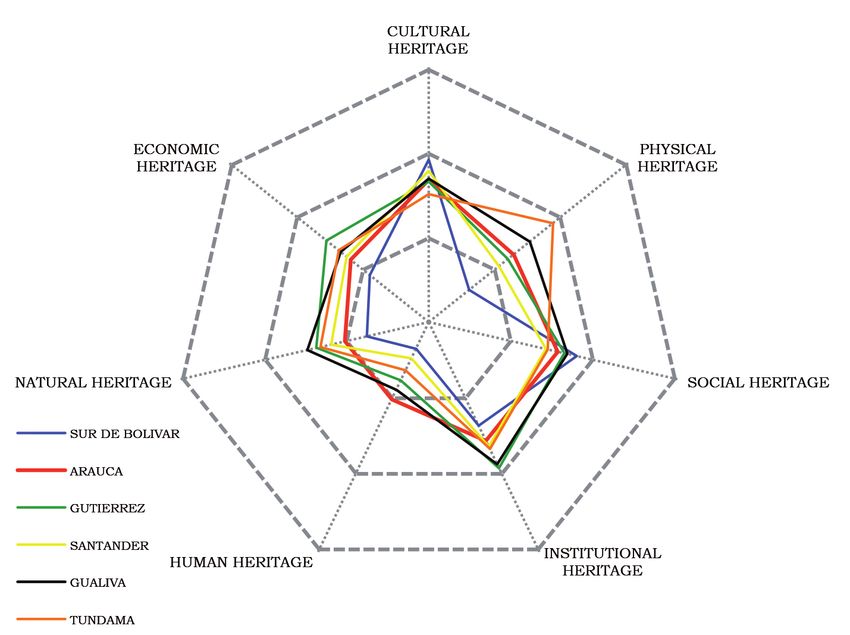
Acta Agronómica. 66 (3) 2017, p 347-359

has been the way to increase rural incomes and          and impossible to commercialise. That is why
hence rural development (Bryceson, Kay, Mooij           the Heritages and Patrimonies of the Peasantry
& Barkin, 2004). However, the prominence of             framework no longer uses the idea of capitals
social and environmental concerns in the rural          (Pachón-Ariza et al., 2016b).
development debate is currently accepted by
many more stakeholders involved in the rural
development analysis (Desmarais, 2008; Patel,           Table 1. Description of the heritages and peasantry patrimonies
2009; Roberts, 2008). The method analysed in
                                                                                                   Cultural Heritage takes into
the current paper defines rural development as                                                     account those aspects that
the process to improve the quality of life for all                                                 belong to the identity, creativity
                                                                                                   and traditions of the peasantry.
rural inhabitants while ensure that their rights                                                   Similarly, other topics that
are respected.                                                                                     determine the practices of
                                                                                                   peasants are the spiritual and
   The rural development approaches have                                  Cultural heritage
                                                                                                   religious beliefs. For instance,
evolved from a limited view based on a disciplinary                                                traditions or rural practices
                                                                                                   such as polyculture and barter
focus, to a transdisciplinary emphasis where                                                       systems. Additionally, the Cultural
more relationships among all the challenges of                                                     Heritages aim to identify how
                                                                                                   modern agricultural practices
rural development are taken into consideration                                                     affect the identity, beliefs, and
(Scoones, 2009). For instance, while the                                                           traditional practices of the
Modernisation of Agricultural Production was                                                       peasantry.
focused on the Green Revolution and the cutting                                                    Social Heritage refers to the
edge of technology to increase production (Kay,                                                    integration, relationships, and
                                                                                                   interaction among the members
1998), Food Sovereignty emphasises the social                                                      of the society. In this case,
recognition of rural inhabitants (Desmarais,                                                       the interaction between the
                                                                                                   peasantry and the urban society,
2002; Wittman, Desmarais, & Wiebe, 2010). In             Heritage and     Social heritage
                                                                                                   as well as among peasants from
this context, it is important to define a different       patrimony                                different places and customs.
framework able to analyse the complexity of the              of the                                Likewise, it also considers how
                                                           peasantry                               these relationships can create
countryside, as well as to identify the most critical     framework                                confidence ties that strengthen
challenges of rural development for the purpose                                                    peasant organisation.
of creating policies capable of overcoming those                                                   Institutional Heritage denotes
problems.                                                                                          those      networks   of    formal
                                                                                                   and       informal    institutions,
    Heritage and patrimony of the peasantry, is a                                                  organisations, and stakeholders
                                                                                                   that are permanently interacting
framework that includes the principal topics of the                       Institutional heritage   in rural areas such as ‘minga’.
main rural development approaches. These topics                                                    All those networks create rules
are organised in seven heritages and patrimonies                                                   and arrangements that people
                                                                                                   comply and follow to regulate
that the peasantry holds to improve its quality                                                    and manage the power and
of life while ensure that its rights are respected.                                                resources in rural areas.
Initially, it is important to debate the meaning of                                                Economic      Heritage    refers
heritage. A heritage is a network of knowledge,                                                    to   monetary     resources.   It
                                                                                                   is interested in how rural
traditions, views, and practices that a society                                                    households      earn   incomes,
contemplates as vital for its history, identity and                       Economic heritage        and how families spend these
culture (Dormaels, 2012). Patrimonies are those                                                    incomes. Similarly, Economic
                                                                                                   Heritage monitors if the ways
structures, thoughts, and behaviours that the                                                      to earn rural incomes affect the
society obtains from its ancestors (Absi, Cruz, &                                                  environment, or unfair
Berkson, 2005). Based on these ideas, heritage
and patrimony should be assumed in a similar
way, and hence they should hold the relevance to
be appreciated, protected, and promoted (Pachón-        This paper seeks to ponder an alternative method
Ariza, Bokelmann, W & Ramirez, Cesar, 2016b).           to address rural development in a broad way
                                                        based on the analytical framework ‘Heritage and
   The patrimonies of the peasantry are seven:          Patrimony of the Peasantry’. For this purpose,
cultural, social, economic, natural, institutional,     analyses the results of six different regions in
physical, and human, which are described in             Colombia surveyed using a set of indicators
Table 1. Nevertheless, a crucial differentiation        selected through a comprehensive methodology.
between capital and patrimony, must be                  The current research represents a contribution
examined. A capital is connected to the procedure       to the analysis of rural development challenges,
of commercialising assets and commodities;              and hence, it is useful to all the stakeholders
hence capital belongs to the market scenario.           interested in those topics. For instance, for
In contrast, heritage and patrimony should be           peasants because it is a way to identify their
considered as part of the traditions, culture, and      problems in a different form; for the government
identity of the society. Patrimonies are priceless      and policy-makers because it is a tool to

348
Heritage and patrimony of the peasantry framework to address
rural development and its application in Colombia
identify aspects that can improve its practices starts with a literature review of a comprehensive
to implement participatory spaces to construct range of scientific papers that permitted the
public policies; and for students and academics selection of the first group of indicators, which
because it is an alternative manner to address were organised according to the conceptual
the studies of rural development from the affinity they had. Thereafter, a panel of experts
conceptual and practical points of view. assessed the indicators using the technique of the
Vester’s Matrix. Afterwards the ‘critical indicators’
Description of the process were selected. The next step was an online survey,
where 190 people from 29 countries assessed the
indicators according to the characteristics of a
Selection of indicators good indicator: reliability, feasibility, relevance,
Pachón-Ariza, Bokelmann & Ramírez (2015), completeness, comparability, and sensitiveness.
describe deeply the Delphi Methodology used to The results of the online survey were statistically
select the indicators to analyse rural development analysed using the Principal Component Analysis.
in a broad way. The process used allows taking The final step was a pilot test of the indicators
into consideration the perception of several chosen. At the end of the process, 23 indicators
factors by many stakeholders involved in rural remained. Figure 1, shows the seven heritages
development. Essentially, the methodology used and their indicators.
Figure 1. Indicators of the Heritages and Patrimonies of the Peasantry
Each issue was classified into three levels as Selection of regions to apply the tool
follows: Low (1), Medium (2), or High (3) according
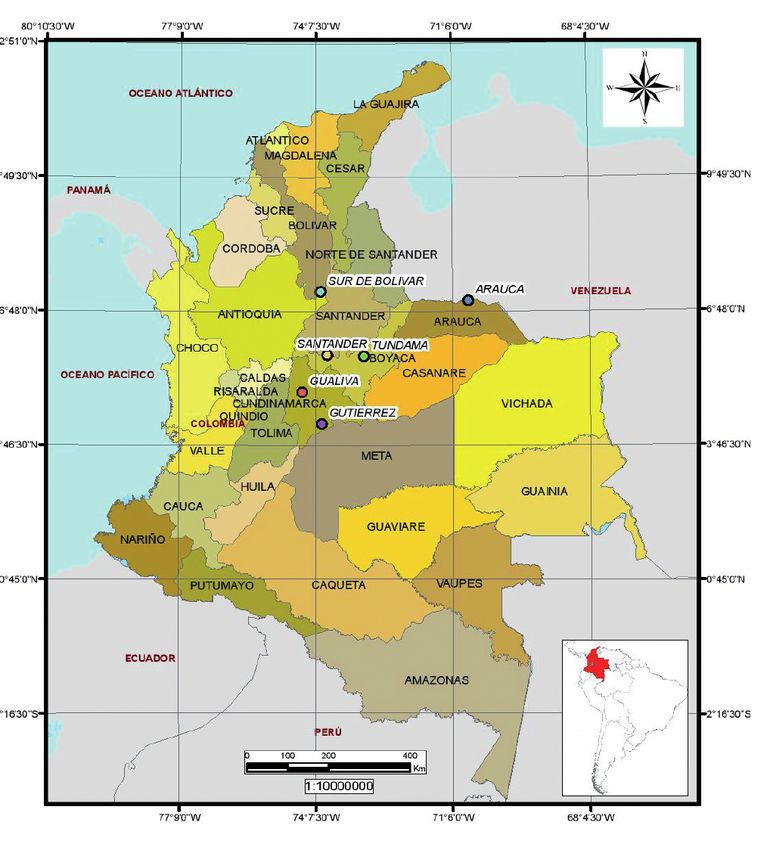
to the answers of every interviewed. The level of Six different regions in Colombia were selected
the indicators was pondered according to the to apply the tool (Figure 2). The territories were
responses of the questions that belong to them. chosen according to several categories: kind
Consequently, the level of the indicators could be of agricultural production, distance to market
Low (1.0 – 1.66), Medium (1.67 – 2.32), or High places, infrastructure, and size of farms.
(2.33 – 3.0). Correspondingly, they were organised in three
groups according to their similarities. In the
Accordingly, the level of the Heritages is the result first group are the regions of Arauca and Sur de
of the mean of the indicators that belong to every Bolivar. The second group is composed by the
Heritage. For example, the level of the Physical territories of Santander and Gutierrez. Finally,
Heritage is the outcome of the mean of Incomes, the regions of Tundama and Gualiva constitute
Entrepreneurism, and Infrastructure. the third group.
349Acta Agronómica. 66 (3) 2017, p 347-359
areas. In Santander, 31 interviews were done,
while 33 in Gutierrez.
Finally, the third region, Tundama and
Gualiva, is characterised by an excellent
infrastructure (highways and paved secondary
roads) to access to markets, however, using it is
expensive. The main market for both territories
is Bogota, Colombia. Nevertheless, other places
such as Tunja and Duitama in the case of the
Tundama region, and Villeta and Facatativa in the
case of the Gualiva territory are excellent market
places. The production in Tundama is specialised
in milk, even though it is a perfect place to
produce food crops because it has the availability
of irrigation. On the other hand, Gualiva that
produces some food crops has a tendency to use
the land for tourism. In Tundama, 39 interviews
were done, while in Gualiva 36.
About the findings
This part of the paper analyses the findings
that, in first place show big differences between
the regions in some specific indicators, as
Figure 2. Regions selected in Colombia well as similarities in other topics. In general,
Biodiversity and Recycling were at a low level in
all the six regions, while Communal Values was
The first region, Arauca and Sur de Bolivar, at a high level in all the territories.
are territories characterised by isolation, because According to Kreiger et al. (2013), recycling
they are far away from important market places, practices are uncommon in rural areas, and
and the infrastructure in general, is poor. For our findings based on the families interviewed
instance, the road network is mostly unpaved. confirm this statement. Some of the interviewed
Another important characteristic is the presence understand recycling as burning off all the
of illegal and legal armed forces that fight residues, as well as burying or covering the
regularly, which means that violence is higher waste with soil, especially plastic and cardboard.
than in other places in Colombia. The fertility However, there are special cases such as the
of the soils of these areas is low. However, both Parra family in the Gualiva region, who reuses
territories are rich in natural resources such plastics to make flowerpots. Jakus et al. (1997),
as crude oil, water and biodiversity. Besides explain the motivations of rural households
food crops, there is a significant presence of to participate in recycling programmes, which
illegal crops. The common denominator of both are similar to the reasons why the families
territories is a limited presence of the government. interviewed, consider recycling as important in
In Arauca, 35 interviews were done, while 33 in rural areas. They remark that a proper disposal
Sur de Bolivar. of the containers of fungicides and herbicides
The second region, Santander and Gutierrez, will avoid poisoning events. They remark the role
are territories characterised by two important of the government to collect all these containers
nearby marketplaces, Bogotá and Bucaramanga because they do not know how to recycle, even
in the case of Santander; as well as Bogotá and though they have heard about it several times.
Villavicencio in the case of Gutierrez. Despite Concerning biodiversity, almost all the families
these strengths, both regions remain fairly answered that years ago their ancestors or
isolated because the roads in the neighbouring themselves used non-commercial seeds. For
area of the cities selected (Florian and Gutierrez) instance, in the Tundama region, years ago
are unpaved, which means the transport becomes peasants planted barley, and they sold their
strongly difficult and expensive during the rainy production to a company that made beer. However,
seasons. However, in the surroundings of these for that company importing barley from Canada
cities, there are some A-roads that connect to was cheaper when Colombia implemented the
marketplaces. The agricultural production is neoliberal policies, the border taxes disappeared,
mainly food crops, although livestock and bean and the economy was open to the global market.
crops are the representative productions of both Other traditional crops mentioned by the people
350Heritage and patrimony of the peasantry framework to address
rural development and its application in Colombia
interviewed in the Tundama Region as traditionally The infrastructure in both regions is really
cultivated were the Andean tubers such as yellow poor. Beyond the road infrastructure that is
and purple Oxalis tuberosa (oca), Ullucus tuberosus deficient, the most critical problem mainly in
(olluco), and Tropaeolum tuberosum (mashua). Sur de Bolivar is the electricity service. Around
However, just a few families plant these tubers Ciénaga de San Lorenzo, the place where the
nowadays. Aguirre et al. (2012) , describe the information was gathered, there is no electricity
current situation of these crops in that region, service, while in Arauca in some rural areas the
arguing that mainly the senior people planted and service is intermittent. Regarding other topics of
ate these tubers, young people do not know or eat infrastructure such as schools, communication,
them, and this calls the attention about the high health centres, restrooms in the house, and
risk of losing these tubers. Similarly, the interviewed clean water, the condition in Arauca is better
mentioned that in the past it was possible to than in Sur de Bolivar. It is remarkable that the
watch a lot of animals, but currently it is almost transport network, especially in Sur de Bolivar, is
impossible. For instance, birds such as eagles and virtually non-existent. The peasants interviewed
condors (Vultur gryphus), or other animals such as must travel at least six hours by river to reach
bears, foxes, and deer are rarely seen. They argue the market in a city nearby, which is the only
as the main reason for that situation that hunting alternative they have. However, it is exactly the
was allowed years ago. same route they must use to have access to a
health centre, bank branch, or a local government
Regarding communal values, represented as
office. Obviously, it is an extreme case of isolation
solidarity in the questionnaire, got a high level
of rural areas in Colombia. Unfortunately, there
among all the regions tested. The question
are several examples like this.
was related to solidarity from neighbours
when a difficult situation happened. Almost That isolation determines a low level of other
all the interviewed gave a high score to it indicators. Galvis & Meisel (2010; 2013) explore
because relatives and friends always have been a kind of ‘neighbourhood effect’ that creates
alert to support when some natural disaster, poverty traps, which maintain a lag behind
bereavement, or illness affects other people. particular areas of Colombia, especially those
These findings correspond with Fafchamps (1992) located in the periphery and borders. This lag,
& Skocpol (1982), who consider solidarity as an beyond the economy, affects other topics such as
important characteristic of the peasantry. fundamental rights. According to the interviewed
in Arauca and Sur de Bolivar, the access to
Arauca and Sur de Bolivar education, culture, information, and health
centres, or old age pension is placed at a low level.
As it was mentioned previously, both regions are The key point behind this low level, besides a poor
distant from Bogota, the capital city of Colombia. infrastructure, is the few real incentives to rural
According to Acosta & Bird (2005), even though inhabitants to access education, information, or
the administrative decentralisation started since culture because it does not imply an improvement
1991, the disparities among regions in Colombia in their quality of life. In other words, the priority
are evident, and that is exactly the case of Arauca of rural areas is surviving or getting a basic
and Sur de Bolivar. Figure 3, shows the results of livelihood, instead of getting access to education,
all the indicators in both regions, where the area information or culture.
of Sur de Bolivar shows extreme results.
Along with the fundamental rights, the indicator
perspectives on life, represented by topics such
as the resting behaviour or alcohol consumption,
was asked. Most of the peasants use to visit the
city nearby to buy the basic groceries on sundays,
because it is the common market day, and because
it is the holiday for catholic people, that is the
largest religion in the interviewed rural areas.
The indicator additionally asks peasants about
problems with alcohol consumption, and their
answers are related to these problems on Sundays
because it is the day to visit the city. Regarding this
discussion, Páez & Posada (2015), argue that the
risk of strong dependency in rural areas be higher
than in urban ones, even though the consumption
is lower in rural regions. However, the problem
remarked by the interviewed is that the alcohol
Figure 3. Results of the indicators in Arauca and Sur de Bolivar consumption, especially in men, is associated with
351Acta Agronómica. 66 (3) 2017, p 347-359
domestic violence. Another question formulated As it was mentioned before, both regions
was about the future of rural areas and the answers are located in the centre of Colombia, near
got a negative tendency, highlighting that current Bogotá and other leading marketplaces such as
rural policies maintain the peasantry isolated and Bucaramanga, Tunja, and Villavicencio. That
do not contribute to the likelihood to participate means the isolation process described for Arauca
in the spaces where the decisions about rural and Sur de Bolivar is not evident in these regions,
population are made. Even though, since 1994 the because they are close to the capital city of
‘Municipal Councils for Rural Development’ were Colombia. However, there are topics such as the
created to involve as many stakeholders as possible roads in the nearby of the places interviewed, that
in the decision-making, and peasants as a central hold acceptable usability during the dry seasons,
actor, they do not know about these Councils, as but not during the wet ones.
was mentioned by the interviewed.
It is important to emphasise the problem of
The low level of the next two indicators, the transport network that affects these regions,
technical assistance and entrepreneurism, are as well as several secondary and tertiary roads
related to the isolation described previously. in small Colombian cities. Even though the
Consequently, the peasants answered that they infrastructure was ranked at a medium level,
have not received technical assistance from the peasants from Gutierrez and Santander
the government for many years. Nowadays, remark that the unpaved roads generate a kind
they occasionally receive some technical advice of isolation to reach markets and to receive the
from the sellers of agricultural supplies, but benefits of the public services. That is why the
focused on the products they sell. The scheme of Advantages for Markets indicator are qualified at
agricultural technical assistance was transferred a low level in Santander. Equally, the condition
in the process of administrative decentralisation of the roads network hinders the access to the
from a national organisation called ‘Instituto benefits of the beautiful landscapes and natural
Colombiano Agropecuario’ (ICA) to a municipal reserves in their surroundings.
agency called ‘Unidad Municipal de Asistencia
Pluriactivity, is an indicator with a low
Técnica Agropecuaria’ (UMATA). Farah et al.
level in both regions. Pluriactivity refers to
(2004), emphasise in the fact that the UMATAS, as
family members working off the farm. Martínez
part of the decentralisation process, have played
(2010), proposes an interesting debate about
an important but limited role as a bridge between
pluriactivity, from the authors who believe
peasants and the municipal government. However,
that it is a representation of a rural crisis, to
the lack of human and economic resources, as
those who argue that it is an opportunity to get
well as the influence of political interests does not
family incomes, however, calls the attention in
offer a real solution for the technical assistance.
the likelihood to change the rural traditions.
dos Anjos & Caldas (2007), show two visions
Gutierrez and Santander
of pluriactivity according to the importance
The results remark that in both cases the majority that the rural activity holds in the territories.
of indicators are located at a medium level, When it is important, the incomes derived from
Gutierrez shows more indicators at a high level the pluriactivity are spent to strengthen rural
than Santander, but less at a low level (Figure 4). culture. On the other hand, when the pluriactivity
is present in areas where rural activities are in
crises, the rural culture is lost. This debate will
be resumed later at the moment of the analysis
of the economic heritage.
On the other hand, the indicator qualified at a
high level in both regions was respect to beliefs.
The interviewed think that their relatives and
neighbours understand and show deference when
someone expresses his/her ideas, even though
these are different. It is interesting to find out a
high level of this indicator in both regions that
had a strong history of violence, especially during
the decade of the fifties in the last century, where
the main political parties faced each other in
several rural areas, including Gutierrez & Florian
(Guzmán et al., 1962).
The answers gathered in Santander show a
possible contradiction between two indicators:
Figure 4. Results of the indicators in Gutierrez and Santander
352Heritage and patrimony of the peasantry framework to address
rural development and its application in Colombia
Market Access and Advantages for Markets. The produced in Colombia, the Paipa Cheese, is made
first one was qualified at a high level, whereas in the Tundama region. Additionally, it is important
the second got a low level. The questions in the to remark that the availability of irrigation in this
Advantages for Markets indicator are related to region generates exceptional conditions to produce
special products for the market. For instance, good quality food such as vegetables, corn, or bulb
organic, green label, or post-harvest practices onion. However, the main production in this area
that add value to products. Poultry production is livestock for milk production. The peasants
is the main activity near to the cities of Puente answered that they had been specialising in milk
Nacional and Barbosa, while sugar cane and production because that activity does not require
blackberry are the principal ones near the city much hand labour, which is scarce in the region.
of Florian. None of the activities currently hold That situation goes along with the results of a low
practices such as organic or green labels to add level of another indicator: Migration.
value to products. That is why this indicator
Migration becomes a challenge for rural areas.
was located at a low level. On the other hand,
In some cases, migration is important especially
the questions related to the Access to Markets
for young people, because they acquired skills
indicator are related to the place to sell the
that in the future could be applied in their
production, which is mainly on the same farm;
original rural areas and stimulate the economy
the forms of payment that are usually immediate,
(Stockdale, 2006).That is real when the migrants
and the habit of selling products along with the
return to their original places at the end of the
neighbours, in the case of blackberry.
training, otherwise it becomes a drain of human
knowledge that will benefit the places where the
Tundama and Gualiva
migrants finally locate (Taylor & Martin, 2001).
The regions of Tundama and Gualiva are located Migration has both positive and adverse effects
in the nearby of the important marketplaces. in rural areas. For instance, in the Tundama
That is why the infrastructure, especially in and Gualiva regions, the hand labour availability
motorways, schools, and bridges, even in rural has decreased significantly, bringing as a
areas is exceptional compared to the other regions consequence changes of productive activities from
analysed previously. Figure 5, shows the results those that require more efforts to those that are
of all the indicators in both regions. less demanding in hand labour. Equally, the most
evident consequence is the process of ageing of
people in rural areas. Jurado & Tobasura (2012),
added to the debate that migration generates a
change in the recognition of the population as
peasants, as they lose their identity as rural
inhabitants; that means migration creates an
‘identity crisis’ among the migrant youth.
Pluriactivity is the other indicator graded at a
low level. Pluriactivity is narrowly related to the
challenge of migration. The questions of these
indicators are related to the members of the
family working off the farm and if that work is full
or part time. The answers to these questions in
both places are that all the families interviewed
have at least one member working off the farm.
Besides, it calls the attention that in Gualiva a
lot of rural people are working in a new rural
activity in the area: tourism. That area is located
80 km away from Bogotá, it has an excellent
motorway, and its temperature is around 22°C,
Figure 5. Results of the indicators in Tundama and Gualiva conditions that give this region the potential
for rural tourism. Again, rural tourism shows a
positive consequence because of the increased
It calls the attention that an indicator such as likelihood to get incomes for rural families. On
Advantages for Markets, in both regions got a low the other hand, Gualiva holds a potential for
level. However, as it was discussed previously, the food production because of the quality of the
production of the peasants interviewed in both soils, water availability, and weather conditions.
regions do not have any added value regarding However, nowadays the pressure of tourism is
organic production, green label or post-harvest changing the use of the land.
treatment, despite the only mature cheese
353Acta Agronómica. 66 (3) 2017, p 347-359
Considerations on the process and the findings Even though the female participation indicator
was graded at a medium level in all the regions, it
Analysis in the heritages and patrimonies of is remarkable that some of the women interviewed
the peasantry framework answered that they had been victims of domestic
violence at any time of their lives. They recognise
As it was examined previously, the analytical that years ago domestic violence was a common
framework “heritages and patrimonies of the behaviour in all rural areas. However, several
peasantry” takes into consideration seven kinds studies have documented that domestic violence,
of heritages that the peasantry holds to improve especially in the countryside in Colombia, remains
their quality of life while ensuring that their rights a problematic situation (Defensoría del Pueblo
are respected, in other words, to reach the best Colombia, 2014; Iregui et al., 2015). The common
level of rural development. Figure 6, shows the denominator for domestic violence according to
level reached of each heritage for every region. the interviewed is alcohol consumption, especially
on weekends. That is exactly one example of a
cultural behaviour, which also happens in urban
areas, which should be overcome to improve the
quality of rural life and respect the rights, in this
case, of rural children and women.
Other indicators discussed previously, which
belong to the cultural heritage, are respect to
beliefs, common values and family structure.
Precisely, family structure is composed of two
questions. The first one is related to migration,
a topic discussed earlier. The other subject was
about the education level of the family members.
According to the answers, all the interviewed
are literate. Even though the education degree
reached especially by peasants older than 40
years old is the primary school, all of them
answered that can read and write. This topic is
important regarding the cultural heritage of the
Figure 6. Results of the Heritages and Patrimonies of the Peasantry in all the peasantry because the interaction with the entire
regions selected
world is more unfavourable to illiterate people.
Literate peasants can recognise the importance of
their role in the society beyond food production,
and hence recognise the cultural value of many
Cultural Heritage of their practices and traditions.
Cultural Heritage takes into consideration
Physical Heritage
the identity, creativity, and traditions of the
peasantry, as well as political, spiritual, and Physical Heritage beyond infrastructure, which
religious beliefs. The results achieved in the is crucial to reach rural development, analyses
indicators that belong to the Cultural Heritage the availability as well as the access and use
in the six regions analysed locate this heritage of this infrastructure. Barrios (2008), focuses
at a medium level with a tendency to a superior on the importance of physical infrastructure of
border. Tundama shows the lowest level, and Sur roads, drinking water, and irrigation systems
de Bolivar, the highest. to improve the quality of life in the countryside.
Biodiversity, is an indicator that belongs However, the current analysis goes beyond
to the cultural heritage and remains at a low and includes schools, bridges, health centres,
level and all six regions. As it was described electricity, paved roads, and transport network.
previously, biodiversity refers to the loss of It is important to remark that the mere existence
traditional seeds and wild animals. According to of this infrastructure does not guarantee the
Andrade (2011), and the information system of improvement of the quality of life and the respect
Colombian Biodiversity, 798 plant species and for the rights of rural people by itself (Shen et al.,
269 of vertebrates are in danger of extinction in 2012). Accessing and using this infrastructure of
Colombia, that is why the peasants interviewed schools or health centres adequately requires a
answered that they do not use some traditional sufficient provision of equipment and personnel
seeds anymore. These seeds, such as barley, were to offer an excellent service. It also requires
a fundamental part of their diets, which means a sanitation and education systems that allow
loss of the rural identity and traditions.
354Heritage and patrimony of the peasantry framework to address
rural development and its application in Colombia
people to receive a service with a similar quality that nowadays there is more likely to work in
to the one offered in urban areas. agriculture because the services offered such as
communication, transport, and television are much
Contrary to Cultural Heritage, Tundama
better, and also because there is less violence in
reaches the highest level regarding Physical
rural areas than before. On the other hand, people
Heritage, and Sur de Bolivar the lowest. Taking
who think that the current situation is worse argue
into account this aspect, according to the Global
that access to loans and technical assistance, as
Competitiveness Report 2015-2016, Colombia
well as agricultural supplies, is more complicated
is ranked 84 among 144 countries on the topic
and expensive than before. Furthermore, they
of general infrastructure, 104 on the subject of
emphasise in a situation analysed previously,
transport infrastructure, 126 on the quality of
which is migration. They argue that rural areas
roads, and 60 in relation to the quality of electricity
are being left alone and that just senior citizens are
supply (Schwab & Sala, 2015). According to
living there. The second question is about young
Departamento Nacional de Planeación de Colombia
people. The interviewed think young people are not
(2016), just the 20% of the total Colombian roads
proud of being peasants; they want to migrate and
are paved, and 6% of tertiary roads, which usually
forget their ancestors. They do not wish to live like
correspond to rural roads, are gravelled. Some
their parents, working in agriculture.
of the reasons previously discussed explain why
Colombia reaches that level, and hence the degree The results of the assessment of the indicators
of this indicator in the current research. The of Social Heritage are somewhat contradictory
explanation of the backwardness in infrastructure with the real Colombian rural life. In Colombia,
again is the isolation of some Colombian regions, as in many countries, the whole society owes the
especially the rural areas. peasantry a social recognition of its importance
(Machado, 2009). The agricultural activities have
Physical heritage plays as well a fundamental
been in the imaginary of the society as something
role to improve the quality of life at a household
carried out by isolated, poor, and illiterate people.
level. For instance, the availability of restrooms at
Even though 70% of the Colombian population
home, besides avoiding health problems dignifies
lived in rural areas 60 years ago, violence
peasants. In addition to that, the materials of the
by various actors has changed the map, and
walls, floors, and ceilings and electricity of the
nowadays just 30% are living there (Mondragón,
rural homes, undoubtedly improve the quality
2002). According to Norwegian Refugee Council &
of rural life (Ilskog, 2008). Reaching a proper
Internal Displacement Monitoring Centre (2015),
level of that physical infrastructure at homes
after Syria, Colombia was the second country in
requires the participation of all the family at the
the world with the most internal displacements in
moment of deciding how to spend the incomes,
2015. 6’044.200 people have been forced to leave
as well as if the household has the likelihood to
their farms and belongings. Many of these internal
spend its incomes in its welfare instead of paying
displaced are currently living in the surroundings
loans, buying agricultural supplies, or alcohol
of the main cities under conditions of extreme
consumption. Along with this, the participation of
poverty. Violence, displacement, and isolation
the family in new enterprises or new alternatives
are a common denominator of many peasants in
to get incomes, and the use of these resources to
Colombia. Those who remained working on their
improve the physical infrastructure at home will
farms were affected by conditions such as poverty
result in a better quality of life.
and isolation that led to significant rural social
movements against the government in 2013
Social heritage (Grajales, 2015). Beyond the agreements to solve
Social Heritage denotes the integration of the the requirements of those movements, the most
peasantry to the society. The indicators of social notable achievement was the recognition by the
heritage look to answer the question: how do entire society of the role of the peasants, and the
these relationships can create confidence ties general support of their requests (Valencia, 2015).
that strengthen peasant organisation? Initially, The isolation of some rural areas, as discussed
it is remarkable that according to the peasants before, affects the Fundamental Rights indicator,
interviewed, Social Heritage got a medium level and hence the Social Heritage. Beyond education,
in all the regions. culture, or information, it is significant to observe
Social acknowledgement, as one of the indicators on a major challenge for rural people in the
of social heritage, got a high level in some regions countryside, the access to an old age pension
while a low in others. Two questions belong to the (Bohórquez-Caldera, 2013). The economic support
indicator. The first question asks about the equity for aged peasants mainly depends on their
of rural society in comparison to ten years ago. relatives, which have migrated to urban areas
Some of the peasants that think that the current or remain working the agriculture, but in many
rural society is more equitable than before argue cases with low incomes. The system of universal
355Acta Agronómica. 66 (3) 2017, p 347-359
non-contributory pensions becomes an alternative allowed them easy access to markets avoiding
to support rural people (Johnson & Williamson, distortions, especially in regions where violence
2006). Kakwani & Subbarao (2005), show has been more severe.
evidence of the successful reduction of poverty
in rural households in many countries using Human heritage
universal non-contributory pensions. However,
a real solution to deal with this challenge is yet Human Heritages of the Peasantry highlights the
under construction, but beyond subsidies, it is importance of the knowledge of the peasantry,
important to include old peasants in a scheme transmitted over the generations. It notes the
that understands the conditions under which the skills and abilities to tackle problems. Human
Colombian peasants have been working the land. Heritages of the Peasantry got a low level in
all regions, which means that the traditional
Finally, to answer the question about peasant knowledge of the peasantry has been lost
organisations, people were asked directly about throughout the time.
the advantages of belonging to these organisations.
The indicator got a medium level, and the answers Women have a crucial role in transmitting
show the meanings that these organisations traditional knowledge among generations.
have for the peasants. Several argue that they That is especially true in rural areas because
be good because they receive benefits from the women share more time with children, and are
government, while others think that they are the in charge of their education (Nor et al., 2012;
only possibility to survive. However, the idea that Smith & Akagawa, 2009). However, in the regions
social organisations are dangerous remains in the interviewed, the level of the female participation
imaginary of many people, which prefer working indicator was not high, although the answers
alone to avoid problems because of the history of about this topic remark that women are currently
violence in the Colombian countryside. more respected than before, and nowadays they
are taken into consideration at the moment of
Institutional heritage making decisions in the households. It could be
explained because is common to find women as
Institutional heritage encompasses official and the heads of households in societies affected by
informal rules that exist in rural areas to regulate armed conflicts (Galindo et al., 2009).
relationships between people. In all the regions,
In this context, the perspective about the
Institutional Heritage got a medium level without
future of rural areas is ambiguous. According
big differences among them.
to the answers, the public policies are against
The indicators that belong to this heritage show the knowledge of the peasants because they try
how rural people try to overcome the challenges to impose production forms that ignore their
that normally they suffer. Security and hence traditions. Other reasons for this perception are
violence are one of the indicators. As it has been due to migration and hence ageing; both aspects
debated, this is a huge problem in Colombian discussed earlier. An important topic remarked
countryside, even though, according to the by the interviewed and mentioned before was that
answers, security is ignored as an important the entire society does not recognise the role and
problem in the regions interviewed. A possible the significance of the rural areas. Besides, they
reason for that perception is because the emphasise in the aspect that the fertility of the
government since 2012 is involved in peace soils has been lost because of the conventional
talks with the Fuerzas Armadas Revolucionarias cropping, instead of recovering the ancient ways
de Colombia (FARC-EP) to achieve a consensual of production.
solution to the internal armed conflict that mainly
rural areas have suffered for more than 50 years Economic heritage
(Zerda-Sarmiento, 2016).
Economic heritage, refers to economic resources
Strengthening communal values is the strategy and how rural households earn and spend it. In
used by peasants to overcome the consequences all the regions, the economic heritage got medium
of the armed conflict. Interestingly, Communal level, excluding Sur de Bolivar where it got low level.
Values was the only indicator that reached a
high level in all the regions interviewed. Weldon The indicators that belong to economic heritage
(2006), describes the communal values such have been explained before with the other heritages.
as solidarity, tolerance, and inclusion as the However, it is interesting to remark that just a few
characteristics of the social movements to of the interviewed have received some governmental
overcome violence and inequality. The peasants subsidies; most of them special and transitory
interviewed described solidarity as the method support to coffee growers. Regarding this topic, an
to overcome this long period of violence; equally, example of the subsidies scheme of the Colombian
they argue that tolerance and inclusion have government is the programme ‘Agro Ingreso Seguro’
356Heritage and patrimony of the peasantry framework to address
rural development and its application in Colombia
(AIS) where the Colombian Ministry of Agriculture understand that this heritage belongs to the
and Rural Development designed a strategy to peasantry and through them, to the humanity.
support farmers between 2002 to 2010, to get ready It is urgent to appreciate the real value that
for new free trade agreement with the United States. the natural heritage holds, just when this is
However, these resources ended up in the hands of appreciated, it can be protected and promoted to
people without any relation to the agrarian sector mitigate the effects of the climatic change. The
in a clear example of corruption (Mejía, 2012). In peasants living there are in charge of taking care
general terms, Colombia does not hold a strong of that heritage on behalf of all the humanity.
programme of subsidies to support and protect its Then humanity must provide the conditions for
agricultural production (Coscione & Pinzón, 2014) . them to live and protect such precious heritage.
Summing up, in general terms, the Heritages
Natural heritage
and Patrimonies of the Colombian Peasantry
Natural Heritage highlights natural resources, are at a medium level, which means that public
the consequences of the productive practices, and policies have an important likelihood to create
their significance regarding the climatic change the conditions to improve all these indicators,
mitigation (Andrade, Rodríguez & Wills, 2012) . especially in isolated places such as Sur de
The level of this heritage was medium with a low Bolivar or Arauca.
tendency. Interestingly, Sur de Bolivar shows
the lowest level, even though it is the region with Final considerations
more natural resources available.
This paper aimed to ponder an alternative method to
The results of the biodiversity and recycling address rural development in a broad way based on
indicators, were discussed previously. the analytical framework ‘Heritage and Patrimony of
Furthermore, the land use indicator reached a the Peasantry’. It was the first application of both,
medium-high level. According to the answers of the indicators and the analytical framework. That
the interviewed, they have different type of crops, is why the current study represents a contribution
which means that polyculture predominates, to the analysis of rural development challenges, and
which is a characteristic of the peasant economy hence, it is useful to all the stakeholders interested
(Bebbington, 1999). However, there is a clear in those topics.
tendency to use the land for livestock production.
The analytical framework heritages and
On the other hand, they answered that practices
patrimonies of the peasantry, its indicators,
to conserve the soil are uncommon; by contrast,
and its application in Colombia, are a new way
adding chemical products to it predominates.
to address a ‘Wicked Problem’ such as rural
The Land Characteristics indicator, aims development. Undoubtedly, a broad vision to
to identify the land use in accordance with cover rural development in a more holistic way
the soil type. According to the perception becomes a contribution to tackle as many aspects
of the interviewed, they are using the land involved in the improvement of the quality of life
appropriately. However, according to the report and the respect for the rights of rural inhabitants
of GISSAT (2012), soils with a clear aptitude as possible. A transdisciplinary approach used
for horticulture production, are currently being both, to define rural development indicators and
used for livestock, especially in those areas that the Heritages and Patrimonies of the Peasantry,
are closer to marketplaces and the migration is is a way to overcome the particular point of view
higher. Other soils close to protected areas are that focuses on specific problems ignoring the
being used to plant illegal crops. As a result of complexity of rural development.
the presence of these crops, both the biodiversity
The current analytical framework and its
and inhabitants of these regions have suffered
application cover several challenges involved in
damages due to fumigation scheme to eradicate
rural development, as well as a way to analyse
those crops (Castro-Caycedo, 2014). Such kind of
those challenges. That is why Heritages and
fumigation scheme indeed has a serious impact
Patrimonies of the Peasantry opens the door
on all the heritages of the peasantry. It is simple
for all the stakeholders interested in rural
to imagine that aerial application of glyphosate
development analysis such as governments,
can have an impact on the entire life of the
researchers, students, and peasants to approach
peasants, from the livelihoods to behaviours,
all these problems taking into consideration
from the health to traditions, because, after the
the indicators selected. An advantage of the
application, nothing remains alive. Fortunately,
current methodology is that it takes into account
Colombian government (2010-2018) decided to
the meanings of many stakeholders, for that
search alternatives to aerial applications.
reason several aspects are included. However,
An alternative to such problematic situation that advantage must be tackled in an adequate
regarding the natural heritage is, first of all, to manner, establishing all the relationships that all
357Acta Agronómica. 66 (3) 2017, p 347-359
these topics hold. Otherwise, understanding the Bebbington, A. (1999). Capitals and Capabilities: A Framework
real complexity of rural development challenges for Analyzing Peasant Viability, Rural Livelihoods and
would be tough. Poverty. World Development, 27(12), 2021–2044. https://
doi.org/10.1016/S0305-750X(99)00104-7
Taking a wider picture of rural development Bernstein, H. (2011). Class dynamics of agrarian change,
is possible when the outsiders involve the Winnipeg: Kumarian Press, 11(2). 262-264. https://doi.
peasantry. That is another contribution of the org/10.1111/j.1471-0366.2011.00303.x
current analytical framework. For that reason, Bohórquez Caldera, L. A. (2013). Colonization of nature: an
this proposal could become a useful baseline approach from extractivism in Colombia. El Ágora USB,
in the future to evaluate the incidence of public 13(1), 221–239.
Bryceson, D., Kay, C., Mooij, J., & Barkin, D. (2004).
policies in rural regions. Disappearing peasantries: rural labour in Africa, Asia and
However, as this is the first application of the Latin America. Latin American Research Review, 39(3), 281.
framework and its indicators, a deep statistical Castro-Caycedo, G. (2014). Nuestra Guerra Ajena (I). Bogotá:
analysis is necessary for future research for Editorial Planeta Colombiana.pp.235.
Chambers, R. (1983). Rural development: Putting the last first.
the purpose of establishing future analysis Routledge. pp.248.
among territories, or in the same territories Coscione, M., & Pinzón, V. G. (2014). Paro nacional agrario
in different moments. In other words, the en Colombia: TLCs y perspectivas del movimiento social y
current paper aims to describe by the first time popular (Agrarian national strike in Colombia: FTAs and
the framework and its usefulness in order to perspectives of the social and popular movement). Nera,
understand and address rural development, but (24), 167–190.
next applications are important to identify the Defensoría del Pueblo Colombia. (2014). El conflicto armado
strengths and weaknesses of the indicators and y el riesgo para la mujer rural. Estudios de caso en los
their relationship with the heritages, and then departamentos de Chocó, Córdoba, Santander y Caquetá.
improve the entire proposal. Bogotá: Torre gráfica Ltda.
Departamento Nacional de Planeación de Colombia. (2016).
Official information regarding rural areas is Efecto macroeconómico de las obras de infraestructura.
difficult to get in several developing countries. Bogotá: DNP.
Besides, gathering this information in a research Desmarais, A. (2002). PEASANTS SPEAK - The Vía Campesina:
project becomes a complex task due to funding Consolidating an International Peasant and Farm
Movement. The Journal of Peasant Studies, 29(2), 91–124.
limitation and access to isolated areas. The
https://doi.org/10.1080/714003943
current research has collected information in Desmarais, A. (2008). The power of peasants: Reflections on the
Colombian regions such as Sur de Bolivar or meanings of La Via Campesina. J Rural Stud, 24(2), 149.
Arauca where access is difficult. That is why this Dormaels, M. (2012). Identidad, comunidades y patrimonio
information is a baseline, based on the perception local: una nueva legitimidad social. Alteridades, 22(43),
of the peasants, and then complementary 9–19.
studies with different methodologies are crucial dos Anjos, F. S., & Caldas, N. V. (2007). Pluriactividad y
to compare with the current results, and hence agricultura familiar en Brasil: el caso de Rio Grande do
have a complete picture of the reality. Sul. Revista de La CEPAL, (93), 157–173.
Ellis, F., & Biggs, S. (2001). Evolving Themes in Rural
Development 1950s‐2000s. Development Policy Review,
References 19(4), 448.
Fafchamps, M. (1992). Solidarity Networks in Preindustrial
Absi, P., Cruz, P., & Berkson, R. F. (2005). Heritage, ideology and Societies: Rational Peasants with a Moral Economy.
society: views from Bolivia and Potosí. T’inkazos, 1(SE), 0–0. Economic Development and Cultural Change, 41(1),
Acosta, O. L., & Bird, R. M. (2005). The Dilemma of 147–174.
Decentralization in Colombia. Fiscal Reform in Colombia, Farah, M. A., Pérez, E., & Ortiz, C. (2004). La descentralizacion
The MIT Press, Cambridge-London. pp.58. de los servicios del sector agropecuario y rural en Colombia.
Aguirre-Forero, S. E., Piraneque-Gambasica, N. V., & Pérez- Cadernos Gestão Pública E Cidadania, 9(36), 44–72.
Mojica, I. (2012). Sistema de producción de tubérculos Galindo, H., Restrepo, J., & Sánchez, F. (2009). Conflicto y
andinos en Boyacá, Colombia. Cuadernos de Desarrollo pobreza en Colombia: un enfoque institucionalista. J.
Rural, 9(69), 257–273. Restrepo., & D. Aponte. (Eds). Guerra y Violencias En
Andrade Correa, M. G. (2011). Estado del conocimiento de la Colombia. Herramientas e Interpretaciones, 315–352.
biodiversidad en Colombia y sus amenazas. Consideraciones Galvis, L. A., & Meisel, A. (2010). Persistencia de las
para fortalecer la interacción ciencia-política. Rev Acad desigualdades regionales en Colombia: Un análisis espacial.
Colomb Cienc Exact Fis Nat, 35(137), 491–507. Documentos de Trabajo Sobre Economía Regional, 120, 44.
Andrade, G. I., Rodríguez, M., & Wills, E. (2012). Dilemas Galvis, L., & Meisel, A. (2013). Regional Inequalities and
ambientales de la gran minería en Colombia. Revista Regional Policies in Colombia: The Experience of the Last
Javeriana, 148(785), 17–23. Two Decades. In: J. R. Cuadrado-Roura & P. Aroca (Eds.),
Barrios, E. B. (2008). Infrastructure and rural development: Regional Problems and Policies in Latin America (pp. 197–
Household perceptions on rural development. Infrastructure 223). Springer Berlin Heidelberg, Germany. http://dx.doi.
and Rural Development: Household Perceptions on Rural org/10.1007/978-3-642-39674-8_9
Development, 70(1), 1–44. https://doi.org/10.1016/j. GISSAT. (2012). Evaluación del impacto y plan de manejo de
progress.2008.04.001 los suelos afectados por las inundaciones en los valles de
358Heritage and patrimony of the peasantry framework to address
rural development and its application in Colombia
Tundama y Sugamuxi (Boyacá) (Grupo interinstitucional Pachón-Ariza, Bokelmann, W., & Ramirez, Cesar. (2015).
de investigación en suelos sulfatados ácidos tropicales). Rural Development Indicators Based on Food Sovereignty
Tunja: grupo interinstitucional de investigación en suelos Principales: A methodology for its Selection. Presented at
sulfatados ácidos tropicales. the 78th Annual Meeting of Rural Sociological Society.
Grajales, J. (2015). Land grabbing, legal contention and Knowing Rural: Situating the Lived Experience of Rurality
institutional change in Colombia. Journal of Peasant in Definitions of Rural., Madison, Wisconsin. USA.
Studies, 42(3-4), 541–560. http://dx.doi.org/10.1080/03 Pachón, F, Bokelmann, W, & Ramirez, C. (2016a). Rural
066150.2014.992883 development thinking, moving from the green revolution to
Guzmán Campos, G., Fals Borda, O., & Umaña Luna, E. food sovereignty. Agronomía Colombiana, 34(2), 267–276.
(1962). La violencia en Colombia. Estudio de Un Proceso https://doi.org/Doi:10.15446/agron.colomb.v34n2.56639
Social, 2, 1962–64. Pachón-Ariza, Bokelmann, W, & Ramirez, Cesar. (2016b).
Ilskog, E. (2008). Indicators for assessment of rural Heritages of the peasantry: an analytical framework to
electrification—An approach for the comparison of apples address rural development. Presented at the 4th Biannual
and pears. Energy Policy, 36(7), 2665–2673. https://doi. Conference on Nordic Rural Research, Akureyri.
org/10.1016/j.enpol.2008.03.023 Páez-Zapata, E., & Posada, I. C. (2015). Meanings of Alcohol
Iregui-Bohórquez, A. M., Ramírez-Giraldo, M. T., & Tribín-Uribe, Consumption in a Rural Community in Antioquia,
A. M. (2015). Mujer rural y violencia doméstica en Colombia. Colombia, 2010-2011. Revista Ciencias de La Salud, 13(1),
Banco de la República, Bogotá, Colombia. 77–90.
Jakus, P. M., Tiller, K. H., & Park, W. M. (1997). Explaining Patel, R. (2009). Food sovereignty. The Journal of
Rural Household Participation in Recycling. Journal of Peasant Studies, 36(3), 663–706. https://doi.
Agricultural and Applied Economics, 29(01), 141–148. org/10.1080/03066150903143079
https://doi.org/10.1017/S1074070800007628 Roberts, W. (2008). The no-nonsense guide to world food. New
Johnson, J. K. M., & Williamson, J. B. (2006). Do universal Internationalist.
non-contributory old-age pensions make sense for rural Schwab, K., & Sala-i-Martín, X. (2015). The Global
areas in low-income countries? International Social Security Competitiveness Report 2015-2016 (World Economic
Review, 59(4), 47–65. https://doi.org/10.1111/j.1468- Forum).
246X.2006.00253.x Scoones, I. (2009). Livelihoods perspectives and rural
Jurado, C., & Tobasura, I. (2012). The youth dilemma in rural development. The Journal of Peasant Studies, 36(1),
territories of the coffee growing region, Colombia: ¿the 171–196.
country side area or the city? Revista Latinoamericana de Scoones, I. (2015). Sustainable livelihoods and rural development.
Ciencias Sociales, Niñez Y Juventud, 10(1), 63–77. Winnipeg: Practical Action Publishing.pp.168.
Kakwani, N., & Subbarao, K. (2005). Ageing and poverty in Shen, L., Jiang, S., & Yuan, H. (2012). Critical indicators for
Africa and the role of social pensions. Washington D.C.: assessing the contribution of infrastructure projects to
World Bank. https://openknowledge.worldbank.org/ coordinated urban–rural development in China. Habitat
handle/10986/8535 License: CC BY 3.0 Unported.”. International, 36(2), 237–246. https://doi.org/10.1016/j.
Kay, C. (2005). Enfoques sobre el Desarrollo Rural en América habitatint.2011.10.003
Latina y Europa desde Mediados del Siglo Veinte. Institute Skocpol, T. (1982). What Makes Peasants Revolutionary?
of Social Studies de La Haya. pp.48. Comparative Politics, 14(3), 351–375. https://doi.
Kay, C. (1998). Estructuralismo y teoría de la dependencia en org/10.2307/421958
el periodo neoliberal. Nueva Sociedad, 158, 100–119. Smith, L., & Akagawa, N. (2009). Intangible heritage. New York:
Kreiger, M., Anzalone, G. C., Mulder, M. L., Glover, A., & Pearce, Routledge.
J. M. (2013). Distributed Recycling of Post-Consumer Stockdale, A. (2006). Migration: Pre-requisite for rural economic
Plastic Waste in Rural Areas. MRS Online Proceedings regeneration? J Rural Studies, 22(3), 354–366. https://doi.
Library Archive, 1492, 91–96. https://doi.org/10.1557/ org/10.1016/j.jrurstud.2005.11.001
opl.2013.258 Taylor, J. E., & Martin, P. L. (2001). Chapter 9 Human capital:
Machado, A. (2009). La reforma rural, una deuda social Migration and rural population change. Handbook of
y política. Bogotá, Colombia: Universidad Nacional de Agricultural Economics, 1(A), 457–511. http://dx.doi.
Colombia. Facultad de Ciencias Económicas. Centro de org/10.1016/S1574-0072(01)10012-5
Investigaciones Para El Desarrollo, 601, 39. Valencia, H. Y. O. (2015). Concepto del campesino y su
Martínez, M. J. (2010). Nueva ruralidad, la ‘remake’ del término resignificación desde la protesta social del paro agrario
pluriactividad. Nómadas. Revista Crítica de Ciencias Colombia 2013. Perspectivas Rurales Nueva Época, (26),
Sociales y Jurídicas, 26(2), 213–228. 23–37.
Mejía-Cubillos, J. (2012). ‘Agro, Ingreso Seguro’en Perspectiva: Van der Ploeg, J. D. (2013). Peasants and the art of farming:
Un Análisis de Políticas Públicas (’Agro, Ingreso Seguro’in A Chayanovian manifesto. Winnipeg: Fernwood.pp.158.
a Public Policy Analysis Perspective). MPRA Paper, 39998. Weldon, S. L. (2006). Inclusion, Solidarity, and Social
Mondragón, H. (2002). La organización campesina en un Movements: The Global Movement against Gender
ambiente de terror (Vol. 7). Instituto Latinoamericano de Violence. Perspectives on Politics, 4(01), 55–74. https://doi.
Servicios Legales Alternativos. org/10.1017/S1537592706060063
Nor, N. M., Sharif, M. S. M., Zahari, M. S. M., Salleh, H. M., Wittman, H., Desmarais, A. A., & Wiebe, N. (2010). Food
Isha, N., & Muhammad, R. (2012). The Transmission Modes sovereignty: Reconnecting food, nature & community. Food,
of Malay Traditional Food Knowledge within Generations. Culture & Society, 15(1) ,151-154.
AcE-Bs 2012 Bangkok, Sukosol Hotel, Bangkok, Thailand, Zerda-Sarmiento, Á. (2016). La política económica del Presidente
16-18 July, 2012, 50, 79–88. https://doi.org/10.1016/j. Santos está en contravía a los acuerdos de la Habana (The
sbspro.2012.08.017 Economic Policy of President Santos Contradicts the
Norwegian Refugee Council, & Internal Displacement Havana Agreements)(July 25, 2016). pp.17. https://papers.
Monitoring Centre. (2015). Global Overview 2015. People ssrn.com/sol3/papers2.cfm?abstract_id=2815291
internally displaced by conflict and violence (1st ed.).
359You can also read


