High School Course Guide - 2020-2021 www.dpsnc.net - Durham Public Schools
←
→
Page content transcription
If your browser does not render page correctly, please read the page content below
Durham Public Schools

High School
Course Guide
2020-2021

                        www.dpsnc.net

                              0
Message from the Superintendent
Dear DPS students and families:

On behalf of Durham Public Schools, we would like to take this opportunity to share an overview of
available coursework, programs, and continued innovations available across our diverse and
academically challenging high school campuses. The High School Course Guide is designed to ensure
students and parents are aware of the many avenues available for completion of the North Carolina
Graduation Requirements, as well as varied offerings that address college access and credit, career
interests and certifications, and overall goals of high school students.

This high school course guide will help you learn about our course offerings, programs of study,
graduation requirements, scheduling and many other things that will prepare you for a great learning
experience.

Take some time to study this guide and learn more about the wide range of opportunities our high
schools provide. Our teachers and counselors are available to answer your questions and help you make
decisions about your academic path.

Our goal is for every student to walk across the graduation stage ready for college, career, and a
promising future. We invite you to take advantage of everything Durham Public Schools has to offer. You
can build the brightest of futures with us, and we are determined to help you succeed.

Sincerely,

Pascal Mubenga
Superintendent

Durham Public Schools
 Dr. Pascal Mubenga                                                 Dr. Nakia Hardy
 Superintendent                                                     Deputy Superintendent for Academic Services
 Phone: 919-560-3716                                                Phone: 919-560-3874

Durham Public Schools does not discriminate on the basis of race, ethnic origin, gender or disability in its educational programs,
activities or employment policies as required by Title IX of the 1972 Education Amendments, Section 504 of the Rehabilitation
Act of 1973, and Title II of the 1990 Americans with Disabilities Act (ADA).

Durham Public Schools expects all employees, students and other members of the school community to conduct themselves in
an appropriate manner with concern and respect for all members of the school community. Discrimination and harassment on
the basis of race, sex, religion, creed, disability, national origin or language minority status will not be tolerated.

                                                                1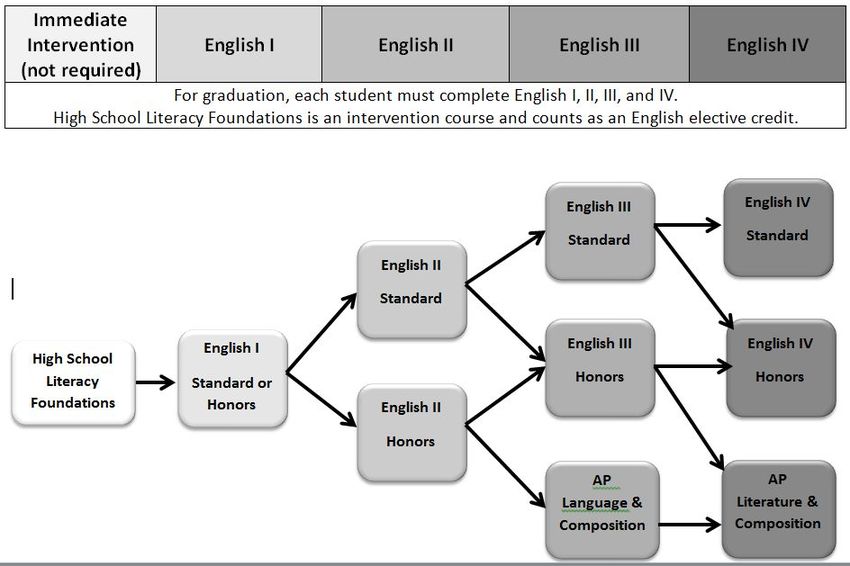
Table of Contents
Message From The Superintendent 1
Table Of Contents 2
Directory Of High Schools 3
Magnet Programs And Other High School Options 4
Hillside High International Baccalaureate Program Courses 6
The 7 Key Steps For Selecting Your Courses 7
Promotion Requirements 8
Sample Four-year Plans 12
Information About Learning Opportunities 19
Diploma Endorsements 19
University Of North Carolina Admission 20
eLearning Opportunities (Online Courses) 20
Career & College Promise Through Durham Technical Community College21
DURHAM PUBLIC SCHOOLS’ ACADEMIC POLICIES 21
Grading Scale And Weights 21
Credit By Demonstrated Mastery (CDM) 21
Academic Integrity 21
Information About High School Courses 22
Advanced Placement Courses 22
School-specific Course Offerings 22
COURSE OFFERINGS 20
English 20
Mathematics 23
Computer Science 25
Science 26
Social Studies 29
Health & Physical Education 33
World Languages 42
Arts Education 47
Visual Arts 47
Performing Arts Courses 49
CTE Career & Technical Education 54
Durham Technical Community College Articulation Agreement 54
Agriculture 56
Business, Finance, Marketing 59
Academy Of Finance Courses 61
Computer Science And Information Technology 62
Family And Consumer Sciences 63
Health Science 67
Trade, Technology, Engineering And Industrial 69
ROTC 75
English As A Second Language Courses 77
Occupational Course Of Study (Ocs) 80
Graduation Requirements (Ocs) 80
Course Descriptions (Ocs) 81
2
Directory of High Schools
High Schools                                   Magnet and Specialty High Schools
                                               City of Medicine Academy
Durham Performance Learning Center             301 Crutchfield St, Durham, NC 27701
401 N. Driver St, Durham, NC 27703             Phone: 919- 560-2001 Fax: 919-477-3927
Phone: 919-530-9190 Fax: 919-560-2214          Principal: Dr. Jacqueline Tobias
Principal: Kesha Futrell
                                               Durham School of the Arts (6-12)
                                               400 N. Duke St, Durham, NC 27701
Holton Career and Resource Center
401 N. Driver St, Durham, NC 27703             Phone: 919-560-3926 Fax: 919-560-2217
Phone: 919-560-2219 Fax: 919-237-5669          Principal: David Hawks
Principal: Kesha Futrell
                                               J. D. Clement Early College High School
                                               at North Carolina Central University
Hillside High School                           1801 Fayetteville St, Durham, NC 27707
3727 Fayetteville St, Durham, NC 27707         Phone: 919-560-2696 Fax: 919-560-2698
Phone: 919-560-3925 Fax: 919-560-2312          Principal: Dr. Gloria Woods-Weeks
Principal: Dr. William Logan
                                               Middle College High School
                                               at Durham Technical Community College
Jordan High School                             1616 Cooper St, Durham, NC 27703
6806 Garrett Rd, Durham, NC 27707              Phone: 919-536-7203 Fax: 919-536-7294
Phone: 919-560-3912 Fax: 919-560-2620          Principal: Crystal Taylor-Simon
Principal: Susan Taylor
                                               New Tech High School
Northern High School                           3727 Fayetteville St, Durham, NC 27707
117 Tom Wilkinson Rd, Durham, NC 27712         Phone: 919-560-9183 Fax: 919-560-3686
Phone: 919-560-3956 Fax: 919-479-3001          Principal: Dr. Tounya Wright
Principal: Dan Gilfort
                                               The School for Creative Studies (6-12)
Riverside High School                          5001 Red Mill Rd, Durham, NC 27704
3218 Rose of Sharon Rd, Durham, NC 27712       Phone: 919-560-3535 Fax: 919-477-9189
Phone: 919-560-3965 Fax: 919-560-3798          Principal: Renee Price
Principal: Tonya Williams
                                               Southern School of Energy & Sustainability
                                               800 Clayton Rd, Durham, NC 27703
Hospital School                                Phone: 919-560-3968 Fax: 919-560-2445
Duke University Medical Center                 Principal: Jerome Leathers
Box 3039 Duke South, Durham, NC 27710
Phone: 919-684-5684 Fax: 919-684-5319
Principal: Michael Somers

Lakeview School (6-12)
3507 Dearborn Dr, Durham, NC 27704
Phone: 919-560-2520 Fax: 919-560-2446
Principal: Dr. Theresa McGowan

                                           3
Magnet Programs and Other High School Options
Durham Public Schools offers a variety of innovative magnet programs and other options for students. To attend one of these
programs, students must apply for entry. For information about the application process, call the Office of Student Assignment at
(919) 560-2059 or visit www.magnet.dpsnc.net.
Magnet High Schools
City of Medicine Academy | Grades 9-12, unique learning opportunities, including collaborative
www.cma.dpsnc.net schoolwork with internships with local industry partners and
The City of Medicine Academy (CMA) is an academically required community service hours. Students will graduate
rigorous high school that contributes to educating future with a high school diploma and up to 12 semester hours of
healthcare professionals in preparation for meeting the ever college credit.
growing healthcare needs of the community. Students
graduating from CMA are prepared to enter the healthcare Josephine D. Clement Early College High School
workforce and/or postsecondary healthcare education. The at North Carolina Central University | Grades 9-12,
City of Medicine Academy partners with several local www.echs.dpsnc.net
universities, along with Durham Technical Community The Josephine Dobbs Clement Early College High School
College and Watts School of Nursing, to offer students (ECHS) is an innovative partnership with North Carolina
opportunities for college credit and internships. Students Central University. Students will graduate with a high
can earn certification in several areas while still in high school diploma, and up to two years of college credit
school. toward a bachelor’s degree. ECHS is designed to
substantially increase the number of minority and female
Durham School of the Arts | Grades 6-12, students who will pursue advanced studies and careers in
www.dsa.dpsnc.net Science, Technology, Engineering and Mathematics.
The mission of Durham School of the Arts is to help
students from diverse backgrounds fully realize their Middle College High School at Durham Technical
individual academic and creative capacities through a Community College | Grades 11 & 12,
rigorous educational program, emphasizing excellence in www.mchs.dpsnc.net
the visual and performing arts. Durham School of the Arts The Middle College High School (MCHS) expands
offers beginning through advanced arts courses in band, opportunities for academically capable high school juniors
chorus, piano, strings, guitar, art, sculpture, photography, and seniors to earn a high school diploma and receive
dance, theater, digital arts, film and writing. Upon entering credit toward a postsecondary certificate, diploma, or
high school, all students select two of the eleven arts associate’s degree. It is a partnership among the Durham,
concentration areas to focus on for their four years of high Chapel Hill-Carrboro, and Orange County School Systems
school. and Durham Technical Community College. Through this
partnership, students will experience a rigorous program of
New Tech High School | Grades 9-12, study on the campus of a community college. Curriculum
www.newtech.dpsnc.net offerings include core honors level high school courses and
The instructional cornerstone for New Tech High School is community college courses.
collaborative project-based learning by utilizing
technological resources. The school is partnered with the Southern School of Energy and Sustainability |
national New Tech Network and Durham Technical Grades 9-12, www.southern.dpsnc.net
Community College in order to provide opportunities for Southern School of Energy and Sustainability is a large
students to take college level coursework during high STEM (Science, Technology, Engineering, and Math) high
school. New Tech will combine rigorous and relevant school comprised of four smaller schools. The innovative
college preparatory curriculum with several integrated magnet school offers students the advantages of a small
courses, problem-based learning opportunities, and an personalized school environment while being able to
emphasis on Information Technology. The program offers participate in the athletics and extracurricular activities of a
4large high school. Students at the school select one of the International Baccalaureate Middle Years &
following small schools to complete their high school Diploma Programme at Hillside High School |
education: Business Management & Sustainability, Grades 9-12, http://hillside.dpsnc.net/
Technology & Energy, Biomedical Technology, and The International Baccalaureate (IB) Middle Years
Architecture & Construction Engineering. Programme (MYP) and Diploma Programme (DP) is a high
quality program of international coursework developed and
The School for Creative Studies | Grades 6-12, authorized by world renowned International Baccalaureate
www.scs.dpsnc.net Organization (IBO). The IB Programme is designed to help
The School for Creative Studies is a small secondary develop the intellectual, personal, emotional and social
school that operates on a year round calendar and skills to live, learn and work in a rapidly globalizing world.
prepares students for the growing creative economy. The Both programs offer rigorous academic challenge and
jobs that make up the creative economy demand people critical thinking that draws connections among the subject
who are equipped with creative skill sets and who work areas and the real world. The Diploma Programme is a
comfortably and productively in collaborative environments. college preparatory coursework culminating in a series of
Instruction at the school is facilitated to develop creativity, internal assessments and examinations which may earn
divergent thinking, communication skills, and bring students’ college credits.
relevance to the curriculum. Students will customize their
curriculum through specialized coursework, internships, Magnet Office Contact Information:
and partnerships in a variety of areas such as Media Arts, Kimberly Marion, Director of Advanced Academics &
Graphic Design, Architectural Design, Broadcasting, Film Magnet Programs
and Documentary Production, Communication Arts and kimberly.marion@dpsnc.net | 919-560-2000 x21029
Entrepreneurship and Project Lead The Way.
Additional High School Options
Durham Performance Learning Center | Grades Holton Career and Resource Center | Grades 9-12,
10-12, www.dplc.dpsnc.net www.HoltonCenter.dpsnc.net
The Performance Learning Center (PLC) represents an Durham high school students have the opportunity to earn
innovative partnership among Durham Public Schools, credit in career and technical areas not offered at their base
Communities in Schools of Durham and Communities in school. Students may enroll in afternoon and evening
Schools North Carolina, Inc. Students may supplement courses to earn credit towards graduation and industry
online learning through a variety of internships and job certifications. The curriculum focuses on specific skill areas
shadowing opportunities. PLC provides an ideal setting for which can be paired with small business/entrepreneurship
students who need a more flexible schedule in order to classes giving students the know-how to become small
complete their high school diploma. Please contact your business owners in Durham.
base school’s counselor for more information.
5Hillside High School International Baccalaureate Programme Preferred
Prerequisites & IB Courses by Grade
MYP Language & Language Individuals Sciences Mathematic Arts Design/ Health/PE
Subject Literature Acquisition & Societies s Elective
Groups
Grade 9 English 1 Spanish 1 or 2 World Earth/ Common Vocal Art 1 Theatre Band 1 Multimedia & Health &
(Year 4 MYP French 1 or 2 History MYP Environme Core Math Music 1 Webpage PE
of MYP) Mandarin 1 or or AP World ntal 2 MYP 1 Design,
2 History: Science Dance Scientific & Tech
Modern MYP or Common I Visualization,
Biology Core Math Technology &
MYP 3 MYP Engineering
Design,
Computer
Engineering
Technology, or
Graphic Design
Grade 10 English 2 Spanish 2 Civics & Biology I Common Your Art 2 Band 2 Your choice of
(Year 5 MYP and/or Economics MYP and Core Math choice elective or level
of MYP) 3 MYP MYP Chemistry 3 MYP or 3 of
French 2 1 MYP Common Language B
and/or Core Math
3 MYP 4 MYP
Mandarin 2
and/or 3 MYP
Diploma Group 1 Group 2 Group Group 4 Group 5 Group 6 Elective Elective
Subject HL SL 3 SL/HL SL SL/HL
Groups HL
Grade 11 IB English IB Spanish SL IB IB Math Studies Theory Elective
A1 HL 11 11 & IB History SL 11 & of
Spanish SL 12 of the IB Math Studies Knowled
or Americ SL 12 ge
IB French SL as or (TOK)
11 & IB Math SL 11 &
IB French SL IB Math SL 12
12 or
or AP Calculus &
IB Mandarin SL 5th Level Math
11 & IB
Mandarin SL
12
Grade 12 IB English IB 20th IB Biology SL IB IB IB Visual Theory Elective
A1 HL 12 Centur 11 & Psychology Business Arts & of
y IB Biology SL 11 Manageme IB Visual Knowled
Topics 12 & nt 1 & IB Arts 2 ge
or IB Business (TOK)
IB Chemistry Psychology Manageme
SL 11 & IB 12 nt 2
Chemistry SL
12
or
IB
Environmental
Systems SL
6The 7 Key Steps for Selecting Your Courses
STEP 1: Review the chart below.
Make sure you fully understand the requirements needed to earn your high school diploma.
Graduation Requirements
Content Area Future-Ready Core: Future-Ready Occupational: Course of Study Requirements
Course of Study Requirements **for select IEP students with EOC proficiency level
For Ninth Graders Entering in exemption
2012-13 & Later
English 4 Credits required 4 Credits required
(North Carolina State English I, II, III, IV OCS English I, II, III, IV
Requirement)
Mathematics 4 Credits required 3 Credits required
(North Carolina State NC MATH I, II, III OCS Introduction to Mathematics
Requirement) plus, a 4th Math course aligned with student’s post high OCS MATH I
school plans OCS Financial Management
Science 3 Credits required 2 Credits required
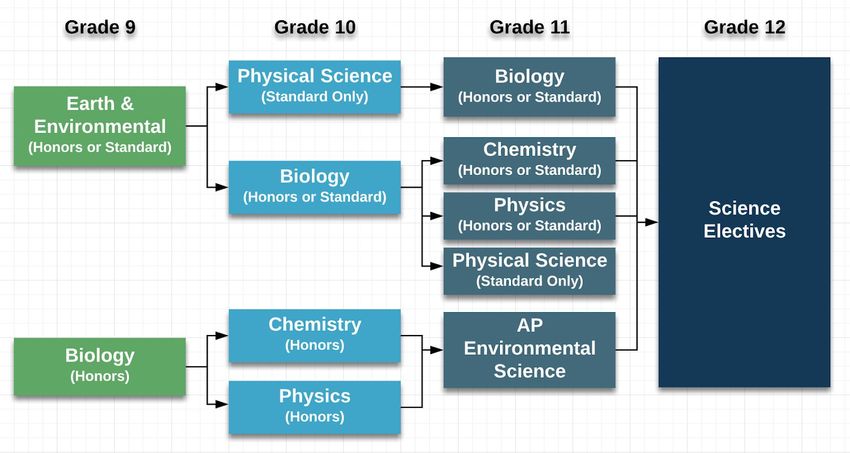
(North Carolina State A physical science course (Chemistry, Physics, or Physical OCS Applied Science
Requirement) Science), Biology, an environmental science (Earth & OCS Biology
Environmental Science OR AP Environmental Science)
Social Studies 4 Credits required 2 Credits required
(North Carolina State Rising 9th graders: Rising 9th graders:
Requirement) World History, American History, Economics and Personal *note, these courses will not be installed until 2021-22 school year;
Finance, The Founding Principles of the United States and rising 9th grade OCS students should not be placed into a Social
Studies course their 9th grade year.
North Carolina: Civic Literacy
Rising 10-12th graders: OCS Economics and Personal Finance
World History, The Founding Principles : Civics & OCS The Founding Principles of the United States and
Economics, and an American History Combination: Option North Carolina: Civic Literacy
1: American History I AND American History II. Option 2:
American History I OR American History II AND a Social Rising 10-12th graders:
Studies elective OCS American History I *
OCS American History II *
**A student who takes AP US History instead of American OCS The Founding Principles: Civics and Economics
History I and American History II must take an additional
Beginning 2017-18, first time 9th graders will need to take
social studies course to meet the four credit requirements.
American History: Founding Principles, Civics and Economics*,
plus either American History I or II
Health & Physical 1 Credit required 1 Credit required
Education .5 Health & .5 Physical Education
(North Carolina State
Requirement)
Electives 6 Credits required 6 Credits required
2 elective credits in any combination of the following: At least one credit in fine arts recommended
7(North Carolina State • Career and Technical Education (CTE)
Requirement) • Arts Education 4 Credits CTE required
• World Languages
6 Credits Occupational Preparation required
DPS expects for all students to complete a 4 elective credit OCS Preparation I, II (2 units), III (2 units), IV
concentration from one of the following:
• Career and Technical Education (CTE) 150 hours of school-based training
To be a CTE concentrator, at least 3 of the 4 elective credits 225 hours of community-based training
must be foundation courses in a career cluster with one being 225 hours of paid employment.
a Level II or completer course. The fourth elective credit can
be an enhancement course within the same career cluster. Elective credits/ completion of IEP objectives/Career
• JROTC Portfolio required
• Arts Education
• Social studies
• Science
• Mathematics
• English
• World Languages
• Health/ Physical education
Electives 6 credits required Recommended:
(Durham Public Schools (Durham School of the Arts 2 credits required) at least one credit in an arts discipline
Requirement)
**Students can select electives offered at their school based
on college/career plans and individual interest.
World Languages Not required for high school graduation.
**A two-credit sequential world language minimum of the
same language is required for admission to the UNC system
and many other universities.
Total 28 Credits 28 Credits
(Durham School of the Arts and the School for Creative (Durham School of the Arts and the School for
Studies- 24 credits required) Creative Studies- 24 credits required)
Promotion Requirements
High school students shall be promoted by earning credits through successful completion of courses. Per DPS Board Policy
3235.3, students in grades 6-8 may earn credit towards high school graduation by successfully completing courses that are
described in the North Carolina Standard Course of Study for grades 9-12.
From Grade → To Grade Credits Credits Needed
Needed (DSA and SCS)
9 → 10 6 5
10 → 11 12 10
11 → 12 20 17
12 → Graduate 28 24
89
STEP 2: Complete the course credit worksheet below using your transcript.
Talk to your school counselor and/or teachers if you need help understanding graduation requirements or reading your transcript.
Your transcript is a complete record of all the high school courses you took, your grades
and the credits you earned.

Your Name: ____________________________________________________________________
Area of Concentration: ____________________________________________________________
Postsecondary Goal: _____________________________________________________________
Courses Required for Graduation
English          Credit    Mathematics         Credit    Social Studies              Credit    Science              Credit
Standard         Earned    Standard            Earned    Standard                    Earned    Standard             Earned:
Honors/MYP,                Honors/MYP,                   Honors/MYP,                           Honors/MYP,
AP/IB, or                  AP/IB, or OCS*                AP/IB, or OCS*                        AP/IB or OCS*
OCS*                       ___________                   __________                            ___________
__________                 Intro to Math*                                                      Earth/Environ OR
_                          MATH I*                       Rising 9th graders:                   AP
English I*                 Financial Mgmt.*              World History, American               Environmental
English II*                MATH II                       History, Economics and                Science*
English III*               MATH III                      Personal Finance, The                 Biology*
English IV*                4th Math                      Founding Principles of                Physical Science,
                                                         the United States and                 Chemistry, OR
                                                         North Carolina: Civic                 Physics
                                                         Literacy

                                                         Rising 10-12th graders:
                                                         World History, The
                                                         Founding Principles :
                                                         Civics & Economics,
                                                         and an American History
                                                         Combination: Option 1:
                                                         American History I AND
                                                         American History II.
                                                         Option 2: American
                                                         History I OR American
                                                         History II AND a Social
                                                         Studies elective

List other       Credit    List other Math     Credit    List other Social Studies   Credit    List other Science   Credit
English          Earned    courses:            Earned    courses:                    Earned    courses:             Earned
courses:

List other       Credit    List other World    Credit    List CTE or ROTC            Credit    List Visual or       Credit
Physical         Earned    Language            Earned    courses:                    Earned    Performing Arts      Earned
Education                  courses:                                                            courses:
courses:

Healthful
Living

                                                              10
STEP 3: Be sure you understand your teachers’ recommendations.
Courses can be offered on standard, honors, or Advanced Placement levels. You should follow your school counselor,teacher
and parent’s recommendations concerning the level that would best support your academic success.
As a general guideline, DPS encourages you to take the most challenging courses and levels that you can successfully
complete. You and your parent/guardian should use a variety of data to help you make course and level decisions. This data
includes:
● your postsecondary goals
● your work ethic
● your grades
● your reading level
STEP 4: Meet with your school counselor.
Meet with your school counselor to review your progress towards graduation and determine which course selections will help you
meet your post secondary goals.
STEP 5: Complete your school’s registration form and return it with your
parent’s signature by the due date as indicated on the form.
Be sure that you request the courses you really want to take! Schools plan their master schedules based on their students’
requests; therefore, it is unlikely you will be able to make changes to your course selections and/or schedule after the school
year begins.
STEP 6: Review your course selections and final schedule.
Review your course selections and final schedule when you receive them from your school. Make sure your schedule includes
the required courses you need for graduation, the correct levels of each course, and the levels match your interests and post
secondary goals.
STEP 7: Change any courses before the first day of school.
If you need to change any of the courses on your schedule, be sure to do so before the first day of school. High schools set
aside schedule change sessions before the beginning of the school year. If you need a schedule change, be sure to attend one
of these sessions.
Schools must honor these requests from seniors:
● Requests for courses you need for graduation
● Requests for courses you need based on earning summer school credit(s)
● Requests for courses you need to complete a CTE cluster or other area of concentration
Schools will not honor requests for:
● Specific teachers
● Specific periods
● Specific semesters
Pending space availability, your school may or may not be able to honor requests for different electives.
11Sample Four-Year Plans
Four-Year Plans help you make sure the courses you take each year in high school will prepare you for your plans after high
school. Three different sample four-year plans are included in this Course Guide.
12DPS Sample 4-Year Graduation Plan - Career or Military (10th - 12th graders)
9th Grade (Fall) 9th Grade (Spring)
Course Title Grad. Credit Course Title Grad. Requirement Credit
Requirement
English I 1 of 4 Required 1 World History 1 of 4 Required 1
Standard Standard
Earth & Environmental 1 of 3 Required 1 Math 1 1 of 4 Required 1
Science Standard
Standard
Health / PE 1 of 1 Required 1 Elective 2 of 12 Required 1
Foundations of Math 1 1 of 12 Required 1 Elective 3 of 12 Required 1
Total Credits Total Credits 6 Credits
(5 at DSA
and SCS)
Needed to
be Promoted
to
10th Grade
Service Learning Hours Service Learning Hours
10th Grade (Fall) 10th Grade (Spring)
Course Title Grad. Credit Course Title Grad. Requirement Credit
Requirement
English II 2 of 4 Required 1 American History I 2 of 4 Required 1
Standard Standard
Biology 2 of 3 Required 1 Math 2 2 of 4 Required 1
Standard Standard
Elective 4 of 12 Required 1 Elective 6 of 12 Required 1
Elective 5 of 12 Required 1 Elective 7 of 12 Required 1
Total Credits Total Credits 12 Credits
(10 at DSA
and SCS)
Needed to
be Promoted
to
11th Grade
Service Learning Hours Service Learning Hours
1311th Grade (Fall) 11th Grade (Spring)
Course Title Grad. Requirement Credit Course Title Grad. Requirement Credit
English III 3 of 4 Required 1 American History II 3 of 4 Required 1
Standard Standard
Chemistry or 3 of 3 Required 1 Math 3 3 of 4 Required 1
Physics Standard
Standard
Elective 8 of 12 Required 1 Elective 10 of 12 Required 1
Elective 9 of 12 Required 1 Elective 11 of 12 Required 1
Total Credits Total Credits 20 Credits
(17 at DSA and
SCS) Needed to
be Promoted to
12th Grade
Service Learning Hours Service Learning Hours
12th Grade (Fall) 12th Grade (Spring)
Course Title Grad. Requirement Credit Course Title Grad. Requirement Credit
English IV 4 of 4 Required 1 Civics and Economics 4 of 4 Required 1
Standard Standard
Elective 12 of 12 Required 1 4th Math Course 4 of 4 Required 1
Standard
Elective 13 of 12 Required 1 Elective 15 of 12 Required 1
Elective 14 of 12 Required 1 Elective 16 of 12 Required 1
Total Credits Total Credits 28 Credits
(24 at DSA and
SCS) Needed to
Graduate
Service Learning Hours Service Learning Hours
14DPS Sample 4-Year Graduation Plan - 2-year Community / Technical College
(10th - 12th graders)
9th Grade (Fall) 9th Grade (Spring)
Course Title Grad. Credit Course Title Grad. Requirement Credit
Requirement
English I 1 of 4 Required 1 World History 1 of 4 Required 1
Honors or AP/ Honors/ Standard
Standard
Earth Science 1 of 3 Required 1 Math 1 1 of 4 Required 1
Honors or Honors or Standard
Standard
Health / PE 1 of 1 Required 1 Elective 2 of 12 Required 1
Elective 1 of 12 Required 1 Elective 3 of 12 Required 1
Total Credits Total Credits 6 Credits
(5 at DSA and SCS)
Needed to be
Promoted to
10th Grade
Service Learning Hours Service Learning Hours
10th Grade (Fall) Year 10th Grade (Spring) Year
Course Title Grad. Credit Course Title Grad. Requirement Credit
Requirement
English II 2 of 4 Required 1 American History I 2 of 4 Required 1
Honors or Honors or Standard
Standard
Biology 2 of 3 Required 1 Math 2 2 of 4 Required 1
Honors or Standard
Elective 4 of 12 1 Elective 6 of 12 Required 1
Required
Elective 5 of 12 Required 1 Elective 7 of 12 Required 1
Total Credits Total Credits 12 Credits
(10 at DSA and SCS)
Needed to be
Promoted to
11th Grade
Service Learning Hours Service Learning Hours
1511th Grade (Fall) Year 11th Grade (Spring) Year
Course Title Grad. Requirement Credit Course Title Grad. Requirement Credit
English III 3 of 4 Required 1 American History II 3 of 4 Required 1
Honors or Standard Honors or Standard
Chemistry or Physics 3 of 3 Required 1 Math 3 3 of 4 Required 1
Honors or Standard Honors or Standard
Elective 8 of 12 Required 1 Elective 10 of 12 Required 1
Elective 9 of 12 Required 1 Elective 11 of 12 Required 1
Total Credits Total Credits 20 Credits
(17 at DSA
and SCS)
Needed to be
Promoted to
12th Grade
Service Learning Hours Service Learning Hours
12th Grade (Fall) Year 12th Grade (Spring) Year
Course Title Grad. Requirement Credit Course Title Grad. Requirement Credit
English IV 4 of 4 Required 1 Civics and Economics 4 of 4 Required 1
Honors or Standard Honors or Standard
Science Elective 10 of 10 Required 1 4th Math Course 4 of 4 Required 1
Honors or Standard Honors or Standard
Elective 12 of 12 Required 1 Elective 14 of 12 Required 1
Elective 13 of 12 Required 1 Elective 15 of 12 Required 1
Total Credits Total Credits 28 Credits
(24 at DSA
and SCS)
Needed to
Graduate
Service Learning Hours Service Learning Hours
16DPS Sample 4-Year Graduation Plan - 4-year College / University (10th - 12th
Graders)
9th Grade (Fall) Year 9th Grade (Spring) Year
Course Title Grad. Credit Course Title Grad. Requirement Credit
Requirement
English I 1 of 4 Required 1 World History 1 of 4 Required 1
Honors or AP/ Honors/ Standard
Standard
Biology 1 of 3 Required 1 Math 1 1 of 4 Required 1
Honors or Honors or Standard
Standard
Health / PE 1 of 1 Required 1 World Language 1 1 of 2 Required 1
Elective 1 of 10 Required 1 Elective 2 of 10 Required 1
Total Credits Total Credits 6 Credits
(5 at DSA and SCS)
Needed to be
Promoted to
10th Grade
Service Learning Hours Service Learning Hours
10th Grade (Fall) Year 10th Grade (Spring) Year
Course Title Grad. Credit Course Title Grad. Requirement Credit
Requirement
English II 2 of 4 Required 1 American History I 2 of 4 Required 1
Honors or Honors or Standard
Standard or or
AP US History 2 & 3 of 4 Required
Chemistry or 2 of 3 Required 1 Math 2 2 of 4 Required 1
Physics Honors or Standard
Honors or
Standard
World Language 2 of 2 Required 1 Elective 3 of 10 Required 1
2
Elective 4 of 10 Required 1 Elective 5 of 10 Required 1
Total Credits Total Credits 12 Credits
(10 at DSA and SCS)
Needed to be
Promoted to
11th Grade
Service Learning Hours Service Learning Hours
1711th Grade (Fall) Year 11th Grade (Spring) Year
Course Title Grad. Requirement Credit Course Title Grad. Credit
Requirement
English III 3 of 4 Required 1 American History II 3 of 4 Required 1
AP/ Honors/ Honors or Standard
Standard or
Social Studies Elective
AP Environmental 3 of 3 Required 1 Math 3 3 of 4 Required 1
Science Honors or Standard
Elective 6 of 10 Required 1 Elective 8 of 10 Required 1
Elective 7 of 10 Required 1 Elective 9 of 10 Required 1
Total Credits Total Credits 20 Credits
(17 at DSA and
SCS) Needed to be
Promoted to
12th Grade
Service Learning Hours Service Learning Hours
12th Grade (Fall) Year 12th Grade (Spring) Year
Course Title Grad. Requirement Credit Course Title Grad. Credit
Requirement
English IV 4 of 4 Required 1 Civics and Economics 4 of 4 Required 1
AP/ Honors/ Honors or Standard
Standard
Science Elective 10 of 10 Required 1 4th Math Course 4 of 4 Required 1
Honors or Standard AP/ Honors / Standard
Elective 11 of 10 Required 1 Elective 13 of 10 Required 1
Elective 12 of 10 Required 1 Elective 14 of 10 Required 1
Total Credits Total Credits 28 Credits
(24 at DSA and
SCS) Needed to
Graduate
Service Learning Hours Service Learning Hours
18INFORMATION ABOUT LEARNING • Earn an overall four-year weighted grade point
average of 2.5
OPPORTUNITIES
College Endorsement
Diploma Endorsements • Students who wish to earn the College
Students may earn the following endorsements as Endorsement must successfully complete these
additional recognitions to their high school diploma. requirements:
**Students may earn more than one endorsement. • All Future Ready Core course requirements
• In addition to MATH I, MATH II, and MATH III, the
North Carolina Scholars Endorsement student must successfully complete a fourth
Students who wish to earn recognition as a North Carolina mathematics course aligned with the student’s
Scholar must successfully complete these requirements: postsecondary plans. The fourth math course
• All Future Ready Core course requirements must meet University of North Carolina system
• A fourth mathematics course that has MATH III as Minimum Admission Requirements or be
a prerequisite acceptable for earning placement in a
credit-bearing college math class under the North
• A Chemistry or Physics course (to meet the
Carolina Community College System’s Multiple
physical science requirement)
Measures Placement policy.
• Two credits of the same World Language (other
• Earn an overall four-year unweighted grade point
than English)
average of 2.6
• The student shall complete four elective credits
constituting a concentration recommended from Students should also talk to their school counselors about
one of creating a resume of extracurricular activities, taking
• the following: Career and Technical Education national tests such as the ACT or SAT, writing a compelling
(CTE), JROTC, Arts Education, World Languages, personal statement, and seeking appropriate
any recommendations from school personnel such as teachers
• other subject area. or school counselors.
• The student shall have taken three higher level Entrance requirements vary among colleges and
courses during junior and/or senior years which universities. Students who wish to attend private colleges or
carry universities should be sure they understand entrance
• quality points such as: Advanced Placement; requirements specific to the college/university of their
International Baccalaureate; Dual or college choice.
equivalent
• courses; Advanced CTE and CTE credentialing Global Languages Endorsement
courses; Honors level courses. The student shall earn a combined 2.5 GPA for the four
In addition, North Carolina scholars must earn an overall English Language Arts courses required for graduation.
four-year unweighted grade point average of 3.5.
The student shall establish proficiency in one or more
College/UNC Endorsement languages in addition to English using one of the following
Students who wish to earn the College/UNC Endorsement options:
must successfully complete these requirements: ● Pass an external exam approved by the North
• All Future Ready Core course requirements Carolina Department of Public Instruction
establishing “Intermediate Low” proficiency or
• A fourth mathematics course that has MATH III as
higher per the American Council on the Teaching
a prerequisite of Foreign Languages (ACTFL) proficiency scale
• A Chemistry or Physics course (to meet the ● Complete a four-course sequence of study in the
physical science requirement) same world language, earning an overall GPA of
• Two consecutive credits of the same World 2.5 or above in those courses
Language
19● Establish “Intermediate Low” proficiency or higher Students should also talk to their school counselors about
per the ACTFL proficiency scale using the Credit creating a resume of extracurricular activities, taking
by Demonstrated Mastery policy described in national tests such as the ACT or SAT, writing a compelling
GCS-M-001 personal statement, and seeking appropriate
recommendations from school personnel such as teachers
Limited English Proficiency students shall complete all the or school counselors.
requirements of sections A and B above and reach
“Developing” proficiency per the World-Class Instructional Entrance requirements vary among colleges and
Design and Assessment (WIDA) proficiency scale in all four universities. Students who wish to attend private colleges or
domains on the most recent state identified English universities should be sure they understand entrance
language proficiency test. requirements specific to the college/university of their
choice.
Career Endorsement
● The student shall earn an unweighted grade point eLearning Opportunities (Online
average of at least 2.6.
● Except as limited by N.C.G.S. §115C-81(b), the
Courses)
Online courses provide students with these opportunities:
student shall complete mathematics sequence of
MATH I, MATH II, MATH III, and a fourth math ● Flexible scheduling
including applied math courses found in the ● Individualized pacing
Career and Technical Education (CTE) domain. ● Opportunity to earn high school
● The student shall complete a CTE concentration in
● Opportunity to enroll in courses not offered in your
one of the approved CTE Cluster areas
high school
(http://www.ncpublicschools.org/cte/curriculum/).
The student shall earn at least one
Durham Public Schools partners with NCVPS and other
industry-recognized credential. Earned credentials
approved online vendors to provide eLearning
can include Career Readiness Certificates (CRC)
Opportunities. NCVPS awards high school course credits
at the Silver level or above from WorkKeys
to students who successfully complete core courses,
assessments OR another appropriate industry
Advanced Placement courses, and/or honors courses.
credential/certification.
Students may use NCVPS courses to meet high school
graduation requirements or enhance transcripts for college
applications.
The University of North Carolina
System Admission Based on DPS Policy 3102, Online Instruction (e-Learning),
Minimum Course Requirements: enrollment in these courses requires the approval of the
● Four credits in English school principal, the school counselor, and the student’s
legal guardian. Please contact your school counselor for
● Four credits in Math, including a fourth
more information. Students and their parents should read
mathematics course that has MATH III as a and discuss the DPS eLearning Handbook, sign the online
prerequisite learning contract and return it to their school counselor prior
● A life science course such as Biology to enrolling in an online course.
● A physical science course such as Chemistry,
Physical Science, or Physics Students may need their own dedicated computer with
internet connectivity at home. Students who do not have a
● At least one science that is considered a
computer at home should contact their school counselor.
laboratory course
Students who need internet or a device, may contact Digital
● Two credits in social studies, including one credit Durham at h ttp://digitaldurham.net/
in US History
● Two credits of the same World Language
*There are also minimum GPA and SAT/ACT score
requirements
20Career and College Promise Credit by Demonstrated Mastery
through Durham Technical (CDM)
Community College Starting in 2015, students are able to earn credit for a
course without spending a set number of hours taking the
Durham Public Schools high school students who meet
course in a classroom.
eligibility requirements have the opportunity to enroll in
community college courses that provide pathways leading
What is CDM?
to a credential, certificate, diploma, or a degree. Career and
College Promise offers three pathways: Career and ● CDM is a process by which a student may earn credit
Technical Education, College Transfer, and Cooperative for a high school course by demonstrating a deep
Innovative High Schools Program. Students are given the understanding of the content, without course
opportunity to earn college credit completely transferable to enrollment or seat time.
all UNC System Institutions and many of North Carolina’s ● CDM is a multi-phased process that includes a written
Independent Colleges and Universities. Contact your examination and a product.
school counselor or Career Development coordinator or go ● CDM is a way for highly advanced learners to benefit
to:
from subject-level acceleration.
www.durhamtech.edu/admissions/highschoolstudent.htm.
Who is eligible?
● Any NC public school student who is able to show a
Durham Public Schools’ deep understanding of the content without seat-time
and classroom learning experience.
Academic Policies ● Highly advanced students of the specific content; not
Grading Scale and Weights intended initially for the masses
Beginning with the 2015-2016 school year, the North ● Student does not need to be identified as AIG
Carolina State Board of Education required all school
districts to implement a new grading scale. This new scale Contact your school for more information, or visit DPS
applies to middle schools and high schools and changes Credit by Demonstrated Mastery for the three CDM
the way letter grades are assigned. It also changes the how windows each year, as well as a student application.
grade point averages (GPAs) are calculated for high school
students.
Academic Integrity
(Reference: Durham Public Schools Board Policy 3110)
Course GPA
Average Durham Public Schools expects all students to practice
A 90% to 100% 4.0 GPA honesty, trust, fairness, respect, and responsibility.
B 80% to 89% 3.0 GPA Students must maintain high academic standards by
C 70% to 79% 2.0 GPA obeying their school’s honor code. The honor code will
D 60% to 69% 1.0 GPA include specific expectations for academic integrity and
F Less than 60% 0.0 GPA consequences for plagiarism and cheating. Students must
also adhere to Durham Public Schools’ Acceptable Use
In addition, students entering the 9th grade for the first time Policy for computers and electronic media.
in 2015-2016 or later will earn an additional 0.5 quality
points for courses taken at the honors level or for
International Baccalaureate Middle Years Programme
courses and an additional 1.0 quality points for courses
taken at the Advanced Placement or International
Baccalaureate level and for Dual Enrollment Courses.
21Information about High School
Courses
Students earn one unit of credit for each successfully
completed course. There are some courses that require a
double period or full year to complete, while there are
others that may require you to take two nine-week courses
for one credit. You will find this information listed with the
prerequisites. Students receive additional credits for these
courses as noted.
All courses use the NC approved Standard Course of
Study.
The 4X4 block schedule gives students the opportunity to
take more than one course in a year in any content area.
Important information about content areas is outlined at the
beginning of each section.
Honors courses require students to demonstrate a high
level of academic rigor, manage complex assignments, and
move at a faster pace.
Special Note about Advanced
Placement Courses
Advanced Placement (AP) courses are designed to meet
the College Board’s rigorous standards for an Advanced
Placement class and be the equivalent of a college level
course for which students may, depending on the AP Exam
score, receive college credit. Extensive course guidelines
are provided by the College Board, and teachers are
required to maintain current AP authorization. The cost for
an AP exam during the 2018-19 school year was $94. This
cost is subject to change. Students are expected to take the
AP Exam as the culminating activity for AP courses per
DPS Policy 3305.2. Per funding availability, the State
Department of Public Instruction will fund all exams for the
courses in which each student is enrolled for this school
year.
School-specific Course Offerings
See each school’s registration process for school-specific
courses.
22Course Offerings
ENGLISH • Students earn 1 unit of credit for English I, II, III, IV.
• High School Literacy Foundations is a credit bearing English elective
course.
• All courses use the North Carolina State Standards for English.
• Honors courses require students to demonstrate rigor, manage greater
complexity, and apply literacy concepts more deeply. Honors courses are
weighted + 0.5 in the calculation of GPA.
• AP/ IB courses require students to master college level material, skills, and
pacing. Students are expected to take the AP/IB exam. AP/IB courses are
weighted + 1.0 in the calculation of GPA.
Possible English Course Sequences Students may move from one sequence to another as their needs change.
23Course Descriptions
English I & Honors English I | Prerequisite: None expected to read and understand increasingly complex
English I students will study literature; informational texts; texts at the high end of the 11th grade reading range.
poetry; drama; biographical works; influential documents of
historical and literary significance and art from all genres to Advanced Placement Language & Composition
gain knowledge of culture, current events and themselves. English III | Prerequisite: English II
They will gain the reading and writing skills necessary to This intensive, college-level course emphasizes the
write, analyze and evaluate detailed texts. By the end of rhetorical structures of effective writing. Students study
English I, students are expected to read and understand American Literature and informational texts to explore
increasingly complex texts at the upper end of the ninth historical and cultural trends of American society. Students
grade reading range. are expected to take the AP exam in May.
English II & Honors English II | Prerequisite: English I English IV & Honors English IV | Prerequisite: English III
English II students will study literature; informational texts; English IV students will study literature; historical
poetry; drama; biographical works; influential documents of documents; informational texts; poetry; drama; biographical
historical and literary significance; and art from the many works; influential documents of historical and literary
countries and cultures. Texts include selections from the significance; and art from Great Britain, Europe to develop
Americas (Caribbean, Central, South, and North), Africa, an understanding of the influence of European history and
Eastern Europe, Asia, Oceania, and the Middle East to colonialism on world literature and culture. They will master
guide students as they develop an understanding of world the complex literacy skills necessary to gather and evaluate
cultures, contemporary issues, and their world. They will information for use in their own argument, narrative, and
fine tune the reading and writing skills necessary to write, informational writing. By the end of English IV, students are
analyze and evaluate detailed arguments. By the end of expected to read and understand increasingly complex
English II, students are expected to read and understand texts at the upper end of the twelfth grade reading range.
increasingly complex texts at the upper end of the tenth Students take the English IV North Carolina Final Exam at
grade reading range. Students are required to take the the end of the course which counts as 20% of their final
North Carolina English II Ready EOC. Must be taken by the grade for the course.
end of Grade 10.
Advanced Placement Literature & Composition
English III & Honors English III | Prerequisite: English II English IV | Prerequisite: English III
English III students will study literature; historical This intensive, college-level course emphasizes critical
documents; informational texts; poetry; drama; biographical reading and the analysis of literature. Students will write
works; and art to better gain a basic understanding of the analytical expository essays about the literature they read.
influence of history on literature and culture. They will build Students are expected to take the AP exam in May.
on the complex literacy skills necessary to compile
information from sources into meaningful and well written
original texts. By the end of English III, students are
English Elective Courses
High School Literacy Foundations
High School Literacy Foundations students will be immersed in reading and writing that will accelerate the development of their
literacy skills. Through literary study of high interest fiction and an analytic study of non-fiction texts, students will develop their
reading fluency, comprehension and vocabulary so reading becomes easier and enjoyable. Non-fiction texts from all academic
content area classes and student research will be accessed, explored, analyzed and evaluated as students sharpen the
literary skills necessary to be a successful reader and writer in school, college, and the workplace.
24Public Speaking I | Prerequisite: English I
This course will prepare students to become effective African-American Literature | Prerequisite: English I and
speakers in a variety of situations from personal to II
professional. By preparing several different types of This course engages students in an active exploration of
speeches and presenting them to live audiences, students historical and contemporary contributions of African
will gain confidence in their public speaking abilities. Americans authors to American culture, academia, and
literary voice.
Public Speaking II | Prerequisite: English I, Public Speaking I
This course continues to work begun in level I with a further Mass Communications | Prerequisite: English I
emphasis on meeting specific goals, setting and keeping In this course, students explore the impact of mass media
time limits, selecting meaningful topics, and setting on our lives. They will learn how to become thoughtful,
personal goals for improvement. Students will develop discriminating consumers of media such as film,
greater fluency, learn to respond to their audience, and advertising, newspapers, television, and more.
learn the art of giving constructive feedback to classmates.
Shakespeare | Prerequisite: English II
Creative Writing | Prerequisite: English I In this course, students will study and write about
Students will take a look below the surface of the page and Shakespeare’s comedies, histories, tragedies, and poetry.
dig into the ways that creative writing can convey multiple They will explore how other artists have depicted
meanings. Students will learn how the choice of words and Shakespeare’s work through art, music, dance, and film.
the use of imagination can evoke hidden themes that will
capture the reader’s interest. Journal writing, poetry, and Yearbook Journalism I | Prerequisite: None
short story assignments will give students a variety of As a member of the Yearbook staff, students learn to write
writing experiences. and edit copy and captions, design layouts, take pictures,
and develop themes. They will learn to use PageMaker or
Writing the Critical Literary Analysis III | Prerequisite: an alternative program for layout.
English II
(This is an honors level course.) Newspaper Journalism I | Prerequisite: English 1
Writing the Critical Literary Analysis IV | Prerequisite: This course provides an introduction to the history and
English III jargon of newspaper journalism. Students will learn to write
(This is an honors level course.) various types of articles such as news, sports, and
These intensive writing seminars are designed for students editorials. They will study the function and style of
who wish to extend and deepen their capacity to write newspapers, laws that regulate the press, and the language
college-level essays. Students will practice critical analysis skills needed for quality newspaper writing.
by writing essays based on selected texts and by
responding to document-based questions. Level IV Yearbook Journalism II, III or IV | Prerequisites:
continues developing these skills using more advanced text Yearbook Journalism I, II, or III
selections. As members of the Yearbook production staff, students
learn leadership and develop high level skills in copywriting
Mythology | Prerequisite: English I and editing, layout design, journalistic photography,
Students study mythology, its symbols, purposes, and marketing, and advanced desktop publishing. Students
meaning. Topics will include stories about the gods and design specific yearbook pages and are graded on the
goddesses, the exploits of heroes and heroines, and myths product.
about creation, fertility, initiation, love, and marriage. The
course will also investigate how mythology influences art, Newspaper Journalism II, III, or IV | Prerequisites:
architecture, literature, music, and even advertising. Newspaper Journalism I, II, or III
Students comprise the staff of the school newspaper and
Trends in Contemporary Literature | Prerequisite: None are expected to master the skills required to write and edit
This course will survey the major genres and themes of stories, compose a page, design layouts, sell ads, and
contemporary literature through high interest novels. distribute the paper.
Students will engage in multiple discussion forums such as
literature circles and Socratic seminars as they discuss the
contents of each novel.
25Honors Yearbook Journalism III or IV | Prerequisites: Honors Newspaper Journalism III or IV | Prerequisite:
Yearbook Journalism II or III Newspaper Journalism II or III
(After-school time is required.) (After-school time is required.)
Students take full responsibility for the leadership aspect of Students master newspaper production including article
publishing the school’s yearbook including copy writing, conception, story/art/photo assignment, reporting,
layout design, editing, journalistic photography, advanced writing/editing/proofreading, layout, desktop publishing,
desktop publishing, business planning, advertising, communication with the printer, business planning,
marketing, and distribution of the book. advertising, and distribution of the newspaper.
26Students earn 1 unit of credit for each successfully completed course.
MATHEMATICS All courses use the North Carolina Standard Course of Study for Mathematics.
Honors courses require students to manage greater complexity and apply mathematics
concepts more deeply than in standard-level courses Honors courses are weighted + 0.5 in the
calculation of GPA.
AP/ IB courses require students to master college level material, skills, and pacing. Students
are expected to take the AP/IB exam. AP/IB courses are weighted + 1.0 in the calculation of
GPA.
All high school level mathematics courses will require the use of graphing technology..
Students should have online access to graphing technology or either a TI-83+ or TI-84+
graphing calculator to use outside of class.
With the North Carolina Standard Course of Study for Mathematics, high school learners can
anticipate a rigorous curriculum which will adequately prepare them for further study and
application of mathematics as they pursue college and various career options.
Students can also expect a deliberate focus on the mathematical practices to facilitate their
learning of this rigorous content:
make sense of problems and persevere in solving them
reason abstractly and quantitatively
construct viable arguments and critique the reasoning of others
model with mathematics
use appropriate tools strategically
attend to precision
look for and make use of structure
look for and express regularity in repeated reasoning.
These Mathematical Practices are applied throughout each course, and with the content
standards of that course, prescribe that students experience mathematics as a coherent,
useful, and logical subject that makes use of their ability to make sense of problem situations.
Possible Mathematics Course Sequences
Students may move from one sequence to another as their needs change.
Courses marked with an * meet the UNC fourth course requirement for admission.
Course 1 Course 2 Course 3 Course 4 Course 5
Discrete Math for
Introductory Foundations of Math I Math 2 or Math 3 or Computer
Sequence A
Mathematics and Math 1 Honors Math 2 Honors Math 3 Science*, or
Precalculus*
Discrete Math for
Foundations of Math 2 or Math 3 or Computer
Sequence B Math 1
Math 1 Honors Math 2 Honors Math 3 Science*, or
Precalculus*
NC Math 4* or
Math 1 or Honors Math 2 or Math 3 or AP Statistics* or
Sequence C Discrete Math for
Math 1 Honors Math 2 Honors Math 3 Precalculus
Computer Science*
27AP Calculus
Math 1 or Honors Math 2 or Math 3 or
Sequence D Precalculus* (AB)* or AP
Math 1 Honors Math 2 Honors Math 3
Statistics*
AP Calculus
Math 2 or Math 3 or
Sequence E Precalculus* AP Calculus (AB)* (BC)* or AP
Honors Math 2 Honors Math 3
Statistics*
Introduction to Financial
OCS Math 1
Mathematics Management
Course Descriptions
Introduction to Mathematics | Prerequisite: None Note: Students in this course must take the End-of-Course
Students learn basic computation skills including the test for NC Math I.
manipulation of whole numbers, decimals, fractions and
percentages. Instruction is provided in measuring time, Financial Management* | Prerequisite: NC Math 1 (*OCS
predicting patterns, and graphing. Students are also specific requirement)
exposed to basic algebraic concepts. Students will apply This course prepares students to understand economic
mathematical concepts to solve problems. activities and challenges of individuals and families, the role
of lifestyle goals in education and career choices,
Foundations of Math 1 | Prerequisite: None procedures in a successful job search, financial forms used
(This course is not available to students who have passed in independent living and shopping options and practices
NC Math 1 ) for meeting consumer needs. The course also prepares
Required by Durham Public Schools for identified students students to understand consumer rights, responsibilities
as a prerequisite to NC Math 1. Foundations of Math I and information, protect personal and family resources and
students will extend their understanding of middle grades apply procedures for managing personal finances.
math. Students will also accelerate their learning of
mathematics concepts that are addressed in NC Math 1.
NC Math 2 & Honors NC Math 2 | Prerequisite: NC Math
NC Math 1 and Honors Math 1 | Prerequisite: None 1
This rigorous course is designed to formalize and extend This rigorous course focuses on quadratic expressions,
the mathematics learned in the middle grades. The topics equations, and functions; comparing their characteristics
studied seek to deepen and extend understanding of linear and behavior to those of linear and exponential functions as
relationships, in part by contrasting them with exponential a continuing study from NC Math 1. The need for extending
and quadratic phenomena, and in part by applying linear the set of rational numbers arises, and complex numbers
models to data that exhibit a linear trend. NC Math 1 uses are introduced so that all quadratic equations can be
properties and theorems involving congruent figures to solved. The link between probability and data is explored
deepen and extend understanding of geometric knowledge through conditional probability and counting methods,
from prior grades. Culminating units of study tie together including their use in making and evaluating decisions. The
the algebraic and geometric ideas studied and also provide study of similarity leads to an understanding of right triangle
students opportunities to have experiences with more trigonometry and connects to quadratics through the
formal means of assessing how a model fits data. Students Pythagorean relationships. Circles, with their quadratic
use regression techniques to describe approximately linear algebraic representations, complete the course.
relationships between two quantities. They further use Appropriate technology and tools, including manipulatives
graphical representations and knowledge of the context to and calculators, will be used regularly for instruction and
make judgments about the appropriateness of the linear assessment.
models. Appropriate technology and tools, including
manipulatives and calculators, will be used regularly for
instruction and assessment. Must be taken by the end of
Grade 10.
28You can also read


