A National Curriculum Framework for All 2012 - Ministry of Education and Employment - Curriculum.gov.mt
←
→
Page content transcription
If your browser does not render page correctly, please read the page content below
A National
 Curriculum Framework
         for All
               2012

Ministry of Education and Employment
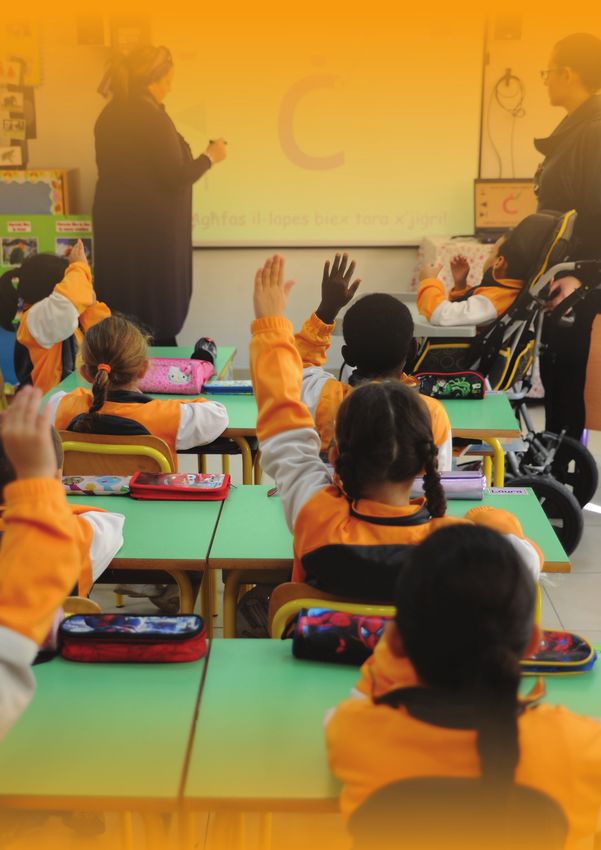
The cover illustrates the heart of the National Curriculum Framework which is the classroom
set-up, in which the teacher is given the latest technology to facilitate learning in an environment
that captures diversity and inclusivity and leads students to work towards personal growth, an
understanding of the values of solidarity and social justice, formal qualifications and employability.

Picture taken by ©Roberto Runza
A National
Curriculum Framework
        for All

Ministry of Education and Employment

             December 2012
A document prepared by the Ministry of Education and Employment. It is available on the Ministry of Education and Employment website: www.education.gov.mt The contents of this publication may be reproduced in part, except for commercial purposes, provided that the extract is preceded by a complete reference to the Ministry of Education and Employment followed by the date of publication of the report. Copyright: Ministry of Education and Employment December 2012. Design & Print: Salesian Press - Malta ISBN: 978-99957-0-409-4
THE NATIONAL CURRICULUM FRAMEWORK IS:
•     a reference for action based on general consensus and the contribution of stakeholders as well
      as those committed to its implementation;

•     a living framework, in such a way that allows for adjustments to new developments during
      implementation;

•     a policy instrument as well as information on the implementation strategy, actions and
      benchmarks for implementation, monitoring and evaluation;

•     a response to the changing demands of individuals and society, rapid changes in our education
      system driven by globalisation, ICT development, competition, shift of traditional values and
      new paradigms.

THE NATIONAL CURRICULUM FRAMEWORK AIMS AT:
1.    encouraging children and young people and teachers to work together and learn from each
      other.

2.    sustaining individual attention, so that all children fulfill their capacity.

3.    supporting schools to fulfill the expectations of children and their parents.

4.    providing quality time for social interaction, non-formal learning and peer activity.

5.    directing education leaders to rationalise the content of Learning Programmes so as to ensure
      quality and not magnitude.

6.    ensuring that, in the context of the holistic entitlement of the Learning Areas, young people in
      compulsory education have as an indispensible prerequisite mastery in Maltese and English,
      Mathematics, a Science subject and Digital Literacy.

7.    helping children to regard social justice and solidarity as key values in the development of the
      Maltese society.

8.    empowering parents and young people to work towards the acquisition of a formal qualification
      in key competences as the foundation for Lifelong Learning.

9.    supporting education leaders to successfully implement the NCF and systematically monitor
      its development at classroom level so that national targets are achieved within established
      timeframes.

10.   requesting teachers to regard children as Malta’s future workforce and therefore ensure
      that positive attitudes towards excellence, commitment, responsibility, flexibility and
      entrepreneurship form part of the learning process.

                                                                                                         iii
CONTENTS
Message from the Hon Dolores Cristina, Minister Education and Employment vii
Learning Together, Inspiring Success ix
Message from the President of the Malta Union of Teachers xi
Executive Summary xiii
Review of the National Curriculum Framework and Way Forward 1
01. Review of the National Curriculum Framework
following the Consultation Process 3
01.1 A Sustained Process of National Consultation 3
01.2 Position of the Working Group after Analysis of the Feedback Received 4
01.2.1 A Framework for the National Curriculum 4
01.2.2 The Principles and Aims of the New National Curriculum Framework 5
01.2.3 The Learning Areas 8
01.2.4 The Cross Curricular Themes 9
01.2.5 Assuring that Every Learner Makes
a Successful Transition Across the Education Cycles 10
01.2.6 Aligning Learning and Assessments to Learning Outcomes 11
01.2.7 Aligning Learning Outcomes with the Level Descriptors
of the Malta’s Qualifications Framework 12
01.2.8 Key Competencies, Employability and Mobility 13
01.2.9 Monitoring and Benchmarking the Performance of the Education System 14
01.2.10 The Cycles of Education 15
01.2.11 Entitlement 17
01.2.12 Professional Development of Teachers 18
01.2.13 Securing Seamless Transition between the Secondary Cycle
for Education and Post-Secondary Education 19
02. Outcomes and Outputs of the National Curriculum and its Implementation 21
02.1 Outcomes and Outputs of the National Curriculum Framework 21
02.2 Implementing the National Curriculum Framework 25
The National Curriculum Framework 29
03. Main Tenets of the NCF 31
03.1 Components of the National Curriculum Framework 31
03.1.1 General Principles 32
03.1.2 Aims of Education 32
03.1.3 Learning Areas and Cross Curricular Themes 33
03.1.4 Effective Learning and Teaching 39
03.1.5 Assessment and Evaluation 41
03.1.6 Parental and community involvement 43
03.1.7 Support Structures 43
iv03.2 The Early Years (KG 1 – Year 2) 45
03.2.1 Purposes and general objectives 45
03.3 The Junior Years (Years 3-6) 50
03.3.1 Introduction 50
03.3.2 Aims of the Junior Years Cycle 51
03.4 The Secondary Years (Years 7 – 11) 58
03.4.1 Introduction 58
03.4.2 Aims for Secondary Education 58
References & Appendices 69
References 71
Appendix I: The Terms of Reference of the Post-Consultation
Working Group on the National Curriculum Framework 72
Appendix II: The Constitution of the Working Group
on the Post-Consultation National Curriculum Framework 73
Appendix III: The Level Descriptors of the Malta Qualifications
Framework for Lifelong Learning 74
Figures
Figure 01: Relationship between Learning Outcomes,
Programmes of Learning and Assessment, and Examinations 12
Figure 02: Monitoring and Benchmarking the Education System 14
Figure 03: The Learning Areas and the Cross-Curricular Themes in the NCF 39
Tables
Table 1 : Outcomes of Education 2012 and Targets Set for 2027 24
Table 2 : NCF Implementation Strategy 26
Table 3 : Outcomes of Education 2012 and Targets Set for 2027 67
vMessage from
Hon Dolores Cristina
Minister of Education and Employment
The National Curriculum Framework (NCF) is the Through this NCF a number of ambitious but
result of a long, nationwide consultation process. realistic targets have been set. The discussions
The initial draft, launched in May 2011, served as that led to this final document have enriched
a platform for discussion, debate and consensus- our views of education and of the educational
building. It is now with great satisfaction that process. They have led us to take the decision to
I present a final document which illustrates measure success and failure at the micro level
the vision and aspirations of our leaders and of our schools on a regular basis. The strengths
interested stakeholders in education in Malta. and the potential weaknesses of this curriculum
framework will have to be regularly monitored. My
My personal wish is that the Curriculum clear political direction has been that in the Early
Framework will foster in students the desire to Years and throughout Compulsory Education, the
continue on a learning journey throughout their commitment to our children must be monitored
lives. on a regular basis to ensure that not one single
child is marginalised by the system itself.
The legacy that this document aims to achieve
is the assurance that by the end of compulsory This is an NCF that is really and truly student-
education learners will have acquired the centred; it is flexible enough to cater for the needs
necessary knowledge, skills, competences, and the abilities of every individual student. The
attitudes and values that stimulate them to aim is to give every child the opportunity to grow in
view lifelong learning as part and parcel of their an education environment which the teacher may
development as individuals and as citizens of our regularly transform to fit the learner’s abilities.
country, of the European Union and of the world. The school will become a centre of learning where
young students find the opportunity to acquire
The NCF 2012 looks upon education as a journey qualifications necessary for them to assume an
towards personal enrichment and empowerment, active role in society.
as a mechanism to uphold social justice and as
an important tool for inclusion and employability. This NCF addresses the gaps in our learning
It draws upon the experiences of previous processes that over the years have led to
documents related to the national curriculum absenteeism, to significant rates of early school
as well as on the experience of an educational leavers and to low skills and competences for
system that led to the drastic reduction of early a proportion of students. It will strengthen the
school leavers from over 54% in 2000 to 30% in already existing structures that are transforming
2012 and the dramatic increase of learners in schools into modern education centres where
higher education from less than 900 in 1987 to active and meaningful learning can take place. It
almost 20,000 in 2012. It has been created to will lead to an increased participation rate in post-
contextualise learning between 2013 and 2026, secondary and tertiary education. It will attract
to outline the milestones in the three education more students to lifelong learning, encouraging
cycles of the Early Years, Primary and Secondary them to embark on further and higher education
Years, to provide key indicators that schools streams leading to new and better formal
should offer to enable learners to be qualified qualifications.
at the end of Compulsory education, to provide
rationalised resources and infrastructure to The underlying philosophy is to ensure that
achieve these goals and, finally, to set targets and formal, informal and non-formal learning will
the mechanisms to measure the extent of success serve as a means to secure a commitment towards
and/or failure of the NCF in achieving its goals.
viisocial justice, personal growth, active citizenship These are the key targets set by my Ministry and
and employability. which the NCF will help to achieve : a reduction
of early school leavers to 10% and an increased
Programmes of learning will be redesigned and participation rate in further and higher education
rewritten to rationalise content and increase to over 40% by 2025.
quality learning time during the schooling years.
We must shift our attention to what the students The Ministry will be setting up a NCF
needs to learn and not to how much must be Implementation Governance Board as well as
taught. Different pathways will be explored and the structures which will link the NCF to the
set out in the full recognition of learners’ multiple MATSEC Board in order to increase the synergy
levels of intelligence and different learning styles. between the programmes of learning in schools
and the standards of the SEC examinations. This
By 2025/26 the NCF is expected to increase link will also ensure that what has been achieved
the percentage of students with Sixth Form in compulsory education will continue during the
qualifications from the 2011 rate of 44.5% to post-secondary years in preparation for further
60%. It is envisaged that 75% of those born in and higher education.
2009 will gain a minimum of 5 SEC subjects at
Grades 1 to 5. Our target is to increase by 0.5%, I shall be setting up an NCF Implementation
on an annual basis, the number of students Review Board as well as the structures which will
who proceed to degree programmes in higher link the NCF to the MATSEC Board in order to
education. increase the synergy between the programmes
of learning in schools and the standards of the
These targets will be subject to a periodic review SEC examinations. This link will also ensure that
process to ensure that they reflect the positive what has been achieved in compulsory education
experience of the NCF and the development of the will continue during the post-secondary years in
Learning Outcomes Framework. preparation for further and higher education.
These ambitious but realistic targets imply I am confident that we will achieve these targets
that institutions such as the Directorates of because education has always been and will
Education, the Faculty of Education of the remain at the heart of the Maltese society. We
University of Malta, The Malta Union of Teachers, are what we are because of our education and
the Employment and Training Corporation, the training. As a small Nation, our survival, freedom,
Council for the Teaching profession, the private well-being and identity will largely depend on
education sector and all training providers must qualified future generations who hold the key to
respond with effective, measureable and co- our quality of life. Our advanced social system will
ordinated policies. largely depend upon our ability today to invest
heavily in the education of younger generations
Teachers inevitably play a central role in this who will be well-equipped to work productively
process which should see all those in charge of and continuously.
education in Malta give clear directions to ensure
that all children do succeed. Together with I take this opportunity to thank all the members
other educators and education administrators, of the Curriculum Review Committee, chaired
they share the responsibility to guide students by the Director-General of the Directorate for
through Early and Compulsory education, to the Directorate for Quality and Standards in
provide diverse contexts of learning, to encourage Education, Professor Grace Grima, and which
retention in lifelong learning and to bring the also included the Ministry’s representatives
world of education closer to the world of work and and the Consultation Strategy Group, all those
of employment. who contributed to the enriching consultation
process that followed and the members of NCF
Citizens with formal qualifications stand a better Post-Consultation Committee chaired by the
chance of employment; they add value to our Permanent Secretary of the Ministry, Dr James
economy, our work environments and, indeed, to Calleja, who captured all contributions into this
the general quality of life. Success in education publication.
adds to one’s self-esteem and to the esteem of
others. To all, my deepest appreciation for the hard work
in producing this document which I am sure will
Our positive records in youth employability, be a constant point of reference and a landmark
scholarship schemes, schools’ infrastructure in the history of education in Malta.
and multiple services require sustainability. The
NCF aspires to build a more robust culture of
commitment towards growth through education
and training.
viiiLearning together, inspiring success
We were privileged to be asked by the Minister To our mind, this framework reflects the strengths
of Education and Employment to lead the and the weaknesses that had to be addressed
working committees entrusted with the drafting in compulsory education at this point in time
of our National Curriculum Framework (NCF). with the hope of improved outcomes for coming
The document which is being published by the generations. We have sought to contextualise the
Ministry of Education and Employment aims at framework within wider contexts including Malta
providing policymakers, school leaders, teachers, as a full member of the European Union and a
employees in the education sector, academics, player in an increasingly globalised society. The
employers, higher education authorities and Malta Qualifications Framework and its European
many other stakeholders with essential guidelines dimension, the successes of our National
on the education of our young generations. Minimum Curriculum, the solid foundations
of our Secondary Education Certificate (SEC)
Our key guiding principle has been to develop awarded by the University of Malta and the
children’s and young people’s knowledge, skills, opportunities in compulsory, further and higher
competences, values and attitudes to satisfy education available to us as a nation also had a
personal, social, cultural, and economic needs. significant impact during our discussions of this
This document outlines the core components final document.
that should govern our national curriculum so
that we continue to sustain personal growth On a wider scale, the international experiences
and inclusivity, responsible citizenship and gained by similar frameworks such as those of
employability. England, Finland, Singapore, Hong Kong, New
Zealand and Australia also helped us reflect on
In addressing these three targets, we have sought outcomes and outputs which we seek to achieve
to ensure that the NCF focuses on the potential locally over the next twelve years.
of each individual child. Our educators need to
continue moving away from a one-size fits all The framework must be read in the context of
curriculum to a more learner-centred approach in ambitious yet achievable targets which we are
which the learning process is moulded according setting for ourselves. Our small population gives
to ones’ own dispositions to learn. We are aware us an advantage of size that we must exploit to
that this is a major challenge in our system that the children’s benefit. We are capable of providing
we need to face collectively and individually. We a quality education to all our children given the
are convinced that the professional community priority and support given to educational services
entrusted with leading and implementing the in our country. This framework encourages us to
curriculum will rise to the challenge so that all exploit this advantage to the benefit of our full
children will be able to develop their educational range of our students including vulnerable groups
potential. and high-performing students. By adopting a
flexible approach, this curriculum framework
In line with our remit and terms of reference we challenges the realities of our syllabi load and
have sought to design a national curriculum breadth. It also challenges teachers to regard
framework to provoke ideas and provide an all students as entitled to a secondary school
implementation strategy that, as educators, we certificate and profile that portrays meaningful
ought to take to lead our young generations to learning experiences and opens the doors to
succeed in life. The consultation process, which further and higher education, employability and
lasted over twelve months, inspired this last a good quality of life.
version of the NCF, which we hope is viewed as
more flexible and less prescriptive in line with We believe that this framework entitles every
what a national framework ought to be. We young person to meaningful certification at the
owe this version to all those who participated end of compulsory education. We also strongly
in the process of the draft version, to all those believe that education planners, policy-makers
who contributed to the consultation process and and teachers in particular must ensure that every
also to those who rationalised the invaluable child acquires key competences that enable him
and extensive feedback received, and thereafter or her to move up the ladder of society’s economic
structured this version. This document must be and social opportunities. We regard Maltese,
read as a framework of a national curriculum and English, Mathematics, Science and Technology
not as the curriculum per se. as key skills backed by a robust acquisition of
digital literacy skills.
ixThis document illustrates the importance of stakeholders with an understanding of what
learning areas and general learning outcomes children and young people know and are able
that will determine learning and assessment to do during each of the three cycles and at the
programmes, standards, criteria and profiles. end of compulsory education. The Directorate for
The indication of the range of experiences in Quality and Standards in Education (DQSE) will
compulsory education provides students with be preparing learning programmes for each of the
key competences necessary for lifelong learning, three Cycles which we refer to as our intended
employability and responsible citizenship. curriculum. Special attention will in turn be
Children’s diversity will be mirrored in pedagogical given to our monitoring system that could provide
approaches that ensure attractiveness to learning snapshots of the implemented and learned
by doing and learning by means of cognitive skills curriculum. Relevant forms of assessments will
that support understanding, and give importance be put in operation in all three Cycles since
to problem solving and creative skills. This is a assessment is seen as an integral part of the
National Curriculum Framework for all; every learning process. The learning and assessment
child is entitled to it. We encourage teachers to processes including reporting and recording of
regard this framework as a catalyst for innovation pupil progression are given due recognition in
and change in our way of teaching and viewing this Curriculum Framework.
children and young people.
The statistical targets set at the end of compulsory
A number of conclusions have been drawn schooling are not an end in themselves. On the
out from the initial draft as well as from the contrary, they are to serve as success criteria and
consultation process and the rationalisation achievable goals which we can realistically work
of the Post-Consultation Working Committee. towards. We would like to inculcate a culture of
The framework summarises the wide range of quality education for all and hence regard success
discussions and recommendations that have as being relative to one’s capacity to learn. This
taken place throughout the whole process as well is the main thrust of this framework – a roadmap
as the intensive post-consultation debate. We which every child will own as a means to develop
have captured recommendations that are based as a person and as a citizen of an increasingly
on sound national and international good practice diverse and challenging Maltese society.
that have strong educational value. We are aware
that the framework itself may not answer all the We hope that our NCF inspires our teachers and
questions that arise from the diverse needs that schools to take a leading role in reviewing teaching
characterise our classrooms in the three Cycles and learning processes in our classrooms. It is
of education. But we are confident that the within the classroom that we would like to see
curriculum framework has structures that permit the real differences, with the framework acting as
teachers, as professionals, to take a leading role a guiding tool that really makes a difference to
in designing learning and teaching processes that children’s lives irrespective of their capacity and
suit individual children. social and economic backgrounds.
The NCF is to be supported by a Learning Outcomes Inclusivity, the values of social justice and
Framework. The two frameworks will form the responsible citizenship and employability are our
backbone of our education programmes and will desired goals. These can only be achieved through
serve as national benchmarks of excellence for the professional commitment of all of us.
all schools providing parents, teachers and other
Dr James Calleja Professor Grace Grima
Chairperson Chairperson
Post-Consultation Working Committee Curriculum Review Committee
xMessage from
the President of the Malta Union of Teachers
The last decade has been characterised by from one school to another, and transitions
ongoing reforms in education, some of which to higher education. This will require added
were announced in the National Minimum uniformity which shall only be achieved through
Curriculum (NMC) which was published on the standardisation of the learning outcomes, the
eve of this century. These reforms were also due educational entitlement of each learning area and
to other factors such as the increased influence the benchmarking exams held during the three
of the European dimension following Malta’s educational cycles.
accession to the European Union together
with an increased emphasis on maximising The NCF includes clear projections of short,
the outcomes of the national educational medium and long term goals with the objective
system whilst acknowledging the needs of each to increase the success rate of the educational
individual learner. The review of the NMC was system at the National and the European levels.
essential to take into consideration new realities The inclusion of specific targets provides the
in the educational system which include the drive necessary vision which must be communicated
towards inclusion, the use of new technologies, effectively to be shared by all stakeholders. The
increased support services to aid the teaching strategy which will be employed to meet these
and learning process, improved networking and ends needs to take into consideration the fact
decentralisation of services, specialised subject that education must drive statistics and cannot
teaching in primary schools, mixed ability and instead be shaped to accommodate statistics. The
differentiated teaching, abolition of streaming ultimate aim of education is to lead an individual
and junior lyceum examinations, and the drive to reach his/her full potential and this must not
towards comprehensive schooling. be overseen.
The shift from a National Minimum Curriculum The MUT acknowledges the improved consultation
to a National Curriculum Framework (NCF) with stakeholders following the publication
aims to increase flexibility and thus increase the of the draft NCF by the Ministry of Education
relevance of the teaching process to meet the and Employment. The MUT engaged in a wide
individual needs of learners. This will inevitably consultation process about the draft NCF. This
create new challenges on teaching grades; ran parallel with the consultation process held
challenges which can only be met by ongoing by the Ministry of Education and Employment
investment in infrastructure, added human and led to the presentation of extensive feedback
resources, retraining and increased support following the consultation process. The intake
services. The NCF can only be implemented of this feedback by the NCF post consultation
effectively once there are the necessary tools and working group which included the direct
services in place. These include the ancillary representation of the MUT is commendable. The
policy documents which will be produced by the MUT augurs that the process will be repeated
Ministry of Education and Employment to aid when this document is eventually translated in
implementation. the implementation strategy of the NCF through
the proposed Learning Outcomes Framework
The NCF considers education as a continuous leading to the revision of syllabi. The MUT stresses
journey which starts at birth and is formalised that the expertise of educators who are presently
during three cycles of schooling leading to higher delivering the services in schools is essential to
education. It is a curriculum which aims to secure ownership and to produce relevant syllabi
cater for the three educational service providers: and resources.
state, church and independent schools whilst
acknowledging variation in the educational Educators must continue to have a central role
provision caused by the autonomy of each in the implementation process of the curriculum
sector and the ethos of each school. The MUT as the success of the NCF is entirely dependant
acknowledges the need for seamless transitions on the factual translation of this document in the
in the three cycles of education, transitions classroom.
Mr Kevin Bonello
xiExecutive Summary
This document is the conclusion of a process • a move away from stand alone subjects to
of discussions, consultations and designing learning areas that form the entitlement for
of Malta’s National Curriculum Framework all learners towards inclusivity, citizenship
(NCF). The overarching principle upon which and employability.
this framework has been constructed is that of
giving children and young people an appropriate • diverse pathways to learning so that all
entitlement of learning that enables them to learners will have opportunities to fulfil
accomplish their full potential as individual their potential within a lifelong learning
persons and as citizens of a small State within context.
the European Union. Backing this principle is a
set of other key principles that this NCF aims at • the continuous development of all
achieving namely the development of: practitioners and ongoing support to enable
them to interpret the framework and adapt
• knowledge, skills, competences, attitudes it to meet the needs of their learners; and to
and values that improve the quality of life of emerging national needs and developments.
our children.
• all stakeholders in the State, Church and
• individual capacities that help young Independent sectors assuming a leadership
generations to regard social justice and role and successfully implement this
solidarity as pre-requisites to fairness and framework.
cohesion.
This NCF promotes:
• a clear focus on improving the quality of
• diverse learning pathways to achievement,
education and raising student achievement
including vocational education and training
levels.
as well as job observation experiences.
• a readiness to depart from traditional
• flexibility in the management of schools and
curriculum structures and practices that
the classroom so that College Principals,
may restrict learning.
Heads of Schools and educators within the
classroom can be creative, innovative and
• flexible learning programmes providing
provide for individual needs of learners.
diverse and integrated learning experiences
that cater for a wide spectrum of learners
• a Learning Outcomes Framework on which
and which suit the interests and capabilities
learning programmes will be designed
of individual learners within nationally
leading to assessment processes in line
accepted parameters.
with specific learning experiences.
• learning programmes that focus on
understanding and emphasise the learning
• regular reviewed targets of achievement
process and the active co-construction of
that will enable education leaders and
meaning rather than the mere acquisition
policy makers in education to assess the
of content.
impact of the NCF on the attainment of the
Secondary Education Certificate at MQF
• learning programmes that empower
Levels 2 and 3 (SEC) and the Secondary
teachers to implement innovative teaching
School Certificate and Profile at MQF Levels
/ learning strategies especially through the
1 and 2.
use of eLearning.
In fulfilling these principles, the NCF envisages:
• a move away from an exclusively subject-
based approach that favours fragmentation
• a paradigm shift away from a prescriptive
and compartmentalisation of knowledge
curriculum towards a framework based on
to a more cross-curricular, thematic,
learning outcomes which allows for internal
interdisciplinary and collaborative
flexibility and attractiveness to lifelong
approach that reflects real life situations
learning.
and encourages transfer of skills from one
learning area to another.
xiii• assessment that values and assesses both between 2013 and 2026. The conclusions reflect
the processes and the products of learning. the working of the Curriculum Review Committee
and the feedback received during the consultation
• initial teacher education and further process.
opportunities for training and support in
the use of pedagogies that are inclusive in 1 The Working Group affirms that this
nature and cater for diversity. document presents a National Curriculum
Framework on which the Learning
• professional development that is congruent Outcomes Framework as well as the
with the availability of opportunities within Learning and Assessment Programmes
the extended reality of the EU. at all levels of pre-school and compulsory
education should be based.
• the development of the school as a learning
community of reflective practitioners. 2 The Working Group re-affirms the
principles of education presented in the
The NCF is presented in Part Two of this document. draft NCF relating to Entitlement; Diversity;
The main trust of the NCF is to enable teachers Continuum of Achievement; Learner Centred
to respond to children’s interests, arouse their Learning; Quality Assurance; and Teacher
curiosity and instill an inquiry-based approach to Professional Support.
learning (the Early Years); and thereafter support
and facilitate their journey of discovering the 3 The Working Group re-affirms the aims
joys of learning and holistic development (the of education as (i) Learners who are
Junior Years) in preparation for certification and capable of successfully developing their full
qualifications (the Secondary School Years) that potential as lifelong learners; (ii) Learners
are necessary in order to gain access to further who are capable of sustaining their chances
and higher education and employment. in the world of work; and (iii) Learners who
are responsibly engaged citizens who are
Personal growth and inclusivity, the values of able to strive for social justice in constantly
social justice and responsible citizenship, and changing local, regional and global realities.
employability are three major anchor points of
this framework. Particular attention has been 4 The Working Group establishes the
given to learners’ entitlement as well as the Learning Areas for the Junior and
provision of different pathways to learning. The Secondary School Cycles of education to
key purpose of this approach is that the NCF is be Languages; Mathematics; Science and
a framework of learning possibilities for all and Technology; Health and Physical Education;
of pedagogies that address primarily the needs of Religious and Ethics Education; Humanities,
the individual. Education for Democracy; and Visual and
Performing Arts.
The consultation process has clearly indicated
that the quality of the teaching and learning 5 The Working Group establishes the Cross
experiences must be given more importance than Curricular Themes for the Junior and
the content of what is being taught. Digital literacy Secondary school Cycles of education to be
tools need to be exploited more actively in learning Literacy, Digital Literacy; Learning to Learn
and teaching processes. Current structures and and Co-operative Learning; Education for
support services that impact positively on the Sustainable Development; Education for
educational experiences of children and young Entrepreneurship, Creativity and Innovation
people are to be sustained and strengthened. and Education for Diversity.
The ultimate goal of the NCF is to enable individuals 6 The Working Group underlines that
to become lifelong learners. This implies an effort educators are to use the NCF to develop
by all to give learners the knowledge, skills, a learner’s capacity to nurture values and
competences, attitudes and values necessary to learn key skills and competences that they
be attracted to further and higher education, to require to establish their long-term quality
re-skilling and up-skilling during the working of life as persons and as citizens – and in
years and to active participation in the civic and doing so educators are to regard learners
social life of our country. as individuals with diverse capacities that
must be supported to develop into lifelong
The following statements capture the conclusions learners equipped with employability-related
that the Post-Consultation Working Group has attitudes and skills. The Directorates1 will
reached on the NCF which will be implemented work with the Faculty of Education at the
1 ‘Directorates’ always refers to the Directorate for Quality and Standards in Education and the Directorate for Educational
Services.
xivUniversity of Malta, Malta College for Arts, 7 The Working Group establishes the following
Science and Technology (MCAST, Institute three education Cycles which whilst
for Tourism Studies (ITS), and the Council being distinct allow for the reinforcement of
for the Teaching Profession to ensure knowledge, skills, competences, attitudes
the adequate continuous professional and values with regard to the transition
development of all educators. from one Cycle to another:
Early Years Cycle KGI KGII Y1 Y2
Junior Years Cycle Y3 Y4 Y5 Y6
Secondary Years Cycle Y7 Y8 Y9 Y10 Y11.
8 The Working Group establishes that the employability and mobility. The Learning
programmes of learning and the standards Outcomes Framework will give due
of assessment and examinations are to be importance to vocational subjects in the
based on the general learning outcomes Secondary Years Cycle with the scope of
of the NCF and the subsequent Learning providing more diverse pathways of learning
Outcomes Framework. Assessment in leading students to new skills and to new
pre-school and school settings makes an jobs. The range of vocational subjects will
essential contribution to learning and be extended during the course of NCF.
progress at all levels. It is to be seen as an
integral part of the learning and teaching 11 As a quality assurance measure, the
process, providing students, educators, Working Group has determined three
and parents with continuous, timely and occasions for benchmarking and two
qualitative feedback about children’s occasions for monitoring during compulsory
progress, giving teachers tools to reflect education. Benchmarking will take place at
on their practice, and providing schools the end of the Early Years Cycle, at the end
and colleges with information about their of the Junior Years Cycle and at the end of
curriculum planning, learning and teaching, the Secondary School Cycle. Assessment
and achievements. Examinations and will be on an individual level at the juncture
assessments set at a Secondary Education between Year 2 and Year 3, and at the end
Certificate level are to reflect the rationale of Year 6. These benchmarking exercises
of the NCF and the Learning Outcomes will be compulsory for State schools while
Framework which will be based on a Church and Independent schools will be
pedagogy that is student-centred, inquiry- invited to participate. At the end of Year 11,
based, integrated with the cross-curricular the SEC examination results will continue
themes, and supported by an e-Learning to have a benchmarking function as well.
based approach.
In addition, there will be periodic non-
9 The Working Group establishes that the intrusive external monitoring at two points
NCF responds to the descriptors of the first during compulsory education: once during
three levels of the Malta Qualifications the Junior Cycle and once during the
Framework for Lifelong Learning which Secondary Cycle. This will involve samples
in turn is referenced to the European of schools and students in the State, Church
Qualifications Framework for Lifelong and Independent sectors and a specified
Learning. A Learning Outcomes Framework number of learning areas per year over a
will be developed for the three Cycles of cycle of years yet to be determined covering
education as addressed by this NCF (Early the different areas.
Years, Junior and Secondary) on which
learning programmes and assessment 12 Whilst children will not be formally assessed
procedures will be designed leading to the in the Early Years Cycle their development
expected levels of the Malta Qualifications and progress will be recorded and reported
Framework. to parents at least twice a year. Formative
assessment is advocated for this Cycle as it
10 The Working Group affirms the importance is highly appropriate to capture children’s
of valuing and accrediting all skills and individual progress and development. The
competencies. The NCF will ensure that learning programmes developed for this
students’ capacities enable them to achieve Cycle are to lead to the learning outcomes of
access into further and higher education this Cycle. It further reaffirms the purposes
as well as being the prerequisites for and aims for the Early Years.
xv13 The Working Group reaffirms the Junior is to continue. It is further recommended
Years Cycle as an important milestone in that this practice should be considered
the educational journey of learners as it for Maltese as well. Furthermore, the high
consolidates and builds upon the learning competency levels in foreign language
experiences of the Early Years Cycle of teaching and learning developed by young
education and prepares learners for the people in Malta during the compulsory
transition into the Secondary Cycle of schooling which has been confirmed in the
education. It further reaffirms the purposes results of the European Survey on Language
and aims for the Junior Years and adds the Competences – 2011 must be sustained in
general learning outcomes for this Cycle. our education system.
14 The Working Group establishes that the 18 The Working Group affirms that the setting
subject content in the different Learning of examinations in the State Sector of
Areas of the Junior Years Cycle will be education will be delegated to Colleges for
streamlined according to realities of the particular year groups once they acquire
school year in order to enable educators to the necessary skills and capacity and
make use of pedagogies that are student- achieve an increased level of professional
centred, inquiry-based, integrated with the development. Where the setting of
cross-curricular themes and supported by examinations is devolved to Colleges such
an eLearning based approach. Colleges will be subject to continued quality
assurance and review which will be carried
15 The NCF acknowledges that formative out by the Directorate for Quality and
assessment should be balanced and Standards in Education.
supplemented with summative assessment
in the Junior Years Cycle. Colleges and 19 The Working Group presents the
Schools are encouraged to carry out a recommended minimum entitlement for
summative assessment directed to assist each of the eight Learning Areas in the
teachers and students to obtain an Junior Years, Lower Secondary and Senior
indication of the development of knowledge, Secondary Years thus providing flexibility
skills, competencies and attitudes achieved for school-based decisions of up to 15%,
in the different Learning Areas at least once 20% and 25% of curriculum time in the
prior to the end of this Cycle. three categories respectively.
16 The Working Group reaffirms the Secondary 20 The Working Group cautions that for the
Years Cycle as an important milestone in NCF to be successfully implemented the
the educational journey of learners as it sustained and continued up-skilling and
consolidates and builds upon the learning re-skilling of educators’ competencies
experiences of the Junior Years Cycle of to deliver the new pedagogies requires
education and prepares learners for the a structured professional development
wider challenges they will face beyond programme that goes beyond what the
compulsory schooling. It further reaffirms current structure for training permits. The
the purposes and aims for the Secondary Working Group underlines that there is a
Years and adds the general learning need for the Directorates to consult with
outcomes for this cycle. the Malta Union of Teachers
17 The Working Group re-affirms the Option 21 The Working Group recommends that the
Subjects as presented in the draft NCF Minister for Education and Employment
with the exception of English Literature establishes a Working Group to address
which is to remain as part of the core the implications of the NCF for further
English lessons. The range of vocational and higher education. The purpose of this
subjects will be extended during the course Working Group would be to ensure a smooth
of the NCF. The current practice of having progression from compulsory to post-
two SEC examinations: one for English secondary education. This Working Group
Language and one for English Literature should be led by the National Commission
for Further and Higher Education.
xviReview of the
National Curriculum Framework
and the Way Forward
Part I01 Review of the National Curriculum Framework
following the Consultation Process
01.1 A Sustained Process one Science subject; that well planned re-
skilling is required with current teachers
of National Consultation
who are mainly grounded in Mathematics
and Physics.
The draft National Curriculum Framework (NCF)
was placed in the public domain on 17th May • General agreement that investment is
2011. A comprehensive consultation process required to strengthen, up-skill and re-skill
was carried out by the Directorate for Quality teachers, school leaders and educators if
and Standards in Education (DQSE) within the the NCF is to succeed.
Ministry of Education and Employment (MEDE)
with all the stakeholders. • General agreement that the successful
implementation of a differentiated teaching
The consultation process included: environment needs investment in capacity
building; increased teacher resource
• 56 consultation meetings with, amongst allocation; improved teacher to student ratio
others, constituted bodies, political parties, where necessary; less syllabus content;
representatives from State, Church and more flexibility provided to a teacher with
Independent schools, the general public, regard to pedagogies in the classroom
parents and students. environment.
• A consultation day organised in all schools • Quasi unanimous agreement that an
in the State, Church and Independent inquiry-based approach and student-
sectors. centred learning require a significant
reduction in the syllabi content.
• Comprehensive surveys amongst the
education professionals and students in the • The Learning Area on Citizen Education
State, Church and Independent sectors. is, in the main, criticized as it is feared
that it will result in the marginalisation of
• An invitation for the formal submission Geography, History and Social Studies as
of written responses from all interested separate disciplines.
stakeholders
• Consistent agreement that implementation
A Report on the analysis of the feedback received should be carefully planned, that it must
was placed in the public domain by MEDE2 on 14th be phased in, and that students, teachers
August 2012. In spite of different and conflicting and parents are placed at the heart of the
views the Report concluded that there was a high reform process.
level of convergence of views expressed. This is an
overview of some of the salient points identified in • Where expressed, there is agreement
the Report: with the recommendation to re-introduce
Accounts and Economics as Option
• A quasi unanimous agreement on the subjects.
general Principles and the Aims of education
of the draft NCF. • Where expressed, there is concern on
how the proposed reforms will impact the
• The challenges and issues raised pertain Personal and Social Development subject.
primarily to the implementation detail of
the NCF. • General agreement with the introduction
of a separate Ethics subject for students
• General agreement that the vision whose parents do not wish them to be
presented with regard to Science Education educated in the Roman Catholic Faith. It
is laudable; that the proposed Core Science is also stated that this approach should
subject should not become a soft option; not impinge on the autonomy of Church
that students should be allowed to choose schools with regard to Religious Education
2 The feedback can be viewed on the following url: https://www.education.gov.mt/Page.aspx?pid=543
3given that the ethos of Church education is • Quasi-universal agreement on the proposed
based on the value system as underpinned balanced approach to assessment and
by the Roman Catholic Faith. evaluation.
• Whilst in general, agreement is espoused • Quasi universal concern that directs
with regard to the introduction of an Ethics parental involvement in the education of
subject, various and different views are their children is decreasing as increasingly
expressed on what should constitute the both parents are active in the labour
syllabus of this subject; and who should market.
formulate the syllabus, among other
considerations. • Quasi universal concern that the successful
implementation of the principles proposed
• Quasi unanimous critique that the in the NCF requires a continuum of
timetables proposed were too rigid and education in Post-Secondary education.
inflexible and that they do not reflect the
ethos espoused within the draft NCF • Limited feedback on Mathematics;
itself. The fact that the introduction of the Technology; eLearning; Education for
professional development time is limited Sustainable Development; Education
to the Secondary Education Cycle is also for Entrepreneurship; Creativity and
critiqued. Innovation; Student Involvement and
School Management, amongst others.
• Whilst there is agreement on the need Feedback was, however, received which
of a language policy a myriad of different recommended modifying ‘eLearning’ to
recommendations were presented with ‘Digital Literacy’ which should eventually
regard to what should constitute a language do away with ICT as a timetabled subject.
policy.
• Certain stakeholders criticised the NCF on
• Quasi universal agreement that Malta has the basis that it makes limited reference to
become a multi-cultural society and that all gender issues and no reference to sexual
schools should be in a position to provide orientation issues.
children and their parents with language
support in Maltese and English so that they • Feedback received suggested that the NCF
achieve a basic working knowledge of these does not address in depth issues relating to
languages at the earliest possible in order challenging behaviour, discipline, bullying,
to allow them to integrate quickly. etc.
• The feedback is mixed on the recommendation • Concern that the NCF is utilitarian in
to expose pupils in Primary Schools to a its approach given that it places undue
foreign language: with those against the emphasis on preparing students for the
concept maintaining that Primary Schools labour market and that it places lifelong
should concentrate on ensuring that pupils learning as an individual responsibility as
obtain a sound grasp of the Maltese and against a responsibility that the State has
English Languages respectively, particularly for the provision of lifelong education.
given the noticeable depreciation in the
command of either language. 01.2 Position of the Working Group
after Analysis of the Feedback
• Universal agreement that the Received
recommendation to establish English
Literature as an Option subject in Form 01.2.1 A Framework for the National Curriculum
3 (Year 9) is not correct and that this It is important to underline that the Working
recommendation will have a negative impact Group is presenting a Framework for a national
on the number of students accessing a curriculum. In the feedback it is evident that a
range of English Literature texts. number of stakeholders perceived the framework
as a National Curriculum which reflects the
• General agreement that if the curricula of the subjects taught and that it
recommendation to reduce the number of should even look into matters such as discipline
hours for the third foreign language in the and bullying amongst others.
Secondary Cycle of education is maintained
then the syllabus and content is to be A NCF is neither of these things. Rather, a NCF
reduced accordingly. establishes the essential indicators with regard to
the knowledge, skills and competencies as well
as attitudes and values that are to be taught in
a statutory manner in order to lead to expected
4learning outcomes. The ethos of the NCF reflects contribute to a value system that reflects attitudes
the contribution that education makes to Malta’s and beliefs that include, but are not limited to,
national social and economic development. democracy, inclusivity, openness, tolerance,
transparency and diversity.
A NCF defines what a student will know and
be able to do as a result of undergoing formal The principle of entitlement to education
education. A NCF seeks to balance timeless ensures the development of a learner as he or
knowledge, skills, competencies and attitudes she progresses during his or her life cycle to an
with new knowledge, skills, competencies adolescent, and subsequently to an adult with a
and attitudes. This constitutes a considerable value system of a responsible and engaged citizen
challenge given the limitations of the school year and one who is equipped with the competences,
on the one hand and the magnitude of the body amongst others, to lead, to challenge, to analyze,
of knowledge, skills, competencies, attitudes and to be innovative and creative, and to accommodate
values that can be delivered to learners on the for and acquire new skills and knowledge.
other
With regard to the principle of diversity, the
Additionally, a NCF must also address the feedback suggested that the draft NCF adopted
deliverers of the curriculum: the school leaders, a narrow view as it did not differentiate between
teachers and other educators. It must also the unique education requirements of different
address the parents who are key to the success stakeholders – whether these are women,
of the curriculum. While school leaders are ethnic minorities, persons with different sexual
bound to provide strategic direction, resources orientation or persons with disabilities. The
and support, the professional teacher is the best Working Group concludes that such criticism is
placed person to evaluate what is being achieved not just. The draft NCF embraces diversity in all
and to secure continuous improvement. It is then its forms. Indeed, it establishes this principle as
parents who are best placed to reinforce, at home, one of the tenets that underpin the NCF.
the values and educational experience that their
child obtains from the school. The main tenets The principle of the continuum of achievement
of the Curriculum as presented in the draft should be such that it allows a learner to follow,
Framework are re-affirmed. from amongst different education pathways, the
best pathway that will allow him or her to reach
Conclusion 01 the maximum of his or her potential - irrespective
of whether the student is a high flyer, has average
The Working Group affirms that this document abilities, basic abilities and/or has a disability. In
presents a National Curriculum Framework on this regard the Working Group sought to establish
which the Learning Outcomes Framework as well a framework that would assume, to the extent
as the Learning and the Assessment Programmes possible, that no student becomes a casualty of
at all levels of pre-school and compulsory an education system that is unable to identify
education should be based. those learners who require encouragement and
guidance. Equally importantly, the Working
Group presents a NCF that allows for the
01.2.2 The Principles and Aims of introduction of different pathways that will truly
the New National Curriculum allow a learner to develop his or her abilities in
Framework the manner best suited for him or her.
01.2.2.1 The Principles Although stakeholders agree with the principle of
learner-centred learning most believe that it can
The consultation feedback showed that there is
only be successfully implemented if the content
agreement with both the general Principles and
of subject curricula is reduced. Additionally, the
Aims for education as presented in the draft NCF.
feedback further underlines that a pedagogy that
One point made in the consultation process,
is learner-centred must also be reflected in the
and which the Working Group takes note of, is
School Education Certificate (SEC) examinations.
that the contribution of education should not
Furthermore, the feedback emphasises that
be limited to knowledge and content – towards
such a new paradigm will need to be reflected in
which, it is stated, Malta’s educational system
Post-Secondary education. The feedback argues
is disproportionately biased. It is expressed
that unless there is this continuity between
that a functional outcome of education is, also,
compulsory education and Post-Secondary
that of imbuing students – tomorrow’s adults –
education then the achievements of an education
with a value system that reflects the moral and
system that is based on principles of learner
ethical fibre of a Maltese and European citizen.
centricity and inquiry-based thinking will break
The education process, therefore, must also
down. This will result because learners who
progress to Post-Secondary education will now
5be exposed to a learning experience that is still Conclusion 02
based on the educational ethos that pre-dated
the NCF. The Working Group agrees with the The Working Group re-affirms the principles
concerns expressed on this matter. of education relating to Entitlement; Diversity;
Continuum of Achievement; Learner Centred
The Working Group notes that the critical feedback Learning; Quality Assurance; and Teacher
with regard to the principle of quality assurance Professional Support.
is presented by all of the three education sectors.
The Church and the Independent schools,
although both agreeing that quality assurance is 01.2.2.2 The Aims
a key principle, maintain that the current process To a large extent, the feedback shows agreement
should be low on bureaucracy. Moreover, they with the Aims as presented in the draft NCF.
underline that the NCF should respect the There was, however, a small yet influential group
good practices they have within their respective of stakeholders who underlined that:
schools. On the other hand, feedback from the
State sector indicated that quality assurance is • The role of education should not be that
viewed as “intrusive” and that it is “degrading” of primarily satisfying Malta’s economic
to professionals who are already “checked and needs. Whilst this is acknowledged to be
filtered and assessed”. The Working Group deems important it is underlined that education
quality assurance to be a cardinal building block should never be placed in a subservient
of the NCF. Quality assurance is the framework role to the economy particularly if the child
and process through which the quality of is to be placed at the very centre of the
education is assessed and on the basis of which educational system.
timely and corrective intervention measures
can be adopted as and where appropriate. The • In the event that the education system
Working Group concludes that whilst there will is subservient to the economy then the
be no compromises on the principle of quality education system might succumb to
assurance across the three Cycles of education it displaced priorities and the valuation of
will work with all the appropriate stakeholders to “utilitarian” benefits above the human
ensure that the methodologies introduced reflect person. Such an approach, it is underlined,
best practice – including local best practices in may result in confusing priorities that are
the different sectors. detrimental not only to persons but also to
institutions and society in the long term.
The Working Group modifies the principle relating It is argued, therefore, that values, social
to teacher support to ‘Teacher Professional justice, respect for diversity, increasing
Support’. The Working Group recognises that knowledge and ensuring that fewer persons
teachers and school leaders are pivotal to the opt out of the compulsory education
success of the NCF. To successfully implement Cycle are as important as the economic
the NCF they will need to be trained, at times up- dimensions that the Curriculum is to
skilled as well as re-skilled, in the new pedagogy address.
– ranging from matters such as differentiated
teaching to learner-centred learning. Training • The NCF should not adopt a language that
and continued professional development, seeks to emphasise that the individual is
therefore, are key priorities towards which MEDE, “fully and solely (or together with parents)”
the DQSE and the Malta Union of Teachers (MUT) responsible for his or her learning and
are to work together to secure the best enabling therefore life chances. It is pointed out
environment. that the NCF should underpin the notion
of ‘lifelong education’ rather than ‘lifelong
The Working Group recognises that teachers need learning’. An approach towards lifelong
time to discuss, plan and share best practices to education places responsibility also on
achieve excellence in the teaching they provide. the State to ensure that every person,
In this regard, the Working Group acknowledges irrespective of age, gains access to
that the weekly 90 minute curriculum and educational experiences which he or she is
teaching planning time in the Primary school entitled to.
should be sustained in a structured manner.
Complementary to this, is the weekly subject/ The Working Group discussed these concerns. The
departmental meeting in Secondary schools. Working Group disagrees with the statement that
the NCF is primarily focused on the contribution
of education to the economic dimension. In the
Aims presented in the NCF, there is reference to
the aim of education with regard to the:
6You can also read


