Highways England Delivery Plan 2016-2017 - East Midlands Councils
←
→
Page content transcription
If your browser does not render page correctly, please read the page content below
Highways England
Delivery Plan
2016-2017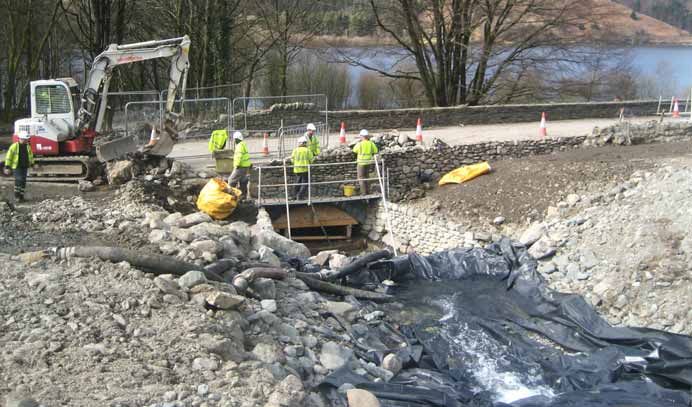
Contents

           Foreword
             1     Executive summary                                       04

             2     Delivery Plan for 2016-17                               08

           Strategic outcomes
             3     Supporting economic growth                              10

             4     A safe and serviceable network                          16

             5     More free-flowing network                                20

             6     Improving the environment                               24

             7     Accessible and integrated network                       28

           Enablers
             8     Delivering performance and efficiency                    32

             9     People and our company                                  36

             10    Collaborative relationships                             38

             11    Changes we have made                                    40

           Annexes
             1     Major improvement projects                              42

             2     Key performance indicators and performance indicators   48

             3     Funding table                                           52

             4     Glossary                                                54

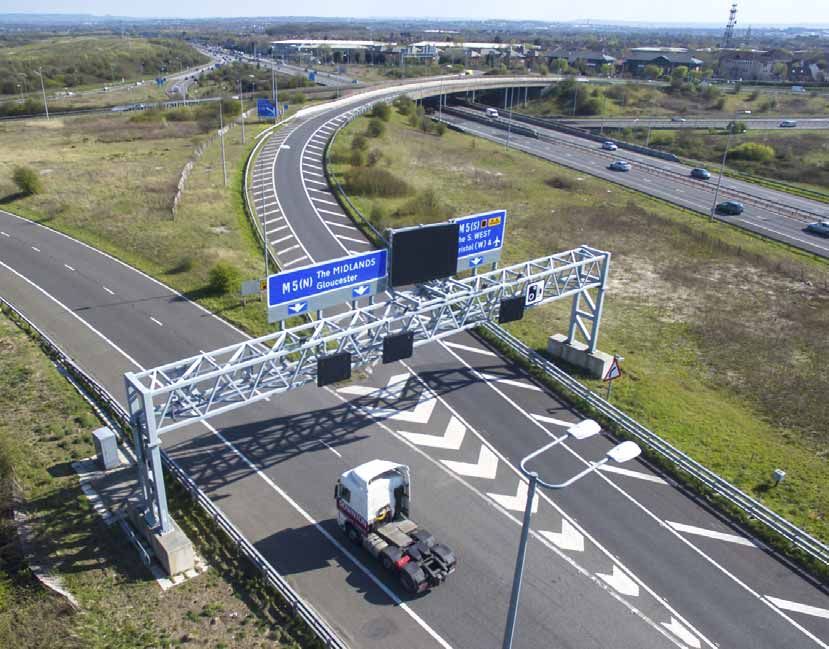
    Front cover photography: M4/M5 Interchange, South West England

2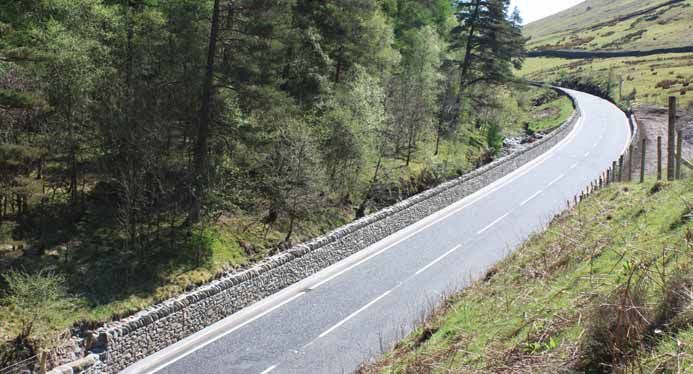
Jim O'Sullivan
                                                                         CEO

Foreword

 The Delivery Plan we published last year set out our long term plans for the
 modernisation and renewal of our road network over the 5-year period from 2015 to
 2020. Our first annual update provides an overview of the progress we have made on
 the commitments in the plan and the work we will carry out in the coming year.

We recognise our customers want to see             attending public information events. We are
road improvements move from planning to            reviewing this feedback and plan to make our
construction and completion as quickly as          recommendations to the Secretary of State later
possible. We have worked to progress our           this year. A decision by the Government on the
schemes in year one of the Road Period, with       route and its funding is expected by the end of
a focus on the 112 major improvements as           2016.
stated in the Roads Investment Strategy (RIS).
We have also added over 90 lane miles of           While long-term planning is vital, we have to
extra capacity to some of our busiest sections     be flexible enough to respond to unexpected
of motorway and resurfaced more than 1,200         events such as the flooding in Cumbria at the
miles of carriageway.                              end of 2015. We have worked with Cumbria
                                                   County Council to repair some of the damage
Our work to ensure the strategic road network      caused, including the reconstruction of the
(SRN) supports economic growth is a central        A591 which is a key link for tourists and local
element in the Delivery Plan and we have been      businesses. Because of the successful results
developing a number of specific projects to         achieved, we have reviewed how we could
help businesses to grow. This work includes        offer similar support in future emergencies,
supporting the Government’s ambitions for          using our rapid response approach. Providing
the Northern Powerhouse by accelerating the        mutual aid to other organisations will become
upgrade of the M62 to a 4-lane smart motorway      part of our wider crisis management response,
and investigating a new Trans-Pennine tunnel       rather than being established as a standalone
under the Peak District between Sheffield and       project.
Manchester.
                                                   We continue to focus on improving the safety
In addition, we are supporting economic            of both our workforce and of those who use our
growth through the schemes in the Growth           network in everything we do. Alongside this
and Housing Fund. The best way to ensure we        we are developing a new business model and
select the right projects is to respond to local   reorganising the way we work to ensure that we
needs. That is why we have engaged with the        are a high-performing organisation, responsive
39 Local Enterprise Partnerships (LEPs) and        to our customers and are managing our work
are working closely to identify the schemes that   effectively and efficiently.
make up the programme.
                                                   The update shows we have made good
The new Lower Thames Crossing will also open       progress in the past year in meeting our key
up significant new economic opportunities           priorities of making our roads safer, improving
and in January 2016 we undertook an 8-week         the experience of all road users and delivering
public consultation on a proposed scheme,          the Government’s 5-year Road Investment
a tunnel east of Gravesend and Tilbury. Our        Strategy. We recognise there is much more
consultation generated extensive interest          to do and we remain committed to continuing
across the region with many thousands of           our focused work to create a safer, better
people providing a formal response and             road network for everyone − our road users,
                                                   stakeholders and neighbours.

                                                                                                     3
1. Executive summary
The strategic road network (SRN) is a vital national asset which connects regional
communities and supports economic growth. Highways England’s role is to operate,
maintain and modernise this network to ensure that road users have safe and reliable
journeys and that businesses have the effective road links they need to prosper and
expand. We also work closely with our stakeholders to enable the network to operate
more harmoniously with the environment.
This update outlines the work we are doing One of our key imperatives is delivering this
to meet our key priorities of making our roads record investment to enhance and maintain
safer, improving the experience of all road England's strategic roads over this period. This
users and delivering the Government’s 5-year is a transformational programme that will bring
Road Investment Strategy (RIS). In particular, real benefits both to road users and to England
this first update focuses on our activities in as a whole. We are focused on delivering
2016-17 and our ongoing work to develop our these improvements to the optimal standard
plans for the remainder of the Road Period and providing the best possible value for
(2015-20) and complements the original taxpayers’ money.
Delivery Plan.
We are making good progress with 112
To support the country’s economic growth major road schemes, as well as many smaller
and longer-term vision for our road network, schemes that support economic growth. We
Highways England is funded by the are also focusing on improving the network in
Department for Transport (DfT) and our 5-year particular areas where this can help the local or
funding allocation for Road Period 1 (RP1) regional economy. This includes development
1. Executive summary
amounts to £11 billion of capital expenditure. work on Trans-Pennine routes to support the
Northern Powerhouse and the upgrading of the
A303,1 a key strategic route for the south west
of England, including a tunnel to protect the
2016 World Heritage Site at Stonehenge.
2015
2017
Hig
hwa
Highways England y
Deli s Engla
Delivery Plan
2015-2020
very
Plan
nd
2 Hi
gh
2018
201
6 De way
liv s E
er ng
y
Pl land
an
20 3
17
Hig elive
hw
D
ays
En
ry
gla 4
Pla 18
2019
nd
n
20
Highway
Deliver
s Englan
yP lan 5
2019
1
Map numbers 109 and 110 in Annex 1
d
4
In everything we do, our first priority is that     choices about their journeys. Communicating
no one should be harmed when travelling or         well with our customers is vital and we are
working on our network. To meet this critical      working hard to make sure we understand
aim, we continue to strengthen our own             their concerns and priorities better and that we
safety culture and that of our suppliers. We       respond to them effectively.
are also taking specific steps to improve our
understanding of the causes of accidents and       We know that one of those priorities is a more
then take the action needed to reduce risks.       free-flowing network and we are improving the
This is underpinned by our major investment in     way we manage our operations and deal with
renewal and maintenance projects which are         incidents to reduce congestion and disruption.
making the network safer and more serviceable.

Another important element in our Delivery Plan
is to ensure that the widest range of users have
access to our network. In particular, we are
taking action to improve connections with other
forms of transport, other networks, including
local roads, existing and emerging rail links,
ports and airports. We are also working hard
improving crossings for pedestrians and to
provide improved accessibility for cyclists. All
of this, coupled with increasing engagement
with communities should help to make it easier,
and safer, for cyclists, pedestrians and other
vulnerable users to access or cross our roads
safely.

This work needs to be carried out in a way that
meets our aim to reduce the impact of our road
network on the environment and neighbouring
communities. To help achieve this we are
continuing to reduce the impact of noise on
our local communities; implement schemes to
improve air quality; encourage biodiversity; and
mitigate the visual impact of our roads.

While our investment programme will improve
journeys for our customers in the long term, in
the short term there will be some disruption.
We are working to reduce the impact of that
activity, whether that is reducing the length of
roadworks or exploring the potential to increase
speeds through them. At the same time, we are
improving the quality of information we provide
so that road users can make more informed

                                                                                                      5
That includes a joint initiative between             Delivering this large-scale investment will
                       Highways England and the Dutch road                  require a significant increase in our technical
                       authority that will create a single more efficient    and commercial capacity and this update
                       operating system, called CHARM (Common               outlines the work we are doing to recruit people
                       Highways Agency Rijkswaterstaat Model).              with the specialist skills we need. In addition,
                                                                            we are developing new ways of working with
                       The CHARM programme takes our working                our supply chain to improve the knowledge and
                       with the Dutch road authority, Rijkswaterstaat,      relationships that will enable us to make the best
                       to a new level. We have entered into a formal        maintenance spending decisions.
                       Collaboration Agreement to develop, procure
                       and deliver a future-proofed common solution         As well as meeting the commitments in
                       to meet our respective Traffic Management             the Delivery Plan, we have responded to
                       Centre (TMC) technology requirements. This           unexpected events. This included the storms
                       will mean we can respond to emergencies              in Cumbria throughout November and
                       more effectively and reduce the impact on            December which had a significant impact on
                       drivers caught up in those incidents. Pooling        local communities and affected many services
                       our considerable joint expertise in TMC              and roads. We were asked by the Secretary
                       operation also allows us to deliver a solution       of State to rebuild a large section of the A591
                       that is both innovative and cost-effective.          local road for Cumbria County Council. The
                                                                            road, which links Keswick and Grasmere and
                       Further improvements in journey times will           the north and south Lakes, is a vital tourist route
                       be seen as a result of new incident detection        and a large section of it had collapsed into the
                       technology and schemes to increase capacity          adjacent river at Dunmail Raise. This project
                       on particularly busy roads. Our new contracting      was completed ahead of schedule and the road
                       arrangements with suppliers will also enable         reopened on 11 May in time for the main tourist
                       roadworks to cover shorter lengths and cause         season.
                       less disruption, helping to keep our network
                       flowing.                                              In all these areas, our performance is
                                                                            measured against key performance indicators
1. Executive summary

                       A particular project which will bring major          (KPIs), performance indicators (PIs) and
                       benefits to road users in Kent is our proposal        requirements that are set out in Annex 2. We
                       for a lorry area for use during disruption at        are also in the process of developing a number
                       the Channel ports and Channel Tunnel, to             of new performance indicators which we may
                       reduce the need to use Operation Stack on the        be measured against in future years.
                       M20 itself, which we have developed at the
                       request of the Secretary of State. This will bring
                       dramatic reductions in congestion for local
                       people and businesses.

   6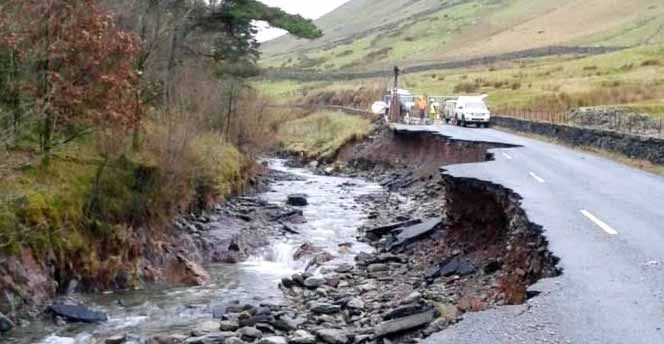
Reconstruction of the A591 in Cumbria after
the flooding damage at the end of 2015.

                                              7
2. Delivery Plan for 2016-17

                         This Delivery Plan Update provides a brief outline of what we have delivered during
                         2015-16 and sets out a clear programme of activity for 2016-17, as well as our annual
                         and future commitments. It complements our original Delivery Plan, outlining some key
                         progress we have made with this work.

                       We have set out the key performance                Forecasts suggest that the East Anglia region
                       indicators (KPIs) and other performance            will see significant growth in new jobs and
                       indicators (PIs) from the January 2016             homes. This will result in the amount of traffic
                       Operational Metrics Manual which has been          on sections of A47 and A12 being above their
                       produced in collaboration with the Department      capacity. To address this issue, a number of
                       for Transport (DfT) and Office of Rail and Road     junction improvements are planned, along with
                       (ORR). To aid navigation we have retained          the dualling of the most challenging single
                       the structure of the 2015-2020 Delivery Plan.      carriageway sections around Peterborough,
                       In the small number of cases where we have         Norwich, Wisbech, Kings Lynn, Dereham and
                       made changes to our commitments, we have           Great Yarmouth.
                       highlighted these and explained how they were
                       dealt with through the change control process.     We are working on plans to enable the A1, the
                                                                          main link from the North East to Scotland, to
                       As we set out in this update which forms our       meet the needs of a growing local economy
                       2016-17 Delivery Plan, we continue to work         and fulfil its role as a key part of the transport
                       with the Government to deliver their investment    network. We are developing plans to provide
                       in our infrastructure and to ensure that our       a continuous dual carriageway between
                       network supports economic growth. As part          Newcastle and Ellingham, and junction and
                       of the development of our Strategic Economic       overtaking improvements north of Ellingham.
2. Our Delivery Plan

                       Growth Plan and future Route Strategies, we        Additionally, in the North East, to address some
                       will set out how we will support organisations     of the most heavily congested parts of the
                       such as Transport for the North and Midlands       network in the region, we are developing plans
                       Connect in fulfilling their ambitions. We have      to carry out lane widening on the A1 south of
                       also created a new Relationship Manager role       Gateshead and between Scotswood and North
                       to support our contribution to Transport for the   Brunton.
                       North and Midlands Connect.
                                                                          The 2016 Budget also provided £500,000 to
                       We are working on plans to improve road            fund a study into a new junction 18a on the M4
                       connections to and from the South West to          to link with the A4174 Avon ring road.
                       support the local economy. This includes
                       plans for dualling sections of the A358 and        Over the last year we have reprogrammed our
                       A303 from the M3 to the M5 at Taunton, and         activity to develop solutions to a number of
                       plans including a tunnel option where the road     long-term transport challenges. This includes
                       passes Stonehenge.                                 work, with the DfT, on a study of the options for
                                                                          a Trans-Pennine Tunnel to improve connections

   8
between Manchester and Sheffield. The study’s      Over the summer of 2015, Operation Stack
final report will be used to inform this part of   was implemented in Kent on a record 26 days,
the content of the second Road Investment         when historically it has typically been used
Strategy (RIS 2).                                 for a few days a year. This caused significant
                                                  disruption to residents and businesses in
We are committed to bringing forward M62          Kent. Other traffic was also unable to use the
junctions 10-12 start of work (SoW) to 2017-18    motorway and local roads become severely
and M62 junctions 20-25 SoW to mid-2019-20,       congested. In autumn 2015, the Government
to help provide additional capacity by 2020.2     announced up to £250 million of additional
                                                  funding to build a lorry area to reduce the need
We are supporting Midlands Connect in
                                                  for Operation Stack to be used on the M20
developing and implementing a long-term
                                                  itself. The Government’s preferred location
Midlands Transport Strategy. This includes
                                                  for the development is Stanford. We expect a
development work on some of the major roads
                                                  final decision later this year. Construction will
in the Midlands: M1, A46 Newark bypass, A45,
                                                  then start on the project that will bring major
and the M42 and M5 around Birmingham.
                                                  improvements to Kent’s economy and to the
The new Lower Thames Crossing will open           quality of life of local people.
up significant new economic opportunities
                                                  In all our work, we will be responding to
and, having assessed the options, we have
                                                  emerging technologies which can improve
consulted on a proposed scheme, a tunnel
                                                  the operation of our network. In particular,
east of Gravesend and Tilbury. We have
                                                  we will be taking steps to support the
considered the consultation responses,
                                                  Government’s ambition to establish the UK as
and are reviewing all evidence to make a
                                                  a global centre for excellence in connected
recommendation to the Secretary of State, with
                                                  and autonomous vehicles.
a decision by the Government on the route
expected by the end of 2016.

                                                                                                  M20 Operation Stack

                                                  2
                                                    The regional programme review of this acceleration is still being worked on and will be
                                                  finalised in the next phase of change control.

                                                                                                                                              9
3. Supporting economic growth
Highways England is modernising, improving and increasing the capacity of our network
through delivery of the £11 billion3 Road Investment Strategy (RIS) and to assist the
Government’s agenda of supporting economic growth. This roads programme, alongside
our work to relieve congestion and reduce delays, is helping businesses to grow,
encouraging investment and creating jobs, and opening up new areas for development.
Key performance indicator Highlights of our activity
Encouraging economic growth in 2015-16
We have an agreed programme of major
Average delay (time lost per improvements that we are taking forward over
KPI
vehicle per mile) Road Period 1 (RP1) and that we are preparing
for future years beyond that. This amounts
to over £7 billion5 of capital expenditure and
The Government did not set a comprises 112 individual schemes and a
Target
3. Supporting economic growth
target for this measure in the further 15 projects that will be developed for
first Road Period, but Highways the RIS 2. Details of the key dates for each of
England should act in a way these 112 schemes are set out in Annex 1.
that will minimise delay as far as
possible During 2015-16, 5 major schemes have
opened to traffic:
widening of the A453 near Nottingham6
Indicators that will be used
to measure performance: widening the A14 near Kettering,
Northamptonshire7
percentage of formal planning
applications responded to within 21 days improvements to capacity on the M6
of receipt by Highways England between junction 10a north of Walsall
and junction 13 in Stafford8
average delay (time lost per vehicle per
mile) on Gateway Routes4 increases in capacity on the M1 between
junctions 39 and 42, Wakefield and
meet the Government target of 25% small Leeds9
and medium sized enterprise (SME)
direct and indirect spend increases in capacity on the M1
between junctions 28 and 31, Derby and
For a full table of KPIs, PIs and requirements Nottingham10
see Annex 2.
3 5 8
£15 billion allocated for RP1 plus 1 year Remaining £4 billion to support Map number 11 in Annex 1
4 9
See the Glossary in Annex 4 renewals and designated funds Map number 14 in Annex 1
6 10
Map number 5 in Annex 1 Map number 4 in Annex 1
7
Map number 6 in Annex 1
10private partners, including Local Enterprise
Partnerships (LEPs), local authorities and
emerging sub-national transport bodies and
the city regions. This will provide a detailed
description of how we can support economic
growth and set a framework for stronger
collaboration with stakeholders in this area. We
have started to gather evidence to inform this
work, using a bespoke national mapping tool
and the first round of consultation with all 39
LEPs is almost complete. We will also support
the Government’s devolution agenda through
engagement with established and emerging
regional partnerships such as Transport for
the North and Midlands Connect to support
development of the plan.
The Growth and Housing Fund
Markham Vale The Growth and Housing Fund (GHF)
Enterprise Zone has an important contribution to make in
supporting economic growth and new housing
In addition, we have made improvements
development. We have been working with our
to junctions 5 and 7 on the M5,11 and it is
partners, including Homes and Communities
anticipated that work at junction 6 will follow
Agency, development sector representative
later this year.
bodies such as the British Property Federation
The first of our projects supported by our and British Land to agree the selection criteria
Growth and Housing Fund at Turks Head by for appraising schemes, which has been
the A30 in Devon has been completed, and used to shortlist 15 potential pilot schemes.
additional work has commenced to identify All GHF schemes must be supported by
further schemes. contributions from public or private sources
(“match funding”). These other sources include
What we plan to deliver developer contributions and public grant
funding such as the Local Growth Fund or local
in 2016-17 authorities’ own funds. It is expected that up
Developing our Strategic Economic to 50% of all GHF scheme costs will be met by
Growth Plan third parties – with the pilot schemes potentially
attracting up to £25 million in match funding.
During the coming year we will continue to This will enable the delivery of up to 4,000 new
focus on developing our network to ensure that homes and facilitate 2,000 new jobs by the end
it supports economic growth effectively. We of RP1, and substantially more in the longer
are drawing up our Strategic Economic Growth term. Detailed assessment and decisions on all
Plan, reflecting input from our public and these first wave schemes will be completed by
summer 2016.
11
Map number 64 in Annex 1
11Following engagement with 39 LEPs to develop Progress of schemes in construction
proposals for the full programme, we have
received around 50 expressions of interest, Throughout last year, a number of major
from 25 of the 39 LEPs in England. We will schemes have been in construction. Those we
complete our full assessment and make plan to open to traffic in 2016-17 are:
decisions on these projects and the delivery
A556 Knutsford to Bowdon in Cheshire12
strategy by the final quarter of 2016-17. An
initial evaluation of the fund, and its lessons for A1 Coal House to Metro Centre near
our wider work, will also be completed during Newcastle13
this year.
M1 junction 19 improvement near Rugby,
Warwickshire14
Map 1: Schemes planned to A45-A46 Tollbar End near Coventry15
open for traffic in 2016-17
A30 Temple to Carblake in Cornwall16
Newcastle
Upon Tyne
A1M
A1 Coal House to Metro Centre
M6
3. Supporting economic growth
A1M
York A160/A180 Immingham
Leeds
Liverpool Manchester
M1 Junction 32 to 35A
A556 Knutsford to Bowdon M1
M6
Nottingham
Norwich
A45 to A46 Tollbar End M1 junction 19 improvement
M1
M5 Birmingham Bedford
M11
A1M
London
Bristol M4 M25
M3
A30 Temple to Carblake
Southampton Brighton
Exeter
A21 Tonbridge to Pembury
12
Map number 1 in Annex 1 15
Map number 8 in Annex 1
13
Map number 2 in Annex 1 16
Map number 12 in Annex 1
14
Map number 7 in Annex 1
12 M1 junctions 32-35A in South Yorkshire17 affected significantly by ground conditions
and archaeological discoveries. This has
A160/A180 Immingham18 increased the risk that the planned timetable of
completion by the end of 2016-17 may change.
A21 Tonbridge to Pembury in Kent19
When these types of issues do occur, we
Schemes identified following the re-examine our plans to see how time lost can
outcomes of the 6 feasibility studies be recovered, and anticipate achieving this for
the A21 scheme.
We are making progress with the schemes
developed from our feasibility studies. These Schemes planned to start construction
studies focused on identifying ways to improve work in 2016-17
traffic flow on some of the roads with the worst
It is important to note that the decision to
congestion.
start work on these schemes is subject to
The work on the A303 Amesbury to Berwick the completion of statutory processes and
Down20 scheme near Stonehenge is an demonstration of value for money:
example of a scheme developed through the
A14 Cambridge to Huntingdon23
feasibility studies. This will remove significant
congestion, as well as supporting local and A19/A1058 Coast Road in Tyneside24
regional economic growth along a key south
west transport corridor. Over the last year M4 junctions 3-12 from Borough of
we have been building our relationships with Hounslow, London, to West Berkshire25
key stakeholders and we anticipate holding
a public consultation on the options early in M1 junctions 24-25 the East Midlands26
2017.
In the 2015-2020 Delivery Plan, we set out our
Another scheme arising from the feasibility ambition to start construction work on the A1
studies is the work on A47 Acle Straight21 in and A19 technology enhancements scheme27
Norfolk. This will include safety improvements and the M5 Bridgwater junctions.28 These
this year and, in the longer term, Highways schemes were at an earlier stage of design so
England can look at improvements to the Acle the timing was less certain and we have not yet
Straight, but the type of improvements have reached the point where we can confirm the
yet to be defined. These will be subject to planned start of works date. We expect that the
appropriate environmental mitigation, and we work needed to determine a start date will be
will work with Natural England and the National completed during the summer of 2016.
Park authority at all stages of the project.
We had planned to start work on the A43
Other schemes Abthorpe junction29 improvement scheme in
2016-17. However we were able to start this
We have made good progress on our scheme earlier (in 2015-16), so construction
individual schemes; despite the risks of delay work is already underway. We had planned to
when carrying out major civil engineering start work on the A63 Castle Street30 scheme
projects, most notably those caused by bad in Hull but the timing is now subject to further
weather, ground conditions or unexpected assessment of the environmental impacts.
issues on site. For example, the A21 Work is now expected to start in 2018-19.
Tonbridge to Pembury22 scheme has been
17 20 23 27
Map number 13 in Annex 1 Map number 109 in Annex 1 Map number 22 in Annex 1 Map number 45 in Annex 1
18 21 24 28
Map number 17 in Annex 1 Map number 102 in Annex 1 Map number 24 in Annex 1 Map number 87 in Annex 1
19 22 25 29
Map number 18 in Annex 1 Map number 18 in Annex 1 Map number 25 in Annex 1 Map number 65 in Annex 1
26 30
Map number 27 in Annex 1 Map number 26 in Annex 1
13Route Strategies the north, particularly in combination with
plans for improved rail links. This project
We published 18 Route Strategies in April 2015 would be the most ambitious road scheme
and during the coming year we will be developing since the construction of the first motorways
further strategies. This work will inform our 50 years ago and needs to be studied in
Strategic Road Network Initial Report, which is due detail to confirm its viability.
for submission to the Government by November
2017 and will inform the Government’s setting of A1 east of England − options to bring
RIS2. consistency to the southern section of the
route. With more than 50 years of local
Strategic studies upgrades, the A1 ranges from 4-lane
motorway to dual carriageway. The study will
As stated in the RIS, we have commissioned
look at bringing consistency to the southern
6 strategic studies on behalf of DfT, which are
section of the route, from the junction with
considering potential improvements to the
the M25 in the south to Peterborough.
capacity and connectivity of parts of our network
and which could drive economic growth in key Oxford to Cambridge Expressway31 −
locations. These are: options to support economic growth
by improving connectivity. This study
Northern Trans-Pennine routes (A66 and
will examine the case for creating an
A69) − options for a new strategic corridor
Expressway to connect the towns and
upgrading one or both of the A66 and A69.
cities in this area. It will also look at other
One of the most visible gaps in the UK
3. Supporting economic growth
enhancements on existing roads along the
transport network is the lack of a complete
route, including the A34 around Oxford.
dual carriageway between the east and
west of the country anywhere north of the M25 South West Quadrant − options for
M62. The study will explore the potential to improving the performance of this part of
create a new strategic corridor in the region the transport network across all modes.
and link the A1 and the M6. This part of the M25 is the busiest motorway
in Britain. The investment programme will
Manchester North West Quadrant − an
help improve the road but it is now time for
appraisal of the potential improvements to
a more far-reaching study that considers all
the transport network to the north west of
the options for transport in this area.
Manchester. The M60 is a critical part of the
north west transport network and the north
Annual Commitments
west quadrant of the road between junctions
8 and 18 is one of England’s busiest Continuing commitments beyond 2016-17
stretches of road. This study will look at the
options for improving the transport network The National Infrastructure Commission’s
around this area. report High Speed North recommended
accelerating improvements to upgrade the M62
Trans-Pennine Tunnel − options for a to a 4 lane smart motorway between junctions
new high performance road link between 10-12, Warrington to Eccles,32 and junctions
Manchester and Sheffield through a 20-25, Rochdale to Brighouse.33 An additional
purpose built tunnel. This connection could £161 million of funding has been allocated to
have a dramatic impact on the economy of Highways England to progress these schemes,
31
See the Glossary in Annex 4
32
Map number 40 in Annex 1
33
Map number 49 in Annex 1
14with the initial funding of £65 million available In 2017-18 option development for the remaining 9
in 2018-19 and the remainder in 2019-20. schemes will be started:
Consequently we will review the specific timings M60 Simister Island Interchange
for these schemes in this coming year.
A46 Newark Northern Bypass
Other schemes that will support economic growth M5/M42 Birmingham Box Phase 4
in particular areas include work with Lancashire
County Council and Rochdale Council to deliver A45 Stanwick to Thrapston
a new junction on the M55 and to provide a A3 Guildford
new access road from junction 19 of the M62 to
M1 Junctions 19-23A
Heywood which we expect to be completed by
2018-19. A1(M) Doncaster Bypass
M1 Junctions 35A-39
We are continuing to assess our portfolio to identify
any further land that could be released and A1 Redhouse to Darrington
disposed of for housing. This will help us to play
We will work with Transport for the North to take
our part in helping the DfT meet its overall target of
forward Government proposals, set out in the
releasing land for homes.
2016 Budget, for new schemes which have been
Highways England will continue to engage with allocated £300 million in funding. These include
emerging sub-national transport bodies, elected developing the business case for a new Trans-
Mayors and combined authorities to help deliver Pennine Tunnel and options to enhance the A66,
their transport aspirations. A69 and the north west quadrant of the M60. This
work is expected to be completed by the end of
Schemes for the next Road Period the year. As specified in the Budget 2016, we will
look accelerate the development of the M1/M62
We are planning 15 potential new schemes for Lofthouse Interchange and M60 Simister Island
delivery in the next Road Period and are using Interchange.
our Route Strategies, which are one of the key
steps for developing the RIS, to identify where we We will work to develop Midlands Connect’s
can improve the performance of our network to priority strategic roads schemes and this includes
support economic growth. development work on 4 major roads:
In addition to continuing our work to develop upgrades to the M1 to provide a continuous
the Lower Thames Crossing scheme, we will be smart motorway from London to Yorkshire
starting option development work on the following improvements to the A46 Newark
5 schemes this year: bypass and its junction with the A1 in
Nottinghamshire
A417 'Missing link' at Air Balloon in
Gloucestershire (options identification upgrading the single carriageway link
2016-17) on the A45 Stanwick to Thrapston in
A12 M25 to Chelmsford in Essex Northamptonshire
A12 Colchester bypass widening in Essex upgrading parts of the M42 and M5
around Birmingham to a 4 lane smart
M1/M62 Lofthouse interchange in West motorway
Yorkshire
A64 Hopgrove junction in North Yorkshire
154. A safe and serviceable network
Safety is our first imperative. Our aim is that no one should be harmed when travelling
or working on our road network and we are committed to taking the action that will help
us move towards our goal of bringing the number of people killed or injured as close as
possible to zero by 2040. We also have responsibilities to ensure that the network is kept
in good condition.
Key performance indicators Indicators that will be used
Making the network safer to measure performance:
Road safety
The number of Killed or Seriously
KPI Injured (KSI) on the strategic road Incident numbers and contributory
network factors for motorways
Casualty numbers and contributory
A reduction in the number of KSIs factors for all-purpose trunk roads
4. A safe and serviceable network
Target
from the baseline figure of 2,321
to 1,393 by 31 December 202034 International Road Assessment
Programme based road safety
investigations, developed in conjunction
with the Department for Transport, to feed
into subsequent Route Strategies
Keeping the network in good Accident Frequency Rate for construction
condition and maintenance workers, and for
Operations
The percentage of pavement/road
KPI surface asset that does not require
further investigation for possible Network condition
maintenance
Geotechnical Asset Inventory and
Geotechnical: Asset Risk Level
(Condition)
Target The percentage of the network
requiring no further investigation to Drainage asset − inventory and condition
be maintained at 95% or above data coverage
Technology Asset availability
Structure asset − inventory and condition
For a full table of KPIs, PIs and requirements
see Annex 2.
34
RIS Making The Network Safer Target of a 40% reduction against the 2005–09 average
baseline by the end of 2020.
16Highlights of our activity Investing in renewals
in 2015-16 A critical part of our work is keeping the
network in good condition through effective
Improving safety
maintenance and in 2015-16 we continued to
To help us meet our aim that no one should invest in renewal of road surfaces, structures,
be harmed when travelling or working on our drainage, lighting, geotechnical and
network we have published Health and safety: technology assets. We have also worked on
Our approach. This document sets out how our asset management guiding principles and
we work with suppliers and stakeholders to Asset Management Strategy to help improve
deliver improvements in the health and safety our long-term planning of this work.
and wellbeing of road users, our staff and
suppliers. This work is being informed by our What we plan to deliver
commissioned road safety research projects. in 2016-17
These will improve our understanding of the
causes of fatalities in collisions, the current Creating a safety culture
state of roadworthiness of vehicles and the
We know that improving safety depends on
impact of roadworks on driver stress.
our action as a company and on ensuring
We have appointed Regional Safety that all those who work for us take personal
Coordinators to help establish Regional responsibility for their safety, so creating a
Incident and Casualty Reduction Plans. strong safety culture across our organisation
remains our first imperative. We are continuing
our work to develop a safety leadership
and behavioural safety programme which
will reinforce that culture. By the fourth
quarter of 2016-17, we will develop a single
company-wide health and safety management
system to help us manage risk better.
During 2016-17 we are planning to take a
number of specific actions that will improve the
safety of those who work on our roads. This
includes further progress on a zero crossing
initiative by the fourth quarter of 2016-17, which
aims to eliminate the need for our workers to
cross the carriageway when carrying out work.
Better information and compliance
During the financial year, we will explore ways
to use education and enforcement initiatives
to improve compliance with lane and hard
shoulder restrictions. We will continue to
develop our understanding of the causes of
accidents with a key focus on motorbikes and
17mopeds. By the third quarter, we aim to identify By the fourth quarter we intend to set out an
the factors which result in injuries to vulnerable investment strategy so that roads with a 1*
users of these vehicles and the measures we and 2* (1* least safe - 5* safest rating) can be
can develop to reduce risk. raised to a higher standard. This will support
our work to make sure that, by the end of 2020,
During the financial year, we plan to undertake more than 90% of travel on the strategic road
further work with partners and stakeholders to network will be on roads with a safety rating of
promote safer driving. For example by working EuroRAP 3* or equivalent.
with the Motor Insurance Bureau to improve our
understanding of incidents on the network, in Last year, we developed an independently
particular those which are 'damage only' that reviewed KSI Forecasting Tool. We are
may inform our safety work and road design. continuing to refine and improve it and we plan
to undertake the next stages of development
during 2016-17.
Table 1: 2016-17 indicative renewals outputs
Deliverables Total quantity 2016-17
4. A safe and serviceable network
Pavement/road surface 1,200 (lane km)
Road markings 1,952,868 (lin m)
Kerbs 8,088 (lin m)
Vehicle restraint system − concrete 10,000 (lin m)
Vehicle restraint system − non-concrete 85,910 (lin m)
Drainage 177,295 (lin m)
Renewal of roads Geotech 11,884 (lin m)
Traffic sign (non-electronic) 1,140 (no.)
Guardrail 147 (lin m)
Boundary fencing 28,544 (lin m)
Footway 2,015 (lin m)
Lighting 2,332 (no.)
Soft estate 6 (no.)
Bridge joint 231 (no.)
Bridge bearing 159 (no.)
Renewal of structures
Parapet 2,202 (lin m)
Waterproofing 27,067 (sq. mtrs)
Motorway communications equipment 96 (no.)
Technology renewals and improvements 256 (no.)
Renewal of technology
Winter resilience 55 (no.)
Network resilience 24 (no.)
There may be variances against the target throughout the year due to reprioritisation of programmes.
18Plans for maintenance and renewals We are required to develop a suite of
2016-17 performance indicators for RIS 2 to provide
more information about the condition of assets
The Delivery Plan contains dedicated funding across the network including:
for the renewal of the SRN and challenging
efficiency targets for delivery. Table 1 sets out new condition indicators for Pavements/
our plan for renewals. This renewals investment road surface and Structures for
also includes capital expenditure on major agreement by 31 March 2017 and to
structures and asset life extension that are not complete validation for these by 31
listed here. As a result of extreme weather or March 2019
on some occasions incidents on the network
we may have to react flexibly which may result new condition indicators for Technology,
in the need to reprioritise our plans. There may Drainage, and Geotechnical Works
also be variances against the target throughout for agreement by 31 March 2018 and
the year due to reprioritisation of programmes. to complete validation for these by 31
As a result, the volume of activity listed in the March 2020
table may change over the year.
Annual commitments
We carry out annual progress reviews on the
schemes we are delivering to make sure we
are applying our increased knowledge about
the causes of incidents and how to improve
safety. At the same time, we measure our
overall performance through yearly inspections
of the road surface.
Improved network knowledge
By the end of April 2018, we aim to have an
improved monitoring capability to ensure we
capture more details of incidents on the all
purpose trunk road as the majority of this is
not covered by our Traffic Officer Service. We
are also introducing a more comprehensive
asset data information system to improve our
knowledge of the condition of our assets and
improve our asset management capability.
We will start to measure this across RP1 to
Night works at
2019-20.
Dartford Crossing
195. More free-flowing network
We are working to provide a more free-flowing network where journeys are easier,
safer and more reliable, and delays are less likely. In particular, we are improving our
response to road user concerns about the impact of roadworks on their journeys and
taking steps to reduce the impact of this work on journey times.
Key performance indicators Improving user satisfaction
Supporting the smooth flow of traffic
The percentage of National
Road Users’ Satisfaction Survey
The percentage of the KPI
(NRUSS) respondents who are
KPI strategic road network (SRN)
very or fairly satisfied
available to traffic
Achieve a score of 90% by 31
Target
Maximise lane availability so March 2017 and then maintain
Target
that it does not fall below 97% or improve
in any one rolling year
5. More free flowing network
Indicators that will be used
Supporting the smooth flow of traffic to measure performance:
The percentage of NRUSS respondents
The percentage of motorway who are very or fairly satisfied with:
incidents cleared within 1 hour journey time; information and signs;
KPI
management of roadworks; feeling safe;
upkeep
At least 85% of all motorway
lane impact closures between Planning time index (reliability of
Target
06:00 and 22:00 are cleared journeys)
within 1 hour
Traffic (vehicle miles travelled) on the
SRN
Acceptable journeys
Average speed
For a full table of KPIs, PIs and requirements
see Annex 2.
20Highlights of our activity convoys) trials. We will provide further support
for the development of these vehicles through
in 2015-16 preparing smart motorways for connected
Our new Operational Strategy sets out the vehicles, for example by introducing radar
actions we are taking to make the most technology to detect stationary vehicles in live
effective use of road capacity, improve our lanes. It will alert a traffic officer in a control
customers’ journeys, and keep them safe and room that there is a stopped vehicle and will
in control. allow us to use the technology associated
with smart motorways to set signs, inform
We have improved the quality of information oncoming traffic, reduce speed limits and
that we give to our customers about the most use red X compliance to protect people in
disruptive roadworks. We are providing news stopped vehicles.
about planned roadworks more effectively,
alongside other useful traffic updates, and As the impact of these developments on future
will continue to do so in the future. Our Traffic network requirements becomes clearer, future
Information Strategy and Customer Service investment plans will be adapted to incorporate
Strategy outline how we are responding to our the benefits of emergent technology. The
customers’ needs and taking into account their costs associated with research into such
views and feedback. developments will be clearly identified
as they arise.
What we plan to deliver We have started the first trials of comparative
in 2016-17 fuel price signs on the M5 between Bristol and
Exeter, to drive price competition.
Innovation
In addition, we are using the £120 million
Innovation will play a key role in meeting
Innovation Designated Fund35 to deliver the
our economic, environmental and efficiency
benefits of new technology to road users.
challenges. To support our work in this area,
This includes developing incident detection
we have completed our Innovation, Technology
technology and work to develop the best
and Research Strategy and will apply its
solution for a tunnel incident detection system
approach to deliver a smarter and more
in the tunnel on the A3 at Hindhead, which will
effective network.
contribute to improved safety.
We are supporting the Government’s ambition
In our Delivery Plan we made a commitment
to establish the UK as a global centre for
to undertake off-road trials of Wireless
excellence in connected and autonomous
Power Transfer in 2016-17. Having carefully
vehicles. This ambition includes enabling
considered the maturity and viability of the
trials of driverless cars on our network by
wireless technology that could power electric
2017 and the establishment of a £15 million
vehicles, we have decided to pause the
‘connected corridor’ from London to Dover to
project until at least 2018 when a similar trial is
enable vehicles to communicate wirelessly with
completed on urban roads.
infrastructure and potentially other vehicles.
We are also working with the DfT and the
freight industry on freight platooning (lorry
35
£150 million allocated for RP1 plus 1 year
21Improving customer satisfaction a progressive roll out over this year, we will
explore methods to enhance communication
While our investment programme will improve about smart motorways, and have undertaken
journeys for our customers in the long term, research to be able to better understand
the coming years will see more roadworks and how we influence poor driver behaviour
we want to reduce the impact of this work on and compliance through enforcement and
road users’ journeys. By the fourth quarter we education initiatives. All of this is part of our
will carry out an audit of our roadworks, and commitment to make safety our number one
commence trials to better understand the effect imperative.
of increasing speed limits through roadworks
to 55 and 60 mph in appropriate locations. Tackling congestion
If the trials are safe and provide a benefit
to our customers then we will plan future To minimise the impact of incident-related
implementation across schemes. congestion, we developed a new incident
management measure in 2015-16 and
We are also gathering information on the are assessing its effectiveness. We aim to
customer experience of roadworks and the implement this fully from 2020 onwards.
recommendations arising from this work will
be implemented into major schemes by the We are also taking steps to reduce congestion
second quarter of 2016-17. By the fourth on particular roads, including piloting a new
quarter we will have improved the quality operating model.
and accuracy of roadworks information
Expressways aim to improve the flow on busy
disseminated through all our information
all-purpose roads by reducing local turnings
channels, including Traffic England, and
and junctions which cause congestion and
5. More free flowing network
developed a new roadworks section as well as
removing vulnerable users and slow moving
improving the variable message signs on our
vehicles to improve safety. An early example
network. To further aid the development of our
of how expressways will transform our
information, we have doubled the size of our
network is in our planning for improvements
customer panel.
to the A14. We will develop the standards
We are working with Transport Focus to help for the expressways concept with the aim of
shape the new customer satisfaction measure proposing and constructing a number of other
to be introduced by the end of 2017, which schemes in RP1 and RP2.
will initially run in parallel with our existing
Our new contracting arrangements with
National Road User Satisfaction Survey. We
suppliers will enable roadworks to cover
are developing new performance indicators
shorter lengths and cause less disruption,
and enhancing skills to improve how we deal
helping to keep our network flowing.
with customer correspondence and telephone
enquiries to help us become a more responsive
organisation. This will be supported by the use
of new training courses focused on improving
the quality of our written correspondence,
which complements the development of our
communication with customers. As part of
22Changes to speed cameras times or during emergency incidents. We had
planned to introduce this system into one of
Speed cameras on England’s smart motorways our control centres by the end of March 2017
play a valuable role in enhancing safety, but due to challenges faced by suppliers in
smoothing traffic flow and reducing congestion. meeting this date, this is now expected to
In November 2015 the Government announced be in place by December 2017 and will be
that all operational speed cameras on our implemented in other centres after that.
network would be yellow for maximum visibility.
The majority of colour changes are taking We are also analysing and capturing lessons
place during standard renewal of speed learned from operating smart motorways so we
camera units, alongside other planned work, to can apply these to future schemes.
minimise the cost and disruption to road users.
We have developed a programme to achieve
this by October 2016.
Continuing commitments
beyond 2016-17
Improving control centres
Traffic control centres play an important part in
keeping the network moving. We are working
on a new measure to improve traffic flow by
introducing a new system for managing traffic
into one of our regional control centres. This
is a joint initiative between Highways England
and the Dutch road authority, Rijkswaterstaat,
where we have collaborated to tackle a
number of issues faced by both Agencies. The
objective of the CHARM project is to specify,
install and migrate to a new, integrated traffic
management system capable of managing
current and planned capacity of the network
and with provision to interface with emerging
technologies. CHARM is a critical part of
ensuring our network is fit for the future
and will replace the many systems that we
currently use to manage the network. It will
interlink key command and control systems
into a single, more efficient operating system
to enable remote operation and response
from any control centre. This will improve our
effectiveness, resilience and ability to flex
operational capability at particularly busy
New yellow
cameras on M25
236. Improving the environment
Highways England is working to develop our network so that it operates more
harmoniously with its surroundings to deliver an improved environment. We are
using the Environment Fund and Air Quality Fund to deliver improvements, as well as
taking action to address environmental challenges relating to noise, visual impact,
flooding, biodiversity and cultural heritage. As we update our environmental standards
and contractual requirements, our construction and maintenance work will bring
enhancements to the environment.
Key performance indicators Indicators that will be used
Delivering better environmental to measure performance:
outcomes Number of air quality pilot studies
completed
Number of Noise Important
KPI Areas (IAs) mitigated Carbon dioxide equivalents (or CO2e)
in tonnes associated with Highways
England’s activities
1,150 IAs where interventions
Target
are used to reduce the noise Supply chain carbon dioxide (CO2)
6. Improving the environment
exposure of the population
within the IA The number of flooding hotspots and
culverts (high risk and very high risk)
mitigated
The number of outfalls and soakaways
Delivering better environmental (high risk and very high) mitigated
outcomes For a full table of KPIs, PIs and requirements
see Annex 2.
Delivery of improved
KPI biodiversity, as set out
in Highways England’s
Biodiversity Plan
Reduction in the net loss of
Target
biodiversity by end of the first
Road Period, on an ongoing
annual basis
24Highlights of our activity
in 2015-16
We continued to work to reduce the
environmental impacts of our network. In our
work to improve air quality, we initiated 6 air
quality pilot schemes, including studies of
specific locations and potential mitigation
techniques. We developed our Biodiversity
Plan which outlines the actions we will take
to change the culture and working processes
within Highways England and our service
providers to recognise the importance and
value of biodiversity.
What we will deliver
in 2016-17 Environmental studies
for M4 junction 4-12 scheme
Working with stakeholders
due by the final quarter. We will then use the
We recognise the importance of the public and lessons from the first air quality pilot studies to
wider environmental stakeholder organisations help identify 4 further pilot studies that we plan
in helping us identify which actions will be to start by the fourth quarter of 2016-17.
of greatest benefit to the environment. Our
regional teams and their suppliers will continue Reducing our carbon footprint
to engage with local groups and organisations
particularly on the use of the Environment We aim to reduce our corporate carbon
Designated Fund, a ring fenced fund of £225 footprint by focusing on electricity consumption
million over RP1. We will also continue to on the network and in our offices. Working
engage at a national level with environmental closely with our suppliers we will encourage
organisations to obtain their views and innovation and efficiency to reduce emissions
comments on our environment policy and from their network related activity. We will
approach. fully embed our carbon footprint assessment
tool and manage our suppliers’ carbon
Improving air quality performance.
We plan to provide further information on the Innovative approaches
development of a new performance indicator
for air quality, which will be part of a suite of We know that innovation and technology
performance indicators that provide additional can play a key role in improving our network
information on environmental performance. and reducing environmental impact. We are
working on a number of initiatives to secure the
By the third quarter of 2016-17 we will report benefits from new developments. Up to £15
the findings of 3 of the geographic air quality million of Government funding is available to
pilot studies, with the report on the fourth support electric vehicles and we are assessing
25the best way to support the uptake of ultra-low We will continue to work with our Design
emission vehicles by installing rapid electric Review Panel to encourage design excellence
charging points along our network. We have in the landscape, engineering and built
identified the current level of coverage to environment aspects of our construction
develop, cost and programme a 4-year delivery projects.
programme for charging points. During 2016-
17 we will be increasing the numbers of rapid Biodiversity
charge points which should reduce the longest
As set out in our Biodiversity Plan, by
length on the network without a charge point
December 2016 we intend to have baseline
from approx 60 to 40 miles.
management information in place for Sites of
We have engaged with existing suppliers and Special Scientific Interest (SSSI) and other
operators of electric vehicle charge points to statutory sites on or adjacent to the network.
help us develop our approach to procurement This will include a statement on the current
and secure value for money. By 2018-19 we condition of the site, and identifying areas for
expect to have installed sufficient rapid charge action to improve the status of the site. Over
points to meet our RP1 obligation to ensure that the same period, we aim to have completed
95% of the network has a charge point within a range of baseline studies to support
20 miles. development of Designated Fund projects.
Tackling noise and visual impact We will be fully transparent about our
performance in relation to biodiversity and will
We will develop an in-year programme by the produce a report.
end of the second quarter of 2016-17 that will
6. Improving the environment
outline how we will deliver our commitment to Reducing litter
mitigate noise at 1,150 Noise Important Areas
We take seriously our statutory obligations
during RP1. In 2015-16 noise in 48 areas was
in relation to litter clearance and seek to
mitigated through resurfacing and we will meet
be supportive of other regional authorities.
the KPI target of 1,150 through a combination
When litter is visible it affects our customers’
of resurfacing and barriers and insulation
perception of our network and ultimately
works, delivered through maintenance,
our reputation and we are working with
standalone projects funded by the Environment
local authorities and motorway service area
Designated Fund and major projects.
operators to tackle littering at source. Best
We will conduct a feasibility assessment of practice is being identified and will be shared
alternative low-noise surfaces (twin layer across all regions. We are launching a Litter
porous asphalt) and will report on the findings Collaboration Pack which will help formalise
in the second quarter of 2016-17. If this is working relationships and facilitate better
positive, we will identify a suitable location coordination of litter clearing operations.
for a trial, most likely on a section of urban At the same time, we will continue to build
motorway. relationships with external stakeholders to
develop interventions on and off our network.
We will continue to participate in and support
the Government’s National Litter Strategy
Advisory Group, of which we are a member.
26You can also read


