Hillingdon Carers Strategy 2015 2020
←
→
Page content transcription
If your browser does not render page correctly, please read the page content below

Hillingdon Carers Strategy 2015 - 2020
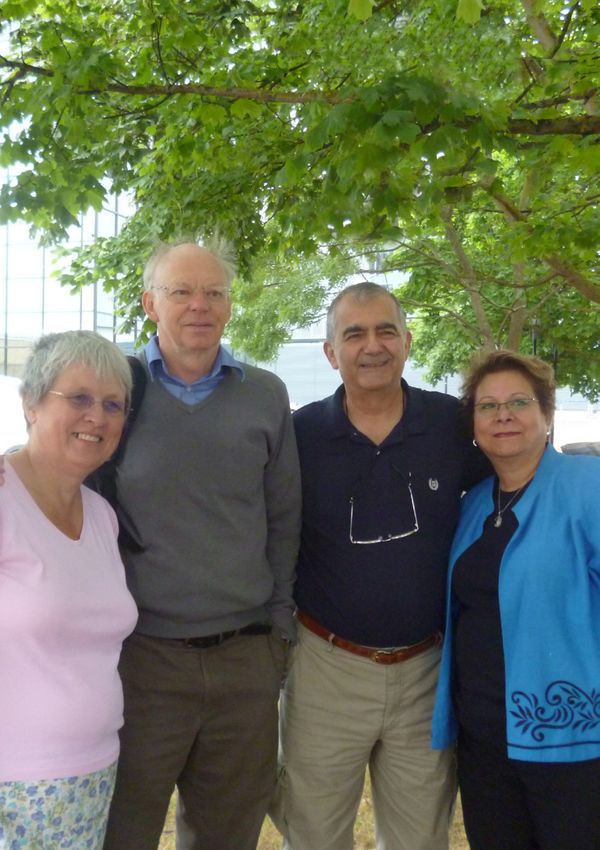
“I appreciated the time out
 for myself. The course has
      done more for me than
              even a holiday.
     It makes me happy and
even gives my life a sparkle
             that I had lost.”
Contents

Part one: Introduction					3
Foreword                        					                           4
Mission statements                                              5
Introducing Hillingdon Carers                                   6
        • Who we are						6
        • What we do						7
        • How we consulted        					                         10

Part two: Programmes of work 			                                19
Finding ‘hidden’ carers                                 		      12
Tackling carer loneliness and social isolation          		      15
Extending our range of services                          		     19
Supporting you to manage your caring situations 			             23
Helping you to look after your own physical and mental health   27
Young carers							                                             31
The carer’s voice						                                         35

Part three: Making it happen				                                39
Delivering the strategy 						40
Measuring and recording progress 				                           41
        • Current arrangements					41
        • Improving outcome and impact assessment         		    42

Acknowledgements 					43
Our vision:
    “We will be
 recognised as
the gateway to a
better life for all
 unpaid carers
  in Hillingdon”
Part one:
Introduction

Foreword
    As carers you make an enormous contribution to your communities
    through the provision of essential care and support for relatives,
    friends and neighbours. Your efforts in providing this care
    improves the quality of life of the people you care for and often
    goes unrecognised, even by yourselves. Whilst many of you find
    caring fulfilling and rewarding, we know that caring can bring
    many challenges and, for some, advice and support are critical.

    Hillingdon Carers’ vision is to be recognised as the gateway to a
    better life for all unpaid carers; we will strive to ensure that you
    understand the critical role that you play and can access the
    information, advice, training and support you need.

    For young carers our support will help them to have as normal
    a childhood and adolescence as possible. We will give these
    young people the skills and strategies to better manage their
    home lives, allow them to be young and have fun in a supportive
    and social environment.

    In order to develop our thinking and our plans for the next five
    years, we have talked to hundreds of you, asking you what you
    think is important and how you would like carer services to look
    in the future.

    This documents sets out what you told us and also what we are
    planning to do about it. It presents our vision of a society where
    carers are better-recognised, healthier and happier. We are
    aiming for excellence and we’re determined to achieve it.

    Doreen West                                   Sally Chandler
    Chair of Trustees                             Chief Executive

    On behalf of the Trustees, staff and the volunteers of Hillingdon Carers

4
Mission statements

Your feedback and comments have led us to develop
three clear mission statements that, in broad terms,
give you a clear picture of what Hillingdon Carers
wishes to achieve for the borough’s carers over the
next five years:

                               1
We will work to ensure that carers are recognised and valued
for the care and support that they provide and are
acknowledged as expert care partners who are critical
to the health and social care economy in Hillingdon.

                               2
Our support will be tailored to meet individual needs, enabling
carers of whatever age to maintain a balance between their
caring responsibilities and a life outside caring. We will create
partnerships that ensure they can do that safe in the knowledge
that the person they care for is well-supported and cared for.

                               3
We will grow our range of services and extend their ‘reach’,
both geographically and in terms of seven-day access.
In addition we will improve and strengthen our partnership-
working and increase our range of collaborative projects.

                                                                    5
Introducing
        Hillingdon Carers

        Introducing Hillingdon Carers
    1        Who we are
    Our experienced staff team has over 100 years of experience
    working with carers in the diverse neighbourhoods of the
    London Borough of Hillingdon. We have an excellent reputation
    for quality support and advice and all our services have been
    developed in direct response to your’ ‘lived experiences’.

    Our organisation is a charitable company limited by guarantee,
    and has an emphasis on ‘by carers for carers’; a large propor-
    tion of our trustees and staff are either current or former carers.

    We are a Network Partner of Carers Trust, a national
    organisation that brings together carer services from across
    the UK.

6
Introducing
  Mission statements
Hillingdon Carers

        2       What we do
        Our current range of services is extensive and has been
        developed according to what you have told us. We offer:

        Information and advice:
            •   A drop-in Advice Centre on Uxbridge High Street plus a
                borough-wide outreach programme

            •   Support from Carer Advisers for:

                •   Expert Welfare Benefit advice
                •   Help with form-filling
                •   Assistance in accessing Social Services support
                •   Advocacy and appeals
                •   Signposting and referral to other services

            •   A range of quality information through leaflets, website,
                Facebook, Twitter and LinkedIn

        Health and wellbeing:
            •   A GP outreach and health liaison service

            •   Health MOT and Pamper days

            •   A series of drop-in cafes across the borough

            •   Relaxation sessions, weekly exercise, yoga and dances

            •   Counselling and emotional support

            •   Training in back care, first aid and dementia awareness

            •   Arts for carers courses

            •   A therapeutic care service in partnership with the British
                Red Cross

                                                                             7
Introducing
      Hillingdon Carers

    Young carers services (5-17 years):
      •   School/college liaison programme

      •   Specialist project supporting young carers looking after
          an adult with mental health or substance misuse problems

      •   1:1 emotional support and support planning

      •   Young Carer Clubs across the borough

      •   School holiday events programme

      •   Residential breaks

      •   Arts projects, fun activities and family days

    Young adult carers (17-24 years):
      •   Support and advocacy for young adult carers through
          the transition from school to work, apprenticeships or
          further education

      •   Bespoke, 1:1 support and help to write a personal
          development plan

      •   A comprehensive programme of training to provide a
          range of life skills from money management to CV
          writing

      •   A social programme with trips, activities and residential
          trips

      •   Liaison and links to further education, apprenticeship
          schemes, local employers, training and volunteering
          opportunities.

8
Introducing
Mission statements
Hillingdon Carers
“A smile and a welcome lift the
spirits. [Hillingdon Carers] is
a place where I feel I won’t be
judged and I am with people
who understand what problems
I am facing; most people don’t
understand this. ”
9Introducing
Hillingdon Carers
3 How we consulted
We have learnt over many years from our work with carers just
what is important to you. We also carried out a consultation to
help with the development of our plans.
The consultation process included:
• A ‘Help us to plan the future’ questionnaire
• Use of our existing services to talk informally to carers
of all ages about what is important to you
• Meetings with councillors and public sector officers
• A review of our 6-monthly Carers Surveys
• An away day event with our Board of Trustees, staff
team and volunteers
• Further half-day planning sessions with staff and
trustees independently
• A series of carer focus groups to test out and discuss
what we thought the priorities should be.
Part two of this document details what you told us and what we
are planning to do about it.
10Part two:
Programmes of work
7Programmes
of work
1
Finding ‘hidden’ carers
It can take years before someone identifies him or herself as a
carer and this can mean essential advice and support doesn’t
reach you or reaches you too late.
It is estimated that nationally around two million carers cease
caring and another two million begin each year, so there is by
no means a ‘static’ population of carers.
To be able to provide the advice, information and support that
you need and to help you to claim your entitlements, first we
need to know who the carers are.
Efforts to engage with those of you who are new to caring roles
need to be constantly renewed and sustained. Therefore we
have made finding carers who don’t recognise themselves as
carers – sometimes referred to as ‘hidden’ carers - one of our
priorities.
12Programmes
Mission statements
of work
What you told us
“I have attended your Annual General Meeting only to
find that there are too many carers in the borough not
being paid the fair amount of benefits for their
dedication to their families.”
“I know other carers who don’t get help. I tell them
they should, but they don’t think they are ‘carers’.”
“You don’t offer a booklet or on-line directory of all
services. It should include all social groups, exercise
classes, financial help and transport.”
“Hillingdon Carers were the first people to recognise
me as a carer after twenty years; my GP didn’t even
do that.”
Where we are now
We have the highest carer identification rate in Greater London
and work with just over 20% of the borough’s 26,000 carers.
However, this still leaves nearly 80% of you carers out there not
receiving any support, so we know there is plenty still to do.
13Programmes
of work
What we will do
By 2020, we want to be supporting at least double the number
of carers in the borough (at least 40%). We will enlist the help
of other services to help us to identify and refer carers for help if
they want it.
We also want those of you that know other carers to spread the
word and encourage newly-identified carers to ask for help and
support.
To work towards this, in the next two years we will:
• Develop and improve our outreach and education
programme. This is where we educate a range of other
professionals and services about the importance of
identifying and referring carers for support
• Establish Carer Information Points in all seventeen of
Hillingdon’s Libraries
• Improve our website and the range of information that
we provide
• Set ourselves an annual target for numbers of new
carers and young carers to identify
• Ask all new carers what prompted them to seek
support so that we can learn about what works. This
will help to target our efforts where they are most effective
• Ensure that our Communication Strategy details the
best ways to reach you and ensures that we have a
range of ways to get our information out to you, for
example through printed material but also through our
website, social media and better use of partner
publications and websites
14Programmes
of work
2
Tackling loneliness and
social isolation
Each day in the UK, 6,000 people become carers and the
transition to caring, and particularly to full-time caring, can
cause loneliness and isolation.
The loneliness you often experience is caused by a range of
circumstances, many of which you have no control over. Indeed
many of you described feeling ‘invisible’ as the needs of your
loved one take precedence over your own needs.
15Programmes
of work
What you told us
“Currently, I spend all my time looking after my frail,
nearly totally blind 99 year old husband. I do this
willingly because I want to, but there is no time for
social activities.”
“It would be nice if someone would phone me at my
home from time-to-time to ask how I am getting on with
my caring [and my] emotional [state] and social life -
a kind of counselling service.”
“I would like to go to the massages classes, I do badly
need that, but I would have to get two buses and bring
my husband with me.”
“You have no social life whatsoever as a carer. I don’t
feel part of society at all, I feel a complete outsider.”
“[It’s] always interesting to hear of [different carers’]
experiences and [gives] an insight/opportunity to learn
of new ideas/services which might be useful.”
16Programmes
of work
Where we are now
Our current range of services, whilst not specifically designed to
tackle loneliness, do give you social contact with others who
understand what you are experiencing.
We have excellent evidence from our Carer Cafes that being
amongst other carers is useful social contact for many and
provides the opportunity to learn from each other.
We also know that at our cafes new friendships form and new
social networks start to develop over time.
We offer free one-to-one counselling and emotional support at
every contact but we want to extend these opportunities so that
we improve our range of help for you.
What we will do
We want all of you to have a social life outside caring and be
able to attend activities and breaks from caring within your
local community.
To enable you to stay socially-connected we recognise that
there needs to be a range of support available that reflects the
fact that all of you have differing needs and might need help
with the person you care for in order to get out and about.
17Programmes
of work
In the next two years we will:
• Develop new approaches to delivering social
programmes, through new partnerships and through
volunteers
• Continue to seek sponsorship of Carer Cafes through
the private sector so we can offer more of them and
improve their geographical spread
• Work with others to find ways of supporting the people
you care for to enable you to have time out for social
opportunities
• Recruit, train and support new volunteers to grow our
range of Carer Cafes to new parts of the borough
• Improve access to emotional support beyond our
current arrangements and develop a ‘menu’ of
opportunities that includes one-to-one and group
sessions. We will also explore the potential for
telephone support as you suggest
• We will also rethink/redesign our therapeutic care
service to see if we can extend the offer to those of you
that are pretty much tied to the house
• We will also explore the opportunity to develop a series
of carer-led social groups
18Programmes
of work
3
Extending our range
of services
Most care happens within families and often families do
everything possible to minimise the need for formal care and
support by finding what works for them – effectively
personalised support in action.
However there is no such thing as a ‘traditional’ caring
relationship and it is clear that there is no ‘one-size-fits-all’
approach to supporting you. We are increasingly aware of gaps
in our provision and we will strive to extend the range and
geographical distribution of our services so they are easier for
you to access.
We also recognise that working carers cannot always take
advantage of our help so we will be considering weekend and
evening provision so that you too can get support at a time that
suits you.
19Programmes
of work
What you told us
“I’d like the Carers’ Cafes more regularly. I have a
part-time job and I don’t finish until 1.30pm so I don’t
get to the cafes.”
“I work at a school as a dinner lady; it would be nice if
cafes ran a bit longer.”
“Everything seems aimed at older people but if you
are young and need care it seems very limited what is
offered.”
“Some activities should be for the people who are
suffering from dementia.”
“Could you please provide more exercise classes and
body massages? I also want more courses relating to
education where we can learn more skills.”
“Singing for fun, for myself and other carers.”
“Regular meetings for carers who don’t have a caring
role any more, so they are not suddenly isolated.”
20Programmes
of work
Where we are now
We want to ensure that we support as many of you as possible.
We have developed a strong range of services that have
reasonable geographical spread across the borough and we
think that we have gone some way to addressing the multiplicity
of caring situations. However we recognise that there is more
to do.
You often bring the person you care for to cafes, clubs and trips
in order to be able to access time with others. However we
want to do more to ensure that this is a proper break for you
and that you don’t feel ‘on duty’ during these activities.
We have well-developed assessment processes that ensure
that the support we offer is tailored to individual caring
situations and we believed we had strong support programmes
for carers of whatever age, however you are telling us
differently.
What we will do
Therefore in the next two years we will:
• Work with other partners to develop activity groups
for people with dementia that run alongside cafes and
exercise classes so that they you can have a break
safe in the knowledge that your loved ones are
professionally looked after and undertaking stimulating
activities of their own
• Identify opportunities to introduce flexible seven-day
working so we can develop more weekend and
evening opportunities, particularly for those of you who
are trying to juggle work and caring
21Programmes
of work
• Lead the development of a Hillingdon Carers Collective
so that all organisations with a remit to support carers
are working better together and coordinating
opportunities. This will improve your access to support
and make finding it much easier
• Continue to improve the geographic reach of our
services and use your feedback to plug identified gaps
• Extend our use of volunteers to make sure we can
respond to the geographical demand for services
• Work through the Carer Collective to develop a Carers
Hub in the south of the borough, where we have a
more limited range of support services
22Programmes
of work
4
Supporting you to look after your
own physical and mental health
Providing care for a loved one should not cost you your mental
and physical health. Sadly however we know that, for some,
caring can be emotionally and physically draining and that
many of you experience stress and anxiety caused by the
nature and extent of your caring responsibilities.
Often it is difficult to look after your own health, take regular
exercise and find the time to access your own health
appointments.
We also know that health professionals often don’t recognise
the specific knowledge and expertise that you have about the
person you care for.
We firmly believe that health services need to engage better
with you and that they should be helping us to identify carers
and referring them for support.
23Programmes
of work
What you told us
“In the NHS there is little acknowledgement of how well
we know the person and how long we have looked after
them, all the things we have tried, researched, bought…”
“Mental health services, LBH and the NHS are very
disjointed; to check appointments and contact staff
seems to be very complicated. A single point of
contact would be nice. Can you push for this locally?”
“I had a breakdown 25 years ago, which means that
health-wise, I sometimes have to rest for longer than
people seem to accept as reasonable for a person my
age. I hope that Hillingdon Carers take this into
account when I do their activities.”
“Having to care for my husband of 88 years who has
vascular dementia plus my son of 55 years with mental ill
health, I feel isolated and, at times, abandoned.”
“It’s difficult to get an appointment, non-urgent
appointments take more than a week.”
“The [exercise] programme has helped my mobility and
reduced my back pain and [my use of] pain killers.”
“I dread the emergency appointment and get
frustrated and terribly upset.”
24Programmes
of work
Where we are now
We have a programme of awareness-raising sessions for
practice staff at GP surgeries to promote the importance of
identifying carers, referring them for support and offering
flexibility in appointments.
We also offer education to other professionals about caring
issues. We provide these for schools, universities, library staff
and many others.
We have a strong exercise programme offering you a range of
exercise sessions for all ages and abilities, from chair-based
exercise and yoga to more dynamic cardio and dance sessions.
Our young carers have access to a good range of sports
facilities from five-a-side football to professionally-facilitated
gym training.
We are confident that our therapeutic care and pamper days
provide you with some light relief from the stresses of caring.
But, for those of you who need more intensive support, we offer
emotional support at every contact and a free counselling
service.
In addition we offer a range of carer training, trips and cultural
activities that we hope will help you to forget about caring for a
few short hours, to learn new strategies to help with caring and
to pursue a hobby, or learn a new one.
What we will do
In the next two years we will:
• Promote and widen opportunities for carer health
checks, such as Health MOT days and opportunities
for you to meet health professionals face-to-face
25Programmes
of work
• Develop a series of volunteer-led ‘Healthy Carer’
groups, such as walking groups, swimming clubs and
dance collectives
• Work with our current volunteer counsellors to design a
volunteer-led emotional support programme that you
can access at Carer Cafes
• Recruit and train a further ten volunteers by summer
2017 to expand our capacity for support
• Work more closely with the emerging GP Networks to
secure their commitment to promoting your health and
wellbeing in an accessible and flexible way
• Extend our range of Health Matters fact sheets
• Help you to access health information through new
Carer Information Points in all seventeen Hillingdon
libraries
• Work with other Third Sector organisations to develop
peer-to-peer support and group support to help you
to manage your own longer-term health needs
• Develop a borough-wide, collaborative carer training
programme to give you the skills you need to better
manage your caring roles
26Programmes
of work
5
Helping you to manage your
caring situations
Whilst many of you enjoy caring and find it affirming and
satisfying, we also know that the potential negative impacts of
caring are numerous and well-evidenced.
We know we need to respond to what you are telling us about
your lives by strengthening the range of help and support that
makes a difference to how you manage your caring situation.
27Programmes
of work
What you told us
“I need advice to help my disabled son get independent
living and the right support and help.”
“The training provided by Admiral Nurses was
invaluable. More refreshers would help.”
“”Some activities should be for the people who are
suffering from dementia and [there should be] some
training for the carers for better understanding of the
person you care for.”
“Appreciate the carers’ group in Torrington Road, it’s
good to meet other carers.”
“It’s wonderful to have a chat with a variety of different
carers.... It’s always interesting to hear of their
experiences and gives an opportunity to learn of new
ideas or services which might be useful.”
28Programmes
of work
Where we are now
We currently offer you training to help you to better manage
some of the challenges of caring, such as moving and handling,
managing wheelchairs and basic first aid. We also offer free
legal advice clinics through our friends at Turbervilles Solicitors.
Our support services help many of you to manage your caring
situations through talking to other carers or to improve your
health through our exercise programme.
You have also told us that you highly value our Information and
Advice Service and we have an excellent track record in
helping you with successful claims for Carers Allowance
and other care-related benefits.
What we will do
Over the next two years we will:
• Develop a comprehensive training programme with a
range of other providers so that you have plenty of
opportunities to learn about all aspects of caring and
that it is easy for you to access
• Grow our Advice Service and provide more outreach
and drop-in sessions across the borough to ensure that
as many of you as possible can access the information
you need and the support you might need to claim
benefit entitlements
• Continue to develop our range of health and wellbeing
services so that we can help you to overcome the
potentially negative impacts of caring
29Programmes
of work
• Further develop our range of Fact Sheets to ensure
that we provide you with a rich and diverse range of
quality information that covers all aspects of caring
• Continue to develop new partnerships and
collaborations so that your experience of carer support
is of a more cohesive and joined up programme
30Programmes
of work
6
Young carers
We believe all young people have a right to a future and we
know young carers can be disadvantaged in life as a direct
result of their caring situations.
We want to ensure that they do not have to carry out unsuitable
levels of care or tasks that are inappropriate for their age.
We also want to ensure that they are supported so that their life
opportunities are not restricted by their caring roles.
31Programmes
of work
Young carers told us
“Caring matters but it is not a career choice.”
“It (caring) feels easier to talk about now because I know
it’s nothing to be ashamed of and other people have the
same situations.”
“[To make it better] there should be not as many
people, more clubs and more trips, especially at
Christmas time.”
“It’s good to get a break. I used to live with my dad and
my mum but dad is ill and we used to get the brunt of his
moods. Now I just live with mum and it helps to get space
from each other if we have had a ‘ding dong’.”
“I used to feel insecure and found it hard to make friends
but I came here and found it easier.”
32Programmes
of work
Where we are now
We have a good range of support for young carers with
after-school and Saturday clubs, in addition to a strong school
holiday activity programme.
We also offer trips out and residential weekends away and
provide information and advice, emotional support and
advocacy for the young people we work with.
We run a specialist project for young carers supporting a parent
or family member with a mental illness or drug or alcohol
problem. We are working closely with whole families as part of
this project and have started to develop our whole-family offer.
We have a new supported transition project for young adult
carers called N-HANCE. This project provides support,
training and a social programme for young adult carers from
17-24 years to help them into training, further education,
volunteering, apprenticeships or work.
We have developed good relationships with a number of
schools and our outreach programme involves regular
presentations in schools, to help and encourage them to
improve support to young carers at school.
Finally, we have aspiration-raising opportunities for young
carers with Brunel University and Bucks New University and a
burgeoning relationship with Uxbridge College.
We believe our range of support to young carers and the skills
of our young carers team should be celebrated. We want
to promote Hillingdon Young Carers as an example of good
practice and we want to secure more expert leadership for the
development of our young carers’ services into the future.
33Programmes
of work
What we will do
Over the next two years we will:
• Develop a strategic leadership group to help develop
our services and to secure recognition of young carers
more widely
• Write a separate two-year delivery plan for young
carers structured around all our programme of work,
but with tailored responses to the unique needs of the
young people we work with
• Develop our new supported transition project
N-HANCE for young adult carers to help them to make
a smoother transition into adulthood. We will develop
clear targets for helping young adult carers to achieve
accredited qualifications and access training,
volunteering and employment
• Continue to grow the range of educational and social
opportunities for young carers and increase their
geographical spread to improve their accessibility
• Continue to raise awareness of young carers as part
of the extension of our outreach and education
programme and measure efficacy through referral
recording
• Work with young carers to identify gaps in services and
bid for resources accordingly
• Develop our whole-family offer so that we can offer a
range of family activities
34Programmes
of work
7
The carer’s voice
We strongly believe that you have a critical role to play in the
development of effective support services. Indeed, a guiding
principle of Hillingdon Carers is that carers should play a major
role in shaping and directing our work.
We have made some progress in ensuring that our priorities
reflect your priorities and that our support is in tune with your
needs and desires.
We also recognise that you want to influence the statutory
services that support you and the person you care for, which
can present more of a challenge.
35Programmes
of work
What you told us
“Is there any day centre? Is there a hydro-pool? If there
is, where? It would be nice and helpful if you could
provide a named person to contact.”
“The current changes to care provision have caused
huge difficulties to my mum and me. She has lost the
care agency she has been with for five years.”
“Although my husband has a carer in the mornings to
help shower and dress him this service has deteriorated
drastically. Some days we get no-one.”
“My mum will soon need constant care at home. I work
full time from Monday to Friday and the only benefit I
have been offered is £57.92 a week. How can I leave my
employment and take care of her on this benefit?”
“A respite week should be given to all carers to have a
holiday once a year with vouchers given.”
“The Conference gave us access to senior council
people and lots of information.”
36Programmes
of work
Where we are now
We currently provide some opportunities for you to have a
voice. These include:
• An Annual Carers’ Conference giving updates and
access to senior health and social care officers
• A 6-monthly Carers’ Survey to collect your thoughts on
a range of issues and to feedback on our services
• Supporting a wide range of carer consultations for an
extensive range of local and national organisations
• 25% of members of our Board of Trustees and staff
team are carers or former carers
• Collecting case studies and your personal experiences
and using this evidence to support our case for
investment in new and existing services
• Young carers co-design their summer and school
holiday activity programmes
However, we know that this can be improved. Now, possibly
more than ever before, your voice in the development of policy,
plans and services is critical to ensure the best use of
resources. We aim to strengthen your voice and support others
to adopt good practice in consultation, engagement and
co-design.
37Programmes
of work
What we will do
Over the next two years we will:
• Establish a Carer Collective for the borough to ensure
all support is better coordinated and that organisations
work better together to listen to what you are telling us
• Develop a carer engagement protocol, which will
encourage best practice in carer consultation and
engagement
• Work closely with Carers Trust Thames and other
partners to develop mechanisms that better reach
isolated and house-bound carers
• Redesign our website to make it clearer and more
user-friendly for you. We will improve navigation and
ensure that information is easier for you to access
• Increase our use of information technology and social
media to advertise consultation activities for those of
you that would like to get involved
• Support the London Borough of Hillingdon in the
delivery of a new Carers’ Assembly for Hillingdon
• Work with others to provide a range of other
mechanisms for you to have your say
38Programmes
of work
Part three:
Making it happen
7Making it happen
Delivering the strategy
Delivery plans:
Our strategy is very broad and covers a five-year period, which
is often difficult to predict. Therefore all the detail of how we will
move forward on our commitments are contained in a two-year
Delivery Plan for adults and a separate two-year Delivery Plan
for young carers, based on the two year actions detailed in the
section on Programmes of Work.
The staff team has an annual planning day with Trustees and
the current two-year Delivery Plan is in development. These
will be available from Hillingdon Carers in August 2015, August
2017 and August 2019.
Staff supervisions and annual appraisals will be informed by
their commitments in the organisational Delivery Plan and we
have reviewed our processes and documentation accordingly.
Governance:
Regular progress reports will be presented at Trustee Board
meetings and staff members will be asked to present on their
own specific areas of work to Trustees.
40Making it happen
Mission statements
Measuring and
recording progress
Current arrangements:
We regularly monitor and evaluate our services; indeed we
have to produce detailed and comprehensive monitoring
information for a range of funding bodies.
We generate this information through:
• Twice-yearly Carers Surveys – securing feedback
from around 80 of you per survey.
• The maintenance of statistical data which gives us a
profile of you, our service users, and details the volume
of support we provide.
• Use of anecdotal qualitative evidence and case
studies to bring your experiences of our services to
life.
• Short evaluation questionnaires after every trip, arts
course or other activity to evaluate each service. By
collecting your responses we can make sure we
continue to provide what is most important to you.
• Young carer questionnaires and parental
questionnaires help us to monitor the responses to,
and value of, our young carer support programme.
• Feedback and testimonials from partners, funders,
health and social care professionals.
41Making it happen
Improving outcome and impact
assessment:
Over the next two years we will:
• Introduce the Carers STAR assessment tool for
some projects to assess the impact of our services on
your lives
• We will be using the Patient Activation Measure
(PAM) tool in our Carer Health programme
• Finally, we are improving internal communication,
record-keeping, data production and overall
coordination of our activities through the introduction of
a new Charity Log system
The new tools detailed here represent a significant investment
in time, staff training and licenses.
42Acknowledgements
7Acknowledgements
We would like to thank all of you that completed our
questionnaire, helping us to set the priorities detailed here.
In addition, thank you to all of you who have passed on
comments, suggestions and personal stories at cafes, clubs
and classes – your experiences are critical to ensuring we are
focusing our efforts where they are most needed.
Our further thanks go to the carers that gave up their valuable
time to attend one of our focus groups. You are too numerous
to mention by name but we really appreciate all of your
feedback – please keep it coming!
We would also like to take this opportunity to thank the
London Borough of Hillingdon for their significant financial
support which makes the majority of our services possible.
In addition many thanks to other funding bodies who have
helped us to extend opportunities for valuable support for the
borough’s carers. We look forward to a continuing relationship
with you.
Finally our thanks to our many colleagues across both the
voluntary and statutory sectors who have commented, read,
supported and generally helped to shape our thinking. We
appreciate your input and look forward to our continued
partnerships as we deliver on our plans.
The Staff, Trustees and Volunteers of
Hillingdon Carers
44“The
“The young
young carers’
carers’ project
project helped
helped me
me
because
because II can
can get
get aa break
break when
when times
times are
are
difficult
difficult at
at home,
home, you
you can
can forget
forget what’s
what’s
worrying
worrying you.”
you.”And finally… “I appreciated the time out for myself. I have not painted for ages at home on my own, but after finishing this course I have been inspired to go out and buy paints which I have been using 5 or 6 days a week to paint while my mother is asleep in the afternoons. The course has boosted my self-esteem and confidence in myself. I have been going to galleries and getting art books out of the library to copy the paintings. Painting has given me a way to relax, be myself and do something for me that makes me happy, and even gives my life a sparkle that I had lost. The course has done more for me than even a holiday, as I have gained a hobby once again that I had let slip due to my caring commitment and job.” Hillingdon Carers Luther Bouch House 126 High Street Uxbridge Middlesex UB8 1JT t: 01895 811206 e: office@hillingdoncarers.org.uk w: www.hillingdoncarers.org.uk
You can also read


