HIPAA Basic Slide Deck - Office for Civil Rights (OCR) U.S. Department of Health and Human Services Updated through November 30, 2020
←
→
Page content transcription
If your browser does not render page correctly, please read the page content below
HIPAA Basic Slide Deck

          Office for Civil Rights (OCR)
U.S. Department of Health and Human Services

    Updated through November 30, 2020
Policy
Sample Subtitle

                  2
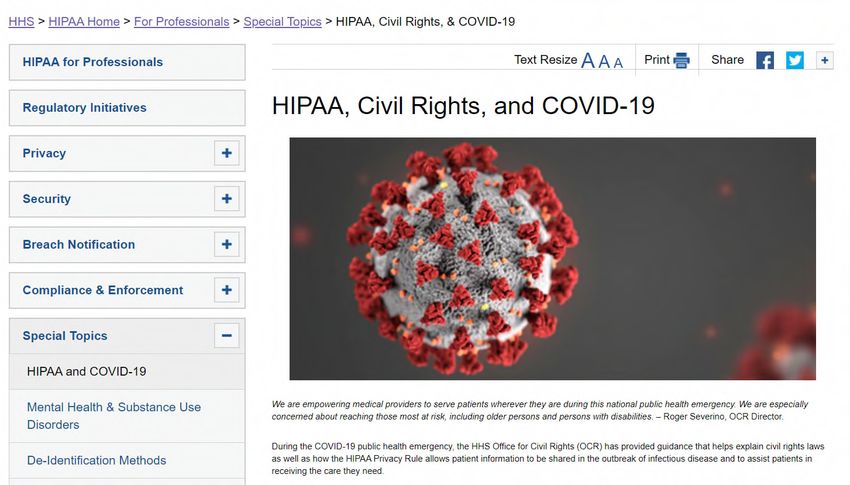
HIPAA and COVID-19 Updates
• February Bulletin on HIPAA and COVID-19
• Notification of Enforcement Discretion on Telehealth Remote Communications
• Guidance on Telehealth Remote Communications
• Guidance on Disclosures to Law Enforcement, Paramedics, Other First Responders, and Public
  Health Authorities
• Notification of Enforcement Discretion on Uses and Disclosures of Protected Health
  Information by Business Associates for Public Health and Health Oversight Activities
• Notification of Enforcement Discretion Regarding COVID-19 Community-Based Testing Sites
• Guidance on Media and Film Crew Access to Protected Health Information
• Guidance on HIPAA and Contacting Former COVID-19 Patients about Plasma Donation

                                                                                               3
February Bulletin on HIPAA and COVID-19
• How patient information may be shared without a HIPAA authorization
   o Treatment
   o Public Health Activities
   o Family, Friends, and Others Involved in an Individual’s Care or Payment for Care
   o To Prevent or Lessen a Serious and Imminent Threat
• Cautions against disclosures to the media
• Reminds about the minimum necessary standard and reasonable safeguards

https://www.hhs.gov/sites/default/files/february-2020-hipaa-and-novel-
coronavirus.pdf

                                                                                        4
Notification of Enforcement Discretion on
Telehealth Remote Communications
• OCR will not impose HIPAA penalties against covered health care providers for
  noncompliance in connection with the good faith provision of telehealth using remote
  communication technologies
• Applies to telehealth provided for any reason (not limited to diagnosis & treatment of
  COVID-19)
• Covered providers may use popular communications apps, like FaceTime or Skype, to
  provide telehealth
• Public facing communication apps like Facebook Live, Twitch, and TikTok should not be
  used
https://www.hhs.gov/hipaa/for-professionals/special-topics/emergency-preparedness/notification-
enforcement-discretion-telehealth/index.html

                                                                                                  5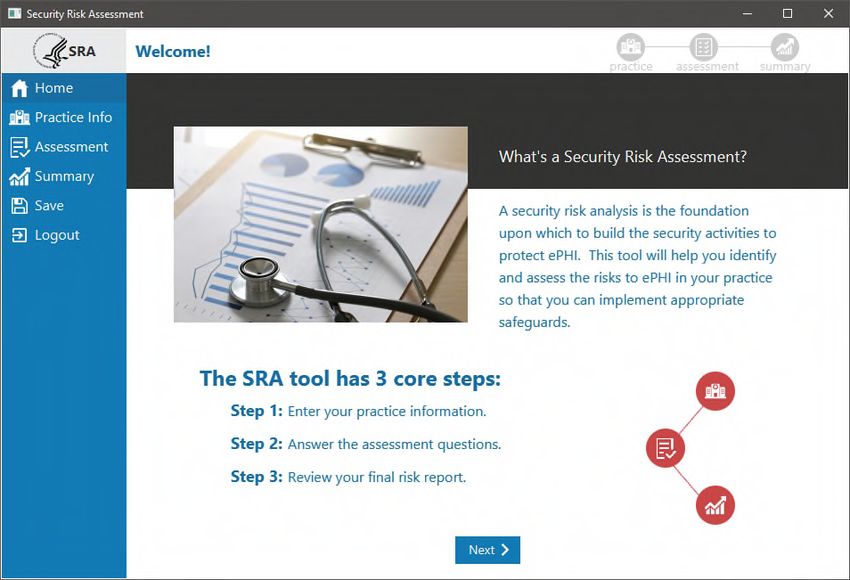
Telehealth Remote Communications Guidance
• Clarifies how OCR is applying the Notification to support the good faith provision of
  telehealth
• Guidance includes:
   o What covered entities are included and excluded under the Notification?
   o Which parts of the HIPAA Rules are included in the Notification?
   o Does the Notification apply to violations of 42 CFR Part 2, the HHS regulation that
     protects the confidentiality of substance use disorder patient records?
   o Where can covered health care providers conduct telehealth?
   o What is a “non-public facing” remote communication product?

   https://www.hhs.gov/sites/default/files/telehealth-faqs-508.pdf

                                                                                           6
Guidance on Disclosures to Law Enforcement, Other First
Responders, and Public Health Authorities
• Identifies existing HIPAA Privacy Rule permissions and provides examples of when a
  covered entity may disclose PHI about individuals, without their HIPAA authorization,
  including:
    • When the disclosure is needed to provide treatment
    • When the disclosure is required by law
    • To notify a public health authority to prevent or control the spread of disease
    • When first responders may be at risk of infection
    • To prevent or lessen a serious and imminent threat
• Reminds about the minimum necessary standard

https://www.hhs.gov/sites/default/files/covid-19-hipaa-and-first-responders-508.pdf

                                                                                          7
Notification of Enforcement Discretion on BA Uses &
Disclosures for Public Health and Health Oversight
• OCR will not impose HIPAA penalties against covered health care providers or their
business associates for good faith uses and disclosures of PHI by business associates
for public health and health oversight activities
• Issued to support Federal public health authorities and health oversight agencies, state
and local health departments, and state emergency operations centers who need
access to COVID-19 related data, including PHI
• The HIPAA Privacy Rule already permits covered entities to provide this data, and this
enforcement discretion now permits business associates to also share this data without
risk of a HIPAA penalty
https://www.hhs.gov/sites/default/files/notification-enforcement-discretion-hipaa.pdf
8Notification of Enforcement Discretion Regarding
COVID-19 Community-Based Testing Sites (CBTS)
• OCR will not impose HIPAA penalties against covered health care providers and their
business associates in connection with the good faith participation in the operation of a
CBTS during the COVID-19 nationwide public health emergency
• The operation of a CBTS includes all activities that support the collection of specimens
from individuals for COVID-19 testing
• Reasonable safeguards to protect PHI are encouraged
• Examples of entities and activities that are not covered by the Notification
https://www.hhs.gov/sites/default/files/notification-enforcement-discretion-community-
based-testing-sites.pdf
9Guidance on Media and Film Crew Access to PHI
• Reminds covered health care providers that the COVID-19 public health emergency does
not alter the HIPAA Privacy Rule restrictions on disclosures of PHI to the media
o Written authorization from each patient whose PHI will be accessible to the media must be
obtained before giving the media access to that patient’s PHI
o Masking or obscuring patients’ faces before broadcasting a recording is not a sufficient
alternative
o In 2016 and 2018, OCR successfully resolved investigations about covered hospitals’
unauthorized disclosures of patients’ PHI to television film crews
https://www.hhs.gov/sites/default/files/guidance-on-media-and-film-crews-access-to-
phi.pdf
10Guidance on How CEs Can Contact Former COVID-19
Patients About Plasma Donation Opportunities
• HIPAA permits covered entities, including health plans, to identify and contact
individuals who have recovered from COVID-19 to inform them about how they can
donate their plasma to help treat other patients with COVID-19
• The communication to recovered individuals is not considered marketing if the covered
entity does not receive any financial remuneration for making the communication
• A covered entity may not disclose individuals’ PHI to a plasma donation center, for the
center’s own purposes, without the individuals’ authorization
https://www.hhs.gov/sites/default/files/guidance-on-hipaa-and-contacting-former-covid-
19-patients-about-plasma-donation.pdf
11HIPAA and COVID-19 Web Page
* OCR Notifications, Guidance, and Bulletins on HIPAA and COVID-19 are available in Spanish.
https://www.hhs.gov/hipaa/for-professionals/special-topics/hipaa-covid19/index.html 12BREACH HIGHLIGHTS AND
RECENT ENFORCEMENT ACTIVITY
Sample Subtitle
13What Happens When OCR Receives a Breach Report
• OCR posts breaches affecting 500+ individuals on OCR website (after
verification of report)
– Public can search and sort posted breaches
– Received over 500 breach reports affecting 500+ individuals last year
• OCR opens investigations into breaches affecting 500+ individuals, and into a
number of smaller breaches
• OCR breach investigations examine:
– Underlying cause of the breach
– Actions taken to respond to the breach (breach notification) and prevent
future incidents
– Entity’s compliance prior to the breach
14Breaches Affecting 500 or More Individuals
Reports Received by Year
Calendar Years 2015 - 2019
511
358 371
329
270
2015 2016 2017 2018 2019
15500+ Breaches by Type of Breach
Improper Other
Improper Loss
Disposal 2% Unknown Disposal 2%
3% 1% 3%
Theft
6%
Theft
26%
Unauthorized
Access/Disclosure
Hacking/IT 21%
36%
Loss Hacking/IT
6% 68%
Unauthorized
Access/Disclosure
27%
Sept 23, 2009 through November 30, 2020 January 1, 2020 through November 30, 2020
16500+ Breaches by Location of Breach
Other Other Desktop
9% 4% Computer
EMR
EMR 4%
5%
6%
Laptop
Paper 2%
Paper Records
12% Portable
Records Electronic
19% Device
1%
Desktop
Email Computer
9% Email
20%
36%
Laptop Network
11% Server
Network 37%
Server
20%
Portable
Electronic
Device
Sept 23, 2009 through November 30, 2020 4% January 1, 2020 through November 30, 2020
17Breaches Affecting 500 or More Individuals
Reports Received Involving Hacking/IT Incidents
Calendar Years 2015 - 2019
240
126
93
78
54
2015 2016 2017 2018 2019
18Breaches Affecting 500 or More Individuals
Reports Received of Breaches Involving Email Accounts
Calendar Years 2015 - 2019
201
104
86
47
37
2015 2016 2017 2018 2019
19General HIPAA Enforcement Highlights
• OCR expects to receive over 28,000 complaints this year.
• In most cases, entities are able to demonstrate satisfactory compliance through
voluntary cooperation and corrective action.
• In some cases, the nature or scope of indicated noncompliance warrants
additional enforcement action.
• Resolution Agreements/Corrective Action Plans
– 86 settlement agreements that include detailed corrective action plans and
monetary settlement amounts
• 6 civil money penalties As of November 30, 2020
202020 Enforcement Actions
Feb-20 Steven A. Porter, M.D. $100,000
Mar-20 CHSPSC $2,300,000
Mar-20 Metropolitan Community Health Services $25,000
Mar-20 Premera Blue Cross $6,850,000
Jun-20 Housing Works, Inc. $38,000
Jun-20 Lifespan $1,040,000
Jul-20 All Inclusive Medical Services, Inc. $15,000
Jul-20 Athens Orthopedic Clinic PA $1,500,000
Aug-20 Beth Israel Lahey Health Behavioral Services $70,000
Aug-20 King MD $3,500
Aug-20 Wise Psychiatry, PC $10,000
Sept-20 St. Joseph’s Hospital and Medical Center $160,000
Sept-20 NY Spine Medicine $100,000
Oct-20 Aetna $1,000,000
Oct-20 City of New Haven, CT $202,400
Oct-20 Riverside Psychiatric Medical Group $25,000
Oct-20 Dr. Rajendra Bhayani $15,000
Nov-20 University of Cincinnati Medical Center $65,000
21Right of Access Initiative:
• Announced in February 2019
• Individuals have a right to timely access to their health records, and at a
reasonable, cost-based fee
• Investigations launched across the country
• OCR will vigorously enforce this right
• Twelve settlements to date
22Recurring HIPAA Compliance Issues
• Individual Right of Access
• Risk Analysis
• Business Associate Agreements
• Access Controls
• Audit Controls
• Information System Activity Review
23Corrective Action
Corrective Actions May Include:
• Updating risk analysis and risk management plans
• Updating policies and procedures
• Training of workforce
• Corrective Action Plans may include 3rd party or outside monitoring
24Best Practices
Some Best Practices:
• Review all vendor and contractor relationships to ensure BAAs are in place as
appropriate and address breach/security incident obligations
• Risk analysis and risk management should be integrated into business processes;
conducted regularly and when new technologies and business operations are
planned
• Dispose of PHI on media and paper that has been identified for disposal in a timely
manner
• Incorporate lessons learned from incidents into the overall security management
process
• Provide training specific to organization and job responsibilities and on regular basis;
reinforce workforce members’ critical role in protecting privacy and security
25Designed to assist small to medium sized
SRA Tool organizations in conducting an internal
security risk assessment to aid in meeting
the security risk analysis requirements of
the HIPAA Security Rule and the CMS EHR
Incentive Program.
The SRA tool guides users through a series
of questions based on standards identified
in the HIPAA Security Rule. Responses are
sorted into Areas of Success and Areas for
Review.
Not all areas of risk may be captured by
the tool. Risks not identified and assessed
via the SRA Tool must be documented
https://www.healthit.gov/topic/privacy-security-and- elsewhere.
hipaa/security-risk-assessment-tool
26Cybersecurity Newsletters
Recent Topics Include:
o HIPAA and IT Asset Inventories
o Preventing, Mitigating, and Responding to Ransomware
o Advanced Persistent Threats and Zero Day Vulnerabilities
o Managing Malicious Insider Threats
o Phishing
o Software Vulnerabilities and Patching
o Securing Electronic Media and Devices
Sign up for the OCR Listserv:
http://www.hhs.gov/hipaa/for-professionals/security/guidance/index.html
http://www.hhs.gov/hipaa/for-professionals/security/guidance/index.html 27Connect with Us
Office for Civil Rights
U.S. Department of Health and Human Services
www.hhs.gov/hipaa
Join our Privacy and Security listservs at
https://www.hhs.gov/hipaa/for-professionals/list-serve/
@HHSOCR
28Contact Us
Office for Civil Rights
U.S. Department of Health and Human Services
ocrmail@hhs.gov
www.hhs.gov/ocr
Voice: (800) 368-1019
TDD: (800) 537-7697
Fax: (202) 519-3818
200 Independence Avenue, S.W.
H.H.H Building, Room 509-F
Washington, D.C. 20201
29You can also read


