Health Considerations for the LGBTQ Community - Out On Britton Plaza, October 2020 Dickinson College Wellness Center - Dickinson ...
←
→
Page content transcription
If your browser does not render page correctly, please read the page content below

Health
Considerations
for the LGBTQ
   Community
Out On Britton Plaza, October 2020

 Dickinson College Wellness Center

One of the goals of Healthy People
2020 is to improve the health, safety,
and well-being of LGBTQ individuals.
The LGBTQ community faces health
disparities linked to societal stigma,
LGBTQ Health discrimination, and denial of their civil
and human rights.
DID YOU KNOW?
Most state and national surveys lack
questions about sexual identify and gender.
This creates challenges for estimating the
number of LGBTQ individuals and
understanding their healthcare needs!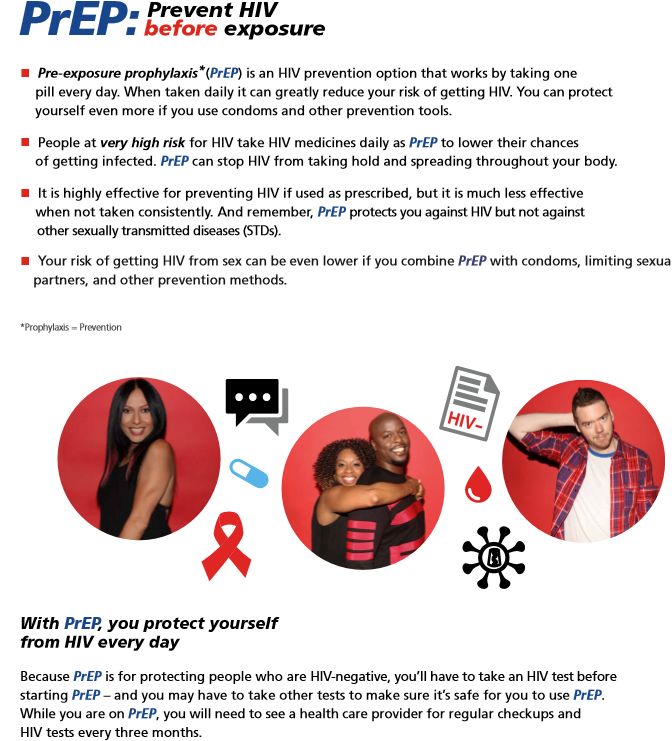
LGBT youth are 2 to 3 times more likely to
attempt suicide.
LGBT youth are more likely to be homeless.
Lesbians are less likely to get preventive services
for cancer.
Gay men are at higher risk of HIV and other STDs,
Statistics especially among communities of color.
Lesbians and bisexual females are more likely to
be overweight or obese.
Transgender individuals have a high prevalence of
HIV/STDs, victimization, mental health issues, and
suicide and are less likely to have health insurance
than heterosexual or LGB individuals.
LGBT populations have the highest rates of
tobacco, alcohol, and other drug use.
Healthy People 2020
Social stigma
Delaying or foregoing care due to concerns about how they
will be treated.
LGBTQ people are subjected to harassment and
discrimination from young ages, leading to negative mental
health outcomes and high rates of risk-taking that can
negatively affect health and wellness.
Barriers to Lack of cultural competency in the healthcare system
Providers with awareness of LGBTQ health issues can be
Quality
lacking, specifically in rural areas.
Healthcare in the Discrimination by insurers and healthcare providers
June 2020 revisions to Section 1557 of the Affordable Care
LGBTQ Act narrowed certain non-discrimination regulations by:
Eliminating the general prohibition on discrimination based on
Population
gender identity and sex-stereotyping and specific health
insurance coverage protections for transgender individuals;
Eliminating the provision preventing health insurers from varying
benefits in ways that discriminate against certain groups, such as
people with HIV or LGBTQ people;
Eliminating provisions affirming the right of private individuals
to challenge alleged violations of Section 1557 in court and
obtain money damages (leaving the right to sue for courts to
decide) and requirements for non-discrimination notices and
grievance procedures;
Eliminating prohibitions against discrimination based on gender
identity and sexual orientation in ten other federal health care
regulations outside Section 1557.Breaking Down the Barriers
Find your social support!
Studies show that LGBTQ individuals who
have good social support—from family,
friends, professionals, and the wider gay
community—have:
Higher self-esteem
More positive group identity
Barrier #1:
Better mental health
https://itgetsbetter.org/
Social Stigma The Trevor Project: Offers a 24/7
lifeline (1-866-488-7386) and other mental
health resources for LGBTQ youth.
Validation Station: Sends affirming daily
texts to trans and non-binary youth. Sign
up here and more info here.
LGBT National Help
Center: https://www.glbthotline.org/
LGBT National Hotline - 888-843-4564 Find a LGBTQ friendly health care
center near you:
https://www.hrc.org/resources/hei-
Barrier #2: map
Cultural Come out to your healthcare provider
Competency in This is necessary to receive the best
care possible.
Healthcare If the provider doesn’t seem
comfortable, find a new one!
http://www.glma.org/index.cfm?fuseact
ion=Page.viewPage&pageId=939&grandp
arentID=534&parentID=938&nodeID=1Healthcare Barriers
The Top Issues to Discuss with Your Provider
HIV/STD Prevention and Safe Sex
Cisgender men who have sex with men are at an increased risk for HIV infection.
Although cisgender women who have sex with women have lower rates of HIV, if
you have sex with a gay or bi man (who have increased rates) it is important to
understand their HIV status and how to protect yourself.
In 2018, there were approximately 36,400 new HIV infections in the United
67% (24,400) were among gay and bisexual men
39% (9,400) of new HIV infections were among Black gay and bisexual men
33% (8,000) among Latino gay and bisexual men
23% (5,700) among white gay and bisexual men
68% (16,600) among gay and bisexual men under the age of 35.
Safe sex is proven to reduce the risk of receiving or transmitting HIV.
Ask about Pre-Exposure Prophylaxis!Healthcare Barriers
The Top Issues to Discuss with Your Provider
(cont.)
Cancer Screening
Prostate, testicular, and colon for men who have sex with men
Breast and gynecologic cancer for women
HPV screening for all (linked to genital warts as well as cancers of the cervix and
anus)
Hepatitis Immunization and Screening
If you have sex with multiple partners (of any gender) you are at an increased risk
of sexually transmitted infection with the viruses that cause the serious condition
of the liver known as hepatitis.
These infections can be potentially fatal and can lead to very serious long-term
issues such as liver failure and liver cancer.Healthcare Barriers
The Top Issues to Discuss with Your Provider
(cont.)
Heart Health (exercise and diet)
Problems with body image are more common in the LGBTQ population
This can lead to issues with obesity, as well as eating disorders, such as bulimia or anorexia
nervosa, leading to health problems including diabetes, high blood pressure, heart disease, and
breast cancer.
Substance/Alcohol Use
Research suggests that substance use patterns reported by sexual minority adults are higher
compared to those reported by heterosexual adults.
If substance use is interfering with work, school or relationships, your healthcare provider can
connect you to help.
Tobacco Use
Data shows increased tobacco usage among sexual minorities, which can be associated with higher
rates of cancers, heart disease, and emphysema.
Healthcare providers should offer screening, prevention, and cessation programs for tobacco
use.Healthcare Barriers
The Top Issues to Discuss with Your Provider
(cont.)
Depression/Anxiety
LGBTQ are at particular risk for experiencing shame, fear,
discrimination, and adverse and traumatic events, which can
lead to mental illness.
These problems may be more severe for those men who remain
in the closet or who do not have adequate social supports.
When people do openly express this part of themselves, they
face the potential of rejection from peers, colleagues, and
friends can exacerbate feelings of loneliness.
Don’t suffer in silence-ask your healthcare provider for help if
you are struggling! Knowledge is power but without
action is useless!
Educate yourself and know where your elected
officials stand on LGBTQ issues.
https://hrc-prod-requests.s3-us-west-
2.amazonaws.com/files/assets/resources/
114thCongressionalScorecard.pdf?mtime=2
0200713131521&focal=none
Click the link below to become a community
co-sponsor of the Equality Act, which would
Barrier #3: provide consistent and explicit non-
discrimination protections for LGBTQ people
Discrimination across key areas of life.
https://act.hrc.org/page/37230/data/1?ea
.tracking.id=or_gnr_hrc_homepage_actionc
tr&_ga=2.15550902.1488907455.160131637
9-819111979.1599746855
Sign-up for mobile alerts today to get the latest
news on how to push LGBTQ equality forward
and pass critical legislation.
https://act.hrc.org/page/18408/data/1?ea
.tracking.id=or_gnr_hrc_JoinMAN&_ga=2.15
158710.1488907455.1601316379-
819111979.1599746855LGBTQ Health
Services at Dickinson
Did you know??
The Wellness Center provides
integrated care and is open to
you for any health-related
questions or concerns!
While we are unable to
provide telehealth
services for students out
of state, we are available
for phone consultations.
We offer free STD and HIV
testing and can prescribe
PrEP for students on campus!
To learn more, contact the
Wellness Center or click the link
below:
https://www.dickinson.edu/h
omepage/138/wellness_cente
rUse Use preferred pronouns/names/terms appropriately.
Effective Be
Be an advocate by taking action against sexual minority discrimination.
•Speak up on the behalf of your LGBTQ friends, attend pro-LGBTQ rallies, or advocate for
law or policy changes.
Ways To Be
An LGBTQ Connect Connect your LGBTQ friends with resources if they are struggling so they
Ally
can get the support they need.
Listen with an open mind.
Listen •Being empathetic and nonjudgmental helps to create a safe space where your LGBTQ
friends can feel comfortable opening up without fear of being rejected for who they are. EduMed (Creating LGBTQIA+ Friendly
Communities in Healthcare &
Education): https://www.edumed.org/resource
s/lgbtqia-healthcare-and-education/
Additional
resources to CDC Resources for LGBT
Health: https://www.cdc.gov/lgbthealth/health
enhance your -services.htm
knowledge of
LGBTQ health Gender
Spectrum: https://genderspectrum.org/articles
issues: /blog-covid-resources
Alder Health Services:
https://www.alderhealth.org/ Centers for Disease Control and Prevention. (May, 2020). Pre-
Exposure Prophylaxis (PrEP). Division of HIV/AIDS Prevention,
National Center for HIV/AIDS, Viral Hepatitis, STD, and TB
Prevention.
https://www.cdc.gov/hiv/clinicians/prevention/prep.html
Hafeez H, Zeshan M, Tahir MA, Jahan N, Naveed S. Health
Care Disparities Among Lesbian, Gay, Bisexual, and
Transgender Youth: A Literature Review. Cureus. 2017 Apr
20;9(4):e1184. doi: 10.7759/cureus.1184. PMID: 28638747;
PMCID: PMC5478215.
GLMA. (2020). Top 10 Issues to Discuss With Your Healthcare
Provider.
http://glma.org/index.cfm?fuseaction=Page.viewPage&pageId
References
=947&grandparentID=534&parentID=938
Musumeci , M., Kates, J., Dawson, L., Salganicoff, A., Sobel,
L, & Artiga, S. (September, 2020). The Trump Administration’s
Final Rule on Section 1557 Non-Discrimination Regulations
Under the ACA and Current Status. Kaiser Family Foundation.
https://www.kff.org/racial-equity-and-health-policy/issue-
brief/the-trump-administrations-final-rule-on-section-1557-
non-discrimination-regulations-under-the-aca-and-current-
status/
U.S. Department of Health and Human Services. (September
2020). Healthy People 2020: Lesbian, Gay, Bisexual, and
Transgender Health. Office of Disease Prevention and Health
Promotion. https://www.healthypeople.gov/2020/topics-
objectives/topic/lesbian-gay-bisexual-and-transgender-
health/objectivesYou can also read


