HISARNA Building a sustainable steel industry
←
→
Page content transcription
If your browser does not render page correctly, please read the page content below
HISARNA
Building a sustainable steel industry
Care for the environment is one of Tata Steel’s core values. Tata Steel is
committed to contributing to the creation of a sustainable society through
product and process innovations.
Tata Steel is one of the most CO2-efficient      for further reducing CO2 emissions and energy   The HIsarna test installation was built on the
steel companies in the world. Since 1990, we     consumption are limited. Further significant    Tata Steel site in the Netherlands in 2010.
have reduced the amount of energy required       progress is only possible through the           Various tests have been carried out since
to make one tonne of steel by more than          development of breakthrough technologies.       the first trial campaigns in 2011. In 2018, the
30%. Our ambition is to be a CO2 neutral                                                         installation became part of the production
steel producer from 2050. That is why we are     In 2004 a group of European steel companies,    chain and the fifth pilot campaign was
committed to the development of ground-          with the support of the European Union,         successfully concluded in 2019.
breaking technologies that make steelmaking      started the ULCOS (Ultra-Low CO2 Steelmaking)
radically more sustainable.                      project. The objective was to identify
                                                 technologies that will reduce CO2 emissions
The European steel industry has made great       per tonne of steel by 50% by 2050. HIsarna is     HIsarna:
strides in reducing CO2 emissions. The options   one of those promising technologies.
                                                                                                      Shows the commitment of
                                                                                                      the European steel industry
                                                                                                      to structurally reduce CO2
                                                                                                      emissions

                                                                                                      Reduces CO2 emissions by at
                                                                                                      least 20%

                                                                                                      Reduces energy consumption
                                                                                                      by at least 20%

                                                                                                      Reduces emissions of nitrogen,
                                                                                                      sulphur oxides and nitrogen
                                                                                                      oxides

                                                                                                      Leads to a more efficient use
                                                                                                      of raw materials and residual
                                                                                                      materials ideal for capturing
                                                                                                      and storing or using CO2

                                                                                                      Lowers the operating costs of
                                                                                                      steelmaking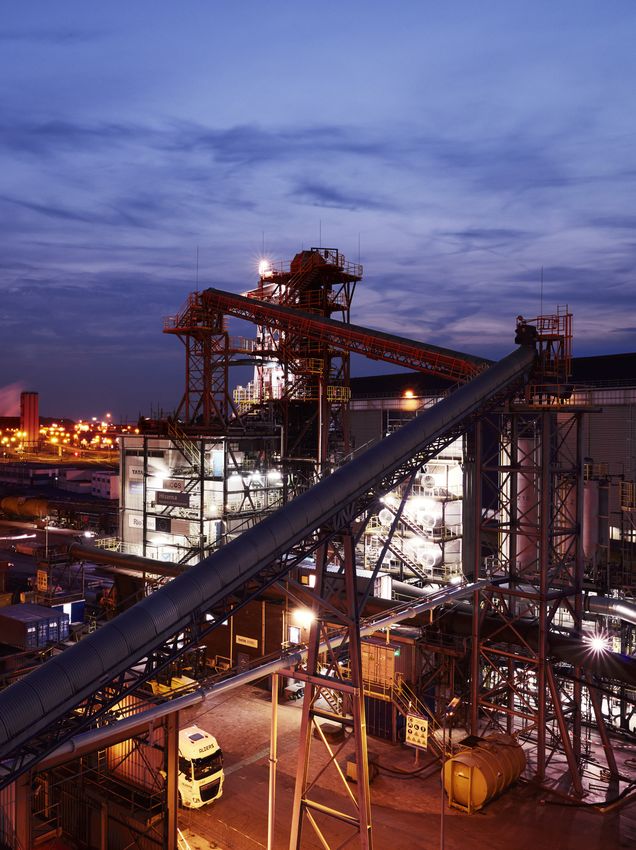
World leader                                       ores and metallurgical coal (the raw materials)     New steel companies can then immediately
When it comes to making responsible steel,         into sinter (light chunks of iron ore), pellets     adopt this technology. Existing steel
with the lowest possible energy consumption        (marbles of iron ore) and coke. The HIsarna         companies will be able to phase out current
and the lowest possible CO2 emissions, Tata        process makes these steps superfluous: in the       technology gradually. The ambition is to have
Steel in IJmuiden is a world leader.               HIsarna installation, the raw materials can be      a HIsarna factory on an industrial scale in
                                                   used in powder form and be directly converted       IJmuiden by 2030. Thanks to our cooperation
Game changer                                       into liquid pig iron.                               with India, we can speed up that process.
Tata Steel in IJmuiden has devised and
developed a technology to make steel in the        Collaborate
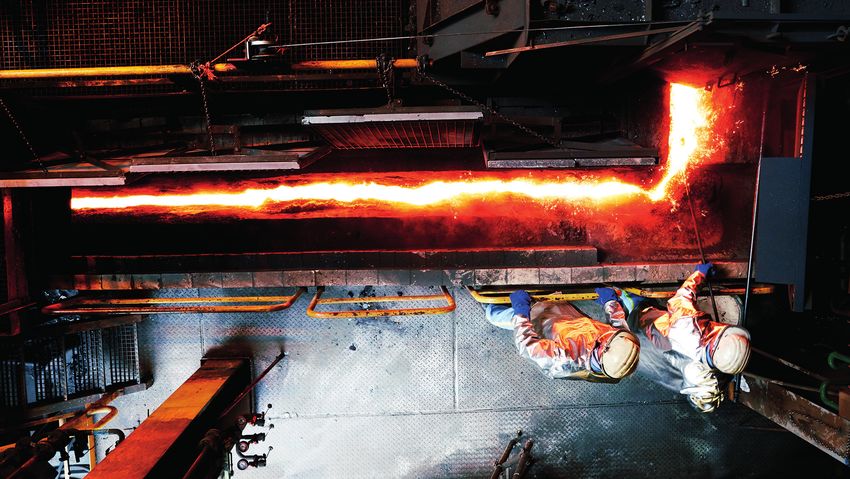
future with 20% less CO2 emissions: HIsarna.       Tests have been carried out in the HIsarna pilot
                                                                                                         Support
Scientists and steel manufacturers from            plant since 2011. The results are promising. It
                                                                                                         Developments of large-scale
all over the world are closely following the       has now been demonstrated that the process
                                                                                                         breakthrough processes, such as HIsarna,
development of HIsarna. HIsarna has every          works and is stable. Liquid pig iron, produced
                                                                                                         in which a process from idea to industrial
possibility of growing into a real game changer    in the pilot plant, has been successfully
                                                                                                         commercialisation is realised, are not
in the steel industry.                             processed into steel. The testing and further
                                                                                                         possible without support from European
                                                   development of the technology is being
                                                                                                         and national governments. Due to
HIsarna is an alternative to the blast furnace     carried out in collaboration with ArcelorMittal,
                                                                                                         the scale and the challenging process
process. To be able to make liquid pig iron in a   thyssenkrupp, voestalpine and technology
                                                                                                         conditions, HIsarna is a development
blast furnace, it is necessary to pre-process      supplier Paul Wurth.
                                                                                                         project covering many years, involving up
                                                                                                         to hundreds of millions of euros.
                                                   Next step: upscaling
                                                                                                         The development of HIsarna has received
                                                   In 2018, HIsarna became part of the production
  Up to 80% less CO2                                                                                     support in recent years from the Research
                                                   chain in IJmuiden. The next stage is to design,
  Tata Steel, in collaboration with various                                                              Fund for Coal and Steel, the European
                                                   build and test an industrial-scale pilot plant.
  other partners, is investigating the                                                                   Horizon 2020 programme, the EIT Raw
                                                   This step is necessary in order to be able to
  feasibility of CO2 capture, use and storage                                                            Materials and the Ministry of Economic
                                                   commercialise the technology and to make
  (CCUS, Carbon Capture, Utilisation and                                                                 Affairs and Climate in the Netherlands.
                                                   steelmaking ever more sustainable. Tata Steel
  Storage) in the Netherlands’ North Sea                                                                 The most recent development step within
                                                   is considering building a second larger test
  Canal Area. Used in combination with                                                                   the HIsarna project was carried out with
                                                   plant in India. If testing on an industrial scale
  the HIsarna process, this could reduce                                                                 a subsidy from the Ministry of Economic
                                                   proves to be a success, it will be another five
  CO2 emissions by 80%. An additional                                                                    Affairs and Climate (EZK), accompanied
                                                   to ten years before the technology can be put
  advantage is the complete disappearance                                                                by the Netherlands Enterprise Agency,
                                                   on the market commercially.
  of emissions of nitrogen (NOx), sulphur                                                                together with National EZK subsidies and
  oxides and particulate matter.                                                                         the Energy Top Sector.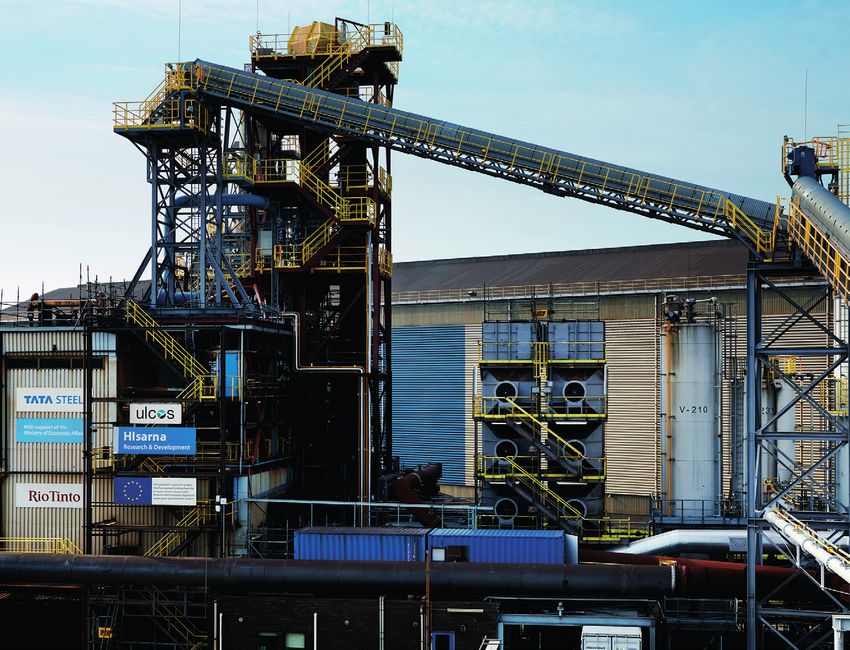
FACTS ABOUT HISARNA                                THE ADVANTAGES OF HISARNA

            Developed by
             Tata Steel                              Reducing environmental impact
                                                     The main environmental benefits of HIsarna are: the reduction of energy consumption and
The cyclone part (top part) of the HIsarna
                                                     CO2 emissions by at least 20% and the greatly reduced emissions of hydrogen, sulphur
installation was developed by Tata Steel in
                                                     dioxide and nitrogen oxide. When capturing CO2 emissions, also these emissions will
IJmuiden. The lower part, the melt reduction
                                                     be completely reduced. In addition, a wider range of residual products from the steel
vessel, was originally developed by Rio Tinto.
                                                     production process can be re-used in a HIsarna installation, thereby closing the cycle of steel
Tata Steel has fully owned all patents on
HIsarna technology since 2017.                       production even further.

            Revolutionary
            breakthrough
             technology                              Reduction of production costs
                                                     The HIsarna production process is more efficient than the current process because it no
HIsarna is a revolutionary breakthrough
                                                     longer requires pre-processing of the ores and metallurgical coal. Complete production
technology. The impact is comparable to the
                                                     steps can be phased out: no more coking, sintering and pellet factories are needed.
introduction of continuous casting in the last
century, which made the process steps of             Eliminating those also saves a lot of energy, which is good for the environment and reduces
block casting and block rolling superfluous.         costs. Finally, the HIsarna process makes use of a much wider range of ore and coal grades,
These were almost completely phased out in           which means that steel producers can make the same high quality of steel with cheaper and
the steel industry within 30 years.                  more available raw materials.

         Preheat furnace to
           1,200 degrees
                                                     How does HIsarna work?
Before production commences, the reactor                                                                                    HIsarna consists of a reactor which
in the HIsarna pilot plant is preheated to                                              Top gas                             maintains a temperature above the melting
around 1,200oC. A layer of liquid pig iron is                                                                               point of iron throughout, so that the
                                                                                             Top gas
then poured into the melting vessel to start                                                                                injected iron ore immediately melts and is
the process.                                                                                                                converted into liquid hot metal. The very
                                                       Ore
                                                    Oxygen                                                                  high temperature of the process gases in
    About the name HIsarna                                    Ore
                                                           Oxygen
                                                                                                   Oxygen                   the melting vessel is further increased in
                                                                                                                            the cyclone at the top of the reactor by the
                                                                                                         Oxygen
The name HIsarna is a combination of the old                                                                                addition of pure oxygen, which reacts with
Celtic word for iron (“Isarna”) and the name of                                                                             the carbon monoxide present.
                                                  Coal
the melting vessel (“HIsmelt”).
                                                     Coal                                                                   The turbulence in the cyclone helps the hot
                                                                                                                            gas to melt the iron ore, which is injected
       Production capacity                          Slag                                                                    at the top of the vessel. The iron ore then
                                                                                                                            drips to the bottom of the vessel, where
The maximum production capacity of the                     Slag
                                                                                                               Hot          the powdered coal is injected, causing the
HIsarna pilot plant in IJmuiden is 60,000                                                                      metal
                                                                                                                            oxygen in the iron ore (= iron oxide) to bind
tonnes of liquid pig iron per year. For                                                                            Hot
                                                                                                                   metal    to the carbon, creating liquid hot metal,
comparison: Blast furnace 7 in IJmuiden
                                                                                                                            which can then be drained off.
produces 10,000 tonnes per day. After
successful upscaling, Tata Steel in IJmuiden
has the ambition to build an industrial scale
factory.                                                                           Blast Furnace                                                  HIsarna

              Investments                                   Coal
                                                                                                                      Hot metal
                                                                                                                                     Iron ore
                                                                                                                                                                  Hot metal

Major investments have been made for the                   Iron ore                                                                   Coal

development of HIsarna, the majority of which                         Coking/Agglomeration        Ironmaking                                      Ironmaking

have come from Tata Steel and the partner
companies, with the support of the Dutch and
European governments.
SHORT REVIEW & LOOKING FORWARD
2004 2010 - 2014 2016 - 2018
The HIsarna test installation was built on the In 2016, the pilot installation was adapted to
Tata Steel site in IJmuiden in 2010. A number allow long-term tests in continuous operation.
of tests have been carried out since the first The installation has been radically changed.
With the aim of drastically reducing CO2 experiments in 2011, and have demonstrated Short experiments have been carried out to
emissions in steel production, the European that the process works technically and that show that a CO2 saving of 35% is possible, even
ULCOS project was started in 2004. A large it meets expectations for energy efficiency without carbon capture technology. This was
group of steel companies, research institutes and the raw material mix. In 2012, Tata Steel made possible in part by the use of sustainable
and engineering firms worked together to managed to produce liquid pig iron in a stable biomass and scrap. A test has also been carried
develop new technologies for the production process for a longer period of time. And in out to show that the process gas released can
of steel with greatly reduced CO2 emissions. 2013 steel was made for the very first time be so rich in CO2 that it is suitable for direct
Four technologies have emerged from this using this liquid pig iron. CO2 capture.
project, of which HIsarna is the most developed
and most promising.
2018 - 2019
In 2018, the HIsarna installation was included
in the IJmuiden production chain. This also
started the endurance test, to demonstrate
that the HIsarna installation can also produce
pig iron for long consecutive periods. In
addition to high process stability, it had to
prove high plant availability and reliability.
These objectives have been achieved. The
longest run within this trajectory lasted 19
days – producing 2,000 tonnes of pig iron.
2020 and further
Tata Steel is considering building a second
larger test plant in India. If testing on an
industrial scale proves successful, it will take
about five to ten years before the technology
can be put on the market commercially. The
ambition is to have a HIsarna factory on an
industrial scale by 2030.
More information about HIsarna: www.tatasteeleurope.com/en/innovation/hisarna
HIsarna factsheet nr. 2/2020You can also read


