The Coalition's Direct Action plan The Federal election result: critical insights for managing carbon and energy - Dr Peter Holt
←
→
Page content transcription
If your browser does not render page correctly, please read the page content below
The Coalition’s Direct Action plan
The Federal election result: critical insights
for managing carbon and energy
Dr Peter Holt
Today we will talk about
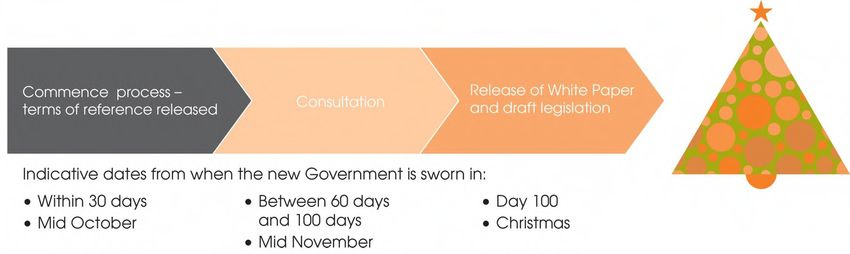
•   What has happened since Saturday 7 September?
    – what are the implementation pathways?
•   What is Direct Action? What is the Emissions Reduction Fund?
•   What are the business implications?
    – risks from changes in policy
    – financial implications
    – climate change remains a business issue
•   What you should do now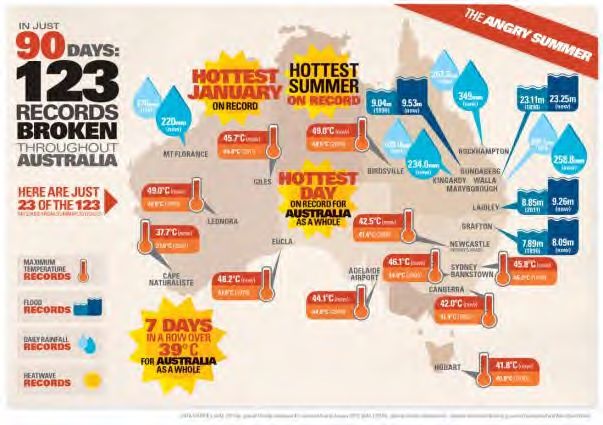
A Coalition majority in the
lower house
What’s happening in the
Senate?
How does the parliament
make up impact Direct
Action?
Repealing the carbon tax
Timeline      Senate balance of power         Likely outcome
Now –         Labor and the Greens control    The Clean Energy Act to
1 July 2014   the Senate                      continue
Post          The Coalition will need the     Negotiations with new
1 July 2014   agreement of at least six of    minor parties in the Senate
              the eight minor party           will be critical to ensure the
              representatives to repeal the   passage of legislation.
              Clean Energy Future
              legislation and implement
              Direct Action.

Double dissolution looking unlikely
                ......if it did happen it won’t be until September 2014.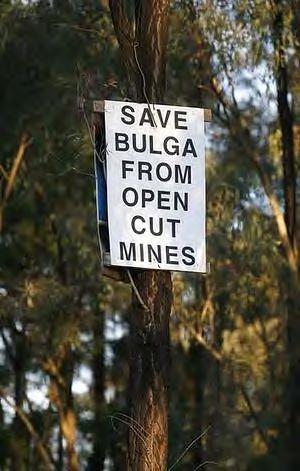
Senate - balance of power
 Party                        Senate seats – commencing 1 July 2014
 Liberal/National Party                            33
 Australian Labor Party                            25
 Australian Greens                                 10
 Others - minor parties                             8

The election has surprised with the strong showing of new minor
parties, with up to eight Senate representatives:

Minor party                                       Position on carbon tax
Democratic Labor Party, Palmer United Party
(three senators), Liberal Democrats, Australian   Against - 7
Motoring Enthusiast Party, Family First
Nick Xenophon                                     Unknown – 1
Repealing the Clean Energy
legislative package removes….
The carbon price mechanism including:
•   the fixed price (subject to timing)
•   carbon (emissions) trading from 1 July 2015
The Clean Energy Finance Corporation
Associated grant based programs including:
•   Clean Technology Investment Program CTIP
•   Clean Technology Innovation Program
•   Steel Transformation Package
•   Coal Sector Jobs Package
The Jobs and Assistance compensation package which
incorporates assistance for Energy-Intensive Trade-Exposed (EITE)
companies.

Possible pathways
          Direct Action Clean Energy Act
                                                                                 ALP / Greens
                                                                                 controlled
1 July 2014
                                                                                 Senate

 Retrospective
       Direct
  legislation          Carbon price          Transition to ETS/
       Action
  required  to                                                                   New Senate
                       remains and           flexible price
  backcommences
       date?
                       escalates to $25.40   period. Carbon                      minority
                                                                  Carbon price
                       on 1 July 2014.       price reduces to     repealed       party
                       Transitions to ETS    ~$6-10 AUD                          controlled
                       1 July 2015
1 July 2015
Direct Action plan (2010 edition)
Direct industry action through an
Emissions Reduction Fund
A focus on soil carbon
Reducing CO2 emissions in the
electricity sector
Boosting renewable energy
especially solar
Support for emerging technologies
through the Renewable Energy
Target (RET)

The Emissions Reduction Fund
Emissions Reduction Fund will seek projects that:
     1. reduce CO2 emissions [efficacy]
      2. deliver additional practical environmental benefits [co-benefits]
      3. not result in price increases to consumers [cost neutral]
      4. protect Australian jobs [productivity]
      5. not otherwise proceed without Fund assistance [additionality]
Funding in the Coalition budget          Year        Funding
                                         2014-15     $300m
                                         2015-16     $500m
                                         2016-17     $750m

.....but no details. This help businesses participate in policy
development.
Emissions Reduction Fund could be...
Emissions Reduction Fund
Voluntary Liable entities?
$2.55B over four years
participation? EITE companies?
Project-based NGER-based
CDM-like mechanism for Kyoto Baseline and incentives
Emissions
units .... with penalties trading?
- project baseline and offsets Poor performer
- expanded CFI? Penalties
Emissions
Baseline
profile
Incentives
Or a program similar to CTIP? Efficient performer
“Voluntary” participation “Compulsory” participationWhat are the business implications?
Establishment and definition of
baseline and credit
Baseline setting
• Uncertainty as to how the baselines will be set and defined. Will it
be at industry level? Operations level? Activity level?
• Penalties. What level will they be set? Poor performers may have to
pay.
Benchmarking Energy KPI - all mine types
600.0
Poor
Additionality performers may
500.0
have to pay.
• Demonstrating that offsets MJ per Saleable Tonne
400.0
are beyond BAU 300.0
Where do you sit on your
emissions profile? 200.0
Have you benchmarked 100.0
against your peers and 0.0
competitors?
20
24
25
27
11
33
22
23
29
10
12
30
14
26
18
21
28
19
17
32
31
1
2
4
7
8
5
6
3
9
ACME
Site IdentifierFinancial risks
Budget for carbon price as a contingency
• FY14 – fixed price $24.15/t CO2-e
• FY15 – fixed price $25.40/t CO2-e
Uncertainty of carbon cost in future energy supply contracting
• Terms of existing retail contracts need to be reviewed for carbon
scheme change/removal triggers.
• Direct Action may still have some impact on market prices.
• What emission and demand reduction incentives will be available to
customers from generators and retailers?
• How will RET and state white certificate schemes change?Climate change remains a business issue
International
obligations -
NGO Kyoto
campaigns protocol
across the Shifts in
supply weather
chain patterns
Source: Climate Commission
http://climatecommission.gov.au/report/the-angry-summer/
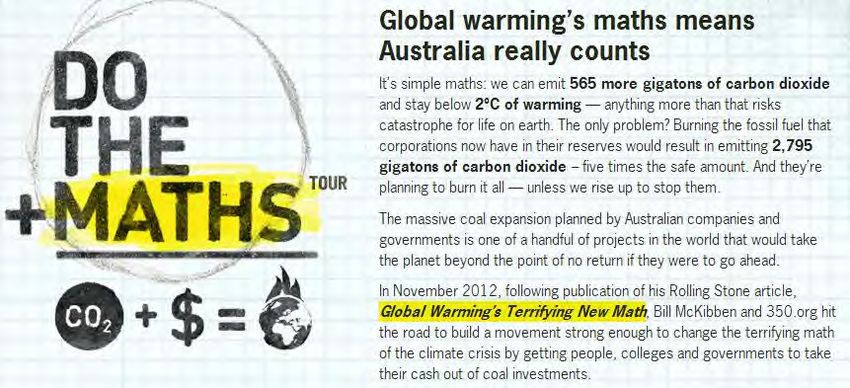
Tiny Bulga wins day
against mining Climate
Goliath Local change
community Gas
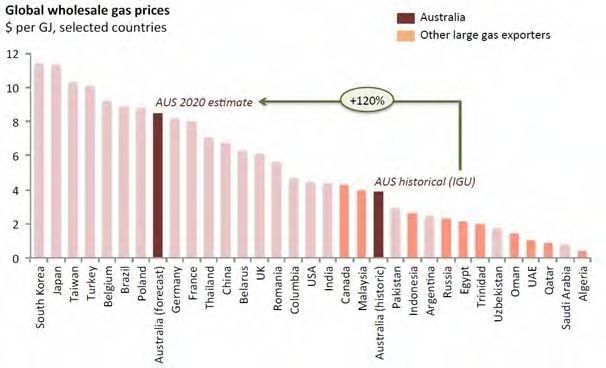
challenges prices are
on the
rise
Investor
relations
http://www.smh.com.au/environment/conservation/tiny-
bulga-wins-day-against-mining-goliath-20130415-
2hw5n.html
Source: Manufacturing Australia citing ACIL Tasman forecastsWhat should your business do now?
Participate in the Coalition’s white
paper process
Business response: develop a clear position on Direct Action including
establishment of emissions baselines to ensure your business’ views are
captured.
Key messages for business
Timing – need to act quickly
Participate in the Direct Action white paper process
•   Develop your position on Direct Action
•   Understand your emissions profile and how this is benchmarked to
    your peers
Understand any shifts in your risk profile
•   Financial risks
    – potential costs and budget positions
    – current emissions abatement projects
•   Carbon inclusive / exclusive clauses in energy contracts
Re-evaluate your position in the market place
We can help
Dr Gordon Weiss Emma Fagan
NSW and ACT Vic
Principal Consultant Consultant
Government 03 9691 5500
02 9929 3911
Dr Peter Holt
NSW and Qld
Principal Consultant, Follow us
Carbon Strategy Twitter @energetics_au
02 9929 3911
Linkedin.com/company/energetics-pty-ltd
Brian Innes
WA
Group General
Manager, Resources
and Industry
08 9429 6400Questions to consider for the
White Paper
Should organisations be able to purchase Is there a way for the reverse auction to
abatement in the reverse auction as a means provide good guidance to participants without
of offsetting likely penalties for exceeding encouraging rorting?
their baseline?
Should the methodologies normalise emission
Baselines at the industry level will be easier to reductions based on the probability of
implement and manage than baselines set at success and sustainability of the measure?
the corporation level, but will see winners and
losers. Which provides the most effective How can the methodologies deal with
outcome? additionality without making the reverse
auction impractical?
Does the precedent of the industry level
baselines used to determine EITE How can the Fund best reproduce the impact
compensation provide a good model for the of grant based schemes such as CTIP without
Emissions Reduction Fund? risking funding projects that ultimately don’t
deliver the abatement?
How can the baselines incorporate meaningful
specific energy intensities to deal with Should businesses be able to sell future
changes in throughput and product mix at the abatement through the reverse auction despite
industry level? exceeding their baseline?
What is the best means of encouraging poor
performing businesses to undertake
abatement activities?You can also read


