Hofstra University Model United Nations Conference 2021 - Future Crisis Committee
←
→
Page content transcription
If your browser does not render page correctly, please read the page content below
Hofstra University

Model United Nations Conference 2021

         Future Crisis Committee

           Maheen Safian, Chair
       Sameer Mamun, Crisis Director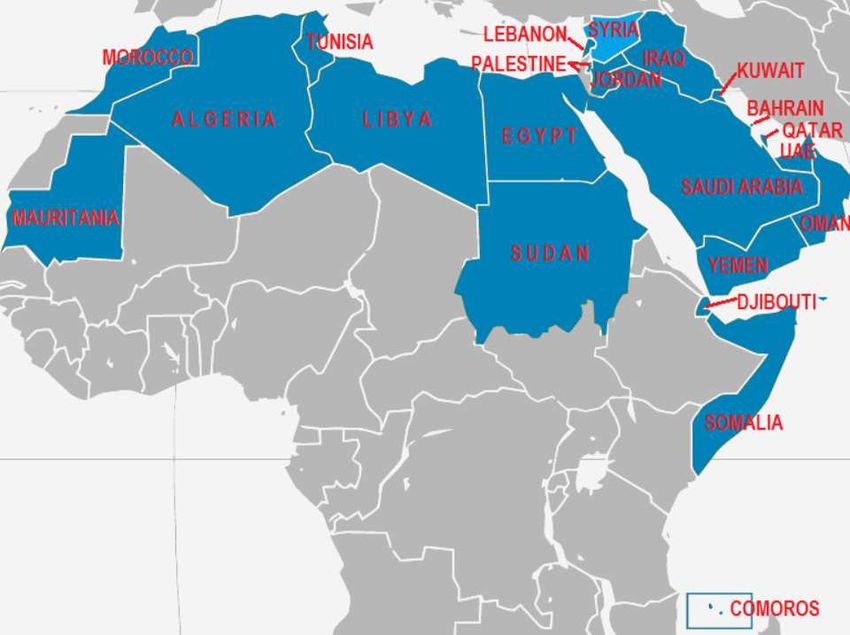
1

Hey, delegates!

My name is Maheen Safian, and I am the future crisis chair for HUMUNC 2021! Currently, I'm a
sophomore double-majoring in political science and global studies. In addition to being the vice
president of Hofstra Model UN, I've been a strategy article writer for the Model UN training
website allamericanmun.com for the past several years. Previously, I assisted in SPECPOL as a
dais during HUMUNC 2020, and attended the Columbia College Model UN Conference during
my first semester at Hofstra.

My experience in MUN is extensive, ranging from my sophomore year of high school until now!
Undeniably, it has made me grow incredibly as a student and leader. In addition to MUN, I'm
involved as the Hofstra Campus Organizer for Peace Action, an organization furthering pro-
peace foreign policy through lobbying and political organization. Outside of campus, I'm the
ECOSOC intern for the Pakistan Permanent Mission to the United Nations, where I research
sustainable development initiatives in developing nations.

I'm excited to see all of you soon, and the solutions you may bring!

Sincerely,

Maheen Safian
Future Crisis Chair
HUMUNC 2021
2

Greetings honorable delegates!

My name is Sameer Mamun, but you may all soon know me as your Future Crisis Committee
Director during this Hofstra Model United Nations Conference! Currently, it is my second year
here at Hofstra and I am a Business Management major. In terms of MUN experience, I have
plenty at both the high school and collegiate level. During my time in high school, I was a
delegate on ECOSOC, and was president of my Model UN club during my junior and senior year
of high school. At Hofstra, I was honored to participate as a delegate at Columbia University’s
Model UN Conference, as well as being able to contribute as a dais for Future Crisis during last
year’s conference at Hofstra. On campus, I have been able to be a part of numerous clubs such as
Peace Action, Muslim Student Association (MSA), and even serve as Public Relations Officer
for Hofstra’s MUN this year.

I hope you all are just as excited as I am for this year’s Future Crisis Committee. Although there
will be many challenges both in and out the committee room, I know you delegates will find
ways to overcome the obstacles presented to you. As someone who fell in love with MUN and
crisis, I encourage you all to take on the challenges in this committee head-on, and embrace your
creativity during this Summit for the Unification of the Arab States.

Sincerely,
Sameer Mamun
Future Crisis Director
HUMUNC 2021
3

                                           Introduction

        It is the year 2120. The international system has dipped into chaos, and dire

circumstances have pushed some of the mightiest Arab nations to consider renouncing their

sovereignty for the sake of survival, and to give one final attempt of unification for the first time

since the 19th century.

        Diminishing oil resources over the past hundred years have destabilized the international

system that once saw several Arab countries dominate fossil fuel production. Western powers,

including the United States and leading European economies, have been largely unsuccessful in

their own transition from oil to renewable resources for the past hundred years. In order to

maintain influence over significant oil reserves and prevent the collapse of their own economies,

and instability in their countries, they have intervened in the Middle East and North Africa

(known as MENA) through coups, prolonged military presence.

        In response to this wave of interventionism and destabilization, a widespread movement

of anti-Western sentiment, called the Harakat Nahda, has been building over the previous

decades among the citizens of MENA countries, gaining fiery traction among the Arab people.

Foreign-assisted coup-d’états that removed Arab state leaders who opposed Western control over

national oil reserves have been met with protests that rivaled those of the 2010 Arab Spring. An

Islamic revival took root during the 2050s—with Islam serving as a unifying factor—also

provides common cause to Muslim citizens across the MENA countries to resist Western

political influence. More violent factions, such as terrorist organizations, have resurged in

response to weakened government control— seeking to use destabilized areas to create their own

radical Islamist state.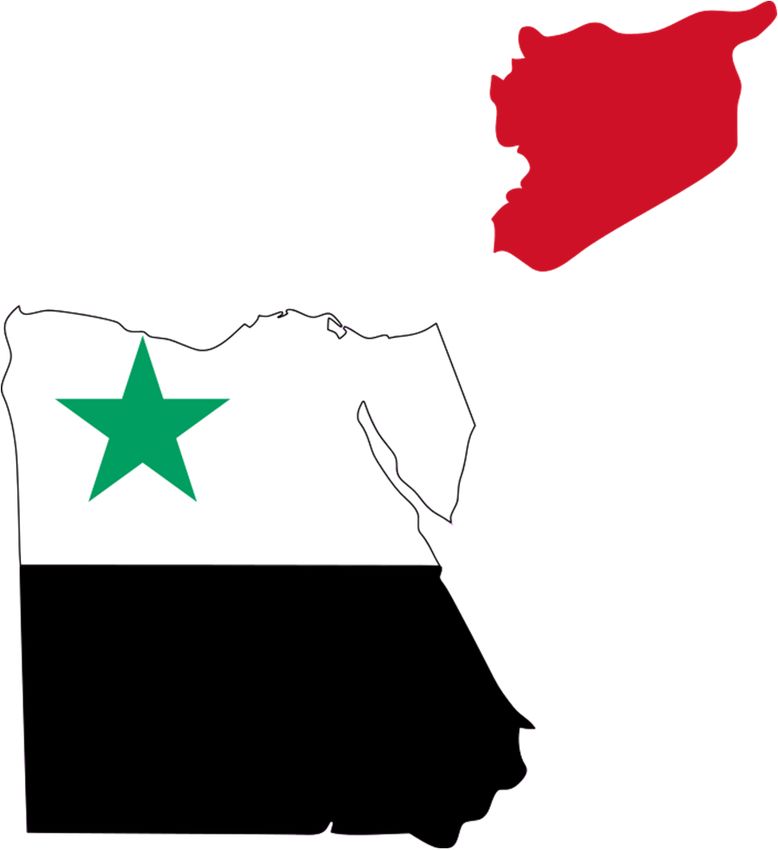
4
But, in 2117, chronic instability in the region has birthed a new generation of populist
state leaders. For the first time since the 20th century, the Pan-Arab movement has brought
leaders of the people to office, powered by Arab citizens demanding an end to continuous the
instability surrounding their lives. These leaders face many priorities simultaneously, including
the need to counter terrorist groups vying for state control, realizing populist demands to shift
Arab economies away from dwindling oil resources, and exploring a popular expression of desire
for a unified Arab state to fend off Western political agendas.
This critical turning point in history will be when the Summit on the Unification of the
Arab States commences in February 2120.
Mission Statement
It is the first day of the 2120 Summit of the Unification of the Arab States. This
committee will be composed of the current Arab leaders that have chosen to pursue the
unification of their states into a single, Pan-Arab country. Delegates will represent each Arab
nation as their respective head of state, and are charged with the creation of a novel government
during the days of the Summit. Necessary priorities that delegates must accomplish include:
the drafting of a state constitution;
outlining economic policy;
domestic policy agendas;
and foreign policy priorities.
In addition, delegates will be tasked with formulating solutions to two issues immediately facing
the region and the viability of the new state:
a shift from an oil-based economy to one that is more sustainable;5
the creation of a reliable security apparatus and government infrastructure to put
an end to security concerns in the region, either stemming from Western
interventions or the growth of terrorist factions within the region.
Time is pressing, and delegates must efficiently, quickly, but most importantly carefully
construct the new state. All actions within the Summit will immediately be reflected in the
outside world, and public opinion can shift radically over the course of several days. While
negotiations are underway, any of the stated regional challenges could appear before the Summit
delegates in real time, such as the collapse oil markets or a violent act of terrorism.
Most importantly, Western nations do not view the Summit favorably, as a unified Arab
state could make a formidable competitor for resources, military control, influence in the Eastern
hemisphere, and more. In this regard, attempts may be made by states outside the region to
thwart the Summit or ruin current diplomatic channels between the nations at the Summit.
Introduction: What is Pan-Arabism?
The Pan-Arab movement is built upon the concept of Arab nationalism. It is argued that
the existence of similar cultural, linguistic, and religious histories of the Arab region create a
special bond between Arab states, and these bonds should be reflected in the governmental
structure of the region.1 Furthermore, it asserts that the current, fragmented nation-state reality of
the Arab world is artificial, and the only way to solve the serious economic, political, and social
issues that many of these nations face is through the unification of these states.2 Pan-Arabists
argue that political unification would strengthen the region as a whole, returning to its natural
state of unity.6
The Historical Roots of Pan-Arabism
During early 20th century, the dominion of the culturally Turkish Ottoman Empire over
its Arab subjects resulted in the creation of a cultural unity among Arabs. Common cultural,
ethnic, and linguistic identity united Arabs while they were ruled by a foreign empire that they
did not identify with culturally or linguistically.3
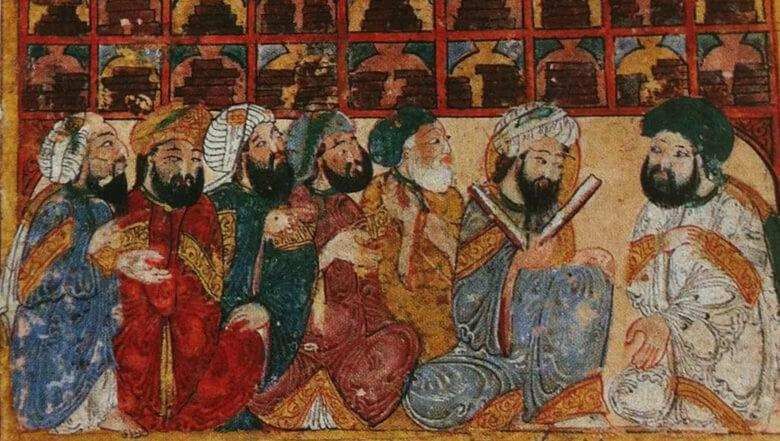
During this period, the cultural and literary Nahda (or “awakening”) movement emerged,
consisting of Arabic translations of literary sources, reform of linguistic translations, and a steep
rise in Arabic newspapers, magazines, and education (Figure 1). Considered the Arab
renaissance period, the Nahda laid the intellectual foundation for the Pan-Arabist movement that
would rise decades later. The movement was politicized when educated Arabs disagreed with
their exclusion from Ottoman rule over the territory that was inhabited by Arabs.4
Another factor that caused the rise of this Arab revivalist movement was European
influence extending into the Far East. “Nahda was partly a reaction to European colonial
encroachment; one of its first triggers was Napoleon’s easily accomplished invasion of Egypt in
1798. The Nahda emphasized the need for reform and revitalization in the face of European
military superiority and the stagnation of the late Ottoman empire.”5
Figure 1: Scholars during the Arab Renaissance, also known as The Nahda67
A major figure within the movement was Butrus al-Bustani (Figure 2), who created new
Arabic schools, dictionaries, and other literary pieces to expand the language. In 1859, during a
lecture at the Syrian Society of Arts and Science, he stated, “‘It cannot be denied that the market
for the goods of knowledge has stagnated among the Arabs and that they no longer circulate
among the Arab masses, especially not among their leaders.’”7
In order to solve this issue, Bustani recommended:
allowing sophisticated Arabs to intermingle widely with civilized people,
increasing the number of presses and schools, organizing salons and gatherings,
enlightening government officials, opening the door to cultural, religious, and
political discussion, speech and dialogue, releasing the mind from its reins and the
will from its bridle, and paying more attention to the education of women.8
Figure 2: Butrus Al Bastani9
Factors Causing Rise of Pan-Arabism During the 1900s
The combination of social-political factors led to the ideal environment for the growth of
Pan-Arabism during the 1900s. The collapse of the Ottoman Empire exposed, “[sentiments] of
collective Arab nationalism [that] had already emerged in the Middle East in the early twentieth8
century. These attitudes were largely motivated by a desire to shake off the corrupt, inefficient,
and alien rule of the Ottoman Empire.”10 Once the empire collapsed after World War I, an
opportunity for Arabs arose. In addition, the rise of colonization of the Middle East and North
African region, and subsequent traction of anti-colonialist sentiments among the Arab people,
united many Arabs around a common purpose.11
The decline of Islamic and Arab societies for the past several centuries made them much
weaker and poorer compared to Western entities, although they still maintained ideas of
ethnocentrism. A result of this decline caused some to pursue Pan-Arabism, while other saw an
increase in Islamic unity as the direct answer to Western dominance.12 Islam was seen as a
unique force in the Arab region, and could positively differentiate Arab society from that of
West. Islam was perceived as a beacon of scientific advancement, a grounded source of morals,
and was meant to be an ideal societal framework in the eyes of Pan-Arabists.13
After the Middle Eastern territories were conquered after World War I, Europeans
divided the land along artificial political lines, and rewarded Arab leaders who supported the
European conquests with their own state.
Thus, local leaders, whose support for the Europeans during the war was initially
driven by encompassing Arabism and the desire to rid themselves of the foreign
Ottoman rule, now had an incentive to continue cooperating with the Europeans
and encourage loyalties to the smaller, newly created states. In almost every Arab
country, schemes for regional Arab unity were countervailed with efforts to instill
a sense of patriotic solidarity and identification with the new state through the
creation of a national flag, an anthem, and other local symbols. Nonetheless,
modern technology, mobility, and newspapers and other printed materials
enhanced the sense of collective Arabism that transcended the new political
boundaries.14
Arab regimes, sensing the populist following behind the Pan-Arabist movement and the
weakening of Arab society in comparison to the West, began to embrace the movement. A direct
result of this was the United Arab Republic.9
Attempting to Unify the Arab World
Between 1945 and 1990, eighteen attempts at unification between independent Arab
states occurred, the most extensive occurred between the independent states of Syria and Egypt
from 1958 to 1961 (Figure 3).15 Called the United Arab Republic (UAR), the nation fell apart in
under four years.
Figure 3: Flag of the United Arab Republic
Considered a direct reflection of Arab nationalism and the Pan-Arabist movement’s
power during the period, it was largely driven by the perception that a new Arab state should be
drawn over the artificial political boundaries the Europeans created after World War I. Gamel
Abdel Nasser, president of Egypt during this period, believed Egypt was the strongest state to
lead the creation of a union of Arab states. A significant basis for the union between Syria and
Egypt stemmed from the influence of the Baathist party. Although they were not the largest
Syrian political party, the Baathists largely occupied the Syrian military branches. Stated by
party member Michel Aflaq in a discussion of Baath political principles:10
‘the Arab peoples are one people and must stay one. Our problem is one problem
and our struggle must be a unified struggle… I would define it as a struggle to
raise the quality of living of the Arab peoples. We believe the present condition of
the Arabs does not show their true potentialities. Our aim is therefore a long-term
one: a revolution in the people’s way of thinking.’16
In November 1957 and January 1958, the Syrian Parliament passed resolutions calling for
the union of Syria and Egypt, and the following year a dual Egyptian-Syrian parliamentary
session called for a unification as well.17 Although the parliament played a role in initiating the
union, the true negotiations upon the nature of the union were made by the few political and
military Syrian-Egyptian elites. Thus, the union of the nations was not how the Baathists
envisioned.
Instead of the proposed federation, President Nasser posed the condition that the two
countries must be completely integrated.18 Due to Egypt’s stronger and efficient institutions,
Syria was overtaken and made submissive to Egyptian command. President Nasser was chosen
as the head of state for the union, and commanded the dissolution of all Syrian political parties,
in addition to advancing unpopular economic/political measures in Syria.19
Quickly Syrian relations with Egypt turned sour, as Egypt retained little room for Egypt
to play a role in internal and external affairs. As the unpopularity of the UAR rose, on September
28, 1969, a military coup in Damascus laid a permanent end to the United Arab Republic,
returning sovereignty to Syria.20 No major attempt to unify the Arab world after this political
event was commenced again.11 Figure 4: Map of the Arab world21
12

                             2020 to 2120: One Hundred Years of History

                                           Oil Resources

       In 2018, OPEC countries accounted for eighty-two percent of the world's crude oil

reserves, and sixty-five percent are in Middle East countries such as Saudi Arabia, Iran, Iraq,

Kuwait, and the United Arab Emirates (UAE).22 In 2120, crude oil reserves have severely

dwindled to less than five percent of what they were in 2018. The quick decline of non-

renewable resources was not met with efficient action by nations when warnings were issued

decades in advance by climate scientists to make the economic shift to green energy, or

economists who urged these countries to diversify their economies.

       In 2120, Arab and Western nations are on the verge of economic collapse. The dire need

to revitalize oil-dependent economies is a major global concern. Due to the sudden reduction in

economic activity in Arab nations, many of these governments are without fiscal resources to

maintain their states' domestic budgets. This has resulted in large surges in unemployment, an

increase in organized crime, and an increase in government corruption.

       Arab nations which were the most prosperous, such as Kuwait and Saudi Arabia, can no

longer rely on their financial resources, and are diminishing in power. The United States and the

United Kingdom, also failing to completely transition to a green-energy economy, have utilized

political influence to desperately maintain channels to Arab oil resources. Financial rewards and

beneficial agreements have blessed Arab leaders who continue to give Western powers influence

over their crude oil exports. However, if a leader who opposed Western encroachment into the

region was elected, Western powers backed military and rebel forces to oppose their authority.

This forced power struggle has resulted in decades of conflict, instability, and a shift in public

opinion against Western countries, similar to the anti-colonial sentiment during the early 19th
13
century. Leaders who were installed by Western powers were quickly overthrown by the Arab
people, and a power vacuum cycle occurred.
Social Movements
A period of Islamic revivalism occurred from 2050-2060, with a surge in new Islamic
scholars and academics who expanded literature during the period of instability. Many of these
writers called for an Arab-led state that would rival the Ottoman Empire, but would prioritize the
needs of the MENA region. Populist movements rippled across the region as well, largely built
upon Islamic feelings of unity, protesting against Western intervention in the MENA region.
Political Cycles and the Rise in Security Threats
A rise in terrorism has challenged Arab leaders by exposing power vacuums present in
the Middle Eastern countries and civil society, with modernized strains of Al-Qaida and ISIS
emerging, nearly one hundred years after their complete elimination in the post-9/11 period.
Witnessing power struggles occurring due to the oil crisis, many these organizations have
launched endless destabilizing terrorist attacks on Arab capitals—including kidnappings and
bombings—in an attempt to further weaken Arab states in the broader goal of creating a radical
Islamic caliphate like ISIS ruled in northern Syria from 2014-2019.23
In the face of economic and political chaos and looming terrorist violence, a widescale
movement of Arab citizens have upheaved dozens of pro-Western Arab leaders from office, and
the military leaders leading each nations’ revolutions gained these seats. The People's
Awakening Movement, also known as Harakat Nahda, currently has a major presence in each14
Arab nation. Within the Harakat Nahda, the core principle was the call for the unification of the
Arab states.
Summit Objectives
Although many of these nations may have each shared in uprisings inspired by Harakat
Nahda, each Arab nation is still unique in many ways. An example is a Shia versus Sunni
demographic of Muslims, ethnic makeup of the nation, and respective type of governmental
systems. For example, Saudi Arabia has a monarchical government structure, while Tunisia is a
parliamentary democracy. Questions delegates will have to answer:
1. How to consolidate these unique Arab histories, demographic, and religions together into
a single cohesive state?
2. What governmental structure will the new nation adopt? Parliamentary, democratic,
monarchical, oligarchy, etc.
3. What economic structure will be created? Furthermore, how should the shift to renewable
resources be commenced? A fully nationalized economy, capitalistic, or a hybrid?
4. How will you strengthen this new Arab nation for impending security threats and solve
the current threats?
5. Foreign affairs agenda: How will the new state conduct relations with the rest of the
world and what will be its goals?15
Character List
Abdullah Ali Hassan, Prime Minister of Democratic Republic of Saudi Arabia
The Saudi Arabian monarchy was overthrown by a rebel faction in 2050 after widespread
claims of undemocratic actions by the Saudi royal family. The dynastic power structure was
replaced by a parliamentary democracy in 2055 after a five-year transitional interim government.
The charismatic leader of the rebellion, Abdullah Ali Hassan, has been chosen by popular vote to
serve as prime minister. As a leader attempting to control the instability within his nation, he has
focused on Saudi economic issues, as well as controlling internal security issues, including a rise
in organized crime.
Ali Ahmed Hosseni, Prime Minister of Iraq
This leader has been birthed from the Iraqi branch of the Harakat Nahda populist movement,
and was elected to represent resistance to foreign interference. Iraq has been subject to various
military campaigns by the West in search for resources, some as extensive and disruptive as the
2004 invasion of Iraq by the United States. As a result, many Iraqis desire to see a strong
framework for security against imperialistic foreign entities. Examples of this include a military-
centered structure of political power, or one with similar characteristics.
Fatimah Al-Sultan, Prime Minister of the United Arab Emirates
After witnessing the downfall of the Saudi royal family, the UAE royals resigned from
the absolute monarchy in 2058 in an effort to avoid the same fate and preserve a future role in
governing. Prime Minister Fatimah-Al Sultan was chosen by the royal family to lead the
“democracy”, but royal family members are still vital political players. They use their wealth and16 influence to pull strings behind the scenes, and they are a viable resource for any actions PM Sultan may want to pursue. UAE is prioritizing the transition to a completely green economy, as their economy’s oil dependency has greatly damaged its GDP. On the brink of economic collapse, they are also faced with many internal security issues. Tariq Ahmad Abduli, President of Kuwait The leader of a country that successfully transitioned to democracy from monarchy over sixty years ago, Abduli desires to promote a collaborative and more diplomatic approach for the new Arab nation to have with the rest of the world. Despite the political transition, Kuwait has suffered financially for not updating its economy, so Abduli is a strong proponent of moving to a green economy. Mona Al-Farah, Prime Minister of Libya Prioritizes a strong security framework for the new nation, but his citizens hold wide-scale anti-Western sentiment. Libya is currently battling a surge in crime and the rise of various terror groups attempting to take advantage of political weakness and division. PM Farah’s focus has been on anti-terrorism measures within the region to prevent power vacuums from occurring in the future nation, such as the 2014 Libyan Civil War. Nasser al-Ahmadi, President of Egypt Sharing his first name with the surname of the historic Egyptian president who attempted to forge the United Arab Republic, President Ahmadi rose to political power in the midst of the
17

Harakat Nahda emergence in Egypt. Egypt had been the birthplace of modern Pan-Arabism, and

many literary/cultural figures for Islamic Unification have come from here.

Khalil Sami Usman, President of Algeria

   With a GDP mostly based on oil, Algeria has suffered the most economically at the forefront

of the oil crisis. Algeria has been a scientific powerhouse for research in the MENA region,

helping transition their economy to renewable energy and making strides and producing a slow,

but effective economic recovery. President Usman advises for a heavy influence of civil society

in the future Pan-Arab state.

Omar Al-Yousef, Prime Minister of Jordan

   Due to large scale population displacement from refugee waves that toppled Middle Eastern

regimes during the 2040s, the Jordanian government crumbled. Many successive coups occurred;

currently a tyrannical, populist faction is running the government. President Yousef is the head

of this faction, and desires to not only retain certain power in the new nation, but is against

Jordan being simply “annexed” into the new nation. Desires to increase power and recognition in

the region.

Queen Fatimah Al-Maqsood, Qatar

       Qatar’s monarchy is one of the few Arab monarchies that managed to survive the past

hundred years. Through careful adaptation to the rapidly changing political times, Queen

Maqsood has accepted many of the demands that the populist movement requested when protests

reached the Qatari capital, Doha. Temporarily, she has the support of the Qatari people, but there
18
are rumors that the rebel faction that overthrew many of the other monarchies in the Arab region
may be plotting a similar result in Qatar.
Sarah Ali Mohammed, President of Tunisia
Desires a strong democracy (similar to Tunisia) to be present in the new state. Promotes
fair electoral processes and dispersal of political power among the people. Has socialist
tendencies, as her rise was from the Tunisian Socialist Party. Her message appeals to largely
working Middle Eastern families, and maintains a high degree of approval in Egypt.
Yusuf al-Bani, Prime Minister of Morocco
Largely interested in shaping the economics and trade relations of the future state,
Morocco is renowned for being one of the few Arab nations that did not suffer financially from
the instability caused by wide scale riots. Desires to open trade relations with most parts of the
world while maintaining Pan-Arab values.
Abdulrahman Ali Zinnah, Prime Minister of Oman
The fall of the Oman Sultanate occurred after the overthrow of Haitham bin Tariq Al
Said. This Omani leader pursued the expansion of the gas industry after the Omani oil reserves
drastically declined. At the same time, he fostered friendly relations with the West in order to
maintain Oman’s economic growth. The new leader, Prime Minister Zinnah, is converse in these
positions. He desires a complete economic transition from the gas industry to renewable energy,
and plans to restore the wealth of Oman back to what it was under the Oman Sultanate period.19
Endnotes
1
Nationalism and ethnicity: Pan-Arabism. (n.d.). Encyclopedia.com | Free Online Encyclopedia.
https://www.encyclopedia.com/social-sciences/encyclopedias-almanacs-transcripts-and-
maps/nationalism-and-ethnicity-pan-arabism.
2
Mohsen, A. (2015, December 11). Arab Integration. Encyclopedia Britannica.
https://www.britannica.com/topic/Arab-integration.
3
Pan-Arabism. (n.d.). Encyclopedia.com | Free Online Encyclopedia.
https://www.encyclopedia.com/social-sciences-and-law/political-science-and-
government/international-organizations/pan-arabism.
4
Ibid.
5
Lindsey, U. (2018, November 2). A nuanced account of the Arab Nahda. Al-Fanar Media.
https://www.al-fanarmedia.org/2018/11/a-nuanced-account-of-the-arab-nahda/
6
Ibid.
7
Ibid.
8
Ibid.
9
Ibid.
10
United Arab Republic. (n.d.). Encyclopedia.com | Free Online Encyclopedia.
https://www.encyclopedia.com/history/asia-and-africa/egyptian-history/united-arab-republic.
11
Mohamedou, M. (2018, December). The rise and fall of pan-Arabism. IHEID.
https://www.graduateinstitute.ch/communications/news/rise-and-fall-pan-arabism.
12
Rubin, B. (1991). Pan-Arab nationalism: The ideological dream as compelling force. Journal
of Contemporary History, 26(3), 535-551. https://doi.org/10.1177/002200949102600310.
13
Ibid.
14
United Arab Republic. (n.d.). Encyclopedia.com | Free Online Encyclopedia.
https://www.encyclopedia.com/history/asia-and-africa/egyptian-history/united-arab-republic.
15
Mohamedou, M. (2018, December). The rise and fall of pan-Arabism. IHEID.
https://www.graduateinstitute.ch/communications/news/rise-and-fall-pan-arabism.
16
“Middle East Forum”, Issue February 1958.20 17 Palmer, M. (1966). The United Arab Republic: an assessment of its failure. Middle East Journal, 20, 50-67. 18 U.S Congressional Office. (n.d.). Syria - United Arab Republic. Country Studies. https://countrystudies.us/syria/14.htm. 19 United Arab Republic. (n.d.). Encyclopedia.com | Free Online Encyclopedia. https://www.encyclopedia.com/history/asia-and-africa/egyptian-history/united-arab-republic. 20 U.S Congressional Office. (n.d.). Syria - United Arab Republic. Country Studies. https://countrystudies.us/syria/14.htm. 21 “Countries of the World: The Arab World”. 18 March 2019. https://theodora.com/wfb/arab_countries.html. 22 Middle East leads global supply of conventional oil. (2018, December 20). Oil & Gas Jobs and News. Rigzone Empowers Professionals in Oil and Gas | Rigzone. https://www.rigzone.com/news/middle_east_leads_global_supply_of_conventional_oil-20-dec- 2018-157769-article/. 23 “ISIS Fast Facts”. CNN. 6 September 2020. https://www.cnn.com/2014/08/08/world/isis-fast- facts/index.html
You can also read


