How can Law understand and communicate with the Sharing Economy and the Technological Apps world? The case of Uber - Federico Lubian University of ...
←
→
Page content transcription
If your browser does not render page correctly, please read the page content below

How can Law understand and
 communicate with the Sharing
Economy and the Technological
 Apps world?  The  case
        Federico Lubian
                        of Uber
       University of Fribourg

                                  1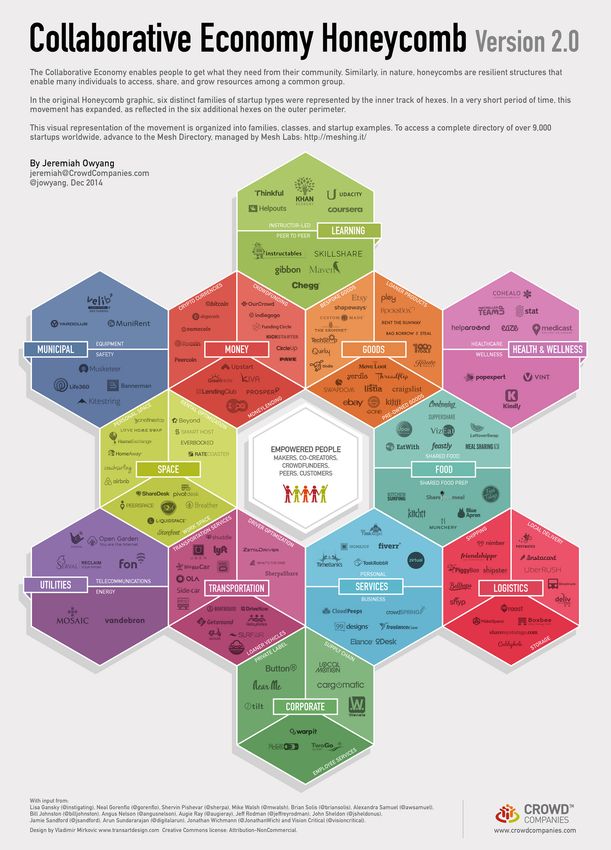
The Sharing Economy
The Sharing (also Collaborative)
Economy is an economic model where
ownership and access are shared
between corporations, startups and
people.

                                     2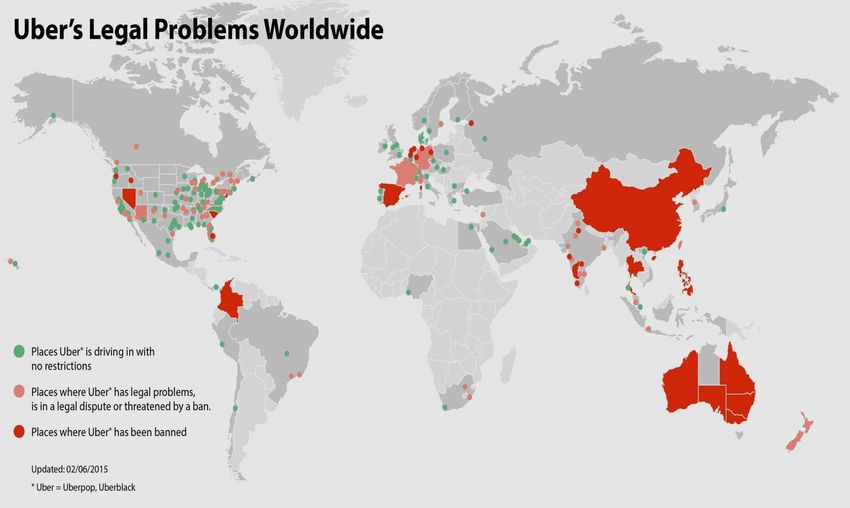
3

4
5
Uber and its App

                   6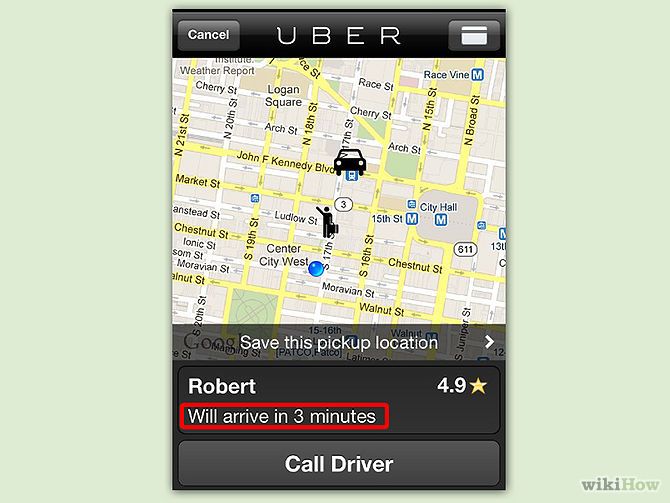
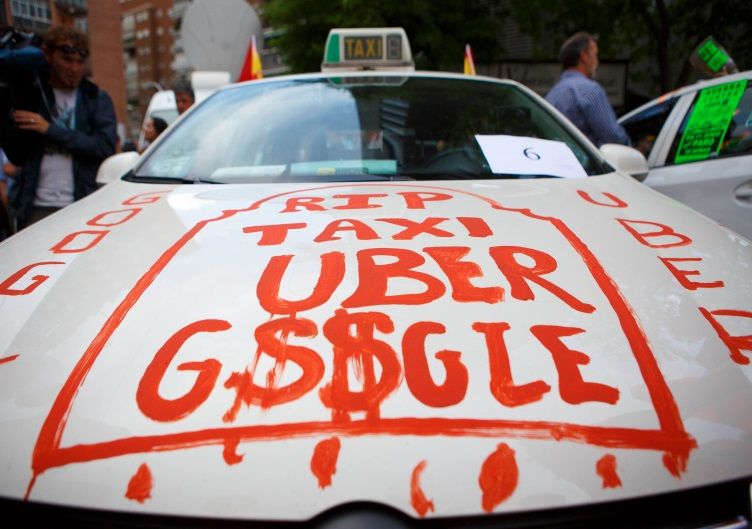
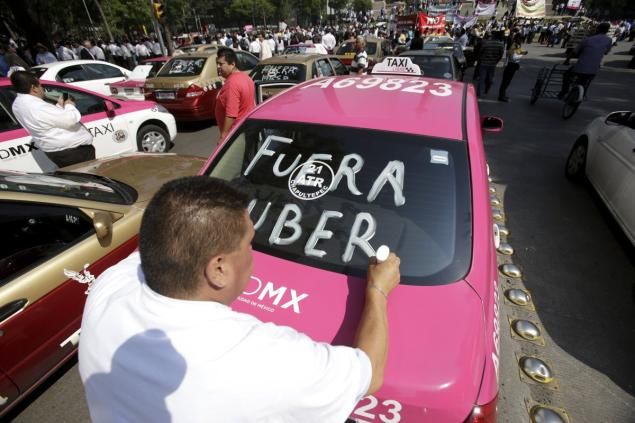
Reactions to the diffusion of Uber

                                     7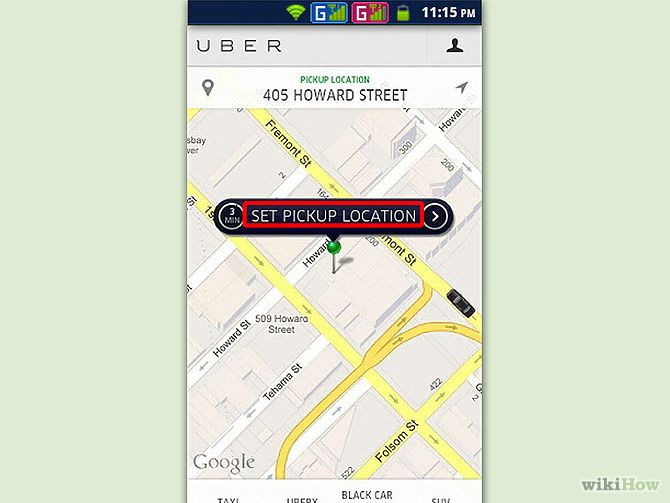
Uber Legal Problems

                      8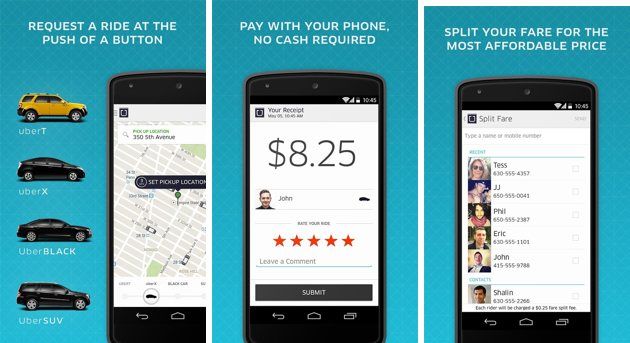
Uber and the Sharing Economy
• Rasoul Jalali (Uber Switzerland): “Uber has
  never seen itself as a sharing economy
  pioneer, our goal has always been to grant a
  better corrispondence between offer and
  demand as well as a more efficient use of cars
  and means of transport”.

• Since March 2015: Uber expressed its interest
  in joining the government-backed organization
  Sharing Economy UK (SEUK). SEUK
  refused them arguing that they “see it as a
                                                   9
  conventional private hire operator”.
What is Uber?

(from a legal point of view)

                               10
Critical Aspects of Law
as a Social Science
• Brooks Adams
with his
materialist
conception of
history and the
inevitably
conclusion that
the law’s
content is the
product of the 11(1) The perception of the dilemma
12(2) “Flexibilization” of the Law in
order not to stifle Innovation
• “Product cycles in technology are faster than
justice … [The innovator is] always already in
credit”.
• Regulators and policymakers should act as
“adaptive agents” who adjust regulations and
policies according to the evolution of the
markets and technologies.
The “adaptive regulator” must have:
•an incremental approach: small steps
should be taken and social change should 13(3) The request to the ECJ • A Spanish judge has asked the European Court of Justice to determine what kind of company Uber is and if Spain was allowed to ban it. • The referral to the European court was announced on July, 20 2015 by Mark MacGann, head of public policy at Uber, saying that the EU's highest court will determine if Uber provides “a mere transport activity, or an electronic intermediation or 14 information society service”.
How to define Uber
     Four parameters defined in the WTO Case China
       – Publication and Audiovisual Products:
1.      Essential Operational Characteristics
2.      Perception of the End-Users
3.      International Classification
4.      Applicable Legal Framework

                                                     15
1. Essential Operational
Characteristics
16How Uber works
172. Perception of the End-Users
183. International Classification
19International Classification
WTO Doc. W/120
84341 “System Software
Download”: this subclass includes
electronic files containing system
software
71221 Taxi services:that can
Motorized be
taxi-cab downloaded
services, and
including urban, suburban
and interurban. These services are generally rendered on a distance-travelled
stored
basis, on
for a limited a
duration local
of time, and to a device for
specific destination.
provided by passenger carrying motorcycles are included.
later
Taxi services
execution/installation”
71222 Rental services of passenger cars with operator: Chauffeur-driven
hired car services, wherever delivered, except taxi services. These services are
generally supplied on a time basis to a limited number of passengers, and
frequently involve transportation to more than one destination.
84342 “Application Software 204. Applicable Legal Framework
214.1. How Uber defines itself
Uber offers information and a means to obtain
transportation services offered by third party
transportation providers, drivers or vehicle operators (the
World
"Transportation Provider"), which may be requested
T&Cs
through the use of an application supplied by Uber and
downloaded and installed by you on your single mobile
device (smart phone) (the "Application").
The Uber App and the Website provide means to enable
UK you to obtain transportation services offered by third
T&Cs party transportation providers, drivers or vehicle
operators (the "Transportation Provider").
224.1. How Uber defines itself
The Services constitute a technology platform that enables users of
Uber’s mobile applications or websites provided as part of the Services
(each, an “Application”) to arrange and schedule transportation
and/or logistics services with third party providers of such services,
including independent third party transportation providers and third
US T&Cs party logistics providers under agreement with Uber or certain of Uber’s
subsidiaries (“Third Party Providers”). Unless otherwise agreed by Uber
in a separate written agreement with you, the Services are made
available solely for your personal, non-commercial use”.
Uber is a technology company that has developed an app that connects
users (riders) with driver partners who provide transportation to the user.
Guideline Uber is not a transportation carrier, and does not employ any
to Law drivers. Users can use the Uber App to request transportation via their
Enforcem smartphone, the web, or via SMS. Uber users can choose from a variety
ent of drivers available in his or her location, including but not limited to:
[…] UberX, XL, UberPool: drivers who use their own personal cars
[…].
234.2. The definition of the California
Public Utilities Commission
An organization whether a corporation, partnership,
sole proprietor or other form operating in California
Concept of that provides prearranged transportation services
Transportation for compensation using an online-enabled
Network application (app) or platform to connect
Company passengers with drivers using their personal
vehicles.
The Commission is aware that TNCs are nascent
industry.
The definition Innovation does not alter the obligation to protect
of the content public safety, especially where, as here, the core
of the Service service being provided - passenger transportation
on public roadways – has safety impacts for third
parties and property.
244.3. What tribunals think about Uber
Italy - Tribunal of Milan 16612/ 2015 – Order banning the Uber Pop service in
Italy for violation of the rules on the unfair competition
The service is compliant with the lawThe service is not compliant with the law
because the Contract is an atipic one. because the Contract is a tipic one.
(1) Uber drivers, contrary to taxi drivers,(1) the use of payment structures and
share the trip with the users and they are operative modes which are analogous to
in the condition to refuse to perform the the ones of the taxis;
service;
(2) the total absence of pertinence in the juridical
(2) Uber drivers work only in the closedqualification of the contracts concluded in the
group called community and not on «on the community as a closed group, given the extreme
place» i.e. not offering a service to the easiness to access it and the promotion, without
public, defined by italian law asdistinction between the receivers, that Uber does
supplementary service under license. of its app presenting the advantages of their
service (in monetary terms).
254.4. New Laws for the Sharing
Economy
• Regulatory Multi-step Procedure:
• Incubating Period: experimenting with a new
temporary rule on a small-case basis to gather
further information on the innovation and on the
effects of the regulation;
• Increase Flexibility of the Law via a sunset
clause which predetermines the expiry of the
relevant provision at the end of a certain period.
• Regulators should convert the process of 264.4. What tribunals think about New
Laws for Uber
France - Conseil Constitutionnel n. 2015-
468/469/472 QPD - 22 May 2015
Consistent with
Inconsistent withthetheConstitution,
Constitution and
annulled
the new provision of the Code of Transports that
declares
those provisions
illegal forthatthose
prevents
enterprises
Uber that
and are
similar
not
Consistent
regular taxis
entreprises with
from the Constitution,
to charging
display the
the clients
position
based
of on
their
the
available
distance covered
cars on of
the new provision aand
map.
thethe
Codetime spent inside
of Transports thatthe
vehicle.
obliges Uber (and similar enterprises) drivers, to
come
Thoseback to the garage
impositions harm: after the rides – if they
do notfreedom
• the have a previous reservation
of enterprise made ones
of those beforewho27THANK YOU FOR YOUR
ATTENTION
28QUESTIONS
Federico Lubian
University of Fribourg
federico.lubian@unifr.ch
29You can also read


