How to enter the premium grill segment: Customer pains provide the clue
←
→
Page content transcription
If your browser does not render page correctly, please read the page content below

Vendbridge Case Study: Outdoorchef, DKB Household AG // 2015-16

CLIENT: DKB HOUSEHOLD AG, SWITZERLAND; BRAND: OUTDOORCHEF

How to enter the premium grill segment:
Customer pains provide the clue
How do we enter a new segment? What is most relevant for premium
grill users? We have plenty of ideas in the pipeline – but are we betting
on the right things? How do we achieve true innovations rather than
incremental improvements? These were our client’s questions. The
answers lay in understanding users’ perspective.

The Challenge                                                     The Insights
OUTDOORCHEF, a DKB Household brand, is a leading                  Besides a large spectrum of insights, three pain areas with
manufacturer and seller of premium grills. Over 25 years          major customer pain points were identified:
ago, the company became famous for its invention                    1. With the growing diversity of tastes and of items put
of the gas kettle barbecue, which made barbecuing more                 on the grill. a one-temperature solution does not work
versatile, healthier, and safer. Since then, its innovations           anymore. Meat lovers, fish fans and vegetarians all
have been driven by its engineers, who came up with new                want their food at the same time, without any
product feature variations every year.                                 compromise to the end result.
Meanwhile, the competition – most notably, Weber – was              2. As cooking has become a lifestyle issue and
catching up and it was clearly time to change gears.                   consumers’ lives are shifting outdoors, the design of a
OUTDOORCHEF decided to take a new approach: start                      grill has come to matter much more now than it did 10
by building a deep understanding of consumers, then                    years ago.
have end-user needs and pains drive innovations. The                3. Gas involves an inherent safety issue, in particular
goal was to develop a new grill generation at a premium                with children around – and the fact that gas grill
price. Using the Customer-Focused Innovation (CFI)                     accidents are extremely rare does not ease people’s
approach, the company managed to achieve a quantum                     worries. These three pain points were highlighted in
leap in customer and user understanding.                               the briefs to R&D.

1                                                                                                               Vendbridge AG
Vendbridge Case Study: Outdoorchef, DKB Household AG // 2015-16

«Our innovations in 2016 are all based on the results of the CFI project. We
compare each new product feature to those results, and check whether it is
really customer-relevant»
André Franz, Head of Marketing and Sales, OUTDOORCHEF

Some insights and results from the OUTDOORCHEF case

                        Peace of mind at last
                        The strongest pain point identified was a vague but ever-present fear of a potential gas
                        explosion. The R&D team was initially hesitant to tackle this safety issue. However, as the results
                        of the CFI project were so persuasive, a two-fold solution was developed: The new SLS Safety
                        Light System indicates proper functioning of the gas grill; the ignition has been made child-safe.

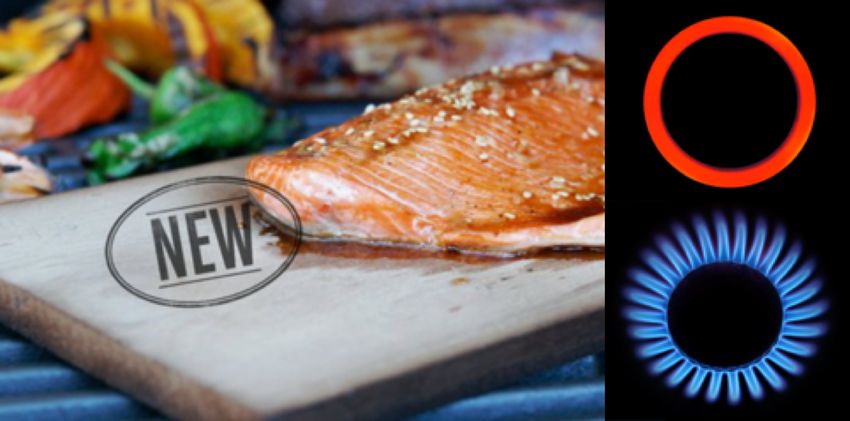
                        Some like it hot — some lukewarm
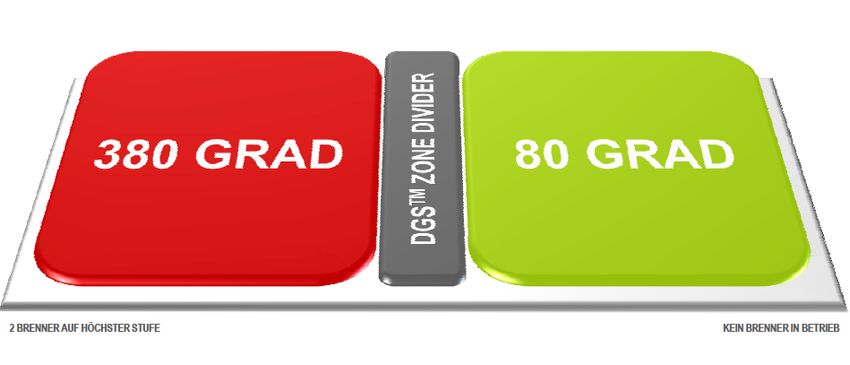
                        Although people love having a simple BBQ, expectations to its quality are rising in the premium
                        segment – so it is essential to provide the right heat for each food to be grilled. OUTDOORCHEF
                        therefore developed a new line: the DUALCHEF. It includes the new DGS TM Dual Gourmet
                        System, which allows to grill foods at different temperatures side by side: from as low as 80°C to a
                        maximum of 380°C.

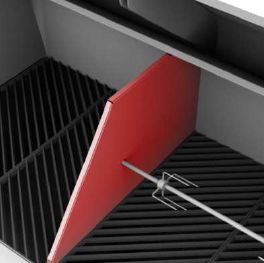
                        Steak for you, fish for me
                        When you have a barbecue for several people, you want to serve all guests at the same time – no
                        matter whether they are steak or fish lovers. Now if you put different foods on the same grill at the
                        same time there is a risk their tastes will affect each other. This pain point was particularly strong,
                        so the company put enormous effort into product development to resolve it. The result is the new
                        DGS TM ZONE DIVIDER (patent pending), which keeps different dishes separate and prevents
                        their tastes from mixing.

                        Less gas, less energy
                        Nobody likes to carry gas bottles – and everyone knows how annoying it can be when they you
                        run out of gas in the middle of a barbecue dinner. Most back burners in the market are very
                        inefficient and consume lots of gas. This pain point became the topic of a specific brief to R&D.
                        Eventually, they came up with the new DGS TM HEAT DIFFUSER (patent pending): not only does
                        it reduce gas consumption – it also eliminates the traditional back burner system.

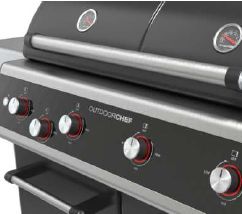
                        In the design, details count
                        A grill is not simply a grill these days, a mere appliance sitting in the corner. It is more of an
                        outdoor furniture, which people like to place in clear view on their terrace. The bad news: As CFI
                        results showed, most of the designs don’t go down well with consumers, as they lack top-of-the-
                        line materials, a high-quality build, a love for detail, and top-notch looks. Realizing this,
                        OUTDOORCHEF introduced the D-Line in a completely new, European high-end design.

                        Women are from Venus, men are from Mars
                       The gender-specific CFI Value Maps revealed that men and women “live in two different worlds:”
                       While they usually make the buying decision for a grill jointly, women tend to want much more
                       information up front. Realizing this, OUTDOORCHEF provided most POS with communication tools
                       focused around FAQs.

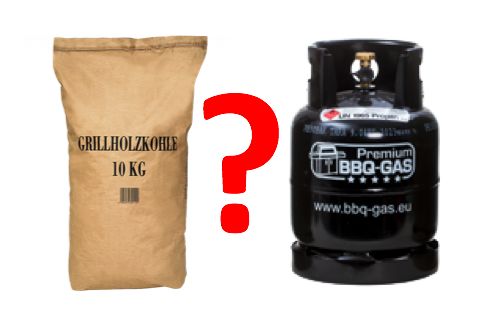
                        Charcoal grill or gas grill? That is the question
                        Exploring the user perspective revealed a huge difference in pain points between charcoal and
                        gas grill users – an insight that also enhanced our understanding of the competitive landscape.
                        With OUTDOORCHEF being known for gas grills and the main competitor for charcoal grills, the
                        insights gained provide the basis for a new strategy: By contrasting the downsides of charcoal
                        grills with the upsides of gas grills, the strategy aims to get customers to switch.

2                                                                                                                  Vendbridge AG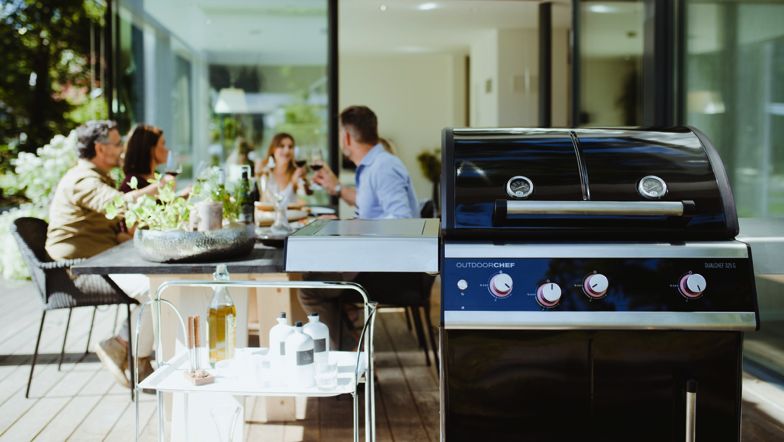
Vendbridge Case Study: Outdoorchef, DKB Household AG // 2015-16

«You are the only ones at this fair who present something truly innovative for
the BBQ market: the DUALCHEF»
Retail specialist’s comment at the world’s largest BBQ and grading fair, the SPOGA (2016)

The CFI Approach                                                  minimized and cross-functional alignment was easier.

Country: Germany                                                  Spin:

Research scope: People who like to barbecue (= total              To «spin» the results into most relevant innovation ideas
market), broken down by gender, type of grill (gas or             and market concepts, a series of workshops followed to
charcoal), and price segment.                                     make sure clients understood the results and would
                                                                  embed them in the organization, as well as to revise sales
User discovery:
                                                                  narratives and sharpen the market communication.
A deep and broad survey was conducted, based on a
                                                                  Specific R&D and agency briefings were developed
mix of one-on-one interviews and mini focus groups and
                                                                  based on the pain points discovered.
using the jobs-to-be-done logic. The «job to be done»
was determined simply as «having a BBQ» – starting with
                                                                  The Outcome
the actual idea of having the BBQ (with or without guests)
all the way to cleaning the grill. To gain new insights,          ‣ A new, innovative barbecue grill line, the DUALCHEF –
separating male from female respondents turned out to               successfully launched on the market and received
be very helpful. We also made sure to include a mix of              very well by specialized retailers
different grill types. In the process, we identified over 200     ‣ Access to a new customer base, as the client
user expectation metrics and selected 95 for validation.            managed to enter the top price segment: Average
The second part of the discovery focused on gaining an              RSP for gas BBQ is € 500-750, DUALCHEF is priced €
unbiased, validated user point of view, emphasizing the             1200 - 2’200
areas and single expectations where both relevance and            ‣ Two pending product patents, underlining the client’s
dissatisfaction were particularly high. Putting all rated           innovative power
expectation metrics in relation and mapping the results in        ‣ Uplift of the brand OUTDOORCHEF in various
a CFI Customer Value Map provided clear guidance on                 dimensions through high-end looks, price, and
where specific action was needed that would be                      product performance
appreciated by current and future customers. As the
                                                                  ‣ Marked improvement in the organization’s consumer
discovery phase was driven by user input only, internal
                                                                    orientation
preconceptions in customer understanding were

3                                                                                                              Vendbridge AG
Vendbridge Case Study: Outdoorchef, DKB Household AG // 2015-16

 The jobs-to-be-done logic

 «Customers don’t want a quarter-inch drill,
 they want a quarter-inch hole »
 T. Levitt

 While psychology has defined what a user need is, and created all sorts of models to explain human behavior,
 business has not. Therefore companies tend to focus on the wrong things when trying to innovate. The focus primarily
 on products and technology, or market dynamics and customer behavior – and fail to consider what customers really
 want and why they want it. Jobs-to-be-done is a logic to understand user needs for business purposes. Approaching
 user problems from the jobs-to-be-done perspective can help to identify user needs.

    About DKB Household / DKSH                                    About Vendbridge
    DKB Household is a subsidiary of the publicly traded          Vendbridge supports companies to turn growth
    Diethelm Keller Group, a globally operating Swiss             initiatives into market success. As the leading
    holding company managed by the fourth generation of           customer insight expert, we frame the business
    its founding family. DKB Household specializes in the         strategy from the customer perspective, identify
                                                                  what customers really want and spin the growth idea
    development and management of brands focusing on
                                                                  towards the discovered opportunities.
    home living. The portfolio of house brands includes
    Zyliss, Cole & Mason, Outdoorchef, and Culinare,
                                                                  We call this Customer-Focused Innovation (CFI). A
    as well as brands that are managed under licenses,
                                                                  proprietary method co-developed with our clients
    such as Jamie Oliver and Ken Hom. DKB Household is
                                                                  and proven in more than 100 projects.
    a market leader in the design, development, and
    distribution of household and kitchen products. The
    company’s prodcuts are sold in more than 60
                                                                  Contact:
    countries.
                                                                  Beat Walther (beat.walther@vendbridge.com)
    ‣ DKB Household was established in 2005                       Yann Wermuth (yann.wermuth@vendbridge.com)
    ‣ DKSH origins dates back in the 1860s
    ‣ DKSH operates 780 business locations with 30’000            www.vendbridge.com
      employees in 36 countries worldwide
    ‣ Generated revenues were 10.5 billion in 2016

    More information:
    www.dksh.com
    www.dkbrands.com

4                                                                                                         Vendbridge AG
You can also read


