Hutt 2020 - A Vision for Change - A plan for developing high performing and sustainable primary care in the Hutt Valley - Te Awakairangi Health
←
→
Page content transcription
If your browser does not render page correctly, please read the page content below
Hutt 2020 – A Vision for Change
A plan for developing high performing and sustainable
primary care in the Hutt Valley

SUMMARY PAPER
Prepared for Hutt INC

DRAFT
12 August 2014
Developing Sustainable Primary Care in the Hutt Valley

BUILDING A SOLUTION

Primary care sustainability is a whole system issue
           1. Sustainable primary care requires high performing general
              practice, with effective clinical and business models.
           2. Solutions must directly address the real-world barriers and
                                                                                Note: this project began with a narrower definition of
              issues identified by general practice in the Hutt Valley.
                                                                                primary care sustainability but as the process developed so
           3. Sustainability in the longer term means that primary care         did the scope in order to achieve a solution that we believe
              must attract and retain quality staff and be attractive for       will be viable in our highly connected health system.
              clinical investors (attracting the next generation of Hutt GPs
              and nursing workforce).
           4. High performing primary care cannot exist on its own and
              needs to be part of a wider sustainable community health
              system and whole health system in the Hutt Valley. A
              sustainable system would enable DHB investment in primary
              care, with an expectation that in return primary care would
              help reduce hospital acute demand.
           5. Hutt INC has identified that all health initiatives must
              support Triple Aim outcomes, so sustainable solutions must
              contribute to the triple goals of improving patient
              experience, health outcomes, and system efficiency.
           6. Sustainability in the longer term means that primary care
              must meet the specific health needs of the Hutt Valley
              community and do so in a manner that aligns with
              international trends in models of care, especially in the areas
              of chronic disease and frail elderly that strongly influence
              overall health system cost.
2|Page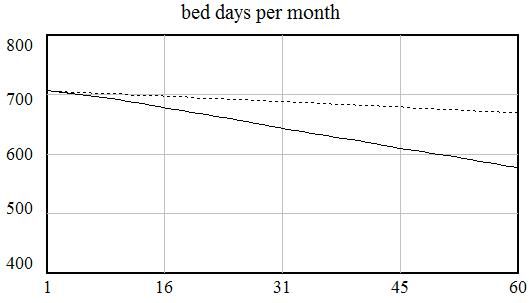
Developing Sustainable Primary Care in the Hutt Valley

Local issues for sustainable primary care                                      Strengths to build from
Demographics and morbidity – the Hutt Valley population is growing slowly      Primary care leadership and linkages – general practice in the Hutt Valley is
and ageing. The exceptions are the Maori population and the Pacific            well connected with high interest in participating in a process of change and
population that are much more youthful. The ageing population is driving       reform.
an increase in the frail elderly and long term conditions, leading to a
workload of increased clinical complexity often involving social complexity.
                                                                               PHO and DHB leadership - Hutt now has PHO infrastructure in TeAHN with
                                                                               critical mass and mandate to lead change across the primary care sector.
Pressure – many GPs have identified that their clinical and business models    Hutt INC is a functional ALT, with good links to PHOs, DHB and SIDU. Hutt
lead to long hours, high stress and leave little time or energy to work on     INC has a track record with joint programmes and has the strength to lead
developing their businesses or clinical systems.                               larger scale change programmes.

Variation - analysis of general practice has shown high levels of variation    Flexible funding pool –Hutt Valley DHB has identified a flexible funding pool,
across practices in terms of size, business and ownership models, patient      where certain resources have been opened up to allow new ideas about how
ratios, GP/ practice nurse ratios, and impact across issues such as ED         those resources can best be deployed within the health system. The pool
attendances of patients. Some general practices have complained of the         provides an avenue for resourcing new service models.
difficulty attracting quality staff.

                                                                               Community service reform - Hutt Valley DHB has begun a process of reform
Renewal – Hutt’s workforce is ageing and we need to attract a new              of community health services, which opens up the opportunity for greater
generation of GPs and nurses to general practice. Many of the current small    integration and co-ordination of primary and community services.
owner-operator business models may not be attractive to new clinical
investors and those seeking a career with work/life balance.
                                                                               Fast adoption of innovations elsewhere – primary care across NZ is highly
                                                                               innovative, with many successful initiatives to learn from. Whilst Hutt has
Direction – general practice is to be supported by emerging infrastructure     not been a first mover in major primary/community reform, there is
such as POAC, Pathways, and shared patient notes but there is a lack of        opportunity to learn from others and to catch up quickly with a “fast adopter”
clarity about how new infrastructure fits together and concern over uptake.    strategy.
As one GP said: “Where are we going with all this”.

3|Page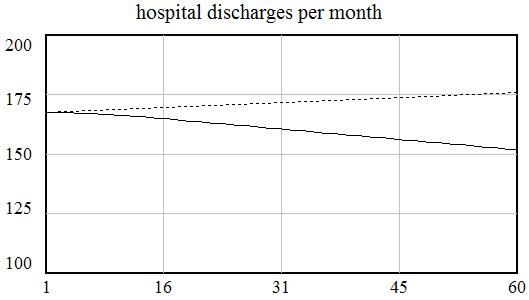
Developing Sustainable Primary Care in the Hutt Valley
HUTT 2020 – KEY DIRECTIONS FOR A SUSTAINABLE SYSTEM
Hutt 2020 – key directions The model on this page is based on solutions developed
through a co-design process with local clinicians and
Patient-centric care - culture and systems
Accessible – Team based –
Home focused – managers from across organisations and professional
care models aim to
Proactive –
responsive to
urgent need - cost,
multi disciplinary
team involvement
support home living Integrated and
groups.
supporting self for longer
availability, phone, in triage and care organised – care
Patient management
e-mail, technology across spectrum across primary/
and risk
assessment (assess, diagnose,
treat, ongoing care)
secondary services
The model suggests five key (and integrated) areas of focus
to build a high performing primary/community health
system.
1. A common vision for a patient centric system that
Capable Data guides all parts of the system
General Health Home - General Practice
informed
Practice CQI 2. Proactive support for developing high performing
- proactive
support for Assessment Diagnosis Treatment Ongoing care
- reducing
within-
general practice clinical and business models
general practice
practice to
develop
variation
- whole
3. Integration of DHB community services and primary
improved
clinical and
Establish hub for triage and co-ordination.
Enable care integration across primary care and DHB
system
performance
care, including developing a co-ordination hub for
business
models
community services – nursing/ allied/ home health metrics community services.
Whole of system organised prevention and care
4. Co-ordinated development of infrastructure to
support the “one system” vision – some of this
Funded care Risk Workforce at
Proactive infrastructure is already under development, but
Shared notes Pathways workforce
packages stratification top of scope
training some requires effort in new areas.
- access to
recent notes
- facilitating - POAC and - to - to improve - proactive 5. Establishing a performance and evaluation
integration extensions systematically cost practice
across system
- technology
and access to providing identify those effectiveness, participation framework for Hutt 2020, including a focus on
diagnostics options for who benefit career in medical and
to enable
effective multi
and specialist non-hospital strongly from satisfaction nursing reducing variation across practices and agreed
advice management proactive care and retention training
disciplinary
teams
‘whole system” measures.
Infrastructure support for high performing primary/community system
4|PageDeveloping Sustainable Primary Care in the Hutt Valley
Model components CA P A B LE G E NE R A L P R A C T I CE
P A T I E NT CE NT R I C CA R E – CU LT U R E A N D SY ST E M
The aim is to provide a clear direction of travel for services, systems, skills Three practical actions have been prioritised to respond to the issues raised
and culture within primary care and DHB community services. The elements by general practice about workload, stress and to enable a proactive focus
in the patient-centric system were identified by local clinicians and also align on improving clinical and business models
closely with integrated care systems. The aim is to answer the question –
“where are we going”. The answer is… in the Hutt Valley, we are collectively 1. Assisted practice self-review - (Chch model) to improve efficiency
building a community health system that is: and clinical systems, supported by mentoring for strategic
development of business and clinical models
proactive in identifying risk and disease early and supporting self-care
2. Practice support – shared back office functions to reduce
accessible for patients with urgent needs 24/7 and innovative in using “paperwork” time overhead and allow focus on clinical work and
technology to increase patients’ access to advice and care development.
team based, both within the practice and between primary and 3. Establishing effective GP clusters, which would include cover, co-
community care, ensuring patients have the right set of skills to support ordination, horizontal referrals (GPwSI and NwSI), allied health
their needs professionals, and build a locus for community integration
home focused with the aim of supporting the patient to recover and live These immediate actions should be seen within the context of longer term
well in their own home directions for primary care:
integrated and organised to improve patient experience, clinical safety • Practice consolidation (larger practices)
and reduce duplication
• Group practice models
• Effective clusters of practices
5|PageDeveloping Sustainable Primary Care in the Hutt Valley
DHB C OM M U N I T Y SE R V I CE A N D P R I M A R Y CA R E I N T E G R A T I ON E F FE CT I V E SU P P OR T I NG I NFR A ST R U CT U R E
Proactive
Funded care Risk Workforce at
Shared notes Pathways workforce
packages stratification top of scope
training
- access to - facilitating - POAC and - to - to improve - proactive
recent notes integration extensions systematically cost practice
across system and access to providing identify those effectiveness, participation
- technology diagnostics options for who benefit career in medical and
to enable and specialist non-hospital strongly from satisfaction nursing
effective multi advice management proactive care and retention training
disciplinary
teams
Infrastructure support for high performing primary/community system
SIDU and Hutt INC have made substantial progress in establishing new
infrastructure including POAC, HealthPathways, Shared Care Records
(Manage My Health). To enable the Hutt 2020 vision, it is proposed other
areas of infrastructure require further development:
General Practice and DHB community services (community nursing, home
health, allied health, specialist outreach services etc) are the two largest Technology for integrated patient notes that will support shared care
workforces in the community yet they are not strategically aligned and work plans and multi-disciplinary teams
together only in patches. Strategically aligning these services could be
Ensuring HealthPathways implementation facilitates primary care access
transformational for the Hutt Valley health system. There are good
to diagnostics and timely specialist advice
examples of successful primary/community integration around NZ.
Providing tools and advice to support risk stratification of practice
Achieving this strategic alignment will take time but as a first principle, both
general practice and secondary services should be able to refer to populations
community support systems. There has been strong feedback from clinical stakeholders involved in Hutt
Part of the integration is to establish a single triage and co-ordination hub 2020 for increased investment to support primary care practitioners to work
at top of scope – including support from hospital medical and nursing
for community services in the Hutt that over time may include Needs
Assessment and Service Coordination (NASC), POAC and Community Services. specialists to upskill their primary care counterparts (GPwSI, NwSI). There
has also been considerable support for Hutt primary care to be more
There is significant opportunity for the integrated system to improve proactive in supporting PGY1, PGY2 and registrar training in primary care and
management of patients with complex conditions in the community and to supporting nursing and allied health training. One objective is to encourage
facilitate early discharge to reduce pressure on hospital bed days. a new generation of clinicians to build careers in primary care in the Hutt
Patient experience would be enhanced through a better connected system Valley.
with less duplication.
6|PageDeveloping Sustainable Primary Care in the Hutt Valley
D A T A - I NF O R M E D C O N T I N U OU S QU A L I T Y I M P R O V E M E NT
Data
informed
CQI
- reducing
within-
practice
variation
- whole
system
performance
metrics
An effective way of increasing the performance of any system is to
explore and address reasons for variation. General practices involved
with Hutt 2020 have supported the idea of sharing data and exploring
variation, within trusted environments such as peer review and cluster
groups. Variation can occur across inputs, business and clinical models
and outputs. The role of the PHO should extend to providing data on
variation and supporting processes to reduce variation.
Hutt 2020 should also develop a performance and evaluation framework
that supports the actions outlined in this plan, tracking progress and
enabling learning across organisations and professional groups. The
framework should be owned by Hutt INC and become the foundation for
the local elements of the Integrated Performance and Incentive
Framework (IPIF). Performance within the IPIF framework will directly
impact on revenue for primary care.
7|PageDeveloping Sustainable Primary Care in the Hutt Valley
CLINICAL FOCUS AREAS
Improved patient Improved community access to
experience after hours services After hours Integrated clinical
Reduced inappropriate ED
attendances
leadership
Improved health quality Improved community
management of long term
& outcomes conditions Frail elderly
Clinical
Reduced bed days
Improved system Improved community Long term conditions (e.g. priority areas
management for frail elderly to COPD, ACS, diabetes, mental
efficiency reduce admissions/re- health)
admissions
One of the dynamics within Hutt 2020, and an emerging trend across NZ, After hours
is for the DHB to invest in infrastructure and systems to support primary
Frail elderly
care performance. In return there is an expectation that primary care will
have an increasing role in reducing the growth in acute demand. When Long term conditions
this system operates effectively, it is a virtuous cycle that is a win - win for
all parties.
Further detailed work is required across each of these areas, with the aim
of developing a business case for investment in community-based
To facilitate this impact on hospital bed day use, Hutt 2020 proposes that services, with expected returns of bed day savings.
running alongside the development of the future services model
As part of the Hutt 2020 process, an initial analysis has been undertaken
(outlined previously) there is a focus on achieving specific measurable
for COPD in which investment in GP-run (and specialist supported)
improvements in the community management in the areas of:
community clinics has been modelled to deliver savings of up to 129 bed
days per months in the medium term (see appendix).
8|PageDeveloping Sustainable Primary Care in the Hutt Valley
IMPLEMENTATION
Hutt INC Operational Alliance The concept of alliancing was developed in the construction industry,
when different types of organisations (engineer, architecture,
construction, safety, financial etc) would create a virtual organisation to
Joined-up implementation of Hutt 2020 work together as one team to deliver a project neither could achieve on
their own.
1. Within-practice support and
development initiative
A similar concept is proposed to implement Hutt 2020. We recommend
2. Infrastructure support - practice the formation of an “Operational Alliance” to work as the
uptake of initiatives (Pathways, implementation arm of Hutt INC and under Hutt INC governance. If we
POAC, technology etc) and primary are to achieve a more integrated service system in the future, then we
care top-of-scope and training must integrate the skills and leadership that is tasked with leading change.
initiatives
3. Patient Centred Community Care The Operational Alliance should be jointly resourced by PHOs, Hutt Valley
design and development of new DHB and SIDU as all have a stake in the outcome. The team should be
integrated service models located partly in a primary care setting as it is important that the focus is
local and community based. Staff should be seconded from PHOs, Hutt
4.Integrated performance and Valley DHB and SIDU for the team, with new specialist skills recruited as
improvement systems necessary. There should be strong project leadership under a dedicated
manager.
5. Clinical priorities for acute
Five action areas are proposed that match the key areas described in this
demand management paper (see graphic this page).
Mix of staff seconded staff from PHOs,
HVDHB, SIDU. To maintain momentum, there should be timely discussions to agree the
resourcing of the Operation Alliance, with the aim of having a properly
resourced team established by January 2015.
9|PageDeveloping Sustainable Primary Care in the Hutt Valley
WHAT’S IN IT FOR ME?
Patients General Practice DHB SIDU
Better access to my GP for urgent Support to improve practice clinical Confidence that general practice Increased focus on joined up
needs systems and back office functions- has the skills and infrastructure to service development and
More services provided for me in reduce stress and pressure manage patients with complex integration within the Hutt –
the community and at my home Support to develop longer term needs in the community creating local capacity better able
business plan for practice – may to respond to subregional
Faster response to access some Confidence that community
lead to better income and resale systems are able to help reduce initiatives
diagnostics
value of practice acute demand – especially in Local leadership actively
Early identification of risk and
Better management of pressure management of long term supporting uptake of sub-regional
disease and more proactive help
from urgent patient needs – spend conditions and frail elderly infrastructure requiring general
for me to care for myself
quality time with complex/chronic Able to see increasing value and practice response
My GP is able to access a team
patients outputs from the investment in Operational Alliance provides
with a mix of skills to help me
Opportunity to specialise as DHB community-based services environment for SIDU to work
when I need it
GPwSi/NwSI, increase professional Confidence that general practice is more closely with local
I can get help in new ways – over organisations – more effective
scope making efficient use of investment
phone and e-mail – I don’t always implementation model
Able to share and learn with other in new sector infrastructure
need to go to the clinic
practices to improve practice (technology, POAC, Focus on use of data and strong
My care is well co-ordinated. I HealthPathways) evaluation provides SIDU with
performance
don’t need to keep telling my story
Improved access to training Increased security that general valuable information on response
to new people. to, and value of, sub-regional
practice is training and attracting a
I feel less anxious when my More options for management of initiatives.
new generation of workforce to
condition gets a bit worse. I know complex patients in the community
the Hutt Valley
the community team can help. I – feeling part of a team
DHB has capability to be more
don’t need to go to hospital today. Improved support to best utilise
responsive to changing community
new tools and technology, such as
health needs through more
HealthPathways, POAC, diagnostics
integrated system
etc
Improved ability to employ quality
workforce
10 | P a g eDeveloping Sustainable Primary Care in the Hutt Valley
RECOMMENDATIONS
1. Endorse the Hutt 2020 plan as providing key directions for Hutt INC to Agree to co-ordinated development of infrastructure to support
achieve a sustainable and high performing primary care and the “one system” vision. Additions to the current suite of
community health system in the Hutt Valley. infrastructure should include:
2. Support implementation in the Hutt 2020 action areas, which include: - Technology for integrated patient notes that will support
shared care plans and multi-disciplinary teams
Agree to align community-based primary and DHB services in the
Hutt towards a common vision of a patient-centric system that is - Ensuring HealthPathways implementation facilitates primary
focused on being: proactive, accessible, team based, home care access to diagnostics and timely specialist advice
focused, integrated and organised
- Providing tools and advice to support risk stratification of
Agree to a programme to pro-actively support General Practice to practice populations
develop more sustainable business and clinical models. Actions
- Providing training to support health professionals in
to include:
community and primary care to operate at top of scope
- Assisted practice self-review to improve efficiency, with
- Developing the skills and environment within primary and
mentoring for development of improved clinical and business
community services to deliver training for a new generation
models
of medical and nursing and allied health workforce
- Access to outsourced/shared back office functions to
increase GP time for clinical and business development Supporting effective general practice uptake of new
infrastructure such as HealthPathways, POAC and shared
- Establishing effective GP clusters to enable improved local co-
notes.
ordination and cover, horizontal referrals for GPwSI and NwSI,
inclusion of allied health professional in the team, and data
sharing for quality improvement
Establish a performance and evaluation framework for Hutt 2020,
Agree to systematic integration of DHB community services including data-informed continuous quality improvement (CQI)
(including nursing and allied health) and primary care. This systems to reduce variation across practices and inform
includes developing a single co-ordination hub for community primary/community integration
services that is accessible to both primary and secondary
referring clinicians
3. Agree clinical priority areas for an enhanced community response to
reduce hospital acute demand. The priority areas include:
11 | P a g eDeveloping Sustainable Primary Care in the Hutt Valley
- After-hours,
- Frail elderly and
- Long term conditions.
Business cases should be developed to inform investment in the
community-based response for each of these three areas.
4. Establish and resource an “Operational Alliance” to lead
implementation of the Hutt 2020 plan. The Operational Alliance
should be seen as the implementation arm of Hutt INC. The
operational alliance should be fully operational prior to January 2015,
with agreed resourcing commitments from TeAHN, Cosine, Hutt
Valley DHB and SIDU.
- The alliance would include staff from PHOs, Hutt Valley DHB
and SIDU working together as a team.
- Hutt INC should provide Governance for the Operational
Alliance.
5. Agree that management from Hutt Valley DHB, SIDU, Te Awakairangi
Health Network and Cosine identify the resources (staffing, IS
platform and funding) to implement Hutt 2020 from Q2 2014/15.
xii | P a g eDeveloping Sustainable Primary Care in the Hutt Valley
APPENDIX: HOSPITAL UTILISATION AND CHANGING MODELS OF CARE: THE EXAMPLE OF COPD
and additional training in COPD. Additional clinics would also be run by Allied
B A C KG R OU ND ON T HE M OD E L
Health, and other community based specialists, with skills relevant to the
COPD provides an example of the potential for managing hospital utilisation management of COPD. Programmes would include Pulmonary Rehabilitation
through improved models of care. It builds on the ideas presented in this and programmes such as ‘self-management’, targeting better control of the
report and models the effect on bed day utilisation, of developing improved condition. The secondary specialist team would provide support and training
care for people with COPD. to establish this new model of care.
The data for the model comes from hospital inpatient data, COPD research
and discussions with respiratory physician Dr Justin Travers who checked the C U R R E NT S I T U A T I ON
assumptions being used in the model. Assuming a growth in the 40+ population of around 1% per year, and no
other changes, the model projects the number of annual hospital discharges
Using prevalence estimates, the number of people aged 40+ with COPD in
for COPD to rise from around 165 to 175. Assuming a continuing decrease in
the Hutt Valley is around 4,000. This is based on an estimate of 6% of the
average length of stay (ALOS), the number of bed days per month would
adult population 40+ having COPD. Using the GOLD categories, and research
drop from 706 to 670 (the model assumes that ALOS for COPD would drop
on estimating the prevalence of COPD in given populations, the estimated
from the current average of 4.2 to 3.8)1
number of people 40+ in the Hutt Valley, with COPD is:
Mild 1,000 (25%) A F U T U R E S CE NA R I O
Moderate 2,000 (50%) In this scenario the new model of care has been implemented. It involves the
establishment of a specialist clinic, run by GPs, with support and training
Severe 800 (20%)
from secondary specialists in year one. This clinic is held once a week and is
Very severe 200 (5%) able to see 8 patients. A second clinic is established at the beginning of year
two. In addition, a community-based Pulmonary Rehabilitation clinic is also
What is known about best practice care is the need for a range of
established in year one. This clinic runs for 8 weeks, has an average
interventions along the disease continuum. The graphic on the following
attendance of 12 people and is run every 12 weeks. A second programme is
page shows the link between the disease progression and ‘best-practice’
established in year two.
interventions. The model explores the consequences of implementing this
model of care for the population of the Hutt Valley.
In the model, the key interventions are the establishment of COPD clinics in
the community alongside group programmes such as Pulmonary 1 NB: All these assumptions are easily changed in the model so that it can be used to
Rehabilitation. The clinics are ‘specialist’ clinics run by GPs with an interest, create projections on the basis of a wide number of assumptions.
13 | P a g eDeveloping Sustainable Primary Care in the Hutt Valley
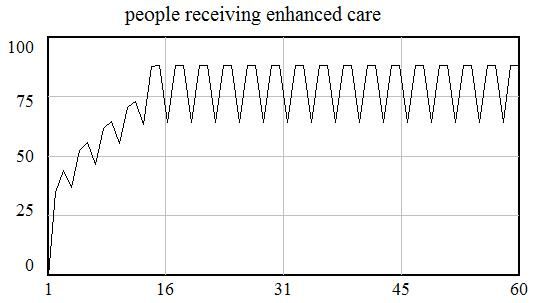
Furthermore, as patients will attend the clinics more than once, the model the simulation this means that around 2% of the adult COPD population, or
assumes that throughput in this new model of care involves around 30% of 8% of the severe and very severe COPD population would receive this new
new patients. In terms of impact, the model assumes that each patient that care.
goes through this programme will reduce their use of hospital services by
B: Impact upon Discharges
25%. Both of these assumptions have been checked with clinicians and, in
terms of impact on hospital utilisation, sit well within the estimates that
have been reported in a number of research studies. However, it takes time
to make these changes, so the model assumes an 18 month lead in time,
during which the impact of the changes takes time to take effect, with the
full benefit only arising after 18 months.
This is a very plausible scenario that uses Hut Valley data and clinical and
operational assumptions, that ensure we do not over-estimate the gains that
are possible, and ‘under-estimate’ the time it will take to realise these gains.
R E SU LT S The impact upon hospital discharge is a reduction from the current 167 per
The following graphs show the result of successfully implementing this new month, to 152 per month within five years.
model of care within the Hutt Valley. C: Impact upon Bed Days
A: People Receiving the Enhanced Care
This translates into a reduction in bed days from the current 706 to 577 per
The first graph shows the number of people receiving the enhanced care rise month (NOTE: this also incorporates the reduction created by reducing
over the first 18 months to 64 and 88 people, depending on whether or not ALOS). This is a saving of 129 bed days per month.
one of the eight-week programmes is being run. Over the five-year period of
14 | P a g eYou can also read


