HYBRID ADIABATIC Cooling System - AEC
←
→
Page content transcription
If your browser does not render page correctly, please read the page content below
Ble n d in g | Con ve y in g | Dry in g
                                        Pro ces s Co o l in g | He at Tran sfe r | S ize R educti o n

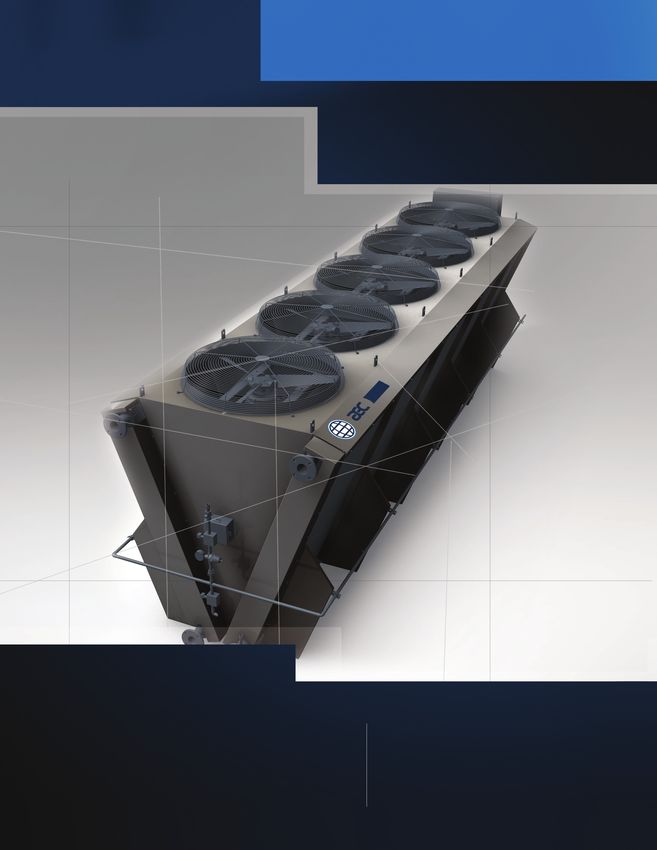
                                              HYBRID ADIABATIC
                                              Cooling System

Wat e r & En e rg y Savin g s

        L o w Ma inte n a n c e                       Hybrid design combines dry cooler
                                                      technology with adiabatic innovations
   I m p r o ve d He a lth & Saf e ty                 for highly efficient process cooling.

                                                      w w w. a e c i n t e r n e t . c o m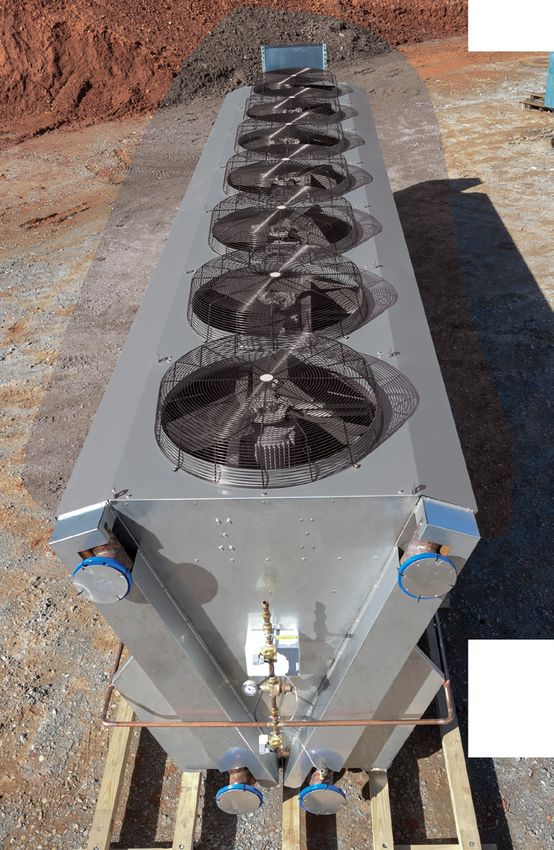
Water and Energy Savings
     Reduced Water Consumption                                      Reduced Energy Use
Save up to 95% in water use annually by utilizing              Save up to 86% in energy costs annually with the hybrid
hybrid adiabatic cooling technology versus traditional         adiabatic cooling design versus a package air cooled
cooling tower or closed circuit fluid cooler solutions.        chiller. The hybrid adiabatic system is designed with a
This system will pull outside ambient air across               large surface area to transfer heat and will function as
the coils to remove heat when outside ambient                  a dry air cooler in lower temperatures. The machine
temperature is cool enough and will only turn on               will sequentially cycle the fans on and off in stages as
the fine misting nozzles when needed to reach the              required to maintain the exiting water temperature at
desired temperature.                                           a predetermined set point, consuming the minimum
                                                               amount of energy required to achieve desired
                                                               temperature.

Low Maintenance
     Freeze Proof                                                   Scale Resistant
The Hybrid Adiabatic Cooling System utilizes a closed          In a traditional cooling tower, caked on debris collects
loop glycol design and a self-draining spray system            and diminishes heat transfer. The Hybrid Adiabatic
to prevent freezing in cooler climates. Processors no          Cooling System reduces maintenance by utilizing fine
longer need to worry about flash freezing when starting        misting nozzles. The water spray is evaporated before
up a cold system in freezing ambient conditions.               it hits the coils preventing scaling. The system also
                                                               utilizes a closed loop glycol circulation design that
     Corrosion Resistant                                       prevents outside dirt and dust from entering.

Built with high quality, durable materials, the Hybrid              Simplified Durable Design
Adiabatic Cooling System naturally resists corrosion,
eliminating costly chemicals and maintenance. In               The hybrid adiabatic system was engineered to have
addition to the stainless steel construction of the            low maintenance in mind. By simplifying the design and
housing and framework and the coated galvanized                using high quality materials like stainless steel, copper,
steel exterior, the aluminum fins and copper tubes are         and coated surfaces, maintenance is minimized.
coated with a phenolic epoxy for additional protection.

Improved Health & Safety
     Reduced Risk of Legionnaires’ Disease                      !   Reduced Safety Issues
Traditional cooling towers collect water in a basin at their   The closed loop design of the Hybrid Adiabatic Cooling
base, which is one of the primary breeding grounds for         System essentially removes the potential hazards
Legionella bacteria. Hybrid Adiabatic Cooling Systems          of working with glycol on your production floor by
eliminate this basin and consequential standing water.         separating it away from your process. EPA disposal
A misting spray that is regulated such that all of the water   concerns are reduced and glycol longevity is increased
is evaporated into the incoming air prior to contacting        by isolating it in a closed loop system.
the coil. Furthermore, this solution employs a fully
enclosed coolant path with a glycol solution, preventing
the growth of Legionella bacteria.
                                                                    Environmentally Friendly
     No Blowdown
                                                               No chemical treatment is needed in a closed loop
With traditional open water towers, hardened and               system because there is no recirculation of the spray
contaminated water is flushed down the drain to                water. The spray water is fed directly from your water
prevent minerals in the recirculating water from               supply and all of the spray water is evaporated into the
becoming too concentrated. Because of the closed               air. By eliminating the need for water treatment, which
loop system, there is no need for a controlled water           controls mineral concentration and pH balance, costly
removal process (blowdown) leading to significant              and dangerous chemicals are not needed and the risk
water savings with this design.                                of these chemicals affecting the environment is averted.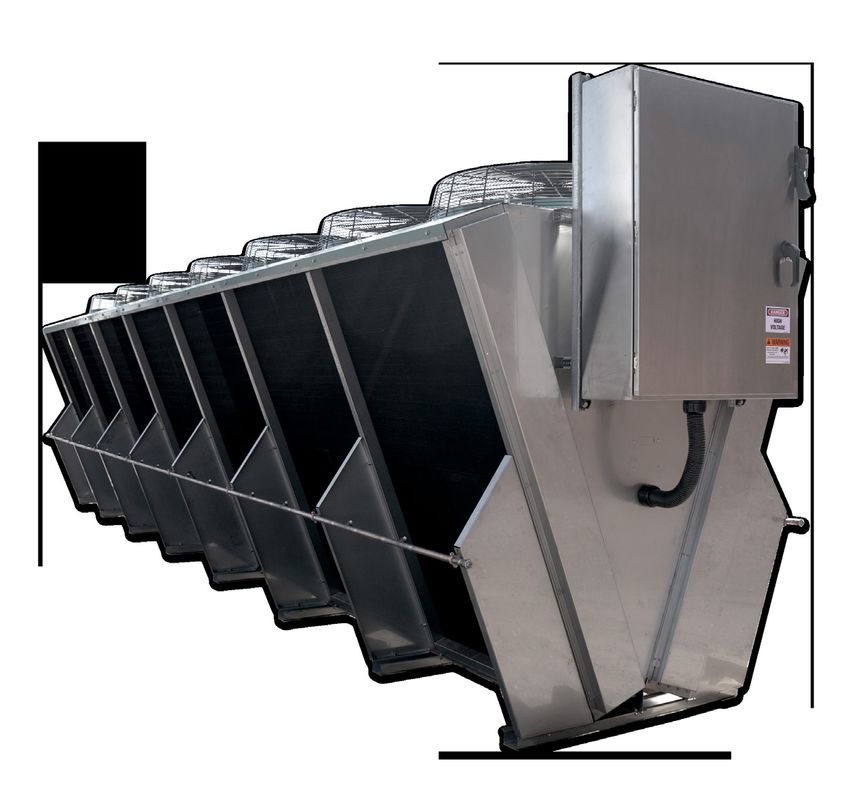
HYBRID ADIABATIC COOLING SYSTEM
Cooling Solutions
Tailored for Your Process
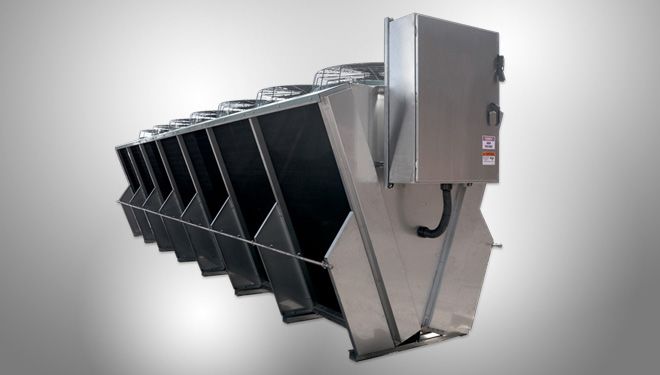
AEC’s Hybrid Adiabatic Cooling System is a
freeze proof solution that combines dry air
cooling during the cooler months of the year
with evaporative cooling during the warmer
months, creating a true hybrid cooling system.
It provides exceptional savings in water, energy,
and maintenance while providing dependable,
safe process cooling for nearly any application
– in any environment. By eliminating standing
water in the system, the potential for harmful
bacteria growth is practically eliminated. With
the closed-loop system, intelligent controls and
robust fabrication – the AEC Hybrid Adiabatic
Cooing System is an efficient, flexible, and
sustainable approach to process cooling.

                                                Hybrid Adiabatic Process Cooling
                                                Adiabatic Cooling is the process in which
                                                moisture is evaporated into dry air,
                                                thereby dropping the temperature. This
                                                process pre-cools the entering air without
                                                consuming energy. As a result, this
                                                design achieves the set point leaving fluid
                                                temperature with a smaller, more efficient
                                                system than traditional cooling systems.

                                                    HYBRID ADIABATIC COOLING SYSTEM | www.aecinternet.com   2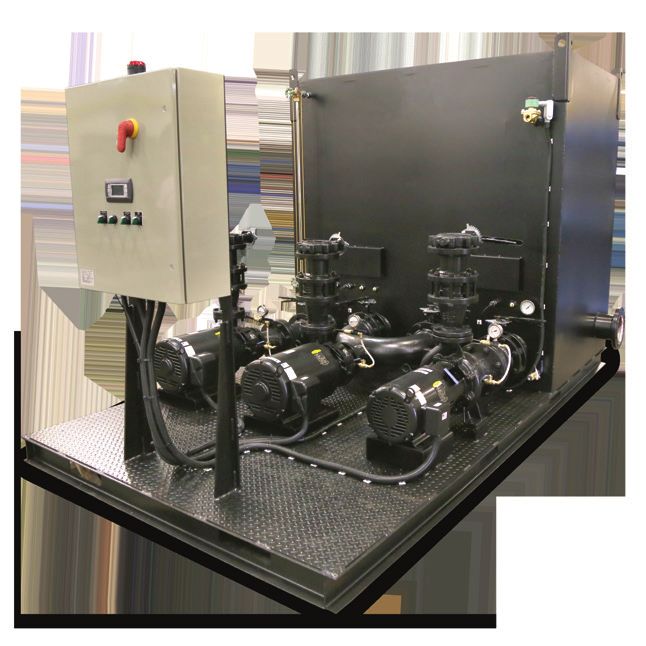
HYBRID ADIABATIC COOLING SYSTEM
Water and Electricity Savings
Hybrid Adiabatic Cooling Systems Vs. Traditional Tower Systems

    Water
    Supply                +                  Sewer
                                             Costs                 +                 Water
                                                                                   Treatment
                                                                                                            =                 Save up to
                                                                                                                                 95%
                                                                                                                              Annually!*

                92%                                     95%                                     94%                                     90%
             Detroit, MI                        Los Angeles, CA                        Salt Lake City, UT                           Seattle, WA

On an annual basis, the Hybrid Adiabatic Cooling System can save up to 95% versus traditional
closed loop tower system or closed circuit fluid cooler solutions. With these savings taken
annually, you can expect a payback on your system as fast as 2.5 years versus the cost differential
of the investment into an adiabatic system. It also reduces the usage and disposal of chemically-
treated water. Adiabatic systems only utilize water when ambient air temperatures are too high to
cool the fluid to the desired temperature with the fans alone.*
*Example parameters are based off of typical summer conditions in Los Angeles, CA.
Process Water Temperature: 85°F, ASHRAE Design condition: 2%, Wet Bulb Temperature: 67.6°F at 350 ft. elevation, 5 Fan High Capacity. Solution: Water.

                                               Hybrid Adiabatic Cooling Systems Vs. Packaged Air Cooled Chillers
                                                    The Hybrid Adiabatic Cooling System can save up to 86% in
                                                    energy costs annually by utilizing free cooling. With these
                                                    savings taken annually, you can expect a payback on your
                                                    system in under 9 months. Increased coil surface area
                                                    automatically optimizes heat transfer. When the ambient
                                                    temperature is too warm, the fans will sequentially turn on and
                                                    only run when required to maintain the desired set process
                                                    temperature. This results in reduced energy consumption when
                                                    compared to alternative dry cooling systems.**

                                                      **Example parameters are based off Southern California energy audit using a 5 fan hybrid adiabatic cooler to replace
                                                      an existing 100 ton air cooled packaged chiller with an EER of 10.0. 17 cents/ kwh

3    HYBRID ADIABATIC COOLING SYSTEM | www.aecinternet.com
Complete Process Cooling Systems
 In the Hybrid Adiabatic Cooling System there is a glycol loop and process water loop that
 both travel through separate dedicated pump tanks and a heat exchanger. A glycol mixture
 is used to prevent any possibility of freeze up of the outside coils and safeguards the system
 should the unit require a shut down during cold ambient conditions. The process water loop
 removes the potential hazards of working with glycol on your production floor by isolating it
 away from your process. A plate & frame heat exchanger separates the two fluids and cools
 the process water inside the plant. This provides an efficient process cooling solution, allows
 for the most water savings and increases safety with fewer chemicals required to operate
 your cooling system.

                   Plate & Frame
From Process      Heat Exchanger                                                                  Hybrid Adiabatic
 Warm Water                           Warm Glycol                                                 Cooling System

                                     Cool Glycol
To Process
Cool Water
                                                                         Cool Glycol

                                           Glycol
                                         Pump Tank

                                                                                      The Glycol Loop:
                      The Water Process Loop:                              Cool glycol is pushed from the Hybrid
                  A central process water pump tank                        Adiabatic Cooling System through the
                pushes warm process water to the heat                  pump tank and into the heat exchanger. After
                 exchanger to be cooled. The cooled                     the glycol transfers the cooler temperatures
                process water is then routed to system                      to the process water, it exits the heat
                equipment to absorb the process heat.                  exchanger and flows back through the Hybrid
                                                                       Adiabatic Cooling System to be cooled again.

  Tech Tip: Choose the correct glycol solution for your system
  depending on your needs. Propylene Glycol is a safer blend for use
  in food & pharmaceutical industries. Ethylene Glycol is an organic
  compound which is low in cost and more efficient to operate.
  Either glycol solution allows for less maintenance in the future
  because of the closed-loop operation of these systems.

                                                                       HYBRID ADIABATIC COOLING SYSTEM | www.aecinternet.com   4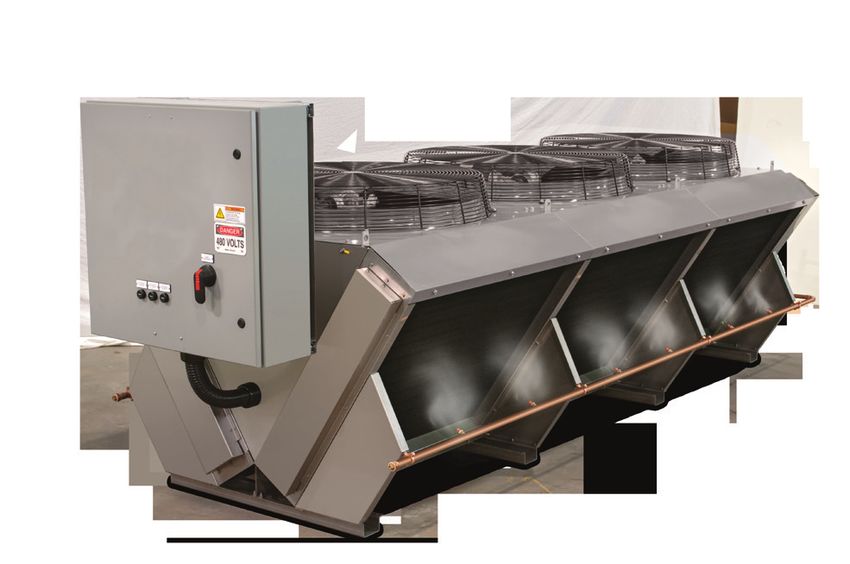
HYBRID ADIABATIC COOLING SYSTEM
Benefits of Hybrid Adiabatic Cooling Systems
                                                       Hybrid                                Traditional                    Packaged
             Service & Performance Category           Adiabatic                              Evaporative                    Air Cooled
                                                       Cooling                                 Towers                        Chillers
         Zero to Minimal Water Consumption

         Energy Efficient Staged Fan Operation

         Low Maintenance

         Freeze Proof

         No Blowdown

         Scale Resistant

         No Water Treatment Chemicals

         Stainless Steel Construction Standard

         Eliminates Risks of Legionnaires’ Disease

         Environmentally Friendly

         Clean Water to Process Standard

         Ease of Installation

Wet-Bulb Temperature
The wet-bulb temperature is the lowest/coldest temperature that air can reach by the evaporation of water into
the air. Typical wet-bulb temperature varies by region and is an extremely important parameter to consider in
tower selection and design. The heat transfer of the Hybrid Adiabatic Cooling System is optimized by lowering
the incoming air from its ambient temperature to the wet-bulb temperature which maximizes the heat transfer
performance of the unit.
                                                          REGION 1                      REGION 2             REGION 3             REGION 4
                                                          Typical 64˚ Summer            Typical 70˚ Summer   Typical 75˚ Summer   Typical 80˚ Summer
                                                          Wet Bulb Temperature          Wet Bulb Temperature Wet Bulb Temperature Wet Bulb Temperature
         When you walk through water
         misters on a hot summer day
         and immediately feel the cooling
         effect, you are experiencing                                                          2
         cooling from evaporation.
         Adiabatic technology relies on
                                                                          1
         this principle. The process of
                                                                                                             3
         evaporation naturally lowers
         ambient air temperatures. The
         map generally indicates the
         effectiveness of evaporation                                                                              4
                                                     Source:
         and humidity in the U.S.                    Courtesy U.S. Geological Society

5   HYBRID ADIABATIC COOLING SYSTEM | www.aecinternet.com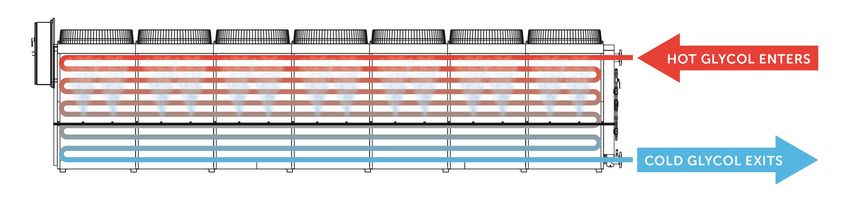
Specifications
Standard Output 32.5” Face Height Hybrid Adiabatic Cooling System
                                   Nominal Heat Rejection Capacity*
 Number of          Model                                                      MCA           MOPD           Height**           Width            Length      Dry Weight    Operating Weight
                                  BTU / HR        Cooling        Chiller
 3 hp Fans         Number                                                      Amps          Amps         inches (cm)       inches (cm)       inches (cm)    lbs (kg)         lbs (kg)
                                                Tower Tons        Tons
      2            HCS002          144,000           10             12           12            15           54 (137)          54 (137)         103 (262)     1601 (726)      1761 (798)
      3            HCS003          227,000           15             19           17            20           54 (137)          54 (137)         144 (366)     2180 (989)     2396 (1086)
      4            HCS004          298,000           20             25           21            25           54 (137)          54 (137)         185 (469)    2756 (1250)     3028 (1373)
      5            HCS005          374,000           25             31           26            30           54 (137)          54 (137)         225 (573)    3343 (1516)     3679 (1667)
      6            HCS006          461,000           31             38           31            35           54 (137)          54 (137)         266 (677)    3919 (1777)     4311 (1955)
      7            HCS007          530,000           35             44           36            40           54 (137)          54 (137)         308 (783)    4498 (2040)     4944 (2242)

High Output 70” Face Height Hybrid Adiabatic Cooling System
                                   Nominal Heat Rejection Capacity*
 Number of          Model                                                      MCA           MOPD           Height**           Width            Length       Dry Weight   Operating Weight
                                  BTU / HR         Cooling        Chiller
 5 hp Fans         Number                                                      Amps          Amps         inches (cm)       inches (cm)       inches (cm)     lbs (kg)        lbs (kg)
                                                 Tower Tons        Tons
      2            HCS012          277,000            18            23           18            25           86 (219)          68 (173)         114 (290)    2295 (1041)      2673 (1212)
      3            HCS013          418,000            28            35           26            30           86 (219)          68 (173)         160 (405)    3161 (1434)      3675 (1667)
      4            HCS014          551,000            37            46           33            40           86 (219)          68 (173)         204 (526)    4046 (1835)      4706 (2135)
      5            HCS015          688,000            46            57           41            50           86 (219)          68 (173)         249 (634)    5534 (2510)      6538 (2966)
      6            HCS016          844,000            56            70           49            60           86 (219)          68 (173)         294 (747)    6544 (2968)      7744 (3513)
      7            HCS017          962,000            64            80           56            60           86 (219)          68 (173)         339 (862)    7531 (3416)      8961 (4065)
* Capacity is based on the following conditions:
Fluid is 35% Ethylene Glycol, Ambient Air Conditions: Dry Bulb = 95 °F, Wet Bulb = 77 °F, 82 °F Water spray on temperature,
95 °F Entering Fluid Temperature (EFT), 85 °F Leaving Fluid Temperature (LFT), 20 ft. head maximum head pressure, MCA & MOPD Ratings for 480V/3ph/60hz.
** Height is to the top of the mounted control panel

              TRADITIONAL VS. HYBRID ADIABATIC                                           STANDARD OUTPUT                                            HIGH OUTPUT
              TOWER SYSTEM    COOLING SYSTEM

High Quality Fabrication

Copper Tubing Provides excellent thermal                           Aluminum Fins Increase the efficiency                                 Stainless Steel Frame Provides durability
conductivity and corrosion resistance, for                         of cooling while providing an overall low                             and corrosion resistance - extending the
long lasting, efficient performance.                               sound profile.                                                        life of the system.

                                                                                                    HYBRID ADIABATIC COOLING SYSTEM | www.aecinternet.com                            6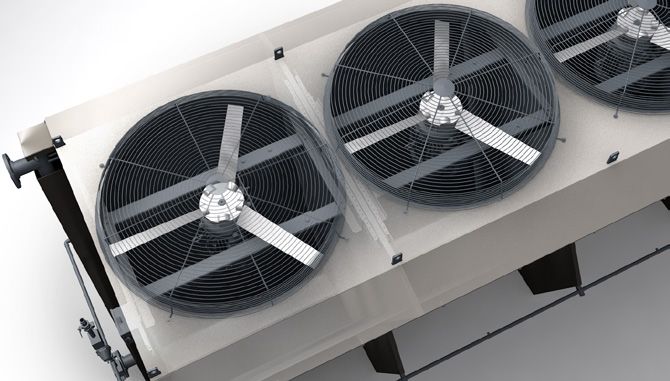
aecinternet.com

Get More From Your Production Floor
AEC brings you all the technologies you need to advance uptime, energy efficiency and performance in
your operation by offering a full line of cooling towers, central chillers, portable chillers and pump tanks.
Turn to our technical support team to evaluate your expected system loads and load characteristics,
energy and climate-related issues as well as incorporating new equipment with chillers and process
heating equipment you already own.

AEC History
Application Engineering Company, now known worldwide as AEC has roots dating back to 1957. AEC initially
began serving the plastics industry with chillers and cooling towers, establishing itself as a solutions provider
for the most challenging process cooling needs. Today, AEC continues to offer one of the broadest portfolios
of packaged and central chillers, and has grown to be a leader in blending, drying, and conveying, supplying
innovative solutions to a wide range of process industries.

Aftermarket Service & Support
AEC has a service network across the United States and in several key international locations. We are focused
on having the right people and products in the right places to keep our customers running efficiently.
Whether you need On-Site Service, Technical Support & Training, Parts Support or even Product Repair &
Refurbishment, we have you covered. Contact our team today for all of your aftermarket needs
at 262-641-8600 or service@acscoprorate.com.

About ACS Group
The ACS Group designs, manufactures, markets and supports one of the most comprehensive lines
of auxiliary products for the plastics processing industry. Over the years, ACS Group has grown both
organically through technical innovation and through acquisition. ACS Group offers a complete
product line, which includes size reduction equipment (granulators and shredders), material conveying
equipment, metering and blending devices, heat exchangers (mold temperature controls units and
chillers), drying systems, and hydraulic presses.

                      ACS Group | 2900 South 160th Street, New Berlin, WI 53151
                      P: 1.262.641.8600 E: info@acscorporate.com W: acscorporate.com

                                                                                                   Rev 07.20.2017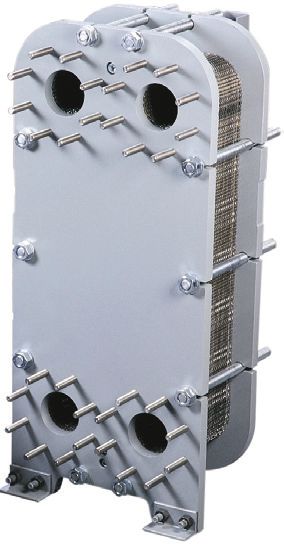
You can also read


