IMPACT OF PARENT'S MILITARY SERVICE ON CHILDREN: IMPLICATIONS FOR EDUCATION PROFESSIONALS - American ...
←
→
Page content transcription
If your browser does not render page correctly, please read the page content below

IMPACT OF PARENT’S
 MILITARY SERVICE ON
CHILDREN: IMPLICATIONS
    FOR EDUCATION
     PROFESSIONALS
The mission of the American School Health Association is
to transform all schools into places where every student
learns and thrives. The American School Health
Association envisions healthy students who learn and
achieve in safe and healthy environments nurtured by
caring adults functioning within coordinated school and
community support systems.
92 ND ANNUAL CONFERENCE
 INDIANAPOLIS, INDIANA
     OCTOBER 4-6, 2018
MEMBERSHIP BENEFITS
• Journal of School Health (JOSH)- ASHA’s peer-reviewed, indexed
  professional journal, available in print and online
• Conference – Members receive a discounted registration rate to
  ASHA’s annual school health conference which includes general
  sessions, oral presentations, poster sessions, exhibits, and plenty of
  time for networking. Most sessions qualify for continuing education
  credits.
• School Health Action – Subscription to our bi-weekly e-newsletter
• Continuing Education – Members receive free Continuing Education
  credits
• ASHA Career Center – Discounts rates for job postings in our Career
  Center
• Four networking communities that facilitate discussions and online
  support.

TODAY’S PRESENTER:

          Kathy Broniarczyk, M.Ed.
Senior Director of Outreach and Operations
     Military Family Research Institute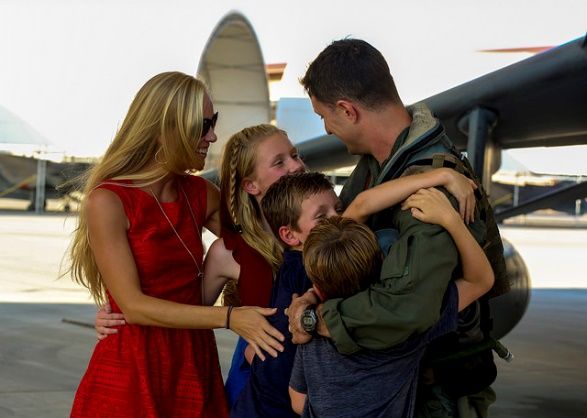
Impact of Parent’s Military
      Service on Children:
Implications for Education
             Professionals
                      Kathy Broniarczyk, M.Ed.
   Senior Director of Outreach and Operations
             Military Family Research Institute

          American School Health Association
                                    Webinar
                              April 26, 2018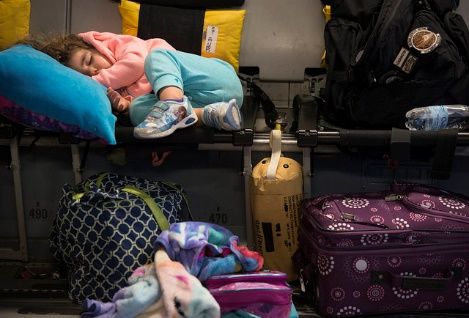
Presentation Objectives
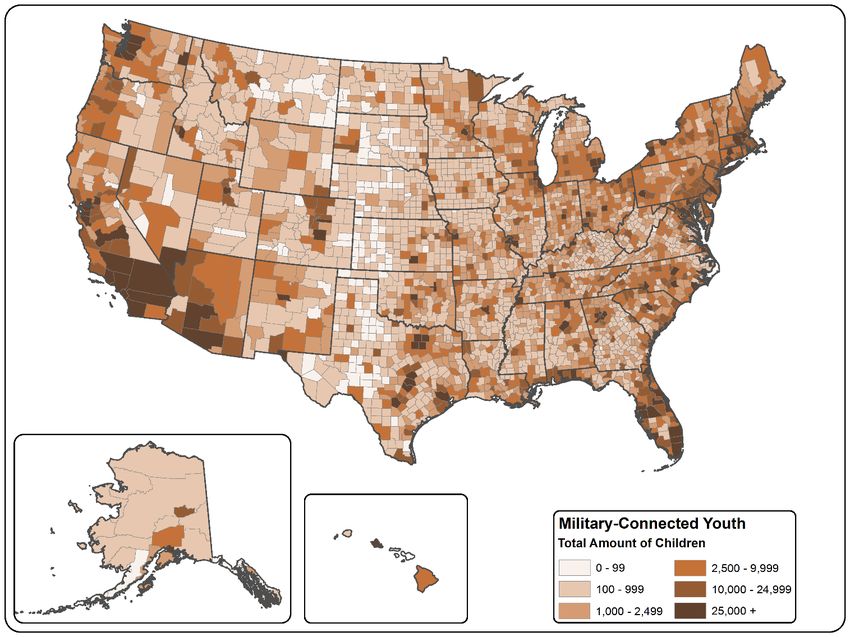
• Identify military affiliation in youth within
  your communities and the differences
  within this population
• Review research findings about the
  challenges and benefits associated with
  being a military youth
• Identify strategies education professionals
  can implement to support military youth in
  school environments
About the
      Military Family Research Institute
• Nationally-recognized
• Founded in 2000 at Purdue University
• Conducts research on issues that affect military and
  veteran families
• Works to shape policies, programs and practices
• Envisions a diverse support community that
  understands the most pressing needs of military and
  veteran families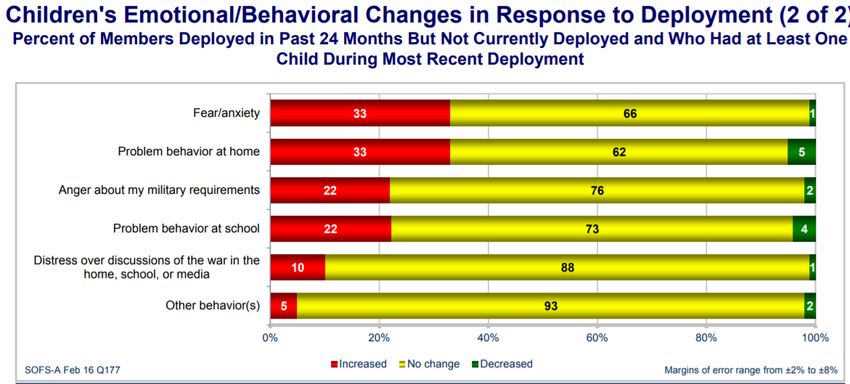
My background
• 25+ years working with military families
• Direct the Family Support team at the
  Military Family Research Institute
• Military Spouse (Active duty and National
  Guard)
• Parent of “military youth”

Who are Military Youth?
There is a legal definition of
a military “dependent”:
  Unmarried child under 21
   (under 23 if enrolled in
    higher education) of a
current service member or a
  child that is incapable of
   self-support because of
      mental or physical
          incapacity.
http://support.militaryfamily.org/site/DocServer/Definiton_of_a_Dependent_11-05.pdf?docID=3621
This definition does not include: • Children of veterans • Children of service members who have “aged out” • Extended family members who might be impacted: siblings, grandchildren
Some important differences
• Active Duty vs Selected Reserve
  – 24/7/365 vs part time
  – Branch of service
  – Geographical dispersion
  – Mobility
  – Isolation
  – “Suddenly military”
  – Community differences
Uncommon Experiences

https://www.flickr.com/photos/usairforce/32194970036/
“military-civilian divide”
• The extent to
  which civilians
  are becoming
  less connected
  to the military or
  civilian’s
  personal
  connections
  with someone in
  the military.
Some common stressors
• Preparing for extended separations from a
  primary caretaker
• Adjusting to altered family roles and
  responsibilities
• Coping with increased stress on non-military
  parent/caretaker
• Concern about safety of deployed parent
• Conflicting emotions about parent’s military
  service
• Coping with changes post-deployment
So, how are military youth doing?
       Overall, military families and military children are
                 doing well – they are resilient.

   Recent RAND study tracked 3,000 military families over three years:
   • “Outcomes ranging from parenting stress to spousal depression to teenage
         anxiety, the study highlighted what the researchers called the remarkable
         resilience of military families.”
   •     Dramatic changes in family function are seen during the deployment, but a
         slow but steady return to pre-deployment baselines. By the end of that
         reintegration family relationships and well-being had generally returned to
         pre-deployment levels.

Meadows, Sarah O., Terri Tanielian, and Benjamin Karney, eds., The Deployment Life Study: Longitudinal Analysis of Military Families Across the
Deployment Cycle. Santa Monica, CA: RAND Corporation, 2016. https://www.rand.org/pubs/research_reports/RR1388.html. Also available in print form.
2016 Survey of Active Duty
Spouses
http://download.militaryonesource.mil/12038/MOS/Surveys/2016-SOFS-Briefing-MCFP.pdfAlthough doing well overall, • Most current research looks at effects of one deployment • Concerns about repeated deployments in young children and the long term impact • Trying to identify risk and protective factors https://www.flickr.com/photos/marine_corps/37183458276/
Factors that predict child’s
  difficulty with parent deployment

                                                                        AMOUNT OF EXTERNAL
   AT HOME PARENT’S
                                      AGE OF PARENTS,                    SUPPORT A FAMILY
      STRESS LEVEL                  LENGTH OF MARRIAGE,                      RECEIVES
                                    AND LEVEL OF PARENTAL
                                         EDUCATION

                                                                           TOTAL NUMBER OF
         AGE OF CHILD                                                         MONTHS OF
                                                                             DEPLOYMENTS

Lester, P. (2010) The Long War and Parental Combat Deployment: Effects on Military Children and At-Home
Spouses, Journal of the American Academy of Child & Adolescent Psychiatry, 49,310-320.
What about multiple deployments?
What are some other findings?
• Young children had been separated an average
  of 18% of their lives
• Being born during a deployment posed
  additional risks
• Child social emotional adjustment was related to
  parental psychological health
• Children with more than 2 risk factors were more
  likely to have negative outcomes
• Presence of even 1 protective factor most
  children avoided negative outcomes
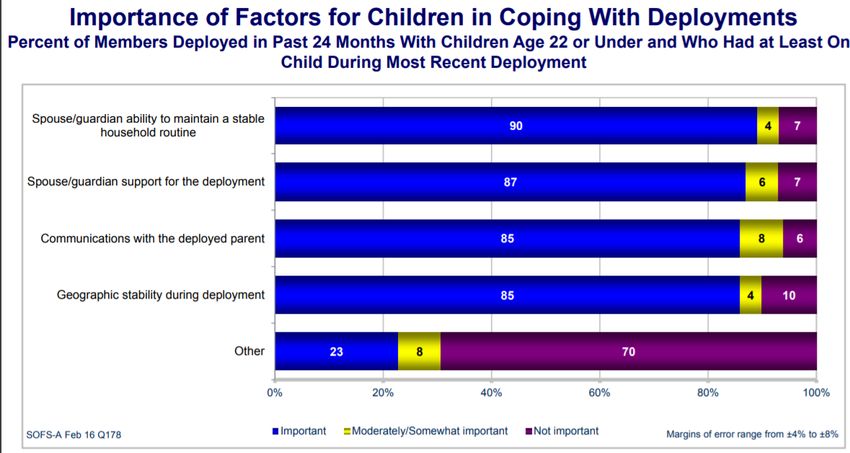
What are some things that can
           help?
What Parents see as important http://download.militaryonesource.mil/12038/MOS/Surveys/2016-SOFS-Briefing-MCFP.pdf
So, how can you as professionals
                 help?
• Know who the children are in your schools
    – Most military connect youth are educated in community schools
    – Military School Identifier (MSI): what is your state’s/school district’s
      progress on this?
•   Know what to look for in terms of warning signs
    – Find the cause of challenging behavior
•   Keep open lines of communication with the youth
•   Keep your own political views out of the interactions
•   Be the one adult who cares!
•   Create your resource tool kit
Resources There are many resources you can tap into that can assist your efforts to support military youth in your schools https://www.mfri.purdue.edu/wp-content/uploads/resources/hth/HowToHelp_Teachers.pdf
Resource links
• How to Helps:
• https://www.mfri.purdue.edu/resources-and-
  research/how-to-help-series/
• Military Child Education Coalition:
  http://www.militarychild.org/
• Military Kids Connect:
  http://militarykidsconnect.dcoe.mil/
• Our Military Kids: http://ourmilitarykids.org/
• National Military Family Association:
  http://www.militaryfamily.org/
• Military One Source: http://www.militaryonesource.mil/
References
•   Lester, P., Stein, J. A., Saltzman, W., Woodward, K., MacDermid, S. W., Milburn, N., … Beardslee,
    W. (2013). Psychological health of military children: Longitudinal evaluation of a family-centered
    prevention program to enhance family resilience. Military Medicine, 178(8), 838–845.
    http://doi.org/10.7205/MILMED-D-12-00502
•   Meadows, Sarah O., Terri Tanielian, and Benjamin Karney, eds., The Deployment Life Study:
    Longitudinal Analysis of Military Families Across the Deployment Cycle. Santa Monica, CA: RAND
    Corporation, 2016. https://www.rand.org/pubs/research_reports/RR1388.html. Also available in
    print form.
•   MacDermid Wadsworth et.al (2014) The Intergenerational Impact of War: Deployment and Young
    Children in Military Families, Military Family Research Institute, Purdue University.
•   Jennifer S. Owlett, K. Andrew R. Richards, Steven R. Wilson, J. D. DeFreese & Felicia
    Roberts (2015) Privacy Management in the Military Family during Deployment: Adolescents’
    Perspectives, Journal of Family Communication, 15:2, 141-
    158, DOI: 10.1080/15267431.2015.1013105
•   Richardson, A., Chandra, A., Martin, L. T., Setodji, C. M., Hallmark, B. W., Campbell, N. F., ... &
    Grady, P. (2011). Effects of soldiers' deployment on children's academic performance and
    behavioral health. RAND ARROYO CENTER SANTA MONICA CA.
Contact Us
kbroniar@purdue.edu
www.mfri.purdue.edu
765-496-3403
facebook.com/MFRIatPurdue
twitter.com/MFRIPurdueQ&A
UPCOMING WEBINARS

• May 21st, 2018
 • Topic: SBIRT for Teens
 • Presenter: Mallori DeSalle
• June 2018
 • Topic: Gun Violence in Schools
 • Presenter: Amy Thompson
• July 2018
 • Topic: The Center for Green Schools
 • Presenter: Anisa Heming
CONTINUING EDUCATION

• Eligible for 1 continuing education hour
 • CHES/MCHES
 • Participation
• Members receive free Continuing Education credits
• Non-members may purchase for $30/hour
• All CEs may be obtained by:
 • Completing the webinar evaluation
SAVE THE DATE!

92 ND ANNUAL CONFERENCE
 INDIANAPOLIS, INDIANA
     OCTOBER 4-6, 2018
You can also read


