IMPACT REPORT 2017 - EUROPEAN UNION OF THE DEAF
←
→
Page content transcription
If your browser does not render page correctly, please read the page content below
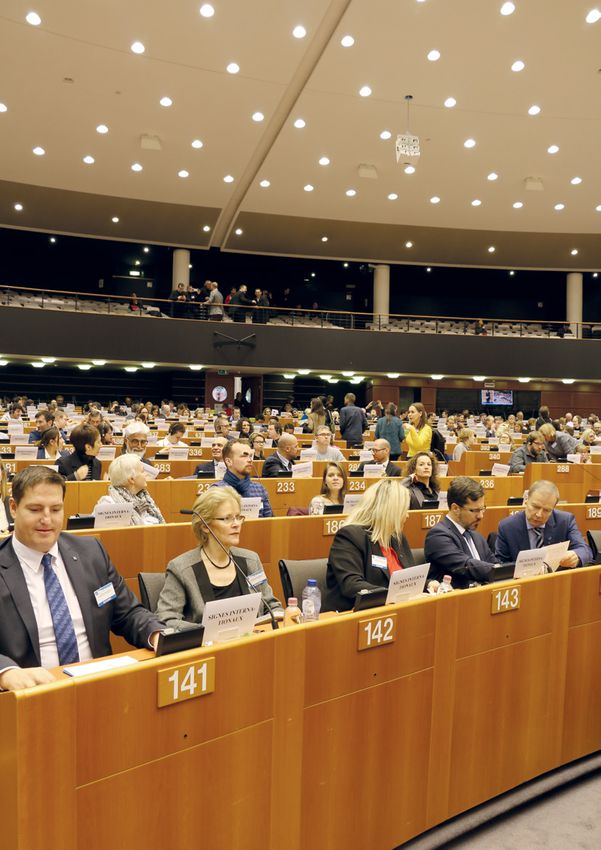
2017
                             IMPACT
                             REPORT

EUROPEAN UNION OF THE DEAF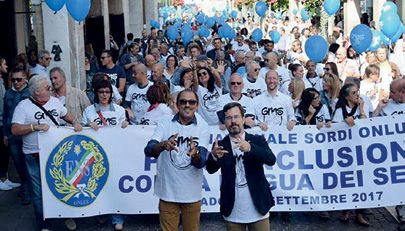
02
              ACKNOWLEDGEMENTS

                                     EUD would like to thank the European                The EUD interns Gianluca Grioli, Bernadette
                                     Commission for funding this 2017 Impact             Auersperg and Valeria Giura, along with all
                                     Report under the REC Work Programme.                members of staff contributed to this up-to-
                                     Without     their    substantial     financial      date report with photos, texts and signed
                                     contributions, the publication of this report       input.
                                     would not have been possible.
                                                                                         Our member associations are at the heart of
                                     The support of the EUD Board and President          our work and we thank them for assisting and
                                     have been of invaluable help to create an           co-operating with us throughout the year.
                                     accurate and up-to-date account of the EUD
                                     activities in 2017:                                 The European Disability Forum (EDF), our
                                                                                         European disability umbrella organisation,
                                     Board 2014 - 2017:                                  has been a great partner in all our work,
                                     President . . . . . . . . . . . Dr Markku Jokinen   informing us and collaborating with our
                                     Vice-President . . . . . Dr Humberto Insolera       board and staff via email and in person, in and
                                     Board Member . . . . . Louise “Lolo” Danielsson     outside of Brussels.
                                     Board Member . . . . . Alfredo Gómez Fernández
                                     Board Member . . . . . Dr Gergely Tapolczai         In support of its daily work, EUD has been in
                                                                                         contact with a large number of Members of
                                     Board 2017 - 2021:                                  the European Parliament (MEPs) and other
                                     President . . . . . . . . . . . Dr Markku Jokinen   EU policymakers and aspires to continue this
                                     Vice-President . . . . . Dr Gergely Tapolczai       fruitful co-operation in the coming years.
                                     Board Member . . . . . Louise “Lolo” Danielsson
                                     Board Member . . . . . Daniel Büter
                                     Board Member . . . . . Sofia Isari

              Dr Markku Jokinen

              Dr Gergely Tapolczai         Louise “Lolo” Danielsson

              Sofia Isari                  Daniel Büter

EUD IMPACT REPORT 2017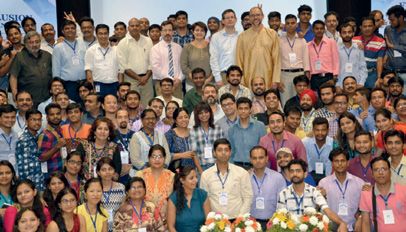
03
                                                                  FOREWORD BY EUD PRESIDENT

My mandate as president came to an end           considered, and the Act looked positive.
this year along with the other four board        However, the European Parliament made
members. We held board elections in              many compromises that weakened the
Valletta, Malta wherein I was re-elected as      European Accessibility Act for not only our
the President of EUD by our members. I am        members, but for all persons with disabilities
humbled and honoured to continue my work         across the EU. Yet, we must remain positive
for sign language users across the Europe. We    about the proposed EAA, although we believe
were saddened to see Dr Humberto Insolera        there is much room for future amendments,
and Alfredo Gómez Fernández finish their         which we will continue to strive for.
mandate, but are happy to welcome Daniel
Büter (Germany) and Sofia Isari (Greece) as      Putting the EAA aside, another main part of
our new board members. We wish our two           our work this year was the topic of education
new board members the best of luck for their     for deaf learners. We have released a
coming term!                                     position paper that has been voted on, and
                                                 adopted by the official delegates of our
EUD has once again recruited another             National Associations of the Deaf (NADs).
staff member, a policy assistant, Martyna        The position paper focused on the UNCRPD
Balčiūnaitė (Lithuania) to support Katja         Committee’s General Comment No 4 on the
Reuter, our Policy Officer.                      Right to Inclusive Education. This position
                                                 could not have been published at a better
There are two inspiring deaf and sign            time, as the fourth book of the UNCRPD series
language users who achieved great things this    also focused on Article 24: Education and
year, the first being MEP Helga Stevens, who     was also published this year. It is 260 pages
was nominated as one of the candidates for       long, containing articles written by several
the Presidency of the European Parliament.       reputable authors, edited by our Policy
The second was Dr Humberto Insolera, who         Officer, Katja Reuter. It is available to be
was elected to the Executive Committee of        purchased online and on our website.
the European Disability Forum (EDF). We are
encouraged to see such amazing work and we       Within the EUD’s working groups, we have
hope to see more inspiring deaf individuals      made some changes to keep up with current
becoming role models and leaders.                affairs, for instance, there is now a new
                                                 working group focusing on Gender Equality.
Focusing on our work for this year, there were
several changes within our organisational        I would like to finish my foreword by
structure, including mentioned staff changes.    announcing that EUD has been given the
However, it did not end there, in our lobbying   status of Special consultative with the United
work we faced tricky situations, particularly    Nations, which is a remarkable achievement.
with regards to the European Accessibility       We are very honoured to be one of the few
Act (EAA). In the initial proposal given by      NGOs around the world to have been given
the European Commission, we were pleased         this special status.
to see that Deaf sign language users were

             Dr Markku Jokinen
             EUD President

                                                                                                  EUD IMPACT REPORT 2017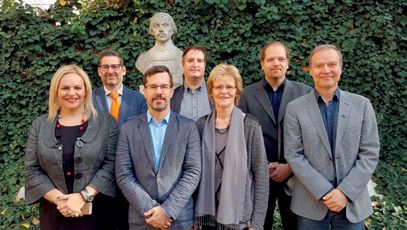
04
              EUD INTRODUCTION

              EUROPEAN UNION      Based in Brussels, Belgium, EUD is a not-for-       with its member NADs. EUD also has participatory
                                  profit European non-governmental organisation       status with the Council of Europe (CoE).
              OF THE DEAF
                                  (ENGO) comprising National Associations of
                                  the Deaf (NADs). It is the only supranational       Furthermore, EUD is a full member of
                                  organisation representing deaf sign language        the European Disability Forum (EDF), the
                                  users at European level and is one of the few       umbrella organisation of Disabled People’s
                                  ENGOs representing associations in all 28 EU        Organisations (DPOs) in Europe and has a
                                  Member States, including Iceland, Norway,           Memorandum of Understanding (MoU) with
                                  and Switzerland. EU acceding, candidate and         the World Federation of the Deaf (WFD) to
                                  potential member countries such as Serbia, can      tackle issues of global importance. EUD also
                                  choose to become affiliated members with the        has signed MoUs with both the European
                                  option to become full members as soon as they       Forum of Sign Language Interpreters (efsli), the
                                  officially enter the EU.                            European Union of the Deaf Youth (EUDY), the
                                                                                      European Deaf Sports Organisation (EDSO) and
                                  Aiming to establish and maintain EU level           the European Deafblind Union (EDbU). Since
                                  dialogue with the European Union institutions       2017, it has Special consultative status with the
                                  and officials in consultation and co-operation      United Nations.

              MISSION STATEMENT   It is the core mission of EUD to promote, advance   These key values are also mirrored in the
                                  and protect the rights of and opportunities for     daily work of its Brussels headquarters. The
                                  deaf people (including sign language users) in      office provides a fully accessible signing
                                  the European Union to ensure they can become        environment with international staff from
                                  full citizens in their own right.                   many different countries across the EU. Most
                                                                                      staff are deaf sign language users and all
                                  To achieve equality in both public and private      hearing staff must know or learn one national
                                  life for deaf people, EUD has laid out three        sign language as well as International Sign.
                                  main long-term objectives:                          Gender equality is also taken into account in
                                                                                      all employment policies and when organising
                                          Recognition of the right to use an          events and speakers.
                                    1     indigenous sign language;

                                          Empowerment through
                                    2     communication and information; and

                                    3     Equality in education and employment.

              SIGN LANGUAGES      Inherent to the work of EUD is the belief that      equal education, information or to a fair
                                  the right to sign language is a basic Human         trial. Without early access to sign language
              AS A HUMAN RIGHT
                                  Right. Sign language users, similarly with          programmes and/or an educational system
                                  national minorities, are in need of specific        that fosters the acquisition of the national
                                  targeted and coherent protection regarding          and/or regional sign language(s) (and the
                                  their language and all human rights. National       national written language), deaf children will
                                  and/or regional sign languages are the              not be able to enjoy their basic human rights
                                  mother tongues of deaf sign language users          as children or later in their adult life.
                                  across the EU and the world.
                                                                                      EUD therefore advocates the right to sign
                                  The right to sign language in itself is a           language as an essential prerequisite to
                                  human right, but access to sign language            ensure full and equal citizenship for all deaf
                                  is also essential for the fulfilment of other       people.
                                  basic human rights, such as the right to

EUD IMPACT REPORT 2017
05
                                                                                                           EUD INITIATIVES

EUD regularly plans and carries out campaigns,           to the wider hearing society and key European
workshops and other pan-European events to               and national policy-makers.
reach out to the deaf community, in addition

The EUD General Assembly took place in                   The delegates at the General Assembly                     GENERAL ASSEMBLY
Valletta, Malta on the 20th and 21st of May              welcomed the new board and witnessed
                                                                                                            AND EUD BOARD ELECTIONS,
2017. We also had workshops focusing on                  the departure of Alfredo Gómez Fernández
Gender Equality and the EUD Membership                   and Dr Humberto Insolera after their 4-year
                                                                                                                     VALLETTA, MALTA
fees, which were moderated by Louise                     term. We thank them for their contribution to
Danielsson, Berglind Stefánsdóttir and Dr                achieving the goals of EUD.
Gergely Tapolczai respectively.
                                                         The hot topic of the General Assembly was the
Furthermore, EUD board elections took place.             membership fees. During the debate, many
As there were only five candidates, the voting           points were raised. After the debate was
process was simplified. The delegates voted              concluded, it was voted that the membership
and approved all the candidates as follows:              fee will increase by 5%, however the board
                                                         will have the authority to discuss with NADs
President . . . . . . . . . . .   Dr Markku Jokinen      who are facing financial difficulties on a case
Vice-President . . . . .          Dr Gergely Tapolczai   by case basis.
Board Member . . . . .            Louise Danielsson
Board Member . . . . .            Daniel Büter
Board Member . . . . .            Sofia Isari

                      The new EUD board 2017-2021,
                      Valetta, Malta

                      EUD Election Results,
                      Valletta, Malta

                                                                                                                             EUD IMPACT REPORT 2017
06
              EUD INITIATIVES

              BOARD MEETINGS    In 2017, the four quarterly board meetings      co-operation of Deaf communities, as these
                                of EUD took place in Rovaniemi, Finland;        meetings, along with the General Assembly,
                                Valletta, Malta; Brussels, Belgium and          are the cornerstones of EUD’s democratic
                                Budapest, Hungary. The board meetings           structure.
                                play an important role in the European-wide

                                1. Rovaniemi, Finland
                                On the 3rd and 4th of February, EUD had their   EUD board elections. Moreover, staff and
                                first board meeting in 2017, which took place   board discussed EUD’s policy and media
                                in Rovaniemi, Finland.                          plans for 2017, recent development in EUD’s
                                                                                ongoing and new projects, for example
                                During the meeting, board and staff planned     emergency service accessibility, employment
                                the upcoming general assembly in May,           of deaf persons as well as other advocacy and
                                including the workshops, seminar and the        research work that EUD has been undertaking
                                                                                in 2017 on the topic of deaf education.

                                                                                              EUD Board Meeting,
                                                                                               Rovaniemi, Finland

                                2. Valletta, Malta
                                The second board meeting took place as part     for the board to reflect and ensure a smooth
                                of the General Assembly in May. As it was       transition for the new board. The focus of the
                                the last meeting for the 2013- 2017 EUD         board meeting was the implementation of the
                                Board members, it was a good opportunity        2017 work programme. It also involved final
                                                                                preparations for the General Assembly.

                                                                                      Steven Mulvaney, President,
                                                                                   Maltese Association of the Deaf

EUD IMPACT REPORT 2017
07

3. Brussels, Belgium
The third board meeting of the year 2017           Accessibility Act and the UNCRPD publication
brought together the new board for the             on Article 24: Education. Furthermore, other
first time. It took place in EUD’s office in       topics linked to EUD’s 4-year programme
Brussels over two days. The EUD Board              proposal prior to the European Commission’s
discussed important issues such as updates         approval were addressed.
on the adoption process of the European

            EUD Board Meeting,
            Brussels, Belgium

4. Budapest, Hungary
The fourth board meeting of 2017 took              meeting on behalf of the EUD staff, discussing
place in Budapest, Hungary to coincide with        activities of 2017 and the remaining work that
the 3rd International Conference of the            needed to be finished to be in full compliance
World Federation of the Deaf. EUD Executive        with EUD’s work programme for 2017.
director Mark Wheatley attended the board

            Róbert Ormódi
            Director of Hungarian Association of
            the Deaf, Budapest, Hungary

                                                                                                    EUD IMPACT REPORT 2017
08
              EUD INITIATIVES

              MEMBER WORKSHOPS              As part of EUD’s commitment to building          in a number of areas. These events are open
                                            the capacity of its members, the European        to member association staff and boards,
                                            deaf community in general as well as             regional representatives or other interested
                                            associated organisations, EUD regularly          parties from the wider deaf community,
                                            organises trainings, seminars and workshops      professionals and political stakeholders.

                                            Seminar,                                         Seminar,
                                            Rovaniemi, Finland                               Valletta, Malta
                                            The Finnish Association of the Deaf organised    The European Pillar of Social Rights seminar,
                                            a seminar, in in which the board and staff       organised by the European Union of the
                                            participated and gave presentations. Up          Deaf and Deaf People Association of Malta
                                            to 70 Members of the deaf community in           was very successful with an attendance
                                            Rovaniemi and its surroundings as well as the    of over 100 participants. Various experts
                                            President of the Finnish deaf association were   gave presentations focusing on different
                                            present to follow presentations on EUD’s         aspects of European social policy from a deaf
                                            work, inclusive education, employment,           perspective, covering topics such as sign
                                            sign language recognition in the EU and the      language recognition, political participation,
                                            UNCRPD and the rights that it confers to         employment, interpreting and refugees
                                            persons with disabilities, including to deaf     in Europe. We would like to share our
                                            people. Furthermore, it gave the board and       appreciation and thanks to the Deaf People
                                            staff the opportunity to have direct animated    Association of Malta and all their work to
                                            exchange with the members of the Finnish         make this a successful event for us all.
                                            deaf community about their priorities,
                                            challenges and opportunities with regards to
                    Seminar in Rovaniemi,
                                            accessibility and equal rights in all areas of
                    Finland
                                            life.

                                                                                             Seminar,
                                                                                             Ghent, Belgium
                                                                                             The EUD Board members gave a seminar to
                                                                                             introduce EUD’s work to the Flemish Deaf
                                                                                             community. The turnout was approximately
                                                                                             50 people. EUD’s interactive presentation
                                                                                             explained EUD’s structure, its members, as
                                                                                             well as its vision to achieve equality in public
                                                                                             and private life for Deaf sign language users.
                                                                                             There was a debate after the presentation
                                                                                             during which all board members gave specific
                                                                                             examples from their home countries with
                                                                                             regards to education and employment. The
                                                                                             Flemish Deaf community were given many
                                                                                             opportunities to engage in the debate. We
                                                                                             would like to express our appreciation and
                                                                                             thanks for the hospitality from Fevlado.

                                                                                                   From left to right: Dr Markku
                                                                                                Jokinen, Dr Humberto Insolera,
                                                                                                   Alistair de Gaetano, Hons. Dr
                                                                                             Justyne Caruana, Steven Mulvaney,
                                                                                             Helga Stevens MEP, Mark Wheatley,
                                                                                                                Oliver Scicluna

EUD IMPACT REPORT 2017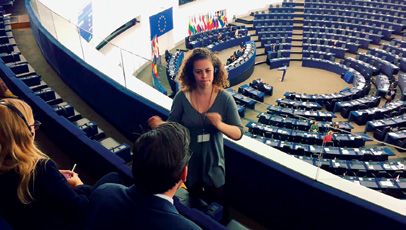
09

There are three Working Groups at EUD which                                                           WORKING GROUPS
focus on current issues of importance or
topics that the General Assembly decides are
a priority:

Update on the Gender Equality
Working Group
The Gender Equality working group was             and MEP Soraya Post on “Ending Forced
recently established. Its coordinator, EUD        Sterilisation of Women and Girls With
board member, Lolo Danielsson, met a group        Disabilities” at the European Parliament on
of deaf women interested in working on            the 5th of December 2017. She used the
these topics during a World Federation of         opportunity to present personal accounts of
the Deaf conference in Budapest, Hungary to       forced sterilisation of deaf women that the
discuss advocacy topics of interest related to    working group had collected in preparation
gender equality as well as future activities in   for this intervention.
this regard.

Lolo Danielsson also made an intervention
on behalf of the working group and of deaf
women across Europe during a public hearing
organised by the European Disability Forum

             Press statement,
             Louise “Lolo” Danielsson,
             EUD Board member

Update on the Deaf Lawyers
Working Group
The Deaf Lawyers Group was actively               workshop on the Membership fees during
involved in researching and preparing             the EUD General Assembly in Malta and one
several proposals related to the increase         of the proposals was adopted by the EUD
of the EUD membership fees. The results of        membership.
these discussions were presented during the

Update on the ICT and Accesibilitiy
Working Group
At the EUD board meeting in Budapest, our         worked on building up further networks, e.g.
new board member Daniel Büter took over           with experts in these fields. Finally, plans
the leadership of this working group. In order    have been established for recruiting new
to follow up on on-going issues in this area as   members to the working group to work on
well as prepare new working group activities      a variety of topics via email and webinars.
for 2018, he attended a variety of lectures       Current plans involve activities around on-
on communication accessibility during the         going accessibility related draft legislation,
3rd International Conference of the World         such as the European Accessibility Act, the
Federation of the Deaf, held in Budapest          Audio-Visual Media Service directive and the
on the 8th until the 10th of November             European Electronic Communications Code as
2018, e.g. video relay service, new arising       well as TV programmes for deaf sign language
technologies with regards to sign language        users, video relay services, the accessibility of
interpretation videos, etc. Furthermore, he       the European elections 2019, etc.

                                                                                                              EUD IMPACT REPORT 2017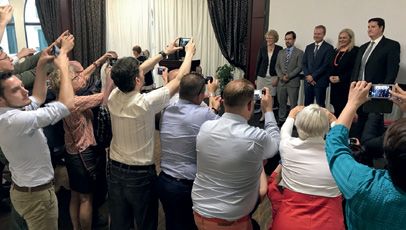
10
              EUD INITIATIVES

                 BOARD MEMBER ACTIVITES   Throughout the year, EUD board members           among conference participants about EUD’s
                                          participated as speakers in a variety of         activities and to discuss other topic areas,
                                          events across Europe to raise awareness          such as education, from a deaf perspective.

                                          Flemish Deaf Seniors,
                                          Ghent, Belgium
                                          Dr Markku Jokinen attended the Flemish deaf      and interpreter provision as well as many
                                          seniors conference. This was an incredibly       other aspects crucial for social inclusion.
                                          important event considering that there is
                                          a growing population of senior citizens in       De Gelderhorst from the Netherlands is
                                          Europe as well as in the deaf community.         just one example of a service provider
                                          During an exchange, this issue was addressed     who showcased examples of their services
                                          with regards to Europe in general, in the deaf   during this conference to demonstrate their
                                          community and particularly in Flanders. The      capabilities and services. It was fantastic to
                                          discussion was animated, as there was a          see the Flemish Deaf community representing
                                          strong motivation from the participants to       themselves, bringing their queries directly to
                                          improve living standards, built environments     the government through a group of ministry
                                                                                           representatives present at the event, who
                                                                                           took notes on the current situation to improve
                                                                                           the quality of life of these senior citizens. The
                                                                                           discussion was very positive and we hope
                                                                                           that in the future provisions and standards
                                                                                           will improve not only in Flanders, but across
                                                                                           Europe.

                                                                                                           Dr Markku Jokinen
                                                                                                                EUD President

                                          “Full Inclusion: With Sign Language”
                                          conference, New Dehli, India
                                          The Indian National Association of the Deaf      International Week of the Deaf. EUD Vice-
                                          organised a conference on “Full Inclusion:       President Dr Gergely Tapolczai attended
                                          with Sign Language” in Vishwa Yuvak              this event and gave two lectures outlining
                                          Kendra, Chanakyapuri, New Delhi on the           the Hungarian situation with regards to its
                                          21st of September 2017 to celebrate the          sign language law. Furthermore, he informed
                                                                                           the audience about EUD’s work and had the
                                                                                           opportunity to further discuss this in personal
                                                                                           conversations with participants.

                                                                                                     “Full Inclusion: With Sign
                                                                                                       Language” conference,
                                                                                                              New Dehli, India

EUD IMPACT REPORT 2017
11
World Deaf Day,
Padova, Italy
EUD Vice-President Dr Gergely Tapolczai the importance of recognising sign language
attended the World Deaf Day that took place and advocated for the recognition of Italian
in Padova, Italy from the 28th to the 30th of Sign Language (LIS). We were glad to see
September. Its objective was to celebrate the that an Italian senator, who is a strong
85th anniversary of the creation of the Italian supporter of the recognition of LIS attended
Association of the Deaf. Within this event, a the conference. The next day of the event,
conference took place during which a variety a demonstration for sign language and
of informative lectures were given. A number particularly LIS took place, which allowed
of examples of positive policies with regards the organisers to draw attention to the
to deafness were presented, including in deaf community and LIS as well as the
the area of education and employment. Dr responsibility of the Italian Parliament to
Tapolczai gave a presentation, highlighting move forward with the recognition bill.
Dr Gergely Tapolczai
EUD Vice-President
SINOSZ 110 years Anniversary,
Budapest, Hungary
On the 11th of November, Executive Director with a theatrical recreation by deaf children of
Mark Wheatley as well as board members the first meeting of the formation of SINOSZ.
Sofia Isari, Lolo Danielsson and Daniel The Hungarian president attended the event
Büter attended the event organised by the as well. It was a great networking opportunity
Hungarian National Association of the Deaf with the deaf community of Hungary who had
to celebrate its 110th anniversary. It opened gathered for this event.
SINOSZ 110 Anniversary,
Budapest, Hungary
EUD IMPACT REPORT 201712
EUD INITIATIVES
INTERNSHIP PROGRAMME EUD is one of the few European-level and their knowledge of European policy, media
organisations that offer a regular remunerated production and administrative work. EUD’s
internship programme. It is also the only interns have come from many different EU
internship that provides a full signing countries to support and inspire the local deaf
environment, enabling young sign language community and younger deaf people.
users to improve their International Sign skills
Gianluca Grioli
Gianluca Grioli from Italy was the first intern
joining us in Spring of 2017. He stayed with
us to support the preparations of the General
Assembly as well as EUD’s media production
for this event.
Bernadette Auersperg
Bernadette Auersperg from Austria was the
second intern joining us in Autumn of 2017.
She worked with our In-House sign language
interpreter and Administrative Officer, Romy
O’Callaghan, on administrative and financial
work.
Valeria Giura
Valeria Giura from Italy was our third intern
in 2017, using funding she was able to
obtain from the Italian government to join
EUD for the internship. It enabled her to do
research task that the EUD membership had
voiced interest in. Concretely, she has been
researching the right to disability benefits
and sign language interpretation provision
across the EU. She will continue this research
work in January 2018.
EUD IMPACT REPORT 201713
EUD is maintaining its determination to videos with selected feature(s) of: English MEDIA
produce high quality and fully accessible subtitles; and/or a voiceover in English; and/
information to its members and other or a summary of the content of the video in
interested parties to increase the visibility English text on the same page. The format of
of its output, especially for the political dissemination is aimed to be fully accessible
stakeholders and the wider deaf community. for all. It brings to life the slogan of the
Dissemination of information generally takes disability movement, which is “Nothing about
the form of International Sign Language us, without us”.
The EUD website that was launched in 2015, a way to allow deaf citizens to contact EUD WEBSITE
it allows us to release a variety of catalogued with video messages in sign language. The
information, also enabling us to be more website’s new design already attracted more
innovative with regards to accessibility, people after its decline in the past few years
providing press statements in International due the emerging social media channels
Sign and English. Furthermore, more video- within the EUD.
friendly features were added, for instance
Statistics
There were 39,500 hits on the videos
embedded on our website in 2017. We have
increased the 48,500 ratings to this year.
Stratgic Dialogue Meeting
on the European Semester
EUD IMPACT REPORT 201714
EUD INITIATIVES
SOCIAL MEDIA Although the EUD website are valuable and time. EUD has grown to one of the most visible
beneficial tools in connecting with Deaf people organisations at European level, surpassing many
in Europe and around the world, EUD uses other equally sized associations in geographic
social media to disseminate content in real and quantitative reach.
Highlights Facebook
The official EUD Facebook page is still
EUD - The European Union of the Deaf
December 6, 2017 53.398 Friends
Like EUD - The European Union of the Deaf
Good morning! We are in the hemicycle of the
attracting new Facebook users and we are
@EuropeanParliament for the 4th European Parliament of
Persons with Disabilities! You can watch the conference live
proud to say that we have increased our ‘likes’
with international sign interpretation on:
https://buff.ly/2AsspsH
from 47,000 to 53,000. The information that
#EPdisability is being disseminated on our website is also
EUD - The European Union of the Deaf
May 20, 2017 shared on the Facebook page, along with
The EUD Election took place but there were only five candidates additional photo albums of past events. The
so the voting process was simplified. The delegates voted and
approved all the candidates as follows:
page is targeted at the general public and
President- Dr Markku Jokinen
Vice President – Dr Gergely Tapolzai
its exposure illustrates our lobbying work in
Board Members- Louise Danielsson, Sofia Issari and Daniel Büter
addition to various events EUD attends and
subjects it addresses.
Facebook Infographic
December 31, 2017
53,000 202
LIKES POSTS
Twitter
Twitter allows us to instantly inform about
the daily activities of EUD Board members
and staff. Many of the events that took place
this year were strongly disseminated via
Twitter. The NADs were especially proactive
with regards to social media while attending
the EUD General Assembly in Valletta, Malta,
which made it the highlight on our Twitter
account.
EUD IMPACT REPORT 201715
Instagram
The introduction of Instagram began back in
September 2013. It is a distinctive way to
capture political life through an artistic lens.
This is a small, but growing niche audience for
us. We have 1,147 followers this year.
EUD IMPACT REPORT 201716
EUD INITIATIVES
NEXES PROJECT In May 2015, the grant agreement for NEXES whose significant contributions will support
was signed between the European Commission Europe’s standardisation effort on emergency
and the NEXES partners, delivering almost 6 services. 17 organisations from 10 different
million euro to the research and development countries participate in the project, including
of next generation emergency services emergency physicians associations, police
that integrate IP-based communication prefectures, telecommunication and technical
technologies and interoperability. Its aim is to service companies, national ministries, a
ensure that emergency services will become geolocalisation service company, university
fully accessible for people of all abilities, institutes working in these fields and a
including deaf persons across Europe. communication service provider for deaf and
hard of hearing. Throughout the project, EUD
The NEXES Consortium presents a strong multi- lends its expertise in the area of accessibility
disciplinary and complementary collective, for the deaf as one of the consortium members,
with solid competences and experience generally represented by EUD project officer
developing research and innovation projects Frankie Picron.
Nexes Review Meeting,
Milan, Italy
The first NEXES meeting of the year marked During this meeting, the NEXES project
the halfway point of the 3 years-term of the partners had the opportunity to discuss with
NEXES project. It took place in January at the two officials from the European Commission
office of AREU in Milan, one of the NEXES about their review of the quality of work
project partners, which is a company working that the NEXES consortium had done so far,
on regional emergency services. providing feedback to ensure that the project
does not deviate from its main goals.
NEXES Project partners,
Milan, Italy
EUD IMPACT REPORT 201717
Nexes Testing Pilot,
Ljubljana, Solvenia
On the 11th of April 2017, in the framework enhanced location information, video calls, chat
of a testing exercise in Ljubljana, Slovenia, messaging functionalities and of the exchange
the consortium presented the NEXES System of enriched caller information, including
and its capabilities to ensure that the personal data, video and photographs the caller
emergency services provide efficient and is willing to share.
effective support to the users. They used
the opportunity to demonstrate the use of The outcome of this meeting was positive
communication capabilities between citizens and showed gaps in technology, information
and emergency services and to identify deficiencies and regulations amongst the
possibilities of improvement of the NEXES different emergency response organisation and
system and Apps. During the pilot, several good practices and future trends to be followed.
storylines based on natural disasters were
acted out. The participants, including the
Slovenian deaf association, interacted and
highlighted the benefits and challenges of the
Participants in the testing exercise,
Ljubljana, Solvenia
NEXES Project Meeting,
Bucharest, Romania
During this event held in Bucharest on the services in Romania and representatives of the
16th and 17th of November, project partners national civil society and security industry. Our
demonstrated through the pilot the full extent project officer Frankie Picron presented the
of the new communication and information accessibility aspects of the NEXES system. After
exchange capabilities of the NEXES system, this event, NEXES partners took the opportunity
upon the conclusion of the NEXES action’s to have a milestone meeting to prepare for the
development phase. This pilot was an crucial last months of the project which will end
important activity of the NEXES project. Two in April 2018.
workshops took place, with an audience
composed of stakeholders in the establishment,
management and operation of emergency
Pilot testing,
Bucharest, Romania
EUD IMPACT REPORT 201718
EUD INITIATIVES
DESIGNS PROJECT The newest project that EUD is involved in is best practices across Europe to facilitate greater
“DESIGNS” which aims to improve labour market participation of Deaf sign language users in
inclusion of deaf persons. Apart from financial employment.
autonomy, work and paid employment serves
to develop a sense of belonging with positive This will be achieved by:
mental health benefits and identification
Creating a training module for Deaf
with the wider community. However, Deaf 1
job seeking graduates from higher
people throughout the world continue to
education who are reported to be
face barriers in various areas of life, including
underemployed and who have a lower
employment. At the same time, research and
propensity to get a job;
data on unemployment is underreported and
inaccurate. For instance, “deafness and hearing Creating a training module for employers
2
loss” is often used to report data, and sign to increase their awareness of deaf job
language users who are Deaf are not sufficiently applicants and job candidates to so that
researched. Deaf job applicants have a better chance
in succeeding in employment;
DESIGNS brings together partners from 4 EU
countries, who are renowned experts in the Creating a training module for sign
3
fields of Employment, Education and Training, language interpreters as part of their
Sign Language Interpreting and Training, and continuous professional development
Deaf community advocacy to work on these to understand the nature of interpreting
issues. The overall aim of the project is to create in education and employment (pre-
VET and CPD training resources and exchange employment/during employment)
settings.
EUD IMPACT REPORT 201719
DESIGNS Project Meeting,
Dublin, Ireland
On the 11th and 12th of January, the first at the Town Hall Session at Deaf Village
meeting of the DESIGN’s project took place Ireland. 10 presentations by the expert group
in Dublin. It was organised by the chair of were given and the event was live-streamed
the DESIGNS project, Haaris Sheikh from to more than 16,000 international viewers.
Interesource Group Limited. The meeting was research work that EUD has been undertaking
followed by the official launch of the project in 2017 on the topic of deaf education.
DESIGNS Project Partners,
Dublin, Ireland
DESIGNS Workshop,
Valletta, Malta
During this event that took place of the about the project and the upcoming survey.
EUD General Assembly (GA), the DESIGNS Frankie Picron then approached delegates
project was presented to the EUD member to provide more specific information to
associations. Furthermore, we took the distribute the survey. Following the workshop,
opportunity to ask them to participate in a he analysed the received information and
survey of 11 questions targeted to EUD’s followed up with our national and regional
member associations. Prof Lorraine Leeson members to receive more detailed feedback
(a member of the consortium) gave a from the survey. The received data was then
presentation about, informing participants send to the DESIGNS partners.
DESIGNS Project Meeting,
Edinburgh, Scotland
On the 16th and 17th of June, the second Picron and Executive Director Mark Wheatley
consortium meeting took place at Heriot- summarised the data collected from the
Watt University in Edinburgh, which is one of DESIGNS Deaf Employment project in the
the project partners. Project officer Frankie above-mentioned Europe-wide survey.
DESIGNS Partners,
Edinburgh, Scotland
EUD IMPACT REPORT 201720
EUD INITIATIVES
SIGN TEACH PROJECT The SignTeach project is a three-year project the Common European Framework Reference
that is co-funded by the EU Erasmus+ for sign languages, meta-linguistics, ICT and
programme that finished in 2017 after running entrepreneurial skills, as well as interviews
for three years. Its objective was to develop, with new and experienced teachers and their
implement and evaluate an Open Educational learners.
Resource (OER) for sign language teachers and
their trainers in EU member states. The OER A bilingual online SignTeach Glossary with
includes information for new and experienced didactic and linguistic terms explained in
sign language teachers about a variety of International Sign and English text will aim at
topics, such as didactics, class management, increasing the accessibility of the information
on the website for deaf sign language users.
Meeting,
Siena, Italy
The last meeting of the SignTeach project to finalise the valuable book named “Sign
took place in Siena, Italy. All the partners Language Teaching in Europe – Report &
of the consortium came together to discuss Recommendations”, one of the projects’
the last tasks to be completed. Concretely, outputs, as well as topics of a more managerial
participants discussed the steps required nature.
SignTeach Project Partners,
Siena, Italy
EUD IMPACT REPORT 201721
POLICY
The United Nations Convention on UNCRPD
the Rights of Persons with Disabilities
UNCRPD
The EU’s ratification of the United Nations implications have been widely discussed at an
Convention on the Rights of Persons with institutional level. As a result, it has become
Disabilities (UNCRPD) in 2010 means that evident that this is a new and complex area
there is now an obligation to implement the where international, European and national
enshrined rights in a timely manner. Its legal political responsibilities overlap.
UNCRPD review sessions
in Geneva, Switzerland
EUD, as the only European-level NGO of countries presented how they have been
representing deaf people and sign language working towards a full implementation of the
users follows the UNCRPD review sessions of UNCRPD, and the committee pointed out its
its members closely and provides information concerns about several shortcomings.
to its members. The aim is to support and
encourage our member associations to EUD was particularly pleased to see
participate in the review process and to active engagement from their member
provide up-to-date information, whilst organisation, the British Deaf Association
simultaneously training the whole European (BDA) during the review of the United
deaf community. EUD supports national Kingdom. Representatives from the BDA
deaf associations of the countries that are travelled to Geneva as part of a delegation
under review by the CRPD Committee and of the British Deaf and Disabled People’s
we broadcast information through various Organisations (DDPOs) to highlight to the
communication channels, such as our social UNCRPD committee that the deaf perspective
media accounts and our website, to ensure must not be overlooked. The committee’s
that the deaf perspective is mainstreamed recommendation to the UK government is
throughout the review. EUD works in close to take steps to ensure the “full and equal
co-operation with the World Federation participation” of deaf people on juries,
of the Deaf (WFD) to provide information allocate funding for sign language courses to
and to ensure that the accessibility of ensure full inclusion in family life/education/
each Committee session is guaranteed and work, and develop compulsory standards for
maintained. securing access to information from public
services and authorities. The chairman of
Between the 14th and 30th of August, EUD the BDA Dr Terry Riley stated that he was
followed the 18th UNCRPD session online glad to see that the committee has expressly
to observe the committee’s review of Latvia, recommended that the UK government
Luxembourg and the United Kingdom of create legislation protecting the language
Great Britain and Northern Ireland. We closely rights of deaf people, and that so many of
followed the committee’s assessment of the the committee’s remarks were related to this
progress in implementing the Convention and important issue.
supported Latvia, Luxembourg and the British
and Northern Irish deaf communities through
social media.
A wide variety of issues were discussed
during the review sessions. The delegations
UNCRPD Review Session,
Geneva, Switzerland
EUD IMPACT REPORT 201722
POLICY
Position paper on the UNCRPD
committee’s General Comment No 4
on the right to inclusive education
In the first quarter of 2017, EUD worked on its that, from the perspective of various deaf-led
position paper on the UNCRPD committee’s organisations and academic researchers, are
General Comment No 4 on the right to required to ensure that deaf children have
inclusive education that had been published a meaningful, equitable and participatory
by the UN in August 2016. learning experience, are socially included
and are academically successful in inclusive
While EUD had provided input to the General education. Therefore, our objective was
Comment through a joint submission with to add detail on how to provide adequate
the World Federation of the Deaf (WFD), the inclusive education for deaf learners. This
World Federation of the Deaf Youth Section was achieved by highlighting positive aspects
(WFDYS) and the European Union of the of the General Comment, aspects to be
Deaf Youth (EUDY). We felt that the General improved upon and recommendations with
Comment failed to include several elements regards to the deaf perspective on the topic
of inclusive education.
The draft position paper was provided to
EUD’s national member associations in sign
language and in writing ahead of the Annual
General Assembly in May and was adopted
during this meeting.
David Hay
EUD Communication & Media Officer
Special consultative status with
the United Nations
We are pleased to announce that in 2017, we we will receive the provisional agenda of
have been granted special consultative status the Economic and Social Council (ECOSOC),
with the United Nations. From now on, we can which we may attend and additionally, we
put forward our input at public meetings at now have the capability to submit our written
the United Nations international conference statements and make presentations to
and their preparatory bodies. Each year, governments represented at this council.
EUD is one of the few ENGOs that has been
granted consultative status with the United
Nations.
Mark Wheatley
EUD Executive Director
EUD IMPACT REPORT 201723
UNCRPD Publication series:
Article 24: Education
EUD, has been working over the last few Professionals from various disciplines
years on a publication series on the topic have contributed to this volume, including
of UNCRPD implementation from a deaf EUD Executive Director Mark Wheatley
perspective, with each volume addressing a and the editor herself. In general, author’s
different article of the Convention, exploring backgrounds span from academia and
it from both an academic and best practice NGO work to education provision and sign
perspective, and at all levels from European language interpretation. They explore how
to regional. The aim of the series is to provide learning environments must be designed to
possible interpretations of the UNCRPD be accessible for deaf learners, especially sign
with regards to its implementation for deaf language users, to maximise their academic
citizens, including deaf sign language users and social development, as enshrined in
and hard of hearing people. Article 24. Thus, this book aims to support its
implementation for deaf learners in the best
In December 2017, EUD published its newest way possible.
volume of this series addressing Article 24
on education, edited by EUD Policy Officer The book launch took place on the 4th
Katja Reuter. The topic is explored from December during the European Commission
various angles, including the importance of Day of Persons with Disabilities. We used
legal foundations for bilingual education this opportunity to present the book to
for deaf learners in Europe, interpreter use Commissioner Thyssen and provide her with
in inclusive education, the need for early some information about education of deaf
sign language access, and the accessibility learners in Europe.
of teacher training. It also presents good
practice examples, highlighting the diversity
of settings in Europe that provide accessible
bilingual quality education.
UNCRPD Publication series:
Article 24: Education.
Edited by Katja Reuter
From left to right: Katja Reuter,
EUD Policy Officer, Marianne
Thyssen, European Commissioner
and Dr Gergely Tapolczai, EUD
Vice President
EUD IMPACT REPORT 201724
POLICY
EU POLICY The European Accessibility Act
INITIATIVES AND EVENTS Througout the year, EUD closely followed services in the internal market, making them
the legislative procedure of the European accessible to persons with disabilities and
Accessibility Act (EAA), which aims at persons with functional limitations. Below is
providing a common EU definition of, and the timeline of the steps in the adoption of
implementation framework for, accessibility the EAA that EUD has actively been involved
requirements for a number of products and in through advocacy actions:
1. The EMPL committee adopted
its report on the EAA
In the course of the legislative procedure for was drafted by MEP Ádám Kósa who had
the EAA, different committees of the European been chosen as the rapporteur within the
Parliament gave their opinions in the form of committee. Previous to the its adoption, EUD
a report. The Employment Committee (EMPL) had submitted input to the draft amendments
adopted its report on the EAA in April, which to the EMPL report and followed the adoption
process very closely.
From left to right: Dr Humberto
Insolera, EDF Executive Committee
and Dr Adam Kosa, Member of
European Parliament
2. The IMCO Committee adopted
its report on the EAA
The European Parliament’s Internal Market favouring business demands over the
Committee (IMCO Committee), which is rights of people, including persons with
the committee that is responsible for disabilities, older people and all consumers.
this file, adopted a disappointing report EUD believes that the report has watered
on the Accessibility Act in May. EUD and down the European Commission’s original
the European Disability Forum expressed proposal. The IMCO Committee rejected
their concerns about the IMCO Committee almost all amendments on issues that the
disability movement had proposed. In the
final vote, the report was adopted by a narrow
majority of IMCO’s members: 20 in favour, 17
abstentions, 0 against. This motivated EUD to
campaign strongly for ambitious legislation
on the accessibility of products and services
in Europe.
Mark Wheatley
EUD Executive Director
EUD IMPACT REPORT 201725
3. EUD interview’s various
MEPs about the EAA
In the framework of our advocacy campaign Løkkegaard explained how the EAA could
for a strong EAA, Executive Director, Mark improve the life of persons with disabilities
Wheatley visited the European Parliament in and provided examples of the concrete
Brussels to interview Ádám Kósa MEP about changes that the EAA could bring. EUD’s
the results of the IMCO vote in May and to Mark Wheatley reminded MEP Løkkegaard
get his expert opinion regarding the Act’s that the European deaf community requires
impact on the deaf community in Europe. MEP subtitles and sign language interpretation in
Kósa explained the legislative procedure for media outlets and needs the EAA to contain
adopting the European Accessibility Act and clear requirements for broadcasters to create
its potential benefits for deaf persons. accessible TV based on obligations that will
be established in the Audiovisual Media
Moreover, EUD was given an exclusive Service (AVMS) directive. The full interviews
opportunity to have an interview with the are available on our website.
rapporteur of the European Accessibility
Act before it was voted on in the European
Parliament in Strasbourg. MEP Morten
Morten Løkkegaard
Member of European Parliament
4. Preparation of the plenary
vote on the EAA
EUD wrote their position on how the MEPs persons across the EU. This document was
should vote to ensure that the EAA can disseminated to all the MEPs before the
have a positive impact on the lives of deaf plenary vote took place.
Romy O’Callaghan
In-house sign language i nterpreter
EUD IMPACT REPORT 201726
POLICY
5. Plenary vote on the
European Accessibility Act
On September 17th, EUD was present in import or distribute products and provide
Strasbourg and followed a very important and services that fall within its scope. This
plenary vote on the European Accessibility means that microenterprises will not have
Act. EUD regrets that, for deaf Europeans, to make their products and services (such as
the EAA missed out on a big opportunity for e-commerce and e-books) accessible.
a more accessible Europe, as the Parliament
decided to keep obligations with regards On a positive note, the report voted on by
to audio visual obligations in the draft the plenary states that telephony services,
Audiovisual Media Services Directive rather including emergency services, must provide
than covering it in the EAA and applying at least one mode of operation that does not
its functional requirements for making the require hearing, which is progress towards
services accessible. The current draft of the accessibility of these services for deaf
the AVMS Directive obliges Member States Europeans.
to ensure their broadcasters increase the
accessibility of media content, but there are EUD regrets that several crucial points were
no concrete EU level obligations mentioned. left out. We will continue to collaborate
Therefore, countries will move at their own with the European Disability Forum in the
speed and can get away with doing very next stages of the process to advocate for
little and continue to exclude deaf people making the Act stronger. This process will
from accessing audio-visual media services, continue during the negotiations between
without breaching their obligations under the the European Parliament, the Council of the
AVMS Directive. Moreover, the EAA will not European Union (henceforth referred to as
apply to microenterprises that manufacture, the Council) and the European Commission.
6. The Council of the European
Union general approach
In December, the Council adopted a general the EECC, while the EAA would describe,
approach for their trilogue negotiations through its functional requirements as stated
with the European Parliament and the in its Annex I, how these services must be
European Commission. While we were very made accessible. If emergency services are
glad to see that the negotiations on the EAA deleted from the European Accessibility
have progressed further with the adoption Act, there is a risk that EU Member States
of the general approach, EUD was very might transpose the EECC in a way that is
disappointed to see that the Council involve incomplete or insufficient, as there are no
plans to remove emergency services from concrete functional requirements providing
the scope of the directive, intending to only information on how to make these services
address them in the European Electronic accessible.
Communications Code (EECC), a directive that
is being discussed in the EU institutions at the EUD will work on further advocacy actions,
moment. informing Member States about this
development so that they can meet with their
EUD strongly opposes this decision. Our government representatives to advocate to
objective was for obligations with regards keep emergency services as part of the EAA.
to emergency services to be covered in
EUD IMPACT REPORT 201727
In May 2016, the European Commission the current version of the article leaves it up to THE AUDIO-VISUAL MEDIA
proposed a directive aimed at revising the the broadcasters to develop these measures
SERVICE DIRECTIVE REVISION
audio-visual media services (AVMS) directive “in consultation with relevant stakeholders,
from 2010. The objective of the revision is including media service providers and
to adapt the former directive to new market organisations of persons with disabilities”
realities. While the directive deals with many at national level. While we strongly support
aspects regarding audiovisual media services, the inclusion of organisations of persons
its article 7 on the topic of accessibility is with disabilities in the negotiations for the
of major importance to the deaf community development of these measures, we regret
in Europe. Indeed, the adoption of a strong that the committee has decided to not set
directive will oblige the Member states concrete European level accessibility targets,
to adopt new binding laws improving the favouring interests of the broadcasting
situation of media accessibility in their industry over the interests of the disability
country. community. EUD has been advocating for
establishing concrete percentages by which
In cooperation with the European Disability broadcasters would have to increase the
Forum, EUD has undertaken advocacy work accessibility of their services in regular
to improve this article, with the objective time intervals, potentially starting from a
of including EU level obligations for Europe-wide percentage of accessibility
broadcasters to make their audiovisual media to be reached after a certain deadline.
services more accessible for deaf persons Furthermore, we were disappointed to see
through the provision of subtitles and sign that the concrete access services in question,
language interpretation for deaf and hard i.e. subtitles and sign language interpretation
of hearing persons. However, we met a lot for deaf and hard of hearing persons and
of resistance from industry representatives audio-description and spoken subtitles for
as well as some political stakeholders and blind and visually impaired persons, have not
experienced problems with regards to the been included in the binding part of the text,
accessibility of negotiations regarding this but are only mentioned in the non-binding
file. For instance, a feedback session on the text, weakening the future impact of the draft
AVMS directive trilogue negotiations in the legislation.
European Parliament was done behind closed
doors, and EUD was denied their request to Finally, it was unfortunate that the members
receive meeting documents. of the Committee voted to move directly to
inter-institutional trilogue talks with the
On the 10th of May 2017, the European Council and the European Commission, with a
Parliament’s Committee on Culture and view to finalising the legislation on the basis
Education (CULT committee) voted to amend of the committee amendments, rather than
the European Commission proposal towards on the basis of a plenary vote. This deprived
an updated directive. We appreciate that the EUD from further interacting with other MEPs
committee has included an obligation for to introduce amendments for a plenary vote
broadcasters to ensure that their services are to make the article on accessibility stronger.
“made continuously and progressively more
accessible to persons with disabilities”. This EUD is continuously working with the
was a big step forward from the previous European Disability Forum to see what
version of the article that only contained an further advocacy actions are still feasible
encouragement for broadcasters to make with regards to trilogue negotiations, and
their services accessible, which has proven how it is interconnected with the European
insufficient to create real change. However, Accessibility Act.
EUD IMPACT REPORT 201728
POLICY
THE EUROPEAN ELECTRONIC EUD has been following the legislative that access for end-users with disabilities
procedure regarding the adoption of the to emergency services is available through
COMMUNICATIONS CODE
European electronic communications code emergency communications and that this
(EECC). access must be equivalent to that enjoyed by
other end-users, through total conversation
On the 14th of September 2016, the services or third-party relay services.
Commission proposed a new European Furthermore, we were glad to see it stated
electronic communications code which that end-users with disabilities must be able
would overhaul the existing legislative to access emergency services on an equal
framework for telecommunications, including basis with others, whilst travelling in another
emergency services. The code has been Member State, where feasible, without any
designed to take into account changes in pre-registration. We also appreciate that
markets, consumer trends and technology, Member States must ensure that citizens are
all of which have significantly changed since adequately informed about the existence
2009, when the framework was last amended. and use of the single European emergency
EUD drafted amendments on article 102 on number ‘112’, as well as its accessibility
emergency services that supported EDF in features, including accessible initiatives
writing their amendments, to which EUD specifically targeting persons travelling
also provided input to ensure that access to between Member States, and persons
emergency services through interoperable with disabilities. The Parliament took the
total conversation technologies and third- decision to enter into interinstitutional
party-relay services is ensured. negotiations confirmed by plenary (Rule
69c) in October. The Council mandated the
The Industry, Research and Energy (ITRE) Estonian Presidency to commence trilogue
committee of the European Parliament voted negotiations on the code. EUD will closely
on its report on the 2nd of October 2017. EUD follow the trilogue negotiations, particularly
was glad to see that a paragraph had been with regards to its interconnectivity with the
included obliging Member States to ensure European Accessibility Act.
CONFERENCE ON THE On the 7th of February, EUD participated accident or a trauma, meaning that they have
in a workshop organised by the European the potential to save numerous lives. He also
EUROPEAN EMERGENCY
Emergency Number Association (EENA) introduced the public to the NEXES project in
NUMBER 112 AND THE on the European emergency number 112 which EUD is a partner.
EUROPEAN ELECTRONIC and the Electronic Communications Code.
COMMUNICATIONS CODE The workshop was organised close to the A number of speakers covered various topics,
European 112 Day, which takes place on including new technological advances,
the 11th of February every year, to raise such as advanced mobile location (AML).
awareness of the European emergency AML is a technology that already exists in
number and the on-going negotiations android smartphones. It allows the phone,
regarding the directive. after an emergency call to 112 has been
placed from this phone, to automatically
EUD’s project officer, Frankie Picron, was send a text message with the coordinates
one of the speakers during the event, of the caller to the emergency service. This
presenting how to make emergency services would allow emergency services to locate a
accessible for deaf and hard of hearing person in need a lot quicker, as the margin
persons. He highlighted that fully accessible of error is significantly reduced compared
multi-channel emergency services are not to current technology used. However, only
only crucial for persons with disabilities, a few countries in Europe have created the
including deaf and hard of hearing persons, possibility for their emergency services to
but for everybody who could find themselves receive, analyse and use these text messages.
without the capacity to hear or speak after an
EUD IMPACT REPORT 2017You can also read


