SCALING FOR SUSTAINABILITY, EVOLVING METHODS AND MODELS - UNICEF
←
→
Page content transcription
If your browser does not render page correctly, please read the page content below
SCALING FOR SUSTAINABILITY, EVOLVING METHODS AND MODELS
Cover photo: ©UNICEF/UNI130425/Noorani

Acknowledgments
Report team
Brian Desmond Cotter, Chris Brooks, Eleonora Gatti, Fatu Wurie, Hana Sahatqia,
Hira Hafeez ur Rehman, Jocelyn Ling Malan, Katherine Crisp, Mathias Devi Nielsen,
Stuart Campo, Tanya Accone, Tamara Zakharia and Vicky Maskell

Design and layout

Bekhzod Makhkamov and Jonathan Newberry

Published by
Office of Innovation
© United Nations Children’s Fund (UNICEF)
October 2019
Contents
           Introduction                    5    UPSHIFT                    25
           How effective have we been at        Digital Health             30
           accelerating scale?             7
                                                Internet of Good
           How we did in the words of           Things                     35
           independent evaluators          9
                                                Biotechnology breakthroughs
           Where next?                     11   for last mile challenges    40
           Thinking together               13   RapidPro                  44
           Accelerate to scale             16   Scaling together           47
           U-Report                        19
© UNICEF/Kosovo
Introduction

Five years ago, UNICEF’s Global Innovation Centre (GIC) was just a set of ideas         This final GIC report also reflects on the future and how what comes next is being
and many questions. How could innovative approaches and technologies make               fundamentally informed by the experience, evidence, evaluation and results
exponential differences in tackling development’s wicked problems.... moving            achieved in the course of this five-year journey. With the benefit of two independent
beyond proofs of concept and pilots, to scale? How might we respond to the rapidly      evaluations in 2018 and 2019, the experiences and lessons learned generated from
increasing demand to help others adapt and adopt innovative solutions? How might        the GIC are helping to shape the future strategic direction of the innovation function
we develop an experience- and evidence-informed practice of of scaling innovation       at UNICEF and its operationalization.
for children faster and farther... building UNICEF’s capacity and that of others? Who
else could we partner with on this scaling journey? And how might we do all of this     There is a saying, “If you want to go fast, go alone; if you want to go far, go together.”
sustainably?                                                                            We aimed to go far faster, and have been privileged to take this journey with millions
                                                                                        of others. We look forward to continuing the first steps on the next stage in UNICEF’s
Five Founding Sponsors turned those enquiries into reality by seeding the GIC with      innovation journey, together.
their commitment, networks, governance and funding. We more than quadrupled
their $3.75m in seed funding to raise more than $16 million to support the scale
up of innovative solutions in 109 countries. We grew support from these 5 initial
sponsors to collaborations with more than 500 global and local partners today.

Most importantly, more than 150 million children, young people and their
communities have benefitted from the solutions in the GIC’s scale portfolio,            Tanya Accone
thanks to their widespread adoption and adaptation by governments, partners             UNICEF Office of Innovation
and across the United Nations. These solutions have empowered young people to
help their communities to prepare, respond and recover during emergencies, and
strengthened systems and the results achieved by frontline workers across almost
every sector in development.

Sustainability post-GIC is another critical indicator of our success. The GIC’s
investment in packaging solutions for deployment, building capacity within UNICEF
and partners, and generating rich sets of evidence-based resources has supported
the successful exit of 5 solutions that are now mainstreamed into core programming.
The better evidence of sustainable scaling is that post-exit, these solutions have
continued to grow and evolve, benefitting from the full ownership, governance and
resourcing by others, with little GIC input.

OFFICE OF INNOVATI O N                                                                                                                                                        5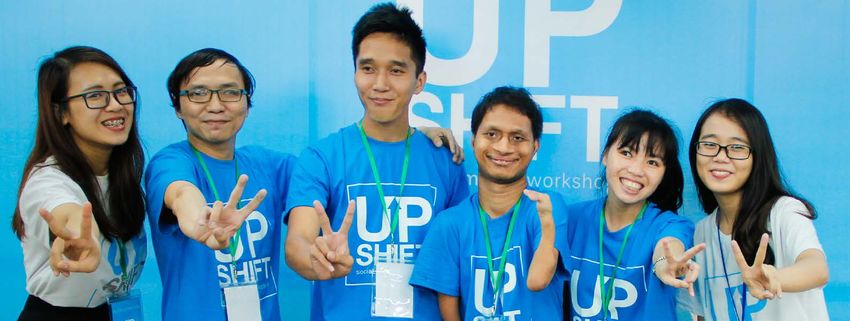
Maybe the Poor won’t always be with us. The GIC was
                         invited to share its experiences and how our approach
                         embraces solutions developed with local communities,
                         not just for them.

                                                                                 © UNICEF
OFFICE OF INNOVATI O N                                                     6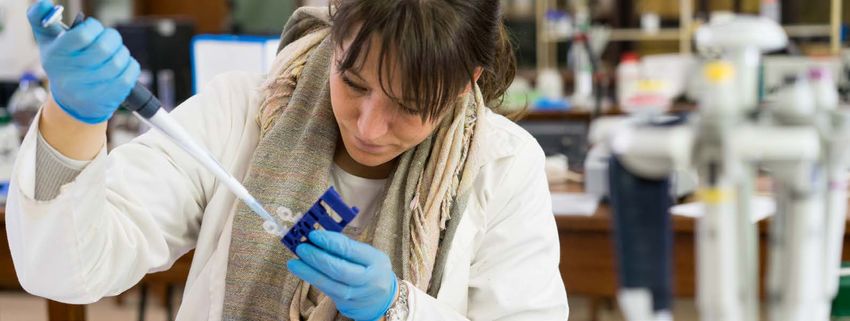
How effective have we been at
accelerating scale?
        GROWTH (COUNTRIES)

   70

                                                                                                                         IOGT

                UNICEF's Global Innovation Centre plays "an                                                   66 countries, 32 million
                                                                                                              users when mainstreamed
                instrumental role in the achievement of scale                                                 to C4D function, June 2019
   60
                and outcomes" and has demonstrated that its
                leadership role and innovation practices are "an                                                        U-REPORT
                effective approach to scale an innovation across                                              65 countries, 8 million
   50           geographies, sectors and use cases."                                                          users, mainstreaming
                                                                                                              in 2020

                             – Evaluation of Innovation in UNICEF Work,
                                                      2019, case studies                                                RAPIDPRO
   40
                                                                                                              53 countries when
                   ENTER GIC PORTFOLIO                                                                        mainstreamed to ICT
                                                                                                              function in June 2018

   30                                                                                                                   UPSHIFT
                                                                                                              20 Countries, 40 GenU YC,
                                                                                                              mainstreaming in 2020

   20

                                                                                                                        DIGITAL HEALTH
                                                                                                              18 countries when
                                                                                                              mainstreamed to Health
   10                                                                                                         function in February 2019

   0

         2011            2012              2013              2014          2015   2016   2017   2018   2019

OFFICE OF INNOVATI O N                                                                                                                     7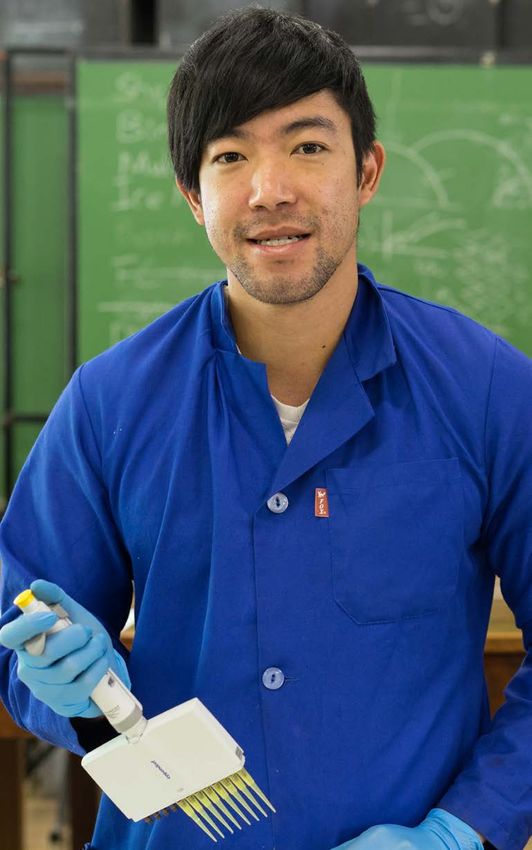
© UNICEF/UN072200/Phelps
HUMAN IMPACT

Digital
accountability
Sierra Leone has been a pioneer in using U-Report, the youth digital social
accountability and empowerment platform, in emergencies. In 2017,
U-Reporters provided some of the earliest available information about
flooding and the subsequent landslides that killed hundreds. U-Reporters
shaped the response in real-time by highlighting peoples’ biggest concerns --
fears over missing family members and how to access safe water – and were
able to help communication with their communities about contaminated
water and the delivery of clean water.

This was also the first time the platform was used to support a digital
cash transfer, with the aim of adding value to its targeting, transparency
and impact (pictured). An independent evaluation by the UK Government
Department for International Development (DFID) found U-Report to be
the most reliable source of information and the most valued service for
the affected communities and the emergency response partners. The DFID
evaluation recommended that U-Report be used in every emergency globally.

Since then, U-Report is increasingly being applied in emergency contexts. In
                                                                                  “I lost a total of seven family
Nigeria, U-Report 24/7 focuses on emergency preparedness, response and            members. So many of us lost our
transition. In Côte d’Ivoire, young people themselves have extended the use
of the platform even further, using U-Report to coordinate volunteer activities   homes, our families. It has caused the
to help communities in need.
                                                                                  disintegration of our community… I
                                                                                  was able to confirm I received my cash
                                                                                  transfer through U-Report.”
                                                                                                   - Daniel, U-Reporter, Sierra Leone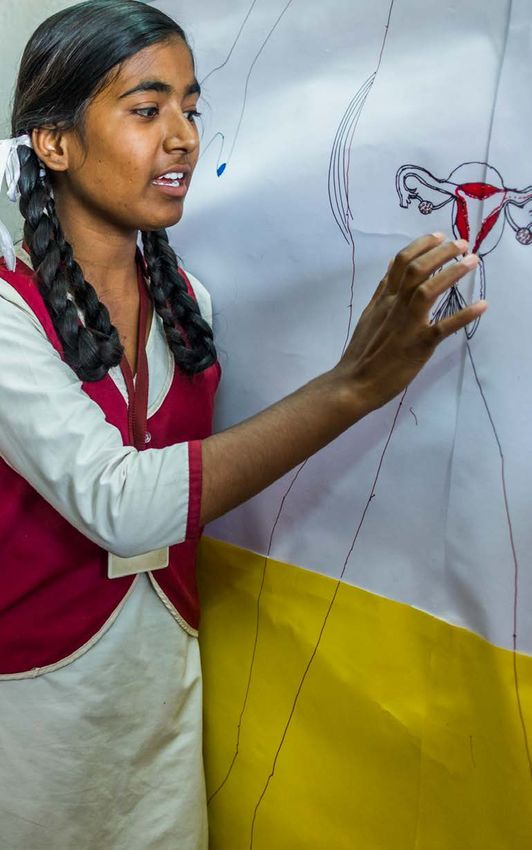
How we did in the words of
independent evaluators

A number of independent                                     About the GIC
evaluations in the past year                                       “The support provided for bringing existing innovations to
have put the Global Innovation                                     scale was particularly valued.”
Centre (GIC) under scrutiny,
examining its work across its                               → “Global Innovation Center continues to play an instrumental role in the achievement of scale
                                                            and outcomes, through its role in supporting country offices and providing leadership for global
lifespan as well as particular                              product management and coordination.”

solutions in its scale portfolio.                           → “The GIC has demonstrated that its role in catalyzing and scaling innovation through hands-on
                                                            support, disseminating learnings and providing global oversight is an effective approach to scale
The year-long, global Evaluation of Innovation in           an innovation across diverse geographies, sectors and use cases.”
UNICEF Work was undertaken by Moore Stephen
and Deloitte, and evaluated the GIC as part of its          → “The GIC’s systematic, cross sectoral and global presence has allowed the GIC to recognize
organizational assessment, synthesis report, and in         broader trends, opportunities and insights, and connect and share them across the organization.
deep-dive case studies into U-Report and RapidPro.          By identifying common needs across countries and pooling funding, the GIC has enabled the
The UK Government Department for International              development of in-demand product features, preparing them for adoption by interested COs…”
Development (DFID) also undertook an independent            → “The GIC was able to provide a more structured approach to curating, documenting, and
evaluation after the flooding disaster in Sierra Leone in   disseminating knowledge and best practices. This includes many of the activities that were
2018, which included a focus on U-Report. Here are a        undertaken to catalyse the sharing of knowledge and expertise, and to disseminate learning and
few of the independent observations.                        experience.”

OFFICE OF INNOVATI O N                                                                                                                                          9
About U-Report                                                                                                                                About RapidPro

                                                                                                                                              → “The GIC’s support of RapidPro was key
→ “The GIC’s leadership and approach towards                                                                                                  to enabling its pathway to scale, including end-
product development and management represents an                                                                                              to-end strategy, scoping, and deployment and
effective approach to create demand-driven solutions                                                                                          implementation support with COs and government
for youth.”                                                                                                                                   partners; a full suite of technical assistance and

                                                                                                                © Christopher Beyrooty/2019
→ “U-Report is a powerful tool that allows UNICEF                                                                                             capacity building (such as designing and delivering
and partners to directly achieve its strategic priorities,                                                                                    training); project management; product management
mission, and mandate, demonstrating measurable                                                                                                and knowledge management, including contributing
outcomes for UNICEF programming and youth                                                                                                     to the online resource and knowledge-base, and
beneficiaries.”                                                                                                                               capturing use cases and learnings.”

→ The GIC has played a key role in scaling up                                                                                                 → "This "glocal," "invest once: multiple scale
U-Report across UNICEF COs and reaching important                                                                                             through impact" approach is a core part of the
                                                             DFID found U-Report to be the most reliable source
milestones. Through the GIC’s support, U-Report                                                                                               GIC value proposition. The GIC provided central
                                                             of information and most valued service for the
has scaled to 50 countries reaching over 5.8 M youth                                                                                          management and coordination to assess opportunity,
                                                             affected communities and emergency response
since its launch, demonstrating the high demand and                                                                                           prioritize resources, develop and manage a roadmap,
                                                             partners in their review in Sierra Leone. The
perceived value by COs. The GIC aims to reach 28 M                                                                                            and ensure consistent quality and processes in a cost
                                                             evaluation recommended the U-Report platform to
youth by 2020.                                                                                                                                effective and efficient manner.”
                                                             be used in every emergency globally.
→ “The GIC has played an important role in                                                                                                    → “The GIC has played an important role in risk-
facilitating the growth of U-Report globally and             → “U-Reports have been proven to be highly useful                                sharing, as well as sharing or absorbing the financial
addressing challenges facing COs throughout the              in engaging directly with populations in an emergency                            burden of the innovation process… The GIC reduced
innovation journey.”                                         aid situation and should be used extensively in any                              the risk and cost of innovating by bearing the risk and
                                                             future emergency scenario to provide information to                              financial burden of developing new product features.
→ The GIC has provided “product management and               affected populations.”                                                           Through continual engagement with country offices,
development; testing and iteratively refining strategic                                                                                       the GIC has been responsive to country office needs
tools for CO’s to adopt and scale the tool; creating         → U-Report had a positive influence on the
                                                                                                                                              and able to move forward several innovative ideas
systems of support by consolidating and sharing              Emergency Cash Transfer programme, with 64% of
                                                                                                                                              quickly.”
learning knowledge and expertise; and enabling               respondents saying U-Report was their most common
South-South cooperation and the sharing of resources         source of information on the process and 92% of the                              → “The GIC has been effective in working across
by identifying and cultivating important private sector      Cash Transfer beneficiaries saying that the information                          different divisions within the organization both at the
and civil society partnerships.”                             received through U-Report was very/extremely useful.                             global and CO level.”

OFFICE OF INNOVATI O N                                                                                                                                                                            10
Where next?
UNICEF’s new innovation strategy focuses on how innovation
delivers impact. Significantly, it pivots to focus on scaling
innovation and the institutional talent and architecture to achieve
this. This realizes the hope behind the Global Innovation Centre
vision — which was that its focus on taking innovation to scale
would build experience and capabilities within UNICEF and its
partners, and produce insights and lessons to inform the next
stage in UNICEF’s innovation journey.
© UNICEF/UN051294/HerwigHUMAN IMPACT
Designed by
youth
We seize every opportunity to learn with and from others, especially young
people. The process of redesigning the global U-Report website leveraged
co-creation and listening sessions with young people in Brasil, Cote d’Ivoire,
France, Tanzania and Ukraine, while also meeting with local partners and
government officials to fully address the diverse audiences invested in
U-Report. We explored the changing technology habits of young people,
driving towards meeting them where they are via mobile apps such as
Facebook and WhatsApp, yet led by content powered by the online hub that
is our global websites.
“U-Report has changed my vision of the world,” said Elise, a U-Reporter
in France. She captured her expectations for the U-Report website saying,
© UNICEF
“Facebook and social media should welcome you in, like our front yard, then
visiting the website is walking into our home.” When we participate in high
school learning programmes, the value is as much about what we can learn
from adolescent’s perspectives, as what the students are aiming to learn from
spending time with us.
“I think that innovation can mean anything from a small change that makes “I think that innovation can
things better to something brand new, never done before,” observed Dagmar
Coppens, a high schooler who spent time with the GIC in Bangkok as part mean anything from a small
of a work experience programme. “I got to see how innovation connects
to all parts and types of work and how it helps children. One innovation change that makes things better
project connects many parts of UNICEF, like partnerships and gender, the
environment and even learning.” Read more about Dagmar’s experience here
to something brand new, never
in ‘What I learned after my work experience at UNICEF’ done before”
Dagmar CoppensThinking together
The expertise and unique experience honed by the GIC has
greatest value when we collaborate with other thought leaders to
share, synthesize and amplify reach of the resulting knowledge
and insight
Here are some of the results of this approach, which Scaling Innovation For Every Child Citizen-Driven Measurement of the Sustainable
represent collaborations with various institutions, Development Goals
individuals, and multiple divisions and offices across A white paper capturing strategies and models learned
all of UNICEF and the UN family. from scaling innovation in 90 countries How can Perceptions Data measurement contribute to
March 2019 the 2030 Agenda for Sustainable Development
Biometrics and Children April 2017
Utilizing U-Report for Social Data to Strengthen
A literature review of current technologies, Communication for Development (C4D) Changing the Narrative: Responsibility for Youth
opportunities, and risks, prepared with the World Bank Engagement is a Two-Way Street
Upcoming publication How social data collection and research opportunities
with young people for C4D can utilize U-Report, with Integrating diverse perspectives from across the
Faces, Fingerprints & Feet Harvard T.H. Chan School of Public Health health, development and innovation space and
Upcoming publication reframing youth engagement as a reciprocal
Guidance on assessing the value of including biometric responsibility
technologies in UNICEF-supported programmes Ethical Considerations When Using Social Media Lancet Child & Adolescent Health Comment, August
July 2019 for Evidence Generation 2019
Unleashing Innovation Benefits, risks, ethical considerations and tools when Initiatives with Impact: Unleashing Bottom-up
undertaking evidence generation using social media Innovation in International Organizations
Case study in book about how to shape and scale a platforms and third-party data collected and analysed
culture of innovation, by Scott Anthony, Paul Cobban, by social media services. Discussion paper and Ten case studies highlighting social innovation driven
Natalie Painchaud and Andy Parker. Research brief. by intrapreneurship within International Organizations
Harvard Business Review Publishing 2018 October 2018
September 2020
OFFICE OF INNOVATI O N 13© UNICEF/UNI112233/Halle'n
Scaling UPSHIFT Good Practice Guide Uses of U-Report as Tool to Improve Quality of Advancing children’s rights and well-being
Humanitarian Action through South-South and Triangular Cooperation
The guide supports the adaptation and scale up of
UPSHIFT in new countries, for transferable skills- Guidance, good practice and case studies on using South-South and Triangular Cooperation’s added
building, empowerment, civic engagement and U-Report to improve Accountability to Affected value in expanding access to development tools,
entrepreneurship with and for young people. Populations. technology and innovations for children
2019 upcoming publication Upcoming publication 2019 2019
Ethical Considerations When Using Geospatial Good and promising practices in South-South After Shock
Technologies for Evidence Generation Cooperation for Children
An essay in this collection by the world’s foremost
Considerations and tools to support the ethical use 10 good and promising practices, including one on futurists reflecting on 50 years of Future Shock and the
of geospatial technologies including satellites and innovation, demonstrate how different South-South importance of innovative solutions in the next 50 years.
drones for development and humanitarian purposes. Cooperation modalities have been used to implement January 2020
Discussion paper and Research brief. programmes for children.
2018 2018
OFFICE OF INNOVATI O N 14“The situation with air pollution
HUMAN IMPACT is scary. When I walk to school,
Partnership the air hurts my throat.”
Enkhjin, 15
unusual
What do tent designers, building engineers, sensor technology experts,
materials designers, architects, local non-profits, and UNICEF have in
common? The will to apply human-centred design together to tackle air
pollution in Mongolia’s cities, where the health and wellbeing of hundreds of
thousands of young people is being compromised. Over the last decade in
the capital, Ulaanbaatar, cases of respiratory infections have nearly tripled
and pneumonia is now the second leading cause of death for children under
five years old. Children living in some districts were found to have 40 per cent
lower lung function than children living in a rural area.
With UNICEF Mongolia, we have focused an innovative array of partners
both international and local, on how we might take a new and different
approach to improving the thermal performance of the traditional, tent-like
ger dwellings, which house more than half the population, to reduce pollution
and promote child and maternal health. The challenge was so compelling that
it has brought together traditional competitors in the outdoor retail sector –
Arc’Teryx, Montcler, and the North Face-- to find common ground as partners.
The results so far include the first thermal performance model of the ger
along with one of the richest, sensor-based data sets; a set of validated
strategies to improve ger insulation, and a number of tested prototype
solutions for the floor, walls, door and roof.
The ambition of this 21st Century Ger initiative is for the widespread adoption
and adaptation of the insights, strategies and physical solutions. GIC scaling
expertise has been engaged from the very start, designing a pathway to help
© UNICEF
the future transition from pilot to scale. Bearing public sector innovation in
mind, government partners have been closely involved, making it possible for
findings to be adopted into policy development and action.Accelerate to scale
How might we develop a model of innovation-
as-a-service? How might we accelerate the
journey from promising pilot to scaled solution?
The solutions that we have supported to scale have dedicated product teams,
ranging from a single person to teams of four or five. The need for a small team to
deliver expert advice to help many solutions accelerate from their pilot phase and
successfully transition to scale and beyond has been clear. UNICEF’s new innovation
strategy emphasizes a pivot to scaling innovation, the year-long evaluation of
innovation identified this need, and aligned with insights from exploring with others,
and our own scaling experience.
Accelerate to Scale (A2S) has become that team, providing technical assistance
– in deployment, business modeling, and evidence – to successfully transition
innovations to sustainable scale and enhance UNICEF’s scaling capability
throughout the organization.
Accelerate to scale in action
© UNICEF/UN0214883/Vishwanathan
A2S supports the co-design of UNICEF’s innovation portfolio approach, one of the
three management responses to the Evaluation of Innovation in UNICEF Work.
A2S supports the development of the Oky App to build foundations for scaling though
diagnostic tools for hosting and deployment, and revenue model analysis. Oky is a
mobile phone application for adolescent girls to manage their menstruation.
A2S supports the development of solutions and a solutions ecosystem to tackle air
pollution, supporting the 21st Century Ger Initiative.
OFFICE OF INNOVATI O N 16© UNICEF
This initiative drives innovation-informed policy Kinds of advisory services Business Modelling
changes and creates a pathway to market and
• Value proposition analysis
adoption for solutions that reduce air pollution. Deployment
• Cost and funding structure analysis
A2S supports Primero CPIMS+ to successfully • Deployment at scale strategies • Financial modeling
transition to Stage 5 Scaling by streamlining its • Deployment at scale artifacts: templates, tools, • Market/ opportunity research
deployment package and capacity building resources, guidelines, roll-out toolkits for country offices and • Comparative benchmark research
and reviewing roll-out guidelines for field partners. field partners
Primero™ is a case management, incident monitoring • Deployment cycles/journeys Evidence
and family tracing and reunification platform scaling in • Streamlined and standardised deployment manuals
23 countries. • Design of robust methods to clearly evidence results
• Packaging of deployment resources and impact.
A2S supports IoGT in transitioning from Stage 5 Scaling Human Centred Design (HCD) • Articulate clear monitoring and evaluation strategies
to Stage 6 Sustainable Scale through deployment for implementation science
diagnostics, deployment journeys for COs and • Support the application of HCD in programming • Identify and exploit opportunities for thought
business model analysis. IoGT provides life-saving • Assist country offices with the development of HCD leadership
information free of charge to 32 million cellphone strategies, TORs for HCD LTA and application of HCD
users in 63 countries. in the field
OFFICE OF INNOVATI O N 17© UNICEF/UN0264440/De Luigi VII Photo
HUMAN IMPACT
A lifeline for
refugees
Fatou Sanneh, 17, is from Gambia and now lives just outside of Palermo,
Italy, where she arrived in 2016 after a long journey and a hard time spent in
a detention centre in Libya. Fatou is one of an estimated 258 million migrants
globally, but like any other teenager, her mobile phone is her lifeline.
To reach young migrants and refugees via their phones, we designed On the
Move, applying what we’ve learned from U-Report. On The Move collects
data allowing organizations to plan actionable responses with the final
aim of improving the reception system. Unaccompanied and Separated
Children join the platform to access information on their rights and tell us
their situation in order to orientate UNICEF and partner programming. The
platform enables them to speak out and be heard on matters of concern to
them as they arrive in reception centres.
Fatou has become very involved in UNICEF projects for migrants and young
people. As a U-Ambassador for U-Report, Fatou leads fellow migrants and
refugees to report on their experiences and what they need to integrate in
Sicily. Fatou, who speaks fluent Italian and English, often plays the role of
translator so that nobody is left out.
Listen to the GlobalGoals podcast, ‘We are True Heroes’ – One Migrant’s Story
UNICEF is scaling On The Move to improve the response to the Venezuela “Don’t look at us as migrants and
crisis. Visit onthemove.ureport.in to find out more.
refugees, look at us as any other
adolescent.”
Fatou, 17, U-Ambassador for U-Report© UNICEF
U-Report
U-Report is a mobile empowerment programme Phones today are a key medium through which young people express their
opinions and perspectives on issues relevant to them as well as gain access to new
that connects young people all over the world information. U-Report is a mobile empowerment programme that connects young
to information that will change their lives and people all over the world to information that changes their lives and influences
decisions. It works by gathering opinions and information from young people on
influence decisions topics they care about. U-Reporters respond to polls, report issues and support child
rights. The data and insights are shared back with communities and connected to
Young people live in a world of mass connectivity. Today’s evolving political, policy makers who make decisions that affect young people.
economic and social challenges make it increasingly difficult to implement
structural reforms. Policymaking must therefore go beyond prescriptive statements In the past year, two independent evaluations have recommended the universal
regarding the future of children and young people by engaging directly with young global adoption of U-Report. A UK Government Department for International
people on the issues and services that directly affect them. Development (DFID) evaluation recommended U-Report be used in every emergency
globally.
OFFICE OF INNOVATI O N 19© UNICEF As part of UNICEF’s Global Evaluation of Innovation, Deloitte undertook a detailed U-Report is active in 65 countries, benefiting more than 8 million adolescents, young case study into U-Report and concluded that “U-Report is a powerful tool that people and community members. U-Report is available via numerous messaging, allows UNICEF and partners to directly achieve its strategic priorities, mission, and social media and SMS channels, and even works on a basic mobile phone. It is free, mandate, demonstrating measurable outcomes for UNICEF programming and youth anonymous and easy to use. beneficiaries.” OFFICE OF INNOVATI O N 20
2011                        2013                       2015                       2016                      2017                          2019

Launch                      Scaling                    1 Million, and then 2      Digital and Global        Irma & Maria                  8 Million
                                                                                  Launch
U-Report launches in        Growth to 4 countries      With 18 countries                                    U-Report supported            8 Million young people
Uganda with polling         in 2013, and 11 in         active, the project        In 2016, U-Report         emergency response            and communities
and real-time mapping       2014 including the         passes 1 million           is now available on       during the devastating        are part of U-Report
of results, and the         first presence outside     U-Reporters                Facebook Messenger        2017 hurricane season,        in 65 countries,
platform scales to          Africa. U-Report           worldwide. In 2016         and Viber. This reduces   providing 25,000              supporting a diverse
30,000 users. Second        supports emergency         the scale doubles to 2     costs while creating      people with trusted           set of programme
project launches in         response in Nigeria,       million in 32 countries.   an opportunity for a      preparedness advice           objectives, emergency • 8M
Zambia.                     Sierra Leone, and                                     worldwide footprint -     and directly answering        response needs, and
                            Liberia.                                              satisfied by U-Report     8,000 unique                  highlighting the views
Technology                                                                        Global.                   questions.                    and experiences of
Development                 RapidPro Launches                                                                                             adolescent and young
                                                                                                            On The Move & 24/7            people around the
Real-time monitoring        A transformative
                                                                                                                                          world.
is now available, and       development for                                                                 Expanding beyond
U-Partners dashboard        U-Report, RapidPro                                                              its original scope,           • 4.3M
launches to facilitate      enables greater                                                                 U-Report launched
1-to-1 messaging.           scalability, better data                                                        a new project to           • 3.6M
                            management, and                                                                 support refugees and
                            development of more                                                             migrants in Italy, and a
                            advanced modalities                                                    2.3M •   dedicated platform for
                            for communication.                                                              emergencies

                                                                                             • 1.6M
Number of                                                                          • 890K
U-Reporters              30K •

OFFICE OF INNOVATI O N                                                                                                                                    21
U-Report Countries
• Argentina • Gambia • Mozambique • Vietnam Brazil
• Bangladesh • Ghana • Myanmar • Western Balkans
(Albania, Montenegro, Youth unemployment is a top
• Belize • Guatemala • Nepal priority for young people in
Kosovo)
• Bolivia • Guinea • New Zealand Brazil, where apprenticeships are
• Zambia
• Bosnia Herzegovina • Haiti • Nigeria a stepping stone to better jobs.
• Zimbabwe
• Botswana • Honduras • Pakistan U-Reporters’ opinions are being
• Brazil • India • Papua New Guinea shared and shaping policymaking
by the National Congress,
• Burkina Faso • Indonesia • Philippines
about putting in place laws that
• Burundi • Iraq • Romania
guarantee the young people’s
• Cameroon • Ireland • Senegal entry into the labour market,
• Central African Republic • Italy • Serbia while ensuring that they continue
• Chad • Jamaica • Sierra Leone to study.
• Chile • Jordan • South Africa
• Congo • Kiribati • Tanzania
• Cote d'Ivoire • Liberia • Thailand
• DR Congo • Malawi • Trinidad and Tobago
• Ecuador • Malaysia • Tunisia
• El Salvador • Mali • Uganda
• Eswatini • Mexico • Ukraine
• France • Moldova • Uzbekistan
OFFICE OF INNOVATI O N 22Mozambique Ukraine
SMS Biz/U-Report functions as Bullying is a problem in schools
a digital counselling service that for 89% of young people; 38%
empowers young people to seek of those being bullied had never
advice on tough topics, such told anyone until they told Thailand
as early pregnancy, violence at U-Report. As a result, education
home, and how to prevent HIV/ programmes have been modified U-Report is helping improve
AIDS. This has become a vital to include enhanced teacher youth-friendly mental health
lifeline to young people across training and anti-bullying services with the Ministry of
the country. The text-based campaigns in schools. Health. U-Report is used to
system allows young people to improve screening and referral
sign up anonymously on their cell services in hospitals and clinics,
phones, and seek answers from and to advocate for changing the
trained peer counsellors. It is law so under-18s can seek mental
100% free and confidential. health professional services
without parental consent.
Bangladesh
U-Report focuses on promoting
girls’ participation by developing
Nigeria gender-sensitive and inclusive
communication and providing a
In north-east Nigeria, U-Report safe, anonymous space for girls
24x7 is humanitarian-focused and to share and discuss culturally
provides life-saving information sensitive issues. U-Report here
on child protection, particularly reaches more than 80,000 young
assisting children affected by people, almost half of them
violence and responding to child girls (44%). While the gender
sexual abuse. It also supports gap in phone ownership is 33%,
efforts to prevent disease an intentional focus on girls’
outbreaks and deliver WASH and participation means the gender
health services in IDP camps and gap is only 6% on U-Report
host communities. Bangladesh.
OFFICE OF INNOVATI O N 23HUMAN IMPACT
Empowerment &
entrepreneurship
Sejnur Veshall is a young member of the Roma community of Prizren, a
Kosovan municipality of about 100,000 people. The Roma community faces
discrimination, and Roma girls and women are marginalized and often lack
education and employment opportunities.
Veshall led a team called Golden Hands, designed to teach youth to create
and sell traditional decorative plates. “We wanted to teach Roma women
©UNICEF/MORINA/2017
an artisanal craft, build their professional skills and help them turn this into
a business,” he said. “What Golden Hands is trying to achieve is to make
Roma women active in their community and change attitudes towards the
Roma people through providing spaces for socialization between people of
different backgrounds and communities.”
Veshall’s team organized workshops that included members of Roma
and majority communities and today Golden Hands is a successful social
enterprise.
“This initiative gave me an epithet of a leader, which frightened
me so much at first – suddenly I was not just Sejnur, a random
young person, but a leader of a young team who organized events
for the community and worked for the betterment of our situation.
With the mentorship that the UPSHIFT team gave me, I came to
embrace the self-confidence that came with the leadership role.”
Sejnur Veshall©UNICEF/MORINA/2017
UPSHIFT
Skills for the 21st century
UPSHIFT is a youth social innovation and social entrepreneurship programme, UPSHIFT positively impacts the wider community through the indirect benefits of
designed to build skills and opportunities for young people who are disadvantaged, the solutions that young people design, as well as changing perceptions of young
due to (for example) poverty, gender, disability or ethnicity. people as positive change agents, rather than a problem to be solved.
The UPSHIFT programme combines social innovation skill-building, mentorship, The main outcome measures relate to:
incubation and seed funding, to equip young people with the skills and resources
• 21st-century skills development
they need to identify problems in their own communities and design solutions
for them. While young people build skills for life, employment and social • Empowerment
entrepreneurship through UPSHIFT, their wider communities benefit from the • Civic engagement & social cohesion
solutions they create, creating sustainable peace, tolerance, and social cohesion. • Entrepreneurship skills
OFFICE OF INNOVATI O N 25UPSHIFT only • Armenia • Italy • Ukraine • India • Moldova Youth Challenge first round • Brazil • Pakistan • Zimbabwe • Hungary • Tanzania • Kenya • Thailand Both • Kosovo • Jordan • Sudan • Lebanon • Nicaragua • Tajikistan • Montenegro • North Macedonia • Vietnam UPSHIFT started in Kosovo 2014 and now has presence UPSHIFT is part of the World Bank’s Solutions for in 15 countries, with a further 20+ countries keen to Youth Employment Impact Portfolio. It is recognised pilot and adapt it into their context. As UPSHIFT scales, by Generation Unlimited as a frontrunner solution work is underway in a number of countries to embed and also formed the basis of the Generation Unlimited the approach within formal and non-formal education Youth Challenge, which has been developed and systems. piloted in 16 countries in 2018/19. OFFICE OF INNOVATI O N 26
Tajikistan
                North Macedonia                               In Tajikistan, UPSHIFT is a
                                                              government accredited non-
                The UPSHIFT pilots in North                   formal education curriculum
                Macedonia are designed in                     and is being delivered through
                partnership with the Ministry of              Adolescent Innovation Labs,
                Education, seeking to provide a               which are rapidly scaling across
                blueprint to integrate UPSHIFT                the country
                into the formal education system

                                                                                                 Vietnam
                                                                                                 UPSHIFT in Vietnam started with
                                                                                                 a focus on youth with disabilities,
                                                                                                 providing empowerment and
                                                                                                 skills for future employment

    Sudan
                                                   Jordan
    UPSHIFT started in 2018 in
    Sudan, with initial pilots                     Building on life skills
    combining life skills, social                  programming, UPSHIFT in Jordan
    innovation, entrepreneurship and               directly reached over 19,000
    cash transfers; focusing on skills             adolescents in 2018, delivering
    and enterprise development for                 skills and empowerment to
    young people on the move (in                   refugee and host communities
    refugee or IDP communities)

OFFICE OF INNOVATI O N                                                                                                            27
2014 2015 2016 2017 2018 2019 (June)
Initial UPSHIFT pilot in Viet Nam starts to pilot Montenegro, Jordan • UPSHIFT selected • Business modelling • 2 new countries
Kosovo UPSHIFT and Lebanon start for GIC Scale up and internal capacity start UPSHIFT
to pilot UPSHIFT portfolio building (India, Serbia) with 5
countries launching
/ youth social • Tajikistan & Moldova • 6 new countries imminently
entrepreneurship start to pilot start to pilot
UPSHIFT UPSHIFT (Italy, North • First global winners
Macedonia, Ukraine, of Generation
• 2 x co-creation Nicaragua, Armenia, Unlimited Youth
workshops (one Sudan) Challenge
external in Vietnam, announced
one internal in • Generation
Kosovo with 20 Unlimited Youth • Capacity building
different countries) Challenge launches workshop for 12
in 16 countries different countries
from Latin and
• Capacity building Central America
workshop for 18
different countries
from Eastern Europe
and Central Asia
OFFICE OF INNOVATI O N 28© UNICEF/UN0300210/
HUMAN IMPACT
Generation
Unlimited
It all started with a simple, powerful
idea: what if we gave young people the
chance to lead?
What if we stopped telling younger generations what’s best for them
and actually stopped to listen? We might discover that young people are
the experts in their own lives and experiences. They know their biggest
challenges. They have the ideas and talent to create solutions - if only we give
them the chance.
The Generation Unlimited Youth Challenge diversified the UPSHIFT model of
youth innovation and skills building. The challenge came to life with bustling
events across 16 countries from Vietnam to Nicaragua. Team Muntjatna
from Sudan, made up of Manara, Alfadel and Yassin, are one of the 5 global “We must invest in youth because we
winning teams.
are the future. It will help young people
Team Muntjatna is creating an online platform to help displaced people in
Sudan sell their handmade products internationally. The idea is to bring a
to avoid crimes and to have more time
new source of income to people who have been forced to flee from their
homes and often end up working in brick kilns which harm their health. As
for education instead of working full
global winners of the Youth Challenge, Muntjatna will receive funding to open time. It will help business to grow and
a training centre for young women and grow their results in their community.
help the community because no one
buys from the camp.”
Manara, 23Digital Health
Strengthening health systems through digitally-
enabled solutions
UNICEF envisions a world where the health and well-being of children is improved
through digitally-enabled health systems in which digital health technologies are
used to enhance the quality and reach of vital health information and services for
the most disadvantaged children and their families.
Over the last five years, GIC’s collaboration with health sector specialists has been
key for UNICEF to design, test, validate and scale a range of Digital Health solutions
across 18 countries. These solutions range from birth notification; and stock
notification and commodity management; to targeted client communication; and
digital health record for tracking of patients’ /clients’ health status and services.
Significant contributions were achieved in the application of human-centred design
to the demand for health services.
More than 85.8 million mothers,
community health workers, vaccinators
© UNICEF/UN034626/LeMoyne
and health facility staff in 18 countries
have benefited from digital health
platforms and the communities they
connect to the health system.
OFFICE OF INNOVATI O N 302008 2013 2014-2015 2016-2017 2018 2019
Health workers test an m-Trac, a mobile 2014 Global launch of 2016 RapidPro digital A series of key Digital Digital Health portfolio
experimental SMS- phone rapid SMS RapidPro, including health deployments Health guidance and is transitioned
based system to track survey system using deployments in Liberia, increase, especially in resources are jointly successfully from
community health RapidPro to conduct Sierra Leone and Western and Central developed by GIC GIC to a new Digital
records in Malawi. quick assessments Guinea as core part of Africa. and PD Health, laying Health team in
of vaccines supply the Ebola response. the framework for UNICEF’s Programme
in Uganda reaches 2017 GIC works mainstreaming. Division, and this is
national scale. 2015 Digital Health closely with PD mainstreamed into
landscape study Health to develop a programming.
completed to identify Digital Health vision
where UNICEF could for UNICEF and to
best contribute in the set foundations for
Digital Health space. mainstreaming Digital
Health into core
UNICEF programming.
Significant achievements in the last 18 months of this work include: • Demand for Health Services, a Human-Centred Field Guide for Investigating and
Responding to Challenges and an accompanying practical Demand for Health
• UNICEF’s Approach to Digital Health a global strategic framework that provides Services Workbook
guidance and a roadmap to any country office wanting to implement elements of
digital health programming into their work The Digital Health portfolio was successfully transitioned out of the GIC and
mainstreamed into UNICEF’s Programme Division (PD) in May 2019. The approach is
• Designing Digital Interventions for Lasting Impact, a Human-Centred Guide to
Digital Health Deployment now a part of health programming. A new Digital Health Team has been established
in PD, along with a global Review Group, and new institutional arrangements and
• Replicable and deployment-ready technical models such as the core RapidPro funding to support the expansion of this work.
Health Modules along with consolidated lessons learned and case studies
OFFICE OF INNOVATI O N 31Countries
• Afghanistan • Liberia • Sierra Leone
• Burkina Faso • Mali • Somalia
• Burundi • Mexico • Tanzania
• Congo • Nepal • Uganda
• Guinea • Nicaragua • Zambia
• India • Papua New Guinea
• Indonesia • Senegal
Nicaragua
ToyContigo uses SMS to generate
attitude and behaviour changes
of pregnant and new mothers to
improve prenatal and neonatal
health outcomes.
© UNICEF/UN068832/Karimi
OFFICE OF INNOVATI O N 32Senegal Afghanistan
mInfoSante is a free, 2-way Interactive voice response and
messaging tool which uses SMS SMS supports frontline workers
technology to link the Ministry to identify unvaccinated children,
of Health and Social Welfare address caregiver concerns, and
to health care providers and address vaccination refusals in
community health workers. a polio campaign to reach 94.7
[Read more] million children.
Uganda
Uganda: mTrac connects more
than 62,000 registered health
workers from 4,431 health Indonesia
facilities and all district health
offices to improve decentralized Real-time performance data
management capacity, identify allowed for real-time progress
disease outbreaks and service and action to exceed targets
delivery bottlenecks as they for the country’s largest
occur, and strengthen citizen immunization campaign to reach
engagement and mutual 70 million children with MMR
accountability for results. vaccine. [Read more]
[Read more]
OFFICE OF INNOVATI O N 33HUMAN IMPACT
Tapping into
real-time
© UNICEF/UN0120586/Mukwazhi/UNICEF
information
Accelerating the delivery of WASH
services in Zimbabwe
Rural communities in Zimbabwe can now more quickly report water,
sanitation and hygiene (WASH) service deficiencies directly to government
and obtain the services they need, thanks to UNICEF’s support to the “The burden of scavenging for
Government of Zimbabwe’s national real-time monitoring systems and scale
initiative. WASH data is a thing of the past as
By using the real-time information platform, RapidPro, rural communities are our stakeholders can now easily go
now empowered to communicate via SMS directly with government extension
workers to report any faults in the local water and sanitation services.
online and access District WASH
In one 53,000-strong community, more than 1,100 community members
data… Most exciting is the ability of
reported on the functioning of WASH services, and 61 water pump the system to be accessed on the go
mechanics, environmental health practitioners, and district school inspectors
have been registered to respond to mechanical issues in the village. through smart phones…. The initiative
This solution also helps to address the long lag time between the has also rejuvenated the interest of
communities in the management of
deterioration in community WASH infrastructure functionality and its
reflection in national databases, as WASH extension workers no longer need
to wait until visiting a site to record changes in the national database.
[Read more]
their WASH services.”
~ Fidres Manombe, CEO, Insiza’s Rural District CouncilInternet of Good
Things
Reaching 32 million people in 66 countries with
free life-saving and life-improving information
Information access is a primary determinant of access to other human rights, as
it enables people to make informed decisions regarding their health, parenting,
finances and education. IoGT is a UNICEF-led initiative helping to bridge the digital
divide and build knowledge societies by creating locally adapted, life-saving and
life-improving content and ensuring this is available for free, including on low-end
devices.
IoGT bridges the digital divide by enabling anyone with a mobile phone to make
informed decisions. Its locally relevant content in 14 languages has proven to
facilitate potential attitude and behaviour change. And because it is affordable and
relevant to users, more than 32 million people have accessed the content.
The GIC together with UNICEF’s Eastern and Southern Africa Regional Office have
supported IoGT since 2015 when there were only 3 sites. Some five years later, IoGT
has been scaled to 66 countries and territories. Over 80 IoGT websites are available
free of data charges thanks to world-wide direct distribution agreements with 91
mobile operators and via Free Basics by Facebook.
The GIC developed a standardized IoGT deployment package for UNICEF Country
Offices and analysis of best-fit business models to support continued growth
towards sustainable scale. In June 2019, IoGT was successfully transitioned out of
© UNICEF
the GIC scale portfolio and mainstreamed into UNICEF programming as a global
Communication for Development tool.
OFFICE OF INNOVATI O N 35Countries Algeria (Ooredoo) Indonesia (Indosat, XL Axiata) Suriname (Digicel) Angola (Unitel & Movicel) Iraq (AsiaCell, Korek & Zain) Tanzania (Tigo, Airtel & Vodacom) Antigua and Barbuda (Digicel Jamaica (Digicel) Thailand (DTAC & TrueMove) Aruba (Digicel) Jordan (Zain & Umniah) Timor-Leste (Telkomcel) Bangladesh (Grameenphone & Robi) Liberia (Orange) Togo (Moov) Barbados (Digicel) Madagascar (Orange & Blueline) Turks and Caicos (Digicel) Belarus (Life) Malawi (Airtel & TNM) Uganda (MYUG free WiFi) Benin (MTN & Etisalat) Maldives (Ooredoo) Vanuatu (Telecom) Bonaire (Digicel) Mauritania (Mauritel) Zambia (Airtel & MTN) British Virgin Islands (Digicel) Mexico (Telcel & Virgin) Cambodia (Smart Axiata) Mongolia (G-Mobile, Mobicom & Skytel) Cameroon (MTN) Montserrat (Digicel) Cape Verde (Unitel & CVMovel) Mozambique (Mcel) Chad (Tigo) Myanmar Congo (Airtel) Niger (Airtel) Côte D’ivoire (MTN) Nigeria (Airtel & 9 Mobile) Colombia (Tigo) Pakistan (Telenor & Zong) Curaçao (Digicel) Panama (Digicel) Democratic Republic of the Congo (Airtel & Vodacom) Peru (Bitel & Entel) Dominica (Digicel) Philippines (Globe & Smart) Gabon (Airtel) Rwanda (Airtel & Tigo) Ghana (Airtel & Tigo) Saint Kitts and Nevis (Digicel) Grenada (Digicel) Saint Vincent & the Grenadines (Digicel) Guatemala (Tigo) Senegal (Tigo) Guinea (Cellcom) Seychelles (Airtel) Guinea-Bissau (MTN) South Africa (Cell C) Honduras (Tigo) Sudan (Zain) OFFICE OF INNOVATI O N 36
Belarus
                                                                                      Adults and young people alike
                                                                                      access information about their
                  Jamaica                                                             rights as children and obligations
                                                                                      and adults and parents.
                  Jamaica’s IoGT channel, All In,
                  educates individuals about sex,
                  sexually transmitted diseases,
                  relationships, gender and love.

     Cape Verde
     Partnerships cover the country’s
     mobile network operators                                                        Myanmar
     providing every person with
                                                    Tanzania                         IoGT provided post-conflict
     access to even the most basic
     mobile phone information from                                                   information on landmines and
                                                    More than 10 million Tanzanian   other Explosive Remnants of War
     health to healthy use of the
                                                    mobile users accessed life-      in Myanmar since 2017, with more
     internet.
                                                    saving information on Ebola on   than 1.7 million users accessing
                                                    IoGT through a public-private    the site since then.
                                                    partnership between the
                                                    Government of Tanzania, Push
                                                    Mobile and UNICEF.

OFFICE OF INNOVATI O N                                                                                                     37
2014 2015 2015-2016 2016-2017 2018 2019
Global distribution Launch of IoGT IoGT expanded from Transition to Scale Scale-Up Mainstreaming
partnership 3 to 20 countries
• Multi-country • IoG is available in • First major direct- • Standardized
with Facebook to with 1 million users
alliance agreement 37 countries and distribution deployment resource
participate in the with Airtel. accessing IoGT in a made available in 14 agreements package is in place
internet.org initiative single month. languages. with mobile for Country Offices.
as a content partner. • First mass network operators
Information • IoGT Health, SAFARICOM, UNITEL • IoGT successfully
campaign in Education and and TNM transitions out
Tanzania on Ebola. Protection Messages of the GIC and is
accessed by 25 • 91 mobile operators mainstreamed
million users. support free access into core C4D
to IoGT via Free programming
Basics by Facebook. approaches.
• IoGT is available in
66 countries and
territories and has
been accessed by 32
million people
OFFICE OF INNOVATI O N 38© UNICEF/UNI82693/Pirozzi
HUMAN IMPACT
Access to
information and
opportunity
South Africa spends a bigger share of its gross domestic product on
education than any other country in Africa. Yet performance levels are
lower than in many other countries in eastern and southern Africa. Many
children experience a broken journey through school, interrupted by irregular
attendance, absent teachers, teenage pregnancy and school-related abuse
and violence.
Nwabisa Mboniswa is a 20-year-old woman living in Khayalitsha, an
impoverished area in Cape Town. Nwabisa was forced to leave high school
at age 18, one year before graduating. Today Nwabisa keeps learning using
Generation 2030 content on IoGT, which includes modules such as Act For
Climate and The future is Yours.
“I wanted to continue my education but I did not how. I have discovered the
[Internet of Good Things] and I was so happy, it is free and in South Africa the
After using the app, I have learnt
data is expensive! how to take action. I want to
become a social worker so that
I can help the youngsters in my
community to have a brighter
future
Nwabisa Mboniswa, IoGT user, South Africa© UNICEF/2018/Simon Nazer Biotechnology breakthroughs for last mile challenges Game changers in diagnostics The idea of focusing cutting edge biotechnology research and development on a That is why the GIC supports Rhodes University’s Biotechnology Research Group new pregnancy test might not seem to make sense if you didn’t understand the to undertake pioneering global work. The group is producing completely new context. Most women outside of the world’s richest countries don’t have access to biological materials for tests, known as aptamers. These new aptamers behave like common diagnostic tests. This is due to cost and because many existing tests are the antibodies used in today’s diagnostic tests, but they are cheaper and last longer. sensitive to changes in temperature and humidity and cannot be stored for extended These are highly accurate, low-cost, and resistant to temperature and humidity, periods of time under basic conditions. making them easy to transport and store. OFFICE OF INNOVATI O N 40
2014                           2015                            2016                        2017                          2018                           2019

The aptamer process            Partnership                     All lines of research are   Working in the                Code to enable use             Research stage of
related to HIV research        announced, expanding            activated.                  MakerLab, two                 of a smartphone as a           aptamers completing
is identified as a high        the focus to a smarter                                      students develop              mobile spectrometer is
potential                      pregnancy test and a            MakerLab, a maker           FieldLab, a rugged,           completed and Open             Multiple academic
                               malaria speciation test         space, is established.      low-cost, solar-              Sourced.                       publications underway
                                                                                           powered lab-in-a-box.
                                                                                                                         FieldLab moves to              Technology
                                                                                           FieldLab wins multiple        commercialization              transfer towards
                                                                                           innovation awards and                                        commercialization to
                                                                                           funding.                                                     be completed

A smarter pregnancy test
A simple pregnancy test today can cost more than an entire day’s income for women          can indicate whether the mother needs better or different care, especially with
in the poorest communities. This biotechnology breakthrough is expected to halve           multiples. What’s more, it could be manufactured in local markets, instead of being
the cost of a pregnancy test in the future. It will also be accessible to more women,      imported as most diagnostic tests are today.
not only because it will be affordable, but because it will not be affected by storage
conditions in remote areas.                                                                Diagnosing malaria and more
                                                                                           The World Health Organization estimates that 445,000 people died of malaria
The test will also be smarter. Not only will it tell you if you are pregnant, but also     in 2016, most of them children in Africa, where malaria causes approximately
estimate how far the pregnancy is, and flag life-threatening conditions that require       20 per cent of all child deaths. Most malaria cases on the continent are caused by
extra medical attention. The test can function as an early warning system for              Plasmodium falciparum (Pf), but globally, Plasmodium vivax (Pv) is the most widely
possible complications, raising a red flag for potential high-risk pregnancies, which      occurring malaria parasite.

OFFICE OF INNOVATI O N                                                                                                                                                     41
© UNICEF
HUMAN IMPACT
What does a
scientist look
like?
What does a scientist look like?
Globally, the proportion of female scientists and women working in
technology is still much lower than that of men. According to UNESCO,
globally, women worldwide pursuing careers in science are only 28 per cent.
Numerous studies have found that women in STEM fields publish less, are
paid less for their research and do not progress as far as men in their careers.
When Professor Janice Limson, Director of the Biotechnology Innovation
Centre at Rhodes University met Tanya Accone, head of UNICEF’s GIC, they
identified multiple opportunities in one. As two South Africa female leaders
in the STEM field, they saw the chance to create innovations in biotechnology
to save lives, as well as opportunities to encourage participation of young
female scientists and promote more diversity in science and technology.
Khanysile Buthelezi is part of the diverse team to work on the initiative.
A female postgraduate student on the biotech team, Buthelezi works on
validating recent test breakthroughs, and agrees that representation is
important. “I’ve faced challenges in the past,” she says. “I noticed when I “The image of a scientist doesn’t
first started in science there weren’t people who looked like me. It was hard
because you can’t relate to a lot of what you see and I think that will be a
just have to be an old white man
challenge for a lot of young women.” in a coat – it can be anyone.”
“It’s important to have more representation in any field because if you see
someone who looks like you it gives you confidence to think ‘I can do that Khanysile Buthelezi
too’,” Buthelezi continues. [Read more]You can also read


