Implementing a lightweight plastic shopping bag ban in Queensland Discussion paper - Department of Environment and Heritage Protection
←
→
Page content transcription
If your browser does not render page correctly, please read the page content below
Department of Environment and Heritage Protection

Implementing a lightweight plastic
shopping bag ban in Queensland
Discussion paper
Message from the Minister
                                 Queensland has one of the most beautiful and iconic natural environments in the world.
                                 Every year tens of thousands of people visit the Great Barrier Reef and every weekend scores of
                                 Queenslanders take to our beaches, waterways and bushland to relax and re-energise.
                                 The Queensland Government is committed to protecting this unique environment and there are
                                 a number of actions that we can take to achieve this.
                                 One of the most obvious actions is addressing the amount of plastic litter that we find in the
                                 environment. Plastic bags are the most conspicuous plastic litter item and they easily find their
                                 way onto our beaches and into our parks.
Plastic bags are a convenient way for us to carry all sorts of things home from the shops and they have become a big part of our
everyday lives. But we tend not to think about the consequences if they end up in the wrong place.
All the scientific evidence is showing us that there is plastic at all levels of the food chain in our oceans. Plastic bags have one
of the biggest impacts on our environment—and particularly on our marine environment and fauna. When plastic bags get into
our waterways and marine environment animals like sea turtles and sea birds can ingest, or become entangled in, them.
Beyond the amenity problem with plastic litter, the cumulative effect of plastic bags in our environment is a very real concern to
the community. The good news is that we know we can do something to reduce the impact of plastic in the environment.
When major supermarkets around Australia took voluntary action several years ago, consumers responded well to the
message that we needed to find alternatives to the single-use plastic bag. In the three years of voluntary action, the number of
lightweight bags in use was reduced by around 44 per cent. Unfortunately once the voluntary actions stopped our use of plastic
bags started to increase.
This is why four Australian states and territories have passed legislation banning the supply of lightweight plastic bags.
The Queensland Government is introducing a similar legislated ban on lightweight plastic bags. What we are doing is
certainly not new. Bans have been in place for many years around the world and individual companies and towns have been
implementing voluntary initiatives for some time.
The time is right for Queensland to take action to reduce the amount of plastic that is getting into our environment. The
scientific evidence about the harmful impacts of plastic in the environment is growing every day. The Queensland Government
sees a plastic bag ban as a critical step in a long term plastic pollution reduction plan.
We also want to take the next step and take a lead role in working with retailers nationally to develop voluntary initiatives to
reduce the use of the thicker department store-style bags.
Complementary to the introduction of a lightweight plastic shopping bag ban, the Queensland Government will introduce a
container deposit scheme. These two initiatives will work together to help reduce the amount of plastic litter in the environment.
I invite you to have your say about the government’s plan to ban lightweight plastic bags by visiting www.getinvolved.qld.gov.au

Dr Steven Miles MP
Minister for Environment and Heritage Protection
Minister for National Parks and the Great Barrier Reef

2|
Table of contents
Message from the Minister................................................................2
Overview ........................................................................................4
        The concern.................................................................................................. 4
        International and national responses............................................................ 4
        Queensland’s response................................................................................. 4
        Your views..................................................................................................... 4

Definitions ........................................................................................5
Types of plastic bags ....................................................................... 6
The nature of the problem.................................................................7
        Plastic in the environment............................................................................. 7
        Impact of plastic bag litter............................................................................. 7
        Amount of plastic bag litter...........................................................................8
        Persistence and ‘biodegradable’ plastics......................................................8
        Plastic bags and consumer behaviour...........................................................8

National and international responses.............................................. 10
        International action..................................................................................... 12
        National action on plastic bags................................................................... 12
        Business and voluntary responses.............................................................. 12
        Jurisdictional action on plastic bags............................................................ 13

Developing a Queensland Government response............................. 14
        Queensland policy context.......................................................................... 14
        Preliminary consultation on options for Queensland................................... 14
        Feedback from consultation to date . .......................................................... 14
        The way forward for Queensland . ............................................................... 14
        Inclusion of biodegradable plastic shopping bags .......................................15
        Voluntary reduction measures......................................................................15
        Research......................................................................................................15

What will a plastic bag ban in Queensland look like?....................... 16
        What would a ban mean for consumers?..................................................... 16
        What would a ban mean for retail businesses? ........................................... 16
        What might the voluntary approach for heavy weight bags look like?........... 16
        Key dates.................................................................................................... 16

Have your say.................................................................................. 17
References......................................................................................18
Appendix 1...................................................................................... 19

                                                                                                                            Discussion paper | 3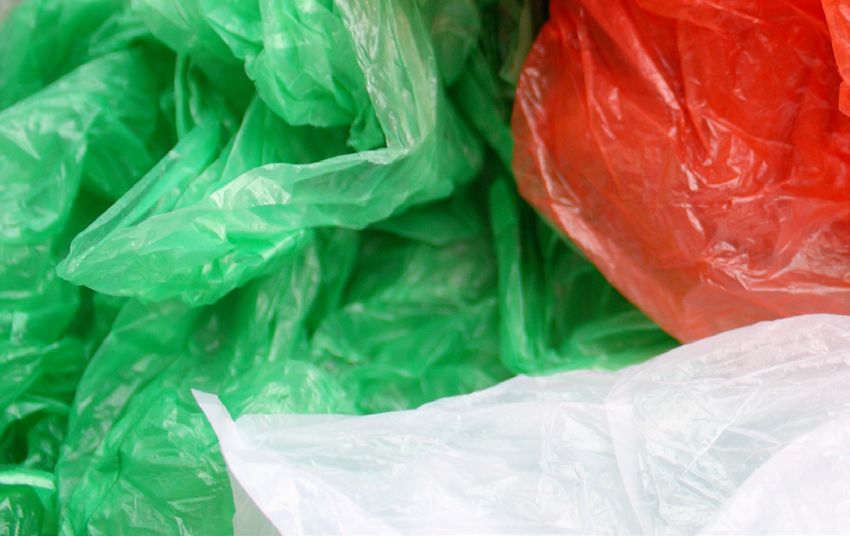
Overview
This discussion paper seeks feedback on the Queensland Government’s decision to introduce a ban on
the supply of lightweight single-use supermarket-style plastic shopping bags to consumers. The paper
also seeks to start a discussion around the options for voluntary action to reduce the use of heavier-
weight ‘department store’ plastic bags.

The concern
»» Approximately 900 million single-use lightweight plastic bags       »» When plastic bags break down in micro-pieces, the chemical
   are used in Queensland each year.                                      additives and plastic compounds are able to more easily enter
»» The majority of these bags end up in landfill; however around 2        food chains creating cumulative risks
   per cent of the bags are littered—which means up to 16 million         for animals and humans.
   bags entering the environment in Queensland each year.              »» Research is also indicating that the Great Barrier Reef is suffering
»» Although they represent only a small proportion of the litter          from the impacts of plastic litter pollution.
   stream, plastic bags are a highly conspicuous source of plastic     »» Apart from discarded fishing gear, plastic bags are the most
   pollution that can be avoided.                                         dangerous item of marine debris in terms of potential for wildlife
»» Recent CSIRO research has shown that plastic pollution in              to become entangled in or ingest the bags.
   coastal waterways is killing and seriously impacting on marine      »» When they are littered, plastic bags also significantly impact on
   wildlife, notably endangered leatherback turtles, vulnerable           the visual amenity of an area.
   green turtles and seabird chicks.                                   »» Restricting the number of plastic bags is part of work in Australia
»» The research notes that some marine turtles will preferentially        and internationally to reduce the total plastic load in the
   eat plastic bags.                                                      environment.

                        International and national responses
                        »» Governments in Australia and around the world have taken action to reduce plastic bag pollution.
                        »» International and national policy measures to date have tended to focus on lightweight ‘supermarket’ shopping
                           bags as these account for the bulk of bag usage and littering.
                        »» Between 2003 and 2005, major Australian supermarkets voluntarily reduced the use of lightweight plastic
                           shopping bags by around 44 per cent. However, by 2007 numbers were rising and approaching four billion.
                        »» Since the end of the national voluntary Code in 2005, there has been no successful co-ordinated national
                           approach to restricting the supply of plastic bags.
                        »» South Australia, the Northern Territory, the Australian Capital Territory and Tasmania have all introduced
                           legislated bans on the supply of lightweight plastic shopping bags, with exemptions for biodegradable bags.

                        Queensland’s response
                        »» The Queensland Government has decided to introduce a legislated ban on the lightweight supermarket-style
                           plastic shopping bags which make up the bulk of plastic bag use.
                        »» At the same time the government wants to lead national action to work with department stores on voluntary
                           initiatives to reduce the use of the heavier plastic bags.

                        Your views
                        »» Your feedback on how the government should go about implementing a plastic bag ban is sought. The
                           government is also interested in your views on voluntary measures that could be introduced to reduce the use of
                           the heavier department store plastic bags.
                        »» Go to page 17 to Have your say.

4|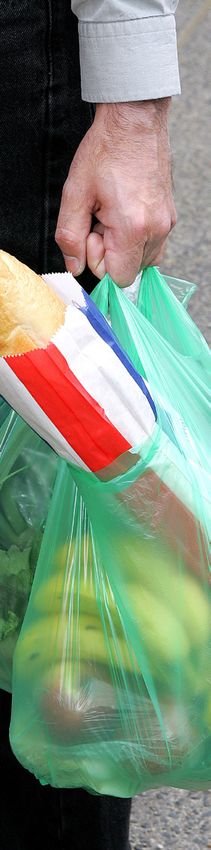
Definitions
Barrier bag                      Smaller bags without handles used to contain unpackaged perishable food, including fruit,
                                 vegetables, meat and fish.
                                 Other types of bags without handles include bin liners, bread bags etc.

Biodegradable bag                A bag made from natural material such as corn-starch (rather than petrochemical HDPE or LDPE
                                 plastic) which breaks down into organic material and water in the environment.
                                 This includes compostable bags.
                                 Biodegradable bags are different from (but are commonly confused with) bags made of degradable
                                 material. (Refer degradable bag).

Department store plastic bag     A heavier-weight plastic bag designed for single-use, commonly provided by department and
                                 specialty stores such as electronic and clothing retailers. These bags are often made of LDPE plastic.

Compostable bag                  A type of biodegradable bag made of material that has been assessed as compostable in a commercial
                                 composting environment in accordance with Australian Standard ‘AS 4736—2006 Biodegradable
                                 plastics—Biodegradable plastics suitable for composting and other microbial treatment’.

Degradable bag, including oxo-   Petrochemical-based plastic bags designed to break up into fragments when triggered by light (oxo-
degradable or hydro-degradable   degradable) or water (hydro-degradable).
                                 These are different from biodegradable or compostable bags made from natural materials.

Green bag                        A type of reusable bag with handles designed for multiple reuses, often made of woven
                                 polypropylene and commonly sold by supermarkets as a single-use plastic shopping bag alternative.

Macroplastics                    Plastic litter consisting of packaging, fishing debris and other items.

Microplastics                    Tiny plastic fragments, less than five millimetres in size, principally resulting from the breakdown of
                                 plastic litter or macroplastics in the environment.

Plastic HDPE bag                 A plastic bag made of high density polyethylene (HDPE), typically a lightweight single-use plastic
                                 shopping bag.
                                 This includes degradable bags.

Plastic LDPE bag                 A plastic bag made of low density polyethylene (LDPE). Often a single-use heavier-weight department
                                 store plastic bag, although some reusable bags are also made from heavy-duty LDPE.

Retailer                         A business or person that sells goods to a consumer as opposed to selling to another business.

Reusable bag                     A bag with handles that is specifically designed for multiple reuses and is made of washable cloth or
                                 fibre, or other long-wearing material including heavy-duty LDPE plastic.
                                 This includes green bags.

Single-use lightweight           A thin (less than 35 microns) plastic bag with handles that is designed for single-use, principally to
supermarket-style plastic        enable the consumer to transport purchases from the point-of-sale to another destination. Usually
shopping bag                     provided by supermarkets, convenience stores, liquor stores or takeaway food and other retail outlets.
                                 Also commonly referred to as supermarket, singlet, checkout or carry bags.
                                 May be a plastic HDPE, biodegradable or degradable bag.

                                                                                                                      Discussion paper | 5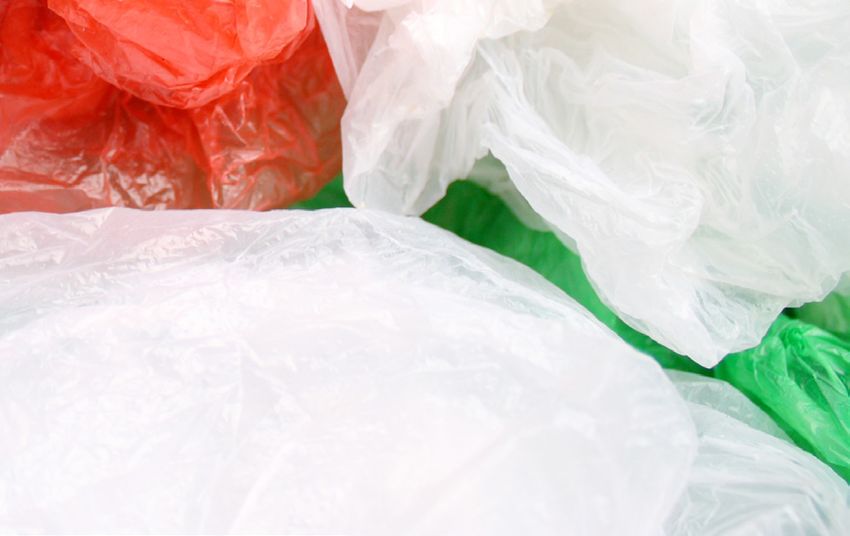
Types of plastic bags
There are many different types of plastic bags that have a wide range of uses. The pictures following illustrate the types of bags that will be
included in a ban and those that fall outside the scope of a ban. Each type of bag is more fully described in the Definitions section of this
discussion paper.
The Queensland Government’s ban relates to single-use lightweight shopping bags, whether made of HDPE plastic, biodegradable, or
degradable material. The ban does not cover bags without handles such as fruit and vegetable bags or barrier bags, or bags that have been
designed to be used multiple times.
The proposed complementary voluntary initiative would focus on reducing the number of single-use heavier-weight plastic department store
bags. These bags, while lower in numbers than lightweight supermarket-style bags, still form part of the litter stream which impacts on the
environment and in most cases can readily be replaced by non-plastic alternative bags.

Lightweight single-use plastic supermarket-style bags included in the ban:

              HDPE plastic bag                       Biodegradable and compostable bag                            Degradable bag

Heavier-weight plastic bags included in proposed voluntary measures:

                                       Heavier-weight (>35 micron) department store bag (LDPE plastic)

Examples of plastic bags without handles—not included in the ban:

6|
The nature of the problem
In Australia and internationally, there is increasing evidence about the cumulative impact that plastic has on soils, waterways, marine
environments and fauna. Impacts include entanglement and ingestion. Over time plastics in the environment break down into smaller and
smaller pieces, so compounding the problem.
Marine debris is recognised under the Environmental Protection and Biodiversity Conservation Act 1999 (the Act) as a ‘key threatening
process’ which is a process that ‘threatens or may threaten the survival, abundance or evolutionary development of a native species or
ecological community’.
The Threat Abatement Plan for the Impacts of Marine Debris on Vertebrate Marine Life was established under the Act in 2009. Following a
review a revised plan is currently under development that is intended to better address the impact of plastics.
Work is currently underway through the national Environment Ministers forum to address single-use plastic packaging and microplastics in
the environment. The immediate focus of the microplastic work is on microbeads present in personal care products such as toothpaste and
face scrubs.
Restricting the number of plastic bags is an important part of the response to reduce the overall amount of plastic entering our environment.
Around 900 million lightweight plastic shopping bags are estimated to be used annually in Queensland.
These plastic bags are designed to be used as single-use carry bags for people to use to take goods from the shops to their homes.
The majority of plastic bags end up in landfill and 1–2% are littered—which means almost 20 million plastic bags could enter the Queensland
environment each year.

Plastic in the environment                                                Impact of plastic bag litter
Numerous studies have shown that plastics, including plastic bags, are    The impact of plastic bag litter on wildlife is well documented. A
persistent in the environment and have significant aesthetic and          South East Queensland study found 54% of pelagic and 25% of
wildlife impacts.                                                         benthic marine turtles had ingested plastic marine debris. Studies
Because they can take hundreds of years to break down, plastics           also indicate that turtles select clear or white soft buoyant plastics,
can have long-term impacts on the environment, including posing           some of which resemble their natural prey such as jellyfish.
a threat to marine life and contributing to flooding due to blocking      A 2016 assessment of the ecological threat posed by the most
drains and waterways.                                                     common types of coastal litter found that, apart from discarded
In addition, many plastics will break down into small fragments,          fishing gear, plastic bags posed the greatest threat to seabirds,
which increase the plastic (and chemical) load in the environment.        turtles and marine mammals through ingestion, entanglement and
                                                                          contamination. The report noted that:
When plastic bags break down into small fragments (known
as microplastics) the chemical additives are able to enter the                ‘Plastic bags generally have handles which pose an
environment. Environmental and health exposure to plastic-related
chemical compounds does not occur in isolation but as a ‘cocktail
                                                                              entanglement risk as well as a three-dimensional
effect’ of mixed plastics in the environment.                                 structure that creates a space in which an animal
Plastics in the ocean also absorb other chemicals and toxins that
                                                                              or parts of an animal can become entwined; indeed
may be present. If these chemicals are ingested by marine animals,            plastic bags have been shown to entangle pinnipeds
humans will also ingest them by eating the contaminated fish.                 [seals] … compared to most other consumer plastic
Aside from chemical toxicity, plastics in the marine environment              items, plastic bags pose one of the greatest impacts
pose significant ingestion and choking hazards to numerous marine             to ocean wildlife and thus, from an environmental
species, including turtles, birds, zooplankton and corals. Plastic does       impact perspective, plastic bags warrant the specific
not break down in the animals’ digestive system so its presence,              attention they have received from governments and
even in small amounts, can cause starvation and a build-up of gases
in the body cavity that contributes to floating disease in turtles.
                                                                              advocates to address their usage.’ (Wilcox et al 2016).
                                                                          Plastics, including plastic bags, have significant littering potential.
                                                                          Plastics are a significant contributor to the litter stream and marine
                                                                          debris and contribute the largest volume of scattered material found
                                                                          in open spaces such as beaches, highways and recreational parks.
                                                                          Flexible plastics such as bags are highly mobile and easily blown
                                                                          into inaccessible places on land and into waterways.
                                                                          As well as the impact on wildlife, plastic bags are unsightly in the
                                                                          environment, creating visual pollution.

                                                                                                                    Main heanding
                                                                                                                           Discussion  here | 7
                                                                                                                                  goespaper
Amount of plastic bag litter Plastic bags and consumer behaviour
By volume, plastic bags contribute around 3.5% of the total of In 2002 a Nolan ITU Report Plastic Shopping Bags: Analysis of Levies
plastic litter. According to Clean Up Australia reports, plastic has and Environmental Impacts stated:
remained the most common category of rubbish picked up on Clean
Up Australia Day over the past 20 years. In 2009, it made up 29% ‘The production of 6.9 billion plastic shopping bags
of all rubbish found. Of the plastic rubbish found, plastic bags consumes approximately 36,850 tonnes of plastic,
accounted for 17.6% with an average of 40 plastic bags found at
each Clean Up site, totalling 500,000 bags every year.
or 2% of total plastics produced in Australia each
year. This is a small percentage of the total amount of
Lightweight single-use plastic bags make up the largest proportion
of littered plastic bags. Although bags are small in volume, they
packaging consumed in Australia each year, which is
rate highly in terms of overall impact. Evidence from littering and estimated to be around 3 million tonnes. It has been
behaviour surveys also suggests that people will litter more in estimated that plastic shopping bags make up 2%
places where litter is already visible, as they view that area as of all items in the litter stream, however, they pose
already degraded. This means that the presence of plastic bag litter real ecological impacts and hazards and as such
can also exacerbate the litter problem.
need to be effectively addressed along with other
Marine debris surveys along the Queensland coast between 2011 components of the litter stream.’
and 2015 resulted in an average of 12 to 24 bags per site, with a
maximum of over 640 items at one location. Six billion of the estimated 6.9 billion bags were lightweight plastic
While lightweight plastic bags make up the largest proportion of shopping bags. The report went on to identify that:
plastic bags in the litter stream this is most likely due to the fact that
lightweight plastic use is far greater than heavier-weight department ‘Plastic bag litter is not actually coming from the
store bag use. supermarket retail sector but predominately from
Not all litter is deliberate. An estimated 47% of wind-borne litter away-from-home destinations and retail such as
escaping from landfills is plastic with the majority of this being convenience stores and takeaway food outlets.
plastic bags. While these bags make up a relatively small number
in plastic bag consumption, they contribute a
Persistence and ‘biodegradable’ plastics relatively high number to the litter issue. These
outlet operators did not by and large participate in
While plastic bags are only part of the total litter stream they have
the potential to significantly add to the plastic load already present. or support the ARA Code.’
This is due to the persistent nature of plastics and the fact they can A 2014 CSIRO report Understanding the effects of marine debris on
fragment, with subsequent potential to significantly harm marine life. wildlife identified general consumer behaviour and illegal dumping
All existing plastic bag legislation in Australia exempts as the main factors contributing to the release of plastic litter into the
biodegradable bags from the ban where they meet the Australian ocean. The report also suggested that local education campaigns may
Standard for compostability. However, while there has been help to reduce the amount of plastic debris found in coastal areas.
considerable research into biodegradable plastics studies have Data on the number of plastic bags used in Australia is difficult to
shown there is no significant difference between standard and obtain. In 2002, an estimated 6.9 billion plastic bags were used in
‘biodegradable’ plastics in the way these plastics behave when Australia each year. Six billion of these were lightweight bags with
ingested. These studies suggest that biodegradable plastics the remainder being heavier-weight, department store bags. Plastic
bags do not break down any faster when ingested than a ‘normal’ bags are Australia’s highest volume of add-on packaging and the
petrochemical plastic bag. use of plastic bags has become habitual.
For food scrap recycling purposes, compostable biodegradable bags The service life of the single-use plastic bag is relatively short.
are becoming increasingly useful. However, as shopping bag, single- The majority of lightweight bags are reused as bin liners or as
use biodegradable bags and oxo-degradable plastic bags are not secondary wrapping/carry bags for other items. Most of these bags
considered to be a suitable substitute for conventional HDPE plastic will ultimately end up in landfill where they present a problem both
bags. Oxo-degradable bags in particular fragment into small plastic as a wasted resource and as a potential litter management issue.
pieces or powder residue, adding more plastic load to the environment. Each year more than three billion bags—or around 20,000 tonnes of
plastic (or equivalent to 12 family cars)—are disposed of in landfills
throughout Australia.
Supplying plastic bags costs Australian retailers millions of dollars
annually. This price is built into product costs, however, plastic bags
are perceived by customers to be ‘free of charge’. This cost applies to
all consumers regardless of whether they bring reusable bags or not.
The cost to government, principally local governments and transport
departments, of cleaning up plastic bags and other types of litter is
borne by the community through rates and taxes, but is not a visible
cost to consumers.
Replacing HDPE plastic bags with biodegradable bags may also send
the wrong message to the consumer. If people believe that the bags
will biodegrade quickly then it may not be seen as that much of a
problem if it is littered.
8|Discussion paper | 9
National and international responses
It is not just Queenslanders who are concerned about plastic pollution and plastic bags in the environment. Governments elsewhere in
Australia and around the world have taken action to reduce plastic bag pollution. This provides an opportunity to learn from the experiences
in other places and select the best features of these policies that are most suited to Queensland.

                         National action

   2002                  »» Major retailers
                            develop voluntary
                                                            National action
                                                            »» Estimated 45%
                                                                                                 National action
                                                                                                 »» National work to look at options
                            Code of Practice for               reduction in                         to restrict plastic bag use
                            the Management of                  lightweight                          commences.
                            Plastic Bags.                      plastic bag
                                                               use under the                     International action
                         International action                  voluntary Code                    »» UK supermarkets adopt voluntary
                         »» Ireland introduces                 of Practice.                         reduction target of 50% by 2009.
                            a charge of 15p,
                            achieving more than
                            90% reduction in six
                            months.
                         »» Bangladesh bans
                            polyethylene bags.
                                                           2005                                 2006

   2003
                                                                           2007
       National action
       »» Australia’s Environment
          Protection and Heritage
          Council (EPHC) committed                  National action                                                             2008
          to phase out lightweight,                 »» EPHC re-confirms plastic
          single-use plastic bags                      bag phase-out commitment.
          by 1 January 2009.
                                                    International action                        National action
       »» Code of Practice
          commences.                                »» California’s 2007 Plastic                »» Following consultation on a
                                                       Bag Recycling Bill                          Decision Regulatory Impact
       International action                            encourages cities to ban                    Statement, no national agreement
       »» South Africa banned ‘thin’                   checkout bags.                              reached on a preferred approach.
          plastic bags
National action
»» Qld Waste Strategy 2014–
2024 identifies single-use
plastic packaging as a
priority.
International action
National action
»» European Union Plastic Bag
»» Tasmania bans single- Directive passed to reduce
use plastic bags. plastic bag use by 50% by National action
2017 and 80% by 2019. »» Queensland and
»» California bans single-use New South Wales
bags and mandates charge co-host a Plastic
2012 for reusable bags. Bag Roundtable in
February.
»» Queensland, New
South Wales, Western
Australia and Victoria
2014 form a working group
National action to develop an east
coast solution for
»» South Australia bans plastic bags.
single-use plastic bags.
2009
2016
2011
National action
»» Northern Territory bans single-use
plastic bags.
International action 2015
»» Wales introduces a charge for all single-
use carry bags, achieving a 70–97%
reduction in nine months.
»» At least 25% of the world’s population National action
now lives in areas with bans or fees on »» Queensland Government
2010 plastic bags. holds plastic bag
stakeholder workshop.
International action
»» England imposes a charge
National action on plastic bags.
»» ACT bans single-use plastic bags.
Discussion paper | 11International action
More than 30 countries and 18 states in the USA have some form of voluntary or regulatory approach to restricting
the use of single-use plastic bags. The most common regulatory approach is a direct point-of-sale charge on plastic
bags. However no one intervention has been used exclusively—voluntary measures, bans and charges have been
introduced at various points with a mix of actions often implemented.
There have been various drivers for this action. In Bangladesh there was a need to prevent plastic litter entering drains
which had been found to contribute to the severity of flooding. In South Africa, plastic bags became known as ‘the
flower of South Africa’ due to their prevalence in the environment and there was a need to reduce the aesthetic impact
of plastic bags.
In many countries, new industries in reusable bags have been established, creating jobs in some of the poorer areas
of the country.
National action on plastic bags
In 2003, Australia’s Environment Protection and Heritage Council committed to phase out lightweight, single-use
plastic bags by 1 January 2009. It reaffirmed this commitment in June 2007.
Consultation on a Regulatory Impact Statement in 2007 indicated that while retailers expressed concern over any
regulation, they did state that any option needed to allow them to continue to provide their customers with a choice.
In light of all the considerations, the most appropriate option at the time was considered to be the introduction of a
mandatory charge on the supply of a plastic bag by a retailer.
Following the release of a Decision Regulatory Impact Statement in 2008, no national agreement was reached as
some states supported a ban while others preferred a Commonwealth charge.
Business and voluntary responses
Voluntary retailer Code of Practice
Between 2003 and 2005, major supermarkets reduced the use of lightweight plastic shopping bags by around
44% under a Voluntary Code of Practice for the Management of Plastic Bags.
During this time, numbers fell from close to six billion in 2002 to around 3.4 billion in 2006.
However, by 2007 numbers had started to increase once again.
In 2008, the Australian National Retailers’ Association conducted a trial levy of 10 cent per plastic bag at Coles and
Woolworths Supermarkets and IGA retailers in Narre Warren, Wangaratta and Warrnambool in Victoria. The trial was
approved by the Australian Competition and Consumer Commission. During the four weeks of the trial there was a
79% reduction in plastic bag use at these supermarkets and the funds raised were channelled into environmental
projects.
Several towns across Australia have introduced voluntary bans on the use of plastic bags. In 2003, Coles Bay in
Tasmania became the first Australian town to introduce a voluntary plastic bag ban. In November 2012, Woorabinda
Shire Council in Central Queensland became the first local government area to introduce a plastic bag ban to reduce
the amount of litter in the community.
A number of retailers, including Bunnings, IKEA, Aldi and Super Retail’s BCF and Supercheap Auto stores, has also
voluntarily stopped using single-use plastic bags. Target phased out ‘free’ plastic bags in 2009, instead charging for
heavier bags based on size. However, they reintroduced the lightweight bag in 2013.
Retailer case study: Bunnings
In September 2003, Bunnings became the first major retailer to impose a charge on plastic bags in their stores. In a joint initiative
with Keep Australia Beautiful (KAB), Bunnings added a 10 cent levy to disposable plastic bags distributed in its stores throughout
the country.
This action achieved an 80% reduction rate by the end of 2003 and raised around $180,000 for KAB.
In 2008 single-use plastic bags were removed altogether from Bunnings stores as plastic bag use had reduced by 99% over the
five years since the introduction of the charge.
12 |Community case study: Coles Bay
In April 2003, Coles Bay retailers decided to reduce the number of plastic bags used in the area and stopped supplying them
to customers.
Instead they introduced ecologically sensitive alternatives including Australian-made recycled paper bags and reusable calico
shopping bags.
In the first 12 months, they stopped the use of 350,000 plastic checkout bags.
The Tasmanian Government moved to ban plastic bags 10 years later and promotes Coles Bay as Australia’s first ‘plastic bag-free town’.
Jurisdictional action on plastic bags
As a result of failure to reach national agreement on action, and following a steady increase in the use of plastic bags
after the end of the voluntary Code of Practice, two states and two territories have banned the supply of lightweight
single-use plastic shopping bags.
In 2008, the South Australian Government became the first Australian state to introduce legislation that banned the
supply of single-use lightweight plastic shopping bags. Legislation banning the use of plastic shopping bags has now
been enacted in the Northern Territory, Australian Capital Territory and Tasmania (Table 1).
At a late 2015 Meeting of Environment Ministers, Ministers agreed that Queensland and New South Wales would co-
convene a ministerial roundtable to inform a harmonised approach to reducing the environmental impact of plastic
shopping bags. At the plastic bag roundtable held in February 2016, stakeholders examined the scientific evidence,
the experiences of jurisdictions that have banned plastic bags, and next steps for government. Queensland, New South
Wales, Victoria and Western Australian formed a working group to guide discussion on the development of a joint
solution to reducing the impact of plastic bags on the environment.
Table 1: Summary of regulated plastic shopping bag bans in Australia
Applies to
Date of ban Coverage Exemptions Results
all retailers
South Australia 2009Developing a Queensland Government response
Queensland policy context Feedback from consultation to date
In 2015, the Queensland Government committed to investigate Feedback from discussions at these forums indicated that
possible restrictions on single-use plastic bags. Single-use plastic consistency with other states is extremely important to industry.
bags represent the most obvious packaging item that needs to be Additional feedback indicated that:
addressed and the item where the options to restrict use are known
and demonstrable. »» The retail sector prefers voluntary measures, but agrees that
any government regulation should be consistent with other
Beverage containers are another highly littered item, and are jurisdictions and apply to all retailers who distribute single-use,
increasingly made of plastic. The Queensland Government is lightweight plastic shopping bags.
introducing a container deposit scheme, in order to prevent littering
and improve recycling rates. »» If regulation is introduced, the retail sector favours a ban on the
supply of lightweight plastic bags, rather than a charge.
These two initiatives are part of an overall plastic pollution reduction
plan for Queensland aimed at reducing the amount of plastic »» There is no support for exempting degradable or biodegradable
entering the environment. bags from a ban, due to concerns over their environmental impact.
It is acknowledged that plastic is a bigger issue than bags and »» There is consensus in the environment sector for measures to
bottles and that the end-of-life management of other problematic also restrict the use of other plastic bags, principally heavier-
plastic items will need to be investigated in the future; however weight department store bags.
action on these two issues provides a starting place for future work. »» All stakeholders agreed on the need for an effective
Marine debris is recognised as a threat to the Great Barrier Reef in communication and education program to support any
the Reef 2050 Long-Term Sustainability Plan. The Great Barrier Reef regulation, and a lengthy transition period to allow the retail
Marine Park Authority five-yearly Outlook Report identifies land- sector and consumers to make preparations.
based run-off, including marine debris, as one of the four highest
risks to the Reef’s ecosystem. Based on these findings, the Reef 2050 The way forward for Queensland
Long-Term Sustainability Plan notes that marine debris continues to
affect the Reef, including species of conservation concern. Based on the preliminary consultation and the feedback received to
date, a lightweight plastic bag charge is not being considered. The
Queensland Government’s preferred approach is to:
Preliminary consultation on options »» ban the supply of single-use, lightweight plastic bags (with no
for Queensland exemption for biodegradable bags), and
The Queensland Government convened a plastic bag stakeholder »» work with retailers on voluntary actions to reduce the use of
workshop in October 2015 in Brisbane. The workshop involved heavier-weight department store bags.
representatives from the business and retail, resource recovery,
The main advantages of a ban are ease of administration, simplicity
environmental and local government sectors.
for retailers and customers, certainty of environmental outcome
Workshop participants were asked to provide feedback on three (including over time), and consistency with other jurisdictions that
options to improve the management of plastic bags: have implemented bag bans.
»» voluntary reduction measures International and national experience indicates that in banning
»» banning plastic bags plastic bags consideration needs to be given to:
»» requiring a charge for plastic bags. »» Clear description of the banned bags including specification of
thickness and material.
The three broad options considered by workshop participants, and
»» Exemptions from the ban, such as for biodegradable bags.
the advantages and disadvantages of each, are summarised at
Appendix 1. More information on the consultation to date can be »» Suitable alternatives to replace the banned bags.
found on the Department of Environment and Heritage Protection »» Type of retailers the ban applies to (e.g. large supermarkets
website at www.ehp.qld.gov.au/waste. only, or all retail outlets including convenience stores, take-away
Following the workshop, bilateral meetings were held with key restaurants, and non-grocery retailers such as chemists).
stakeholders and written submissions on the options for managing »» The use of complementary reduction measures for thicker bags
plastic bags were received from workshop participants. or bags made out of other materials.
In February 2016, Queensland also co-hosted a Plastic Bag »» Careful planning, and extensive education and awareness
Roundtable with the New South Wales Government. campaigns to assist retailers and consumers prepare for the
transition to the ban regime.
14 |Inclusion of biodegradable plastic shopping bags
Those Australian states and territories that have legislated to restrict plastic bags have all allowed ‘biodegradable’ bags to
continue to be used if they comply with the Australian Standard for biodegradable plastics suitable for composting.
Increasingly, plastic packaging products carry ‘environmentally-friendly’ labelling such as degradable, biodegradable,
oxo-degradable or compostable. These competing claims are confusing for retailers and consumers alike. Retailers
in jurisdictions with plastic bag bans have experienced difficulty sourcing genuine Australian Standard compliant
biodegradable products.
In addition, these products do not avoid some of the most concerning environmental impacts. As litter, prior to totally
breaking down, they are just as much an eyesore as the non-degradable bags.
Petrochemical-based oxo or hydro-degradable bags that break down into tiny pieces of microplastic can actually
spread contamination in the environment. This is now a growing concern in overseas countries which have seen a
proliferation of degradable bags.
Even fully biodegradable or compostable plastics can still have the same physical impacts as conventional plastics
when they are eaten by animals. Plastics that comply with the Australian Standard are only biodegradable under
commercial composting conditions that do not exist generally in the environment. Research shows these plastics do
not break down quickly when ingested by animals.
Biodegradable plastics can also contaminate loads of plastic collected for recycling. They are not easy to identify or
separate out and can end up causing faults in products manufactured with recycled plastics.
Some of the most recent international laws on controlling plastic bags have not exempted biodegradable bags. The
UK Department for Environment, Food and Rural Affairs 2015 Review of standards for biodegradable plastic carrier
bags found that:
‘It is not currently possible to assemble a standard specification that would ensure that plastic
bags claiming to be biodegradable would biodegrade in all environments, in particular in the
open environment.’
The review found that further detailed research would be needed before any types of carrier bag could be excluded
from the charge on the grounds of biodegradability.
Voluntary reduction measures
There are a number of voluntary mechanisms that can help reduce the use of plastic bags. A number of towns and
communities, and individual retailers, have taken their own voluntary action to ban plastic bags.
Industry’s preference is for voluntary measures. However, while some large businesses have already adopted
voluntary measures, others have not.
Rising numbers of shopping bags following the end in 2005 of the Code of Practice showed the effect of this voluntary
initiative wearing off and indicates that ongoing action is needed to have a lasting impact. As not all retailers took
part in the voluntary Code, some retailers were affected more than others.
Previous voluntary programs have focused on lightweight bags. However, given that heavier-weight plastic
‘department store’ bags also pose a littering risk and environmental hazard, there is an opportunity to begin a new
voluntary process partnering with department stores and other retailers to phase out heavier-weight single-use
plastic bags.
These heavier-weight plastic bags are lower in numbers than lightweight supermarket bags and so present in the
litter stream at a lower rate. There may be a risk that acting to restrict lightweight plastic supermarket bags would
lead to an increase in the number of heavier-weight bags in the environment. As plastic department store bags can
readily be replaced by non-plastic alternatives, voluntary measures are likely to be an effective way to reduce their
usage. There are already numerous examples of shops moving from heavier-weight LDPE plastic department store
bags to cardboard or reusable alternatives.
Research
The Queensland Government intends to facilitate further research to collect detailed baseline data on plastic bag
use, plastic bag litter and environmental impacts. This will help to understand the effects of the interventions—both
regulatory and voluntary—that are put in place, and assist with the evaluation of the interventions.
Discussion paper | 15What will a plastic bag ban in
Queensland look like?
The intention is to introduce a regulation that prohibits any retailer
in Queensland from providing consumers with single-use lightweight
What would a ban mean
plastic shopping bags. for retail businesses?
To ensure consistency for the retail sector, Queensland is seeking Retailers would be prohibited by legislation from supplying single-
to adopt a similar law to South Australia, the Australian Capital use lightweight shopping bags made from any kind of plastic, and
Territory, Tasmania and the Northern Territory. fines would apply.
However, unlike other jurisdictions, biodegradable bags would be Any ban would only come into effect after extensive consultation
included in the ban in Queensland, as these bags still pose a risk to and preparation, with sufficient lead time to allow retailers and
aquatic fauna such as turtles. consumers to adjust to the change.
The ban will apply to the following bags:
»» lightweight bags, less than 35 microns thick, with handles What might the voluntary approach for
(‘singlet’ bags)—consistent with other states
»» biodegradable singlet-style bags.
heavy weight bags look like?
The Queensland Government will lead a national initiative on
The regulation will apply to all retailers—including supermarkets, behalf of all jurisdictions to work with department store retailers on
convenience stores, take-away food stores, pharmacies, liquor voluntary measures to reduce the use of the heavier weight bags.
stores, and other retail businesses.
At the same time the Queensland Government will work with
The ban will not apply to the following bags: department stores to implement voluntary actions to reduce the
»» barrier bags (typically fruit and vegetable and deli-style bags supply of the heavier single-use plastic bags.
without handles) This may take the form of a Code of Practice similar to that
»» reusable bags implemented by major supermarkets in 2003; however, the
government is interested in hearing about the available actions that
»» heavier-weight department store bags
have been and could be developed. A number of stores have already
»» bags that are integral to a product’s packaging (such as a voluntarily stopped using plastic bags and the government wants to
bread bag) build on these approaches.
»» kitchen tidy bags.
Surveys in other jurisdictions show that householders and retailers Key dates
quickly adjust to a plastic bag ban and that there is a high degree of
support for the environmental objective of reducing plastic litter. 25 November 2016 Release of discussion paper
‘Implementing a lightweight plastic
shopping bag ban in Queensland’
What would a ban mean for consumers?
27 February 2017 Close of public consultation on
Consumers would no longer be able to obtain lightweight plastic discussion paper
shopping bags at supermarkets, convenience stores, service
Early 2017 Development of legislation for
stations and other retail outlets.
lightweight plastic bag ban
Reusable bags would still be available, or consumers could bring
Commence consultation with retail
their own bags.
sector on voluntary measures to
A ban will mean that the so-called ‘free’ plastic bag is no longer reduce the numbers of heavier-weight
available to the consumer. The single-use plastic bag is currently not department store plastic bags
free to the consumer. The cost of a bag is incorporated into the price Mid-2017 Introduction of legislation to ban
of goods purchased. While a ban may mean that the consumer will lightweight shopping bags
have to purchase reusable bags, this should usually be a one-off cost.
Development of measures for heavier-
weight plastic bags
Mid-2017 to end-2017 Preparation for ban on lightweight bags,
including education and training for
retailers and consumers
1 July 2018 The ban on lightweight shopping bags
comes into force
16 |Have your say
Your feedback on how the government should go about implementing a plastic bag ban is sought. The government is also interested in your
views on voluntary measures that could be introduced to reduce the use of the heavier department store plastic bags.
A carefully-planned transition period is required before the ban comes into force on 1 July 2018. This transitional period will mean that:
»» retailers will have time to adjust their operations and practices and source alternatives to plastic bags
»» consumers will have time to purchase reusable bags and know when they will no longer be provided with a single-use plastic bag
»» new business opportunities can be identified and developed
»» a public awareness program on the new arrangements can be delivered well before the changes take effect.
Consultation questions
What implementation issues should the government take into consideration when introducing the ban?
1. Do you think that 1 July 2018 allows enough time for consumers and retailers to transition to plastic bag alternatives? Why/why not?
2. Do you agree that biodegradable bags should be included in a ban? Why/why not?
3. Do you support the Queensland Government working with other states and territories to encourage industry to reduce the number of
heavier-weight plastic department store bags? Why/why not?
4. What else can be done by the Queensland Government to address plastic pollution?
Make a submission
Submissions are encouraged from interested parties including members of the public, environment and community groups, local councils,
and retailers and retail associations.
You can provide your feedback on the consultation questions by:
»» completing the online survey at www.getinvolved.qld.gov.au, or
»» emailing a written submission to waste.paper@ehp.qld.gov.au
»» posting a written submission to:
Department of Environment and Heritage Protection
ATTN: Waste Policy and Legislation
GPO Box 2454
Brisbane QLD 4001
Submissions close 5pm 27 February 2017.
Important note about confidentiality
In the interests of transparency and to promote informed discussion, the Department of Environment and Heritage Protection would prefer submissions to be
made publicly available where this is reasonable to do so. However, if a person making a submission does not want that submission to be published publicly,
that person should indicate that the document (or any part of the document) is confidential. Confidentiality should be clearly noted on the front page of the
submission and the relevant sections of the submission should be marked as confidential, so that the remainder of the document (where applicable) can be
published. In this circumstance, it would be appreciated if two versions of the submissions could be provided (i.e. the complete version and a version excising
the confidential information).
While the Department of Environment and Heritage Protection will endeavour to identify and protect material claimed as confidential as well as exempt
information and information disclosure which would be contrary to the public interest (within the meaning of the Right to Information Act 2009), it cannot
guarantee that submissions will not be made publicly available. There is a possibility that the Department of Environment and Heritage Protection may be
required to reveal confidential information as a result of a right to information request.
Main heanding
Discussion here | 17
goespaperReferences
ACT Government – Environment and Sustainable Development Keep Australia Beautiful. n.d. Keep Australia Beautiful National Litter
Directorate, April 2014. Review of the Plastic Shopping Bags Ban Index 2013/2014
ACT Government – Environment and Sustainable Development Mudgal, Shailendra, Lorcan Lyons, Mary Ann Kong, Nejma Andre,
Directorate, September 2012. Survey of Consumer Attitudes to the Veronique Monier, and Eric Labouze. 2011. Assessment of impacts
ACCT Plastic Bag Ban of options to reduce the use of single-use plastic carrier bags.
Report to the European Commission - DG Environment, ENV.G.4/
Britta Denise Hardesty, Chris Wilcox, TJ Lawson, Matt Landsell and FRA/2008/0112, Paris: Bio Intelligence Service
Tonya van der Velde, CSIRO August 2014. Understanding the effects
of marine debris on wildlife Nolan ITU. 2002. Plastic Shopping Bags: Analysis of Levies and
Environmental Impacts
Aspin, M. 2012. Review of the Plastic Shopping Bags (Waste
Avoidance) Act 2008. Adelaide: Report to the Government of South Ocean Concervancy and McKinsey Center for Business and
Australia Environment. 2015. Stemming the Tide: Land-based strategies for
a plastic - free ocean. Washington, D.C.: Ocean Concervancy and
Cole, Matthew, Pennie Lindeque, Claudia Halsband, and Tamara McKinsey
S Galloway. 2011. Microplastics as contaminants in the marine
environment: A review. Marine Pollution Bulletin 62: 2588–2597 O’Farrel, K. 2009. LCA of Shopping Bag Alternatives to Zero Waste
South Australia. Adelaide: Report to Zero Waste South Australia by
Department for Environment, Food & Rural Affairs. 2015. Policy paper Hyder
Carrier bags: why there’s a charge.
Schuyler, Q. A., C. Wilcox, K.A. Townsend, K. R. Wedemeyer-
Department for Environment, Food & Rural Affairs. December 2015. Strombel, G. Balazs, E. van Sebille, and B.D. Hardesty. 2016. Risk
Review of standards for biodegradable plastic carry bags analysis reveals global hotspots for marine debris ingestion by sea
turtles. Global Change Biology, 22: 567–576
Edwards, Chris and Jonna Meyhoff Fry. 2011. Life cycle assessment
of supermarket carrier bags: a review of the bags available in 2006, Townsend, Kathy, Chris Wilcox, Denise Hardesty, Mark Hamann, and
Report SC030148. Bristol: Environment Agency Qamar Schuyler. 2015. Letter: Response to the Background Paper:
Managing Plastic Bags in Queensland
The Senate - Environment and Communications References
Committee, April 2016. Toxic tide: the threat of marine plastic UNEP. 2015. Biodegradable Plastics and Marine Litter.
pollution in Australia Misconceptions, concerns and impacts on marine environments.
Nairobi: United Nations Environment Programme (UNEP)
Environment Protection and Heritage Council. 2008. Decision
Regulatory Impact Statement - Investigation of options to reduce the Wilcox, Chris, Nicholas J Mallos, George H Leonard, Alba Rodriguez
impacts of plastic bags and Britta Denise Hardesty. 2016. Using expert elicitation to estimate
the impacts of plastic pollution on marine wildlife. Marine Policy 65
Gunn, John. 2015. Submission to the Senate Inquiry into the threat of
(2016): 107-114
marine plastic pollution in Australia and Australian waters. Canberra:
Parliament of Australia World Economic Forum. 2016. The New Plastics Economy - Rethinking
the future of plastics. Industry Agenda, Geneva: WEF
Jeftic, Ljubomir, Seba Sheavly, and Ellik Adler. 2009. Marine Litter: A
Global Challenge. DEP/1176/NA, Nairobi: UNEP, Marine and Coastal
Ecosystems Branch
18 |Appendix 1
The following table summarises the main options for managing plastic bags and their relative advantages and disadvantages.
Table 2: Summary of advantages and disadvantages
Desired outcome Voluntary reduction Banning single-use Requiring a charge for Inclusion of single-use
measures plastic bags plastic bags biodegradable bags in
a ban or charge
Litter prevention
Resource conservation
Convenience
(for consumers)
Consistency across states
Equity (for business)
Enforceability
(for government)
Discussion paper | 19#31104
You can also read


