IMPROVING WORKPLACE HEALTH & WELLBEING THROUGH EFFECTIVE DESIGN - WORKING SMARTER, NOT HARDER
←
→
Page content transcription
If your browser does not render page correctly, please read the page content below
WORKING SMARTER, NOT HARDER:
IMPROVING WORKPLACE
HEALTH & WELLBEING
THROUGH EFFECTIVE DESIGN

                               www.tarkospec.com.au
introduction

Millennials are driving the contemporary workforce. In offices
around the world, their numbers are growing; according to a
2016 report by global workforce experts ManPowerGroup,
millennials – people born between the early 1980s and 2000s –
will comprise the majority of the global workforce by 2020.i This
massive demographic shift is shaping workplace culture and
office design, particularly with regard to health and wellbeing. It
is no surprise that a strong focus on healthy lifestyle choices is
creeping into the workplace: the Huffington Post has reported
that as a group, millennials are more concerned with health and
wellbeing than any preceding generations.ii

In light of this, employers are increasingly aware that they
must strive to meet enhanced health outcomes in order to
attract and retain the best and brightest talent, and are looking
toward designers to deliver appropriate solutions. In turn, the
architecture and design industry is carefully evaluating all aspects
of workplace design – including furniture, fitout, and material
choices – to maximise their positive impact on worker health and
wellbeing. The impetus behind this is at least in part economic,
with studies having demonstrated a strong link between elevated
employee wellbeing, reduced absenteeism and enhanced
productivity, and the attraction and retention of top talent.

In this whitepaper, we focus specifically on how flooring can
shape healthful experiences within the workplace, and take a
closer look at how carpet can improve wellbeing and indoor
environmental quality.

Factors Driving Wellbeing
INDOOR AIR QUALITY

According to the Australian Bureau of Statistics, the average           and Asthma Society (DAAB), this unique characteristic
employee spends a total of 41.3 hours per week at work.iii              allows rooms with wall-to-wall carpet to contain half as
Given how much time employees are spending in the office, it is         much dust as rooms with hard flooring. The study’s findings
important that workspaces are designed to support good physical         also demonstrate that high denier, low pile carpet is
health. One way of achieving this is by ensuring high indoor air        particularly adept at allergen retention and markedly
quality through the creation of indoor spaces that are free of dust     areduces allergy and asthma risks.vi
and particulate matter, which can irritate asthma and allergies.

Research conducted by the National Asthma Council Australia             HOW PARTICULATE MATTER ENTERS YOUR BODY
demonstrates that approximately 45% of all Australians suffer
from allergies: of this, about 80% are allergic to dust mites.iv                                     1. Particulate matter enters our
Combined with the fact that 1 in 9 (around 2.5 million)                                              respiratory (lung) system through
Australians have asthma,v careful management of dust and                                             the nose and throat.
other allergens within indoor environments is absolutely critical.
                                                                                                     2. The larger particulate matter
The presence and size of particulate matter (PM) or fine dust is a                                   is eliminated through coughing,
determining factor in air quality and is directly linked to potential                                sneezing and swallowing.
health problems. Once inhaled, these particles can contribute
to the spread of microbial contaminants, such as mould, pollen                                       3. Smaller particulate matter can
and allergens. In addition, they can affect the heart and lungs                                      penetrate deep into the lungs.
and cause serious physiological problems (e.g. changes in lung                                       It can travel all the way to the
function or inflammation markers).                                                                   alveoli, causing lung and heart
                                                                                                     problems and delivering harmful
In this regard, carpet excels amongst all floor coverings. Carpet                                    chemicals to the blood system.
pile traps dust and other harmful particulates, effectively removing
them from the air and storing them until they can be vacuumed or
cleaned away. According to a major study by the German Allergy
BRIGHTER SPACES                                                      ACOUSTIC MANAGEMENT

The connection between proper lighting and wellbeing and             The importance of controlling office noise levels cannot be
productivity is well known. Research conducted by the                overstated. Unlike in other environments, noise levels in
Canadian Centre for Occupational Health and Safety (CCOHS)           offices cannot be controlled through simple elimination of
has demonstrated that insufficient lighting can adversely affect     sources of noise, which in many cases are critical to operations.
the quality of work, particularly where precision is required.       For example, staff conversations, phone calls, and the use of
Poor lighting can also negatively impact productivity levels,vii     devices are essential to the majority of workplaces.
and has been linked to eyestrain and headaches.
                                                                     In spite of this, studies have repeatedly identified excessive noise
Recognising the health and safety risks posed by inadequate          as the “most disturbing factor” causing disruption and irritation
or improper lighting levels, the European Committee for              amongst workers,x and elevated noise levels can have direct,
Standardisation (CEN) sets out the following minimum light           negative effects on worker productivity and job satisfaction.
levels for common office tasks:                                      Carpet can reduce noise levels in three critical ways. Firstly, it can
• 300 lux for administrative tasks                                   absorb excess sound and prevent it from spreading far beyond
• 500 lux for writing and computer tasks                             its original source.
• 500 lux for conference and meeting rooms
                                                                     Secondly, it is an effective means of adjusting reverberation times
Ideally, workspaces should have bright, even lighting that           and reducing impact sound between floors. Thirdly, carpet can
maximises natural light sources. The ‘blue light’ emitted by         significantly reduce impact sound. Beyond this, carpet is more cost
many artificial lights – including energy efficient light bulbs –    effective than acoustic wall or ceiling panels, and is more durable
has been linked to disrupted circadian rhythms and elevated          and long lasting than dividers or freestanding acoustic screens.
rates of cancer, diabetes, heart disease, and obesity.viii           Always use cushion backed carpet tiles with appropriate pile
                                                                     structure for improving acoustic performance of the area.
These negative effects may be minimised through careful
specification of carpet. Carpet with high Light Reflectance          THERMAL COMFORT
Values (LRV) can boost overall interior light levels, providing
even, glare-free lighting that can have positive effects on worker   As awareness of the importance of sustainable design and
productivity and wellbeing. By reflecting diffuse, gentle light      environmentally friendly building solutions continues to grow,
upwards, high LRV carpet can combat the eyestrain and                designers and specifiers are investigating ways to reduce
visibility issues caused by harsh overhead lighting.                 reliance on air conditioning. A number of design-based
                                                                     solutions can facilitate this, including the specification of
Adequate light levels can also enhance the safety of a               carpet flooring. Thanks to its dense, soft composition, carpet
workplace by enhancing visibility and reducing the risk of           provides low heat conduction and exceptional thermal insulation.
slips, trips, and falls, which are a major source of injury in
Australian workplaces; according to SafeWork, 56% of                 Fibres in the surface of the carpet pile trap air and heat, allowing
workplace slips, trips, and falls were caused by environmental       carpet to offer thermal insulation values up to 10 times of hard
factors.ix High LRV carpet can also reduce energy consumption        floor coverings.xi Insulation properties increase proportionate
by allowing the specification of lower intensity lighting.           to carpet thickness and density.
DESSO™ AirMaster ®                                                                     Research conducted
Designed and engineered to enhance occupant health and
wellbeing, AirMaster ® carpet captures and retains fine dust and
                                                                                          by the National
other particulate matter. The dense carpet acts as a filter, trapping
dust and other contaminants within its pile until it is vacuumed,
                                                                                         Asthma Council
thereby preventing the exacerbation of dust-related allergies
and asthma.To achieve this, AirMaster ® utilises a unique two-part
                                                                                      Australia demonstrates
profile. Fine yarned DESSO AirFilters trap very fine dust and are
combined with the thicker yarns of DESSO DustCollectors,                                that approximately
which capture coarser particles.

As a consequence, AirMaster ® is 8 times more effective
                                                                                                45%of all
than smooth flooring solutions and 4 times more effective                                Australians suffer
than standard carpet when it comes to capturing and retaining
fine dust. Independent testing has verified the effectiveness                             from allergies.
of AirMaster ® in cleaning the air, and the carpet has subsequently
become the first product in the world to achieve GUI Gold
Label Certification.

                                                                        DESSO Light Reflection Master®

                                                                        Ideal for crafting bright, open workspaces and reducing reliance
                                                                        on artificial light, DESSO Light Reflection Master ® is a valuable
                                                                        addition to any office environment. Independent testing has
                                                                        demonstrated the carpet’s ability to enhance brightness on interior
                                                                        walls and ceilings by up to 14%, leading to reductions of as much
                                                                        as 10% in artificial lighting. In turn, this reduces lighting costs,
                                                                        energy consumption, and overall CO2 emissions.

                                                                        The DESSO Light Reflection Master ® collection can boost LEED
                                                                        credits in the Energy and Atmospheric category and can help
                                                                        in meeting WELL standards. The LRVs of all DESSO products
                                                                        are readily available, and many DESSO products have LRVs of
                                                                        greater than 25 to ensure the perfect appearance.
DESSO SoundMaster®
                                                          Designed to manage noise levels in spaces where
                                                          acoustic control is vital, DESSO SoundMaster ® is a truly
                                                          remarkable multilayered carpet tile system. Suitable for use
                                                          in offices, schools, hospitals, and other commercial spaces,
                                                          SoundMaster ® combines a unique 80% recycled, 100%
                                                          polyester backing with a plush yarn and high pile to deliver
                                                          exceptional sound control.

                                                          The high performance carpet can improve impact sound
                                                          insulation by up to 10 dB. When compared with ceramic tiles
                                                          and linoleum, SoundMaster ® flooring has been demonstrated
                                                          to adjust reverberation times and deplete background noise
                                                          levels, and may absorb sound and improve acoustic conditions
                                                          by as much as +0.15 w .

                                                          In addition, SoundMaster ® is designed with cost efficiency
                                                          in mind, with the carpet tiles allowing easy repairs or
                                                          replacement by simply isolating and replacing the
                                                          damaged section with minimal fuss.

     The DESSO SoundMaster offers an impact sound insulation value
    (∆L w ) up to +10 dB above the standard value and an improvement
     in sound absorption performance up to +0.15 ( w), in comparison
                        to standard carpet designs.

Tarkett

For over 130 years, Tarkett has led the global flooring
industry. Around the world, the Tarkett brand is
synonymous with quality and is favoured by architects
and building professionals for its unique combination
of performance, style, and environmental credentials.

All Tarkett operations are driven by a commitment to
functionality and sustainability, which is matched by
a genuine desire to enhance quality of life through
the provision of high quality, healthy flooring.

Tarkett’s, catalogue of innovative carpet and soft
flooring solutions is expansive and diverse, and
includes the DESSO range of high quality carpet tiles.

               All DESSO carpet
               tiles in Australia have
               GreenTag GreenRate
               Level A certification
REFERENCES

i	ManPowerGroup. Millennial Careers: 2020 Vision. Milwaukee, Wisconsin: ManPowerGroup, 2016.
   https://www.manpowergroup.com/wps/wcm/connect/660ebf65-144c-489e-975c-9f838294c237/MillennialsPaper1
   _2020Vision_lo.pdf?MOD=AJPERES
ii	Gustafson, Timi, and R.D. “Younger Consumers Are More Health Conscious Than Previous Generations.” HuffPost Canada. January 23, 2017.
    Accessed April 30, 2018. https://www.huffingtonpost.ca/timi-gustafson/younger-consumers-are-mor_b_14290774.html.
iii	“Feature Article - Trends In Hours Worked (Feature Article).” Australian Bureau of Statistics, Australian Government. Accessed April 30, 2018.
     http://www.abs.gov.au/ausstats/abs@.nsf/featurearticlesbytitle/67AB5016DD143FA6CA2578680014A9D9?OpenDocument.
iv	Fleming, Katherine. “Skin Feeders: Living with Dust Mites.” Australian Geographic. June 8, 2010. Accessed April 30, 2018.
    http://www.australiangeographic.com.au/topics/science-environment/2010/06/skin-feeders-living-with-dust-mites.
v	Asthma Australia. “Statistics.” Statistics - An Asthma Australia Site. Accessed April 30, 2018.
   https://www.asthmaaustralia.org.au/national/about-asthma/what-is-asthma/statistics.
vi	Lewis, R. D., P. N. Breysse, P. S. Lees, M. Diener-West, R. G. Hamilton, and P. Eggleston. “Factors affecting the retention of dust
    mite allergen on carpet.” American Industrial Hygiene Association journal. September 1998. Accessed March 14, 2018.
    https://www.ncbi.nlm.nih.gov/pubmed/9778820.
vii	Canadian Centre for Occupational Health. “Lighting Ergonomics - Survey and Solutions : OSH Answers.” Canadian Centre for Occupational Health
     and Safety. April 12, 2018. Accessed April 30, 2018. https://www.ccohs.ca/oshanswers/ergonomics/lighting_survey.html.
viii	Harvard Health Publishing. “Blue Light Has a Dark Side.” Harvard Health. May 2016. Accessed April 30, 2018.
      https://www.health.harvard.edu/staying-healthy/blue-light-has-a-dark-side.
ix Safe Work Australia. “Slips, Trips and Falls.” Safe Work Australia. Accessed April 30, 2018.
   https://www.safeworkaustralia.gov.au/slips-trips-falls.
x	Hongisto, Valtteri. 2008. “Effects Of Sound Masking On Workers - A Case Study In A Landscaped Office”. In 9th International Congress On Noise
   As A Public Health Problem. Turku: Finnish Institute of Occupational Health. http://www.icben.org/2008/pdfs/hongisto.pdf.
xi Carpet Institute of Australia Limited. Fact Sheet: Thermal Insulation Performance of Carpet. Melbourne, Vic: Carpet Institute of Australia.
   https://www.carpetinstitute.com.au/wp-content/uploads/2014/02/factsh_thermal.pdf

                                                                                                                               www.tarkospec.com.au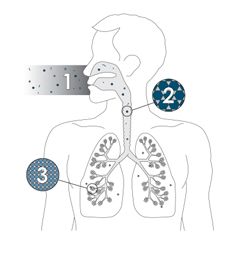
You can also read


