In a time of distancing, we came closer together - AnnualReports.com
←
→
Page content transcription
If your browser does not render page correctly, please read the page content below

2020 Annual Report

In a time of distancing, we came closer together.
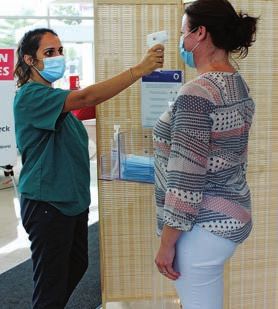
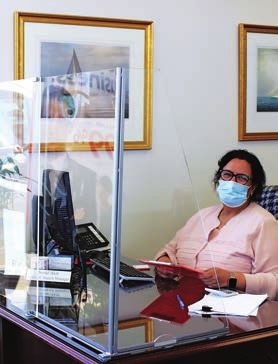
2020   challenged our employees to move forward with resilience,
       adaptability and grace. In many ways, it was our fnest hour.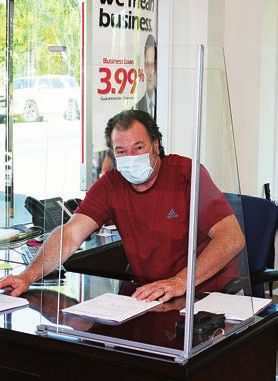
Chairman’s message                                                           •

Dear Fellow Shareholders:

2020 was a year of record fnancial results in virtually every category. It was the eleventh consecutive year of record
setting for assets, earnings, and loans; and record size for capital and deposits. It was also the year of the most
deadly infectious pandemic since the Black Plague, and some of the most challenging management decisions ever
made in the Bank’s history. So many factors contributed to our 2020 success, but none more important than
the unwavering courage and commitment of our 468 colleagues. Of every rank and function, they resourcefully
improvised their way through death, disease, closures, and quarantine to serve their customers and grow the Bank.

Net earnings were $42.2 million, an increase of 6.3% over 2019 earnings, and our capital grew to $370 million.
We ended 2020 at a milestone: $6.4 billion in assets, a signifcant growth of 15.8%, despite closed lobbies and
regularly dozens of absences from Covid infections and exposures. Century earned $7.58 per share in 2020, as
compared to $7.13 in 2019. Our stock closed the year at $77.36, a decline of 13% over the prior year, in line with
many of our peers. Our stock traded down along with the widespread market fears of pandemic related loan losses,
despite the fact that ours were minimal. Our stock, symbol CNBKA, has a three-year cumulative total return of 1%
and a fve-year cumulative total return of 84%.

All three principal business units again performed extremely well in 2020.

Through up and down business and interest rate cycles of varying duration and severity, we have produced
consistent and superior results. We continued that trend in 2020.

Closer Together As Our Family’s Bank. And Yours.

Our slogan translates into our devotion to treat our clients, as we, as a family and a business, would wish to be
treated. It means fair products, rates, and fees, quick credit decisions and closings, transparency of process, and
respect for the continuity and loyalty of our clients. Yet we also appreciate the frailty of life and business conditions
and try to support our clients through those inevitable undulations.

Our theme this year is “in a time of distancing, we came closer together.” It represents the extraordinary challenge
this year to combine the power of the digital platform to maintain customer relationship management when face to
face offcer contact was either prohibited or unsafe.

The following examines the multiple elements of Century’s results that have contributed to our success in 2020:
Closer Together Through Centralized Hands-on Management

                                                                   Banking is a business of temperament and daily routine. We are steadfast in
                                                                   our centralized control and transparency of management. Our Loan Committee
                                                                   is a weekly institution that approves in open forum every loan over $500,000
                                                                   and decades of routine transitioned well to Zoom. It is a level of centralized
                                                                   credit approval that ensures we know the risks we take, makes sure we reward
                                                                   customer loyalty, and connects us to our clients and communities, even in a
                                                                   pandemic.

                                                                   Our Management Committee is composed of the 10 most senior executives at
                                                                   Century. This bi-weekly, half-day meeting follows an agenda that covers offcer
                                                                   hirings, contracts, leases, audits, marketing campaigns, signifcant complaints,
                                                                   policy changes, donations, and pipelines of all new business. MANCOM, as
                                                                   we call it, sets our cultural tone of centralized, yet participatory, management

                                 A
                                                                   engagement.

                                                                   As the pandemic erupted in the winter, we, like so many, had to pivot our
                                                                   management practices and commenced a daily “Covid Call” (Zoom) of all
                                                                   department heads to assess steps to deal with infected, exposed, and
                     S&P/CFRA                                      virus safety measures. Over 200 Covid Calls later, we are an even closer
                   Quality Ranking                                 management team. All have a stake in the decisions made. It has worked.

               Quality ranking                                                   •

                                                                   Closer Together and Achieving Record Net Earnings

                                                                   Net earnings increased by 6.3% to $42.2 million, for the year ended
                                                                   December 31, 2020, as compared to earnings of $39.7 million for 2019.
                                                                   Century’s return on average equity (ROE) was 11.96% for 2020, as compared
                                                                   to 2019’s 12.44%. The ROE is the primary building block of our fnancial goal
                                                                   setting. It refects our priority to grow shareholder value as the key driver of our
                                                                   strategic plan, our annual budget, and our tactical decisions. We can’t control the
                                                                   equity markets, but we can have a high level of confdence that if we continue to
                                                                   produce a double-digit ROE, the share price will follow over time. We continue to
                                                                   carry an S&P/CFRA “A” quality rating, one of 50 banks in America, and one of only
                                                                   four in Massachusetts, to receive this rating or higher. It is a strong external
                                                                   contributing confdence factor.

             Total Assets (in thousands)                  Earnings per Class A share, diluted                       Net Income (in thousands)
                                       $6,358,834
                    $5,492,424
$5,163,935

                                                                                                                                           $42,209
                                                                                                                           $39,699
                                                                                                          $36,213
                                                                         $7.13

                                                                                       $7.58
                                                           $6.50

             ‘18                 ‘19                ‘20            ‘18           ‘19           ‘20                  ‘18              ‘19             ‘20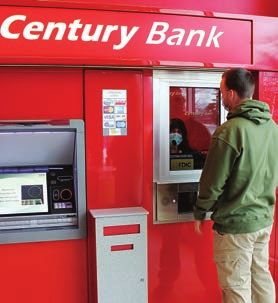
Pictured from top left: Jason J. Melius, SVP; Richard L. Billig, SVP; William P. Hornby, CFO & Treasurer;
 Kathleen McGillicuddy, SVP; James M. Flynn, Jr., SVP; Barry R. Sloane, Chairman, President & CEO;
 Linda Sloane Kay, Vice Chair; Peter R. Castiglia, SVP; David B. Woonton, EVP; and Paul A. Evangelista, EVP

In addition, our effciency ratio of overhead to revenue, the key comparative metric of non-interest expense
decreased from 58% in 2019 to 55% in 2020. We watch our expenses carefully and are very proud of the
effciency ratio remaining below 60%, an industry threshold target, for the past four years.

Closer Together and Achieving Signifcant Asset Growth

Total assets grew 15.8% to a record of $6.4 billion on December 31, 2020, up from $5.5 billion on December
31, 2019, an increase of $866 million. We experienced signifcant growth in 2020 for all three of our business
lines: consumer, business, and institutional services. We are proud to have dozens of depositors who each
routinely keep tens of millions at Century with confdence in our high performing earnings and asset growth.

Closer Together and Achieving Record Capital

Total equity was $370.4 million on December 31, 2020, an increase of $37.8 million or 11.4% from $332.6
million on December 31, 2019. Book value per share increased to $66.53 at December 31, 2020, up by
$6.80 from $59.73 at December 31, 2019. Century is “well capitalized” by all regulatory standards, and we
have passed all “Basel III” requirements through organic capital generation from earnings.

Closer Together and Achieving Record Loan Portfolio Size

Our unique loan portfolio strategy continues to work exceptionally well. Total loans grew by $570 million or
23% to a record $3.0 billion on December 31, 2020, our largest loan portfolio ever, and a loan to deposit
ratio of 54.9%. Non-performing assets continued to be minimal for a portfolio of our size, increasing from
$2.0 million at December 31, 2019 to $4.0 million at December 31, 2020.

The education and healthcare sectors continue to anchor our loan portfolio. We are one of the leading experts
in tax-exempt fnancing in New England. We believe the magnetism and quality of Massachusetts’ colleges
and universities validate our decade-long strategic conclusion that education and healthcare were, and are,
the future of our region.

Barry R. Sloane and Linda Sloane Kay celebrate the dedication of the Marshall M. Sloane
 School of Business and Communication at Regis College.

The leaders of the dozens of colleges and universities we bank accomplished an outstanding strategic pivot
throughout the pandemic from in-person to asynchronous learning. As the pandemic closed down our world,
fears were widespread that there would be no academic activities or matriculation in 2020. College and University
administrations met the challenge and not only survived, but thrived without severe fnancial setbacks.

Our middle market lending and deposit business was particularly challenged when the pandemic eliminated face
to face prospect calling. Despite the pandemic limitations we combined our expert market knowledge with
extraordinary product expertise to service some of the longest duration satisfed relationships in commercial
banking. Our team still managed to grow the middle market portfolio by a net $57 million. Even in a pandemic,
the middle business market is an exceptionally competitive environment.

Loan quality is religion to us; our portfolio continues to be well diversifed with emphasis on quality underwriting
and effective ongoing monitoring of the loan portfolio. 2020 was a productive year in which we closed $123 million
in residential frst mortgages, and $104 million in home equity loans. We extended 211 energy conservation loans
through the Mass Save loan program, which helped us do our part for sustainability while originating many new
long-term relationships. Over 1,300 PPP loans for pandemic relief were originated for over $230 million bringing
much needed support to so many of our local businesses.

Branch expansion                                                    •

Closer Together and Achieving Record Results in Our Branch System

We are proud that eight of our twenty-seven branches hold over $100 million in deposits, and total branch deposits
exceed $2.9 billion an increase of an astounding 25%. This record growth was achieved with closed lobbies due to
the pandemic and reconfgured waiting lines and walk up windows. The devotion and resourcefulness of our branch
managers and staff has been called “their fnest hours.”

In mid-2021 we will open branch #28, our frst branch in southern New Hampshire in Salem. The New Hampshire
market is an important geographic expansion for our consumer and business segments as it is only 10 miles north
of our Andover branch. The low tax climate of New Hampshire makes it particularly attractive to closely held
businesses, and we expect to see signifcant relationship originations in Salem.

In addition, we now operate 48 ATMs, processing over 410,000 annual transactions. Next step will be the rollout of
touchless ATM service in late 2021.

Closer Together and Accomplishing Record Growth in Institutional Services

The Institutional Services Group, which includes our government, cash management,
and not-for-proft banking teams, had another record year of client growth. Our share
of government banking deposits is now the highest among Massachusetts chartered
banks, and we have expanded our client set signifcantly in Rhode Island and New
Hampshire.

In the early weeks of the pandemic an infected employee necessitated the closure for
two weeks of our processing center day shift. Some 67 people were out and we relied
on the 16 staff of the night shift to carryon until normalcy could return. It was a
Herculean task that was accomplished without complaint or a single resignation. We
pulled through that crisis and managed to process over 39 million check and payment
items in 2020, with exceptional quality control and customer service.

The lockbox function remains a time-tested magnet for corporate and institutional
clients. We are proud of the most stable operational management team in the
industry, combining an advanced technology platform with live and experienced
customer service personnel.

For the eighth consecutive year, the audit of our automated lockbox services and its
operative effectiveness of controls was without any fnding of defciency.

We believe our service, execution, and reputation is without peer in New England. We
will do our utmost to ensure it is always true.

Yet the success of Institutional Services was bittersweet with the sudden death in
November of Executive Vice President Brian J. Feeney. He was a 32 year veteran who
advanced from a teller to lead a business responsible for over 1/3 of our assets. Brian
was a fne and decent husband, father, grandfather, colleague and expert banker. He
is missed every day.

 Pictured from top left: Nancy R. Miller, SVP; Timothy L. Glynn, SVP; Bradford J. Buckley, SVP;
 Thomas E. Piemontese, SVP; Nancy M. Marsh, SVP; Yasmin D. Whipple, SVP; and Gerald S. Algere, EVP
Closer Together to Our Customers and Achieving Record Size in Wealth Management

2020 was the sixth full year of our wealth management function. Our assets under management grew 16.6% to
$182.9 million. Our wealth management is a great opportunity to serve the generational transition challenges of
our private clients while providing our not-for-proft clients an institutional quality offering that embraces industry
best practices. We specialize in growth and income “defensive” portfolios that we believe are particularly relevant
when equity markets continue to behave with meaningful volatility.

Closer Together to Our Customers – Our Brand

It’s easy to be different in this realm as there is no other family managed and controlled bank of our size in New
England. Our advertising, in print and radio, promotes our consistent message of local family control, permanence,
approachability, and personal service. This level of personal touch is unique from all others in the industry.

Closer Together to Our Customers Through Information Systems

We pride ourselves on a technology platform of redundancy and expertise that our clients can rely on for fnancial
inquiry, transactions, and high-quality service. We are proud to say that Information Systems again met all of its
operational and service goals in 2020. We are constantly monitoring our systems’ reliability, and when customers
encounter problems at night or on weekends, we’re always reachable.

In 2020 we upgraded our mobile and online banking portal to the latest “Banno” system. The rollout was not without
frustrations, but an “all hands on deck” effort smoothed its implementation. By all accounts, the Banno platform is
widely appreciated across our client sets.

Closer Together to Our Communities

We are focused on our social responsibility to our home communities. Led by our imperative for locally controlled
enterprise, community development, and relationship-based philanthropy, we live our social mission every day. We support
the Community Reinvestment Act function with staff, resources, and management commitment. We are proud that our

 Pictured from top left: Deborah R. Rush, SVP; Gracine Copithorne, SVP; William J. Gambon, Jr., SVP;
 Anthony C. LaRosa, SVP; Cary E. Lynch, SVP; Anna M. Gorska, SVP; Susan B. Delahunt, SVP;
 and Kenneth A. Samuelian, SVP
most recent completed Massachusetts CRA audit was ranked a
“High Satisfactory.” We diligently try to better serve our minority and lower
income communities with home ownership opportunities and access to
traditional banking services. We are very proud to be one of the leaders
raising the endowment to construct the new, and almost complete,
Bloomberg Medford Public Library.

Century’s commitment to sustainability continues to grow. In addition to
electric messenger vehicles and highly effcient HVAC systems throughout our
network, we ensured that all sustainable measures were implemented in the
construction of our newly completed operations building on Hicks Avenue in
Medford. These included repurposing an existing foundation system and
constructing the new building shell in full compliance with the enhanced
2015 IECC energy code.

Perhaps the most important reduction to our carbon footprint will be our
conversion of the twice daily messenger runs to all branches to an
electronic cloud transmission of debit and credit items known as
“branch capture.” We expect to implement this new system by year
end, eliminating hundreds of thousands of messenger miles and resulting
in the shrinking of our vehicle feet.

                                                                   In remembrance                                      •

Closer Together to Our People and Our Values

We can’t say enough about the commitment and capability of our
468 Century Associates. The pandemic tested and reinforced the
resilience and ingenuity of our colleagues. Their performance was
“their fnest hour.” Linda and I are sure Dad would have been so proud.
So many have worked together for decades, a rare condition in our
industry that makes our teamwork superb. Most of the achievements
described above are the result of the talent and resourcefulness of the
Century team.

We gratefully acknowledge the retirement after 41 years of service our
director and chairman of the Audit Committee, Joseph J. Senna.
                                                                                        Brian J. Feeney
A devoted and conscientious member of our governance, Joe’s                         Executive Vice President
wisdom and leadership will be missed. We wish him a safe, healthy,                       1960 - 2020
and fulflling retirement.                                                       Brian with his wife, Sandi L. Feeney
                                                                                    and best friend Shenanigan.

Finally, we see so clearly our family and corporate values of industry,
fairness, and community. Thank you to our shareholders, our clients, our
associates, and our communities, for their confdence and relationships.
We will endeavor to make 2021 another year of superior results through
our diligence and resourcefulness.

Sincerely and Stay Safe,

Barry R. Sloane
Chairman, President & CEO
Community investment •
This year, we continued to invest in our communities, supporting 185 organizations.
2020 Women on Boards Cambridge School Volunteers Friends of the Medford Family Network
AbilityPLUS Adaptive Sports Cambridge YWCA Friends of the North End Branch Library
Action for Boston Community Development, Inc. Camp Harbor View Foundation, Inc. Friends of Winchester Hockey
Alzheimer’s Association Cardinal Cushing Centers, Inc. Gann Academy
American Cancer Society Caritas Communities Greater Beverly Chamber of Commerce
American Foundation for Suicide Prevention Catholic Charities of Boston Greater Lawrence Family Health Center
American Jewish Committee Chabad Center of Brookline Greater Lynn Senior Services
Andover Rotary Club Chabad Lubavitch, Inc. Heart Warrior Foundation
Andover Veteran Services Charles River Rotary Club Hebrew College
Animal Rescue League of Boston City of Beverly Hebrew SeniorLife
Archdiocese of Boston City of Quincy Hillel House at Boston University
Associazione Gizio Colleen E. Ritzer Memorial Scholarship Fund Hospice & Palliative Care Federation of
Back Bay Association Combined Jewish Philanthropies Massachusetts
Hospitality Homes, Inc.
Initiative for a Competitive Inner City
Italian Home for Children
James L. McKeown Boys & Girls Club of Woburn
Jewish Big Brother Big Sisters
Jewish Community Centers of Greater Boston
Jewish Family & Children’s Service
Jewish Family Service
John T. Forcellese Memorial Fund
Joseph N. Hermann Youth Center
Kollel of Greater Boston
Ladies Ancient Order of Hibernians
Lazarus House Ministries
Lynn Police Association
Malden Rotary Club
Century Bank Associates help the Wellesley Police Department support The Julie Fund.
Marblehead Boosters
Mary Ann Brett Food Pantry-Dorchester Catholic
Bais Yaakov of Boston High School for Girls Community Dispute Settlement Center
Beacon Academy Congregation B’nai B’rith
Beth Israel Deaconess Medical Center-Milton Congregation Kehillath Israel
Bishop Fenwick High School Cristo Rey Boston High School
Boston Architectural College Crohn’s & Colitis Foundation
Boston Ballet Dana-Farber Cancer Institute
Boston Children’s Hospital Dimock Community Health Centers
Boston College High School DONNE 2000
Boston Jewish Film Festival Ellie Fund
Boston Landmarks Orchestra Epstein Hillel School
Boys & Girls Club of Boston ESSCO-MGH Breast Cancer Research Fund
Boys & Girls Club of Greater Salem, NH Essex Chamber Music Players
Bread of Life Essex North Shore Agricultural Technical
Bridgewater-Raynham Regional School District Foundation, Inc.
Brookline Chamber of Commerce Facing Cancer Together
Brookline Rotary Club Father Bill’s & MainSpring
Brookview House Fisher Center for Alzheimer’s Research Fund
Burlington Community Scholarship Foundation/ Fontbonne Academy
Dollars for Scholars Foundation for Racial, Ethnic & Religious
Cambridge College Harmony
Franciscan Children’s Century Bank helps the Bread of Life in its
mission of providing food to those in need.
Friends of Christopher Columbus ParkMassachusetts Bar Association Newton-Wellesley Hospital Charitable Temple Emanu-El
Massachusetts COVID-19 Relief Fund Foundation Temple Emanuel of Newton
Massachusetts Down Syndrome Congress North Andover Housing Authority Temple Israel Boston
Massachusetts Eye and Ear Infrmary North End Music and Performing Arts Center Temple Ohabei Shalom
Massachusetts General Hospital Northeast Arc Temple Reyim
Massachusetts Health Quality Partners On The Rise Temple Sinai Sharon
Massachusetts Historical Society Pan-Mass Challenge The Arc of the South Shore
Matignon High School Prospect Hill Academy Charter School The Carroll Center For The Blind
The Forest Park Project
The Genesis Fund
The Gifford School
The Home for Little Wanderers
The Humane Society of the United
States
The Jimmy Fund
The Joey Fund
The Julie Fund
Torah Academy
Town of Acton
Tufts University
Understanding Our Differences
UNICO Merrimack Valley
Veterans of Foreign Wars
VNA Hospice Care
Century Bank partners with Beacon Academy to launch a series of fnancial Ward 7 Improvement Association
literacy programs for their students.
Wellesley Rotary Club
Whittier Street Health Center
Medford Babe Ruth Baseball Quincy College Winchester Historical Society
Medford Public Library Foundation Regis College Winchester Hospital
Medford Public Schools Rian Immigrant Center World Against Toys Causing Harm, Inc.
Merrimack Valley YMCA Rosie’s Place YWCA Northeastern Massachusetts
Metro North Housing Corporation Saint John School
MetroWest Jewish Day School Saint Peter School
Monsignor Neagle Apartments Salve Regina University
MSPCA - Angell Scholar Athletes
My Brother’s Table Service Club of Andover
Mystic Valley Branch of the NAACP Sisters of St. Joseph of Boston
Mystic Valley Elder Services Solomon Schechter Day School
Nashua Senior Activity Center Somerville High School
National Brain Tumor Society Somerville Homeless Coalition
National Tay-Sachs & Allied Diseases Association Somerville Museum
Neighborhood House Charter School Sophia Academy
NEPPA Benevolent Fund Sophia Snow Place
New England Conservatory South Shore Health Foundation
Team Century lending a hand during a
New England Disabled Sports SPARK Kindness community event.
Newbury Street League Sportsmen’s Tennis & Enrichment Center
Newton COVID-19 Care Fund Stonehill College
Newton Free Library Suzuki School of Newton
Newton-Needham Chamber of Commerce Taste of the North End
Teamsters Local 25, Autism Fund Inc.
Temple Beth ShalomDirectors and offcers •
Century Bancorp, Inc. Century Bank and Trust First Vice Presidents Assistant Vice Presidents
Directors Company Officers
Zubin C. Bagwadia Christine D. Bravo
George R. Baldwin 4,6* Management Committee Jeffrey R. Bradbury Jeanette E. duMee
President & CEO Marissa L. Fitzgerald John R. Ferguson
Barry R. Sloane
Baldwin & Company Karen M. Martin Edward J. Giroux
Chairman, President & CEO
Carl M. Mattos Simohammed Hakkaoui
O’Neil A. Britton, MD5
Linda Sloane Kay Jennifer A. Nickerson, CPA Suzanne C. Higley
Chief Medical Officer
Vice Chair Meredith O’Keefe Joshua L. Jick
Senior Vice President
Linda M. Johns
Massachusetts General Hospital William P. Hornby, CPA Brandon N. Letellier
Chief Financial Officer & Treasurer Vice Presidents Ann E. Mannion
Stephen R. Delinsky, Esq. 1,3*,7
Attorney Gerald S. Algere Sambo Mean
Robert A. Bennett
Executive Vice President Carol A. Melisi
Louis J. Grossman 3,4*,7 John S. Bosco, Jr.
Robson G. Miguel
Chairman Paul A. Evangelista Pasqualina Buttiri
Marie A. Nugent
The Grossman Companies, Inc. Executive Vice President Roberta M. Byington
Kathleen E. Schroeder
Anel J. Cetina-Santos
Russell B. Higley, Esq.6,7 David B. Woonton Krzysztof A. Sikorski
James W. Clark
Attorney Executive Vice President Robert J. Silva
Cindy Cohen
Lyndsey H. Starks
Jackie Jenkins-Scott 4,5*,6 Richard L. Billig Derek J. Craig
Matthew Sullivan
President Emeritus Senior Vice President Anthony Daniels
Jeanne A. Wood
Wheelock College Ray DeBarros
Peter R. Castiglia Brian J. DeVenne
Linda Sloane Kay 4,5,6,7 Senior Vice President James P. Dever III
Vice Chair Officers
Laura A. DiFava
Century Bank and Trust Company James M. Flynn, Jr. Zabi Abhar
Margaret M. DiMasco
Senior Vice President Amanda A. Arikpo
Fraser Lemley 2*,3,4,5 Sean T. Dunn
Chairman & CEO Kathleen McGillicuddy Sandra R. Edey Scott B. Atkinson
Sentry Auto Group Senior Vice President Michele English Susan A. Cabral
Judith A. Fallon Sarah K. Doracaj
Joseph P. Mercurio1,2,7* Jason J. Melius Howard N. Gold Paul A. Ennis
Independent Consultant Senior Vice President Lisa Gosling Joseph R. Ferreira
Higher Education and Michelle L. Haughton Richard Forrest
Administration Ashkon Hedvat Sara A. Gaudet
Senior Vice Presidents
James J. Jordan Lisa M. Glynn
Anthony P. Monaco, MD, PhD4
Bradford J. Buckley Jason Kaufman Fatima M. Goncalves
President
Gracine Copithorne William B. Keefe Paula A. Grimaldi
Tufts University
Susan B. Delahunt Brian Kelly Bharti S. Gudipaty
Joseph J. Senna, Esq.1*,4 William J. Gambon, Jr. Emma M. Lindsay Maureen A. Khoury
Attorney Timothy L. Glynn Michael F. Long Earl K. Kishida
Anna M. Gorska Lois M. McGinness Marc P. Langlois
Jo Ann Simons 1,2,5 Anthony C. LaRosa, CPA Kimheang M. Norng Renee M. LeMoure
CEO Cary E. Lynch John L. Norris III David M. Leung
Northeast ARC Nancy M. Marsh Sarah A. O’Toole Chia Lo
Barry R. Sloane 4,5,6,7 Nancy R. Miller Patricia A. Pace Paula A. Malley
Chairman, President & CEO Thomas E. Piemontese Keith M. Pauletti Kimberly J. Matsumoto
Century Bank and Trust Company Deborah R. Rush Karen J. Pessia Phil L. McManus
Kenneth A. Samuelian Scott M. Piccolo Selamawit M. Mengesha
Yasmin D. Whipple Cornelius C. Prioleau Lisa L. Mosely Holley
Officers Scott M. Rembis Shauna Pendelton
Barry R. Sloane Danielle G. Sheehan Lisa M. Ramos
Chairman, President & CEO Youyi Shi Pratik Rana
Daisy S. Siddiqui Christopher M. Ross
Linda Sloane Kay Mary Spadoni Cynthia E. Sarnie
Vice Chair Jeremy P. Styles Biljana Savic
Valerie R. Trevisone Michael E. Serieka
William P. Hornby, CPA
Lawrence H. Tsoi Maria R. Serrentino
Chief Financial Officer & Treasurer
Jose I. Umana Judith Sinclair
Judith Sinclair Calvin M. Wong Elizabeth A. Theriault
Clerk
1 Audit Committee, 2 Compensation Committee, 3 Nominating Committee, 4 Executive Committee, 5 Asset Liability Committee,
6 Non-deposit Investment and Insurance Products Committee, 7 Trust Committee, *Committee ChairpersonCentury Bancorp, Inc. AR ’20 F I N A N C IAL STATEMENTS 1 Financial Highlights 3 Management’s Discussion and Analysis of Results of Operations and Financial Condition 18 Consolidated Balance Sheets 19 Consolidated Statements of Income 20 Consolidated Statements of Comprehensive Income 21 Consolidated Statements of Changes in Stockholders’ Equity 22 Consolidated Statements of Cash Flows 23 Notes to Consolidated Financial Statements 54 Reports of Independent Registered Public Accounting Firm 57 Management’s Report on Internal Control Over Financial Reporting
Financial Highlights

Century Bancorp, Inc. AR ’20

                                                                    2020               2019              2018              2017              2016
(dollars in thousands, except share data)

FOR THE YEAR
Interest income                                             $      149,036       $    159,139      $    137,056      $    113,436      $     96,699
Interest expense                                                    42,207             63,350            44,480            27,820            22,617
Net interest income                                                106,829             95,789            92,576            85,616            74,082
Provision for loan losses                                            5,825              1,250             1,350             1,790             1,375
Net interest income after provision for loan losses                101,004             94,539            91,226            83,826            72,707
Other operating income                                              19,100             18,399            16,248            16,552            16,222
Operating expenses                                                  73,488             72,129            69,693            67,119            64,757
Income before income taxes                                          46,616             40,809            37,781            33,259            24,172
Provision for income taxes                                           4,407              1,110             1,568            10,958              (362)
Net income                                                  $       42,209       $     39,699      $     36,213      $     22,301      $     24,534
Core earnings—Non-GAAP (1)                                  $       42,209       $     39,699      $     36,213      $     30,749      $     24,534
Average shares outstanding Class A, basic                       3,653,939            3,633,044         3,608,179         3,604,029         3,600,729
Average shares outstanding Class B, basic                       1,913,970            1,934,865         1,959,730         1,963,880         1,967,180
Average shares outstanding Class A, diluted                     5,567,909            5,567,909         5,567,909         5,567,909         5,567,909
Average shares outstanding Class B, diluted                     1,913,970            1,934,865         1,959,730         1,963,880         1,967,180
Total shares outstanding at year-end                            5,567,909            5,567,909         5,567,909         5,567,909         5,567,909
Earnings per share:
Basic, Class A                                              $           9.15     $        8.63     $        7.89     $        4.86     $        5.35
Basic, Class B                                              $           4.58     $        4.31     $        3.95     $        2.43     $        2.68
Diluted, Class A                                            $           7.58     $        7.13     $        6.50     $        4.01     $        4.41
Diluted, Class B                                            $           4.58     $        4.31     $        3.95     $        2.43     $        2.68
Dividend payout ratio—Non-GAAP (1)                                       5.9 %             5.6 %             6.1 %             9.9 %             9.0 %
AT YEAR-END
Assets                                                      $ 6,358,834          $ 5,492,424       $ 5,163,935       $ 4,785,572       $ 4,462,608
Loans                                                         2,995,829            2,426,119         2,285,578         2,175,944         1,923,933
Deposits                                                      5,452,221            4,400,111         4,406,964         3,916,967         3,653,218
Stockholders’ equity                                            370,409              332,581           300,439           260,297           240,041
Book value per share                                             $66.53          $     59.73       $     53.96       $     46.75       $     43.11
SELECTED FINANCIAL PERCENTAGES
Return on average assets                                               0.70 %            0.76 %            0.74 %             0.48 %           0.57 %
Return on average stockholders’ equity                                11.96 %           12.44 %           13.05 %             8.75 %          10.80 %
Net interest margin, taxable equivalent                                2.00 %            2.10 %            2.18 %             2.25 %           2.12 %
Net (recoveries) charge-offs as a percent
    of average loans                                                    0.00 %            0.01 %          (0.04) %            0.00 %            0.00 %
Average stockholders’ equity to average assets                          5.89 %            6.12 %            5.71 %            5.50 %            5.29 %
Efficiency ratio—Non-GAAP (1)                                           55.2 %            58.4 %            59.2 %            57.8 %            62.7 %
(1)
      Non-GAAP Financial Measures are reconciled in the following tables:

                                                                    2020               2019              2018              2017              2016
Calculation of Efficiency Ratio:
Total Operating Expenses                                    $       73,488       $     72,129      $     69,693      $     67,119      $     64,757
Less: Other Real Estate Owned Expenses                                  —                (134)              (59)               —                 —
Total Adjusted Operating Expenses (numerator)               $       73,488       $     71,995      $     69,634      $     67,119      $     64,757
Net Interest Income                                                106,829             95,789            92,576            85,616            74,082
Total Other Operating Income                                        19,100             18,399            16,248            16,552            16,222
Tax Equivalent Adjustment                                            7,280              9,068             8,854            13,979            12,917
Total Income (denominator)                                  $      133,209       $    123,256      $    117,678      $    116,147      $    103,221
      Efficiency Ratio, Year—Non-GAAP                                 55.2 %             58.4 %            59.2 %            57.8 %            62.7 %

                                                                    2020               2019              2018              2017              2016
Calculation of Dividend Payout Ratio:
Dividends Paid (numerator)                                  $        2,490       $      2,207      $      2,203      $      2,200      $      2,201
Net Income (denominator)                                    $       42,209       $     39,699      $     36,213      $     22,301      $     24,534
      Dividend Payout Ratio—Non-GAAP                                   5.9 %              5.6 %             6.1 %             9.9 %             9.0 %

                                                                    2020               2019              2018              2017              2016
Calculation of Core Earnings:
Net Income                                                  $       42,209       $     39,699      $     36,213      $     22,301      $     24,534
Add: Deferred Tax Remeasurement Charge                                  —                  —                 —              8,448                —
      Core earnings—Non-GAAP                                $       42,209       $     39,699      $     36,213      $     30,749      $     24,534

1
Financial Highlights
Century Bancorp, Inc. AR ’20
The stock performance graph below compares the cumulative total shareholder return of the Company’s Class A Common Stock from December 31, 2015 to
December 31, 2020 with the cumulative total return of the NASDAQ Market Index (U.S. Companies) and the NASDAQ Bank Stock Index. The lines in the graph
represent monthly index levels derived from compounded daily returns that include all dividends. If the monthly interval, based on the fiscal year-end, was not a
trading day, the preceding trading day was used.
Comparison of Five-Year
Cumulative Total Return*
$300
NASDAQ U.S.
$250
$200
Century Bancorp, Inc.
$150 NASDAQ Banks
$100
$50
$0
2015 2016 2017 2018 2019 2020
Value of $100 Invested on
December 31, 2015 at: 2016 2017 2018 2019 2020
Century Bancorp, Inc. $ 139.52 $ 183.22 $ 159.62 $ 213.23 $ 184.77
NASDAQ Banks 126.54 149.82 125.25 171.82 149.83
NASDAQ U.S. 108.87 141.13 137.12 187.44 271.64
*Assumes that the value of the investment in the Company’s Common Stock and each index was $100 on
December 31, 2015 and that all dividends were reinvested.
2Management’s Discussion and Analysis of Results of Operations and Financial Condition
Century Bancorp, Inc. AR ’20
FORWARD-LOOKING STATEMENTS Coronavirus Aid, Relief and Economic Security (CARES) Act, Families First
Except for the historical information contained herein, this Annual Report Coronavirus Response Act (FFCRA), and Coronavirus Response and Relief
may contain forward-looking statements within the meaning of Section 27A Supplemental Appropriations Act of 2021
of the Securities Act of 1933 as amended and Section 21E of the Securities On March 18, 2020 the Families First Coronavirus Response Act (FFCRA) was
Exchange Act of 1934 as amended. Investors are cautioned that forward- signed into law and on March 27, 2020, the Coronavirus Aid, Relief and Economic
looking statements are inherently uncertain. Actual performance and results Security (CARES) Act was signed into law. The FFCRA and the CARES Act provide
of operations may differ materially from those projected or suggested in the relief for families and businesses impacted by the coronavirus pandemic. The
forward-looking statements due to certain risks and uncertainties, including, provisions in this legislation include, among other things, loan programs for
without limitation, (i) the fact of the indeterminant length and extent of the businesses, expanded unemployment insurance benefits, stimulus payments to
economic contraction resulting from the COVID-19 pandemic, (ii) the fact that certain taxpayers, new provisions on sick leave and family leave, and funding for a
the Company’s business, financial condition and results of operation have been variety of health-related efforts and government programs. Also, as a result of the
or may be negatively impacted by the extent and duration of the COVID-19 CARES Act, the full balance of the AMT credit was refunded in 2020.
pandemic, (iii) the fact that consumer behavior may change due to changing
In response to the pandemic, on March 27, 2020, the Coronavirus Aid, Relief
political, business and economic conditions, including increased unemployment,
and Economic Security (CARES) Act was signed into law. The CARES Act, among
or legislative or regulatory initiatives, (iv) the fact that the Company’s success
other things, provides cash payments to certain individuals and has various
is dependent to a significant extent upon general economic conditions in New
programs for businesses. In particular, it includes the Payroll Protection Program
England, (v) the fact that the Company’s earnings depend to a great extent upon
(PPP) which provides forgivable loans to qualified small businesses, primarily to
the level of net interest income (the difference between interest income earned
allow these businesses to continue to pay their employees. The original amount
on loans and investments and the interest expense paid on deposits and other
allocated to the program was $349 billion, which was exhausted on April 16,
borrowings) generated by the Bank and thus the Bank’s results of operations
2020. On April 24, 2020, an additional allocation of $310 billion was signed
may be adversely affected by increases or decreases in interest rates, (vi) the
into law. These loans are funded by participating banks and are 100% guaranteed
fact that the Bank’s participation in the Paycheck Protection Program involves
by the U.S. Small Business Administration (SBA). If utilized primarily for payroll,
reputational risks, (vii) the fact that the banking business is highly competitive
subject to certain other conditions, the loans may be forgiven, in whole or in
and the profitability of the Company depends upon the Bank’s ability to attract
part, and repaid by the SBA. During 2020, the Company participated in the
loans and deposits within its market area, where the Bank competes with a variety
PPP. PPP originations totaled approximately 1,300 loans for approximately
of traditional banking and other institutions such as credit unions and finance
$232 million. As of December 31, 2020, Century Bank’s PPP loans totaled
companies, (viii) the fact that our operations are subject to risks including,
approximately 1,157 loans for approximately $196 million. The fees collected,
but not limited to, cybersecurity incidents, fraud, natural disasters and future
from the SBA, amount to approximately $8.0 million. Cost deferrals amounted to
pandemics, (ix) the fact that future credit losses may be higher than currently
approximately $1.2 million. The fees and costs are being amortized over the lives
expected due to changes in economic assumptions and adverse economic
of the loans utilizing the level-yield method.
developments, and (x) the fact that a significant portion of the Company’s loan
portfolio is comprised of commercial loans, exposing the Company to the risks Under Section 4013 of the CARES Act, loans less than 30 days past due as of
inherent in loans based upon analyses of credit risk, the value of underlying December 31, 2019 will be considered current for COVID-19 modifications. The
collateral, including real estate, and other more intangible factors, which are Company can then suspend the requirements under GAAP for loan modifications
considered in making commercial loans. Accordingly, the Company’s profitability related to COVID-19 that would otherwise be categorized as a TDR, and suspend
may be negatively impacted by errors in risk analyses, and by loan defaults, and any determination of a loan modified as a result of COVID-19 as being a TDR,
the ability of certain borrowers to repay such loans may be adversely affected by including the requirement to determine impairment for accounting purposes.
any downturn in general economic conditions, These factors, as well as general
economic and market conditions, may materially and adversely affect the market As of December 31, 2020, and as a result of COVID-19 loan modifications, the
price of shares of the Company’s common stock. Because of these and other Company has modifications of 20 loans aggregating approximately $25 million,
factors, past financial performance should not be considered an indicator of primarily consisting of short-term payment deferrals. Of these modifications,
future performance. You should not place undue reliance on our forward-looking $25 million, or 100%, were performing in accordance with their modified terms.
statements. You should exercise caution in interpreting and relying on forward- The CARES Act also allows companies to delay Financial Accounting Standards
looking statements because they are subject to significant risks, uncertainties Board (FASB) Accounting Standards Update (ASU) 2016-13, Measurement of
and other factors which are, in some cases, beyond the Company’s control. The Credit Losses on Financial Instruments (CECL), including the current expected
forward-looking statements contained herein represent the Company’s judgment credit losses methodology for estimating allowances for credit losses. The
as of the date of this Annual Report, and the Company cautions readers not to Company elected to delay FASB ASU 2016-13. This ASU was delayed until
place undue reliance on such statements. the earlier of the date on which the national emergency concerning the
COVID-19 outbreak declared by the President on March 15, 2020 terminates
or December 31, 2020, with an effective retrospective implementation date
of January 1, 2020. On December 27, 2020, the Coronavirus Response and
Relief Supplemental Appropriations Act of 2021 was signed into law. The law
changed the delayed implementation date to the earlier of the Company’s fiscal
year that begins after the date on which the national emergency terminates or
January 1, 2022.
3Management’s Discussion and Analysis of Results of Operations and Financial Condition
Century Bancorp, Inc. AR ’20
OVERVIEW The trends in the net interest margin are illustrated in the graph below:
Century Bancorp, Inc. (together with its bank subsidiary, unless the context
Net Interest Margin
otherwise requires, the “Company”) is a Massachusetts state-chartered bank
holding company headquartered in Medford, Massachusetts. The Company is 2.75 %
a Massachusetts corporation formed in 1972 and has one banking subsidiary: 2.50 %
2.19% 2.20% 2.19% 2.13%
Century Bank and Trust Company (the “Bank”) formed in 1969. At December 31, 2.25 % 2.11% 2.06% 2.08% 2.14% 2.11%
1.97% 1.96% 1.95%
2020, the Company had total assets of $6.4 billion. Currently, the Company 2.00 %
operates 27 banking offices in 20 cities and towns in Massachusetts, ranging 1.75 %
from Braintree in the south to Andover in the north. The Bank’s customers Q1 Q2 Q3 Q4 Q1 Q2 Q3 Q4 Q1 Q2 Q3 Q4
consist primarily of small and medium-sized businesses and retail customers 2018 2019 2020
in these communities and surrounding areas, as well as local governments and
large healthcare and higher education institutions throughout Massachusetts, The net interest margin remained relatively stable for the first three quarters
New Hampshire, Rhode Island, Connecticut, New York, Virginia, Washington DC, of 2018. During the fourth quarter of 2018 and first and second quarters of
and Pennsylvania. 2019, the Company increased its average interest-bearing deposits and average
earning assets. This increased net interest income but decreased the net interest
The Company’s results of operations are largely dependent on net interest margin. During the third quarter of 2019, the net interest margin increased
income, which is the difference between the interest earned on loans and mainly as a result of deposit rate decreases. These deposits increased net interest
securities and interest paid on deposits and borrowings. The results of operations income and the net interest margin. During the fourth quarter of 2019, the net
are also affected by the level of income and fees from loans and deposits, as well interest margin increased mainly as a result of prepayment penalties collected.
as operating expenses, the provision for loan losses, the impact of federal and Prepayment penalties collected amounted to $1.4 million and contributed
state income taxes and the relative levels of interest rates and economic activity. approximately eleven basis points to the net interest margin for the fourth quarter
The Company offers a wide range of services to commercial enterprises, state of 2019. The net interest margin decreased during the first quarter of 2020
and local governments and agencies, non-profit organizations, and individuals. mainly as a result of decreases in rates on earning assets. This was partially offset
It emphasizes service to small and medium sized businesses and retail customers by prepayment penalties collected of $874,000 and contributed approximately
in its market area. In recent years, the Company has increased business to larger seven basis points to the net interest margin. The net interest margin decreased
institutions, specifically, healthcare, and higher education. The Company makes during the second, third, and fourth quarters of 2020 primarily the result of
commercial loans, real estate and construction loans and consumer loans, and increased margin pressure due to the recent decrease in interest rates across
accepts savings, time, and demand deposits. In addition, the Company offers its the yield curve. This was partially offset by prepayment penalties collected of
corporate and institutional customers automated lock box collection services, $453,000 and contributed approximately three basis points to the net interest
cash management services and account reconciliation services, and actively margin during the fourth quarter of 2020. While management will continue its
promotes the marketing of these services to the municipal market. Also, the efforts to improve the net interest margin, there can be no assurance that certain
Company provides full service securities brokerage services through a program factors beyond its control, such as the prepayment of loans and changes in
called Investment Services at Century Bank, which is supported by LPL Financial, market interest rates, will continue to positively impact the net interest margin.
a third party full-service securities brokerage business. Historical U.S. Treasury Yield Curve
The Company has municipal cash management client engagements in 3.50 %
Massachusetts, New Hampshire and Rhode Island comprised of approximately
3.00 %
302 government entities.
2.50 %
The Company had net income of $42,209,000 for the year ended
2.00 %
December 31, 2020, compared with net income of $39,699,000 for the year
ended December 31, 2019, and net income of $36,213,000 for the year ended 1.50 %
December 31, 2018. Class A diluted earnings per share were $7.58 in 2020 1.00 %
compared to $7.13 in 2019 and compared to $6.50 in 2018. 0.00 %
During 2020, 2019 and 2018, the Company’s earnings were positively impacted 3 Month 6 Month 2 Year 3 Year 5 Year 10 Year 30 Year
primarily by an increase in net interest income. The increase in net interest income for U.S. Treasury Yield Curve 12/31/2020
2020 is primarily due to a decrease in interest expense as a result of falling interest U.S. Treasury Yield Curve 12/31/2019
rates. The increases for 2019 was primarily due to an increase in earning assets. U.S. Treasury Yield Curve 12/31/2018
Earnings per share (EPS) for each class of stock and for each year ended
A yield curve typically plots the interest rates of U.S. Treasury Debt, which have
December 31, is as follows:
different maturity dates but the same credit quality, at a specific point in time.
2020 2019 2018 The three main types of yield curve shapes are normal, inverted, and flat. Over
Basic EPS—Class A common $ 9.15 $ 8.63 $ 7.89 the past three years, the U.S. economy has experienced low short-term rates.
Basic EPS—Class B common $ 4.58 $ 4.31 $ 3.95 During 2018, short-term rates increased more than longer-term rates resulting in a
Diluted EPS—Class A common $ 7.58 $ 7.13 $ 6.50 flattening of the yield curve. During 2019, short-term rates decreased more than
Diluted EPS—Class B common $ 4.58 $ 4.31 $ 3.95 longer-term rates resulting in a steepening of the yield curve. During 2020, rates
across the yield curve decreased to historically low levels. Also, short-term rates
decreased more than longer-term rates resulting in a steepening of the yield curve.
Total assets were $6,358,834,000 at December 31, 2020, an increase of 15.8%
from total assets of $5,492,424,000 at December 31, 2019.
4Management’s Discussion and Analysis of Results of Operations and Financial Condition
Century Bancorp, Inc. AR ’20
On December 31, 2020, stockholders’ equity totaled $370,409,000, compared Specific allowances for loan losses entail the assignment of allowance amounts
with $332,581,000 on December 31, 2019. Book value per share increased to to individual loans on the basis of loan impairment. Under this method, loans are
$66.53 at December 31, 2020, from $59.73 at December 31, 2019. selected for evaluation based upon a change in internal risk rating, occurrence
of delinquency, loan classification or nonaccrual status. The formula allowances
During the third quarter of 2019, the Company purchased the existing Brookline,
are based on evaluations of homogenous loans to determine the allocation
Massachusetts branch location that the Company was leasing. Also, during the
appropriate within each portfolio segment. Formula allowances are based on
third quarter of 2019, the Company purchased a future branch location in Salem,
internal risk ratings or credit ratings from external sources. After considering
New Hampshire. The Company plans to open this branch during the first quarter
the above components, an unallocated component may be generated to cover
of 2021. During the second quarter of 2020, the Company executed a lease
uncertainties that could affect management’s estimate of probable losses.
for a future branch location in Needham, Massachusetts. The Company plans to
Further information regarding the Company’s methodology for assessing the
open this branch during the third quarter of 2021.
appropriateness of the allowance is contained within Note 1 of the “Notes to
Consolidated Financial Statements”.
Impact of COVID-19
During 2020, the COVID-19 pandemic caused economic turmoil for individuals During 2018, the Company further enhanced its methodology to the allowance
and businesses throughout the country and, in particular, our market area. for loan losses by including additional metrics for qualitative factors on certain
Many businesses were required to fully or partially shut down. Many businesses loan portfolios. Further enhancements and refinements include adding qualitative
laid off and/or furloughed employees as a result. Unemployment has increased factors to certain loan portfolios to enhance granularity. The Company also
significantly, and GDP declined significantly. This may cause loan defaults in updated and added data sources to measure present and forecasted economic
the future as customers are unable to make their contractual loan payments. conditions. Management believes that the allowance for loan losses is adequate.
The Company has increased its provision for loan losses in response to this In addition, various regulatory agencies, as part of the examination process,
increased risk. Future provision levels will be dependent upon the length of the periodically review the Company’s allowance for loan losses. Such agencies may
economic disruption and the effectiveness of government programs to mitigate require the Company to recognize additions to the allowance based on their
the economic impact of the shutdowns. The Company’s revenue has been and judgments about information available to them at the time of their examination.
may continue to be negatively impacted as transaction fees have declined due to
decreased volume. FINANCIAL CONDITION
The Company is considered an essential business based on criteria set by the Investment Securities
Governor of the Commonwealth of Massachusetts. Despite being permitted to The Company’s securities portfolio consists of securities available-for-sale
continue its operations throughout the pandemic due to its status as an essential (“AFS”), securities held-to-maturity (“HTM”), and equity securities.
business, the operations of the Company nevertheless have been affected as a Securities available-for-sale consist of certain U.S. Treasury, U.S. Government
result of remote work arrangements and the unavailability of employees from time Sponsored Enterprises, SBA Backed Securities, and U.S. Government Sponsored
to time. The Company may continue to be affected by a work stoppage, forced Enterprise mortgage-backed securities; state, county, and municipal securities;
quarantine, or other interruption or the unavailability of key employees. While privately issued mortgage-backed securities; and other debt securities.
the effects of COVID-19 are likely to have a far-reaching, long-lasting effect on
the global, national, and Massachusetts economies, we believe we have sufficient These securities are carried at fair value, and unrealized gains and losses, net of
capital and financial strength, as well as liquidity resources to mitigate the effects applicable income taxes, are recognized as a separate component of stockholders’
of the COVID-19 pandemic on our operations and financial condition, while equity. The fair value of securities available-for-sale at December 31, 2020
continuing to serve our communities and protect shareholder value. totaled $282,448,000 and included gross unrealized gains of $845,000 and
gross unrealized losses of $670,000. A year earlier, the fair value of securities
CRITICAL ACCOUNTING POLICIES available-for-sale was $260,502,000 including gross unrealized gains of
Accounting policies involving significant judgments and assumptions by $274,000 and gross unrealized losses of $696,000. In 2020 the Company did
management, which have, or could have, a material impact on the carrying value not recognize any gains on the sale of available-for-sale securities. In 2019 and
of certain assets and impact income, are considered critical accounting policies. 2018, the Company recognized gains of $13,000 and $302,000, respectively.
The Company considers allowance for loan losses to be its critical Securities classified as held-to-maturity consist of U.S. Government Sponsored
accounting policy. Enterprises, SBA Backed Securities, and U.S. Government Sponsored Enterprise
mortgage-backed securities. Securities held-to-maturity as of December 31,
Allowance for Loan Losses 2020 are carried at their amortized cost of $2,509,088,000. A year earlier,
Arriving at an appropriate level of allowance for loan losses necessarily involves securities held-to-maturity totaled $2,351,120,000. In 2020, 2019, and 2018,
a high degree of judgment. Management maintains an allowance for loan losses the Company recognized gains of $0 and $48,000, and $0 respectively, on
to absorb losses inherent in the loan portfolio. The allowance is based on the sale of held-to-maturity securities. The sale from securities held-to-maturity
assessments of the probable estimated losses inherent in the loan portfolio. relate to certain mortgage-backed securities for which the Company had
Management’s methodology for assessing the appropriateness of the allowance previously collected a substantial portion of its principal investment.
consists of several key elements, which include the specific allowances, if
appropriate, for identified problem loans, formula allowance, and possibly an Equity securities are reported at fair value with unrealized gains and losses
unallocated allowance. included in earnings. The fair value of equity securities at December 31, 2020 and
December 31, 2019, amounted to $1,668,000 and $1,688,000, respectively.
5Management’s Discussion and Analysis of Results of Operations and Financial Condition
Century Bancorp, Inc. AR ’20
The following table sets forth the fair value and percentage distribution of securities available-for-sale at the dates indicated.
Fair Value of Securities Available-for-Sale
At December 31, 2020 2019 2018
Amount Percent Amount Percent Amount Percent
(dollars in thousands)
U.S. Treasury $ — 0.0 % $ — 0.0 % $ 1,992 0.6 %
U.S. Government Sponsored Enterprises — 0.0 % — 0.0 % 3,915 1.2 %
SBA Backed Securities 44,039 15.6 % 54,211 20.8 % 70,194 20.9 %
U.S. Government Agency and Sponsored
Enterprises Mortgage-Backed Securities 177,741 62.9 % 184,187 70.7 % 162,890 48.4 %
Privately Issued Residential Mortgage-Backed Securities 328 0.1 % 396 0.1 % 672 0.2 %
Obligations Issued by States and Political Subdivisions 52,276 18.5 % 18,076 7.0 % 93,503 27.7 %
Other Debt Securities 8,064 2.9 % 3,632 1.4 % 3,593 1.0 %
Total $ 282,448 100.0 % $ 260,502 100.0 % $ 336,759 100.0 %
The majority of the Company’s securities AFS are classified as Level 2, as securities before the anticipated recovery of their remaining amortized cost, the
defined in Note 1 of the “Notes to Consolidated Financial Statements.” The fair Company does not consider these investments to be other-than-temporarily
values of these securities are obtained from a pricing service, which provides impaired at December 31, 2020.
the Company with a description of the inputs generally utilized for each type
Securities available-for-sale totaling $52,276,000, or 0.8% of assets, are
of security. These inputs include benchmark yields, reported trades, broker/
classified as Level 3, as defined in Note 1 of the “Notes to Consolidated
dealer quotes, issuer spreads, two-sided markets, benchmark securities, bids,
Financial Statements.” These securities are generally municipal securities with
offers and reference data. Management’s understanding of a pricing service’s
no readily determinable fair value. The Company also utilizes internal pricing
pricing methodologies includes obtaining an understanding of the valuation risks,
analysis on various municipal securities using market rates on comparable
assessing its qualification, verification of sources of information and processes
securities. The securities are carried at fair value with periodic review of
used to develop prices and identifying, documenting, and testing controls.
underlying financial statements and credit ratings to assess the appropriateness
Management’s validation of a vendor’s pricing methodology includes establishing
of these valuations.
internal controls to determine that the pricing information received by pricing
services and used by management in the valuation process is relevant and Debt securities of Government Sponsored Enterprises refer primarily to debt
reliable. Market indicators and industry and economic events are also monitored. securities of Fannie Mae and Freddie Mac.
The decline in fair value from amortized cost for individual available-for-sale
securities that are temporarily impaired is not attributable to changes in credit The following table sets forth the amortized cost and percentage distribution of
quality. Because the Company does not intend to sell any of its debt securities securities held-to-maturity at the dates indicated.
and it is not more likely than not that it will be required to sell the debt
Amortized Cost of Securities Held-to-Maturity
At December 31, 2020 2019 2018
Amount Percent Amount Percent Amount Percent
(dollars in thousands)
U.S. Treasury $ — 0.0 % $ —- 0.0 % $ 9,960 0.5 %
U.S. Government Sponsored Enterprises 244,220 9.7 % 98,867 4.2 % 234,228 11.5 %
SBA Backed Securities 37,783 1.5 % 44,379 1.9 % 52,051 2.5 %
U.S. Government Sponsored Enterprise
Mortgage-Backed Securities 2,227,085 88.8 % 2,207,874 93.9 % 1,750,408 85.5 %
Total $ 2,509,088 100.0 % $ 2,351,120 100.0 % $ 2,046,647 100.0 %
6You can also read


