IN THIS ISSUE - College of Psychologists of Ontario
←
→
Page content transcription
If your browser does not render page correctly, please read the page content below

HEADLINES
J U LY 2 0 2 1
VOLUME: 2 | ISSUE: 1

 Subscribe

IN THIS ISSUE >
President’s Message
                                        PRESIDENT’S MESSAGE
Equity, Diversity & Inclusion Working   As the new President of the College, I am mindful of the privilege it is to
Group Update                            be in this position. I anticipate that my first year will be a busy one as the
In Memoriam - Dr. Barbara Wand          College pursues multiple initiatives. As I work to fulfill the demands of the
Quality Assurance News                  role, I have quickly learned the benefits of being surrounded by a competent
Information from the Practice Advice    and supportive team of individuals including our Registrar, Dr. Rick Morris,
Service
                                        the Deputy Registrar, Mr. Barry Gang, College staff and fellow members of
Council Highlights
                                        Council and Committees. The College is always responding and adapting to
Inquiries, Complaints and Reports
                                        change as Council and staff work to fulfill our public protection mandate.
Committee (ICRC) Report
                                        Working for positive change will remain a priority and I believe we will have
Inquiries, Complaints and Reports
Committee (ICRC) Decisions              a collaborative and productive year together.
Discipline Committee Report                                 I heard a quote by Etienne de Grellet (1773-1855) voiced
Changes to the Register                                     by a family member, a friend, a colleague and a client
Email Address for Communications                            in the past month. He wrote the now popular quote
                                                            hundreds of years ago, yet its sentiment is valued to this
                                                            day. “I shall pass this way but once; any good that I can
                                                            do or any kindness I can show to any human being; let me
                                                            do it now”. It was a reminder for me as an individual, a
                                                            Psychologist and as President, to capture life’s moments;
                                                            to be mindfully aware of who is in front of me; and make
                                                            choices to be kind and act for good in my interactions with
                                                            others.

HEADLINES, JULY 2021 VOL 2 NO 1                                                                                      1
I am impressed by how you, the College membership, have       up for social media posts through Facebook, Twitter
captured the moment and found ways to “do good” in just       and LinkedIn. Electronically based College updates can
such a manner over the many months that we have been          provide useful practice guidance and contacting the
burdened by COVID-19 related illness and restrictions. In     College’s Practice Advice Service with practice questions
the face of uncertainty and change you have worked to         that arise as you seek to “do good” is always an option.
fulfill the ethical mandate of doing good, avoiding harm
and being aware of and sensitive to the needs of those you
interact with. You have pivoted to provide psychological
services in new ways; developing new competencies in
the process and meeting growing public needs for mental
health support.

The College can also consider this moment in time and
any “good” it can do as it interacts with its membership
and the public it serves. This is the legacy of Dr.
Barbara Wand who passed away on July 13, 2021. Her
considerable achievements as Registrar of the Ontario
Board of Examiners in Psychology (later the College) for 15
years and chair of the CPA Task Force on Women (1975-
76) contributed to the “elevation of the regulation of
psychology” and the status of women in the profession of      I am impressed by how you,
psychology provincially and nationally. Today, our College    the College membership,
can continue this work of change via focusing on the
tenets of equity, diversity and inclusion and collaboration   have captured the moment
with Behaviour Analysts as we expand our regulatory           and found ways to “do
oversight.
                                                              good”
Preparatory work for the expansion of the College to
include regulation of Behaviour Analysts as a separate and
distinct profession is beginning. This follows from news
                                                              So, as I start this year as President, I trust that each of
in June, that the Advancing Oversight and Planning in
                                                              you will join me in the goal to mindfully pause and see
Ontario’s Health System Act, 2021 passed third reading in
                                                              what good we can do.
the Legislative Assembly and received Royal Assent from
the Lieutenant Governor of Ontario with Schedule 4 of the     I wish you all the opportunity to give and receive
Act, the Psychology and Applied Behaviour Analysis Act,       kindness in the days ahead.
2021 applying to our College, when it is proclaimed.
                                                              Wanda Towers, Ph.D., C.Psych.
I anticipate that many College initiatives will be topics     President
of interest in the next year, so I encourage you to stay
informed as the College makes efforts to ensure this is
possible. Review this online publication of HeadLines.
Explore the interactive College website. Watch on-line
streaming of Council meetings on the College’s YouTube
channel. Monitor for College email updates. And, sign

HEADLINES, JULY 2021 VOL 2 NO 1                                                                                             2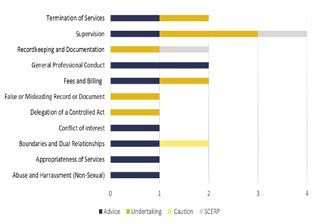
EQUITY, DIVERSITY AND INCLUSION (EDI) WORKING
GROUP UPDATE
The College remains committed to incorporating                  Professional Development. The Working Group is in the
principles of Equity, Diversity, and Inclusion (EDI) into all   process of scheduling diversity training for the College
aspects of the work of College, its regulatory processes        leadership to include the College Council, Committees, and
and, as appropriate, the profession at large.                   senior staff. At its upcoming meeting, the EDI Working
                                                                Group will be reviewing a draft for the creation of a
The EDI Working Group has continued to address a
                                                                specific EDI webpage where we can provide appropriate
variety of actions. These have included a discussion
                                                                EDI resources and regular EDI updates.
of the processes of the College Committees and how
diversity practices can be introduced. The Jurisprudence        The next meeting is scheduled for the beginning of August.
and Ethics Examination Committee will be asked to review
                                                                Donna Ferguson, Psy.D., C.Psych.
the exam to ensure questions being asked of registration
                                                                Chair, EDI Working Group
candidates respect diversity and inclusion. The
Quality Assurance Committee will be asked to consider
incorporating EDI training as a requirement for Continued

IN MEMORIAM – DR. BARBARA WAND
I have sadly learned of the passing of Dr. Barbara Wand.        Some of us were fortunate to have had the privilege of
Dr. Wand holds a very important place in the history of         meeting Dr. Wand on various occasions but for many
the College of Psychologists of Ontario as she played an        Dr. Barbara Wand is best remembered for the Barbara
integral role in the regulation of Psychology in Ontario and    Wand Seminar in Professional Ethics, Standards and
across North America.                                           Conduct. The Seminar was established by the Board of
                                                                Examiners, upon her retirement as Registrar, to recognize
In 1974, Dr. Wand was appointed to the Ontario Board
                                                                her achievements in the regulation of the practice of
of Examiners in Psychology (OBEP), the predecessor to
                                                                Psychology. Her significant contributions were also
the College of Psychologists. After serving two years as
                                                                recognized by the Ontario Psychological Association which
a member of the Board, she became the first woman to
                                                                established the Barbara Wand Award for Excellence in the
be named Registrar of OBEP, a position she held until her
                                                                Area of Professional Ethics and Standards.
retirement in 1991.
                                                                On behalf of the College of Psychologists, I want to
Dr. Wand was the first Canadian to be elected President
                                                                extend our sincerest condolences to Dr. Wand’s family,
(1983-1984) of what is now the Association of State and
                                                                her friends, and many colleagues. A copy of the obituary
Provincial Psychology Boards (ASPPB); the alliance of
                                                                prepared by Dr. Wand’s family can be found by clicking
state, provincial, and territorial psychology regulatory
                                                                here.
agencies responsible for psychology licensure and
certification throughout the United States and Canada.          Rick Morris, Ph.D., C.Psych.
In 1975, International Women’s Year, Dr. Wand chaired           Registrar & Executive Director
the Canadian Psychological Association Task Force on the
Status of Women.

HEADLINES, JULY 2021 VOL 2 NO 1                                                                                            3
QUALITY ASSURANCE (QA) NEWS
The need for safe and competent psychological services A small number of members appeared to have
has continued throughout the COVID-19 pandemic and the misunderstood that two Declarations were required, and
legislated requirements for Quality Assurance activities by College staff are working with them to ensure that both
the College remain as relevant as ever. Members, other the SAG and CPD Declarations are completed before the
than those with a Retired Certificate of Registration, must Committee imposes any related penalties.
ensure that they are keeping up with developments in
In following up with some members, they expressed the
their areas of practice and that their knowledge and skills
concern that they were unable to meet the CPD credit
are up to date.
requirements due to the COVID-19 pandemic. These
members were reminded of the alternate Declaration,
SELF-ASSESSMENT AND CONTINUING
available along with the regular CPD Declaration,
PROFESSIONAL DEVELOPMENT
specifically intended to address this issue.
Members with “odd” Registration numbers, as well
as those members with Certificates of Registration Members required to complete the Self-Assessment Guide
Authorizing Supervised Practice or Interim Autonomous (SAG) this year will have noticed some changes to the
Practice were required to submit their online Declarations length and format of the document. These changes were
of Completion indicating completion of the Self- made in response to the many comments and suggestions
Assessment Guide (SAG) and their Continuing Professional received from members who completed the survey
Development (CPD) requirements, by June 30, 2021. conducted by the Quality Assurance Committee last year.
An unfortunate problem beyond the College’s control The Committee continues to discuss other enhancements
caused the Quality Assurance section of the member to the Quality Assurance program following review of the
portal to malfunction on June 30th. The system was fully survey data and wishes to thank the many members who
functional again on July 6th. Members who submitted their participated and offered helpful information.
Declarations by July 6th were considered to be “on time”. Reminder: Members with “even” Registration numbers are
Those whose Declarations have NOT been received have now more than half-way through the 2020-2022 CPD cycle
been contacted by College staff. and those with “odd” numbers began the 2021-2023 cycle
on July 1, 2021.
HEADLINES, JULY 2021 VOL 2 NO 1 4PEER ASSISTED REVIEWS (PAR) to participate via technology or to defer the review until
it could be conducted safely in-person. Six PARs were
Physical distancing necessary to decrease the spread
conducted successfully via secure technology. It is hoped
of COVID-19 has led to the postponement of in-person
that the program soon will be operating in full force.
PARs. Members selected to engage in the PAR process
during the past year were asked whether they wished
INFORMATION FROM THE PRACTICE ADVICE SERVICE
The Practice Advice Service of the College of Psychologists provides information to members
of the College and members of the public regarding relevant Legislation, Regulations,
Standards of Professional Conduct and other Guidelines. Answers are provided in
response to specific inquiries and may not be applicable or generalize to all circumstances.
Information is provided to support College members in exercising their professional
judgement and is not an appropriate substitute for advice from a qualified legal professional.
NATURE OF INQUIRIES advise members that Ontario’s Chief Medical Officer of
Health recently rescinded Directive #2 for Health Care
Between April 1, 2021 and June 30, 2021, the College
Providers (Regulated Health Professionals or Persons
received and responded to 530 inquiries. During this
who operate a Group Practice of Regulated Health
period, 11 of these queries were related to practicing
Professionals). This Directive had been amended and
during the COVID-19 pandemic.
re-issued in mid-April due to the increasing COVID-19
case counts, hospitalizations, and ICU admissions.
COVID-19 INQUIRIES
Rescinding of Directive #2 means that non-urgent and
Almost all of the pandemic related inquiries pertained non-emergent procedures may be gradually resumed by
to how to appropriately return to in-person services and health care providers and health care entities who were
whether it was permissible to require that clients to be subject to that Directive. This includes in-person services
seen in person show proof of vaccination. that are non-essential or non-emergent.
Q: Now that things are “opening up” in Ontario, may we In making this decision, the Chief Medical Officer of
return to in-person services in non-emergency and non- Health advised that all health care providers should
urgent circumstances and if so, may we require proof of continue to follow the guidance issued by the Ministry
vaccination? of Health in the COVID-19 Operational Requirements:
A: In-Person Services: Health Sector Restart. College members are advised
to review this document to ensure an understanding
Throughout the pandemic, members have been permitted of relevant requirements to return to in-person service
to use their professional judgment to decide when it was provision appropriately and gradually.
necessary to see clients in-person. The College wishes to
HEADLINES, JULY 2021 VOL 2 NO 1 5In returning to the provision of in-person services, the providers impose medical testing or treatment
College urges members to take a conservative approach requirements, including proof of vaccination.
to minimize the risk of community spread as much as
• Under the Code, organizations have a duty to
reasonably possible, particularly with the emergence of
accommodate people who may be unable to receive
new variants of the virus and localized outbreaks.
a COVID-19 vaccine, for reasons related to disability
Proof of Vaccination: or creed, unless it would amount to undue hardship
based on cost or health and safety.
Some members have asked whether they may require
clients wishing to receive in-person services to • The right to be free from discrimination can be
demonstrate that they have been vaccinated. The Ontario limited under the Code, where, for example, broader
Human Rights Commission has published a document health and safety risks are serious, like in a pandemic,
entitled COVID-19 and Ontario’s Human Rights Code – and would amount to undue hardship. The OHRC and
Questions and Answers to provide some guidance to relevant human rights laws like the Code recognize
individuals, practitioners and employers. The following the importance of balancing people’s right to non-
section from this document may be of assistance. discrimination and civil liberties with public health and
Please note that this is the published position of the safety, including the need to address evidence-based
Ontario Human Rights Commission and the College is risks and treatment associated with COVID-19.
not qualified or authorized to offer interpretation of the
• Everyone involved should be flexible in exploring
Ontario Human Rights Code. Members seeking specific
whether accommodation is possible, including
guidance or further clarity on how to interpret their own
alternative ways a person might continue to safely
responsibilities under the Code are encouraged to seek
work, receive a service or live in congregate housing
independent legal advice.
without being vaccinated.
Ontario Human Rights Commission
• Organizations should make clear the reasons why
21. Can my employer or any service or housing provider proof of vaccination is needed in the circumstances,
require proof that I’ve received a COVID-19 vaccine? and ensure prior, informed consent.
• Receiving a COVID-19 vaccine is voluntary. • Organizations should only request and share medical
information, including proof of vaccination, in a
• At the same time, the government of Ontario has said
way that intrudes as little as possible on a person’s
they plan to issue proof-of-vaccination cards to people
privacy, and does not go beyond what is necessary
who receive a COVID-19 vaccine who may be required
to ensure fitness to safely perform work, or protect
to take part in some activities.
people receiving services or living in congregate
• Requiring proof of vaccination to ensure fitness to housing, and accommodate any individual needs.
safely perform work, or protect people receiving
• No one should experience harassment or other
services or living in congregate housing, may be
discriminatory treatment based on a Code ground
permissible under the Code if the requirement is made
because they are unable to receive a vaccine.
in good faith and is reasonably necessary for reasons
related to safety. • In addition, workers have rights and employers have
obligations for workers’ health and safety under the
• The Code grounds of disability and / or creed may be
Occupational Health and Safety Act. Visit the Ontario
engaged when employers, housing or other service
Ministry of Labour, Training and Skills Development
HEADLINES, JULY 2021 VOL 2 NO 1 6website for more information, including how to contact of my area of competence to see this person although
the Ministry. she could be considered an adolescent?
The College will continue to provide updates to members Termination of Services; queries received were related to
as further information becomes available. planning for leaving or closing a practice and designation
of a successor health information custodian. Hopefully,
NON-PANDEMIC INQUIRIES in most cases, the termination or transfer of services is
Between April 1, 2021 and June 30, 2021, the top five a cooperative process between the member and client.
areas about which members and others sought advice are Where this is not the case, guidance about how to
listed below, in order of frequency. terminate services in a permissible manner is contained
in section 1.8 of the Professional Misconduct Regulation.
Provision of Services Across Jurisdictions, Unrelated Members may also find guidance with respect to the
to the Pandemic; queries were almost equally divided appropriate transfer of records in the April 2018 e-Bulletin.
between those from members of the College wishing to
provide services in other jurisdictions and those registered Substitute Consent and Right of Access to Information;
in other jurisdictions seeking to provide services in these queries were related to separated parents’ right
Ontario. to information about children. Information about this is
provided in a detailed Q&A below.
Guidance was provided to members by referring them
to Section 15 of the Standards of Professional Conduct, Supervision; specific queries related to the supervision
2017. This Standard specifically addresses telepsychology of the controlled act of psychotherapy, non-regulated
services; however, the same principles apply regardless individuals and of members of other regulated professions.
of the medium of service delivery. Those considering The information needed to answer most of these queries
providing services to an individual located outside of is available in the Frequently Asked Questions section of
Ontario are advised to review this Standard before the College website, including:
agreeing to do so.
• Is it necessary for me to have a supervisory agreement
Member Authorized Practice: queries included those with a psychometrist in the workplace?
about authorized areas of practice and/or authorized
• Why can services which are within the scope of
client populations, as well as competence to provide
practice of psychology be provided by unregulated
specific services within one’s authorized areas of practice
practitioners without supervision, but if provided
and client populations.
under my supervision, be subject to such rigorous
Members who were unsure whether they were authorized standards?
to provide a specific service to a particular individual were
• Is it necessary to have supervision agreements when
often assisted by the answers to the following Frequently
a supervisee is not providing health services, as
Asked Questions which are published on the College
would be the case if the supervisee were exclusively
website in addition to many others:
conducting research under supervision?
• May a member authorized in Clinical Neuropsychology
• In our setting we have agreements with educational
conduct a psychoeducational assessment, or must
institutions regarding the students they provide to
they be authorized in School Psychology?
us for supervision. These agreements are analogous
• My authorized area of practice includes Clinical to those used in employment contexts in which
Psychology with adults. I recently received a referral to agreements are made between the supervisor
provide service to an 18-year-old. Would it be outside and employer and between the supervisee and
HEADLINES, JULY 2021 VOL 2 NO 1 7employer but not directly between the supervisor and the therapists to follow. I do not evaluate their work
supervisee. Would such arrangements be considered and they are not accountable to me. Am I correct in
sufficient for the purposes of the Standards or would believing that I am not in a supervisory relationship
it also be necessary to have supervision agreements with them?
directly between supervisors and supervisees?
The following composite Questions & Answers illustrate
• Would you please provide templates of supervision principles from recent queries that have wide application.
and consultation agreements that we may modify for
Consent to Services and Access to Information by
use in our own practices?
Separated Parents
• The Standards require information that will
Q: Who has the right to authorize services or access to
permit identification of each client discussed at
information about a child when parents are separated?
each supervision meeting. What about client
confidentiality? A: In the practices of most members, the answer to this
question can be found in the Health Care Consent Act,
• My supervision notes include personal health
1996 (HCCA) and the Personal Health Information Privacy
information about clients my supervisee is working
Act, 2004 (PHIPA).
with. Am I required to provide supervision notes
containing client information when a request for client One must first establish whether the child has the
records is made? capacity to make their own independent decisions in
these situations. The HCCA and the PHIPA do not specify
• Does a non-member who is a member of another
chronological ages of consent but instead set out the test
professional regulatory College, or who is not a
for determining whether any individual, including a child,
member of any regulated profession, have to be
is capable of making their own health care decisions. The
seeking registration in a College to provide counselling
determination of capacity must be made by the Health
under my supervision?
Care Provider or the Health Information Custodian, as
• I train and have some input into the administration of the case may be. The analogous tests for capacity to be
tests and counselling by members of other regulated applied are set out in section 4 of the HCCA and section 21
health professions. These people are not, however, of PHIPA, respectively.
accountable to me and they are approved by the test
If the child is not believed to be capable, a substitute
publishers to use any test they administer. What are
decision-maker for the purpose of the HCCA is generally
my obligations with respect to these activities?
deemed to play the same role with respect to PHIPA.
• Training within a consultation relationship can
Section 20 of the HCCA and Section 26 of PHIPA provide
be highly structured and lengthy and can feel like
specific advice with respect to the hierarchy of potential
direction. Would a relationship which includes
decision-makers when a child is not believed to be
intensive training with respect to client care be
capable of making their own decisions. It also sets out
considered a form of supervision?
the mechanisms for deciding what must happen when a
• I work alongside Behavior Therapists and I am a person with the right to make decisions is not available
resource in the agency to them. In some cases, I or willing to assume decision-making responsibility. The
provide case specific recommendations. In other legislation also addresses what to do if there is conflict
cases, I discuss general issues that come up without between two individuals having equal ranking in the
referring to specific clients and advise on processes for hierarchy.
HEADLINES, JULY 2021 VOL 2 NO 1 8Generally, a parent can give or refuse consent on behalf of Copies of information may be shared with those with a
an incapable child unless this authority has been lawfully need to have the information in their possession but may
granted to a children’s aid society or other person. If both only be provided to anyone other than the HIC or agent
parents do not have the same rights under an Agreement with client consent. The number of copies of the same
or Order, a parent with custodial rights prevails over a information is directly correlated to the risk of loss or
parent who has only a right of access. In situations where unauthorized access to the information. The fewer number
the statute does not spell out clearly which parent is of copies there are of a document, the lower the risk of
entitled to make the decision, statutory interpretation loss or unauthorized disclosure.
is necessary. Given the high stakes for all individuals
There is no prohibition against storing information in more
involved, the most prudent course of action is to obtain
than one file/location. Standard 9.1 of the Standards of
independent legal advice.
Professional Conduct, 2017 requires that a member must
The College’s August 2005 Bulletin provides additional make best efforts to ensure that the member’s records are
guidance with respect to this issue. complete and accessible; this applies whether the record
is kept in a single file or in several files and whether the
Who “Owns” the Clinical Record?
record is housed in one location or at several locations. It is
Q: In a group practice comprised of members authorized suggested that when records are not maintained in one file
for autonomous practice, who can access, contribute to, or location that a note is placed in each location indicating
and hold copies of the clinical record? the location(s) of any other information.
A: The answer to this question depends upon various This information is applicable to all records, whether they
decisions made by the organization, including who is the are kept in paper or electronic format.
Health Information Custodian (HIC), a term which is used
Members may find additional information relevant to
and defined in the Personal Health Information Protection
these issues in an Frequently Asked Questions document
Act, 2004 . For the purposes of answering this question,
published by the Office of the Information and Privacy
either a health care practitioner or a person who operates
Commissioner of Ontario.
a group practice of health care practitioners may be a HIC.
There may only be one HIC and it should be the person Supervised Services and The Controlled Act of Diagnosis
who will have ultimate responsibility for the collection,
Q: Is it permissible for the Supervisor of a non-member to
use, disclosure, security, and retention of the information.
co-sign an assessment report which includes a diagnosis,
The HIC must ensure that their identity is made clear to without providing the diagnosis to the person or their
all concerned, including the client. A client must provide authorized personal representative in ‘real time’, but
informed consent for a specified individual or organization instead provide it to the person’s lawyer or an insurer
to collect information about them. and permit the supervisee to discuss the report directly
with the client?
A Health Information Custodian may have an “agent”. This
is defined in PHIPA as a person that, with the authorization A: The Regulated Health Professions Act, 1991 (RHPA)
of the custodian, acts for or on behalf of the custodian. lists a number of Controlled Acts that the legislature has
The HIC may, for example, appoint the service provider deemed to carry sufficient risk of harm that they may only
working in the HIC’s organization to be their agent. be performed by specified regulated health professionals.
HEADLINES, JULY 2021 VOL 2 NO 1 9The controlled act of communicating a diagnosis, is set out ask questions to, and have them answered directly to by,
in section 27 of the RHPA and has the following essential a member of the College.
components:
In the situation described in the question, depending
1. the communication must be to the individual or their upon the circumstances, it could be argued that the first
personal representative; element of the definition is not present.
2. it must identify a disease or disorder; The Controlled Act of Communicating a Diagnosis applies
to anyone who communicates the relevant information
3. the disease or disorder must be the cause of
to the individual or their authorized representative, in
symptoms of the individual; and
circumstances where it is reasonably foreseeable that the
4. it must be reasonably foreseeable that the individual individual or his or her personal representative will rely it.
or his or her personal representative will rely on the Some may say that performance of the Controlled Act by
diagnosis. someone independent of the supervising member is not
the supervising member’s concern. Supervising members
All four of these elements must present for the Controlled who do not communicate a diagnosis themselves, but
Act to have been performed. instead have a reasonable expectation that someone
In the case of supervised services provided by non- unauthorized to perform it will, may not be operating in
members, section 4.3.2 of the Standards of Professional the spirit of the legislation.
Conduct, 2017 requires that only the supervising member Even in cases where one is not in technical breach of
may perform the controlled act of communication of the Standards, one should consider if one’s course of
a diagnosis, either in person or through ‘real time’ action represents “best practice”. Receiving a diagnosis,
communication such as by telephone, teleconferencing or that is, being told that one has a disease or disorder,
videoconferencing. is a significant event in a person’s life. Ideally, the
The Controlled Act of Communicating a Diagnosis, either communication of a diagnosis of a disease or disorder,
in writing or orally, must be performed by a member should done by a practitioner who has been deemed
and not by a non-member under their supervision. If to have the knowledge, training and experience to
the diagnosis is communicated orally, it may be done autonomously provide further explanatory information,
by a member, either in person or through ‘real time’ answer any questions and provide appropriate
communication such as by telephone, teleconferencing or professional support. The requirement for “real time”
videoconferencing. The communication of a diagnosis may provision of a diagnosis by the supervisor of a non-
not necessarily be completed at one point in time. Those member, where the communication meets all the criteria
receiving a diagnosis must be provided an opportunity to of the controlled act, is based upon this belief.
HEADLINES, JULY 2021 VOL 2 NO 1 10COUNCIL HIGHLIGHTS – JUNE 18, 2021
The College Council met virtually on June 18, 2021. Information provided to members of Council for
their review in anticipation of their deliberations and decision-making is posted on the homepage
of College website a week in advance of meetings. Following the meeting, this information is
archived on the website in the Council Meeting Materials Reference Library
CHANGES TO THE COLLEGE COUNCIL POLICY ISSUES
Since the March meeting there have been several changes Policies
to the College Council. Dr. Janice Currie (District 5, GTA
Council approved the following new policy:
East), Dr. Denise Milovan (District 6, GTA West) and Dr.
Michael Grand (District 8, Academic) have completed • Policy II – 7(ii): Funding for Therapy and Counselling
their terms of office. We gratefully acknowledge their for Clients of Members Alleged to have been Sexually
involvement and contributions for their many years of Abused while Receiving Supervised Psychological
service. We are pleased to welcome new Council members, Services
Dr. David Kurzman and Dr. Archie Kwan representing
District 5 and District 6, respectively and returning member • Council approved revisions to the following policies:
Ms. Melanie Morrow (Psychological Associates - Non- • Policy II-3(i) ICRC Terms of Reference/Role
Voting). In addition, we are pleased to be joined by a new
public member recently appointed by the Lieutenant • Policy II-3(ii) Release of Member’s Response to
Governor in Council, Mr. Ilia Maor. Complainant
• Policy II-3(iv) Responding to Requests for Extensions
EXECUTIVE COMMITTEE to Make Written Submissions
As a first order of business, the Council elected the
Executive Committee for the 2021-2022 year. We are OTHER BUSINESS
pleased to congratulate:
The next meeting of Council will be held virtually on
Dr. Wanda Towers – President September 10, 2021.
Dr. Marjory Phillips – Vice-President
Ms. Paula Conforti – Professional Member
Dr. Philip Ricciardi – Professional Member
Mr. Paul Stopciati – Public Member
Mr. Scott Warnock – Public Member
HEADLINES, JULY 2021 VOL 2 NO 1 11INQUIRIES, COMPLAINTS AND REPORTS COMMITTEE FOURTH QUARTER, MARCH 1, 2021 – MAY 31, 2021 New Complaints and Reports In the 4th Quarter, the College received 25 new complaints and opened 1 new Registrar’s Investigation, for a total of 26 new matters. The nature of service in relation to these matters is as follows: Timeline Snapshot There are currently 120 open Complaints and Registrar’s Investigations that are being actively investigated. A little under half of these cases are under 210 days old. ICRC Meetings The ICRC met on March 23, April 21, and May 25, 2021 to consider a total of 36 cases. The ICRC also held 16 teleconferences to consider 28 cases. The next meeting is scheduled for June 17, 2021, where 7 cases are scheduled to be discussed. An ICRC Plenary session was also held on April 14, 2021, to discuss various policy issues related to the Committee. HEADLINES, JULY 2021 VOL 2 NO 1 12
ICRC DISPOSITIONS
The ICRC disposed of 23 cases during the 3rd Quarter, as follows:

*F&V: Frivolous, vexatious, made in bad faith, moot or otherwise an abuse of process, pursuant to s.26(4) of the Health Professions Procedural
Code.
†SCERP: Specified Continuing Education or Remediation Program.

The dispositions of these 23 cases, as they relate to nature of service, are as follows:

HEADLINES, JULY 2021 VOL 2 NO 1                                                                                                             13
Disposition of Allegations
The 23 cases disposed of included the consideration of 66 allegations. The ICRC took some remedial action with respect
to 19, or 29%, of these allegations.

Health Professions Appeal and Review Board (HPARB)
In the 4th Quarter, two HPARB reviews of ICRC decisions were requested. The College received the results of four HPARB
reviews of ICRC decisions. All four ICRC decisions were confirmed.

INQUIRIES, COMPLAINTS AND REPORTS COMMITTEE
(ICRC) DECISIONS
The following are summaries of some recent decisions of the Inquiries, Complaints and Reports
Committee reflecting three different dispositions. They are provided for educational purposes.
Information in these summaries has been altered to protect the privacy of both members and
complainants, and to protect the confidentiality of the investigation process. The relevant
substance of the allegations and outcomes remain unchanged.

Typographical Error on Website: Decision – Not to            need to accurately verify the identity of their psychological
Investigate the Allegations (F&V)                            service provider.

The complainant alleged that a member’s name was             The panel of the ICRC considering this matter noted that
misspelled on a website advertising his services. The        while it is important for members to identify themselves
complainant indicated this was of concern since clients      correctly, this error was minor and typographical in

HEADLINES, JULY 2021 VOL 2 NO 1                                                                                        14
nature. There was nothing to suggest that the incorrect       panel noted that in her response to the complaint, the
spelling would compromise the quality of the member’s         member acknowledged and reflected on the impact felt
psychological services or otherwise amount to conduct         by the client. This led the panel to believe that there was
that fell below the standards of the profession. The          little ongoing risk to the member’s alleged conduct. The
panel did not believe the typographical error was a public    panel therefore decided to provide Advice to the member,
protection issue as the error was noted and would be          that in future, it may be helpful to provide clients with
corrected. The panel considered the complaint to be           an explanation as to why collateral information is being
frivolous, vexatious, made in bad faith, moot or otherwise    requested. This may assist clients to better understand the
an abuse of process, and decided to take no further action.   context and scope of the information being sought.

Seeking Collateral Information: Decision - Advice             Maintaining Appropriate Boundaries: Decision – Caution

During a joint therapy session with her son, the              The member requested that her client, a proficient
complainant disclosed that the son’s teacher was              musician, meet and provide mentorship to the member’s
encouraging him to be assessed for ADHD. The                  young daughter, who was an aspiring musician.
complainant alleged that the member requested that
                                                              The panel noted that the member made considerable
she obtain collateral information from the child’s father,
                                                              attempts to mitigate the possibility of exploitation or
in a way that indicated the member did not trust her
                                                              undue influence in the therapeutic relationship. They
perspective.
                                                              believed nevertheless that a dual relationship appears
The panel of the ICRC considering this matter noted that      to have been formed, which posed high impact risks to
the client’s marital dissolution had been acrimonious,        the client and to public trust in the profession. The panel
and the client had alleged domestic abuse by her ex-          therefore decided it would be appropriate and in the
spouse, the child’s father. In this context, the manner of    public interest to provide the member with a Caution in
the member’s request for collateral information from          this regard.
the father may have negatively affected the client. The

DISCIPLINE COMMITTEE

REFERRALS TO DISCIPLINE
There were no referrals to the Discipline Committee to
May 31, 2021.

HEARINGS
1. Dr. Martin Rovers: https://members.cpo.on.ca/public_
register/show/3067                                            made under the Psychology Act, 1991. In particular,
A Hearing was held on June 29, 2021. The Discipline           Dr. Rovers failed to maintain Standards of Professional
Committee Panel made findings of professional                 Conduct (September 1, 2017):
misconduct in that Dr. Rovers failed to maintain the          •   2.1 (General Conduct);
standards of the profession, contrary to subsection 1(2)
of the Professional Misconduct Regulation (O.Reg. 80/93)      •   3.1.1 (Meeting Client Needs);

HEADLINES, JULY 2021 VOL 2 NO 1                                                                                         15
• 4.1.1(1), (3) and (8) (Supervision); ONGOING MATTERS
1. Dr. Darren Schmidt: https://members.cpo.on.ca/
• 5.1 (Competence); and
public_register/show/21702
• 9.5 (Billing Records);
A referral was made to the Discipline Committee on
The Panel also found that Dr. Rovers failed to supervise July 14, 2020. A Pre-hearing Conference was held
adequately a person who was under his professional regarding this matter on February 1, 2021 and the
responsibility and who was providing a psychological Hearing is scheduled for August 25, 26, 27 and 30,
service; and that he engaged in conduct or performed an 2021.
act, in the course of practicing the profession, that, having
regard to all the circumstances, would reasonably be 2. Dr. Augustine Meier: https://members.cpo.on.ca/
regarded by members as unprofessional. public_register/show/1032
The Panel imposed an Order, which included that the A referral was made to the Discipline Committee on
Registrar impose terms, conditions and limitations on Dr. November 30, 2020. This matter is currently at the
Rovers’ Certificate of Registration, in particular, that for a Pre-hearing Conference stage and a Hearing has not
period of 12 months from June 29, 2021, Dr. Rovers may yet been scheduled.
only supervise a supervisee while Dr. Rovers participates
in a Coaching Program. The Panel also ordered Dr. Rovers 3. Dr. André Dessaulles: https://members.cpo.on.ca/
to pay Discipline Hearing costs in the amount of $3,500 public_register/show/2530
within 90 days of the order.
A referral was made to the Discipline Committee on
January 21, 2021. This matter is currently at the Pre-
hearing Conference stage and a Hearing has not yet
been scheduled.
CHANGES TO THE REGISTER
CERTIFICATES OF REGISTRATION
The College would like to congratulate those Psychologist and Psychological Associate members who have received
Certificates of Registration since April 2021.
Psychologists - Certificate of Registration Authorizing Autonomous Practice
Areeba Adnan Lisa Do Couto Jessica Kichler
Alex Auerbach Alexandra Sarah Drawson Adam Kingsbury
Sheena Bance Luis Enrique Flores Jody Kircher
Michael Scott Boroughs Justin Thomas Gates Daniella Ladowski
Chantal Marie Boucher Andrew Gentile Jonathan Hart Leef
Valeriya Bravo Zohrah Haqanee Stephanie Lucille Leon
Brenda Chiang Susan Henriques-Decotiis Nadia Brittany Maiolino
Jasmine Alicia Evelyn Dean Katherine Anne Herdman Michelle Monette
Stephen Gerard Denner-Stewart Ashley Elizabeth Hyatt Sarah Mossad
HEADLINES, JULY 2021 VOL 2 NO 1 16Brent Sylvester Mulrooney Lily Michelle Repa Amanda Tobe Nicole Murray Jesse Samuel Roberts Leah Tobin Amanda Marion O’Brien Octavio Andres Santos Solano Gursharan Kaur Virdee Preeyam Parikh Jeremy Stewart Kelly May Weegar Sharon Pauker Maisha Musarrat Syeda Joshua David Wyman Larissa Katherine Pipe Jessica Ann Tanner Julia Mary Young Erika Lauren Portt Whitney Dawn Taylor Lana Ryan Rappaport Elizabeth Ann Thornley Psychological Associates - Certificate of Registration Authorizing Autonomous Practice Nicole Azizli Sau Ching Lo Divya Thethron Nambiar Daniel Balk Wai-Meng Florence Mak Fariba Touyeh Ching Kong Cheung Jennifer Leigh Post Cheryl Young Elizabeth Eve Francoeur Shona Karen Robb Nichola Jayne Hoffman Jay Paul Shanker Psychologists - Certificate of Registration Authorizing Interim Autonomous Practice Ernesto Juan Carlos Andrade Karin Klassen Kathleen Anne O’Connor Sharon Batstone Behnam Kohandel Sarah Pakzad Kayleigh-Ann Clegg Sonia Krol Bradley Peters Kelly Costain Daphné Laurin-Landry Charles Pierson Jackson Dobbs Claude Jay Lautman Cheryl Placsko Carol Fredrek Dayna Lee-Baggley Gabrielle Poon Stroud Annie Gagné Susanne Martin Elizabeth Quon Julie Gosselin Carolyn Mirotchnick Lisa-Marie Salas Grant Grobman Chérie Moody Leila Salem Cheryl Guest Nadine Mourad Marie-Eve Turpin Aditi Gulati Jennifer Mullane Psychological Associates - Certificates of Registration Authorizing Interim Autonomous Practice No Certificates were issued in this period Psychologists - Certificate of Registration Authorizing Supervised Practice Satvinder Kaur Chauhan Iana Ianakieva Monica Claire O’Neill Alexander Crenshaw Heather Jaksic Timothy Vaughn Salomons Samantha Daniel Chantelle Lloyd Hugo Schielke Sarah Dermody Joyce Yan Lok Mak Fiona Carina Thomas Sophia Durisko Julia Marinos Elaine Catherine Toombs Aliza Friedman Tamara Meixner Akanksha Tripathi Dubey Samantha Helmeczi Kathryn Elizabeth Miller Na Zhu Irene Hong Seamus Nicholas O’Byrne HEADLINES, JULY 2021 VOL 2 NO 1 17
Psychological Associate - Certificate of Registration Authorizing Supervised Practice
Patricia Aria Bellantone               Monique Lynn Francine Janssen           Cheron Elizabeth Martin
Angela Diane Cole                      Stennis Joseph                          Sarah Joan Ouellette
Heather Kathleen Hargraves             Gagan Kaur                              Karl Storbeck
Chelsea Amy Heron

The College wishes to thank those members who generously provided their time and expertise
 to act as primary and alternate supervisors for new members issued Certificates Authorizing
                                    Autonomous Practice.

Retired
Barbara Armstrong                        Sharon Horlick                           Carol Louise Musselman
Jacqueline Isabelle Aston                Judith Maria Johnson                     Sandra Nandi
Ruth Berman                              Sophia Kahill                            Patrice Oligny
Lise Marie-Claude Bisnaire               Ursula Erna Kasperowski                  Witold Poplawski
Rosalind Maureen Callard                 Janice King                              Terryl Leslie Portigal
Phyllis Sau Lin Chee                     Eva Gajdos Klein                         Christine Ruth Rattenbury
Cindy Jane Chiasson                      Ruth Groome Kurtz                        Marsha Miriam Rothstein
Mark Randall Cole                        Joel Myron Landau                        David Patrick Ryan
Mary Ann Lorraine Collins-Williams       Robert Leclerc                           Francine Fleur-Ange Sarazin
Albert Andrew Cota                       Mary Catherine Lees                      Rosa Spricer
Lesley Covington                         Michel Lefebvre                          Marlene Voyer
Darlene Judith Elliott-Faust             Paul Raymond Legzdins                    William Douglas Walker
Carol Marie Fick                         Judith Lorna Lewis                       Fredric Weizmann
Erica Gold                               Maureen Winnifred Lovett                 Sharon Mona Williams
David William Hallman                    Michael Gerald Luther                    W. Lawrence Williams
Leonard S Harris                         Helen Martin                             Trudi Anne Yeger
Donaleen Hawes Beth Ann Hayes            Susan Elizabeth Meyers
Olga Henderson                           Jonathan K. Mills

Resigned
Eric Robert Davis                        Doreen Charlotte Gough                    Sally Mintz Levy
Eleanor Donegan                          Cheryl Lynne Hoevenaars                   Jo-Anne Lewicki
Barbara Joyce Dydyk                      John David Jackson                        Rena Joan Lipsey
John (Jack) Remo Ferrari                 Anne Marie Johnson                        Nonie Lyon
Tina Immacolata Ferrari-Oryshak          Sue Johnson-Douglas                       Lyle MacDonald
Mary-Ellen Francoeur                     Deborah Kerr                              John Alexander Machry
Catherine Franko                         Verner J Knott                            Laureen Jeana MacIntyre
Sandra Lee Frayne                        Nira Kolers                               Thomas William Managhan
Marie F.G Gingras                        Margaret Yiu-Ki Kong Lam                  Dorothy Markiewicz
Edward Jay Glassman                      Glen Maxine Allen Lawson                  Denis Roger Martel

HEADLINES, JULY 2021 VOL 2 NO 1                                                                                 18
Donald Robert Martin Divna Peric-Todorovic Stephen Eric Southmayd Mary Anne McDowell Colin Phillip Kevin Perrier Doris Jane Swan Diane Lee McGregor Joseph Persi John Paul Sweetland Janet Ann Mullally Nathan Lionel Pollock Eva Aniko Szekely Erin Kimberley Mullings Mary Rees-Nishio Lori Denise Szwarz Ronald Peder Myhr Wayne Donald Richardson Elizabeth Jean Thompson William Newby Anna Claire Rooney Douglas James Torney Sandra Joan Newman Stuart Ross Jo-Anne Margaret Trigg Keith Andrew Nicholson Francois Sallafranque St-Louis Helen P Valerio Anne Parent James P Sofia Edward Joseph Peacock Karen Solomon Deceased The College has learned with regret of the death of the following member and extend condolences to the family, friends and professional colleagues of: Yvonne Lorraine Shaker Douglas James Torney John Paul Sweetland Barbara I M Wand EMAIL ADDRESS FOR COLLEGE COMMUNICATIONS The College uses email as its main method of communication in reaching out to members. Your College contact email address is used to notify you of upcoming important events such as membership renewal dates and processes and Quality Assurance deadlines. It is also used for routine notices regarding items such as the new issue of HeadLines, the next Barbara Wand Seminar, pandemic updates, and other messages of interest to the full membership. In addition, this address is used to contact individual members to provide personalized information regarding matters such as overdue QA requirements or missed fee deadlines. It is each member’s responsibility to ensure that the email address provided to the College is valid and that you are receiving our emails. If you are not receiving College emails, the most recent one sent on July 23, 2021, the email address you have provided may not reliable or may be subject to your organization’s filtering. Please ensure that your College contact email address is up to date and reliable. If you are not sure you are receiving our emails, please contact the College. HEADLINES, JULY 2021 VOL 2 NO 1 19
You can also read


