Information for Tenders 2015 - Information for Tenders 2015 - Contract Delivery Services - Contract Delivery Services
←
→
Page content transcription
If your browser does not render page correctly, please read the page content below
Contract Delivery Services

Information for Tenders
2015

Contract Delivery Services

Information for Tenders
2015
auspost.com.au
Topic                                                                                                  Page

        Section 1:        Introduction to Australia Post’s Mail Services .......................... 3
           1.1     About Australia Post................................................................................ 3
           1.2     Contracting to Australia Post ............................................................... 3
           1.3     About the tender documents ................................................................ 4

        Section 2:        Our Mail Delivery Services .............................................................. 6
           2.1     Topics in Common to all services ......................................................... 6
           2.2     Street Mail &/or Roadside Mail Delivery Service ........................... 18
           2.3     Parcel Delivery Service.......................................................................... 20
           2.4     Street Posting Box (SPB) Clearance Service ................................... 21
           2.5     Depot Bag Delivery Service ................................................................. 22
           2.6     Miscellaneous Service ........................................................................... 22
           2.7     Inter/Intrastate Transport Service .................................................... 23

        Section 3:        Contractors Responsibilities........................................................ 25
           3.1     Introduction .............................................................................................. 25
           3.2     Business Structure ................................................................................. 25
           3.3     Tax Requirements .................................................................................. 25
           3.4     Performance Requirements................................................................. 26
           3.5     Operational & Contingency Plans ...................................................... 27
           3.6     Work Attire................................................................................................ 28
           3.7     Transport Laws ....................................................................................... 28
           3.8     Work Health and Safety (WHS)........................................................... 28
           3.9     Work Health and Safety Standards .................................................. 32
           3.10       Hazards Identification ....................................................................... 39
           3.11       UV (ultraviolet) radiation policy ...................................................... 41
           3.12       Insurance .............................................................................................. 42
           3.13       Other Legal Matters .......................................................................... 45

        Section 4:        Conditions of Tender...................................................................... 46
           4.1     Introduction .............................................................................................. 46
           4.2     The Tender Process ............................................................................... 46
           4.3     Use of the Tender Documents ............................................................ 47
           4.4     Effect of Submitting a Tender ............................................................. 47
           4.5     Eligibility of Entity................................................................................... 48
           4.6     Tender Submission ................................................................................. 48

CONTRACT MANAGEMENT                             Australia Post                                                              PAGE 1
Version 0.1 December 2014
4.7    Tender Cost Statement .................................................................................. 49
           4.8    Tenderer’s Signature ....................................................................................... 50
           4.9    Collusive Tendering Forbidden ..................................................................... 50
           4.10       Incomplete Tenders ..................................................................................... 51
           4.11       Non-conforming Tenders ............................................................................ 51
           4.12       Late Tender Submission ............................................................................. 52
           4.13       Additional Information ................................................................................ 52
           4.14       Acceptance of Tender ................................................................................. 52
           4.15       Failure to Comply ......................................................................................... 54
           4.16       Early Termination of Mail Contractor Agreement............................... 55
           4.17       Confidentiality of Information ................................................................... 55
           4.18       Privacy Act – Acknowledgment ................................................................ 56
           4.19       Security Checks ............................................................................................. 57
           4.20       Familiarisation Process .............................................................................. 57
           4.21       Independent Advice ..................................................................................... 58
           4.22       Notices ............................................................................................................. 59
           4.23       Tenderer’s Costs ........................................................................................... 60
           4.24       Governing Law ............................................................................................... 60
           4.25       Documents to Be Provided ........................................................................ 61

         Section 5:      Tender Instructions .................................................................................. 62
           5.1    Introduction ........................................................................................................ 62
           5.2    Cost Components in the Tender Form........................................................ 64
           5.3    Calculating Unit Rates for Parcel Contracts – Consignment Pricing 68
           5.4    Signatures .......................................................................................................... 70

         Section 6:      Checklist ...................................................................................................... 71
           6.1    Introduction ........................................................................................................ 71
           6.2    Independent Advice ......................................................................................... 71
           6.3    Tender Submission ........................................................................................... 71
           6.4    Documents to Be Provided ............................................................................ 72
           6.5    Incomplete Tenders ......................................................................................... 72

Page 2                                                Australia Post                                       CONTRACT MANAGEMENT
                                                                                                           Version 0.1 December 2014
Section 1: Introduction to Australia Post’s Mail
        Services

            1.1 About Australia Post
     Australia Post is a government business enterprise and its activities are subject to the
     Australian Postal Corporation Act 1989 and the scrutiny of the Postal Ombudsman and
     the ACCC. The Vision and Mission Statements adopted by Australia Post reflect the
     corporation’s commitment to community service along with its business-oriented
     objectives and a high regard for integrity.
     Since becoming a government business enterprise, Australia Post has conducted its
     affairs as a self-funding business with a commercial charter. The profits earned are
     reinvested in our business or returned as dividends to our shareholder, the
     Commonwealth Government.
     Our business is constantly evolving to meet the changing needs of our customers and the
     realities of today’s rapidly changing communications market. Australia Post is now one
     of the world’s most efficient and progressive postal enterprises. We embrace new
     technologies to:
          improve efficiency
          reduce costs and/or increase value

                  To find out more about Australia Post, please visit our website
                  auspost.com.au

            1.2 Contracting to Australia Post

     An independent          To a large degree, the nature of the work and the effort required to
     business                perform the mail service is known (ie working hours and distance
                             travelled). These details are provided in the Mail Service Specifications.
                             However, while providing these services to Australia Post you remain an
                             independent business.

     Regular cash flow       Australia Post’s system of regular payments helps businesses’ cash
                             flow. Payment is made to contractors monthly and is explained further
                             in Section 2.1.5, Payment Cycle.

     Part of a logistics     Australia Post manages a large and complex logistics network.
     network                 Frontline staff (retail officers, postal delivery officers and contractors) is
                             the face of Australia Post but equally vital are the thousands of staff
                             and contractors who work in delivery centres, mail sorting facilities and
                             offices.
                             Everyone has a role to play in the delivery network, and the mail service
                             contractor (potentially you) is an important part of this network.

CONTRACT MANAGEMENT                  Australia Post                                      PAGE 3
Version 0.1 December 2014
Contractors          Australia Post is subject to community service obligations covered by
represent            government legislation.
Australia Post       Meeting these service obligations affects Australia Post’s relationship
                     with its customers. Contractors represent Australia Post and thus the
                     Performance Requirements outlined in Section 3 extend to all
                     contractors and their personnel. The final Mail Contractor Agreement
                     signed by successful tenderers therefore contains extensive provisions
                     regulating the conduct of contractors in performing these services.

         1.3 About the tender documents

Package              This package is designed to assist you in preparing a response to
components           Australia Post’s Mail Delivery Services tender. It comprises five
                     documents in total:

                         the Information for Tenderers booklet (this document)
                         Mail Service Specifications
                         a Tender Form
                         a Sample Contract
                         an Indicative Costing sheet.

Information for      This document provides an overview of tendering for Australia Post’s
Tenderers            mail services and is applicable to all tenders.

Mail Service         This is a separate document that describes the specific service(s) being
Specifications       tendered. It:
                         describes the mail delivery service (or combination of services as
                         some situations require), mail article volumes, hours worked and
                         distance travelled along with vehicle and equipment requirements
                         contains the Australia Post contact, tender lodgement information
                         and the closing date and time for the tender.

Tender Form          This is a separate document for the tenderer to fill in and return to
                     Australia Post. It becomes the formal submission.
                     Even if the tenderer responds to the tender using the online tendering
                     system, the Tender Form still needs to be completed and submitted.

Indicative costing   This document lists indicative prices for certain specialised items that
                     may be required for some mail services.

Sample Contract      The Sample Contract is provided for the tenderer to understand the
                     contractual terms and conditions. These terms and conditions form the
                     basis of the contract relationship between Australia Post and the
                     Contractor. Tenderers should seek legal and financial advice about the
                     terms and conditions when preparing their tender.
                     The final Mail Contractor Agreement signed by Australia Post and the
                     contractor will be very similar to this Sample Contract but will be
                     tailored with the specific service details and contract fee.

Page 4                             Australia Post                    CONTRACT MANAGEMENT
                                                                     Version 0.1 December 2014
Definitions and        Definitions used in the Mail Contractor Agreement are explained in
     interpretations        Clause 1 of that document (refer to the Sample Contract for an
     used                   example).
                            Other commonly used terms and abbreviations that are not defined in
                            the Mail Contractor Agreement are explained in the main contents of
                            this booklet or in the glossary at the end of it.

     Use of the term        There is a difference between the terms “Contractor” and “Tenderer”
     “Contractor” vs        when they are used throughout the tender documents.
     “Tenderer”             The contractor is the person or company to which Australia Post has
                            awarded a tender.
                            The tenderer is any person or company that submits, or intends
                            submitting, a tender to Australia Post.

     Symbols used
                                              Please note

                                              Very important note or warning

                                              For more information (usually to
                                              external sources, like a website or
                                              publication)
                                              Tip or idea

                                              Example

                            Although the documents are provided separately, they must be read
                            as a package and entirely. The Conditions of Tender in this booklet,
                            the Mail Service Specifications and the Tender Form are incorporated
                            into the final Mail Contractor Agreement.

                            Tenderers are strongly advised to seek independent financial advice
                            and legal advice before submitting their tender.

CONTRACT MANAGEMENT               Australia Post                                    PAGE 5
Version 0.1 December 2014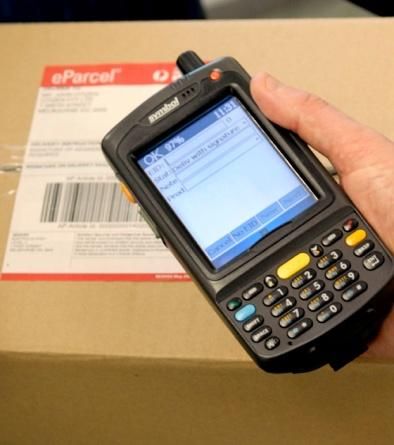
Section 2:          Our Mail Delivery Services

Summary of mail     There are two categories of service – delivery and transport.
services

                    Some mail services may be comprised of a combination of service
                    types, for example:
                       a parcel and depot bag delivery service combination, or
                       a roadside delivery and transport service combination .

         2.1 Topics in Common to all services

2.1.1 Articles

2.1.1.1             What is an “article”?

Australian Postal   The term “article” is defined by the Australian Postal Corporation Act
Corporation Act     1989 (Commonwealth).
                    However, in common usage, “article” is also used to mean a product or
                    service that may include various categories of articles. For example,
                    Express Post is a service that includes both letters and parcels.

                    Articles that Australia Post accepts from its customers are included
                    within the meaning of Australia Post property. A contractor (or their
                    personnel) who performs services for Australia Post by delivering or
                    collecting articles is handling Australia Post property.

Page 6                            Australia Post                   CONTRACT MANAGEMENT
                                                                   Version 0.1 December 2014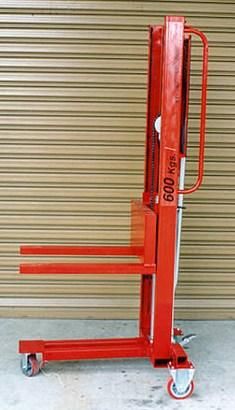
Articles commonly Articles listed in tables in this section are examples of the types of
     handled           articles likely to be handled when performing the services. The tables
                            are not a comprehensive listing of all the articles that a contractor may
                            be required to handle.
                            More information on our product range can be found at:
                            auspost.com.au under Parcels & Mail

     2.1.1.2                Characteristics of “product” articles

     Letters                Letters (including Print Post) are envelopes, packets or other wrapping
                            types that contain certain material and are typically characterised by
                            being:
                                rectangular in shape
                                up to 20mm thick
                                up to 2.0kg in weight.
                                No larger than 260mm x 360mm

                            Small parcels, satchels and packets are typically light and characterised
                            by the following dimensions:

                                20mm x 360mm x 230mm
                                45mm x 260mm x 230mm
                                65mm x 110mm x 110mm

                            On occasions contractors may be required to deliver articles that exceed
                            these sizes provided it is operationally safe to do so.
                            Customers may send letters by Australia Post’s Parcel Post service,
                            Express Post service or signature service (for more information, see
                            Section 2.1.1.3).
                            Unless they are sent under any of Australia Post’s signature services,
                            letters are required to be delivered to:
                                a mail box at an address, or
                                a post office box, or
                                a roadside mail box.

     Parcels                Parcels are satchels, boxes or other package types that contain certain
                            material and are characterised by being up to (and on some occasions in
                            excess of):

                               32kg in weight
                               0.25 cubic metres in volumetric measurement
                               105cm long
                            Customers may send parcels by Australia Post’s Parcel Post service,
                            Express Post service, signature service or Call For Return service (for more
                            information, see Section 2.1.1.3).
                            All parcels are required to be delivered to:
                               “the door” at an address and handed to a responsible resident at that
                               address (Australia Post will provide instructions on procedures when no
                               one is at home), or

CONTRACT MANAGEMENT                 Australia Post                                    PAGE 7
Version 0.1 December 2014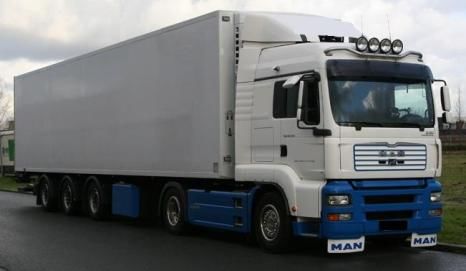
a receptacle on the property boundary (eg for semi-rural and rural
                        properties).

2.1.1.3               Characteristics of “service” articles

Parcel Post          Articles sent under Australia Post’s Parcel Post service:
articles                are barcoded
                        are required to be recorded (usually by scanning the barcode using a
                        PDT, or as otherwise instructed by Australia Post)
                        may require a signature upon delivery.

Express Post         Express Post is a guaranteed next-day-delivery service to addresses
articles             that are within the next-business-day network. Express Post articles:
                        are barcoded
                        are required to be recorded (usually by scanning the barcode using a
                        PDT, or as otherwise instructed by Australia Post)
                        may require a signature on delivery.

Signature service     Signature services provide Australia Post’s customers with the ability to
articles              trace the location and confirm delivery of an article. Signature services
                      include and are not limited to:
                          eParcels*
                          Parcel Post *
                          Express Post *
                          Express Post Platinum Satchels
                          Registered Post
                          Receipted Delivery
                          International items
                          Star Track deliveries
                      *Signature services may be required with these products
                      Articles sent under any of Australia Post’s signature services:
                         are barcoded
                         are required to be recorded (usually by scanning the barcode using
                         a PDT or as otherwise instructed by Australia Post)
                         are required to be delivered “to the door” at an address in order to
                         obtain a signature on delivery (Australia Post will provide
                         instructions on procedures when no one is at home).

Signature services eParcels are typically business-to-business or business-to-customer
– eParcel articles parcels and may consist of one parcel or multiple parcels making up a
                      single consignment.

Call For Return      Call For Return is an arrangement Australia Post has with various
articles             merchants that enables a merchant to request that articles be
                     collected from the merchant’s customer and returned to the merchant
                     through Australia Post’s network.
                     A Call For Return generally involves co-ordinating the collection with the
                     merchant’s customer. However, collection is undertaken during the
                     normal course of delivery (i.e. the contractor is not responding on an on-
                     call basis).
                     Call For Return articles are typically only parcels, and the contractor

Page 8                              Australia Post                    CONTRACT MANAGEMENT
                                                                      Version 0.1 December 2014
will be required to:
attend the customer’s premises
affix a barcode label to the article being collected (provided for the
purpose)
scan the label with the PDT
transport the collected article to the nominated Australia Post
facility
deliver the article to an authorised Australia Post representative.
Note that although a signature is not required at the point of collection,
in some cases a receipt may need to be handed to the merchant’s
customer at the time of collection (unless there is no one in attendance
at the point of collection).
2.1.1.4 Article containers
Private mail bag This is a service where customers pay to receive their mail in a secured
bag. Private mail bags are delivered to residential and business
addresses that are typically beyond local township areas.
Depot bags Depot bags are containers of articles that are transported to secure
locations, typically depot boxes. These depot boxes are placed along
mail delivery routes. A postal delivery officer will collect depot bags that
have been placed in the depot boxes, reload the vehicle with mail from
the depot bag, then continue their delivery round.
Mail bags Mail bags are containers of articles that are typically transported
between Australia Post facilities. They are typically a large bag
measuring up to 122cm by 74cm.
Unit load device ULDs are strong and stackable metal-
(ULD) framed containers (similar to an
enclosed pallet) that can carry many
articles or other containers. They are
typically transported between
Australia Post facilities by heavy
vehicles, like trucks. Their
characteristics are:
external dimensions 117 x 117 x
114.2cm
a safe working load of 600kg (but
generally will be limited to
approximately 400kg of articles).
ULDs are capable of being stacked. When stacking ULDs in vehicles,
contractors must comply with the load restraint guidelines for their
vehicles. For more information, see Section 3.9.
CONTRACT MANAGEMENT Australia Post PAGE 9
Version 0.1 December 20142.1.1.5 Article volumes
Article volumes The Mail Service Specifications state the approximate total number of
articles delivered in the 12 month period between the dates specified
(set out opposite the heading “Approximate number of [articles]”).
Australia Post strives to provide accurate information about expected
volumes, which are based on historical data. However, the number of
Articles actually delivered may vary from the number of Articles stated
in the Mail Service Specifications due to factors like population growth
and changes within the delivery area over time.
Under the Mail Contractor Agreement, Australia Post does not
guarantee a contractor a minimum or maximum number of articles.
For unit rate contracts, Australia Post cannot guarantee a minimum or
maximum demand for the contractor’s services and so cannot
guarantee a minimum or maximum payment.
2.1.2 Schedules and timing
Work hours and The Mail Service Specifications state:
frequency the approximate hours required to perform the services (set out
opposite the headings “Estimated hours per annum/week”)
the days on which the services are required to be performed (set
out opposite the heading “Frequency of performing services”).
The estimate of hours is based on the performance of an experienced
contractor and is an average. The time actually required will depend
on:
the volume of articles received for delivery each day, which
commonly fluctuates day to day
other external factors such as traffic conditions, weather and
terrain.
Until the contractor’s personnel gain sufficient experience in providing
the services, delivery may take more time initially.
Timetable For most mail services, Australia Post will set out a timetable for
performing the services that will state the time each day when the
services must begin.
Additionally, the timetable may state times for other key activities like:
arrival times to and departure times from specific destinations
within the delivery area
scheduled breaks or waiting time.
The contractor will be required to perform the services in accordance
with the timetable at all times.
The timetable will accompany the Mail Service Specifications .
Monday deliveries Generally, the number of articles for delivery on Mondays is higher than
other days – sometimes much higher. Therefore the time required to
perform the services on Mondays will often be greater than on other
days.
Page 10 Australia Post CONTRACT MANAGEMENT
Version 0.1 December 2014Peak periods Other occasions where the number of articles for delivery is higher than
usual will include:
the day after a public holiday
the days leading up to peak periods, like Mother’s Day, Father’s
Day, Easter and Christmas.
Again, the time required to perform the services on and leading up to
peak periods will often be greater than on other days.
The tenderer should address the resources required for Mondays and
peak periods in their operational and contingency plans (see Section 3).
2.1.3 Delivery
Important Tenderers should refer to the Sample Contract, Schedule of General
information about Specifications, S2 Delivery of Articles for important information about
delivery delivery requirements.
2.1.3.1 Delivery preparation
Sequencing Generally, articles will require sequencing before delivery. Sequencing is
the process of sorting articles into the same sequence as the delivery
points.
Sequencing can at times involve a high level of work effort but is
important for efficiency of delivery.
In addition to sorting articles into delivery order, sequencing involves:
identifying articles for redirection (on-forwarding to a new address)
recording barcoded articles (either using a PDT or as otherwise
directed by Australia Post)
returning undeliverable articles to the sender (as directed by
Australia Post).
2.1.3.2 Delivery area and distances
Delivery area The delivery area is the geographical area in which the services are
required to be performed. The delivery area is defined by a description
in, or a map accompanying, the Mail Service Specifications.
Delivery distances Australia Post provides an estimate of the distance travelled in
travelled performing the services. The approximate distance travelled per annum
and per day in performing the services is set out opposite the heading
“Approximate distance travelled” in the Mail Service Specifications.
Delivery & A delivery point is any location to which articles are delivered or from
collection points which they are collected when services are being performed. The
approximate number of delivery points within the delivery area is set
out opposite the heading “Approximate number of delivery points
served” in the Mail Service Specifications.
CONTRACT MANAGEMENT Australia Post PAGE 11
Version 0.1 December 2014Tenderers should travel around the delivery area in order to familiarise
themselves with times, distances, prevailing road conditions, access
and other factors before submitting their tender.
2.1.4 Pricing
2.1.4.1 Contract price structure
Types of pricing The Mail Service Specifications will request that the tenderer submit
their tender price generally as either:
a rate per annum, or
a rate per unit, or
on occasions, a rate other than per annum or per unit.
Total per annum The total per annum estimate of costs in the Tender Cost Statement is
estimate of costs the sum of all cost components in the Tender Cost Statement (for further
information about completing the Tender Cost Statement, see Section 5).
Per annum rate For a per annum rate contract, the agreed total per annum estimate of
price structure costs submitted in the Tender Cost Statement will become the contract
fee.
Unit rate price For a per unit rate contract, the agreed total per annum estimate of
structure costs submitted in the Tender Cost Statement will be the starting point
for calculating the individual unit rates.
After calculating the total per annum estimate of costs, tenderers should
use the “Approximate number of [articles]” stated in the Mail Service
Specifications to calculate the unit rates.
Other payment If a payment type other than per annum or per unit rate is required, this
type contracts will be stated in the Mail Service Specifications.
2.1.5 Payment cycle
Payment schedule Australia Post pays its contractors monthly.
th
The monthly payment for annual rate contracts will be 1/12 of the
contract fee and the monthly payment for unit rate contracts will be
the number of units delivered multiplied by the unit rates.
Australia Post will provide contractors with a schedule of payment
dates.
Page 12 Australia Post CONTRACT MANAGEMENT
Version 0.1 December 20142.1.6 Vehicle Requirements
2.1.6.1 Vehicles in general
Vehicles The contractor will be required to supply and maintain suitable vehicles
necessary for performing the services. The vehicles must be capable of
keeping mail articles secure and protected from the elements at all
times.
Age of vehicles As a general rule, Australia Post requires vehicles to be less than seven
years old at commencement of the contract excluding SMD and RSD
contracts. Any variation to this requirement will be noted in the Mail
Service Specifications.
Colour of vehicles As a general rule, Australia Post requires vehicles to be white. Any
variation to this requirement will be noted in the Mail Service
Specifications.
Vehicle type and A description of the vehicle type and numbers suggested by Australia
numbers Post which may be suitable for performing the services may be set out
opposite the heading “Vehicle type and number” in the Mail Service
Specifications.
It is entirely the responsibility of the contractor to assess the type and
number of vehicles necessary for performing the services. The
contractor must also consider the need for a backup vehicle(s) in case
of vehicle breakdown or peak periods. This should be addressed
specifically in the contingency plan.
Suitability of Without limiting the detailed requirements regarding vehicles contained
vehicles in the Mail Contractor Agreement, vehicles must be in good condition,
reliable and roadworthy. All vehicles must be presented to Australia
Post for approval before the contract commencement date.
Australia Post may reject any proposed vehicle that:
may be considered unsuitable for the purpose of providing the
services
does not comply with the requirements of the Mail Contractor
Agreement
is not in a safe and good working condition
2.1.6.2 Motorcycles
Honda NBC110 Australia Post uses the Honda NBC110 and the information in this
section refers to this model.
Other brands and Tenderers may wish to purchase another brand of motorcycle but must
models of ensure that:
motorcycles it can carry sufficient mail articles for efficient mail delivery and
complies with the maximum engine capacity limitations for riding on
the footpath
CONTRACT MANAGEMENT Australia Post PAGE 13
Version 0.1 December 2014Motorcycle engine Tenderers should note that most state laws limit motorcycles to an
capacities engine capacity of 110cc for riding on pedestrian footpaths. The
exception is Queensland, which allows for engine capacities up to
125cc.
Tenders should refer to their state or territory transport authority for
further information.
Contractors wishing to purchase a new NBC110 will need to obtain a
Purchasing the letter from Australia Post to Honda, confirming that you require a
Honda NBC110 motorcycle to perform the services.
Contractors wishing to purchase from the second-hand market should
ensure that the model of motorcycle is suitable for postal delivery work.
Speed limits on Motorcycles ridden on public footpaths/nature strips for mail delivery
footpaths/nature are restricted to a maximum speed of 7 or 10km per hour (depending on
strips state/territory).
As regulations are subject to change, please check with your local
state/territory transport authority regarding local transport
regulations.
Honda NBC110 If the Honda NBC110 is to be ridden at or near the safe working load
tyres limits (see table below), it is recommended that a larger profile tyre with
higher load rating is fitted (eg Link International Vee Rubber 300x17).
Carrier system and The Honda NBC110 is designed to hold a carrier system consisting of
load limits lightweight Safepak2 frames and pannier bags that can be used for
carrying mail. The following table sets out Australia Post’s maximum
safe working load limits for the NBC110, specifically with respect to the
carrier system.
Item Safe working load approved
Maximum rider 100kg (105kg with personal protective
weight limit equipment)
Carrier racks/bags 15kg
Top Pack 5kg
Mail load on rear Up to 30kg (equally divided between
panniers(total) rear panniers)
Mail load on Up to 4.5kg (mail should not be carried in
handlebar-mounted the mounted front carrier until the first
front carrier delivery point is reached)
Figure 2-1 Safe working loads for Honda NBC110
The Contractor must ensure that the safe working load limits for the
vehicles used in performing the services are not exceeded.
Page 14 Australia Post CONTRACT MANAGEMENT
Version 0.1 December 2014If another brand of motorcycle is used, the contractor should:
seek advice from the manufacturer about suitable carrier systems
obtain an engineering opinion about the effect that the carrier
system has on motorcycle stability and safe handling
ensure that the carrier system is capable of keeping the mail safe
and protected from the elements at all times
Note that Clause 20 of the Mail Contractor Agreement requires you to
always use and maintain your equipment (in this case your
motorcycle) in accordance with the manufacturer’s specifications.
2.1.7 Equipment requirements
Fire extinguishers If a fire extinguisher is required to be carried in the vehicle/s, a
description of the type and number of fire extinguisher/s required is set
out opposite the heading “Fire extinguisher type and number” in the
Mail Service Specifications.
Communication The contractor and their personnel are required to be contactable at all
devices times while performing the services. The contractor is therefore
required to provide all personnel with communication devices such as
mobile telephones or two-way radios.
Handling aids Handling aids may be necessary to assist contractors in handling large
articles and containers. Handling aids used correctly reduce the risk of
injury (see also Potential Hazards, Section 3).
Tenderers should note that containers for delivery may be up to 16kg
and parcels may be up to 32kg.
The contractor will not be entitled to any additional compensation (in
excess of the contract fee) with respect to or arising from the weight or
volumetric measurement of such containers or parcels.
Some examples of handling aids are trolleys and load shifting
equipment.
Trolleys A trolley may be useful in moving a large volume of articles or
containers. Australia Post may use trolleys during operations on its own
premises. However, if the contractor or their personnel are required to
use a trolley away from Australia Post’s premises, the contractor will be
required to supply their own.
Any handling aids that are considered suitable (or required) for
performing the services to be supplied by the contractor will be set out
opposite the heading “Specific Handling Aids” in the Mail Service
Specifications.
CONTRACT MANAGEMENT Australia Post PAGE 15
Version 0.1 December 2014Load shifting There are several types of load shifting equipment to assist in moving
equipment heavy loads. Generally, such equipment is used in the performance of
transport services.
Any load shifting equipment that is considered suitable (or required) for
performing the services to be supplied by the contractor, or required by
the contractor or their personnel to operate, will be set out opposite the
heading “Specific Loading and Unloading Requirements” in the Mail
Service Specifications.
Below are examples of load shifting equipment.
Forklift
Pallet jack
Walkie stacker (manual) Walkie stacker
(motorised)
The contractor must ensure their personnel have the appropriate and
current equipment operator’s licences / permits and driver licences.
Requirements Where handling aids and/or load shifting equipment are required for
regarding handling performing the services, the requirements will be described in the Mail
aids and load Service Specifications. Tenderers should note the following.
shifting equipment The contractor must comply with Clause S5 of the Mail Contractor
use Agreement, which addresses material handling aids.
The handling aids must be operated in compliance with all relevant
laws and standards, and with Australia Post’s occupational health
and safety policies, procedures, guidelines and directions.
The contractor must ensure that all personnel hold relevant and
current licences for any handling aids and/or load shifting
equipment that require licensing.
The contractor’s personnel may be required to operate the handling
aids and/or load shifting equipment while working alone.
The contractor will be required to demonstrate in their WH&S
management plan how it intends to ensure the safety of all their
personnel operating the handling aids and/or load shifting
equipment including, but not limited to, when their personnel are
working alone.
Note that Clause 20 of the Mail Contractor Agreement requires you to
always use your equipment (in this case your handling aids and/or
load shifting equipment) in accordance with the manufacturer’s
specifications.
Page 16 Australia Post CONTRACT MANAGEMENT
Version 0.1 December 20142.1.8 Specialised Equipment
2.1.8.1 Introduction
General principles Specialised equipment may sometimes be required to perform the
services. Such equipment is generally leased to contractors from
Australia Post and includes:
portable data terminals (PDTs)
mail sorting frames.
The terms and conditions of specialised equipment usage are set out in
the Mail Contractor Agreement.
Liability for Under the Mail Contractor Agreement, the contractor could be liable for
equipment the replacement or repair of specialised equipment that is lost, stolen
or damaged. It is accepted that any equipment may suffer wear and
tear through normal usage.
The contractor may be required to insure any specialised equipment
leased from Australia Post which will be set out in the contract
specifications.
Portable data PDTs are used to scan article barcodes and
terminals (PDTs) record customer signatures. The PDT kit
comprises a hand-held scanner and
accessories.
The number of PDTs that are required for
performing the services will be set out
opposite the heading “Number of PDTs
currently required” in the Mail Service
Specifications.
The hire fee for the PDTs will be set out
opposite the heading “Current PDT hire fee”
in the Mail Service Specifications.
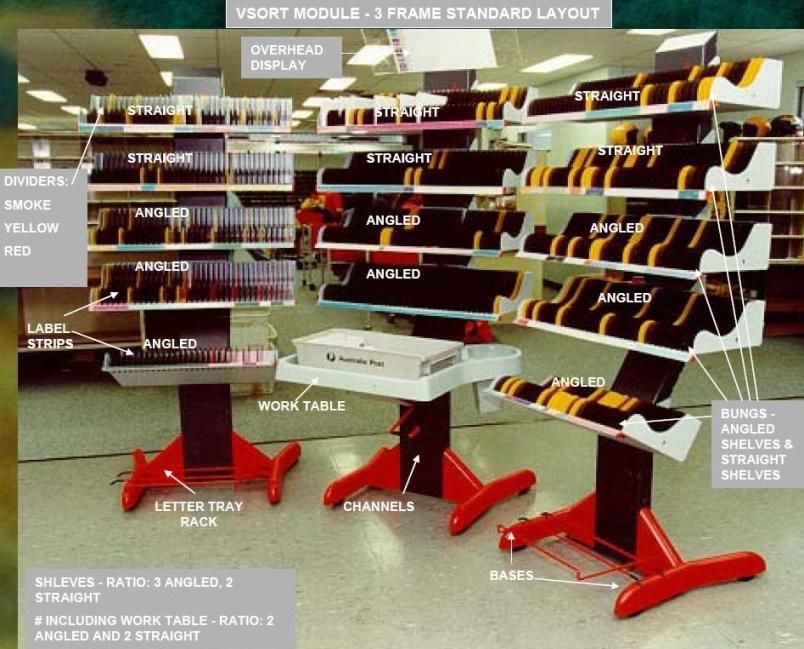
Sorting frames Mail sorting frames are used for sequencing mail prior to delivery.
The number of sorting frames that are required for performing the
services will be set out opposite the heading “Sorting equipment
required” in the Mail Service Specifications.
The hire fee for the sorting frames (if any) will be set out opposite the
heading “Sorting equipment hire fee” in the Mail Service Specifications.
Only the VSORT model of sorting frame is required to be leased.
The replacement value for the sorting frames (for insurance purposes)
will be set out opposite the heading “Sorting equipment replacement
value” in the Mail Service Specifications. Only the VSORT model of
sorting frames that are not stored in Australia Post corporate premises
are required to be insured.
CONTRACT MANAGEMENT Australia Post PAGE 17
Version 0.1 December 2014Figure 2-2 Example of a VSORT frame
Keys Keys will be required to gain access to SPBs and depot boxes. Any keys
required for performing the services will:
be provided to the contractor by Australia Post
remain the property of Australia Post
be used only in the performance of services.
2.2 Street Mail &/or Roadside Mail Delivery
Service
Service description Articles are delivered to business and residential addresses on street
mail and roadside mail delivery services.
Street mail services can be differentiated from roadside mail delivery
services by the following characteristics.
Service Delivery Route Delivery Area
Street mail City / suburban Metropolitan / fringe metro /
streets country townships
Roadside Country roads Fringe metro and/or country
mail areas (properties beyond
the township)
Page 18 Australia Post CONTRACT MANAGEMENT
Version 0.1 December 2014Articles Typical articles and types of containers handled on street mail and
roadside mail delivery services could be a combination of:
Letters
Small Parcels
Private Mail Bags
Depot Bags
Some articles may require scanning of the barcode and signatures. For
more information, see Section 2.1.1.2
Delivery Delivery preparation will involve sequencing articles into delivery order.
Articles will then be delivered to a mailbox or receptacle, or as
otherwise directed by Australia Post.
Articles for delivery are provided to the contractor each day the
services are to be performed, and are required to be delivered the same
day that the contractor receives them.
Pricing Generally, a per annum rate will be requested from tenderers for street
mail and roadside mail delivery services (for more information, see
Section 2.1.4). For the services being tendered, the pricing required will
be stated opposite the heading “Pricing structure” in the Mail Service
Specifications.
Typical vehicles Street mail Roadside mail
used Due to the majority of street Due to the majority of roadside mail
mail services being in urban services being in country and
areas, the most common vehicle regional areas, vehicles used would
used would be a motorcycle. be sedans, station wagons or vans.
Equipment Typical equipment used in performing street mail and roadside mail
delivery services are scanners, keys, sorting frames or trolleys and will
be outlined in the Mail Service Specifications. For more information, see
Sections 2.1.7 and 2.1.8.
CONTRACT MANAGEMENT Australia Post PAGE 19
Version 0.1 December 20142.3 Parcel Delivery Service
Service description Articles are delivered to both business and residential addresses on
parcel delivery services.
Some articles may be required to be collected from addresses and
delivered to an Australia Post facility.
Articles Typical articles are generally parcels that require scanning of the
barcode and signatures. For more information, see Section 2.1.1.2
Delivery Preparing for delivery may involve the primary sorting process
separating articles for individual parcel delivery services and
segregating them from other articles. Primary sorting may be
performed by Australia Post staff or, on occasions, may be required to
be performed by contractors.
If the contractor is required to perform primary sorting, this
requirement will be stated opposite the heading “Additional work” in the
Mail Service Specifications.
Where the contractor is provided with a PDT, all articles that have
Australia Post barcodes will be required to be scanned using the PDT
before commencing delivery.
After sequencing into delivery order, articles will be required to be
delivered to the door at each address, or as otherwise directed by
Australia Post.
Articles for delivery are provided to the contractor each day the
services are to be performed, and are required to be delivered the
same day that the contractor receives them.
Equipment
Typical equipment used in performing parcel delivery services is
generally PDT scanners and trolleys. For more information, see Sections
2.1.7 and 2.1.8.
Pricing Either a per annum rate or a per unit rate will be requested from
tenderers for parcel delivery services (for more information, see Section
2.1.4). For the Services being tendered, the pricing required will be
stated opposite the heading “Pricing structure” in the Mail Service
Specifications.
Page 20 Australia Post CONTRACT MANAGEMENT
Version 0.1 December 2014Typical vehicles Vans are used for parcel delivery services.
used
Van Signage
You will be required to fit signage provided by Australia Post, this
signage may be of semi permanent nature. This signage may change
from time to time and you will be required to update.
2.4 Street Posting Box (SPB) Clearance Service
Service
description Articles and mail bags are collected from SPBs and transported to an
Australia Post facility on SPB clearance services.
Articles Typical articles are generally letters, small parcels and mail bags handled
on SPB clearance services. For more information, see Section 2.1.1
Collection Preparation may involve obtaining empty mail bags from an Australia Post
facility.
Articles and mail bags may be required to be collected from some SPBs on
more than one occasion each day. Signage on the side of each SPB informs
customers of the last collection time from the SPB each day. Contractors
must wait until after this time to collect articles and mail bags from SPBs
for the final time on each day when the services are performed.
Articles and mail bags that are collected from SPBs each day on which the
services are performed are to be transported to the Australia Post facility
the same day they are collected.
Pricing Generally, a per annum rate will be requested from tenderers for SPB
clearance services (for more information, see Section 2.1.4). For the services
being tendered, the pricing required will be stated opposite the heading
“Pricing structure” in the Mail Service Specifications.
Typical vehicles Vans are typically used for SPB clearance services.
used
CONTRACT MANAGEMENT Australia Post PAGE 21
Version 0.1 December 2014Equipment Typical equipment used in performing SPB clearance services will generally
be keys and trolleys. For more information, see Sections 2.1.7 and 2.1.8.
2.5 Depot Bag Delivery Service
Service description Depot bags are collected from Australia Post facilities and then
delivered to secured locations throughout the delivery area on depot
bag delivery services.
Articles Typical articles are bags containing letters, satchels, small parcels and
small packets used for delivery locations of the depot bags. For more
information, see Section 2.1.1
Delivery Delivery preparation will involve loading all depot bags into the vehicle.
As it is common for more than one depot bag to be delivered to a
single location, the contractor may wish to group all depot bags for
the same location together in the vehicle.
Depot bags for delivery are provided to the contractor each day on
which the services are to be performed, and are required to be
delivered the same day that the contractor receives them.
Pricing Either a per annum rate or a per unit rate will be requested from
tenderers for depot bag delivery services (for more information, see
Section 2.1.4). For the services being tendered, the pricing required will
be stated opposite the heading “Pricing structure” in the Mail Service
Specifications.
Typical vehicles Vans are typically used for dept bag services services.
used
Equipment Typical equipment used in performing depot bag services will generally
be keys and trolleys. For more information, see Sections 2.1.7 and 2.1.8.
2.6 Miscellaneous Service
Service description Articles may be either delivered to or collected from various types of
delivery points on miscellaneous services.
The precise work for each miscellaneous service is determined on an
individual basis because the work required to be performed varies from
one miscellaneous service to another.
Articles Typical articles and types of containers handled on miscellaneous
services may vary and will be stated in the Mail Service Specifications.
For more information, see Section 2.1.1
Delivery preparation and other delivery tasks will vary depending on
Delivery the services to be performed and the types of articles carried.
The requirements for each miscellaneous service will be stated in the
Mail Service Specifications.
Page 22 Australia Post CONTRACT MANAGEMENT
Version 0.1 December 2014Pricing Generally, a per annum rate will be requested from tenderers for
miscellaneous services (for more information, see Section 2.1.4). For the
services being tendered, the pricing required will be stated opposite the
heading “Pricing structure” in the Mail Service Specifications.
Typical vehicles Vans are typically used for miscellaneous services.
used
Equipment Typical equipment used in performing miscellaneous services will be
stated in the Mail Service Specifications. For more information, see
Sections 2.1.7 and 2.1.8.
2.7 Inter/Intrastate Transport Service
Service description Containers are transported typically from one Australia Post facility to
other Australia Post facilities on inter/intrastate transport services. It is
common for inter/intrastate transport services to transport articles and
containers to more than one Australia Post facility in the delivery area.
Inter/intrastate transport services can be classified as either light
transport or heavy transport, depending on the number and type of
articles or containers required to be carried.
Articles Typical articles and types of containers handled on miscellaneous
services may vary and will be stated in the Mail Service Specifications.
For more information, see Section 2.1.1
Delivery Delivery preparation will involve loading articles and containers into the
vehicle. Articles and containers are then transported to their intended
destination, where they are unloaded from the vehicle.
The contractor may also be required to return empty containers to an
Australia Post facility each day on which the services are performed.
Timetable for the The contractor must attend the Australia Post facility to begin each
services day’s services in accordance with the timetable for the services. The
timetable will state:
scheduled arrival times to and departure times from Australia Post
facilities
scheduled breaks and waiting time.
The contractor should note that times shown as breaks in the
timetable, or waiting time, are not subject to remuneration by
Australia Post and must be regarded as a cost of performing the
services to be incurred by the contractor.
Pricing Generally, a per annum rate will be required from tenderers for
inter/intrastate transport services (for more information, see Section
2.1.4). For the services being tendered, the pricing required will be
stated opposite the heading “Pricing structure” in the Mail Service
Specifications.
CONTRACT MANAGEMENT Australia Post PAGE 23
Version 0.1 December 2014Typical vehicles Light transport Heavy transport
used Typical vehicles used would be Typical vehicles used would be
large vans or light to medium large trucks.
trucks.
Equipment Typical equipment will vary from forklifts, pallet jacks and walkie
stackers which will be specified in the Mail Contract Specifications. For
more information, see Sections 2.1.7 and 2.1.8.
Page 24 Australia Post CONTRACT MANAGEMENT
Version 0.1 December 2014Section 3: Contractors Responsibilities
3.1 Introduction
About this section This section discusses the responsibilities of the contractor in
performing the services.
3.2 Business Structure
Preference to Australia Post has a preference for all contractors to be either:
contract with a an existing company or
company willing to become a company before executing the Mail
Contractor Agreement.
Who can submit a The preference for companies does not prevent a natural person
tender from submitting a tender. Australia Post will accept a tender from:
a company
a person willing to form a company
a person not willing to form a company.
However, tenderers should note Australia Post’s preference for
companies.
Any company that submits a tender must be an Australian
registered company.
A person who submits a tender must be an Australian citizen or a
permanent resident.
Business records The contractor will need to keep proper written (or computerised)
business records, for example:
financial records complying with taxation requirements
payment of personnel (e.g. wages, superannuation)
records of insurances
Work Health and Safety management plans
records of vehicles (e.g. expenses, repairs).
Incorporation The following list of incorporation service providers may assist
services tenderers in obtaining information about forming a company.
Tenderers are not obliged to use the service providers listed.
The assistance of incorporation service providers should not be
considered a substitute for independent legal and financial advice.
Australian Company Incorporation Services - http://www.acis.net.au
Incorporator.com.au - www.incorporator.com.au
Corporate Express - www.corporateexpress.com.au
3.3 Tax Requirements
Introduction The information in this section does not constitute
taxation advice. The tenderer is encouraged to seek
CONTRACT MANAGEMENT Australia Post PAGE 25
Version 0.1 December 2014independent taxation advice specific to its own
circumstances
Your Under the tax system
situation
Your annual You should have an Australian Business
turnover is Number (ABN) and you are required by
$75,000 or law to register for the Goods and
more. Services Tax (GST). You cannot register
for the GST without an ABN.
Your annual You should have an ABN but it is optional to register for the GST.
turnover is
less than
$75,000.
If you do not Australia Post is required by law to
have an ABN. withhold tax at the top marginal rate
plus Medicare levy
Further information can be obtained from the Australian
Tax Office (ATO) – www.ato.gov.au
Withholding If the contractor does not provide Australia Post with its
tax ABN, Australia Post will be required to:
withhold tax at the top marginal rate plus Medicare
levy from the monthly invoice amount
remit the tax withheld to the ATO.
The ATO requires businesses to submit a Business
Business Activity Statement to report and pay a number of tax
Activity obligations, including GST, Pay As You Go (PAYG)
Statements instalments, PAYG withholding and Fringe Benefits Tax.
(BAS) Reporting obligations depend on the annual turnover.
Stamp duties The contractor may also be required to pay stamp duty
on the Mail Contractor Agreement (if applicable). The
tenderer should seek independent advice regarding
stamp duty.
Fuel Tax Credit Tenderers may wish to seek advice on whether they are
Scheme eligible to register for the Fuel Tax Credit Scheme with
the ATO.
3.4 Performance Requirements
Performance The contractor will be required to perform the services in
requirements for accordance with the performance requirements as
each contract defined in:
the Mail Contractor Agreement
the Mail Service Specifications (including any
accompanying timetable and/or delivery area
description or map).
Note that requirements may be subject to change.
Page 26 Australia Post CONTRACT MANAGEMENT
Version 0.1 December 2014Key performance It is important to note that the services must be performed at the
indicators (KPIs) level required by the KPIs set out in Clause S1 of the Mail Contractor
Agreement.
The performance requirements should be read and clearly understood by all
tenderers before they submit their tender.
Please refer to the Sample Contract for the clauses mentioned
above.
Australia Post Section 32 of the Australia Post Terms and Conditions (APT&C)
Terms & Conditions relates to services supplied to a person by Australia Post. As agents
of Australia Post, all contractors are thus bound (as is Australia Post)
by the APT&C. This document is required reading.
For more information on the Australian Postal Corporation Act 1989,
Section 32, please see
http://www.austlii.edu.au/au/legis/cth/consol_act/apca1989337/s32.h
tml
3.5 Operational & Contingency Plans
Introduction The tenderer will be required to document and provide an
operational plan and a contingency plan to Australia Post as part of
the tender submission. These plans are to demonstrate the tenderers
ability to satisfactorily perform the services under the Mail
Contractor Agreement.
Operational plan The operational plan must, as a minimum, address:
the number and nature of the runs or rounds necessary in
performing the services
the number of personnel proposed and the hours each person will
be engaged in performing the services
whether the personnel will be engaged as employees or
subcontractors
the estimated starting and finishing times for all personnel
the number and type of vehicles to be used in performing the
services
Contingency plan The contingency plan must address:
the arrangements that will be in place to deal with any
temporary inability of the contractor’s personnel to perform the
services (whether due to illness, incapacity, recreation leave or
any other reason)
the arrangements that will be in place to accommodate
unavailable vehicles, equipment or tools of trade due to
breakdown or maintenance
the arrangements that will be in place to accommodate periods
of increased demand for services during peak periods
how relevant WHS information and training will be provided to
those personnel the contractor may engage to perform the
services during any contingency period.
CONTRACT MANAGEMENT Australia Post PAGE 27
Version 0.1 December 2014Operational plans and contingency plans must cover the above
areas and are to be submitted together with the Tender Form. These
plans will be assessed as part of the tender assessment criteria.
3.6 Work Attire
Corporate image Australia Post requires that the contractor’s personnel wear
designated work attire while performing the services to maintain
Australia Post’s corporate image.
It is the sole responsibility of the contractor to purchase the work
attire and maintain it in good condition for a high standard of
presentation.
Indicative costing The designated contractor’s work attire will be available directly to
the contractor from Australia Post’s preferred supplier, at the
contractor’s cost. Tenderers should make an allowance for these
costs in their tender submission.
Logos and badges By purchasing the designated work attire the contractor will own the
garments. However, the logos and badges affixed to the garments
will always remain the property of Australia Post and must be
returned to Australia Post at the expiry or termination of the Mail
Contractor Agreement.
Work attire meant Australia Post allows the contractor’s personnel to wear the
for Australia Post designated work attire while performing the services for Australia
work only Post. Australia Post does not allow the contractor to wear the
designated work attire while performing non-Australia Post services.
Australia is constantly reviewing its work attire requirements and
reserves the right to change the provisions under which work attire is
managed under the contract.
3.7 Transport Laws
Compliance with Contractors must be aware of and comply with all National and
relevant transport State relevant transport laws and regulations in which services are
laws to be performed. The Mail Contractor Agreement requires all persons
who operate vehicles to hold a current driver’s licence. Australia Post
will require evidence of drivers’ licences. For further information
please check with National and State Bodies.
3.8 Work Health and Safety (WHS)
3.8.1 Australia Post’s WHS Responsibilities
Introduction The following information is provided to help tenderers understand:
Australia Post’s roles and responsibilities with respect to WHS
Page 28 Australia Post CONTRACT MANAGEMENT
Version 0.1 December 2014You can also read


