INFOSECURA - Security Printers
←
→
Page content transcription
If your browser does not render page correctly, please read the page content below

year 23 march 2020/ issue 83

INFOSECURA   24-26/03/2021

                                                                                                   PL A N TO PA R T I C I PAT E

                                                           LYO N I F R A N C E

A magazine for the security printing industry worldwide, published four times a year by
Intergraf in Brussels and mailed to named members of the security printing community,
                                                                                                                       18/02/20        1
such as security printers, their suppliers, banknote issuing, government and postal          www.intergrafconference.com
authorities as well as police forces in more than 150 countries.                      www.intergrafconference.com
                                                                                                    www.intergraf.eu              /1
editorial / INFOSECURA / march 2020

                                                         The symbolism of cash and ID
Contents                                                 documents
  3                                                                      In this issue of Infosecura there are some subjects that come
                                                                         back over and over again. In the banknote sector it is central
  What’s in a name?                                                      bank digital currency, disappearing ATMs and the uncertainty
                                                                         about a - perhaps coming, perhaps not - cashless society. In
  5                                                                      the ID area it is the idea of belonging.
  New leadership at the ECB and the BoE
                                                                         The idea for an economy to go cashless is not a very recent
                                                         phenomenon. The subject entered public discussion when the US economist
                                                         Prof. Kenneth Rogoff published his book “The curse of cash” in 2016, in which
  6                                                      he claimed that the world is awash in cash and most of it is used to finance tax
  Central Bank Digital Currency revisited                evasion, corruption, terrorism, the drug trade, human trafficking, and the rest
                                                         of a massive global underground economy. Paper money also cripples mone-
  7                                                      tary policy by making it impossible for central banks to lower interest rates
                                                         significantly below zero, he wrote. Much of the former argument has been
  Sweden thinks about the Euro - again                   debunked several times but nevertheless cash is retreating in several counties.
                                                         It seems that using cashless payment methods is simply more convenient for
  8                                                      most people. But aside from purely practical considerations, e.g. not having a
  Where to get the cash from now?                        bank account, etc. why do so many people still insist on cash? Here, emotional
                                                         reasons may play a role: you can see and feel cash, you know how much of it
  9                                                      you have and how much you have spent... The currently extremely low interest
                                                         rate in the western world plays into this emotional response. One does not lose
   Saving a dinosaur                                     anything when keeping cash under the mattress and in some countries one
                                                         even avoids negative interest. And the idea of having something ‘for a rainy day’
  13                                                     does not cime with a digital wallet very well. It is simply too fluid.
   Are you one of them or one of us?
                                                         There are many central banks that are now looking seriously at CBDC, trying

  16                                                     to evaluate the potential risks and advantages. None of them has any direct
                                                         experience of a cashless society. The effects of any large economy going
  Knowing who comes and who goes                         cashless could change the world. But central banks cannot only look at the
                                                         ‘macro-effect’. Going cashless will affect millions of people very deeply, in
  18                                                     developed economies and even more so in developing ones. The first central
                                                         banker to decide to stop printing money has to be very brave indeed, but a
  The right not to be recognised
                                                         large helping of ruthlessness is needed as well.

                                                         As our story on the reappearance of the blue UK passport shows, in the identity
  InfoSecura is published four times a year by
                                                         sector, the emotional component seems even stronger. Throughout the Brexit
  Intergraf in Brussels. Information is accepted         period, the UK government played on the symbolic role of a different passport
  from industry contributors on a bona fide basis.       colour as a sign of independence. That the argument was hollow, as Britain
  Signed articles imply the personal opinion of the      could have kept its old passport colour while being in the EU and that it never
  author and do not necessarily reflect the policy
                                                         lost its ‘independence’ is immaterial, it worked. The tragic fate of the millions of
  of Intergraf. All rights reserved. No part of the
  publication may be reproduced or transmitted           people who are denied citizenship in the country of their birth carries of course
  in any form or by any means, electronic or             much more weight than the colour of a passport (Are you one of them or one
  mechanical, including photocopying, recording or       of us?, page 13). Moreover, it can only be solved by turning ‘them’ into ‘us’.
  use in any information storage or retrieval system     Today, millions of people around the world are denied a nationality. As a result,
  without the express prior consent of the publisher.
  Information and articles may be submitted to the
                                                         they often aren’t allowed to go to school, see a doctor, get a job, open a bank
  publisher, who is free to accept or reject any item    account, buy a house or even get married, the UN Refugee Agency UNHCR
  for publication. The publisher reserves the right to   notes. The agency is determined to end statelessness by 2024. Good ID docu-
  edit all submissions including reader’s letters.       ments ‘from cradle to grave’ will help.
  Editor-in-chief: Beatrice Klose
  Editor: Manfred Goretzki
  Editorial office and publisher:
  Intergraf, 130 A, Avenue Louise
  B-1050 Bruxelles
  T. + 32 2 230 86 46
  F. +32 2 231 14 64
                                                                                   The Editor
  intergrafconference@ intergraf.eu
  Advertising inquiries: Manfred Goretzki

2 / www.intergrafconference.com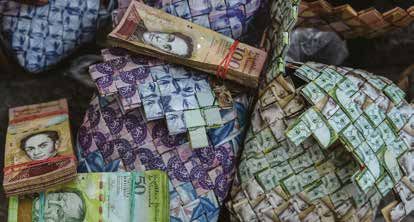
march 2020 / INFOSECURA / intergraf

                                                          is where security printers and suppliers, central
                                                          banks, government authorities, law enforcement
                                                          and industry-specific digital solution providers will
                                                          continue to converge to discuss what’s now and
                                                          what’s next in currency and identity.

                                       what’s             Join them in Lyon on 24-25 March 2021!

                                       in a
                                       name?               LAUNCH and promote
                                                           your products

W
           henever colleagues in ‘our industry’
           talked about attending “Security Printers,      exhibition sales open on 22/04/2020
           Banknotes + Security”, or even three
years before the last event, about what was                Engage in an interactive exchange with
the most interesting presentation at “Security             government and industry experts – and
Printers International Conference and Exhibition”          generate highly targeted business leads
or even before that one, about who was there
at the “Intergraf International Security Printers          Forge stronger relationships and new
Conference”, they hardly ever used these carefully         collaborations in an informal networking
crafted names for the meeting. They mostly and             environment (exhibition aperitif, walking
simply said: I went to Intergraf and it was very good      lunch and coffee breaks)
or there I met ..., whether the name Intergraf was
part of the official title or not. Because the name        Be where your customers are
may have had changed, the aim, purpose and
effect of the conference had not.
                                                           An exclusive showcase of innovations
At the last meeting of the Committee of Experts,           and know-how:
which is responsible for the content of the confer-
ence, it was decided to rename the event again             - currency and ID solutions
to align it more fully with what the participants are      - banknotes, passports and IDs
actually calling it and have been calling it over the      - security substrates
years. From now on the conference and exhibition           - security pigments, inks and
will be called ‘Intergraf Currency+Identity’ and the         consumables
name of the website that lists all the important infor-    - security fibres, taggants, threads
mation in the run-up to the event has been changed           and foils (holograms, DOV IDs)
to www.intergrafconference.com. Apart from that            - security printing and numbering
the Intergraf conference and exhibition remains              equipment
what it has always been; a focal point for the             - ID manufacturing, personalisation and
companies that produce banknotes and ID docu-                enrolment equipment
ments, their suppliers and their customers, be they        - printing and lamination plates
governments, issuing authorities or law enforce-           - foil application equipment
ment authorities.                                          - ID inspection and sorting equipment
                                                           - banknote processing systems
An unchanged focus                                         - security software and hardware
Since 1976, Intergraf has had one mission: To              - cash in transit solutions
provide an independent platform for the global             - border control equipment
security printing community. A space to connect,           - biometric solutions
exchange knowledge, and tackle the most                    - verification and forensic inspection
pressing issues in the world of currency and iden-           equipment
tity. Technology has transformed that world over
the past decade. New solutions, new topics and             Don’t miss out, book early on
new challenges have emerged. As the landscape of           www.intergrafconference.com
the industry evolved, we broadened our horizons.
Our scope expanded to create the event that you            Booths are confirmed on a first-come,
need, with the neutrality and objectivity you have         first-served basis.
come to expect from us. Today we are proud to
share our new identity. Intergraf Currency+Identity

                                                                    www.intergrafconference.com          /3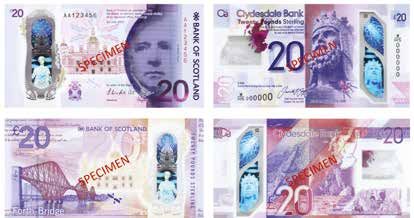
intergraf / INFOSECURA / march 2020
Selected speakers will be requested
to submit their biography, photograph,
abstract and presentation ahead
of the event, and to authorise their
publication in printed and electronic
form. Intergraf reserves the right to
withdraw confirmed speakers who
ignore these requirements from the
programme.
Call for papers As in contrast to just about all
Keen to share your know-how, other events in the field, Intergraf
insight and innovation with currency Currency+Identity has no commercial
and identity experts around the objective and is not sponsored, all
world? Please submit your paper papers presented should strive for
proposal by 04/05/2020 on www. neutrality and objectivity and avoid
intergrafconference.com overtly marketing of products or
services. This is an independent
Proposals will be reviewed by forum for industry discussion, debate
Intergraf’s Committee of Experts. and out-of-the-box thinking. Speakers
Papers must not have been should not shy away from controversy
previously presented or scheduled for but challenge the audience with
presentation at any other conference. unconventional thinking!
AGENDA @ A GLANCE
TUESDAY WEDNESDAY THURSDAY FRIDAY SATURDAY
23/03/2021 24/03/2021 25/03/2021 26/03/2021 27/03/2021
PLENARY SESSION 1 SESSION 2 SESSION 9 SESSION 10
Currency and Digital payment Opportunities and Motivation for The latest in
identity: ecosystems challenges innovation: what’s counterfeiting
preparing for – evolution or associated with new in banknotes? technologies
the future revolution? Entry/Exit Systems
SESSION 3 SESSION 4 PANEL
INTERGRAF CURRENCY HIGH
INTERGRAF IDENTITY HIGH
Smart solutions in Old dog – new Sustainability in the banknote
currency tricks: new and identity document industry
Post conference tour
production security features
and new forms of
identification
SESSION 5 SESSION 6
Sustainability in State of the art in
WORKSHOP ISO 14298
currency: morphing and
contribution to a presentation
+ CWA 15374
greener world attack detection
Currency
SESSION 7 SESSION 8
Access to cash: Digital Travel Identity
challenges and Credentials – the
new approaches next era of Currency
Exhibition aperitif identification? +Identity
Exhibition
Welcome cocktail Dinner party For certified
companies only
4 / www.intergrafconference.com
CALL FOR PAPERS
march 2020 / INFOSECURA / Banknote matters

European Central BANK                                        She is also admired as an effective communicator.
                                                             Lagarde has herself pleaded for patience, saying she
and Bank of England                                          has been on a steep «learning curve» since taking up
under new leadership                                         the job last month.
   The world economy is entering phase of
                                                             a safe pair of hands
    uncertaincy, making the jobs of the new
                                                                                          Shor tly af ter Mme
 heads of the European Central Bank and of
                                                                                          Lagarde started her
  the Bank of England all the more difficult.
                                                                                          new job, the UK
                                                                                          Chancellor of the

T
      he world of central banking has made or                                             Exchequer announced
      will make two important changes among                                               the successor to the
      its leaders. The European Central Bank                                              Governor of the Bank of
announced on November 1st, that Christine                                                 England, Mark Carney,
L agarde, former Managing Director of the                                                 whose term of office will
International Monetary Fund, has taken up her                                             end on 15 March 2020.
duties as President of the European Central Bank
(ECB) and the Bank of England will have a new                The new Governor will be Andrew Bailey, hitherto
Governor as of 15 March 2020.                                chief executive of the Financial Conduct Authority.
                                                             The Financial Times wrote that the government has
                              Christine Lagarde              placed the Bank of England in a safe pair of hands.
                              was appointed by the           The appointment of Andrew Bailey means inves-
                              European Council on            tors can expect stability and continuity at the central
                              18 October 2019 for a          bank, despite the turmoil and disruption elsewhere,
                              term of office of eight        notably around Brexit.
                              years. She succeeds
                              Mario Draghi, who was          The F T continued that there was a tempta-
                              President of the ECB           tion among ministers to recruit another “super-
                              from 1 November 2011           star” outsider like the Canadian Mark Carney
                              to 31 October 2019.            rather than the Leicester-born Mr Bailey, a veteran
                                                             of Threadneedle Street with a 34-year-long
The Economic Affairs Committee of the European               career in central banking. Mr Bailey is liked and
Parliament noted in a press release that in a first          respected by staff at the central bank. His expe-
hearing at the Parliament, MEPs across the political         rience at City regulators and as private secretary
spectrum wanted to know how the ECB can include              to former governor “Steady Eddie” George make
action on climate change in its monetary policy and          him well-qualified for the position. He is intimately
whether it would stop supporting unsustainable               familiar with what is required for the job and the
companies through its asset purchase programme.              institutions he has to supervise.

Ms Lagarde pointed out that the climate issue, while         The Guardian noted that “Mr Bailey has made
secondary to protecting price stability, would be            a point of saying that Britain, home to Europe’s
included in the ECB’s macroeconomic models and               largest financial centre, must not become a “taker”
taken into account when assessing risks and super-           of EU rules after it leaves the bloc. Tellingly, he is
vising EU banks. She also reminded MEPs that                 viewed by former Treasury chiefs as “one of us”. But
the ECB is the main buyer of European Investment             is this enough, given the age we live in”, the paper
Bank bonds, which committed to phase out invest-             asked?
ment in fossil fuels. MEPs were also concerned with
the ECB’s slow reaction to disruptive global techno-         “The last three Bank of England governors have
logical developments, such as ‘stablecoins’, which           been big figures on the international stage, with the
present an opportunity to make cheap and fast                incumbent, Mark Carney, being a central banker
cross-border payments, but at the same time pose             whose words move markets. Mr Bailey, for all that
risks to consumer protection. Ms. Lagarde replied            he is an insider’s insider, is not in the same mould.
that the ECB is attentive to technological develop-          Britain ducked its chance to hire such a transforma-
ments, conducting research projects into digital coins,      tional figure, which is strange given what lies ahead.
including the risks they might pose to stability, safety     We are all born with imperfect foresight, but there
and the security of the monetary system and indi-            are three dangers to the country’s economy clearly
vidual customers.                                            visible on the horizon: Brexit, climate change and
With a background in corporate law, she is the first         the next recession. We know next to nothing about
ECB chief who is not a trained economist.                    Mr Bailey’s thoughts on how to deal with these.”n

                                                                       www.intergrafconference.com            /5
Banknote matters / infosecura / march 2020

                                                                              jurisdictions covering close to 80 per cent of the
                     Central Bank Digital                                     world’s population). The survey asked central banks
                     Currency revisited                                       about their current work on CBDCs, what motivates
                                                                              that work, and how likely their issuance of a CBDC is.
                     The attack on cash by debit/credit cards, etc.
                      is decades old, but digital forms of payment
                                                                              The survey showed that, although a majority of
                          are no threat to sovereign currencies. By
                                                                              central banks are researching CBDCs, this work
                     contrast, crypto currencies, such as Bitcoin
                                                                              was primarily conceptual and only a few intend to
                          and lately Libra, are designed to subvert
                                                                              issue a CBDC in the short to medium term. However,
                                        state authority over money.
                                                                              a study by the US Brookings Institution published

                     T
                           alking about digital currency and especially       about a year later, in December 2019 found that
                           central bank digital currency - CBDC - until       a number of small nations, such as the Bahamas,
                           recently looked rather esoteric, it was done       Marshall Islands and Barbados, are much closer to
                    mostly by central banks in countries where bank-          issuing a form of CBDC. Barbados, even launched
                    notes were falling out of favour with the public          a block-chain versions of its Dollar in 2016. Saudi
                    and central banks needed to find new ideas to             Arabia and the United Arab Emirates will jointly issue
                    stay in the game of controlling the money supply.         a digital currency named “Aber” for interbank money
                    Infosecura reported on several such central bank          transfer - no date given - and Thailand developed a
                    studies, but suddenly the subject has moved from          prototype CBCD for real time interbank settlements,
                    the fringes to the centre. At the first appearance of     with testing for cross border transfer under way.
                    the new head of the ECB, Christine Lagarde, at the        Thailand has no immediate plans for retail CBDC for
                    European Parliament, MEPs complained about the            consumers. Turkey is running a pilot test of digital
                    slow reaction of the ECB to disruptive global tech-       Liras, which is expected to be completed at the end
                    nological developments, such as ‘stablecoins’ (or         of 2020. And finally Uruguay successfully piloted the
                    digital currencies generally). Ms. Lagarde replied        E-Peso from November 2017 to April 2018.
                    that the ECB is watching technological develop-
                    ments attentively, conducting research projects           A closer look at cbdc
                    into digital currencies, including the risks they might   At the Intergraf conference in Copenhagen in
                    pose to stability, safety and the security of the         October, Christian Pfister, Advisor to the Governor of
                    monetary system and individual customers.                 the Banque de France, in the abstract to his paper
                                                                              explained the ins and outs of central bank digital
                    It is not the only central bank to do so. A press         currency to non-experts. He distinguished between
                    release by the ECB (among others) stated that the         wholesale CBDC (WCBDC) and retail CBDC
                    Bank of Canada, the Bank of England, the Bank of          (RCBDC). WCBDC would be accessible only to
                    Japan, the European Central Bank, the Sveriges            financial institutions while RCBDC would be acces-
                    Riksbank and the Swiss National Bank, together            sible to the public, including financial institutions.
                    with the Bank for International Settlements (BIS),
                    have created a group to share experiences as they         One motive to issue a WCBDC could be to promote
                    assess the potential cases for central bank digital       financial innovation and lower transactions costs
                    currency (CBDC) in their home jurisdictions.              using Blockchain. As the underlying technology
                                                                              (the Distributed Ledger Technology – DLT) does not
                    The group will look at the economic, functional and       involve high costs, the issuance of a CBDC could
                    technical design choices for CBDC, including cross-       also improve the openness of the financial services
                    border interoperability; and sharing of knowledge on      industry by supporting competition through entry of
                    emerging technologies. It will closely coordinate with    new providers. The motives to issue a RCBDC may
                    the relevant institutions and forums – in particular,     vary from one economy to the other, even though the
                    the Financial Stability Board and the Committee on        objective would everywhere be to supply the public
                    Payments and Market Infrastructures (CPMI).               with a digitalised monetary instrument without any
                                                                              liquidity or credit risks, easy to access and cheap
                    The group will be co-chaired by Benoît Cœuré,             to use. Issuing a RCBDC could also contribute to
                    Head of the BIS Innovation Hub, and Jon Cunliffe,         reducing the social costs of retail payment services
                    Deputy Governor of the BoE and Chair of the CPMI.         and support financial inclusion, notably in emerging
                    Bloomberg noted that the People’s Bank of China,          countries. Finally, in an environment of growing digi-
                    which is poised to become the first major central         talisation of retail payments, both the rise in the
                    bank to issue a digital version of its currency, is       monetary base and the reduction in costs allowed by
                    absent from the group.                                    issuing an RCBDC would help preserve seigniorage.

                    In January last year the BIS published a paper (BIS       Both wholesale or retail CBDC, need to have
                    paper 101) which was based on a 2018 survey of            certain characteristics. Firstly it should be created
                    central banks to which 63 responded (representing         or destroyed only by the central bank. To preserve

6 / www.intergrafconference.com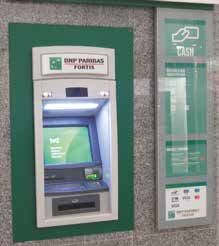
march 2020 / INFOSECURA / Banknote matters

the uniformity of the payment system, it would be          realistic threats to central bank control over money.
issued and exchanged at par with the other forms           But central bankers fret that Libra could reach billions
of central bank money. In order to maintain WCBDC          and quickly erode sovereignty over monetary policy.
and RCBDC separated and to keep some informa-              CBDCs, they think, could address problems like
tion confidential, WCBDC would have to be issued           inefficient payments that crypto-currencies seek to
on a permissioned blockchain, not a public one. As         solve, while maintaining state control over money.
reserves pay interest, WCBDC would have to pay
interest too. Most central banks lack a direct expe-       The article also states that China is closest to
rience in managing individuals’ accounts and would         becoming the first major country to introduce a
not take the reputational risk of RCBDC being              CBDC. While details to build a digital renminbi are
used in fraudulent transactions. Moreover, there           scarce, it will be powered in part by blockchain
would be little interest in having users validating        technology and will initially be issued to commer-
transactions. Furthermore, recourse to intermedi-          cial banks and other financial institutions. China’s
aries (banks and payment service providers) would          move may push other central banks to take action. In
allow the central bank to rely on them to implement        December, the president of the (US) Federal Reserve
regulatory obligations, such as KYC, etc.. It thus         Bank of Philadelphia said that it was “inevitable” that
appears that an RCBDC would not necessarily be             central banks, including the US Federal Reserve,
issued on a blockchain, or at least not a public one,      would start issuing their own digital currencies.
and that its circulation would involve intermediaries.
                                                           However, caution and skepticism exists in many
Another ‘explainer’ this time by the news network          quarters. The Bank of Japan, for example, has
Reuters notes that Bitcoin and other virtual curren-       warned that uncertainties over the impact of CBDCs
cies, hampered by wild volatility, have presented few      on commercial banking must be addressed. n

sweden: thinking about                                     pending a referendum, thereby intentionally avoiding
the euro again                                             the fulfilment of the adoption requirements. Most of
                                                           Sweden’s major parties believe that it would be in the

S
        weden has had a complicated relationship           national interest to join, but they have all pledged to
        with the Euro for decades. In a referendum in      abide by the result of the referendum.
        2003, it voted with a majority of 56 to 42 per
cent against joining the Euro zone. In Brussels it was     Second thoughts
thought that the Swedes’ aversion to the Euro had          All this is water long under the bridge, but recently
been driven mainly by a general hostility to the EU,       the issue awoke anew. Björn Olsson, an econo-
by a sense that their welfare state was threatened by      mist of the Swedish Bankers’ Association published
the EU, and by a broad resistance to change, espe-         a survey in the ‘Ekonomisk debatt’ magazine, in
cially among older people. Surprisingly, voters in the     which he argues that Sweden’s yearly economic
18-30 bracket voted more heavily against joining the       growth is currently 1.5% – 3% faster than it would
Euro than any other age group. The same exit polls         be inside the Eurozone. The decision not to adopt
that predicted a no to the Euro also showed that 60        Euro has benefited the country by one year’s worth
per cent of voters wanted Sweden to remain in the          of GDP and the overall economic performance has
EU. Indeed, sentiment towards the Union actually           been up to 24 per cent better outside the common
warmed since Sweden first voted to join in 1994, the       currency. But what’s happening in the long run
‘Economist’ wrote in 2003.                                 in the light of increasing American and Chinese
                                                           competition?
The no-voters were less concerned with the economic
consequences of their choice than expected. Their          Despite his findings, Olsson is calling for a profound
two biggest worries were about democracy and               discussion on the country’s future options. According
sovereignty; national control of interest rates came       to him, national economic policy and a stronger inte-
third. The fate of the welfare state only came fourth.     grated Europe are hanging in the balance. But, in
                                                           the long run, Europe has to cooperate in the face
The referendum created a problem for both the              of toughening competition from China and the U.S.
Swedish government and the EU, as Sweden did
not receive a legal “opt out” from the EU Maastricht       “In the next five years, Sweden has to conduct a
Treaty requirement to join EMU (unlike Denmark and         debate and make a decision on its long-term direc-
the UK). Sweden maintains that joining the European        tion,” Olsson said. “The EU is heading towards a direc-
Exchange Rate Mechanism II (ERM II), which for             tion where there will be a one and more integrated
at least two years is a requirement for euro adop-         union. And then, standing next to it on the outskirts will
tion, is voluntary, and has chosen to remain outside       be another EU,” he added. n

                                                                      www.intergrafconference.com              /7
Banknote matters / infosecura / march 2020
where to bank branches. .As one possible reaction, banks in
get the Finland, the Netherlands and Sweden have pooled
their national ATM systems to reduce costs, by
cash from creating separate companies to take over running
the cash machines. Belgium has now followed their
now? lead.
The decline in ATMs may not
Four leading Belgian banks, Belfius, BNP Paribas
be such an inconvenience
Fortis, ING and KBC will jointly operate a single
for people living in city
network of ATMs under a neutral brand name. In a
centres but for those in
joint press release the banks say that developments
rural areas, and especially
in the payments landscape are prompting banks to
the elderly, who may find
reconsider their proprietary ATM networks, partly
it difficult to operate only
because of the serious investments that continu-
cashless, it is a serious loss
ally have to be made in stocking ATMs and imple-
of their quality of life.
menting security measures.
T
he most convenient way to withdraw and to
deposit cash is to use an ATM. But increas- The proposal to create a shared network will deal
ingly banks see this useful machine as a with the current oversupply of machines in city
burden and try to let other companies run them, as centres and sparse distribution in remote locations.
the number of withdrawals is decreasing and costs Under the plans, the banks say 95% of people in
are rising. According to the European Association Belgium would have access to an ATM no further
for Secure Transactions (EAST), there are 391 434 than five kilometres away, with many installed
ATMs in Europe, a 3% decrease from the 2018 off-premises or at standalone sites. The roll-out of
total. These numbers are however, difficult to verify the new network will be phased, with the first new
especially when looking at individual countries. ATMs appearing around mid-2021.
Taking one country, Belgium, as an example, EAST,
claims that there were 11 000 ATMs in Belgium as Reducing the concentration of ATMs in city centres
of June 30, 2019. According to Febelfin, the Belgian will not cause too much inconvenience und
banking federation, the number of ATMs has increasing the number of stand-alone or off-site
declined from 8,754 units in 2015 to 7,869 today. machines in remoter areas is a welcome bonus
The website expatica.com even claims that there for rural areas where many bank branches have
are 13,700 ATMs in Belgium. closed. However, that policy can face certain diffi-
culties as the as the Dutch company Geldmaat,
The actual number of ATMs in a country is not that operator of the pooled Dutch ATM system found.
relevant, it is more instructive to see their number The company decided to disable ATMs between 23
in relation to the population they serve. The highest hrs. and 7 hrs. each night after ABN Amro decided
ATM density in Europe is in Croatia, with 12.5 per earlier this month to shut down and empty 479 cash
10 000 people, followed by Portugal with 11.3 and dispensers as an emergency response to a sharp
Luxembourg with 10.5. In Belgium the number is 9.5 rise in ATM explosive attacks.
just ahead of the UK with 9.2 and in Germany it is
6.9. The bottom of the list is Sweden with 2.7. These Geldmaat, says the overnight shutdown will take
figures were supplied by EAST, which gave a rela- effect immediately. The firm will also move any
tive high figure for ATM in Belgium. Consequently cashpoints that pose an elevated risk to nearby
its figures for ATMs per 10 000 may be on the high residents and place them in safer locations. The
side. Of equal importance is where these ATMs are company is working with De Nederlandsche Bank
situated. In country such as Sweden, cities may still and the police to implement new measures, which
be relatively well served, but in rural areas, where will render banknotes worthless if stolen by raiders.
population density is relatively low, much lower in
the North than in the South, access to cash is often Another country that is moving in the same direction
a problem. as Belgium, Sweden, Finland and the Netherlands
is Ireland. The ‘Irish Independent’, reports that the
Whatever the real figures are, the number of ATMs Bank of Ireland and Allied Irish Bank are planning to
giving opportunities for people to withdraw cash sell 700 and 300 cash machines respectively. Most
is declining. The reason is continuing digitalisa- of these ATM are located in retail shops. Both banks
tion (cashless payments, e-commerce and online will continue to own and operate their in-branch
banking), which is challenging the role of ATMs and ATM networks. Ulster Bank has already sold 400
putting pressure on the cash infrastructure in the ATMs to Euronet, which now operates 600 ATMs
EU and, for the same reasons, the closure of many in Ireland. n
8 / www.intergrafconference.commarch 2020 / INFOSECURA / banknote matters
Saving a dinosaur the mattress’ away from official scrutiny and have
complete control over it. It thus looks as if cash is
The dinosaur is cash, which according relatively safe as store of value. The two other func-
to a three part research paper by tions of cash, medium of exchange and unit of
Deutsche Bank, will hang around for account, are less secure.
quite a while, but digital currencies are
eager to take his place. The research paper thinks that to predict the future
W
hen discussing the future of money, it is of cash, the key question is what happens in the
useful to ask banks, and not only central world’s two most populous countries—China and
banks. In January 2020, the Corporate India. As the push to remove cash escalates, these
Bank Research of Deutsche Bank (which is not governments are encouraging greater use of digital
the German central bank) published a three part currencies. In late October, Chinese President Xi
research project entitled “The Future of Payments”. Jinping endorsed blockchain as “an important
The paper admits that governments, banks, and breakthrough for independent innovation of core
card providers share at least one common goal: the technologies.”
elimination of cash. But this does not seem to be the
shared goal of the general public, as cash is gener- In India, change is also coming but the situation is
ally still growing. Looking at which denominations more difficult to assess. The paper states that cash
are growing most, indicates a better way to judge payments declined from 59 per cent in 2000 to 30
the preferences of the public, as most of the growth per cent in 2016, but in in November of that year,
in the number of banknotes has been in high-de- Narendra Modi’s government rendered as much as
nomination notes. The Financial Times writes that 86 per cent of the currency notes useless, leading to
wealthy investors had been holding ever-larger a severe cash shortage. As one of the objectives of
investable assets in cash. Two-thirds of the people the note ban was to encourage digital payments and
surveyed said they had considered increasing cash bring down the use of cash, it worked. But in August
holdings given the economic uncertainty around 2019, the Indian newspaper The Telegraph quoted
the US-China trade war, conflict in the Middle East, the 2019 annual report of the Reserve Bank of India
and the potential effects of Brexit. And presumably that “despite efforts to shift to digital payments and
all the hoarded cash is in large denomination notes. usher in a digital payment economy, currency in
circulation jumped by 17 per cent in value to to Rs
The fight against large denomination notes is largely 21.10 lakh crore (21.10 trillion) and by 6.2 per cent
one by governments, which believe that these bank- to 1,08,759 million pieces, respectively”. However,
notes are mainly used for criminal activities. That retail electronic payments also rose by 59 per cent
argument has been debunked some time ago, to Rs 23.3 billion. There are now over 10 million
when. e.g. the a former President of the Swiss merchants accepting digital payments, but the lion’s
national Bank said that “... to stop high-denomina- share of these seems to be QR-code based wallet
tion bank notes ... will fail to meet its objective to fight payments rather than credit card payments. As an
efficiently against criminality...”. A report in ‘Global additional push, recently, a government economic
Treasury Intelligence’ stated that “...today most crim- panel pitched for the introduction of an official digital
inal activities are happening online and through elec- currency with the status of legal tender and regulated
tronic means of payment, not through cash.” by the Reserve Bank of India.
Fighting for pennies In developing economies, mobile payments started
The real fight against cash is happening in the area already in the early 2000s, and were often used for
of everyday transactions and the weapons are cards micropayments (Alipay started in 2004 in China).
and new contactless payments, and cash is losing In advanced economies mobile payments only got
ground as a payment method. But still, according to going in recent years. Apple Pay started in 2014,
Deutsche Bank’s survey, a third of people in devel- Google Pay and Samsung Pay began in 2015.
oped countries consider cash to be their favourite
payment method and more than half believe cash Cards to go
will always be around, a statement held regardless The most unexpected conclusion of the second
of country, gender, and age. While cash is therefore part of the research paper is already revealed in the
unlikely to disappear anytime soon, its status quo is title “ Moving to Digital Wallets and the Extinction
not assured, as this still leaves two thirds of people of Plastic Cards”. While the first part states that
favouring non-cash payments. cash will hang around for a long while, the ques-
tion of whether we will see the end of cash in the
As cash is still growing in most countries, the 2020s is taken as a distraction. The right questions
reasons cannot be payments. It seems that are: Which new means of payment will emerge and
people like cash because they can keep it ‘under which existing ones will disappear the soonest?
www.intergrafconference.com /9Banknote matters / infosecura / march 2020
What if plastic cards, a relatively recent invention, years in Germany, cash is expected to remain the
disappear first? most popular in-store payment method with else-
where cards and e-Wallets leading.
The digital payment revolution is rooted in the 2008
global financial crisis, when liquidity in the finan- The main raison d’être of card platforms is to facil-
cial system was low, people struggled to borrow itate settlements between the bank accounts of a
money, and distrust in the banking system grew. merchant and a payer. The development of peer-to-
Since then, regulation over traditional banks has peer payments and e-Wallets for non-cash trans-
strengthened, but most fintech players have not fers between individuals will disrupt card platforms.
been subject to the full array of banking regulations. An app can connect directly to a bank account and
The number of deals and the amount of capital ensure e-Wallet settlements are finalised. If these
raised for payments innovation increased greatly in platforms become widely used for merchant trans-
recent years. Today, about a third of fintech deals actions, they could also shortcut businesses that
and capital raised relates to the payments industry. provide consumers with cards.
The growth in the sector has been phenomenal with digital currencies
the Asia-Pacific region representing nearly half of The third part of the research, ‘Digital currencies:
worldwide payments revenues. At the core of this the ultimate hard power tool’ is necessarily the most
remarkable development is the smartphone, which speculative. The authors see the transition to digital
has become central to making financial transac- payments as having the potential to rebalance
tions and which in turn lead to the creation of new global economic power. They think the implica-
payment services. In emerging economies, digital tions for customers and business will be important;
wallets are replacing cash very fast, as a large part of the potential macro and geopolitical consequences
their unbanked population is changing straight from will be profound. Again, China will be a signifi-
cash to smartphone payments, thereby skipping cant player. Already, in China the value of online
plastic cards completely. payments is equivalent to three-quarters of GDP,
almost double the proportion in 2012. Today, just
In China, cash payments dropped from 63 per cent under half of in-store purchases in China are made
in 2000 to only 11 per cent in 2016. By contrast, via a digital wallet, way above the levels in developed
forty per cent of citizens in developed nations markets. China is working on a digital currency
reported that they prefer traditional payments over backed by its central bank that could be used as
digital wallets. However, most people in these a soft or hard power tool. If companies doing busi-
nations believe that digital wallets will eventu- ness in (and with) China are forced to adopt a digital
ally replace traditional wallets within the next five yuan, it will certainly erode the primacy of the dollar
years. China offers a remarkable illustration of what on the global financial market. The authors also
could resemble the payment industry in many other believe a new digital currency could become main-
nations in short-to-medium term. stream within the next two years.
The rate of online payments in China rose from 8.6 As for which digital currency will be the leading one,
percent of GDP in 2000 to more than 40 percent in the paper thinks it will be either Facebook’s libra or/
2012 and 76 percent in 2016. Yet, credit card usage is and the Chinese government’s digital currency. The
relatively low, mainly because the Chinese economy Chinese Government stated it would be launching a
is not developed enough for widespread credit card PBoC digital currency. The plans were finalised and
use, and the Chinese government actively promotes approved in October 2019, so a pilot launch at the
its Internet banking infrastructure. Today, WeChat end of 2020 seems plausible. If this happens, China
Pay and Alipay are the most popular payment will become the first major economy to use a digital
methods in China. The Chinese government has currency. That will pressure other countries to set
been playing an active role in building a Chinese up their own digital currencies. A government-is-
world-class infrastructure to support digitisation. It sued digital currency could be a powerful political and
operates as an investor, developer, and consumer. economic tool for China.
In turn, Chinese retailers have embraced mobile
payments and some even refused cash, prompting There are of course dangers in going fully digital.
the Chinese central bank to issue a formal notice in To establish a robust digital financial system entirely
2018 that renminbi cash is legal tender in China and on a foundation of electricity consumption seems
should not be refused. reckless. The financial system needs to be able
to overcome an electricity shutdown or cyberat-
People in the US and Europe, have a long history of tack. Governments mightalso need to safely store
using credit cards, making it harder to shift to digital backups of citizen data in another country. The
payments. The DB paper states that for the next five environmental costs also need to be considered.n
10 / www.intergrafconference.commarch 2020 / INFOSECURA / banknote matters
them discontinued bolívares soberanos.
Cordero sells wallets made from hundreds or
even thousands of bills of the now almost value-
less currency for about $8; the handbags go for
about $12. He says most of his clients are European
Making money and North American tourists - people who want to
take home a piece of what was once one of the
into art strongest economies in South America.
He learned his technique by watching others in
the streets of Caracas and by studying dozens of
YouTube tutorials uploaded by fellow Venezuelans
to teach people how to make what has become
M
oney is serious business, but not every kind known as origami venezolano.
of money is taken equally seriously. Take
the Chinese “heaven bank note”, used at So far Venezuela had to face hyperinflation for over
funerals, that is burned to ensure that a departed 36 months. The Venezuelan government does not
sole does not lack cash in the afterlife, or the by now publish data related to inflation, but the Finance
proverbial “Monopoly Money’. Both are symbolic Commission of the opposition-controlled National
money. But when the value of ‘real’ money falls too Assembly calculated that inflation for October 2019
much that it is more profitable to turn the notes into was 20.7 per cent and that cumulative inflation for
craft items, they loose all functions of money. 2019 was 4,035 per cent. Even so, those numbers
may be very conservative.
The Venezuelan Bolivar is now so worthless that
some people are turning the notes into pieces The International Monetary Fund estimates that
of origami artworks. Venezuelan immigrants in inflation in Venezuela this year will reach 200,000
Columbia are folding and sewing the “origami per cent - and that the economy will contract by 35
bolívares” into wallets and purses to sell to tourists. per cent.
The news channel Aljazeera quotes one Venezuelan
immigrant, Hector Cordero, as using about 70 In June 2019 the Banco Central de Venezuela
notes of 100 bolívares to handcraft a small coin issued Banknotes of 10,000, 20,000 and 50,000
purse, or 100 of the notes to make a larger wallet. A bolívar denominations, less than a year after the last
handbag can take up to 1,200 notes to produce. All revaluation, when hyperinflation eroded the effects
in all, the artist incorporates 16 different denomina- of the August 2018 monetary overhaul and when
tions of Venezuelan currency into his crafts, many of the bolívar was changed into the bolívar soberano.n
a new crop of £20 notes in scotland
Following on from the Bank of England’s £20 three of them in Scotland. The Bank of Scotland
note in late February, three Scottish banks and the Royal Bank of Scotland are simply retail
have released their version of the £20 into banks that have the historic right to issue bank-
circulation notes. They are not central banks. The same
applies to the Clydesdale Bank.
F
or people not too familiar with British bank-
note issuing practices, the news that new The picture in Northern Ireland is even more compli-
£20 pound notes have come into circula- cated. Here four banks can issue sterling notes,
tion may be a little confusing. In the last issue of the Bank of Ireland, the First Trust Bank, Danske
Infosecura we reported that the £ 20 note, issued Bank, and Ulster Bank. In spite of its name, Bank of
by the Bank of England, would enter circulation on Ireland is not, and never has been, a central bank;
20th February. And now we report that the Bank of it is a retail bank, which is headquartered in Dublin,
Scotland has released a new £ 20 note into circu- but issues sterling notes within the United Kingdom.
lation and the Royal bank of Scotland has done so Like other banks in Northern Ireland, it retains its
likewise, as has the Clydesdale Bank. While the note-issuing rights from before the partition of
Bank of England is the central bank of the United Ireland. Similarly, Danske Bank is not a Danish
Kingdom and the only bank that can issue bank- bank, but the successor of the Northern Bank
notes in England and Wales, there are eight banks that was bought by Danske Bank, but retained the
that can issue banknotes in the United Kingdom, latter’s note-issuing rights.
www.intergrafconference.com / 11Banknote matters / infosecura / march 2020
the Scottish £ 20 notes Cupid and Venus and carries the same exclu-
Over a two week period at the end of February, sive weave pattern developed by textile designers
beginning of March, three new polymer £20 Alistair McDade and Elspeth Anderson for the £5
banknotes have been released into circulation and £10 polymer notes.
throughout Scotland, starting with the Bank of
Scotland and Clydesdale notes and finishing with
the Royal Bank of Scotland’s note on 5th March
2020. This is the first time that the Scottish £20
notes have been printed on a polymer substrate,
following the £5 and £10 Scottish banknotes and
the Bank of England £20 in February.
The new Bank of Scotland £20 note is similar to the
previous paper designs, but adds the new bridge in
behind the Forth Bridge illustration on the reverse.
Sir Walter Scott remains on the front of the note,
alongside an image of The Mound in Edinburgh.
The notes are slightly smaller than the existing
paper versions in circulation, consistent with those
issued by other UK banks this year.
All these banknotes share a common colour and
set of security features to help with public recog-
All the notes continue existing series. The Royal nition. All banknotes contain a window, the same
Bank of Scotland’s new £ 20 note is the third in the tactile embossed feature to help the visually
series of ‘Fabric of Nature’ notes, following the £5 impaired distinguish between different values,
in 2016 and £10 in 2017. It features illustrations of microtext, colours that glow under UV light and a
red squirrels on its reverse and also features the colour-shifting metallic ink. In addition Clydesdale
blaeberry fruit, known to the English as bilberry, an and Bank of Scotland denominations contain a
European version of the American blueberry. The holographic foil in their windows featuring imagery
red squirrels on a tree illustration for the £20 follow relevant to the banknotes. Design themes such as
mackerel in the sea on the £5, and otters on the Robert the Bruce and spiders carry across from
shore for the £10. the paper series in the Clydesdale £20 and themes
such as thistles and Sir Walter Scott link to the
paper series for the Bank of Scotland £20. n
greece: a backdoor to
currency digitalisation
The newspaper Euroactiv reported that as of 1
January 2020, each person living in Greece should
make at least 30per cent of his or her payments by
The Scottish women honoured on the front of electronic means (including bank transfers, credit/
the note is Kate Cranston, the turn of the last debit cards etc). If not, an extra 22 per cent tax will
century entrepreneur who commissioned Charles be applied.
Rennie Mackintosh to design her famous Glasgow
tearoom. It continues the Royal Bank of Scotland’s It is a major change to Greek people’s everyday life.
celebration of Scottish women who made a signifi- Electronic payments and their connections with the
cant impact and follows on from Nan Shepherd on tax authorities has been one of the major reforms
the £5 and Mary Somerville on the £10. in all bailout programs of Greece since 2010, and is
only now fully implemented. The government plans
The note design also includes extracts from 16th also want all businesses to have exclusively elec-
century Scottish poet Mark Alexander Boyd’s work, tronic relations with tax authorities by the summer. n
12 / www.intergrafconference.commarch 2020 / INFOSECURA / ID Documents
Are you one of to issue ID documents next. Other countries are
upgrading their paper records to digital ones.
them or one of us? Although Africa has huge and teeming cities, many
people live in remote areas and find it difficult and
time-consuming to register a birth at a govern-
ment office. They may not even see any immediate
reason for doing so and especially if - and this is
not unknown - officials demand bribes to register
a birth. Often governments also fail to explain the
benefits of birth registration, which is the most basic
form of official documented identity. South Asia
more than doubled its rate of birth registration to 71
per cent between 2000 and 2014. In sub-Saharan
Africa the rate dropped by one point, to 41 per cent,
ID documents are a way to prove to the authorities who you over the same period.
are, but in some countries, not even a valid birth certificate or
ID card is necessarily proof of citizenship. Your identity may be From here, but not one of us
used to keep you out, rather than to confirm you as a citizen. Place of birth (and place of birth of parents)
should be the defining reason to be recognized as
T
unji Durodola of the National Identit y belonging to a certain country, but that is not always
Management Commission of Nigeria talked so. Uganda, Liberia and Sierra Leone explicitly
at last year’s SecurityPrinters, Banknotes withhold nationality from children of certain races
& Identity in Copenhagen about the challenges and ethnicities. Other countries do so informally by
of establishing and maintaining an identity docu- refusing to issue papers. And it is not always racial
ment system in a country of 186 million people, with discrimination either, religious discrimination or a
250 ethnic groupings and a major division of the mixture of both also play a role. And the problem
country into a Muslim North and a mainly Christian is not restricted to so called “third world countries”.
South. In such a diverse country, a national iden-
tity is vital and the aim of the present and of past A scandal in Europe
governments is to make their citizens that iden- In 2018, a scandal blew up in the UK, when people,
tify as Hausa, Igbo, Yoruba or any of the count- who were recruited in the 50s, 60s, and into the
less other ethnic or cultural groups into Nigerians, 70s in the then British colonies of the Caribbean,
into a common ‘us’. So far the National Identity decades later were wrongly detained, denied legal
Management Commission (nimc), a body set up in rights, threatened with deportation, and, in at least 83
2007 with the purpose of issuing identity numbers cases, wrongly deported from the UK by the Home
and cards to Nigerians, has reached less than a fifth Office. Most were members of the “Windrush gener-
of the population. Political geography and bureau- ation” who were born as British (colonial) subjects,
cracy are among factors to blame as is the fact that had arrived in the UK before 1973 and as citizens
Nigeria, which is a federal state, has 13 federal and of a British colony had the legal right to settle there.
three state ID schemes. (The Empire Windrush, was the ship that brought
one of the first groups of West Indian migrants to
Many developing countries in Africa and elsewhere the UK in 1948). Following active UK recruitment
are facing similar challenges. However, there was drives between 1948 and 1970, nearly half a million
one country that was miles ahead of any other in people moved from the Caribbean to Britain. Since
Africa in matters of identity, South Africa. Under the these people had a legal right to come to the UK,
apartheid regime that lasted until 1991, people were they neither needed nor were given any documents
told where they could live and work and whom they upon entry to the UK. Many worked or attended
could marry. To successfully discriminate against its schools in the UK, without any official documentary
‘coloured’ and black population, the South African record of their having done so, other than having the
government developed a very efficient system same records as any UK-born citizen. They simply
of identifying people. After the demise of apart- believed themselves to be British.
heid, the system lost its discriminatory purpose
but South Africa is still one of the few countries And as the right to live in the UK was for them auto-
on the continent - Botswana is another one - that matic, they also saw no change when their home
have relatively good programmes that register most countries became independent, or when the 1999
birth and issue papers to almost all of their people. Immigration Act was introduced, or when it was
In contrast, some countries, such as Liberia, have updated in in 2014. But change there was, for them
only just started to register births and only plan and for their children and grandchildren.
www.intergrafconference.com / 13id documents / INFOSECURA / march 2020
Already in the 60s and early 70s legislative meas- 2020, the Rohingya were still stateless refugees in
ures limited the rights of citizens of these former Bangladesh awaiting their future.
colonies, now members of the Commonwealth, to
come to or work in the UK, but anyone who had The next crisis involving citizen’s rights came
arrived in the UK from a Commonwealth country from next-door India, which due to the acclaimed
before 1973 was granted an automatic right perma- “Aadhaar” registration system had been the star
nently to remain, unless they left the UK for more performer of the world-wide drive to give all people
than two years. an official identity. Aadhaar, introduced in 2009
by the Congress Party led government, is a volun-
A clause in the 1999 Immigration Act specifically tary 12-digit unique identity number that provides
protected long-standing residents of the UK from access to a wide range of services the govern-
Commonwealth countries from enforced removal. ment provides. Aadhaar has been widely accepted
The clause was not transferred to 2014 immigration and now there are 1.246 billion number holders and
law because Commonwealth citizens living in the UK although it is not an official ID card, it fulfils many
before January 1st, 1973 were “adequately protected of the same functions and it usually not seen as
from removal”, the Home Office said. discriminatory.
Since changes to nationality legislation in 1983, The crisis that erupted in December last year did
just being born in the UK is not enough to make not concern Aardhaar and was not about place
someone British; one or both parents must be of birth as a definition of citizenship, but religion.
British or have settled status in the UK. There are In December, the Hindu-nationalist BJP party
believed to be tens of thousands of children who led government of Narendra Modi changed the
were born in the UK, who were not automatically Citizenship Amendment Act (CAA) to create a legal
British at birth; many of them do not realise they loophole for unrecognized immigrants from perse-
have any immigration issues until adulthood, when cuted religious minorities who belong to Hindu,
they have difficulties accessing student loans or Sikh, Buddhist, Jain, Parsi or Christian religious
housing support. communities — but not Islam — to be eligible for
citizenship, the Financial Times wrote. People from
Weaponizing identities these communities, who entered India until 2014,
In spite of the “hostile environment” for immigrants “shall not be treated as illegal migrants”, according
declared in 2012 by the then UK Home Secretary to the amended law, which was designed to help
Theresa May, these acts were probably the results minority groups who have come to India from
of official bungling rather than malice. The same Muslim-majority states such as Afghanistan,
cannot be said for what happened to the Muslim Bangladesh or Pakistan. It is the first time that India
Rohingya, an ethic minority in northern Rakhine has incorporated religious criteria into its naturalisa-
State in Myanmar, who found themselves stateless tion or refugee policies.
in 1982 when the Burmese Citizenship Law
stipulated that Muslims in the country were legally Although the new law does not change anything for
unrecognised and denied Burmese citizenship. the 200 million Indian Muslims, it was widely seen
After many years of armed and unarmed resistance, as discriminatory. Countrywide protests, not only by
an estimated 655,000 to 700,000 Rohingya people Muslims, erupted in December and continued into
reportedly fled to Bangladesh between 25 August January and February with a loss of at least 23 lives
2017 and December 2017, to avoid ethnic and before Christmas. Towards the end of that month
religious persecution by Myanmar’s security forces there were full-scale religious riots in Delhi. Critics
in their “clearance operations” against insurgents. called the legislation a violation of India’s secular
They were joining an additional 300,000 Rohingya constitution and the latest effort by Modi’s govern-
refugees in Bangladesh who had arrived after ment to marginalise the country’s Muslims.
fleeing earlier waves of communal violence.
Protests against the law came amid an ongoing
At the 73rd session of the UN General Assembly in crackdown in Muslim-majority Kashmir, the restive
late September 2018, Bangladeshi Prime Minister Himalayan region stripped of its semi-autonomous
Sheikh Hasina stated that her country was hosting status and demoted from a state into a federal terri-
at least 1.1 million Rohingya refugees, and asked tory in August.
international leaders to help support an “early,
peaceful solution” to the humanitarian crisis. In The demonstrations also follow a contentious
January 2020, the UN’s top court ordered the process in the north-eastern state of Assam
Buddhist-majority country to take measures to designed to weed out foreigners living in the country
protect members of its Rohingya community illegally. Nearly 2 million people, about half of them
from genocide. At the time of writing, February Hindu and half Muslim, were excluded from an
14 / www.intergrafconference.comYou can also read


