Infringing Cartridges Still Pose a Clear and Present Danger to the Consumables Market - Actionable Intelligence Report
←
→
Page content transcription
If your browser does not render page correctly, please read the page content below
Actionable Intelligence Report

Infringing Cartridges Still Pose a
Clear and Present Danger to the
Consumables Market

  THE PRINTER AND SUPPLIES INDUSTRY’S LEADER FOR NEWS AND ANALYSIS

INFRINGING CARTRIDGES STILL POSE A CLEAR AND PRESENT DANGER TO THE CONSUMABLES MARKET

Legal Disclaimer                Copyright © Actionable Intelligence, 2020. All Rights Reserved.
                                No part of this report may be reproduced without the express consent
                                of Actionable Intelligence.

© 2020 Actionable Intelligence » THE PRINTER AND SUPPLIES INDUSTRY’S LEADER FOR NEWS AND ANALYSIS      ii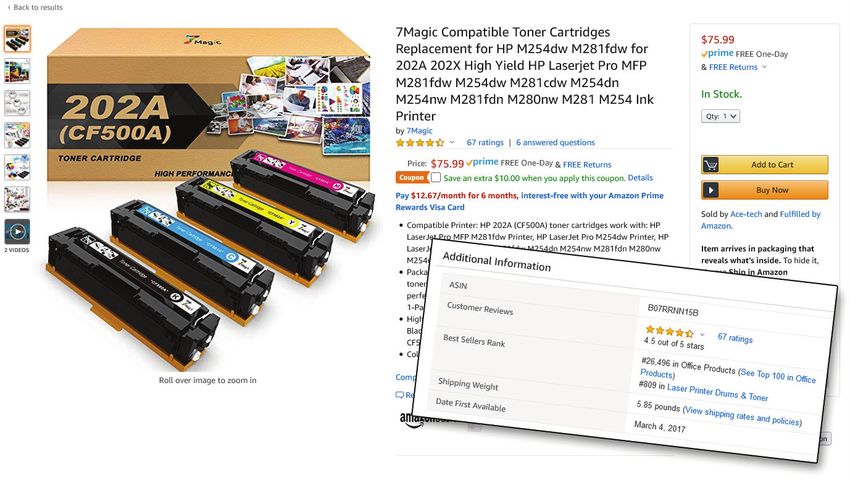
INFRINGING CARTRIDGES STILL POSE A CLEAR AND PRESENT DANGER TO THE CONSUMABLES MARKET

                                     Executive Summary

                   •    The market for cheap, infringing cartridges exploded during the Great Recession, and these
                        so-called “clones” continue to take market share from legitimate consumables.

                   •    Also known as “copycat,” “fake,” “imitation,” or “knockoff” cartridges, clones are copied from
                        the original equipment manufacturer (OEM) designs without regard for intellectual property
                        (IP) and sell at price points far below those of non-infringing supplies.

                   •    Although they may sport tiny price tags, there are many hidden costs and risks associated
                        with infringing cartridges.

                   •    Recently released independent test results indicate that cheap, non-OEM cartridges often
                        cause equipment damage.

                   •    Based on designs and technologies that violate patents, infringing compatibles cannot be
                        refurbished without a remanufacturer risking a lawsuit, so they end up in landfills.

                   •    Knockoffs are frequently marketed with deceptive eco-friendly names, despite the fact that
                        they are arguably the worst cartridges for the environment because they are not recycled or
                        reused.

                   •    Legitimate companies are challenged to get consumers to look past deceptive greenwashed
                        names and artificially low price tags so buyers understand that infringing cartridges are no
                        bargain.

                   •    To boost sales, certain companies marketing clones on Amazon use prohibited practices
                        and tactics such as fake reviews.

                   •    Fake cartridges are often used by crooked telemarketers and other dishonest vendors to
                        run scams such as bait-and-switch schemes that fool consumers who purchase legitimate
                        supplies into buying infringing products.

                   •    Over the past couple of years, we have become aware of several cases in the United States
                        involving thousands of victims that have been bilked out of tens of millions of dollars through
                        deceptive cartridge sales.

© 2020 Actionable Intelligence » THE PRINTER AND SUPPLIES INDUSTRY’S LEADER FOR NEWS AND ANALYSIS                      1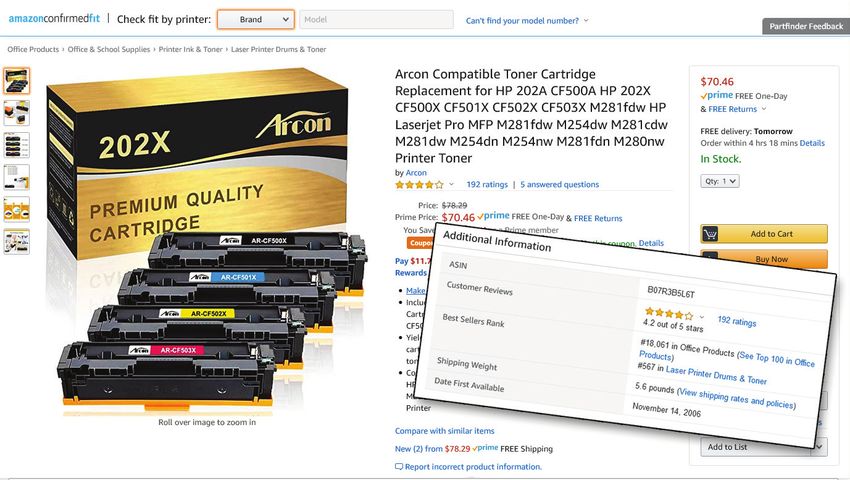
INFRINGING CARTRIDGES STILL POSE A CLEAR AND PRESENT DANGER TO THE CONSUMABLES MARKET

                   •    OEMs closely monitor markets for infringing products and have filed scores of patent-
                        infringement lawsuits against some of the third-party supplies industry’s largest vendors,
                        including remanufacturers and compatible manufacturers, as well as their channel partners.

                   •    Despite all the lawsuits and other legal actions, shipments of infringing products continue to
                        grow, as does the availability of clones.

                   •    Regardless of where cartridges are purchased, consumers and end users must be vigilant
                        to ensure that they are getting the value proposition for which they paid.

© 2020 Actionable Intelligence » THE PRINTER AND SUPPLIES INDUSTRY’S LEADER FOR NEWS AND ANALYSIS                    2
INFRINGING CARTRIDGES STILL POSE A CLEAR AND PRESENT DANGER TO THE CONSUMABLES MARKET

Introduction                    The market for cheap, new-build printer cartridges exploded during the Great Recession as
                                printer users in homes and businesses became desperate to save money. Coinciding with
                                the swelling demand for cheap consumables in the down economy was the rise of ecom-
                                merce, which made clones readily available with just the click of a mouse, and for more than
                                a decade clone availability has continued to grow worldwide. Although certain third-party
                                supplies vendors have made investments to improve the quality of their cartridges and to
                                attempt to stay on the right side of patent law and other IP protections, clones continue to
                                take market share from non-infringing cartridges.
                                Because they are often copied from OEM designs without regard for IP and produced
                                with the lowest-grade components, so-called “clone” cartridges sell at price points that
                                are far below those associated with legitimate consumables. The actual savings delivered
                                by clones, which are also referred to as “copycat,” “fake,” “imitation,” or “knockoff”
                                cartridges, are suspect, however, because of the hidden costs that lurk behind low-quality
                                infringing consumables. In this report, we will detail some of these hidden costs as well
                                as certain risks infringing cartridges represent to the market, end users, and the supplies
                                industry as a whole.
                                Clones 101
                                We divide ink and toner cartridges into three basic categories. So-called OEM cartridges are
                                marketed by the same manufacturers that develop the printer hardware. These cartridges
                                deliver the highest-quality performance, for which consumers can pay a premium. Remanu-
                                factured cartridges, or “remans,” make up the second product category. As the name implies,
                                these products are based on spent OEM cartridges that are collected, refurbished, and then
                                resold. The performance of reman cartridges can vary because it is dependent on the
                                                           remanufacturing processes employed in making the products and
                                                           the quality of components such as the inks and toners. However,
                                                           because they are based on OEM cores, remanufactured cartridges
                                                           typically perform well and their price is usually 15 to 25 percent
                                                           lower than the OEM equivalent.
                                                          Our third cartridge category is newly manufactured third-party
                                                          cartridges, which are commonly called new-build compatibles—or
                                                          simply “new builds”. We sub-segment new builds into two groups.
                                Premium new-build compatibles is a small but rapidly growing subset of new non-OEM
                                cartridges. Typically, premium new-build compatibles perform well and are based largely on
                                third-party designs that do not infringe OEM IP. Offering performance and reliability that are
                                equivalent to those of remans, premium new-build compatibles sell at price points that are
                                well below remanufactured cartridges.
                                Clone cartridges make up our second subset of new builds. Selling at very low price points,
                                these knockoff cartridges continue to attract consumers. As noted above, however, there are
                                a variety of problems associated with these fakes.

© 2020 Actionable Intelligence » THE PRINTER AND SUPPLIES INDUSTRY’S LEADER FOR NEWS AND ANALYSIS                                3
INFRINGING CARTRIDGES STILL POSE A CLEAR AND PRESENT DANGER TO THE CONSUMABLES MARKET

                                Rather than being based on non-infringing designs like premium new builds, or remanufac-
 The relentless                 tured from OEM empties like remans, clones by definition are OEM cartridge knockoffs.
 growth of clones in            Because clones are just copies, clone manufacturers can slash the upfront investment that
                                legitimate cartridge vendors put into research and development. To further lower production
 markets worldwide              costs, copycat cartridges often feature low-grade inks and toners and other components that
 has meant big                  may harm the machines in which they are used. Imitations also have high failure rates and
                                poor image quality. And the risks go well beyond poor performance and potential hardware
 trouble for the
                                damage to include environmental concerns and worries about indoor air quality. Because
 legitimate supplies            they sell at low price points, however, customers are willing to gamble that at least some
 industry.                      percentage of clones will perform adequately and not cause any lasting harm.
                                Deception is often used to market knockoffs. For example, new-build imitations are routinely
                                marketed with environmentally responsible-sounding brand names that incorporate such
                                terms as “eco,” “green,”
                                “recycle,” and so on. In
                                reality, clones are bad for the
                                environment because they
                                fail more often than other
                                cartridges or have reduced
                                page yields. In either case,
                                clones become unusable
                                sooner than any of our other
                                groups of cartridges. To
                                make matters worse, clones
                                cannot be remanufactured
                                because of the inferior
                                materials used to make
                                them. Moreover, if a remanufacturer does refurbish clones, the remanufacturer risks reprisal
                                from the OEM that had its IP copied.
                                The deceit is not limited to bogus environmental claims. As we discuss later, deceptive
                                merchants online and in brick-and-mortar establishments often employ fake infringing
                                cartridges to bilk consumers out of millions of dollars each year. For decades, telemarketers
                                known as “toner phoners” have used imitation cartridges in bait-and-switch schemes to trick
                                consumers into purchasing infringing products. Fake cartridges are often at the center of vari-
                                ous other scams run by unscrupulous hucksters looking to make a buck. Clones are also
                                used by counterfeiters around the world to defraud cartridge buyers out of billions each year.
                                Damaging to Business
                                The relentless growth of clones in markets worldwide has meant big trouble for the legitimate
                                supplies industry. It costs a lot to manufacture reliable, high-quality cartridges that do not
                                violate patents and other IP protections. OEMs invest billions of research and development

© 2020 Actionable Intelligence » THE PRINTER AND SUPPLIES INDUSTRY’S LEADER FOR NEWS AND ANALYSIS                              4
INFRINGING CARTRIDGES STILL POSE A CLEAR AND PRESENT DANGER TO THE CONSUMABLES MARKET

                                dollars annually to bring to market new ink and toner cartridges for their machines. Remanu-
 In order to keep               facturers also pay hefty sums for the inventory of empty cores that they must maintain, and
 prices dirt-cheap,             the expense grows if the final products are refurbished with high-quality inks, toners, and
                                other components. Similarly, technically savvy third-party cartridge manufacturers face steep
 fakes are made                 costs developing IP workarounds and using these designs to manufacture premium non-
 from inferior raw              infringing compatible cartridges.

 materials and                  On the other hand, bringing copycat cartridges to market is cheap. Typically produced in
                                regions where IP protections are not vigorously enforced, infringing cartridges do not
 components in                  require the large budgets required for OEM, third-party compatibles, and remanufactured
 factories where                cartridges. In order to keep prices dirt-cheap, fakes are made from inferior raw materials
                                and components in factories where workers are usually poorly paid and must endure
 workers are
                                abysmal conditions. Of course, the resulting products usually perform poorly. Despite the
 usually poorly                 poor quality, clones are sold at artificially low price points that undercut the price of
 paid and must                  non-infringing consumables regardless of whether they are produced by an OEM, remanu-
                                facturer, or another third party.
 endure abysmal
                                Although remans successfully competed with clones for years, infringing cartridges have hit
 conditions.                    remanufacturers particularly hard during the past decade. In the 1990s and early 2000s, the
                                availability of clones was restricted mainly to emerging markets and the quality of the
                                cartridges was poor, especially that of knockoff toner cartridges. During these early years of
                                the remanufacturing industry, remanufacturers learned to improve the quality of their
                                cartridges while lowering prices. Over time, big-box retailers and other key channels in
                                mature markets began selling remanufactured supplies. While there were some lawsuits,
                                consumers grew increasingly confident in the availability and quality of remanufactured ink
                                and toner cartridges, and these products became the low-cost third-party alternative to
                                higher-priced OEM consumables.
                                Market conditions have changed dramatically during the past decade, and remanufacturers
                                have lost considerable market share to clones. The shift began during the recession, when
                                increasingly price-sensitive end users in homes and businesses alike searched for ways to
                                cut costs wherever they could. Shipments of infringing imitations grew as more and more
                                consumers transitioned away from remans, and even when mature economies improved the
                                popularity of clones did not abate. Many remanufacturers have been shuttered since the
                                recession and the industry has consolidated in mature markets. Despite lowering production
                                costs and gaining other efficiencies through scale, even the largest remanufacturers have
                                demonstrated signs of strain. Over the past five years, reports of falling reman revenue have
                                persisted and some of the industry’s best-known names have been driven out of business.
                                Even more changes in the remanufacturing industry are expected.
                                Of course, remanufacturers are not the only companies being adversely impacted by clones.
                                Many channel organizations are also hurting. Over the past 10 years, the vast majority of
                                consumables vendors that have been sued for IP violations in the United States and abroad

© 2020 Actionable Intelligence » THE PRINTER AND SUPPLIES INDUSTRY’S LEADER FOR NEWS AND ANALYSIS                               5
INFRINGING CARTRIDGES STILL POSE A CLEAR AND PRESENT DANGER TO THE CONSUMABLES MARKET

                                have been wholesalers, distributors, resellers, and other channel organizations that sell
 Recently published             third-party supplies. In most countries, companies that sell infringing products are just as
                                liable for IP violations as the manufacturers, so many in the channels are exposed to risk if
 results released
                                they traffic in clones. We know of many in the channel that have been forced to close their
 by a couple of                 doors because they were sued for violating IP. OEMs have also reported declining total
 independent test               year-over-year revenue due largely to falling consumables sales as they lose market share to
                                third-party supplies, which are primarily clones.
 labs found that
                                Unhappy Customers
 cheap non-OEM
                                Customers who purchase infringing compatibles are also adversely affected. Sporting price
 cartridges often               tags that are only a fraction of those found on legitimate cartridges, imitation cartridges are
 cause significant              certainly inexpensive, but what do these cartridges really cost customers? Recently pub-
                                lished results released by a couple of independent test labs found that cheap non-OEM
 damage to
                                cartridges often cause significant damage to hardware. These test results are in line with
 hardware.                      research that we did into various inexpensive new-build compatibles sold on the Internet.
                                Looking at reviews on Amazon, we found that it is not at all uncommon for clones to leak
                                frequently, print poorly, or not work at all. As a result, consumers have to use many more
                                cheap cartridges than they would if they had purchased legitimate supplies. Moreover,
                                hardware can be damaged or completely ruined.
                                According to findings from SpencerLab Digital Color Laboratory, non-OEM ink cartridges can
                                cause big problems for end users. In 2018, SpencerLab performed testing commissioned by
                                HP that involved almost 1,500 cartridges used in 46 printers and generated 1.9 million pages.
                                The cartridges included original HP 64XL, 62XL, 63XL, 564XL, 950XL, 951XL, 970XL, and
                                971XL cartridges, and their performance was compared to that of remanufactured cartridges
                                sourced from various retailers and cartridges refilled in certain retail stores or with refill kits.
                                SpencerLab reported that 31 percent of
                                the printers used in its tests were
                                damaged by non-OEM inks, while the
                                OEM ink cartridges did not cause any
                                printer damage. SpencerLab also said
                                that certain non-OEM ink brands caused
                                “catastrophic damage” that could not be
                                resolved by cleaning cycles and would
                                require the customer to replace the
                                printer. Specifically, the inks ruined the
                                print heads. The SpencerLab report also
                                indicated that, in addition to not causing
                                any damage to the test printers, the
                                OEM cartridges delivered significantly
                                higher page yields. On average, the                 Print-head damage caused by non-HP ink
                                                                                       (SpencerLab Digital Color Laboratory)

© 2020 Actionable Intelligence » THE PRINTER AND SUPPLIES INDUSTRY’S LEADER FOR NEWS AND ANALYSIS                                  6
INFRINGING CARTRIDGES STILL POSE A CLEAR AND PRESENT DANGER TO THE CONSUMABLES MARKET

                                study found that HP ink cartridges deliver 111 percent more pages than the non-OEM
 Ninety-five percent            cartridges tested.
 of technicians                 Looking through Amazon reviews, one finds that the problem goes beyond cartridges for HP
 polled in an                   inkjet machines. Online reviewers of E-Z Ink compatibles for Canon printers said these
                                non-OEM cartridges damaged their devices. One of the more popular non-OEM ink cartridge
 Escalent survey                SKUs being sold on Amazon when we checked was a package of 15 new E-Z Ink tanks
 reported that                  compatible with Canon’s PGI-250XL high-yield black tank and the CLI-251XL high-yield cyan,
                                magenta, yellow, and black tanks (ASIN B073BMRPCP). While the majority of reviewers
 printers using                 were pleased with the products, about 15 reviewers reported that the E-Z Ink tanks contained
 non-OEM toner                  inks that fouled the print heads in their printers. In some cases, the heads could be salvaged,
                                such as in the review titled “Broke my printer head,” in which the user claimed the heads were
 cartridges required
                                ruined by the inks. Reviews of IKONG HP 932XL compatibles (ASIN B01ANAZRX6),
 more cleaning,                 MyToner remanufactured Epson 252 tanks (ASIN B07GR8RXMQ), and Office World Brother
 repairs, and                   LC203 compatibles (ASIN B01HOB3RFW) also indicated that non-OEM products ruined the
                                buyers’ machines.
 replacements
                                Research results from toner-based
 than those using               printing devices indicate similarly poor
 genuine OEM toner              performance. Market Strategies Interna-
                                tional, now known as Escalent, released
 cartridges.
                                findings from its HP-commissioned study
                                in January 2019. Escalent conducted
                                20-minute phone interviews with 220 HP
                                ServiceOne Partner printer technicians
                                in North America. The study results
                                indicate that nearly all of the printer
                                technicians involved in the program said
                                non-OEM toner cartridges may shorten
                                the life of a printer, and 95 percent of
                                technicians reported that printers using
                                non-OEM toner cartridges required more
                                cleaning, repairs, and replacements than
                                those using genuine OEM toner cartridges. Escalent concluded, “Not surprisingly, most
                                technicians recommend using original HP toner cartridges over non-HP cartridges for use in
                                HP LaserJet printers.”
                                Our research on Amazon also found that consumers have had problems with cheap non-OEM
                                toner cartridges. When we checked, one of the top-selling third-party toner SKUs on Amazon
                                was a two-pack of Linkyo compatible Brother TN-660 cartridges (ASINB00S0BENC2). While
                                most of the reviews for the Linkyo compatibles were positive, 16 percent ranked the product
                                with three stars or lower. Of the 114 reviews that gave the product a one-star rating, most
                                complained that the Linkyo compatible did not work at all or the print quality was unaccept-

© 2020 Actionable Intelligence » THE PRINTER AND SUPPLIES INDUSTRY’S LEADER FOR NEWS AND ANALYSIS                              7
INFRINGING CARTRIDGES STILL POSE A CLEAR AND PRESENT DANGER TO THE CONSUMABLES MARKET

                                able. Many also complained that the cartridge seemed to be damaging their printers by
 One [Amazon]                   leaking. In a couple of cases, the reviewers said the Linkyo compatible completely ruined
                                their machines. We sampled reviews from another TN-660 compatible cartridge vendor, E-Z
 reviewer said
                                Ink, which also markets a TN-660 two-pack (ASIN B00NY6QUP6). While none of the buyers
 that after using               who reviewed the product indicated that the E-Z Ink compatible ruined their devices, many
 a cartridge for a              said the cartridge leaked or delivered poor print quality. For example, one reviewer said that
                                after using the cartridge for a month it began to leak, “creating a mess inside the printer” and
 month it began                 degrading the print quality.
 to leak, “creating
 a mess inside
 the printer” and
 degrading the print
 quality.

                                Fewer Pages, More Waste
                                In addition to the buyers saying they suffered equipment damage, we found plenty of
                                unhappy Amazon clone buyers complaining about page yields. Many said that their cartridg-
                                es stopped working after printing only a couple hundred pages, including those who had
                                purchased E-Z Ink, Green Toner Supply, and other brands. A couple of reviewers complained
                                that they paid a premium for an Arcon-branded four-pack of high-yield HP CF500X, CF501X,
                                CF502X, and CF503X compatible cartridges but received four lower-yield “A” SKUs instead.
                                The same was reported by a buyer who purchased a 7Magic four-pack of the same SKUs. In
                                all these cases, the customers paid more on a per-page basis than they bargained for, and
                                the clones that they purchased produced much more waste than cartridges produced by
                                legitimate manufacturers and remanufacturers.
                                We also looked at reviews for a twin-pack of Linkyo Brother TN-760 compatibles, which
                                was one of the most popular third-party SKUs in Amazon’s “Laser Printer, Toner, and

© 2020 Actionable Intelligence » THE PRINTER AND SUPPLIES INDUSTRY’S LEADER FOR NEWS AND ANALYSIS                              8
INFRINGING CARTRIDGES STILL POSE A CLEAR AND PRESENT DANGER TO THE CONSUMABLES MARKET
Drum” category when we checked. Over 80 percent of those who purchased the product
Each year, more gave it either a four- or five-star rating; however, nearly 20 percent rated it with either one
or two stars. Many people complained that the chip caused incompatibility issues, and
and more clones
these buyers were never able to print a single page. In addition, various buyers said the
find their way into cartridge either performed poorly or printed only a limited number of pages, well below the
landfills, and it rated yield.
doesn’t appear that With the help of a tool that estimates unit sales of products on Amazon and some import
data, we estimate that Linkyo will sell approximately 50,000 of its Brother TN-760 compatible
this will change twin-packs on the online marketplace this year—or around 100,000 individual cartridges. If
anytime soon. 20 percent of these fail to deliver, that’s 20,000 cartridges that will be sent to the landfill
prematurely. And that’s only one SKU in one year from one channel (albeit perhaps the
world’s largest for these SKUs).
End Up in Landfills
Unfortunately, there is little that can be done with clones once they stop working. Because
these cartridges are based on designs and technologies that often violate IP, infringing
compatibles cannot be refurbished without a remanufacturer risking a lawsuit. Even if the car-
tridges were to be remanufactured, their performance would be even worse than it was
during their first use. Today, most reman customers demand flawless performance, so we
doubt remanufacturers would touch the core of a copycat cartridge. As a result, each year
more and more clones find their way into landfills, and it doesn’t appear that this will change
anytime soon.
Evolve Recycling, a division of Clover Imaging Group (CIG), the world’s largest cartridge
remanufacturer, has released data indicating that each year more than 300 million ink and
toner cartridges weighing about 150 million
pounds make their way to landfills in the
United States. That number is growing,
unfortunately, because of clones. Tricia
Judge, executive director of the International
Imaging Technology Council, a trade group
that represents the remanufacturing industry
along with its suppliers and channel partners,
explains that many of the cartridges increas-
ingly ending up in landfills were once
remanufactured. According to Ms. Judge, the
problem for the industry she represents is
compounded because the core supply that
remanufacturers rely on is much smaller and
tainted by clones. She estimates that fake
infringing cartridges have taken more than 50
© 2020 Actionable Intelligence » THE PRINTER AND SUPPLIES INDUSTRY’S LEADER FOR NEWS AND ANALYSIS 9INFRINGING CARTRIDGES STILL POSE A CLEAR AND PRESENT DANGER TO THE CONSUMABLES MARKET
percent of the remanufacturing industry’s total market share, and that number is growing.
Infringing According to Evolve Recycling, it can take between 450 and 1,000 years for cartridges to
compatibles are decompose, which means the ill effects of clones will plague humankind for centuries.
arguably the worst Unlike clone makers, other constituents in the digital imaging industry recognize the need to
make sure their products are environmentally responsible, especially cartridges, which, as
cartridges for the consumables, have a limited lifespan. Hardware manufacturers have developed myriad
environment. It is programs to ensure they effectively manage each lifecycle phase of the equipment and
consumables they produce. Many third-party supplies vendors, including remanufacturers,
hard for the buying
have established efficient processes to collect, qualify, and refurbish exhausted cartridges
public to make and long-life consumables like fuser units responsibly.
that distinction, Although many firms now recycle whenever possible, consumables do generate waste.
however, because Today, most OEMs and legitimate third-party supplies vendors work with partners to ensure
the safe disposal of all waste materials from their products. OEMs have learned how to
clones are often recycle the spent plastics and metals used in their machines and consumables to minimize
marketed with the environmental impact of what’s left behind at the end of the products’ life. Likewise, many
firms in the third-party consumables industry have established reclamation programs that
deceptive eco- have prevented hundreds of millions of ink and toner cartridges from being dumped in the
friendly names. world’s landfills. A growing number of vendors that market compatibles have also indicated
that they are making products out of higher-quality materials so they can be used more than
once to ensure that third-party cartridges can also be more sustainable.
Not as Green as They Say
Because they are not recycled or reused,
infringing compatibles are arguably the worst
cartridges for the environment. It is hard for the
buying public to make that distinction, however,
because clones are often marketed with
deceptive eco-friendly names. Across the
Internet, it’s easy to find examples of cheap,
third-party compatibles sold under earth-
friendly brands that incorporate words like
“eco,” “green,” “recycle,” “sustainable,” and so
on. Consumers should not be fooled, however.
It is always easy to spot the clone—just look at
the price tag. No matter how environmentally
responsible a product’s brand name may
sound, if it’s dirt cheap, it’s probably a clone,
which calls into question its green credentials.
Consider the following example: The South
El Monte, CA-based firm Greencycle Tech,
© 2020 Actionable Intelligence » THE PRINTER AND SUPPLIES INDUSTRY’S LEADER FOR NEWS AND ANALYSIS 10INFRINGING CARTRIDGES STILL POSE A CLEAR AND PRESENT DANGER TO THE CONSUMABLES MARKET
Inc. markets a broad line of ink and toner cartridges on the Internet under the Greencycle
Getting consumers Tech brand. While “Greencycle Tech” sounds very environmentally friendly (and the firm does
to look past the offer some remans), most Greencycle Tech products are cheap, new-build compatibles. On
the Newegg website and on Amazon, we found multipacks of Brother and HP new-build
greenwashed compatible cartridges with price tags that would put the cost of the individual cartridges far
names and below the price of an equivalent remanufactured cartridge. When we checked, a 10-pack of
Greencycle-branded HP 78A compatibles sold for $71.99 on Newegg, giving the individual
artificially low
cartridges a unit price of about $7.20 each. On Amazon, a 10-pack of the same cartridges
price tags and was even less expensive, at $64.85, or about $6.50 apiece. For the sake of comparison, one
understand Office Depot-branded 78A reman on the office superstore’s site sold for $74.99, or more than
10 times the price of the Greencycle product in the 10-pack.
that clones are
In recent, separate actions, Brother and Canon have indicated that some of the Greencycle-
no bargain is a branded cartridges sold online are infringing. In a complaint filed jointly by Brother Industries,
challenge. Ltd., Brother International Corporation (U.S.A.), and Brother Industries (U.S.A.), Inc. (collec-
tively Brother) in August 2019 with the U.S. International Trade Commission (ITC), Green-
cycle Tech was named as one of 32 companies accused of marketing infringing toner
cartridges. Although Canon did not file a complaint against the firm, in October 2019 the
OEM announced that it had a number of LaserJet compatibles removed from the Quicktoner
storefront on Amazon. Quicktoner sells a range of products, but all of its printer supplies
come from Greencycle.
Getting consumers to look past the greenwashed names and artificially low price tags and
understand that clones are no bargain is a challenge faced by all legitimate companies that
market supplies. But the potential payoff is huge. One of the most overlooked opportunities for
eco-friendly practices results from the purchase and disposal of legitimate printer ink and toner
cartridges. While clone buyers may think they’re saving money, someone, someday will pay
dearly for all the spent clones that they are currently pouring into landfills around the world.
© 2020 Actionable Intelligence » THE PRINTER AND SUPPLIES INDUSTRY’S LEADER FOR NEWS AND ANALYSIS 11INFRINGING CARTRIDGES STILL POSE A CLEAR AND PRESENT DANGER TO THE CONSUMABLES MARKET
Deception on Amazon
Various so-called
Using fake eco-friendly marketing tactics isn’t the only deceptive practice that clone vendors
black-hat practices employ to hoodwink consumers. Disreputable vendors have developed a range of tricks to
are employed on fool people into purchasing knockoffs. Many of these deceptive tactics are used on consum-
ers who purchase ultra-cheap cartridges through Amazon, which is a major channel for
Amazon to boost cheap, infringing ink and toner cartridges.
sales of clones Various so-called black-hat practices are employed on Amazon to boost sales of clones and
and many other many other products. Many schemes involve generating, collecting, and posting fake reviews.
For online shoppers, reviews are one of the biggest influencers when making purchasing
products. decisions. According to a 2018 report released by eMarketer, a survey of nearly 2 million
panelists found that over 95 percent of respondents said they had read a review before
making a purchase. On the Amazon platform, good reviews also allow merchants to rank
higher in search results, which generates more sales.
One trick that we have found to be common among clone makers is known as “brushing,”
which allows vendors to retain reviews collected for older products. As Buzzfeed explained
in a post, brushing “allows a seller to inherit a positive star rating and high ranking for a
product without ever selling anything.” Unscrupulous merchants remove—or “brush”—infor-
mation from an existing product page and replace the old information with a completely new
product profile. While the product and the description are new, brushing allows the seller to
retain the original Amazon Standard Identification Number (ASIN) and all the reviews given
to the older product.
The Wall Street Journal (WSJ) refers to the practice as “co-opting.” In a lengthy piece on
black-hat scams used to boost sales on Amazon, the WSJ reported that merchants will
“co-opt an old listing with positive reviews and changed [the] product’s image and description
to fool Amazon’s algorithms.” The report explains that benefits accrue for the product as it
accumulates more ratings and reviews, all but assuring that it will always be ranked higher in
Amazon’s search algorithm. Of course, all this puts legitimate competitors that offer brand-
new products at a distinct competitive disadvantage because they have no reviews and none
of the star ratings Amazon buyers are seeking.
Clone Brushing
We found multiple ASINs for what appeared to be cloned cartridges that showed signs of
brushing. A listing for a four-pack of 7Magic-branded HP 202A compatible CMYK toner
cartridges (ASIN B07RRNN15B) contained various conflicts that make it a particularly good
example. According to the listing, which we cannot say for certain has been manipulated, the
product had been selling since March 4, 2017 (see picture on following page). This introduc-
tion date made us suspicious. How is it possible that the 7Magic product was available
approximately six months before HP released the HP 202A and 202X in September 2017?
Certain product pictures in the review section for the ASIN also indicated that something was
amiss. Pictures of the 7Magic-branded HP 202A compatibles were mixed in with images of
© 2020 Actionable Intelligence » THE PRINTER AND SUPPLIES INDUSTRY’S LEADER FOR NEWS AND ANALYSIS 12INFRINGING CARTRIDGES STILL POSE A CLEAR AND PRESENT DANGER TO THE CONSUMABLES MARKET
Brother consumables. These pictures got our attention because they were posted by the
buyers and could not have been manipulated by the seller. Initially, when we found the
7Magic ASIN for the HP compatibles, it contained comparisons to Brother TN-660 compati-
bles. Those comparisons have since been removed.
Reviews for the 7Magic-branded HP 202A compatibles listed under ASIN B07RRNN15B
gave further indications that the ASIN had been brushed. Rather than offering insights into
the HP compatibles, some reviewers mentioned consumables for Brother devices. For
example, one review was supposedly written in July 2017, or about three months before the
HP cartridges were released, and said, “The product works great in my Brother HL-2340DW
laser printer.” Likewise, in a review from December 2017, the reviewer praised the perfor-
mance of a “two-pack of toners” for a Brother machine. Another review that was posted in
February 2018 included photos of a Brother toner cartridge. The reviewer said, “My Brother
laser printer is practically bulletproof…Its only downside is the cost of the toner. My quandary:
Spend $54 on one Brother-branded toner cartridge, or buy this two-pack for $15. Heck, at
$7.50 each, I could buy seven of these for the price of one Brother cartridge with a little
change left over. What’s the catch?” An interesting question given the actual product being
sold under this ASIN is a four-pack of HP 202A compatibles, not Brother cartridges.
Arcon’s Changing ASIN
The 7Magic-branded listing was only one of dozens of ASINs we saw for new-build cartridg-
es that looked as if they contained product information that may have been brushed or
co-opted. And not all of suspicious ASINs we spotted were listings for small, obscure brands.
Listings for some of the most popular cartridge brands on Amazon showed evidence of being
© 2020 Actionable Intelligence » THE PRINTER AND SUPPLIES INDUSTRY’S LEADER FOR NEWS AND ANALYSIS 13INFRINGING CARTRIDGES STILL POSE A CLEAR AND PRESENT DANGER TO THE CONSUMABLES MARKET
brushed. Arcon is a leading brand on the Amazon marketplace that represents a range of
Listings for some compatible toner cartridges for machines from various vendors. We estimate that Arcon
of the most popular makes between $4 million and $5 million in sales on Amazon each year. We found a product
listing that appeared to be brushed for a four-cartridge Arcon-branded bundle of compatible
cartridge brands HP 202X cartridges sold under ASIN B07R3B5L6T.
on Amazon showed Like the 7Magic ASIN, we cannot be certain that the Arcon listing has been manipulated, but
evidence of being we noticed some activity that sure looks fishy. Although the listing for ASIN B07R3B5L6T is
for a bundle of CMYK HP 202X compatibles, when we first discovered it, the Product
brushed. Information box indicated that the listing was for a single black cartridge, which made us
suspect it may have been brushed. After we identified it as suspicious, we routinely moni-
tored the ASIN along with a number of others and in our subsequent visits to ASIN B07R-
3B5L6T we discovered the text in the Product Information box had been updated to reflect
that the product included four cartridges (CMYK). Other issues remained, however.
Another reference in the ASIN B07R3B5L6T listing that made us suspect it may have been
brushed was the availability date. Originally, the Product Information box within the ASIN
noted that the Arcon SKU had been on the market since February 2009, which is not
possible. If this date were true, it would mean that the Arcon bundle was available about eight
and a half years before HP released its 202X cartridges. Curiously, after the cartridge
information had been corrected to indicate the product included four cartridges, we discov-
ered that the availability date had also changed. The date the cartridge was first available,
according to the edited listing, was November 2006, which is almost a decade before HP
launched the cartridges.
© 2020 Actionable Intelligence » THE PRINTER AND SUPPLIES INDUSTRY’S LEADER FOR NEWS AND ANALYSIS 14INFRINGING CARTRIDGES STILL POSE A CLEAR AND PRESENT DANGER TO THE CONSUMABLES MARKET
In addition to the above issues, we initially found other indications that ASIN B07R3B5L6T
Not all firms that had been brushed, including repeated references to compatible Dell monochrome SKUs
use deceptive rather than HP 202X cartridges featured in the ASIN. We suspect the ASIN originally was for
the Dell monochrome compatibles but was later co-opted for the newer HP color compatible
practices to sell bundle. Initially, ASIN B07R3B5L6T had a review titled “Junk. Doesn’t fit DELL E515DW,”
clones reside which featured a picture of what appeared to be a monochrome OEM Dell cartridge and a
completely different size compatible cartridge. We found a couple of other reviews that were
online.
much more upbeat. In a review titled “Fit Dell E310DW printer,” one reviewer said, “Toner
cartridge works great so far and no mess.” Another reviewer said, “This product was exactly
as advertised. It fit my Dell printer (E310dw) without any hassle.” All this would be great if
customers were purchasing a monochrome cartridge for the Dell machine, but this ASIN is
for a set of CMYK compatible cartridges used in HP Color LaserJets.
After monitoring ASIN B07R3B5L6T for several months, we were surprised to see that the
reviews noted above for the Dell products had been removed. The last time we checked,
there was no mention of Dell hardware or supplies. This was surprising because we believed
that product reviews on Amazon could not be altered or removed. Nevertheless, all of the
reviews posted to ASIN B07R3B5L6T on our latest visits referenced the appropriate HP
machines and supplies. We should point out, however, that of the nearly 200 reviews featured
on the ASIN, 20 percent awarded the Arcon compatibles three or fewer stars. Several
complained that the color was not accurate and a couple said that the toner leaked.
Brick-and-Mortar Crooks
Not all firms that use deceptive practices to sell clones reside online. Crooked telemarketers
and other dishonest vendors often use clones in various scams such as bait-and-switch
schemes that fool consumers looking to purchase legitimate supplies into buying infringing
products instead. Counterfeiters around the world use fake packaging to embellish low-quali-
ty imitation cartridges, which are sold for top dollar to unwitting consumers looking for OEM
products.
Since the days of light-lens
analog copiers, crooks have
been running “toner phoner”
scams, which often involve
charging business users for
higher-quality products but
delivering junk. Unfortunately,
the practice continues. Jim
Meron, the operator of two
office-supplies distributors,
WOW Imaging Products and
Time Enterprises, was accused
© 2020 Actionable Intelligence » THE PRINTER AND SUPPLIES INDUSTRY’S LEADER FOR NEWS AND ANALYSIS 15INFRINGING CARTRIDGES STILL POSE A CLEAR AND PRESENT DANGER TO THE CONSUMABLES MARKET
of bilking U.S. federal agencies out of as much as $3.5 million between May 2011 and June
Since the days of 2017. The firms sold low-priced OEM cartridges on two U.S. government procurement
light-lens analog platforms, GSA Advantage and DOD EMall, which are operated by the U.S. General Services
Administration and the Department of Defense, respectively. When filling orders, Mr. Meron
copiers, crooks delivered cheap non-OEM cartridges and pocketed the difference.
have been running In October 2018, the United States Attorney’s Office for the Eastern District of California
“toner phoner” brought eight counts of wire fraud and mail fraud against Mr. Meron. Upon pleading guilty to
wire fraud, he was ordered to repay more than $1.72 million. Facing nearly 20 years in prison
scams, which often for his scam, Mr. Meron was sentenced to 33 months in June 2019.
involve charging Mr. Meron is only one toner phoner to be caught running a scam selling fake cartridges at
business users inflated prices. In 2016, the U.S. Attorney’s Office for the Central District of California issued
a 30-count indictment alleging that 23 defendants participated in a “telemarketing scheme”
for higher-quality
to sell toner products for printers and copiers at “grossly inflated prices” to businesses,
products but charities (such as Easter Seals Disability Services and the United Way), schools, churches,
delivering junk. city governments, and other entities in the United States and Canada. The complaint
alleged that the defendants bilked about $126 million out of more than 50,000 unwitting
consumers.
The indictment came after a four-year investigation conducted by the FBI and U.S. Secret
Service along with the Huntington Beach, CA, Police Department and the Orange County
District Attorney’s Office. At the center of the case was G.N.M. Financial Service, which did
business as IDC SERVCO and Mytel International. The companies were owned and oper-
ated by Gilbert N. Michaels of West Los Angeles, who, along with the other defendants, was
accused of orchestrating a conspiracy to defraud involving fake cartridges.
After a seven-week trial at the end of 2019, Mr. Michales
and six others named in the original indictment were found
guilty of conspiracy to commit mail fraud. In addition, Mr.
Michaels was found guilty of mail fraud and money
laundering, while four others involved in the scheme were
found guilty of mail fraud. Fourteen defendants charged in
the case pleaded guilty to federal criminal charges before
the trial, while the fate of two defendants named in the
2016 indictment is unknown. At the time of this writing, the
seven convicted in 2019 by the federal court were awaiting
sentencing and faced up to 20 years in prison.
Counterfeiting OEM products is a multi-billion-dollar
criminal enterprise that is conducted around the world. We
routinely read about seizures of counterfeit cartridges involving many of the leading brands,
including Canon, Epson, HP, Samsung, and others. Some OEMs, including HP, have taken
an active role in assisting the authorities in carrying out raids in Africa, Asia, Europe, and
© 2020 Actionable Intelligence » THE PRINTER AND SUPPLIES INDUSTRY’S LEADER FOR NEWS AND ANALYSIS 16INFRINGING CARTRIDGES STILL POSE A CLEAR AND PRESENT DANGER TO THE CONSUMABLES MARKET
other regions. Trade organizations such as the Imaging Supplies Coalition (ISC) in the United
Counterfeiting States and Imaging Consumables Coalition of Europe, Middle East, and Africa (ICCE) have
OEM products is a been established to keep a watchful eye on their respective markets. ICCE estimates that
each year approximately €1.6 billion—or roughly $1.75 billion—worth of bogus imaging
multi-billion-dollar supplies are sold worldwide. Because it’s so lucrative, peddling counterfeit supplies attracts
criminal enterprise drug cartels, terrorist organizations, and other nefarious groups.
that is conducted Thanks to the constant
vigilance of the digital
around the world. imaging supplies industry
and law enforcement,
counterfeiting consumables
in the United States is rare
these days—but it does
happen. Epson is currently
pursuing legal actions
against various companies
and individuals in courts in
California and Nevada. The
accused are alleged to have
manufactured millions of
Counterfeit Epson cartridges
dollars’ worth of counterfeit
Epson ink tanks. The cases stem from raids conducted in 2016 by U.S. Marshals—with the
assistance of Epson—on a counterfeiting ring that resulted in the seizure of tens of thou-
sands of what were believed to be counterfeit Epson inkjet cartridges and the equipment and
materials needed to make thousands more. The cases, which are remarkably complex, have
progressed slowly but should be concluded this year. Defendants in the matter pending in
Nevada face a $12 million default judgment, while the case in California is in its initial phases.
Clones Cost Billions
While the intent of individuals and companies involved in cloning ink and toner cartridges
may not be as sinister as those of the counterfeiters, the infringing products that clone-mak-
ers bring to market are a real and present danger to any legitimate supplies business.
Non-OEM supplies vendors court price-sensitive customers, so they compete almost
exclusively on price. Legitimate third-party supplies, however, simply can’t compete with the
artificially low price tag that clones carry. Clones exert a constant, downward pressure on
prices, and the resulting margin compression has forced many remanufacturers and manu-
facturers that produce non-infringing compatibles out of business. The same is true for many
of their suppliers and channel partners. At this point in time, all companies in the digital
imaging supplies market have felt the adverse impact of clones, regardless of where the firms
sit in the industry’s value chain.
© 2020 Actionable Intelligence » THE PRINTER AND SUPPLIES INDUSTRY’S LEADER FOR NEWS AND ANALYSIS 17INFRINGING CARTRIDGES STILL POSE A CLEAR AND PRESENT DANGER TO THE CONSUMABLES MARKET
Of course, clones have had a material impact on printer and copier manufacturers and cost
Clones have had a OEMs billions of dollars in lost consumables revenue each year. These firms rely on the profits
from supplies sales to recoup some of the profit that’s lost on hardware, which often provides
material impact on
razor-thin margins. OEMs typically invest some portion of the profits earned from their supplies
printer and copier sales to fund R&D resulting in future generations of printer hardware. Although OEMs and groups
manufacturers like the ICCE and ISC have labored hard to rid global markets of infringing third-party consum-
ables, the results have been uneven. Brand-
and cost OEMs protection experts readily acknowledge that
billions of dollars in battling infringing cartridges is like squeezing a
balloon. When force is applied to one region,
lost consumables
the clones migrate to another, so while they
revenue each year. may move around, infringing ink and toner
cartridges never go away.
Hardware manufacturers do all they can to
protect their consumables business. During the
past decade, OEMs have filed scores of
patent-infringement lawsuits in the United
States against some of the third-party supplies industry’s largest vendors, including remanufac-
turers, compatible manufacturers, and their channel partners. In addition to the suits, firms have
filed similar complaints with the U.S. ITC and requested that the commission investigate the
widespread infringement of a range of patents. When warranted, the ITC has issued orders to
restrict the importation of infringing products
from U.S. markets. Hardware vendors have
grown increasingly active in European courts in
countries such as Germany, France, the
Netherlands, Poland, the United Kingdom, and
others. OEMs have also filed suits in various
countries with emerging markets, such as
Brazil, China, Russia, and more. In addition, a
number of firms such as Canon, Epson, and
HP have worked with Amazon to remove
infringing cartridges from the platform around the world, including in Germany, Italy, Spain,
the United Kingdom, and the United States.
We expect that more hardware vendors will begin actively protecting their respective con-
sumables businesses. Despite the fact that legions of third-party supplies vendors offered
their own compatible versions of Brother’s toner cartridges online, for years the OEM did not
file any complaints with the authorities. As noted earlier, all that changed in the summer of
2019, when Brother filed a complaint with the U.S. ITC against 32 companies. As more
third-party consumables become available on Amazon and other websites, we expect to see
action from firms such as Ricoh and Xerox, which have not been active in the courts lately.
© 2020 Actionable Intelligence » THE PRINTER AND SUPPLIES INDUSTRY’S LEADER FOR NEWS AND ANALYSIS 18INFRINGING CARTRIDGES STILL POSE A CLEAR AND PRESENT DANGER TO THE CONSUMABLES MARKET
Increasingly, we have seen third-party supplies vendors initiate their own legal actions
We expect that regarding patent infringement. This has been especially true in China, where some of the
more hardware largest non-OEM supplies manufacturers reside. There has been a trend in the industry for
compatible makers to bring to market non-infringing toner and ink cartridges based on their
vendors will begin own IP. As a result, large third-party consumables manufacturers have found smaller
actively protecting companies violating their patents. At the beginning of 2019, Ninestar, the world’s largest
third-party supplies manufacturer, announced that it would “step up efforts to protect its own
their respective
intellectual property rights” after prevailing in a patent-infringement lawsuit it filed against
consumables Zhuhai Zhengyin Electronic Technology Co. (Zhengyin) in the Guangzhou Intellectual
businesses. Property Court. In the past, the company successfully pursued cases against several firms,
including its rival compatible inkjet cartridge maker Zhongshan Yuzhe Electronic Co. We
expect the courts in China will see more cases filed by Ninestar and other large Chinese
compatible makers.
Infringing Products Don’t Relent
Despite all the lawsuits,
shipments of infringing
products continue to grow, as
does the availability of
clones. The damage is
reflected in the financial
filings of various OEMs.
Epson, whose Printing
Solutions business unit
accounts for two-thirds of the
company’s revenue, saw
revenue from inkjet consum-
ables fall more than 5
percent in 2018. During the
first three months of 2019, Canon reported a 12 percent drop in year-over-year revenue large-
ly due to growing “non-genuine consumables” sales in Europe. Similarly, HP reported its
percentage of supplies revenue in Europe, the Middle East, and Africa (EMEA) was “down in
the mid-teens” during its third quarter of fiscal 2019.
Because OEMs are public companies, it’s easy to get a read on how clones are impacting their
supplies business, but it can be tougher to gauge the impact on smaller firms. Nevertheless, there
can be no doubt that years of increased sales of infringing cartridges has decimated the remanu-
facturing industry. During the past 10 years, some of the industry’s leading companies have been
forced out of business. We estimate that since 2005 the number of remanufacturers has plunged
from 4,000 in North America to fewer than 300, and the situation is similar in Europe. Reports
from most of the remaining remanufacturers say that sales are falling almost every year and the
future looks bleak. In addition, most of the companies that once supplied the industry, such as
© 2020 Actionable Intelligence » THE PRINTER AND SUPPLIES INDUSTRY’S LEADER FOR NEWS AND ANALYSIS 19INFRINGING CARTRIDGES STILL POSE A CLEAR AND PRESENT DANGER TO THE CONSUMABLES MARKET
bulk toner distributors and cartridge component vendors, are long gone—either through acquisi-
Now more tion or because they just went out of business.
than ever, wise Remanufacturers and their suppliers are not the only ones that have been severely damaged by
consumers must clones. Over the past 10 years, the vast majority of companies that OEMs have dragged into
court in the United States and abroad have been wholesalers, distributors, resellers, and other
adhere to the channel organizations that sell third-party supplies. In most countries, companies that sell
dictum that if it infringing products are liable for IP violation just like the manufacturers. We know of many in the
channel that have been forced to close their doors because they were sued for selling clones.
sounds too good The recent OEM financial results noted above indicate that the lawsuits are far from over, which
to be true, it should put any company seeking to avoid OEM lawyers on guard. Selling clones in today’s
market remains risky business.
probably is.
As was made clear in many of the Amazon reviews we quoted earlier, clones continue to harm
consumers and end users, too. There’s a lot of junk in today’s supplies market, and cheap
consumables have ruined
more than one machine.
Regardless of whether
cartridges are purchased
online or procured directly
from a manufacturer, consum-
ers and end users must be
vigilant to ensure that they are
getting the value proposition
for which they paid. Now more
than ever, wise consumers
must adhere to the dictum that
if it sounds too good to be
true, it probably is.
© 2020 Actionable Intelligence » THE PRINTER AND SUPPLIES INDUSTRY’S LEADER FOR NEWS AND ANALYSIS 20INFRINGING CARTRIDGES STILL POSE A CLEAR AND PRESENT DANGER TO THE CONSUMABLES MARKET
Actionable Intelligence is the leading source for news, analysis, and research on the digital
About Actionable printer and MFP industry and the original and third-party consumables business. Actionable
Intelligence Intelligence provides clients with customized research and consulting, as well as up-to-date
news and strategic analysis on Action-Intell.com, the industry’s leading destination site
visited by tens of thousands of printer and supplies executives worldwide. Global printer
OEMs, third-party supplies vendors, distributors, resellers, and a diverse mix of other
companies rely on Actionable Intelligence to deliver timely and accurate information about
the trends shaping the printer hardware and supplies markets. To learn more about Action-
able Intelligence, visit www.action-intell.com.
© 2020 Actionable Intelligence » THE PRINTER AND SUPPLIES INDUSTRY’S LEADER FOR NEWS AND ANALYSIS 21You can also read


