Integration and delivery of ECD interventions at community level: the story of pilot to scale-up - Nurturing Care ...
←
→
Page content transcription
If your browser does not render page correctly, please read the page content below
Integration and delivery of
    ECD interventions
   at community level:
   the story of pilot to scale-up

                Dr Subodh S Gupta
                Professor (Social Pediatrics)
                MGIMS, Sewagram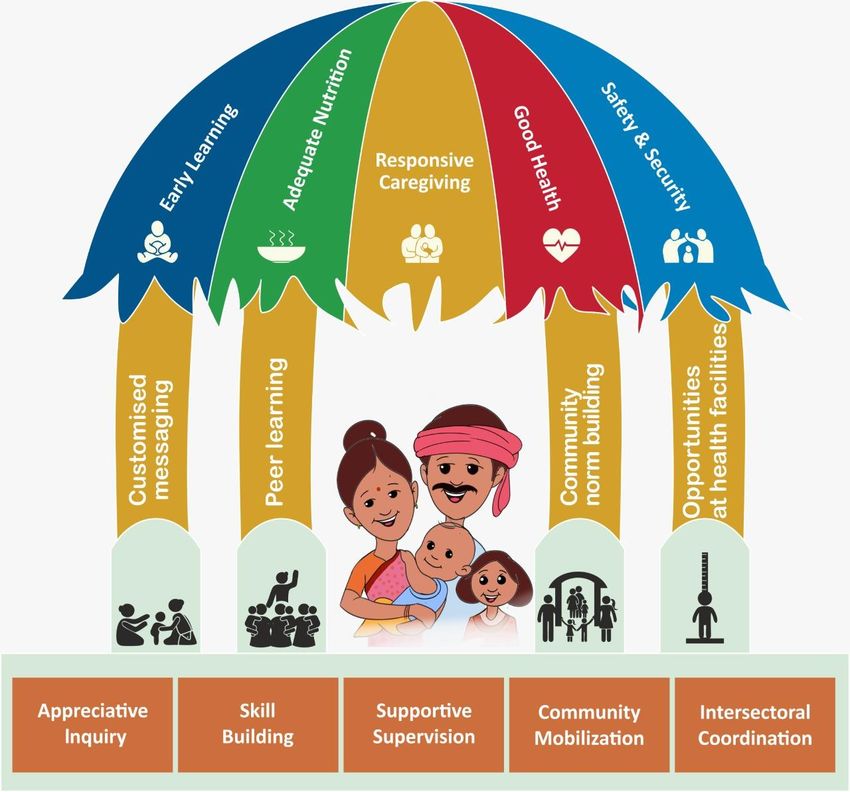
The journey leading to the Aarambh model
A scalable model for nurturing care of
children 0-6 years through the current
opportunities available within ICDS,
health, and other sectors. 2021-22
2018-20 Preparation for
state-wide
2013-14 Scale-up in 10 scale-up (100
ICDS projects; million
2012 Pilot project in 1.5 Million population)
approx. 100,000 population
Pilot project in population
10 villages 2 districts
10 CD blocks
3000 frontline workers
~ 1.5 million population
Aarambh: the model
Four pillars
• Customized messaging
  • Home visits
  • Growth monitoring &
    promotion sessions
• Peer-learning
  • Mothers’/ parents’ meetings
• Community norm building
  • Community-based events
  • Community-based
    organizations
  • Social media
• Opportunities at health
  facilities
Home visits

                                                                    Involving Fathers and other
                                         Play activity based              family members

Customized messages on Health,
 Nutrition and Stimulation using
             MCPC

                                   Demonstration using home items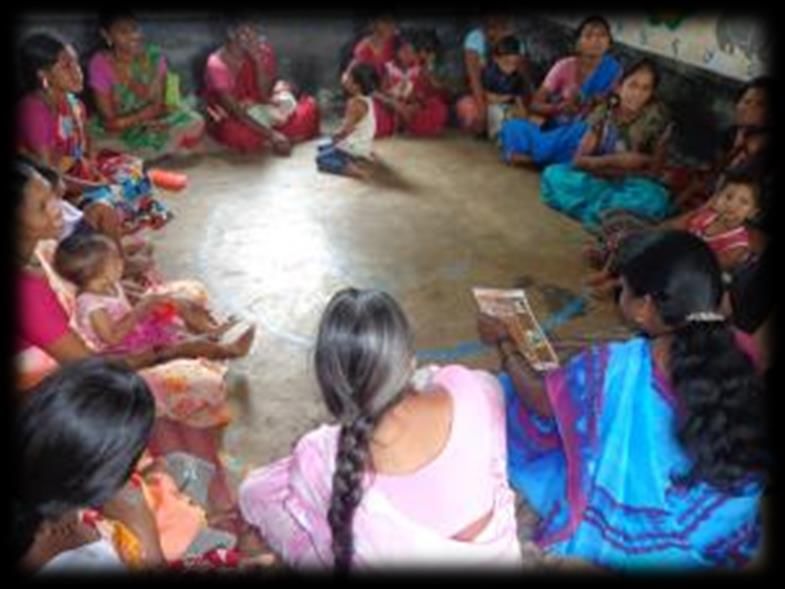
Mothers’ meeting

                        Joyful and Experiential

                                                  Play activity based

                         Demonstrations
        Age band wise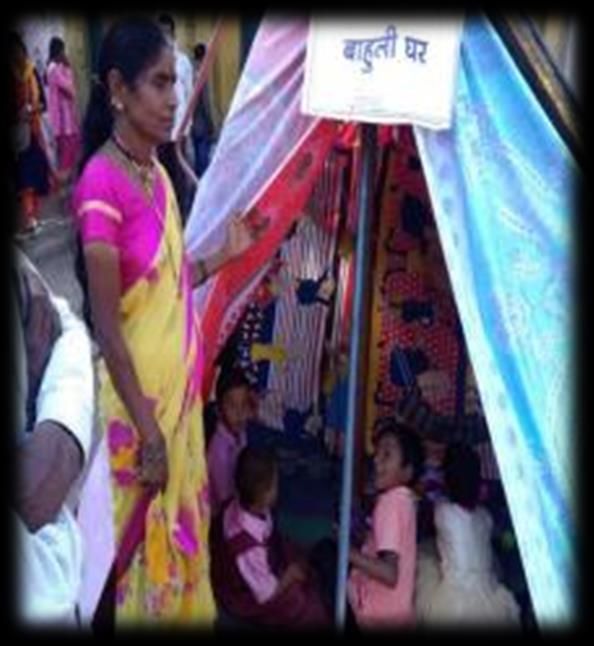
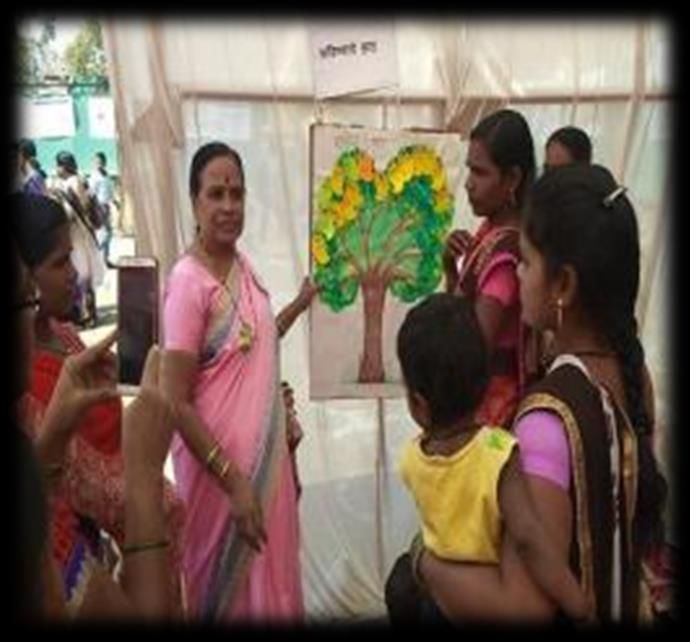
Parents’ Fest (Palak Melawa )

                                                                                             How you make your child laugh?

                                                           What you want your child to be?
        Brain wiring game           Story telling

Preparing print book with Parents   Age-appropriate play             Responsive feeding               Pretend play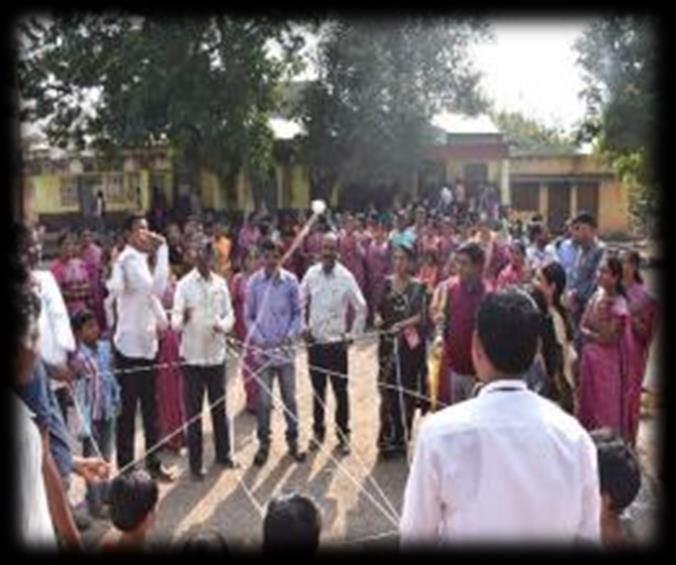
Complementary approaches

                           SHGs

                         Household
            Facilities   of 0-6 yrs   PRIs
                          children

                          Other
                         sectors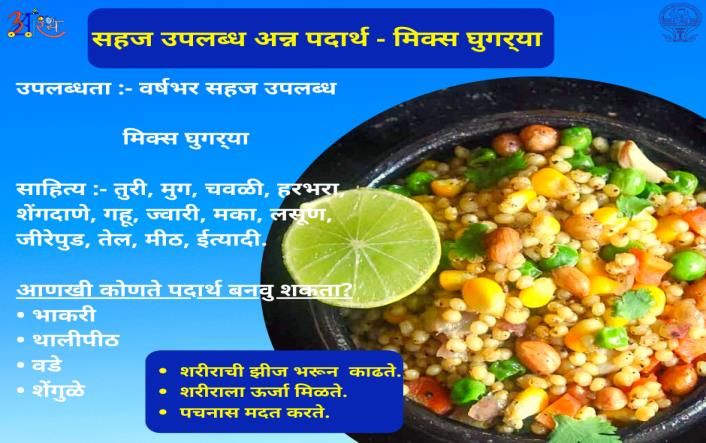
Generating Excitements
through social media posts
Cascade model of training

 Project team
  members
                 Supervisors
                (5 cycles of 5-
                  days each)         Frontline
                                     workers         Households &
                                  (Monthly one-
                                                    whole community
                                   day training –
                                    12 sessions)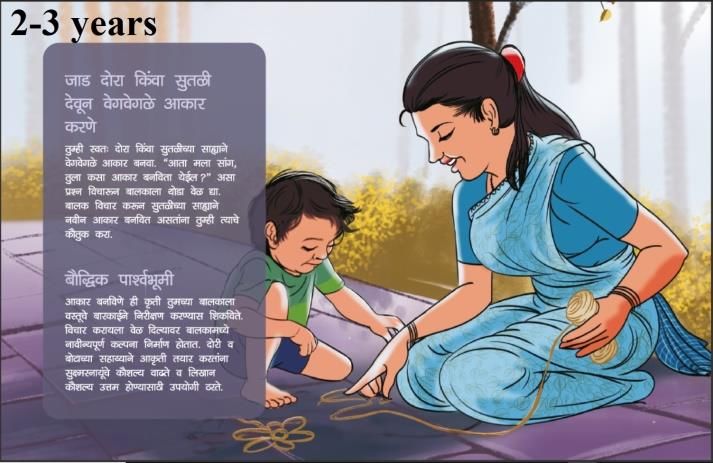
What the data shows us?
100%
90%
80%
70%
                                                                             62%
60%            53%                                                                                                           55%
                                                                                                             50%
50%                                          46%
                                                              42%
40%                                                                      38%                36%          37%
                              29%                                                        31%                             30%
30%
20%                                      17%
                                                         9%
10%
          2%             1%
 0%
       Home visit (0- Home visit (0- Mothers reported    Mothers'    Frequency of Received at least Responsive 10 or more play
        3y) by AWW 3y) by ASHA         conduct of      meeting with complementary 4 food groups in feeding score of         &
             with         with          mothers'      comprehensive feed 4 or more last 24 hours (6- 10 or more     communication
       comprehensive comprehensive      meetings        counselling    (6-35m)           71m)                       activities (0-3y)
         counselling   counselling
                                               Nov-Dec 2018           Nov-Dec 2019
Anthropometric indicators
100%
100% 100%
5% 2%
10% 9% 14% 13% 10% SAM
90% 90%
90% SUW Severe 13%
stunting MAM
80% 80%
80% 23% MUW Moderate Normal
29% 70% 29% 28% stunting 70%
70% Normal
Normal
60% 60% Wasting reduced
60%
Underweight by 6%
50% Stunting reduced 50%
50% reduced by 7% by 2% 88%
40% 40% 82%
40%
68%
30%
57% 59% 30%
30% 61%
20%
20%
20%
10%
10%
10%
0%
0%
Height for age (Nov- Height for age (Nov-
0% Weight for Weight for
Dec 2018) Dec 2019)
Weight for age Weight for age Height (Nov- Height (Nov-
(Nov-Dec 2018) (Nov-Dec 2019) Dec 2018) Dec 2019)
The proportion of children with underweight, stunting and wasting (Development indicators
Mean DQ changed from 107 (±36 SD) to 137 (±26 SD) Mean SQ D) [changed from 152 (±47 SD) to 162 (±54 SD)
[p value=Reasons for success
Supervisors
as trainers: Demonstration
Adaptation Social media MCP card as
Participatory (Incremental of Mothers Joyful
for local to create a central
approach Learning & Meeting and learning
needs excitement tool
Action Home visit
approach)What we learnt?
(Nurturing care interventions)
• Early learning is the best entry point for
Nurturing Care of children
• Huge opportunities available within
existing public sectors (ICDS & Health in
India)
• The best people are out there; trust them
• Intersectoral coordination brings in
multiplier effect
• Excitement is contagious; create platforms
for sharing stories
• All for health, all for nurturing careWhat we learnt?
(Regarding Implementation Science)
• Finalization of elements of the intervention
• Within the existing opportunities
• Keeping scalability in mind always
• Winning the support of each one of them
• Telling them why using local data
• Empowering approach
• Turning them into advocates
• Strategies to create community demand
• The policy contextChallenges
• Within ICDS & health sectors
• Vacant positions of supervisors and mid-level
managers
• Competing interventions; e.g. periodic
campaigns; e.g. Pulse Polio; simultaneous
training programs
• No provision for travelling allowance for ASHAs
• Centralised MIS with no flexibility
• Aligning different sectors together
• Within the catalyst organization
• Organizational hierarchy, beliefs of important
stakeholders within the organization
• Availability of skilled manpower
• The funding environment“Every next level of your life will demand a different you.” -Leonardo DiCaprio
You can also read


