Crowded house: the cosier, the rosier - 13 SEP, 2020 - Griffith University
←
→
Page content transcription
If your browser does not render page correctly, please read the page content below
AUTHOR: Andrew Taylor SECTION: GENERAL NEWS                    ARTICLE TYPE: NEWS ITEM AUDIENCE : 135,093
                   PAGE: 1 PRINTED SIZE: 828.00cm² REGION: NSW                    MARKET: Australia ASR: AUD 39,455 WORDS: 802
                   ITEM ID: 1331807281

                   13 SEP, 2020
                   Crowded house: the cosier, the rosier

                   Sun Herald, Sydney
                                                                                                                                     Page 1 of 3

           Crowded house: the cosier, the rosier
           Uncrowded house? Cosier is rosier for kids
            Many parents dream of raising their family in a roomy suburban
            house, but new research has found it is isolating for children to grow
            up in homes that are too empty. ‘‘They have separate bedrooms and
            living spaces when they would benefit from more interaction with
            siblings and adults,’’ said Professor Michael Dockery. NEWS PAGE 6
           EXCLUSIVE
           Andrew Taylor
           Large suburban houses and                   the average floor size of an Australian      good for their personal growth.’’
           McMansions may be harmful to                home (houses and apartments) was 189           Paul Burton, director of the Cities
           children’s health, according to new         square metres in 2018-19.                   Research Institute at Griffith
           research that found kids are growing          Canberra had the country’s biggest        University, said overcrowding was a
           up in homes that are too empty.             homes, with an average floor area of         problem when it was a product of
              The study by Michael Dockery, a                                                      economic necessity rather than a
                                                        251 square metres, ahead of Victoria
           research fellow at BankWest Curtin                                                      choice. ‘‘If I genuinely prefer to live
                                                        (246 square metres) and NSW
           Economics Centre, also suggested                                                        with a lot of other people in a small
                                                        (221.8 square metres).
           sharing bedrooms and living spaces                                                      house, then it might not be a problem
                                                            About 4 per cent of Australian
           could have a positive impact on                                                         for us, even if our neighbours think
                                                        households are considered
           children’s physical health and measures                                                 differently,’’ he said.
                                                        overcrowded, or require additional
           of social and emotional development.                                                       Professor Burton also said the
                                                        bedrooms for the number of occupants,
              ‘‘My working hypothesis is that                                                      design of homes was more important
                                                        Professor Dockery said. ‘‘The vast
           children now grow up too isolated                                                       than their size. ‘‘It is certainly true that
                                                        majority of children simply do not grow
           within their own homes,’’ he said. ‘‘Too                                                providing separate rooms for every
                                                        up in homes that are crowded,’’ he said.
           often, they have separate bedrooms                                                      member of the household can
                                                        ‘‘It appears they grow up in homes that
           and living spaces when they would                                                       encourage us to lead very isolated lives,
                                                        are too empty.’’
           instead benefit from more interaction                                                    albeit under the same roof,’’ he said.
                                                            Emily Smith shares her five-bedroom
           with other siblings and adults.’’                                                          University of Adelaide professor of
                                                        home on Sydney’s lower north shore
              Professor Dockery’s research, based                                                  housing research Emma Baker said
                                                        with her husband, Trent, their two
           on longitudinal studies of children and                                                 overcrowded housing can make
                                                       children, Annabel and Ella, as well as      inhabitants, particularly children,
           the Household, Income and Labour            her brother- and sister-in-law, their
           Dynamics in Australia survey, found                                                     more vulnerable to catching
                                                       nine-month-old baby and an au pair.         communicable diseases. She said
           scant evidence to support the                   Ms Smith’s children share a
           assumption that crowded homes                                                           housing problems rarely occur in
                                                       bedroom and bathroom, which she said        isolation. ‘‘So the small number of
           negatively affect a child’s health and      kept them ‘‘very close’’ and focused on
           development.                                                                            Australians living in overcrowded
                                                       sharing. ‘‘We deliberately haven’t          housing probably already face the
              There was, however, a link between       created a separate kids’ area as we
           higher household density and poorer                                                     effects of living in cold and poorly
                                                       enjoy having the kids integrated into       maintained housing,’’ Professor
           results on standardised maths and           the conversations and playing around
           reading tests for Indigenous children.                                                  Baker said.
                                                       us,’’ she said.                                Professor Dockery said there may be
              Professor Dockery’s working paper            Ms Smith said her home would feel
           Could the real empty-nesters please grow                                                benefits to larger families that
                                                       ‘‘quite empty’’ if there were not as        outweigh space constraints, although
           up: Household crowding and children’s       many people in the household.
           wellbeing in Australia found isolation or                                               it was not the government’s role to tell
                                                           ‘‘I think the noise, chaos and          people whether or not they should live
           a lack of interaction at home had the
           greatest impact on children aged                                                        in a McMansion.
                                                       laughter fills the space with a warmth
           between five and nine.                                                                      ‘‘The important implication is for
                                                       and energy that is good for the kids’
              Australians build the second biggest                                                 families to ensure children have plenty
                                                       mental and physical health,’’ she said.
           houses in the world after the US, says a                                                of interaction and opportunity for play
                                                       ‘‘We’ve found their independence is
           report by CommSec and the Australian                                                    in their home during the
                                                       accelerated and that having a few
           Bureau of Statistics, which also found                                                  developmental stages – maybe trade-
                                                       different perspectives in the home is
                                                                                                   off extra bedrooms for more backyard
                                                                                                   and shared living spaces,’’ he said.

Licensed by Copyright Agency. You may only copy or communicate this work with a licence.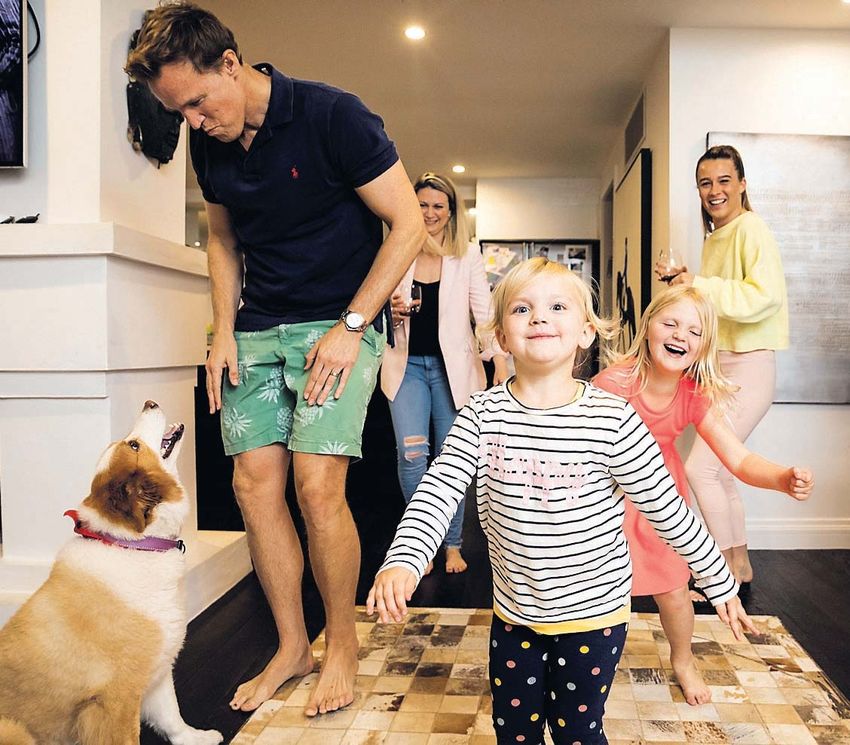
AUTHOR: Andrew Taylor SECTION: GENERAL NEWS                        ARTICLE TYPE: NEWS ITEM AUDIENCE : 135,093
                  PAGE: 1 PRINTED SIZE: 828.00cm² REGION: NSW                        MARKET: Australia ASR: AUD 39,455 WORDS: 802
                  ITEM ID: 1331807281

                  13 SEP, 2020
                  Crowded house: the cosier, the rosier

                  Sun Herald, Sydney
                                                                                                                                    Page 2 of 3

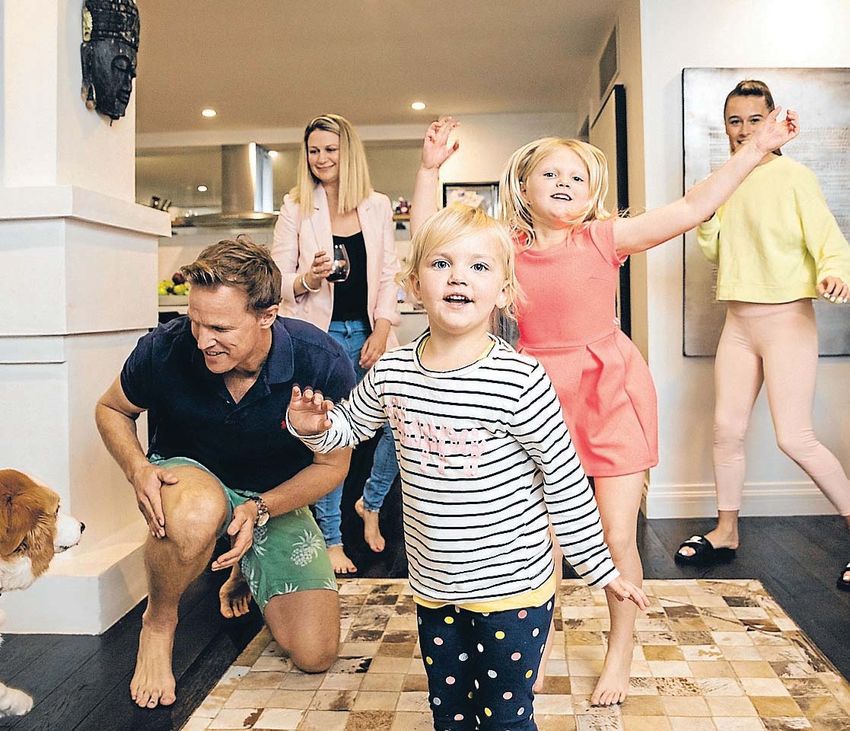
                      Trent and Emily Smith with children Ella, 3, Annabel, 6, and au pair Charli Slarks. Photo: Dominic Lorrimer

Licensed by Copyright Agency. You may only copy or communicate this work with a licence.
AUTHOR: Andrew Taylor SECTION: GENERAL NEWS                ARTICLE TYPE: NEWS ITEM AUDIENCE : 135,093
                  PAGE: 1 PRINTED SIZE: 828.00cm² REGION: NSW                MARKET: Australia ASR: AUD 39,455 WORDS: 802
                  ITEM ID: 1331807281

                  13 SEP, 2020
                  Crowded house: the cosier, the rosier

                  Sun Herald, Sydney
                                                                                                                 Page 3 of 3

                     Trent and Emily
                     Smith at home in
                     Greenwich with
                     their children, Ella
                     (front) and
                     Annabel, au pair
                     Charli Slarks, and
                     their dog Sundae.
                     Photo: Dominic
                     Lorrimer

Licensed by Copyright Agency. You may only copy or communicate this work with a licence.
You can also read


