Intermediate Spanish: Understanding
spoken Spanish
←
→
Page content transcription
If your browser does not render page correctly, please read the page content below

Intermediate Spanish: Understanding spoken Spanish

About this free course
This free course is an adapted extract from the Open University course L116 Spanish Studies 1:
language and culture of the Spanish-speaking world www.open.ac.uk/courses/modules/l116 .
This version of the content may include video, images and interactive content that may not be optimised
for your device.
You can experience this free course as it was originally designed on OpenLearn, the home of free
learning from The Open University –
www.open.edu/openlearn/languages/intermediate-spanish-understanding-spoken-spanish/content-sec-
tion-0
There you’ll also be able to track your progress via your activity record, which you can use to
demonstrate your learning.
Copyright © 2017 The Open University
Intellectual property
Unless otherwise stated, this resource is released under the terms of the Creative Commons Licence
v4.0 http://creativecommons.org/licenses/by-nc-sa/4.0/deed.en_GB. Within that The Open University
interprets this licence in the following way:
www.open.edu/openlearn/about-openlearn/frequently-asked-questions-on-openlearn. Copyright and
rights falling outside the terms of the Creative Commons Licence are retained or controlled by The Open
University. Please read the full text before using any of the content.
We believe the primary barrier to accessing high-quality educational experiences is cost, which is why
we aim to publish as much free content as possible under an open licence. If it proves difficult to release
content under our preferred Creative Commons licence (e.g. because we can’t afford or gain the
clearances or find suitable alternatives), we will still release the materials for free under a personal end-
user licence.
This is because the learning experience will always be the same high quality offering and that should
always be seen as positive – even if at times the licensing is different to Creative Commons.
When using the content you must attribute us (The Open University) (the OU) and any identified author in
accordance with the terms of the Creative Commons Licence.
The Acknowledgements section is used to list, amongst other things, third party (Proprietary), licensed
content which is not subject to Creative Commons licensing. Proprietary content must be used (retained)
intact and in context to the content at all times.
The Acknowledgements section is also used to bring to your attention any other Special Restrictions
which may apply to the content. For example there may be times when the Creative Commons Non-
Commercial Sharealike licence does not apply to any of the content even if owned by us (The Open
University). In these instances, unless stated otherwise, the content may be used for personal and non-
commercial use.
We have also identified as Proprietary other material included in the content which is not subject to
Creative Commons Licence. These are OU logos, trading names and may extend to certain
photographic and video images and sound recordings and any other material as may be brought to your
attention.
Unauthorised use of any of the content may constitute a breach of the terms and conditions and/or
intellectual property laws.
We reserve the right to alter, amend or bring to an end any terms and conditions provided here without
notice.
All rights falling outside the terms of the Creative Commons licence are retained or controlled by The
Open University.
Head of Intellectual Property, The Open University

2 of 42      http://www.open.edu/openlearn/languages/intermediate-spanish-understanding-spoken-spanish/content-section-0   Thursday 7 May 2020
Contents
Introduction                                                                                                            4
Learning Outcomes                                                                                                       5
1 Introducing the course                                                                                                6
2 Predicting content                                                                                                    7
    2.1 Listening to introductions                                                                                       7
    2.2 Anticipating, listening out for and practising unfamiliar sounds                                                10
3 Using knowledge of your own language                                                                                  13
    3.1 Recognising cognates                                                                                            13
    3.2. Pronouncing cognates                                                                                           18
4 Using cultural knowledge                                                                                              19
    4.1 Happiness and contentment                                                                                       19
    4.2 Body language                                                                                                   22
5 Using subtitles                                                                                                       24
    5.1 Interlingual subtitles                                                                                          24
    5.2 Intralingual subtitles                                                                                          28
6 Coping with unfamiliar language                                                                                       30
    6.1 Recognising idiomatic language                                                                                  32
    6.2 Using transcripts                                                                                               33
7 Deducing meaning                                                                                                      35
    7.1 Understanding the gist                                                                                          35
    7.2 Listening for detail                                                                                            36
    7.3 Recognising native speaker techniques                                                                           38
Conclusion                                                                                                              41
Acknowledgements                                                                                                        41

3 of 42   http://www.open.edu/openlearn/languages/intermediate-spanish-understanding-spoken-spanish/content-section-0        Thursday 7 May 2020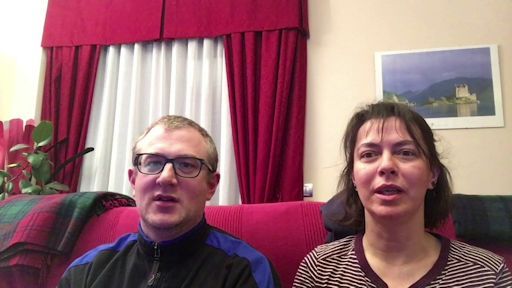
Introduction

Introduction
Each section of this free course, Intermediate Spanish: Understanding spoken Spanish,
will help you develop an understanding of spoken Spanish through watching video
portraits of six people talking at a natural pace about themselves and their lives. Using
videos for language improvement is powerfully motivating because as well as hearing
people talk, you pick up cultural clues and body language, all in authentic scenarios which
make language learning meaningful.
The more you watch and listen to Spanish in this way, the more you will understand. As
you start, just relax and enjoy the sound of the language with its range of accents. Simply
being able to recognise from the intonation, for example, that a question has been asked
is an important step towards understanding natural language.
The video clips you will watch in this course are all authentic, that is, they are unscripted
and spontaneous. They show people from Spain or Spanish-speaking countries talking
about themselves at normal speed.

Strategies for understanding video resources
You may not be aware of this, but when you watch a video or movie in your mother
tongue, you are constantly using various strategies to help you make sense of what you
are seeing. This course will enable you to recognise the strategies you already use in
interpreting spoken language, and will help you adapt them so you can understand
everyday speech in Spanish through the medium of videos. The language level used in
this course corresponds to B1 in the Common European Framework of Reference for
Languages (COE).
These are some key strategies you will explore through the course:

          Predicting content
          Using knowledge of your own language
          Using cultural knowledge
          Using subtitles
          Coping with unfamiliar language
          Deducing meaning

This OpenLearn course is an adapted extract from the Open University course
L116 Spanish Studies 1: language and culture of the Spanish-speaking world.

4 of 42       http://www.open.edu/openlearn/languages/intermediate-spanish-understanding-spoken-spanish/content-section-0   Thursday 7 May 2020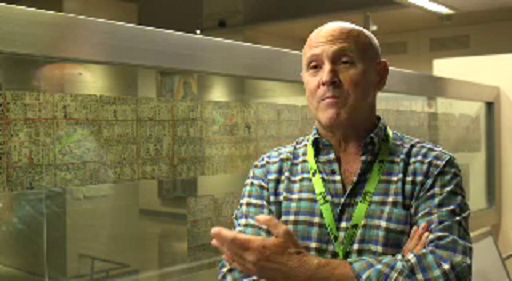
Learning Outcomes
After studying this course, you should be able to:
●   develop strategies for understanding video resources in Spanish
●   understand Spanish spoken at natural speed
●   understand and give personal information in Spanish
●   use knowledge of other languages and cultures to decode what is heard in Spanish.
1 Introducing the course

1 Introducing the course
Before you start the course, watch the following video which gives useful hints and tips
when trying to improve your understanding of spoken Spanish.

 Video content is not available in this format.

6 of 42    http://www.open.edu/openlearn/languages/intermediate-spanish-understanding-spoken-spanish/content-section-0   Thursday 7 May 2020

2 Predicting content

2 Predicting content
The video clips in this course are not scripted; they include language which the people we
interviewed used naturally. The materials include vocabulary and grammar you may not
fully understand. Even this, however, is an important part of the process of learning a new
language. It is likely that you understand some of what you are seeing and hearing to
begin with, and that you can build on this one step at a time. Some language courses
script audio visual materials and focus on the vocabulary and grammar being taught at
that moment. This is useful for learning to reinforce expressions and phrases, but
authentic materials prepare the learner for hearing Spanish in real life.
Being able to predict what a speaker might say will help you listen out for language you
are familiar with. Anticipating what you might hear prepares you to identify individual
words or details such as names or places.

2.1 Listening to introductions
In this section, you are going to practise listening out for people’s personal details by
anticipating what people might say when introducing themselves.

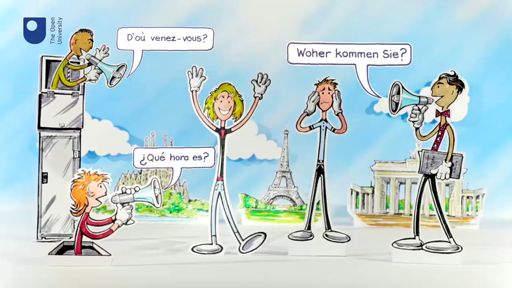
Figure 1 Introductions

  Actividad 1
  Before you watch a series of videos in the next activity, choose three aspects from the
  following list that you would mention to introduce yourself and write them down in
  the box.

          Edad
          Nacionalidad
          Lugar de origen
          Nombre
          Profesión
          Lugar de residencia

    Provide your answer...

7 of 42      http://www.open.edu/openlearn/languages/intermediate-spanish-understanding-spoken-spanish/content-section-0   Thursday 7 May 2020
2 Predicting content

  Answer
  Any of these types of information could be used by someone providing basic
  information about themselves so in situations such as introductions to other people
  you need to get ready to listen to relevant language in those areas.

  Actividad 2
  Which expressions would you expect to hear when someone introduces themselves?
  Match the expressions with the different categories of information.

          Ejemplo
          Edad ➜ Tengo… años

          Tengo… años
          Soy…
          Nací en…
          Me llamo…
          Trabajo de/en…
          Vivo en…
  Match each of the items above to an item below.
          Edad
          Nacionalidad
          Lugar de origen
          Nombre
          Profesión
          Lugar de residencia
  Feedback
  Lugar de origen ➜ Nací en… (‘Soy de… ’ is another way to express origin)
  Nombre ➜ Me llamo… (‘Mi nombre es…’ is another way to express your name)
  Profesión ➜ Trabajo de/en… (‘Soy …’ is another way to express profession)

  Actividad 3
  Now listen to the six speakers and complete the following table with the information
  they provide about themsleves.

   Interactive content is not available in this format.

8 of 42     http://www.open.edu/openlearn/languages/intermediate-spanish-understanding-spoken-spanish/content-section-0   Thursday 7 May 2020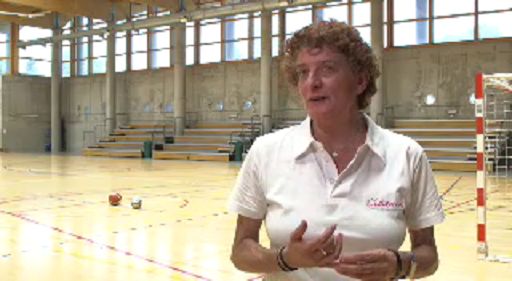
2 Predicting content

   Nombre         Edad                                        Lugar de origen (país)                      Lugar de residencia

   Manuel            Provide your answer...                      Provide your answer...
   Rivero

   Paloma         50 años                                        Provide your answer...                     Provide your answer...
   Zancajo

   Celia             Provide your answer...                   Zaragoza
   Sánchez
   Ramos
   Antonio           Provide your answer...                      Provide your answer...
   Feal
   Dopico
   Amalia            Provide your answer...                      Provide your answer...
   Schubert
   Arévalo
   (s)
   Andrés            Provide your answer...                      Provide your answer...                     Provide your answer...
   Ponga
   Colina

  Answer

   Nombre                                 Edad           Lugar de origen (país)                              Lugar de
                                                                                                             residencia
   Manuel Rivero                          55             Santander (en el norte de
                                          años           España)
   Paloma Zancajo                         50             Madrid                                              Madrid
                                          años
   Celia Sánchez Ramos                    56             Zaragoza (noroeste de España)
                                          años
   Antonio Feal Dopico                    64             La Coruña (España)
                                          años
   Amalia Schubert                        29             Santa Rosa del Aguaray
   Arévalo(s)                             años
   Andrés Ponga Colina                    34             Santander, (capital de Cantabria Ajo
                                          años

 Box 1: Using context and visual clues to make predictions
 Knowing aspects of the theme, the context or the speakers can help you predict the content
 of what you are going to listen to. For instance, while watching a movie you will be able to
 identify a situation where people greet or introduce each other so this social context will
 help you to listen out for and recognise some of the key words likely to come up in this
 context. Knowing that in such a situation you will most likely hear the names of people and
 specific places will help you to be alert and prepared for when that happens. At this stage
 the most important thing is that you are able to identify when these are expressed. As in

9 of 42      http://www.open.edu/openlearn/languages/intermediate-spanish-understanding-spoken-spanish/content-section-0      Thursday 7 May 2020
2 Predicting content

 your own language, you may not clearly capture those names, but you can recognise when
 they are said in the sentence. Predicting is about knowing when to expect them.
 None of the people you heard talked about their occupation or nationality, and only some
 mentioned where they live. However, by looking at the surrounding background you could
 make a guess at where they live. The additional visual clues of how they are dressed also
 provide you with crucial contextual information about what they might do for a living and
 what they might be talking about in their introduction.

2.2 Anticipating, listening out for and practising
unfamiliar sounds
Being able to understand names and places can tell you a lot about what the speaker
intends to say. However, it can be difficult to pronounce and understand foreign names
because often we apply the sounds, stress patterns and intonation of our mother tongue.

  Actividad 4
  In this section, you can listen how Spanish people pronounce the sounds of names in
  English. Pay attention to the following aspects:

  ●        How the Spanish speaker pronounces the names with the consonant ‘h’.
  ●        How the Spanish speaker pronounces the names starting with the consonant ‘s’.
  ●        In the box below, make a note of how the names with the consonant ‘h’ are
           pronounced, and also the names beginning with ‘s’.

      Video content is not available in this format.

      Provide your answer...

  Discussion
  These are the names you heard:

           Steven Spielberg
           Scarlett Johansson
           Harry Styles
           Whitney Houston

10 of 42      http://www.open.edu/openlearn/languages/intermediate-spanish-understanding-spoken-spanish/content-section-0   Thursday 7 May 2020
2 Predicting content
Buckingham
Stonehenge
Stratford
Hollywood
Notice how the native speaker of Spanish tends to adapt the English pronunciation of
‘h’ and ‘s’ to fit the Spanish sound system. ‘H’ sounds like the Spanish ‘j’. Words
beginning with ‘sc’, ‘sl’, ‘sm’, ‘sn’, ‘sp’ and ‘st’ have an ‘e’ added to them.
Box 2: Understanding names and places
When it comes to understanding native Spanish speakers knowing what kind of
pronunciation to expect will help you catch places and names more easily.
Although the consonant h is not pronounced at all in Spanish, Spanish speakers usually
pronounce English names and words with h making them sound like a Spanish j (jota,
jamón, personaje, etc.).
The combination s+consonant in a syllable does not exist in Spanish. Words that contain
this combination of consonants often start with the vowel ‘e’ (español, estructura, Esteban,
estilo) When it comes to pronouncing this combination of consonants in English, Spanish
speakers therefore tend to replicate this common combination and create an extra syllable,
pronouncing an e in front of the s: Scarlet is pronounced as Escarlet.
Actividad 5
Having listened to native Spanish speakers in Actividades 3 and 4, now think of the
following:
1. How do you think a Spanish speaker would pronounce your name and surname?
2. How would they pronounce the place where you are from and where you live?
3. How would you help him / her to pronounce those names correctly in English?
Take into consideration what you know about pronunciation of certain consonants and
differences in sounds and intonation.
Provide your answer...
Actividad 6
Now it is your turn to say something about yourself. Remember that when talking about
yourself in Spanish, you need to be aware that a native Spanish speaker might find it
difficult to understand names and places in English. To help them, slow down if
necessary, without exaggerating too much.
As a last resort, native speakers of other languages sometimes adapt their
pronunciation to imitate a Spanish native speaker, pronouncing ‘h’ like a ‘j’ and adding
extra ‘e’ at the front of words that start with ‘s+ consonant'.
11 of 42 http://www.open.edu/openlearn/languages/intermediate-spanish-understanding-spoken-spanish/content-section-0 Thursday 7 May 20202 Predicting content
Say out loud your name, your age, the name of the place where you were born and
where you live using the prompts provided. Imagine you are introducing yourself to a
group of Spanish speakers. Put yourself in their shoes and make sure that they
understand the pronunciation of all names and places.
Use some or all of the following prompts to help you structure your introduction.
Me llamo…
Tengo… años
Nací en…
Vivo en…
Soy…
Trabajo de/en…
12 of 42 http://www.open.edu/openlearn/languages/intermediate-spanish-understanding-spoken-spanish/content-section-0 Thursday 7 May 20203 Using knowledge of your own language 3 Using knowledge of your own language Your knowledge about how Spanish sounds and works helps you build up your understanding, but your own language(s) and your knowledge of other languages can also be extremely helpful. 3.1 Recognising cognates Box 3: Using cognates When watching videos in Spanish, you will recognise some words or phrases because they are similar to the ones used in your own language(s) or other languages you might know. These are known as cognates. Cognates are words that have the same or similar meaning, spelling and pronunciation in two languages. They are a useful aid when learning a language. The following are examples of Spanish and English cognates: doctor/doctor, centre/centro, radio/radio. Some languages, like Spanish, have thousands of cognates with Eng- lish. Sometimes, using your knowledge of the pronunciation, intonation and rhythm of words, you will able to decode other words or phrases that you have never heard before in Spanish. Just beware of differences in spelling! Identifying a cognate does not help you draw conclusions about the spelling. When listening, you should be able to work out how to spell most words in Spanish as the writing of sounds is very predictable. Actividad 7 Being aware of words which have the same or similar meaning and spelling in English can help you not only understand authentic Spanish, but also expand your vocabulary in Spanish . Do you recognise the following words? Write down their English cognate. Español English cognate Actor Actor Arte Provide your answer... Banco Provide your answer... Concierto Provide your answer... Cultura Provide your answer... 13 of 42 http://www.open.edu/openlearn/languages/intermediate-spanish-understanding-spoken-spanish/content-section-0 Thursday 7 May 2020
3 Using knowledge of your own language

   Memoria             Provide your answer...

   Problema            Provide your answer...

   Romántico           Provide your answer...

   Tráfico             Provide your answer...

   Verbo               Provide your answer...

   Violencia           Provide your answer...

  Answer

   Español           English
                     cognate

   Actor             Actor
   Arte              Art
   Banco             Bank
   Concierto         Concert
   Cultura           Culture
   Memoria           Memory
   Problema          Problem
   Romántico         Romantic
   Tráfico           Traffic
   Verbo             Verb
   Violencia         Violence

  Actividad 8
  Now listen to Paloma Zancajo talking about what she values most in life. Indicate the
  six cognates you hear in Spanish from the list below:

   Video content is not available in this format.

14 of 42     http://www.open.edu/openlearn/languages/intermediate-spanish-understanding-spoken-spanish/content-section-0   Thursday 7 May 2020
3 Using knowledge of your own language
o abundance
o associated
o no
o curiosity
o elegance
o family
o honesty
o ideal
o justice
o liberty
o magic
o persons
Answer
Paloma uses the following words:
familia – family
libertad – liberty
justicia – justice
personas– persons
honestidad – honesty
Even though the word 'persons' is not commonly used in English, an awareness of the
cognate can help you pick up on more details in an authentic conversation.
Notice that some words are not spelt exactly the same in Spanish and English, but are
quite similar, so we can work out what they might mean.
Actividad 9
Watch Paloma Zancajo talk about what she values most in life again. Then choose the
correct option(s) to complete the statements below.
15 of 42 http://www.open.edu/openlearn/languages/intermediate-spanish-understanding-spoken-spanish/content-section-0 Thursday 7 May 20203 Using knowledge of your own language
Video content is not available in this format.
Para Paloma lo más importante en la vida es _________.
¡ la familia
¡ el dinero
¡ el tiempo libre
Para Paloma los valores más importantes son _________, __________ y
_________ porque ayudan a desarrollarse a las personas.
o la libertad
o la sinceridad
o la solidaridad
o el respeto
o la justicia
o el amor
o la tolerancia
o la honestidad
Actividad 10
Paloma also talks about what surprises people about her. Read the transcript of what
she says and identify the eight cognates that have similar spelling in English. Then
write them down below. List cognates that appear multiple times only once.
Transcript
“La gente se sorprende mucho cuando me conoce(n) porque no lo aparento pero
soy una persona muy paciente, tengo mucha paciencia. O sea, parezco muy
nerviosa, parezco muy tal, ¿no? Pero luego la gente cuando… bueno pues cuando
me va conociendo dicen: “Paloma, ¡qué paciencia tienes! ¿no?“ Que no debe ser
16 of 42 http://www.open.edu/openlearn/languages/intermediate-spanish-understanding-spoken-spanish/content-section-0 Thursday 7 May 20203 Using knowledge of your own language
muy habitual en la gente pero yo no sé si es por deformación profesional o porque
pues la gente me dice que la paciencia, ¿no? La paciencia que… que tienes.”
Provide your answer...
Provide your answer...
Provide your answer...
Provide your answer...
Provide your answer...
Provide your answer...
Provide your answer...
Provide your answer...
Provide your answer...
Answer
no
aparento
persona
paciente
paciencia
nerviosa
habitual
deformación
profesional
Comment
Note how Paloma uses the term ‘deformación profesional’ in order to distinguish
patience acquired as part of the job from a more innate patience.
17 of 42 http://www.open.edu/openlearn/languages/intermediate-spanish-understanding-spoken-spanish/content-section-0 Thursday 7 May 20203 Using knowledge of your own language 3.2. Pronouncing cognates You will now look out for cognates. Actividad 11 Listen to Paloma again and pay particular attention to the pronunciation of the cognates you identified in Actividad 10. Video content is not available in this format. Actividad 12 Now read aloud the cognates Paloma has used. no aparento persona paciente paciencia nerviosa habitual deformación profesional 18 of 42 http://www.open.edu/openlearn/languages/intermediate-spanish-understanding-spoken-spanish/content-section-0 Thursday 7 May 2020
4 Using cultural knowledge

4 Using cultural knowledge

Figure 2 Francis Drake
Knowledge of any differences and similarities between your own and the Spanish culture
is also important for understanding native Spanish speakers. Your personal experiences
will influence your interpretation of what you see and your interpretation of what people
might be interested in or value most. So you need to be aware that these experiences
might not always be transferable into other cultural contexts. Knowing about cultural
similarities and differences will aid your understanding.

4.1 Happiness and contentment
In this section you will listen to and watch Andrés Ponga Colina. As you do the exercises,
think about the background cultural knowledge you are using from your own experience to
help you interpret what he says, and maybe work out what makes him contented. You will
also use contextual clues from the video to help you understand what he is saying.

19 of 42   http://www.open.edu/openlearn/languages/intermediate-spanish-understanding-spoken-spanish/content-section-0   Thursday 7 May 2020
4 Using cultural knowledge

  Actividad 13
  First of all, identify the three things from the list that make you happiest.

           familia
           trabajo
           éxito
           dinero
           amor
           salud
           animales
           amigos
           viajes
           estudios
           tiempo libre

  Actividad 14
  You have already met Andrés Ponga Colina. Watch this video extract with the sound
  off and try to work out

  ●        where Andrés lives.
  ●        what he does for a living.

      Video content is not available in this format.

20 of 42      http://www.open.edu/openlearn/languages/intermediate-spanish-understanding-spoken-spanish/content-section-0   Thursday 7 May 2020
4 Using cultural knowledge
Answer
Just by looking at the visual clues in the video, you can see that Andrés lives in a
village, in the countryside. You will have guessed that he is a farmer looking after his
cattle and working in the fields. We see him having lunch with his family. These visual
clues can lead us to believe that Andrés is likely to be talking about his family, his work
and his animals, and that these are the things that make him happy.
Actividad 15
Now watch the video with the sound on and find out what the most important things are
for Andrés in his life. Complete the following sentences in Spanish according to the
things he mentions.
Video content is not available in this format.
Para Andrés hay cuatro cosas importantes en la vida:… A Andrés lo que le hace más feliz
es:…
Answer
For Andrés it is important in life is to have some tranquillity, peace (tranquilidad), to be
happy (felicidad), the support of your family (familia que te apoye) and have a partner.
For him, the thing that makes him happy is his family (familia).
Actividad 16
Are you similar to Andrés? What is important to you in life? Jot down notes and then
practise saying out loud in Spanish what is important to you and what makes you
happy.
You can use the following prompts.
Para mí las cosas importantes en la vida son _________.
21 of 42 http://www.open.edu/openlearn/languages/intermediate-spanish-understanding-spoken-spanish/content-section-0 Thursday 7 May 20204 Using cultural knowledge
A mí lo que me hace más feliz es _________.
Answer
Your answer will be individual to you, but here is an example:
Para mí las cosas importantes en la vida son la familia, la salud y la seguridad
financiera.
A mí lo que me hace más feliz es estar con mi familia y disfrutar de una comida juntos.
4.2 Body language
In this section, we will look at how non-verbal communication gives clues to meaning and
helps the understanding of foreign language visual media.
Box 4: Reading body language
One of the significant advantages of watching a video or a film is that it offers you visual
support. You gain information about the context and the characters and also pick up
gestures, facial expressions and body language that can help you infer meaning from
speech and understand more of the spoken language.
Indeed, body language plays a crucial role in communication and an awareness of it and
how it can vary from culture to culture, can be particularly important in developing the ability
to understand in a real environment. Body language is made up of a whole range of
features (eye contact, facial expression, proximity, posture and gesture), many of which we
combine together without ever thinking about what it is we are doing or what we are
expressing.
Actividad 17
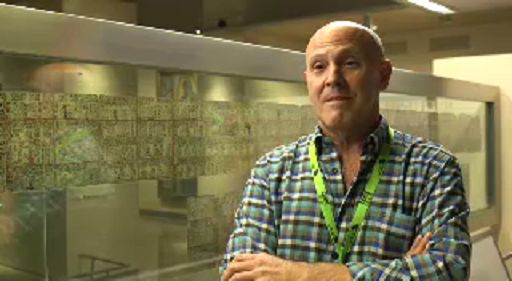
Now watch this video in which two brothers, Alberto and Javier Soto, talk about their
love and passion for their family business. Pay particular attention to their gestures
and how these emphasise the ideas they want to communicate. Match the phrases
below with the body part they use for emphasis as they say these phrases. If you want,
you can watch it with English subtitles.
Interactive content is not available in this format.
Cabeza
Dedos
Dedo índice
Manos en puño
Palma de las manos
Brazos
Cabeza y brazos
22 of 42 http://www.open.edu/openlearn/languages/intermediate-spanish-understanding-spoken-spanish/content-section-0 Thursday 7 May 20204 Using cultural knowledge
Cara
Cabeza, dedos y brazos
Match each of the items above to an item below.
“Mi padre y un tío”
“Cuando les hablas de la money”
“Ves, hacerse, sí lo hacemos”
“Coges la puerta de tu casa”
“Siendo un poquito manitas”
“Compramos la pizza, llegamos a casa, abrimos el microondas”
“No lo comparemos con el cocido”
“Estoy superorgulloso de ser carpintero”
“Yo tengo una hija y él tiene dos”
Discussion
Note that cocido is a Spanish stew. Javier is comparing the difference between
microwave meals and home-cooked food to explain the difference between pre-
fabricated and artisanal furniture.
23 of 42 http://www.open.edu/openlearn/languages/intermediate-spanish-understanding-spoken-spanish/content-section-0 Thursday 7 May 20205 Using subtitles 5 Using subtitles The rise in popularity of subtitled television programmes over the last few years means that more people are accustomed to using them. In a language learning environment, watching videos with subtitles can support not only your listening and reading comprehension skills, but also your knowledge of grammar and vocabulary. In this section you are going to explore and practise the use of subtitles to support your comprehension and your language learning while watching and listening to Dr Celia Sánchez-Ramos. Box 5: Intralingual and interlingual subtitles Subtitles support your language learning by helping you visualise what you hear, especially if the language is challenging (either because of the vocabulary or grammar), because it is too fast and you cannot distinguish word boundaries, or because you are listening to an unfamiliar pronunciation, accent or register. Interlingual subtitles Standard subtitles are also known as interlingual subtitles (videos in foreign language with mother tongue captions). Watching a video with interlingual subtitles helps your brain process a foreign language by making connections, linking image, sound and text – the last two being distinct sets of verbal support – with translation. (Danan, 1992). Intralingual subtitles Intralingual subtitles (sound and subtitles in the same language) are believed to help improve listening and word recognition by helping students to identify sounds and distinguish between words. Transcripts While subtitles appear on the screen simultaneously with the spoken word and are not necessarily an exact match of what is being said, transcripts offer a word-for-word transcription of the audio in the video and are available as a separate document. In this course you have various opportunities to use them for your learning of Spanish. 5.1 Interlingual subtitles In this activity you are going to explore and practise the use of subtitles to support your comprehension and your language learning while watching and listening to Dr Celia Sánchez-Ramos. Of course, subtitles are not only used for learning. Many people use subtitles when they watch films, documentaries or even when they watch music videos. Answer these questions to reflect on your own use of subtitles. 24 of 42 http://www.open.edu/openlearn/languages/intermediate-spanish-understanding-spoken-spanish/content-section-0 Thursday 7 May 2020
5 Using subtitles

  Actividad 18
  Do you tend to use subtitles when watching films in Spanish or in other languages?

      Provide your answer...

  Do you use subtitles in English (or your mother tongue) or in Spanish?

      Provide your answer...

  If you use English or mother tongue subtitles, in what circumstances do you decide to
  use them?

      Provide your answer...

  Answer
  You might choose subtitles in your own language for a variety of reasons:

  ●        To help with understanding unfamiliar accents
  ●        Because I have hearing problems
  ●        To make sure I don't miss any information

  If you decide to use subtitles in Spanish when watching a Spanish film, why might
  this be?

      Provide your answer...

  Answer
  You might choose subtitles in Spanish for these sort of reasons:

  ●        To understand everything
  ●        To learn new words
  ●        To learn new accents
  ●        To cope with unfamiliar accents

  Actividad 19
  Though you may find the use of subtitles distracting or tiring when you start, you will
  develop strategies to use them effectively the more you become accustomed to seeing
  them on screen.
  Let’s look at interlingual subtitles first. Listen to Celia and find out what kind of person
  she is. Click the button marked CC on the screen and then watch the video with the
  subtitles in English turned on.

25 of 42      http://www.open.edu/openlearn/languages/intermediate-spanish-understanding-spoken-spanish/content-section-0   Thursday 7 May 2020
5 Using subtitles Video content is not available in this format. Actividad 20 In this video Celia talks about the things that make her happy. Watch the video with the English subtitles turned on and decide whether the statements are true or false. Video content is not available in this format. Celia es feliz porque no pide demasiado. ¡ Verdadero ¡ Falso Celia es feliz cuando ayuda a los demás. ¡ Verdadero 26 of 42 http://www.open.edu/openlearn/languages/intermediate-spanish-understanding-spoken-spanish/content-section-0 Thursday 7 May 2020
5 Using subtitles

  ¡   Falso
  Celia es feliz porque con su edad no tiene miedo.
  ¡   Verdadero
  ¡   Falso
  Celia tiene grandes expectativas profesionales.
  ¡   Verdadero
  ¡   Falso
  Celia es una buena ama de casa.
  ¡   Verdadero
  ¡   Falso

  Actividad 21
  Watch the final part of the video. Watch it without subtitles. Then put the following list of
  things Celia values in the order she mentions them in the video. Check your answer in
  the transcript.

   Video content is not available in this format.

           La amistad
           Hacer agradable la vida de mi entorno
           Sentirme bien conmigo misma
           Poner objetivos a corto plazo y a medio plazo
           Ilusionarme con nuevas metas
           La automotivación
  Match each of the items above to an item below.
           First:
           Second:

27 of 42     http://www.open.edu/openlearn/languages/intermediate-spanish-understanding-spoken-spanish/content-section-0   Thursday 7 May 2020
5 Using subtitles
Third:
Fourth:
Fifth:
Sixth:
5.2 Intralingual subtitles
To practise the use of intralingual subtitles, watch the video of Celia with Spanish
subtitles. Make a note of five new words or expressions you are not familiar with.
Actividad 22
To practise the use of intralingual subtitles, watch the video of Celia with Spanish
subtitles. Make a note of five new words or expressions you are not familiar with.
Video content is not available in this format.
Provide your answer...
Actividad 23
Add the five words and phrases you identified in Actividad 22 to the table below. Then
complete the rest of the table by looking them up in a dictionary. The first link will take
you to a monolingual Spanish only online dictionary, and the second to a Spanish-
English one.
Link: Diccionario de la lengua española
28 of 42 http://www.open.edu/openlearn/languages/intermediate-spanish-understanding-spoken-spanish/content-section-0 Thursday 7 May 20205 Using subtitles
Link: WordReference
New word or phrase English Spanish definition
de trato fácil easy going persona flexible, agradable,
positiva y servicial
entorno environment, context círculo(s) donde se vive o se
mueve una persona, por
ejemplo el trabajo, el
hogar, etc.
Provide your answer... Provide your answer... Provide your answer...
Provide your answer... Provide your answer... Provide your answer...
Provide your answer... Provide your answer... Provide your answer...
Provide your answer... Provide your answer... Provide your answer...
Provide your answer... Provide your answer... Provide your answer...
Answer
You may have noted some of these words.
New word or English Spanish definition
phrase
de trato fácil easy going persona flexible, agradable, positiva y servicial
entorno environment, círculo(s) donde se vive o se mueve una persona, por
context ejemplo el trabajo, el hogar, etc.
buen humor Good Tendencia alegre de una persona
humoured
sentirme bien Feeling good (Note that misma is feminine and a male would say:
conmigo misma about myself mismo)
a corto plazo Short term Dentro de un periodo breve
Nuevas metas New goals Fin a que se dirigen las acciones o deseos
Falta de miedo Lack of fear Sin angustias o aprensiones
29 of 42 http://www.open.edu/openlearn/languages/intermediate-spanish-understanding-spoken-spanish/content-section-0 Thursday 7 May 20206 Coping with unfamiliar language
6 Coping with unfamiliar language
Developing skills to learn how to cope with unfamiliar vocabulary or unfamiliar language
will help you to stay motivated when you are learning a language. You also get to enjoy
watching videos and films in Spanish! Next, you are going to practise how to handle new
vocabulary and everyday, colloquial language by analysing part of a video, then practising
using subtitles, transcripts and shadow reading.
Actividad 24
You already know that Antonio Feal Dopico is 64 years old and he is from La Coruña in
northern Spain. Now watch the full introduction and put the aspects of his life in the
order he mentions them. That way you will focus on the gist of what he says and get an
overview of the structure of his introduction without worrying about the meaning of
each individual word. Despite being faced with unfamiliar vocabulary you should be
able to understand the gist of what Antonio is talking about, even if it takes a few
listens.
Video content is not available in this format.
Datos personales
Trabajo
Personalidad
Idiomas
Cambios en su vida
Match each of the items above to an item below.
1
2
30 of 42 http://www.open.edu/openlearn/languages/intermediate-spanish-understanding-spoken-spanish/content-section-0 Thursday 7 May 20206 Coping with unfamiliar language
3
4
5
Actividad 25
In section 2 we looked at cognates as a useful starting point for dealing with unfamiliar
language and expanding active vocabulary. But beware of false friends, words like the
four words below that look like cognates but do in fact have different meanings.
Watch the video of Antonio in which he talks about one of his obsessions and a gift he
has, and try to work out what the four words mean in English. Beware of false friends.
Then watch the video again, this time with English subtitles and check your answer
against the subtitles and write down the correct translation in the table below.
Video content is not available in this format.
Particular Provide your answer...
Manía Provide your answer...
Facilidad Provide your answer...
Idiomas Provide your answer...
31 of 42 http://www.open.edu/openlearn/languages/intermediate-spanish-understanding-spoken-spanish/content-section-0 Thursday 7 May 20206 Coping with unfamiliar language
Answer
In this context, these are the ways in which these words would be interpreted.
Particular Peculiar, unusual. Here the word does not
mean ‘particular’.
Manía Obsession. This is here a false friend of
the word ‘mania’.
Facilidad Ease. The word ‘facility’ is not commonly
used with this meaning.
Idiomas Languages. This is a false friend of the
word ‘idioms’.
6.1 Recognising idiomatic language
Language becomes more complicated for the learner when people use day-to-day
language, familiar expressions or ways of putting things that can be difficult to understand.
In this section, you will practise identifying idiomatic language.
Actividad 26
Watch the whole video of Antonio and write down in Spanish how he expresses the
following ideas.
Video content is not available in this format.
I retired 4 years ago Me jubilé hace 4 años
I perform the functions… Provide your answer...
32 of 42 http://www.open.edu/openlearn/languages/intermediate-spanish-understanding-spoken-spanish/content-section-0 Thursday 7 May 20206 Coping with unfamiliar language I fundamentally value Provide your answer... affection …gathered around a table Provide your answer... I have a gift for languages Provide your answer... I am determined to learn Provide your answer... Chinese right now To be born again Provide your answer... For a change! Provide your answer... Answer I retired 4 years ago Me jubilé hace 4 años I perform the functions Desempeño las funciones como I fundamentally value affection Fundamentalmente valoro el cariño …gathered around a table Reunidos en torno a una mesa I have a gift for languages Tengo facilidad para los idiomas I am determined to learn Chinese Estoy empeñado en aprender chino ahora right now mismo To be born again Volver a nacer For a change! ¡Por variar! 6.2 Using transcripts Transcripts are useful tools in language learning with videos. Here you will learn a technique to help your pronunciation and speaking of Spanish; later in the course you will use them again to identify features of colloquial speech to help your understanding. Box 6: Shadow reading (1) Shadow reading using a transcription of the words by the speakers is also a good technique to practise listening, reading and speaking. One technique you can use is this: Listen to the video material at least once to become familiar with the pronunciation and the content. When you think you are familiar with it, try to imitate the speaker by reading his or her words from the transcript. You can try to talk at the same time as the speaker, or you can wait until he or she finishes the sentence and then pause the video and read out loud what he or she said. 33 of 42 http://www.open.edu/openlearn/languages/intermediate-spanish-understanding-spoken-spanish/content-section-0 Thursday 7 May 2020
6 Coping with unfamiliar language

  Actividad 27
  Now that you have a better understanding of what Antonio says, practise shadow
  reading with an extract of his video. While you listen to him, read the transcript out
  loud, imitating Antonio's pronunciation and intonation as closely as possible.

   Video content is not available in this format.

34 of 42   http://www.open.edu/openlearn/languages/intermediate-spanish-understanding-spoken-spanish/content-section-0   Thursday 7 May 2020
7 Deducing meaning

7 Deducing meaning
Sometimes we all face the challenge of not being able to hear clearly or understand what
is being said in a foreign language film, perhaps because of background noise, the speed
of the language or the speaker’s pronunciation of words. For example, a Spanish speaker
from Andalusia will typically drop the letter ‘s’ from the end of words. You may feel
frustrated when you can’t distinguish each word that is being said. In the final part of this
course, you can practise some useful strategies to help yourself overcome this challenge.

 Box 7: Deducing meaning
 In your own language, you deal on a daily basis with understanding other speakers despite
 background noise, unfinished words and sentences, ungrammatical sentences, unpro-
 nounced letters and information not fully given. In your own language your mind will
 automatically fix incorrect language or fill in the gaps of what you can’t hear or understand.
 When learning a foreign language you need to rely on other strategies to fill in those gaps,
 such as making an informed guess based on the knowledge and experience you already
 have of languages and of the specific situation or topic, whether you are talking to a native
 speaker or watching a video.
 When watching videos you have the advantage of being able to pause and go back or to
 view more than once.

7.1 Understanding the gist
In this activity you are going to practise your deductive skills by listening to Amalia
Schubert Arévalo’s story. Amalia's speech is natural, with hesitations and pronunciations
you may find unclear.

  Actividad 28
  First, watch a short extract of Amalia’s video without subtitles and identify which of the
  following topics she is talking about:

   Video content is not available in this format.

35 of 42   http://www.open.edu/openlearn/languages/intermediate-spanish-understanding-spoken-spanish/content-section-0   Thursday 7 May 2020
7 Deducing meaning

  ¡   Her experience of living in Ajo.
  ¡   Travelling to different countries.
  ¡   Emigrating to Spain from Paraguay.
  ¡   Her family holidays.

7.2 Listening for detail
Now watch Amalia again and focus on the details she provides in the video. Which of
these things does Amalia mention?

  Actividad 29
  Select the correct answer from the drop-down menu.

   Video content is not available in this format.

36 of 42   http://www.open.edu/openlearn/languages/intermediate-spanish-understanding-spoken-spanish/content-section-0   Thursday 7 May 2020
7 Deducing meaning

   Interactive content is not available in this format.

 Box 8: Shadow reading (2)
 As you practised in section 6.2, shadow reading using a transcription of the words by the
 speakers is a good technique to practise listening, reading and speaking. As before, listen
 to the video material at least once to become familiar with the pronunciation and the
 content. When you think you are familiar with it, try to imitate the speaker by reading his or
 her words from the transcript. You can try to talk at the same time as the speaker, or you
 can wait until he or she finishes the sentence and then pause the video and read out
 loud what he or she said.

  Actividad 30
  Now that you have heard a bit of Amalia’s story, think of how she comes across and of
  how you would describe her personality. Then listen to another extract and pay
  attention to the words she uses to talk about her personality. Even if you don’t
  understand every detail of Amalia’s description of herself, you’ll see that by
  understanding just a few words, in this case adjectives, you’ll be able to deduce a lot of
  the rest and build up a picture of what Amalia is like. Make a note of all the adjectives
  you hear that describe her.

   Video content is not available in this format.

37 of 42   http://www.open.edu/openlearn/languages/intermediate-spanish-understanding-spoken-spanish/content-section-0   Thursday 7 May 2020
7 Deducing meaning

    Provide your answer...

  Answer
  You may not have heard or understood all the characteristics of Amalia’s personality
  but by imagining them in advance, you may have been able to anticipate some of the
  adjectives she uses to describe herself. Amalia uses the following:

           alegre      (happy)
           simpática         (friendly)
           abierta      (extrovert)
           buena persona (a good person)
           trabajadora          (hard working)
           divertida       (fun)

  She also explains that she get angry quite quickly. For this final trait she uses a
  colloquial expression

            “me enfado con una rapidez que no veas” which means “you wouldn’t believe
           how quickly I get angry”.

7.3 Recognising native speaker techniques
Amalia’s speech shows some common signs of natural speech. These are things we all
do in our mother tongue to correct ourselves when speaking spontaneously without much
time to think. An awareness of these techniques – repetition, correction, addition,
reformulation and omission, alongside ‘fillers’ (such as ‘um’ and ‘ah’) – will help you ignore
them and identify the essential information of a message. You’ll be able to follow the train
of thought and deduce what Amalia might have intended to say.

38 of 42      http://www.open.edu/openlearn/languages/intermediate-spanish-understanding-spoken-spanish/content-section-0   Thursday 7 May 2020
7 Deducing meaning Actividad 31 Listen to another extract and then, using the transcript, identify examples of these techniques. Technique Examples Repetition Provide your answer... Correction Provide your answer... Addition Provide your answer... Reformulation Provide your answer... Omission Provide your answer... Video content is not available in this format. Answer You may have identified these examples in Amalia’s speech. You will see that they are no obstacle for understanding of the information she provides. With practice you will be able to recognise these techniques among the important content of someone’s message. Technique Examples Repetition Lo más importante… lo más importante 39 of 42 http://www.open.edu/openlearn/languages/intermediate-spanish-understanding-spoken-spanish/content-section-0 Thursday 7 May 2020
7 Deducing meaning

   Correction           con mi… conmigo
   Addition             y
   Reformulation        lo básico, lo más importante
                        cuando voy a mi… a ver a
   Omission             es lo más… [importante]

40 of 42   http://www.open.edu/openlearn/languages/intermediate-spanish-understanding-spoken-spanish/content-section-0   Thursday 7 May 2020
Conclusion Conclusion This free course, Intermediate Spanish: Understanding spoken Spanish, has offered you some advice on working with audio-visual materials in Spanish. We hope that this has given you a step on the way to working independently and enjoyably with materials to develop your Spanish further. There is much material that is readily accessible online. Take every opportunity to watch, read and listen. You can listen to Spanish radio, use the internet and social media (for example, Youtube, online newspapers, Twitter) with subtitles or translations when available. As you have practised in this course, the use of subtitles in English or in Spanish is a good learning strategy. If you are interested in a topic in your mother tongue, follow this up with finding out more about it in Spanish. This OpenLearn course introduces some of the characters and contexts that can be found in the Open University course L116 Spanish Studies 1: language and culture of the Spanish-speaking world. Acknowledgements This course was written by Dr Alicia Peña-Calvo. Except for third party materials and otherwise stated (see terms and conditions), this content is made available under a Creative Commons Attribution-NonCommercial-ShareAlike 4.0 Licence. The material acknowledged below is Proprietary and used under licence (not subject to Creative Commons Licence). Grateful acknowledgement is made to the following sources for permission to reproduce material in this course: Images Course image: © AndreaMPhoto Figure 1 © kupicoo/istockphoto Figure 2 © Fernando Rosell-Aguilar AV 'Carpinteros - Wood Work'. Used with permission from Alejandro Suarez Lozano https:// vimeo.com/58824747 Every effort has been made to contact copyright owners. If any have been inadvertently overlooked, the publishers will be pleased to make the necessary arrangements at the first opportunity. Don't miss out 1. Join over 200,000 students currently studying with The Open University – http://www.open.ac.uk/choose/ou/open-content 2. Enjoyed this? Find out more about this topic or browse all our free course materials on OpenLearn – http://www.open.edu/openlearn/ 41 of 42 http://www.open.edu/openlearn/languages/intermediate-spanish-understanding-spoken-spanish/content-section-0 Thursday 7 May 2020
Acknowledgements

3. Outside the UK? We have students in over a hundred countries studying online
qualifications – http://www.openuniversity.edu/ – including an MBA at our triple accredited
Business School

42 of 42   http://www.open.edu/openlearn/languages/intermediate-spanish-understanding-spoken-spanish/content-section-0   Thursday 7 May 2020
You can also read


