International benchmark of payment cards - How do the new payment cards simplify the day-to-day activities of the Individual and Corporate ...
←
→
Page content transcription
If your browser does not render page correctly, please read the page content below

International
benchmark
of payment
cards
How do the new payment
cards simplify the day-to-day
activities of the Individual and
Corporate customers ?

October 2019

kpmg.fr

                                   International benchmark of payment cards • 1
Editorial
        Since the inception of the payment                                           To address the changing uses
        card, its related services are                                               of consumers who are more
        being strengthened to allow the                                             and more connected and highly
        financial services actors to address                                       looking for instantaneity, banks
        the constantly evolving needs of the                                    are mobilizing the entire payment
        users.                                                                card ecosystem (producers, issuers,
        With more than 40% of the cards’ transactions                   distributors) to propose innovative
        value executed in physical sales points, this                functionalities. The goal is to provide a high
        means of payment is largely acclaimed in Europe              end customer experience, attractive pricing and
        and represent a privileged link between its users            secured transactions, while ensuring compliance
        and their bank. Today, the new actors - such                 with regulatory requirements.
        as the neobanks, the GAFA or the payment                     This study on the 2020 payment cards panorama
        services - are massively deploying themselves                offers international insights on the successes and
        in this market and challenging the hegemony of               challenges of this valuable means of payment. It
        traditional banks with new offers adapted to new             will guide the strategic reasoning by identifying
        ways of consumption.                                         the key trends and innovative solutions that
                                                                     allowed some actors to distinguish themselves
                                                                     in a highly demanding market that focuses on
                                                                     value creation for its customers.

                                                     STÉPHANE DEHAIES
                                                       Partner, Banking & Fintech
                                                             KPMG France

2 • Benchmark international des cartes de paiement
Contents
        Summary
EDITORIAL2

SUMMARY3

CONTENTS3

PAYMENT CARDS TRENDS                                                                                                   5
The payment card has not yet said its last word                                                                        6
The key trends                                                                                                         8
Payment card and instantaneity: a long story                                                                         10
The payment card is constantly renewing itself                                                                       12
Recap on the European regulations impacting payment cards                                                            15
Professional and Corporate clients: a valuable market that payment actors
are addressing through their cards                                                                                   16

BENCHMARK OF PAYMENT CARDS                                                                                           19
The 2019 card’s profile                                                                                              21
Top 3 of payment cards with the most added value for Individuals                                                     22
Top 3 of payment cards with the most added value for Professionals and Corporates                                    24
Must watch innovations                                                                                               26

METHODOLOGY28

OUR ASSETS AND APPROACHES                                                                                            29

                                                                                     International benchmark of payment cards • 3
4 • International benchmark of payment cards
                                               0
01
Payment
cards
trends

          International benchmark of payment cards • 5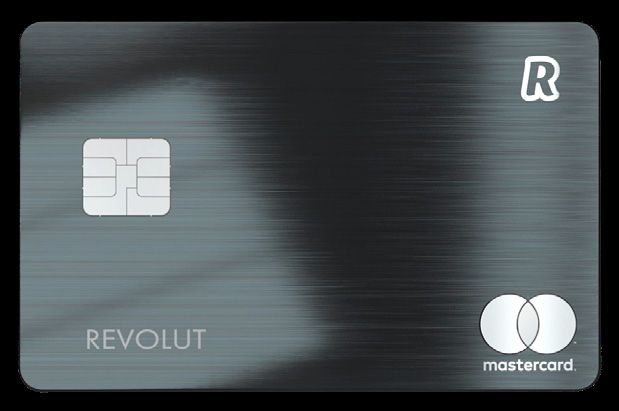
The payment card has
            not yet said its last word
       A few years ago, the rise of new          the attachment of the holder: indeed,       actors to join a territory historically
       digital means of payment challenged       the Individual clients are still granting   dedicated to banks; such as Apple
       the survival of the payment card as       a real importance to its look and to        and Marcus (Goldman Sachs) that
       an object. Today, we are witnessing       the status it represents. This is why       launched the Apple card in the United
       a real transformation of this payment     some of the financial actors have           States.
       method from functional, technological     focused their efforts on the visual and     The rise of the payment cards market
       and regulatory point of views.            tactile conceptions of their cards, in      is also relevant for the Professional
       The underlying history behind             addition to their innovative features.      clients’ segment. As a matter of
       means of payments is proving that a       Through his card, the client is trying      fact, neobanks and Fintechs are
       sustained pace of innovation doesn’t      to connect himself to the image             challenging the traditional actors by
       lead to the immediate disappearance       conveyed by his bank (mutualistic and       offering professional cards that are
       of other payment methods but rather       regional, international scale, digital      directly targeting the CEOs need
       to a stack of solutions.                  and innovative etc.)                        for simplification and control. This is
       In fact, the lengthy adoption             The payment card is one of the              done through the implementation
       cycles are conducing to a durable         favorite playgrounds of financial           of billing and accounting tools, as
       coexistence of the various payment        players that are trying to differentiate    well as the adoption of competitive
       means, such as cash, card or mobile       themselves, retain their customers          prices. These new offers allow the
       payment.                                  and innovate. This strong                   executives to simplify the monitoring
                                                 momentum and the regulatory                 and management of their activities.
       On another hand, the payment card
                                                 changes associated to this market
       has gradually risen to the rank of
                                                 are attracting beyond the financial
       social marker. As an object, it arouses
                                                 industry and leading external

                                                 Nowadays, the customers are striving for control and
                                                 are demonstrating their willingness to be actors of their
                                                 banking experience through their mobile applications.
                                                 The card is more and more considered in its physical
                                                 dimension (material object), as well as its digital aspect.
                                                 This is why both the traditional actors and the new
                                                 ones are massively investing in this market to offer
                                                 payment cards connected to mobile applications, with
                                                 differentiating functionalities and value added features for
                                                 their clients, on a daily basis.
                                                 Emmanuel Papadacci-Stephanopoli,
                                                 Director, Banking & Fintech,
                                                 KPMG France

6 • International benchmark of payment cards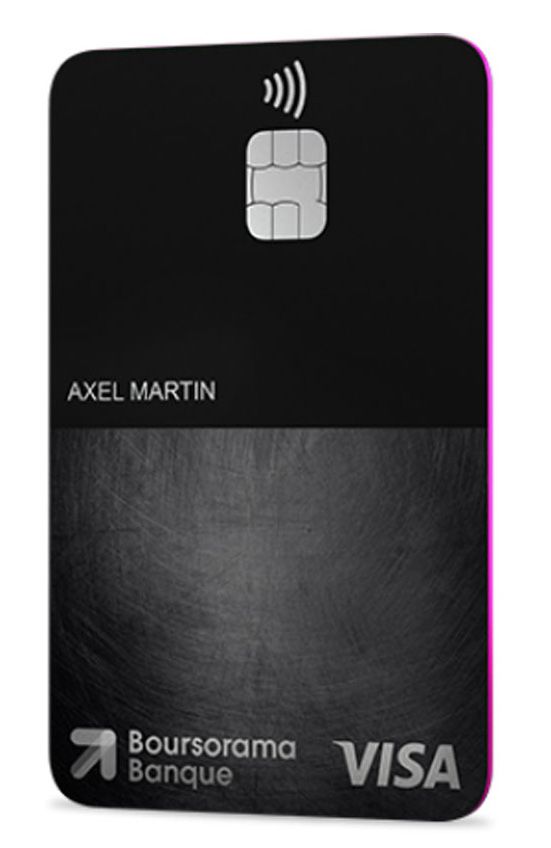
Distribution of the different scriptural* means of payment in France
                                 (number of transactions, in billions)

       22.6              0.1              1.9
                                                           8.0

                                                                            12.6             3.4

                                                                                                                 9.2              1.2
                                                                                                                                                 8.0

         18
                                                                                                             ity

       20
                         *

                                                 dr r &

                                                                                             e

                                                                                                                                                 l
                                                                                                                                 ss
                                                                            t

                                                                                                                                                na
                       s*

                                       k

                                                                                            in
                                                                         en

                                                                                                           m
                                                     al
                                     ec

                                                                                                                               le
                                              ith sfe

                                                                                          nl
                                                   aw

                                                                                                                                             tio
                     er

                                                                                                             i
                                                                       ym

                                                                                                          ox

                                                                                                                             ac
                                   Ch

                                                                                         O
                   th

                                                                                                                                            di
                                             W ran

                                                                                                       Pr

                                                                                                                            nt
                                                                     pa
                  O

                                                                                                                                            a
                                                                                                                                         Tr
                                                                                                                          Co
                                               T

                                                                  rd
                                                                 Ca

                                                                  Sources : French banks, KPMG forecasts

* The scriptural currency refers to the currency that is only transiting through a book-entry process (payment cards, checks, withdrawals, transfers…)
** Electronic currency, commercial paper…

In the future, we should witness the cohabitation between the
new means of payment and the historical ones, rather than
the cannibalization of one over the others. The new payment
methods are contributing to the growth of the payment market
at the expense of the cash.
The future of the physical payment card should be secured
thanks to the rise of new banking and non-banking actors that are
developing highly innovative offers. Furthermore, the physical card
can count on its strong reputation among the users who, despite the
competition induced by the new payment methods, seem particularly attached to
this physical object, that knows how to reinvent itself to answer their needs.
Serge Ragozin,
Executive Director of the SFPMEI
(Société Financière du Porte-Monnaie Electronique Interbancaire)

                                                                                                                       International benchmark of payment cards • 7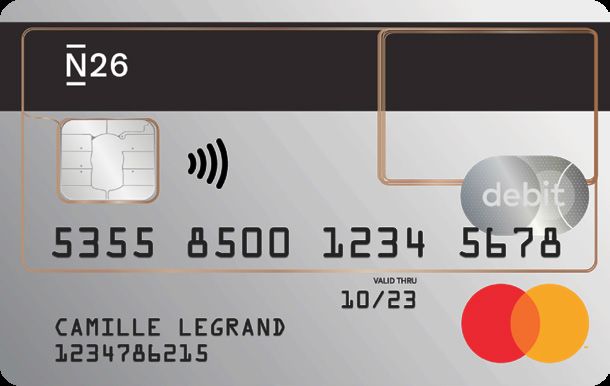
The key
                                                                                               trends
       The emergence of financial actors (neobanks, account aggregators, payment services) and non-financial ones
       (GAFA, actors of the collaborative economy, retailers) on the payment market induced a change of paradigm
       in the commercialization of payment cards. Accordingly, KPMG identified 5 key market trends.

                            A REAL - TIME CLIENT EXPERIENCE
                            The new players in the industry – the majority of whom are proposing physical or virtual payment
                            cards to their clients - strengthened the competition in the market by offering a high quality customer
                            experience based on smooth processes and simple and intuitive interfaces on mobile applications.
                            The latter are directly connected to the payment cards and allow for a real-time management and
                            setting of the card (increasing the limits, locking the card…) while providing instant information on the
                            transactions to its holder. By answering and even anticipating the clients’ needs, the new actors of
                            the payment market are defining new standards.

       A DIFFERENTIATED AND TARGETED OFFER IN OPPOSITION WITH THE
       TRADITIONAL CARDS PROGRAMS
       The neobanks and some online banks are distancing themselves from the traditional ranges of cards
       programs (Classic, Premium…) with offers such as Ultim from Boursorama, Mettle from the British
       bank NatWest or the programs provided by the German bank Kontist. These differentiating propositions
       also come from the implementation of innovative functionalities that answer specific clients’ needs
       (management of foreign currencies…). By positioning themselves upstream and downstream of
       the client’s need, these actors can cover the entire customer journey. Therefore, we are witnessing
       the transition from a features’ stacking strategy to the creation of clients offers based on features
       that are tailored to the new uses. It is thus the clients requirements that are conditioning the mix
       of functionalities, making them by this way particularly useful and unique.

                               FASTER DISTRIBUTION PROCESSES
                               The new actors are betting on digital processes for the distribution of their cards. Most of them
                               allow for a remote order and activation of the cards. The fast issuance of the payment cards could
                               also be explained by the fact that they are often linked to accounts that don’t offer overdrafts,
                               making the virtual card immediately available to the client on its mobile. Regarding the physical
                               distribution, some banks – mainly in Gulf countries – are particularly excelling in clients satisfaction
                               by offering the immediate creation of physical cards in branches. On another hand, the distribution
                               models are also reinvented using the Open Banking to provide multiple services to the clients
                               directly on their banking applications (for example the Indian bank IndustInd allows to order
                               taxis or meals straight on the banking app) or to access to the bank via a third-party application
                               (as illustrated by Uber & BBVA in Mexico).

8 • International benchmark of payment cards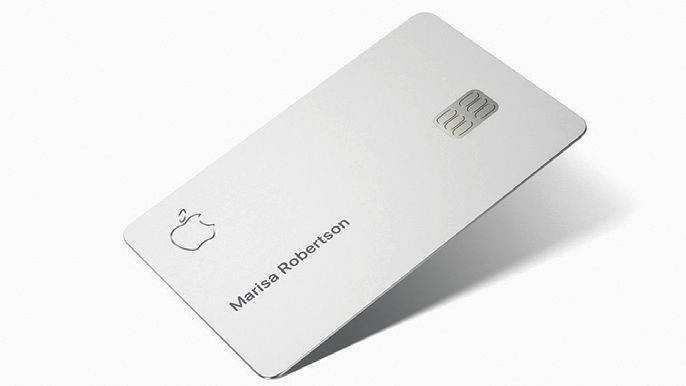
A SIMPLER AND MORE UNDERSTANDABLE PRICING
                     With greater competition, new simple and readily understandable pricing strategies are arising.
                     Moreover, the customer is questioning his account management fees as well as his card fees, that
                     he compares to the services and the client experience he is offered by his bank. This is why various
                     new actors are now charging straightforward and transparent prices, such as the professional French
                     neobank manager.one that proposes a fixed monthly membership independently of the number of
                     cards ordered by the professional client.

THE DESIGN OF THE CARDS IS A DIFFERENTIATING FACTOR
IN ADDITION TO THE TECHNOLOGY
The extensive arrival of digital actors in the market of payments cards is illustrating both the
attractiveness and the longevity of this physical object in the upcoming years. The user is
interested by the very design of the card : for instance, vertical shape, metal fabric, cultural
illustrations are offered in every continents. The significant efforts in terms of client experience
are as much dedicated to the mobile and Web processes as to the physical object itself.

           Apple – Marcus (Goldman Sachs) card                                          N26 transparent card
         in titanium and without account number

      Vertical and multicolor design of the Bunq card                             Vertical design of the Ultim card
                                                                                     from Boursorama Banque

                      Revolut metal card

                                                                                             International benchmark of payment cards • 9
Payment card
                                           and instantaneity:
                                                 a long story
       PAYMENT CARD : THE IRREVOCABILITY                                         Some portfolios such as Lydia in France and Paypal at
                                                                                 an international scale – thanks to their communities of
       AS ONE OF THE PREMISES OF THE                                             users – are providing tools that allow to make instant
       INSTANTANEITY NEED                                                        payments between friends but also with sellers, be
       Among card’s benefits, the payment irrevocability at                      they E-merchants or Individuals. The Instant Payment
       merchants stores offers a tangible complement to both                     regulation requires banks to accept instant payments in
       the check and the cash. Indeed, the check minimizes                       the entire SEPA area. Because of the recent technological
       the risk of theft but does not imply the full payment of                  opportunities, many are forecasting the endorsement of
       funds, while on another hand, the cash is immediate                       merchants payments use cases for the customers. On the
       but dangerous (risks of loss/theft/forgery) for both the                  medium-term horizon, the latter could jeopardize the use
       customer and the merchant. In this sense, the emergence                   of payment cards.
       of payment cards in the market offered an interesting
       combination of the advantages of each : guarantee, safety                 THE CARD IS BACK IN THE
       for its users and fast completion of the transactions.                    INSTANTANEITY GAME
                                                                                 Conversely, numerous hints could lead us to think that
       THE INSTANTANEITY NEED IS EVEN                                            the payment card will overcome the challenge. First of all,
       MORE PROMINENT                                                            neobanks rapidly proposed payment cards that offer the
       As exhibited by our Customer Experience Excellence*                       instant management of transactions. By improving the
       study, some clients experiences are automatically creating                existing cards products, they currently allow for a real-time
       new standards that apply to competitors in the same                       management of the bank accounts.
       industry but also to the entire range of services delivered               Traditionally restricted to merchants stores’ payments,
       to customers that are rapidly adapting their consumption                  most of the networks are now proposing or will soon
       habits. The emergence of instantly consumable products                    propose real-time systems of payments between
       such as Video on Demand, mobile applications downloads,                   Individuals. Furthermore, the background analysis of
       online purchase of travels, etc. induced a gap between the                means of payments on a 30 years horizon, shows that
       operation of traditional banks and customers expectations.                the adoption of new payments method is lengthy. Thus,
       Actors who offer instant payment experiences are                          designers of cards programs could rely on their long
       currently widely successful.                                              experience in terms of customer support to successfully
                                                                                          navigate in this challenging market.

                                                                                                     Grégoire Lévis
                                                                                                      Partner, Financial Services IT
                                                                                                      Expert in Means of Payments
                                                                                                      KPMG France

       * Copies of the study are available on demand by email: FR-CustomerExperienceExcellenceCentre@kpmg.fr

10 • International benchmark of payment cards
Instantaneity is a standard for N26 and a game changer.
Today, the customer wants to do everything immediately:
receive instant notifications of his transactions, be informed
directly of his account balance, or be able to immediately
modify the settings of his payment card .
Jérémie Rosselli,
France General Manager, N26
International benchmark of payment cards • 11The payment card
is constantly
renewing itself
RECENT INNOVATIONS ARE THE RESULT OF THE COLLABORATION BETWEEN
5 TYPES OF ACTORS
The recent transformations and the innovations of the • Industrial cards manufacturers (Idemia and Gemalto)
payment card sector were made possible thanks to the are developing solutions and physical payment cards
collaboration between 5 five types of actors: that are at banks disposal to improve the everyday lives
• Innovative banks (neobanks, online banks…) are of the end customers.
developing high-level customer experiences (in terms These five types of actors are contributing together
of processes, offers …) and are acting as suppliers of to the innovation. The combination of their strengths
services for the end customers. allows for the issuance of cards and the implementation
• Publishers of banking or IS software, such as the Banks- of ingenious offers.
as-a-Service (BaaS) actors are providing the foundation Nonetheless, this complementarity between innovative
of banking services (accounts, IBAN, savings, card banks, banking software publishers, processors,
issuance, etc.). These are fundamental to allow networks and industrial cards manufacturers is meant
innovative banks to propose a proper banking offer to to evolve because of the sustained growth of neobanks.
their customers. Indeed, they are developing features and innovations
• Processors (Payment Service Providers) are running the at the upstream phase of the processing. Therefore, as
operations and making the link between the customers’ compared to Processors, some neobanks are providing
banks (issuers) and the merchants’ banks (acquirers). an extra layer of internally developed value added
This notably concerns firms such as Worldline, Monext, services.
First Data, etc.
• Networks (or schemes – Visa, Mastercard, GIE CB)
ensure the transmission of transactions made via cards
(payment, withdrawal) by making their international
payment network available to the banks.
12 • International benchmark of payment cardsThrough an open approach of the innovation, Mastercard promotes
a true culture of innovation in its ecosystem, with initiatives
focused on digital transformation, data, Open Banking as well as
the personalization of services.
Being aware that the world of payments must pursue its efforts to
reinvent itself in order to create value, we are strengthening our
partnerships with the entire network of players to find innovative
solutions and thus being able to address the new challenges of
this market but also the new consumers expectations. Indeed,
Mastercard is convinced that new users experiences are the result
of digital, fluid and secure journeys. Therefore, we have multiplied
our research and innovation efforts for many years. Thanks to this
inherent culture of partnership, hyper-connectivity and innovation,
Mastercard is still positioned today as a key player in the future of
payments.
Christophe Hilbring,
VP Product & Innovation Western Europe, MASTERCARD
Contrary to public opinion, the payment card will still be a key
strategy factor for financial institutions, as well as for the non-
banking actors from the retail or Fintechindustries that more
recently joined this market. Payment is now Omni channel and
no longer the only objective associated to cards. Indeed, the actors
of the financial industry are using their payment card as a support
for innovation, differentiation and to retain their customers by
offering high value added features in complement to their initial
functionalities.
Consequently, we can observe two major trends for the
Individual and Professional & Corporate clients’ segments.
Firstly, great efforts are deployed on the very design and the ultra
personalization of the card in order to strengthen the feeling of
exception of its holder. We could for instance cite the «premium»
experience brought by the metal payment card. On another hand,
additional services related to transports or biometric authentication
are developed to facilitate the purchases by authorizing secured
contactless payments, irrespective of the transaction amount.
Jesper Domargård,
VP Marketing, Financial Institutions BU, IDEMIA
International benchmark of payment cards • 13The entire market of payments is heading towards a race
for innovation and improved customer experience, and
the physical card remains an advantageous marketing
lever.
The strength of American Express is to have a close
relationship with both customers and merchants. Thanks
to a fine knowledge of the purchase and consumption
patterns of its customers, American Express has a
personalized approach to the client relationship that is
focused on services and knowledge, which are both
part of our DNA since our inception. Specifically, on the
Professional and Corporate segments, American Express
is developing its strategy according to the specific needs
of each type of firms.
Jérôme Gueydan,
Head of Product, Customer Marketing and Partnerships
AMERICAN EXPRESS
We tend to think about the payment card as a physical
object, but it also comes in other forms – token, digital
card – and we must not forget about it! The success of the
bank card lies in its ability to integrate and develop around
the four pillars that make the success of any means of
payment.
First of all, it ensures an ecosystem of trust for both
merchants and consumers; then, it creates a clear and
distinct value proposition for an international and
omnichannel usage, while being easily accessible and
usable. Finally, its universal nature allows for its wide
acceptance and its application for the different use cases
encountered, be it by the Individuals or the Professionals
and Corporates clients. Taking all these elements into
account leads us to think that this means of payment will
still exist and will still constitute a strong emotional link
between the customers and their banks.
Michel Léger,
Head of Innovation, INGENICO
14 • International benchmark of payment cardsRecap on the European
regulations impacting
payment cards
During the last 5 years, the European regulation has been way to the merchant. This regulation also allows the
the subject of several directives and laws that directly customer to select the network (scheme) that provides
impact the use of the payment card. By providing more the most interesting rate for a payment realized with a
confidence and security to the entire range of market co-badged card.
players, and by limiting the costs associated with the use • The General Regulation on Data Protection includes
of payment cards, these regulatory evolutions create a in its scope all the banking data perceived as sensitive
framework that is favorable towards the development of (credit card number, bank details) and guarantees a
credit card payments. better protection of the latter for the end customer.
• The Payment Services Directive n°2 (PSD2), notably • Finally the 5th Anti-Money Laundering Directive
sets a strong authentication of the cardholder for (AML5) provides a safeguard on the anonymous use
its online payments. This measure strengthens the of prepaid payment cards, by lowering the storage
protection of customers, merchants and banks against and transactions thresholds, from which a stricter
the risk of fraud during card transactions. verification of the holder’s identity (KYC) is triggered.
• The Payment Account Directive (PAD) brings Moreover, it drives the creation of national centralized
greater transparency to the customers by ensuring registers or central systems of data search for bank
the comparison of banking fees. By introducing the and payment accounts of the Member States.
obligation for banks to provide offers dedicated to The final goal is to facilitate the underlying work of
financially weak customers, it also contributes Financial Intelligence Units. All financial players are
to the banking inclusion and allows for a concerned by this directive, Fintechs included.
widespread access to means of payment.
• By capping interchange fees, the
Interchange Fees Regulation (IFR)
limits the cost of card transactions.
Moreover, these fees must now be
indicated in a clear and transparent
Sophie Sotil-Forgues
Partner,
Head of the Banking Regulatory Department
KPMG France
International benchmark of payment cards • 15Professional and
Corporate clients:
a valuable market
that payment actors
are addressing
through their cards
16 • International benchmark of payment cardsIn a context of persistent low A dozen of neobanks, Fintechs and
interest rates, strengthened historical digital banks, have deployed
prudential rules and digital in the Professional and Corporate
transformation that impact the market: some pure players (Anytime,
business model of banks, the ibanFirst, Manager.one, Mooncard,
professional clients are of particular Qonto, Shine and soon Margo Bank and
interest to banks. Prismea) or neobanks that were initially
Their goal is to capture the potential of this offering services to the Individual clients, and
fast growing market on a segment that has which have adapted their offer to Professional
been historically poorly or wrongly addressed, and clients. For instance, Revolut and N26 launched their
whose profitability is greater than the one in the Individual Business range of products in France during the last
clients market. two years.
However, answering the needs of the Professionals To successfully enhance their Professional and Corporate
and Corporates is a challenge for banks because of the client base, these new actors are betting on a simple
heterogeneity and complexity of this market: indeed, it is and high-quality Corporate card offer. Going further than
based on multiple legal forms and brings together both traditional banks, they propose multiple cards settings
legal persons and corporate entities. Last but not least, through the use of intuitive interfaces. On the other
the Professional and Corporate market is undergoing hand, by offering complementary solutions (accounting,
deep changes as exhibited by the development of new invoicing, payroll management), that are either natively
and open professional ecosystems, driven by the gradual developed or obtained via APIs systems, these new
arrival of the Millenials – who are looking for a meaning in players are providing a seamless and fully integrated
their professional activities – in the labor market. experience to the Professionals on a daily basis.
Anna Philippe
Expert Banking Consultant for the Professional clients
KPMG France
In the French Professional and Corporate market,
the average number of cards functionalities offered by neobanks
is 1,6 times greater than traditional banks*
Traditional
Banks
Neobanks
0 5 10 15 20 25 30
* Ranking based on the number of card functionalities and on the available public data at the end of September (cf. the methodology page of the study)
International benchmark of payment cards • 1718 • International benchmark of payment cards
002
Benchmark
of payment
cards
International benchmark of payment cards • 19THE SEVEN COMPONENTS OF CARDS PROGRAMS
End value for the customer:
The customer has a greater flexibility with the management of his spending
and transactions. For instance, splitting payments allows the cardholder to pay
for his purchases in several times. Other advantage, the multicurrency accounts
Payment directly linked to the payment card let the client transfer funds anytime, at the real
exchange rate and to pay with his card in any currency, at no extra fees
services
Payment options that
the holder can directly select
on his card,
via his mobile application
or online
End value for the customer:
The user has greater control over the
functioning of his card and is able to modify
his settings in real-time. For instance, it is
now possible to authorize payments only
Security and on certain days of the week, or to instantly
fraud protection lock/unlock certain functionalities such as
the ATM withdrawals or the contactless payments.
Functionalities that allow
the holder, the merchant and
the bank to have
greater security
during their transactions
or when the card Card settings
is lost or stolen Options available to
the cardholder that allow him
to manage and personalize
his payment card.
End value for the customer: Some of the settings could be
activated/deactivated
Greater security in a context where
in real-time
online payments are constantly
increasing. For instance, cards with
the dynamic crypto option have
at their back a mini electronic screen
that refreshes to obtain different codes
that will validate the various purchases.
On another hand, the real-time card
opposition directly on the mobile app, Account
allows the cardholder to block his card
as soon as a fraud or attempted fraud is observed. and treasury
management services
Ability for the cardholder
to get a global vision
of his accounts thanks
to features that allow for the
Client service categorization of his expenses
Offers that answer and the proactive
the need for information management
and additional services of his accounts
of the cardholder.
End value for the customer:
The user has greater control over the management
of his available treasury and on his saving scheme.
End value for the customer: For instance, the auto-categorization of his transactions
allows him to have a global picture of his various
A rapid resolution of the client’s account management expenses according to their type (leisure, transports…).
issues with advisors that are proactively taking care of him. Additionally, the automatic saving option allows
For instance, the access to advisors’ agendas straight the client to round-up the cost of his purchases
on the mobile app allows the client to block to create pots that will be funded by each
timeslots and to give precise information of his payments.
about the encountered problems,
in order to facilitate the treatment Beyond
of the request. Furthermore, with payment End value for the customer:
call centers that are immediately Offers and solutions
available, the cardholder can Access to offers that are beyond the financial services
proposed to the client and that will simplify the daily life of the client. For instance,
have rapid solutions to his
which are beyond the banking the automated extraction of receipt information
problems, anytime, and with
no freezing of his services. scope. The goal is to answer (VAT, number of guests…) allows for the automatic
his needs upstream management of the expense bills, thus facilitating
and downstream firms’ accounting treatments. On another hand,
the payment. access to personal concierge services with benefits
such as the booking of professional trips or other
personal activities is a considerable time
saving for cardholders.
End value for the customer:
Discounts and other attractive offers for the
purchases made with the card. For exemple,
the automatic Cashback option allows the client
to recover a fraction of the cost of his purchases
Loyalty &
made at partners’ shops. Various privileges Deals programs
(transports, everyday consumption, and travels) Set of advantages and
are also available to the cardholder. privileges that the cardholder
can benefit from thanks
to his card program.
20 • Benchmark international des cartes de paiementThe 2019
card’s
profile*
Payment services
Card settings
Account and treasury
management services
Security and Fraud protection
Client service
7% 23% 16% 15% 19% 11% 9% Beyond payment
Loyalty & Deals programs
• Payment services only represent 7% of cards features. • 20% of the functionalities of the analyzed cards
In addition to the simple payment function, cards programs are based on services that are beyond
programs require further services linked to the settings, payment (extra-banking services, privileges, deals, etc.).
security and fraud protection, in order to create value for
the end customer.
* Our international benchmark allowed us to get a picture of today’s payment card. To estimate the proportion of each category, we have analyzed its
weight as compared to the total volume of identified functionalities, across all categories.
International benchmark of payment cards • 21Top 3 of payment
cards with
the most added value
for Individuals
Top 3 players offering payment cards with the most added value for Individuals*
* Ranking based on the number of functionalities of the card and on public data (cf. the methodology page of the study).
22 • International benchmark of payment cardsAlly Bank
Ally Bank is an American online bank that facilitates banking operations thanks
to a simple and intelligent experience.
Examples of functionalities and advantages offered by Ally Bank for its
debit card:
• Management of spending by type of expense: Option to assign maximum
amounts per transaction and to lock/unlock expenses by type of merchants
categories such as petrol stations or supermarkets.
• Option to activate/deactivate the card: The customer can choose to
deactivate his payments and withdrawals using his dedicated mobile
application. In the same way, he can reactivate these functions anytime.
• Geographical management of the transactions: With the Location
Awareness Controls feature, the client can select on the Map tab of his
mobile app, the geographical areas where his payment card will be activated.
• Real-time notifications: The cardholder receives a notification on his phone
as soon as he makes a purchase or when his payment card is declined.
• Payment using Apple Pay and Samsung Pay: By adding his payment card
in the Wallet tab of his phone, the customer can choose to make purchases
without using his physical card. His phone allows him to secure the
transaction through a biometric identification (fingerprints).
N26 ASB NatWest
N26 N26 is a 100% mobile neobank ASB Bank (Auckland Savings Bank) is NatWest is one of the main British
that provides real-time banking a credit institution that is conducting banks dedicated to Individual,
services. For instance, opening an its operations from New-Zealand. Professional and Corporate clients.
account only takes 8 minutes and can It offers a wide range of financial Examples of functionalities and
be done remotely. services, notably banking services for advantages offered by NatWest
Examples of functionalities and the Individual and Corporate clients for its Reward Black card:
advantages offered by N26 for located in rural areas. • A profitable Cashback system that
its You card: Examples of functionalities and allows for the recovery of 0,5% to
• Option to personalize the look of advantages offered by ASB for its 15% of the costs of the purchases
the card by choosing among the 5 Platinum Rewards card: made.
different colors that are proposed. • A Cashback system that allows • Option for the cardholder to pay
• Real-time transactions notifications. to recover 1 New-Zealand dollar for his purchases in several times,
• Broad insurance coverage (travel, for each 100 dollars spent. in order to have a greater flexibility
coverage when there is a theft • The option to use the card in in the management of his spending.
of phone or cash after an ATM combination with connected
withdrawal and warranty extension objects to choose the most
for the qualifying purchases). convenient payment method:
Apple Pay and Google Pay (wallets),
Fitbit Pay (connected wristlet),
Garmin Pay (connected watch),
ASB PayTag (connected sticker).
International benchmark of payment cards • 23Top 3
of payment cards
with the most
added value for
Professionals and
Corporates
Top 3 players offering payment cards with the most added value
for Professionals and Corporates*
* Ranking based on the number of functionalities of the card and on public data available at the end of September (cf. the methodology page of the study).
To obtain more information about the panel of analyzed cards, please send a message to the following e-mail address: epapadacci@kpmg.fr
24 • International benchmark of payment cardsmanager.one The manager.one payment card is dedicated to Professional and Corporate
clients and simplifies the treatment of expenses bills at a price of €29,99 per
month, irrespective of the number of cards ordered.
Examples of functionalities and advantages offered by manager.one
for its manager.one card:
• Option to set the obligation to join receipts to every purchase made
with the card: The user has to submit his expenses bills in real-time.
Without the relevant documentation and its downloading on the mobile app,
his card is locked for future transactions.
• Auto-categorization of expenses: Professional expenses are automatically
categorized in the account according to the merchant’s type of activity.
• Management of the authorized expenses categories: Professional
expenses can be finely controlled with the option to authorize only some
categories of expenses such as « Restaurant », « Hotels », or « Car renting ».
The choice of restrictions is done directly on the mobile app and in real-time.
• A simple pricing and unlimited number of cards: A monthly based
membership of €29,99 that is fixed, identical to everyone independently of
the number of cards owned and which doesn’t imply any transaction fees.
• Real-time setting of all the functionalities: All the features can be set in
real-time through the mobile application. For instance, the cardholder can
instantly manage his credit limits with no cap on the maximum amounts.
Mooncard Banque Scotia
• Mooncard is a French Fintech dedicated to Scotia Bank is a Canadian bank, leader among the
Professionals and Corporates which promise is providers of financial services in North America. It
to ensure savings of 24 hours per year and per proposes services to Individual, Professional and
employee. Corporate clients.
Examples of functionalities and advantages Examples of functionalities and advantages
offered by Mooncard for its Mooncard card: offered by Scotia Bank for its Passport Infinite
• The information regarding each expense are Business card:
already filled thanks to the transaction data and the • Conversion of the purchases made with the card
connection to the employees’ agendas. into bank loyalty points granting access to exclusive
• The account manager can grant different access offers.
depending on the profile of the employee. • A concierge service available 24/7 to answer the
various needs of the clients.
International benchmark of payment cards • 25Must watch innovations
Actors Biométry: A fingerprint recognition microchip is directly located on the
(this list is non-exhaustive) payment card. Equipped with a fingerprint detector, this card allows both
to pay traditionally with a code or through an authentication by putting the
cardholder fingers on it.
Security & Fraud protection
(In testing phase)
Actor Payment and transport card: Travel tickets directly linked to the payment
card that allow both to pay for the travels and to collect back the transports’
subventions. Combining the payment and travel functions will become a top
priority for the actors of the payment ecosystem.
Loyalty & Deals programs
Actor Double credit/debit chips: Equipped with two microchips and magnetic
stripes, the customer can choose either to pay in debit or credit depending
on the side of the card he is inserting into the payment terminal.
Payment services
Actor Dynamic data: Dynamic data is about hiding some sensitive information on
the payment card (four digits over sixteen, the first name/surname of the
cardholder) or to revolutionize the banking documents shipping methods (PIN
code being available directly on the card thanks to a reading grid offered by
the bank). The final goal is to decrease fraud attempts.
(In testing phase)
Security & Fraud protection
Actor Cards aggregators: Some payment cards have the ambition to gather all
the client’s cards in a single physical object. Thanks to a screen located on
the card and that presents the available range of cards and their related
banking information, the customer can select the card of his choice to make
his payments.
Account and treasury management services
26 • International benchmark of payment cardsActor Ticket restaurant card: Option to connect the Lunchr card with a personal
payment card and to pay greater amounts for restaurants expenses. The
management is entirely done online, while the card can be personalized
according to the employees needs and their type of contracts.
Beyond payment
Actor Security and cards aggregator: Some cards offer fraud protection measures
with the option to write the card’s PIN code on the card itself. This will
generate a single-use code to enter on the various terminals.
Account and treasury management services
Actor Payment in Equated Monthly Installments or Reward points: This
interactive payment card offers a full flexibility in terms of payment options.
By pushing the relevant button, the cardholder can select the way he will
pay for his purchases (by EMI, rewards points or credit), as well as the
redemption dates.
Payment services
Actor Option to split the payments: Simulation of the due amount in case the
cardholder chose to pay in several installments with flexible reimbursement
dates. The customer can directly visualize on his mobile application the due
amount depending on the reimbursement scenarios he selected.
Account and treasury management services
Actors CO2 impact: The client can visualize the CO2 impact of each of his
transactions and round-up to the next Euro each of his expenses to
create a pot. The latter will then be funded and paid to a charity of the
cardholder’s choice. The final goal is to allow the client to compensate for
(Launch scheduled by
the end of the year)
the environmental damages of his purchases.
Beyond payment
International benchmark of payment cards • 27Methodology
20
• More than 180 payment cards have been analyzed in 20
countries and tested on 108 functionalities. These cards
represent the main innovative cards offered by traditional
banks, online banks, Fintechs, Tech actors, retailers, etc.
The scope includes physical debit and credit cards and
Countries prepaid cards dedicated to Individuals, Professionals and
Corporate clients.
• The rankings included in this study are based on the
+120
number of cards functionalities found on public websites.
Each card has been analyzed and tested against the
Firms 108 functionalities to assess the volume of available
identified features that were publicly communicated by the relevant
(banks, institutions.
GAFA, etc) • In each of the 20 countries, at least one card of the
three main banks in terms of AUM has been analyzed.
Other actors recognized for their innovative cards
programs have been included in the scope. Regarding the
+180
players that have multiple cards offers, has been selected
the card with the greater number of functionalities based
on public data.
• A global picture of the cards market: a particular
attention has been paid to select countries located in
each and every continent. A focus has been realized
on the French market with a deep analysis of the cards
Cards analyzed offers proposed by the biggest actors of the industry
• 60% targeted to Individual clients (traditional banks, online banks, neobanks and other
actors of the financial services).
• 40 % targeted to Professional and Corporate clients
Finlande
Canada Luxembourg
Belgique
Allemagne
France
Angleterre
Espagne
Chine Corée du sud
Koweit
Brésil
États-Unis
Hong-Kong
Abou Dhabi
Mexique
Nigéria
Inde Singapour
Nouvelle
Zélande
28 • International benchmark of payment cardsOur assets
and approaches
CARDS PROGRAMS: FROM THE STRATEGY, TO THE IMPLEMENTATION,
TO THE OPTIMIZATION
Thanks to the strength of its multidisciplinary teams, KPMG is supporting its clients regarding their payment
cards challenges by leading the strategic, organizational, technological and regulatory projects they are
working on.
Strategy and definition of the cards
program framework
• Definition of the payment strategy
• Framing of the offer and the innovation
• Definition of the IT target and the various sub- projects
• Formalization of the Business Case and the growth drivers
Operational efficiency and transformation
FROM THE • Definition of the Target Operating Models
• Organization of flows and monetics streams
STRATEGY, TO THE
• Analysis of the risks, the fraud and the cyber resilience
IMPLEMENTATION, TO • Management of the projects and the various partners
THE OPTIMIZATION • Preparation to the commercialization
• Support in obtaining agreements
Optimization of the cards programs
• Impact analysis of the various regulatory changes
• Improvement of the client experience
• Economic and profitability assessments
• IT and processes audit
• Support in complying with the regulatory directives
International benchmark of payment cards • 2930 • International benchmark of payment cards
Contacts
       Stéphane Dehaies
       Associé,
       Banque & Fintech
       KPMG France
       Port. : + 33 (0)6 29 22 49 36
       sdehaies@kpmg.fr

       Emmanuel Papadacci-Stephanopoli
       Directeur, Spécialiste en Marketing Bancaire
       Banque & Fintech
       KPMG France
       Port. : + 33 (0)7 77 30 33 51
       epapadacci@kpmg.fr

       We would like to thank the KPMG France network that contributed to this study:
       Tristan Briend, Anthony Diaz, Isaure Dunaud-Mercat, Lina Filali Ansary,
       Anna Philippe, Jérémy Piguet, Mathilde Porte

       kpmg.fr

       The information contained herein is of a general nature and is not intended to address the circumstances of any particular individual or entity. Although we
       endeavor to provide accurate and timely information, there can be no guarantee that such information is accurate as of the date it is received or that it will
       continue to be accurate in the future. No one should act on such information without appropriate professional advice after a thorough examination of the
       particular situation. KPMG S.A. refers to a group of French legally distinct entities. KPMG S.A.is the member firm of the KPMG network of independent
       member firms affiliated with KPMG International Cooperative, a Swiss entity («KPMG International»). KPMG International provides no client services. No
       member firm has any authority to obligate or bind KPMG International or any other member firm vis-à-vis third parties, nor does KPMG International have
       any such authority to obligate or bind any member firm.

       © 2019 KPMG S.A., a French limited liability entity and a member firm of the KPMG network of independent member firms affiliated with KPMG
       International Cooperative, a Swiss entity. All rights reserved. The KPMG name and logo are registered trademarks or trademarks of KPMG International
       Cooperative (KPMG International).
       Conception : Markets - OLIVER - October 2019

32 • International benchmark of payment cards
You can also read


