It's Hard to Make Good Choices and It Costs More': Adolescents' Perception of the External School Food Environment - MDPI
←
→
Page content transcription
If your browser does not render page correctly, please read the page content below
nutrients
Article
‘It’s Hard to Make Good Choices and It Costs More’:
Adolescents’ Perception of the External School
 Food Environment
Colette Kelly * , Mary Callaghan and Saoirse Nic Gabhainn

                                          Health Promotion Research Centre, School of Health Sciences, National University of Galway, University Road,
                                          H91 TK33 Galway, Ireland; mary.callaghan@nuigalway.ie (M.C.); Saoirse.nicgabhainn@nuigalway.ie (S.N.G.)
                                          * Correspondence: colette.kelly@nuigalway.ie; Tel.: +353-91-493186

                                          Abstract: Research on the impact of school and community food environments on adolescent
                                          food choice is heavily reliant on objective rather than subjective measures of food outlets around
                                          schools and homes. Gaining the perspective of adolescents and how they perceive and use food
                                          environments is needed. The aim of this study was to explore adolescent’s perception and use of
                                          the food environment surrounding their schools. Purposive sampling was used to recruit schools.
                                          Mapping exercises and discussion groups were facilitated with 95 adolescents from six schools.
                                          Thematic analysis showed that adolescents are not loyal to particular shops but are attracted to
                                          outlets with price discounts, those with ‘deli’ counters and sweets. Cost, convenience and choice
                                          are key factors influencing preference for food outlets and foods. Quality, variety and health were
                                          important factors for adolescents but these features, especially affordable healthy food, were hard

                                   to find. Social factors such as spending time with friends is also an important feature of food
                                          environments that deserves further attention. Adolescents’ perceptions of their food environment
Citation: Kelly, C.; Callaghan, M.;
                                          provide insights into features that can be manipulated to enable healthy choices.
Gabhainn, S.N. ‘It’s Hard to Make
Good Choices and It Costs More’:
Adolescents’ Perception of the
                                          Keywords: food environments; adolescent; qualitative; schools; school food; food choice
External School Food Environment.
Nutrients 2021, 13, 1043. https://
doi.org/10.3390/nu13041043
                                          1. Introduction
Academic Editor:                                During the last decade, eating out-of-home has become habitual and contributes
Margaret Allman-Farinelli                 considerably to dietary habits and nutritional status worldwide [1–3]. Food prepared
                                          out-of-home tends to be less healthful than food prepared at home and is associated with
Received: 31 January 2021
                                          both increased dietary fat intake and body fatness [4–6]. Eating out-of-home is not confined
Accepted: 20 March 2021
                                          to adults, with adolescents in the US consuming one-third of their energy outside of the
Published: 24 March 2021
                                          home [7]. School and other educational establishments and local food outlets, especially
                                          fast food and convenience stores, are common sources of food for adolescents in the US,
Publisher’s Note: MDPI stays neutral
                                          UK and Ireland [7–11].
with regard to jurisdictional claims in
                                                The surge in eating out-of-home has seen a parallel increase in research exploring
published maps and institutional affil-
                                          the type and impact of food environments in and around homes, schools and work-
iations.
                                          places [4,12–15]. The food environment is defined as “the collective physical, economic,
                                          policy and sociocultural surroundings, opportunities and conditions that influence people’s
                                          food and beverage choices and nutritional status” [16]. Different components of the food
                                          environment include the variety, quality and price of available foods and also structural
Copyright: © 2021 by the authors.
                                          aspects, such as the spatial accessibility of retail outlets [17]. Studies of these contextual
Licensee MDPI, Basel, Switzerland.
                                          determinants of diet have predominantly considered associations with food availabil-
This article is an open access article
                                          ity measured in terms of proximity to, or density of, retail food outlets or the in-store
distributed under the terms and
                                          environment, including the cost and store location of healthy and unhealthy foods [18,19].
conditions of the Creative Commons
                                                The association between characteristics of the food environment, diet and obesity re-
Attribution (CC BY) license (https://
creativecommons.org/licenses/by/
                                          main equivocal [20], with heterogeneity in approaches to measuring the built environment
4.0/).
                                          as just one contributory factor [21]. Subjective measures include perceptions of individuals

Nutrients 2021, 13, 1043. https://doi.org/10.3390/nu13041043                                               https://www.mdpi.com/journal/nutrients
Nutrients 2021, 13, 1043 2 of 11
living or working near food stores, and objective measures are derived from observations,
audits or are calculated from existing spatial data using Geographic Information Systems
(GIS). Poor or moderate agreement between perceived and objective measures have led to
suggestions that these measures should not be seen as comparable [21]. According to Caspi
and colleagues [22], perceived measures of the food environment may be more strongly
related to dietary behaviours than objective measures and may incorporate dimensions of
food access not captured in available objective measures.
Research on the impact of school and community food environments on adolescent
food choice is heavily reliant on objective rather than subjective measures of food outlets
around schools or homes. Gaining the perspective of adolescents and how they perceive
and use food environments will help us understand how they navigate to and choose
particular food outlets. Caraher and colleagues [23], using a mixed-methods approach,
found that unhealthy food options were a feature of the streets surrounding schools in a
London borough and that cost and attitude to school meals and shop-bought products
influenced adolescent choice. These types of data serve to help us with the development
and refinement of behavioural interventions addressing food eaten out-of-home, as well as
providing estimates of the likely impact of environmental or policy interventions.
The dearth in qualitative research on food environments [24], specifically a lack of
subjective measures of adolescent food environments, and existing data demonstrating
that close to three-quarters of post-primary schools in Ireland are located within 1 km of
fast-food restaurants [25] provided the impetus to explore how youth perceive and use
food outlets close to their schools. The current study contributes to the extant literature
by exploring young people’s perceptions of external school food environments without
restricting the discussion to fast food or takeaway outlets alone. Additionally, this study
aimed to explore what barriers and enablers, if any, are at play for young people when
accessing food stores. This study focuses on adolescence, a time when young people have
greater autonomy, more pocket money and independence travelling to and from school
than younger children [9,26]. This study was underpinned by the recognition that children
are active social agents and experts in and of their own lives [27] and have a right to
participate in research likely to affect them [28].
The objectives of the study were to explore adolescents’ perception of the external
school food environment, to understand the barriers and facilitators of food outlets and
food choice, and whether and what type of changes they would like to the food environment
surrounding their schools.
2. Methods and Materials
A qualitative research design was adopted due to the limited knowledge available
on adolescent perceptions and experiences of using external school food environments.
Objective quantitative measures of food outlets surrounding schools were not collected
as our previous work showed that the number of food outlets within a 1 km radius of
63 post-primary schools was an average of 3.89 coffee shops and sandwich bars, 3.65 full-
service restaurants, 2.60 Asian and other “ethnic” restaurants, 4.03 fast-food restaurants,
1.95 supermarkets, 6.71 local shops and 0.73 fruit and vegetable retailers of the schools
surveyed [25].
2.1. Sampling and Recruitment
Purposive sampling [29] was used to recruit schools; single and mixed-sex schools
located in cities and towns were approached and provided with information about the
research. Both younger (first and second year) and older children (Transition Year) were
also included in the sampling strategy. Principals/Head Teachers were initially contacted
by mail and telephone. If they agreed to participate in the study, researchers provided
information sheets and consent forms to be distributed to students and their parents or
guardians at home. Information sheets comprised an opt-out or opt-in consent process,Nutrients 2021, 13, x FOR PEER REVIEW 3 of 12
Nutrients 2021, 13, 1043 3 of 11
by mail and telephone. If they agreed to participate in the study, researchers provided
information sheets and consent forms to be distributed to students and their parents or
guardians at home. Information sheets comprised an opt-out or opt-in consent process,
depending
depending on on the
the school
school management’s
management’spreference.
preference.AllAll
students
students provided
providedinformed pa-
informed
rental consent
parental and
consent andindividual assent
individual assentbefore
before participating
participatingininthe
thestudy.
study.
Multiple methods
Multiple methods were
were used
used in
in this
this study
study to
tomeet
meetthe
theobjectives
objectivesand
andwere
werebased
basedonon
participatory mapping
participatory mapping techniques
techniques [30],
[30], photographs
photographs used
used inin related
related school
school food
food environ-
environ-
ment research
ment research[31]
[31]and
andgroup
groupdiscussions.
discussions.
2.2.
2.2. Materials
Materials Preparation
Preparation
The
Theresearchers
researcherswalked
walkedthethe external
externalschool foodfood
school environment
environment priorprior
to thetoworkshops,
the work-
taking
shops, note of the
taking notetypes
of theof types
food premises within walking
of food premises withindistance
walking(1distance
km) of the school.
(1 km) A
of the
smartphone and iPad were used to take photos of the food outlets.
school. A smartphone and iPad were used to take photos of the food outlets.
Three
Threemethods
methodswere
wereusedusedtotocollect
collectdata:
data:
1.
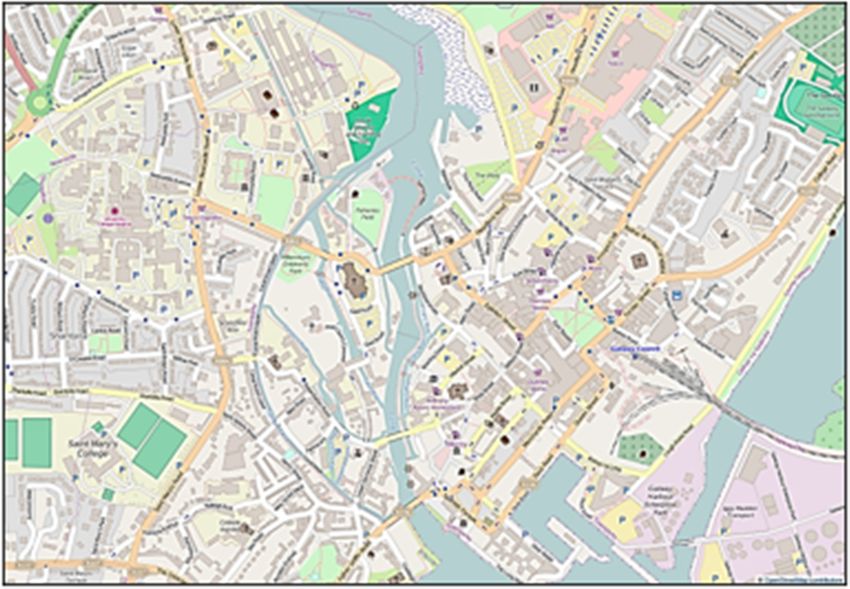
1. Workshops were conducted with groups of
Workshops were conducted with groups of children
children within
within the
the school
school building
building (e.g.,
(e.g.,
school
school hall/auditorium and canteen). Large maps that detailed the location of
hall/auditorium and canteen). Large maps that detailed the location of the
the
school
school and
and the
the surrounding
surrounding areas areas were
were prepared
prepared inin advance
advanceand andpinned
pinnedto tothe
theroom
room
walls
walls (Figure
(Figure 1). Working together,
1). Working together, the the students
students were
were invited
invited to
to place
place ‘photographs’
‘photographs’
of
of landmarks/buildings onto the map that had been prepared by the researcher.This
landmarks/buildings onto the map that had been prepared by the researcher. This
exercise
exercise was
was used
used toto encourage
encourage active
active participation
participation inin the
the research,
research, to
tocreate
createdebate
debate
and
and to
to enable
enable students
students to to locate
locate themselves
themselves andand their
their school
school within
within their
theirexternal
external
school food environment.
school food environment.
2. Each
2. Each student
student worked
worked alone
alone on on aa smaller
smaller version
version ofof the
the map
map described
described above
above andand
wrote the names of food outlets within walking distance of their school
wrote the names of food outlets within walking distance of their school onto the onto the maps.
Students then highlighted the food outlets they personally use and also drew a route
maps. Students then highlighted the food outlets they personally use and also drew
on the map to illustrate how they interact with their own food environment.
a route on the map to illustrate how they interact with their own food environment.
3. Facilitated discussions with adolescents were conducted using a semi-structured
3. Facilitated discussions with adolescents were conducted using a semi-structured
guide. Students could refer and reflect on the map exercises during the discussions.
guide. Students could refer and reflect on the map exercises during the discussions.
Students were in discussion groups with peers from their own year group. The age
Students were in discussion groups with peers from their own year group. The age
varies within year groups in Ireland (e.g., children in their second year in this study
varies within year groups in Ireland (e.g., children in their second year in this study
were aged between 13–15 years).
were aged between 13–15 years).
Figure 1.
Figure 1. Example
Exampleof
ofaalarge
largemap
mapused
usedduring
duringworkshops
workshopswith adolescents
with (© OpenStreetMap
adolescents (© OpenStreetMap
contributions).
contributions).
The discussions
The discussions were
wererecorded,
recorded,transcribed
transcribedand
andanalysed
analysedusing
usingNVivo
NVivo12 12qualitative
qualitative
data management software (QSR International Pty Ltd., Victoria, Australia), which was
data management software (QSR International Pty Ltd., Victoria, Australia), which was also
used to manage the data. Thematic analysis was used to analyse the data inductively [32].
Data were initially reviewed for interesting features, with memos being used to record
identified themes/patterns. Further analyses focused on more detailed line by line codingNutrients 2021, 13, 1043 4 of 11
followed by interpretation of the meaning of, and relationships between, the initial themes
and patterns within and across schools. Differences by school, year group and gender
were also explored. The maps were collated and, together with the photos taken by the
researchers, were used to visualise the food outlets and to help understand what young
people described in the focus groups. These data helped the researchers to visualise
the food outlets that young people described in the workshop discussions and provided
additional insights into the contextual factors described by students. This also enhances
the trustworthiness of the data and findings. Collectively, the authors have backgrounds in
nutrition, health promotion and geography. Reflexivity was used to reflect on the role of
the researcher(s) and key decisions made.
2.3. Ethics
Full ethical approval was obtained from the Institutional Research Ethics committee.
All students provided informed parental consent and individual assent before participating
in the study.
3. Results
In total, 95 students from six schools (one Male, two Mixed and three Female schools
(63% girls and 37% boys) located in towns and cities from years 1–2, (12–15 years) and
years 4, 5 and Transition Year (15–18 years) took part. Transition Year (TY) is a one-year
programme before students enter their Senior Cycle. All data collection sessions lasted a
class period (40 min).
The internal food environment differed across schools, some with canteens, vending
machines or tuck shops and others with no or very limited facilities. While most students
had a choice whether to leave school at lunchtime (four out of six schools, with a fifth
school only allowing older year groups to leave), children in one school were required to
do so. Most students brought some food (e.g., sandwich/snacks) from home to school each
day, especially for ‘small break’ (e.g., sandwich, cereal or chocolate bar), which is typically
at 11 am. Packed lunches were also often brought in for the longer lunchtime break.
Almost all students described using retail food outlets at least once a week, with many
going 2–3 times a week and some students going to these outlets every day. Students
went to the shops before, during and after school, and the vast majority walked at these
times. Food was purchased after school if they were hungry, waiting to be collected or had
extra-curricular activities such as sports or study periods. The frequency of going to the
shops depended on many factors such as whether lunch was brought in from home, the
amount of money they had, the weather, for a variety of food or if they wanted something
‘nice’. The perceived number of food outlets within walking distance of schools varied,
with between four and fourteen outlets recorded on the maps and between three and four
outlets used routinely by students.
The themes that illustrate the types and use of external school (Sch) food outlets and
the barriers and facilitators relative to food outlets are described below. The quotes from
children are faithful to their use of language. Parentheses are placed around the word ‘like’,
where it is being used as a functional pause (as a comma) in their quotes.
3.1. Theme 1: Cost of Food
Discussions about food were synonymous with cost, and students were less likely to
use a food outlet if the prices were too high or ‘deals’ on meals were no longer available.
“It’s too expensive” (Female, TY, Sch 3); “Y can be really expensive (like) and you’ve to
cut costs” (Male, TY, Sch 4). In particular, students were attracted to ‘meal deals’ (e.g.,
buy one get one-half price, three for €3 or €4 deals), and they sourced the cheapest option
across shops. “And everything in XXX is cheap as well so you get better value for money.”
(Female, TY, Sch 3); “...because they’re cheap and (like) you get enough bon bons (sweets)
that would last the day” (Male, second year, Sch 4); “XXX have cheaper ice pops” (Female,
first year, Sch 3).Nutrients 2021, 13, 1043 5 of 11
The cost of food also determined food choice: “In the X you get (like) soup and brown
bread for €3 or else you can get (like) a toasted sandwich with that for a fiver, it’s good”
(Female, TY, Sch 6), including healthy or less healthy options: “It’s hard to make good
choices and it costs more . . . everything is ‘on offer’ that you really like” (Female, TY,
Sch 6); “Yeah it would take a lot of effort (to eat healthy) because (like) if you’re going . . .
you’d have to buy the wraps and then you’d have to go . . . .buy the other stuff separately”
(Female, first year, Sch 6). Getting value for money was an important determinant of the
choice of food outlets and of the food itself.
3.2. Theme 2: Convenience
Students favoured food outlets that were convenient such as close to the school, on
route to school/home, outlets that provided shelter from the rain, and provided fast service:
”It’s just handy to get there” (Female, second year, Sch 4); “They’re convenient to go to,
they’re just quick”; (Male, second year, Sch 2); ”..because they’re (like) near to school and
fast” (Female, second year, Sch 5) . . . ”it’s within walking distance . . . ” (Male, TY, Sch 4).
3.2.1. Subtheme: Familiarity
Students tended to use food outlets that they were accustomed to and favoured the
shops that had what they liked. “They have, (like) what you want and what you need”
(Female, second year, Sch 5); “I guess you just know the place well enough to know what
you want in it.” (Female, TY, Sch 3); “You’re not going to go to a place where (like), I’ve
never been there before, what if I don’t like it, I don’t have time or you mightn’t even have
the money to go get something that you do like.” (Female, TY, Sch 3).
3.2.2. Subtheme: Time Pressure
Students were under pressure to eat and return to school within the time allocated for
lunch, and so they avoided going to food outlets that were further away from the school
and take more time to get to: “I wouldn’t go to (like) X because it’s (like) a longer distance,
(like) maybe X, you wouldn’t have time to get back to school.” (Male, TY, Sch 4). “Since we
only have 40 min for lunch you don’t really have time to be (like) trying new places when
you think about it, (like) that’s the kind of thing for the weekend (like), if you know that
you’re going to like something in X, you’ve 40 min so you’re going to go and get it there”
(Female, TY, Sch 3).
3.2.3. Subtheme: Too Busy
Some food outlets were very busy, which means the students had to wait longer to be
served within the lunchtime limit. “It’s too packed maybe because of all the other students
going” (Female, TY, Sch 3); “Well (like) say if there’s loads of people, (like) I could spend
my 10 min break to get served” (Female, TY, Sch 4).
3.3. Theme 3: Choice
Students described a variety of food outlets and types of food available for purchase.
Food outlets close to the school included: large supermarkets, smaller outlets, petrol
stations, newsagents/sweet shops/corner shops as well as discount stores. Fast food
outlets included chain fast food outlets, Takeaways (e.g., Chinese, Indian, Kebabs, and
Mexican), local fast food outlets (“Chippers”) as well as Pizza outlets. Restaurants (i.e.,
Chinese, Italian, American, and Fish and Chips), hotels, cafes, and pubs were also described.
Students felt there were a ‘lot’ of food outlets close to their schools, with some estimating
between six and seven stores and others felt there were over 10–11 outlets to choose from.
Popular outlets ranged from large supermarket chains and smaller chain stores. Deli
counters were a particular attraction of these stores, which were also a draw for students in
local, independently owned cafes. Larger supermarket stores with fruit and yoghurt as
options were mentioned, but shops, whether supermarkets, discount stores or local sweet
shops, that sold sweets were very popular. Students were not loyal to any particular shop.Nutrients 2021, 13, 1043 6 of 11
3.3.1. Subtheme: Food Options
While there were a variety of food outlets, as described above, the foods chosen
were similar across students groups. The food frequently described by students were hot
chicken fillet rolls (mentioned the most), wedges, chips, pizza and sausage rolls. Other
products frequently discussed were sweets, crisps, chicken curries, burgers, Pot Noodles,
hot dogs, chocolate, biscuits, cookies, donuts and buns. Other food for sale in the shops
included pancakes, crepes, bread rolls with a filling of choice, soup and sandwiches. Drinks
commonly consumed included, Energy drinks, Coke, 7-Up, Lucozade, flavoured water,
tea, coffee and Miwadi (cordial), which was often offered as a ‘free drink’ with a hot
food product.
Students discussed food and beverage options they perceived as more healthy such as wa-
ter, milk, fruit, salads, fruit salads, wraps, sandwiches (wraps/toasted sandwiches/paninis),
soup, brown bread, lasagne, chicken curry and rice, vol-au-vents, nuts, sesame sticks, popcorn,
yoghurts and ‘health’ bars.
3.3.2. Subtheme: Quality and Variety of Food
Students made food outlet choices based on the quality of the food on offer; they
clearly had preferences for some stores over others because of how fresh, in-date and/or
tasty they perceived the food to be. “Well I kind of like going to XXX because it’s kind of ...
just everything is tasty stuff because (like) most things over in XXX’s are out of date so.”
(Male, second year, Sch 4). “but also (like) I feel like the deli is (like) way fresher than in
XXX because I compared kind of, I bought the same thing in X and in Y and it was way
better in Y. It was way fresher.” (Female, second year, Sch 4). “The fruit in (like) the corner
shops, they’re not as good as in XXX” . . . (Female, TY, Sch 3). “Yeah (like) the popular
things like the bon bons and drinks, they’re not, but (like) the bars, they’re left there for
months. If you check the date they’re (like) 4 months out of date”. (Male, second yr, Sch 4).
“XXX (chipper) is (like) really greasy” (Male, fourth year, Sch 1) “Some of the little shops
are small (like), a little small, so they don’t have (like) that much stuff” (Female, TY, Sch 5).
“It’s (like) the same stuff, (like) you kind of get sick of the same stuff all the time” (Female,
TY, Sch 5).
3.3.3. Subtheme: Food Environment Is . . . ”More Unhealthy than . . . Healthy”
Students had mixed opinions of their food environment, with some being satisfied
with what was available in and around their school; “There’s plenty of choices. Yeah, (like)
different types of food in places so like fast food or chicken fillet rolls or subs or any of that
(like), there’s just a lot of different choices” (Male, TY, Sch 2). Others highlighted a need for
a greater selection of food outlets that serve healthier foods. “If you were getting food out,
it’s . . . more unhealthy, than there is healthy.” (Male, fourth year, Sch 1); “Just something
(like) more healthy (like) coz everything else is not too great.” (Female, fourth year, Sch 1).
Coupled with this was a need for (healthy) food that is more affordable; “The healthier you
buy stuff it kind of tends to be more expensive, (like) you’ll go to Xs and get (like) a soup
or something. It’ll be really expensive whereas you can get a drink, a roll with chicken in it
already for the same price. If not cheaper with a drink.” (Male, second year, Sch 2).
3.4. Theme 4: Social Relationships
Food was not the only reason for going to food outlets; at times it was to buy supplies
for school, but invariably it was because they wanted to go for a walk or to spend time
with their friends who were going, and to meet others; “A lot of people just stand outside
X rather than go in and buy something” (Male, fourth year, Sch 1); “Sometimes you don’t
(buy anything). Sometimes (like) your friends would be buying so then you’d just wait
with them or something” (Male, TY, Sch 2); “Your friends want to go”, (Female, fourth year,
Sch 1). “Well mostly (like) people are going there anyway so you go . . . ” (Male, second
year, Sch 2).Nutrients 2021, 13, 1043 7 of 11
3.4.1. Subtheme: Food Outlet Staff
Students avoided food outlets if staff were unfriendly, or if rules are in place that will
require them to leave the premises if they do not buy food. “XXX you’re only allowed in if
you’re buying something, they’re really strict about that” (Female, first year, Sch 6). “I just
don’t like the shop . . . .because the shopkeepers are mean” (Female, first year, Sch 3).
3.4.2. Subtheme: Space and Seating
Some outlets are deemed to be too small by the students, with no place to sit and eat
comfortably; “ . . . so (like) you’ve time to eat it (like) and sit down and stuff.” (Female, TY,
Sch 4); “It’s easier (like), you go to XXX you can come down and actually sit down and eat
it rather than walking and eating at the same time” (Female, second year, Sch 4); “Yeah and
I like it because . . . and you have a place to sit there so” (Female, TY, Sch 4).
Differences between schools were only evident for the Social Relationship theme,
whereby students in schools that could not leave at lunchtime did not describe data
relevant to this theme. Because of the age range in year groups, differences by age were
not discernible from the data collected, and analysis by year group did not illustrate clear
differences between younger and older year groups. Gender differences were found for
the Social Relationships theme whereby only female students reported food outlet staff
and space and seating as important factors influencing their choice of food outlet. All of
the remaining themes were identified from data collected across school types, year groups
and gender.
4. Discussion
The availability, type and nutritional quality of food available in and around post-
primary schools have been well documented in Ireland [9,25,33,34], yet this is the first study
to explore adolescents’ perception of their external school food environment. Qualitative
data from 95 young people in six schools were collected using mapping tool exercises and
discussion groups to capture their perception of the school food environment.
Students describe a variety of food outlets surrounding post-primary schools; this
supports existing data from both quantitative and qualitative research [9,25,33]. There is a
range of large and small outlets, and adolescents are not loyal to particular shops. However,
the appeal of outlets with ‘deli’ counters was clear and especially those with hot food,
such as those that sell hot chicken fillet rolls. This is similar to other studies of local retail
outlets in Ireland [9] and in the UK [35]. Purchases from corner shops in the US illustrate
that beverages are the most popular item among adolescents, although this data involved
younger children than our study and included purchases over the year, not just during the
school term [36]. The popularity of sweets was also evident in our study and is supported
by other work in Ireland [9] and the US [36]. Studies that have captured the density of fast
food outlets close to schools are likely to miss the availability of fast food in other outlets,
be that small corner stores or supermarket chains. Similarly, the availability of sweets in
a variety of stores in our study questions the protocol of categorising supermarkets as
‘healthy’ and fast food outlets as ‘unhealthy’ in food environment studies [10,37–39].
Factors can act as both facilitators and barriers, and this is evident in our data related
to adolescent food outlet use and food choice. Factors such as proximity and convenience,
time pressures and familiarity are difficult to change and would require changes to school
timetables to enable longer lunch breaks, giving flexibility for students to explore other
shops and food outlet options and to sit and eat. Factors more amenable to change include
the cost of food, and given the explicit desire to get value for money, pricing and food
marketing are likely to be important intervention functions. The influence of marketing (i.e.,
in-store meal deals, free drink options) on the choice of food outlets and foods themselves
was also evident and is related to adolescents getting value for money. Getting value for
money was important for youth from low socioeconomic status (SES) backgrounds but not
mixed SES backgrounds in the UK [31]. These attributes of sourcing better value for money
and awareness of price and promotion should be valued among adolescents and are likelyNutrients 2021, 13, 1043 8 of 11
to reflect what educators teach, and families discuss. Of particular interest is how youth
appreciate and seek out outlets that regularly change their menu options, providing them
with a variety of food options. Quality produce also featured heavily in the discussions,
with adolescents citing fresh produce and taste as factors that determine their choice of
outlet and food. Taste has long been a clear determinant of food choice, but the emphasis
on quality and variety as important factors for adolescents is not clear in the literature.
A deterrent for some students relates to the internal architecture of the food outlets,
with a lack of seating and limited space an obstacle to frequenting certain food outlets. This
has also been described as a barrier to the use of school food canteens [31,34] and highlights
the importance of physical factors on adolescents’ use of food outlets and, consequently,
their related food behaviours. In addition, the rules imposed by staff and the unkind
attitude of staff to students are also barriers to the use of some food outlets. This may
come from a generally suspicious attitude towards teenagers, which has also been reported
elsewhere [31]. Interestingly, shop staff in the latter study treated young people from low
SES areas with respect, valuing their custom. The influence of peers was noted in terms of
going to shops with friends, but peer/peer group influence on food choice within stores
was not explicit in our study. Choosing and eating food are shared activities through
which young people can express affinity to preferred peer groups and thus ‘fit in’ [40–42].
Our data illustrate that both the physical food environment and the social aspect of food,
and how these interact, play a role in how adolescents navigate their external school food
environments. Indeed the social aspect of food is thought to need more emphasis when
exploring and intervening in adolescent food environments [43].
The data from this study clearly shows that teenagers are primarily driven to certain
outlets by the price of food. While fast foods and sweet snacks were popular among
adolescents, healthier options equated to higher cost, perhaps because the ‘offers’ or ‘deals’
were on high-fat, high-sugar foods and non-perishable goods. Within schools, the mean
price of healthy lunch items has also been shown to be greater than less healthy items,
highlighting an opportunity for pricing strategies both within [12] and outside schools.
While some were content with their current food options, others wanted to see a change,
with more variety and more healthy options at affordable prices a requisite. A range
of interventions that manipulate price, suggest swaps, and manipulate item availability
in shops/grocery stores have examined changes in food purchasing behaviours [44] or
health-related outcomes [45], albeit among adults or families [46]. Little is known about
the impact of store interventions on adolescent food purchasing behaviour. Our study
can help us understand why adolescents use certain outlets/choose certain foods and
their interest in changes to the food environment; adolescent’s attitude to change has
also been lacking in related interventions in school settings [47] even though the effect of
interventions is highly influenced by people’s attitudes towards them [48]. There have
been calls for the involvement of youth in the design and implementation of school food
changes [33,34,49], with some progress in their involvement in policy development related
to food environments [50]. Interventions to improve food choice options in stores and that
target food purchasing behaviours (e.g., marketing) should also involve youth to effect
behaviour change.
This is the only study focused specifically on Irish school children’s perception of the
local school food environment; one other study focused on stakeholders (staff and students)
perception of school food generally [34]. It also incorporated the use of maps with youth,
so they could work individually and collectively, which enabled debate but also provided
an opportunity for each child to contribute. The maps and photos provided a perspective
of the food environment close to schools, while the group discussions provided insight into
their reality. A strength of this study is reporting in line with the Standards for Reporting
Qualitative Research guidance [51].
However, there are some limitations to the study, including that data on the availability
and cost of school meals (subsidised or not) or the average spend on food inside and outside
of school were not collected. Similarly, data on whether subsidised school meals wereNutrients 2021, 13, 1043 9 of 11
available in schools was not collected. Our data cannot provide insight into whether food
options within schools influence food choice outside of school. The food outlets mapped
by participants were not checked for accuracy, nor was the distance travelled by students.
School policies differ across Ireland on whether children can remain or leave school at
lunchtime. In our study, just two groups of children, out of the twelve discussion groups,
were not allowed to leave school at lunchtime. Indeed, some schools, often due to lack
of catering facilities and limited space, mandate (older) children to leave the premises
at lunchtime. All of these issues pose challenges for those offering guidance, toolkits or
implementing policies on healthy eating for schools [34]. Indeed school food policies and
practices that are limited to foods sold at school can only go so far in influencing the dietary
behaviours of students [9,52], and changes to the external school food environment are
also needed to enable healthy food choices.
Adolescents frequent the external school food environment regularly, and the food
choices made can contribute to nutritional habits and nutritional status. Understanding the
drivers and facilitators of food outlets and food choice for adolescents is key to developing
effective and sustainable interventions. Our study provides insight into the perception and
use of food environments around schools and gives a nuanced understanding of the food
environment from young people’s perspectives. The human perception of environments
should be considered [53] when exploring related behaviour or changes to the local envi-
ronment, and understanding young people’s perspectives should also be valued [54]. Our
data also supports the value of qualitative studies of the food environment to generate a
comprehensive picture of food availability and food choice.
Author Contributions: Conceptualisation, C.K.; methodology, C.K., M.C. and S.N.G.; formal analysis,
C.K.; investigation, C.K. and M.C.; resources, C.K. and S.N.G.; data curation, M.C.; writing—original
draft preparation, C.K.; writing—review and editing, C.K., M.C. and S.N.G.; project administra-
tion, C.K., funding acquisition, C.K. All authors have read and agreed to the published version of
the manuscript.
Funding: This research received funding from the National University of Ireland Galway Millennium
Fund. The funders had no role in the conceptualisation of the study, study design, data collection,
analysis or interpretation.
Institutional Review Board Statement: The study was conducted according to the guidelines of
the Declaration of Helsinki and approved by the Institutional Ethics Committee of NUI Galway
(amendment to original ethics application code: 13/NOV/14, approval granted March 2015.
Informed Consent Statement: Informed consent was obtained from all subjects involved in
the study.
Data Availability Statement: The data presented in this study are not publicly available in accor-
dance with the type of consent obtained about the use of confidential data.
Acknowledgments: The authors would like to acknowledge the schools and students who partici-
pated in this research. We also credit the maps used to © OpenStreetMap contributions.
Conflicts of Interest: The authors declare no conflict of interest. The funders had no role in the design
of the study; in the collection, analyses, or interpretation of data; in the writing of the manuscript, or
in the decision to publish the results.
References
1. Smith, L.P.; Ng, S.W.; Popkin, B.M. Trends in US home food preparation and consumption: Analysis of national nutrition surveys
and time use studies from 1965–1966 to 2007–2008. Nutr. J. 2013, 12, 45. [CrossRef]
2. Naska, A.; Orfanos, P.; Trichopoulou, A.; May, A.M.; Overvad, K.; Jakobsen, M.U.; Tjønneland, A.; Halkjær, J.; Fagherazzi, G.;
Clavel-Chapelon, F.; et al. Eating out, weight and weight gain. A cross-sectional and prospective analysis in the context of the
EPIC-PANACEA study. Int. J. Obes. 2011, 35, 416–426. [CrossRef]
3. Orfanos, P.; Naska, A.; Trichopoulou, A.; Grioni, S.; Boer, J.M.A.; Van Bakel, M.M.E.; Ericson, U.; Rohrmann, S.; Boeing, H.;
Rodríguez, L.; et al. Eating out of home: Energy, macro-and micronutrient intakes in 10 European countries. The European
Prospective Investigation into Cancer and Nutrition. Eur. J. Clin. Nutr. 2009, 63, 239–262. [CrossRef] [PubMed]Nutrients 2021, 13, 1043 10 of 11
4. Lachat, C.; Nago, E.; Verstraeten, R.; Roberfroid, D.; Van Camp, J.; Kolsteren, P. Eating out of home and its association with
dietary intake: A systematic review of the evidence. Obes. Rev. 2012, 13, 329–346. [CrossRef] [PubMed]
5. Bezerra, I.; Curioni, C.; Sichieri, R. Association between Eating out of Home and Body Weight. Nutr. Rev. 2012, 70, 65–79.
[CrossRef]
6. Ziauddeen, N.; Roderick, P.J.; Macklon, N.S.; Alwan, N.A. Predicting Childhood Overweight and Obesity Using Maternal and
Early Life Risk Factors: A Systematic Review. Obes. Rev. 2018, 19, 302–312. [CrossRef]
7. Briefel, R.R.; Crepinsek, M.K.; Cabili, C.; Wilson, A.; Gleason, P.M. School Food Environments and Practices Affect Dietary
Behaviors of US Public School Children. J. Am. Diet. Assoc. 2009, 109, S91–S107. [CrossRef]
8. Estrade, M.; Dick, S.; Crawford, F.; Jepson, R.; Ellaway, A.; McNeill, G. A qualitative study of independent fast food vendors near
secondary schools in disadvantaged Scottish neighbourhoods. BMC Public Health 2014, 14, 793. [CrossRef]
9. Browne, S.; Staines, A.; Barron, C.; Lambert, V.; Susta, D.; Sweeney, M.R. School lunches in the Republic of Ireland: A comparison
of the nutritional quality of adolescents’ lunches sourced from home or purchased at school or ‘out’ at local food outlets. Public
Health Nutr. 2017, 20, 504–514. [CrossRef]
10. Tyrrell, R.L.; Greenhalgh, F.; Hodgson, S.; Wills, W.J.; Mathers, J.C.; Adamson, A.J.; Lake, A.A. Food environments of young
people: Linking individual behaviour to environmental context. J. Public Health 2017, 39, 95–104. [CrossRef] [PubMed]
11. Goffe, L.; Rushton, S.; White, M.; Adamson, A.; Adams, J. Relationship between mean daily energy intake and frequency of
consumption of out-of-home meals in the UK National Diet and Nutrition Survey. Int. J. Behav. Nutr. Phys. Act. 2017, 14, 131.
[CrossRef]
12. O’Halloran, S.; Eksteen, G.; Gebremariam, M.; Alston, L. Measurement Methods Used to Assess the School Food Environment: A
Systematic Review. Int. J. Environ. Res. Public Health 2020, 17, 1623. [CrossRef]
13. Jiao, J.; Moudon, A.V.; Kim, S.Y.; Hurvitz, P.M.; Drewnowski, A. Health Implications of Adults’ Eating at and Living near Fast
Food or Quick Service Restaurants. Nutr. Diabetes 2015, 5, e171. [CrossRef] [PubMed]
14. Adams, J.; Goffe, L.; Brown, T.; Lake, A.A.; Summerbell, C.; White, M.; Wrieden, W.; Adamson, A.J. Frequency and socio-
demographic correlates of eating meals out and take-away meals at home: Cross-sectional analysis of the UK national diet and
nutrition survey, waves 1–4 (2008–2012). Int. J. Behav. Nutr. Phys. Act. 2015, 12, 51. [CrossRef]
15. Nago, E.S.; Lachat, C.K.; Dossa, R.A.M.; Kolsteren, P.W. Association of Out-of-Home Eating with Anthropometric Changes: A
Systematic Review of Prospective Studies. Crit. Rev. Food Sci. Nutr. 2014, 54, 1103–1116. [CrossRef] [PubMed]
16. Vandevijvere, S.; Swinburn, B.; International Network for Food and obesity/noncommunicable diseases Research, Monitoring
and Action Support (INFORMAS). Towards global benchmarking of food environments and policies to reduce obesity and
diet-related non-communicable diseases: Design and methods for nation-wide surveys. Br. Med. J. Open 2014, 4, e005339.
[CrossRef]
17. Dean, W.R.; Sharkey, J.R. Food insecurity, social capital and perceived personal disparity in a predominantly rural region of Texas:
An individual-level analysis. Soc. Sci. Med. 2011, 72, 1454–1462. [CrossRef]
18. Glanz, K.; Sallis, J.F.; Saelens, B.E.; Frank, L.D. Healthy Nutrition Environments: Concepts and Measures. Am. J. Health Promot.
2005, 19, 330–333. [CrossRef] [PubMed]
19. Glanz, K.; Johnson, L.; Yaroch, A.L.; Phillips, M.; Ayala, G.X.; Davis, E.L. Measures of Retail Food Store Environments and Sales:
Review and Implications for Healthy Eating Initiatives. J. Nutr. Educ. Behav. 2016, 48, 280–288. [CrossRef] [PubMed]
20. Mackenbach, J.D.; Nelissen, K.; Dijkstra, S.C.; Poelman, M.P.; Daams, J.G.; Leijssen, J.B.; Nicolaou, M. A Systematic Review on
Socioeconomic Differences in the Association between the Food Environment and Dietary Behaviors. Nutrients 2019, 11, 2215.
[CrossRef] [PubMed]
21. Roda, C.; Charreire, H.; Feuillet, T.; Mackenbach, J.D.; Compernolle, S.; Glonti, K.; Ben Rebah, M.; Bárdos, H.; Rutter, H.; McKee,
M.; et al. Mismatch between perceived and objectively measured environmental obesogenic features in European neighbourhoods.
Obes. Rev. 2016, 17 (Suppl. 1), 31–41. [CrossRef]
22. Caspi, C.E.; Kawachi, I.; Subramanian, S.V.; Adamkiewicz, G.; Sorensen, G. The relationship between diet and perceived and
objective access to supermarkets among low-income housing residents. Soc. Sci. Med. 2012, 75, 1254–1262. [CrossRef] [PubMed]
23. Caraher, M.; Lloyd, S.; Mansfield, M.; Alp, C.; Brewster, Z.; Gresham, J. Secondary school pupils’ food choices around schools in a
London borough: Fast food and walls of crisps. Appetite 2016, 103, 208–220. [CrossRef] [PubMed]
24. Pitt, E.; Gallegos, D.; Comans, T.; Cameron, C.; Thornton, L. Exploring the influence of local food environments on food
behaviours: A systematic review of qualitative literature. Public Health Nutr. 2017, 20, 2393–2405. [CrossRef] [PubMed]
25. Callaghan, M.; Molcho, M.; Nic Gabhainn, S.; Kelly, C. Food for thought: Analysing the internal and external school food
environment. Health Educ. 2015, 115, 152–170. [CrossRef]
26. Steinberg, L.; Morris, A.S. Adolescent development. Ann. Rev. Psychol. 2001, 52, 83–110. [CrossRef]
27. Brady, G.; Lowe, P.; Lauritzen, S.O. Connecting a sociology of childhood perspective with the study of child health, illness and
wellbeing: Introduction. Sociol. Health Illn. 2015, 37, 173–183. [CrossRef]
28. Lundy, L. ‘Voice’ is not enough: Conceptualising Article 12 of the United Nations Convention on the Rights of the Child. Br. Educ.
Res. J. 2007, 33, 927–942. [CrossRef]
29. Etikan, I.; Musa, S.A.; Alkassim, R.S. Comparison of convenience sampling and purposive sampling. Am. J. Theor. Appl. Stat.
2016, 5, 1–4. [CrossRef]Nutrients 2021, 13, 1043 11 of 11
30. Fletcher, A.; Jamal, F.; Fitzgerald-Yau, N.; Bonell, C. ‘We’ve got some underground business selling junk food’: Qualitative
evidence of the unintended effects of English school food policies. Sociology 2014, 48, 500–517. [CrossRef]
31. Wills, W.J.; Danesi, G.; Kapetanaki, A.B.; Hamilton, L.K. The Socio-Economic Boundaries Shaping Young People’s Lunchtime
Food Practices on a School Day. Child. Soc. 2018, 32, 195–206. [CrossRef]
32. Braun, V.; Clarke, V. Using thematic analysis in psychology. Qual. Res. Psychol. 2006, 3, 77–101. [CrossRef]
33. Kelly CCallaghan MMolcho, M.; Nic-Gabhainn, S.; Thomas, A.A. Food environments in and around post-primary schools in
Ireland: Associations with youth dietary habits. Appetite 2019, 132, 182–189. [CrossRef]
34. Browne, S.; Barron, C.; Staines, A.; Sweeney, M.R. ‘We know what we should eat but we don’t . . . ’: A qualitative study in Irish
secondary schools. Health Promot. Int. 2020, 35, 984–993. [CrossRef]
35. Macdiarmid, J.I.; Wills, W.J.; Masson, L.F.; Craig, L.C.; Bromley, C.; McNeill, G. Food and drink purchasing habits out of school at
lunchtime: A national survey of secondary school pupils in Scotland. Int. J. Behav. Nutr. Phys. Act. 2015, 12, 98. [CrossRef]
36. Lent, M.R.; Vander Veur, S.; Mallya, G.; McCoy, T.A.; Sanders, T.A.; Colby, L.; Tewksbury, C.R.; Lawman, H.G.; Sandoval, B.;
Sherman, S.; et al. Corner store purchases made by adults, adolescents and children: Items, nutritional characteristics and amount
spent. Public Health Nutr. 2015, 18, 1706–1712. [CrossRef] [PubMed]
37. Kelly, B.; Flood, V.M.; Yeatman, H. Measuring Local Food Environments: An Overview of Available Methods and Measures.
Health Place 2011, 17, 1284–1293. [CrossRef] [PubMed]
38. Thornton, L.E.; Lamb, K.E.; White, S.R. The use and misuse of ratio and proportion exposure measures in food environment
research. Int. J. Behav. Nutr. Phys. Act. 2020, 17, 118. [CrossRef] [PubMed]
39. Love, P.; Whelan, J.; Bell, C.; McCracken, J. Measuring Rural Food Environments for Local Action in Australia: A Systematic
Critical Synthesis Review. Int. J. Environ. Res. Public Health 2019, 16, 2416. [CrossRef]
40. Wills, W.J. Food and eating practices during the transition from secondary school to new social contexts. J. Youth Stud. 2005, 8,
97–110. [CrossRef]
41. Sylow, M.; Holm, L. Building groups and independence. Childhood 2009, 16, 213–223. [CrossRef]
42. Neely, E.; Walton, M.; Stephens, C. Young people’s food practices and social relationships. A thematic synthesis. Appetite 2014, 82,
50–60. [CrossRef]
43. Earl, L.; Lalli, G. Healthy meals, better learners? Debating the focus of school food policy in England. Br. J. Sociol. Educ. 2020, 41,
476–489. [CrossRef]
44. Hartmann-Boyce, J.; Bianchi, F.; Piernas, C.; Payne Riches, S.; Frie, K.; Nourse, R.; Jebb, S.A. Grocery store interventions to
change food purchasing behaviors: A systematic review of randomized controlled trials. Am. J. Clin. Nutr. 2018, 107, 1004–1016.
[CrossRef] [PubMed]
45. Abeykoon, A.; Engler-Stringer, R.; Muhajarine, N. Health-related outcomes of new grocery store interventions: A systematic
review. Public Health Nutr. 2017, 20, 2236–2248. [CrossRef] [PubMed]
46. Holmes, A.S.; Estabrooks, P.A.; Davis, G.C.; Serrano, E.L. Effect of a grocery store intervention on sales of nutritious foods to
youth and their families. J. Acad. Nutr. Diet. 2012, 112, 897–901. [CrossRef] [PubMed]
47. Nørnberg, T.R.; Houlby, L.; Skov, L.R.; Peréz-Cueto, F.J. Choice architecture interventions for increased vegetable intake and
behaviour change in a school setting: A systematic review. Perspect. Public Health 2016, 136, 132–142. [CrossRef] [PubMed]
48. Diepeveen, S.; Ling, T.; Suhrcke, M.; Roland, M.; Marteau, T.M. Public acceptability of government intervention to change
health-related behaviours: A systematic review and narrative synthesis. BMC Public Health 2013, 13, 756. [CrossRef] [PubMed]
49. Share, M.; Strain, M. Making schools and young people responsible: A critical analysis of Ireland’s obesity strategy. Health Soc.
Care Community 2008, 16, 234–243. [CrossRef]
50. Co-CREATE Team. Confronting Obesity: Co-Creating Policy with Adolescents, Research and Innovation Project. Grant
Agreement No. 774210. Horizon 2020 Europe: European Commission. 2018. Available online: https://www.fhi.no/en/studies/
co-create/ (accessed on 23 March 2021).
51. O’Brien, B.C.; Harris, I.B.; Beckman, T.J.; Reed, D.A.; Cook, D.A. Standards for reporting qualitative research: A synthesis of
recommendations. Acad. Med. 2014, 89. [CrossRef]
52. Gilmore, G.; Gossrau-Breen, D.; MacDonald, L.; Taylor, L.; McGowan, L. School Food: Top Marks. A Summary Report on Food
in Schools Research in Northern Ireland; Public Health Agency: Belfast, Northern Ireland, 2010. Available online: http://www.
publichealth.hscni.net/sites/default/files/Top%20marks%20summary%20report (accessed on 7 January 2021).
53. Townshend, T.; Lake, A. Obesogenic environments: Current evidence of the built and food environments. Perspect. Public Health
2017, 137, 38–44. [CrossRef] [PubMed]
54. Fairbrother, H.; Curtis, P.; Goyder, E. Making health information meaningful: Children’s health literacy practices. SSM Popul.
Health 2016, 2, 476–484. [CrossRef] [PubMed]You can also read


